No. 01
1 Wangfujing Street. Beijing China 100006Beijing235 verified reviews
9
.4
Bitvoya Edit
Layering imagery, place, and detail before the page opens.
Beijing is a city where ancient history and ultramodern luxury collide, and nowhere is this more evident than in the district surrounding the Forbidden City. Staying steps away from the Imperial Palace offers an unrivaled experience, placing you in the heart of the capital's heritage. Our curated collection focuses on the prestigious Wangfujing and Dongcheng neighborhoods, home to iconic properties like the Mandarin Oriental Wangfujing and the historic Grand Hotel Beijing. Whether you seek the artistic serenity of The PuXuan Hotel and Spa or the classic grandeur of The Peninsula Beijing, these hotels provide not just accommodation, but a gateway to the imperial past, offering breathtaking views of golden rooftops and immediate access to the city's most treasured cultural landmarks.
Choosing a hotel near the Forbidden City is not merely a logistical decision; it is a lifestyle choice that immerses you in the grandeur of imperial China. The properties in this collection, such as the Waldorf Astoria Beijing and Regent Beijing, offer a unique blend of heritage and contemporary opulence. Staying here means you can beat the crowds to the Palace Museum in the morning and enjoy a sunset cocktail overlooking the moat and Jingshan Park in the evening. This area represents the absolute pinnacle of Beijing's hospitality sector, where service standards are designed to treat every guest like royalty.
The primary neighborhood for these imperial stays is Wangfujing. Known as the "Golden Mile" of Beijing, this area is home to high-end shopping, pedestrian streets, and culinary delights, all within walking distance of the Forbidden City. Hotels like the Renaissance Beijing Wangfujing Hotel position you perfectly to explore the bustling markets by night and the serene temples by day. The broader Dongcheng District offers a more tranquil, tree-lined atmosphere where properties like Beijing Hotel Nuo capture the Republican-era charm. Staying in these zones ensures that Tiananmen Square, the National Museum, and the labyrinthine hutongs are your neighbors.
The Mandarin Oriental Wangfujing and the Grand Hotel Beijing offer some of the most spectacular, direct views of the Forbidden City's rooftops.
Yes, all properties in this collection, particularly The Peninsula Beijing and Beijing Hotel Nuo, are within a short walking distance to the Forbidden City and Tiananmen Square.
The PuXuan Hotel and Spa is renowned for its artistic design, located right next to the National Art Museum of China, offering a distinct 'urban resort' vibe.
Explore our complete curated list of luxury accommodations, from boutique hideaways to grand dames.
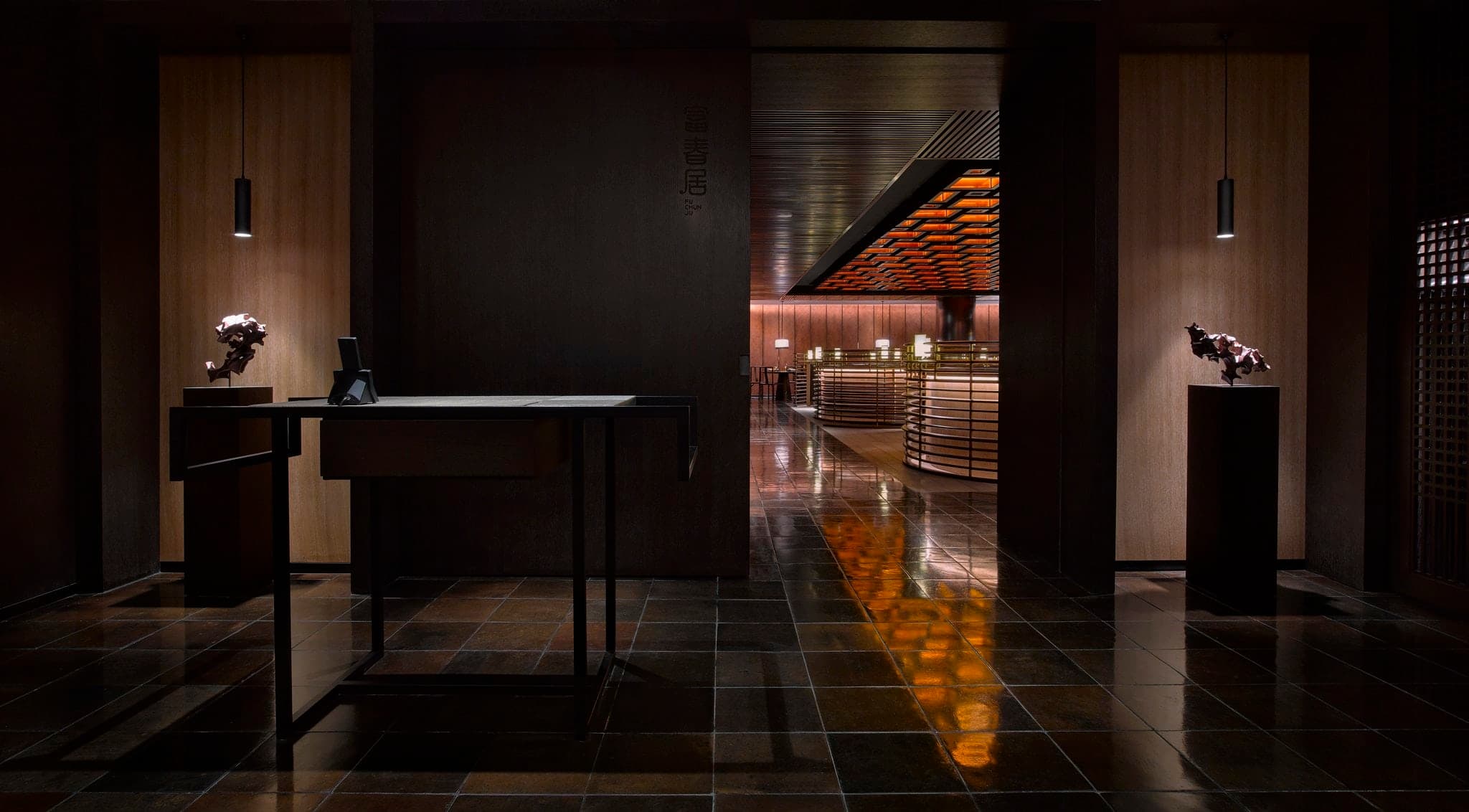
Explore All Beijing HotelsWhile the Forbidden City relies on centuries of mystique, The PuXuan Hotel and Spa relies on a brazen architectural dialogue. Designed by Ole Scheeren, this suspended glass-and-aluminum structure doesn’t just sit near the imperial palace; it aggressively frames it. The façade’s pixelated 'glass bricks' offer a modernist retort to the ancient hutong grey, creating a visual texture that is distinctively Beijing without the dust. Inside, the experience is a masterclass in quiet power. Rooms are sanctuaries of restraint, featuring handcrafted furniture by Shang Xia and tech that actually works—Loewe televisions and intuitive lighting that doesn't require an engineering degree. The bathrooms are the real showstoppers, stocked with full-size Guerlain amenities and built-in speakers for a symphonic soak. Culinary duties are handled with precision at Fu Chun Ju, where the Michelin-starred Cantonese menu offers a Roast Pigeon with skin so crisp it shatters like glass. Service is built around 'Hostmanship'—a pretension-free approach that allows for 24-hour flexible check-in for suites, a rarity that genuinely respects your time. It is a museum-grade stay where the city’s history is the exhibit, viewed from the comfort of the future.
“Book a Grand Studio. The window bays are designed as 'viewing lenses' that perfectly frame Jingshan Park, effectively turning your room into a private observation deck.”
Insider TipAvg. Nightly Rate
307USD
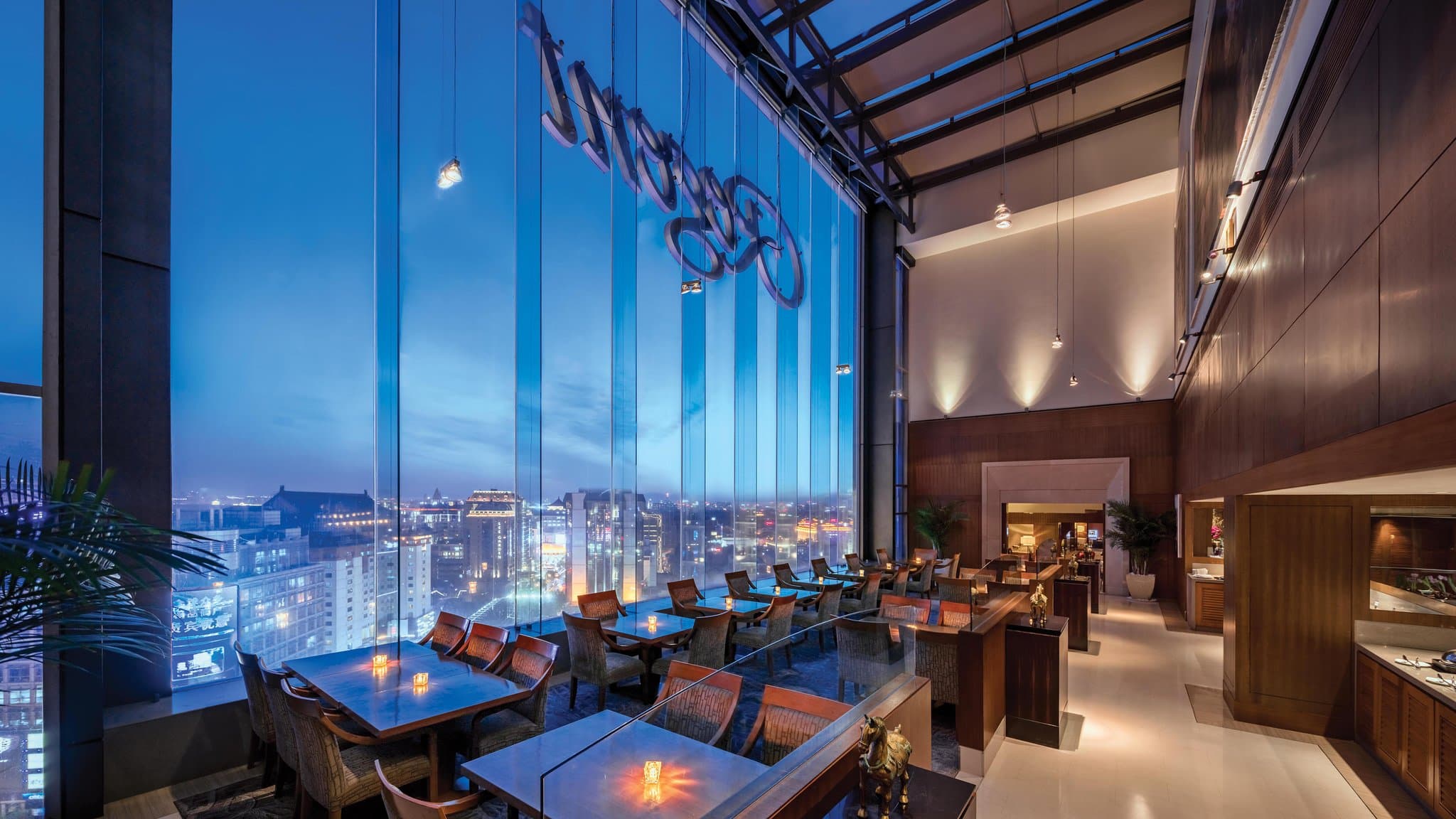
Jinbao Street is a study in Beijing’s frantic contradictions: Ferrari dealerships and high-end clubs jostle for space just blocks from the hushed, slate-grey alleyways of the old hutongs. Rising above this cacophony is the Regent Beijing, a hotel that trades trendy minimalism for heavy, polished marble and the kind of lobby grandeur that demands a hushed voice. It is not the newest property in the capital—tech-obsessed travelers may find the room hardware and bedside controls leaning more toward 'classic' than 'cutting-edge'—but one checks in here for a singular, unbeatable asset: the sightlines. Secure a west-facing Premier Room on the upper floors, and the city’s chaotic sprawl vanishes, replaced by the yellow-tiled vastness of the Forbidden City unfolding like a map below. It is the best view in town, bar none. While the rooms rely on this visual drama, the dining requires no such crutch. The Michelin-starred Lei Garden serves a Crispy Roasted Pork Belly with skin so glass-shatteringly perfect it ruins you for all other Cantonese BBQ, while the clubby, leather-bound Morton’s The Steakhouse remains the city’s power-dining bastion for prime aged beef. A dip in the mosaic-tiled, 25-meter indoor pool offers a serene counterpoint to the city’s grit. The Regent doesn’t need to be cool; it is stately, reliable, and possesses the keys to the imperial view.
“Explicitly request a 'Forbidden City View' room on the 15th floor or higher; lower floors lose the majestic scale of the palace roofs to the treeline.”
Insider TipAvg. Nightly Rate
128USD
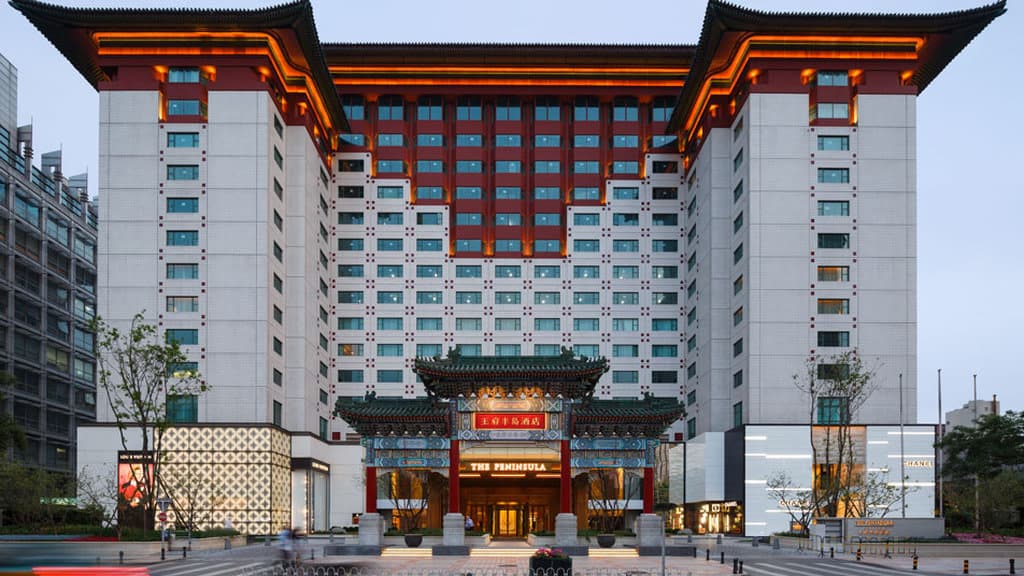
If the Forbidden City had a modern guest wing, this would be it. Located in the pulsing aorta of Wangfujing, The Peninsula Beijing doesn't just offer a room; it offers a residential decree. While competitors shrink floor plans, the Peninsula plays the long game: this is the capital’s only all-suite hotel, where 'entry-level' means a staggering 60 square meters of marble and mahogany. The renovation gutted the original structure to create this spacious reality, resulting in rooms that feel like diplomatic apartments. Expect dressing rooms larger than most Tokyo hotel rooms, valet boxes for silent service, and bedside tablets that control the entire environment in 11 languages without a glitch. Dining is equally serious. 'Jing' serves a Pâté Croûte that rivals Lyon, while the atmospheric 'Huang Ting' mimics a noble courtyard for Peking Duck that arrives with ceremonial precision. Fresh off a 2025 Michelin Key win, the service is telepathic—staff anticipate needs before you articulate them. It is grand, unapologetically expensive, and arguably the most sophisticated address in town.
“Skip the main entrance chaos. Enter via the arcade for a discreet arrival, and use the 'Valet Box' for overnight shoe polishing—they return wrapped like gifts without a knock on your door.”
Insider TipAvg. Nightly Rate
315USD
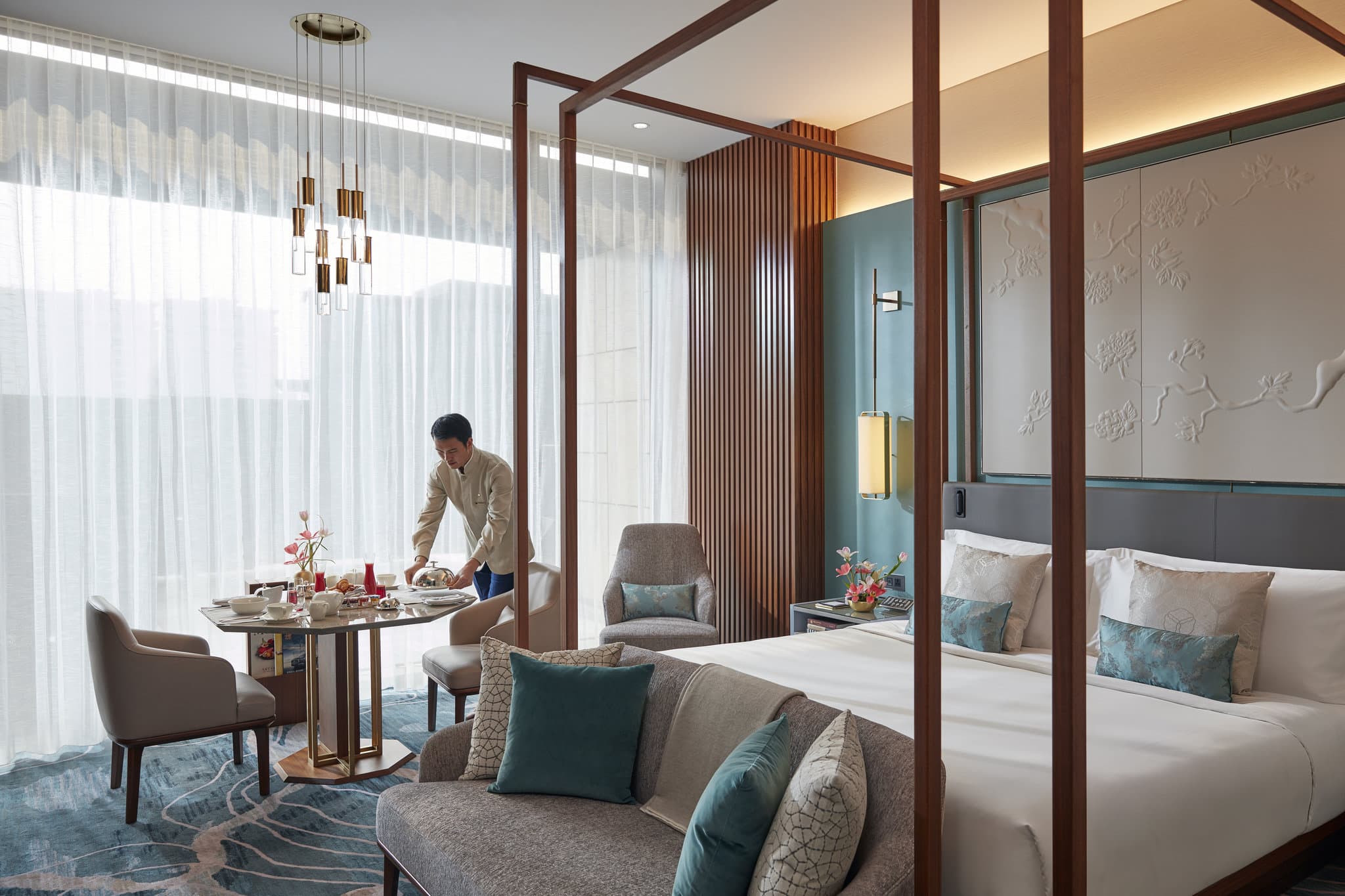
Forget the sprawling, impersonal lobbies of Beijing’s gilded giants. The arrival experience at the Mandarin Oriental Wangfujing is a masterclass in discretion, whisking you straight to the fifth floor where Frank Gehry’s mesmerizing fish lamps float above a residential-style reception. With only 73 keys, this feels less like a hotel and more like the private pied-à-terre of a remarkably well-connected friend. The real currency here is the view. Few properties can claim a vantage point where the Forbidden City’s golden tiles unfurl like a map directly beneath your terrace. Inside, the 55-square-meter entry-level rooms—among the capital's largest—are havens of HBA design, outfitted with Dyson Supersonics, Bose sound systems, and Diptyque amenities that signal serious attention to detail. Dining is equally purposeful. Bypass the street food for a charcoal-grilled wagyu ribeye at Mandarin Grill + Bar, or settle into Café Zi for dim sum that rivals the city’s stalwarts. But the pièce de résistance is the MO Bar terrace at dusk; sipping a 'Sunset Hunter' while watching the imperial palace fade into silhouette is arguably Beijing’s finest hour. Verdict: The ultimate sanctuary for those who prefer their history served with a side of hyper-modern luxury.
“Book a West-facing Premier Room or the Mandarin Room for direct Forbidden City views. If the terrace at MO Bar is full, the indoor lap pool’s glass skylight offers its own dramatic, if less boozy, atmospheric show.”
Insider TipAvg. Nightly Rate
778USD
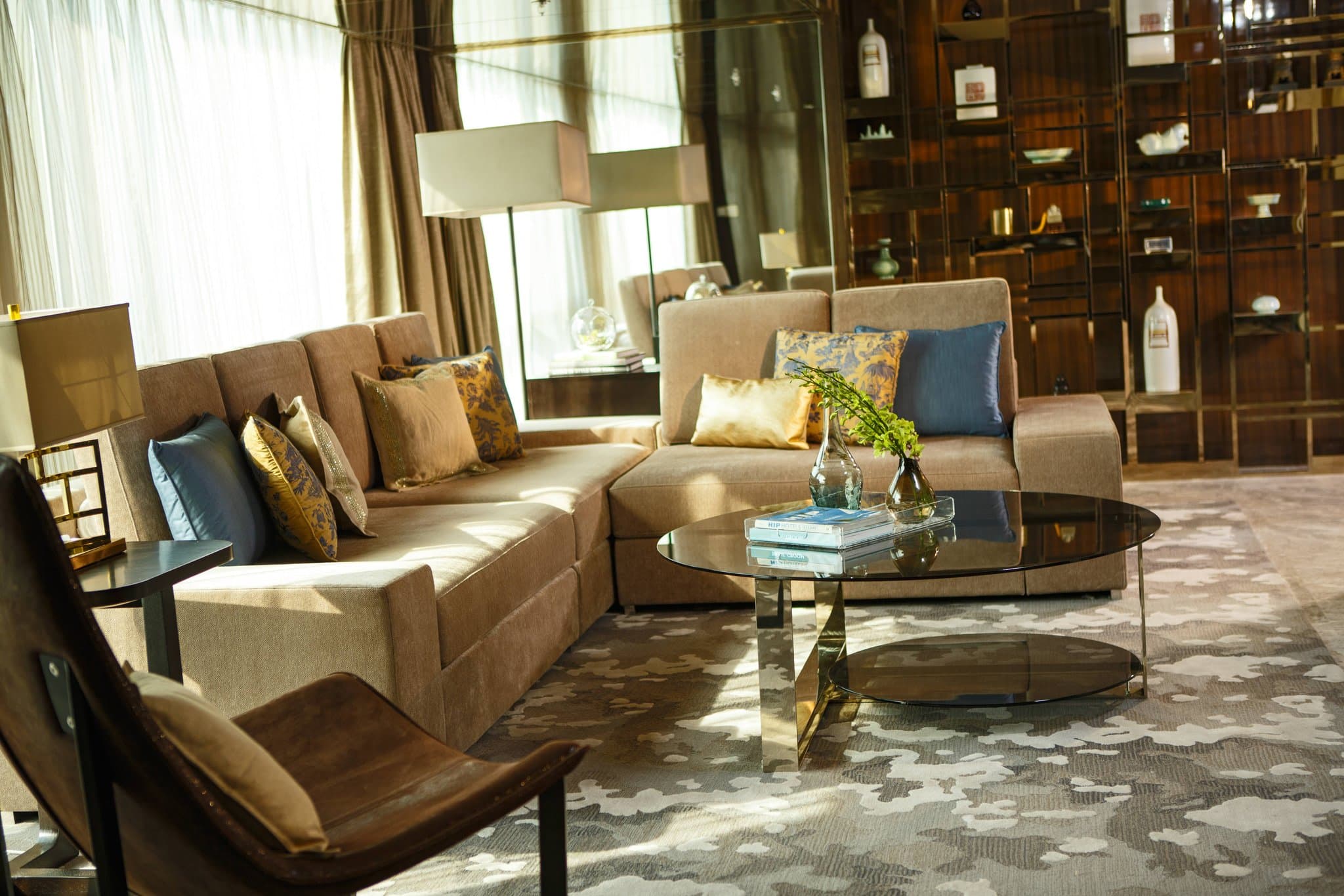
In a city where 'luxury' often translates to overbearing gold leaf and stiff service, the Renaissance Beijing Wangfujing is a sharp, architectural exhale. Located on the northern end of Wangfujing Street, it manages a difficult trick: being central enough to walk to the Forbidden City (just 1km away) but insulated enough to escape the megaphone-wielding tour groups. The lobby sets a high-voltage tone—literally—with the illuminated backdrop of R Bar and the bronze 'Pixiu' statues guarding the elevators, but the real theater happens upstairs. Request a west-facing room on a high floor. These 40-square-meter sanctuaries offer a rare, unobstructed sightline over the golden glazed tiles of the Imperial Palace, a view usually reserved for government officials and drones. The interiors eschew heavy Qing dynasty cosplay for clean lines and reliable comforts, including a 24-hour Technogym fitness center. Dining is where the hotel flexes its local muscle. Wan Li serves a Peking Roast Duck that rivals the dedicated specialist shops nearby, but the insider order is the Durian Swan Pastry—a divisive fruit executed with undeniable finesse. If the notorious Beijing dryness settles into your pores, bypass the standard hotel massage for the Kocoon Spa on B1. This French-owned boutique outfit treats skincare with serious, clinical precision, making this property a modern, confident base camp for the contemporary emperor.
“Skip the lobby scrum and book a Club Room. The 17th-floor lounge offers the same Forbidden City sunset views, but with complimentary cocktails and significantly fewer selfie sticks.”
Insider TipAvg. Nightly Rate
112USD

If location is the ultimate currency in real estate, the Grand Hotel Beijing is the wealthiest player in town. Situated on East Chang’an Avenue, it doesn't just sit near the Forbidden City; it effectively shares a front yard with the Palace Museum. This isn't the place for travelers seeking the stark, glass-walled minimalism of the nearby Bulgari. This is for the history obsessive who wants to wake up staring directly at the yellow-glazed tiles of imperial China. The interiors are unapologetically trapped in a 1990s time capsule—think heavy rosewood furniture, velvet drapes, and a lobby that smells faintly of old timber and power. Yet, there is a charm to this museum-grade patina. The rooms feature authentic Ming-style touches, though the bathrooms struggle with antiquated water pressure despite the inclusion of premium Baicaoji (Herborist) herbal amenities. Dining is an adventure in itself. While the Zi Jin Restaurant offers competent northern fusion, the real insider flex is braving the 'Red Wall Café' for its signature homemade Creamy Douzhier Ice Cream—a pungent, fermented mung bean challenge that serves as a culinary rite of passage. The indoor pool, with its bizarre 'desert gold' tiling, feels like a film set from the Last Emperor. Service is old-world formal but hampered by a language barrier, so have your translation app ready. You stay here for one reason: the Grand Palace View. Everything else is just background noise.
“Book a 'Forbidden City View' room on the 5th floor or higher. At sunset, skip the crowded public viewing spots and head to the hotel's rooftop terrace for the only private, panoramic shot of the golden imperial roofs glowing in the dusk.”
Insider TipAvg. Nightly Rate
170USD
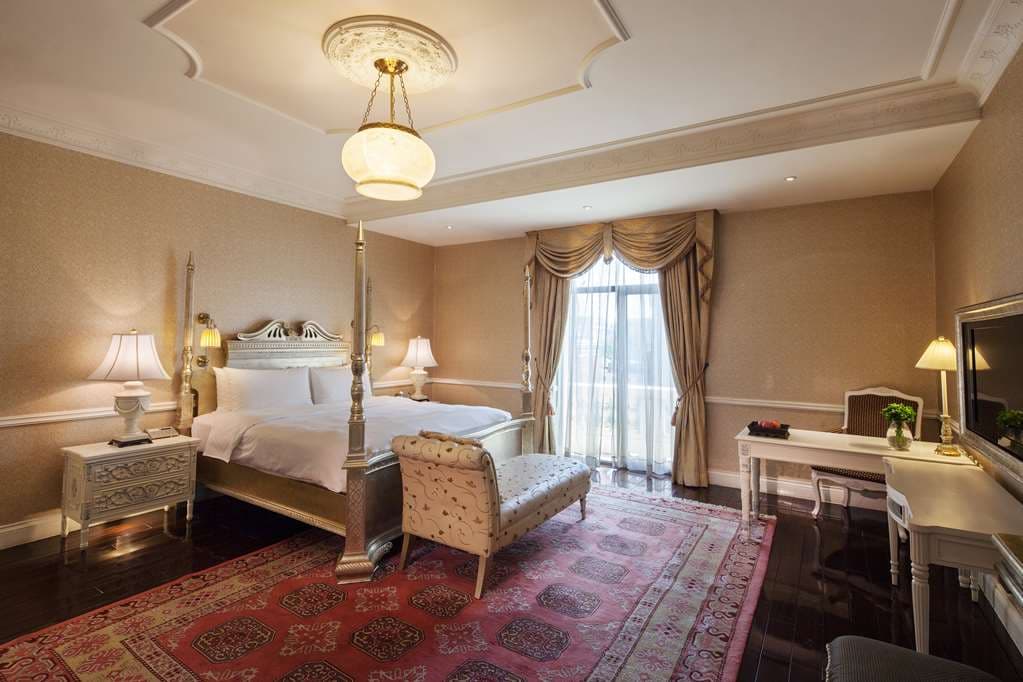
While the glistening towers of the CBD scream new money, Beijing Hotel Nuo (Block B) whispers old power. Commanding the prestigious Chang’an Avenue address since 1917, this is less a hotel and more a habitable museum. You don’t check in here for high-tech wizardry; you check in to walk the same red-carpeted Grand Marble Staircase that once welcomed foreign dignitaries and heads of state. The lobby, with its soaring colonnades, feels like a film set for a 1920s noir. The base rooms are colossal by Beijing standards, starting at 46 square meters, boasting 16-foot ceilings that make modern luxury boxes feel claustrophobic. Sure, the bedside outlets are scarce and the bathrooms haven't seen a renovation since the turn of the millennium, but the creaking parquet floors and heavy velvet drapes offer a tactile gravity you can't manufacture. Dinner at East 33 offers competent local fare, but the real draw is the Writers Bar. Beneath its gilded domes and atop the original 1920s dance floor, the signature Champagne Mojito tastes like the Jazz Age. Service is formal, white-gloved, and delightfully old-school. **Verdict**: It’s not for the tech-obsessed traveler. But for those who prefer history over HDMI ports, this is the only address in the capital that matters.
“Ask for a room on the higher floors of the 'Chang'an Avenue' side. You get a direct line of sight to the Forbidden City’s rooftops, unbeatable at sunset.”
Insider TipAvg. Nightly Rate
120USD
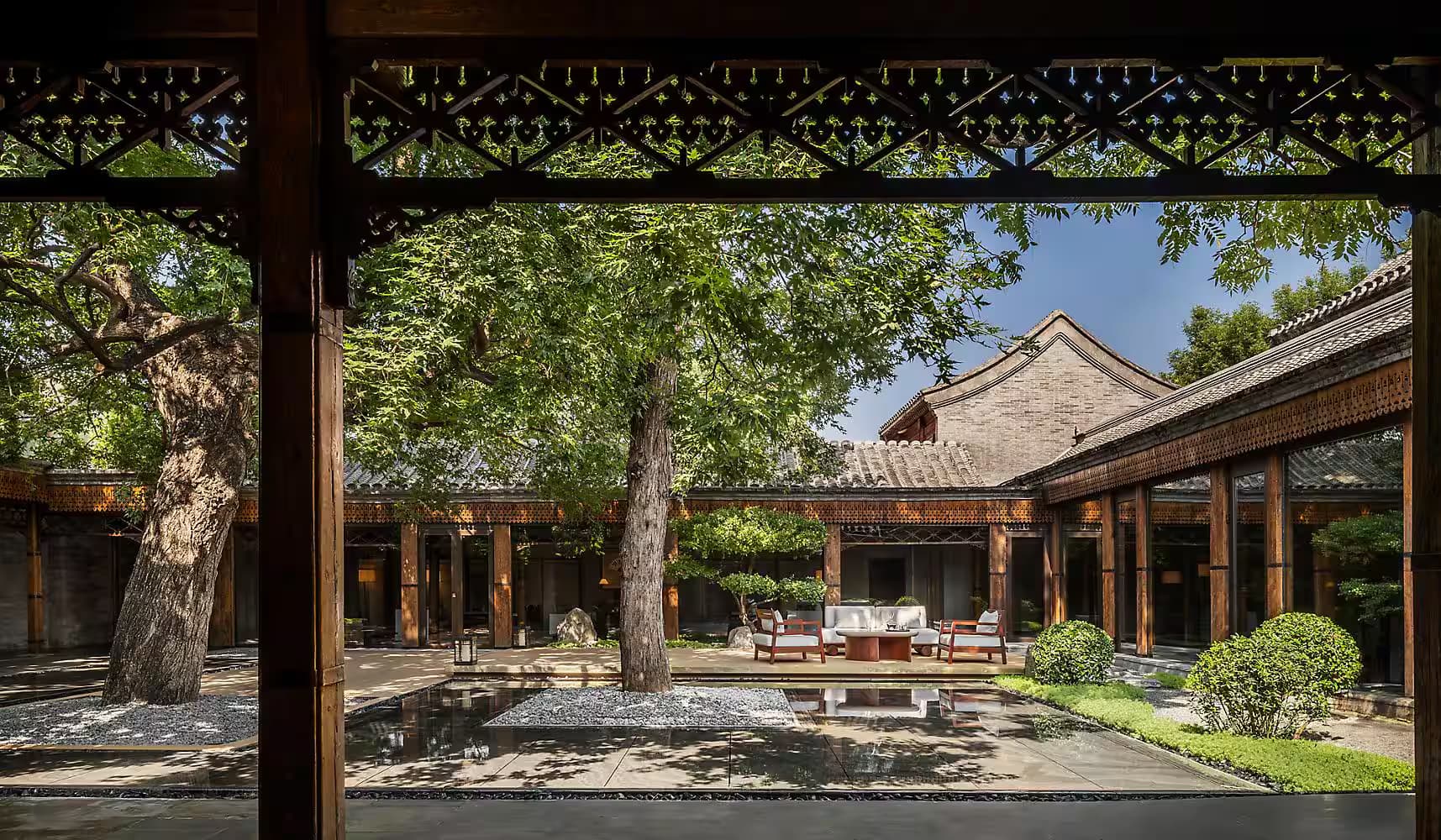
Forget the golden revolving doors and marble lobbies of the Central Business District. Arriving at the Mandarin Oriental Qianmen is an act of stealth luxury. You are whisked by buggy through the grey-brick *hutongs* of Qianmen, dodging neighborhood cats, drying laundry, and the occasional bicycle courier. It is jarringly authentic, until the heavy wooden gates of your private *siheyuan* swing open to reveal a sanctuary of absolute silence. The 42 courtyard houses are masterclasses in restoration—think Ming Dynasty frameworks fortified with underfloor heating and soundproofing that blocks out the city’s hum entirely. The interiors are sparse but rich, featuring elmwood furniture and amenities by Le Labo. Dinner at *Yan Garden* is non-negotiable; Chef Fei’s Cantonese roast meats are precise enough to rival any in Hong Kong. The singular drawback? There is no swimming pool. Yet, as you soak in a freestanding tub overlooking your private, snow-dusted persimmon tree, the lack of laps feels irrelevant. This isn’t a hotel stay; it is a temporary residency in the capital’s soul.
“Book a sunset table on the terrace of TIAO Bar. It offers the only unobstructed sightline of the Forbidden City’s golden rooftops glowing against the Western Hills.”
Insider TipAvg. Nightly Rate
683USD
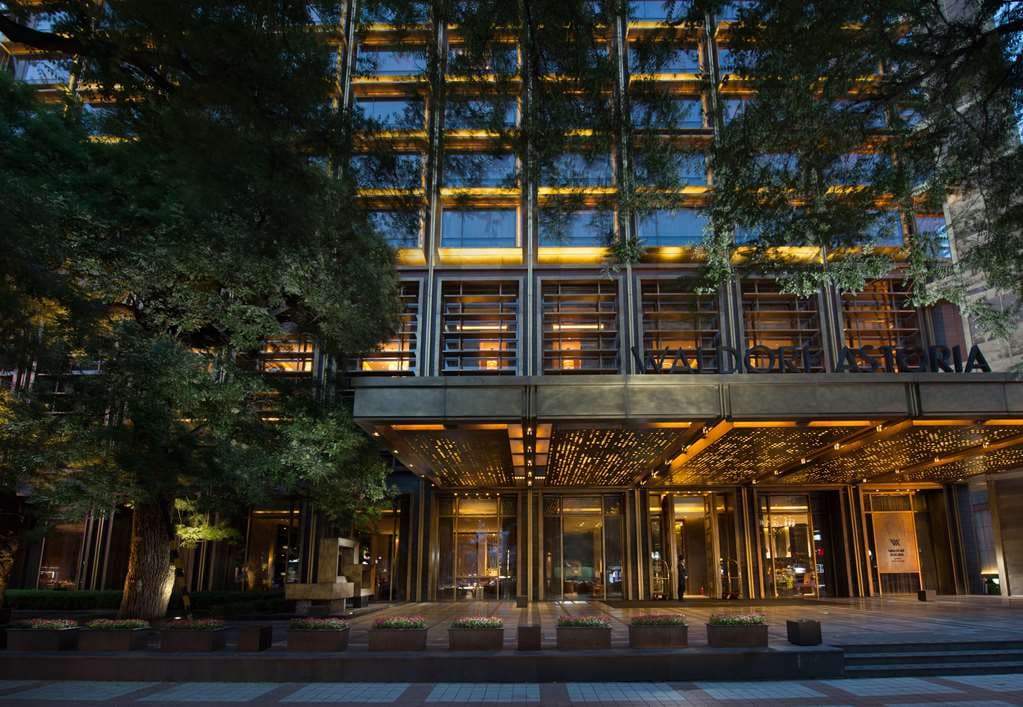
Forget the monolithic glass towers dominating the skyline; the Waldorf Astoria Beijing is a masterclass in metallic understated glamour. Its Adrian Smith + Gordon Gill-designed bronze facade is already developing a rich patina, aging as gracefully as the Forbidden City just steps away. Inside, Yabu Pushelberg’s interiors trade imperial clichés for polished charcoal granite and walls sheathed in hand-painted silk. The guest rooms are a study in high-tech serenity, where tablets control everything from the sheer automated drapes to the heated Japanese toilets. Bathrooms are swathed in marble and stocked with Aesop amenities—a chic departure from the usual suspects. Service here is of the ‘silent’ butler variety; shoes are polished and itineraries printed before you’ve even rubbed the sleep from your eyes. Dining is a serious affair at the Michelin-starred Zijin Mansion. The braised pork belly ribs are sticky, savory perfection, while Brasserie 1893 serves a tea-smoked squab that bridges Paris and Peking. For a nightcap, Peacock Alley’s Red Velvet Cake (a nod to the NYC original) pairs surprisingly well with a smoky hutong-inspired cocktail. It’s imperial grandeur without the drafty palace corridors.
“Skip the main tower for the 'Hutong Studios' in the detached courtyard villas. You get the privacy of a traditional residence with heated floors and direct access to the underground pool.”
Insider TipAvg. Nightly Rate
235USD