No. 01
Paseo Malecon San Jose Lote 8 San Jose del Cabo Mexico 23400Cabo San Lucas209 verified reviews
9
.0
Bitvoya Edit
Layering imagery, place, and detail before the page opens.
In Cabo San Lucas, a dramatic architectural evolution has taken root, transforming the arid coastline into a canvas for Desert Modernism. This curated collection highlights properties where the stark, monolithic lines of Brutalist architecture harmonize with the organic chaos of the Baja desert. From the cinematic waterways of the Viceroy Los Cabos in San José del Cabo to the Japanese-Mexican fusion of Nobu Hotel on the Pacific side, these structures do not merely sit upon the land; they engage with it.
Travelers seeking an aesthetic pilgrimage will find solace in the Tourist Corridor and Puerto Los Cabos, where heavy concrete structures frame the cerulean Sea of Cortez. This is not just luxury accommodation; it is an exploration of form, light, and shadow.
Cabo San Lucas has transcended its reputation as a mere party destination to become a global epicenter for architectural innovation. The region's unique geography—where the stark Baja desert crashes into the deep blues of the Sea of Cortez—provides the perfect backdrop for Desert Modernism. Architects like Miguel Ángel Aragonés and Sordo Madaleno have utilized this landscape to create brutalist masterpieces such as The Cape and Solaz. These structures use raw concrete, local stone, and vast open spaces to blur the lines between indoors and outdoors, offering a luxury experience that feels grounding and ethereal simultaneously.
Guests booking a stay at these design-forward resorts should expect more than just high thread counts. The experience is visual and visceral. Expect infinity pools that create optical illusions extending into the horizon, open-air lobbies that capture the ocean breeze, and interiors featuring locally sourced parota wood and travertine. The service matches the elevated environment, providing a seamless luxury experience that complements the sophisticated surroundings.
It is characterized by Brutalist influences, using raw concrete, clean lines, and vast open spaces that integrate seamlessly with the arid desert landscape and ocean views.
Viceroy Los Cabos is arguably the most photogenic, known for its 'nido' (nest) structures, reflective waterways, and stark white minimalist aesthetic.
Yes, properties like Grand Velas and Solaz offer dedicated kids' clubs and family amenities without compromising their sophisticated architectural atmosphere.
Explore our complete curated list of luxury accommodations, from boutique hideaways to grand dames.
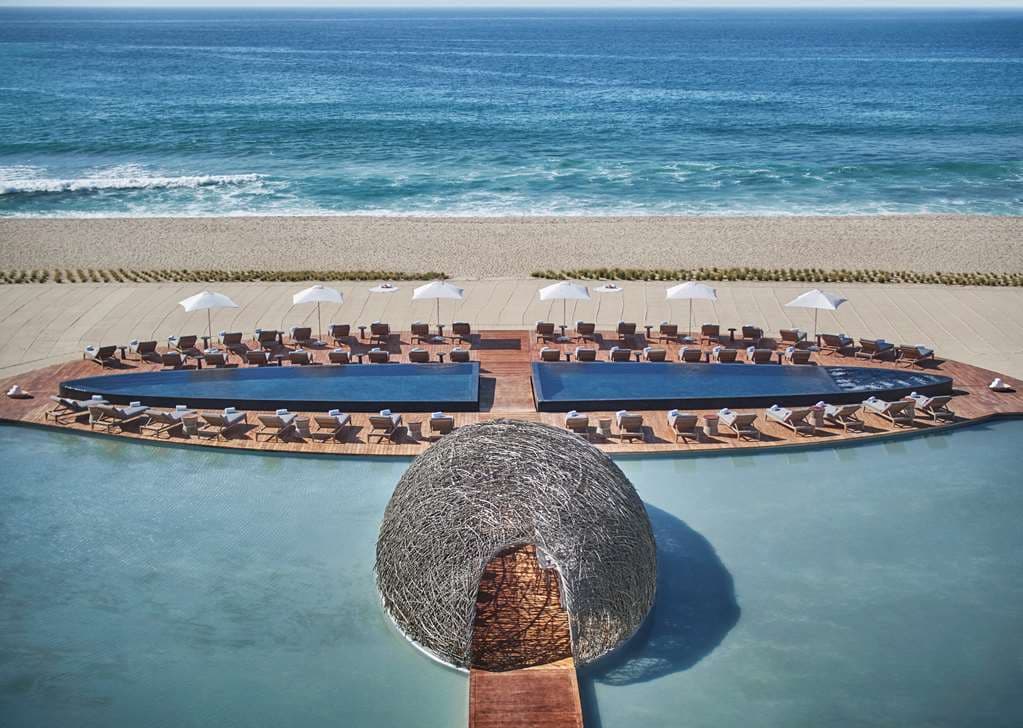
Explore All Cabo San Lucas HotelsIf Denis Villeneuve designed a resort, it would look like this. Architect Miguel Ángel Aragonés has created a hyper-modern dreamscape that feels less like a hotel and more like a habitable art installation. Stark, white concrete cubes appear to float on mirror-like pools, creating a blindingly bright contrast against the deep blue Sea of Cortés. It is a masterclass in 'Desert Modernism,' where the architecture is the main event. Inside, the minimalism continues with a futuristic edge. Rooms are high-tech sanctuaries featuring customizable mood lighting and floor-to-ceiling glass that slides open to let the ocean roar in. While the bathrooms can feel compact, the details are sharp: full-sized **Corpus** amenities, **Aromaria** scent diffusers, and Nespresso machines for your morning caffeine hit on the balcony. The dining scene matches the visual drama. **NIDO**, the nest-like structure woven from recycled driftwood, serves excellent Robatayaki—the Wagyu is a standout. For sunset, **Cielomar** offers rooftop views that justify the high price point of the cocktails. Service is polished, recently earning the property the #3 spot in our **2025 Readers' Choice Awards** for Western Mexico. It’s not just a place to sleep; it’s a place to be seen.
“Book a treatment at the 11,000 sq ft spa just to use the 'Ice Fountain'—a refreshing shock to the system after a day in the Baja heat.”
Insider TipAvg. Nightly Rate
345USD
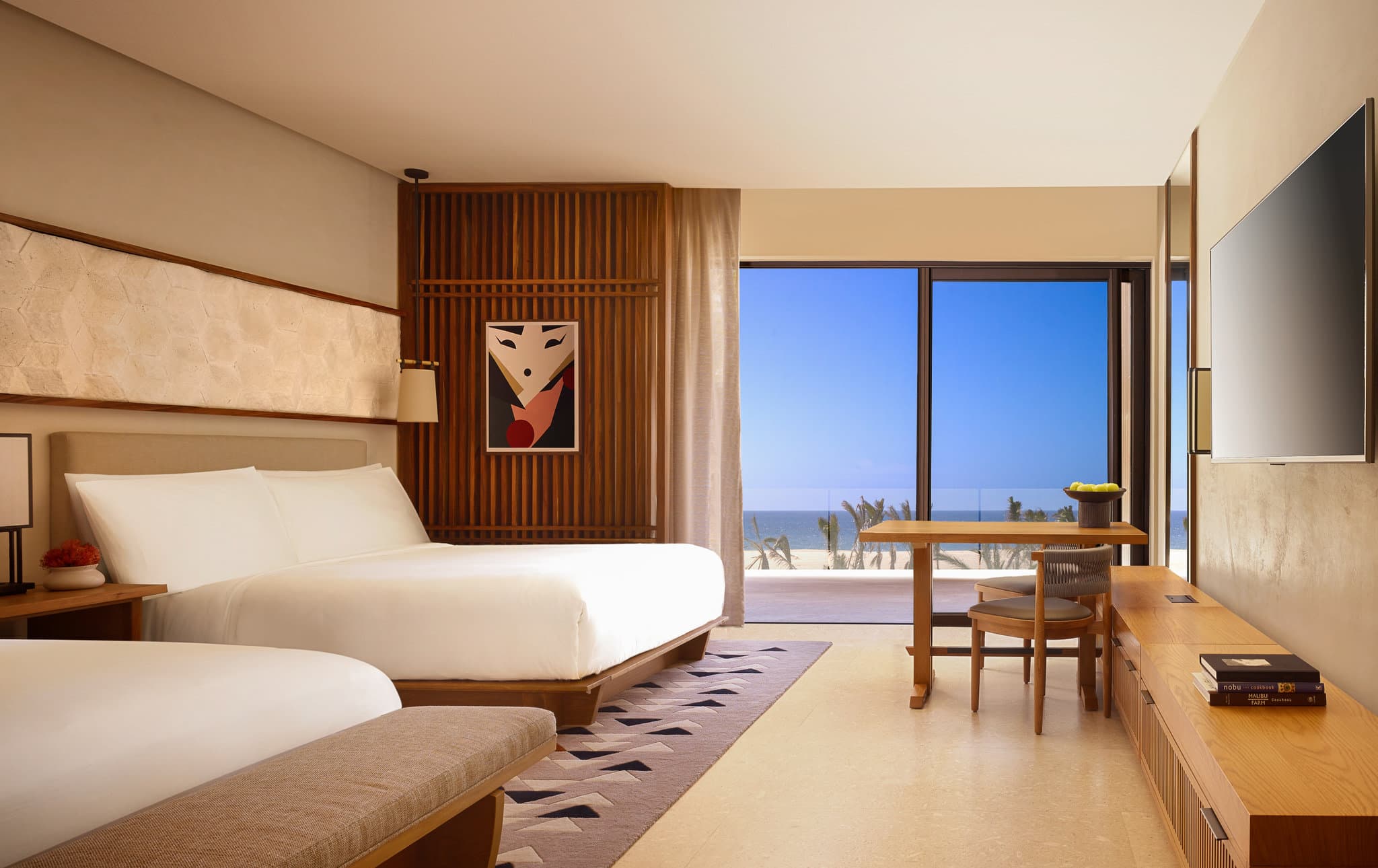
Forget the margarita-fueled chaos of Medano Beach. Nobu Los Cabos is a fortress of solitude—literally. The architecture is a stunning exercise in desert Brutalism; think monolithic walls of local Cabo stone framing Pacific sunsets, creating sightlines that feel more Tadao Ando than Tex-Mex. It is a visual palate cleanser for the design-obsessed traveler. Inside, the Japanese minimalism isn't just a mood board; it’s a strict discipline. Rooms are sanctuaries of blonde wood and cream, anchored by traditional teak onsen soaking tubs and Natura Bissé amenities that smell like expensive spa water. The service generally follows the omotenashi philosophy—anticipatory, almost telepathic—though the sheer scale of the property can sometimes dilute the intimacy. Dining is the undisputed headliner. While the Miso Black Cod at the namesake restaurant is the obligatory pilgrimage, the real surprise is Muna, where Mediterranean flavors meet Baja ingredients—the raw oyster ravioli is a revelation. Just know that you are captive here; the ocean is a violent, non-swimmable beauty (rip currents are real), and a taxi to town costs a small fortune. But with an adults-only infinity pool that mirrors the horizon and 400-thread count linens waiting upstairs, you likely won’t want to leave anyway. Verdict: A culinary destination for the traveler who prefers silence over fiestas.
“Skip the expensive hotel transport for drop-offs; Ubers can drop you off but can't pick you up. For the best room experience, request the 'Pacific' wing for absolute silence, away from the family-friendly Cortez pool.”
Insider TipAvg. Nightly Rate
361USD
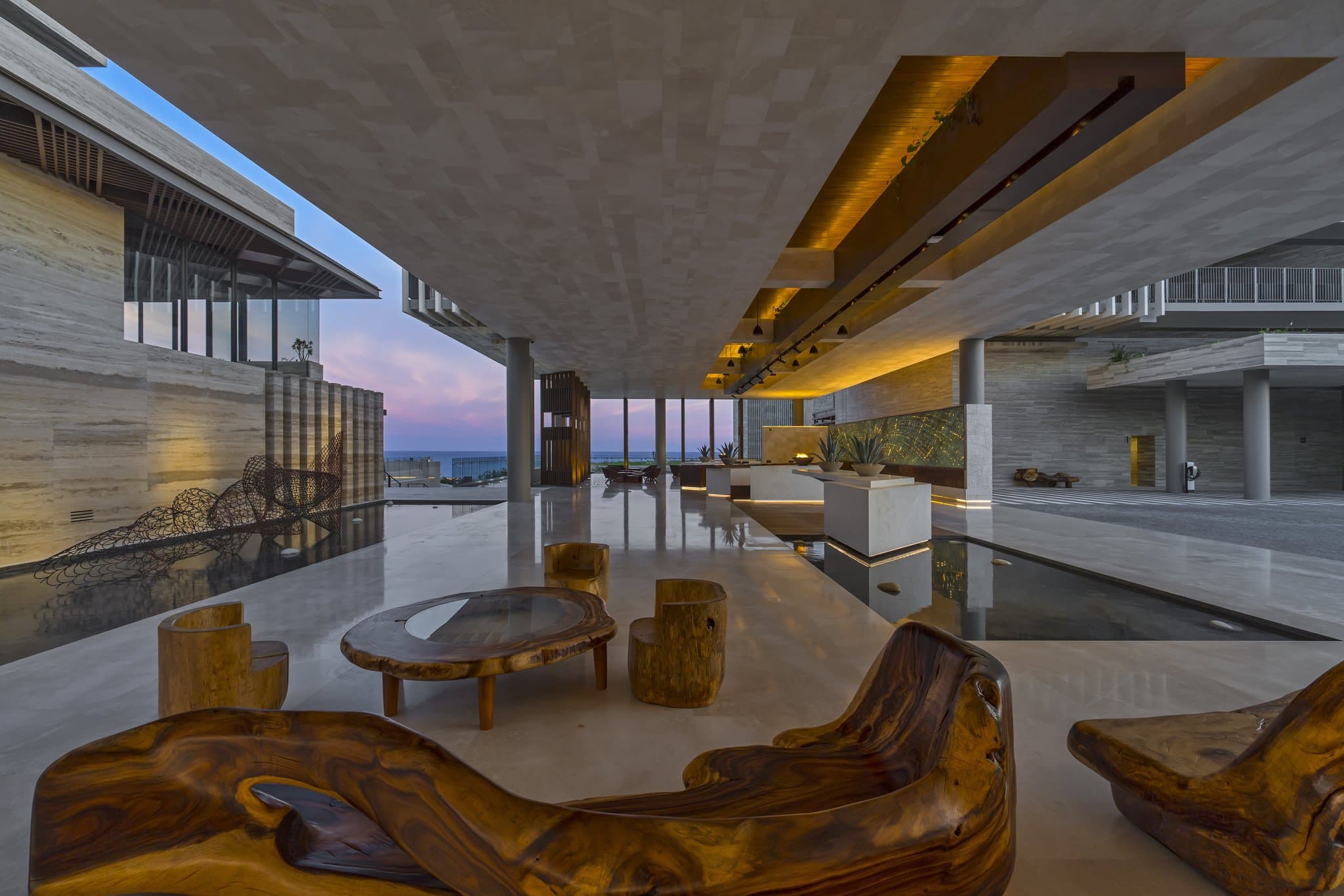
Arriving at Solaz isn’t just check-in; it’s an architectural pilgrimage. Designed by the visionaries at Sordo Madaleno, the resort cuts a striking figure against the Sea of Cortez—a cascade of raw concrete terraces softened by 'living roofs' of endemic desert flora. It is Brutalism without the coldness, a structure that feels excavated from the earth rather than built upon it. Inside, the experience is strictly sensory. The 50-meter infinity pools, lined in rare green granite, create a seamless visual bleed into the ocean. Rooms are cool sanctuaries featuring automated Crestron technology and local Ojo de Liebre amenities that smell of the surrounding scrub. Dining is equally theatrical; at Mako, the dry-aged steaks are mandatory, though the Salpicon de Castacan at Al Pairo steals the show with its textural crunch. Yes, the prices can induce vertigo (a $50 burger is a hard pill to swallow), and the ground-floor plunge pools trade privacy for access. But for those who prefer their luxury with a side of architectural drama, Solaz is a masterclass in desert modernism.
“Skip the crowded sunset spots and head to the 'Gabinete del Barco'—the resort’s private museum—to sip a cocktail beneath the suspended skeleton of a 13-foot grey whale.”
Insider TipAvg. Nightly Rate
680USD
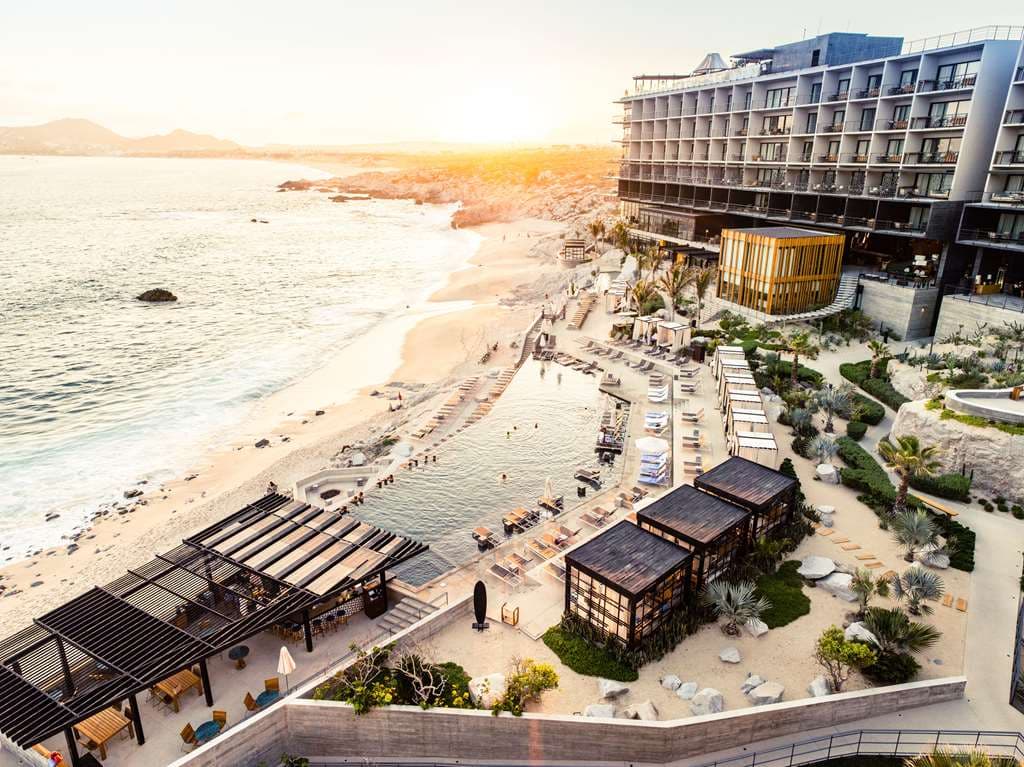
Forget the beige, colonial-style resorts that plague Cabo’s corridor. The Cape is an architectural mic drop by Javier Sanchez—a masculine, mid-century fortress of raw concrete and warm timber anchored directly on Monuments Beach. It feels less like a hotel and more like the Bond villain lair of your dreams. The rooms are a study in textural contrast: leather headboards, hand-painted ceramic tiles, and free-standing copper-bottomed bathtubs that demand a long soak. Every balcony features a hanging daybed, perfectly positioned for watching surfers navigate the rocky, non-swimmable break below. The culinary draw is Manta, where Enrique Olvera (of Pujol fame) eschews typical resort fare for a Peruvian-Japanese-Mexican hybrid; the sweet potato with almond mole is a revelation. For 2025, the buzz is at the newly reimagined Sunken Bar, now under Olvera’s direction, serving mezcalitas that rival the view. Service can be "Cabo slow" poolside, and the bill will sting, but for the design-obsessed traveler, the aesthetic payoff is worth every peso. This is Cabo for the cool kids, not the swim-up bar party crew.
“Skip the crowded Rooftop for sunset; the newly renovated Sunken Bar offers the same El Arco views with better cocktails and zero velvet-rope attitude.”
Insider TipAvg. Nightly Rate
600USD
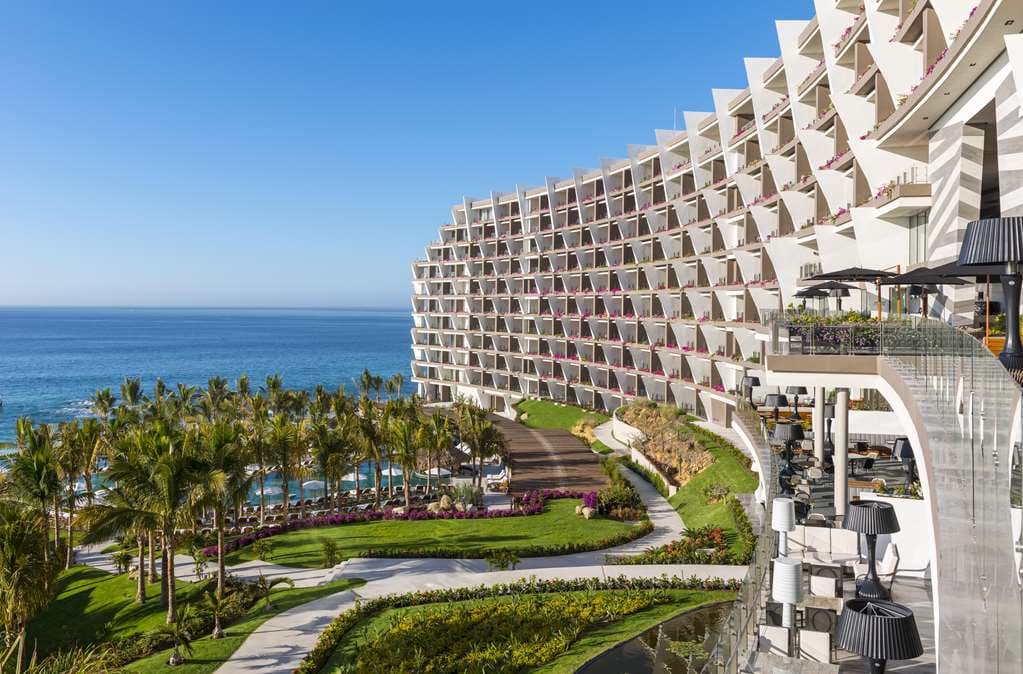
Forget the beige buffet lines of your typical all-inclusive nightmares. Grand Velas Los Cabos is architectural arrogance in the best possible way—a massive, tiered concrete amphitheater designed to force every single suite to stare down the Sea of Cortez. The structure cuts a distinct silhouette against the desert sky, a curved brutalist shield that protects a lush interior from the Baja heat. The three-tiered infinity pool system creates a visual cascade that drops straight into the horizon, a necessary distraction from the fact that the beach itself is strictly look-but-don't-touch due to lethal currents. Inside, the luxury is less about gold leaf and more about hyper-efficiency. Your personal concierge lives on WhatsApp, orchestrating everything from unpacking your bags to securing a table at Cocina de Autor. This isn’t standard resort fare; it’s a culinary pilgrimage. The creative tasting menu challenges the palate with Mexican caviar and escamoles (ant larvae), earning its Michelin Star in the 2024 Guide—a rare feat for an all-inclusive. Even the 'casual' Velas 10 serves Tomahawk steaks that would bankrupt a lesser hotel. The suites are equally uncompromising, stocked with Natura Bissé amenities and Nespresso machines, ensuring you’re primed for the 7-step Water Ceremony at the SE Spa. It’s expensive, yes, but when you’re watching whales breach from your private terrace, the price tag feels irrelevant.
“The 'Personal Concierge' is your lifeline—text them via WhatsApp two weeks before arrival to book your table at Cocina de Autor, or you will be stuck on the waitlist.”
Insider TipAvg. Nightly Rate
1300USD
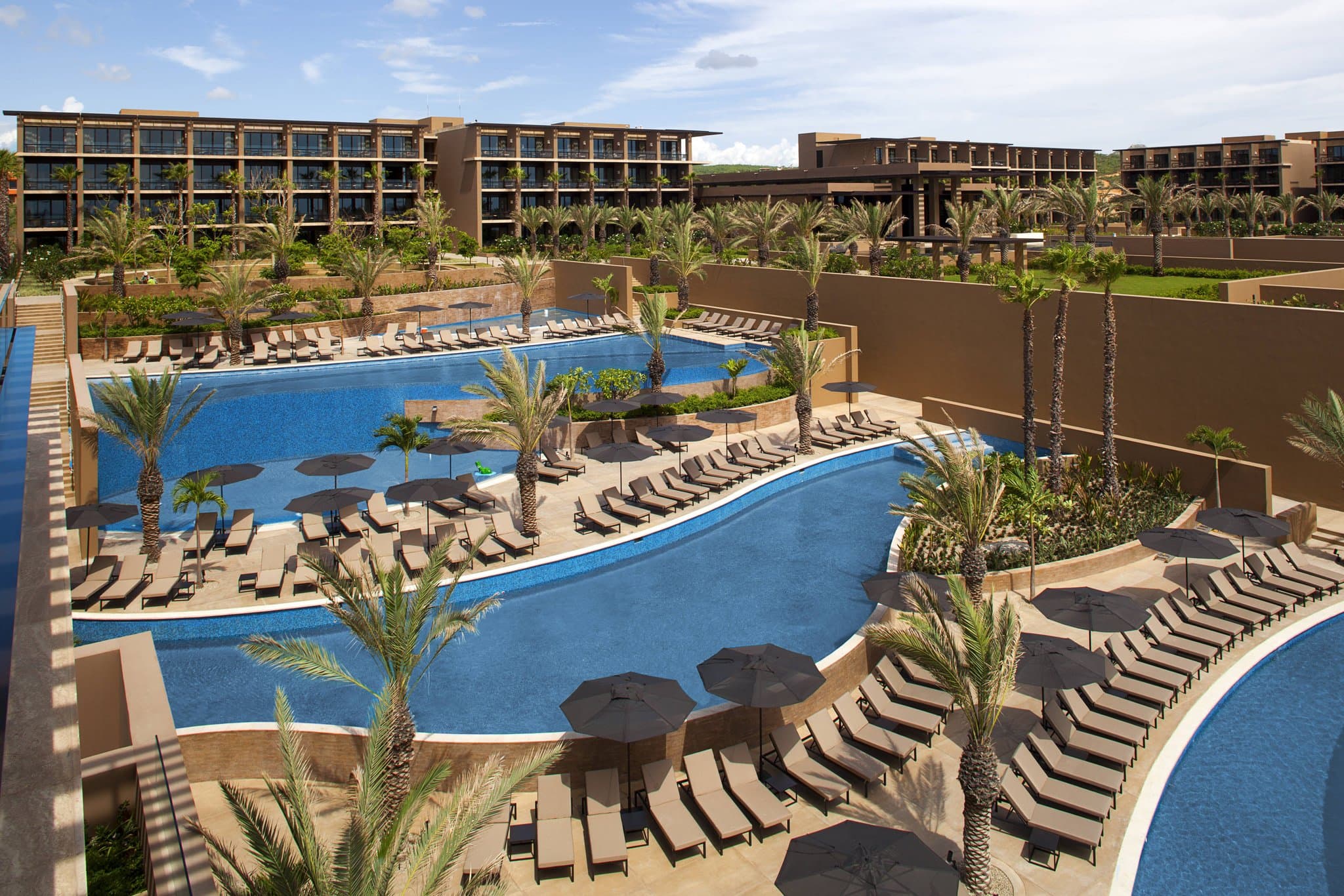
Jim Olson’s architectural intervention in Puerto Los Cabos is less a hotel and more a brutalist optical instrument. While neighbors lean into colonial kitsch, Olson Kundig’s design utilizes massive concrete columns and travertine planes to command the landscape, forcing a dialogue between the arid desert and the violent blue of the Sea of Cortez. The arrival sequence is pure theater: a long, open-air corridor acts as a telescope, pulling the horizon into immediate focus. The rooms continue this monastic discipline, but the real sensory texture is found in the public spaces. The Jasha Spa is a 21,000-square-foot labyrinth of wellness, where the salt steam room and outdoor vitality pools offer a wet respite from the Baja dust. For sun-worshippers, the adult-only infinity pool mirrors the sky with such precision it’s hard to tell where the chlorine ends and the atmosphere begins. Gastronomy here anchors the airy design. Café des Artistes demands a reservation; the signature pumpkin cream soup with prawns is a velvety revelation, and the suckling lamb proves that Mexican fine dining can hold its own against French technique. Even the morning ritual at Uá Culinary Artisans elevates the standard buffet with local seafood that didn't travel far to reach your plate. Note that the beach is strictly for viewing—the currents are treacherous—but watching the waves crash against the sand from the safety of a brutalist balcony is an amenity in itself. Verdict: A lesson in framing that turns a vacation into high art.
“Book a table at Café des Artistes specifically for sunset; the architecture frames the fading light perfectly. Also, in winter, the best whale watching is often right from your balcony, no boat required.”
Insider TipAvg. Nightly Rate
936USD
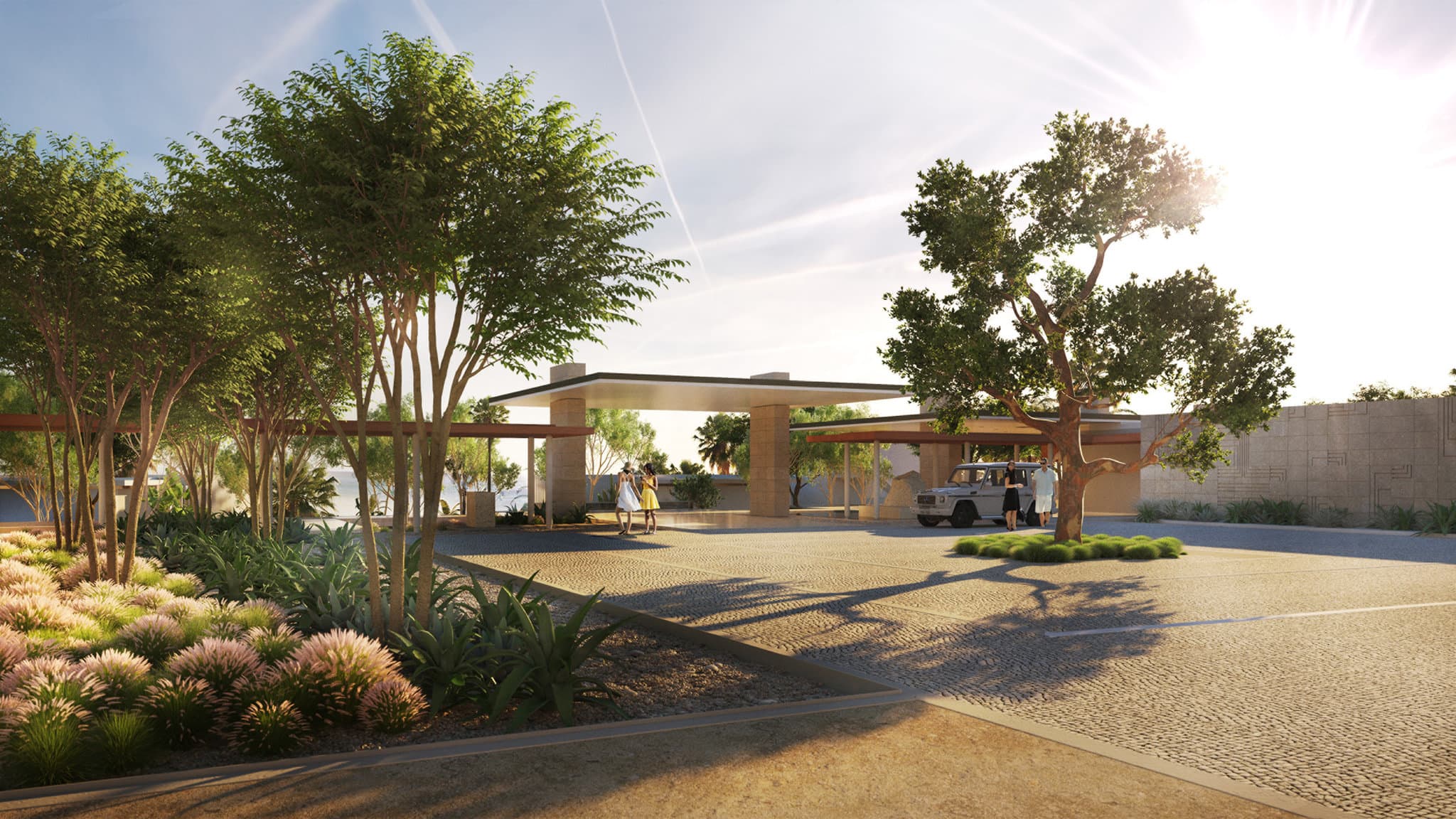
Forget the tequila-soaked frenzy of the Corridor. The drive to the East Cape is a dust-choked purgatory, but the payoff is absolute: a geometric mirage by Guerin Glass Architects that doesn’t just sit on the landscape—it embeds itself into it. This is low-density architecture as a power move. The structures are elemental monoliths, utilizing lattice screens and local stone to frame the Sea of Cortez rather than compete with it. The rooms are studies in restraint—travertine floors, sliding glass walls that vanish entirely, and Le Labo amenities that smell of santal and money. But the real flex here is the geography: a two-mile swimmable beach, an anomaly in a region defined by treacherous undertows. Dining is equally serious. While the paper-thin fried zucchini tower at Estiatorio Milos is a non-negotiable ritual, the new energy comes from ‘Delphine,’ the Riviera-inspired day club by Chef Ludo Lefebvre. For something more primal, head to Limón, where barbacoa is smoked underground in a secret lemon grove. Service operates with the silent precision of a Swiss watch—anticipatory, never hovering. This isn't just a hotel; it's a vanishing act.
“Book a ground-floor Oceanfront Room for a private plunge pool that steps directly onto the sand. For dinner at Limón, request the table nearest the grill to watch the fire-cooking theater.”
Insider TipAvg. Nightly Rate
986USD
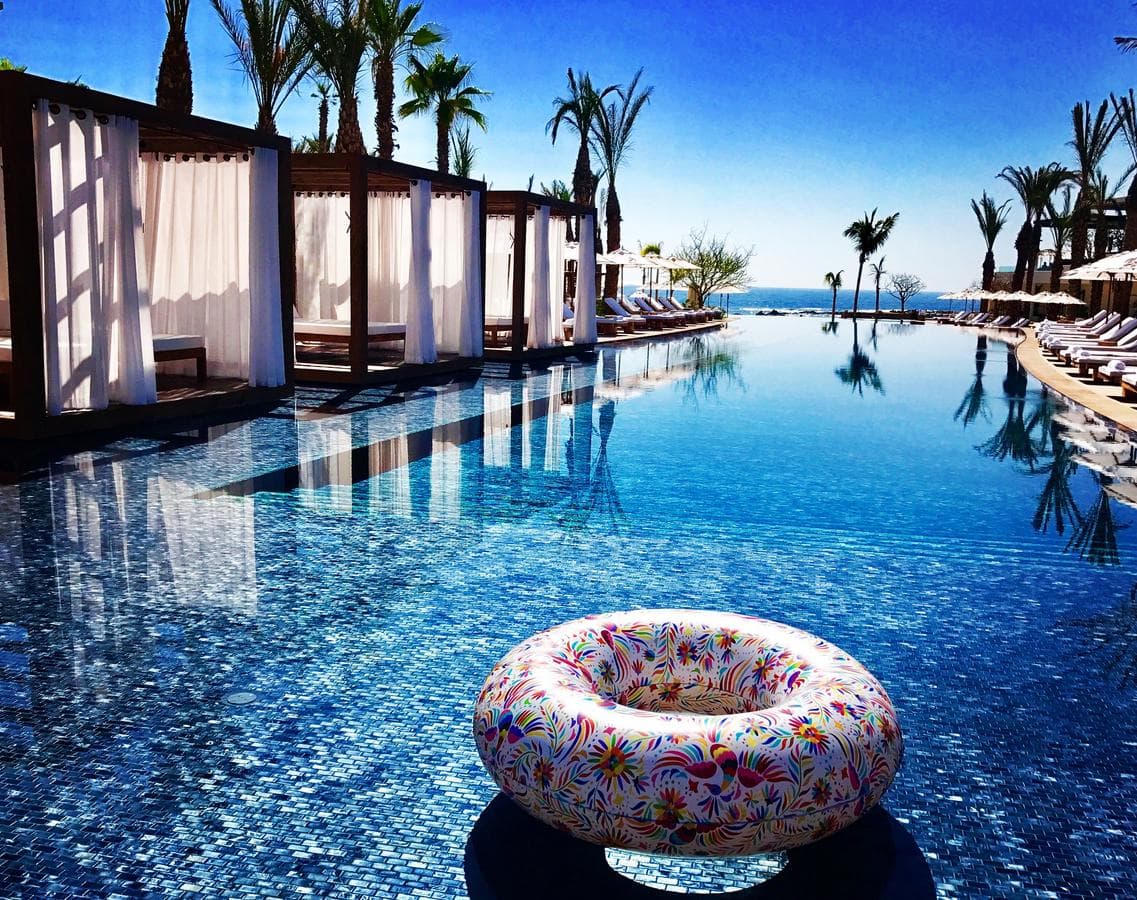
Forget the hacienda clichés. Chileno Bay Resort announces itself not with terracotta arches, but with a dramatic concrete tunnel framing the turquoise Sea of Cortez—a brutalist welcome that feels more James Bond than Baja traditional. This is Auberge’s younger, cooler sibling: a place where the 'indoor-outdoor' philosophy isn't just marketing speak; it’s the structural DNA. Rooms are sanctuaries of soft modernism, featuring floor-to-ceiling glass, 400-thread count linens, and outdoor showers so private you’ll actually use them. The resort's gravitational center is the three-tiered, 138-meter infinity pool, a social runway that eventually spills onto something incredibly rare in Los Cabos: a completely swimmable beach. Dining matches the architecture's ambition. At COMAL, the braised short rib with cacao broth is a dark, savory masterpiece, while YAYA offers a Mediterranean curveball with impeccable mana'eesh. Service is telepathic rather than suffocating; staff seem to know you need a spicy margarita before you do. It’s expensive—bracingly so—but for the access to safe ocean swimming and the newly awarded Michelin Two Key status, it feels justifiable.
“Book a treatment at Sol, The Spa (formerly The Well) specifically for the salt inhalation room, and request a ground-floor Garden View room for direct access to the H2O Cave watersports center.”
Insider TipAvg. Nightly Rate
1000USD
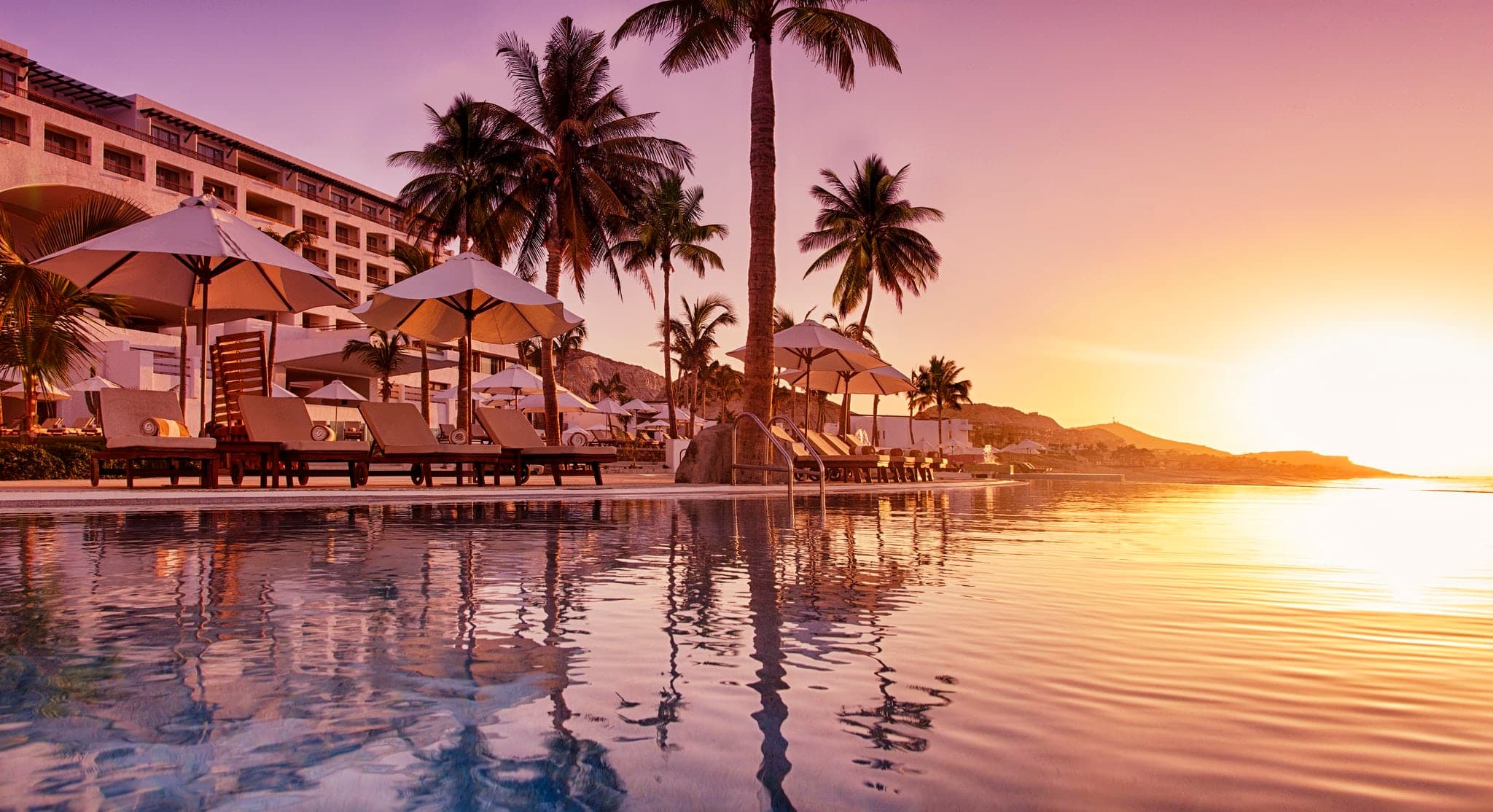
If Luis Barragán designed a Bond villain’s lair, it would look like the Marquis. This is not your typical Baja hacienda kitsch of thatched roofs and mariachi bands. Instead, a colossal, whitewashed concrete archway—so massive it feels like a civic monument—frames the turquoise horizon, acting as a brutalist lens focused entirely on the Sea of Cortez. The architectural ambition here is palpable; the lobby is an open-air cathedral of sea breeze where the silence is heavy and expensive. Strictly adults-only, the resort trades spring break chaos for a sedated, sophisticated calm. The 235 suites are less 'hotel room' and more 'private observation deck,' stocked with L'Occitane toiletries and Nespresso machines, though the real amenity is the absence of noise. Dining is serious business: skip the buffet for 'Canto Del Mar,' the fine-dining French outpost where the four-course tasting menu justifies its surcharge with impeccable foie gras and local catch. While the beach is unswimmable due to the violent undertow (a common Cabo trade-off), the three infinity pools offer a serene, chlorine-scented alternative. It is a place for design purists who want to look at the ocean, not frolic in it.
“Every suite has a 'secret' service cubby next to the entrance door. Place your coffee order the night before, and staff will deposit fresh pastries and caffeine silently at dawn without ever knocking or waking you.”
Insider TipAvg. Nightly Rate
600USD