No. 01

27 Av Des Far Casablanca MoroccoCasablanca235 verified reviews
9
.6
Bitvoya Edit
Layering imagery, place, and detail before the page opens.
Casablanca is a city where architecture tells a story, earning its reputation as a living museum of the 20th century. Known as the 'White City,' its streets are lined with Mauresque and Art Deco masterpieces that transport visitors back to the glamour of the 1930s. The curated collection includes the intimate Hôtel & Spa Le Doge, a jewel of the Art Deco era located in the quiet Gauthier district, and the grandiose Royal Mansour Casablanca, which redefines heritage luxury. From the bustling City Center near Boulevard Mohammed V to the breezy elegance of the Corniche, these properties are not just places to stay—they are gateways to the soul of Morocco's economic capital.
Casablanca offers a unique architectural narrative that differs significantly from the imperial cities of Marrakech or Fez. Here, the allure lies in the fusion of Neo-Mauresque and Art Deco styles, a testament to the city's boom in the early 20th century. Choosing a hotel from our "Living History" collection means immersing yourself in an era of cinematic romance and colonial elegance. Properties like the Hyatt Regency Casablanca and the Sofitel Casablanca Tour Blanche serve as modern landmarks amidst historic surroundings, offering panoramic views of the Old Medina and the Hassan II Mosque.
Expect high ceilings, geometric patterns, and wrought-iron balconies characteristic of the Art Deco movement. Hotels in this category often blend these historical elements with contemporary Moroccan craftsmanship—Zellige tiles meeting velvet furnishings. Service is impeccable, reflecting the legendary Moroccan hospitality. Whether you are sipping mint tea in the atrium of the Le Casablanca Hotel or enjoying a rooftop cocktail at the Casablanca Marriott Hotel, the experience is a sophisticated blend of the past and the present.
Hôtel & Spa Le Doge - Relais & Châteaux is widely considered the premier example, being a restored 1930s townhouse that authenticates the Art Deco era.
The City Center (Centre Ville) and Gauthier neighborhoods are best for history lovers as they host the highest concentration of preserved Art Deco buildings.
Yes, properties like Royal Mansour and Hyatt Regency blend historical architecture with top-tier modern luxury, including spas, Wi-Fi, and fine dining.
Explore our complete curated list of luxury accommodations, from boutique hideaways to grand dames.
Explore All Casablanca HotelsAfter an eight-year slumber and a floor-by-floor reconstruction, the Royal Mansour Casablanca has reawakened, shedding the riad-style intimacy of its Marrakech sister for a bold, 1950s Modernist swagger. This isn't just a hotel; it is the White City's social axis restored. The lobby hits you first—not with rose petals, but with a surreal Amazonian aquarium wall and a glass footbridge that feels like walking on air. Upstairs, the 149 rooms and suites trade Moroccan maximalism for sleek, mid-century restraint: think rare Namibian marble, Frette linens that ruin you for home, and lighting that flatters even after a red-eye. The service is telepathic, appearing only when summoned. Dining is an event: 'La Grande Table Marocaine' serves a Royal Pigeon Pastilla so delicate it shatters at a glance, while the 23rd-floor rooftop offers the city's best Atlantic sunset. It is expensive, yes, but for a time capsule of mid-century glamour powered by 2025 tech, it is unrivaled.
“Book a table at 'Le Rooftop' specifically for sunset; the glass-walled space offers the only unblocked view of the Hassan II Mosque lighting up against the darkening Atlantic.”
Insider TipAvg. Nightly Rate
605USD
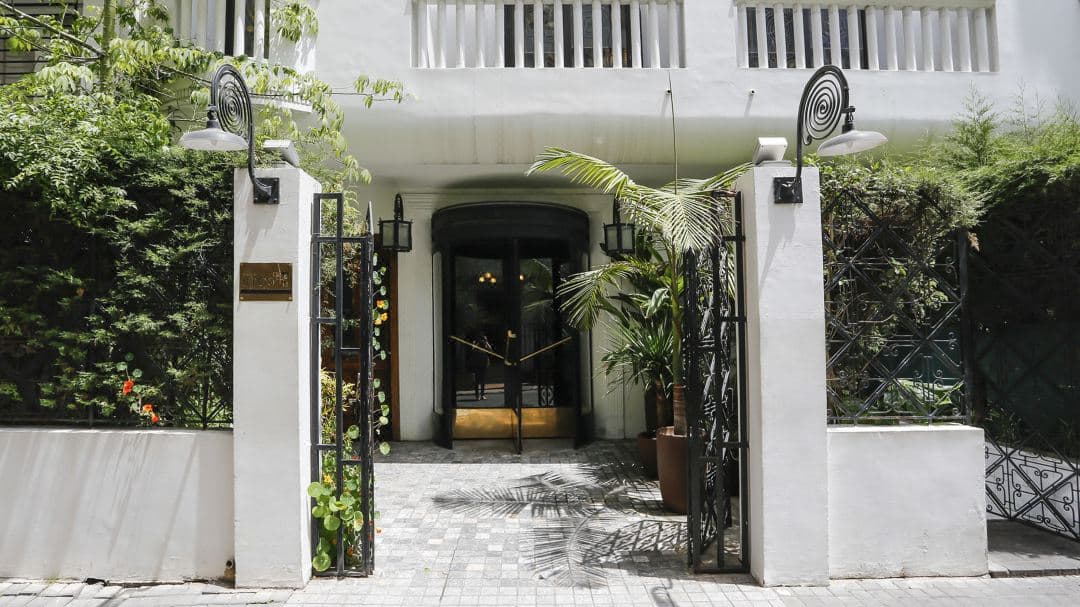
Forget the faux-movie sets; Hôtel & Spa Le Doge is the real 1930s deal. Tucked away in a quiet enclave of the White City, this Relais & Châteaux mansion doesn't just mimic the Art Deco era—it preserves it in amber. The moment you step past the whitewashed façade, the Red Velvet spiral staircase and original stained glass seize your attention, banishing the dust of modern travel. With only 16 rooms, the intimacy is profound. Each suite honours a cultural icon; the Josephine Baker Suite, with its kaleidoscope of colored glass, feels less like a hotel room and more like a private boudoir from the Jazz Age. While the vintage charm includes the occasional squeaky floorboard and the unfiltered soundtrack of city street life (yes, even the barking dogs), it feels like cinematic verité rather than a nuisance. Dining is a serious affair at Le Jasmine, where the slow-braised Essaouira lamb with preserved lemon confit offers a masterclass in Moroccan subtlety. Afterward, a steam session in the spa using local Arganis products scrubs away the day's grit. It’s not a polished international chain hotel, and that is precisely the point.
“Request the Josephine Baker Suite specifically for its mesmerizing original stained-glass windows, which cast a technicolor glow over the room at sunrise.”
Insider TipAvg. Nightly Rate
196USD
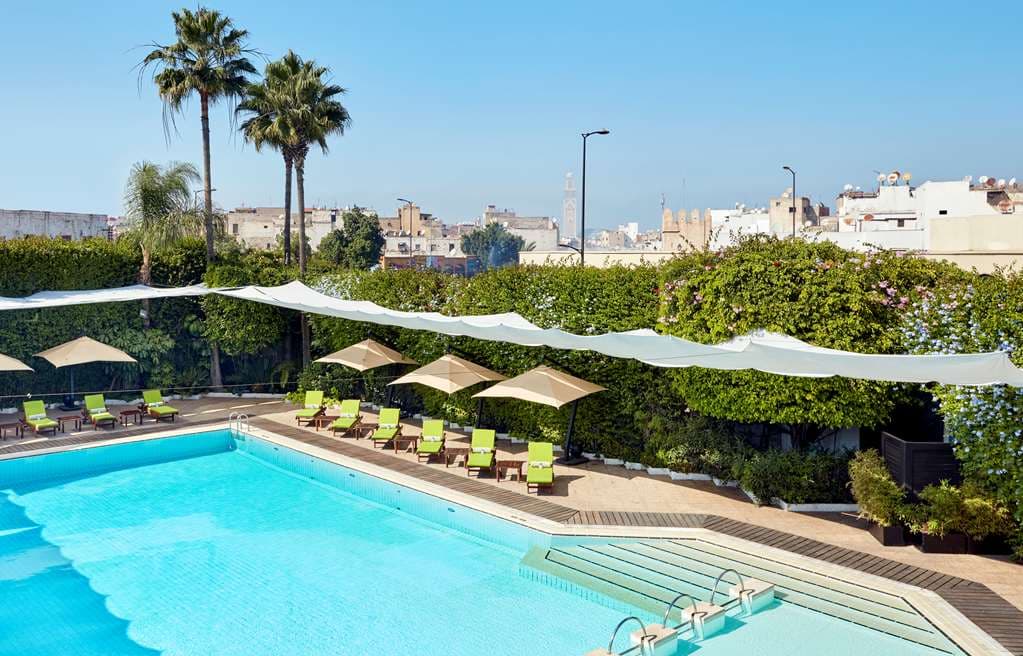
Casablanca is not a film set; it is a frantic, white-washed metropolis, and the Hyatt Regency acts as its uncompromising anchor at Place des Nations Unies. For the design purist, the location is the ultimate amenity—you are steps from the city's finest Mauresque-Art Deco facades. Inside, the hotel serves as a time capsule of late-20th-century luxury. The lobby is a grand, polished cavern of marble that hums with business deals, but the guest rooms tell a different story. While spacious, the interiors feel caught in a previous decade, featuring heavy wood furniture and carpets that have seen better days, though the Technogym-equipped fitness center remains sharp. The redemption lies in the culinary heritage. Skip the room service club sandwich and descend to Dar Beida for the pigeon pastilla—a textural masterpiece of flaky pastry and savory poultry—or Café M for a precise sea bass carpaccio. Service here retains a formal, white-glove cadence often lost in younger boutique properties. It requires a renovation to match the Four Seasons, but for now, it remains the city’s most authentic, if slightly faded, grand dame.
“Request a high-floor room ending in '05' or '12' facing north-west for a direct line of sight to the Hassan II Mosque minaret.”
Insider TipAvg. Nightly Rate
148USD

Forget the Art Deco fantasy for a moment; this is Jean-François Zevaco’s Brutalist reality. Standing like a concrete sentinel near the Casa Port station, the Marriott is less about Gatsby-esque glamour and more about mid-century muscle. The Greatroom lobby, a cathedral of curved walnut walls and soaring ceilings, hums with the kinetic energy of a deal-closing business hub—though the lingering scent of tobacco often betrays its status as a moody local lounge rather than a sterile international outpost. Upstairs, the experience is a study in contrast. The elevators trudge rather than glide, and the hallway hardware whispers of decades past, but the Concierge team operates with a military precision that saves the day. Dining is the unexpected protagonist here: Chef Taki at 'La Braise D'or' treats premium beef cuts with a reverence usually reserved for religious artifacts, while the live egg station at 'BaB Restaurant' delivers Msemen (Moroccan pancakes) so flaky they ruin you for standard pastries. It lacks a pool—a distinct failure in this climate—and the spa is shuttered, but as a strategic base bridging the chaotic Old Medina and the corporate center, it functions. It is not a resort; it is a high-functioning machine with a very human heart. **Verdict**: A flawed but essential power-player for the traveler who prioritizes location and steak over swimming.
“Request a room on the 9th floor or higher facing North-West; the view clears the port infrastructure to reveal the Hassan II Mosque in the distance.”
Insider TipAvg. Nightly Rate
162USD
If Jay Gatsby had fled to North Africa instead of meeting his watery end in West Egg, he would have checked into Le Casablanca Hotel. It is a curious, magnificent illusion: a relatively new build that masquerades entirely convincingly as a relic of the 1930s. The lobby alone—a dizzying expanse of checkerboard marble, crystal chandeliers, and velvet upholstery—feels less like a check-in desk and more like a film set waiting for a director to yell “Action!” Unlike the grand, dusty dames of the city, this property is a curatorial triumph. The rooms are plush, anchored by memory foam mattresses that defy the jet lag, though the Art Deco commitment extends to the windows—meaning street-facing rooms admit the roar of the Boulevard Moulay Rachid along with the light. Ask for the garden side. Here, the sensory pool (adults only, thank heavens) and the lush palms create a tranquil urban resort vibe that feels miles from the chaotic Corniche. Dining is the hotel’s strongest act. At La Pergola, the pigeon risotto with tartuffata is rich, earthy, and unashamedly decadent, while the ‘Terrasse Jasmin’ offers a Captain’s Vol-au-vent that destroys any diet in the best way possible. The service? Well, it operates on a languid, cinematic timeline—charming, but occasionally slower than the plot of an arthouse film. But for this level of style? We’ll wait.
“Book a Garden View room to escape the boulevard noise, and visit the sensory pool after 6 PM for a private, atmospheric dip.”
Insider TipAvg. Nightly Rate
208USD
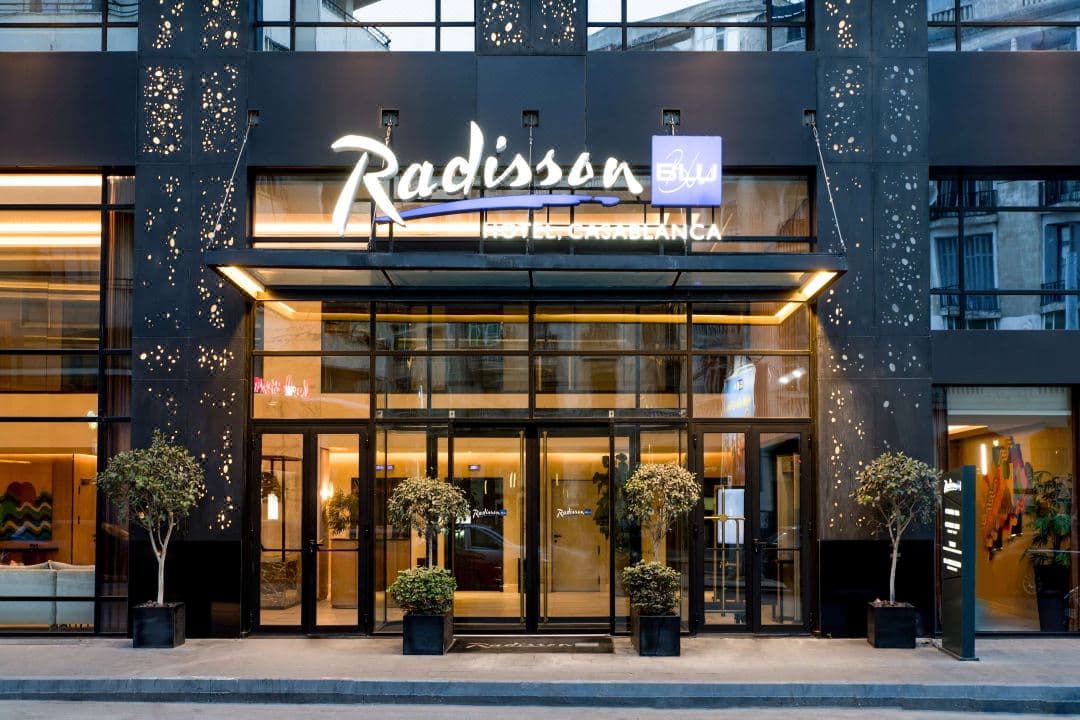
It requires a certain audacity to drop a glass monolith right onto Boulevard Mohammed V, the dusty, chaotic artery of Casablanca’s Art Deco heritage. Yet, the Radisson Blu City Center doesn’t try to mimic the colonial stucco; it offers a high-definition vantage point to observe it. Designed by Spanish architect Jaime Beriestain, the interiors act as a gallery, anchored by the vivid modernist strokes of Mohamed Melehi in the lobby—a sharp rebuke to the expected nostalgia. Upstairs, the rooms trade Moroccan ornamentation for screen-printed glass partitions and urban lines, mercifully soundproofed against the relentless rattle of the T1 Tram below. The sensory payoff, however, is vertical. At Caprice Sky Bar, the handcrafted cocktails play second fiddle to a skyline that stretches from the gritty Central Market to the Atlantic. Dinner at La Brasserie Collection is a precise affair; the Grilled Sea Bass is executed with a consistency that business travelers demand and leisure guests hope for. It is not a riad. It is a cosmopolitan shield, complete with a Cinq Mondes spa and a heated vitality pool, protecting you from the city’s beautiful, exhausting friction.
“Skip the standard treadmill run; the indoor 'Vitality Pool' has hydro-massage stations that are usually empty before 9 AM.”
Insider TipAvg. Nightly Rate
103USD
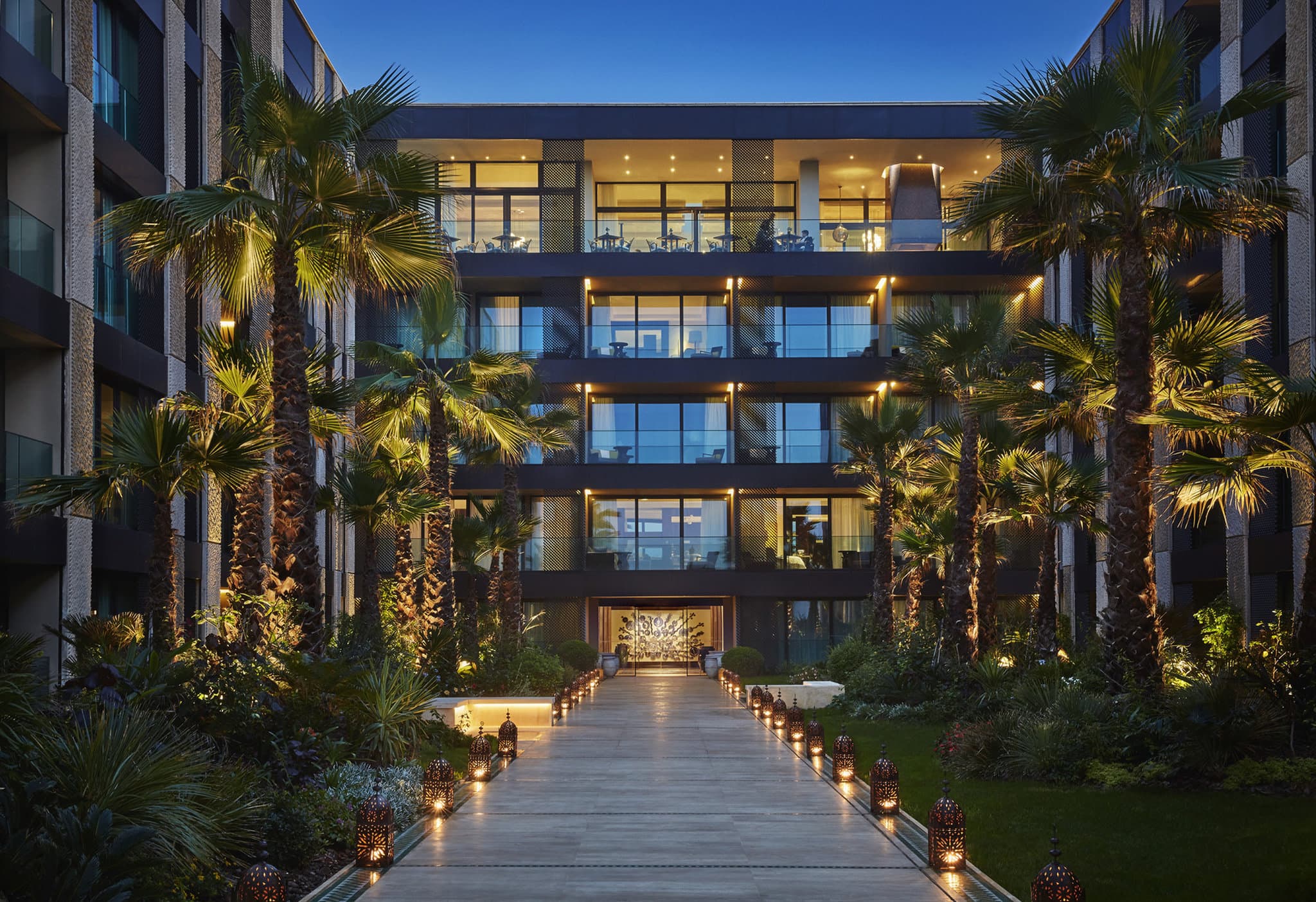
Casablanca is a city of cinematic chaos; the Four Seasons is its polished, soundproofed antidote. Anchoring the Norman Foster-designed Anfa Place, this property trades the medina’s grit for the breezy, manicured nostalgia of the 1920s resort life. The arrival is pure theater: a canopy of 1,225 ceramic gold pots that glint like solidified sunshine. Inside, the rooms are startlingly generous—starting at 47 square meters—outfitted with signature bedding that effectively erases jet lag. Dining at 'Bleu' is a visual feast of mural-covered walls and floor-to-ceiling Atlantic views, where the Dakhla oysters and charcoal-grilled fish are impeccably sourced. But the traveler must be warned: this is a 'dry' property. There are no martinis to be had in the Mint lobby lounge, a policy that catches many leisure guests off guard. However, one hardly misses the spirits when the Guerlain Spa offers such intoxicating treatments. It is a seaside sanctuary that feels miles away from the city center, yet distinctly of this place.
“Request a 4th-floor room on the ocean side for an unobstructed view of the El Hank Lighthouse without the pool noise.”
Insider TipAvg. Nightly Rate
427USD
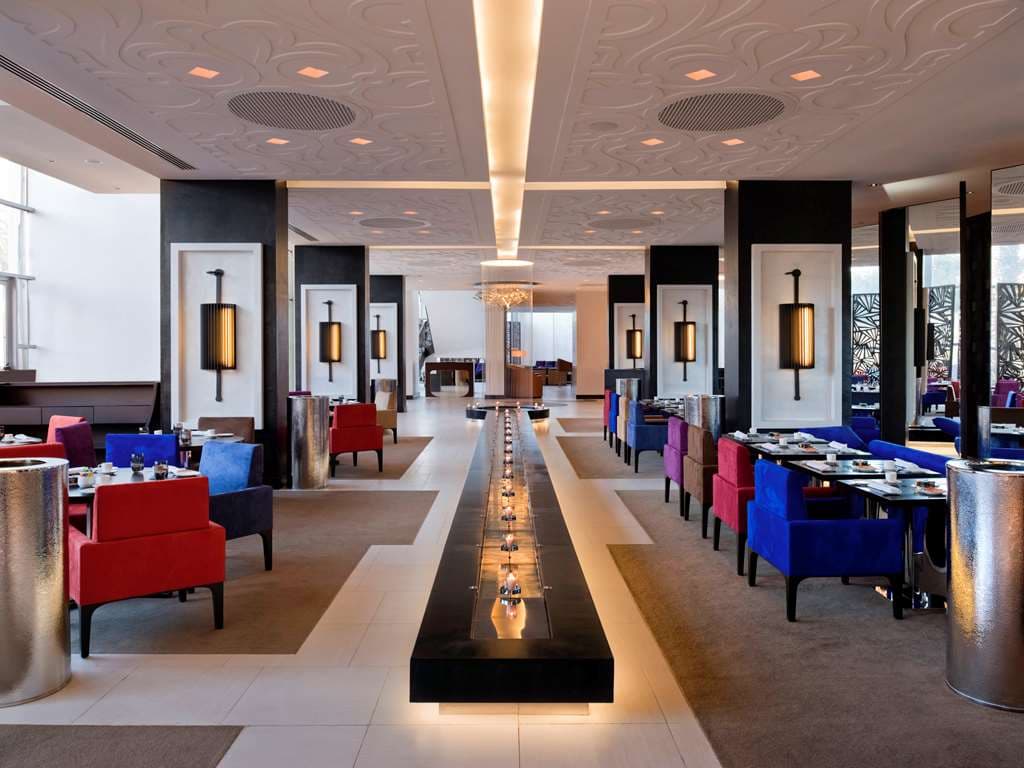
In a city defined by its cinematic nostalgia and Art Deco ghosts, the Sofitel Casablanca Tour Blanche offers a sharp, vertiginous jolt of the present. Rising 24 stories above the chaotic pulse of the Sidi Belyout district, this glass monolith—penned by architects Marc Hertrich and Nicolas Adnet—doesn’t just overlook the White City; it reframes it through floor-to-ceiling glazing. The interiors are a moody dialogue between French restraint and Moroccan exuberance: think bronze mirrors, curved wood ceilings, and a lobby that feels more like a gallery than a check-in zone. Upstairs, the rooms are sanctuaries of silence, equipped with signature Sofitel MyBeds and Bose Wave systems, though the real showstopper is the view of the Hassan II Mosque floating on the Atlantic. Bathrooms are stocked with Lanvin amenities, a chic touch that distracts from the occasional olfactory hiccup of dampness—a lingering side effect of the sea air that the maintenance team battles valiantly. Dining is a high-wire act of variety: ‘Min Koy’ delivers precise sashimi, while ‘Brasserie Flâneur’ elevates the humble roasted chicken with garlic confit to an art form. For the brave, ‘Dans Le Noir’ offers sensory dining in total darkness, a gimmick that surprisingly delivers on flavor. While the check-in can suffer from a languid pace, the concierge team’s ability to unlock the Medina’s secrets makes the wait forgivable. It’s imperfect, yes, but undeniably the most sophisticated vantage point in town.
“Request a 'Luxury Room' on the 20th floor or higher facing North-West. These specific units offer the most direct, unobstructed sightline of the Hassan II Mosque minaret lit up at night.”
Insider TipAvg. Nightly Rate
127USD