No. 01
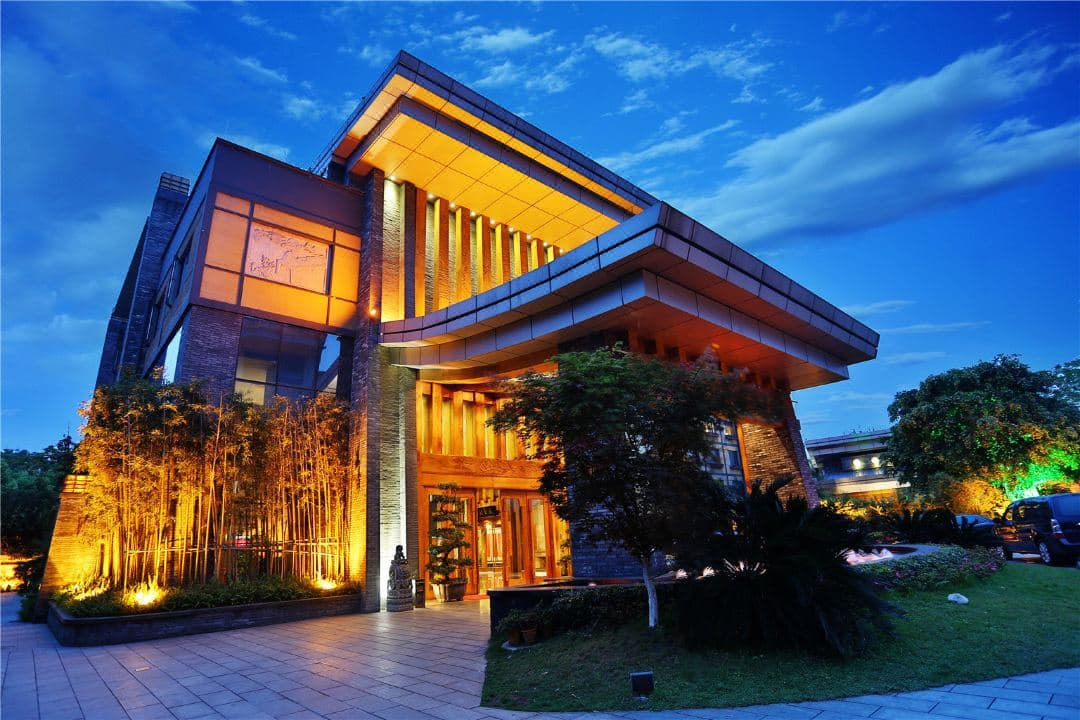
ChengduChengdu1519 verified reviews
9
.8
Bitvoya Edit
Layering imagery, place, and detail before the page opens.
Chengdu is a city of contrasts, where the rapid pulse of modern China meets the slow, deliberate pour of a traditional tea ceremony. In our curated collection, 'Tea & Tranquility,' we explore properties that masterfully blend luxury with the ancient philosophy of Zen. From the lush foothills of Qing Cheng Mountain to the heritage-rich alleys of the Jinjiang District, these hotels offer more than just a place to sleep—they provide a sanctuary for the soul. Whether it's the architectural marvel of The Temple House or the secluded whispers of Huanhuaxi, discover urban oases where the chaos of the city dissolves into the steam of a perfect cup of tea.
Chengdu is globally renowned not just for its pandas, but for its deeply rooted tea culture and laid-back lifestyle. For the discerning traveler, this city offers a unique category of hospitality: the Zen-inspired urban oasis. Properties like The Temple House and AHN LUH GUANTANG exemplify this by integrating traditional Sichuanese architecture—such as courtyard layouts and bamboo landscaping—with ultra-modern luxury. These hotels are designed to be destinations in themselves, offering exclusive tea ceremonies, meditative spaces, and spas that utilize local herbs, providing a seamless transition from the bustling streets to profound silence.
To fully immerse yourself in Chengdu's tranquil side, location is key.
Expect a shift in pace. Upon entering properties like Tsingpu Chengdu Retreat or Guanyin Yiyuntai Hotel, the experience is curated to slow you down. Design elements often feature wood, stone, and water. In-room amenities frequently include high-quality loose-leaf tea sets rather than standard coffee pods. Service is intuitive and unobtrusive, adhering to the principles of mindfulness. Whether it is a private hot spring tub or a library filled with classics, every detail invites introspection and relaxation.
These hotels incorporate traditional Sichuan architecture, courtyards, extensive bamboo landscaping, and tea culture amenities to create a peaceful, meditative atmosphere amidst the city.
Six Senses Qing Cheng Mountain is the premier choice, located at the foot of the Taoist Qing Cheng Mountain, offering luxury villas and nature immersion.
Yes, properties like The Temple House and AHN LUH GUANTANG often provide in-house tea ceremonies and high-quality tea sets in guest rooms.
Explore our complete curated list of luxury accommodations, from boutique hideaways to grand dames.
Explore All Chengdu HotelsForget the glass towers of the IFS; the Chengdu Huanhua Hongtai Hotel is where you go to channel your inner Du Fu. Located practically inside the grounds of the poet’s Thatched Cottage, this property feels less like a hotel and more like a wealthy Qing dynasty merchant's private estate. The architecture is a study in raw timber and shadow—moody, tactile, and refreshingly analog in a digital city. Inside, the experience relies on the soft power of service rather than flashy tech. Personal butlers (look out for the legendary staff like 'Jia Yu' mentioned by regulars) materialize with wooden buckets for a nightly herbal foot soak—a non-negotiable ritual here that pairs perfectly with the complimentary silver ear soup. While the hardware bears the patina of its 2012 origins—don't expect smart-home voice controls—the hand-embroidered Shu silk accents and the absolute silence of the Huanhuaxi Park backdrop compensate. Dinner at the on-site Du Lin Fang is essential; the Eight Treasure Gourd Duck is a culinary antique worth savoring. It’s a place for slow living, not fast Wi-Fi.
“Skip the lobby coffee; instead, ask your butler to arrange a private tea session in the garden courtyard during the 'golden hour' (4 PM) when the light hits the ancient timber facade.”
Insider TipAvg. Nightly Rate
105USD

Forget the frantic energy of Chunxi Road. The real flex in Chengdu isn't scoring a table at the loudest hotpot joint; it’s disappearing into the architectural hush of Ahn Luh Guantang. Located in the heritage-listed Guantang Village, this isn’t just a hotel; it’s a masterclass in the concept of 'hidden light'—a design philosophy by Beijing PRO that refuses to glare, choosing instead to reveal textures of wood and clay through shadow. The 34 villas are exercises in restraint, though the amenities scream quiet luxury: think B&O speakers for your meditative playlists and Swedish mattresses that arguably cost more than a Tesla. The defining moment, however, is at the Infinity Tea Pavilion. Here, sipping 'GuanTang Three Treasures' tea while overlooking the water isn't just a pastime; it's a cinematic event. Service is hyper-personalized—butlers like Xiao Li don’t just book tables; they anticipate your need for chrysanthemum tea before you even feel the tickle in your throat. It’s polished, precise, and profoundly calm.
“Book a villa facing the fields in March. The rapeseed flowers bloom in a blinding sea of yellow—best viewed from your private courtyard with a Tang-style pastry in hand.”
Insider TipAvg. Nightly Rate
310USD
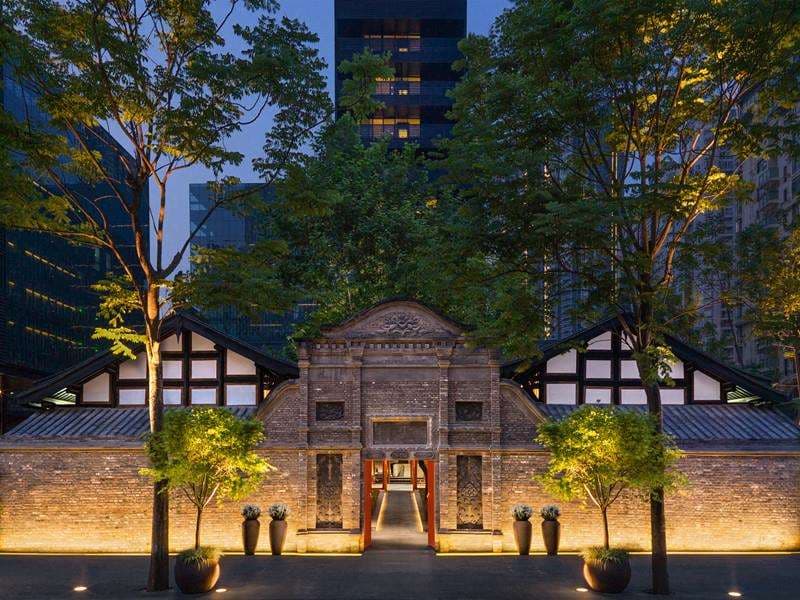
If the bustling lanes of Sino-Ocean Taikoo Li are Chengdu’s beating heart, The Temple House is its deep, meditative exhale. Entering through the Bitieshi—a meticulously restored Qing Dynasty courtyard—feels less like a hotel arrival and more like a scene from a period drama, until you’re whisked into the ultra-modern, monochrome embrace of the main towers. The House Collective doesn’t do small, and here, even 'entry-level' Studio 60 rooms span a massive 63 square meters, dwarfing local competitors. The aesthetic is moody and tactile: charcoal stone, oak timber, and lighting so atmospheric you might need a moment to find the switch. But the darkness works. It pushes you toward the light-filled sanctuary of the bathroom (arguably the room’s centerpiece) or down to the limestone-clad indoor pool, illuminated by fantastical woven brass skylights. Dining is equally deliberate. Mi Xun Teahouse doesn’t just pay lip service to wellness; it flaunts a Michelin Star and a Green Star for plant-based wizardry like the Vegan Mapo Tofu with Chanterelles—a dish so rich it defies its meatless status. For a nightcap, skip the street bars and hit Jing Bar for a Sichuan Negroni. Service is telepathic rather than attentive, with a complimentary 'Maxi-bar' that actually feels generous. It’s not just a place to sleep; it’s a masterclass in slow living.
“Book a treatment at Mi Xun Spa specifically for the 'Cha' series, which uses tea-infused Thémaé products, then hide away in the secret library adjacent to the lobby for uninterrupted reading.”
Insider TipAvg. Nightly Rate
305USD
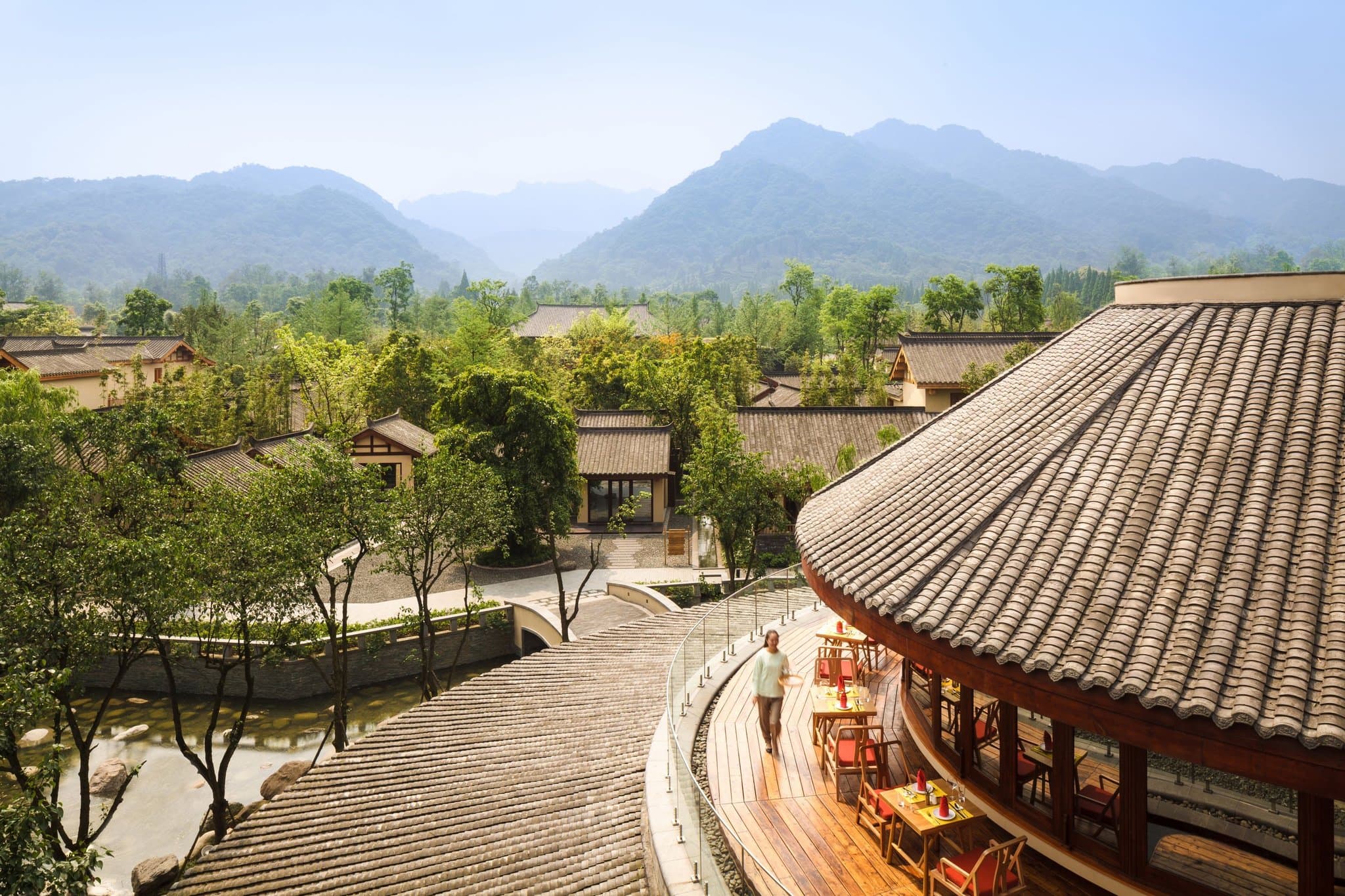
Forget the "hidden gem" clichés; this is a full-scale spiritual reboot 45 minutes from Chengdu’s gridlock. Anchored at the base of Taoism’s birthplace, the resort mimics a historical village so convincingly you expect a scholar to drift past in silk robes. Yet, the nostalgia is a facade for high-tech comfort. While the cedar-wood walls and curved eaves whisper history, a smartphone app silently commands your blackout blinds and climate control. The wellness game here is aggressive. We aren't talking about a generic Swedish massage; the 1,710 sqm Six Senses Spa pushes "Daoyin Tao" rituals and Tai Chi sessions in a garden that feels pulled from a master’s ink wash painting. Dining requires strategy: skip the international standards and head to '28 Zodiac' for Mapo Tofu that actually numbs the tongue with local peppercorns, or 'Farm2Fork' where the Wagyu short rib has been slow-cooked for 32 hours—likely longer than you’ve slept this week. Service has the occasional language hiccup, but when a buggy driver reverses 200 meters just to hand you an umbrella before the rain starts, you forgive the grammar. It’s a hefty price tag, but for a legitimate disconnect from the digital noise, it delivers.
“At Moon Bar, order the 'Liang Yao Ku Kou' (Bitter Medicine) cocktail—a complex mix of local herbs that tastes far better than its name suggests.”
Insider TipAvg. Nightly Rate
215USD

Chengdu is usually a sensory assault of bubbling chili oil and selfie-stick crowds clamoring for pandas. Mandorla · Shiyuesenlin is the antidote. Anchored in the hills near the restored Taiping Kiln, this retreat doesn’t just sit in the forest; it reflects it. The ‘Mirror House’ architecture camouflages the structures into the greenery, effectively erasing the hotel—and you—from the grid. Inside, the 98-square-meter suites are an exercise in monastic opulence, eschewing the typical hotel gym/pool combo for private terrace hot springs that demand you do absolutely nothing. Dining at 'Yao Yue' is a non-negotiable slow ritual; the Taiping Dry-Braised Fish is an earthy revelation that makes the drive from the city center worth every kilometer. Between the pottery workshops and the resonance of singing bowls in the spa, the vibe here is strictly anti-stress. It’s not for the traveler who needs a lobby scene; it’s for the one who pays a premium to avoid it. Verdict: The ultimate concrete detox.
“Skip the standard suites and request the Star-Gazing Duplex; the skylights turn the ceiling into a live feed of the forest canopy.”
Insider TipAvg. Nightly Rate
250USD
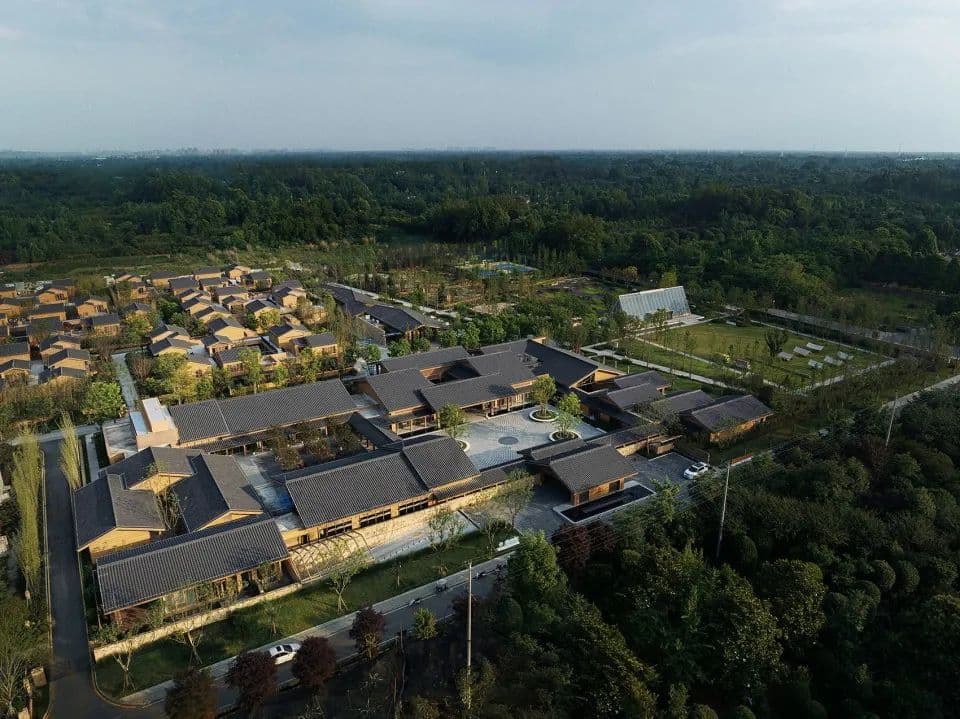
While downtown Chengdu buzzes with caffeinated energy, the Angsana Chengdu Wenjiang offers a masterclass in the slow exhale. Located directly across from the restored Qing Dynasty Chenjia Yard, this property isn't just a hotel; it’s a architectural dialogue between past and present, orchestrated by the heavyweights at CCD (Cheng Chung Design). The vibe is immediate upon entry: a lobby anchored by dramatic red hibiscus artwork—a nod to the city’s floral emblem—set against stark, meditative symmetry. The 153 rooms masterfully balance heritage aesthetics with serious modern comforts. Think sloping roofs and bamboo-woven accents meeting Dyson hair dryers and Japanese-style smart toilets. It’s a tactile experience; the linens are crisp, and the wood finishes feel organic, not manufactured. Dining is an affair of spice and smoke; the onsite restaurants serve authentic Sichuan chili-laden plates alongside unexpected wood-fired barbecue options. For the active luxury traveler, the inclusion of a Vpark pump track is a wild, brilliant anomaly, while the signature Angsana Spa remains the reliable sanctuary for those who prefer their heart rate steady. It’s a trek from the city center, but that’s precisely the point.
“Skip the standard rooms and request a ground-floor Courtyard Villa if you’re traveling with a pet—the hotel is surprisingly animal-friendly and offers direct garden access.”
Insider TipAvg. Nightly Rate
276USD
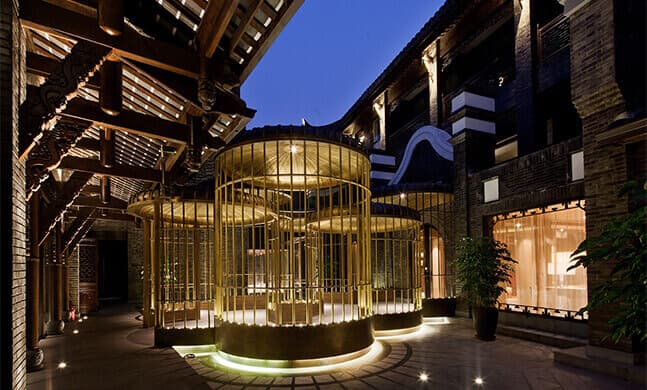
If Chengdu is a boiling pot of mala spice and noise, Guanyin Yiyuntai (formerly Diaoyutai) is the cooling slate of jade dropped into the center. Situated in the literal jugular of Kuanzhai Alley—where tourists swarm like bees—this property pulls off the ultimate magic trick: total, suffocating silence. The interiors, penned by Cartier architect Bruno Moinard, are a masterclass in 'East-meets-West' without the usual kitsch. Expect a cinematic journey of red lacquer corridors and bamboo-shaded courtyards that feel less like a hotel and more like a Qing Dynasty official’s private sanctuary. The rooms are exercises in restraint—think cotton-flax linens, mute-toned wood, and Dyson-grade silence, though be warned: the heritage status means no pool and a pedestrian-only arrival that forces a humble walk to the gate. But you are here for the food. This is the only kitchen outside Beijing authorized to serve the official 'State Banquet' cuisine. The 'Buddha Jumps Over the Wall' isn't just soup; it’s a religious experience of collagen and history. Verdict? The ultimate 'Great Hermit' escape for those who want to see the crowd, but never hear them.
“Skip the street snacks outside. Book the 'Royal Court' dinner 24 hours in advance for the Codfish in Golden Soup—it’s the exact dish served to visiting dignitaries.”
Insider TipAvg. Nightly Rate
240USD
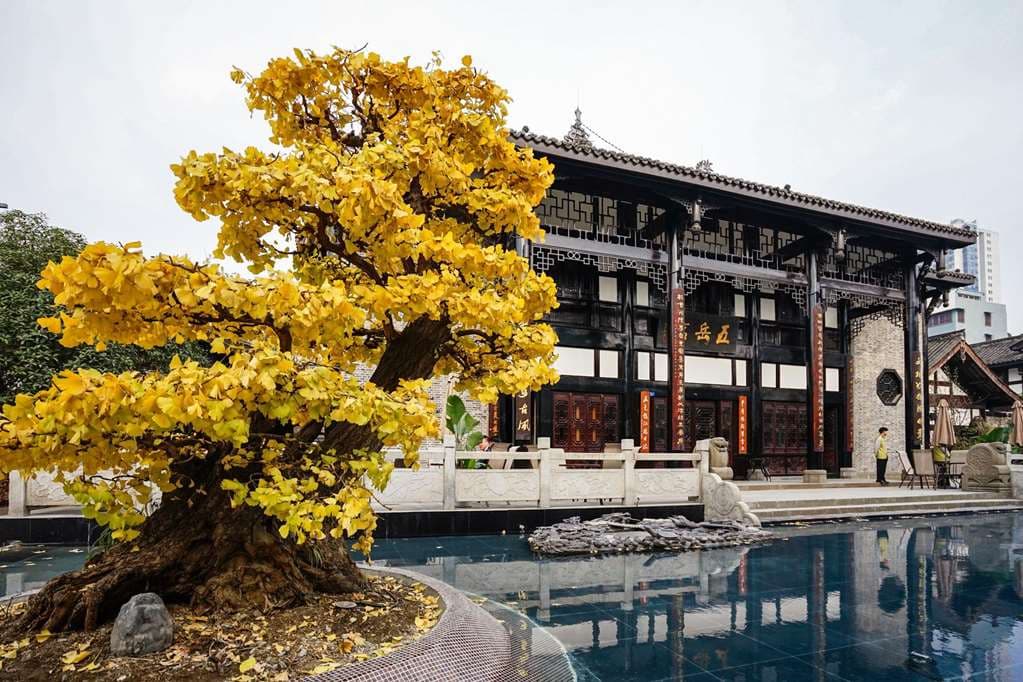
If the Ritz-Carlton is a power suit, the Chengdu Courtyard Hotel is a silk *changshan*—timeless, textured, and delightfully unhurried. Located a mere incense-drift away from the historic Wenshu Monastery, this restored *siheyuan* (courtyard house) offers a masterclass in the Chengdu 'Slow Life.' The architecture does the heavy lifting here; upturned eaves and grey-brick corridors frame a central courtyard that demands you put your phone down and pick up a *gaiwan*. The property isn't about high-tech excess—the plumbing can be vintage and the lighting moody—but it rewards the cultural purist with unparalleled atmosphere. The crowning jewel is the on-site restaurant, **Wu Yue Gong (五岳宫)**. Recognized by the Michelin Guide, it serves a refined Sichuan fusion that avoids tourist-trap clichés. The Chargrilled Beef Ribs are smoky and tender, while the Kung Pao Prawns offer a precise, scholar-level balance of sweetness and heat. Service is hushed and deferential, matching the Zen aesthetic. It is a place to read, sip scented tea, and listen to the rain on the roof tiles.
“Book a dinner reservation at Wu Yue Gong at least three days in advance; the private dining rooms are coveted by local elites.”
Insider TipAvg. Nightly Rate
90USD

Forget the flashing neon of Chunxi Road. Tsingpu Chengdu Retreat, anchored on the historic site of the Minjiang Academy, offers a silence so profound it feels curated. The arrival sets the tone: imposing Double-Dou Stone Masts flank the entrance, leading you into a labyrinth of deep wooden corridors and grey brick that feels less like a hotel and more like a scholar’s private estate. While the location is a commitment—a solid hour from the city center—the isolation is the point. The rooms are austere but textural, heavily leaning into the 'Zen' brief with bamboo accents and lantern-lit walkways. Dining is a highlight, specifically at Market Place (Shí Jí), where the handmade Dandan Noodles destroy any hotel buffet stereotypes. For dinner, Chun Feng serves seasonal Sichuan delicacies that actually pack a punch. The facilities are modest—no sprawling resort gym here—but the 300sqm infinity pool along the Jiang'an River makes up for it. Service is where Tsingpu flexes its muscle; the butlers don't just unpack, they curate. If you’re here for the vibe, it’s impeccable. If you want a quick city crash pad, look elsewhere. Verdict: A cerebral, moody hideaway for those who prefer calligraphy to clubbing.
“Request a room facing the Jiang'an River for maximum privacy, and definitely book the on-site Opera experience—it’s included and surprisingly authentic.”
Insider TipAvg. Nightly Rate
205USD
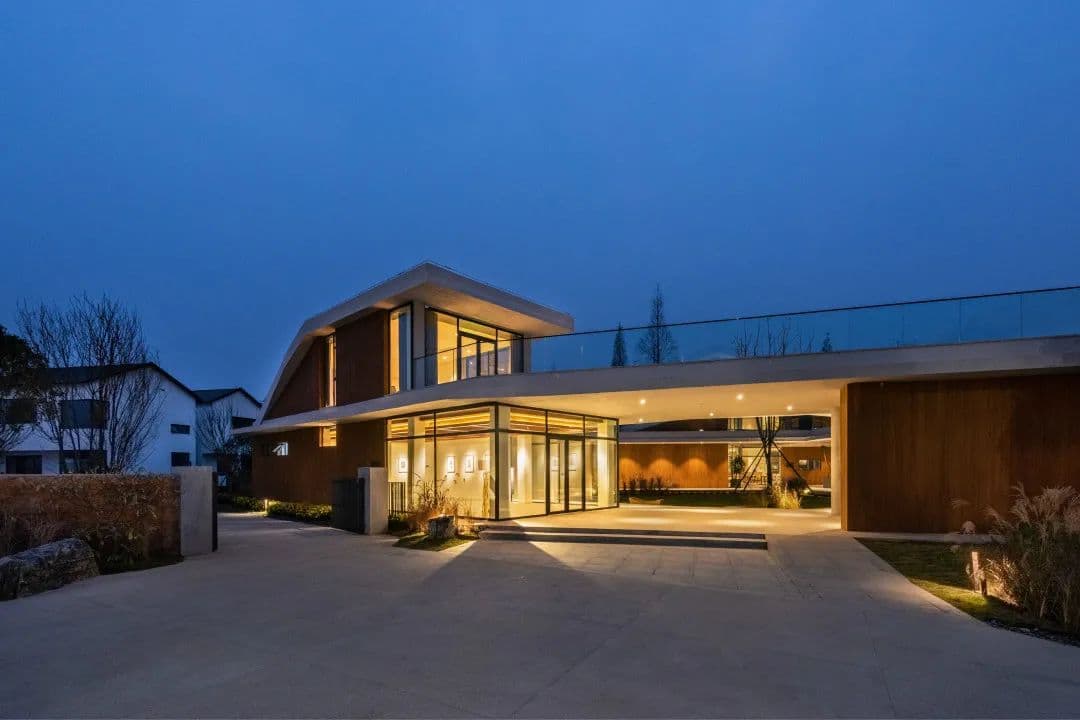
If downtown Chengdu is a fiery hotpot of kinetic energy, Volver Resort ANREN is the palate-cleansing herbal tea poured afterwards. Located in the time-capsule territory of Anren Ancient Town, this property doesn't just ask you to slow down; it practically confiscates your watch. The architecture is a moody dialogue between Republic of China manor elegance and sharp, modernist lines, all set against a 'Wizard of Oz' backdrop of swaying rice paddies. Check into a suite with an independent courtyard—privacy here is paramount, shielded by high walls and floor-to-ceiling glass that frames the rapeseed flowers like living oil paintings. The interiors are ruthlessly minimalist, devoid of visual clutter, directing all attention to the hidden luxury bubble pools tucked away in select rooms. Dining at Guiyuan Restaurant requires foresight (reservations are mandatory, a service quirk you’ll forgive once you taste the signature Fresh Pepper Beef), offering a farm-to-table honesty that puts city bistros to shame. While the proximity to nature means an occasional uninvited insect guest, the trade-off is a silence so profound you can hear the rice stalks growing. It’s imperfect, wild, and utterly restorative.
“Skip the standard rooms and secure a suite with a private bubble pool. Also, pack high-strength repellent—the 'wild luxury' aesthetic includes genuine wild mosquitoes.”
Insider TipAvg. Nightly Rate
85USD