No. 01

ChengduChengdu977 verified reviews
9
.6
Bitvoya Edit
Layering imagery, place, and detail before the page opens.
Chengdu is a city where time flows at two speeds: the rapid pace of a modern metropolis and the slow, steep of a traditional tea house. In our curated collection, "Architectural Alchemy," we explore properties that masterfully bridge this gap, fusing the intricate wooden joinery of the Qing Dynasty with sleek, contemporary minimalism. From the bustling lanes near Sino-Ocean Taikoo Li to the misty tranquility of Qingcheng Mountain, these hotels are not just places to sleep but living museums. Whether it represents the revitalization of a thousand-year-old courtyard in the Wuhou District or a modern reinterpretation of Sichuanese architecture in Wenjiang, each property invites you to step into a world where history is preserved through innovation.
Chengdu offers a unique landscape where the preservation of heritage is not just about museums, but about living spaces. Choosing a hotel from our "Architectural Alchemy" collection means immersing yourself in the rich tapestry of Sichuanese history without sacrificing modern luxury. These properties, such as the renowned The Temple House (Upper House) and the serene Six Senses Qing Cheng Mountain, leverage traditional materials like grey brick, timber, and bamboo, integrating them with state-of-the-art amenities. It is an experience that appeals to the culturally curious traveler who seeks authenticity alongside comfort. The fusion of Qing Dynasty courtyards with avant-garde interiors creates a visual dialogue that is unique to this region of China.
Guests can expect a sensory journey. Visually, you will see the stark contrast of flying eaves against glass walls. Properties like AHN LUH GUANTANG and Guanyin Yiyuntai Hotel (formerly Diaoyutai) emphasize private courtyards, offering seclusion and tranquility. Inside, expect high ceilings, bespoke furniture that nods to Chinese antiquity, and tea ceremonies welcomed upon arrival. While the exteriors whisper of the past, the interiors scream modernity—think smart room controls, world-class spas, and Michelin-starred dining that reinterprets Sichuan cuisine. This collection represents the pinnacle of Chinese hospitality design.
The Jinjiang District, particularly near Sino-Ocean Taikoo Li and Daci Temple, is best for blending heritage architecture with modern luxury. The Temple House is a prime example here.
Yes, properties like Six Senses Qing Cheng Mountain and Upper House Chengdu offer state-of-the-art amenities including smart technology, luxury spas, and fine dining, despite their traditional aesthetics.
Six Senses Qing Cheng Mountain is ideal for nature lovers, located at the foot of the Taoist Qingcheng Mountain, offering a luxurious retreat inspired by traditional architecture.
Explore our complete curated list of luxury accommodations, from boutique hideaways to grand dames.
Explore All Chengdu HotelsIt takes a certain audacity to build a hotel that attempts to disappear, but at Mandorla · Shiyuesenlin, the vanishing act is the point. Located in the quietude of Taiping Town, the property’s ‘Mirror House’ structure doesn’t just reflect the surrounding forest; it seemingly dissolves into it, a sleight of hand that allows the restored Qing Dynasty Taiping Kiln ruins to take center stage. The result is less a hotel and more a conversation between centuries. Inside, the narrative shifts from history to hyper-comfort. The entry-level suites are a staggering 98 square meters, rendering the lack of a public swimming pool irrelevant—especially when your private terrace boasts its own hot spring fed by local mineral waters. The aesthetic is strictly Wabi-sabi; think raw textures and minimalist tea platforms rather than gilded excess. Dining at Yao Yue Restaurant offers its own form of grounding, particularly the Taiping Dry-Braised Fish, a farm-to-table triumph that justifies the trek from downtown Chengdu. While the isolation might deter the nightlife set (there is zero external dining nearby), the 24-hour butler service ensures you never feel stranded. For those weary of Chengdu’s clamor, Mandorla offers a silence so profound it feels like a luxury amenity in itself.
“Since there is no public pool or gym, book a Duplex Suite for the skylights—perfect for stargazing from your private hot spring.”
Insider TipAvg. Nightly Rate
250USD
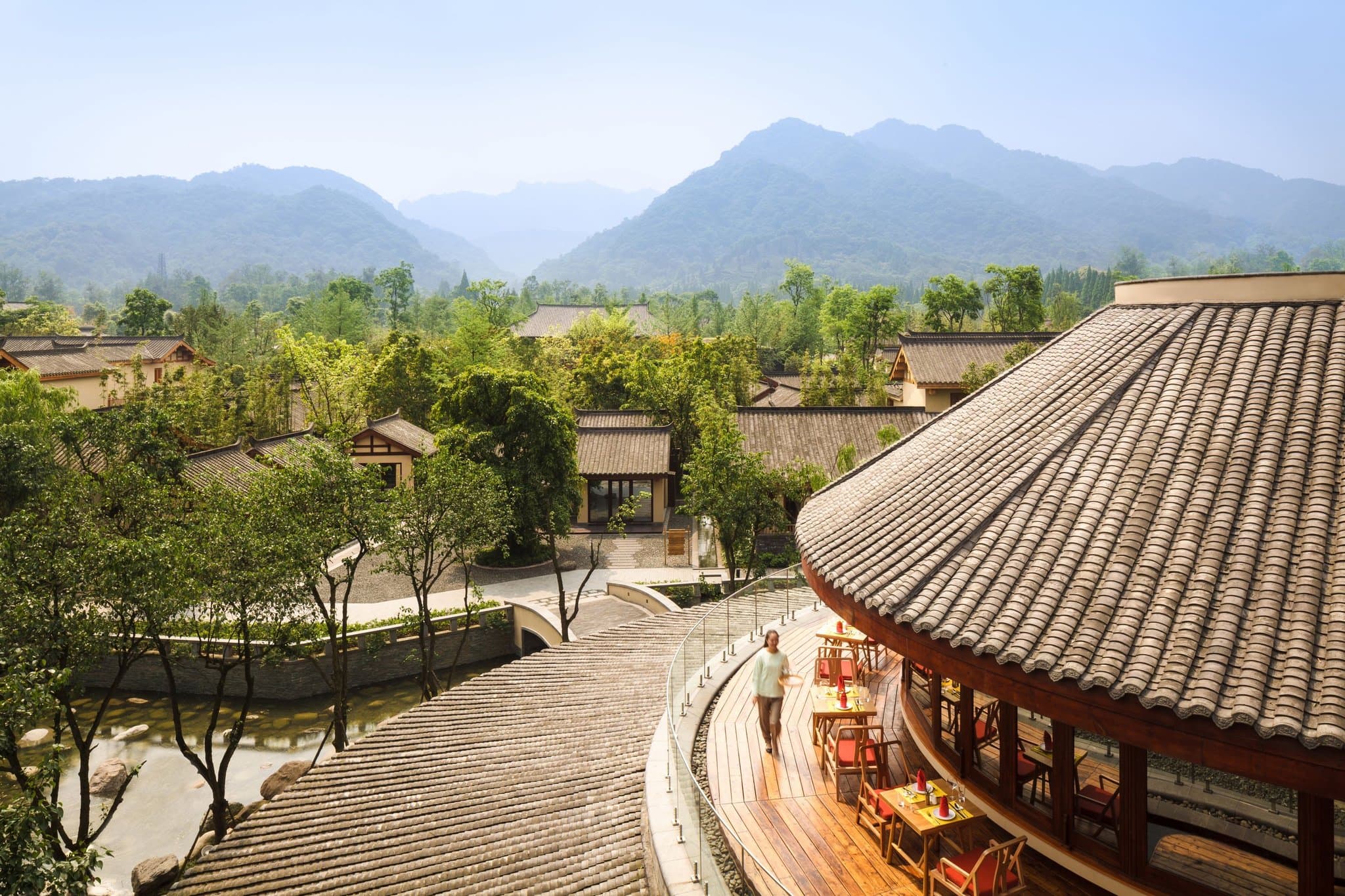
If a Qing Dynasty scholar and a Silicon Valley minimalist co-designed a retreat, this would be it. Anchored at the foot of the Dujiangyan UNESCO site, Six Senses Qing Cheng Mountain avoids the trap of performative heritage. Instead, it offers a architectural masterclass in 'vernacular luxury': curved eaves and exposed timber beams that frame a courtyard layout so precise it feels like a living ink painting. The suites are a study in contradictions—rustic bamboo surfaces conceal high-tech app-controlled lighting, though the inexplicable absence of smart toilets (a standard in Chinese luxury) feels like a jarring return to the analogue age. The beds, dressed in organic cotton, are impossibly soft clouds from which to watch the mist roll in. Culinary efforts are split. 'Farm2Fork' offers noble garden-to-table intentions, but for a true sense of place, the '28 Zodiac' restaurant is non-negotiable; the Mapo Tofu here packs a peppercorn numbing punch that justifies the steep pricing. Service is distinctively Sichuanese—warm and unhurried—though English proficiency can be as misty as the mountain views. Ultimately, this is a sanctuary for the soul, provided your wallet is heavy and your patience for 'rustic' plumbing is high.
“Request a second-floor Courtyard Suite for unobstructed mountain views above the bamboo canopy. Also, book the 'Panda Valley' volunteer tour through the concierge—it’s far less crowded than the main breeding center.”
Insider TipAvg. Nightly Rate
215USD
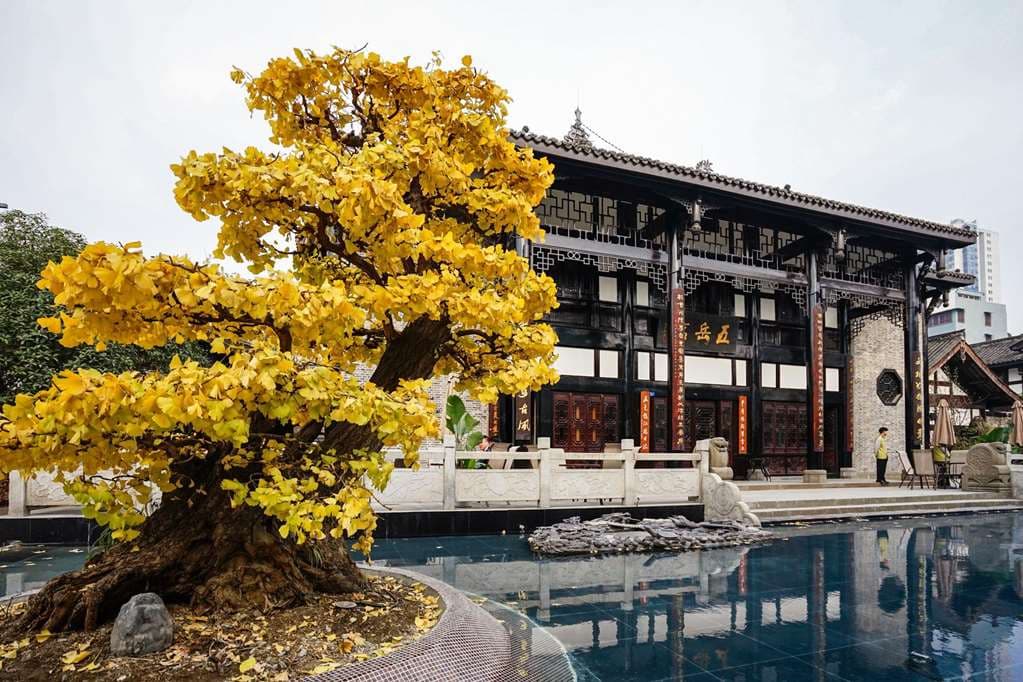
If Kuanzhai Alley is the chaotic pulse of Chengdu, Guanyin Yiyuntai (formerly Diaoyutai) is its silent, beating heart. Rebranded but retaining its Bruno Moinard-designed soul, this property performs a rare act of architectural alchemy: fusing the rigid geometry of a 300-year-old Manchu mansion with the fluid, jewelry-box elegance of a Cartier boutique. Stepping past the pedestrian-only threshold—where the roar of tourists instantly vanishes—you are met not with a lobby, but a series of ascending courtyards. The rooms are exercises in restrained opulence; expect 400-thread count linens, Dyson dryers, and bathrooms so lacquered they reflect your own calm back at you. The real theater, however, remains the dining. While the 'Royal Court' restaurant carries the weight of State Banquet history (think ‘Buddha Jumps Over the Wall’ served with diplomatic gravity), the Fangfei Garden Lounge is the true scene-stealer. Here, under a glass ceiling that frames the ancient bamboo, the Palace-style afternoon tea feels less like a meal and more like a performance art piece. Verdict: A masterclass in silence. It doesn’t just shut out the city; it replaces it with a better one.
“Request a room in the 'Kuan' courtyard for direct views of the alley's eaves without the noise. Note: The main Chinese restaurant is undergoing phased upgrades since late 2025; verify status or book the private dining rooms in advance.”
Insider TipAvg. Nightly Rate
240USD
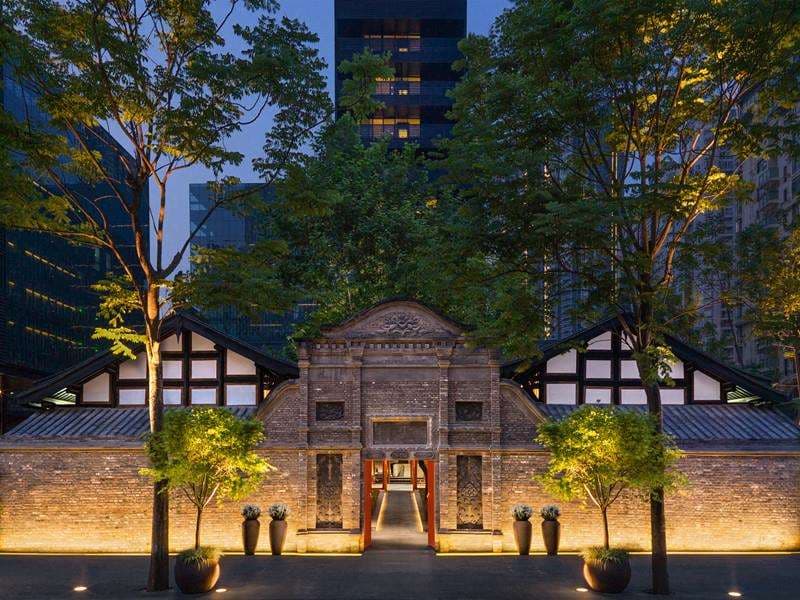
If the walls of the Chengdu Courtyard Hotel could talk, they’d whisper of mandarins and merchants, not Wi-Fi passwords. Located a stone’s throw from the chanting monks of Wenshu Monastery, this restoration of 16 traditional West Sichuan courtyards is a masterclass in architectural alchemy. The chaos of Chengdu fades the moment you step across the threshold into a labyrinth of grey brick and timber, where the air hangs heavy with the scent of wet stone and history. Rooms here are moody and atmospheric—sometimes to a fault. While the heritage layout is undeniably romantic, the ground-floor suites can suffer from the dampness inherent to centuries-old structures, and the bathrooms, though serviceable, lack the razor-sharp modernity of a Temple House. Yet, what you lose in water pressure, you gain in soul. Book a Family Loft; the in-room slide is a whimsical anachronism that delights adults as much as children. Dining is the property’s ace. Skip the room service and head to Wu Yue Gong, where the Kung Pao Prawns arrive with a terrifyingly brilliant gloss of chili oil. Post-dinner, the Courtyard Tea Bar offers a sanctuary for sipping locally sourced Gaiwan tea under the eaves. It’s not flawless, but in a city racing toward the future, this is a glorious place to pause in the past.
“Request a room in the inner courtyards (numbers starting with 8) to avoid street noise and maximize the 'time travel' effect.”
Insider TipAvg. Nightly Rate
90USD
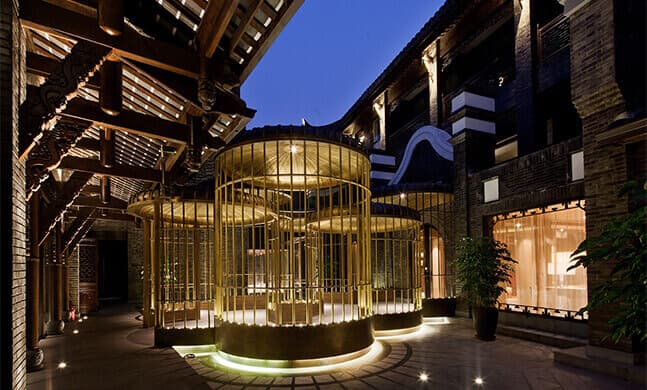
Don’t call it The Temple House—unless you enjoy sounding like a relic from 2024. Following Swire’s October 2025 rebrand, this architectural shapeshifter is now officially 'Upper House Chengdu,' aligning it with its Hong Kong sibling. But beneath the new stationery, the alchemy remains potent. You still enter through the Bitieshi—a restored Qing Dynasty courtyard that smells of cedar and history—before being catapulted into a subterranean lobby of ribbed stone and shadow. It is a deliberate, cinematic disorientation designed by Make Architects. The rooms are unapologetically cavernous, starting at a staggering 63 square meters. They eschew beige safety for charcoal hues and oak, though the lighting is so aggressively moody you might need your phone torch to locate the Le Labo amenities. The 'Maxi-bar' remains a triumph—stocked with craft beer and sweets, not just sad sparkling water. For dinner, skip the room service club sandwich. Mi Xun Teahouse has retained its Michelin Green Star, and their vegan Mapo Tofu with chanterelles possesses a numbing heat that embarrasses carnivorous rivals. It is dark, it is sexy, and despite the name change, it is still the only place to stay in Chengdu.
“Book a table at Mi Xun for lunch, not dinner—the courtyard light filters through the bamboo perfectly. Also, the pool's brass skylights look best at high noon.”
Insider TipAvg. Nightly Rate
305USD
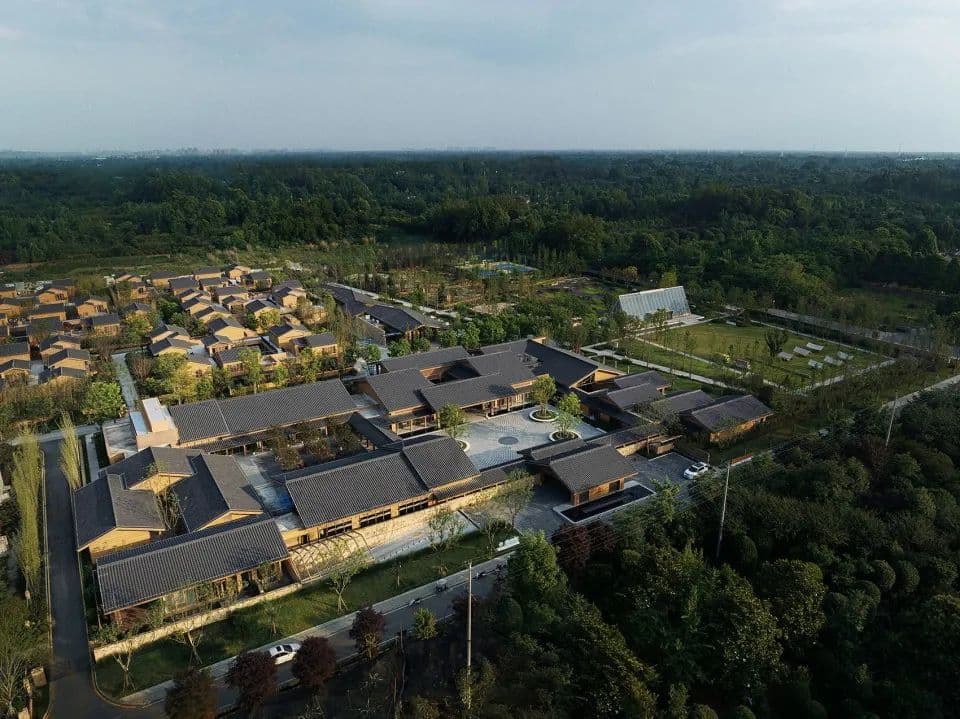
If the definition of luxury is time and silence, Angsana Chengdu Wenjiang is a billionaire. Located forty minutes from the frantic pulse of downtown Chengdu, this CCD-designed sanctuary operates on a different frequency entirely. The arrival is a cinematic masterstroke: you don’t just check in; you are framed against the historic Chenjia Yard across the street, a preserved Qing Dynasty manor that anchors the hotel’s modern, bamboo-clad aesthetic. It’s a masterclass in 'Architectural Alchemy.' The design sheds the predictable gold-leaf tropes of Chinese luxury for rough-hewn red brick, grey tiles, and woven bamboo screens that filter the Sichuan sun into lazy, dappled patterns. Rooms are less 'hotel suite' and more 'scholar’s retreat,' albeit one equipped with Dyson Supersonics, smart toilets, and 400-thread-count linens that practically beg you to miss breakfast. Speaking of which, skip the western pastries at the All Day Dining restaurant and go straight for the made-to-order Dandan noodles—spicy, numbing, and non-negotiable. While the service has the polite reserve typical of high-end resorts, the hardware is impeccable. The verdict? A rare architectural dialogue between the 17th and 21st centuries that feels neither forced nor museum-like. It’s just... quiet.
“Skip the main lobby at dusk and head to the central patio; the staff lights a bonfire that transforms the bamboo courtyard into a flickering, atmospheric lounge perfect for a post-spa whisky.”
Insider TipAvg. Nightly Rate
276USD
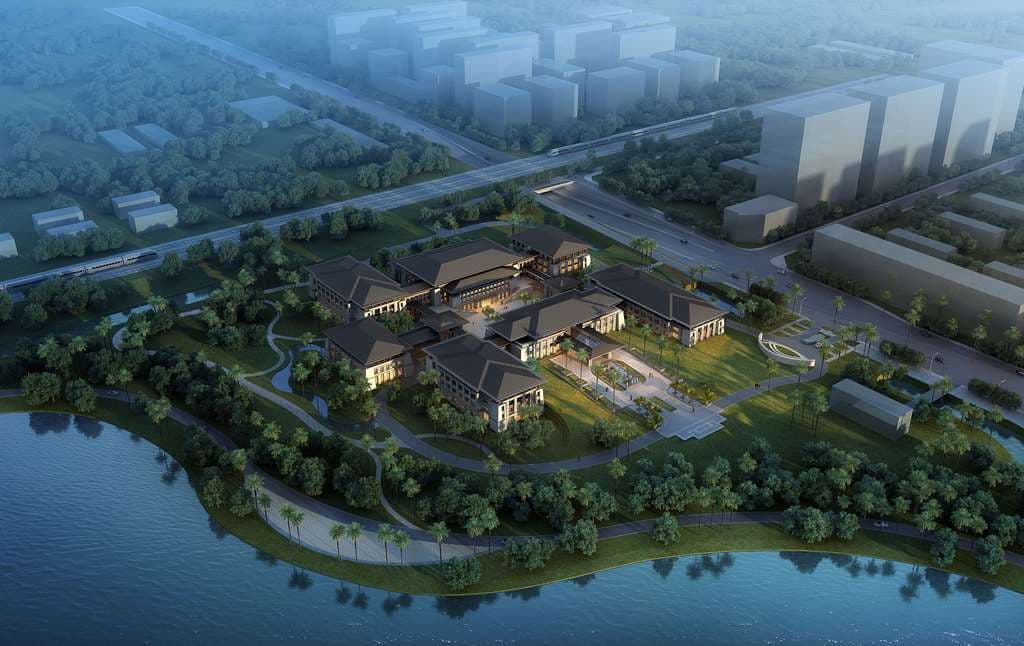
In a city renowned for frenetic consumption, Gran Meliá Chengdu offers a rare commodity: silence. Situated in the high-gloss Wuhou district, this property rejects the vertical impulse of modern China, opting for a sprawling, low-density layout that recalls a moody Shu-Han dynasty estate. The architecture is the protagonist—acres of gray brick, timber slats, and mirror-still water features that frame the futuristic Global Center in the distance. It is a striking dialogue between the ancient and the hyper-modern. The Spanish DNA is subtle but palpable. While the 'Water Moistening Tianfu' installation dominates the atrium, the service carries a distinct European warmth. Smart travelers book the RedLevel suites; beyond the generous square footage, this tier grants access to a private lounge that offers a civilized reprieve from the main breakfast buffet, which critics have flagged as surprisingly average. Inside the rooms, the aesthetic is monochromatic luxury—crisp linens, deep soaking tubs, and Clarins amenities that scent the air with expensive botany. Culinary offerings refuse to compromise. 'Gran Via' plates a seafood paella with authentic socarrat—a rarity in this hemisphere—while 'Rong Palace' doubles down on the numbing mala spice of Sichuan. A word of warning: the Wi-Fi is notoriously spotty, and the location is a taxi ride from the ancient downtown. But with direct access to Jincheng Lake for a morning run, you might find the distance—and the digital silence—to be the ultimate luxury.
“Skip the main gym during peak hours; instead, use your keycard for the private walkway to Jincheng Lake for a sunrise run against the backdrop of the Global Center.”
Insider TipAvg. Nightly Rate
100USD