No. 01
19 Dongyu Street Jinjiang Dist. Chengdu ChinaChengdu287 verified reviews
9
.0
Bitvoya Edit
Layering imagery, place, and detail before the page opens.
Chengdu, the first Asian city to be named a UNESCO City of Gastronomy, is a destination where flavor permeates the air. Our curated collection focuses on properties that are destinations in themselves, blending Sichuan's rich culinary heritage with modern luxury. Stay at the Guanyin Yiyuntai within the historic Kuanzhai Alleys for a taste of imperial cuisine, or immerse yourself in the fashion-forward Jinjiang District at The Temple House and Niccolo Chengdu. Whether you seek the high-altitude glamour of The Ritz-Carlton near Tianfu Square or the serene tea culture at The St. Regis, these hotels offer the perfect base for exploring the spicy, savory soul of Chengdu.
Chengdu is not merely a stopover; it is a pilgrimage for food lovers. As the cradle of Sichuan cuisine, the city offers a spectrum of flavors from the numbing 'Ma' to the spicy 'La'. Choosing a luxury stay here means gaining access to exclusive dining experiences—many of the listed hotels host Michelin-starred restaurants or award-winning tea lounges (like Li Xuan at The Ritz-Carlton or the vegetarian delights at The Temple House). Beyond street food, these hotels offer sophisticated interpretations of local classics, ensuring your palate is pampered from breakfast to late-night cravings.
Expect more than just a room. These properties are curators of culture. You can anticipate in-house Tea Sommeliers guiding you through local brews, bespoke Hotpot Butler services, and breakfast spreads that feature fresh, made-to-order Dan Dan noodles. The blend of warm Sichuan hospitality with international luxury standards ensures that every meal is a celebration of the City of Gastronomy.
The Temple House and Niccolo Chengdu are top choices, located in the Taikoo Li and IFS area, surrounded by hundreds of restaurants and street food stalls.
Yes, properties like The Ritz-Carlton (Li Xuan) and Guanyin Yiyuntai offer high-end, authentic Sichuan fine dining without leaving the hotel.
Guanyin Yiyuntai (formerly Diaoyutai) is located directly inside the historic Kuanzhai Alleys, offering the most immersive traditional cultural experience.
Explore our complete curated list of luxury accommodations, from boutique hideaways to grand dames.
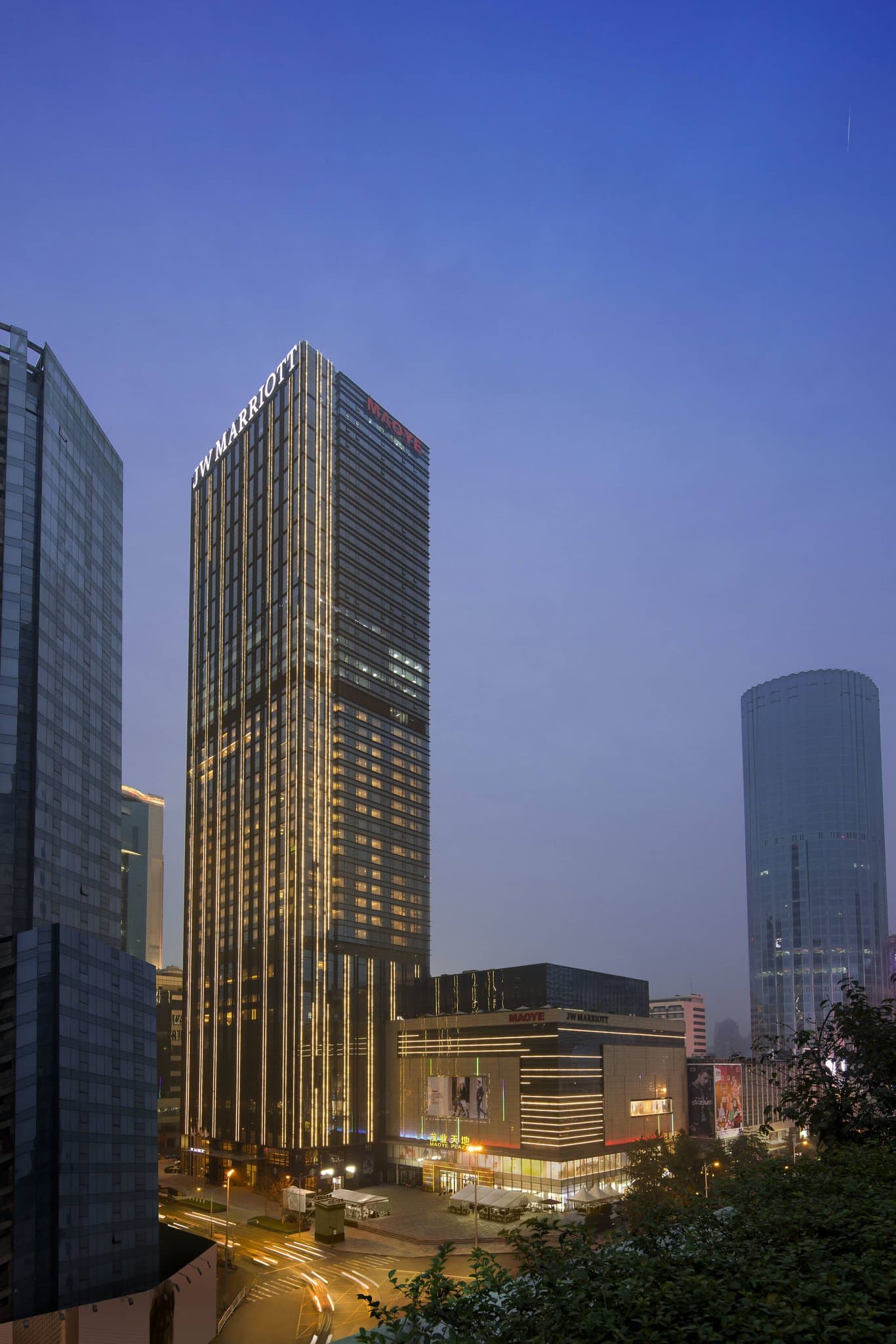
Explore All Chengdu HotelsIn a city that moves at the breakneck speed of a hot wok, the JW Marriott Chengdu offers a counterpoint of cool, calculated precision. Anchoring the skyline near Tianfu Square, this isn't just a place to sleep; it’s a masterclass in modern functionalism dressed in Sichuanese warmth. The lobby might feel cavernous, but the rooms are studies in urban sanctuary, outfitted with motorized shades that shut out the neon hum and smart toilets that anticipate your needs. The real theater, however, happens at Man Ho. While many hotel Cantonese restaurants play it safe, here the kitchen leans into the local palate with a Sichuan-style Stewed Beef that hums with peppercorn electricity, and a Camphor Tea Smoked Duck that arrives with theatrical aroma. Mornings at ‘Table’ offer a dizzying international spread, but the smart move is the noodle station where the broth has been simmering since pre-dawn. After a day navigating the Panda Base crowds, the Spa by JW offers a necessary reset—ask for the 'Calm' treatment using Aromatherapy Associates oils. It’s a reliable, polished operation that trades whimsical storytelling for high-spec performance.
“Request a room on a high floor facing away from the adjacent office towers to avoid the 'fishbowl' effect; the best views overlook the distant city sprawl rather than the neighbors' desks.”
Insider TipAvg. Nightly Rate
127USD
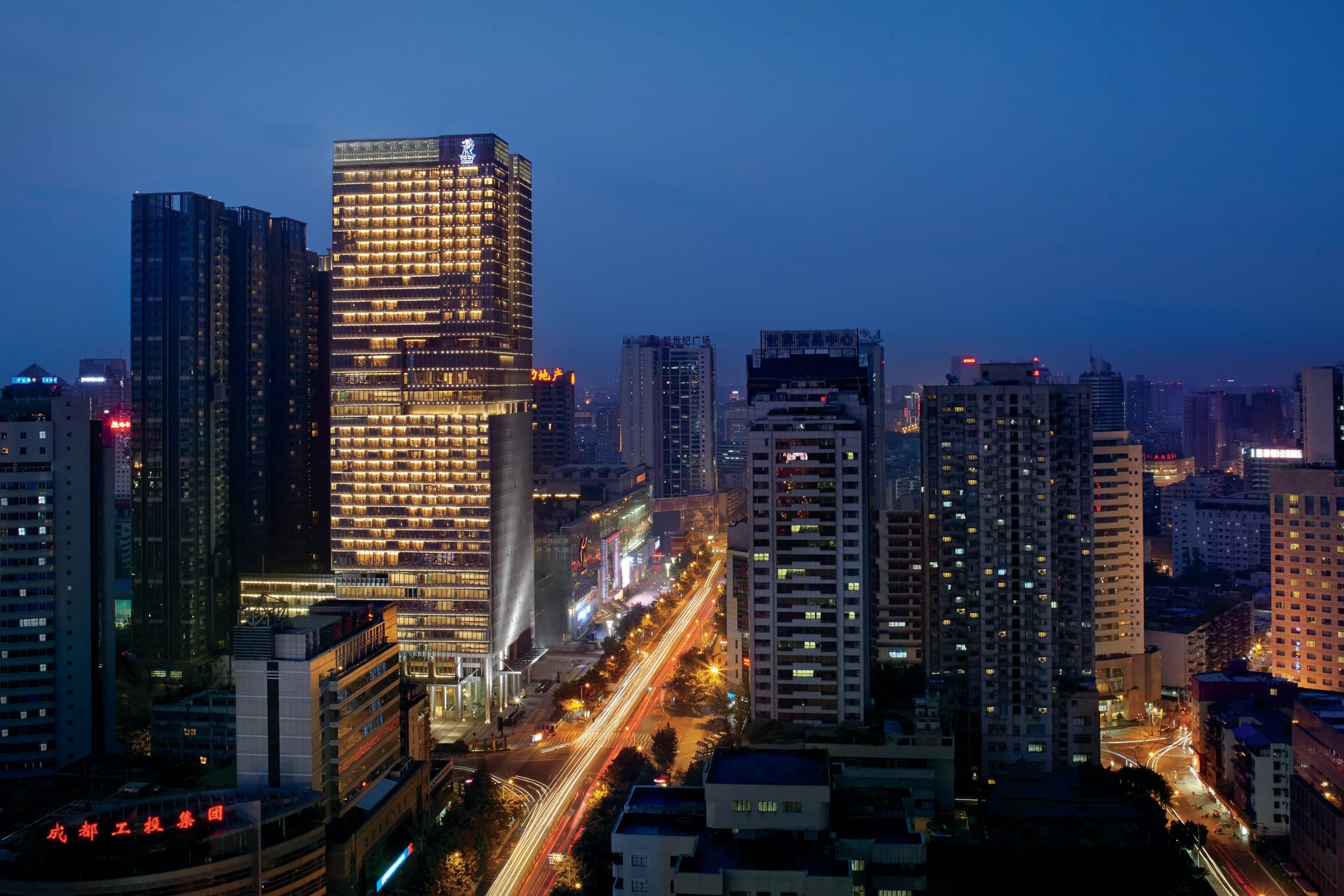
Chengdu is a city that demands your palate’s full attention, and The Ritz-Carlton commands the skyline above Tianfu Square as the perfect sanctuary between feasts. For the epicurean traveler, the property’s crown jewel is Li Xuan. This Michelin-selected venue transcends typical hotel dining; the signature braised blue lobster with black truffles is a masterclass in balancing Cantonese finesse with the region’s bold spirit. The interiors channel a classic grandeur—think dark woods and intricate lattice walls—that feels stately, if slightly from a bygone era. While the room technology (TVs and control panels) lags behind the city’s newer openings, the tactile comforts are faultless, from the 800-thread count linens to the Diptyque amenities. The service remains telepathic, particularly on the Club Level, where five daily food presentations offer a dangerous culinary prelude to the city below. It is a property that trades trendy minimalism for timeless, heavy-hitting luxury.
“Book a Club Level room not just for the views, but for the concierge power—they can secure skip-the-line access to the legendary Chen Mapo Tofu just 600 meters away.”
Insider TipAvg. Nightly Rate
124USD
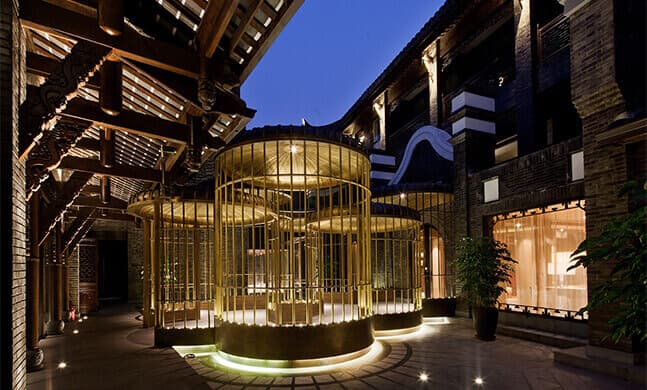
To enter Guanyin Yiyuntai (formerly Diaoyutai Boutique Hotel) is to execute a vanishing act. One moment, you are dodging selfie sticks in the cacophony of Chengdu’s Kuanzhai Alley; the next, you are enveloped in the lacquer-red silence of a Qing Dynasty courtyard. Designed by Bruno Moinard—the aesthetic mind behind Cartier’s global boutiques—the hotel is a masterclass in 'great hermit' philosophy, where copper-mesh lanterns and grey brickwork dissolve the bustle into mere atmosphere. The 45 rooms are less 'hotel accommodation' and more private chambers of a modern mandarin. Expect 600-thread count cotton flax linens, Sealy mattresses, and televisions discreetly embedded in mirrors to maintain the design's hermetic seal. But the real draw is the lineage. Carrying the culinary torch of the State Guesthouse in Beijing, the 'Royal Court' restaurant serves the legendary Diaoyutai State Banquet cuisine. The 'Buddha Jumps Over the Wall'—a complex, gelatinous broth of abalone, sea cucumber, and fish maw—is not just dinner; it is edible diplomacy. For a lighter touch, the 'Fangfei Garden Lounge' offers a palace-style afternoon tea under a glass ceiling that frames the ancient ginkgo trees above. Service is silent, anticipatory, and terrifyingly efficient.
“Book the Kuanzhai Suite for the paradox of a private balcony overlooking the crowded alley below—you can watch the tourist theatre while sipping tea in total seclusion.”
Insider TipAvg. Nightly Rate
240USD
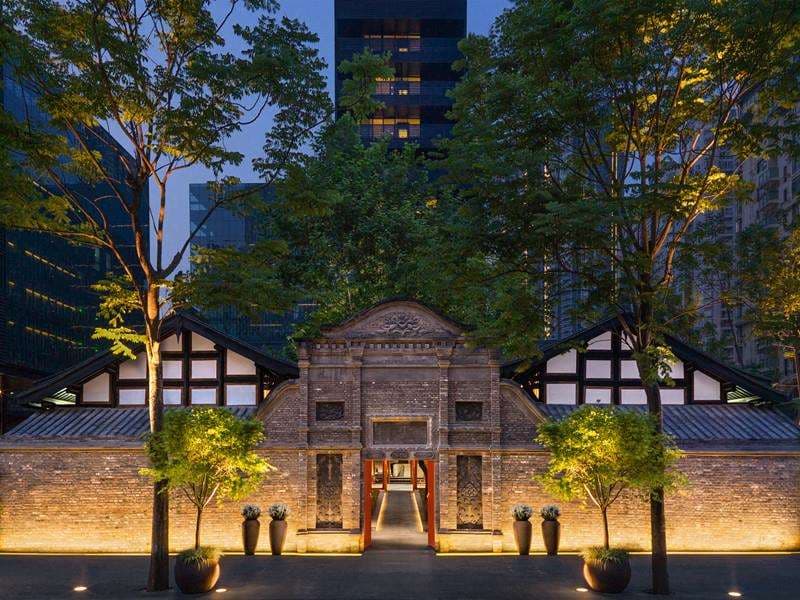
Entering through the Qing-dynasty Bitieshi courtyard, the transition from Chengdu’s humidity to Swire’s charcoal-hued cool is instantaneous. Recently rebranded from ‘The Temple House’ to ‘Upper House Chengdu’ in late 2025, the property remains the city's undisputed fashion headquarters. The aesthetic is strictly ‘moody chic’—expect corridors dim enough to require focus and 63-square-meter entry-level studios that dwarf the competition. The complimentary ‘Maxi-bar’ (stocked with craft beer and sweets) is a generous touch, though the absence of smart bidet toilets in standard rooms is a surprising tech omission for 2026. The culinary game here is serious. Mi Xun Teahouse has rightfully retained its Michelin Star and Green Star; their signature Vegan Mapo Tofu with chanterelles offers a numbing, peppercorn-laced depth that rivals any meat version in town. For a nightcap, Jing Bar’s Sichuan Negroni is the only drink you need. It’s dark, dramatic, and effortlessly sophisticated.
“Locals and taxi drivers still know the property by its original name, 'Bo She' (The Temple House). Use the old name to avoid confusion during drop-offs.”
Insider TipAvg. Nightly Rate
305USD
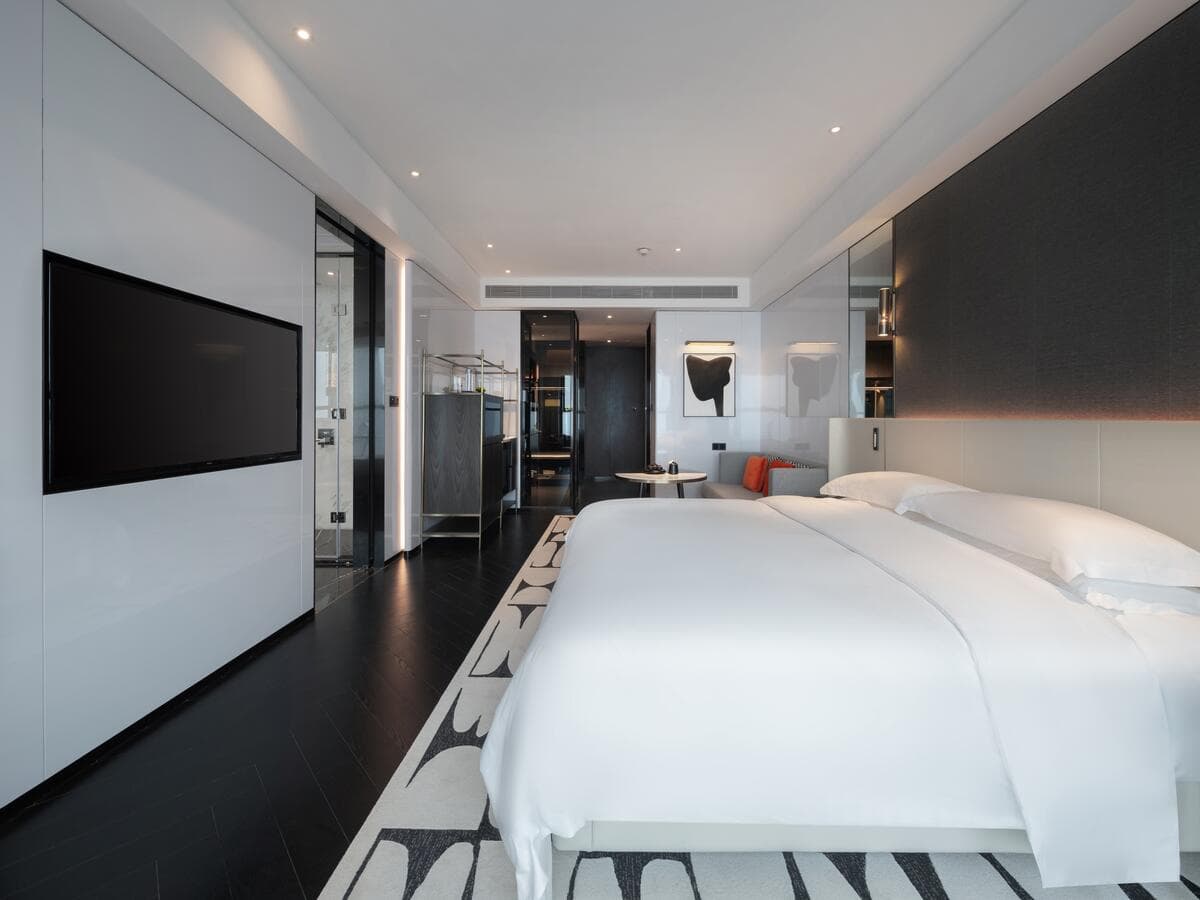
If Taikoo Li is Chengdu’s beating heart, The Langbo is its meditative brain. Rising above the frenetic shopping district, this property—part of Hyatt’s Unbound Collection—trades the predictable gold-leaf grandeur of typical Chinese luxury for a ‘Modern Chinese Mansion’ aesthetic defined by moody jade textures and silence. The arrival experience, an elevator ride to the 38th-floor ‘Living Room’ lobby, feels less like checking in and more like infiltrating a private collector’s high-rise fortress. Rooms are an exercise in high-spec minimalism. You aren’t just getting a hair dryer; you’re getting a Dyson. The toiletries are Frédéric Malle, a sophisticated olfactory upgrade from the standard hotel fare. But the real theater is the bathtub, positioned against floor-to-ceiling glass that turns the Chengdu Tower into your personal nightlight. However, in a UNESCO City of Gastronomy, a hotel is only as good as its kitchen. L’Or by Yi Palace (Yi Pin Tang) anchors the culinary offering. Eschewing the watered-down ‘tourist spice’ found on the street, the kitchen delivers a surgical interpretation of Sichuan flavors. The seasonal seafood menu is the standout, handling chilies with precision rather than brute force. For a nightcap, The Tea House offers a Kung Fu tea ritual that makes an espresso martini feel pedestrian. It is a serious hotel for serious eaters who value their sleep.
“Book a table at L'Or by Yi Palace well in advance and request one of the 'cave-like' private dining rooms for the most atmospheric acoustic experience.”
Insider TipAvg. Nightly Rate
123USD
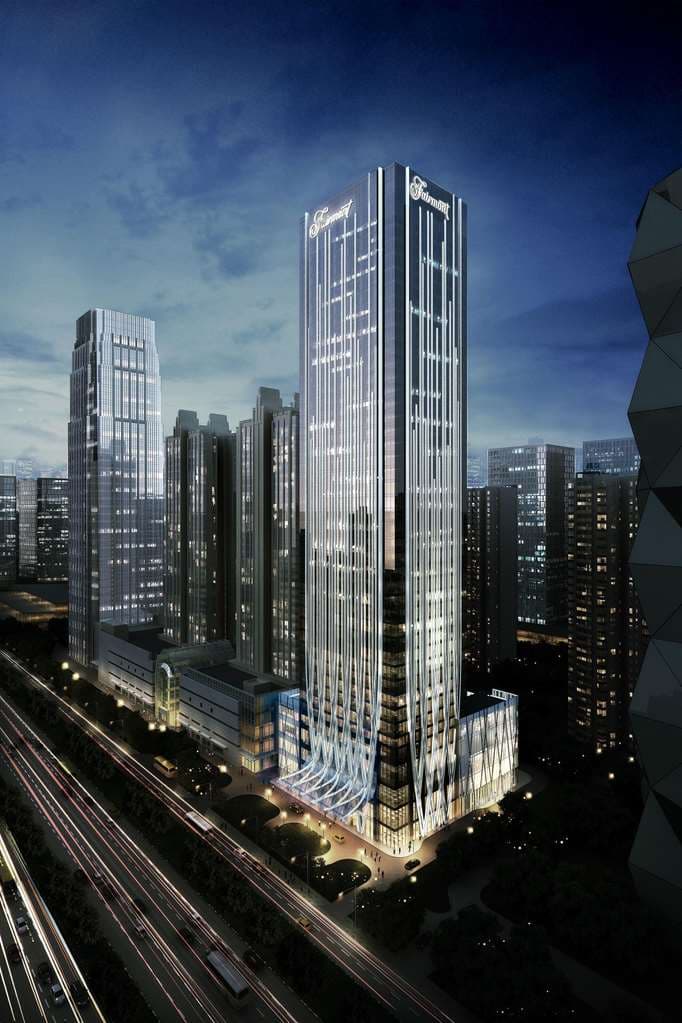
Rising above the High-Tech Zone, the newly minted Palm Springs Hotel (formerly the Fairmont) trades standard corporate beige for a roaring 1920s Art Deco aesthetic. The visual anchor is undeniable: the Manhattan bar’s Tiffany-blue spiral staircase, a dizzying coil that demands an evening gown or at least a stiff whisky. While the rebranding to IHG’s Vignette Collection is fresh, the hardware remains opulent. Rooms are sanctuaries of calm equipped with Intraceuticals amenities and Gentleman’s Tonic, though the sensitive sleeper should request a high floor to escape the hum of Century City traffic. Dining here is a serious pursuit. Chang Yi ignores the lazy stereotype of 'spicy-only' Sichuan cuisine, serving handcrafted dim sum in a visually stunning, geometric dining room. For dinner, Miku on the 44th floor delivers Josper-grilled meats with a Nikkei twist—Japanese-Peruvian fusion that pairs surprisingly well with the Chengdu skyline. The Willow Stream Spa facilities (a holdover from its previous life) remain top-tier, featuring Technogym equipment for the guilt-ridden. It’s a property that balances business efficiency with a distinct, almost cinematic glamour.
“Book a window seat at Miku on the 44th floor for sunset; the Josper-grilled meats taste better with the city skyline as a backdrop.”
Insider TipAvg. Nightly Rate
148USD
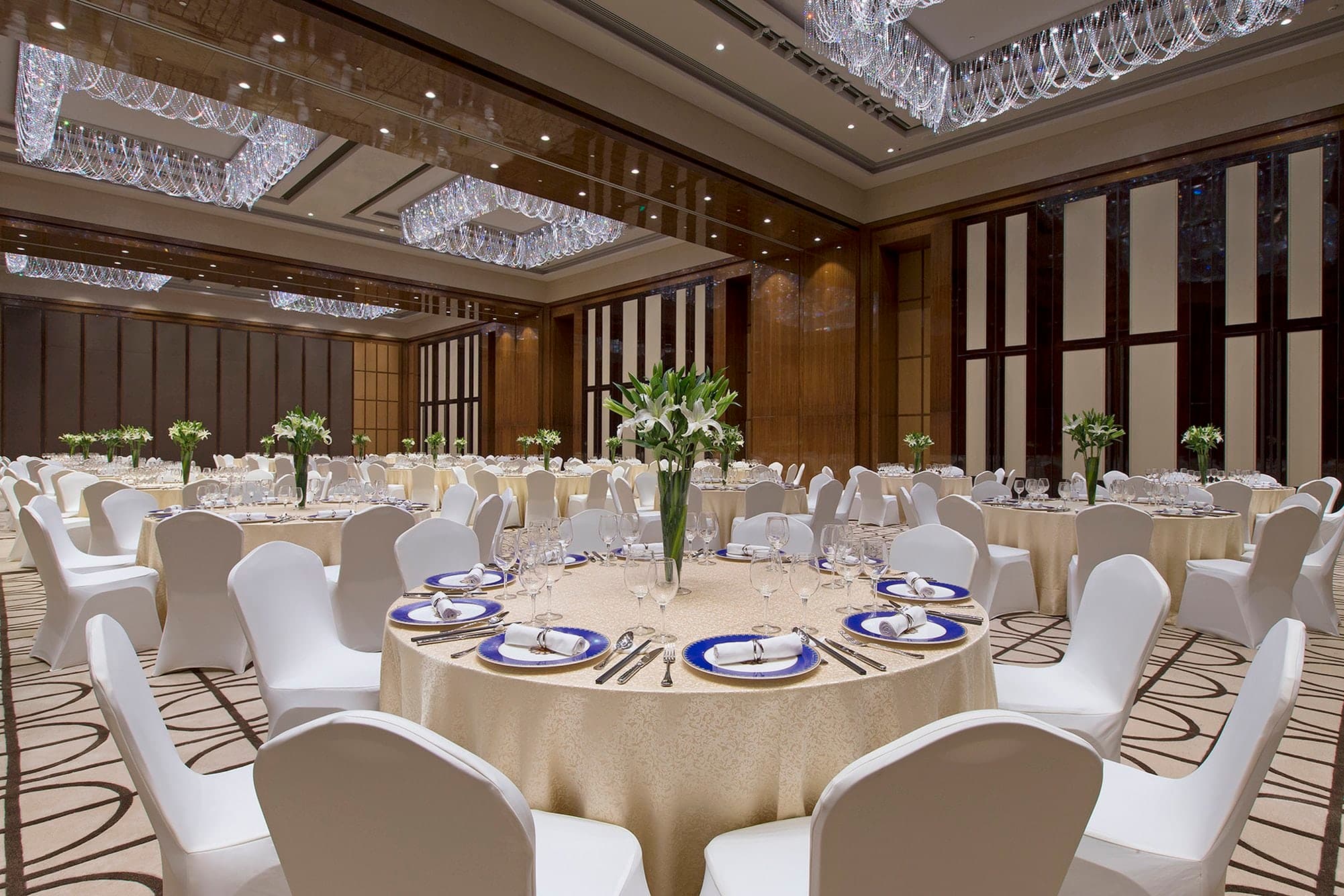
If the IFS complex is the beating heart of Chengdu’s high-fashion district, Niccolo is its couture gown. Entering the lobby, you aren't just checking in; you're stepping inside a 'Glass Jewel Box' installation where Hirotoshi Sawada’s 'Breeze Bird'—3,800 metallic avian sculptures—swirls overhead, immediately signaling that this is no ordinary business hotel. The vibe is unapologetically metropolitan, a sharp contrast to the slow-life tea culture outside, yet it observes it perfectly through the floor-to-ceiling windows of the N2 Grand Temple View rooms, which frame the ancient Daci Temple like a living painting. The interiors are a masterclass in restraint—think earth tones, 500-thread-count linens, and Italian marble—but the real drama happens on the plate at Yue Hin. Here, the kitchen eschews the usual fusion traps for precise, ingredient-led sorcery. The signature Lobster Broth with Crispy Rice is a textural revelation, snapping and fizzing with umami depth, while the Panda Custard Bun offers a playful, Instagram-ready nod to the city’s mascot without sacrificing flavor. Even the all-day Niccolo Kitchen surprises, delivering a Sichuan Spicy Lobster Pizza that sounds chaotic but tastes like a coherent, fiery triumph. Service is executed with the precision of a Swiss watch, with personal butlers who remember your preference for Technogym sessions over afternoon tea. **Verdict:** A sophisticated, art-filled aerie for the traveler who wants to sleep inside the city's most fashionable address.
“Book the 'N2 Grand Temple View' room for a direct line of sight to the ancient Daci Temple, or head to The Bar at sunset for a 'Timeless' cocktail and a face-to-face encounter with the massive 'I AM HERE' climbing panda sculpture just outside the window.”
Insider TipAvg. Nightly Rate
173USD
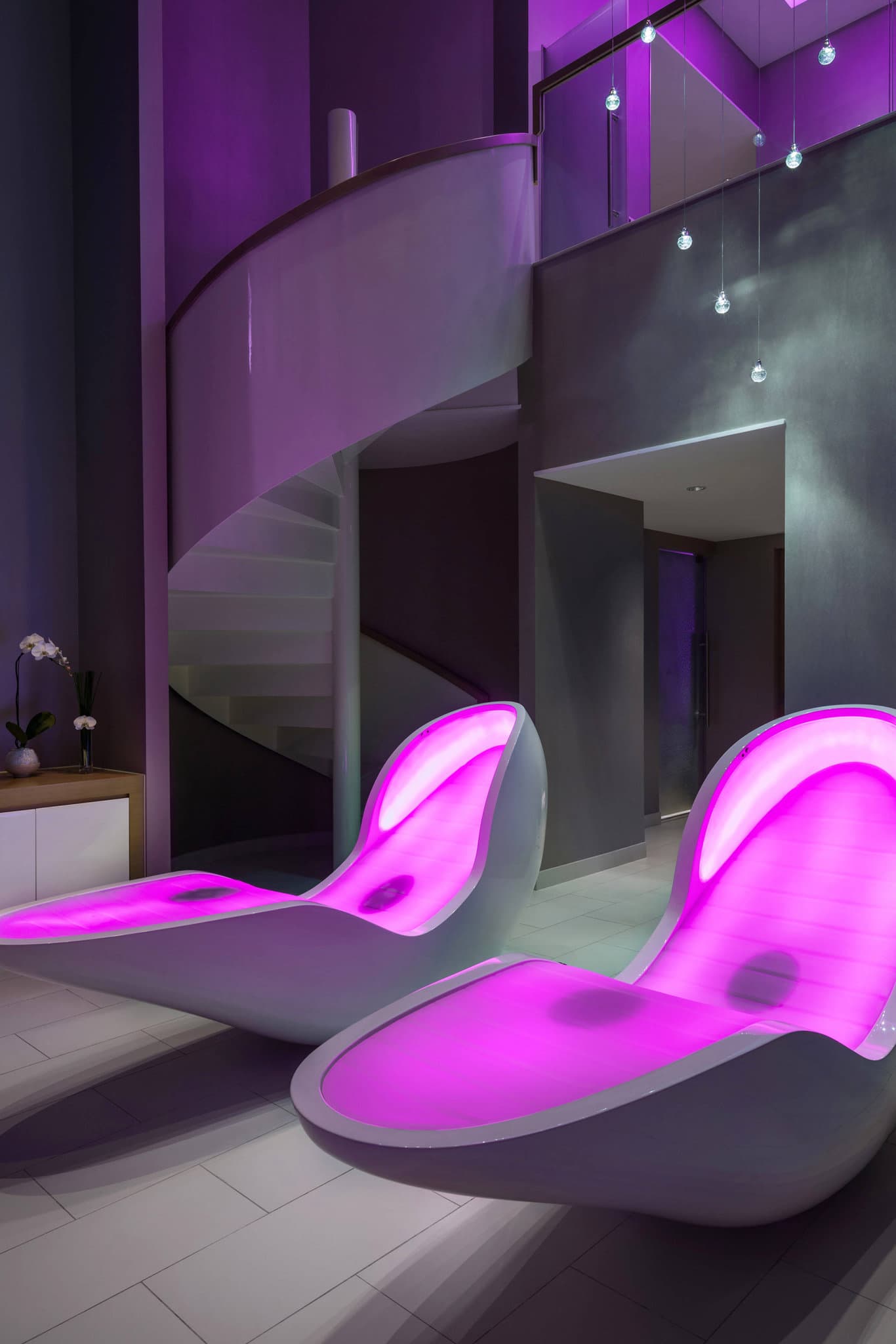
Chengdu hits you with a wall of humid heat and peppercorn haze; The St. Regis Chengdu hits back with air-conditioned Art Deco defiance. Situated a stone’s throw from Tianfu Square, this property is less a hotel and more a marble-clad fortress of hospitality. The base rooms are frankly absurd—starting at 65 square meters—offering enough floor space to practice waltzing before the butler arrives to unpack your Rimowa. The aesthetic is unapologetically heavy on chandeliers and gold leaf, a sharp, polished contrast to the gritty charm of the city outside. But you are here to eat. If you don’t book a table at Yan Ting, you’ve missed the point entirely. The kitchen’s 'Seafood spicy blood curd hot pot' is a masterclass in thermal shock—fiery, metallic, and deeply savory—while the deep-fried prawn with wasabi clears the sinuses with surgical precision. Post-dinner, ascend to the rooftop bar for 'The Chuan Mary,' a Bloody Mary that swaps Tabasco for a numbing hit of Sichuan pepper. A warning for the digital nomad: the WiFi can be as temperamental as a local weather front, and some bedside tech feels a generation old. But when the butler hands you a pressed shirt and a perfect espresso, you forgive the buffering.
“The outdoor pool is seasonal (May-Sep), so if you're visiting in winter, book a 'Blue Hole' hydrotherapy session at the Iridium Spa instead.”
Insider TipAvg. Nightly Rate
123USD
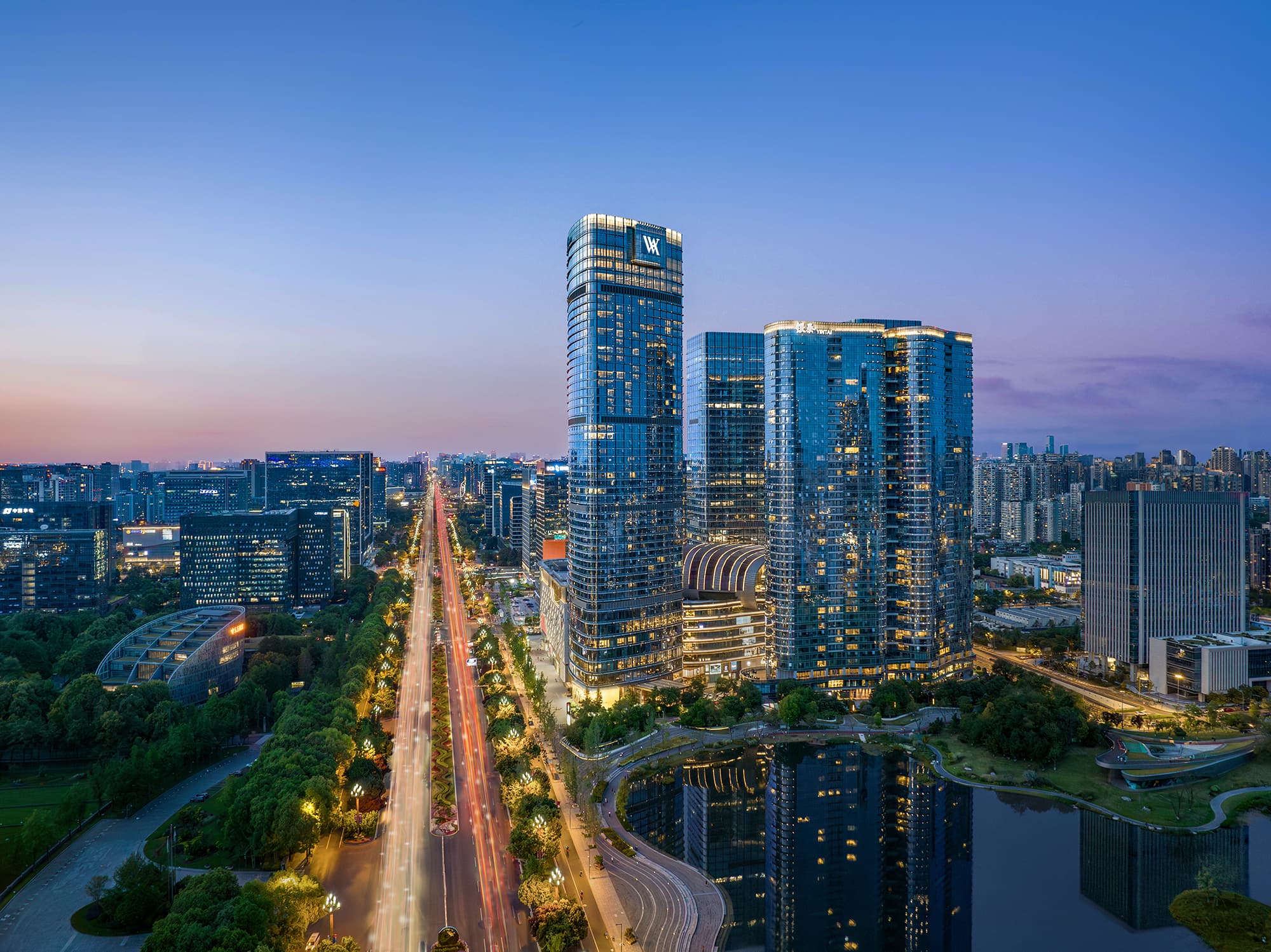
If Jay Gatsby traded Long Island for the High-Tech Zone and developed a penchant for *mala* peppercorns, he’d reside here. The Waldorf Astoria Chengdu isn’t just a hotel; it’s a 52-story Art Deco proclamation rising above the city’s silicon heart. The arrival experience is a vertical ascent to the 50th-floor Sky Lobby, where the 'Leaves of Life' crystal installation competes with the staggering views of the Tianfu Twin Towers. Inside the rooms, the brand’s Manhattan DNA gets a polished update: 600-thread-count linens, Dyson dryers, and large-format Aesop amenities that make the marble bathrooms feel like private spas. But the real draw is the culinary prowess. 'Infinite Luck' has just snagged a Michelin Selection for 2026, and their Camphor Tea-Smoked Duck is a smoky, savory revelation that demands a Pinot Noir from their extensive cellar. Service here has found its rhythm, balancing Waldorf’s white-glove legacy with Chengdu’s relaxed charm—ask for Ansel at the concierge for hard-to-get reservations. Cap your night at 'Wall Street', the 52nd-floor whisky bar, where the single malts are rare and the skyline views are intoxicating. It’s a sophisticated, cloud-piercing retreat for the epicurean traveler.
“Request a 'Twin Tower View' room to catch the nightly LED light show from your bathtub. Also, don't miss the 48th-floor pool—it's usually empty around 2 PM.”
Insider TipAvg. Nightly Rate
159USD
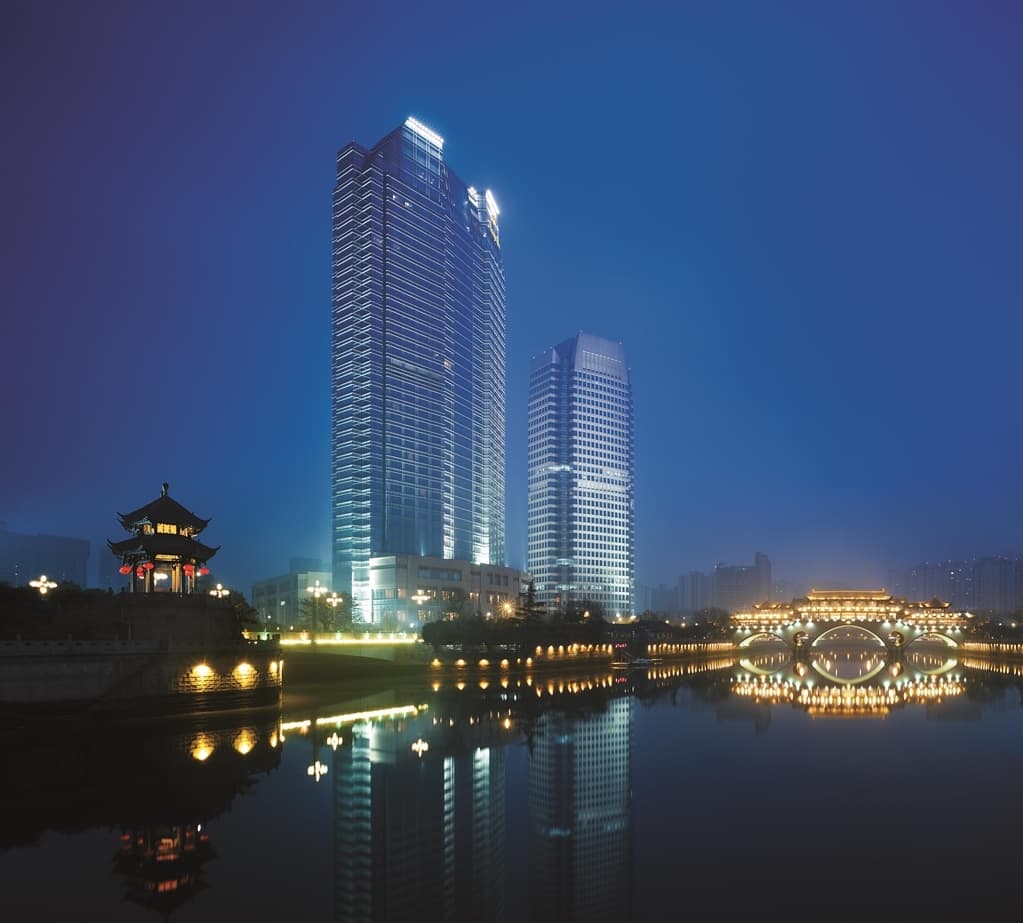
While newer glass towers like the Ritz-Carlton vie for the city's skyline, the Shangri-La Chengdu commands the ground that matters: the riverbank. Perched directly above the Jinjiang River and the illuminated Anshun Bridge, this property trades trendy minimalism for the heavy, polished granite opulence of the mid-2000s. It is the chosen host for the Michelin Guide ceremonies, a status that speaks louder than a fresh coat of paint. The draw here is culinary gravity. Shang Palace (香宫) remains a power-dining fortress where the roasted Peking Duck arrives with skin like shattered glass, and the kitchen deftly navigates the numbing buzz of green Sichuan peppercorns without overwhelming the Cantonese braises. Surprisingly, the best local secret is in the all-day dining venue, Café Z, where the 'Tan Fish Head Hot Pot' offers a collagen-rich, spicy kick that rivals street-side stalls. Standard rooms lack Nespresso machines—a notable omission—so the upgrade to a Horizon Club room is mandatory for the caffeine and the lounge access. If the hallways occasionally carry the faint, nostalgic scent of cigarette smoke (a persistent ghost in Chengdu’s older luxury hotels), the Chi, The Spa suites offer a reliable exorcism with their Five Elements treatments. This is not the newest hotel in town, but it remains the most delicious.
“Skip the standard booking; secure a Horizon Club River View room. The lounge breakfast offers the city’s best view of the Anshun Bridge without the crowds.”
Insider TipAvg. Nightly Rate
99USD
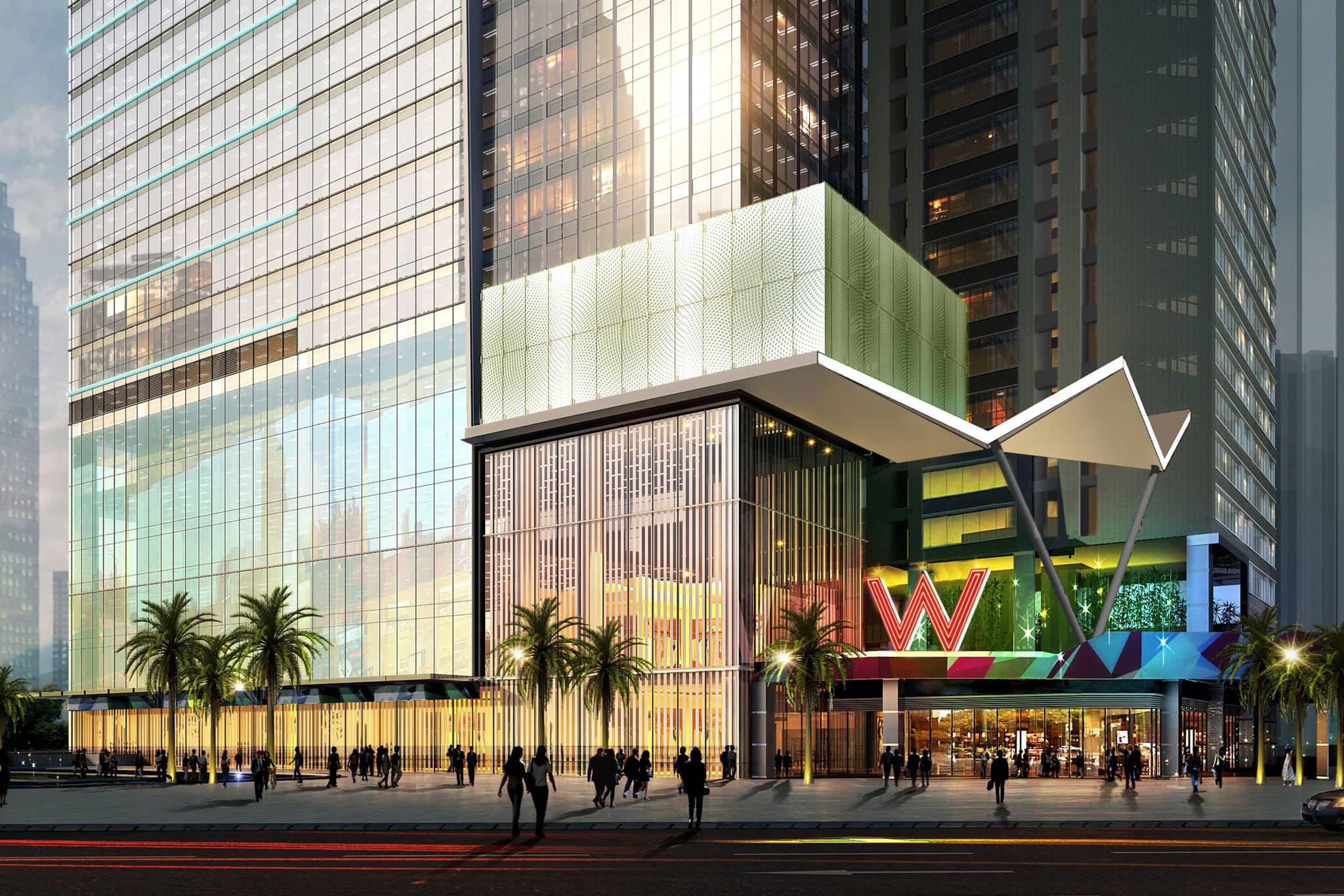
If Blade Runner had a dumpling obsession, it would look like W Chengdu. The arrival experience alone—a digital waterfall by art collective teamLab—sets a hallucinogenic tone that dominates this high-octane property in the Gaoxin district. It’s a riot of 'Du'titude' (local hedonism), where iridescent glass and neon panda motifs tread the fine line between kitsch and cool, landing firmly on the latter. The real draw, however, is the culinary heat. YAO YEN, the hotel’s Michelin-recommended stronghold, ignores the watered-down tourist spice levels. Their signature spiced poached fish is a numbing, fragrant masterclass in peppercorn physics, demanding a cold beer immediately. For relief, the AWAY Spa stocks Biologique Recherche products—a serious skincare flex for a party hotel. Rooms are equally sharp, featuring Davines amenities and beds that (contrary to some reports) offer the firm support needed after a night at the SPARK rooftop bar. It’s loud, it’s unashamedly flashy, and it’s exactly where Chengdu’s new money comes to spend it.
“Request a room facing the Tianfu Twin Towers for a front-row seat to the nightly LED light show, best enjoyed with a cocktail from your mixology kit.”
Insider TipAvg. Nightly Rate
160USD
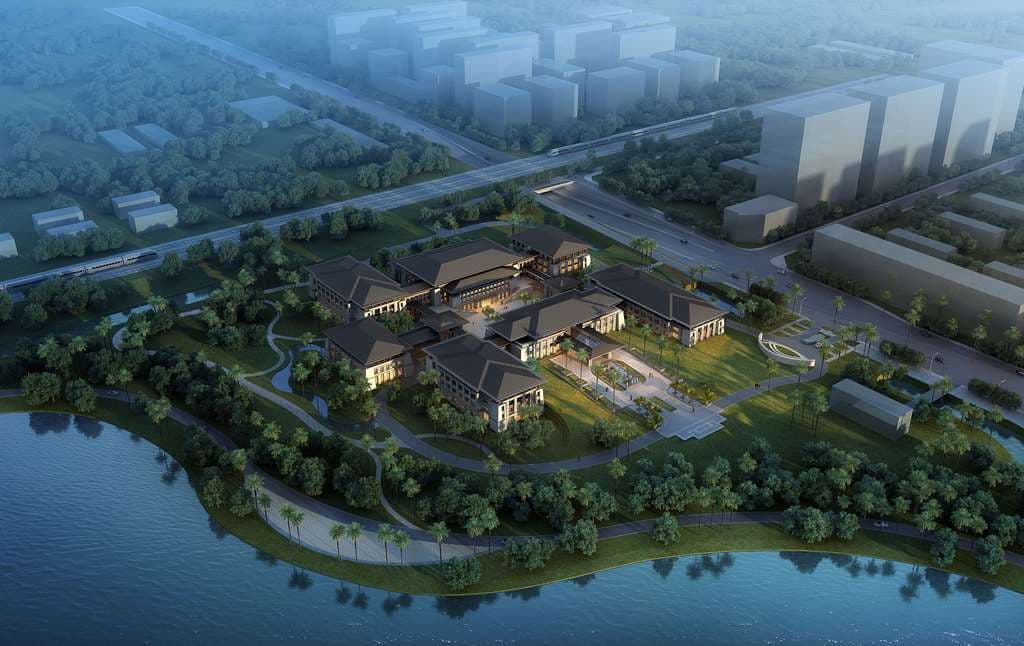
It takes a certain bravado to plant a Spanish flag in the spiritual heart of the mala peppercorn, yet Gran Meliá Chengdu executes this cultural collision with remarkable swagger. Located in the High-Tech Zone, the property avoids the generic glass-box fatigue of its neighbors, opting instead for a brooding, grey-brick aesthetic that riffs on Shu-Han dynasty architecture. It’s dramatic, moody, and entirely distinct. Inside, the Madrid influence asserts itself. The RedLevel suites are exercises in tactile luxury—matte stone finishes, Clarins amenities, and soundproofing that reduces the city’s roar to a whisper. The service is sharp, with butlers who actually anticipate needs rather than just responding to them. After a day of meetings, the Spa My Blend by Clarins—with its steam rooms and jacuzzis—feels less like an indulgence and more like a medical necessity. The culinary headliner, however, remains resolutely local. Rong Palace justifies its accolades not with theatrics, but with precision. The signature boiled tiger grouper is a masterclass in balance; the broth is oily and fragrant, delivering a peppercorn-induced numbness that vibrates on the lips without obliterating the fish’s delicate texture. For those suffering from spice fatigue, the 5J Iberian ham at Gran Via offers a savory, cured reprieve. While the location isn’t downtown-central, the trade-off is direct, private access to Jincheng Lake. It’s a sophisticated enclave for the traveler who prefers a morning run in the mist over the claustrophobia of the city center.
“Use the hotel’s private key-card gate to access Jincheng Lake at 7:00 AM; you'll catch the locals practicing Tai Chi before the humidity sets in.”
Insider TipAvg. Nightly Rate
100USD