No. 01
No 2 Dong Ruan Rd Chengdu. Chengdu China 611844Chengdu76 verified reviews
8
.4
Bitvoya Edit
Layering imagery, place, and detail before the page opens.
Chengdu is not merely the bustling capital of Sichuan; it is the gateway to one of China's most profound spiritual landscapes. Just an hour from the city center, the mist-shrouded peaks of Mount Qingcheng offer a sanctuary for Taoist Zen and holistic wellness. This curated collection highlights the finest retreats located in the serene foothills of Dujiangyan and the lush gardens of the Wenjiang District. From the eco-luxury of Six Senses Qing Cheng Mountain to the heritage architecture of AHN LUH GUANTANG, these properties seamlessly blend ancient Taoist philosophy with modern luxury. Whether seeking a meditative escape at Mandorla · Shiyuesenlin or a hot spring retreat near the ancient irrigation system, travelers will find spiritual rejuvenation amidst Chengdu's verdant bamboo forests.
Chengdu is uniquely positioned as the cradle of Taoism, offering a wellness experience that transcends typical spa holidays. Mount Qingcheng, a UNESCO World Heritage site, is celebrated as one of the birthplaces of Taoist philosophy, emphasizing harmony with nature. Staying in this region allows travelers to immerse themselves in 'Qi' cultivation, breathing in the pristine air of ancient forests. The properties selected, such as the Tsingpu Chengdu Retreat and Crowne Plaza Chengdu Wenjiang, are not just hotels; they are gateways to understanding the 'Way' (Tao). Here, luxury is defined by silence, organic cuisine sourced from local farms, and the therapeutic sounds of flowing water, providing a sharp, rejuvenating contrast to the urban energy of downtown Chengdu.
Visitors should expect a holistic approach to hospitality. Architecture often features timber, stone, and tiled roofs that blend into the landscape, as seen at AHN LUH GUANTANG. Activities are centered around mindfulness: morning Tai Chi sessions, calligraphy classes, and tea ceremonies using locally grown tea leaves. Spa treatments frequently incorporate Traditional Chinese Medicine (TCM) principles, utilizing herbs found on the mountain. Whether you are soaking in a private mineral pool or hiking the 'front mountain' for temples and the 'back mountain' for nature, the experience is designed to align your body and spirit with the rhythms of the earth.
The best times to visit are spring (March to May) and autumn (September to November) when the weather is mild and the foliage is vibrant. Summer offers a cool escape from Chengdu's heat, though it can be more humid.
Yes, properties like Six Senses Qing Cheng Mountain and Chengdu Sunac Wanda Vista Hotel are very family-friendly, offering dedicated kids' clubs, panda-themed activities, and spacious villas suitable for families.
Most properties in the Dujiangyan and Mount Qingcheng area are approximately 1.5 to 2 hours by car from Chengdu Tianfu International Airport (TFU), or about 1 hour from the city center.
Explore our complete curated list of luxury accommodations, from boutique hideaways to grand dames.
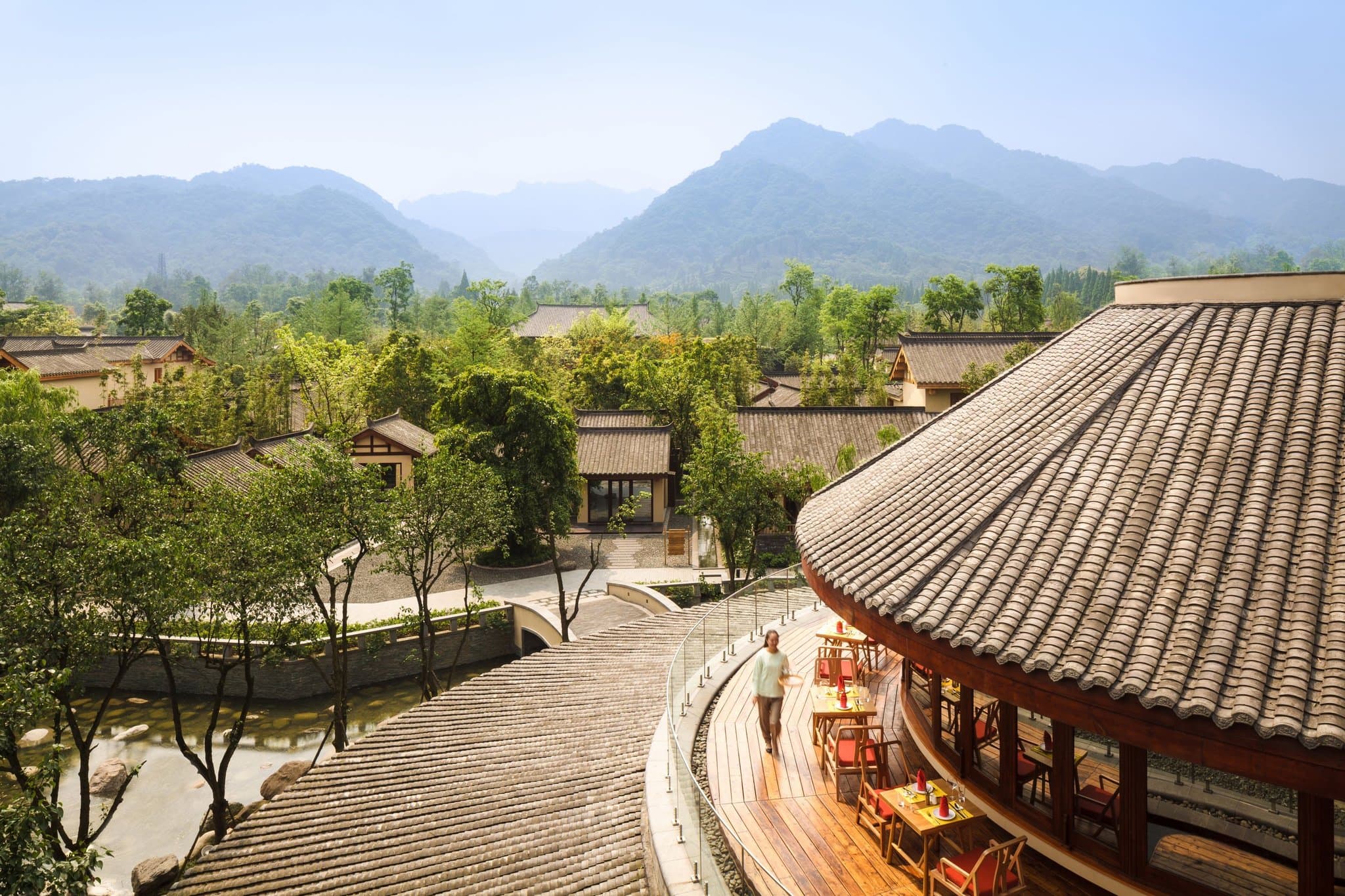
Explore All Chengdu HotelsForget the panda-pandemonium of downtown Chengdu; the real pilgrimage lies an hour west. Six Senses Qing Cheng Mountain isn't just a hotel, it’s a masterclass in high-end decompression. Designed like a sophisticated "secret village" with curved eaves and mossy paths that mimic a living Chinese ink painting, the vibe here is less "resort" and more "monastic chic." Check into a Courtyard Suite where organic linens meet high-tech app-controlled lighting—though be warned, the rigorous eco-philosophy means standard toilets rather than Japanese smart-bidets. It’s a minor quibble when you’re sipping tea on a private balcony facing the misty peaks. The 1,710 sqm spa is the heavyweight champion here. Skip the standard oil rub; book a Traditional Chinese Medicine consultation followed by a session in the Tai Chi Garden. Dining oscillates between the hyper-local and the surprising. '28 Zodiac' serves a Mapo Tofu that numbs the lips in the best way possible, while 'Farm2Fork' delivers a 32-hour slow-cooked Wagyu beef rib that justifies the steep menu prices. For a nightcap, Moon Bar offers silence so profound you can hear the ice melt in your whiskey. It’s distinct, slightly detached, and exactly what your nervous system ordered.
“Skip the main buggy routes. Request a room in the 600 block for a direct view of the Welcome Pavilion and maximum distance from the kids' club.”
Insider TipAvg. Nightly Rate
215USD

Forget the chaotic hum of Jinli Street. The drive to Mandorla · Shiyuesenlin feels less like a commute and more like a shedding of skin. Upon arrival, the architecture makes a bold promise of invisibility; the mirror-house structures reflect the surrounding dense foliage so effectively that the buildings seem to vaporize. It’s a clever trick, enforcing a seclusion that feels absolute—Daoist philosophy rendered in glass and steel. Inside the massive 98-square-meter suites, the commitment to 'wild luxury' holds up. You won't find a communal pool here—a blessing, really, as it forces you into your private terrace hot spring, surrounded only by the rustle of leaves and the occasional seasonal insect (bring spray, this is real nature, not a terrarium). The butler service is refreshingly omnipresent without hovering, appearing exactly when you need a refill on the Zen-inspired tea sets. Dinner at Yao Yue Restaurant offers a grounded counterpoint to the ethereal design. Order the Taiping Dry-Braised Fish; it’s a spicy, farm-to-table reality check that cuts through the Zen. Afterwards, the spa’s proprietary 'Six Senses' ritual—unrelated to the hotel chain—uses singing bowls to vibrate the final city tension out of your marrow. It’s not just a hotel; it’s a reset button with high-thread-count linens.
“Book a duplex suite for the skylights; the lack of light pollution here makes the star-gazing genuinely cinematic.”
Insider TipAvg. Nightly Rate
250USD
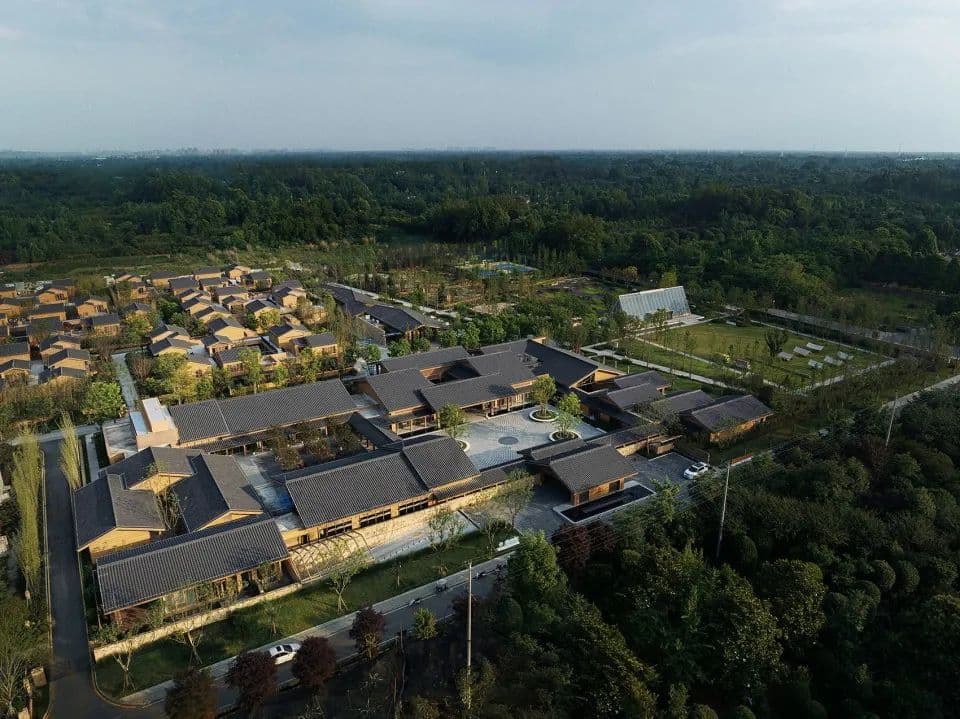
If Chengdu is the capital of 'slow life,' Angsana Chengdu Wenjiang is its spiritual palace. Located directly opposite the historic Chenjia Yard, this CCD-designed sanctuary feels less like a hotel and more like a dialog between the Qing Dynasty and the future. The architecture is a study in restraint—rammed earth walls and bamboo-woven facades dissolve the boundary between the lush gardens and the interiors. Inside, the experience is uncompromisingly tactile. Rooms are sanctuaries of silence featuring Dyson hair dryers and deep soaking tubs that invite you to linger. Dining at Chun Feng is a revelation; skip the western fare and order the signature Sichuan hot pot, served on the terrace with a view of the heritage buildings. The service is intuitive, appearing only when needed, much like the 'sun-dappled zen' the property promises. It’s a profound retreat that justifies the trek from the city center.
“Book a ground-floor Garden Room for direct access to the central patio, where the nightly bonfire ritual transforms the space into an atmospheric, communal living room.”
Insider TipAvg. Nightly Rate
276USD

Positioned in the shadow of Mount Qingcheng, the Chengdu Sunac Wanda Vista Hotel offers a study in fascinating contradictions. It is a Chuanxi-style sanctuary of slate tiles and timbered eaves, seemingly a world away from the neon pulse of Chengdu, yet it sits cheek-by-jowl with the colossal Sunac Snow Park. This isn’t just a hotel; it’s a scholar’s retreat dropped into a 21st-century entertainment complex. The architecture is the real draw here—a love letter to Western Sichuan’s 'Linpan' residential style, featuring high-vaulted wooden ceilings and lantern-lined courtyard walkways that feel genuinely transportive. The villas are the power move, equipped with private hot spring pools that justify the trek from the city. Inside, the hardware is uncompromisingly high-end: Dyson hair dryers, Le Labo amenities, and Ogawa massage chairs that work out the kinks after a hike up the Taoist mountain. Dining at ZHEN Chinese Restaurant is a highlight, particularly the Braised Pork Belly with Abalone, which manages to be rich without being cloying. While the service can occasionally veer towards the robotic—a common grievance in large-scale resorts—the hardware and the sheer serenity of the 'Wind' and 'Cloud' spa suites make up for it. It is a place to decompress, soak in mineral waters, and ignore the modern world, even as it hums right next door. **Verdict**: A top-tier wellness escape for those who want the Taoist mountains without sacrificing the Dyson dryer.
“Book a 'Cloud' suite or a Villa on the far side of the resort to ensure total silence away from the Sunac Mall foot traffic; request a room with a river view for the best morning mist.”
Insider TipAvg. Nightly Rate
255USD
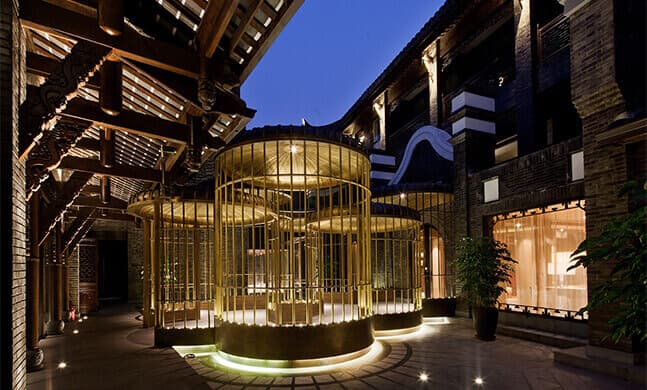
It requires a certain architectural arrogance to plant a hotel of such profound stillness directly into the chaotic artery of Chengdu’s Kuanzhai Alley. Yet, the Guanyin Yiyuntai (formerly the Diaoyutai Boutique Hotel) pulls off this act of separation with theatrical precision. Past the heavy timber thresholds, the roar of tourists dissolves into the hushed geometry of Bruno Moinard’s design—a scheme where the Cartier boutique architect has sharpened traditional Qing Dynasty courtyards with razor-thin brass lines and glass-encased bamboo. There are no cavernous lobbies here; the check-in feels like a handover of diplomatic credentials. The 45 rooms are studies in restraint, featuring 600-thread count linens and layouts that force you to slow down. While the lack of a pool is a concession to heritage preservation, the trade-off is access to the Royal Court restaurant. Here, the kitchen executes the codified Diaoyutai State Banquet cuisine—dishes previously reserved for visiting dignitaries. Order the 'Buddha Jumps Over the Wall'; it is a gelatinous, rich masterclass in culinary soft power. Service is less 'friendly' and more 'anticipatory,' moving with the silent efficiency of state security.
“Request a room in the 'Kuan' courtyard for direct views of the alley's slate rooftops, or the 'Zhai' courtyard for absolute hermetic silence. Book the afternoon tea at Fangfei Garden Lounge specifically for the sugar-spun landscape desserts.”
Insider TipAvg. Nightly Rate
240USD
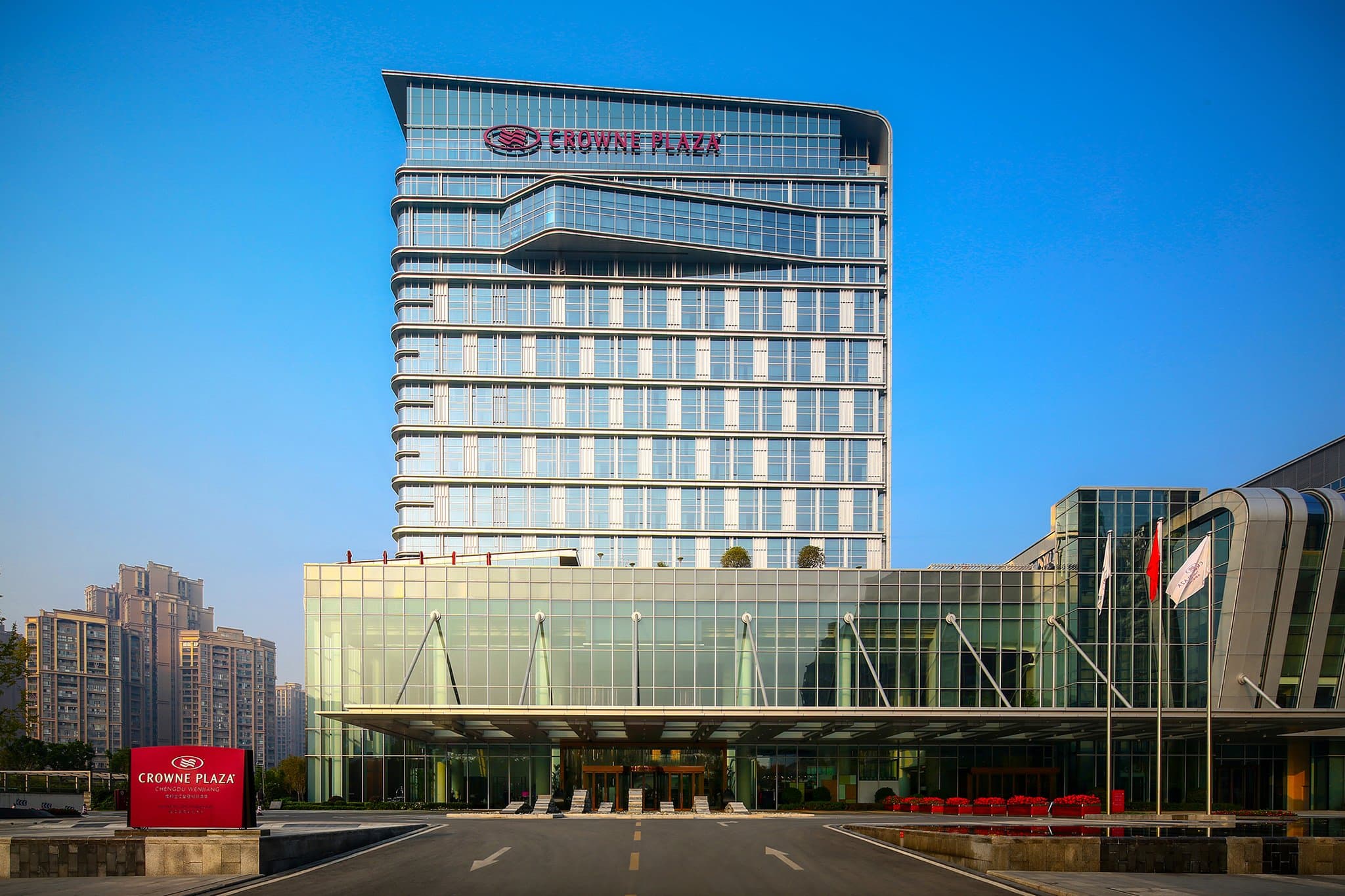
Chengdu is usually a pilgrimage for pandas and peppercorns, but the smart money heads west to Wenjiang for a different kind of heat. The Crowne Plaza Chengdu Wenjiang serves as the polished, slate-grey dormitory for the adjacent Shulechi Hot Spring, a sprawling geothermal complex that is less 'hotel pool' and more 'Taoist water labyrinth.' With over 40 pools—ranging from mugwort-infused soaks to raw sulfur pits—it offers a legitimate hydro-therapy circuit that puts standard western spa menus to shame. Architecture firm DP Architects wrapped the building in aluminum screens that mimic traditional Chinese lattice, creating a striking play of light in the lobby’s bamboo atrium. The rooms are a study in corporate zen: expansive Jiang'an River views, crisp linens, and built-in bathtubs that act as private overflow for the hot springs below. Dining is a high-low mix. Cai Feng Lou executes a precise Peking Duck and the 'Signature 10 Bites' with Cantonese flair, while Wen Café’s breakfast buffet redeems the morning with made-to-order Sichuan noodles swimming in chili oil. However, the 'future' here feels stuck in buffering mode. The hotel’s heavy reliance on butler robots for room service often results in agonizing delays, turning a simple request for water into a logistical standoff. It’s a property with five-star hardware and beta-version software. Verdict: Submerge yourself in the healing waters, feast on the local spice, but for the love of Zen, don't rely on the droids for dinner.
“Skip the crowded afternoon soak. Access the Shulechi springs after 9:00 PM; the atmospheric lighting is better, and the family crowds have dispersed.”
Insider TipAvg. Nightly Rate
66USD
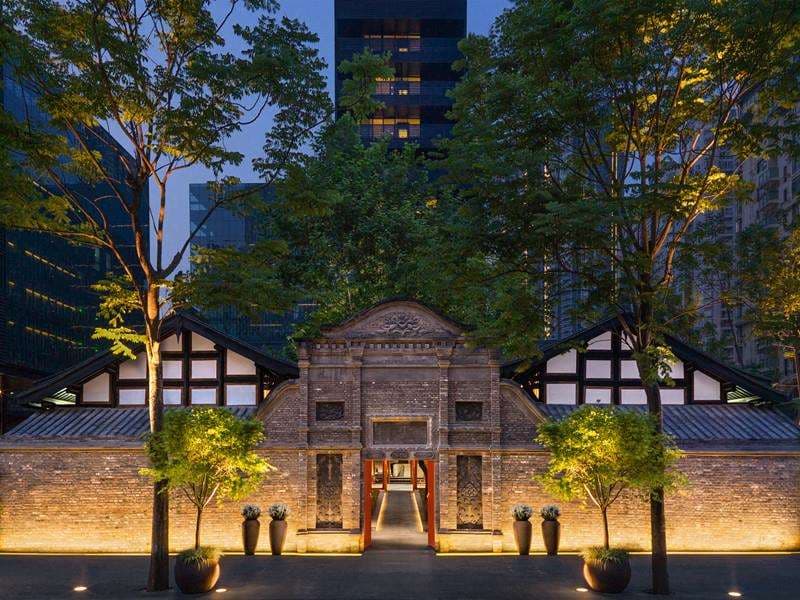
If the rebrand from 'The Temple House' to 'Upper House Chengdu' in late 2025 signals anything, it’s that Swire’s mastery of the 'anti-hotel' is complete. Entering via the restored Qing-dynasty Bitieshi courtyard isn't just a check-in; it's a cortisol detox. The vibe is aggressively low-lit—moody enough to require 20/20 vision to find your room key, but undeniably chic. Inside the 63sqm Studio 60, the aesthetic is a monochromatic study in oak and limestone, devoid of the usual beige corporate ennui. The famed 'Maxi-bar' remains the city’s best perk: complimentary beer, soft drinks, and—crucially—nostalgic White Rabbit candy. Practicality takes a hit with the lighting, but the trade-off is atmosphere for days. The real spiritual heavy lifting happens at Mi Xun. This isn't just a spa; it's a TCM pilgrimage. After a treatment using Thémaé tea-based elixirs, the adjacent Teahouse serves a Michelin Green Star vegan menu that banishes any longing for meat—the mapo tofu with chanterelles is a revelation. Before heading to Mount Qingcheng, a few laps in the pool under the woven brass skylights feels like a ritual in itself. It’s not just a stay; it’s the perfect Taoist primer.
“Book a treatment at Mi Xun Spa before 4 PM to snag a window seat at the Teahouse for their vegan afternoon tea—specifically for the cranberry mung bean cakes.”
Insider TipAvg. Nightly Rate
305USD

Chengdu is often reduced to pandas and peppercorns, but Ahn Luh Guantang demands you engage with a different heritage: the silence of the Tang Dynasty. Located in the Tianfu New District, this isn't a hotel you stumble upon; it is a pilgrimage to an architectural resurrection. The property shuns the red-lantern kitsch of lesser 'heritage' resorts for a rigorous, timber-framed austerity that feels both ancient and sharply modern. With only 34 keys, the privacy is aggressive. The villas are tactile masterpieces, stocked with Bang & Olufsen speakers and the earthy, medicinal scent of Ba Yan Ka La amenities. However, the 'Zen' atmosphere takes a practical hit with the lighting: while the 'hidden light' concept recently snagged a LIT Design Award, locating the master switch at 11 PM feels like solving a cryptic Taoist riddle. Dining avoids the bland international trap. At Ahn Luh All-Day Dining, the signature 'Guantang Three Treasures' features a crispy spicy chicken that delivers a genuine, tongue-numbing Sichuan peppercorn hit. Post-lunch, the Infinity Tea Pavilion offers a view of the water that effectively erases the city's chaotic pulse. It is imperfect, yes, but for the design-obsessed traveler, it is undeniably soulful.
“The lighting controls are notoriously complex; ask your butler for a 'lighting tour' immediately upon check-in to avoid fumbling in the dark.”
Insider TipAvg. Nightly Rate
310USD

Forget the frantic day-trips to Dujiangyan’s weir system; the Steigenberger Hotel SUNAC offers a compelling argument for staying put. While the nameplate suggests German austerity, the interiors are pure Sichuanese theatre—soaring timber pillars in the Grand Lobby and lantern-lined corridors that echo the region’s ancient towns. It is a curious, successful experiment in 'resort-style detachment' mere steps from the adrenaline of the Sunac Snow Park. The rooms act as sanctuaries of silence (excellent soundproofing is a noted perk here) outfitted with deep-soak tubs and plush linens that defy the ski-resort cliché. Culinary efforts at *Zhen Chinese Restaurant* are sharp, delivering Western Sichuan specialties that numb the palate delightfully before you retreat to the spa’s hot spring plunge pools. It is a sophisticated basecamp that balances high-octane snow sports with deep-soak Taoist recovery. **Verdict**: The most polished luxury base for tackling Mount Qingcheng’s trails or the indoor slopes.
“Book a 'Lake View' room to watch the resort's fireworks display on holidays. For families, ask Concierge specifically for the 'Ultraman' themed suites, which come with dedicated kids' amenities kits.”
Insider TipAvg. Nightly Rate
76USD
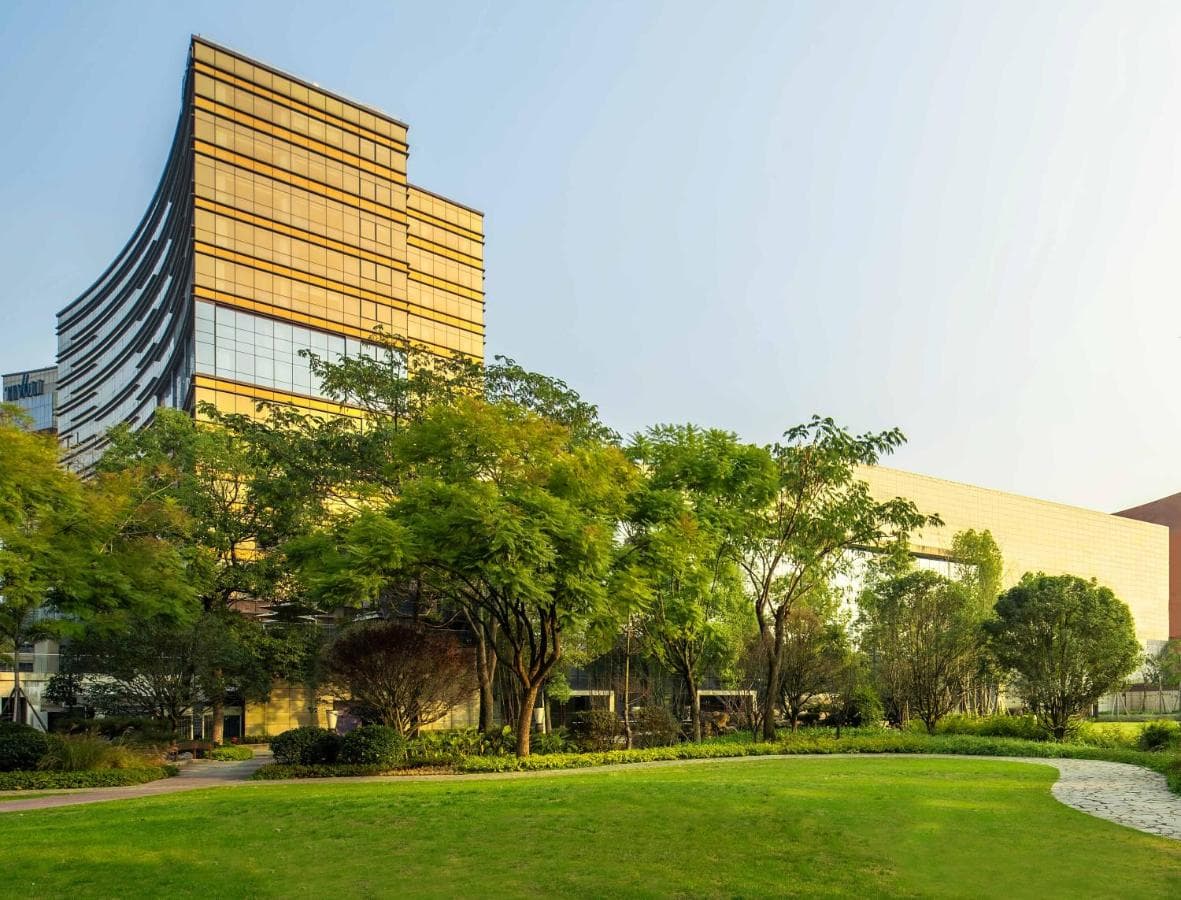
Forget the frenetic pulse of Chunxi Road. Anchoring the western edge of the International Intangible Cultural Heritage Park, the Tivoli Chengdu executes a high-wire design act: fusing the melancholic romance of Portuguese heritage with the fiery pragmatism of Sichuan. You enter past soaring pillars modeled after local hibiscus blooms, but the atmosphere is distinctly European aristocrat-on-holiday. The 201 rooms prioritize residential calm over ostentatious flair, offering uninterrupted views of the manicured 3,650 sqm Grand Lawn. But the property’s true flex is culinary. It is audacious to serve authentic Bacalhau (salted cod) in the land of Mapo Tofu, yet Casa de Fados delivers the city's only legitimate Portuguese Sunday Brunch, a welcome palate cleanser from the ubiquitous mala heat. For purists, Tihong Chinese Restaurant handles traditional dim sum with equal dexterity. Wellness here is managed by Anantara Spa, utilizing signature natural blends that feel medicinal rather than cosmetic. The 858-square-meter indoor pool—a heated cathedral of water—ensures laps are swam in meditative silence. **Verdict**: A sophisticated, slightly surreal cultural diplomat that justifies the trek west.
“Book a table at Casa de Fados for the Sunday Brunch to catch the live Fado performance—a rarity in China. Request a room on the 5th floor for the best elevation over the Heritage Park.”
Insider TipAvg. Nightly Rate
85USD
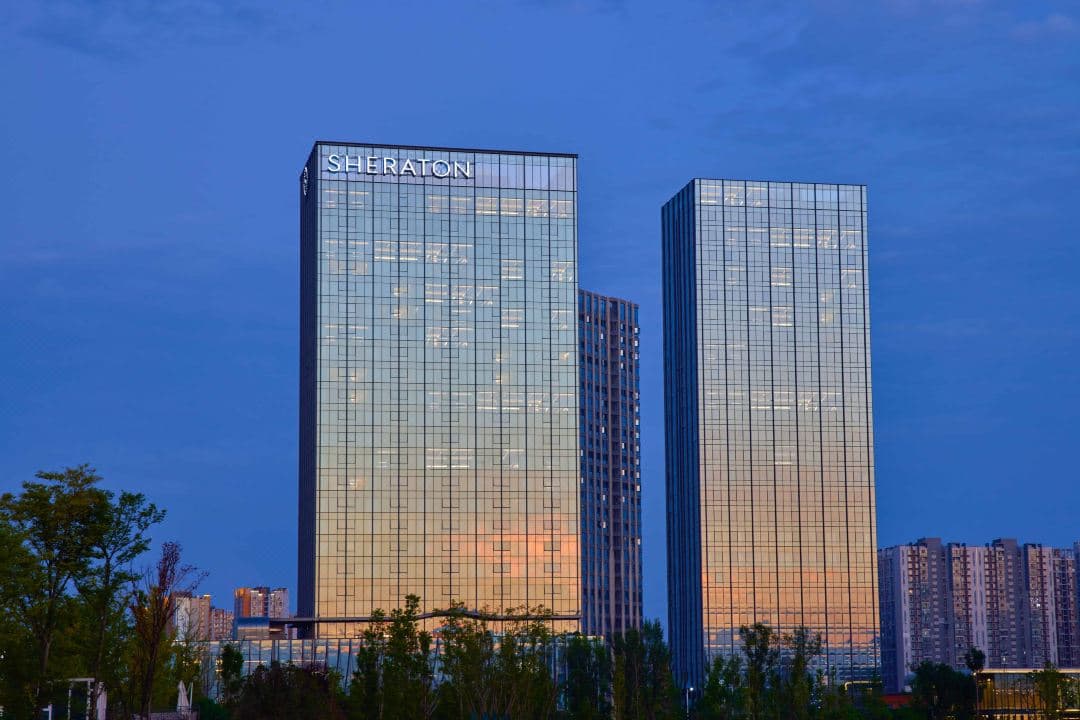
Forget the fiery reputation of Pidu’s famous bean paste; this western district has pivoted to the future, and the Sheraton Chengdu Pidu is its polished, tranquil airlock. Situated adjacent to the Zaha Hadid-designed Chengdu Science Fiction Museum, the property feels less like a standard corporate outpost and more like a retreat for the weary time-traveler. The HBA-led design sheds the stuffy mahogany of Sheratons past for fluid, open spaces centered around the 'Community Table' in the lobby—a workspace that actually invites lingering with a whiskey from the 'Unspoken' bar. Upstairs, the rooms are exercises in beige restraint, saved by floor-to-ceiling glass that frames the mist rolling off Jingrong Lake. The beds are predictably cloud-like, but the bathroom’s Citron + Vetiver *Le Grand Bain* amenities (a Byredo collaboration) add a necessary sharp, olfactory edge. Culinary ambition peaks at *Yue*, where the '24 Solar Terms' tasting menu tracks local micro-seasons with startling precision—think crisp bamboo shoots in spring and warming broths when the winter solstice hits. It’s a business hotel that has accidentally mastered the art of doing nothing.
“Request a 'Lake View King' on a high floor (15+) to spot the nebulous curves of the Science Fiction Museum at sunset—it’s the best unadvertised view in the city.”
Insider TipAvg. Nightly Rate
67USD
It is a jarring, delightful paradox: a German heritage brand anchoring a neon-lit cultural tourism city at the foot of Taoism’s holiest mountain. The Steigenberger Hotel SUNAC Chengdu manages to pull off this high-wire act with surprising grace. The lobby is a cathedral of timber—massive wooden pillars and lantern-lined corridors that nod to Qingcheng’s ancient temples, grounding you before you even spot the adjacent Snow Park. Rooms are sanctuaries of silence (mostly—request a high-floor garden view to strictly avoid the plaza noise) outfitted with 400-thread count linens and massive soaking tubs essential for post-hike recovery. While the location in the Sunac cluster feels manufactured, the amenities are legit: the spa is a wet-area powerhouse featuring dry saunas, steam rooms, and mineral-rich hot spring plunge pools. Dining is equally bifurcated; 'Café Realm' executes pan-fried lamb chops with Munich-level competence, but the smart money is on 'Zhen Chinese Restaurant' for its Western Sichuan specialties and nutritious double-boiled soups. It’s the ideal basecamp for the schizophrenic traveler who wants morning meditation at Panda Valley and afternoon shredding on indoor powder.
“Book a 'Deluxe Lake View' room on a holiday weekend; you get a front-row seat to the Sunac fireworks display without leaving your balcony.”
Insider TipAvg. Nightly Rate
76USD

Forget the chaotic panda queues; true Chengdu enlightenment lies an hour west in Wenjiang. Tsingpu Chengdu Retreat transforms the typical luxury stay into a high-design exercise in scholarly seclusion. Housed within the repurposed walls near Minjiang Academy, the architecture commands attention immediately with its dramatic 'Double-Dou' stone masts and deep wooden corridors that frame the Jiang’an River like a scroll painting. Inside, the vibe is aggressively introspective. There are no expansive resort pools here; instead, the focus is on a compact, highly specialized TCM spa using local herbal therapies that actually work. Rooms feel less like hotel suites and more like private studies, where exceptional butler service anticipates needs before you ring. Dining is a serious affair at ‘Market Place (Shí Jí)’, where the handmade Dandan noodles ruin you for all other versions, while ‘Chun Feng’ delivers seasonal Sichuan delicacies without the tourist-trap numbing spice overload. It’s a contemplative, architectural triumph for the traveler who prefers tea art to tik-tok trends.
“Skip the city center trek for dinner and ask your butler to arrange a private session of the inclusive Tea Art or Opera cultural activities on-site.”
Insider TipAvg. Nightly Rate
205USD