No. 01

ChengduChengdu436 verified reviews
9
.8
Bitvoya Edit
Layering imagery, place, and detail before the page opens.
Chengdu is not just a city; it is a state of mind defined by 'An Yi' (安逸)—a philosophy of comfort, ease, and leisure. In this curated collection, we invite you to step away from the hectic pace of modern life and retreat into Chengdu's most serene urban oases. From the Taoist-inspired tranquility of Six Senses Qing Cheng Mountain to the heritage-infused elegance of The Temple House in the bustling Jinjiang District, these properties define luxury through stillness. Whether you are sipping tea in the lush gardens of Angsana Chengdu Wenjiang or admiring the architectural marvels of AHN LUH GUANTANG, these hotels offer a sanctuary where time slows down, allowing you to savor the art of living.
Chengdu is widely recognized as the capital of 'Slow Living' in China. Unlike the frenetic pace of Beijing or Shanghai, Chengdu encourages visitors to pause. The concept of 'An Yi' permeates every aspect of hospitality here. Choosing this destination means embracing a lifestyle where luxury is measured in moments of peace. Properties like the Mandorla · Shiyuesenlin and Tivoli Chengdu at Cultural Heritage Park exemplify this by integrating local heritage with world-class wellness facilities, making them perfect retreats for rejuvenation.
Expect a seamless blend of Sichuanese tradition and modern luxury. Hotels in this collection, such as the Chengdu Huanhua Hongtai Hotel and Guanyin Yiyuntai Hotel Chengdu, feature design elements that pay homage to the region's history while providing cutting-edge amenities. Guests can anticipate private tea ceremonies, spa treatments utilizing local herbs, and architecture that blurs the lines between indoor and outdoor living. This is not just a stay; it is an immersion into the peaceful soul of Chengdu.
Spring (March to June) and Autumn (September to November) offer the mildest climate, perfect for enjoying outdoor tea houses and hotel gardens.
Six Senses Qing Cheng Mountain is the premier choice, offering Taoist-inspired wellness programs and luxury villas nestled in nature.
Yes, properties like Angsana Chengdu Wenjiang and Tivoli Chengdu offer extensive grounds and family-friendly amenities while maintaining a serene atmosphere.
Explore our complete curated list of luxury accommodations, from boutique hideaways to grand dames.
Explore All Chengdu HotelsWhile Chengdu buzzes with caffeinated pandas and peppercorn-laden hotpots, Ahn Luh Guantang offers a monastic counterpoint just 45 minutes south. This isn't merely a hotel; it’s a masterclass in architectural restraint. Designed to mimic a traditional Sichuan village, the property relies on rammed earth walls and soaring timber beams to frame the surrounding countryside. The real showstopper here is the lighting—or lack thereof. Recently snagging a LIT Lighting Design Award, the 'Hidden Light' concept ensures you never see a bulb, only the soft, ambient glow that washes over the slate floors and bamboo walkways. Inside the 34 villas, the aesthetic is rigorously edited: B&O speakers and Ba Yan Ka La amenities sit alongside high-ceilinged spaces that feel more like private residences than hotel rooms. Dining is equally deliberate. Skip the generic buffet for the 'Guantang Three Treasures' at the all-day dining venue, where the crispy spicy chicken offers a refined kick. For a slower pace, the Infinity Tea Pavilion serves Tang Dynasty-style pastries that look almost too architectural to eat. Service is hyper-personalized; butlers (often mentioned by name, like Xiao Wu) manage everything via WeChat, from booking the perpetually busy spa to arranging Hanfu robes. It’s a sophisticated, slow-motion escape that demands you put your phone down—unless you’re capturing the pool’s mirror-like surface at dusk.
“Book the 'Qizi' suite for a private hot spring tub in your courtyard. Also, request a night-time pool visit; the underwater lighting creates a star-field effect that is unmissable.”
Insider TipAvg. Nightly Rate
310USD
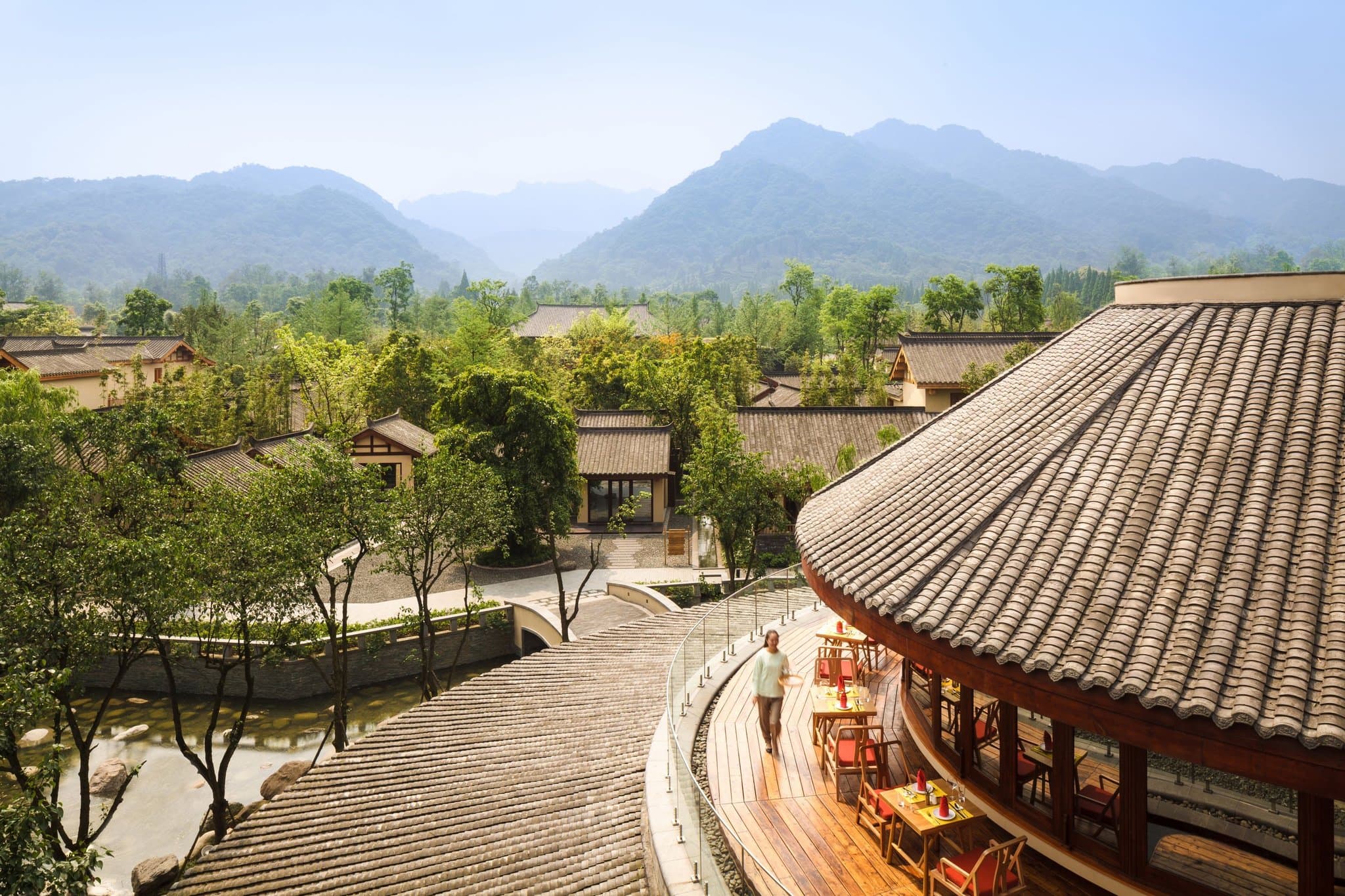
If Chengdu is the capital of 'An Yi' (untroubled leisure), this timber-framed compound is its spiritual palace. Anchored at the gateway to Taoism’s birthplace, the property rejects the typical hotel block structure for a sprawling, village-like precinct of villas and courtyards connected by bamboo-lined pathways. It feels less like a hotel and more like a cinematic set for a period drama, albeit one equipped with Tesla transfers and app-controlled lighting. The Courtyard Suites are studies in sustainable restraint—think exposed beams, rattan accents, and organic cotton linens that feel impossibly crisp. While the lack of smart toilets is a surprising omission for a tech-forward brand, the high-tech conveniences elsewhere compensate. Dining here demands a relaxed wallet. The signature 'Farm2Fork' restaurant serves a 32-hour slow-cooked Wagyu beef short rib that justifies the premium, though the breakfast spread at '28 Zodiac'—with its local Sichuan specialties like Mapo Tofu—steals the morning show. The real draw, however, is the spa. Skip the standard massage for a session in the Tai Chi Garden; it’s the only way to properly align with the mountain’s energy. Verdict: A sophisticated, eco-conscious sanctuary that trades urban chaos for expensive, but exquisite, silence.
“Request a suite near the Moon Bar for the most atmospheric twilight views of the curved eaves and red lanterns.”
Insider TipAvg. Nightly Rate
215USD
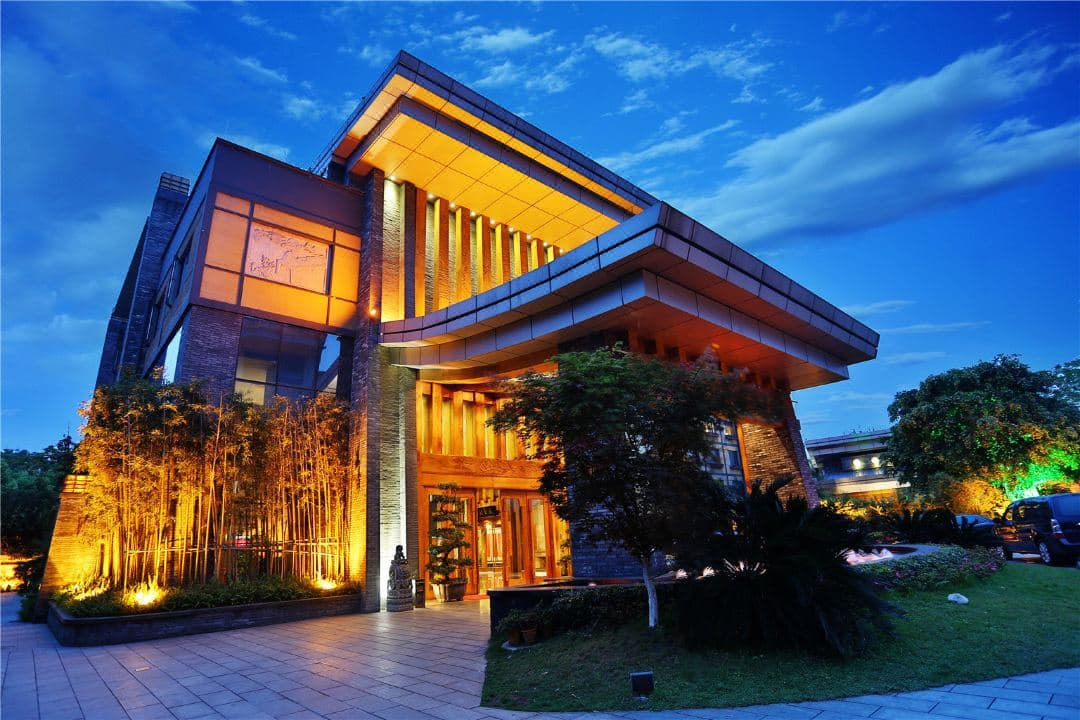
If Chengdu is a boiling pot of chili oil and neon, the Huanhua Hongtai is the cool herbal tea served immediately after. Located adjacent to the Du Fu Thatched Cottage, this isn't a hotel you book for high-gloss marble lobbies or iPad-controlled curtains. It is a architectural exercise in raw timber and solitude, designed to mimic the scholarly retreats of the Tang Dynasty. The hardware, admittedly, dates back to 2012—you might find the occasional scuff—but the soul of the place is unshakeable. The real luxury here is the hyper-specific butler service. Forget generic chocolates; expect a knock at your heavy wooden door in the evening delivering a steaming basin for a foot bath and a bowl of medicinal Silver Ear Soup (warm, slightly sweet, collagen-rich). Dining at the on-site 'Du Lin Fang' is non-negotiable; their Eight Treasure Gourd Duck is a masterclass in texture. It is less a hotel and more a habitable museum for those who prefer the scent of old wood to Le Labo.
“Ask for a room facing the internal courtyard garden. At night, the silence is so profound you can hear the koi moving in the pond.”
Insider TipAvg. Nightly Rate
105USD
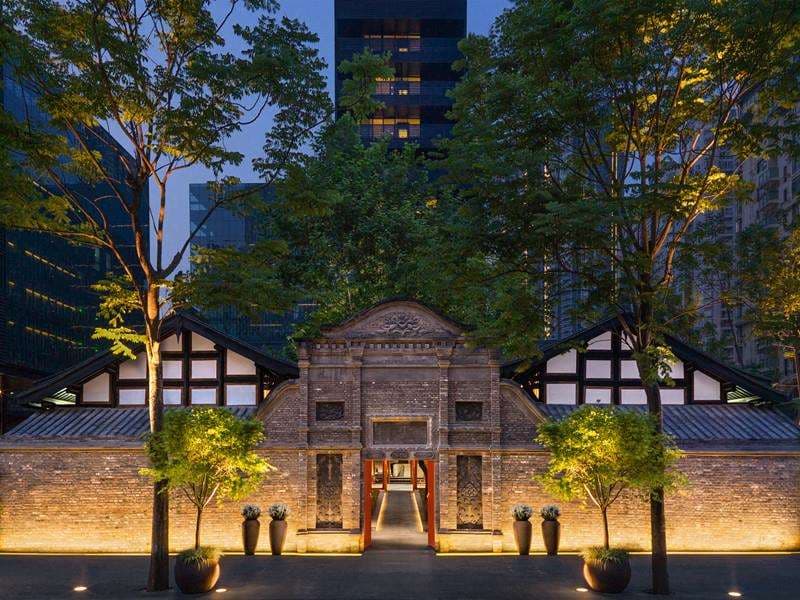
Don’t let the recent rebrand from ‘The Temple House’ to ‘Upper House Chengdu’ confuse you; the soul of this sanctuary remains untouched. Entering through the Bitieshi—a restored Qing Dynasty courtyard with swooping eaves—feels less like checking in and more like exhaling. It is the architectural embodiment of ‘An Yi’ (ease), a sharp, silent retort to the neon flash of Taikoo Li just outside. Inside the glass-clad towers designed by Make Architects, the vibe shifts from heritage to high-fashion moody. The Studio 60 rooms are cavernous at 63 sqm, dressed in soothing charcoal and limestone. While the atmospheric lighting borders on ‘vampire chic’ (good luck applying eyeliner after sunset), the creature comforts are faultless: complimentary ‘Maxi-bars’ stocked with beer and M&Ms, and spa-like bathrooms that demand a soak. Dining is a destination in itself. Tivano’s wood-fired pizzas are excellent, but the real star is the Michelin-starred Mi Xun Teahouse. Their Vegan Mapo Tofu with chanterelles is so silken and fiery it will make you question your allegiance to meat. Finish at Jing Bar with a Sichuan Negroni—a numbing, botanical masterpiece. This isn't just a hotel; it’s a masterclass in slow living.
“Book a table at Mi Xun Teahouse for lunch to catch the courtyard in natural light, and order the handmade spinach noodles with dandan sauce—it’s an off-menu favorite often available upon request.”
Insider TipAvg. Nightly Rate
305USD

Forty minutes from Shuangliu Airport, the chaos of Chengdu’s ring roads dissolves into a silence so profound it feels like a pressure drop. Mandorla · Shiyuesenlin (Chengdu Shiyue Forest Hotel) isn’t just a hotel; it’s an architectural disappearing act. Perched in the Longquan Mountains, the structures utilize 'Mirror House' facades to reflect the surrounding ancient cypress and fruit trees, effectively rendering the buildings invisible. There is no lobby scene here—just a seamless handover to a personal butler who spirits you away to a 98-square-meter sanctuary. The absence of a communal pool or gym is a feature, not a bug; the focus is entirely inward. Every suite boasts a private hot spring tub on a terrace that feels suspended in the canopy. Inside, the obsession with 'An Yi' (ease) is clinical: soundproofing is absolute, amenities are high-grade (think Dyson dryers and plush 400-thread count linens), and even the tea water is premium Baisui Mountain. Dining at 'Yao Yue Restaurant' offers farm-to-table Sichuan fusion that skips the gratuitous chili oil for cleaner, herbal flavors like the signature Taiping Dry-Braised Fish. For those seeking a reset, the sound healing sessions in the hinoki-scented 'Yue Shuge' library offer a legitimate spiritual cleanse. It is a rare, uncompromising retreat that demands you do absolutely nothing.
“Request a 'Water & Sky' category room on the second floor; the private hot spring views are unobstructed, offering a direct line of sight to the stars without any foliage blocking the sky.”
Insider TipAvg. Nightly Rate
250USD
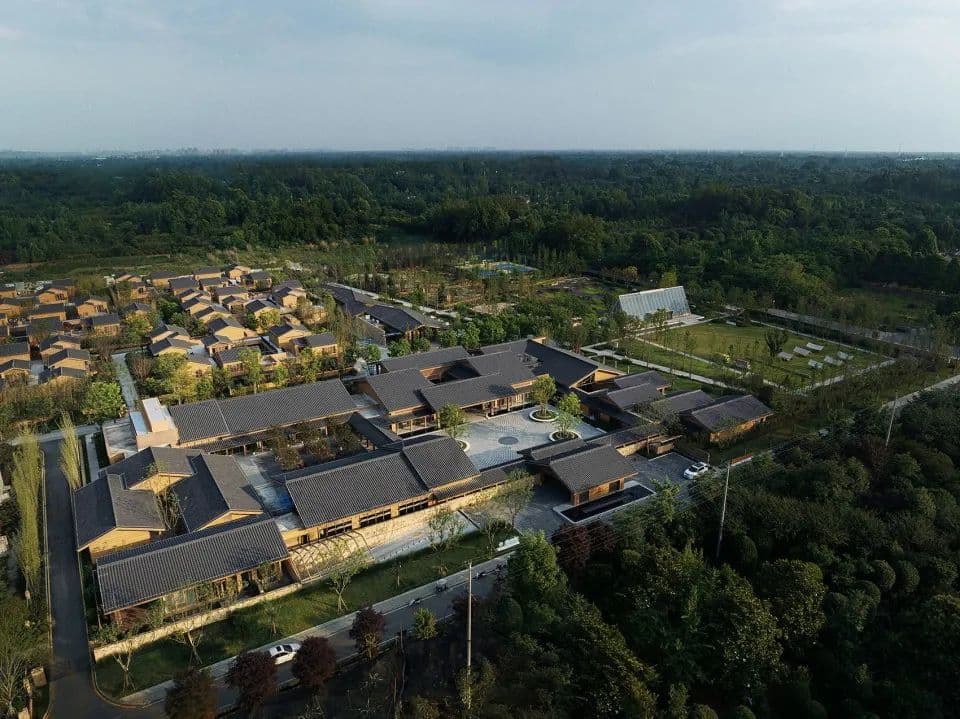
Forget the frenetic energy of Chunxi Road. In the quiet Wenjiang district, Angsana Chengdu Wenjiang offers a masterclass in 'An Yi'—the Sichuanese art of untroubled leisure. Located directly opposite the Qing Dynasty-era Chenjia Yard, the property doesn't just observe history; it converses with it. Designed by the renowned CCD (Cheng Chung Design), the architecture swaps standard luxury gilt for a tactile palette of gray tiles, bamboo weaving, and rammed earth, recently earning a 2024 Kyoto Global Design Award for its efforts. Check-in is a decompression session. The 153 rooms feel less like hotel units and more like private residences, where heritage aesthetics meet uncompromising modernity—expect bamboo-woven headboards paired with Dyson hair dryers and Toto smart toilets. Unusually for this tier of luxury in China, the hotel is genuinely pet-friendly, allowing your four-legged companions to roam the manicured Zen gardens. Dining at 'Chun Feng' is a highlight; skip the western fare and order the Sichuan hot pot, which arrives with a refined, ingredient-forward broth that respects local spice without drowning in oil. As night falls, the central patio’s bonfire casts dancing shadows against the brickwork, creating a restorative atmosphere that feels entire epochs away from the city center.
“Skip the espresso machine and join the daily soy milk grinding workshop in the courtyard—a tactile, meditative start to the morning. Also, request a ground-floor room for direct garden access if traveling with pets.”
Insider TipAvg. Nightly Rate
276USD
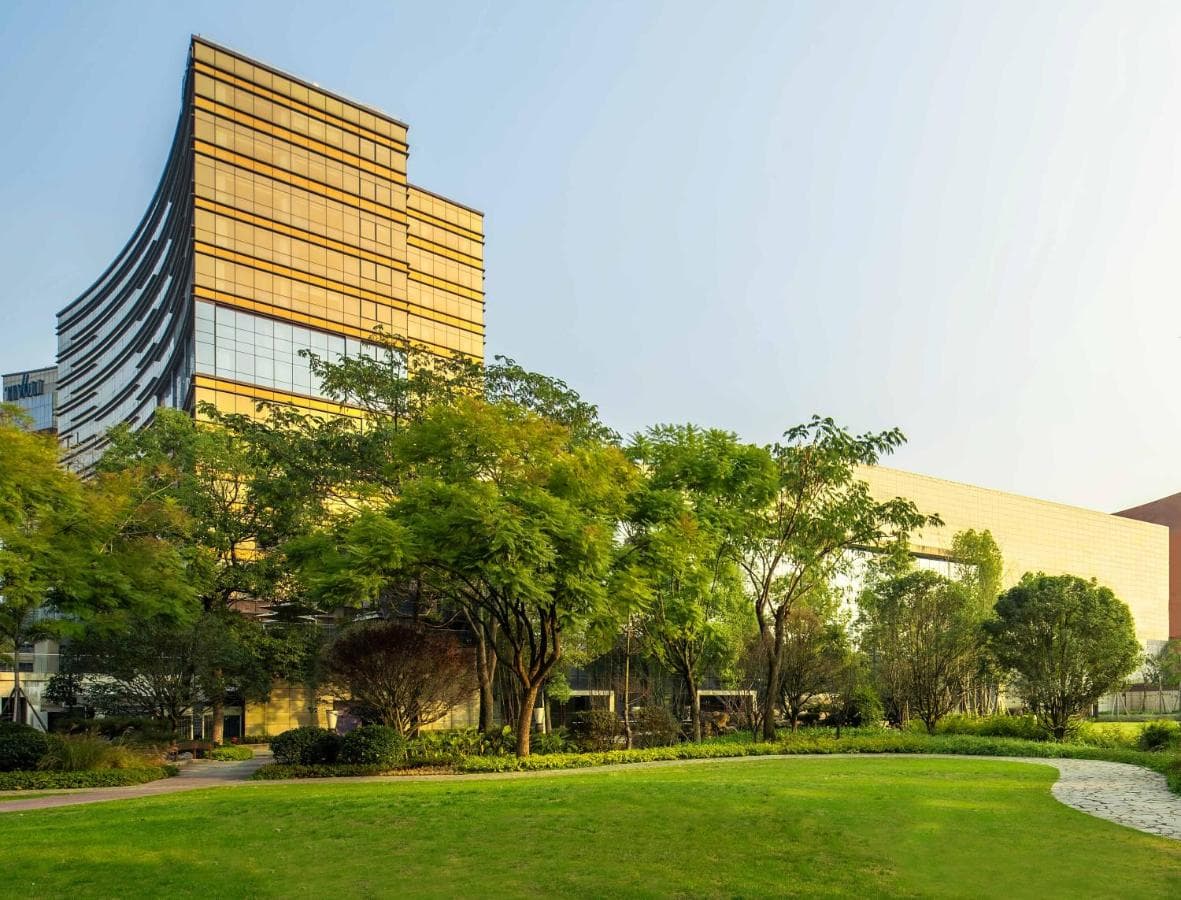
If the pulse of Chengdu is the clang of a hotpot ladle, the Tivoli at Cultural Heritage Park is the silence between the beats. Sited in the western suburbs, a deliberate twenty-minute drive from the airport, this property rejects the frenetic energy of Tianfu Square for the manicured stillness of the Intangible Cultural Heritage Park. The arrival experience is less hotel-lobby and more art-gallery, framed by towering pillars etched with hibiscus motifs—a nod to the city’s floral emblem that feels architectural, not kitschy. Inside, the Tivoli DNA—a Portuguese export—asserts itself with surprising confidence. The rooms are exercises in restraint, prioritizing silence and hygiene (Booking.com users rate the latter a near-perfect 9.5) over flash. But the real teleportation happens at Casa de Fados. While other luxury hotels soften their European dining for local palates, this kitchen commits to the salt and brine of authentic Mediterranean seafood. Eating Bacalhau à Brás while listening to melancholic Fado music, miles from the nearest coastline, is a surreal, sophisticated pleasure. For the morning after, the Anantara Spa offers treatments that lean heavily on natural products, effectively scrubbing away the jet lag. It is a long way from the pandas, but that is precisely the point.
“Request a room facing the 3,650 sqm Grand Lawn on a high floor; the sunset over the park offers a rare, uninterrupted horizon line in this dense metropolis.”
Insider TipAvg. Nightly Rate
85USD
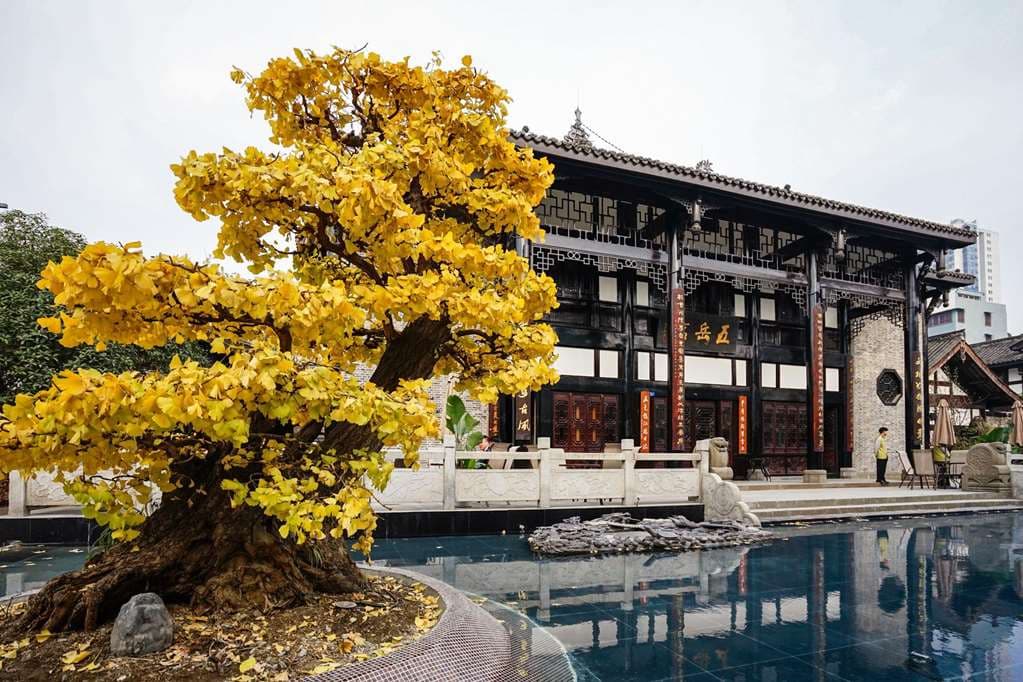
If Chengdu is a boiling cauldron of mala spice and urban clamor, the Chengdu Courtyard Hotel is the cooling herbal tea served immediately after. Located mere footsteps from the incense-wreathed Wenshu Monastery, this property doesn’t just mimic history; it occupies it. The structure is a rigorous exercise in traditional Siheyuan architecture—think gray slate bricks, upturned eaves, and wooden corridors that creak with a satisfying, authentic gravity. Inside, the vibe is less 'international five-star' and more 'scholarly recluse.' Rooms are clad in dark woods and intricate lattice screens, though the commitment to heritage does mean navigating the occasional dim corner or quirk of plumbing common to restored compounds. It is a fair trade for the atmosphere. Dining is a serious affair here; the on-site restaurant, Wu Yue Gong, recently earned a nod in the Michelin Guide. Their Kung Pao Prawns are a revelation—sweet, spicy, and devoid of cloying starch. Skip the perfunctory gym. The real wellness ritual is found at the Courtyard Tea Bar, nursing a gaiwan of scented tea while watching koi navigate the central pond. It is the Art of 'An Yi' (slow living) distilled into a single afternoon.
“Book a 'Family Loft' even if you're child-free; the extra space is luxurious, though the in-room slide is a whimsical reminder not to take the zen too seriously.”
Insider TipAvg. Nightly Rate
90USD
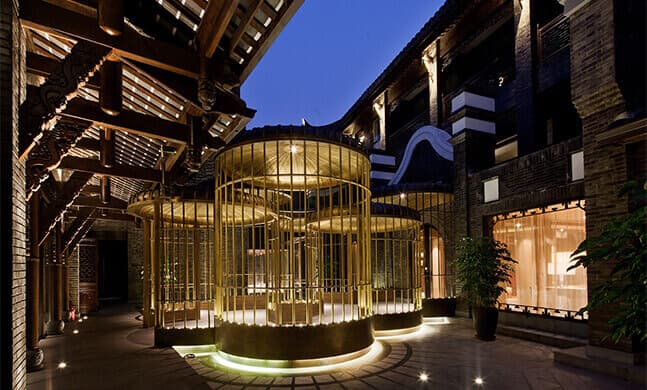
To enter Guanyin Yiyuntai is to hit the mute button on Chengdu’s loudest tourist artery. While the Kuanzhai Alley pedestrian zone outside hums with the noise of tea-whisking performers and sugar-spinners, this property (formerly the Diaoyutai) operates on the frequency of a Qing Dynasty whisper. The interiors, overhauled by Cartier boutique designer Bruno Moinard, reject the usual kitsch for a moody, cinematic interplay of dark timber and brushed brass. The 'Royal Court' restaurant remains the centerpiece, serving State Banquet cuisine so precise it feels like a diplomatic summit; the 'Buddha Jumps Over the Wall' is rich enough to stop time. Rooms are serious about sleep: 600-stitch cotton flax linens and blackout curtains effectively seal you off from the city, while the mirror-embedded TVs and complimentary turn-down milk and cookies add a layer of domestic indulgence. It is the 'Great Hermit' philosophy enacted—absolute withdrawal without leaving the center.
“Since cars cannot enter the pedestrian alley, call ahead to have the concierge meet you at the alley entrance with a luggage cart. Ask for a room facing the inner courtyard for total silence.”
Insider TipAvg. Nightly Rate
240USD