No. 01
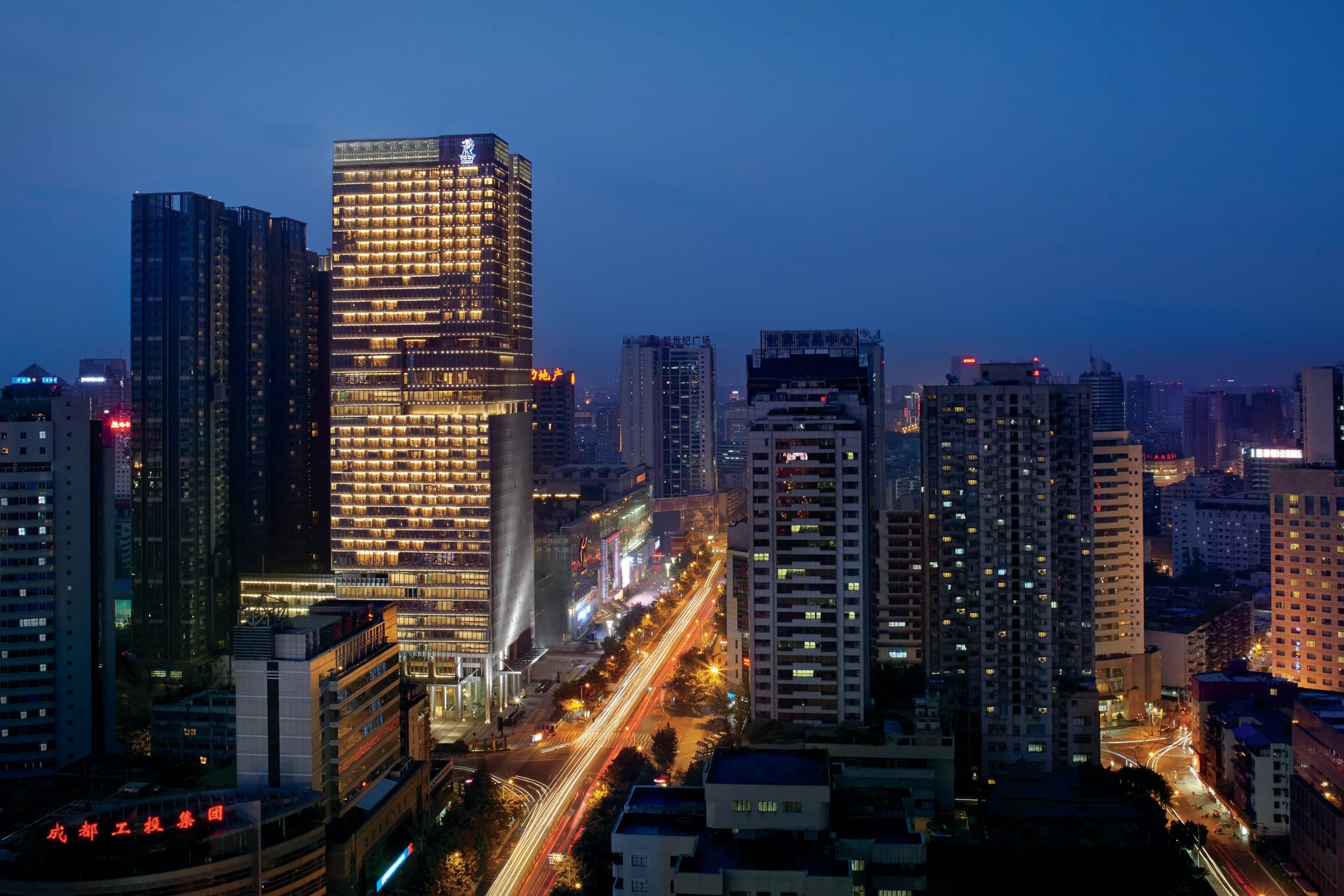
269 Shuncheng Ave Qingyang Dis. Chengdu China 610017Chengdu381 verified reviews
9
.4
Bitvoya Edit
Layering imagery, place, and detail before the page opens.
Chengdu, recognized globally as a UNESCO City of Gastronomy, offers a sensory journey unlike any other. This collection celebrates the intersection of fiery Michelin-starred Sichuan cuisine and the tranquil, meditative art of the tea ceremony. Our selection places you in the heart of the action, from the historic lanes of the Qingyang District, home to the Kuanzhai Alley and the elegant Guanyin Yiyuntai Hotel, to the ultra-modern luxury of the Jinjiang District near Chunxi Road. Whether you are seeking the urban sanctuary of The Temple House or the riverside grandeur of the Shangri-La, these properties provide the perfect base to explore a city where leisure is a lifestyle and dining is an art form.
Chengdu is the cradle of Sichuan cuisine, one of China's most complex and celebrated culinary traditions. As the first city in Asia to be named a UNESCO City of Gastronomy, it offers travelers a unique blend of flavors—from the numbing spice of authentic hotpot to the delicate sweetness of local snacks. However, Chengdu is not just about food; it is equally famous for its tea culture. Staying at properties like **The St. Regis Chengdu** or **The Temple House** allows guests to seamlessly transition from a high-energy Michelin dining experience to a serene afternoon tea service, often hosted within the hotel's own curated gardens or lounges.
Travelers choosing hotels from this curated list can expect world-class amenities tailored to the epicurean lifestyle. Expect concierge teams knowledgeable about the hidden gems of the city's food scene, in-house restaurants that rival the best in the city (such as the dining options at **Shangri-La Chengdu**), and dedicated tea ceremonies that showcase the region's famous bamboo leaf tea. Whether it is a spa treatment infused with Sichuan herbs or a private dining room overlooking the city skyline, these hotels elevate the standard Chengdu trip into a luxurious gastronomic pilgrimage.
For modern luxury and shopping, the Jinjiang District near Taikoo Li is best (home to The Temple House). For historic atmosphere, choose Qingyang District near Kuanzhai Alley.
Yes, properties like The Temple House and Ahn Luh Guantang specialize in cultural immersion, offering curated tea ceremonies featuring local Sichuan teas.
Several luxury hotels in Chengdu house or are adjacent to Michelin-rated restaurants. The Ritz-Carlton and The St. Regis are renowned for their high-end Cantonese and Sichuan fine dining.
Explore our complete curated list of luxury accommodations, from boutique hideaways to grand dames.
Explore All Chengdu HotelsForget the pandas for a moment. The true endangered species in this frenetic megacity is silence, and you’ll find it preserved impeccably 25 floors above the pavement at The Ritz-Carlton. While newer properties chase trends with blinding LEDs, this hotel relies on a darker, more tactile confidence—think leather-paneled walls, timber latticework evoking ancient teahouses, and a lobby that smells expensively of black tea and money. The rooms are sanctuaries of old-school weightiness. You won’t find voice-activated curtains here; instead, you get reassuringly heavy doors, TOTO smart toilets, and 800-thread count linens that feel like a bribe to never leave bed. The hardware controls are slightly vintage, but the views over Tianfu Square are timeless. The real draw, however, is the culinary rigor. *Li Xuan*, the Michelin-selected dining room, refuses to dumb down the local heat. The braised blue lobster with black truffle is a masterclass in controlled excess, pairing surprisingly well with their rare Pu'er collection. Afterward, descend to the Valmont Spa, where the jade bed treatments offer a literal cool-down from the chili oil. It’s not the newest hotel in town, but it remains the most grown-up.
“Skip the morning laps and visit the indoor pool late at night; the underwater music system sounds clearest when the water is still.”
Insider TipAvg. Nightly Rate
124USD

Forget the clamor of Chunxi Road. Forty minutes outside Chengdu, Ahn Luh Guantang is a moody, atmospheric rebuke to urban chaos. While the brochure might whisper 'Lingnan,' the architecture is unapologetically Western Sichuan Linpan—think rammed earth, thatched roofs, and timber beams reimagined for the jet set. The 'Hidden Light' design philosophy creates a seductive, shadowy aesthetic, though finding the master switch on your bedside console requires a degree in electrical engineering. Inside the 34 villas, privacy is absolute. You’re cocooned in high-thread-count silence, broken only by the hum of B&O speakers and the scent of Ba Yan Ka La amenities. The culinary anchor, however, is the Infinity Tea Pavilion. In a UNESCO City of Gastronomy, the ceremony here is less a beverage service and more a sensory meditation. Dinner at the All-Day Dining restaurant delivers a punchier reality; the 'Guantang Three Treasures'—specifically the crispy spicy chicken—shatters with a heat that demands respect. Service is butler-sharp, though the spa is perpetually fully booked—a frustrating blemish on an otherwise flawless retreat.
“Book the outdoor infinity pool at dusk. The 'hidden light' design creates a mirror-like reflection of the architecture that is pure Instagram gold.”
Insider TipAvg. Nightly Rate
310USD
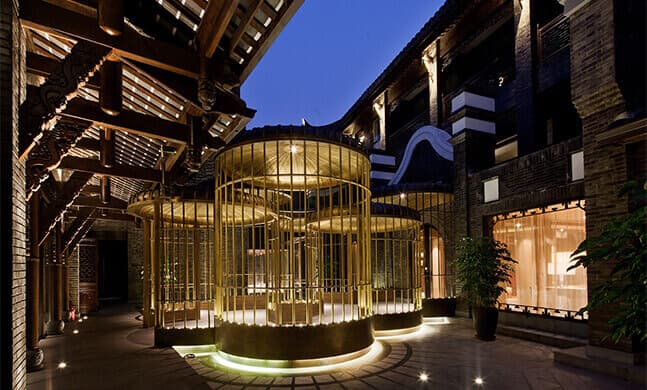
To enter the Guanyin Yiyuntai (formerly Diaoyutai) is to perform a magic trick: you step off the cacophonous, tourist-clogged arteries of Kuanzhai Alley and vanish into a vacuum of silence. Designed by Bruno Moinard—the hand behind Cartier’s global boutiques—the property is a masterclass in 'Great Hermit' philosophy. It doesn’t just block out the noise; it replaces it with the scent of old cedar and the visual hush of red lacquer corridors. But you are here for the food. This is the only outpost in western China serving genuine 'Royal Court' cuisine—the same diplomatic menu served to visiting heads of state in Beijing. The signature 'Buddha Jumps Over the Wall' is not merely soup; it is a gelatinous, umami-dense theology of abalone and sea cucumber that justifies the flight alone. The Codfish in Golden Soup offers a lighter, citric counterpoint, showcasing the kitchen's ability to navigate between heavy Imperial tradition and Sichuanese brightness. The rooms are equally theatrical, featuring 400-thread count linens and Dyson-equipped baths that feel less like hotel ensuites and more like private spas. Service is telepathic, executed by staff trained in the rigid, balletic protocols of the Diaoyutai State Guesthouse. It is sophisticated, severe, and utterly singular.
“Request a table in the 'Fangfei Garden Lounge' for the afternoon tea service; the glass ceiling offers a view of the ancient tiling without the alley's crowds.”
Insider TipAvg. Nightly Rate
240USD
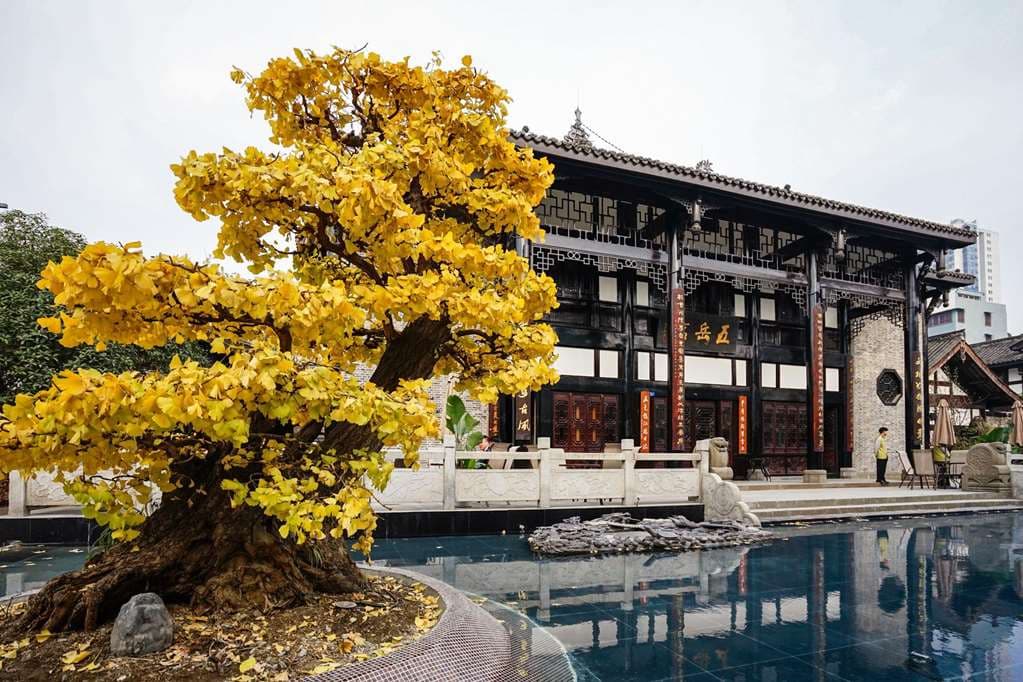
In a city obsessed with the futuristic glass of the IFS, the Chengdu Courtyard Hotel is a deliberate, moody regression. Located just steps from the incense-heavy air of Wenshu Monastery, this 22-room enclave doesn't just reference history; it lives in it. The architecture is a serious affair of dark wood and grey brick, creating a humid, atmospheric charm that feels miles away from the panda-tourist circuit. The true draw, however, is **Wu Yue Gong**. This isn't your standard hotel all-day dining; it’s a Michelin-selected gastronomic theater. The **Kung Pao Prawns** here forego the usual gloopy sweetness for a sharp, architectural acidity, while the **Chargrilled Beef Ribs** arrive with a smokiness that clings to the palate long after the last bite. It’s fusion, yes, but grounded in serious technique. Rooms are loft-style and undeniably atmospheric, though the bathrooms betray the building's age—expect character, not clinical perfection. There is no pool (the heritage board forbids digging), but the **Courtyard Tea Bar** offers a superior way to drown your time, sipping locally sourced jasmine from delicate Gaiwans while the city buzzes distantly outside. It is an imperfect, profound sanctuary for the culturally hungry.
“Secure a reservation at Wu Yue Gong at least three days in advance; it’s a private dining concept with limited seating, not a walk-in brasserie.”
Insider TipAvg. Nightly Rate
90USD
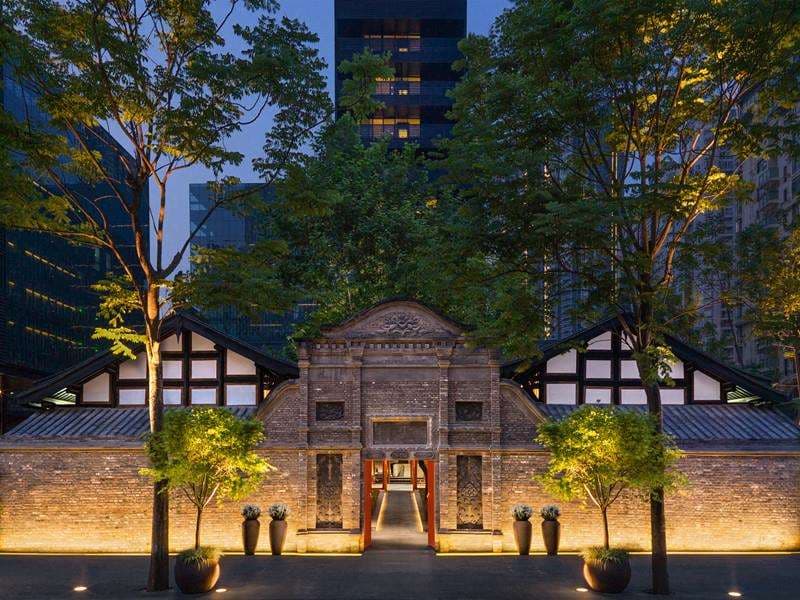
If you still call it The Temple House, you aren’t technically wrong, but you’re behind the times. Freshly rebranded as Upper House Chengdu in late 2025, this property remains the city’s undisputed sanctuary of cool. The arrival experience is pure theater: you step off the frantic streets of Sino-Ocean Taikoo Li and into the 'Bitieshi,' a restored Qing dynasty courtyard that acts as a spiritual airlock. It’s a jarring, brilliant juxtaposition—ancient wood carvings meeting the severe, greyscale geometry of the modern hotel towers. The rooms are massive, with entry-level studios clocking in at 63 square meters. The aesthetic is relentlessly moody—think charcoal stone, pale oak, and lighting so atmospheric you might need your iPhone torch to locate the complimentary beer in the 'Maxi-bar.' But it works. It feels expensive and hushed. The real headline here is the dining. Mi Xun Teahouse recently retained its Michelin star and snagged Chengdu’s first Green Star. The signature Vegan Mapo Tofu with Chanterelles is a revelation—numbing, earthy, and proof that meat is unnecessary when you have Sichuan peppercorns this fresh. Finish the night at Jing Bar with a Sichuan Negroni; the DJ beats are loud, but the crowd is the best in town. Verdict: A masterclass in heritage luxury that doesn’t feel like a museum.
“Book a treatment at Mi Xun Spa immediately after booking your room—it’s perpetually waitlisted. Also, ask for a 'Studio 90' for the corner views over the tiled temple roofs.”
Insider TipAvg. Nightly Rate
305USD
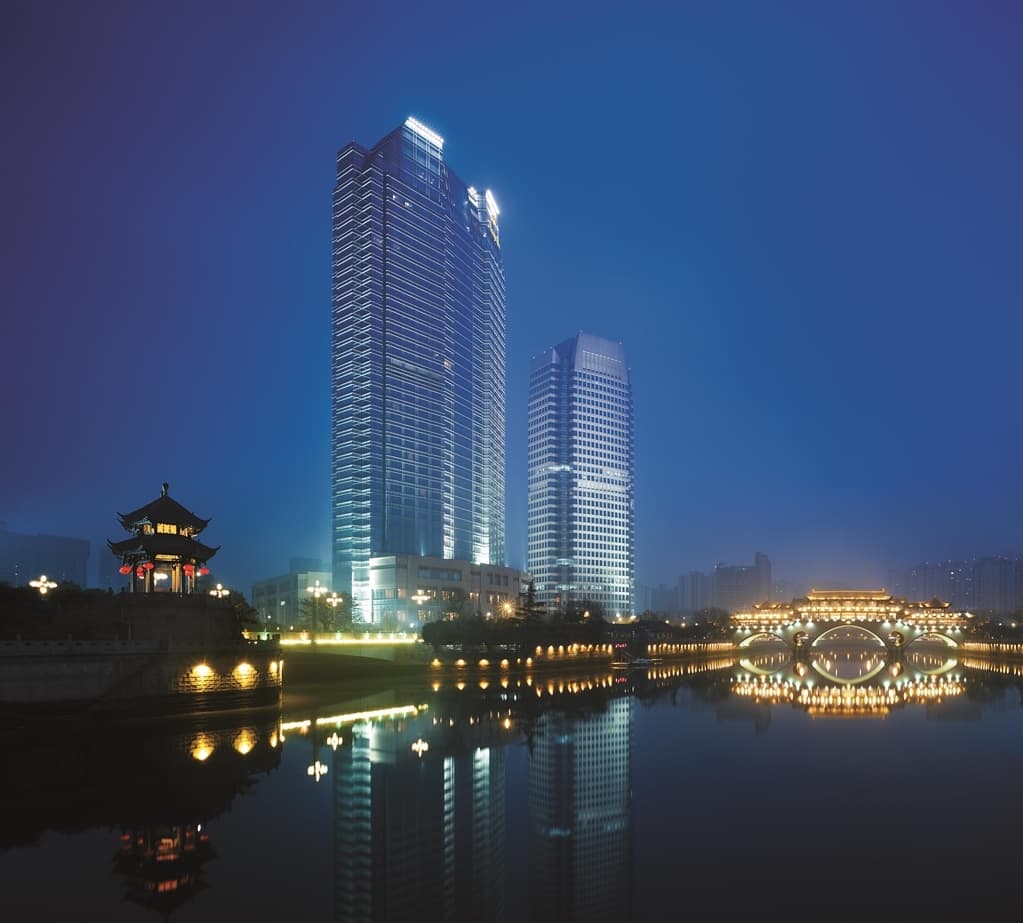
In a city racing toward the future with glass-and-steel skyscrapers, the Shangri-La Chengdu remains a defiant, delightful fortress of classic grandeur. Perched dominantly on the banks of the Jinjiang River, it trades the trendy minimalism of neighbors like the Ritz-Carlton for a heavy, reassuring opulence that commands the best views in town. The rooms, while whispering of the late 2000s with their gold tones and dark wood joinery, offer a rare luxury: absolute silence and generous space. The window ledges are wide enough to serve as daybeds, framing the neon-lit Anshun Bridge like a cinematic establishing shot. But one checks in here for the feast, fitting for a UNESCO City of Gastronomy. Shang Palace does not merely serve food; it stages a performance of Cantonese and Sichuan mastery. The Roasted Peking Duck is the headliner, arriving with skin that shatters like spun sugar, while the signature Tan Fish Head Hot Pot at Café Z offers a localized kick. Even the Irish fare at Mooney’s Bar surprises with authenticity. After a day of gluttony, the Five Elements treatment at Chi, The Spa provides a necessary reset. It may not be the newest hotel in Chengdu, but it remains the most assured—a riverside icon where consistency is the ultimate luxury. **Verdict**: The definitive choice for the culinary traveler who values flavor and views over fad and fashion.
“Request a 'River View' room in the '08' or '10' series for a direct line of sight to the illuminated Anshun Bridge—arguably the best night view in the city.”
Insider TipAvg. Nightly Rate
99USD
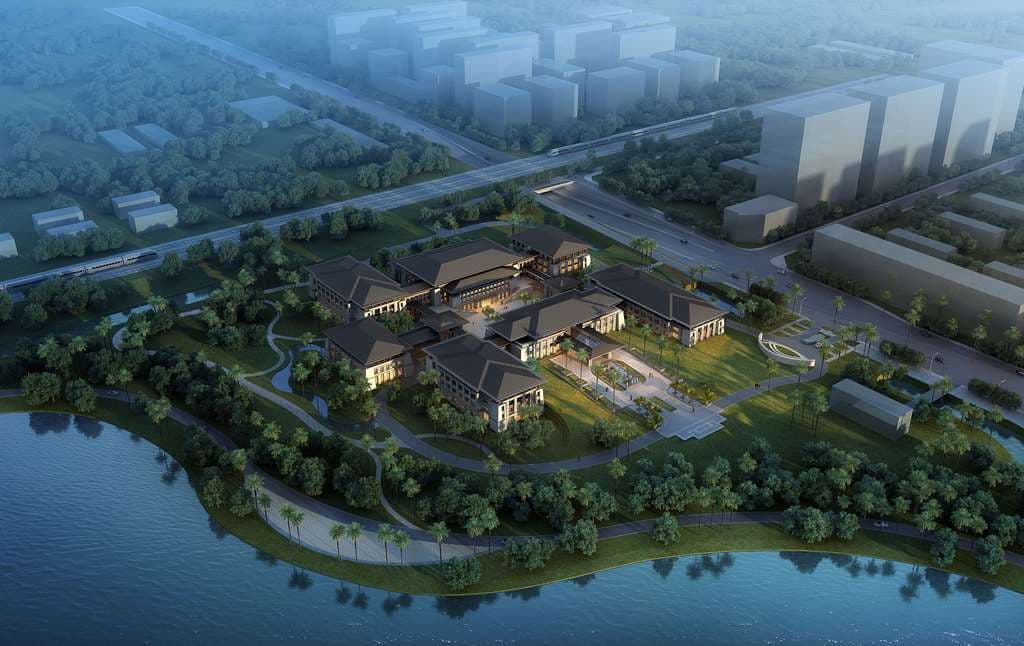
In a city defined by its fiery palate, Gran Meliá Chengdu offers a sophisticated architectural palate cleanser. This property does not merely exist; it performs a high-wire act between the austere beauty of Shu-Han dynasty design—gray brick courtyards, sloping eaves, teak columns—and the cool, limestone minimalism of Spanish luxury. It is a striking stage for the serious epicurean. Check into a RedLevel suite, where the perks are tangible: dedicated check-in, exclusive lounge access, and bathrooms stocked with Clarins amenities that smell of verbena and privilege. But the real draw for the culinary pilgrim is the food. While the 'Gran Via' restaurant makes a valiant attempt at 5J Iberian Ham, the wise move is 'Rong Palace'. Here, the kitchen executes Sichuan cuisine with razor-sharp precision—order the double-boiled soup to soothe the palate before diving into the numbing complexity of their signature spicy dishes. The service is polished, if occasionally leisurely, but the concierge’s ability to navigate the nearby gastronomic landscape is invaluable. With the Black Pearl-awarded Silver Pot (ICP) just a short drive away, this hotel isn't just a place to sleep; it is strategic base camp for a UNESCO feast.
“Skip the main lobby during peak hours; as a RedLevel guest, head straight to the private lounge for check-in. Afterward, use the hotel's private walkway for a sunset stroll around Jincheng Lake before your reservation at Silver Pot.”
Insider TipAvg. Nightly Rate
100USD
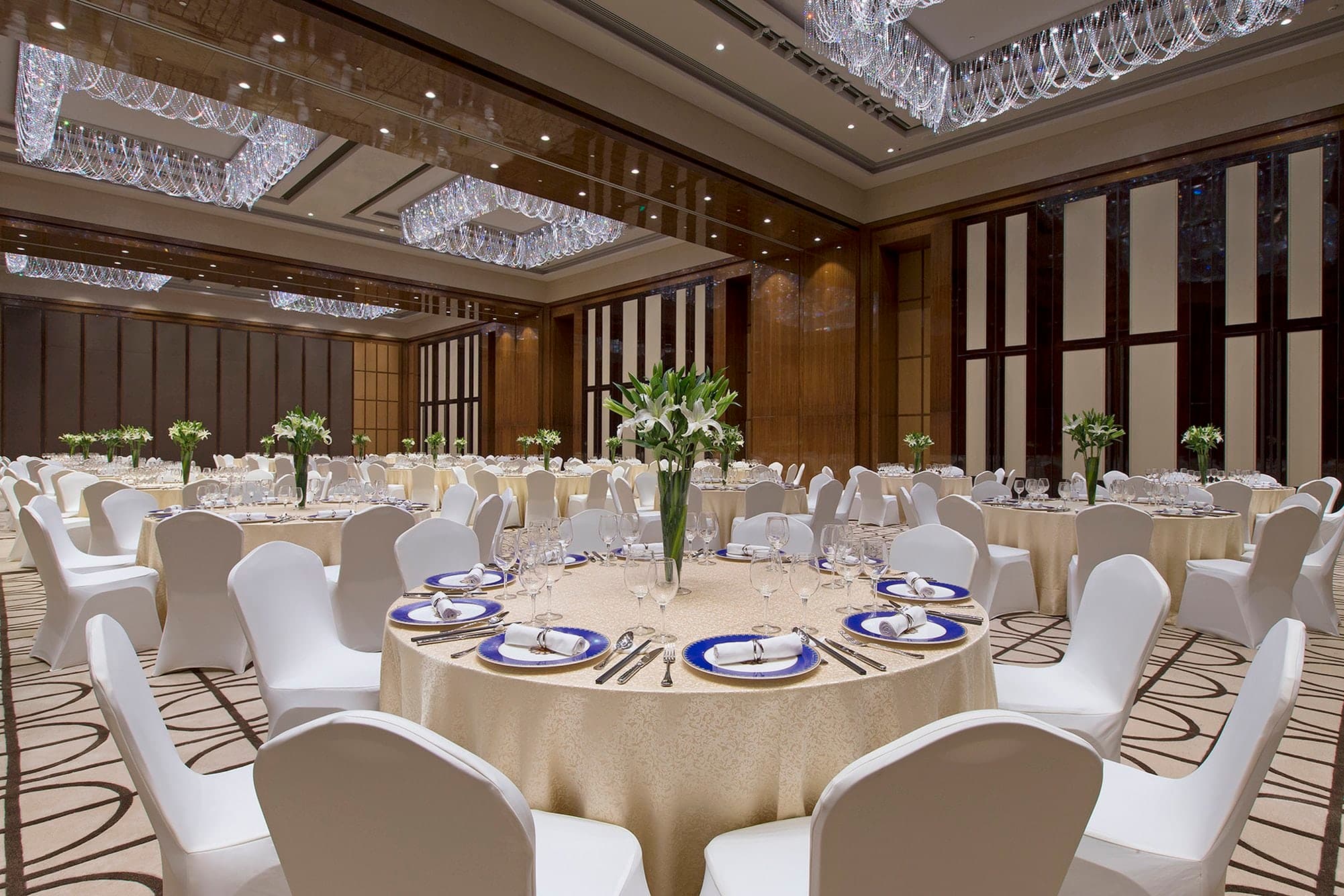
If the colossal 'I AM HERE' panda scaling the IFS building acts as Chengdu’s commercial compass, Niccolo Chengdu is its true north. Operating as a 'glass jewel box' atop the retail frenzy, the hotel eschews traditional quietude for a high-fashion atmosphere. The lobby sets the tempo immediately: the 'Breeze Bird' installation—3,800 metallic avatars suspended in flight—replaces the standard floral lobby trope with sharp, kinetic art. Upstairs, the rooms offer a jarring, brilliant juxtaposition: floor-to-ceiling windows frame the ancient, solemn Daci Temple against a backdrop of neon sprawl. While the hardware circa 2015 is showing faint laugh lines—a sticky bathroom door here, a grumbling drain there—the butler service is militantly precise, smoothing over mechanical quirks with seamless intuition. For the traveling gourmand, the pilgrimage is to Yue Hin. The signature Lobster Broth with Crispy Rice is a non-negotiable order, delivering a textural crunch that justifies the UNESCO gastronomy hype. For a cheekier fusion, Niccolo Kitchen’s Sichuan Spicy Lobster Pizza bridges the gap between Italian purism and local heat. It is sleek, loud, and exactly where you need to be.
“Skip the standard rooms and request an 'N2 Grand Temple View' room to ensure your morning coffee overlooks the ancient Daci Temple rather than just office towers.”
Insider TipAvg. Nightly Rate
173USD
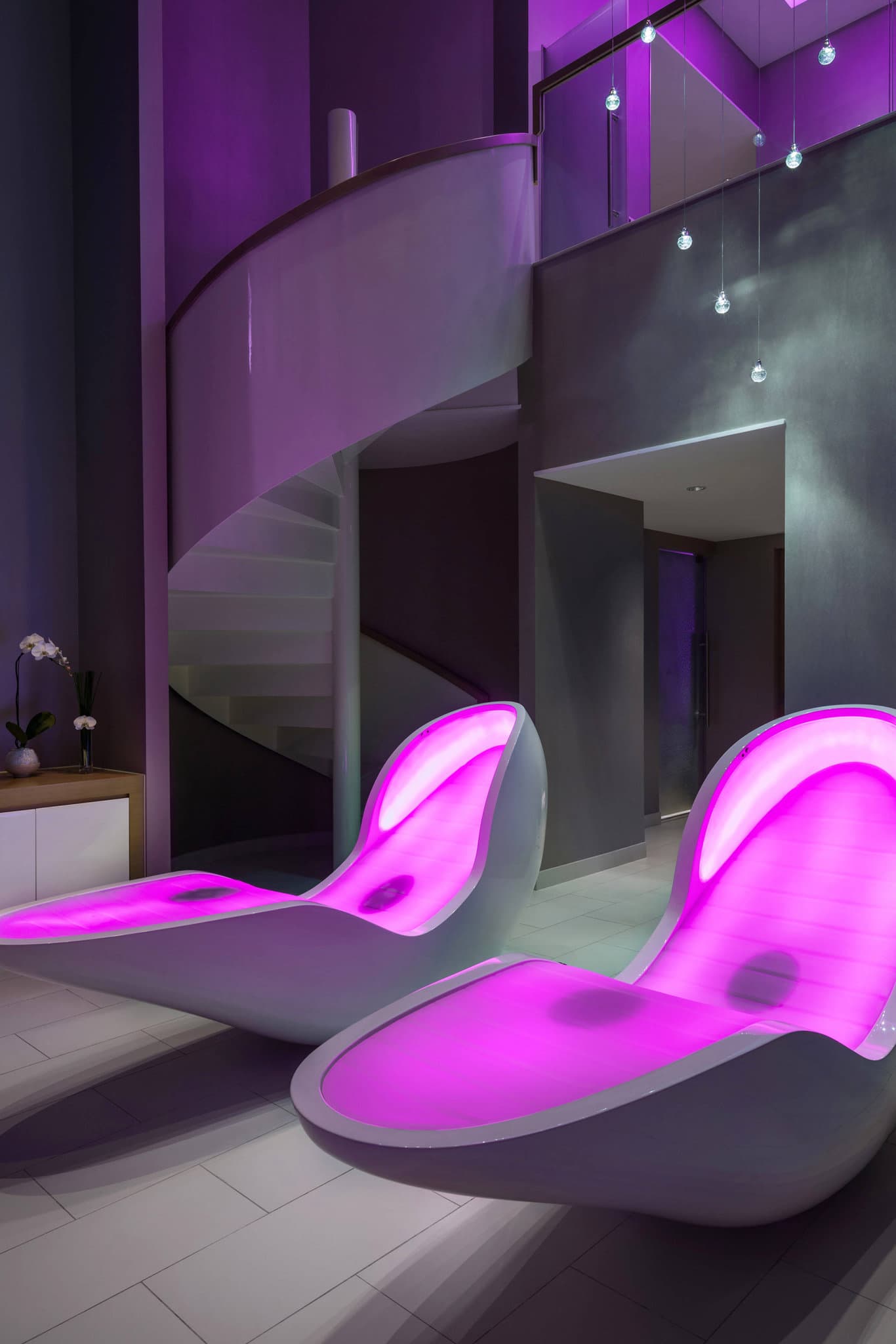
In a city that runs on chili oil and chaotic energy, The St. Regis Chengdu functions less like a hotel and more like a high-gloss Art Deco sedative. Standing in the lobby beneath the spiraling 'Blue Dream' staircase, the humidity of Tianfu Square feels miles away. The property wears its decade of operation with dignity, though not without minor scars—reports of aging hardware and temperamental WiFi are accurate. Yet, the 65-square-meter base rooms remain unmatched in scale, massive sanctuaries where the signature Butler Service will unpack your trunks while you decompress in a bath drawn with Thalgo marine salts. The real draw for the UNESCO pilgrim, however, is 'Yan Ting'. This isn't watered-down hotel dining. The kitchen executes a ruthless 'Seafood spicy blood curd hot pot'—a dish of gelatinous texture and numbing mala heat that demands respect. Counterbalance it with the signature deep-fried prawn with wasabi, a textural triumph of crisp batter and sinus-clearing cool. While the service can occasionally stumble over language barriers, the staff’s eagerness to please is palpable. It is a grand, imperfect, delicious dame of a hotel that treats breakfast at 'Social'—specifically the Changsha pork noodle soup—with the same seriousness as a state banquet.
“Skip the standard Bloody Mary; order the 'Chuan Mary' at The St. Regis Bar, which swaps Tabasco for a rim of crushed Sichuan peppercorns. Also, the outdoor pool is seasonal (May-Sept), so plan accordingly.”
Insider TipAvg. Nightly Rate
123USD