No. 01
长康33 Changklan RoadChiang Mai567 verified reviews
9
.2
Bitvoya Edit
Layering imagery, place, and detail before the page opens.
Chiang Mai has long been the spiritual heart of Thailand, a place where ancient Lanna walls protect centuries of tradition. However, the true essence of rejuvenation lies just beyond the city gates, rising into the misty peaks of Mae Rim and flowing along the tranquil banks of the Ping River. For the discerning traveler, this region offers more than just a getaway; it provides a sanctuary for high-altitude healing.
From the rice paddy pavilions of the Four Seasons Resort in the lush Mae Rim valley to the boutique elegance of 137 Pillars House in the historic Wat Ket neighborhood, Chiang Mai's wellness landscape is diverse. Whether you seek the cool mountain air of Veranda High Resort or the riverfront serenity of Raya Heritage, these properties redefine luxury through holistic health, organic living, and the gentle art of slowing down.
Chiang Mai's unique geography makes it a premier destination for wellness. Unlike the humid coastal plains, the northern highlands of Mae Rim and Hang Dong offer cooler temperatures, cleaner air, and a lush biodiversity that naturally lowers cortisol levels. This "high-altitude healing" is complemented by the region's deep-rooted Lanna heritage, which emphasizes herbal medicine, meditation, and physical realignment. Resorts like Aleenta Retreat utilize this environment to offer programs that blend modern medical diagnostics with traditional spiritual healing.
When selecting a retreat, location dictates the experience:
The wellness journey in Chiang Mai goes beyond a simple massage. Expect comprehensive programs that address sleep, nutrition, and movement. Culinary experiences focus on farm-to-table organic produce, often sourced from the resort's own gardens. Treatments frequently involve locally sourced ingredients like tamarind, lemongrass, and Thai clay. Whether it is a rigorous yoga schedule or a pampering session at an award-winning spa like RarinJinda's, the focus is always on holistic balance.
The ideal time is during the cool season from November to February, when temperatures in the mountains of Mae Rim are pleasant for outdoor yoga and meditation.
Absolutely. Properties like Aleenta Retreat and RarinJinda offer dedicated wellness packages for solo travelers, focusing on privacy, personalized detox programs, and mental rejuvenation.
Lanna wellness integrates Northern Thai wisdom, utilizing local herbal remedies (like Tok Sen massage), spiritual rituals, and a connection to nature, rather than just physical relaxation.
Explore our complete curated list of luxury accommodations, from boutique hideaways to grand dames.
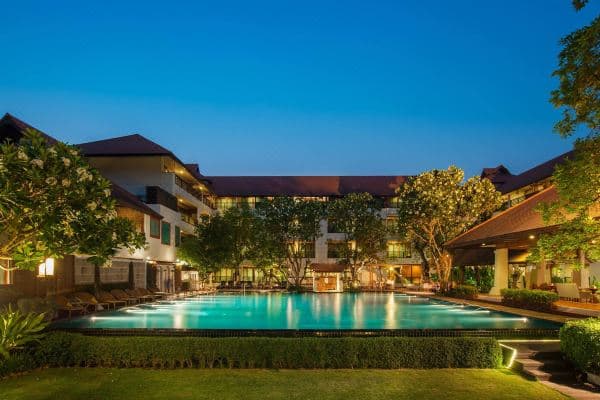
Explore All Chiang Mai HotelsWhile Mae Rim’s peaks claim the altitude, RatiLanna claims the attitude—specifically, a regal, time-slowed composure that defies its proximity to the Chang Klan buzz. This isn't just a hotel; it’s a fortress of Northern Thai aesthetics, heavily fortified with teak, gold leaf, and the scent of lemongrass. The arrival experience is a distinct gear shift: the cacophony of tuk-tuks fades instantly behind water features designed to audibly scrub the air. The rooms are unapologetically maximalist—think deep soaking tubs, silk cushions, and private balconies that practically cantilever over the brownish swirl of the Mae Ping River. But the curveball here is culinary. Yes, Mira Terrace executes a flawless Hung Ley Lamb, but the property’s Rio Restaurant & Bar is an unexpected outlier—Chiang Mai’s only authentic Brazilian churrascaria. It sounds incongruous, yet slicing picanha by the river feels strangely appropriate in this palace of indulgence. Wellness here is less about deprivation and more about ritual. The 'Rose of RatiLanna' spa treatment utilizes local botanicals in a way that feels medicinal rather than merely cosmetic. Verdict? The perfect decompression chamber before or after your mountain ascent.
“Book the sunset scorpion-tailed boat cruise directly through the concierge; it includes sparkling wine and offers a vantage point of the city most tourists never see.”
Insider TipAvg. Nightly Rate
126USD
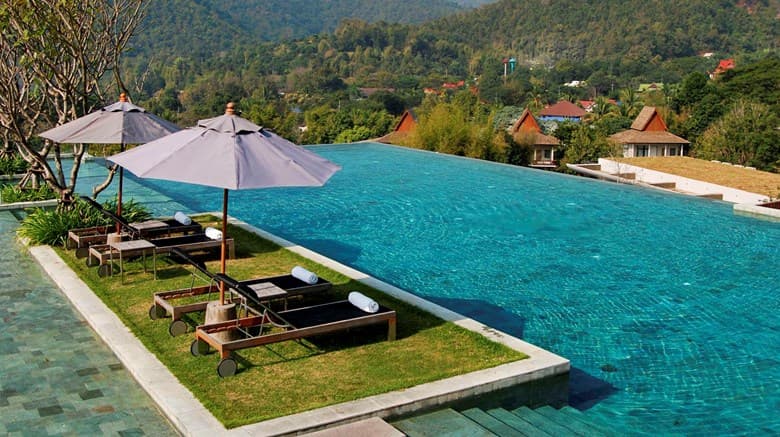
First, a geography lesson: despite the 'High-Altitude' billing often associated with Mae Rim, Veranda sits firmly in Hang Dong. But once you behold the infinity pool—a glassy sheet of water slicing through the misty horizon of rice terraces—you won’t care about the coordinates. This is a resort built for the visual impact. The open-air lobby, a cathedral of teak and water features, sets a tone of hushed reverence that carries through to the 'Plunge Pool Pavilions'. While the Zen minimalist aesthetic is striking, it’s worth noting the hardware has developed a patina; the private pools are unheated and bracingly cold, better for admiration than immersion. Dining is a tale of two altitudes: 'The Higher Room' serves European staples with a side of valley views, but the real star is 'Rabiang Cha', where the *Ordoeuvre Muang* (Northern appetizer platter) offers a spicy, textural deep-dive into Lanna cuisine. The isolation is real—you are 20km from the city—but with a 24-hour Technogym and THANN-stocked spa cottages, the solitude is the point.
“Skip the private pool villas if you’re cold-sensitive; book a 'Valley Deluxe Scenery' room on the upper floors for warmer sun exposure and unobstructed mountain views.”
Insider TipAvg. Nightly Rate
119USD
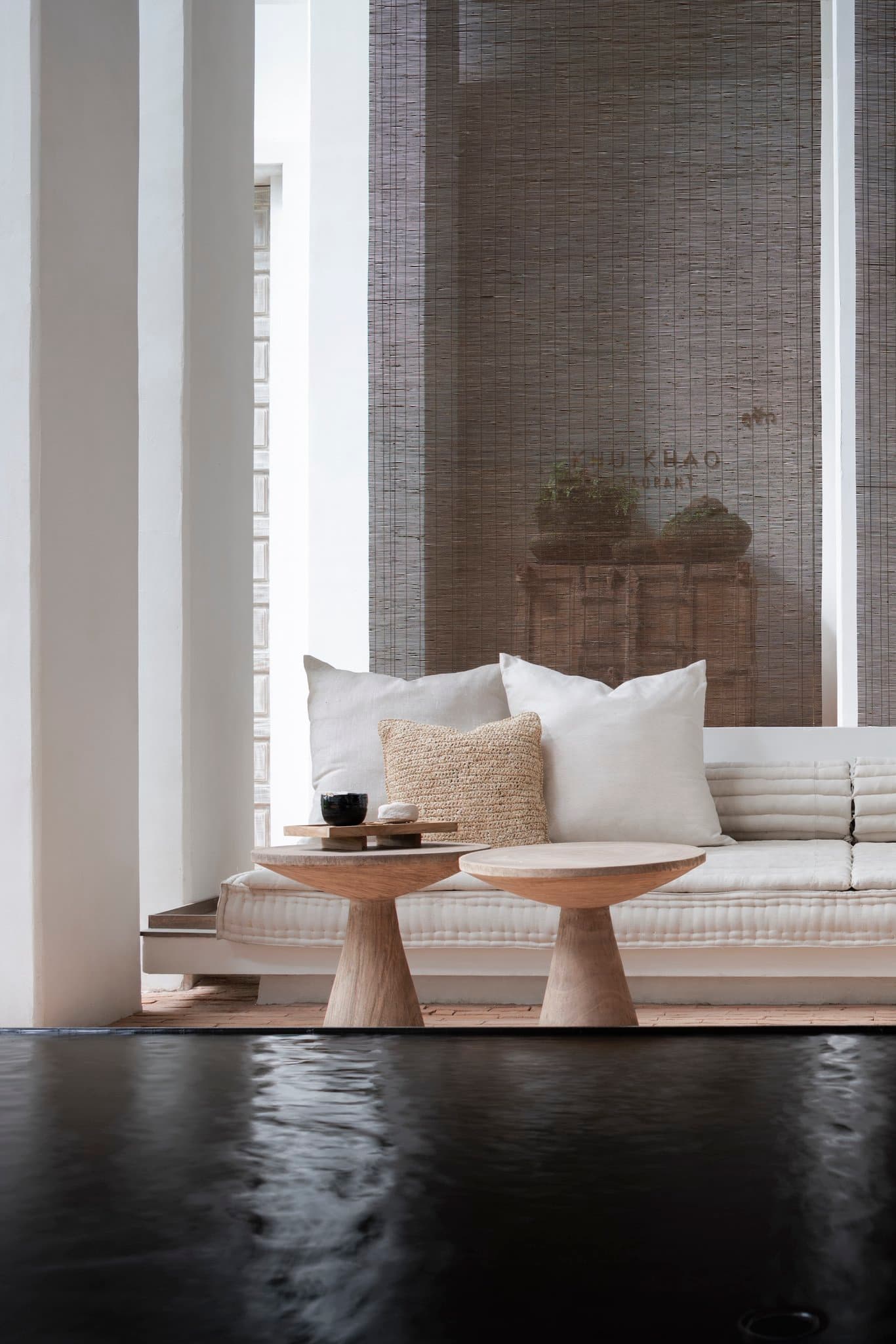
Forget the frenetic scooter traffic of the Old City. Raya Heritage, located a deliberate 20-minute drive north in Mae Rim, offers a masterclass in Northern Thai 'slow life.' Designed by architect Boonlert Hemvijitraphan, the property avoids the cliché ornate golden temples of Lanna revivalism in favor of a restrained, gallery-like aesthetic. The open-air lobby, with its forest of white columns and hand-dyed indigo textiles, instantly lowers your heart rate. Every one of the 38 suites faces the Ping River, featuring vast terraces that actually invite lounging rather than just looking. Inside, it’s a texture-heavy affair: hand-glazed terracotta tiles, mulberry paper screens, and basketry woven by local artisan collectives. Dining at 'Khu Khao' is a non-negotiable culinary history lesson; skip the standard curries for the 'Khao Raem Fuen Sai Gai Yunnan' (a tart, Shan-style rice curd salad) that perfectly cuts through the humidity. Verdict: A sophisticated, design-forward hideaway that earned its One Michelin Key (2025) by refusing to rush. Ideally suited for the traveler who prefers indigo-dyed cotton to silk.
“The 8x20m infinity pool is unheated and bracingly cold in the mornings. Save your swim for 2 PM when the sun hits the water, or book a 'Steam Therapy' session at Ai Waan Spa to warm up first.”
Insider TipAvg. Nightly Rate
254USD
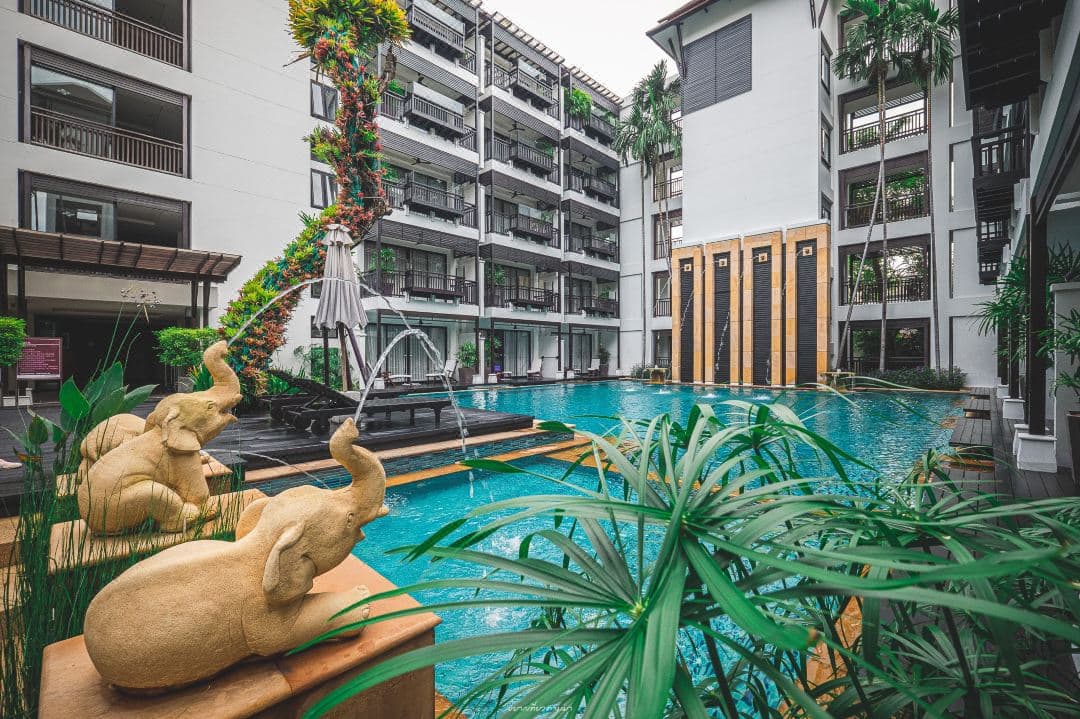
While the drowsy mountain retreats of Mae Rim trade on isolation, RarinJinda offers a sharper, more calibrated dose of healing right in the city's arterial pulse. This isn't merely a place to sleep; it is a serious wellness sanctuary anchored by a 140-year-old teak house that whispers of Lanna history while the facilities scream modern efficacy. The crowd here is distinct—less 'digital nomad' and more 'executive burnout'—drawn specifically for the hydrotherapy pool, a bubbling cauldron heated to a precise 35°C that puts mere hotel plunges to shame. The spa menu eschews vague botanical promises for clinical precision, deploying Dr. Spiller products and Vichy showers that pummel away long-haul stiffness with authoritarian grace. Rooms are hushed and clinical in cleanliness but warmed by heritage wood accents. For dinner, you must brave the crossing to Deck 1 (the staff will shepherd you through traffic). The reward is the Ping River at twilight, best paired with their sharp Salmon Tartare and the theatrically comforting Pineapple Fried Rice. It is the intelligent choice for those who need their zen with a side of high-functioning logistics.
“Book a 'Wellness Suite' for the private indoor jacuzzi, but spend your sunset at the main hydro-pool—the reflection of the antique teak house on the water is the property's best unadvertised amenity.”
Insider TipAvg. Nightly Rate
149USD
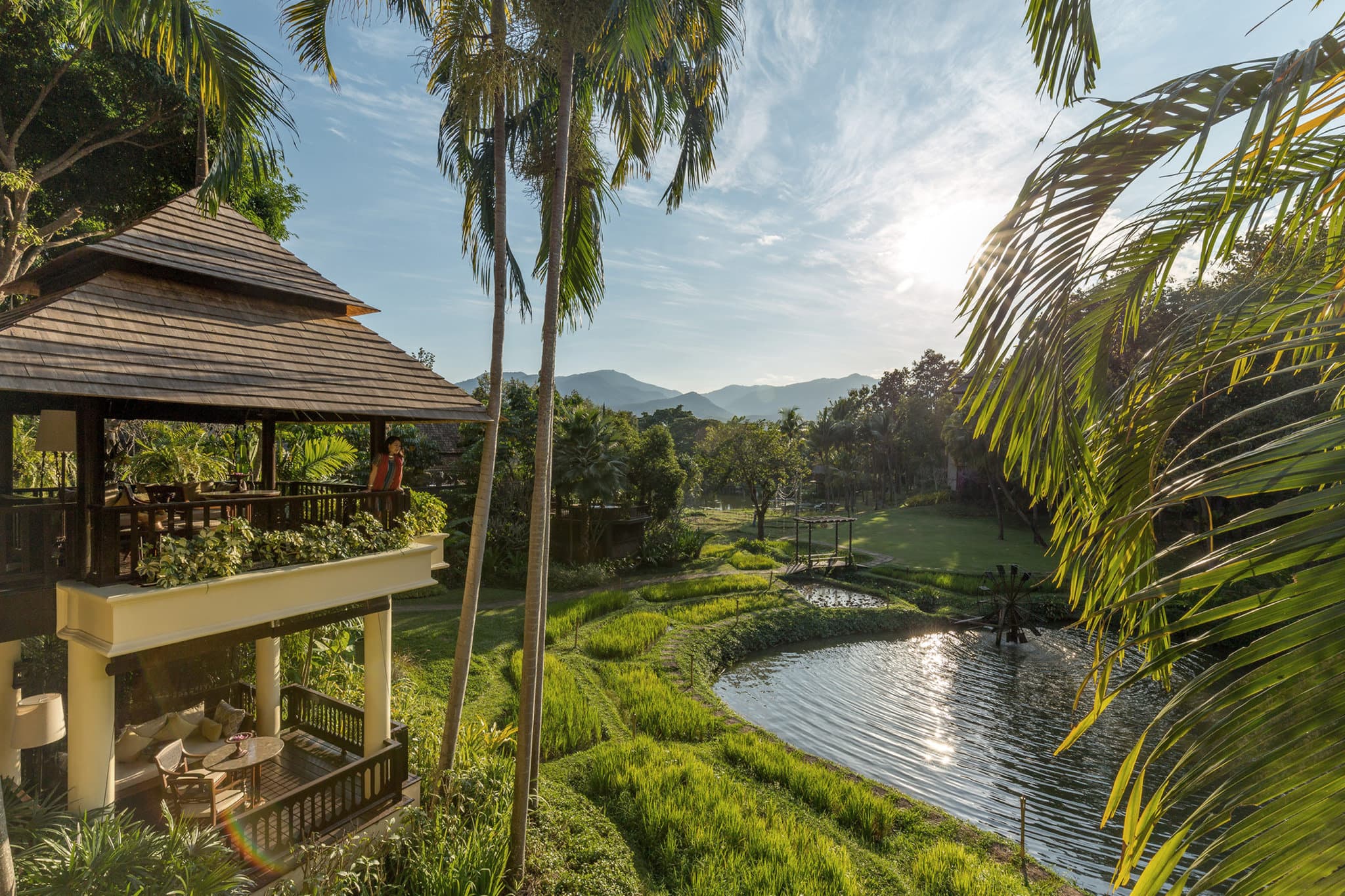
With HBO’s *The White Lotus* rumored to have scouted these very paddy fields for Season 3, the Four Seasons Resort Chiang Mai feels less like a hotel and more like a theatrical set for agricultural cosplay. Opened in 1995, the Bill Bensley-designed landscaping has matured into a dense, jungle-choked masterpiece that younger, sleeker properties can’t fake. You aren’t just booking a room; you’re checking into a working rice farm where the resident water buffaloes (names: P’Tone and P’Thay) have better skin care routines than you do. The interiors, heavily draped in dark teak and Thai silk, flirt with feeling dated—a stark contrast to the aggressive minimalism of Bangkok’s newest openings. Yet, the forensic maintenance keeps it charming rather than tired. The real modernization is functional: 111SKIN treatments in the Wara Cheewa Spa and a 24-hour gym stocked with Technogym gear. Dining at *North* requires patience—service operates on 'LANNA time'—but the Wagyu Beef Boneless Rib-eye is grilled to smoky perfection. It’s expensive, slightly old-school, and absolutely refuses to break character. A definitive classic.
“Request a 'Rice Terrace Pavilion' on the upper level (numbered 1400s) for unobstructed sunset views over the paddy fields without the foot traffic of the lower boardwalks.”
Insider TipAvg. Nightly Rate
940USD
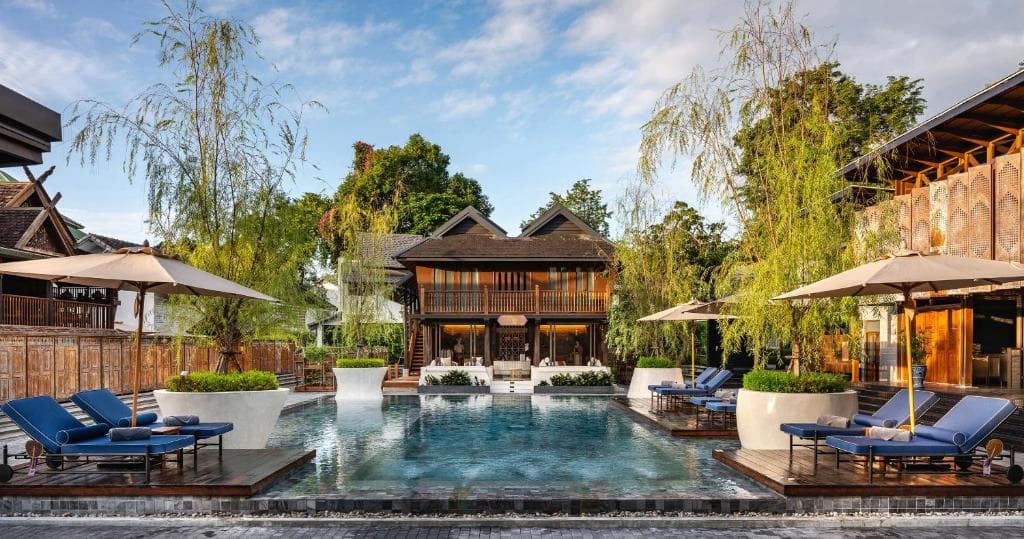
If Chiang Mai is the spiritual lung of Thailand, Aleenta Retreat is the deep exhale. Distinct from the sprawling resorts of Mae Rim, this enclave in the Suthep district—flanked by the chanting monks of Wat Umong—offers something sharper: a medical-grade reset wrapped in reclaimed golden teak. The aesthetic is Lanna modernism without the kitsch. In the Pool Residences, the boundary between indoor and outdoor dissolves via retractable glass walls, while crisp Frette linens and the resort’s signature bespoke pyjamas (a cult favorite) ensure the sleep science is taken seriously. Wellness here avoids generic fluff; the Ayurah Wellness Centre functions as a licensed clinic where holistic meets clinical. The Bamboo Massage is structural work, not just relaxation. Afterward, ascend to the 1892 Bar, housed in a preserved century-old teak structure. Here, nursing a craft cocktail alongside Wild Boar Teriyaki proves that high-altitude healing and refined hedonism can coexist. It is sophisticated, silent, and rightfully earned its inaugural Michelin Key in 2024.
“Secure a reservation at the 1892 Bar for sunset; the vintage piano adds a melancholic beauty to the golden hour. Also, request the 'Bamboo Exercise' class—a deceptively intense core workout unique to this property.”
Insider TipAvg. Nightly Rate
340USD
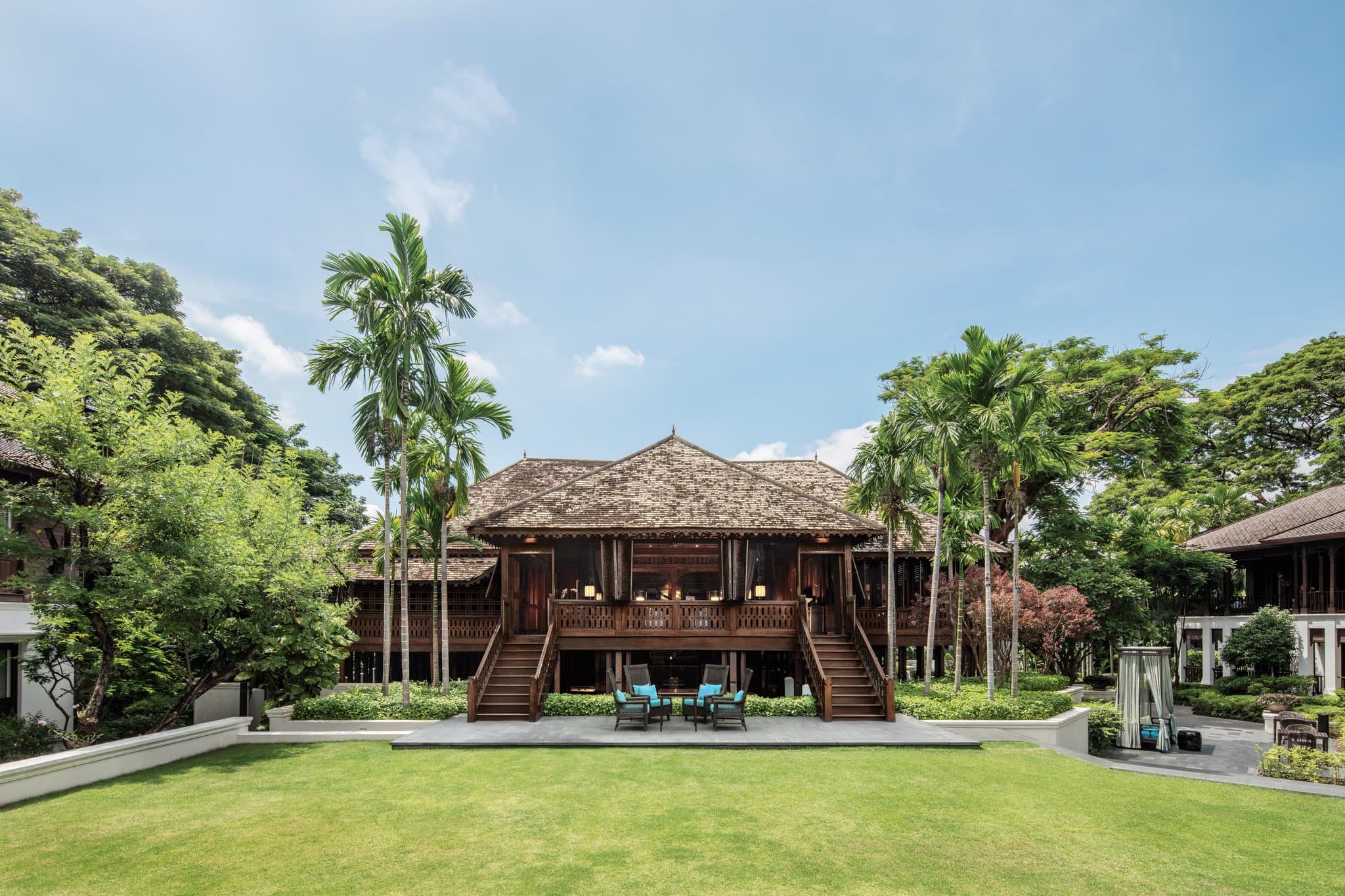
While the purists head straight for the misty peaks of Mae Rim, the true wellness strategist knows that high-altitude healing requires a proper urban prologue. Enter 137 Pillars House, the former headquarters of the East Borneo Company, now arguably Chiang Mai’s most sophisticated decompression chamber. This isn’t just a hotel; it is a masterclass in colonial revivalism that manages to avoid the museum-stiffness of its peers. The thirty suites are less 'hotel rooms' and more 'aristocratic residences,' starting at a sprawling 70 square meters. You are here for the William Bain Terrace Suites, where the Victorian bathtubs and outdoor showers offer a level of privacy that feels almost illicit in the city center. The sleep experience is anchored by 400-thread count linens that feel like spun clouds, a detail that matters more than any mindfulness app. Wellness here is architectural. The 25-meter lap pool, framed by a staggering vertical garden wall, is the visual anchor, though the real work happens in the Nitra Serenity Centre using Pevonia botanicals. For sustenance, skip the predictable pad thai and book a table at Palette for the Western tasting menu, or retreat to Jack Bain’s Bar. Order the 'Aged Teak'—a whiskey-based homage to the property’s timber trading past—and toast to the fact that you haven't checked your email in 24 hours. Verdict: The ultimate historic sanctuary before you ascend to the mountains.
“The iconic vertical garden wall casts a shadow over the pool by late afternoon, making the water brisk. Swim before 11 AM for the best light and temperature.”
Insider TipAvg. Nightly Rate
282USD
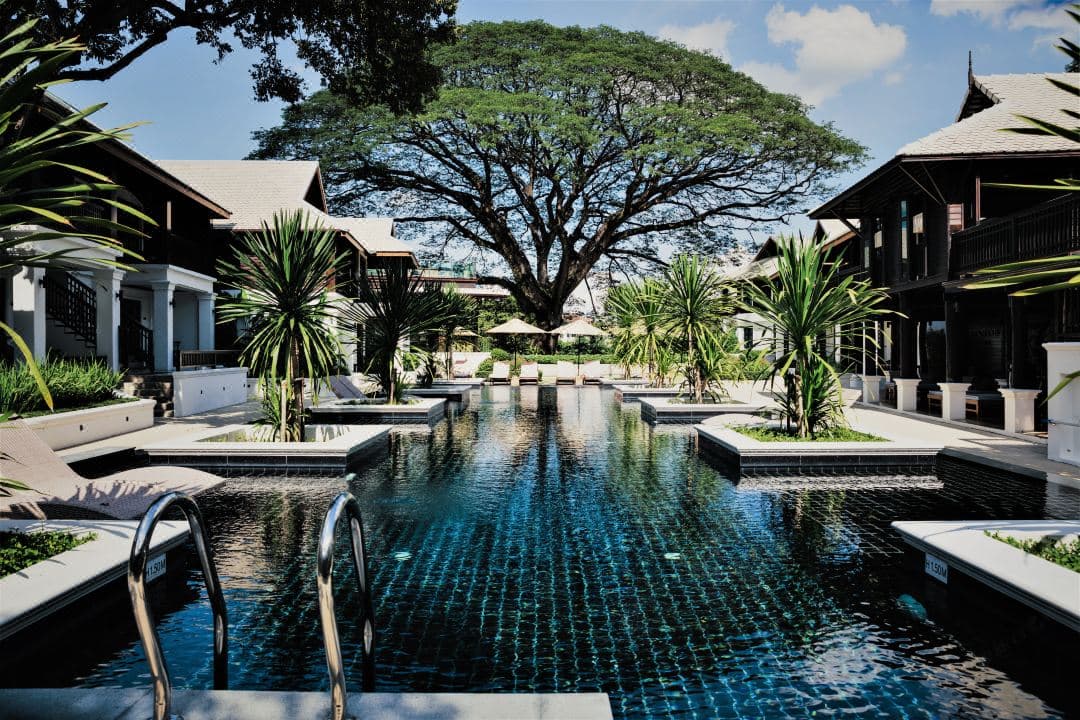
While our feature chases the clouds in Mae Rim, Na Nirand provides the necessary grounding. Located not in the mountains but firmly anchored to the Ping River, this property is dominated by a monstrous 100-year-old Rain Tree (Chamchuri) that acts as the estate’s spiritual landlord. The isolation here is architectural; you are mere minutes from the Night Bazaar’s neon chaos, yet the silence beneath that canopy is absolute. The design is strictly Lanna-Colonial—think heavy teak floors that creak reassuringly, intricate fretwork, and woven local textiles that feel expensive rather than souvenir-grade. It isn’t without quirks. The commitment to vintage aesthetics means the light switches are a baffling IQ test, and ground-floor rooms near the pool can feel a bit exposed to passersby. However, the service possesses that hyper-observant warmth larger chains often simulate but rarely achieve. Dining at TIME Riverfront Cuisine is mandatory. Ignore the Western staples and demand the Signature Soft Shell Crab with Curry Egg Sauce; it is rich, unpretentious, and unapologetically spiced. The spa is intimate, avoiding generic oils in favor of premium HARNN products—a crucial differentiator. For those seeking the silence of the forest without abandoning the city's convenience, this is the definitive sanctuary.
“Book a second-floor suite in the 'House of Colonial' to secure river views without the lack of privacy found in the ground-level pool access rooms.”
Insider TipAvg. Nightly Rate
154USD