No. 01
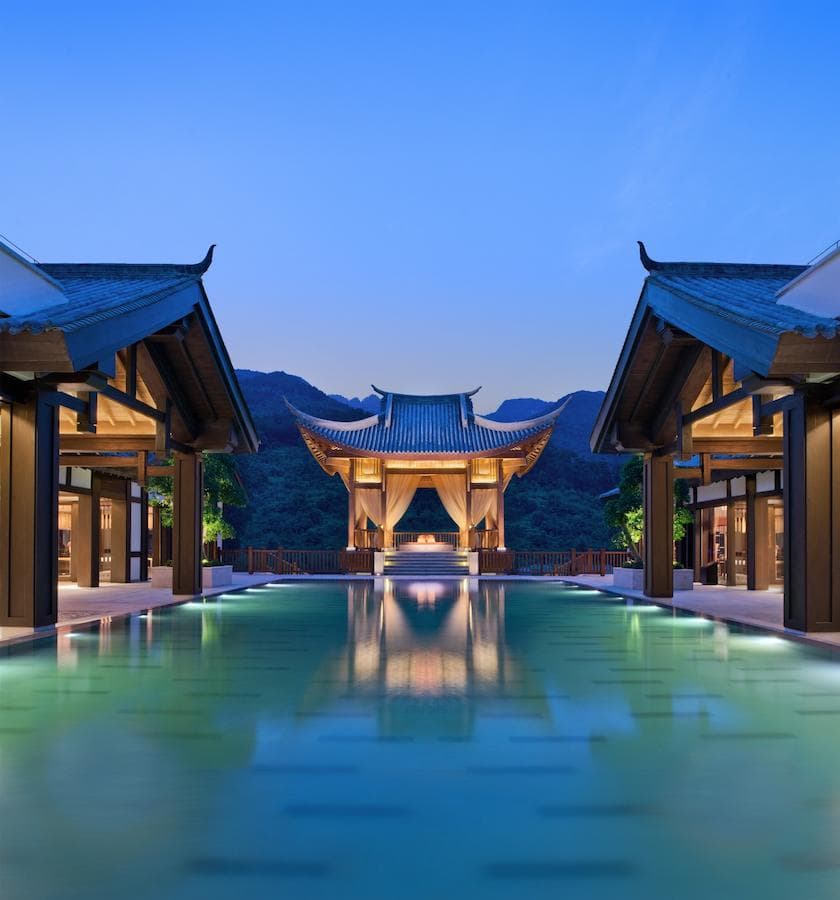
101 Hot Spring Road Chengjiang. CHONGQING China 400700Chongqing1932 verified reviews
9
.2
Bitvoya Edit
Layering imagery, place, and detail before the page opens.
Chongqing, the legendary 'Mountain City,' holds a unique place in history as China's wartime capital. The misty streets of Yuzhong and the serene landscapes of Beibei whisper tales of the Republic era, where East met West in a flurry of architectural innovation. Our curated collection, 'Echoes of the Republic,' invites you to step back in time without sacrificing modern luxury. From the restored aesthetics of Sunyata Hotel in the historic Nan'an district to the tranquil, spa-focused luxury of Bolian Resorts in Beibei, these properties offer more than sleep—they offer a narrative. Explore the stone steps, the Banyan trees, and the enduring spirit of the 1930s in China's most dramatic metropolis.
Chongqing is not merely a cyber-punk metropolis of skyscrapers; beneath its neon lights lies the deep, cultural bedrock of the Republic of China era (1912-1949). Choosing this collection means immersing yourself in the 'Wartime Capital' legacy, where diplomats, intellectuals, and artists once gathered. Hotels like The Lixury Hotel (part of The Unbound Collection by Hyatt) exemplify this by blending localized storytelling with world-class hospitality. Travelers seeking depth, history, and architectural beauty will find that these properties offer a sanctuary that contrasts sharply with the city's bustling pace.
When booking a stay from the 'Echoes of the Republic' collection, expect high ceilings, timber accents, and courtyards that pay homage to Ba-Yu traditional architecture mixed with Western Art Deco influences. Service in these properties, particularly at the Banyan Tree and Bolian, focuses on privacy and holistic wellness, utilizing the region's famous geothermal waters. Expect a culinary journey featuring refined Sichuan cuisine, where the fiery heat of hotpot is balanced by delicate teas sourced from the surrounding mountains.
Spring (March-May) and Autumn (October-November) are ideal. The weather is mild, avoiding the intense summer heat, making it perfect for exploring walking trails in Beibei and historic streets in Nan'an.
Yes, especially Banyan Tree and Bolian Resorts in Beibei. They offer spacious villas and hot spring facilities that are family-friendly, whereas Sunyata is better suited for couples or solo travelers seeking quiet contemplation.
It is a blend of East and West, characterizing the 1930s-40s. Look for grey brickwork, courtyard layouts (Ba-Yu style), combined with French or Art Deco furniture and detailing, reflecting Chongqing's time as a diplomatic center.
Explore our complete curated list of luxury accommodations, from boutique hideaways to grand dames.
Explore All Chongqing HotelsNewly minted with a **One Michelin Key (2025)**, this property captures the brooding romance of Beibei, the historic 1940s retreat for China’s intellectuals. The architecture eschews flash for a somber, tile-roofed aesthetic that dissolves into the fog of Jinyun Mountain. While the hard product (circa 2013) is showing its vintage—expect some scuffs on the wood rather than pristine polish—the sheer scale of the 80-square-meter entry-level suites compensates. The primary draw is hydrotherapy: every balcony features a private dipping pool fed by the mineral-heavy North Hot Spring. It is a rare luxury to soak in silence while watching the mist roll over the valley. Dining at **Bai Yun** is a highlight, particularly the Baked Crab with Ginger & Spring Onions, which offers a sharp, savory counterpoint to the humidity. Service is well-meaning but linguistically limited; a translation app is as essential here as your swimsuit. It is not a thoroughly modern machine, but a moody, atmospheric escape for those who prefer privacy over perfection.
“Skip the standard courtyard views; request a 'Hot Spring Retreat' on a high floor facing the valley for uninterrupted mountain sightlines.”
Insider TipAvg. Nightly Rate
230USD

While the rest of Chongqing chases the cyberpunk futuristic aesthetic, Bolian Resorts & Spa retreats into the mists of the Republic era. Occupying the storied grounds of North Hot Spring Park—where Chiang Kai-shek once walked—this property trades marble lobbies for moss-slicked paths and grey-tiled roofs. With only 31 villas, the silence here is heavy and expensive. The architecture channels a rigid, almost monastic calm, framing the Jialing River through floor-to-ceiling glass that feels less like a window and more like a landscape painting. The real draw is the private mineral hot spring plunge pool on every terrace. There is no need to brave the public baths; here, you soak in sulfur-rich water while watching the river fog roll in, an experience that forgives the slightly dated hardware (the TVs are not exactly 8K). Dining at Jialing Xuan offers a competent, if safe, mix of Sichuan and Cantonese, but the signature Braised Chicken Feet (Feng Zhao) is a gelatinous masterclass in local flavor that demands to be ordered. Service is butler-driven and invisible—exactly how the old guard liked it.
“Ask your butler for the private key card to access the adjacent Wenquan Temple directly from the resort grounds before 8 AM—you’ll beat the tourists and have the ancient statues to yourself.”
Insider TipAvg. Nightly Rate
401USD
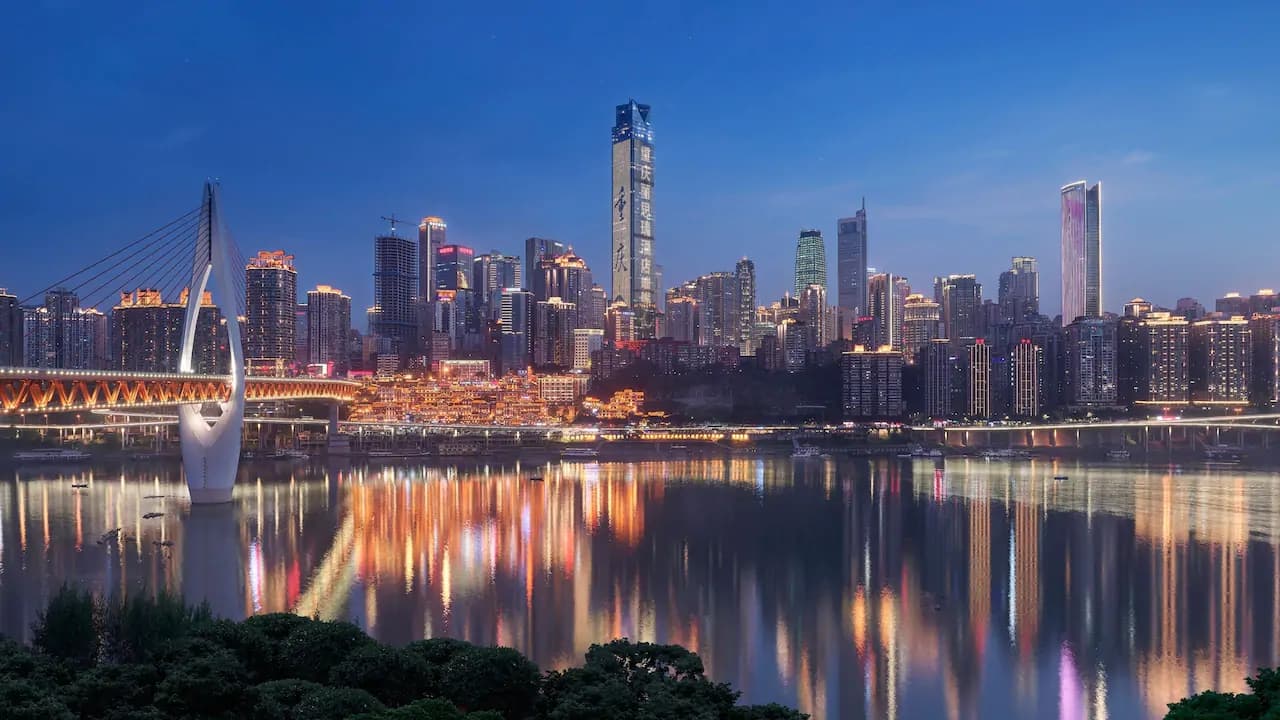
Jiefangbei is a neon-drenched assault on the senses; The Lixury is the antidote. Perched from the 58th floor of the World Financial Center, this Unbound Collection outlier trades the generic beige of corporate hospitality for the sultry, velvet-draped intrigue of 1940s 'Minguo' aesthetics. It is Wong Kar-wai meets the Jetsons. The rooms are less accommodations and more observation decks. Floor-to-ceiling glass frames the mesmerizing collision of the Yangtze and Jialing rivers—a view that renders the flat-screen TV obsolete. Inside, the details land: 400-thread count linens, Natura Bissé amenities, and a butler service that operates with almost telepathic efficiency. Dining is theatrical; skip the street snacks for one night to tackle the signature Tomahawk steak at The Brits, where the surf-and-turf rivals the skyline for scale. The lack of a pool is the only reminder that this is a boutique retrofit, not a sprawling resort. But who needs laps when you are sleeping in the clouds? Verdict: A design-forward sanctuary that captures the romance of Chongqing’s wartime past, delivered with 58th-floor swagger.
“Request a 'Corner King' room (often ending in 08 or 18) for the definitive 270-degree panorama of the two-river confluence.”
Insider TipAvg. Nightly Rate
130USD

If Blade Runner had a monastery, it would look like Sunyata. Perched in the historic French missionary district overlooking the Yangtze, this restoration project is a silent retort to Chongqing’s neon cacophony. The design is pure wabi-sabi—expect raw concrete, exposed century-old brick, and a geometric skylight stairwell that feels almost ecclesiastical. The rooms are ascetic yet luxe. My River View Terrace Suite framed the red Dongshuimen Bridge like a cinematic still. While the historic wooden structure means soundproofing is imperfect (the provided earplugs are a thoughtful touch), the trade-off is waking up in a living piece of history. Amenities prioritize comfort over flash, featuring steam eye masks and generous local teas. Dining at Wang'er Restaurant is a revelation. The signature Pan-seared M9 Wagyu with Twin Peppers perfectly marries Sichuan heat with Western technique, while the Bank Bar serves bespoke cocktails that rival any speakeasy in Shanghai. The service is the real luxury here: a butler met me at the street to porter my luggage down the steep, winding stone steps—a heroic feat in this vertical city. Verdict: A soulful, imperfect masterpiece for the culturally curious.
“Book the River View Terrace Suite for the most dramatic bridge views, but be prepared for the stairs—this hillside location is not for the faint of knees.”
Insider TipAvg. Nightly Rate
164USD