No. 01
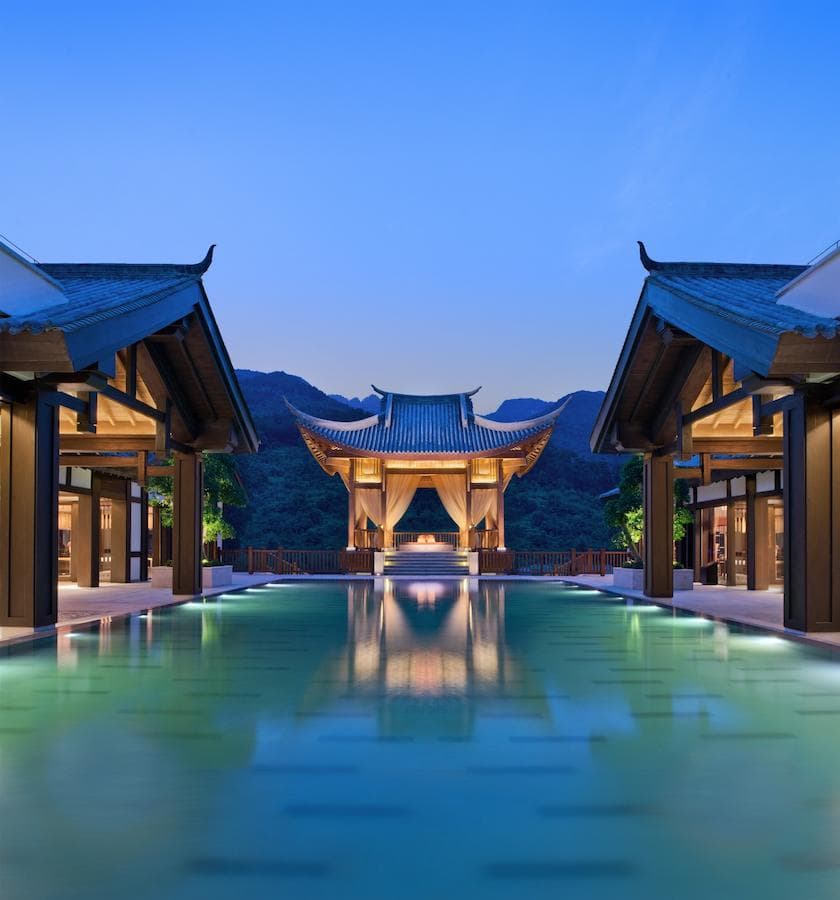
101 Hot Spring Road Chengjiang. CHONGQING China 400700Chongqing1932 verified reviews
9
.0
Bitvoya Edit
Layering imagery, place, and detail before the page opens.
Chongqing is often defined by its cyberpunk skyline, but its true soul lies in the misty ridges and mineral-rich waters that surround the city. Known as the 'Capital of Hot Springs,' the region offers a sanctuary for wellness seekers in the quietude of the Beibei District and the towering peaks of Jinfo Mountain. Our curated collection, 'Mist & Minerals,' invites you to disconnect from the urban frenzy. From the Zen-inspired villas of Banyan Tree to the architectural marvel of Sunyata Hotel, these retreats seamlessly blend natural landscapes with world-class luxury. Experience the healing powers of ancient waters at properties like Bolian Resorts, where the mountain mist kisses the thermal pools.
Chongqing is uniquely positioned as a global capital of hot springs, boasting over 100 geothermal sites rich in minerals like sulfur, calcium, and magnesium. Unlike standard city hotels, the properties in our 'Mist & Minerals' collection—such as the Bolian Resorts & Spa—leverage this geography to offer holistic wellness programs. The combination of high-altitude fresh air from Jinfo Mountain and the therapeutic properties of natural thermal waters creates a rejuvenation experience that is unrivaled in China. Whether you are staying at the Pu Shine Jinfo Mountain Resort Hotel to witness the sea of clouds or enjoying the German-inspired luxury at Steigenberger, you are engaging with a centuries-old tradition of water healing.
To fully immerse yourself in the mountain spa experience, discerning travelers should focus on two key districts:
Expect a fusion of traditional Chinese medicine (TCM) and modern hydrotherapy. Hotels like Sunyata Hotel Chongqing focus on architectural serenity, providing a visual detox alongside physical relaxation. Most retreats in this collection feature private in-room hot spring tubs, organic farm-to-table dining, and tea ceremonies that celebrate Chongqing's rich tea heritage.
The best time is from late autumn to early spring (November to March). The cool, misty mountain air contrasts perfectly with the warm mineral waters, enhancing the wellness experience.
Yes, properties like Banyan Tree Chongqing Beibei offer family-friendly villas and activities, while Steigenberger Hotel provides ample amenities for all ages. However, some resorts focus more on adult serenity.
Beibei District resorts (Banyan Tree, Bolian) are about 45-60 minutes by car from downtown. Jinfo Mountain properties (Pu Shine) are approximately 1.5 to 2 hours away.
Explore our complete curated list of luxury accommodations, from boutique hideaways to grand dames.
Explore All Chongqing HotelsForget the cyberpunk hysteria of downtown Chongqing. Forty minutes north, the fog claims Jinyun Mountain, and Banyan Tree Beibei claims the silence. This isn't just a hotel; it feels like a disbanded imperial court, all grey tiles and sweeping eaves. The real theatre, however, happens on your balcony. Every room—starting at a massive 80 square meters—anchors a private dipping pool fed by the North Hot Spring’s mineral-rich veins. It’s a sulfuric embrace that makes the damp chill of a Chongqing winter feel essential, not intrusive. Dining requires strategy. You could wander to Bai Yun for the baked crab with ginger, punchy enough to wake you from your thermal stupor. But the smarter move is Jin Yao Xuan for hotpot; the farm-fresh vegetables cut through the tallow richness with necessary crunch. The hardware wears its 2013 vintage visibly—a scuff here, a faded cushion there—but it adds to the wabi-sabi charm. Service struggles with English, so bring a translation app and patience. It’s not flawless, but with a new Michelin Key (2025) now hanging in the lobby, it remains the region’s most atmospheric hideout.
“Book a 'Hot Spring Retreat' on a higher floor to escape the ground-level humidity; ask for room 208 for the best line-of-sight to the mountain peak.”
Insider TipAvg. Nightly Rate
230USD

Reaching Pu Shine requires a commitment to altitude that weeds out the casual weekender. Anchored on the mist-shrouded slopes of Jinfo (Golden Buddha) Mountain, this 18-key sanctuary by designer Min Liu is a masterclass in restraint. There are no gilded lobbies here; instead, the architecture mimics the scattered 'field and cottage' layout of a mountain village, earning it a fresh nod from the Grand Prix Du Design Paris 2025. Inside, the vibe is strictly contemplative. Suites are clad in warm cypress wood and feature floor-to-ceiling glass that frames the mossy, ancient forest like a living canvas. The real draw is the hydrotherapy: forego a communal splash for your private in-room hot spring tub, cast in black basalt and fed by the mountain’s mineral-rich veins. Bathrooms are stocked with Appelles apothecaries, a sharp, botanical choice that cuts through the humidity. Dining at Pushine Restaurant surprises with its specificity—specifically, the Yipin Hot Pot, a bubbling cauldron of local river fish and numbing Sichuan peppercorns that demands your full attention. Service is delivered by 'guanjia' (butlers) who materialize only when needed, leaving you to the silence of the Wolong Tan stream.
“Book a suite facing the Yaochi Dam for the best morning mist views. Also, the hotel organizes private hikes to the ancient rhododendron forest—ask your butler to pack a thermos of their hand-drip coffee for the trek.”
Insider TipAvg. Nightly Rate
280USD

Chongqing is a sensory assault—a neon-drenched, vertical labyrinth that feels like 'Blade Runner' directed by Wong Kar-wai. Sunyata Hotel, anchored to the precipice of the Yangtze banks, offers the necessary counterweight: absolute, monastic silence. Occupying a restored heritage structure near the Dongshuimen Bridge, the design isn't just 'minimalist'; it’s a deliberate subtraction of noise. The wabi-sabi aesthetic features raw concrete walls that cool the skin and high ceilings that swallow the city's humidity. There is no spa, but the room itself performs the therapy. In the River View Terrace Suite, the bed faces the crimson steel of the bridge, framing the fog-laden river like a moving scroll. Amenities are hyper-specific and thoughtful: lens wipes for your camera, sleep masks, and generous tubes of essential-oil-rich unguents that combat the local dampness. Dining at Wang'er Restaurant is equally precise. The Pan-seared M9 Wagyu with twin peppers offers a sharp, numbing kick that grounds you instantly. While the lack of a pool might deter some, the exceptional butler service—porters who haul your Tumi cases up the punishing stone steps—removes the only real friction. It’s not a hotel for swimming; it’s a hotel for thinking.
“The hotel entrance is accessible only via a steep stone staircase. Do not attempt this with luggage; coordinate with the 'butler' via WeChat prior to arrival for porter service.”
Insider TipAvg. Nightly Rate
164USD

To call Bolian a 'hotel' feels reductive; it is a monastic exercise in humidity and high-thread-count solitude. Occupying a prime slice of the Northern Hot Springs Park—a site with a 1,600-year bathing pedigree—this retreat rejects the glitzy verticality of downtown Chongqing for the moss-slicked tranquility of Beibei. There are no lobbies teeming with influencers here. Instead, a hushed pavilion frames the Jialing River, setting a tone of expensive silence. The 31 villas are studies in sombre elegance; while some in-room tech feels like a relic from 2015, one forgives the dated television the moment the private terrace plunge pool fills with 38-degree mineral water. It is a radon-rich soup that renders your limbs pleasantly useless. Service is executed with the ghost-like efficiency of a well-oiled butler team who memorize your tea preferences upon arrival. Culinary pursuits are best kept local at Jialing Xuan. Forget western staples; order the Feng Zhao (braised chicken feet)—a gelatinous, umami-laden marvel that demands to be eaten with hands. The breakfast buffet is admittedly sparse for this price bracket, lacking the sprawling stations of urban competitors, but the trade-off is unrivaled privacy. You come here to disappear into the steam, flanked by Taoist temples and the imposing Jinyun Mountain, finding a luxury that whispers rather than shouts.
“Book a River View Villa (Villas 1-8 have the best unobstructed sightlines) and visit the adjacent Wenquan Temple at 7:00 AM to beat the public park crowds.”
Insider TipAvg. Nightly Rate
401USD
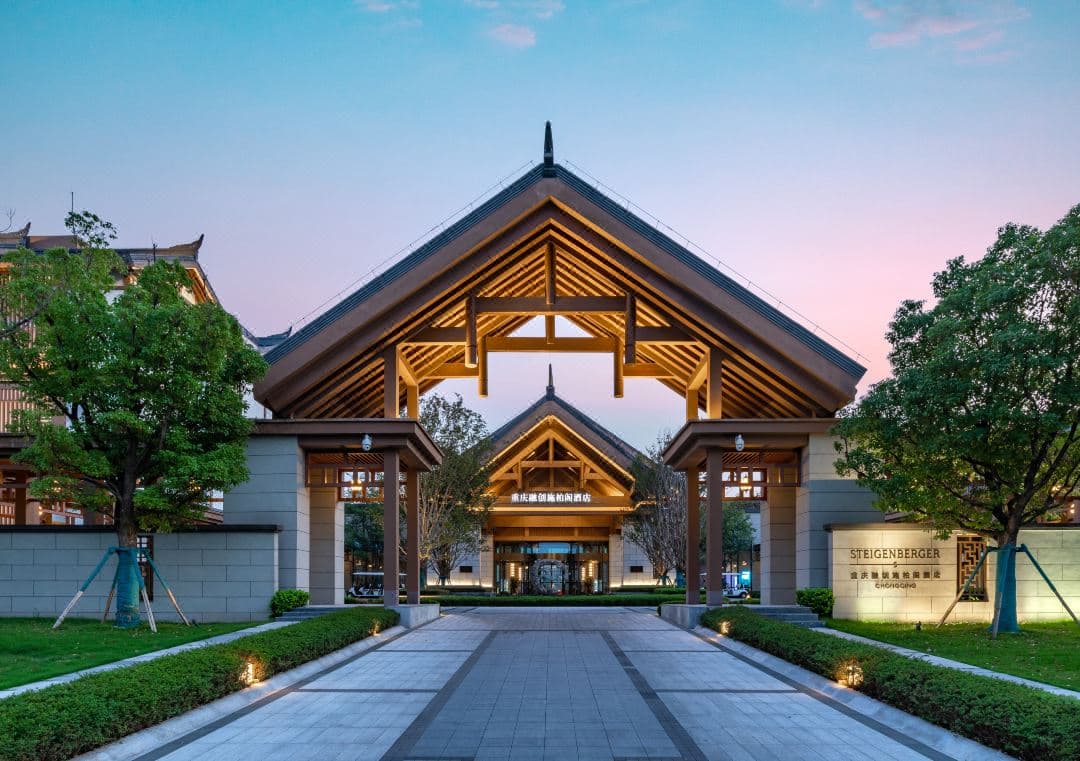
Chongqing is a sensory assault of vertical neon and humid spice; the Steigenberger, positioned in the sprawling Sunac Cultural Tourism City, functions as a necessary sedative. While the property requires a dedicated pilgrimage from the Jiefangbei CBD, the payoff is a distinct lack of urban claustrophobia. This is German efficiency dropped into the subtropics—the design is unapologetically reserved, trading 'Instagram moments' for beige, high-ceilinged sanity. The entry-level quarters are massive, starting at 42 square meters, with private balconies that frame the manicured chaos of the nearby Sunac Theme Park rather than a neighbor’s window. Wellness here is treated with clinical seriousness; the indoor pool uses an ozone disinfection system—a noticeable upgrade from the usual chlorine baths—and the *Supreme Spa* offers aromatherapy that feels more medicinal than recreational. Dining at *Bèla Bèla* straddles two worlds; while the international buffet checks the requisite boxes, the wise order the signature Chongqing noodles, served with a numbing peppercorn punch that cuts through the hotel’s polite atmosphere. Service is anchored by attentive butlers who navigate the property’s vast footprint with ease. It’s not a hipster hangout, but for those needing a recovery unit after battling Chongqing’s topography, it is a formidable sanctuary.
“Skip the main dining hall for breakfast if you value silence; ask your butler to arrange a table on the *Bèla Bèla* terrace, which offers a direct sightline to the waterfall garden.”
Insider TipAvg. Nightly Rate
71USD