No. 01
Platz Der Deutschen Einheit 2 Hamburg GermanyHamburg6559 verified reviews
8
.8
Bitvoya Edit
Layering imagery, place, and detail before the page opens.
Hamburg is not merely Germany's Gateway to the World; it is a burgeoning capital of haute cuisine, where maritime history meets modern gastronomy. For the discerning gourmand, the choice of accommodation is inextricably linked to the dining experience. Our curated collection takes you from the bustling HafenCity, home to the iconic The Westin Hamburg, to the serene banks of the Alster Lake, where The Fontenay offers panoramic vistas alongside exquisite dishes. Explore the historic charm of the City Center with the Fairmont Hotel Vier Jahreszeiten, or the vibrant energy of St. Georg near Hotel Atlantic. Each property serves as a luxurious base camp for exploring Hamburg's rich culinary landscape.
Hamburg offers a unique blend of traditional Hanseatic dishes and cutting-edge international cuisine. The city's luxury hotels are not just places to sleep; they are culinary destinations in their own right. For instance, the Fairmont Hotel Vier Jahreszeiten Hamburg houses the two-Michelin-starred Restaurant Haerlin, offering world-class dining without leaving the lobby. Similarly, TORTUE HAMBURG is celebrated for its diverse gastronomic concepts, making it a hub for social dining. Choosing Hamburg means immersing yourself in a city where fresh North Sea catch meets French finesse and Asian innovation.
Travelers following the Gourmand’s Guide can expect a heavy emphasis on quality and setting. Breakfasts are lavish affairs, often featuring local specialties like Franzbrötchen and fresh seafood. Dinner settings range from the historic grandeur of the Hotel Atlantic Hamburg, Autograph Collection to the chic, design-forward atmosphere of Le Méridien's Heritage restaurant. Expect impeccable service, extensive wine cellars, and menus that change with the seasons to reflect the best of Northern Germany's produce.
The Fairmont Hotel Vier Jahreszeiten Hamburg is home to the two-Michelin-starred Restaurant Haerlin, widely considered one of the best culinary experiences in Germany.
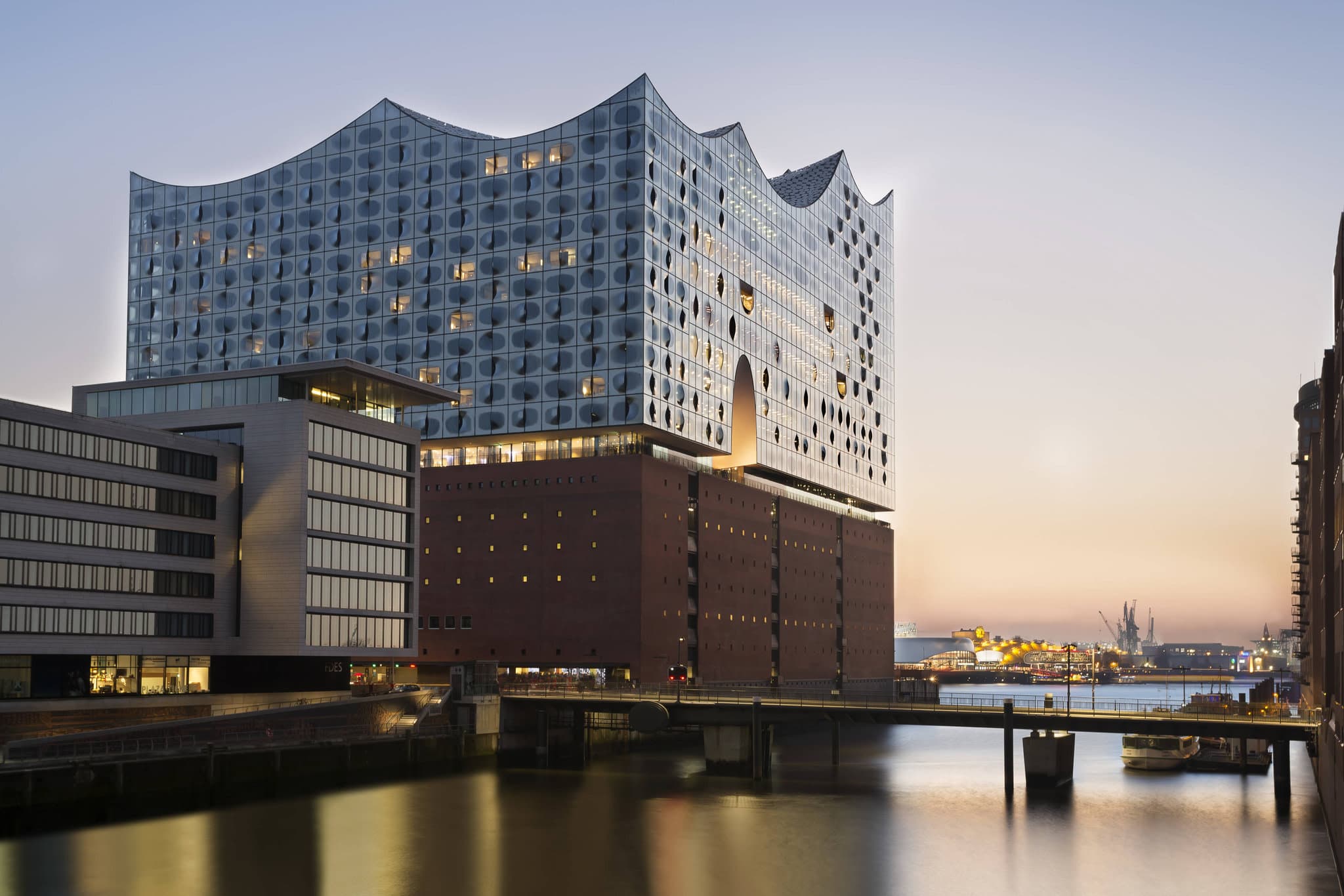
The Westin Hamburg is located directly within the Elbphilharmonie building, offering unmatched views of the harbor and immediate access to HafenCity's dining scene.
Yes, The Fontenay Hamburg and Hotel Atlantic Hamburg are premier choices located directly on or near the Alster Lake, offering exceptional dining with water views.
Explore our complete curated list of luxury accommodations, from boutique hideaways to grand dames.
Explore All Hamburg HotelsChecking into The Westin Hamburg feels less like a hotel arrival and more like a sci-fi ascent. You don’t just walk in; you ride ‘The Tube’—the longest curved escalator in the world—up through the brick base of the Elbphilharmonie, emerging onto a wind-swept public plaza before slipping behind the glass doors of the lobby. It’s a transition from the grit of the harbor to the hush of high-altitude luxury. The rooms are lessons in restraint, designed to not compete with the floor-to-ceiling spectacle outside. The signature Heavenly Beds face the curved glass facade, offering sightlines that stretch across the industrial ballet of the container port—a view that beats any standard city skyline. While the windows don’t open (a necessity for acoustic isolation in a concert hall), the climate control is whisper-quiet. The real draw for the palate is ‘Fang & Feld’. Forget stiff hotel dining; this is Hanseatic bistronomy at its finest. The roasted cod fillet with Schnüsch—a traditional Angeln vegetable stew—is a comforting yet refined ode to the North Sea. Verdict? You’re paying for the architecture and the silence above the city. It’s not just a stay; it’s a ticket to the best seat in Hamburg.
“Request a room on the 19th floor ending in '04' or '05' for the 'Window Nook'—perfect for sitting against the glass with a morning espresso.”
Insider TipAvg. Nightly Rate
230USD
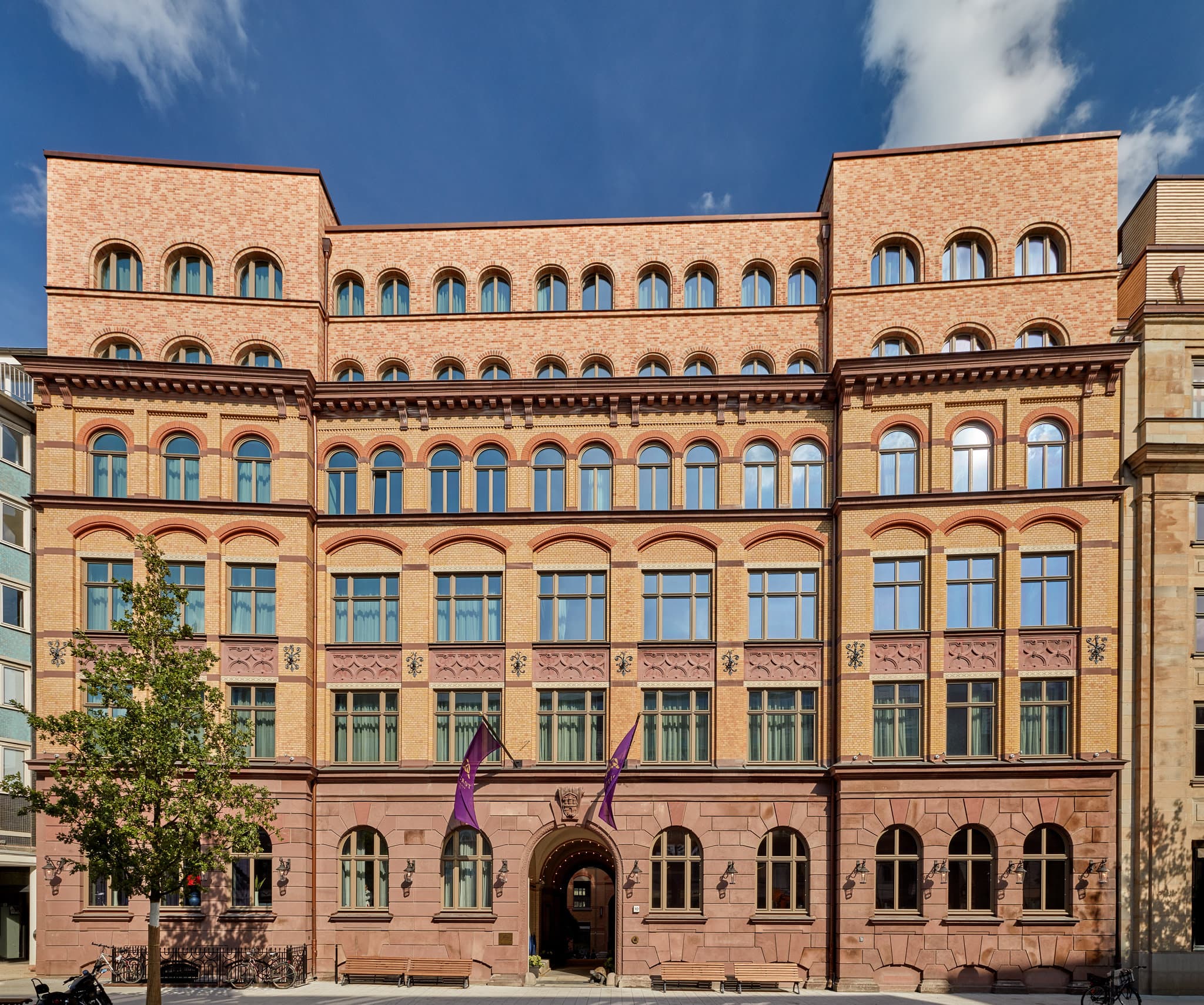
Forget the industrial grit often associated with this port city; TORTUE is a masterclass in slow luxury. Drawing inspiration from the 19th-century dandies who walked turtles on leashes to mock the rush of modernity, this Stadthöfe property commands you to decelerate. The interiors, a collaboration between Kate Hume and Stephen Williams, reject beige neutrality for moody, saturated hues and custom Laufen Saphirkeramik bathrooms that feel architectural rather than functional. Instead of standard dispensers, you’ll find niche fragrances from Hamburg’s own Parfums Lubner—a rare, hyper-local touch. The hotel’s social gravity centers on its culinary triad. Jin Gui is the nocturnal heart, a Pan-Asian theatre where the Black Tiger Roll is best enjoyed in the mesmerizing Mirror Chamber. Conversely, the Brasserie offers a bright, bustle-filled counterpoint, serving a Duck Liver Mousse that perfectly bridges French finesse with Hanseatic heartiness. Service is sharp but unpretentious, evidenced by the complimentary minibar—a relic of hospitality that TORTUE has wisely revived. It is sultry, specific, and arguably the most stylish address in town.
“Skip the standard street-facing rooms; request a 'Courtyard Balcony' room to overlook the historic Stadthöfe architecture and avoid the Stadthausbrücke traffic noise.”
Insider TipAvg. Nightly Rate
285USD
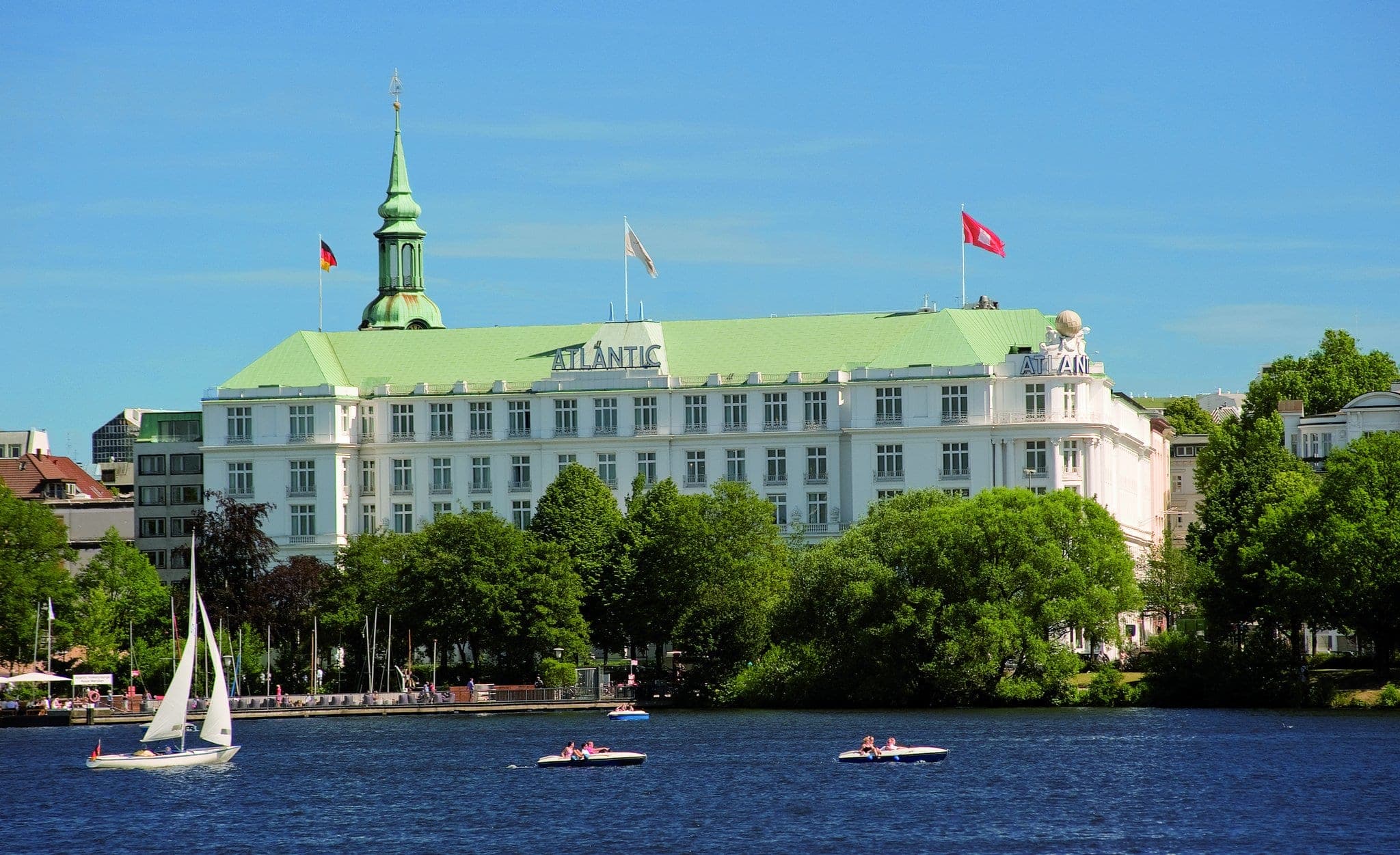
It’s known locally as the 'White Castle on the Alster,' the permanent residence of rock legend Udo Lindenberg, and the stunt backdrop for Pierce Brosnan in *Tomorrow Never Dies*. But for the traveling gourmand, the Hotel Atlantic is less about the celebrity lore and more about the sauce work in the **Michelin-starred Atlantic Restaurant**. Retaining its star for 2025, the dining room is a study in maritime grandeur—think high ceilings, heavy velvet curtains, and service that glides rather than walks. Chef Alexander Mayer executes a modern French menu that respects the hotel’s 1909 roots without feeling dusty. The signature **Atlantic Lobster Bisque** is non-negotiable; it is rich, cognac-laced, and poured tableside with a theatrical flair that rivals the opera house down the street. Afterward, the **Atlantic Bar** offers a brooding, Art Deco atmosphere perfect for a 'Transatlantic' cocktail accompanied by live piano. Upstairs, the rooms lean into the Hanseatic aesthetic—grand, high-ceilinged, and reassuringly solid. However, a word to the wellness-seekers: the pool and spa are shuttered for a massive overhaul until mid-2027. You aren’t here for laps, though. You’re here for the lobster and the legacy.
“Skip the 'Superior' category if you enjoy a soak; they only have showers. Book a 'Deluxe Lake View' to watch the sailboats on the Outer Alster and avoid potential noise from the ongoing rear-facade renovations.”
Insider TipAvg. Nightly Rate
180USD
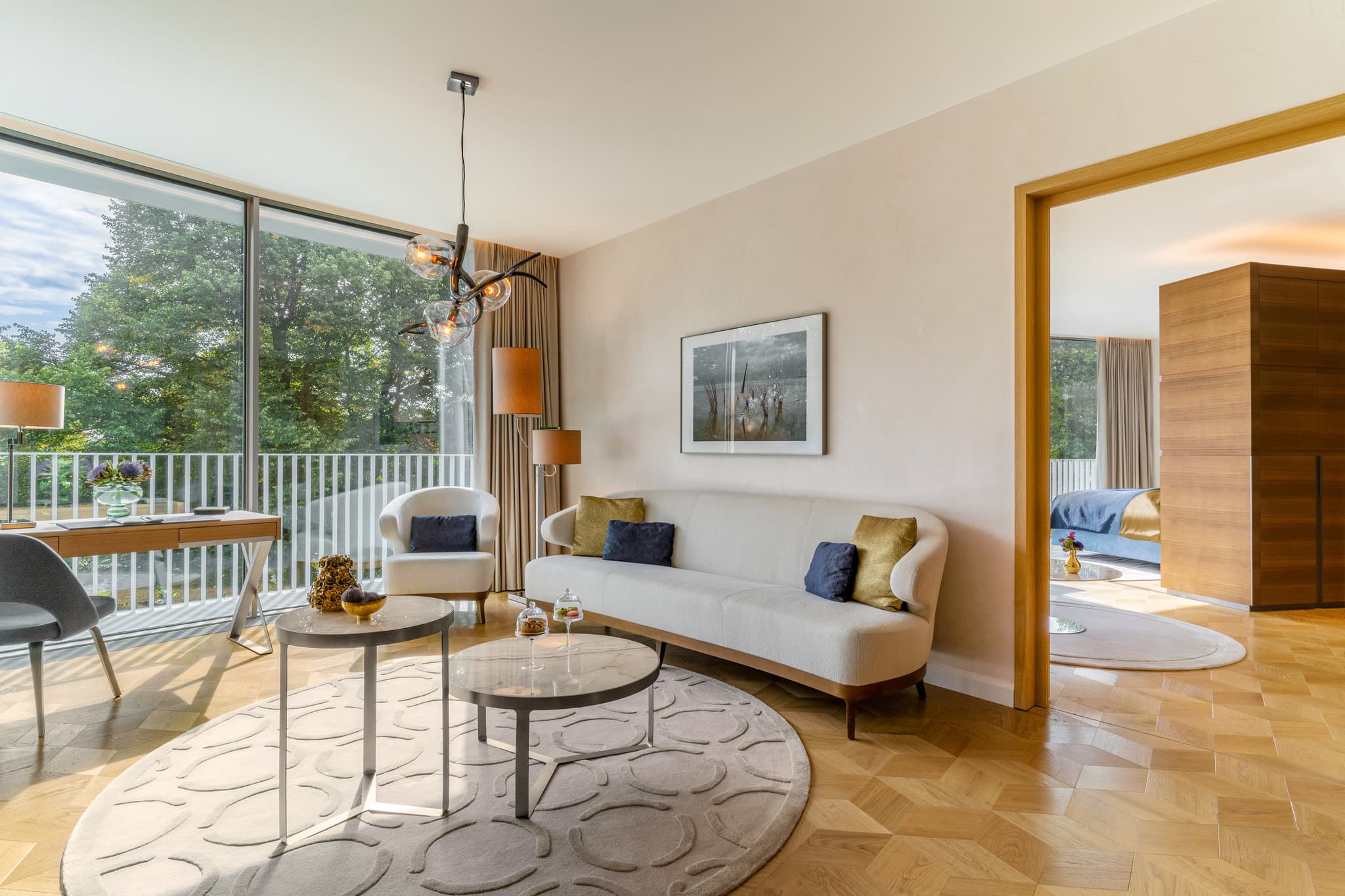
If the traditional grand dame hotels of Europe are stiff corsets, The Fontenay is a silk slip dress—fluid, modern, and effortlessly glamorous. Architect Jan Störmer’s organic, circle-based design means there isn't a straight wall in sight, a bold departure for Hanseatic Hamburg. The heart of the property is the 27-meter atrium, a light-flooded sculpture that draws your eye immediately up to the sky. Rooms feel less like hotel quarters and more like the guest wing of a billionaire’s parkside estate, featuring 2.85-meter ceilings, generous balconies, and touch-panel controls that actually work. The bathrooms, stocked with bespoke amenities, are vast marble sanctuaries. Dining is a serious affair: at Lakeside, Chef Julian Stowasser earned his two Michelin stars (and the hotel its Three Michelin Keys) with dishes like the Faroe Islands Langoustine with sour cream and melon—a masterclass in acidity and texture. For comfort, Parkview’s Königsberger Klopse (veal meatballs) are non-negotiable. While service at breakfast can occasionally lag behind the hardware's perfection, the staff’s genuine warmth compensates. The verdict? A stunning architectural triumph that finally gives Hamburg a hotel as dynamic as its skyline.
“Book a Fontenay Deluxe Room on the 4th floor for the best unobstructed Alster lake views. Also, the rooftop pool is empty around 1 PM.”
Insider TipAvg. Nightly Rate
325USD
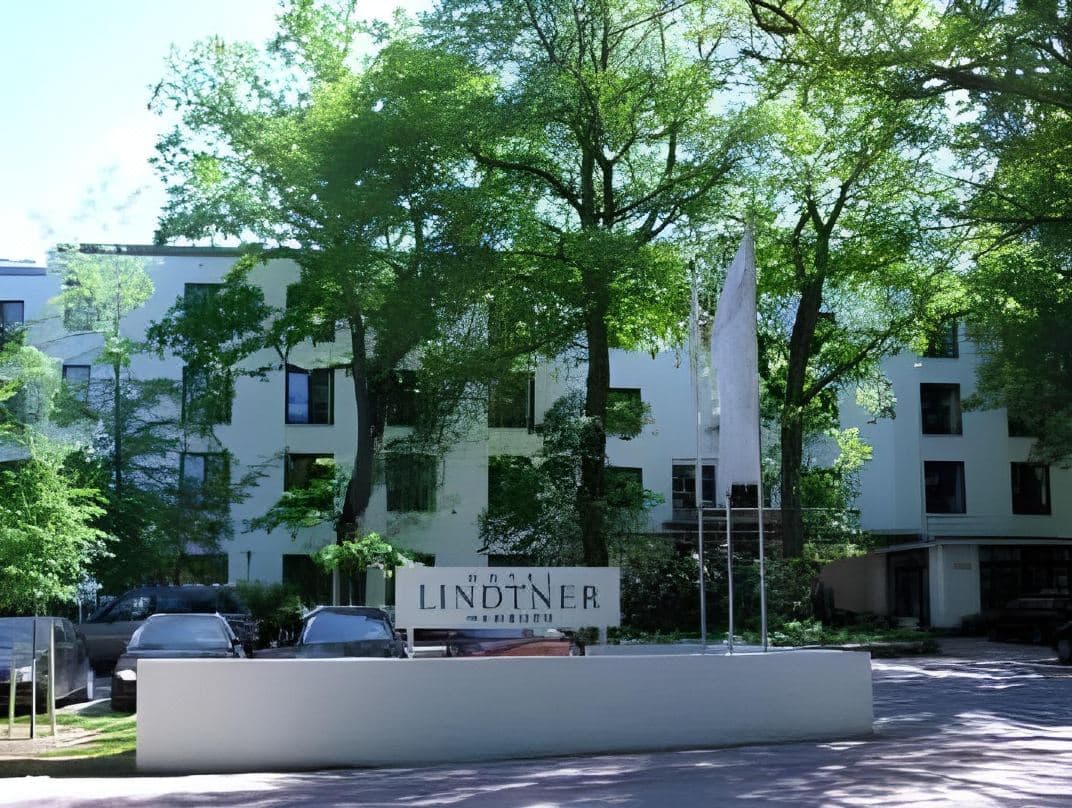
It requires a certain resolve to venture south of the Elbe to Harburg, a district often dismissed as Hamburg’s industrial backyard. Yet, the pilgrimage to Privathotel Lindtner is less about convenience and more about the reward: a Hanseatic art retreat that feels like a defiant sanctuary. The property operates with the confident gait of a Grand Dame, where the Fireplace Lounge’s red velvet sofas and heavy drapes suggest a world untouched by minimalist trends. While some corridors whisper of the 1990s and the occasional bathroom layout baffles (watch for the flooding showers), the charm here is substantial. The draw, undeniably, is the table. Restaurant Lilium commands attention with its Michelin-starred prowess; the signature pink boiled beef (Tafelspitz) with salsa verde is a masterclass in texture that justifies the commute alone. For a more rusticated evening, Restaurant Diele delivers Northern German soul food without the kitsch. Mornings are an event—expect a breakfast spread that rivals city-center icons. Between meals, the 350 sqm spa offers a quiet reprieve with Jean D'Arcel treatments, though the lack of a pool is noted. It’s a place for those who prefer their luxury with a side of old-world eccentricity and Tesla Superchargers.
“Skip the standard doubles; book a Terrace Suite overlooking the hotel park to trade the distant hum of Harburg for pure greenery. Also, the unsupervised Kids Corner has a PS5—a lifesaver for parents seeking a quiet dinner at Lilium.”
Insider TipAvg. Nightly Rate
130USD
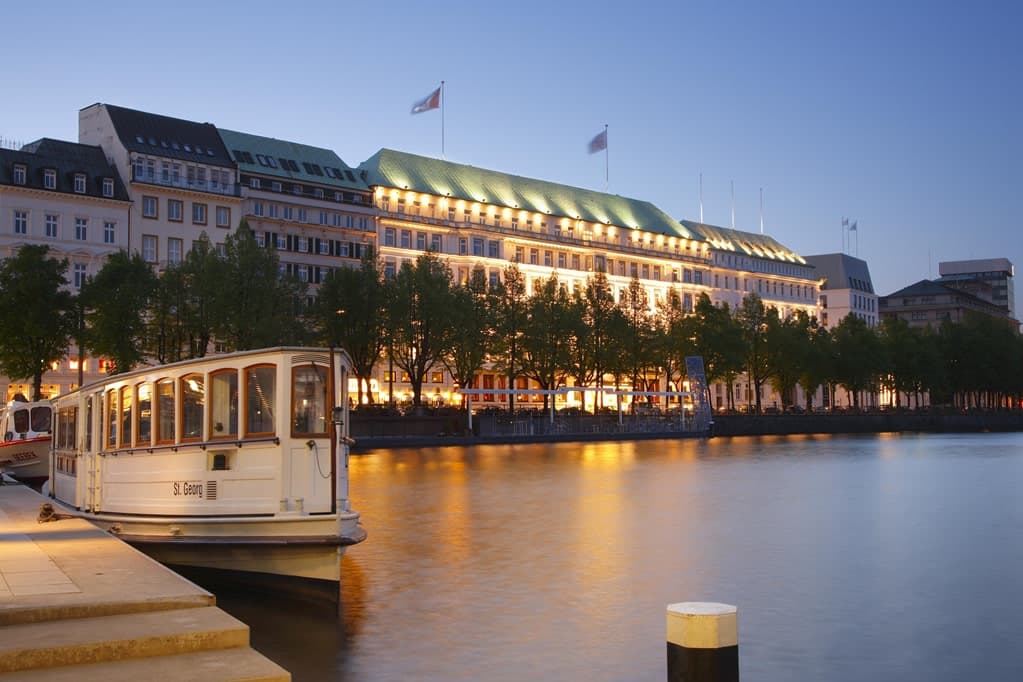
If Hamburg is the gateway to the world, the Fairmont Hotel Vier Jahreszeiten is its golden key. Recently crowned Germany's first '101 Hotel Icon' and celebrating a fresh third Michelin star at Restaurant Haerlin, this Alster-side palace has effectively secured its status as the undisputed sovereign of Hanseatic hospitality. It is not merely a hotel; it is a culinary ecosystem that manages to be both staunchly traditional and thrillingly current. The property balances its historic footprint—where entry-level rooms are a cozy 25sqm yet finished with jewel-box precision—with a vibrant social pulse. While the Wohnhalle offers a British Afternoon Tea with scones so buttery they defy physics, the real electricity is found at Nikkei Nine. Here, under amber lights, the city’s elite dissects Japanese-Peruvian Black Cod and Wagyu Tartare in a setting that feels more like a private club than a hotel restaurant. Meanwhile, Chef Christoph Rüffer’s Haerlin has ascended to the gastronomic Olympus; his seasonal compositions, like the signature Rock Red Mullet, are now three-star legends. The service is bordering on telepathic, the Technogym facilities are state-of-the-art, and the vibe is reassuringly expensive. It is the only address in Hamburg that matters.
“Skip the standard courtyard rooms; the upgrade to a Lake View room is non-negotiable for the Alster panorama. Also, book your table at Nikkei Nine weeks in advance—it's the hardest reservation in town.”
Insider TipAvg. Nightly Rate
370USD
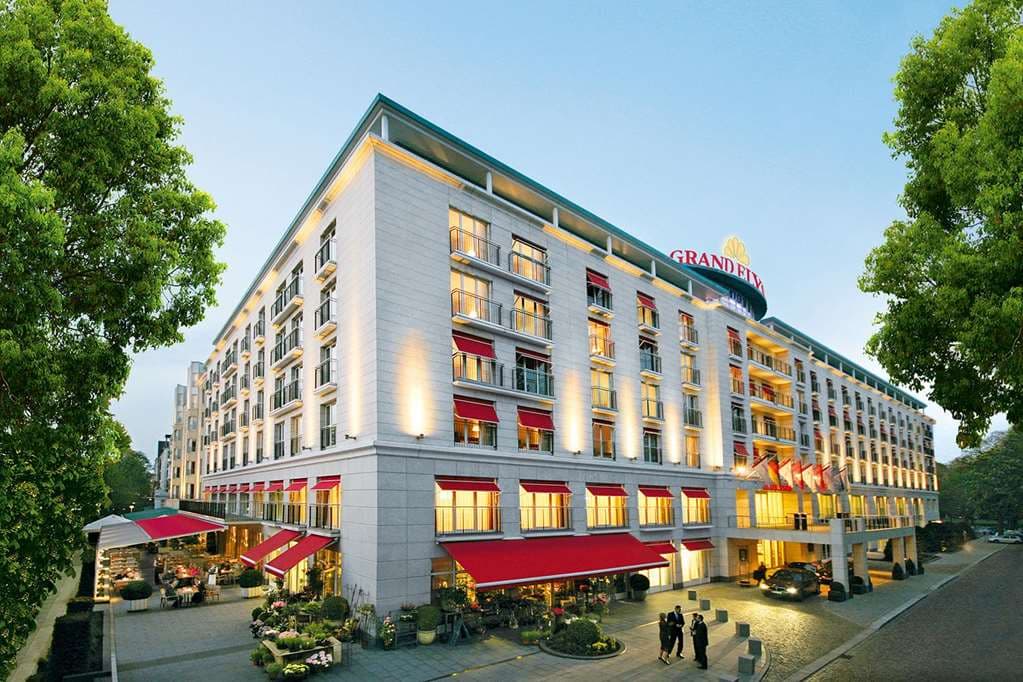
The Grand Elysée doesn't do subtle. Anchoring the posh Rotherbaum district, this independent giant functions less like a hotel and more like a self-contained city-state for the Hanseatic elite. The vibe in the massive, glass-roofed atrium is energetic—media moguls and politicians trading secrets under the Block family’s extensive art collection. The rooms lean into a staunchly traditional aesthetic; think heavy drapes and solid joinery rather than cutting-edge minimalism. It’s comfortable, if unapologetically classic. But for a Food Editor, the magnetic pull is THEO’S. In a city famous for eel and plaice, this is the premier altar for beef. The kitchen imports USDA Prime, dry-ages it for 40 days, and blasts it in an 800°C Southbend oven until the crust shatters under the knife. It is New York swagger executed with German precision. Afterward, the 'king-like' breakfast buffet or a session in the 1,000sqm Elyseum Spa—stocked with TEAM Dr. Joseph amenities—is the only logical recovery method. It’s not the trendiest stay in Hamburg, but it is undoubtedly the most delicious.
“Tables at THEO’S are harder to secure than a room. Book your dinner reservation at least two weeks out, even if you are a hotel guest.”
Insider TipAvg. Nightly Rate
185USD
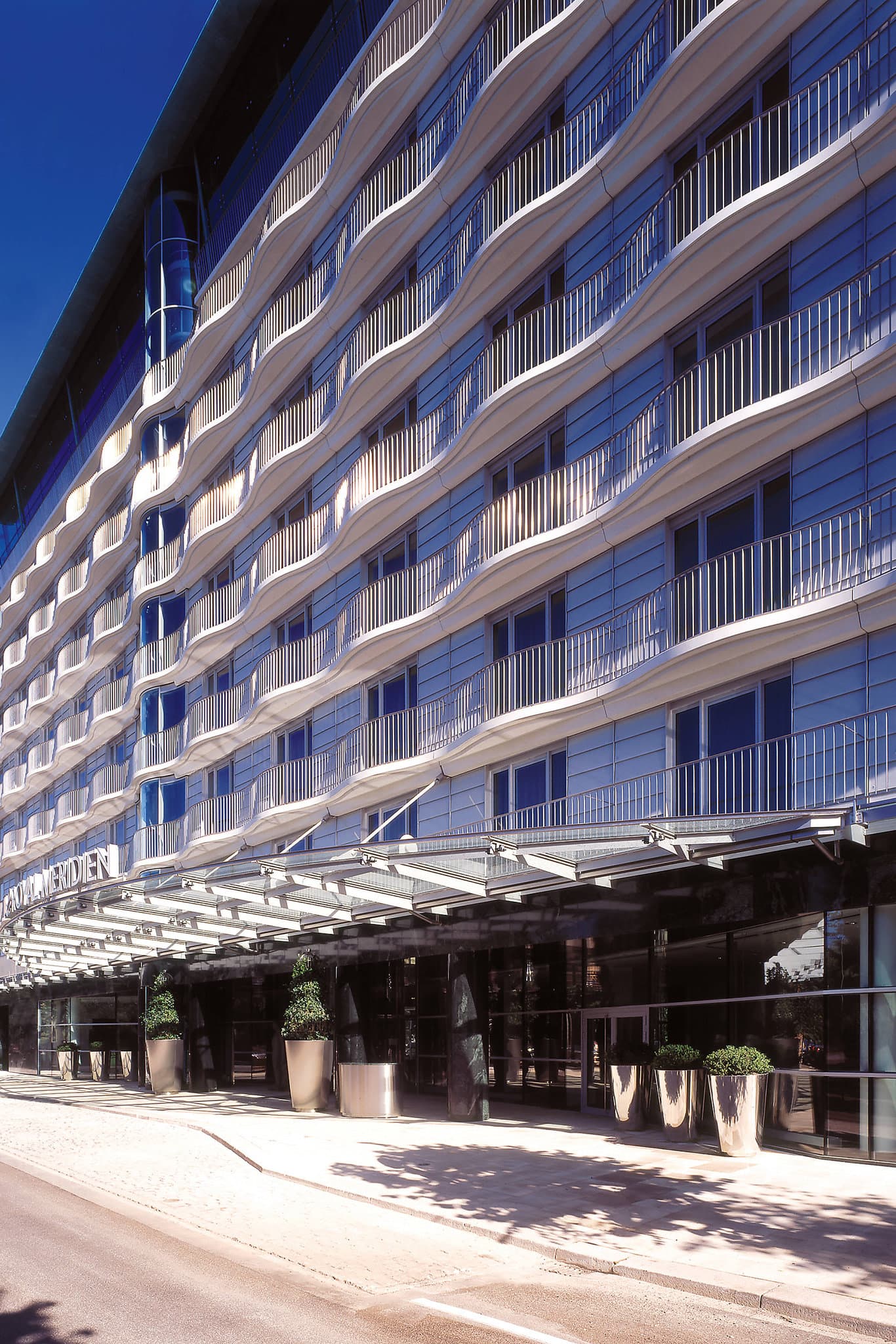
While the Grand Elysée claims the polish and the Vier Jahreszeiten holds the history, Le Méridien claims the view. Anchored in the gritty-gentrified St. Georg district, this property functions less as a hotel and more as a high-tech viewing platform for the Außenalster lake. The lobby sets a deliberate 'Art + Tech' tone—think wire-mesh world maps and digital installations—that carries into the rooms. Booking a Lake View room is not optional; the rear-facing alternatives stare bleakly into city courtyards. Inside, the decor is functional rather than plush, with Le Labo amenities and decent soundproofing, though the carpet wear betrays the high foot traffic. The real draw is the ninth floor. HERITAGE is the city's preeminent rooftop watering hole. While the main kitchen undergoes its metamorphosis under Chef Patrick Weber (reopening April 2026), the Rooftop Bar carries the weight with 'Porn Star Martinis' and an expanded bar menu that keeps the local creative set lingering past midnight. The basement Le SPA, with its 450sqm footprint and heated pool, remains a reliable, if unglamorous, spot to sweat out the schnapps.
“The main restaurant kitchen is renovating until April 2026. Skip the formal dinner booking and secure a high-top table at the HERITAGE Rooftop Bar for sunset drinks and tartare instead.”
Insider TipAvg. Nightly Rate
166USD
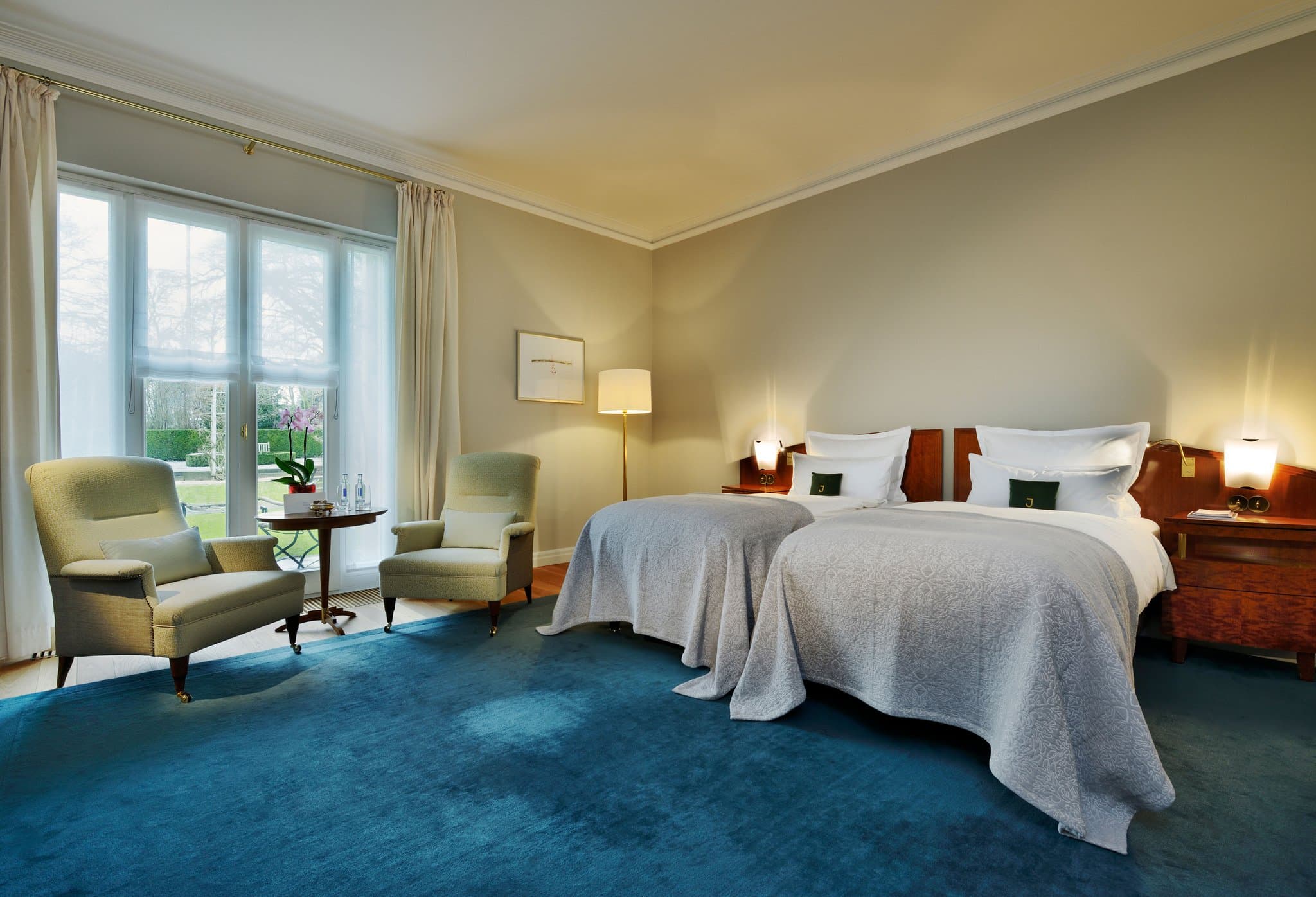
If Hamburg’s city center is a riot of red brick and commerce, the Hotel Louis C. Jacob in Nienstedten is its exhale. Perched high above the Elbe, this isn’t a hotel for the lobby-DJ crowd; it is a bastion of Hanseatic 'old money' discretion. You come here for the Lindenterrasse (Lime Tree Terrace)—the very spot Impressionist Max Liebermann painted in 1902. The view of the container ships gliding silently past is hypnotic, a moving industrial canvas that pairs perfectly with a glass of Riesling. Inside, the property navigates a delicate truce between heritage and necessity. The rooms feature Treca mattresses and walk-in wardrobes, though some corners whisper of 'faded glory'—scuffed wood paneling that feels less like neglect and more like the patina of a well-loved manor. Dining is the headline act: Jacobs Restaurant has pivoted from stiff 2-star formality to a more approachable ethos, yet the signature Vierland duck in four courses remains a non-negotiable masterpiece. For something looser, the Weinwirtschaft Kleines Jacob across the street serves a Wiener Schnitzel that rivals Vienna’s best. Service is unpretentious but surgically precise—expect Nordic warmth, not bowing subservience.
“Skip the standard river view; specifically request a room in the 'Old House' (historic wing) for the authentic creaky-floor charm and high ceilings that the modern annex lacks.”
Insider TipAvg. Nightly Rate
201USD