No. 01
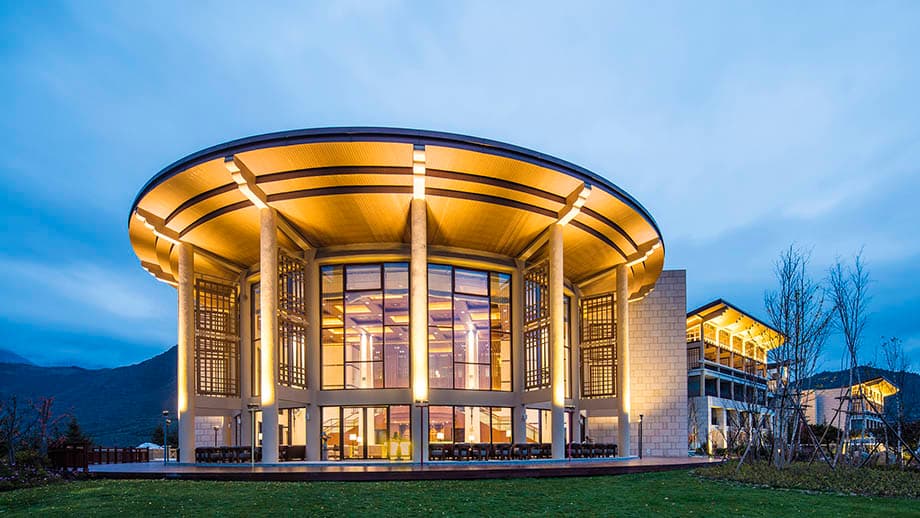
No 1 Baohai Road. BAO HUA ChinaJiuzhaigou973 verified reviews
9
.2
Bitvoya Edit
Layering imagery, place, and detail before the page opens.
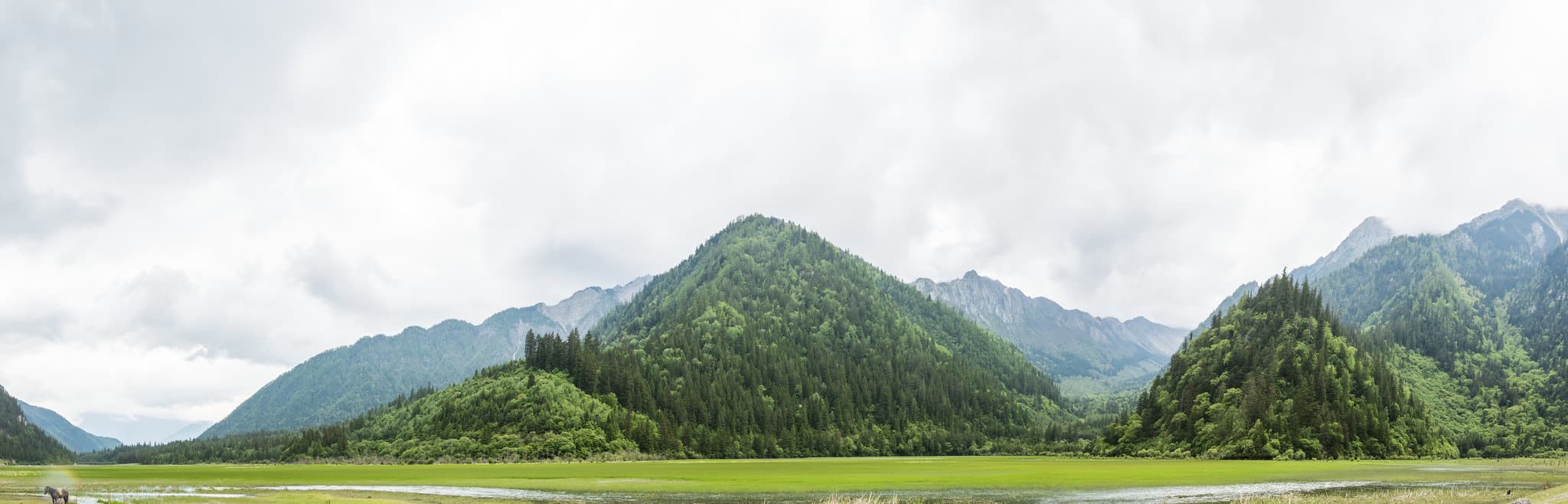
Jiuzhaigou, a UNESCO World Heritage site known as a "Fairyland on Earth," is evolving beyond its turquoise lakes to become a destination for world-class architecture. This curated collection explores properties that redefine luxury through design, merging Tibetan aesthetics with avant-garde structures. From the stunning glass atrium of the InterContinental Resort Jiuzhai Paradise nestled deep in the forest to the secluded luxury of Rissai Valley, a Ritz-Carlton Reserve in Zhongcha Valley, these hotels are destinations in themselves. Visitors staying in Zhangzha Town or the quieter valleys nearby will find that these architectural gems offer not just shelter, but a profound dialogue between modern luxury and the rugged Sichuan landscape.
Jiuzhaigou offers a unique canvas where architectural ambition meets raw natural beauty. The properties in our "Modern Myths" collection are not merely places to sleep; they are immersive experiences designed to frame the majestic scenery of Northern Sichuan. Architects here face the challenge of respecting the delicate ecosystem and local Tibetan culture while delivering five-star luxury. The result is a stunning array of hotels featuring floor-to-ceiling glass walls that invite the forest inside, sustainable materials like local stone and timber, and motifs that pay homage to the region's spiritual heritage. Choosing a design-forward hotel here means engaging with the destination on a deeper level, where the built environment enhances the natural wonder rather than competing with it.
When seeking architectural gems, two main areas dominate the landscape:
Staying in these design-forward properties ensures a level of comfort essential for the high-altitude environment (often above 3,000 meters). Expect state-of-the-art floor heating systems and oxygen enrichment technology in guest rooms to combat altitude sickness. The atmosphere is one of serene luxury; lobbies often feature grand fireplaces and offer yak butter tea upon arrival. Visually, expect a blend of bold geometry and organic textures—think stone masonry, exposed wood beams, and expansive terraces. Dining is also an architectural experience, with restaurants often positioned to offer panoramic views of the snowy peaks and lush valleys.
Rissai Valley, a Ritz-Carlton Reserve, is widely considered the pinnacle of luxury and design in Jiuzhaigou. Located in the secluded Zhongcha Valley, it features villa-style accommodations designed by WATG that blend traditional Tibetan architecture with ultra-modern luxury.
Yes, most luxury design hotels in Jiuzhaigou, including the Hilton, Conrad, and InterContinental, are equipped with in-room oxygen concentrators or centralized oxygen supply systems to help guests acclimatize to the high altitude.
The InterContinental Resort Jiuzhai Paradise is renowned for its massive glass-domed atrium that encloses a natural forest, allowing guests to experience the outdoors while protected from the elements. Similarly, Banyan Tree Jiuzhaigou offers cliff-top views that seamlessly merge with the surrounding mountains.
Explore our complete curated list of luxury accommodations, from boutique hideaways to grand dames.
Explore All Jiuzhaigou HotelsForget the frenetic energy of the National Park entrance; Banyan Tree Jiuzhaigou is a pilgrimage to the clouds, requiring a two-hour ascent that functions less as a transfer and more as a decompression chamber. Perched at 2,500 meters, this isn't a base camp—it’s an architectural observatory. The design is a triumph of clean, geometric modernism that acts as a viewing lens for the chaotic limestone karsts outside. Inside, the 65sqm rooms are studies in restraint, featuring dark wood floors and expansive glass walls that turn the morning 'sea of clouds' into living art. Dining here is an exercise in high-altitude comfort. Skip the international buffet and head straight to Gan Hai Zi for the Yak Meat Hot Pot—a roiling, Sichuan-spiced broth that effectively combats the mountain chill. While the isolation is absolute (and the pool occasionally shuttered for maintenance, a reality of this elevation), the 'Rainforest' hydrothermal circuit in the spa offers a compelling reason to stay indoors. It is a sanctuary for the patient traveler who understands that the best views require the longest journeys.
“Book a 'Valley Room' on the highest floor possible; the sunrise 'sea of clouds' effect is most dramatic here, often obscuring the valley floor entirely.”
Insider TipAvg. Nightly Rate
132USD
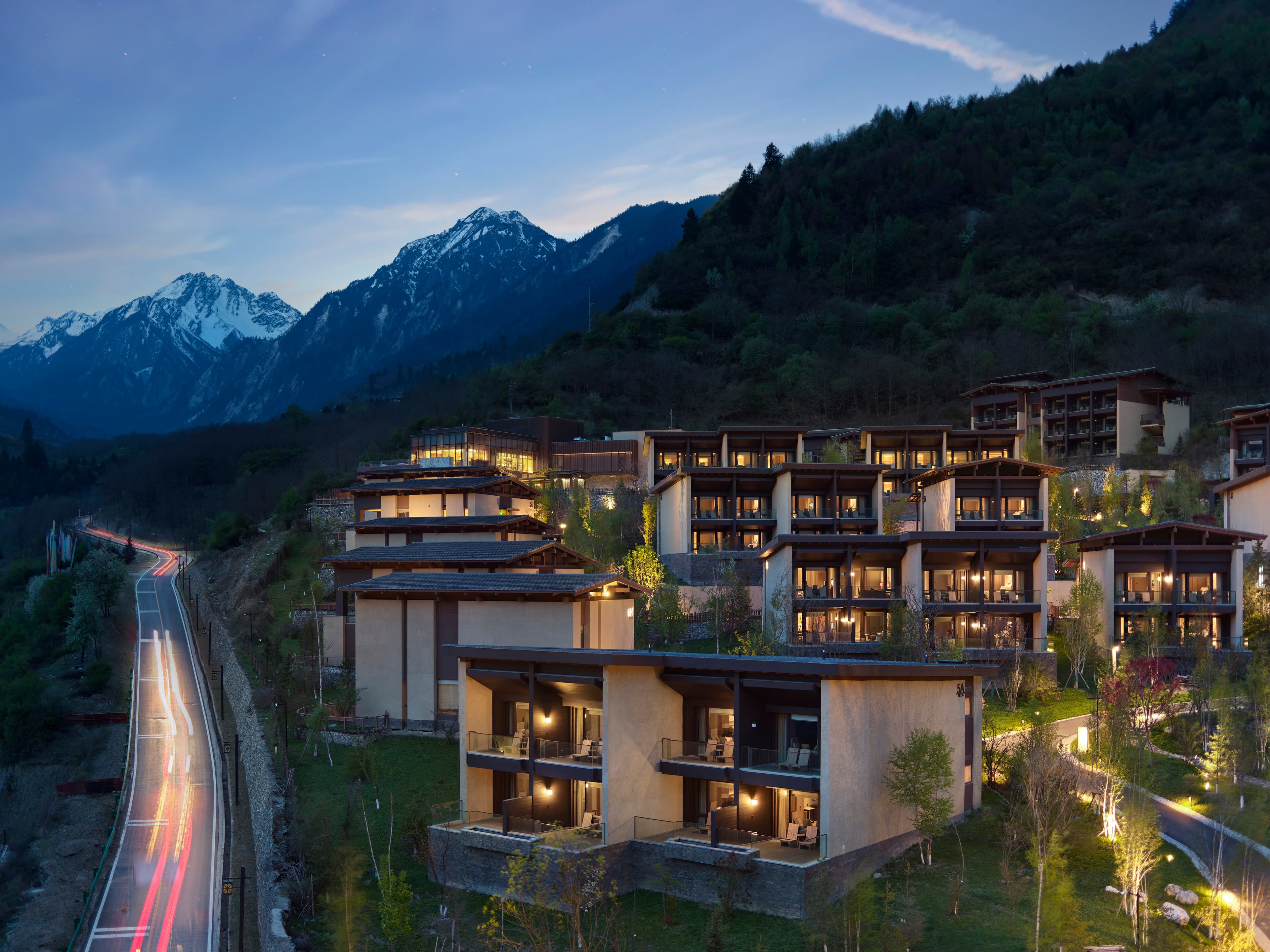
If James Bond were to hide out in the Min Mountains, he’d choose the Conrad Jiuzhaigou. Located a discreet distance from the national park’s frenetic entrance, this property eschews the typical gilded lily approach of Chinese luxury hotels for something far more muscular. The architecture is a moody masterclass in ‘Modern Tibetan’—think fortress-thick stone masonry and timber beams that echo the region’s ancient defensive structures, but smoothed over with a slick, contemporary gloss. Inside, the villas are sanctuaries of silence, featuring cavernous balconies that frame the mist-shrouded peaks like a widescreen cinema. While the location in the Luneng beauty spot feels secluded, the dining at M’EAT keeps the pulse racing; the grilled yak meat is a smoky, tender revelation that demands a bold red from their cellar. Service is eager, if occasionally lost in translation, but the genuine warmth of the duty managers bridges any linguistic gaps. It’s not just a hotel; it’s a design-forward basecamp for the stylishly adventurous.
“Skip the in-room dining for dinner and head to the M'EAT terrace at twilight—the firepits and mountain silhouette create the property's most cinematic moment.”
Insider TipAvg. Nightly Rate
187USD
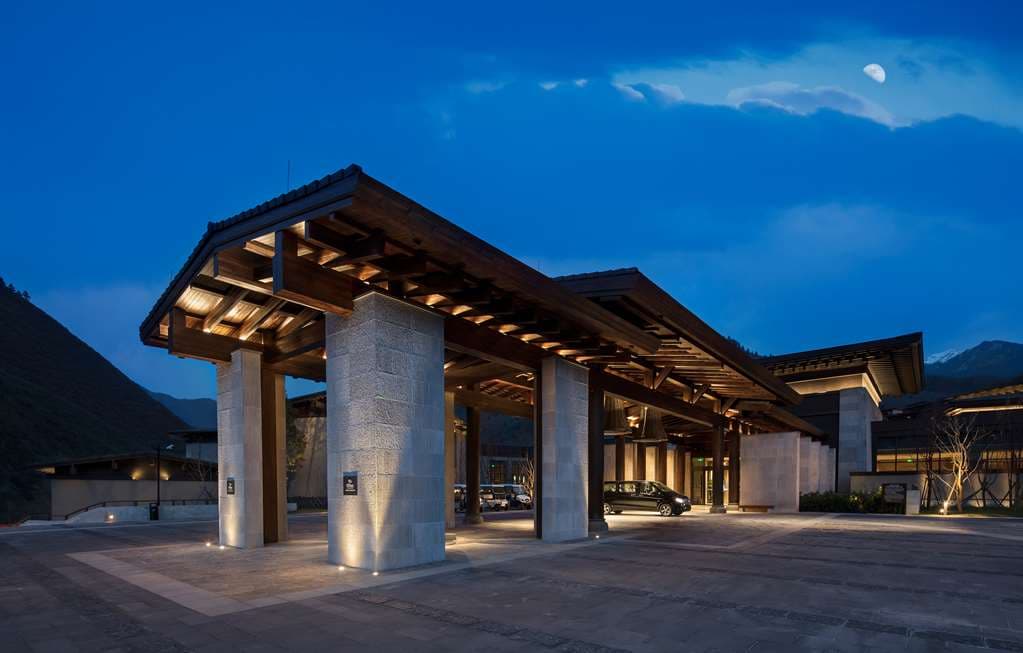
Forget the backpacker lodges of yesteryear; the Hilton Jiuzhaigou is where rugged topography meets 400-thread-count civility. Situated within the Luneng development, this property eschews typical alpine kitsch for a sharper, Art Deco-inflected grandeur. The lobby—a glass-walled cathedral framing the Min Mountains—justifies the long flight into JZH. Base rooms are surprisingly cavernous at 46 square meters, equipped with essential heavy-duty humidifiers and Crabtree & Evelyn amenities to combat the arid altitude. While the absence of a swimming pool is a curious omission for a five-star resort, the Tibetan foot spa provides a more culturally relevant soak after a day trekking the Rize Valley. Dining at SIMMER is non-negotiable; the signature Yak Beef Platter is rich enough to power you up a summit, while OPEN offers a breakfast spread that accommodates both Western palates and locals seeking butter tea. Service is polished, though the refusal to run a park shuttle feels like a missed beat for a property of this caliber. Ultimately, it’s a sanctuary for the soft adventurer who demands a martini after dodging tourists at Five Flower Lake.
“The hotel doesn't run a shuttle to the National Park (12km away). Corner the Concierge the night before to book a private driver (approx. 40 RMB) to beat the tour bus queues.”
Insider TipAvg. Nightly Rate
104USD
Forget the typical mountain lodge; the InterContinental Jiuzhai Paradise is what happens when early-2000s ambition meets high-altitude survivalism. Encased within a colossal glass-and-steel exoskeleton, the resort operates as a self-contained biosphere, trapping a permanent spring microclimate against the biting Sichuan cold. It’s less 'hotel' and more 'biodome colony,' complete with black swans gliding across indoor ponds and a lobby that mimics a stone-walled Tibetan village. The rooms are a fascinating study in vintage luxury. While the hardware betrays its 2003 vintage (expect few USB ports), the interiors triumph with texture: heavy timber beams and working Tibetan stone fireplaces that offer a tactile comfort modern minimalism abandoned years ago. A fair warning: the beds are uncompromisingly firm—orthopedic planks that cultural purists will defend and sensitive sleepers will dread. You remain here for the ecosystem, not the thread count. The Tianyu Spa is the property's crown jewel, featuring twelve terraced hot spring pools beneath the glass vault, mimicking the region’s travertine geology. Dining is equally site-specific; skip the international buffet and head straight to Shun Xing Restaurant. Their Yak meat hot pot is non-negotiable—a rich, marrow-deep broth that serves as the only proper acclimatization tool. It’s a surreal, enclosed world, but one you won't want to escape.
“Skip the lobby-level noise. Request a 5th-floor room in the 'Tibetan Wing' facing the atrium—you get the 'village' views without the echo of the breakfast crowd.”
Insider TipAvg. Nightly Rate
75USD
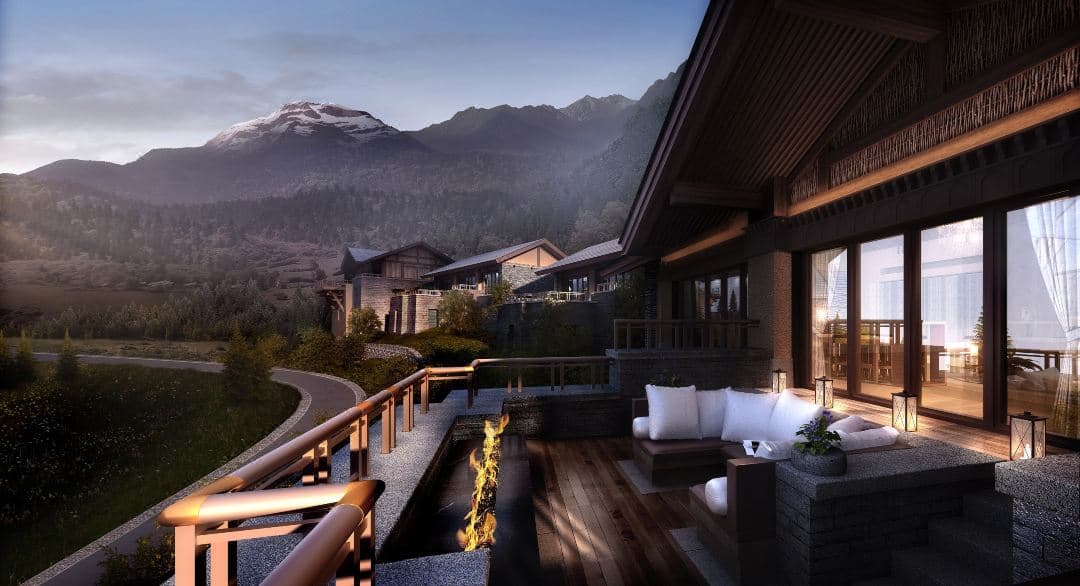
It is rare for a debut to feel this inevitable. As one of only two properties in China to be awarded Three Michelin Keys, Rissai Valley, a Ritz-Carlton Reserve, isn’t just a hotel; it is a masterwork of restraint. Designed by WATG with interiors by the late Jaya Ibrahim’s studio, the property eschews the monolithic for the meditative. The main pavilion, shaped like an endless Tibetan knot, creates a mesmerizing geometry that frames the snow-dusted Minshan range at every turn. Inside the villas, the aesthetic is fiercely local yet globally tuned—think heated floors (crucial for the altitude), Dyson hardware, and Frederic Malle amenities that smell of deep wood and spice. The dining is equally serious. At Cai Lin Xuan, the Yak Steak seared on a Himalayan Salt Block is not a gimmick but a revelation of terroir. But the real magic lies in the ‘Nieba’ service. Your personal butler doesn’t just book tours; they anticipate the exact moment you need a hot ginger tea after a hike. Rissai Valley doesn’t shout; it whispers, and it is arguably the most sophisticated mountain retreat in Asia right now.
“Ask your Nieba for a stargazing session at the secret terrace near the lobby—the light pollution is non-existent here.”
Insider TipAvg. Nightly Rate
1300USD
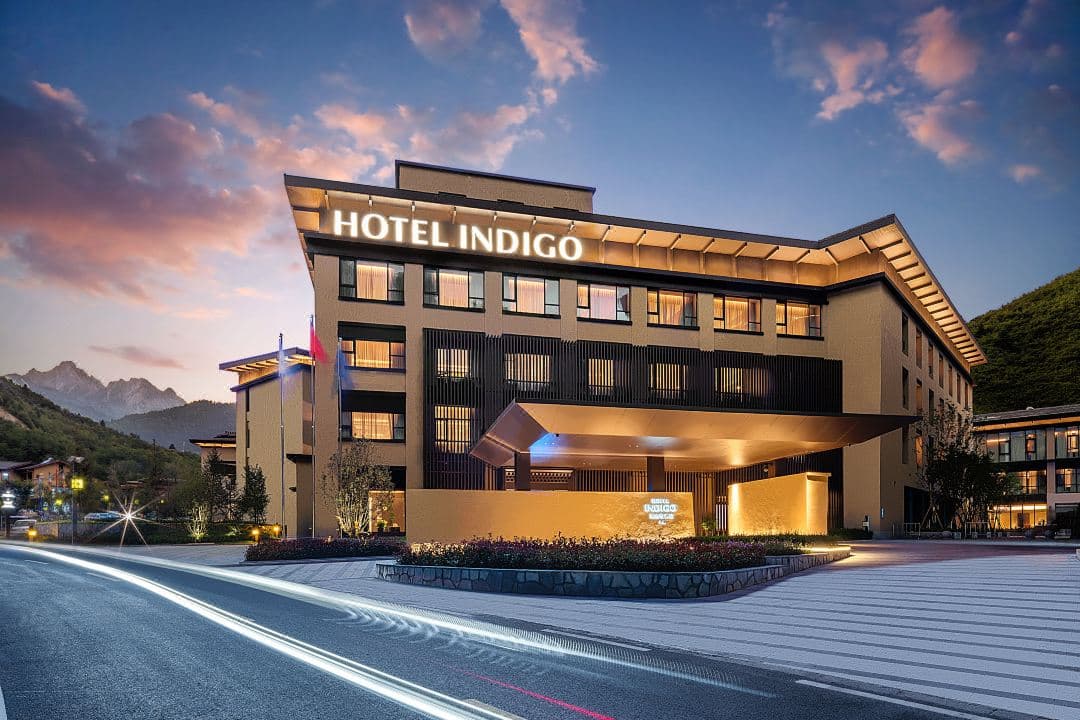
Forget the beige neutrality of standard luxury lodges. Hotel Indigo Jiuzhai is a jagged, geometric love letter to the mythical Tibetan eagle, where the architecture doesn't just sit in the valley—it swoops. The lobby is a dramatic confrontation of abstract eagle-wing timber structures centering on a fireplace that feels less like a hotel hearth and more like a ritual site. It is moody, dark, and refreshingly specific. The 40-square-meter base rooms are surprisingly generous, ditching generic wall art for hanging woodcuts and bold, ethnic textiles that avoid feeling like a costume shop. While the property lacks an on-site pool or spa, the 'Neighborhood Host' butlers compensate with hyper-personalized service, steering you toward the nearby Aru Tibetan Medicinal Bath. Dining requires commitment. Skip the safe international staples at the Neighborhood Café and order the signature Motuo Stone Pot Chicken—a savory, bubbling cauldron of local poultry and mushrooms that justifies the flight alone. Cap the night at Glamour Bar; the Tibetan Afternoon Tea is photogenic, but their whiskey pours are the correct remedy for the altitude. Note: The hotel is a quiet 12km from the park entrance. You aren't walking there, but in the silence of the Luneng precinct, you won't want to.
“Since there is no on-site spa, ask your butler to book a session at the Aru Tibetan Medicinal Bath just 180 meters away—it's far more authentic than a standard hotel massage.”
Insider TipAvg. Nightly Rate
81USD
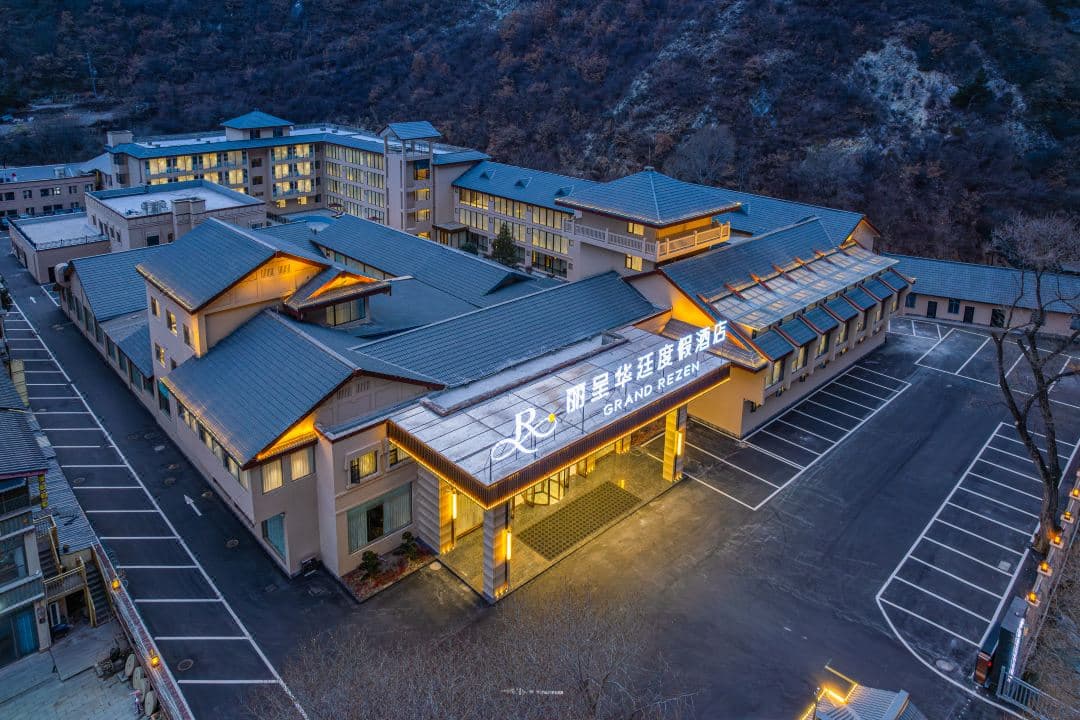
Forget the tired trope of the rustic cabin; Grand Rezen (known locally as Li Cheng Hua Ting) offers a sharper, more geometric dialogue with the Min Mountains. The architecture creates a striking visual rhythm, utilizing a vernacular slate facade that mimics the jagged peaks while floor-to-ceiling glass captures the valley's moody mists. It’s a design that feels less like a hotel and more like a modern fortress against the elements. Inside, the experience is defined by thermal comforts—essential at this altitude. The rooms forgo generic luxury for practical warmth, featuring underfloor heating and electric blankets that turn the bed into a sanctuary after a day in the freezing park. While the lack of a dedicated spa is a miss, the personalized butler service compensates by delivering herbal foot baths directly to your suite—a ritual that feels far more authentic than a standard massage. Dining is a highlight if you know where to look: bypass the international attempts and head straight to Huatingxuan Restaurant. Their signature Yak Meat Soup Pot is rich, gelatinous, and practically medicinal. Service may struggle with English, but the intent is flawless.
“Skip the standard coffee; book the window seat at 'Time Corridor Cafe' for the Afternoon Tea set—the lighting around 4 PM hits the slate exterior perfectly.”
Insider TipAvg. Nightly Rate
41USD
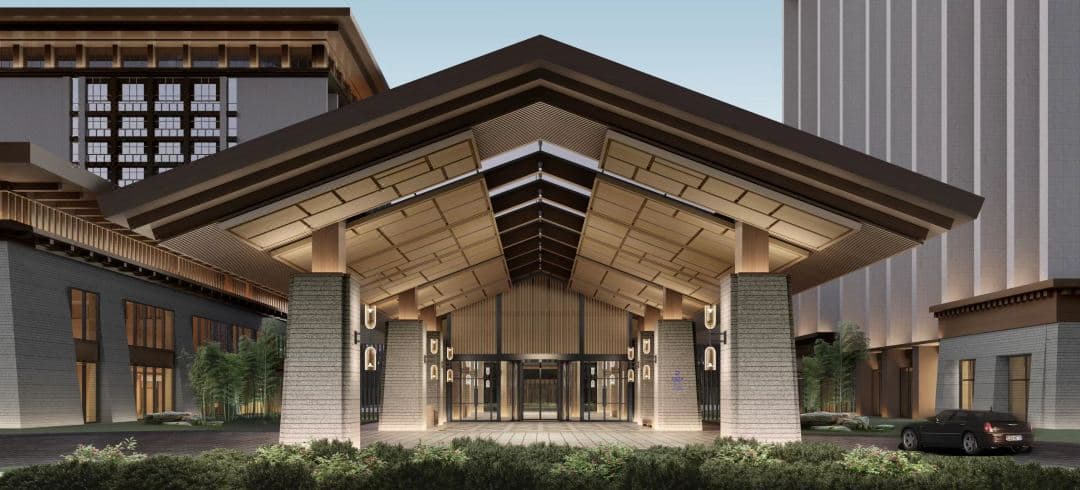
Jiuzhaigou’s hospitality landscape often screams for attention with faux-Tibetan grandiose and gilded excess. The Delta Hotels by Marriott, conversely, whispers. Situated in the gritty, authentic county town—a deliberate 50-minute remove from the frantic National Park entrance—this property champions a crisp, functional modernism that feels almost Scandinavian, were it not for the subtle Tibetan geometric motifs warming the lobby lounge. It is a calculated architectural pivot: sleek wood veneers and unadorned stone surfaces serve as a quiet canvas, allowing the visual weight of the surrounding limestone cliffs to define the guest experience. The rooms are vast (43sqm) and unapologetically contemporary. Eschewing the dark woods of traditional lodges, the design here is bright and airy. Opt for the Executive Panorama Balcony; the juxtaposition of 400-thread count crispness against the raw, jagged mountain air is a sensory delight. While the baffling strict no-crib policy and lack of a pool might deter families, the silence here is the true amenity. Dining is surprisingly robust for a remote outpost. While the Culture Pavilion offers a competent international buffet, the Deya Chinese Restaurant’s Yak Meat Hotpot is the standout—rich, gamey, and vital after a day at high altitude. Service is led by Duty Manager Tylor, whose hyper-personalized attention rivals luxury properties five times the price. The Delta isn't just a hotel; it's a sophisticated, stripped-back basecamp for the traveler who values design sanity over doorstep proximity.
“The underground parking lacks direct elevator access to the lobby. Drop your heavy Rimowa luggage at the main entrance before driving down.”
Insider TipAvg. Nightly Rate
57USD