No. 01
44 JABAL OMAR DEVELOPMENT MAKKAH SA 92254 Makkah6092 verified reviews
8
.8
Bitvoya Edit
Layering imagery, place, and detail before the page opens.
Makkah is undergoing a transformative renaissance, with the Jebel Omar district standing as the crown jewel of this modernization. This collection, 'The New Vanguard,' highlights the sophisticated evolution of hospitality adjacent to the Holy Haram. Properties like the Conrad Makkah and Address Jabal Omar Makkah are redefining the pilgrimage experience, blending spiritual proximity with uncompromising contemporary luxury.
Located just steps from the Ibrahim Al Khalil Road, these hotels offer more than just accommodation; they provide sanctuary. With the expansive Jebel Omar development, guests enjoy direct access to the Grand Mosque's piazza. Whether staying at the Hilton Hotel & Convention or the Hyatt Regency, visitors are immersed in an environment where architectural grandeur meets spiritual serenity.
Choosing to stay in the Jebel Omar district places you at the intersection of spiritual devotion and modern convenience. This area is the New Vanguard of Makkah's hospitality scene, meticulously designed to cater to the discerning pilgrim who seeks comfort without compromising on proximity to the Holy Haram. The hotels here, such as the Jabal Omar Marriott and Sheraton Makkah Jabal Al Kaaba, offer unparalleled views of the Kaaba and the city skyline, ensuring that your spiritual connection remains unbroken even while resting.
The Jebel Omar development is a city within a city, strategically located adjacent to the Haram courtyard.
Expect a seamless blend of tradition and technology. The "New Vanguard" hotels are equipped with state-of-the-art amenities, including in-room Haram audio systems, dedicated prayer halls with direct views, and rapid elevator systems designed to handle prayer time peaks.
Dining is a major highlight, with international chefs curating menus that range from local Hijazi delicacies to global cuisine, catering to the diverse palate of international pilgrims. Furthermore, the Address Jabal Omar Makkah sets a new standard for lifestyle luxury, offering wellness centers and business facilities that ensure every need is met with precision and grace. Whether for Hajj, Umrah, or a spiritual retreat, Jebel Omar defines the future of luxury in the Holy City.
Hotels like the Conrad Makkah, Hilton Hotel & Convention, and Jabal Omar Marriott offer specific rooms and suites with direct, unobstructed views of the Holy Kaaba and the Grand Mosque.
Most properties in the Jebel Omar development, such as the Hyatt Regency and Sheraton Makkah, are located within walking distance (often just a few minutes) to the King Fahad Gate and the Haram piazza.
Yes, hotels in this collection typically feature large, dedicated prayer halls that are audio-linked to the Haram, allowing guests to join the congregational prayers from the hotel.
Explore our complete curated list of luxury accommodations, from boutique hideaways to grand dames.
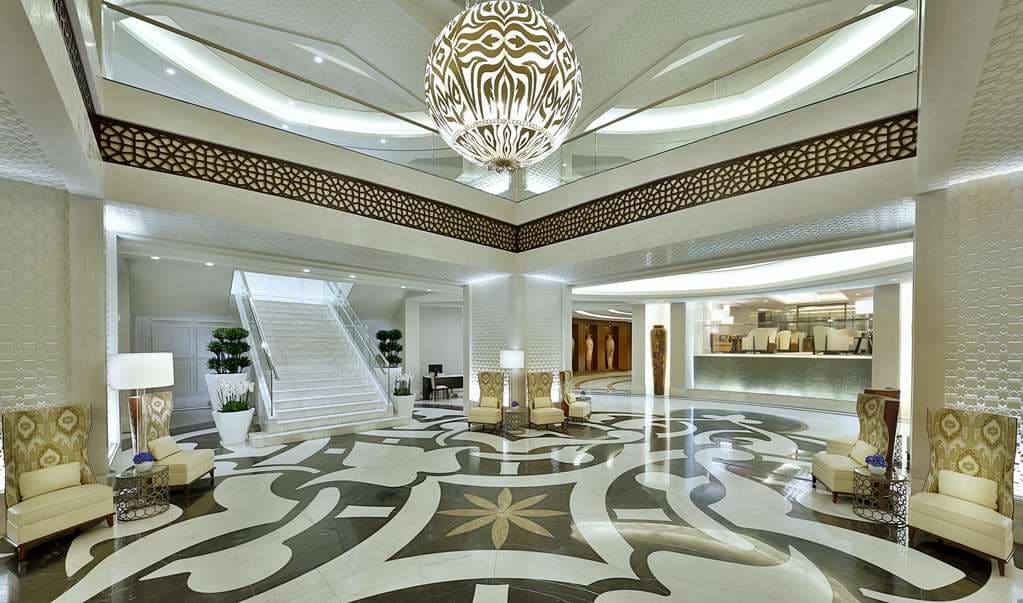
Explore All Makkah HotelsIf the Clock Tower complex is Makkah’s adrenaline-fueled heart, the Conrad is its deep, steadying breath. Perched in the Jebel Omar district, this property trades the frenetic elevator mosh pits of the Abraj Al Bait for a arrival experience that feels blissfully hushed. The distinction is immediate: you aren't fighting shoppers to get to the lobby. The draw here is sheer, unadulterated scale. Even entry-level rooms clock in at a massive 56 square meters—territory usually reserved for suites in this city. The aesthetic banishes the tired, gilded baroque often found in the Holy City for clean lines, muted taupes, and modern lattice work. While the Executive Lounge’s culinary offerings can feel sparse, the on-site steakhouse, Prime, provides a necessary reprieve from buffet fatigue with genuinely excellent grilled cuts. Service is the wildcard—occasionally brilliant, sometimes breathless—but the operational friction is minor compared to the luxury of space. For pilgrims seeking a sanctuary that respects the gravity of the journey without adding to the physical toll, the Conrad remains the district's most dignified address.
“Skip the standard Haram View request and ask specifically for a high-floor room in Tower 2 facing Gate 79. You'll get a direct line of sight to the minarets and a quicker exit route for prayers.”
Insider TipAvg. Nightly Rate
103USD
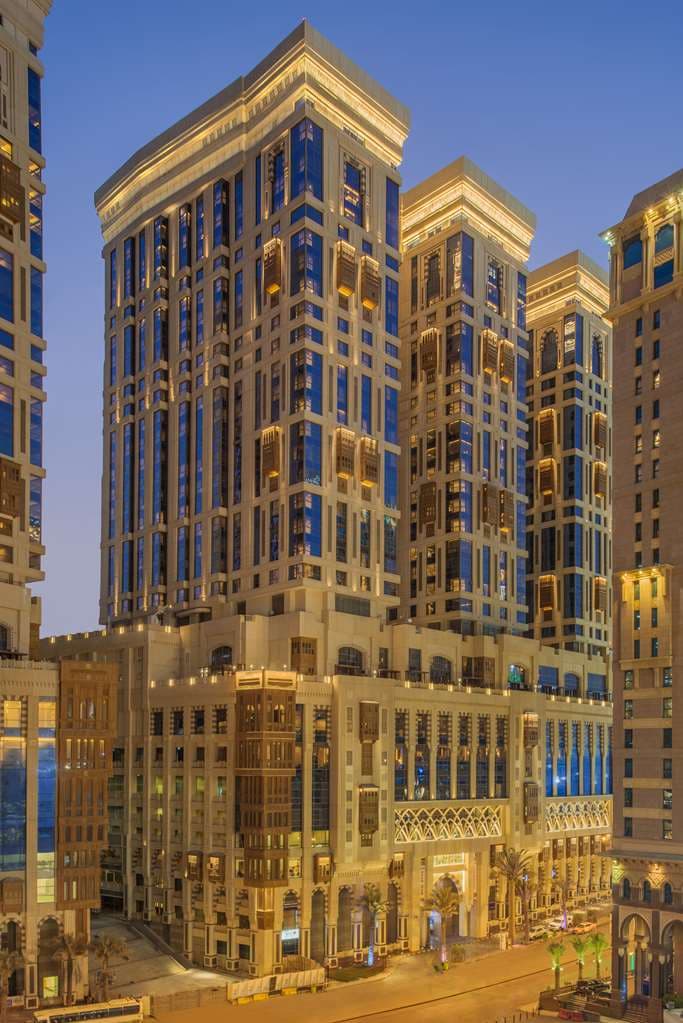
In the sprawling, often chaotic tapestry of Makkah’s hospitality, the Jabal Omar Hyatt Regency stands as a masterclass in logistical elegance. Located in the heart of the Jebel Omar complex, its primary currency is time: you are exactly one minute from the King Fahad Gate (Gate 79), a proximity that transforms the arduous pilgrimage experience into something manageable, almost fluid. The aesthetic here eschews the heavy, old-world ornamentation often found in the region for sharp lines and crystal-clear functionality. Standard rooms, while compact at 38 square meters, are triumphs of ergonomic design, featuring 400-thread count linens and floor-to-ceiling soundproofing that dulls the construction hum of the developing city. Culinary offerings are surprisingly robust for a high-volume property. Skip the generic international fare and head straight to 'The Oasis' for their signature Lamb Kabsa, a fragrant, slow-cooked restoration after Isha prayers. For a European detour, 'Al Forno' delivers a credible Pollo Picante Pizza that rivals upscale bistrots in Jeddah. While the men-only spa with its Technogym facilities offers a necessary respite, the real luxury here is the direct elevator access to Souk Al Khalil, allowing you to bypass the mid-day sun entirely. It is not the most opulent hotel in the Holy City, but it is arguably the most intelligent.
“Book a 'Club' room on the 18th floor or higher. While lounge access is standard, the elevation grants a clearer acoustic connection to the Haram's adhan without the street-level roar.”
Insider TipAvg. Nightly Rate
148USD
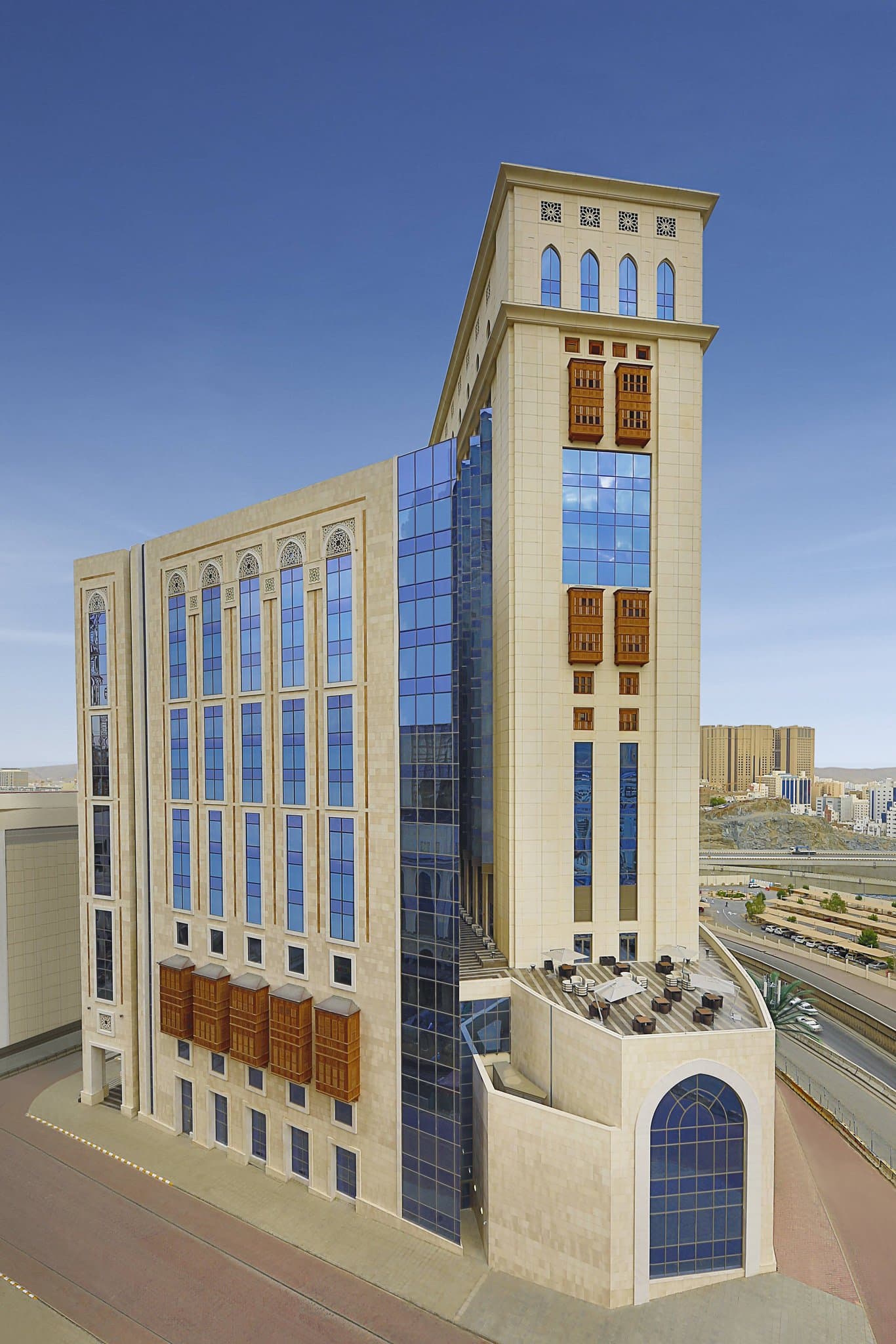
It is a steep climb—literally—to the Jabal Omar Marriott, but the altitude grants a rare commodity in Makkah: perspective. While the front-row five-stars trade on chaotic proximity, this property trades on sanity. The lobby avoids the frenetic energy of the clock tower complex, replacing it with polished marble and a hushed, efficient hum. Rooms are exercises in restraint; request a Panoramic Room where intricate Musherbia windows frame the Kaaba like a living portrait, offering a spiritual connection without the sonic bleed of the crowds. Dining is utilitarian but elevated. Bypass the standard continental spread and head straight for the 'Spice Market', where the signature beef curry and biryani offer a heat-packed homage to the subcontinent that cuts through the fatigue of Umrah. Afterward, 'Olive' serves a robust Arabic coffee that pairs sharply with dawn prayers. The real currency here, however, is the transport. While others battle pedestrian gridlock, the Marriott’s private fleet of golf carts runs on a militant 2-3 minute loop, depositing you closer to the Haram than some 'walking distance' rivals. It isn’t the most opulent address in the district, but for the pilgrim seeking focus over gold-leaf excess, it is arguably the smartest.
“Book a Panoramic Room specifically for the 'Musherbia' window—it creates a silhouette of the Kaaba perfect for contemplation (and photography) without the glare.”
Insider TipAvg. Nightly Rate
101USD

Makkah is an exercise in intensity—a sensory overload of devotion and density. The Address Jabal Omar, however, is the antidote. Designed by Foster & Partners, this twin-towered monolith cuts a sharp, hyper-contemporary silhouette against the Jebel Omar skyline, signalling a new era for the Holy City. The real flex here isn’t just the thread count; it’s the Sky Musallah. Suspended 483 meters above sea level between the two towers, this prayer room holds a Guinness World Record and offers a vantage point of the Holy Kaaba so direct it feels almost illicit. Inside the rooms, the chaos of the pilgrimage dissolves into cool greys, floor-to-ceiling glass, and the hotel’s signature Oud fragrance which permeates the lobby like a heavy, expensive veil. Dining steers clear of the usual international buffet fatigue. At 'The Restaurant,' the Hejazi lamb is a masterclass in slow-cooked tenderness, grounding the lofty experience in local tradition. Service is swift—a non-negotiable when you’re timing your exit for the Fajr prayer via the 24/7 shuttle. For the modern pilgrim who demands silence as much as spirituality, this is the new benchmark.
“Skip the main elevators during post-prayer rush. Instead, head to the 'Sky Musallah' bridge on Level 36 an hour before sunset for a solitary, golden-hour view of the Haram.”
Insider TipAvg. Nightly Rate
181USD
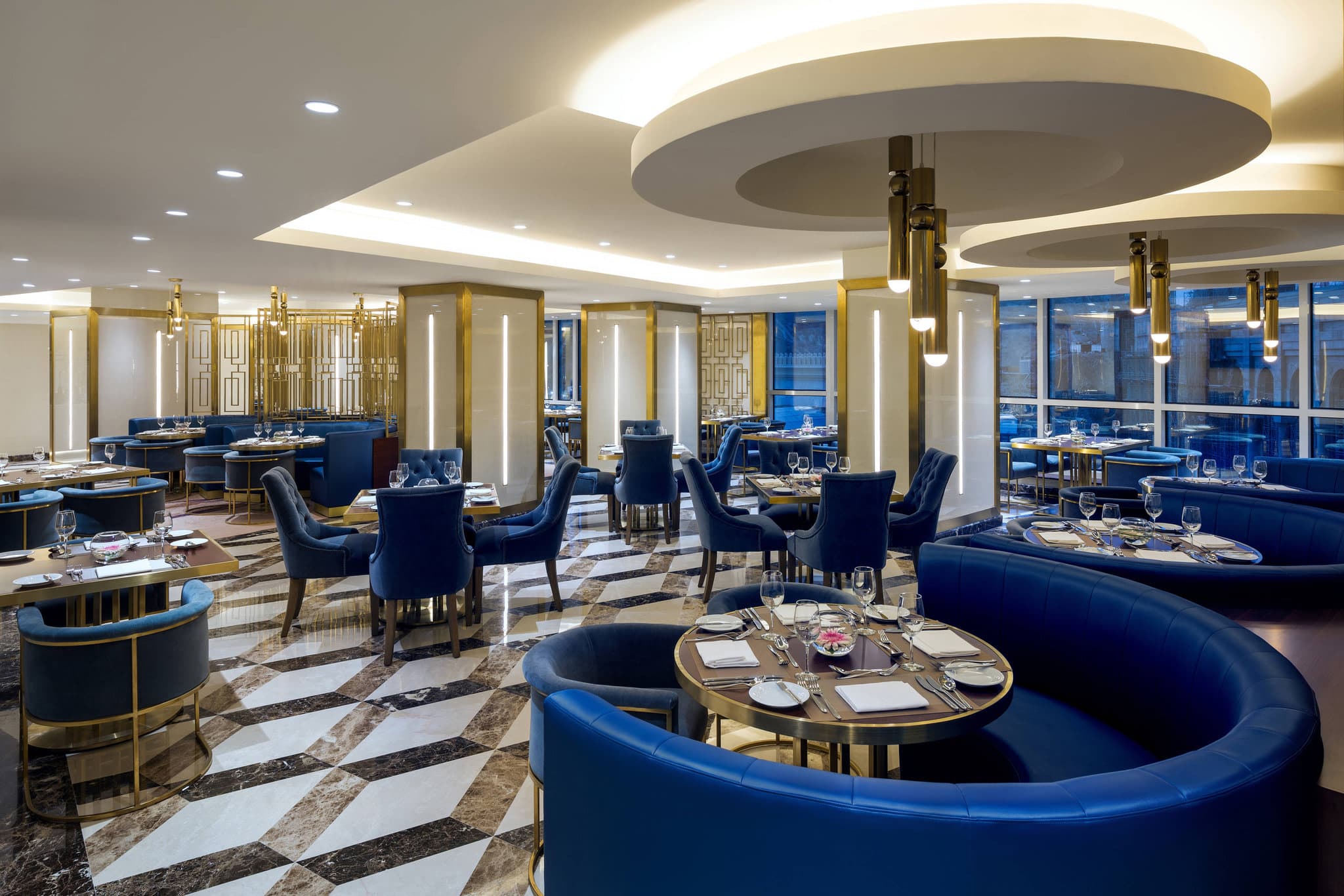
While the Abraj Al Bait (Clock Tower) dominates the skyline with its frenetic commercial energy, the Sheraton Makkah Jabal Al Kaaba plays a sophisticated counter-melody. Anchored in the expanding Jebel Omar district, this property trades the dense elevator queues of its neighbors for a streamlined, marble-clad efficiency. It’s a deliberate architectural pivot: modern, airy, and mercifully detached from the street-level scrum. The draw here isn't gold-leaf excess, but logistical supremacy. The hotel’s private pedestrian bridge connects directly to the Haram expansion, offering a VIP fast-track to prayer that feels like a cheat code during peak Hajj seasons (though check its operational hours, as expansion works can occasionally close it). Inside, the focus shifts from spiritual rush to culinary comfort. Skip the standard buffet for the *Asia Restaurant*, where the signature Lamb Rendang and Singapore Noodles bring genuine Southeast Asian heat, a welcome break from generic hotel continental. There is no pool or gym—a bold omission that frankly declares, "You aren't here for cardio." Instead, the luxury lies in the *Chocolate Lounge*’s French pastries and the award-winning service; the team recently snagged a 2024 Hotelier Saudi Award for safety excellence, ensuring your sanctuary remains exactly that. It is the thinking pilgrim’s choice: close enough to hear the Adhan, far enough to breathe.
“Traffic restrictions often block taxis from the front door during prayer times. If the pedestrian bridge is closed, the hill is steep—call ahead to the concierge to arrange luggage assistance effectively.”
Insider TipAvg. Nightly Rate
147USD
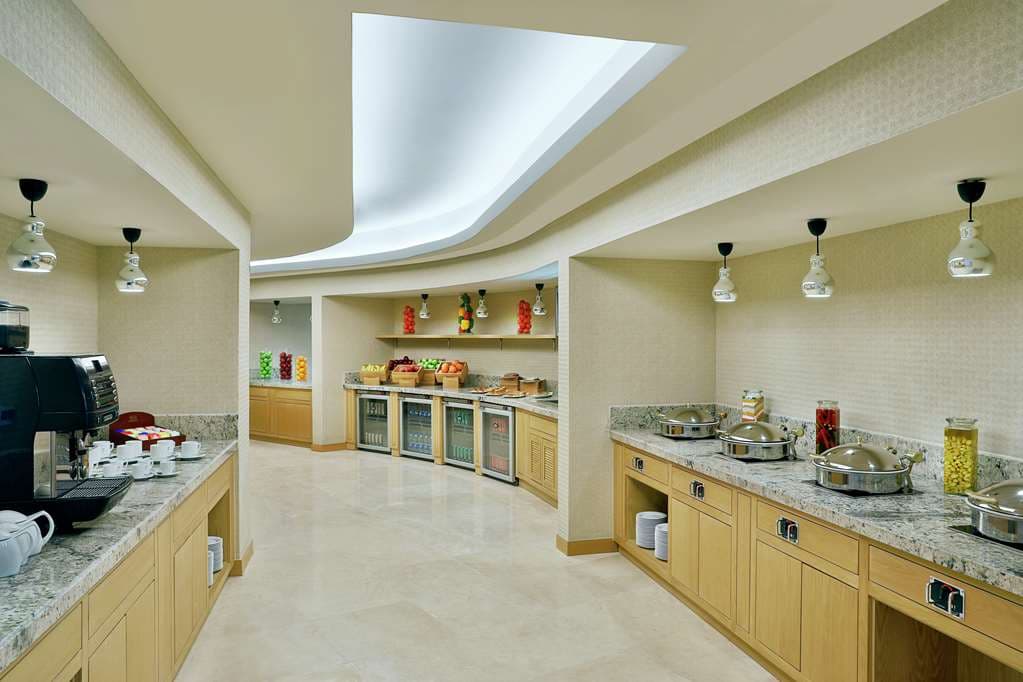
While the older Clock Tower hotels rely on sheer vertical dominance, the Hilton Hotel & Convention Jabal Omar offers a more calculated form of luxury. The arrival is a literal ascent—a notoriously steep incline that separates the devoted from the merely curious—leading into a lobby where massive Barovier & Toso chandeliers float like illuminated clouds, signaling a shift from the street-level frenzy to polished calm. This is not a resort; the absence of a pool or spa is a deliberate design choice, directing all focus outward. The true amenity here is the view. Rooms ending in -01 or -02 function less like accommodation and more like private viewing galleries, framing the Holy Kaaba with a precision that feels almost architectural. Dining avoids the generic international buffet trap; Sahtein’s Lebanese menu features a Kunafa with cream that provides a necessary post-Umrah sugar rush, while Azure delivers herb-infused biryanis that punch well above standard hotel fare. It is a machine for pilgrimage—efficient, vast, and occasionally imposing—but for Hilton Honors members, the Executive Lounge’s full dinner service remains the most valuable sanctuary in Makkah.
“Request a room ending in -01 or -02 for the direct Kaaba line of sight. Also, the hill at the entrance is steep; use the hotel's shuttle or golf carts if traveling with elderly family.”
Insider TipAvg. Nightly Rate
175USD

While the Abraj Al Bait complex leans into vertical excess, the Makkah Hotel remains the stoic, marble-clad matriarch of the Haram piazza. It doesn't need to shout; its location speaks in hushed, reverent tones—anchored directly at the threshold of the King Fahad Gate, effectively serving as an extension of the mosque itself. There is an undeniable 'old money' weight to the interiors here; think heavy crystal chandeliers and acres of polished stone that feel reassuringly permanent rather than fleetingly trendy. The rooms, though bearing the architectural footprint of an earlier era, are vast, with window seats that frame the Kaaba like a living portrait. But the real currency here is the logistics of worship: panoramic glass elevators drop you seconds from the prayer mats, bypassing the labyrinthine malls of neighboring districts. Dining is a serious affair at Lagenda, where the Saudi Kabsa is slow-cooked with a depth of spice that betrays a kitchen team who has been here for decades. It’s not about the newest tech; it’s about the seamless, almost telepathic service that anticipates the pilgrim’s exhaustion.
“Skip the crowded main lifts immediately after Isha prayer. Instead, book a session at the Reflexology Health Centre on the 4th floor—their specialized foot treatments are a non-negotiable salvage for feet battered by Tawaf.”
Insider TipAvg. Nightly Rate
169USD

In a city defined by density, Anjum Hotel Makkah plays a different card: sheer, unadulterated volume. While the clock tower hotels trade on verticality, Anjum—perched in the Jabal Al Kaaba district—offers a horizontal exhale. The lobby is a colossal expanse of marble and Andalusian arches that swallows the noise of 1,700+ rooms, a necessary buffer from the frenetic energy outside. The rooms are utilitarian luxury, free of unnecessary frills but equipped with the essentials that matter: plush prayer mats, blackout drapes, and for those in the 'Haram View' categories, window bays that frame the minarets like a living portrait. Dining here avoids the generic international trap. At Um Al Qura, the Indonesian buffet is the real draw, offering authentic spice over bland continental options, while Al Hijaz delivers a proper Egyptian-style foul and falafel that rivals street-side vendors. The hotel’s ace card, however, is the private air-conditioned tunnel. It bypasses the gridlocked surface traffic, delivering you to the King Abdullah Gate in five minutes flat. Yes, the elevators can feel like a metro station during post-prayer rush, but the staff manage the flow with military precision. It’s not intimate, but it’s ruthlessly efficient.
“Skip the lobby coffee rush and head to Al Shubaikah Café for the 'Vitality Smoothie'—a blend of dates, milk, and cashews that powers you through Umrah rites better than espresso.”
Insider TipAvg. Nightly Rate
115USD