No. 01
Via Manzoni 31 MILAN Italy 20121Milan381 verified reviews
9
.0
Bitvoya Edit
Layering imagery, place, and detail before the page opens.
Milan is a city where history and modernity engage in a constant, elegant dialogue, nowhere more audible than in the cobbled streets of the Brera district. Known as the artistic heart of the city, Brera offers a bohemian atmosphere distinct from the polished commercialism of the nearby Quadrilatero della Moda. Yet, within this enclave of antique shops, art academies, and the iconic Pinacoteca, lies a collection of hospitality masterpieces. From the sophisticated Casa Brera to the opulent stylings of the Bulgari Hotel Milano, these properties are not merely places to sleep but immersive design experiences. This curated selection highlights hotels that embody the quintessential Milanese flair—combining structural innovation with timeless Italian craftsmanship to create sanctuaries of style in the city's most romantic neighborhood.
Milan is the global capital of design, and the Brera district is its soulful workshop. Choosing a hotel here means immersing yourself in a living museum where the lines between hospitality, fashion, and art blur. The properties in our curated list, such as the Grand Hotel et de Milan and the Armani Hotel Milano, are not just situated in the city; they are integral parts of its design heritage. Travelers choose this collection to experience the "Salotto di Milano" (Milan's Living Room) lifestyle, where high ceilings, velvet furnishings, and private courtyards provide a respite from the bustling city center.
When booking one of these masterpieces, expect a convergence of historic architecture and contemporary interior design. Many of these hotels, such as Galleria Vik Milano, function as private art galleries, featuring site-specific installations and murals. Expect impeccable service, world-class spas (a highlight at Palazzo Parigi), and dining experiences that rival the city's Michelin-starred restaurants. Whether it is the sleek minimalism of Armani or the lush, garden-centric luxury of the Bulgari Hotel Milano, the expectation is perfection in every detail.
The Brera district is the top choice for design lovers, offering a bohemian atmosphere, art galleries like the Pinacoteca, and proximity to luxury design hotels like Casa Brera.
Yes, properties like Armani Hotel Milano and Mandarin Oriental are located within or immediately adjacent to the Quadrilatero della Moda, Milan's premier fashion district.
The Bulgari Hotel Milano is renowned for its exclusive private garden, a rare green oasis of tranquility in the heart of Milan near the Brera district.
Explore our complete curated list of luxury accommodations, from boutique hideaways to grand dames.
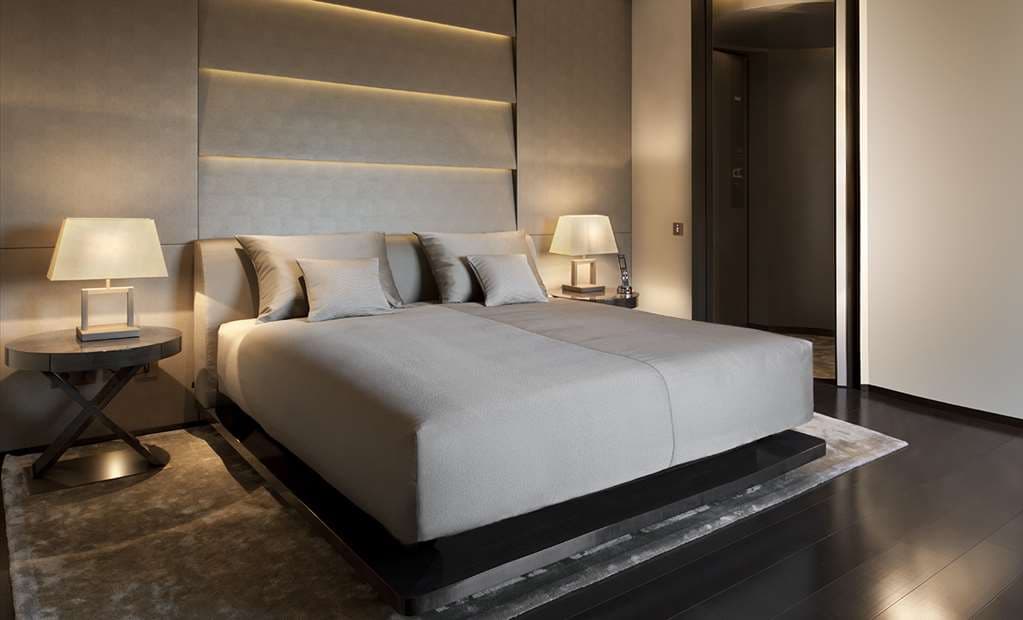
Explore All Milan HotelsIf Milan is the capital of fashion, this hotel is its tailored suit—immaculate, severe, and undeniably expensive. Located in a rationalist palazzo on Via Manzoni, the Armani Hotel Milano is not merely a place to sleep; it is a total immersion into Giorgio Armani’s psyche. There are no 'accents' here, only a rigorous palette of pearl-grey, limestone, and muted gold. The check-in is an ascent to the seventh floor, a clever architectural move that lifts you above the city's frenzy into a zen-like glass box. The rooms are studies in restraint, devoid of handles or clutter, where walls curve silently and every light, drape, and service request is orchestrated via a bespoke iPad. It feels less like a hotel room and more like the cabin of a futuristic yacht. Dining at Armani/Ristorante is equally precise; order the Gambero Rosso di Mazara, which arrives looking more like a jewel than a crustacean, followed by the signature saffron risotto that tastes of pure Milanese gold. Service is efficient, though occasionally cool—matching the aesthetic perfectly. This is not a cozy 'home away from home'; it is a temple of design for those who find comfort in perfection.
“Book a table at the Armani/Bamboo Bar just before sunset. The backlit onyx walls glow amber as the light fades, offering the city’s most cinematic aperitivo backdrop.”
Insider TipAvg. Nightly Rate
671USD
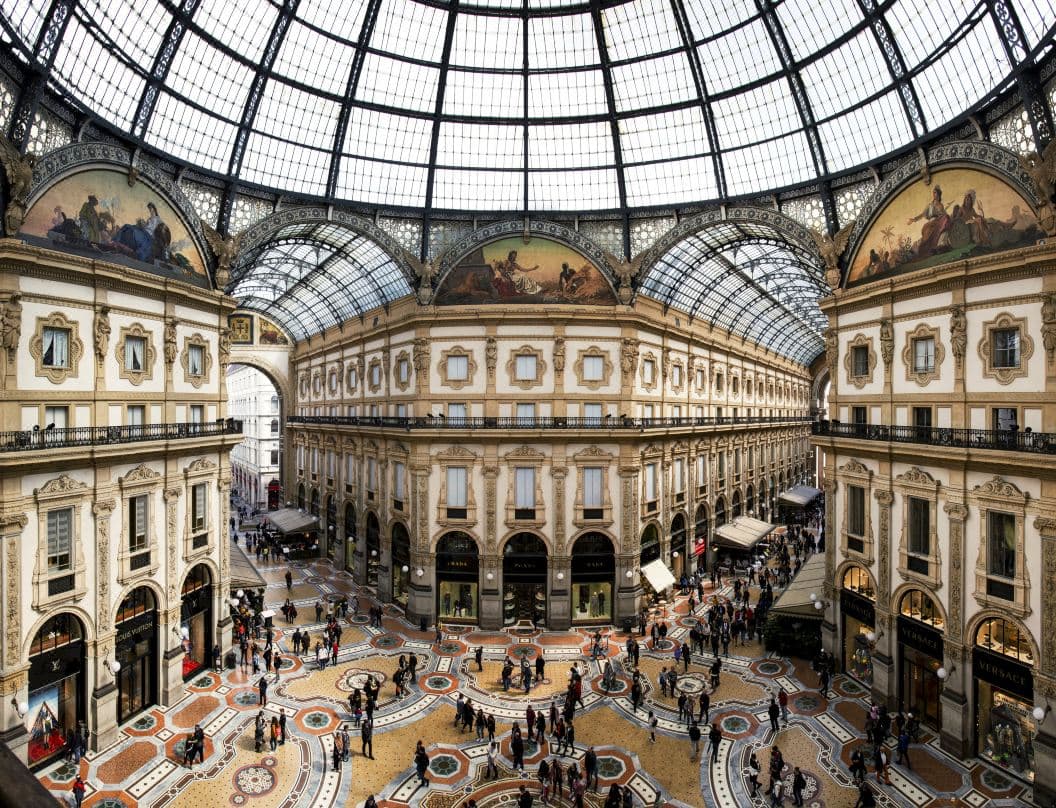
Forget the hushed, beige reverence typical of Milanese luxury. Galleria Vik is a riotous, voyeuristic intervention directly inside the Galleria Vittorio Emanuele II. It feels less like a hotel and more like crashing a surrealist gallery after hours. The 89 rooms are devoid of televisions but saturated with site-specific murals—stucco walls dripping with color and controversial "glass-box" bathrooms that treat privacy as a mere suggestion (exhibitionists will thrive; shy types may struggle). Breakfast at **Vik Pellico Otto** offers a view of the octagon’s dome so close you could almost touch the frescoes, though the *veal ossobuco* fights for attention against the acoustic energy of the crowds below. For a more clandestine affair, slip away to **I Dodici Gatti**, the rooftop pizzeria named for the Galleria’s stray cats, where the wood-fired Neapolitan pies offer a chewy, smoky reprieve from the avant-garde intensity downstairs. Service is surprisingly warm—specifically the star staff members who navigate the chaos with grace—but bring earplugs; the heartbeat of Milan is loud here.
“Skip the main restaurant for a casual lunch and find the discreet entrance to **I Dodici Gatti** under the eaves; the hemp flour gnocchi is a rare, earthy triumph.”
Insider TipAvg. Nightly Rate
255USD
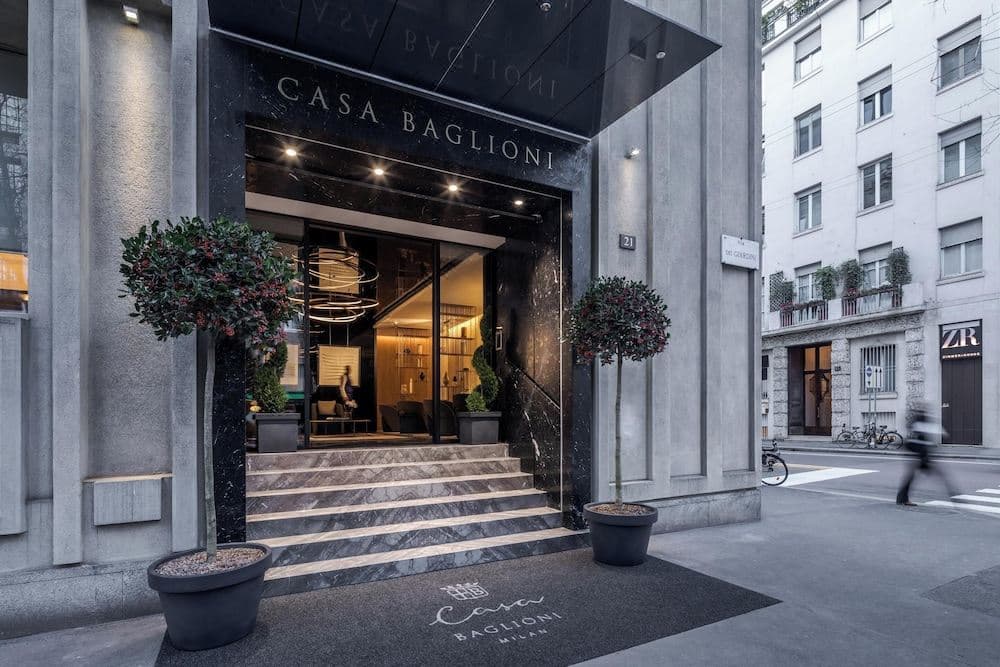
If the Brera district had a private living room—and its owner had impeccable taste and a penchant for the 1960s avant-garde—it would be Casa Baglioni. Eschewing the generic 'luxury beige' that plagues modern hospitality, this property is a sharp, curatorial dive into the Spatialist movement. The lobby feels less like a check-in station and more like a collector’s apartment, anchored by geometric neon Panzeri chandeliers and custom Spotti Milano seating that demands good posture. The 30 rooms are exercises in high-gloss Italian craftsmanship. While the commitment to form occasionally bullies function—the complex electronic lighting controls require a steep learning curve, and the stiff faucets can be a wrestle—one forgives these quirks when wrapped in the absolute silence of the soundproofing and 400-thread count linens. In-suite 'Cromie Domestiche' ceramic vases add a layer of residential intimacy that standard hotels miss. Downstairs, the Michelin-starred Sadler restaurant offers a masterclass in modern plating. Order the signature 'Fogliette di polpo' (octopus sheets) to see seafood treated like stained glass. It is not perfect, but it is undeniably cool, a distinct personality in a city often crowded with corporate hospitality. Verdict: A triumph for the design-obsessed who prefer character over cookie-cutter convenience.
“Skip the main dining room one evening and head to the Casa Baglioni Rooftop. The chef-designed seasonal aperitifs are substantial enough to be a light dinner, and the sunset views over Brera’s terracotta roofs are unmatched.”
Insider TipAvg. Nightly Rate
715USD
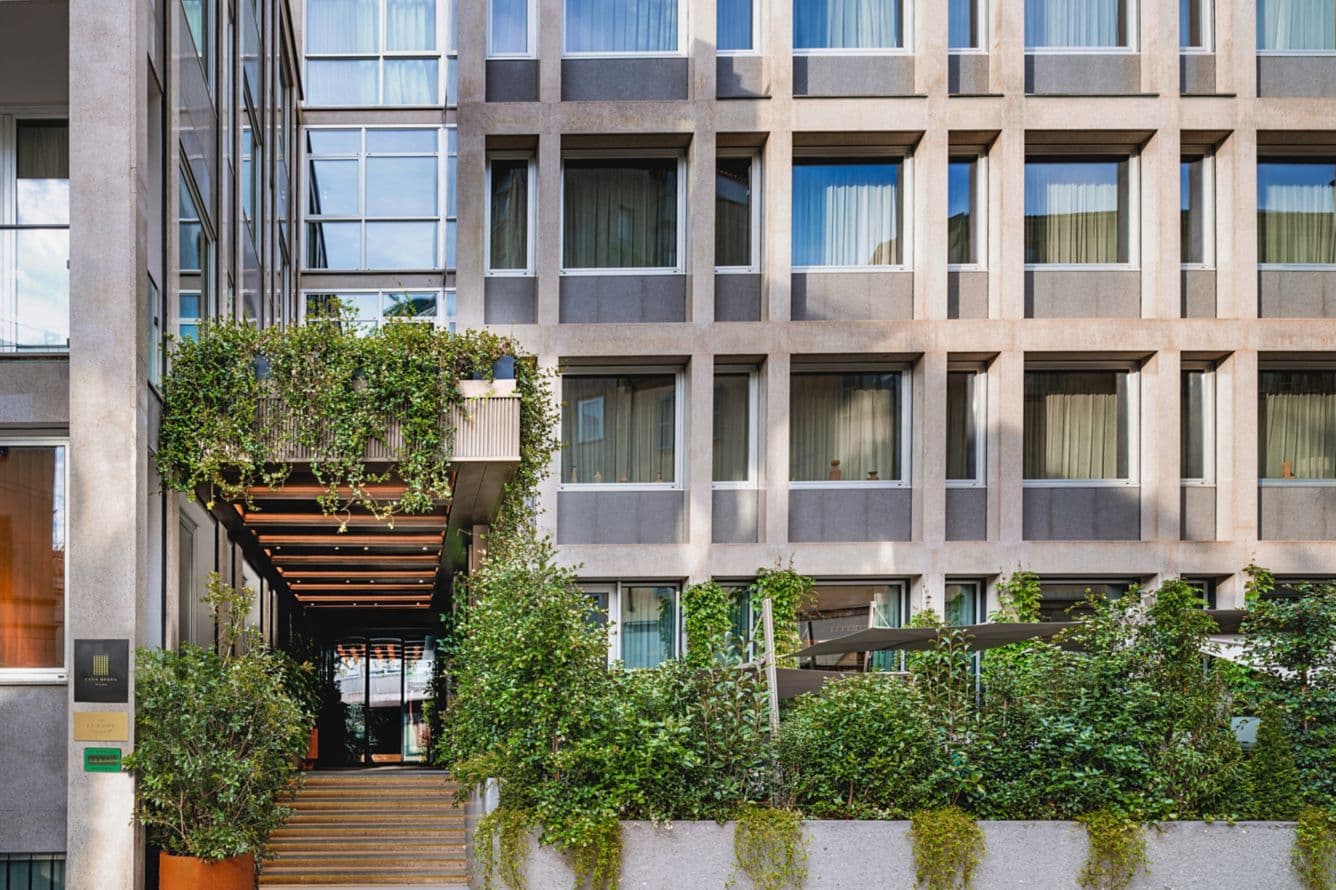
Milan often hides its best self behind heavy wooden doors, but Casa Brera, a fresh addition to The Luxury Collection, takes a bolder approach in the pedestrian Piazzetta Bossi. Here, design doyenne Patricia Urquiola has engaged in a fascinating dialogue with Pietro Lingeri’s rigorous 1950s Rationalist architecture. The result isn't just a renovation; it’s a softening of industrial edges with a masterclass in contemporary fluidity and tactile luxury. The ground floor Living Lounge, anchored by a monumental Green Marble Bar and whimsical Tim Walker photography, immediately establishes a vibe that is intimidatingly chic yet inviting. Upstairs, the rooms reject the beige neutrality of corporate travel. Instead, expect Urquiola’s signature "happy minimalism"—terracotta hues, custom Italian joinery, and 400-thread count linens that feel substantial. While the bathrooms feature deep soaking tubs and Le Labo amenities that effectively apologize for the absence of a dedicated spa complex, the closet space in entry-level rooms is punishingly "European"—designed for a capsule wardrobe, not a Fashion Week trunk. Culinary programming is ambitious. While *Scena* delivers competent Risotto alla Milanese, the real standout is *Odachi*, where the Wagyu Sarada provides a sharp, textural break from the city's carbohydrate hegemony. However, the property's crown jewel is the eighth floor. In a city notoriously stingy with rooftop pools, *Etereo* offers a heated perch with 360-degree views of the Duomo spires that feel almost illicit. Service still shows occasional opening-jitters—a delayed espresso here, a confused towel runner there—but the hardware is flawless. This is the ideal sanctuary for the traveler who wants La Scala at their doorstep but demands the acoustic isolation of a bank vault.
“Book a table at Odachi specifically for the Omakase counter; it offers a level of privacy the main dining room lacks. Also, the rooftop pool is heated, making it viable even in Milan's gray shoulder seasons.”
Insider TipAvg. Nightly Rate
830USD
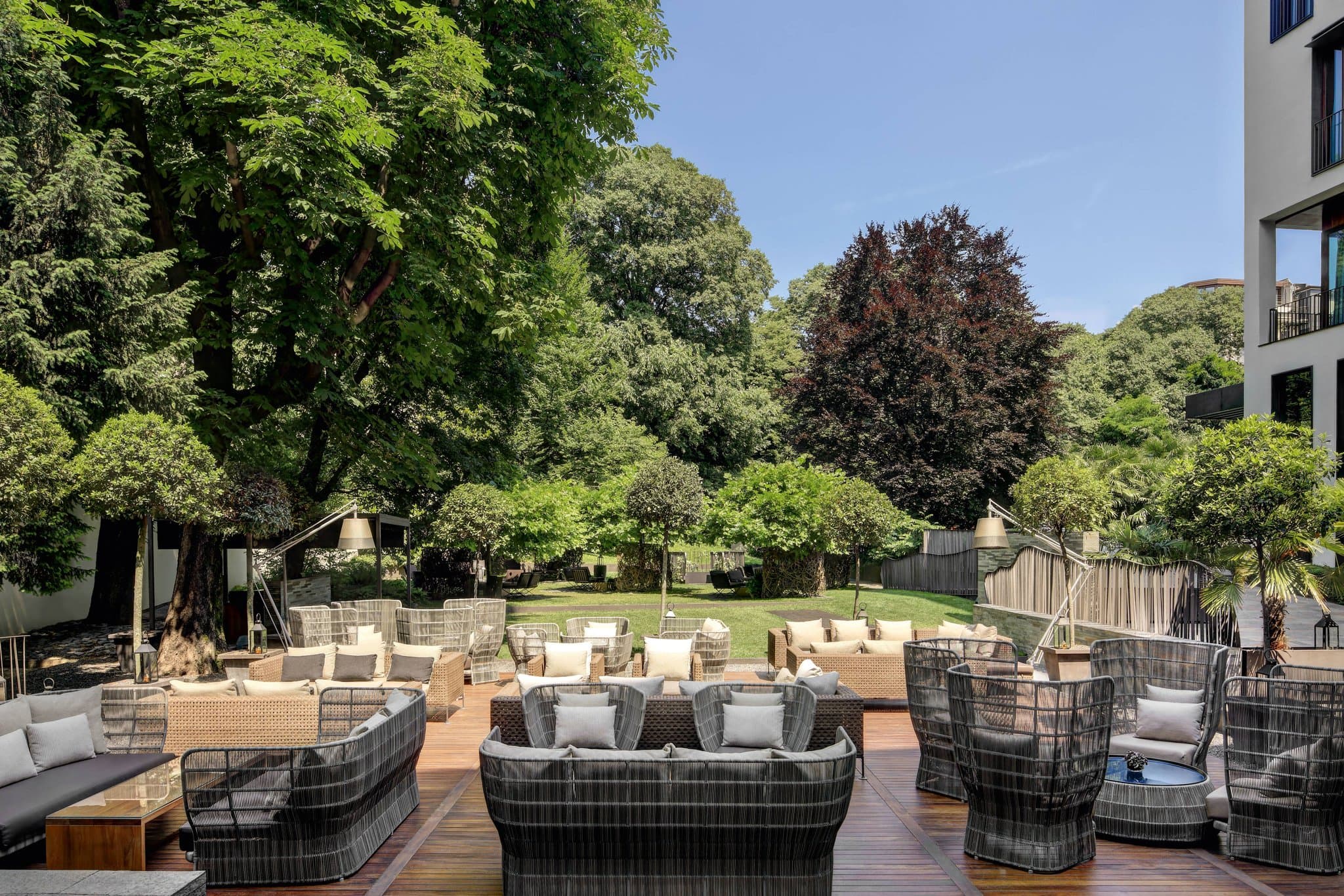
In a city that usually screams for attention, the Bulgari Hotel Milano whispers. Sequestered at the end of a private cul-de-sac in the Brera district, this Antonio Citterio-designed compound operates with the hushed confidence of a private members’ club. The aesthetic is severe, expensive, and utterly timeless: a rigorous study in black Zimbabwe granite, Burmese teak, and bronze that feels more like a billionaire’s bunker than a hospitality venue. The 58 rooms reject the typical Milanese velvet-heavy palette for a cleaner, brighter minimalism. Expect luminous bathrooms wrapped in Navona travertine, sliding oak panels to partition the space, and walk-in wardrobes designed for serious fashion week hauls. Housekeeping operates with ninja-like precision, leaving thermos flasks of herbal tea and immaculate amenities at turndown—a specific, comforting ritual that grounds the high-octane luxury. While the subterranean spa with its gold-leaf and emerald mosaic pool is a mandatory visit (recently awarded Two Michelin Keys for the hotel's overall excellence), the property’s beating heart is the 4,000-square-meter private garden—a rarity in this concrete metropolis. Here, the social scene peaks during aperitivo hour at the oval Black Resin Bar. Order the signature Bulgari Cocktail and Chef Niko Romito’s almost mathematically perfect Veal Milanese. It is fierce, expensive, and the crowd is intimidatingly chic, but the silence—that rare, golden commodity in Milan—is worth every Euro.
“Book a spa treatment with the new Augustinus Bader line, but arrive 45 minutes early—the emerald mosaic pool is often empty around 4:00 PM.”
Insider TipAvg. Nightly Rate
1700USD
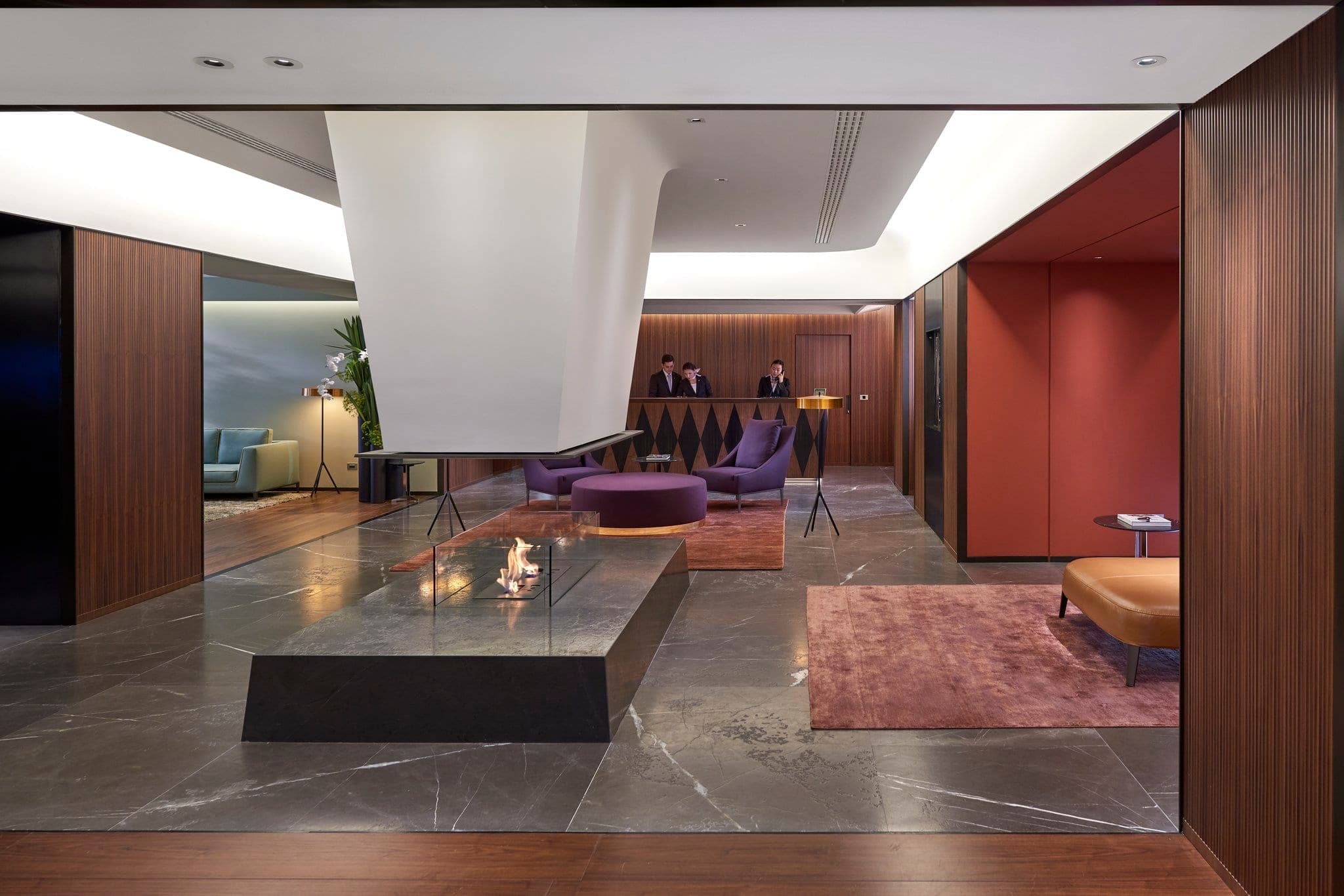
If the Duomo is Milan’s shouting voice, the Mandarin Oriental is its confident whisper. Hidden behind an unassuming entrance on Via Andegari, this conversion of four 18th-century tax collectors’ palazzos is a triumph of Antonio Citterio and Patricia Viel’s design. It bridges the gap between the corporate Golden Quadrangle and the artistic soul of Brera with a residential Rationalism that feels less like a hotel and more like the home of a very wealthy, very private Milanese friend. The interiors eschew gilt for geometry. In the Mandarin Garden, a black-and-white mosaic floor nods to Gio Ponti, grounding emerald velvet sofas where fashion editors trade gossip over Negronis. Upstairs, the 104 rooms feature wheat-colored oak parquet and custom Italian joinery. The bathrooms are marble monoliths, equipped with Dyson Supersonic dryers and Biologique Recherche amenities—details that matter to this clientele. The culinary anchor is Seta. Here, in a courtyard framed by climbing ivy, Chef Antonio Guida defends his two Michelin stars with dishes like the risotto with raspberry and herb cream—a plate that balances acidity and creaminess with architectural precision. Below ground, the 900-square-meter spa offers a rare commodity in this frenetic city: silence. The heated indoor lap pool, glowing under Feng Shui-approved arches, is the perfect antidote to a day at La Scala. This is not a hotel for the flash-packer; it is a sanctuary for the insider.
“Book a table in the Seta courtyard (specifically table 10 if available) for the most atmospheric dinner in Milan, and ask the concierge to unlock the private door that leads directly onto Via Monte di Pietà for a stealthy exit.”
Insider TipAvg. Nightly Rate
1200USD
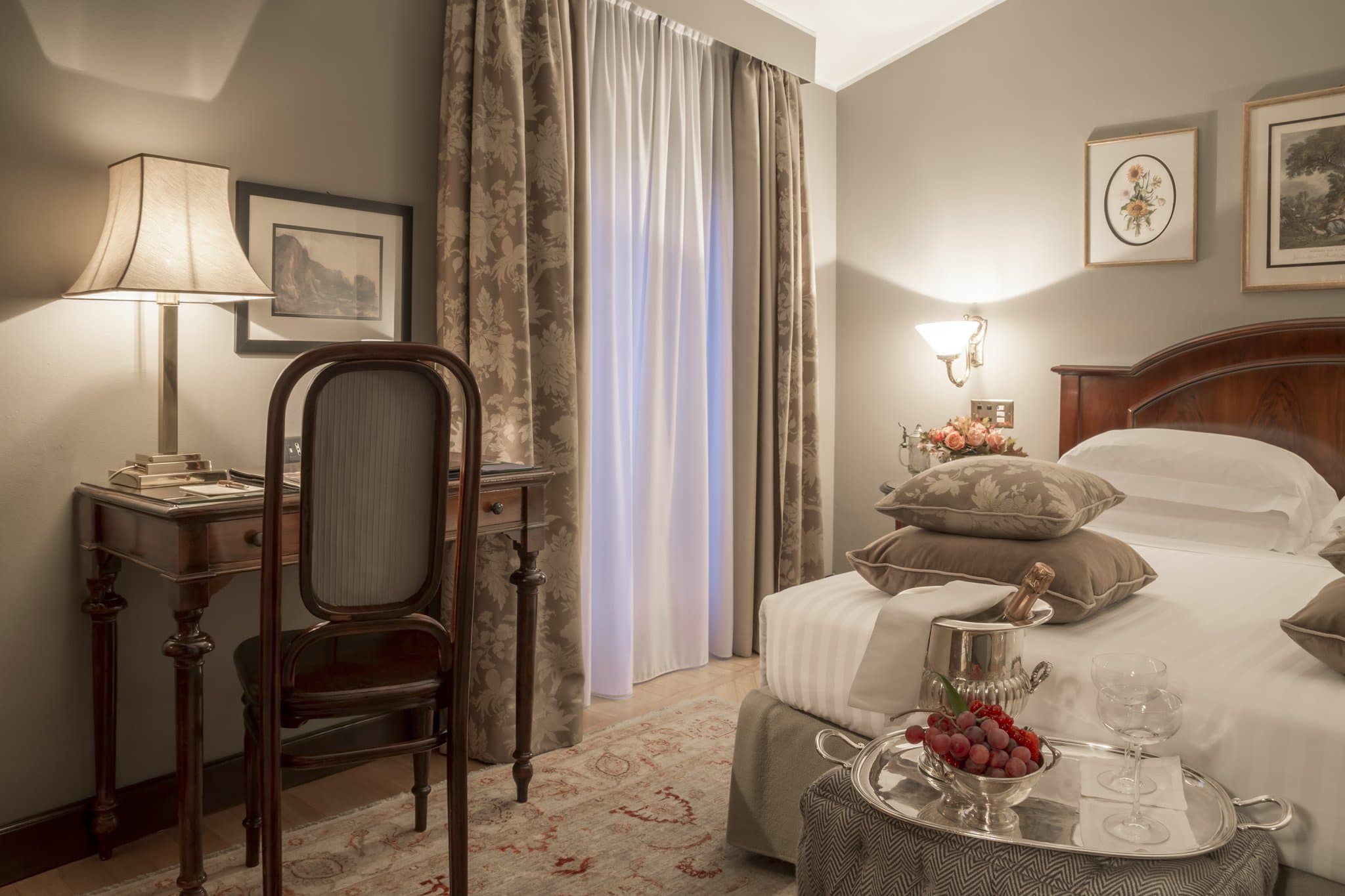
If the nearby Armani Hotel is a study in beige restraint, the Grand Hotel et de Milan is a riot of operatic excess. This isn’t a place for digital nomads seeking co-working pods; it is a 19th-century aristocratic residence that happens to accept room service orders. Anchoring the corner of Via Manzoni, the property feels less like a hotel and more like the private estate of an eccentric countess. The lobby is a brooding masterpiece of wrought-iron staircases and heavy fabrics, a stark contrast to the district’s sleek showrooms. Rooms here reject the sterile 'international luxury' aesthetic in favor of period antiques and parquet floors that creak with history. In Suite 105, Giuseppe Verdi’s desk still stands, a tangible link to the hotel’s bohemian heritage. While the lack of a swimming pool or sprawling spa might deter the wellness set, the hotel counters with 'Don Carlos,' where the Risotto alla milanese with veal marrow is rich enough to replace any facial. Evenings belong to Gerry’s Bar, where fashion editors sink into ochre velvet sofas to nurse a 'Mr. Bergman' cocktail under the glass skylight. Yes, the street-facing rooms rumble with the traffic of Via Manzoni, but that is simply the sound of Milan’s heartbeat. This is a hotel for those who prefer character over clinical perfection.
“Request a courtyard-facing room to escape the Via Manzoni traffic noise, or book Suite 105 to work at the actual desk where Verdi composed 'Othello'.”
Insider TipAvg. Nightly Rate
784USD
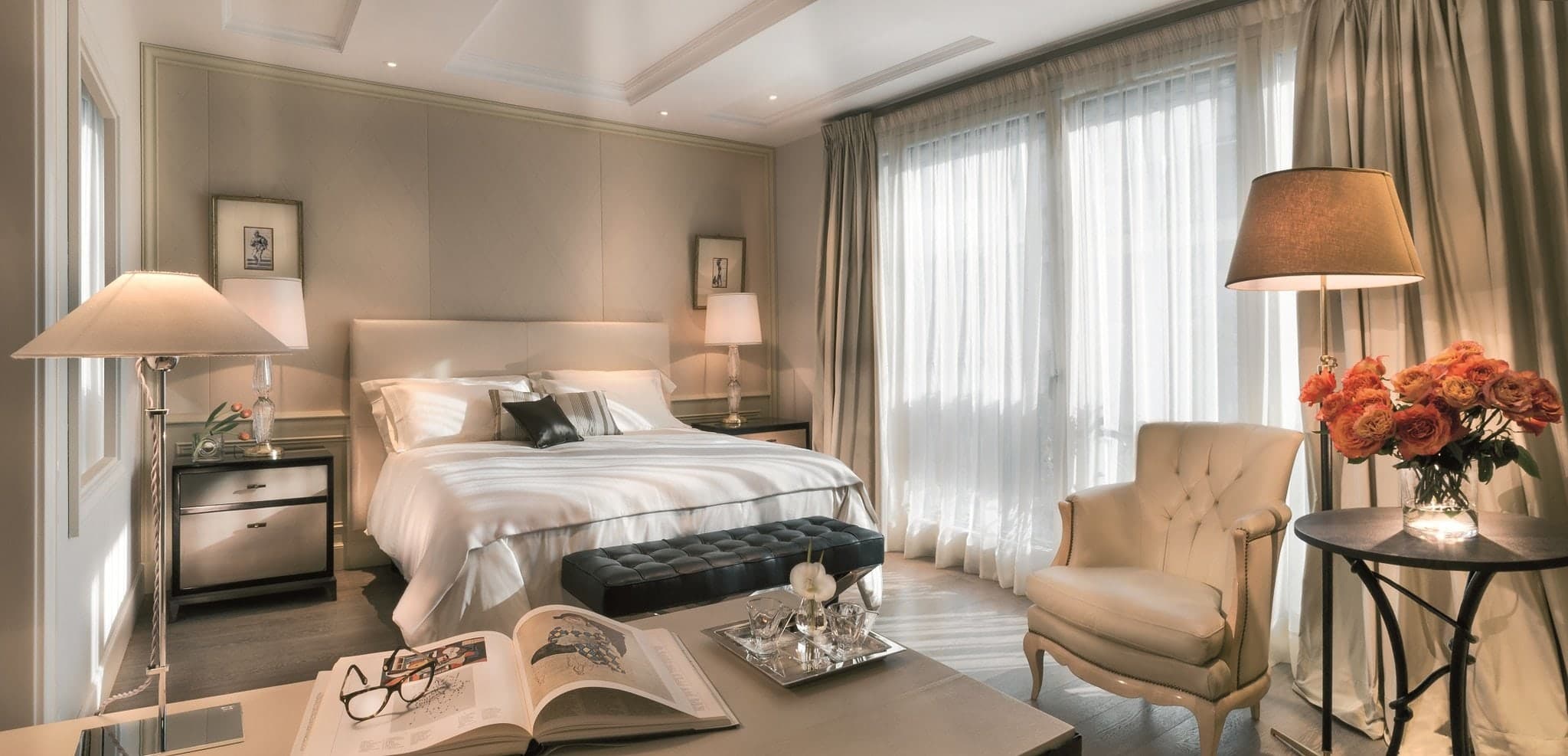
In a city that often fetishizes industrial greige, Palazzo Parigi is a defiant scream of neoclassical glory. Situated in the artistic artery of Brera, Architect-owner Paola Giambelli and interior maestro Pierre-Yves Rochon have engineered a space that feels less like a hotel and more like a diplomatic incident between Milanese austerity and Parisian excess. The lobby alone—a checkerboard of marble under a colossal Murano chandelier—sets a volume level that never really drops. Unlike the cloistered feel of many competitors, the rooms here actually inhale the city. Every single key unlocks a private terrace or balcony, a practically unheard-of luxury in this density. Guests select between ‘Milanese’ contemporary (sleek, wood-heavy) or ‘Parisian’ classic (stucco, warmth), but the real flex is the sheer square footage and the silence afforded by high-spec soundproofing. Culinary theatre happens at the Gastronomic Restaurant, where the signature Milanese risotto with bone marrow creates its own gravity. For a lighter touch, Caffé Parigi serves a Ladurée-laced afternoon tea that draws the local fashion editors. Yet, the subterranean 1,700 sqm Grand Spa is the true heavy hitter. Branded by Valmont and styled like a Moroccan Riad, it features a 12-meter pool with a counter-current system and a Royal Hammam that justifies the eye-watering nightly rates. Recently awarded a One Michelin Key, the hotel delivers unapologetic grandeur. The only sour note is the parking fee—hovering near €75—which feels aggressive even for this postcode, but for those seeking the brightest marble in Milan, it’s a price paid without blinking.
“Book the Royal Hammam private pool in the Grand Spa; it is separate from the main 12-meter pool and offers total seclusion.”
Insider TipAvg. Nightly Rate
900USD