No. 01
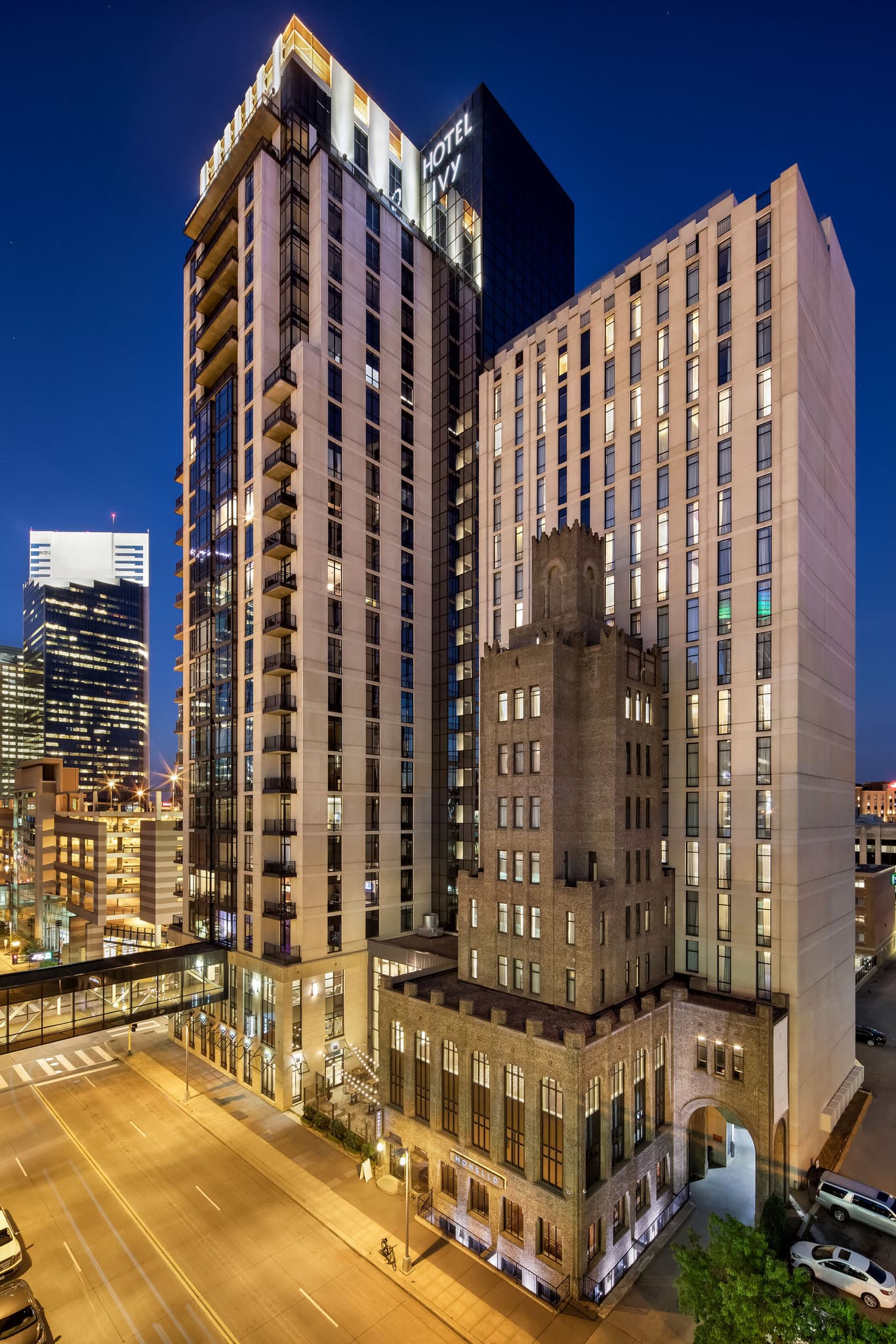
201 South Eleventh Street Minneapolis United States (the) 55403Minneapolis766 verified reviews
9
.0
Bitvoya Edit
Layering imagery, place, and detail before the page opens.
Minneapolis offers a distinct architectural journey where the roaring twenties meet modern luxury. From the soaring heights of the Foshay Tower in Downtown West to the repurposed elegance of old train depots near the riverfront, the Twin Cities preserve their history with style. Visitors can immerse themselves in the Gilded Age grandeur at the Rand Tower or experience the banking heritage of The Westin. Whether you are exploring the bustling Gateway District or crossing the river to the dignified Saint Paul Hotel, these properties offer more than just a stay—they provide a portal to the past, blending marble floors and brass fixtures with contemporary comfort.
Minneapolis boasts one of the most preserved collections of early 20th-century architecture in the Midwest. Choosing a historic hotel here means inhabiting living museums. The W Minneapolis - The Foshay, for instance, was the tallest building in the Midwest for decades and retains its original Art Deco observation deck. Similarly, Renaissance Minneapolis Hotel, The Depot allows guests to sleep within a restored train depot that once served as the city's lifeline. These properties don't just mimic history; they are integral parts of the city's narrative, offering a depth of character that modern glass towers simply cannot match.
When booking one of these icons, expect a blend of monumental architecture and boutique service. Lobbies often feature soaring ceilings, intricate terrazzo floors, and extensive brass detailing. Rooms, while sometimes having unique, non-standard layouts due to the historic structures, are renovated with high-end amenities. For example, The Westin Minneapolis, housed in a former bank, retains the original bank vault as a wine cellar and event space. Expect a sophisticated atmosphere that appeals to design enthusiasts and history buffs alike.
W Minneapolis - The Foshay is the premier example of Art Deco architecture, modeled after the Washington Monument.
Yes, Renaissance Minneapolis Hotel, The Depot is located inside a historic train depot built in the late 1800s.
Yes, The Saint Paul Hotel is a historic landmark opened in 1910, known for its European-inspired elegance.
Explore our complete curated list of luxury accommodations, from boutique hideaways to grand dames.
Explore All Minneapolis HotelsThe Ivy Tower cuts a sharp Ziggurat figure against the flat Midwestern horizon, a 1930s ecclesiastical ambition that stalled during the Depression and was reborn as Minneapolis’s most intriguing hospitality address. This isn't just a place to sleep; it's a study in contrasts. Inside, the hushed reverence of its church-administration origins has been swapped for the hedonistic hum of the Anda Spa, a 17,000-square-foot sanctuary where crystal healing is less 'woo-woo' and more 'why didn't I do this sooner?' Upstairs, the rooms are a lesson in restraint, anchored by limestone bathrooms with deep soaking tubs that beg for a bottle of bubbles and a do-not-disturb sign. The beds, dressed in Frette linens, offer a cloud-like reprieve from the city's winter bite. Speaking of winter, the direct Skyway connection is your lifeline, letting you navigate downtown without ever facing the frost. Dining here has shed its former identities for something punchier. Breva Bar & Grill serves a Smoked Walleye Dip that acts as a smoky love letter to Minnesota lakes, but the real electricity is downstairs. Masa & Agave operates with the clandestine energy of a prohibition holdout, serving a Taco Flight that pairs dangerously well with their agave library. The valet tag ($60) stings, but for a property that balances historic gravity with modern vice this well, it’s a tithe worth paying.
“Book a room ending in '01' for the best corner views of the Foshay Tower, or ask the concierge for the secret password to the 'Masa & Agave' private tasting room.”
Insider TipAvg. Nightly Rate
175USD
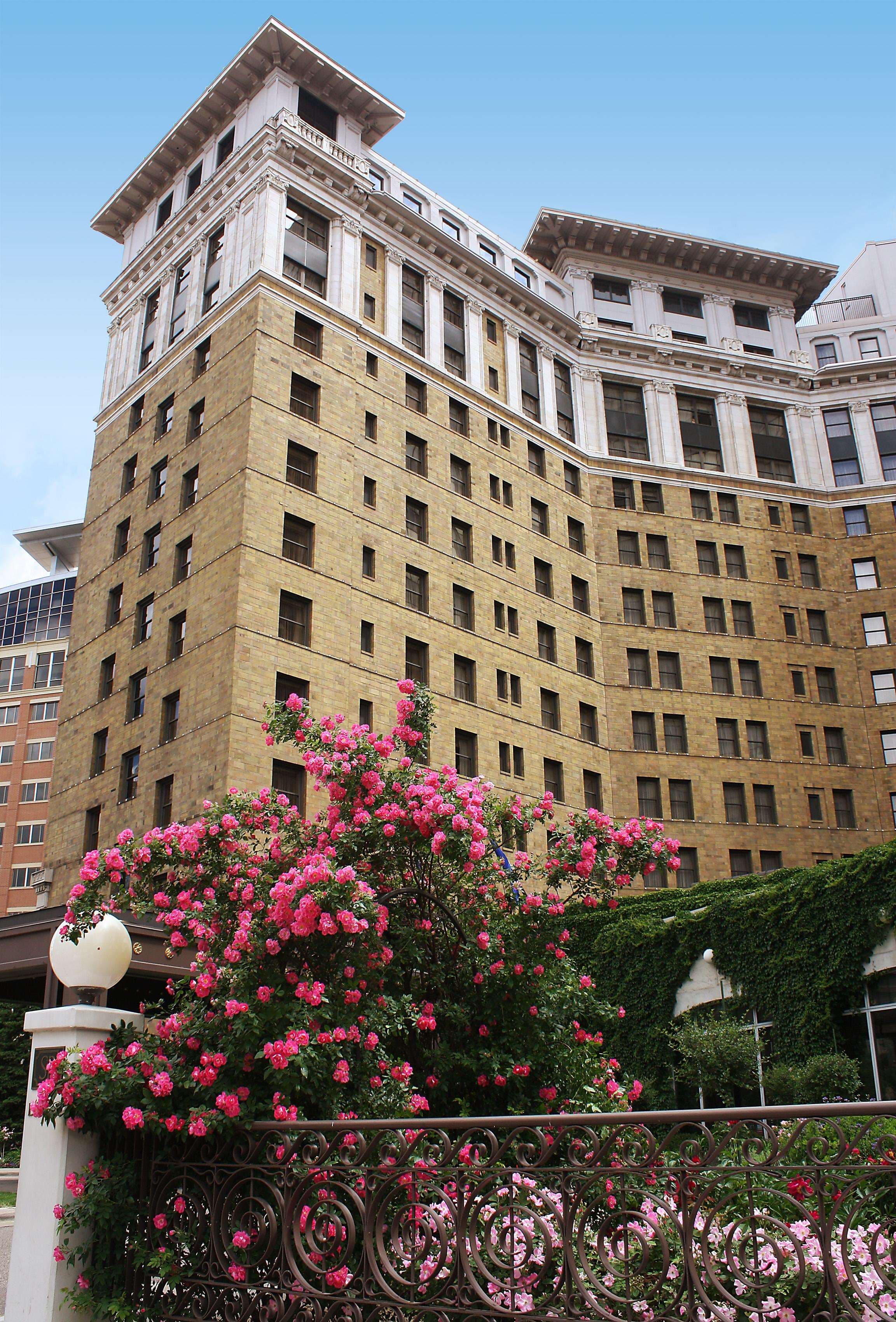
While Minneapolis chases the new, The Saint Paul Hotel remains the Twin Cities’ unshakeable anchor of old-money sophistication. Designed in 1910 by Reed & Stem—the same minds behind New York’s Grand Central Terminal—this Italian Renaissance Revival landmark feels less like a hotel and more like a private club that hasn’t changed its bylaws since the Taft administration. The lobby, with its crystal chandeliers and uniformed doormen, demands better posture the moment you enter. Upstairs, the rooms trade trendy minimalism for substantial comfort; think heavy drapery, 400-thread count linens, and a reassuring silence. Yes, the bathrooms recall a 1910 footprint (read: intimate), but the Gilchrist & Soames amenities and nightly turndown service smooth over spatial constraints. The real theater happens downstairs at The St. Paul Grill. It is a place of dark wood and serious carnivorous intent—order the 34 oz. Tomahawk Ribeye or the pan-fried Walleye, and wash it down with a martini that could anaesthetize a horse. It lacks a pool or spa, but frankly, doing laps would feel undignified here. This is a place to hold court, not cardio.
“Skip the $40 valet if you can; instead, ask for a room overlooking Rice Park to watch the holiday lights or the activity at the nearby Xcel Energy Center.”
Insider TipAvg. Nightly Rate
134USD
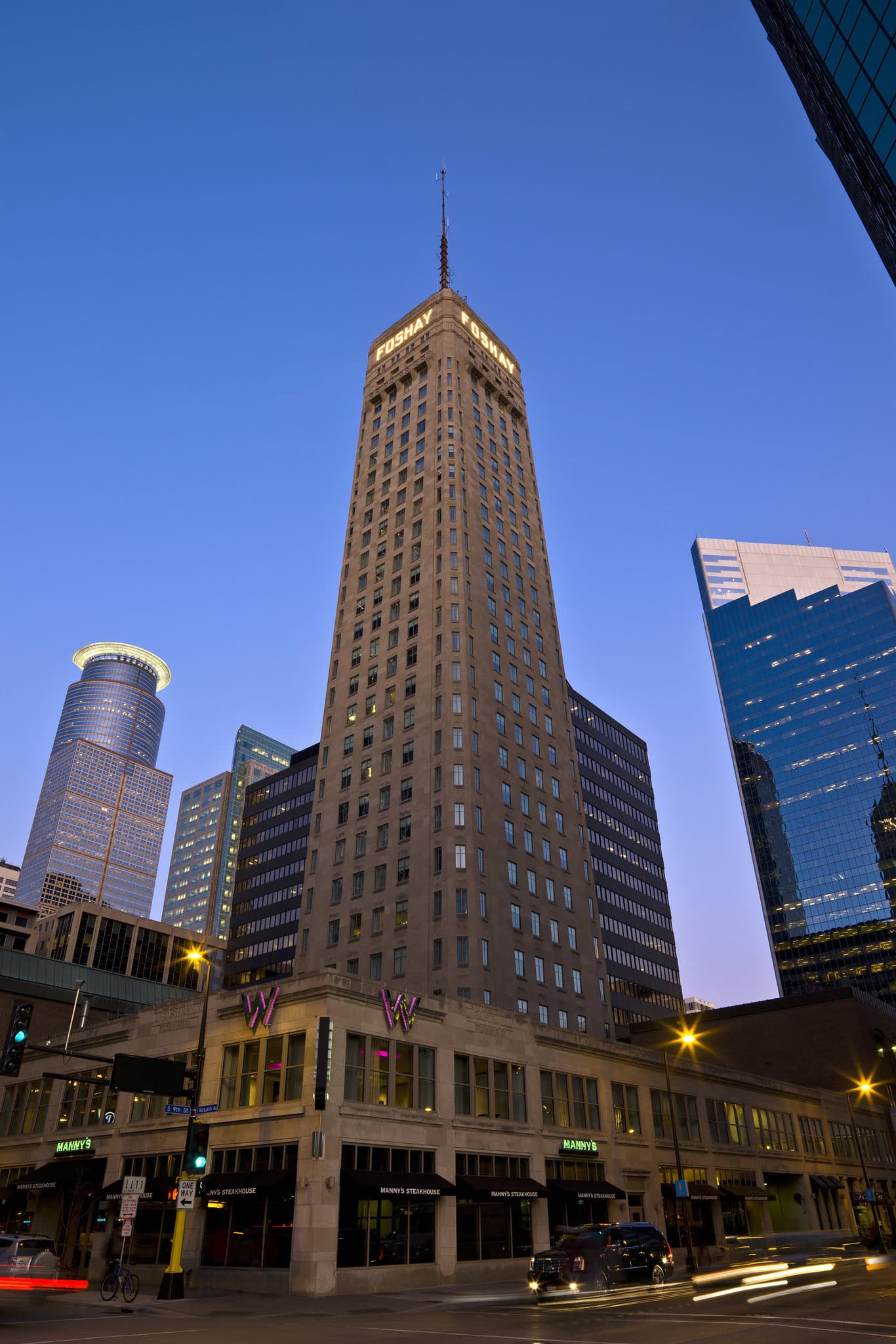
Wilbur Foshay went to prison for financing this building, and frankly, the views from the 30th floor might have been worth the sentence. Completed in 1929 just months before the market crashed, this limestone obelisk—modeled after the Washington Monument—remains Minneapolis’s definitive Art Deco statement. The W’s takeover injected a necessary dose of neon-noir into the heritage bones, creating a vibe that is equal parts historic preservation and modern hedonism. The rooms, constrained by the tower’s tapering historic footprint, are intimate (read: compact), but the design leans into the cozy factor with macassar ebony veneers, 350-thread-count linens, and Davines MOMO amenities. While the lack of soaking tubs in standard quarters is a preservation trade-off, the rainfall showers are excellent. The real theatre happens upstairs. Bypass the lobby for Prohibition, the speakeasy on the 27th floor. Originally intended as Foshay’s private office, the mahogany staircases and clandestine nooks are the perfect setting for a 'Blue-eyes Betty' cocktail. Downstairs, Manny’s Steakhouse ignores wellness trends entirely with its 85-day dry-aged ribeye—a carnivorous institution. Verdict: A rare instance where corporate cool respects historic soul. It isn't the most spacious stay in the Twin Cities, but it is undoubtedly the most atmospheric.
“Request a room on the 20th floor or higher facing the U.S. Bank Stadium for the best skyline contrast. Also, your room key grants free access to the Foshay Museum and Observation Deck—go at sunset.”
Insider TipAvg. Nightly Rate
139USD
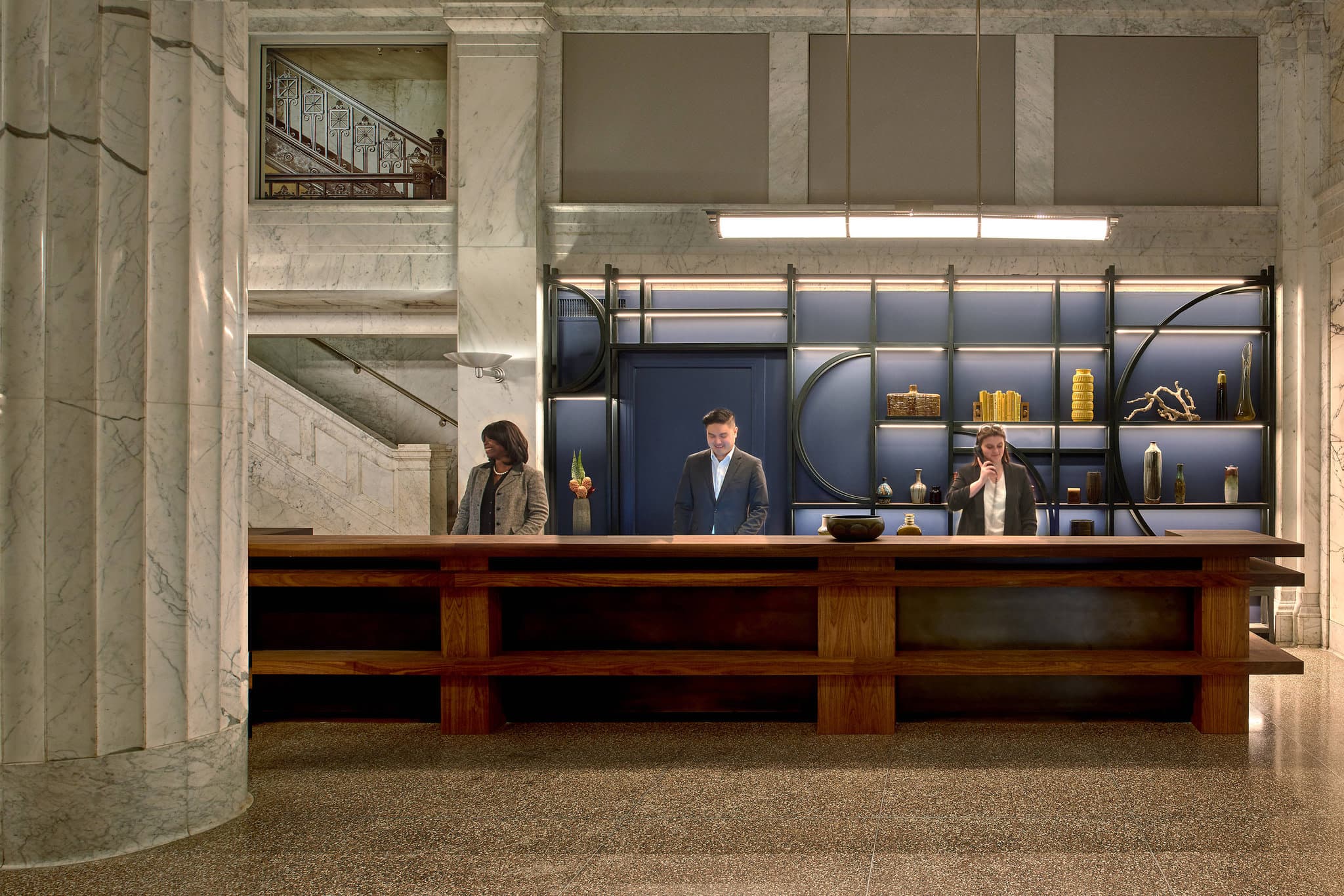
Forget the beige anonymity of typical corporate stays. The Emery, Autograph Collection, stages a theatrical coup inside the shell of the historic Midland Bank, transforming a 1906 financial fortress into Minneapolis’s most sociable living room. The lobby is the main event here—a soaring banking hall where original marble columns and velvet sofas now conspire under a canopy of lush, oxygenating greenery. It’s a scene that begs for a cocktail, or perhaps a ‘Pistachio and Rose Latte’ from the on-site Spyhouse Coffee. Upstairs, the rooms pivot from the lobby’s grandeur to a moody, mid-century intimacy. While the historic structure dictates smaller windows (a quirk, not a flaw), the interiors compensate with handsome dark woods, 49-inch TVs, and ‘Sustain Yourself’ bath amenities that smell expensive. The real power move, however, is dinner at Giulia. Don’t overthink it: order the Mozzarella a Mano—pulled tableside with performative flair—and the Lamb Ragu. The lack of a pool is a non-issue when you have direct access to the Skyway system, letting you navigate the frozen city in shirtsleeves like a true local. **Verdict**: A design-forward sanctuary that trades generic luxury for genuine character. Perfect for the traveler who prefers their history with a side of Northern Italian soul.
“Book a 'Marble Suite' if you crave space, but for everyone else: use the second-floor Skyway connection to reach U.S. Bank Stadium without stepping into the chill.”
Insider TipAvg. Nightly Rate
98USD
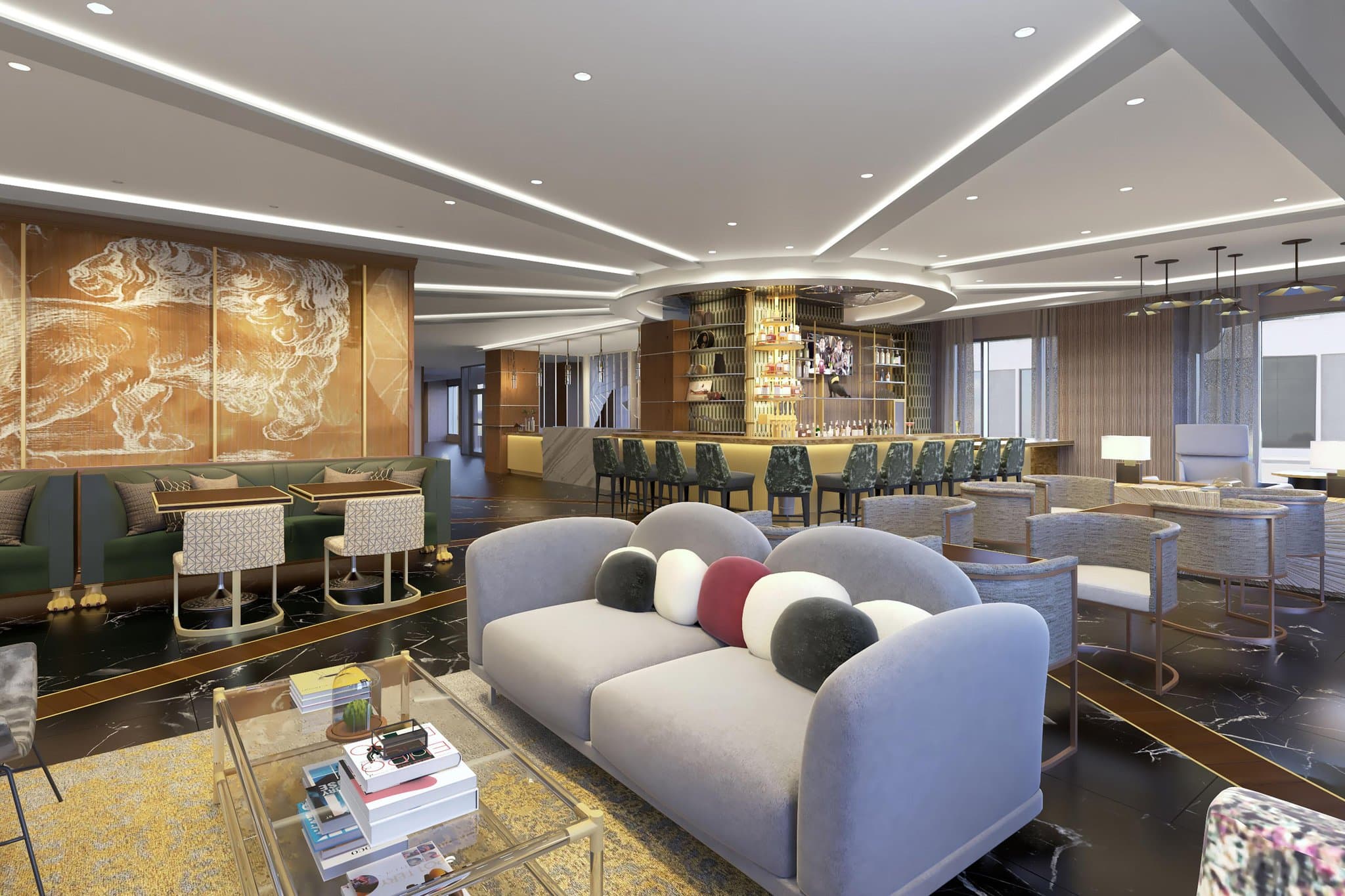
Minneapolis might not strike the casual observer as a bastion of Jazz Age glitz, but the Rand Tower Hotel begs to differ. Built in 1929 by aviator Rufus Rand, this limestone skyscraper is less a hotel and more a frozen moment of pre-Crash optimism. The recent restoration is a triumph: the lobby’s terrazzo floors and the grand spiral staircase serve serious Great Gatsby energy without the tragic ending. Upstairs, the rooms are a study in efficient luxury—a polite way of saying the historic footprint leaves little room for sprawling. If you’re traveling with a steamer trunk, you might struggle, but the design distracts you with Art Deco curves and crisp linens. The bathroom, while compact, is stocked with MALIN+GOETZ amenities, a saving grace for the spatially challenged. Dining is the real draw. Skip the standard hotel breakfast and head to Blondette for a smash burger under the retractable roof—it’s moody, French-ish, and delightfully unpretentious. Bar Rufus downstairs handles the classics, like a solid French Onion Soup, with competence. Service can be eager to the point of intrusion, but for a building this handsome, we’ll forgive the occasional early knock.
“Request a Corner King on the 23rd floor for dual-aspect city views that make the compact square footage feel double the size.”
Insider TipAvg. Nightly Rate
99USD
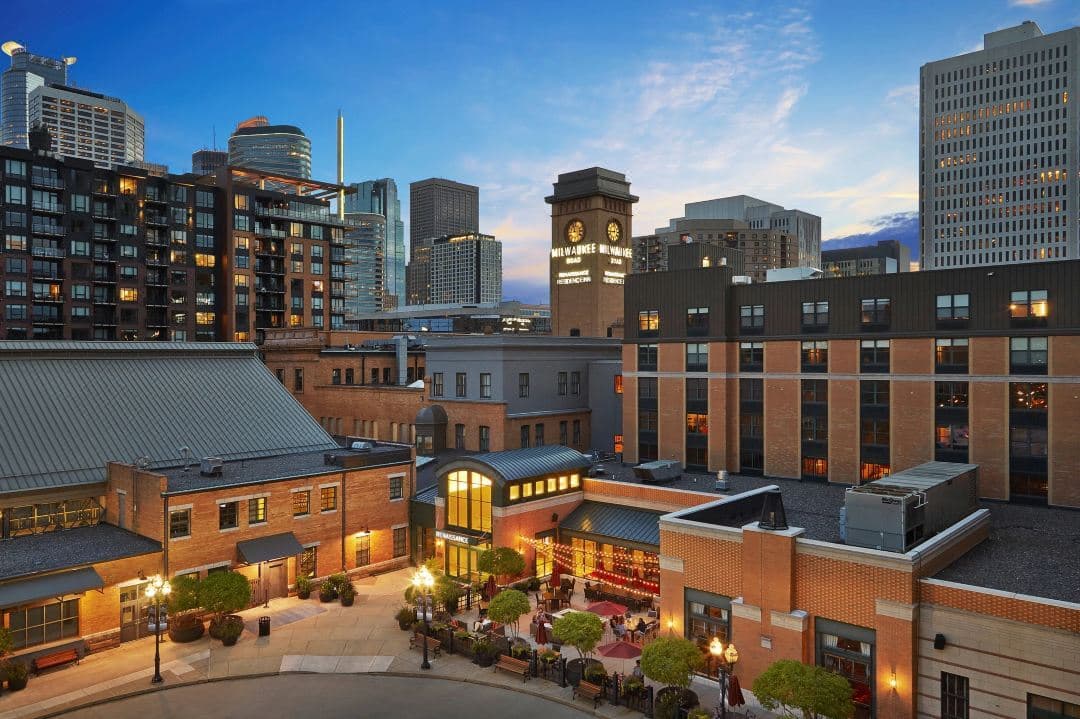
If the ghost of a 1920s railroad tycoon checked into a hotel, he’d drop his monogrammed trunk here. Occupying the historic Milwaukee Road Depot, the Renaissance Minneapolis doesn’t just nod to the past; it lives inside it. You aren't walking into a lobby; you're entering the Great Hall (now the Depot Pavilion), where soaring steel trusses still echo with the phantom whistles of steam engines. The design team wisely kept the kitsch at bay—instead of train-shaped soaps, you get 'Newsie' and 'Farewell Couple' statues that ground the space in its transit roots. Upstairs, the rooms are a sharp pivot to the present. While the walls can be thin—earplugs are advised if you’re sensitive to the rumble of actual nearby trains—the creature comforts compensate. Think Life Fitness equipment in the gym and a whirlpool that actually works. Dinner at the Milwaukee Road Restaurant & Bar is mandatory; the Chili Glazed Salmon is a standout, far superior to standard hotel banquet fare. Yes, the beloved water park is long gone (RIP), and the valet will sting your wallet at $57 a night, but for architecture nerds and history buffs, sleeping in a landmark beats a generic glass tower every time. Verdict: A sophisticated stay with a side of steel.
“Ask for a room facing the city skyline, not the tracks. The 'historic' charm includes authentic train noise, which is less charming at 3 AM.”
Insider TipAvg. Nightly Rate
110USD
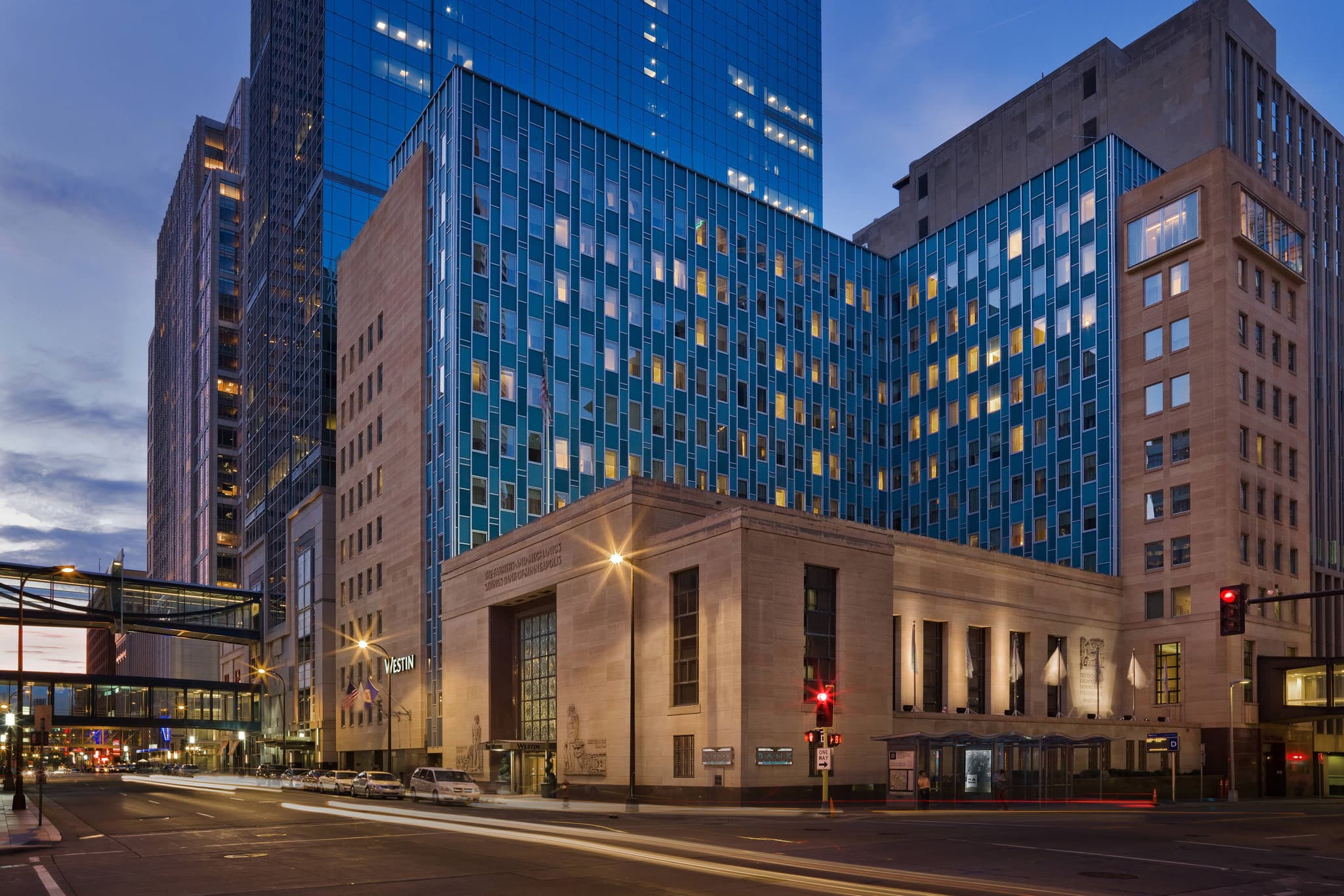
Walking into The Westin Minneapolis feels less like checking in and more like making a deposit—of your time, at least. Housed in the 1941 Farmers & Mechanics Bank building, the lobby is a 34-foot vaulted masterpiece of walnut paneling and marble that screams mid-century financial power. It’s a Gatsby-esque stage set that promises grandeur, even if the rooms upstairs pivot strictly back to business. The transition from the lobby’s moody ‘Bank Chic’ to the guest quarters is abrupt. While the Westin Heavenly Beds remain the gold standard for erasing jet lag, the rooms themselves show signs of their age, with worn outlets and a utilitarian vibe that lacks the lobby’s drama. However, the glass-enclosed Heavenly Showers are reliable, if tub-less. Dining salvages the glamour. ‘Stock & Bond’ delivers a confident Linz Heritage Black Angus steak, but the real insider move is the Heritage Pork Buns at the bar—perfectly fatty and rich. For those willing to brave the basement levels, the indoor heated lap pool is a rare downtown unicorn, offering a quiet respite from the city’s winter bite. It’s not perfect, but for architecture nerds and business travelers tired of cookie-cutter glass boxes, this bank still holds interest.
“Skip the street entrance in winter. The hotel’s direct connection to the Minneapolis Skyway system lets you walk warm all the way to Target Field or the office.”
Insider TipAvg. Nightly Rate
89USD
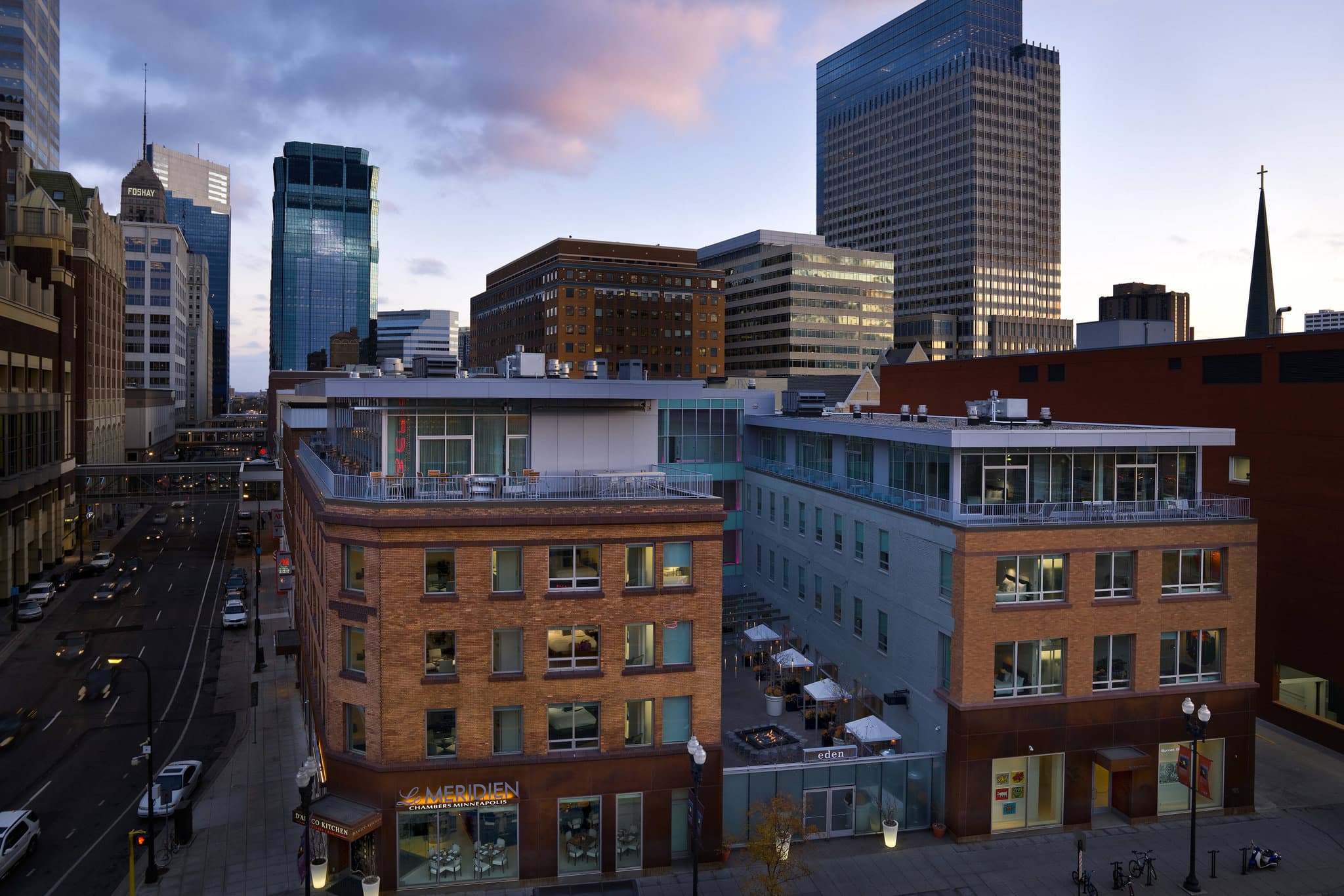
It is rare to find a property that treats its walls as seriously as its thread counts. The Chambers Hotel doesn't just hang art; it inhabits it. Merging two turn-of-the-century revival structures directly across from the Orpheum Theatre, this hotel feels less like a corporate stay and more like the private residence of an eccentric collector. The lobby—doubling as the Burnet Gallery—sets a moody, sophisticated tone that ascends the five-story stairwell via the striking 'Elemental' mural. In the rooms, the design pivots from gallery starkness to tactile comfort. The aesthetic is minimalist 'white-box' chic, but the standout feature is undeniably the heated bathroom floors—a non-negotiable luxury during a Minnesota winter. While the absence of a pool or a full-service restaurant might deter the resort crowd, the hotel knows its strength: sultry, low-light socializing. The Rooftop Lounge offers customizable cocktails with skyline views, but the Eden Courtyard is the true atmospheric winner. Sipping a drink by the 10-foot gas fire pit feels exclusively insider-y. Service can be sporadic, a common quirk of the independent boutique sector, and the hallways occasionally betray the building’s age. However, for theater-goers and design purists who prefer a rain shower and a gallery opening over a cookie-cutter concierge experience, The Chambers is the city’s most compelling host.
“Skip the standard rooms and request a 'Courtyard King' for direct visual access to the fire pit art installation—it transforms the view into a living canvas at night.”
Insider TipAvg. Nightly Rate
78USD