No. 01
9 Orchard St New York United States of AmericaNew York142 verified reviews
9
.2
Bitvoya Edit
Layering imagery, place, and detail before the page opens.
New York City is a canvas of constant reinvention, yet amidst the skyscrapers, the grandeur of the Gilded Age remains etched in stone and marble. This curated collection invites you to step back into an era of opulence, staying in properties that have defined Manhattan's skyline for a century. From the Beaux-Arts masterpiece of The Plaza in Midtown to the stunning atrium of The Beekman in the Financial District, these hotels are more than just places to sleep—they are living history. Experience the meticulous restoration of the former Jarmulowsky Bank at Nine Orchard on the Lower East Side, or the neo-classical elegance of The Knickerbocker in Times Square. These historic conversions offer a rare blend of old-world architecture and contemporary luxury.
New York City's architectural landscape is a testament to the immense wealth and artistic ambition of the late 19th and early 20th centuries. Choosing a historic conversion hotel means immersing yourself in a narrative of glamour that modern construction simply cannot replicate. Properties like The New York EDITION (housed in the iconic Clock Tower building) and Lotte New York Palace (encompassing the Villard Houses) offer guests the chance to walk through corridors once tread by robber barons, socialites, and literary giants. These hotels preserve the high ceilings, intricate moldings, and grand staircases of the past while integrating state-of-the-art amenities, providing a travel experience that is both culturally rich and supremely comfortable.
When booking a stay in one of New York's historic conversions, expect a blend of monumental scale and intimate detail. Architecturally, look for Beaux-Arts facades, Neo-Renaissance limestone, and Art Deco flourishes. Interiors often feature restored original elements such as mosaic tile floors, mahogany paneling, and crystal chandeliers. Service in these establishments often mirrors the 'old world' standard—impeccable, personalized, and discreet. Whether it's the butler service at The Plaza or the curated library at The Beekman, these hotels promise a stay that honors the grandeur of New York's golden era.
The Plaza is arguably the most iconic, opening in 1907 and serving as a National Historic Landmark that defines Beaux-Arts luxury near Central Park.
Yes, properties like The Beekman and The New York EDITION have undergone extensive renovations to include modern technology, spa services, and contemporary luxury amenities while preserving their historic architecture.
The Beekman, a Thompson Hotel, is a favorite for architecture lovers due to its stunning nine-story Victorian atrium and pyramidal skylight, originally built in 1881.
Explore our complete curated list of luxury accommodations, from boutique hideaways to grand dames.
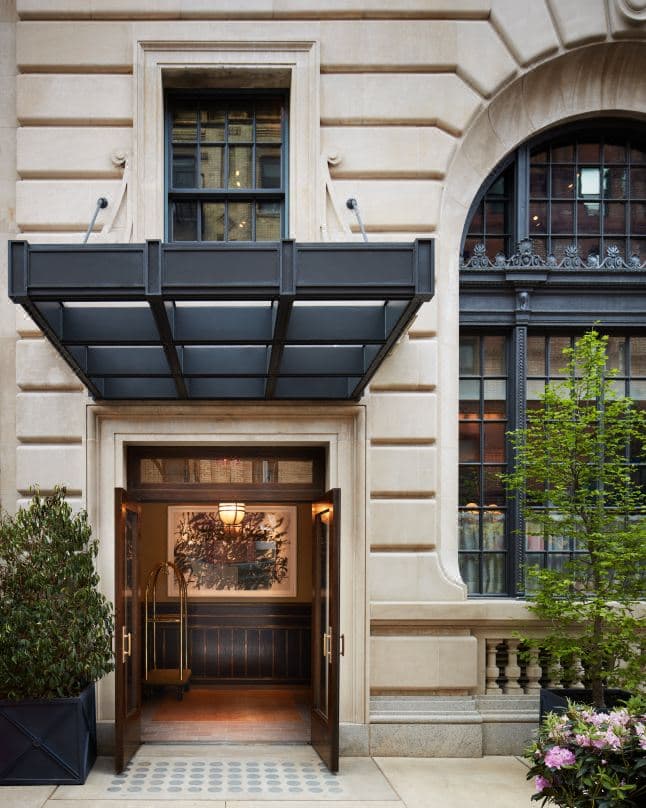
Explore All New York HotelsIt takes a certain bravado to resurrect the 1912 Jarmulowsky Bank building, once the tallest structure on the Lower East Side, and refuse to put coffee makers in the guest rooms. But Nine Orchard isn’t selling convenience; it is selling a meticulously curated time warp. The restoration of the neo-Renaissance lobby is a knockout—a soaring cathedral of commerce where check-in feels less like a transaction and more like an induction into a secret society. Upstairs, the rooms are an exercise in restraint. While entry-level quarters are tight (21 square meters requires efficient packing), the details are catnip for the aesthetics-obsessed: Ojas sound systems that make your Spotify playlist sound like vinyl, custom Takamichi toiletries, and 400-thread count linens. The real theater, however, happens downstairs. Chef Ignacio Mattos has turned the Corner Bar into a bistro that feels like it’s been there for decades—order the Oysters Rockefeller and the Trout Carpaccio. But the Swan Room, set in the former bank teller’s hall under a vaulted ceiling, is the showstopper. Sipping a tableside martini here, surrounded by marble and molding, makes you forget the grit of Canal Street outside. It’s moody, cinematic, and unapologetically cool—a triumph of adaptive reuse that demands you descend from your room to join the scene.
“The rooftop Tempietto is often closed for private events, so for the best views, request a corner room on a high floor facing the East River. Also, grab your morning coffee at the pop-up cart in the lobby—the croissants are worth the elevator ride.”
Insider TipAvg. Nightly Rate
512USD
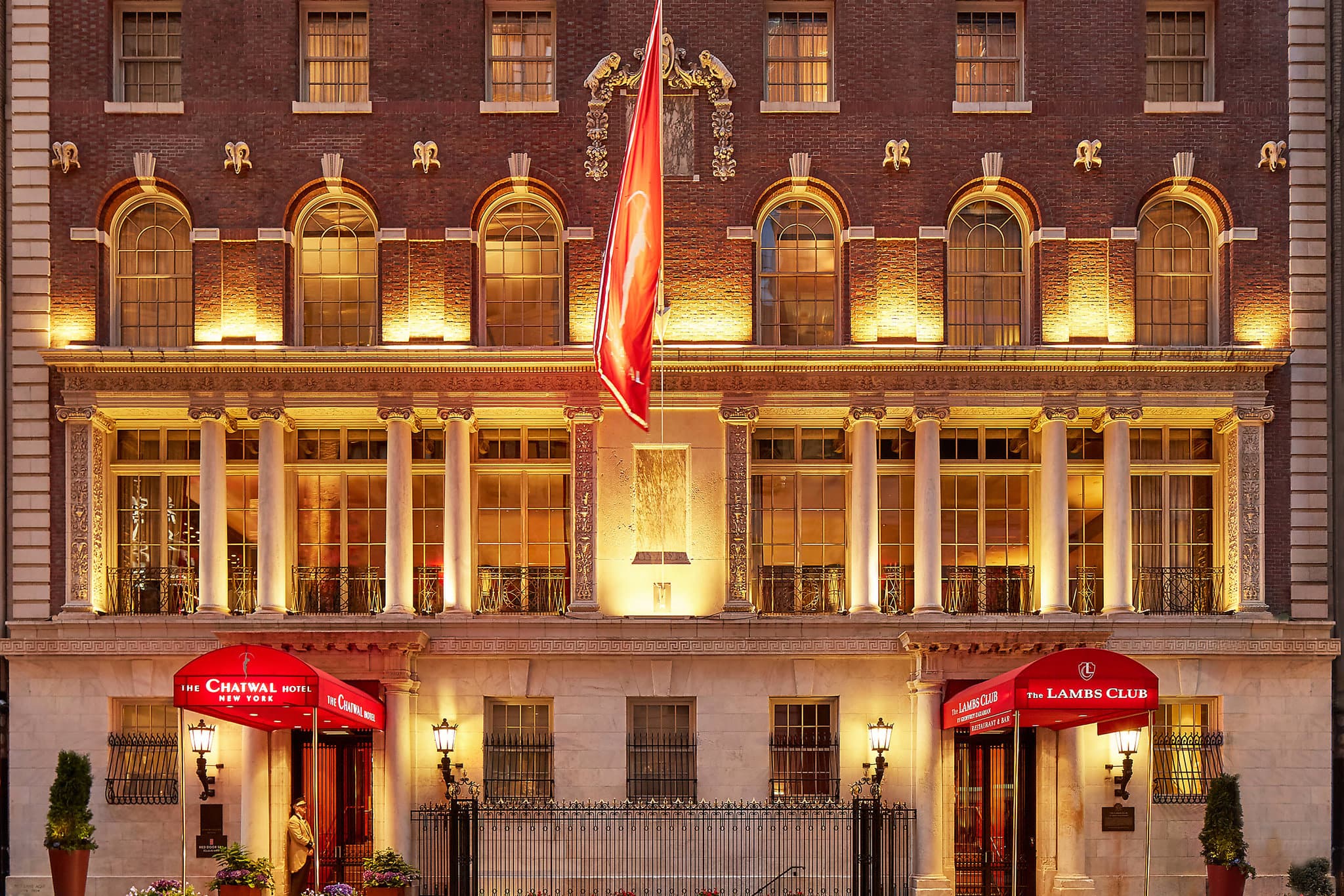
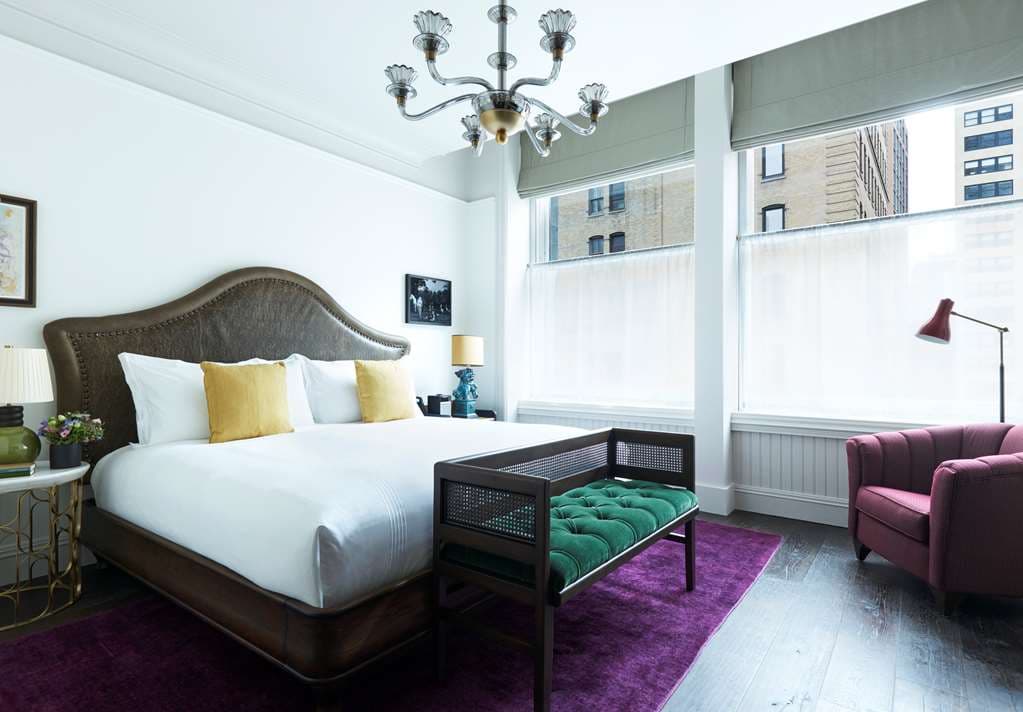
It is a rare privilege to sleep inside a piece of genuine theatrical history rather than a Disneyfied recreation of it. The Chatwal does not merely sit near Broadway; it was the clubhouse of Broadway. Originally the Lambs Club, designed by the scandalous and brilliant Stanford White in 1905, the building’s Neoclassical facade now guards a brooding, cinematic interior by Thierry Despont. It feels less like a hotel and more like a secret society for time travelers. The lobby is all Empire Art Moderne gloss—black walls, chrome accents, and a fireplace that demands a scotch. Upstairs, the rooms lean into a nautical 1930s aesthetic. You’ll find 'shagreen' wrapped wardrobes and suede walls, though the 400-thread count Frette linens are the real showstopper. The base rooms (250 sq ft) are admittedly tight—a common Manhattan grievance—so one relies on the Asprey amenities and the dedicated butler service to distract from the square footage. Dining at The Lambs Club is non-negotiable. The massive red leather banquettes and 18th-century fireplace offer a staging ground for excellent Modern American fare, specifically the Stanford White Burger. The basement pool is a 'saltwater current' affair—moody and intimate, but strictly for dipping, not laps. Verdict: If you crave the ghosts of Fred Astaire and Gilded Age grit over glass-tower genericism, this is your stage.
“Skip the 'Superior' Queen rooms if you are claustrophobic. Ask for a room ending in '02' for a slightly better layout, or splurge on a terrace suite to escape the midtown crush.”
Insider TipAvg. Nightly Rate
500USD
Walking into The Beekman is less like checking into a hotel and more like stepping onto a fin-de-siècle film set. The showstopper is immediate: a nine-story Victorian atrium crowned by a pyramidal skylight, ringed with wrought-iron railings that spiral upward in a dizzying display of 1883 architectural prowess. It is moody, cinematic, and decidedly anti-minimalist. The guest rooms continue the speakeasy narrative. While some critics bemoan the lack of natural light, the design leans into the darkness with intentional sophistication—think dark timber floors, vintage rugs, and custom **Revo** radios. The bathrooms are a highlight, stocked with **D.S. & Durga** amenities (a massive upgrade from generic hotel soaps) and wrapped in marble. You sleep on **Sferra linens**, which feel every bit the luxury standard. Dining is a clash of titans. **Temple Court** by Tom Colicchio anchors the atrium with old-school grandeur—order the **Baked Alaska** for pure theater. Meanwhile, Daniel Boulud’s **Le Gratin** offers a masterclass in Lyonnais comfort; the **Pike Quenelle** is non-negotiable. **Verdict**: A triumphant restoration for design lovers and couples seeking romance in the shadows. If you crave floor-to-ceiling sunlight, look elsewhere; if you want soul, stay here.
“For a true 'Gatsby' moment without the noise transfer from the atrium bar, request a 'Corner Suite' on a high floor. If you're sensitive to sound, avoid the lower atrium-facing rooms.”
Insider TipAvg. Nightly Rate
450USD
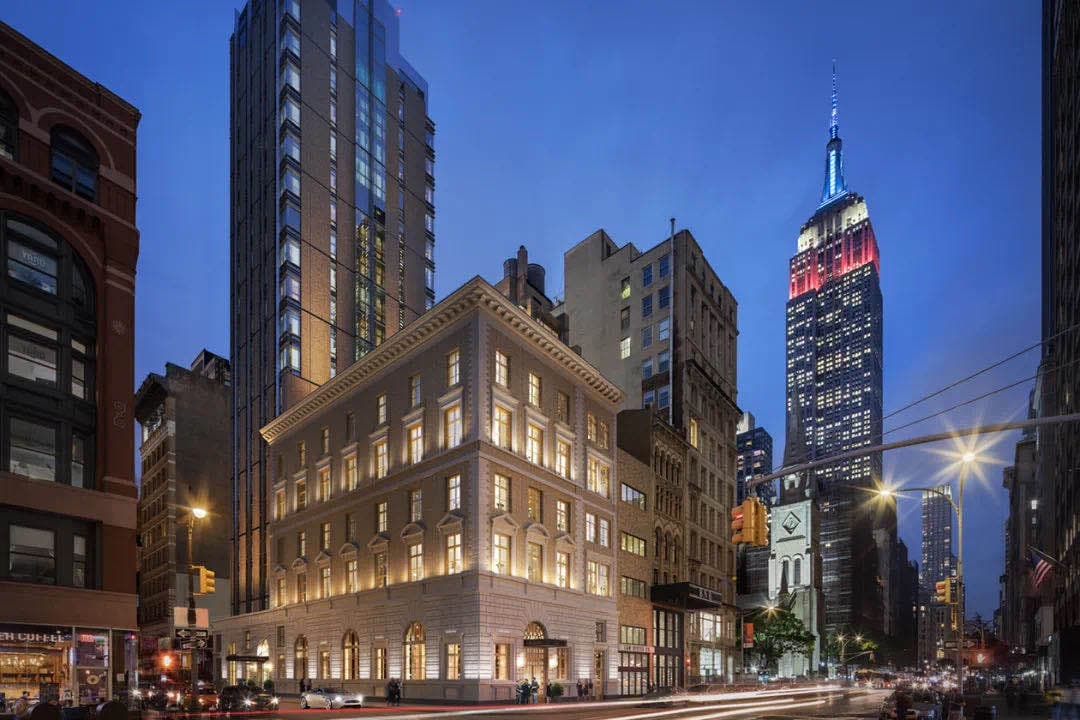
If the Gilded Age took a hallucinogenic trip, it would wake up here. At The Fifth Avenue Hotel, the restraint of modern minimalism is banished in favor of Martin Brudnizki’s dizzying, delightful maximalism. This isn't just a hotel; it’s a mood board for the eccentric flâneur. The property splits its personality between the historic 'Mansion'—a 1907 Renaissance-palazzo stunner—and a glass tower, but the energy is consistent: high-gloss finishes, Murano glass chandeliers, and a palette that refuses to apologize. In the Mansion Suites, the experience is elevated by dedicated butler service and a residential grandeur that feels less like a hotel and more like the guest quarters of a wealthy, eccentric aunt. Tech touches like iPad controls and Marshall Bluetooth speakers modernize the vintage aesthetic, while the bathroom vanity, stocked with high-end amenities, encourages lingering. Downstairs, Café Carmellini is the main event. Chef Andrew Carmellini’s squab en croûte is a masterclass in pastry and poultry, while the Portrait Bar offers a moody, wood-paneled retreat for a nightcap. While the compact footprint of the standard rooms (approx 26 sqm) might pinch, the sheer audacity of the design makes you forget the square footage.
“Skip the tower rooms if you crave character; book a 'Mansion Suite' for the original architectural details and the dedicated butler service.”
Insider TipAvg. Nightly Rate
595USD
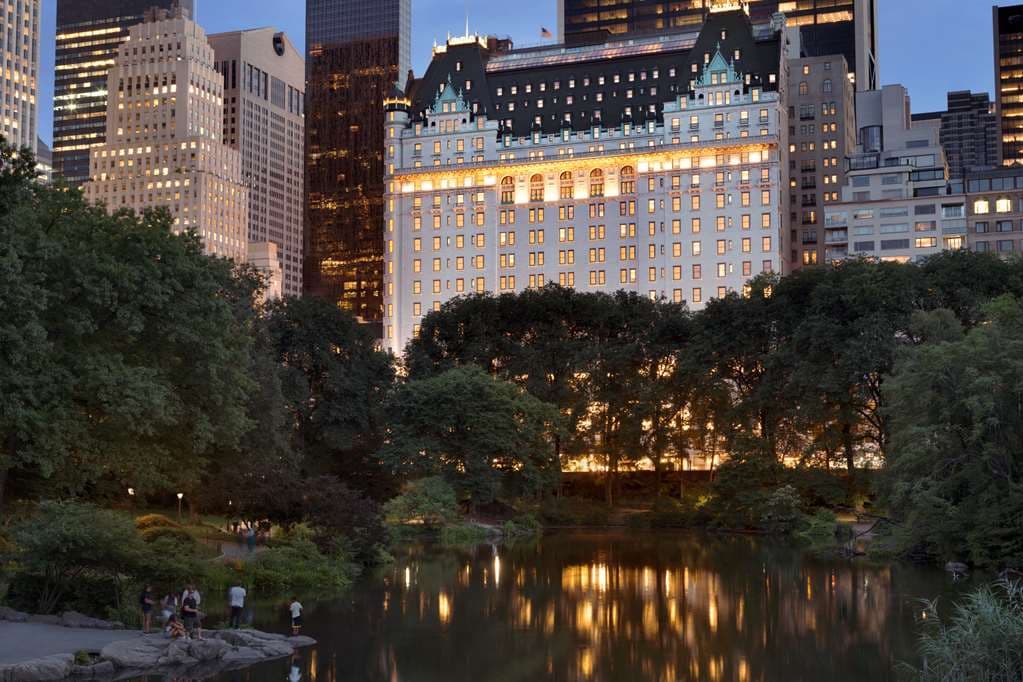
If you think the Gilded Age is dead, you haven't fought your way through the selfie-stick battalion in The Plaza's lobby. But push past the tourists, and the 1907 Beaux-Arts bones of this Henry J. Hardenbergh classic remain unshakeable. It is not subtle; it is a riot of crystal and 24-carat gold. While Hudson Yards' glass towers scream 'new money,' The Plaza whispers old secrets. The entry-level rooms are shockingly generous for Manhattan at 475 square feet, featuring Sherle Wagner faucets that likely cost more than your first car and 400-thread count linens that demand you sleep in. However, the mandatory $65 'Urban Experience Fee' feels like a cynical tax on history. Dining requires strategy: The Palm Court is the postcard shot with its stained-glass dome, but the smarter play is The Champagne Bar. Order the Imperial Plaza Cocktail, ignore the price tag, and overlook the Pulitzer Fountain. The 111SKIN Spa offers a clinical counterpoint to the velvet-heavy decor. It’s not a 'hidden gem'—it’s the crown jewel, polished to a blinding shine.
“Skip the tourist queue at The Palm Court. Head straight to The Champagne Bar for the same iconic views of the Pulitzer Fountain but with better people-watching and caviar service.”
Insider TipAvg. Nightly Rate
995USD
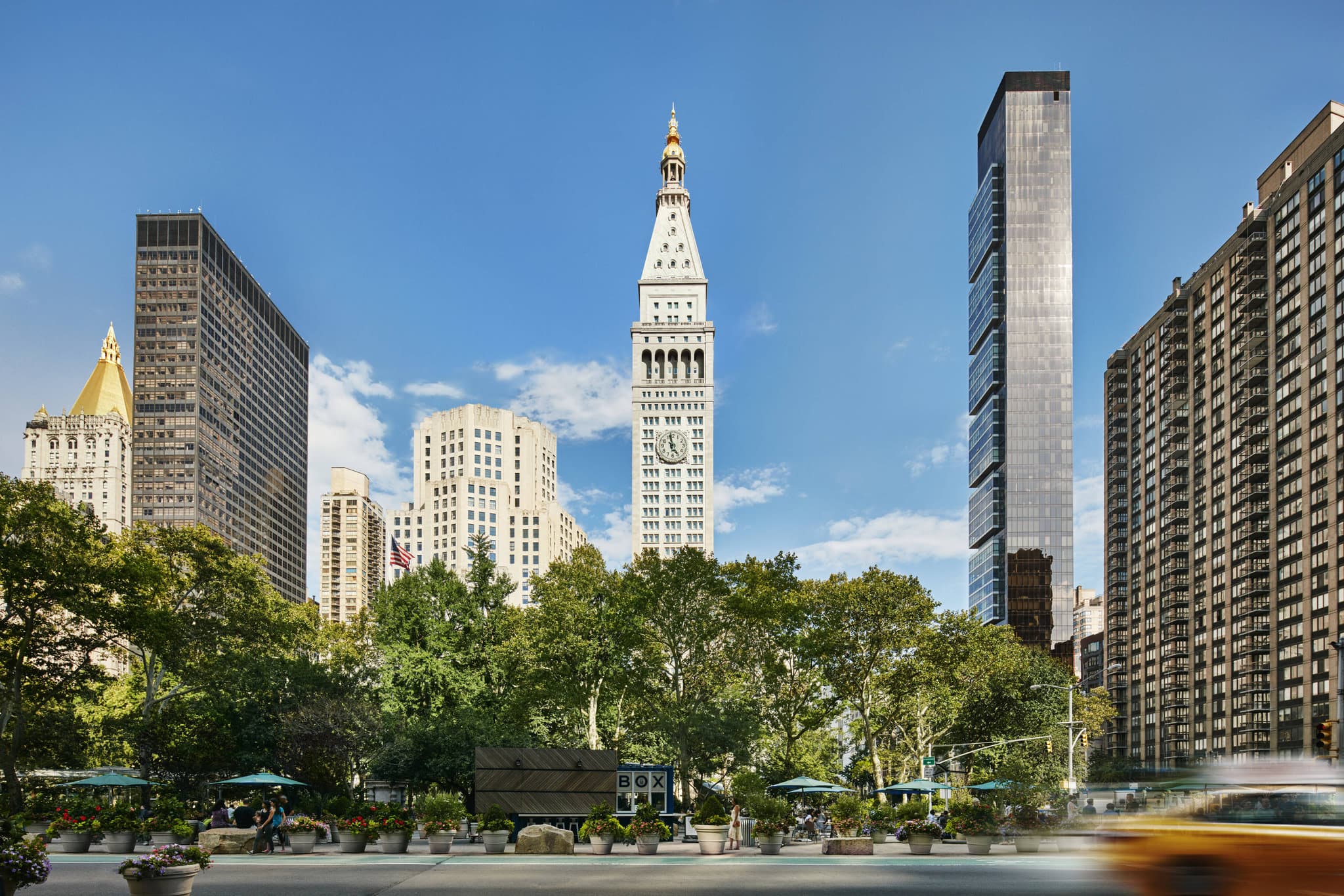
If the 1909 Metropolitan Life Tower is the Gilded Age shell, The New York EDITION is the ghost in the machine—a sleek, Ian Schrager-conceived phantom haunting the Flatiron District. The juxtaposition is jarring in the best way: you enter a historic landmark that once defined the skyline, only to be transported into an ivory-and-walnut study in restraint. The lobby’s ivory steel spiral staircase is a sculptural showstopper, setting a tone that is less 'hotel' and more 'curated residence for the ultra-cool.' Upstairs, the rooms are a study in sophisticated minimalism. Dark walnut floors and neutral palettes frame the real art: the oversize windows. If you snag a high floor, the Empire State Building feels close enough to touch. However, form occasionally trumps function; the absence of in-room coffee makers is a baffling omission for a city that runs on caffeine, and the elevators can be temperamental, testing your patience with a 'nightclub-lite' sluggishness. Dining, however, is where the hotel flexes its muscles. The Clocktower, while no longer holding its Michelin star, remains a culinary destination under Jason Atherton’s vision. The Uni Risotto is rich enough to pay rent, and the billiards room offers a clubby retreat. For a nightcap, The Bar at The Clocktower, with its 24k gold leaf accents and Cartesian cocktails, feels like the secret center of the universe. It’s moody, polished, and unapologetically New York.
“Skip the standard rooms and book a 'Loft' category or higher to ensure a deep soaking tub—a rarity in Manhattan. Also, the gym is open 24/7, which is perfect since you won't have a coffee machine to wake you up.”
Insider TipAvg. Nightly Rate
464USD
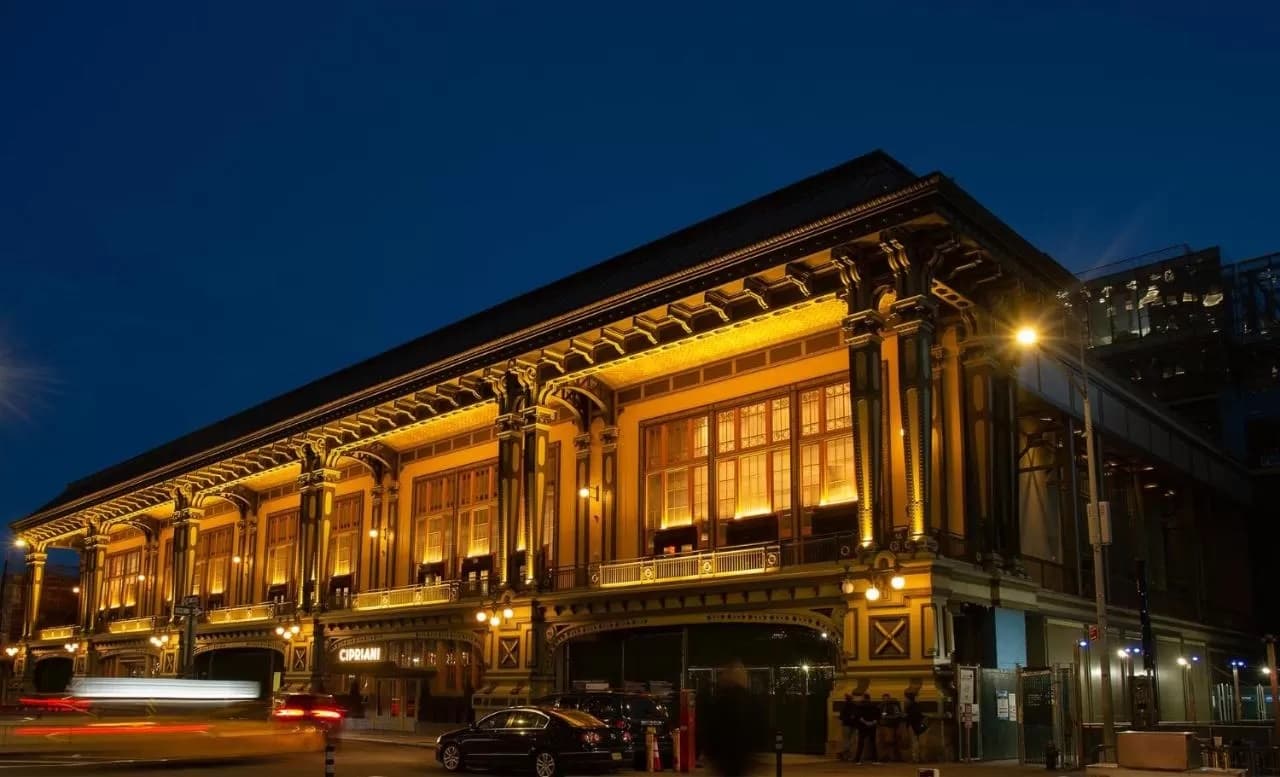
If Edith Wharton had a penchant for Bellinis and private clubs, she would have lived here. Anchored at the very tip of Manhattan in the 1906 Battery Maritime Building, Casa Cipriani is a defiant rejection of modern minimalism. Thierry Despont’s design transforms the former ferry terminal into a spectacle of Art Deco lacquer and Beaux-Arts monumentalism. It feels less like a hotel and more like a docked ocean liner from a more glamorous era. The rooms are cocoons of high-gloss mahogany and nautical brass, dressed in crisp Frette linens that feel reassuringly expensive. While the location offers cinematic views of the Statue of Liberty and the Brooklyn Bridge, the adjacent heliport provides a thrumming reminder of the city's kinetic energy—bring earplugs if you plan to sleep past 7 AM. Dining here is a ritual. The Club Restaurant serves a Beef Carpaccio that ruins you for all others, while 'The Jazz Café' pairs Oysters and Caviar with a supper club atmosphere that feels entirely un-ironic. Access to the private membership areas makes the steep price tag palpable; you aren't just renting a room, you're buying entry into a closed social circle. It is isolated, yes, but that’s the point. Verdict: A heavy-hitting, heavy-spending architectural triumph that prioritizes atmosphere over convenience.
“Book a table at The Jazz Café for late-night caviar; the acoustics under the gold-leaf ceiling are superb. Recover the next morning with the Eucalyptus steam room in the spa.”
Insider TipAvg. Nightly Rate
959USD
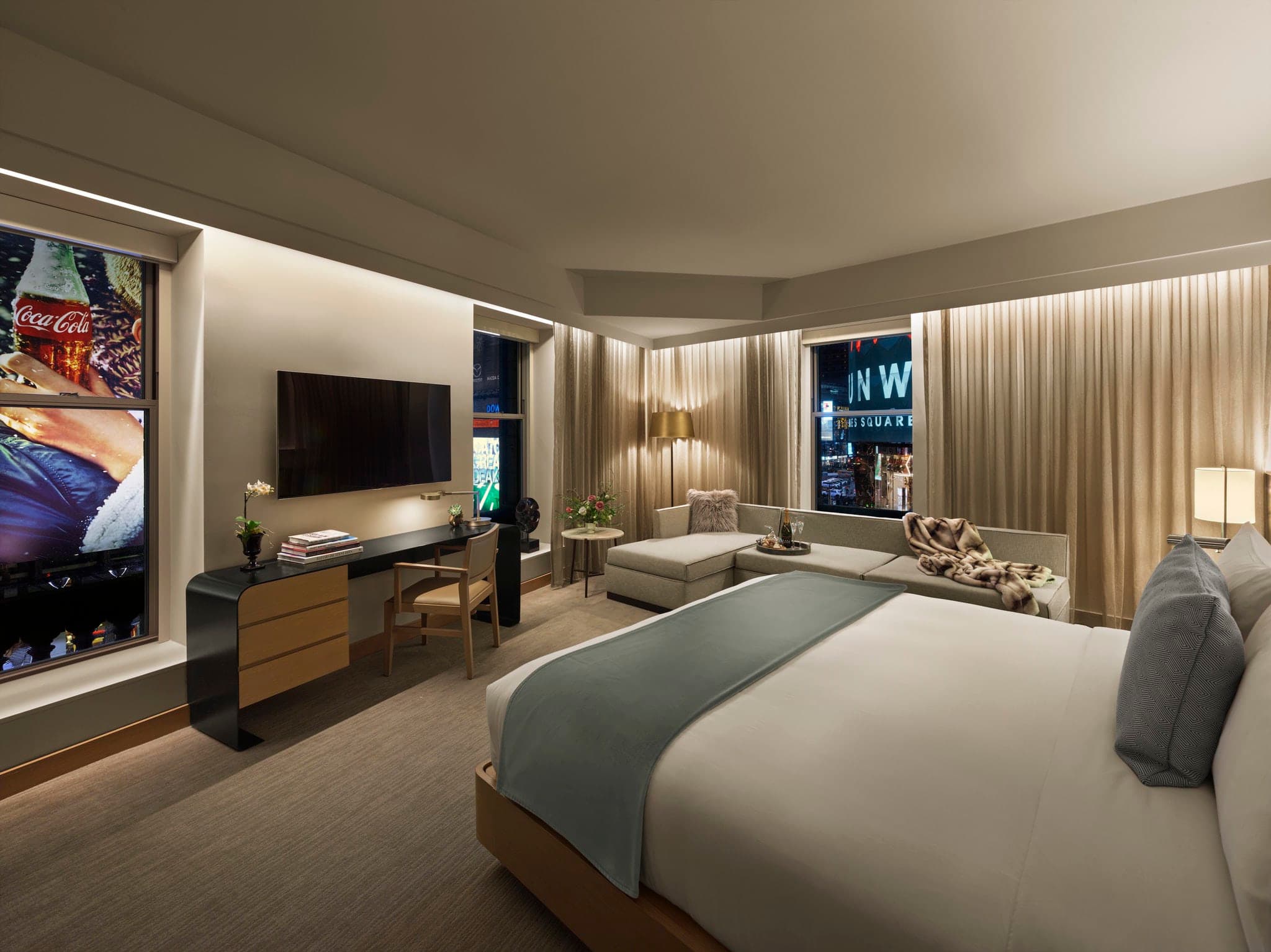
If John Jacob Astor IV could see the neon entropy of modern Times Square, he’d likely retreat immediately back into the limestone shell of The Knickerbocker. Commissioned in 1906, this Beaux-Arts landmark stands as a heavy, confident rebuke to the flimsy LED screens surrounding it. The restoration is a triumph of acoustics over geography: the sound-dampened windows are so effective they render the Crossroads of the World into a silent film. Inside, the interiors trade Gilded Age excess for steely, minimalist greys and oak finishes, a stark contrast to the terracotta exterior. Base rooms start at a generous 28 square meters—palatial by Manhattan standards—and feature 12-foot ceilings and Diptyque amenities. However, the absence of in-room coffee makers in standard categories is a baffling omission for a property charging a $45 daily residence fee. Dining saves the day: Charlie Palmer Steak IV offers a Ritz Cracker Stuffed Maine Lobster that riffs on high-low Americana, while the St. Cloud Rooftop provides the closest legal proximity to the New Year’s Eve Ball without joining the huddled masses. Verdict: The only civilized way to endure the center of the storm.
“Reserve a corner 'Sky Pod' at the St. Cloud Rooftop well in advance; these private banquettes offer the direct sightline to the Times Square Ball that the crowds below would kill for.”
Insider TipAvg. Nightly Rate
202USD

Stepping off Madison Avenue into the Lotte New York Palace’s courtyard is arguably the best entrance in Manhattan. The transition from the screech of yellow cabs to the hushed, limestone embrace of the 1882 Villard Houses is pure cinematic theater—precisely why *Gossip Girl* scouts parked Serena van der Woodsen here. Inside, the preservation is staggering. The Gold Room remains an architectural marvel, where a suspended chandelier floats beneath original frescoes, creating a moody, barrel-vaulted backdrop for sipping a Gossip Girl Cocktail. However, the property operates as a dichotomy. While the public spaces scream 19th-century tycoon, the 909 guest rooms are split between the luxurious 'Towers' and the standard 'Palace' main building. The latter can feel surprisingly corporate, with interiors that lean more 'dated executive' than 'Gilded Age heir.' You won’t find in-room coffee machines here—a baffling omission for a five-star claimant—though the marble bathrooms stocked with Molton Brown amenities offer a redemptive soak. Breakfast at VILLARD is the culinary redemption, where the Lemon Mascarpone Pancakes are fluffy enough to make you forget the room’s lack of caffeine. For the true aesthete, the hotel is a public masterpiece with private compromises. It is an essential stop for a drink, but for the stay, the Towers are the only way to match the lobby’s promise.
“Skip the standard rooms and book a 'Cathedral View' room in The Towers. You'll wake up staring directly into the Neo-Gothic stained glass of St. Patrick’s Cathedral across the street.”
Insider TipAvg. Nightly Rate
196USD
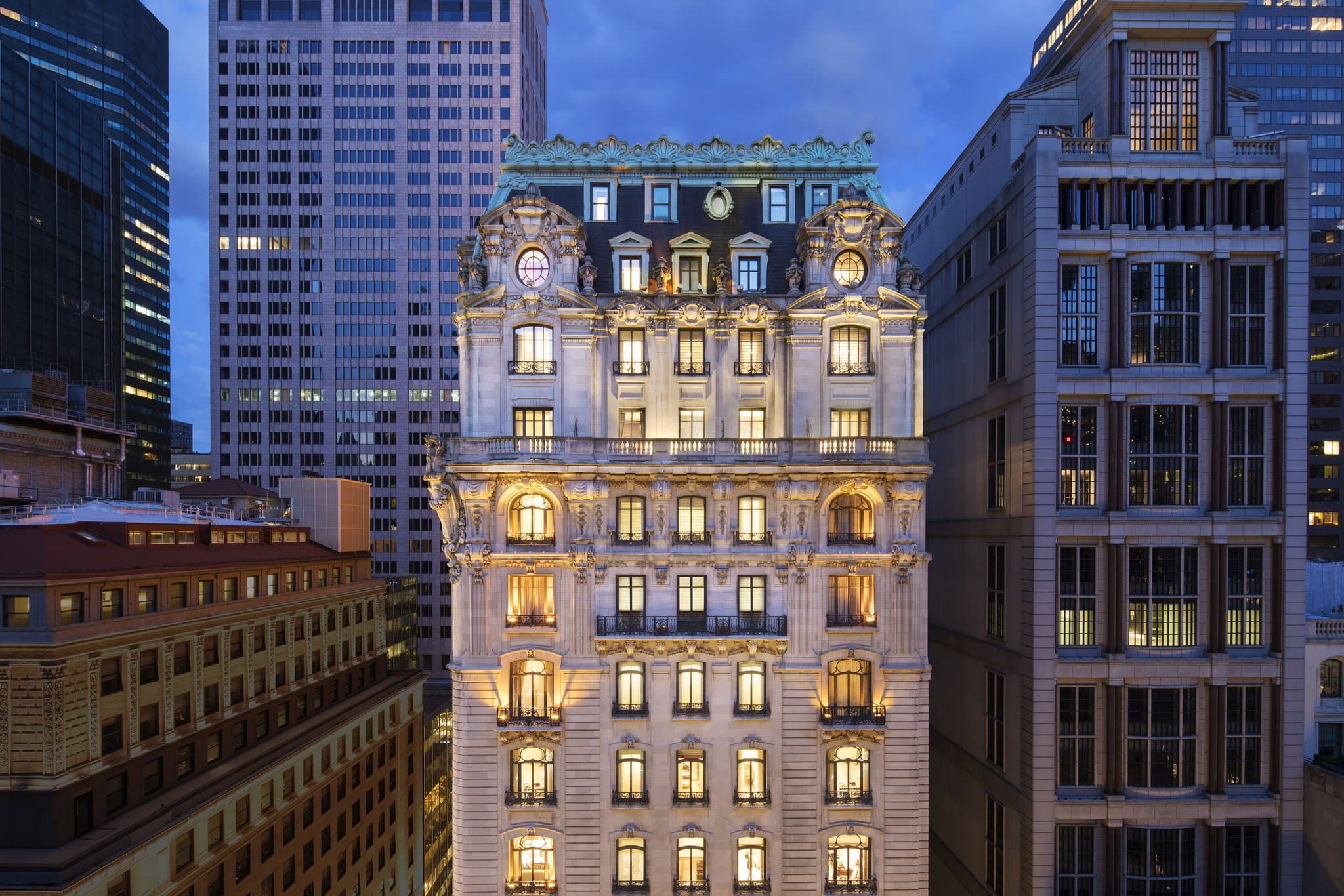
When John Jacob Astor IV opened these gilded doors in 1904, he wasn’t just building a hotel; he was curating a universe. 120 years later, following a sweeping 2024 renovation by Champalimaud Design, The St. Regis New York doesn’t just endure—it dominates. The once-dim lobby has been blown open, now a breathless expanse of emerald and rose where the Astor Library’s books are finally displayed like sacred texts. Upstairs, the rooms remain a bastion of high-society silence, protected from the Midtown roar by heavy silk and history. While the hardware is modern (Technogym equipment, bedside touch panels), the software is timeless: the signature 24-hour Butler Service isn’t a gimmick; having your suitcase unpacked while you sip coffee from silver service is the ultimate luxury. Dining is the theater here. You are drinking a Red Snapper (the original Bloody Mary) in the King Cole Bar, under the watchful gaze of Maxfield Parrish’s mural, because you simply must. And the new La Maisonette offers an afternoon tea ritual that feels less like a meal and more like a coronation. **Verdict**: In a city of glass towers, the Grand Dame is dancing again—and she’s leading.
“Book 'Table 55' in the King Cole Bar. It’s the only reservable spot, tucked in a private corner with an exclusive chef’s menu and access to the hotel’s rare wine cellar.”
Insider TipAvg. Nightly Rate
816USD