No. 01
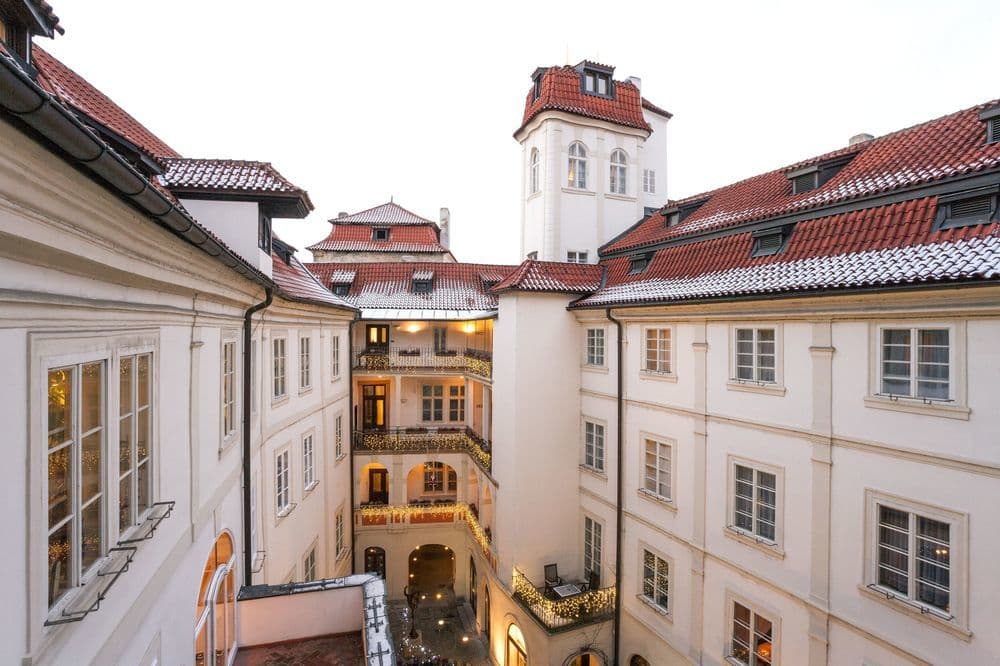
Michalska 19 Prague Czech Republic (the)Prague1445 verified reviews
9
.0
Bitvoya Edit
Layering imagery, place, and detail before the page opens.
Stepping into Prague is akin to walking through a living museum, but the true magic lies in waking up within the walls of history. Our curated collection focuses on the unique trend of converted heritage sites—where 13th-century monasteries and Baroque palaces have been transformed into ultra-luxury accommodations. Properties like the Augustine, a Luxury Collection Hotel and the Mandarin Oriental, Prague offer more than just a bed; they offer a narrative. Located primarily in the atmospheric Malá Strana (Lesser Town) and the winding alleys of Staré Město (Old Town), these hotels preserve original frescoes, vaulted ceilings, and monastic gardens, blending them seamlessly with contemporary comfort. Prepare to immerse yourself in the bohemian opulence that defines the Golden City.
Prague offers a hospitality landscape unlike any other in Europe. While many capitals boast modern luxury towers, Prague’s elite accommodation scene is defined by preservation and transformation. Choosing to stay in a converted palace or monastery allows travelers to physically inhabit the history of the Czech Republic. These properties, such as The Alchymist Grand Hotel and Spa or The Mozart Prague, are not merely hotels; they are UNESCO-protected landmarks. Guests can expect to dine in rooms where Mozart once played, sleep under Renaissance timber ceilings, or enjoy spa treatments in ancient monastic cellars. It is an immersive experience where luxury service meets deep cultural heritage.
When booking a stay at one of Prague’s converted heritage sites, expect a layout that defies standardization. Because these buildings were originally private residences or religious orders, every room is unique. You might find original wooden beams, crystal chandeliers, and antique furnishings blended with modern amenities like heated floors and high-speed Wi-Fi. Service is typically elevated to match the surroundings, with butler services and concierges well-versed in the city's history. Culinary experiences often highlight this fusion, serving modern Czech cuisine in courtyards that have stood for nearly a millennium.
Malá Strana (Lesser Town) is the premier choice, home to converted palaces and monasteries like the Mandarin Oriental and The Augustine, offering a quiet, aristocratic atmosphere beneath the castle.
Yes, many properties like The Grand Mark Prague offer spacious suites with kitchenettes and private courtyards, making them excellent for families seeking luxury and space.
Expect unique architectural details such as original frescoes, vaulted ceilings, silent monastic gardens, and spas located in ancient Renaissance-era cellars.
Explore our complete curated list of luxury accommodations, from boutique hideaways to grand dames.
Explore All Prague HotelsPrague’s Old Town is often a mosh pit of selfie sticks and overpriced trdelník stands, but the Iron Gate Hotel & Suites offers a moody, patrician riposte to the chaos outside. Housed in a UNESCO-protected 14th-century building, this isn’t a cookie-cutter Marriott; it’s a creaky, atmospheric dive into Bohemian history where the elevators are modern but the bones are ancient. The Royal Suites are the headline act here, boasting original 14th-to-18th-century frescoes and painted timber ceilings that make you feel like a brooding Habsburg duke. However, heritage status comes with caveats: there is no pool, the internal walls can be paper-thin, and the hot water occasionally plays hard to get—a quirk of plumbing that predates the New World. Downstairs, the Deer Restaurant commits fully to the hunting lodge aesthetic. Skip the safe options and order the signature deer saddle with potato gnocchi, finished with their theatrical 'Forest' dessert. Service is polite but distinctly Czech—efficient, unsmiling, and vanishing when you don't need them. It’s not flawless luxury, but it’s hauntingly authentic.
“Book a courtyard-facing Junior Suite to dodge the street noise from the late-night revelers on Michalská Street.”
Insider TipAvg. Nightly Rate
87USD
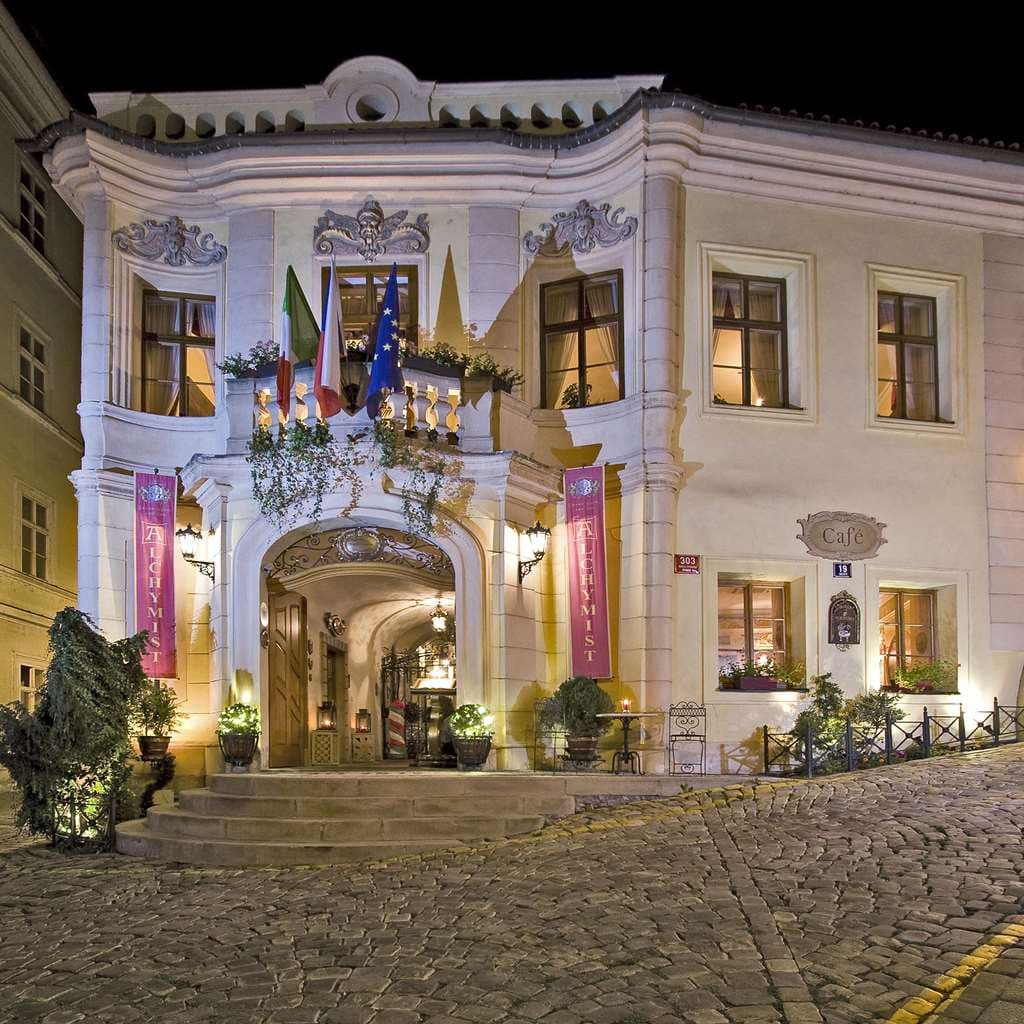
If minimalism is your religion, you are in the wrong parish. Occupying the 16th-century 'House at the Infant Jesus,' the Alchymist is unapologetically theatrical—a riot of gold leaf, heavy velvet, and crystal chandeliers that feels less like a hotel and more like a set from *Amadeus*. This is not a place for subtlety; it is a sensory immersion into the opulent aesthetic of the Habsburgs. The historic footprint demands a trade-off: accessibility is sacrificed for authenticity, requiring guests to navigate a labyrinth of stairs and corridors. However, the rewards are tangible. The Tower Suite features an observatory bed niche with views that justify the climb. Deep within the 11th-century foundation lies the Ecsotica Spa, a curious clash of eras where Indonesian massages are performed under Gothic stone arches. Dining at Aquarius Restaurant anchors the experience with French-Czech fusion—order the lamb loin in herb crust or the tuna tartare with mango. While the service can occasionally feel as formal as the decor, the daily complimentary wine and cheese sessions in the lobby loosen the stiff upper lip. It is moody, historic, and delightfully out of step with the 21st century.
“Request a room facing the leafy central courtyard to avoid the darker inner walls. Don't miss the 5:00 PM complimentary wine and cheese tasting in the lobby.”
Insider TipAvg. Nightly Rate
208USD
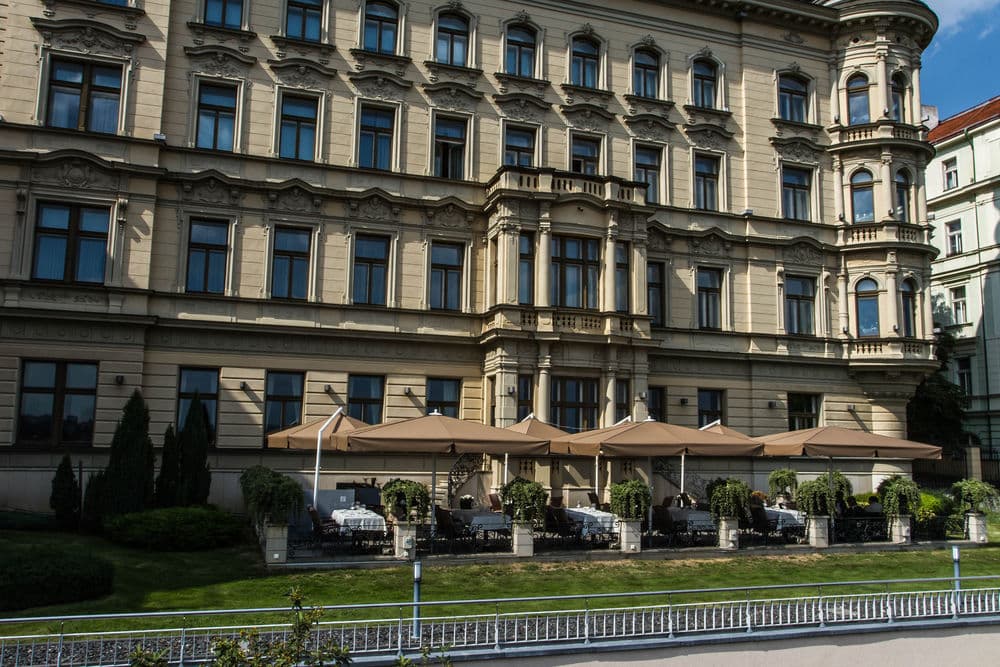
Le Palais Art Hotel isn’t interested in being a generic five-star dormitory; it demands you live the life of a 19th-century Bohemian aristocrat. Originally erected in 1897 as a residential palace, this Vinohrady estate sidesteps the Disneyfied chaos of Old Town for a sophisticated, residential hush. The interiors are a masterclass in preservation, dominated by the authentic frescoes of Luděk Marold—art that belongs in a museum, not merely a lobby. The accommodations, particularly the attic-style Petite Suites, offer dramatic vaulted ceilings and a reassuring solidity, though the climate control can occasionally feel as vintage as the architecture—a small price for genuine atmosphere. Dining at Artista Restaurant is a serious affair; the signature veal rib eye with leek ash is moody, complex, and technically precise. Afterwards, the Pure Spa offers a rare indulgence with Ligne St Barth amenities and a saline-rich salt chamber. This is a property for the traveler who prefers patina over high-gloss polish and quiet grandeur over a location next to the Charles Bridge.
“Skip the main bar for your nightcap; instead, take your Ardbeg 10 YO into the library. With its working fireplace and vintage book collection, it’s the most atmospheric room in the house.”
Insider TipAvg. Nightly Rate
56USD
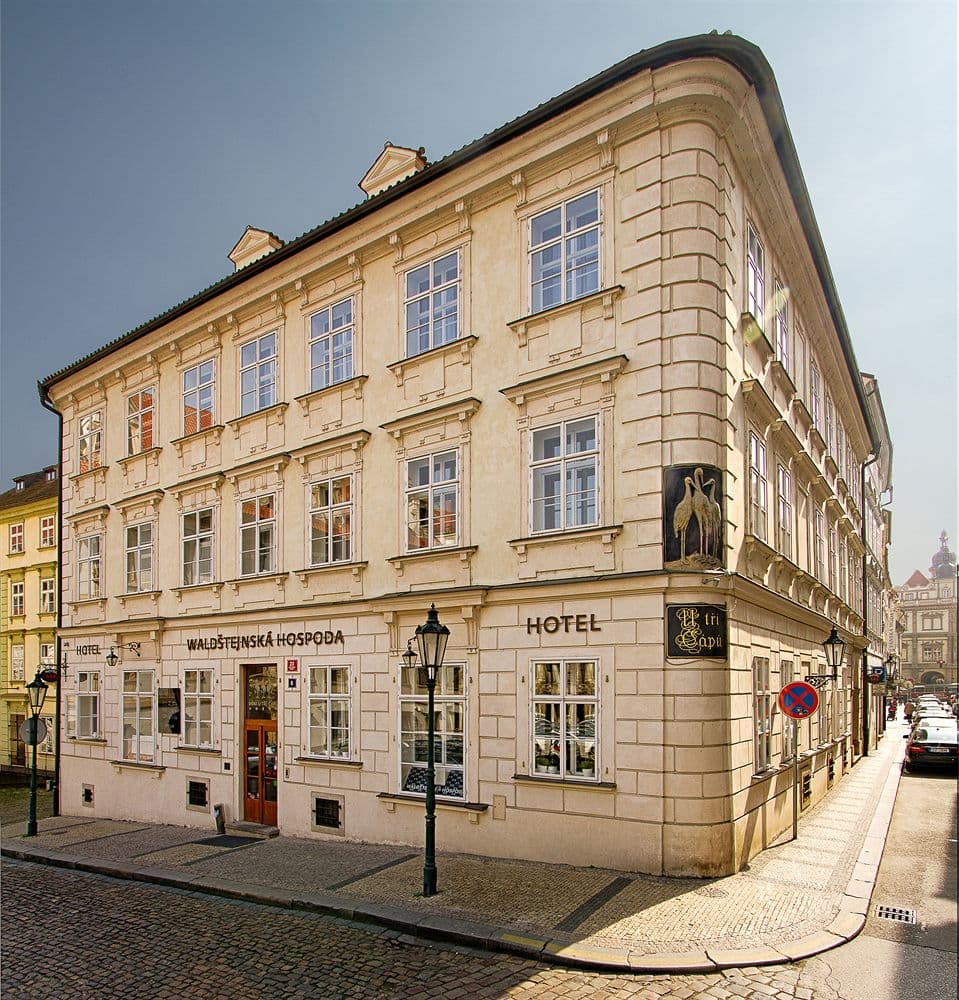
In a city often choking on Gothic kitsch, the Hotel Three Storks operates with the discretion of a confessional. Housed in the 14th-century monastic brewery of the Waldstein Palace, the structure’s Renaissance bones have been surgically sharpened by architect Eva Jiřičná. Her signature glass-and-steel interventions—most notably a panoramic elevator and a light-flooded atrium—slice through the brooding history of Malá Strana, proving that heritage preservation doesn't require living in the dark. With only 21 keys, the scale is strictly residential. Standard quarters are tight (a humble 16 square meters), but the custom joinery and original lithographs by Czech artist Adolf Born distract from the footprint. There is no spa to sweat out the pilsner; instead, wellness here is practiced at the table. The on-site Valdštejnská hospoda serves a confit duck leg with red cabbage that is non-negotiable, a dish so rich it requires a subsequent hike up the steep cobblestones to the Castle gates just 300 meters away. Service is sharp and devoid of the sullen indifference found in Prague’s grander dames—a rare sanctuary where the staff actually remembers your coffee order.
“Book a Deluxe room on the top floor (Attic). The elevator stops at the second floor, requiring a walk up the final flight, but the reward is a direct eye-level view of the Prague Castle tiles through the dormer windows.”
Insider TipAvg. Nightly Rate
130USD
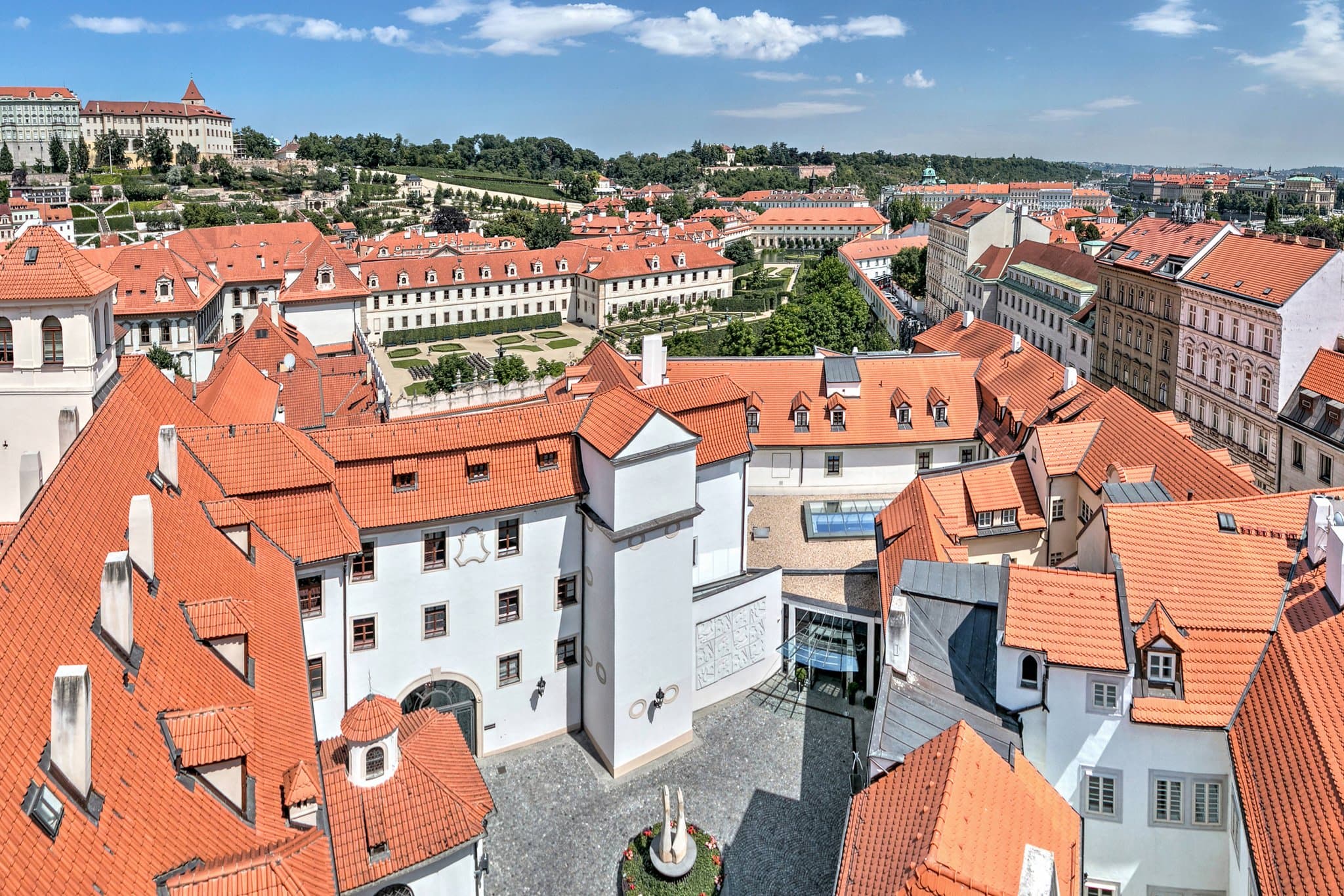
Prague’s Gothic melodrama often feels performative on the Charles Bridge, but behind the high walls of the Augustine, the quiet is tangible. Inhabited by active Augustinian monks, this 13th-century complex is less a hotel and more a sanctified fortress of solitude in Malá Strana. The transition from austerity to opulence is managed with Cubist-inspired furniture and heavy velvets, though the layout retains its monastic idiosyncrasies—some suites lack bedroom doors, a spatial quirk that tests modern intimacy, and the AC struggles to battle the humidity during transitional seasons. Dining here is a ritual. Skip the tourist goulash in town for the 'Augustine Restaurant', where the Corn-fed Chicken Supreme arrives with truffle potato croquettes that border on sinful. But the real religion is found in 'The Refectory Bar 1887'. Under Baroque ceiling frescoes, the St. Thomas Beer—a dark lager brewed to a 14th-century recipe—is the only sacrament you need. While the spa's recent renovation closures have frustrated some, the ILA organic skincare treatments remain a draw when available. It is a property for diplomats and introverts who prefer the 'secret garden' to the paparazzi-prone squares—imperfect, yes, but historically unimpeachable.
“Book the Tower Suite for 360-degree views, but request a private tour of the Monastic Library—it’s usually off-limits to the public.”
Insider TipAvg. Nightly Rate
271USD
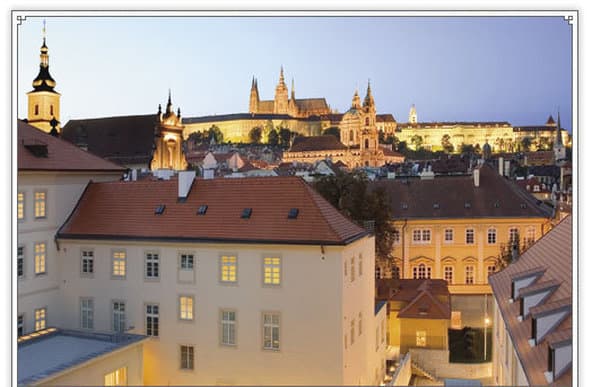
Forget the tourist crush of the nearby Charles Bridge; true luxury in Prague is measured in decibels, or the lack thereof. Tucked behind the unassuming walls of a 14th-century Dominican monastery, this property offers a masterclass in repurposing pious architecture for profane pleasure. The vaulted ceilings and preserved Gothic arches create a moody, atmospheric weight that newer builds simply cannot fake. Inside, the experience is strictly high-church hedonism. Guest rooms in the Garden Wing offer vaulted ceilings and silence so profound it feels expensive, though lower-category rooms can suffer from limited light—a quirk of medieval masonry. The lack of a swimming pool is the only real architectural casualty, but the spa acts as a formidable apology. Housed in a former Renaissance chapel, you tread across glass floors revealing jagged medieval foundations before succumbing to Aromatherapy Associates treatments. Dining at Monastiq eschews international genericism for local pride; the 'Czech Aristocrat' (a butter-tender veal schnitzel) is mandatory. Finish with a 'Whisper of Jade' at the lounge. This is not a hotel for the view-obsessed Instagrammer, but a sanctuary for those who prefer their history lessons served with 400-thread-count linens and exemplary concierge discretion.
“Since there is no main pool, book a Lazar Suite or the Presidential Suite to secure your own private vitality pool. For maximum quiet, request the Garden Wing facing the courtyard.”
Insider TipAvg. Nightly Rate
293USD
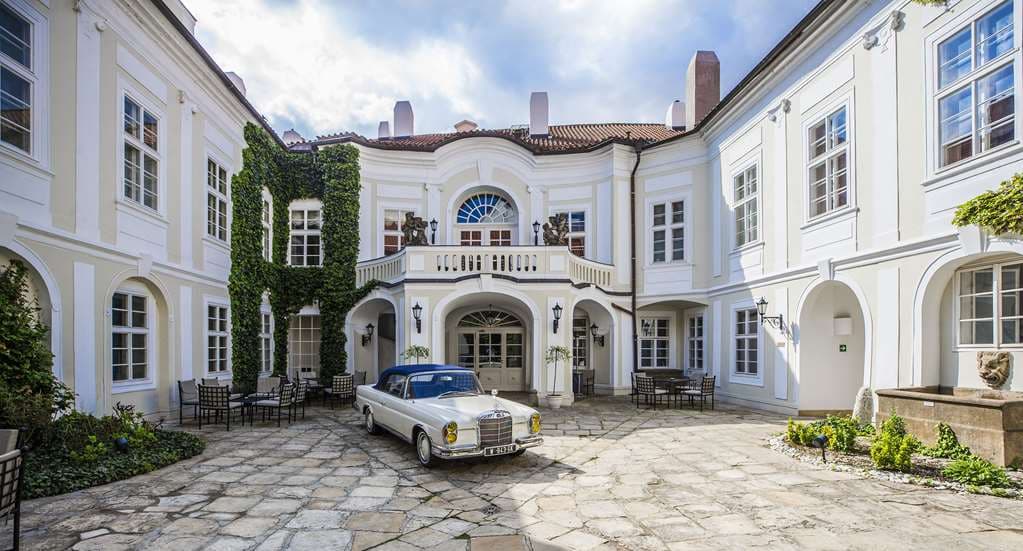
If you demand the clinical sterility of a chain hotel, look elsewhere. The Mozart—formerly the Pachta Palace—is for those who prefer their luxury with a heavy dose of patina. This 17th-century Baroque residence, just a minute’s stumble from the Charles Bridge, feels less like a hotel and more like the eccentric estate of a noble aunt who refuses to renovate. You are here for the bones of the place: the original Rococo frescoes in the Full Fresco Baroque Room and the courtyards where Casanova and Mozart once lingered. The reality, however, is a bit frayed. The carpets in the common areas have seen better decades, and the absence of a pool is a glaring omission for a five-star claim, though the infrared sauna with lavender oils attempts a modest apology. Redemption comes at dinner. The on-site steakhouse, MeatEater, ignores the historic whimsy for serious carnivorous business—the A4 Wagyu tartare is exceptional. Service is the saving grace; the concierge team manages to be warm without the stiff formality of the nearby competition. Ultimately, you stay here for the atmosphere, not the amenities. It is a moody, romantic relic that trades polish for genuine history.
“Skip the standard rooms which can feel dark; book a River View Suite for a direct line of sight to Charles Bridge. Ask specifically for a room with high ceilings to avoid the slanted rooflines on the top floor.”
Insider TipAvg. Nightly Rate
188USD
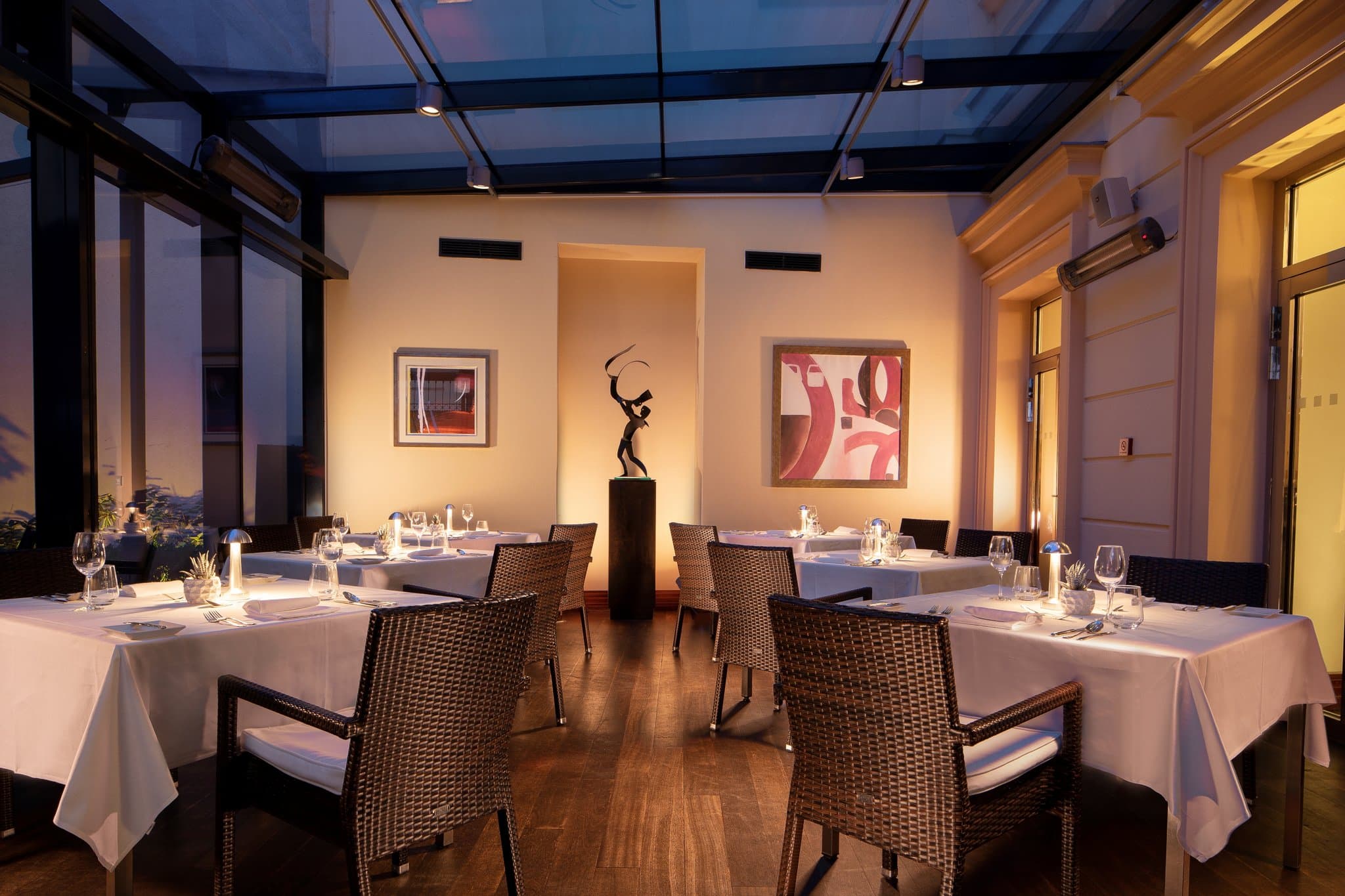
The Grand Mark Prague is a masterclass in Baroque stealth. Located on Hybernská street, mere steps from the frantic energy of the Powder Tower, this 17th-century residential palace pulls a magnificent sleight of hand: it feels completely removed from the city it inhabits. The draw here isn’t just the meticulously restored façade; it’s the 1,800-square-meter private courtyard garden—a rare, leafy lung in Prague 1 where resident peacocks strut with the entitlement of the original noble owners. Inside, the vibe shifts from historic weight to modern residential ease. Unlike the cramped quarters of many Old Town hotels, the suites here are vast, many equipped with full kitchenettes—a detail that transforms a hotel stay into a pied-à-terre experience. Expect high ceilings, Floris amenities, and a layout that favors privacy over pomp. Dining at Le Grill leans into modern Bohemian flair; the roasted duck breast is a requisite order, followed inevitably by the signature Grand Mark Cake. While the wellness area’s 'pool' is frankly more of an oversized hydro-massage tub, the service makes up for the square footage. Concierge Bilal is the standout asset here, unlocking the city with a precision that rivals the concierge desk at the Four Seasons.
“Request a Garden View Suite on the 2nd floor for the best vantage point of the peacocks without the noise of the ground-level terrace.”
Insider TipAvg. Nightly Rate
276USD