No. 01
Eloy Alfaro N34 151 Y Catalina Quito EcuadorQuito556 verified reviews
9
.2
Bitvoya Edit
Layering imagery, place, and detail before the page opens.
Quito is currently undergoing a gastronomic renaissance, where the rich biodiversity of the Andes meets contemporary culinary techniques. For the discerning traveler, the city's hotel scene offers more than just a place to sleep; it serves as the gateway to 'New Ecuadorian Cuisine.' In the heart of the Centro Histórico, properties like Casa Gangotena and Carlota Sustainable Design Hotel are transforming ancestral recipes into modern masterpieces. Meanwhile, the modern districts surrounding La Carolina host international standards of luxury at the JW Marriott and Go Quito Hotel. Just beyond the city limits, the cloud forests of the Chocó region offer an immersive biodynamic food experience at Mashpi Lodge. This collection curates the finest epicurean enclaves where hospitality and high gastronomy converge.
Quito has emerged as a powerhouse in the South American culinary scene. The rise of "New Ecuadorian Cuisine" is best experienced within its luxury hotels, where executive chefs have the resources to source ingredients from the country's three diverse worlds: the Coast, the Andes, and the Amazon. Staying at these properties allows guests to enjoy zero-kilometer sourcing, organic gardens, and tasting menus that rival the best in Lima or Bogota. From the iconic Hilton Colon Quito with its renowned Sal & Pimienta gourmet corner to the avant-garde dishes at Mashpi Lodge in the cloud forest, food is a central pillar of the hospitality experience.
Expect a fusion of ancestral knowledge and molecular gastronomy. Chefs in these epicurean enclaves focus heavily on seasonality and sustainability. You will encounter ingredients like mashua (an Andean tuber), taxo (banana passionfruit), and sustainably sourced paiche from the Amazon. Breakfasts are feasts of exotic fruits and fresh artisanal breads. Dinners are often multi-course affairs paired with South American wines. Whether it's the high-altitude comfort food at Casa Gangotena or the biodiverse dining room of Mashpi, these hotels define the new era of Ecuadorian taste.
Casa Gangotena is widely considered the top choice for traditional Ecuadorian cuisine elevated to fine dining standards, located in the heart of the historic center.
Mashpi Lodge is located within the Metropolitan District of Quito, but it is a 3-hour drive from the city center, situated in the Andean cloud forest reserve.
Yes, hotels like Carlota and JW Marriott Quito offer extensive vegetarian and vegan menus, utilizing the diverse produce available in the Andean region.
Explore our complete curated list of luxury accommodations, from boutique hideaways to grand dames.
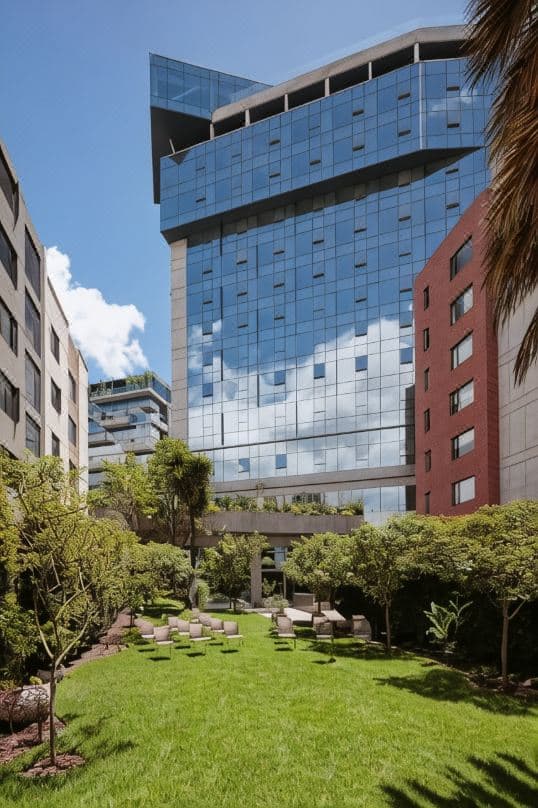
Explore All Quito HotelsIf the World Travel Awards crowning Go Quito as "South America’s Leading New Hotel 2025" feels like hype, a sunset Negroni at the Parallel Bar suggests otherwise. This isn’t just a hotel; it’s a confident architectural statement in a city often clinging to colonial nostalgia. The vibe is unapologetically industrial-chic—think exposed beams softened by indigenous textiles, a visual dialogue between Quito’s grit and its craft. The rooms are smart in every sense, featuring intuitive automation that actually works and window nooks that feel like you're floating over the capital. However, the road-facing glass is thinner than one might hope; light sleepers should request an inner courtyard suite to avoid the morning traffic hum. But the real draw is the culinary ambition. Panecillo Cocina & Mirador isn't just relying on its jaw-dropping views of the Virgin of El Panecillo. The kitchen executes a daring Andean-Mediterranean fusion—the ceviche is bright and acid-forward, while the wood-fired pizzas offer a comforting counterpoint. Service is eager, though occasionally chaotic with billing—a forgivable teething issue for a venue this fresh. It’s the new heavyweight champion of Quito hospitality.
“Skip the standard rooms; book a 'City View' suite on the 10th floor or higher to clear the noise line and get the unblocked panorama of the Pichincha volcano.”
Insider TipAvg. Nightly Rate
140USD
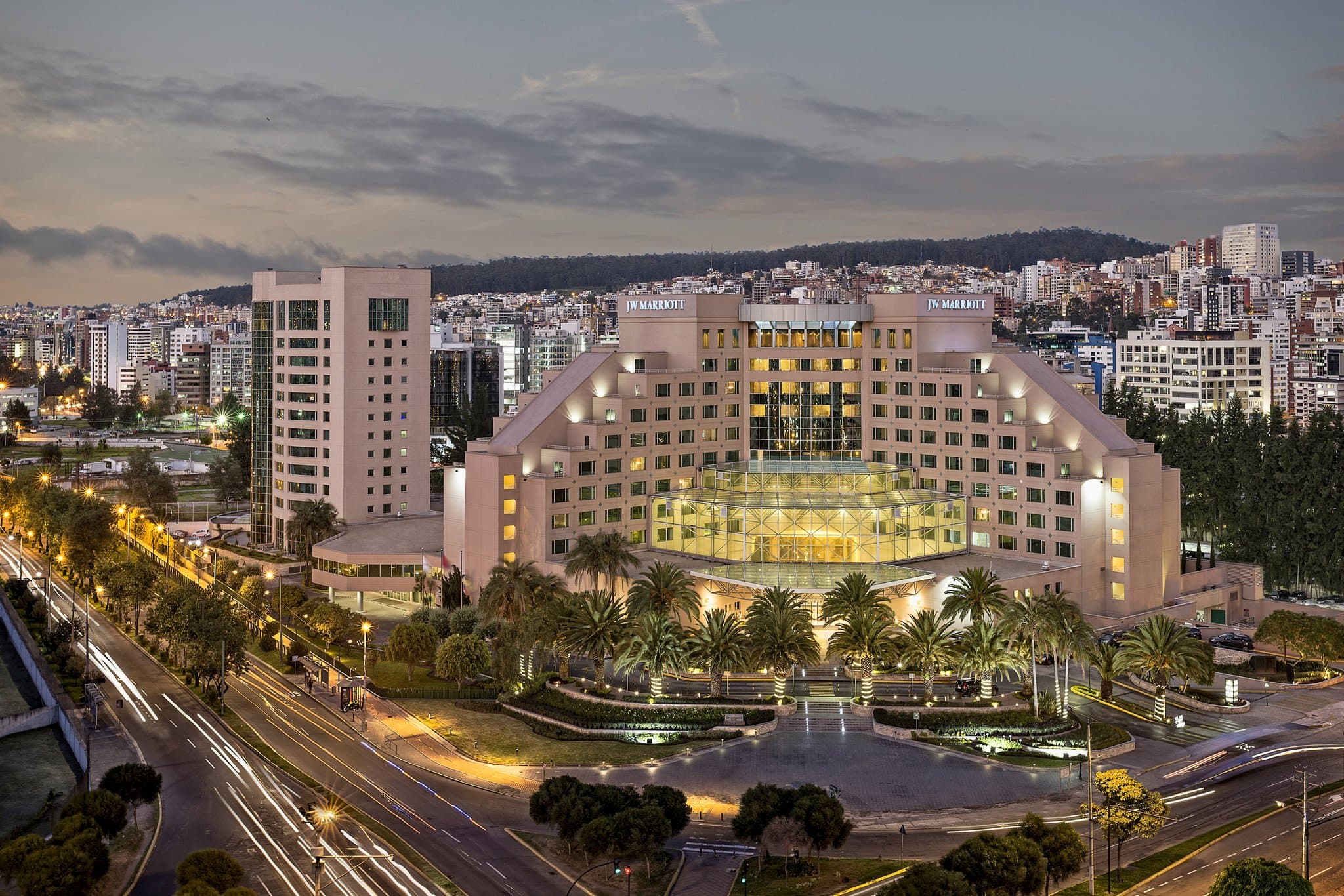
From the street, the JW Marriott Quito resembles a geometric fortress, a jagged pyramid cutting into the Andean skyline. But pass through the glass-ceilinged atrium—draped in hanging vines that soften the corporate brutalism—and you find a property actively shedding its 'business travel only' reputation. The rooms are textbook Marriott: crisp 400-thread count linens, ergonomic desks, and oversized marble baths, though the lighting can be punishingly dim for morning grooming. The real pivot happens at Raices. While the lobby hosts the inevitable Fogo de Chão, Raices commits to serious Ecuadorian gastronomy. The Pulpo Anticuchado is charred to perfection, and the Smoked Pirarucu offers a rare, earthy taste of the Amazon that feels miles away from room service club sandwiches. It’s no wonder the property snagged 'Ecuador's Leading Hotel' at the 2025 World Travel Awards. While the outdoor pool is visually stunning with its waterfalls, the building’s shadow keeps the water brisk. Skip the swim and head to the Zumay Health Club for a Dr. Babor facial instead. Verdict: A business titan that finally learned to cook.
“The outdoor pool loses direct sunlight early due to the building's height. For heat, use the indoor whirlpool in the Zumay spa or book a treatment to access the Turkish bath.”
Insider TipAvg. Nightly Rate
143USD
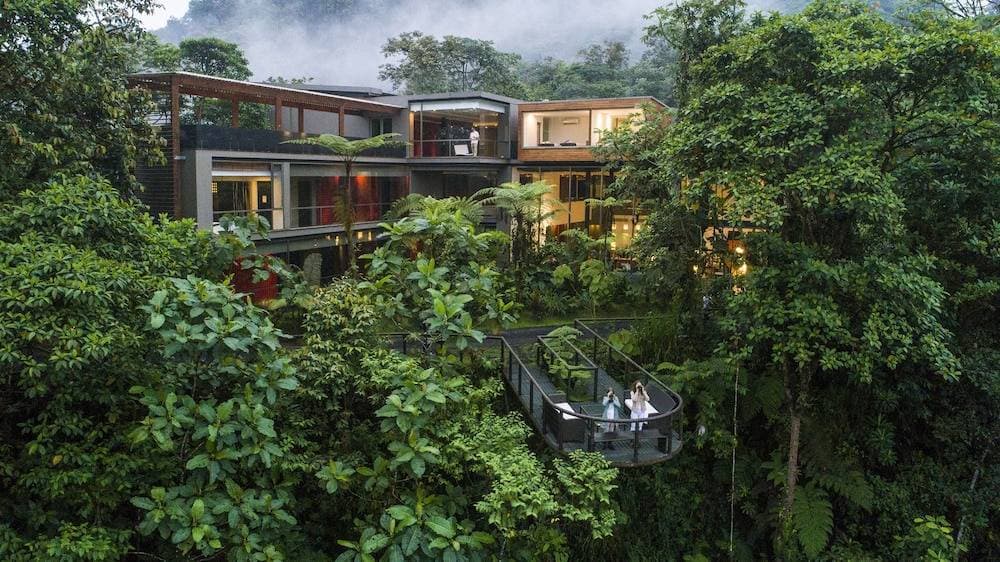
The journey to Mashpi Lodge is a three-hour shedding of urban skin, a winding, bumpy transition from Quito’s colonial stones to the verdant chaos of the Chocó-Andean cloud forest. But upon arrival, the mud is forgotten. The lodge rises like a modernist vivarium, a stark steel-and-glass box suspended in the mist—less ‘eco-lodge’ and more a Bond villain’s lair dedicated to preservation rather than world domination. Inside, the experience is strictly high-definition immersion. My Yaku Suite was a theater of biodiversity; with floor-to-ceiling glass, the only separation between my Philippe Starck bathtub and a foraging howler monkey was a pane of reinforced transparency. But for the epicurean, the real drama unfolds in ‘The Dining Room’. Here, the kitchen doesn’t just source locally; they forage within walking distance. The *Maito de pescado* is a revelation—river fish steamed inside a Bijao leaf, seasoned with wild forest garlic and jungle chillies that deliver a heat entirely different from the Andean rocoto. It is sustainable luxury with teeth. Pre-dinner, ‘The Explorer’s Bar’ is non-negotiable. Order *The Cítrico*, a mixology experiment utilizing native citrus that makes a standard pisco sour feel pedestrian. Between the dragonfly gondola rides and the Samay Wellness Center’s magnolia-infused massages, Mashpi proves that deep ecology and high thread counts are not mutually exclusive—they are, in fact, the new standard for Latin American luxury.
“Request Room 11. Unlike the other suites, it sits at the building's end and features glass walls on two sides for a panoramic, wrap-around view of the canopy.”
Insider TipAvg. Nightly Rate
1029USD
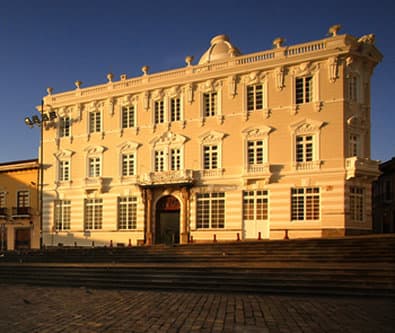
Forget the minimalist glass boxes; Casa Gangotena is a lesson in maximalist preservation. Dominating the corner of Plaza San Francisco, this Relais & Châteaux mansion functions less like a hotel and more like the city’s grandest living room. The crimson-walled lobby and the soaring, glass-covered atrium—where the 'Quiteño Afternoon Tea' is a non-negotiable ritual—set a cinematic stage that rightfully earned it a Michelin Key in 2025. While the lack of a swimming pool might deter the lap-swimming purist, the culinary programming swiftly corrects any grievances. Under the banner of 'Cocina Mestiza,' the kitchen performs anthropological magic. The *Locro de Papa* is velvety enough to redefine comfort food, while the Amazonian Paiche is treated with the reverence usually reserved for Kobe beef. Upstairs, the rooms are exercises in Art Deco restraint—think soaring ceilings, heavy drapes, and white-and-black veined marble bathrooms that feel reassuringly solid. It is pricey, and the Old Town traffic is a headache, but for this level of gastronomic prowess and history, the logistics are a minor tax.
“Skip the street-level view; book a Balcony Junior Suite on the second floor. You get a private, direct line of sight to the San Francisco Church domes—best enjoyed with a 'Fiesta Cocktail' in hand as the facade lights up at dusk.”
Insider TipAvg. Nightly Rate
374USD
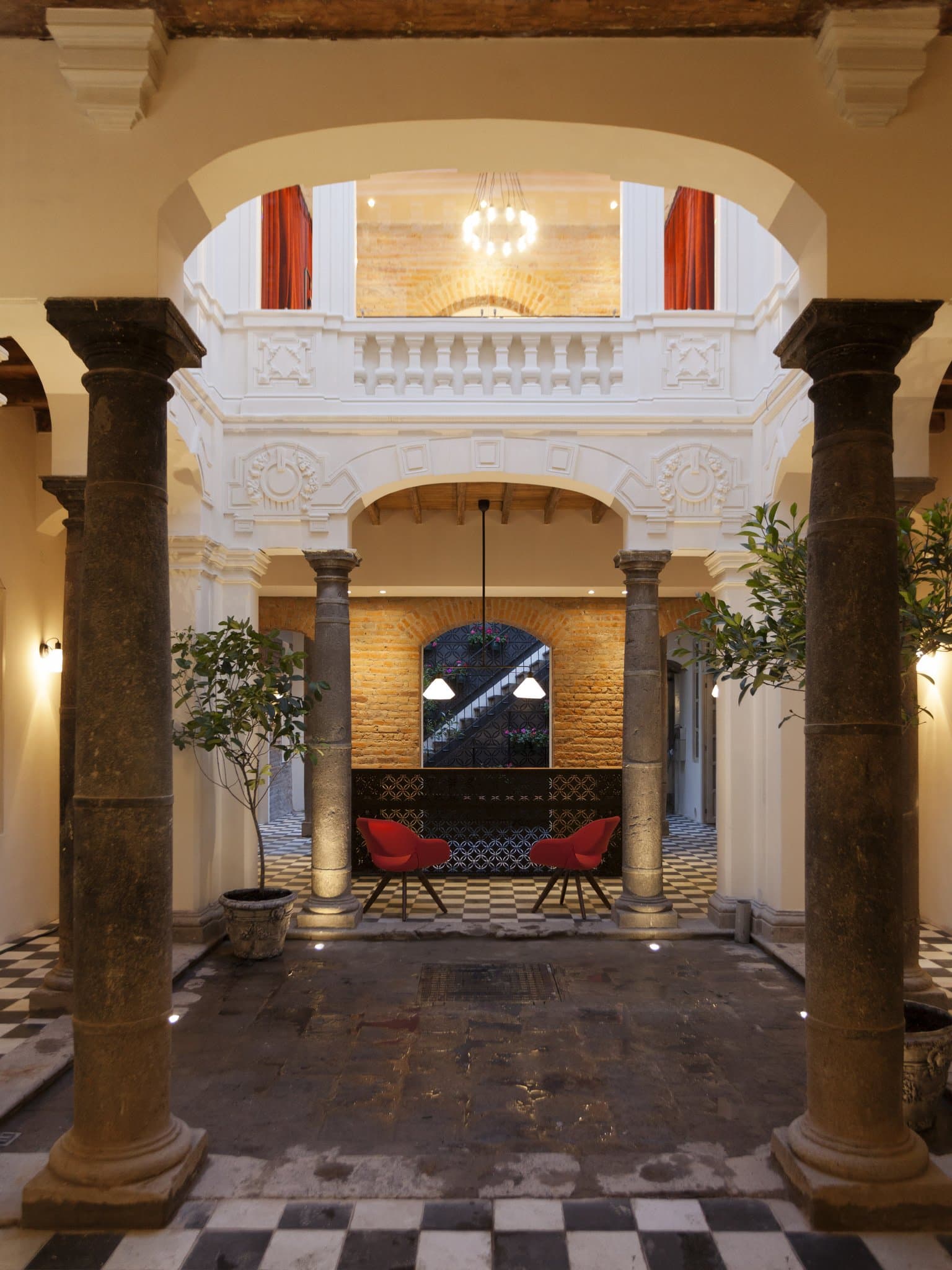
In a UNESCO heritage site often dominated by colonial heavyweights, Carlota Sustainable Design Hotel is a sharp, modernist jolt. Housed in a 1905 building—renovated by architect Veronica Reed and named after the owner’s grandmother—this 12-room property doesn't just pay lip service to eco-consciousness; it engineers it. The central atrium, with its soaring vertical gardens and glass skylight, acts as the hotel's lungs, immediately signaling that this is no dusty antique. Rooms are a masterclass in industrial eco-chic, featuring exposed brick, upcycled materials, and hypoallergenic alpaca duvets, though the historic footprint means some quarters are intimate (read: snug) and lack external windows. It’s a fair trade-off for the rooftop lounge, which serves up a dead-on view of the Basilica del Voto Nacional alongside signature cocktails. Downstairs at Bistro 626, the kitchen ignores safe tourist staples in favor of daring urban fusion—the coffee toffee chocolate ravioli is a non-negotiable order. With its recent inclusion in the Michelin Guide hotel selection, Carlota proves that responsible hospitality doesn't have to be beige.
“The historic layout means some 'Standard' rooms lack natural light. For the full experience, book the Loft or a Plaza View suite to ensure you have external windows.”
Insider TipAvg. Nightly Rate
120USD
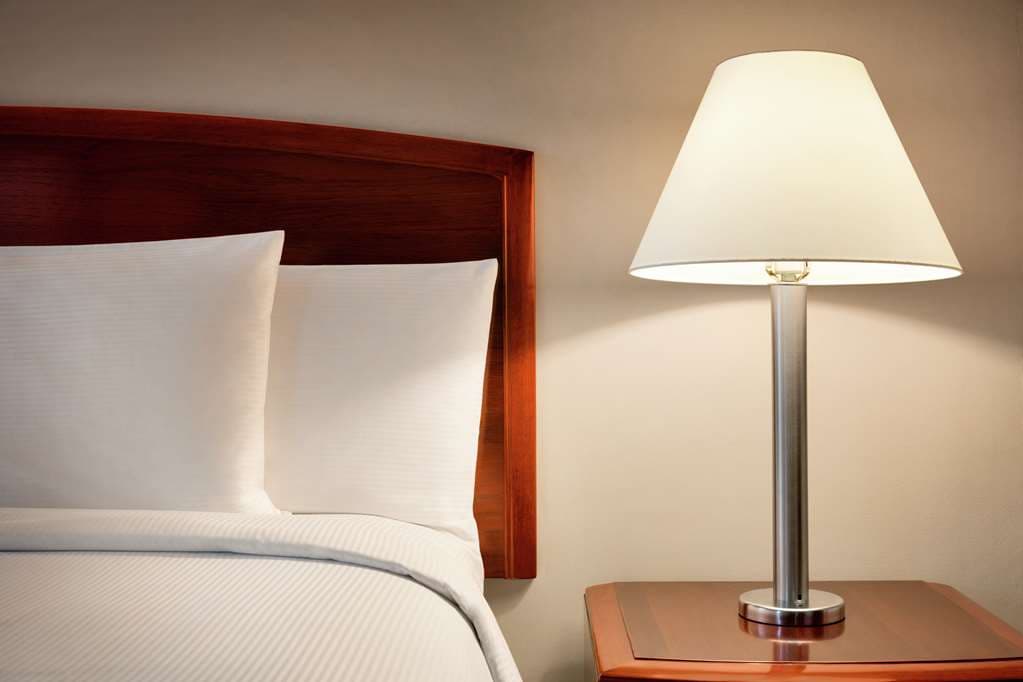
In a capital increasingly crowded with glass-box boutique hotels, the Hilton Colon remains the unshakeable grand dame of Quito—a place where the marble is cold, the handshakes are firm, and the *Locro de Papa* is non-negotiable. While the interiors in the main tower skew unapologetically 'corporate 90s'—think heavy carpets and brass railings—this property understands its assignment perfectly: absolute consistency in a city of high-altitude variables. The draw here isn't the Hilton Serenity Beds (though they remain the best cure for jet lag after a red-eye from Miami); it’s the *Café Colón*. This isn't a hotel restaurant; it is a civic institution where Quiteño politicians and business titans break bread over the city’s definitive potato soup, rich with avocado and local cheese. The culinary precision extends to the *Kioto Sushi Bar*, a surprising exercise in restraint where rolls feature Ecuadorian plantain without descending into fusion chaos. Service is old-world and telepathic; the Concierge team doesn't just book tours, they have the cell phone numbers of the best guides for Cotopaxi. It’s not the trendiest stay in Quito, but it is undoubtedly the tastiest.
“Skip the standard street-view rooms. Request a high-floor suite in the 'La Pinta' tower facing the Old Town; the morning view of the Pichincha volcano is worth the upgrade.”
Insider TipAvg. Nightly Rate
80USD