No. 01
首尔江西区94, Banghwa-daeroSeoul1678 verified reviews
9
.6
Bitvoya Edit
Layering imagery, place, and detail before the page opens.
Seoul is a city where centuries-old heritage whispers amidst gleaming skyscrapers. For the discerning traveler seeking a connection to the past without sacrificing modern opulence, our curated collection of 'Modern Hanoks' and heritage-inspired luxury hotels offers an unparalleled experience. From the historic grandeur of Jongno-gu to the serene slopes of Namsan Mountain, these properties redefine traditional Korean aesthetics.
Experience the gentle curves of a giwa roof at the Mayfield Hotel or the geomantic perfection of The Shilla. Whether it's the contemporary interpretation of lattice screens at the Four Seasons or the juxtaposition of the ancient Heunginjimun Gate view from JW Marriott Dongdaemun, these sanctuaries invite you to slow down and savor the timeless tranquility of Seoul.
While traditional Hanoks offer history, Seoul's luxury hotels have mastered the art of fusing this heritage with world-class comfort. Properties like The Shilla Seoul and Grand Hyatt Seoul incorporate the concept of 'Ondol' (heated floors) and traditional architectural motifs into their suites, providing a 'Modern Hanok' experience. Choosing these properties means accessing state-of-the-art spas, fine dining, and concierge services while still being enveloped in the serenity of Korean design philosophy. It is the ultimate balance for travelers who appreciate the aesthetic of the Joseon Dynasty but demand the amenities of the 21st century.
To fully immerse yourself in this blend of old and new, location is key:
In these exquisite properties, expect a design language that speaks of 'Yeobaek'—the beauty of emptiness. Unlike standard Western luxury, these hotels emphasize natural materials like wood, granite, and hanji paper. You can expect tea ceremonies, landscaped gardens like those at the Mayfield Hotel Seoul, and panoramic views that frame the city's palaces like living artwork. It is a stay defined not just by what is there, but by the peaceful space created for you to unwind.
The Mayfield Hotel Seoul features traditional buildings like Bongraeheon within its grounds, while The Shilla Seoul is famous for its Yeong Bin Gwan banquet hall, built in the traditional Hanok style.
Yes, the Four Seasons Hotel Seoul is very close to Bukchon Hanok Village, and JW Marriott Dongdaemun Square is a short distance from Namsangol Hanok Village.
Many, including The Westin Josun and Grand Hyatt Seoul, offer specific 'Ondol' suites that feature heated floors and traditional bedding concepts with modern comfort.
Explore our complete curated list of luxury accommodations, from boutique hideaways to grand dames.
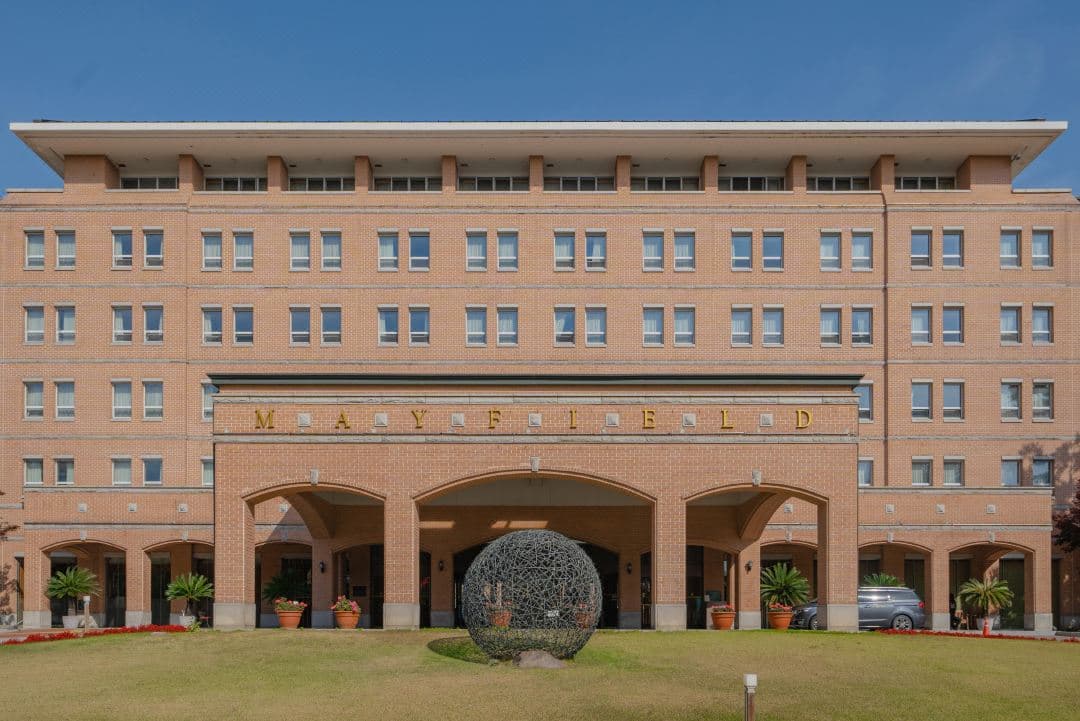
Explore All Seoul HotelsWhile the rest of Seoul races toward glass-and-steel futurism, Mayfield Hotel Seoul executes a rare magic trick: time travel. Located just minutes from Gimpo Airport, this 5-star estate feels less like a transit hotel and more like a Joseon Dynasty nobleman’s summer villa dropped into a European botanical garden. The draw here isn't the lobby’s marble—it’s the sprawling 100,000-square-meter grounds where the Bongraeheon and Nakwon hanoks stand in stark, timbered glory against the manicured lawns. Inside, the experience oscillates between eras. Request the renovated rooms to avoid the slight fatigue of the older carpets; you want the crisp, modern lines that frame the garden views, accompanied by Nespresso machines and Acqua di Parma toiletries that signal you haven’t actually left the 21st century. But the real theater happens at Bongraeheon. Under the stewardship of Chef Lee Geum-hee (fresh from her 'Black and White Chef' acclaim), the new 'Hwayeon' winter course is a masterclass in royal cuisine—the Princess Bamjuk (chestnut porridge) is startlingly delicate. It’s a place to walk off a galbi lunch from Nakwon under the Bell Tower, pretending the city’s roar is a world away. It is, quite simply, Seoul’s most sophisticated pause button.
“Skip the standard city-view rooms. Explicitly request a 'Garden View' room facing the Bell Tower and Hanok roofs to wake up to Seoul’s most pastoral scene. For dinner, book the private 'Geumgang' course at Bongraeheon at least two weeks in advance.”
Insider TipAvg. Nightly Rate
101USD
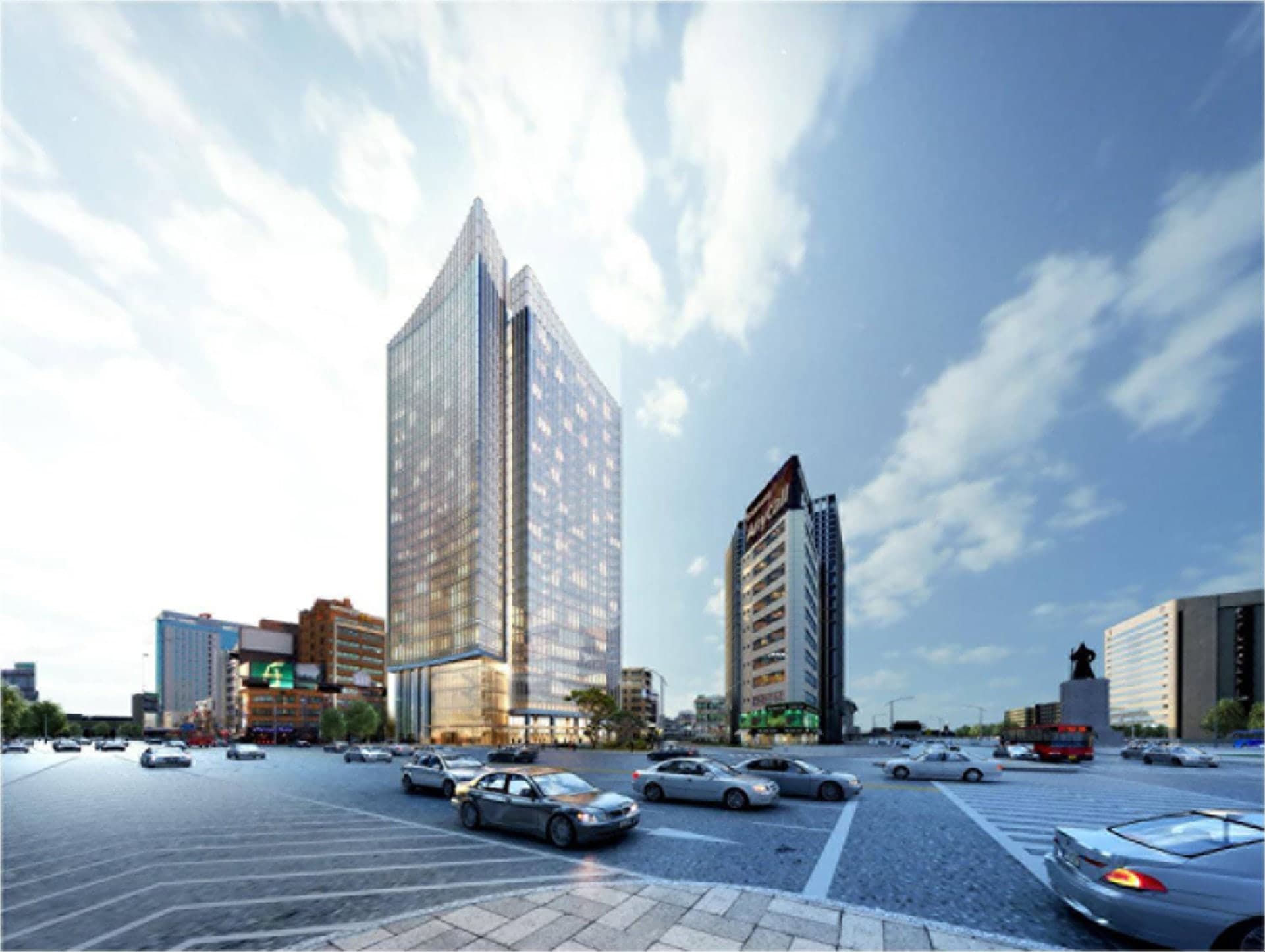
If Gyeongbokgung Palace is Seoul’s historic soul, the Four Seasons is its glittering, futuristic bodyguard. Situated just steps from the royal grounds, this property doesn't just offer a view of history—it reinterprets it. The interiors are a lesson in subtlety; forget dragons and gold leaf. Instead, think geometric Korean screens and light-filled voids that mimic the airy courtyard of a traditional hanok, all executed with razor-sharp modern precision. The rooms are sanctuaries of silence above the city’s frenetic energy. Floor-to-ceiling windows turn the palace grounds into a living mural, while the customized messages scrawled on your bathroom mirror add a cheeky, personalized touch to the otherwise sleek marble aesthetic. Service here is telepathic; housekeeping organizes your charging cables with branded ties before you even realize they’re messy. Dining is a destination in itself. You’ll find Seoul’s movers and shakers dissecting deals over Peking Duck at the Michelin-recognized Yu Yuan, or disappearing behind a nondescript wall to sip the 'Ms. Frida' at Charles H., the speakeasy that feels more New York than Jongno-gu. Between the high-tech golf simulator and the subterranean spa—where the Korean sauna experience gets a five-star upgrade with Biologique Recherche treatments—this isn't just a hotel. It’s Seoul’s most sophisticated playground.
“Skip the main lobby entrance for drinks. To access Charles H., look for the hidden door near the staircase in the lower lobby—it's unmarked, adding to the thrill.”
Insider TipAvg. Nightly Rate
406USD
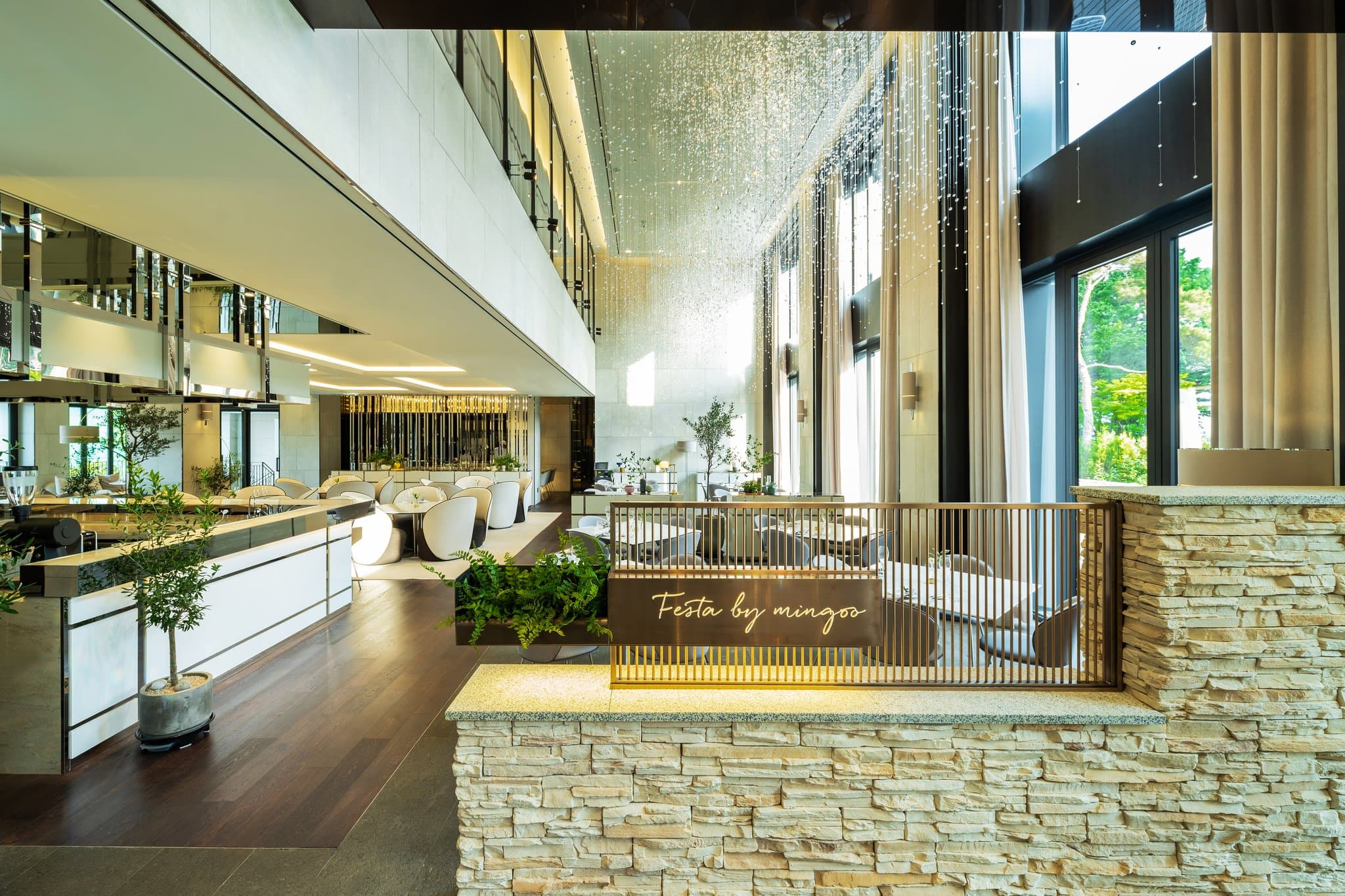
If the frantic pulse of Hongdae is one end of the Seoul spectrum, Banyan Tree Club & Spa is the other: a fortress of solitude perched on the slopes of Mount Namsan. This isn't just a hotel; it’s primarily a private social club, which lends an air of exclusionary cool—and occasionally, a palpable divide between 'Member' and 'Guest'. The aesthetic here eschews the expected hanok kitsch for sleek, dark stone and timber. The *Namsan Pool Deluxe Room* is the showstopper. Forget standard bathtubs; these rooms feature massive in-room relaxation pools—veritable plunge tanks capable of fitting a family of four—positioned right against windows framing the N Seoul Tower. It is a surreal, cinematic bathing experience. Dining requires a strategy. *Festa by Choonghu* serves impeccable charcoal-grilled 1++ Hanwoo beef, while the *Moon Bar* on the 20th floor offers whisky flights with a vertical drop view of the city. However, the property shows its age in the details (centralized climate control can be finicky), and the 'Oasis' outdoor pool is a summer hotspot often dominated by Seoul’s elite social set. Verdict: A bucket-list recharge for wellness obsessives, provided you don't mind the steep taxi rides to civilization.
“Skip the standard rooms. The premium for a 'Namsan Pool Deluxe' is non-negotiable for the iconic tower view from your private soaking tub.”
Insider TipAvg. Nightly Rate
271USD
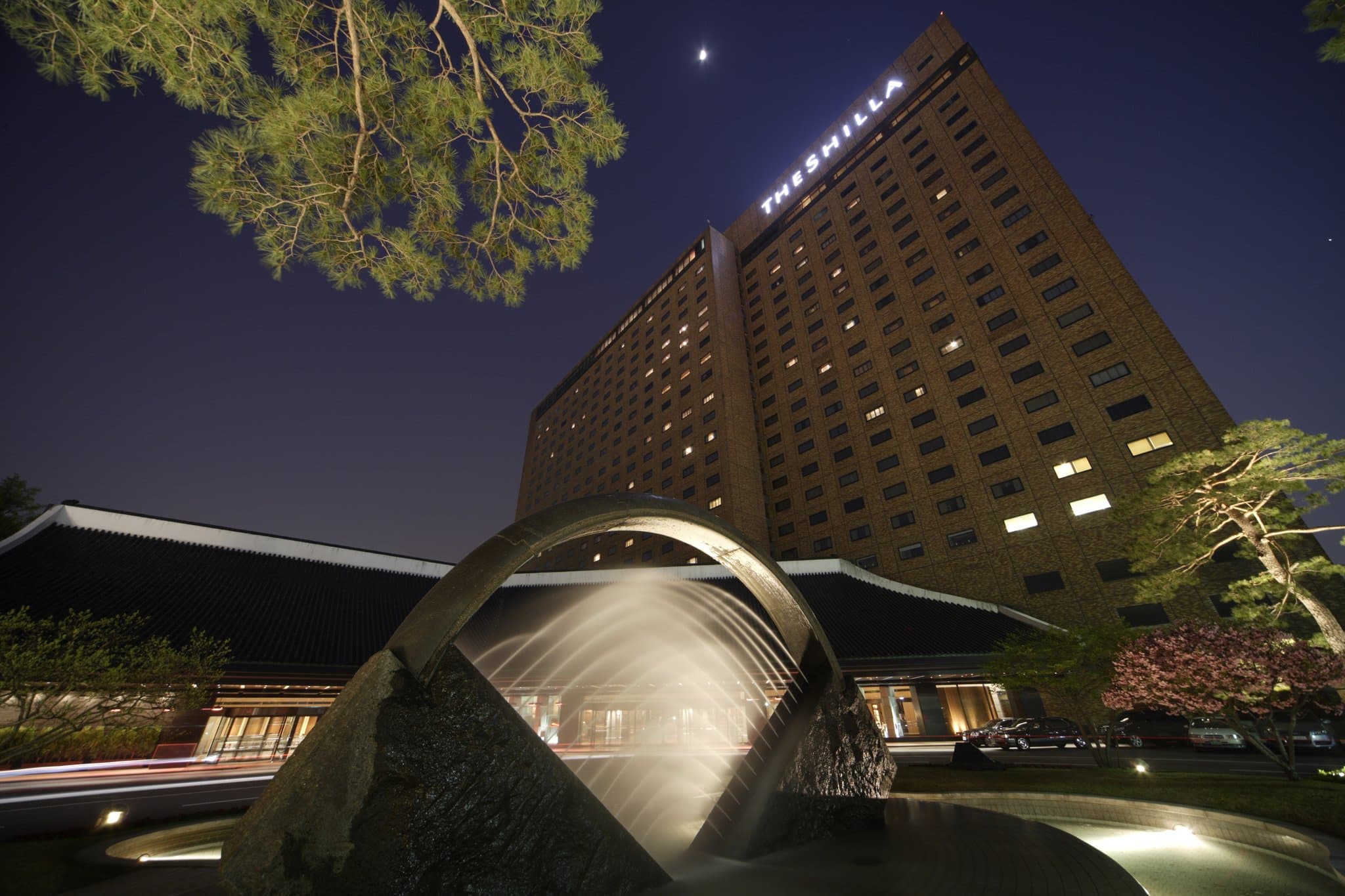
Perched on the slopes of Namsan like a corporate fortress, The Shilla Seoul is the physical embodiment of South Korea’s 'miracle on the Han'—a 1979 brutalist tower that somehow feels softer than a cloud when you step inside. While newer entrants like Signiel chase altitude, The Shilla trades in heritage. The visual anchor here isn't the city view (though the N Tower vistas are stellar), but the Yeong Bin Gwan, the traditional Hanok guesthouse that sits in the courtyard like a royal jewel. It is the reason this hotel anchors our 'Modern Hanoks' feature; seeing its curved Giwa roofs dusted with snow from your 23rd-floor window is the quintessential Seoul vignette. Inside, the lobby is dominated by Bahk Seon-ghi’s 'An Aggregation'—thousands of clear acrylic beads suspended like a frozen meteor shower. The rooms are studies in 'Samsung-standard' precision: yacht-like woods, remote-controlled sheer curtains, and soundproofing so absolute it’s unnerving. Dining is a power move. The Parkview isn't just a buffet; it's a contact sport where Seoul’s elite queue for king crab. Upstairs, the two-Michelin-starred La Yeon serves royal cuisine so precise it feels curated by archivists—the Sinseollo (royal hot pot) is non-negotiable. Verdict: It charges for the sauna and the toothbrush, but for the sheer, unshakeable confidence of Korean luxury, The Shilla has no equal.
“Book an 'Urban Island' package explicitly. Access to the heated outdoor pool is NOT included in standard rates and costs extra. Also, bring your own toothbrush; strict new recycling laws mean the amenity kit in the drawer now comes with a price tag.”
Insider TipAvg. Nightly Rate
176USD
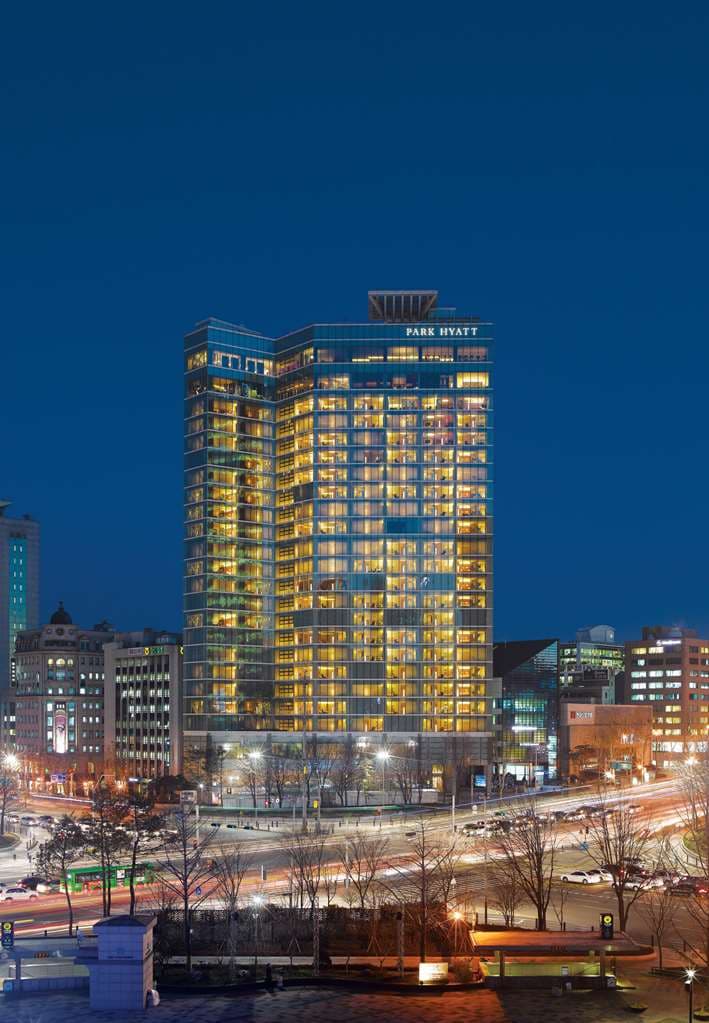
While the rest of Seoul chases the neon-lit future, the Park Hyatt Seoul remains stubbornly, beautifully anchored in stone. Designed by the legendary Japanese firm Super Potato, this property isn't a traditional Hanok, but it captures the Hanok’s soul—the obsession with framing nature (or in this case, the kinetic urban jungle) through timber and rock. The arrival experience alone serves as a palate cleanser: you bypass the street-level chaos and shoot straight to the 24th-floor lobby, a glass box floating in the clouds. Inside the rooms, the 'timeless' descriptor actually holds water. The pale oak and rough-hewn granite interiors feel monastic yet indulgent. The floor-to-ceiling windows turn the traffic of Teheran-ro into a silent, moving painting, best viewed from the granite bathtub that sits, rather daringly, right against the glass (don’t worry, the sheer blinds work). Dining here avoids the trap of hotel blandness. Cornerstone’s signature Tagliolini al Tartufo is a rich, buttery institution in itself, while The Timber House in the basement offers a moodier, vinyl-soundtracked Izakaya vibe with excellent Hanwoo beef. Service is invisible until you need it—the hallmark of true luxury. It’s not just a hotel; it’s a masterclass in urban zen.
“Request a room on the '05' line for the best views of Coex and Bongeunsa Temple. Also, the 24th-floor infinity pool is best visited at sunset—the granite vanishes into the city lights.”
Insider TipAvg. Nightly Rate
400USD
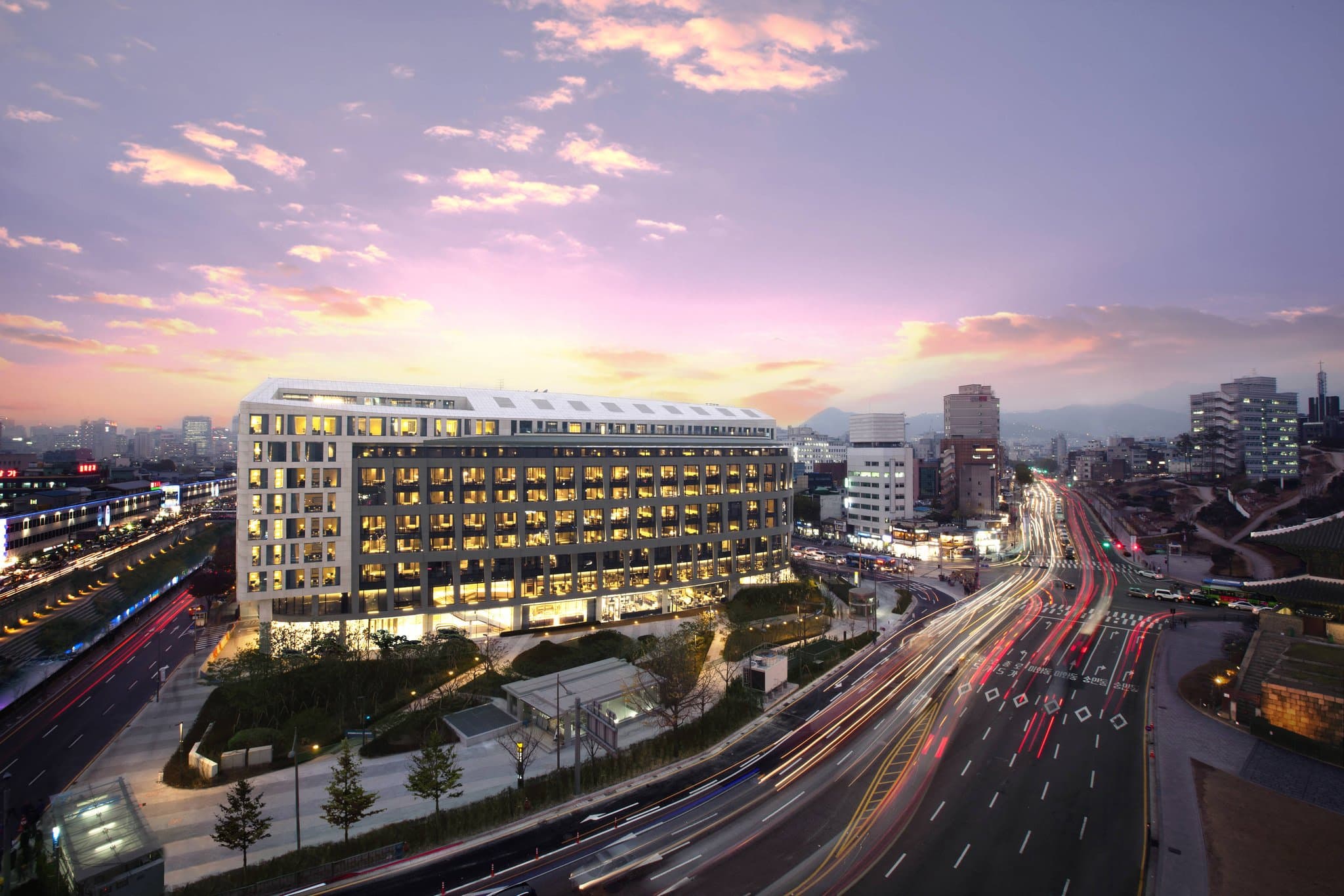
Dongdaemun is Seoul’s frenetic insomniac, a 24-hour neon blur of wholesale fashion and spicy street food. The JW Marriott Dongdaemun Square isn’t just a hotel; it’s the district’s architectural noise-canceling headphone. While the exterior is a sleek, limestone-and-glass grid, the interior experience is curated for a specific, visual dialogue with the 600-year-old Heunginjimun Gate across the street. This is your 'Modern Hanok' element—not a wooden rafter in sight, but a deliberate architectural framing that borrows the ancient gate as your living wallpaper. The design is unashamedly opulent. Club 501, the indoor pool, abandons minimalism for an underwater ballroom aesthetic, complete with crystal chandeliers that reflect off the marble-lined waters—a favorite for the local 'hocance' (hotel-vacance) crowd. Dining is equally theatrical; skip the diet for BLT Steak’s legendary Gruyère popovers, which arrive the size of softballs, or head to Tavolo 24 for proper Galbi. Service is sharp, though the strictly enforced 'no outside food' policy is a quirk that borders on draconian—consider it the price for keeping the lobby smelling of their signature perfume rather than the fried chicken market next door. It’s the perfect stay for the traveler who wants to stare at history without sleeping on the floor.
“Book the 'Executive Sky View Room' specifically. Standard rooms miss the gate view, which is the entire point of staying here. Also, pool access is capped at 90 minutes—go at 1 PM when the fashion crowd is still sleeping.”
Insider TipAvg. Nightly Rate
247USD
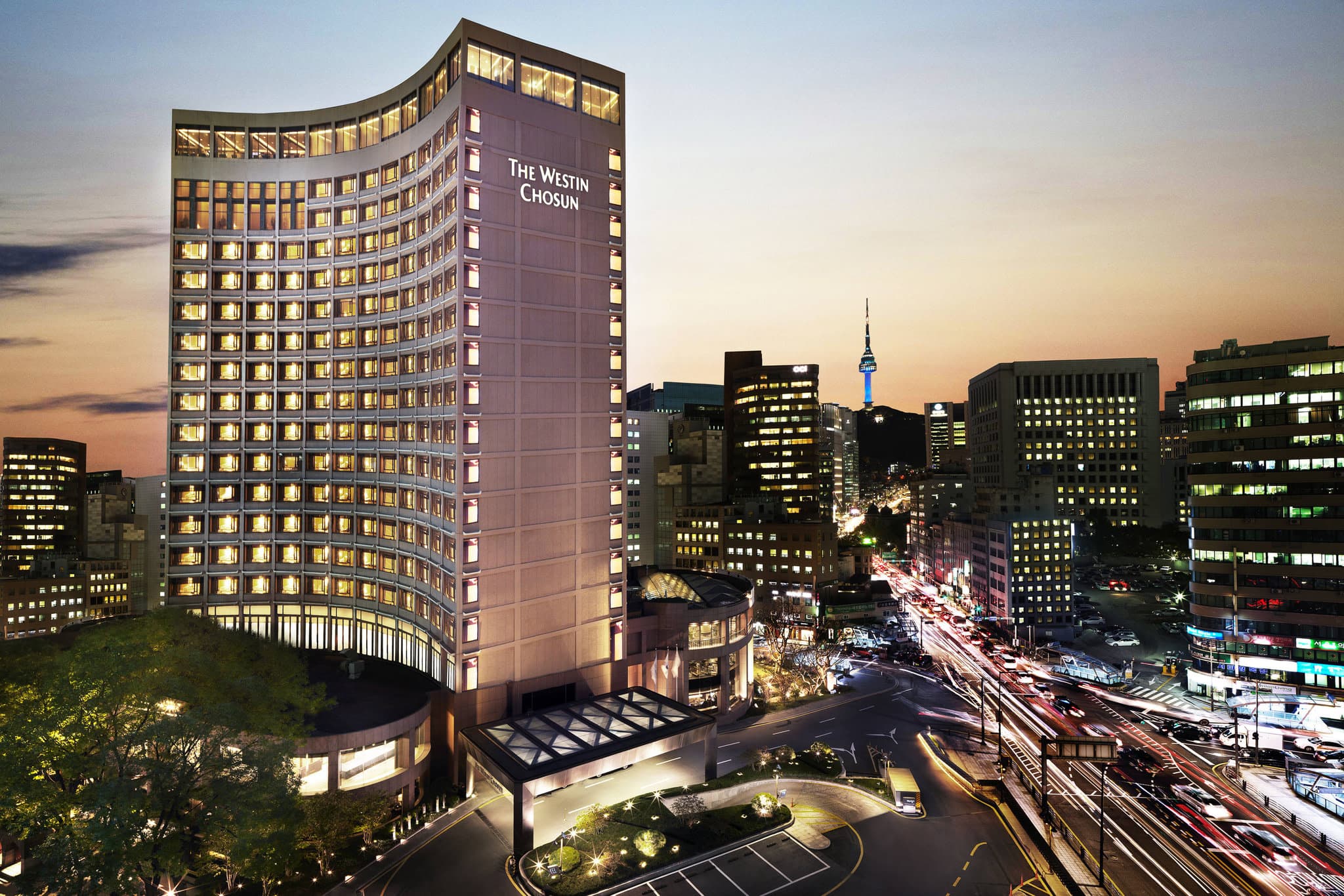
It isn’t a Hanok, but The Westin Josun Seoul arguably offers a better vantage point of Korean history than any traditional guesthouse ever could. Standing on the original site of the Hwangudan Altar—where Emperor Gojong declared the Korean Empire—this hotel is a lesson in architectural schizophrenia. You check in for the corporate reliability of a Marriott bonvoyage, but you stay for the surreal experience of sipping espresso while staring directly onto the octagonal shrine’s tiered roof from your window. Inside, the vibe is unapologetically 'Grand Dame.' The lobby is a parade of heavy marble and hushed conversations, a holdover from its 1914 origins as Chosun Hotel. Rooms have been refreshed to shed their dowdiness, now sporting signature Heavenly Beds and Nespresso machines, though the bathrooms still betray a hint of their 90s lineage. The real power move here isn't the room, but the dining. Skip the street food for one night and book a counter seat at Sushi Cho for their legendary Sabazushi, or descend to The Ninth Gate—Korea’s first French restaurant—where the onion soup remains a non-negotiable classic. It’s Seoul’s most confident paradox: a thoroughly Western hotel that serves as the best frame for the city’s imperial past.
“Request a room on the 7th to 10th floors facing the Hwangudan Altar. Higher isn't better here; the lower angle aligns your eye level with the shrine's roof for the most dramatic photos.”
Insider TipAvg. Nightly Rate
280USD
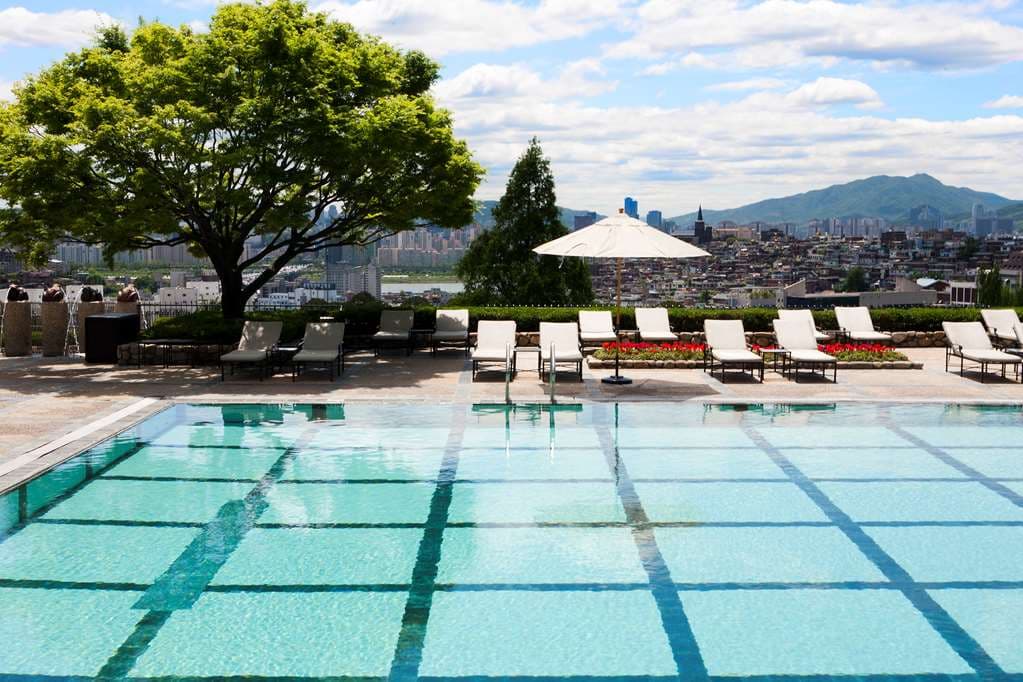
If Seoul has a Grand Dame, it is this gold-tinted giant perched on the steep slopes of Namsan Mountain. While the feature story celebrates the intimacy of Hanoks, the Grand Hyatt offers a counterpoint: serenity through scale. Designed in 1978, its lobby is a masterclass in John Morford’s timeless aesthetic—a cavern of warm oak and floor-to-ceiling glass that frames the city like a living scroll. The 615 rooms, refreshed by BAR Studio, have shed their dated carpets for light fishbone parquet and low-slung furniture that defers to the view. And what a view it is—either the serpentine Han River or the verdant N Seoul Tower. Bathrooms remain compact, a structural relic, but the amenities are top-tier. Dining is theatrical; at Teppan, chefs sear Hanwoo 1++ beef against a glass-walled backdrop, while the Gallery lounge remains the city’s premier spot for sunset jazz. It is a 'resort' in the truest sense—boasting an Olympic-sized pool that morphs into an ice rink come winter, and a Jjimjilbang (Korean sauna) that rivals the best in Gangnam. It isn't a hidden retreat; it is Seoul’s spectacular, golden stage.
“Book a 'River View' room on a high floor (15+) to watch the sunrise over Gangnam. In winter, the outdoor patio heaters make the ice-rink view magical with a hot chocolate.”
Insider TipAvg. Nightly Rate
152USD