No. 01
NO 32 THE BUND SHANGHAI CN 200002Shanghai1973 verified reviews
9
.6
Bitvoya Edit
Layering imagery, place, and detail before the page opens.
Shanghai is a city of dualities, but nowhere is its soul more palpable than on The Bund. This mile-long stretch along the western bank of the Huangpu River is a living museum of the city’s 1920s and 30s "Golden Age." Known as the Paris of the East, this neighborhood hosts one of the richest collections of Art Deco architecture in the world. Visitors staying here don't just book a room; they inhabit history. From the jazz-filled corridors of the Fairmont Peace Hotel to the meticulous restoration of the Waldorf Astoria Shanghai on the Bund, these properties offer a front-row seat to the dazzling skyline of Lujiazui while grounding you in the heritage of Puxi. Whether you choose the heritage-rich Nanjing Road East area or the chic North Bund near the W Shanghai, you are stepping into a story of glamour and resilience.
Shanghai's Bund is more than just a tourist destination; it is a global architectural phenomenon. Choosing to stay in an Art Deco icon here means immersing yourself in the narrative of the 20th century. Hotels like the Fairmont Peace Hotel and the Yangtze Boutique Shanghai are strictly protected heritage sites that retain their original floors, stained glass, and ironwork. Unlike the generic glass towers found elsewhere, these properties offer a unique blend of colonial history and modern high-tech luxury known as Haipai style—a unique East-meets-West aesthetic.
Guests at these properties can expect world-class service standards that rival London or New York. Expect high ceilings, heavy velvet drapes, and marble bathrooms. Dining is a major highlight; many of these hotels, such as the Regent Shanghai on the Bund, host Michelin-starred restaurants or rooftop bars with arguably the best night views in Asia. Be prepared for a premium price point, but the value lies in the incomparable atmosphere of living within a piece of history.
While views are subjective, The Peninsula Shanghai and W Shanghai - The Bund offer some of the most comprehensive panoramic views, capturing both the historic Puxi architecture and the futuristic Pudong skyline.
Yes, properties like the Fairmont Peace Hotel and Waldorf Astoria have undergone massive, meticulous restorations to include modern luxury amenities (like high-speed internet and spa facilities) while preserving their historic Art Deco features.
Stay on the Bund (Puxi side) if you appreciate history, walkable neighborhoods, and Art Deco architecture. Stay in Pudong if you prefer ultra-modern skyscrapers and being inside the skyline looking back at the historic side.
Explore our complete curated list of luxury accommodations, from boutique hideaways to grand dames.
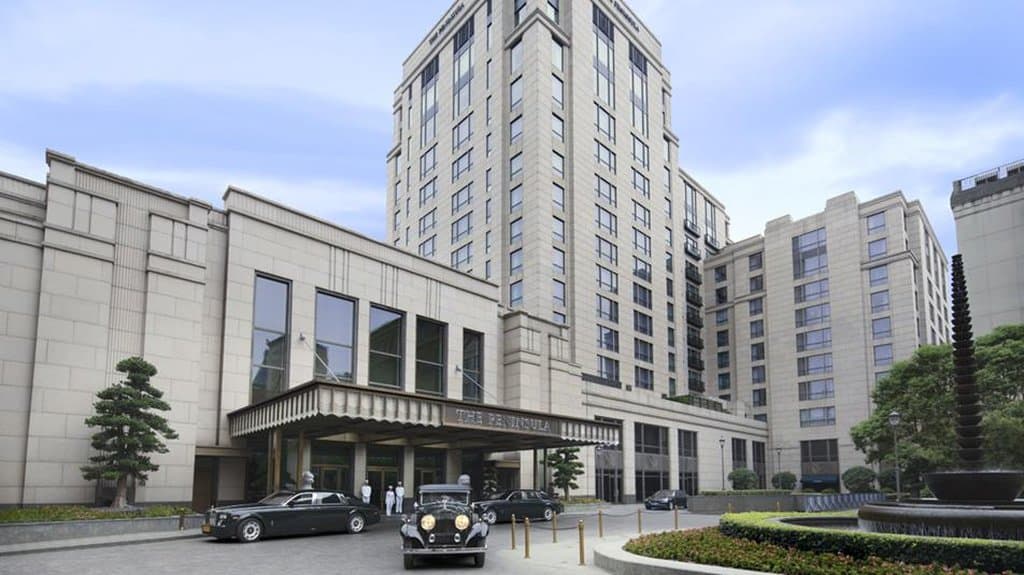
Explore All Shanghai HotelsWhile the surrounding Bund structures are genuine relics of the 1920s, The Peninsula Shanghai (built in 2009) achieves a rare architectural sleight of hand: it feels like it has always been here. Designed by Pierre-Yves Rochon, the interiors double down on Art Deco geometry—think black noir stone, lime-washed walls, and celadon accents that channel the city's 'Paris of the East' heyday. The rooms are an exercise in hyper-functional luxury. Beyond the standard plush trimmings, it’s the proprietary Peninsula technology that wins: VoIP phones that actually work, a valet box for seamless shoe shines, and the brand’s signature nail dryer in the dressing room. Dining is formidable; both the Canton-focused Yi Long Court and the modern European Sir Elly’s retained their Michelin stars in the 2025 guide. Breakfast on the terrace, watching the barges drift past the Pudong skyline, remains one of the city's definitive experiences. It is expensive, yes, but for the white-glove service and the sheer confident polish of the operation, it stands unrivaled.
“Book a table at Sir Elly’s Terrace exactly 30 minutes before sunset. You get the daylight view of the colonial architecture and the moment the Pudong skyline lights up neon.”
Insider TipAvg. Nightly Rate
445USD
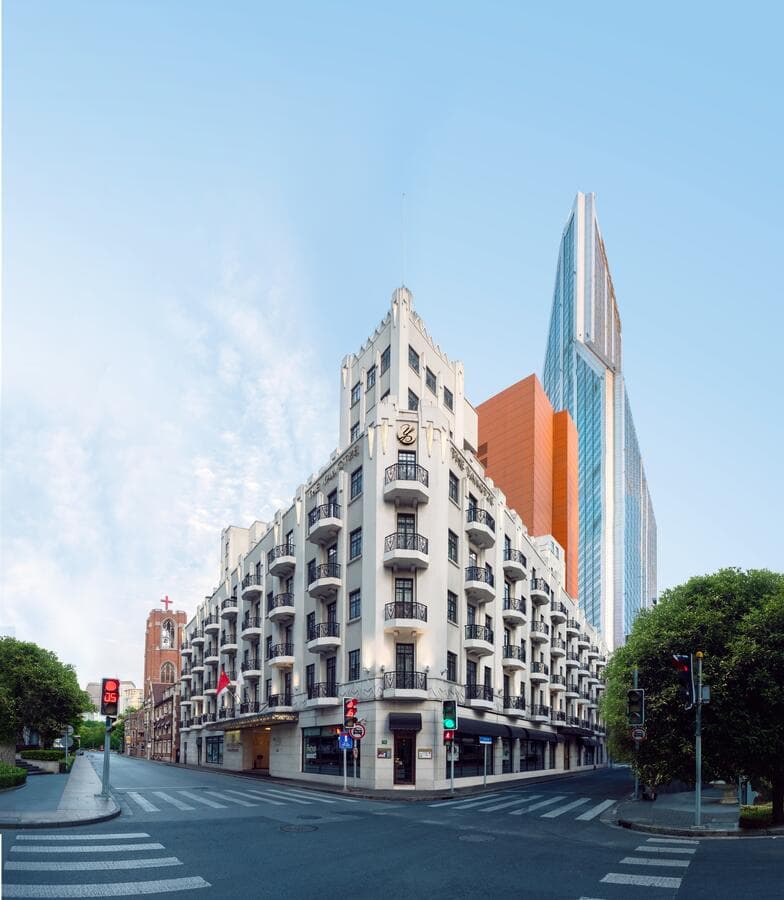
If walls could sing, The Yangtze Boutique Shanghai would be belting out 'Rose, Rose, I Love You'—the 1940s hit actually composed in its ballroom. Built in 1933 by architect Li Pan, this Art Deco grande dame has shrugged off the dust of history (and a 2024 façade revamp) to reclaim its spot as Shanghai’s most cinematic stay. Forget the cookie-cutter glass towers; here, you enter through a lobby dominated by a stained-glass skylight and a spiral staircase that practically demands a slow, dramatic descent in evening wear. The 103 rooms channel the moody romance of the 1930s, particularly the Nihong and Rose Suites, which feature balconies overlooking the frantic energy of Nanjing Road. While the soundproofing is miraculously effective—you won't hear a peep from the People's Square crowds—the heritage engineering does come with quirks. The central heating can rival a steam engine in winter, and the air gets Sahara-dry, so pack heavy moisturizer. Bathrooms are palatial, though the high-sided tubs require a degree of athleticism to enter. Dining is strictly traditional: '1933 Rose Chinese Restaurant' serves Cantonese classics that honor the building’s vintage, avoiding the fusion confusion found elsewhere on the Bund. Service is sharp, English-proficient, and devoid of stiffness. It’s not a resort—there’s no pool to lounge by—but for architecture nerds and nostalgia chasers, it’s a masterclass in preservation.
“Request a room ending in '88' for the best corner views of the skyline, and use Metro Exit 14 directly across the street to skip the street-level chaos.”
Insider TipAvg. Nightly Rate
100USD

Forget the elbow-to-elbow crush of the main promenade. The Regent Shanghai on the Bund anchors the North Bund with a moody, cinematic swagger that its predecessor, the legendary Seagull Hotel, could only dream of. Reimagined by Cheng Chung Design (CCD), the property retains the Seagull’s iconic white stone spiral staircase but wraps the rest in glossy, Art Deco noir. The location is the real flex here: perched at the confluence of Suzhou Creek and the Huangpu River, the 'W-shaped' river bend offers a view that makes the standard Lujiazui snapshot look pedestrian. While the 40-square-meter base rooms feel snug, CCD distracts you with high-gloss finishes, Perricone MD amenities, and the 'Oasis Bath'—a tub positioned so perfectly against the floor-to-ceiling glass it practically demands a champagne selfie. Dining hits high notes without the stuffiness. 'Jin Lin' serves a Mindong Yellow Croaker that justifies the reservation, while 'Harmonia' handles Western standards with competence. The 'With Compliments' service—offering three pieces of laundry and a stocked minibar daily—is the kind of frictionless luxury that wins over business travelers. It’s not the Grand Dame of the Bund; it’s her cooler, mysterious niece.
“Book a 'Bund View' room on the 10th floor or higher to clear the tree line and capture the Waibaidu Bridge and Oriental Pearl Tower in a single frame.”
Insider TipAvg. Nightly Rate
299USD
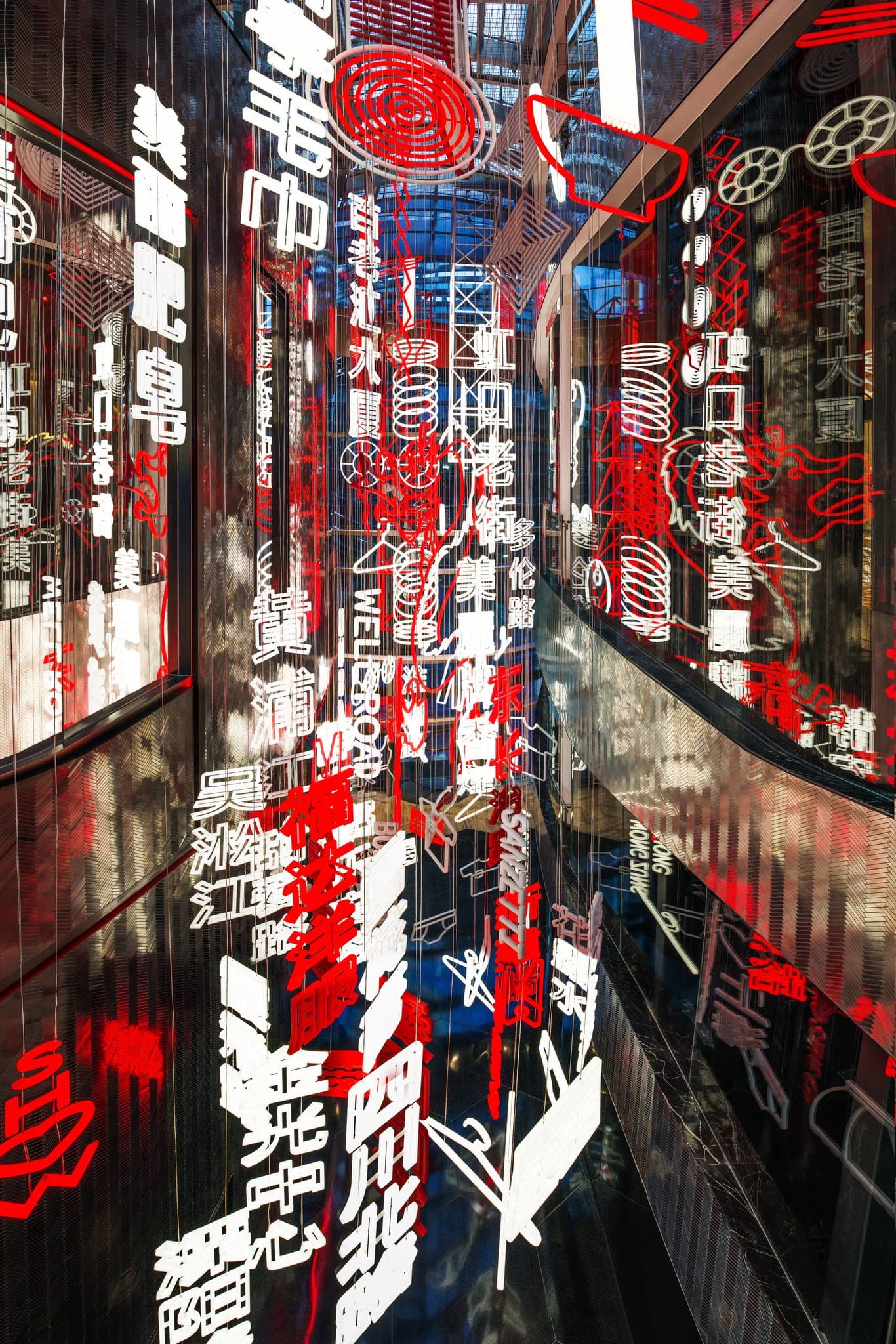
Anchored in the burgeoning North Bund, W Shanghai serves as the rebellious, high-voltage foil to the solemn Art Deco heritage across the river. While the Fairmont Peace Hotel whispers 1920s jazz, the W screams contemporary EDM. The design ethos is pure 'Hai Pai'—a deliberate collision of Shanghainese history and Western pop culture—manifested instantly in the lobby’s audacious 'Neon Laundry' installation and the razor-sharp curves of the building itself. The rooms are engineered less for sleep and more for surveillance of the skyline. The signature beds face floor-to-ceiling windows that frame the Lujiazui skyscrapers like a high-definition cinematic backdrop. A word of warning for the modest: the bathroom is an open-concept glass affair offering zero secrets, demanding intimacy with your travel companion. Dining here is a theatrical sport. At YEN, the Golden Duck with caviar is the requisite order—decadent, photogenic, and perfect for the setting. However, the property’s true pulse beats at the WET Deck. It remains the definitive vantage point for sipping a chili-infused Gin & Tonic while surveying the Oriental Pearl Tower. Service can be brisk and occasionally distracted by the sheer volume of the 'camera-eats-first' crowd, but for the most uninhibited panorama in Shanghai, this is the essential platform.
“The outdoor WET Deck is seasonal and closes in colder months. If visiting in winter, head to the heated indoor pool, which features underwater music and the same dramatic Lujiazui skyline views without the chill.”
Insider TipAvg. Nightly Rate
291USD
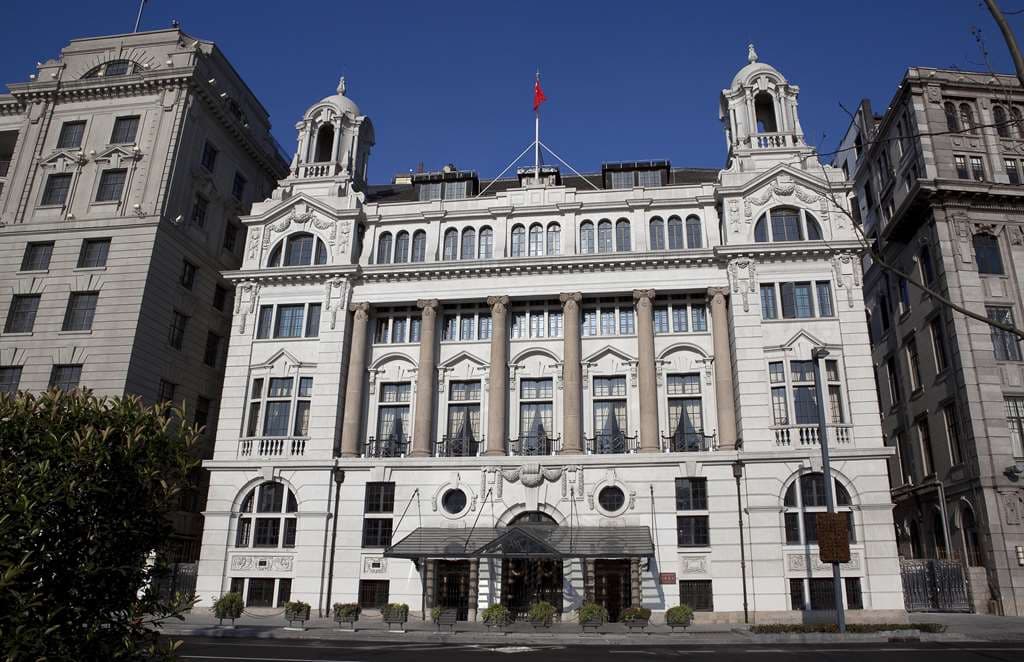
While the surrounding Bund boasts a facade of uniform neo-classical grandeur, the Waldorf Astoria—formerly the legendary Shanghai Club of 1911—possesses a pulse that its neighbors often lack. Walking through the heavy revolving doors feels less like checking in and more like securing membership to an empire that never quite fell. The architecture commands respect; verify the intricate detailing on the Grand Staircase before retreating to a Heritage Suite, where the ceilings are improbably high, the claw-foot tubs are deep enough to drown in, and the noise of the Huangpu River is silenced by heavy velvet drapes. The rooms in the newer tower offer slicker views of the Lujiazui skyline, but they lack the ghostly charisma of the original wing. The preservation here is forensic, yet the vibe avoids feeling like a museum. The Long Bar remains the property’s beating heart, a 34-meter mahogany run where ordering the signature Shanghai Buck feels mandatory. Dining is equally serious; ignore the strictly enforced ban on outside food delivery and head to Ling Long (One Michelin Star 2025) for the beef with oyster sauce, a dish that justifies the reservation alone. While the arrival experience can sometimes falter with inconsistent door service, the concierge team—specifically Jude—recaptures the seamless logistics of the golden age. It is a dense, moody, and spectacularly atmospheric retort to the minimalist luxury dominating Pudong across the water.
“Request a 'Heritage Suite' ending in 08 for the best angle on the river, and ask Jude at the concierge to secure a booth at the Long Bar before 6 PM.”
Insider TipAvg. Nightly Rate
305USD
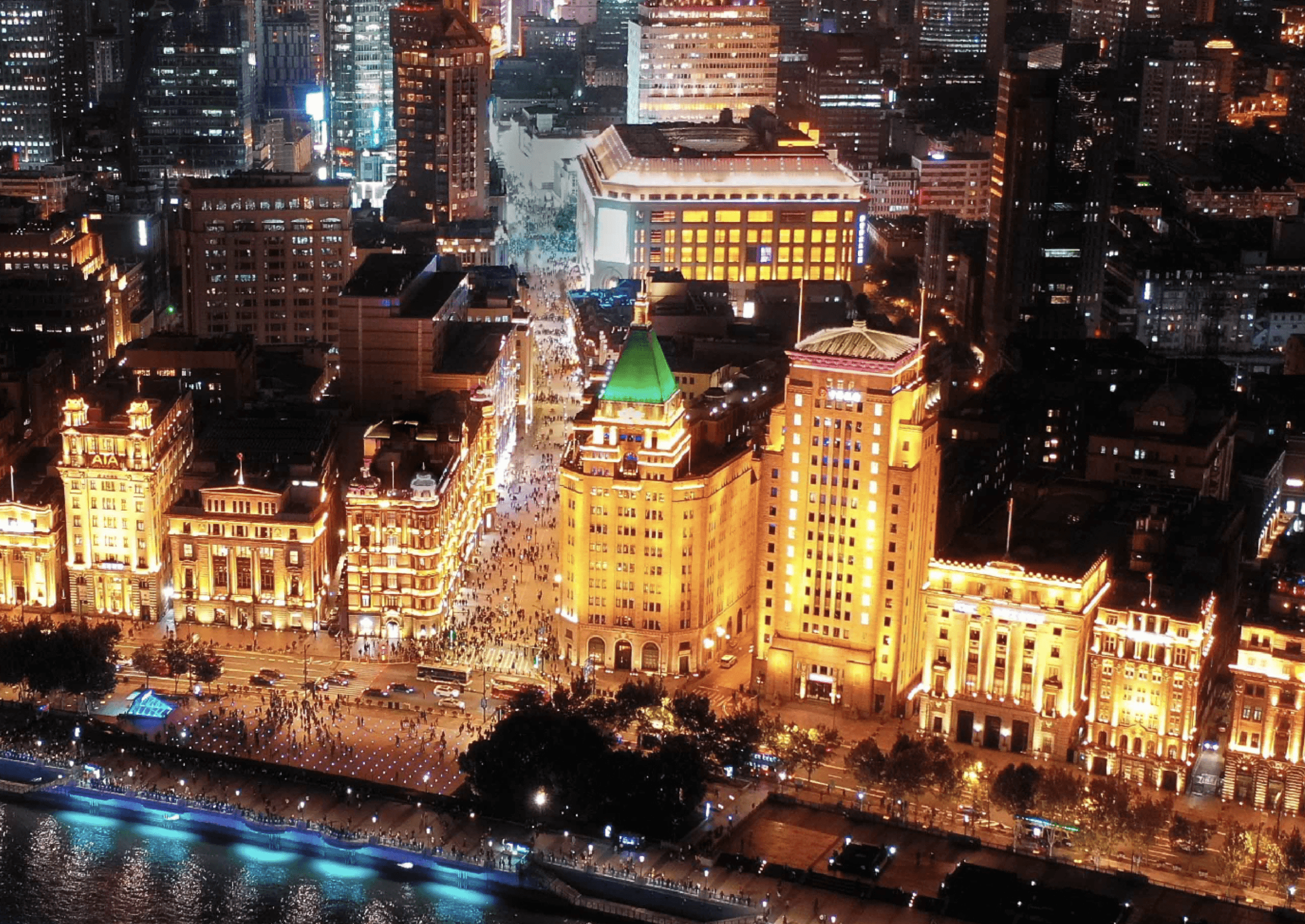
If the Bund is a jewelry box, the Fairmont Peace Hotel is its heaviest, most complex diamond. Originally the Sassoon House, this 1929 Art Deco leviathan doesn’t just sit on the Huangpu; it commands it. Stepping into the lobby, beneath the yellow Lalique glass and the rotunda’s octagonal skylight, you aren't checking into a hotel—you’re checking into a glorious, stubborn time capsule that has outlasted wars and revolutions. The guest rooms are a deliberate collision of Victorian stoicism and Art Deco flair. While some modernists might critique the air conditioning’s vintage temperament or the lack of seamless smart-home tech, they’re missing the point. You are here for the heavy velvet, the historic 'Nine Nations Suites,' and the ghosts of Charlie Chaplin. The spaces feel curated, not manufactured. For a reprieve from the Shanghai humidity, the sky-lit pool, framed by Victorian columns, offers a cinematic dip, while the Willow Stream Spa provides a distinct olfactory escape using Himalayan mineral salts and Kerstin Florian products. Dining here is non-negotiable. Dinner at 'Dragon Phoenix' is pure theater, where the Peking Duck and 'Buddha Jumps Over the Wall' are served with a gravity befitting the venue’s history. But the night must end at 'The Jazz Bar.' Sipping a signature 'Conte Verde' gin cocktail while the Old Jazz Band—veterans who have played through the city's wildest eras—performs, is a rite of passage. It is imperfect, expensive, and utterly magnificent.
“Major Scoop: The property is slated to rebrand as the 'Raffles Peace Hotel Shanghai' in 2027. Visit now to experience the final chapter of its Fairmont era before the transformation begins.”
Insider TipAvg. Nightly Rate
255USD
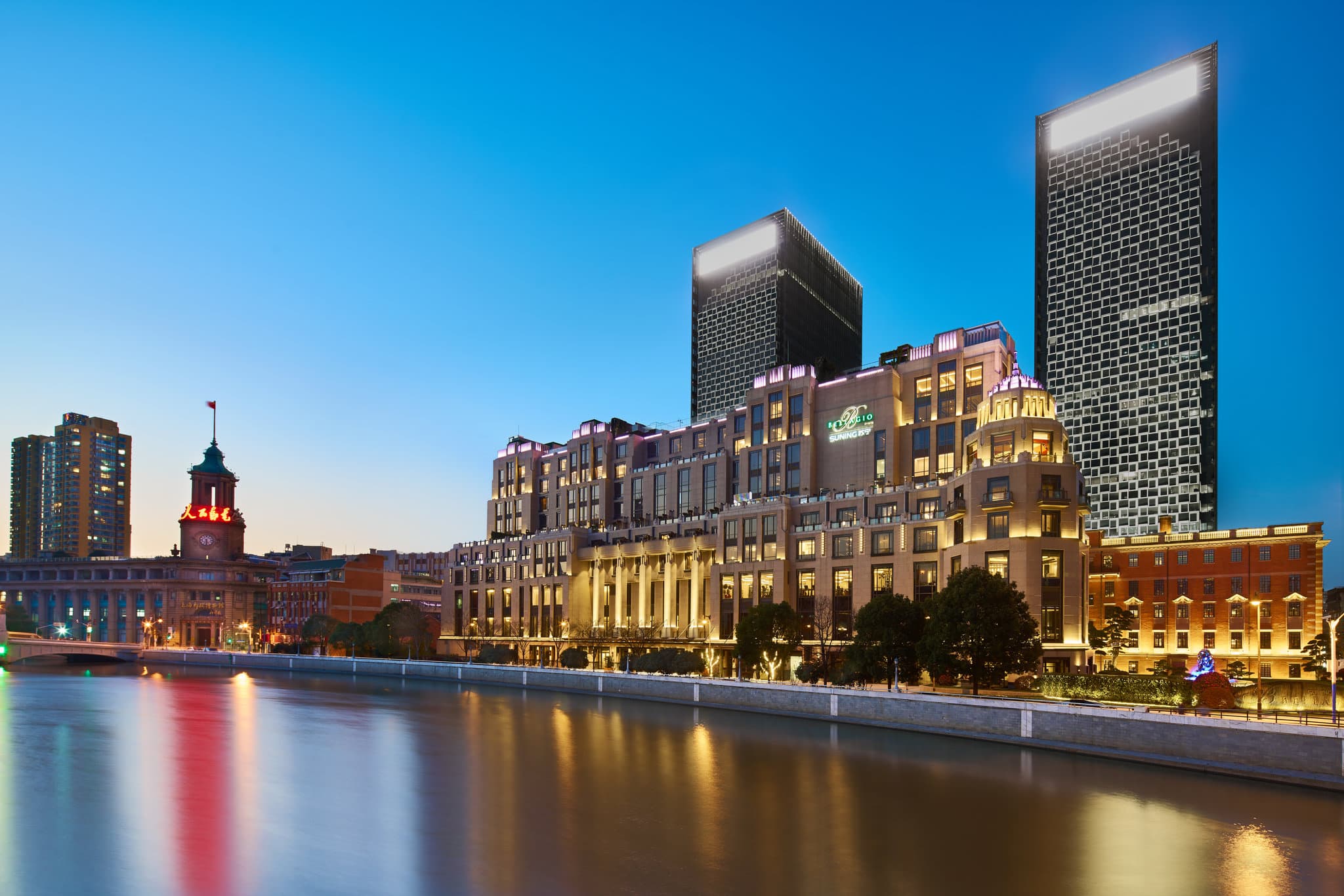
Forget the elbow-to-elbow crush of the main Bund. The Bellagio demands a slight detour north, anchoring the Suzhou Creek confluence with a swagger that would make Las Vegas proud, yet feels entirely Shanghainese. It is not merely a hotel; it is a set piece—literally, given the Grand Staircase’s star turn in the hit drama 'Nothing But Thirty'. Inside, the brand's 'La Bella Figura' ethos translates into cream-and-black geometrics and an aggressive refusal to compromise on space. Entry-level rooms clock in at a palatial 60 square meters, boasting walk-in closets that could double as Manhattan studios and rare open-air terraces that frame the historic Waibaidu Bridge like a vintage postcard. Dining is theatrical. You don't just walk into LAGO by Julian Serrano; you traverse a blue crystalline tunnel that screams for photography before settling in for their signature truffle pizza. For the purist, Kurogi offers a seasonal 10-course kaiseki menu that rivals Kyoto’s best. While the WiFi can be temperamental and the breakfast rush requires patience, the 'Starry Sky Pool' and spa suites stocked with Thai IplusQ amenities offer a compelling argument for staying put. Verdict: A cinematographic heavyweight that trades the immediate proximity of the Bund for superior space and a sharper, sexier angle on the skyline.
“Skip the standard river view; request a Terrace Room on the 8th floor for a private, open-air vantage point of the Lujiazui skyline that bypasses the crowds entirely.”
Insider TipAvg. Nightly Rate
239USD
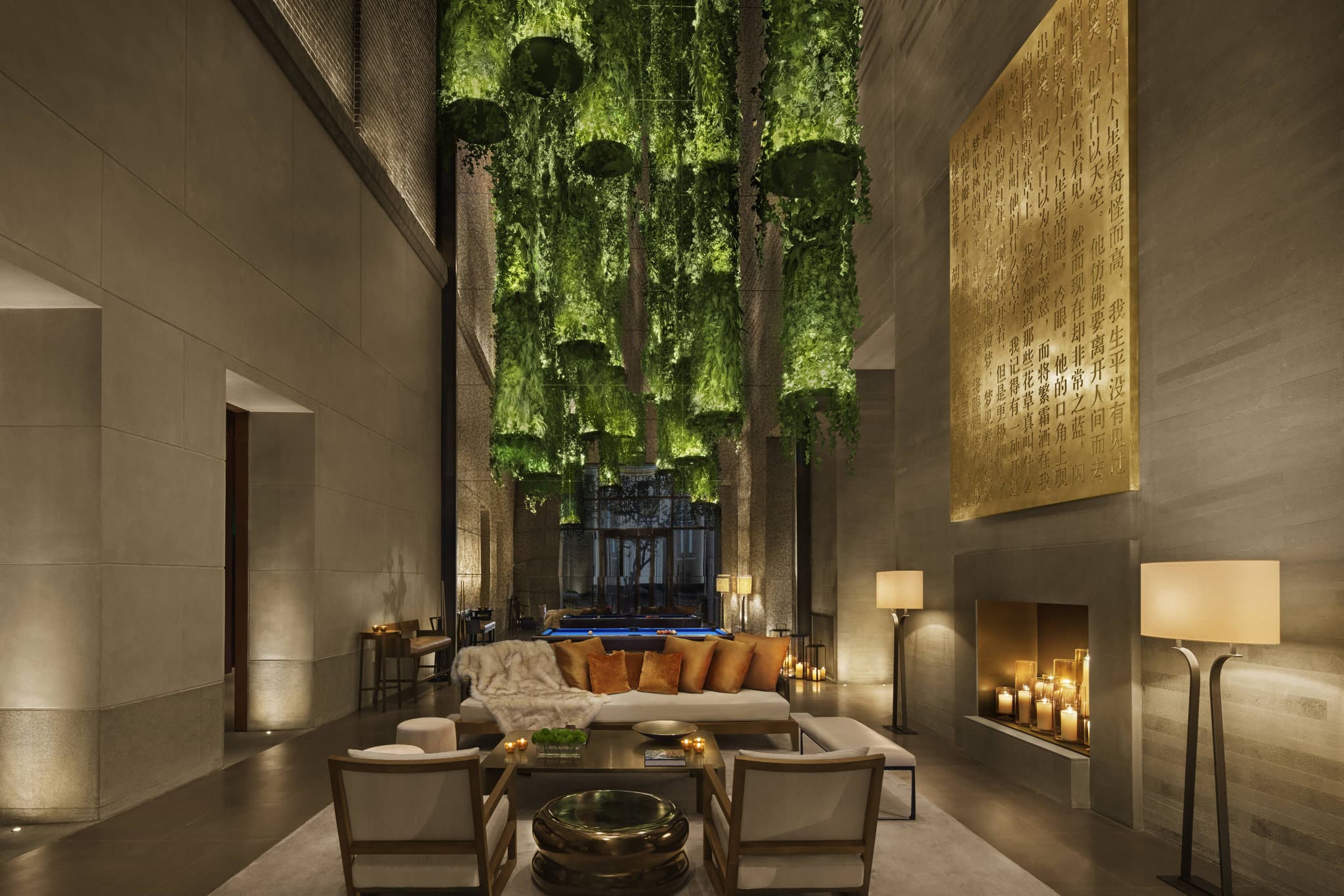
If the Bund is a museum of colonial might, The Shanghai EDITION is its after-party. Occupying the granite husk of the 1931 Shanghai Power Company, this property rejects the heavy drapes of its neighbors for Ian Schrager’s signature brooding cool. The renovation by Neri&Hu respects the heritage bones but injects a modern nervous system; the lobby is dominated by a floating walnut structure that feels less like furniture and more like sculpture. The guest rooms are exercises in monochromatic restraint—pale oak, white linens, and lighting so dim you might need your phone torch to locate the Le Labo amenities. It’s a deliberate choice, forcing your focus toward the floor-to-ceiling windows framing the neon blaze of the Lujiazui skyline. Unlike the stuffy grand dames nearby, the energy here is vertical and vocal. The indoor pool, encased in a glass conservatory, offers a voyeuristic swim above Nanjing Road, but the real gravitational pull is The Roof. Here, amidst an ivy-clad trellis, the Champagne cocktails come with an unobstructed view of the Pearl Tower. Dining is equally social. Shanghai Tavern serves a surprisingly comforting roasted cod in a space that hums with conversation, while the Japanese-fusion plates at YONE (formerly HIYA) offer a sharper edge. A word to the wise: Marriott elites shouldn't expect the usual complimentary breakfast spread—a minor gripe that vanishes after one of the Punch Room’s signature milk punches. This is strictly an adult playground; the lack of a kids’ club is a feature, not a bug.
“The taxi drop-off has zero shelter (a design flaw). If it's raining, have your driver pull as close to the door as possible, or head straight to the indoor pool's glass conservatory which looks spectacular during a downpour.”
Insider TipAvg. Nightly Rate
300USD