No. 01
12 Hengshan Road. Shanghai China 200031Shanghai234 verified reviews
8
.8
Bitvoya Edit
Layering imagery, place, and detail before the page opens.
Shanghai is a city of striking contrasts, nowhere more evident than in the Former French Concession and the historic Shikumen alleyways. This curated collection invites you to experience the 'Paris of the East' through its most iconic architecture. From the meticulously restored 1930s villas of Capella Shanghai Jian Ye Li to the sleek, modern luxury of The Middle House in the heart of Jing'an, these properties define sophistication. Whether you are strolling beneath the plane trees of Hengshan Road near the HUALUXE Shanghai Twelve or soaking in the vibrant energy of Xintiandi at The Langham, these stays offer an intimate gateway to Shanghai's glamorous past and dynamic future.
Shanghai is not just a forest of skyscrapers; its soul lies in the Lilongs (lanes) and the leafy boulevards of the Former French Concession (FFC). Choosing a hotel in this collection means immersing yourself in the 'Haipai' culture—a unique East-meets-West aesthetic. Staying at properties like the Capella Shanghai Jian Ye Li offers a rare opportunity to live inside a protected heritage site, providing the privacy of a villa with the service of a grand hotel. Meanwhile, hotels like the Okura Garden Hotel and the InterContinental Shanghai Ruijin sit amidst vast historic gardens that have witnessed a century of history, offering a tranquil sanctuary away from the bustle.
Expect a fusion of 1920s glamour and 21st-century technology. Hotels in this category, such as The Middle House, are renowned for their design-led approach, blending dark woods, velvet textures, and Chinese artwork. You will find personalized butler services, Michelin-starred dining options within the hotel precincts, and exclusive access to some of Shanghai's most private courtyards. Whether it is the red brickwork of a Shikumen lane or the manicured lawns of a state guesthouse, the atmosphere is strictly one of quiet exclusivity and profound historical resonance.
The Former French Concession (Xuhui District) and Xintiandi are the best areas. Hotels like Capella Shanghai and The Langham offer direct access to historic Shikumen architecture and tree-lined avenues.
Yes, properties like Capella Shanghai Jian Ye Li offer multi-story villa layouts with private courtyards, making them excellent for families seeking space and privacy within the city.
Shikumen hotels are restored heritage lane houses featuring traditional brickwork and stone gates, offering a historical residential vibe, whereas standard luxury hotels like The Middle House offer modern high-rise amenities.
Explore our complete curated list of luxury accommodations, from boutique hideaways to grand dames.
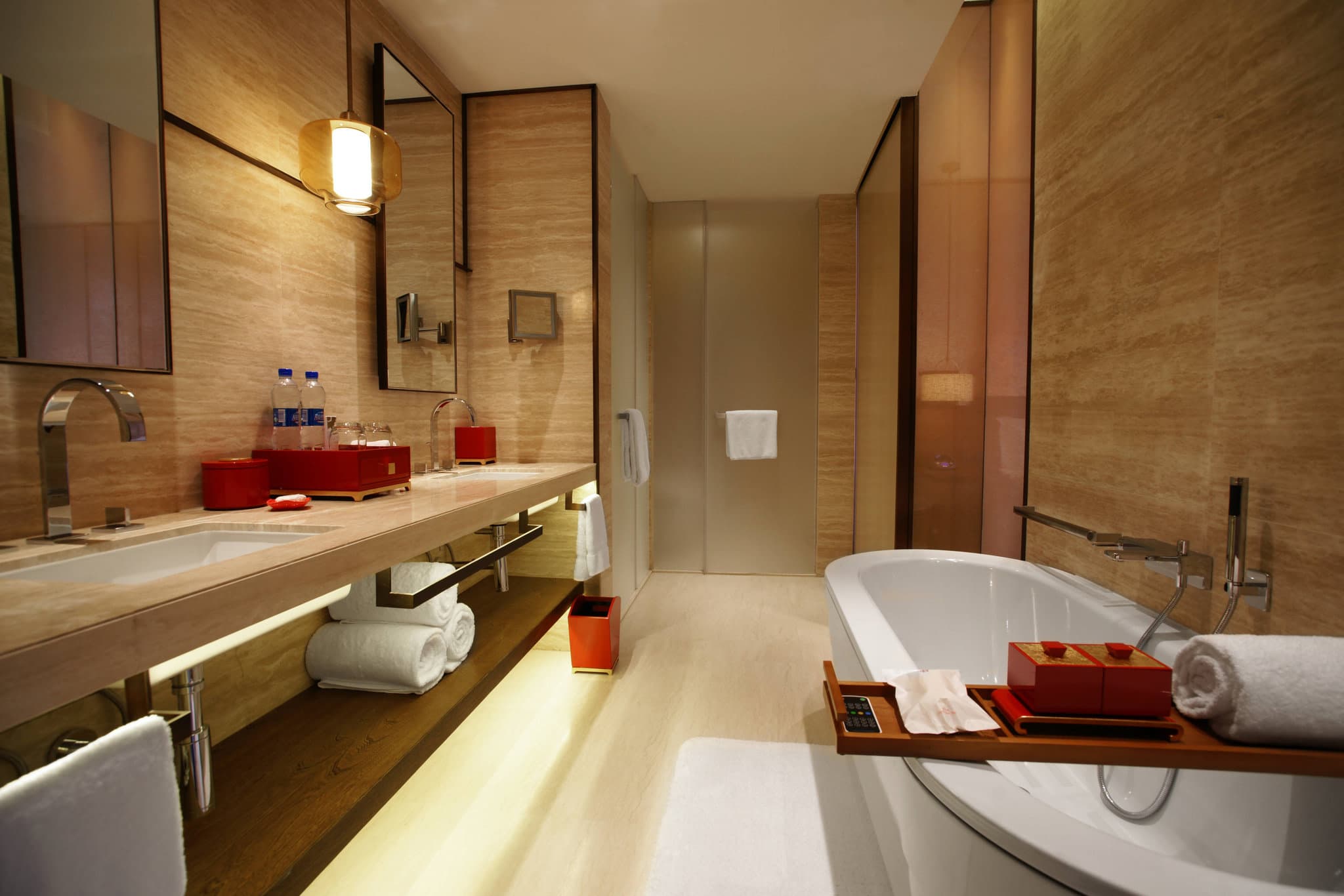
Explore All Shanghai HotelsForget the Bund’s vertical vanity project. The real Shanghai flex is waking up to the rustle of platanus leaves on Hengshan Road, the French Concession’s most storied artery. HUALUXE Shanghai Twelve (formerly a Luxury Collection property) presents a stark, sophisticated contrast to the neighborhood’s Art Deco villas. Designed by Swiss architect Mario Botta, the façade is a fortress of 20,000 Italian terracotta tiles, a geometric armor that hides a surprisingly Zen core. Inside, the drama shifts from brutalist chic to Jiangnan tranquility. The property orbits a lush, elliptical central courtyard—a 'Secret Garden' that genuinely silences the city's roar. Base rooms are palatial for Shanghai, starting at a sprawling 46sqm, though frequent flyers might note the hardware is showing its vintage (the Wi-Fi can be temperamental, and the carpets have stories to tell). Dining is the redemption arc here. 'Cai Feng Lou' serves a braised abalone and sea cucumber that justifies the stay alone, while the cave-like indoor pool, illuminated by skylights cutting through the courtyard floor above, offers a surreal, subterranean lap experience. It’s not flawless, but for those craving privacy over polish, it’s a cult favorite.
“Request a 'Courtyard View' room on the 3rd floor or higher. The street-facing rooms battle the Hengshan Road traffic noise, but the courtyard side is dead silent.”
Insider TipAvg. Nightly Rate
128USD
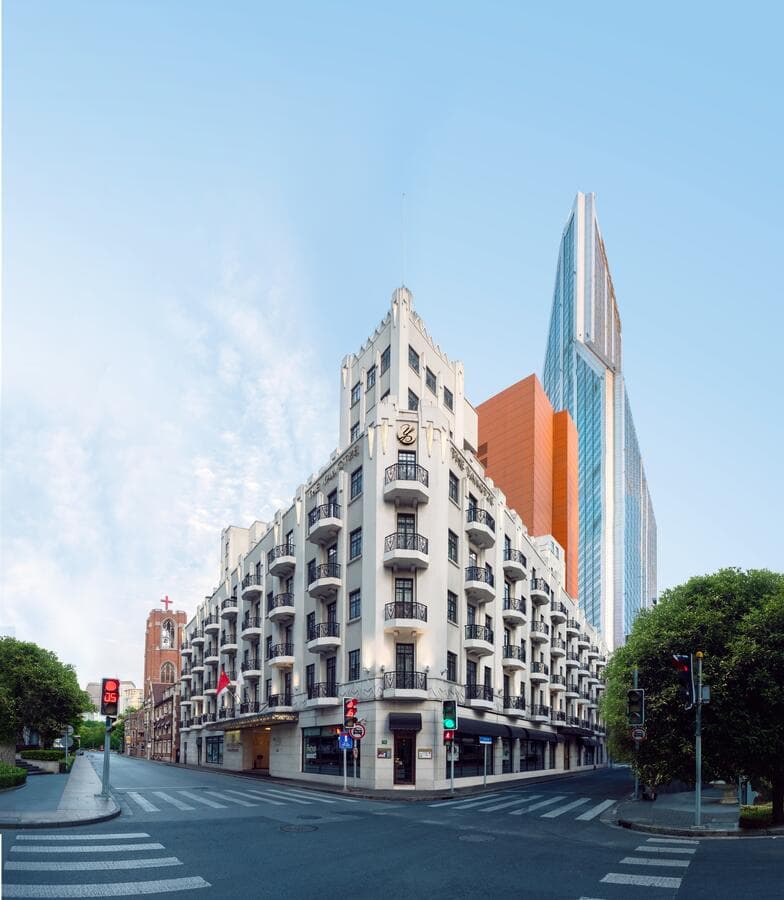
Forget the sterile glass towers of Lujiazui; checking into The Yangtze Boutique is like stepping onto the set of *Lust, Caution*. Designed in 1933 by Li Pan, this Art Deco grande dame isn't just a hotel—it’s the birthplace of the legendary jazz standard “Rose, Rose, I Love You.” Following a sensitive facade restoration in early 2024, the property gleams, though the soul remains unapologetically retro. Inside, the spiral staircase beneath a stained-glass skylight demands a moment of reverence before you ascend to rooms that balance noir atmosphere with modern necessity (think rainfall showers, though the high-walled bathtubs require a bit of gymnastics). The dining is a serious affair: skip the room service and head to '1933 Rose Chinese Restaurant' for Cantonese plates that honor the building's golden era. A word to the wise: the central heating runs fierce in winter, and the air can be drier than a martini, so pack heavy moisturizer. It’s a moody, cinematic time capsule that trades cookie-cutter perfection for genuine Shanghai soul.
“Book a 'Rose Suite' for the private balcony, but strictly request a humidifier at check-in to combat the aggressive vintage heating system.”
Insider TipAvg. Nightly Rate
100USD
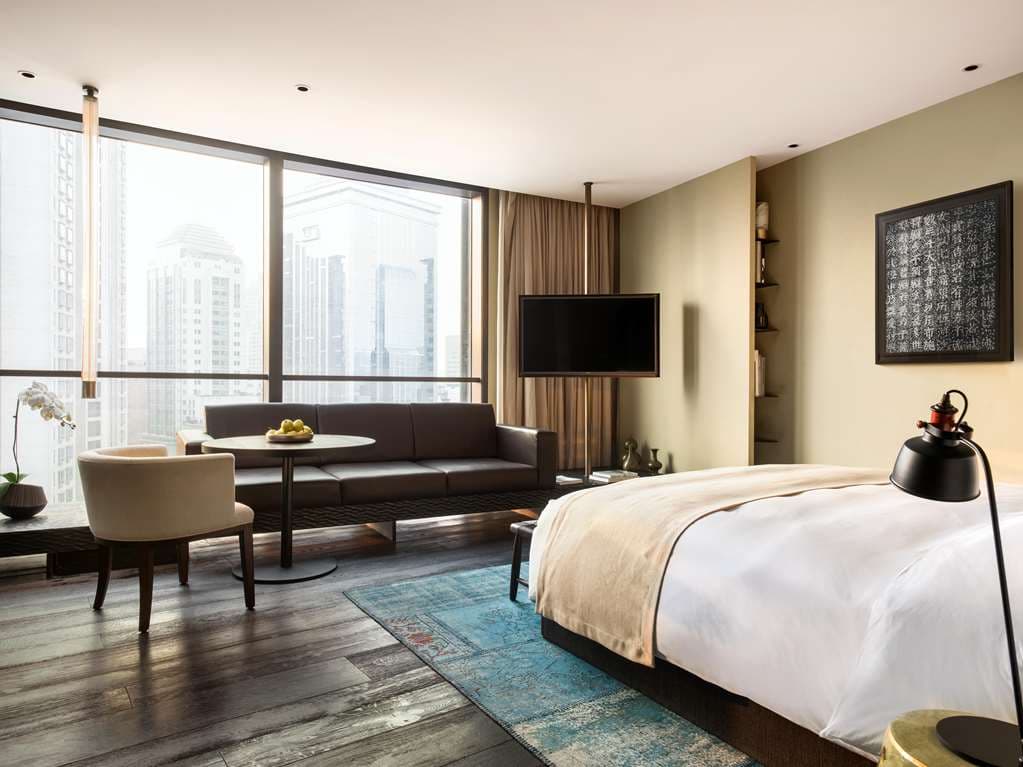
Forget the colonial nostalgia of the Bund; the real design drama is happening inland at Dazhongli. The Middle House isn't just a hotel—it’s a mood. Architect Piero Lissoni has swapped the usual beige neutrality for a sultry shadow-play of charcoal and emerald. The arrival experience sets the tone: a six-meter Venetian glass chandelier dangling above a forest of bamboo-green ceramic tiles. It’s theatrically dim, making everyone look instantly more attractive. Upstairs, the rooms continue the "Italian cool meets Shanghainese craft" narrative. The 'Studio 60' units feature open-plan layouts with floor-to-ceiling windows and a "Maxi-bar" stocked with complimentary craft beers. The 400-thread count linens and the signature pull-rope master light switch are thoughtful touches that prioritize ease over gadgetry. But the real flex here is the dining. Sui Tang Li demands a reservation weeks in advance—not just for status, but for the Marbled Xiao Long Bao and Black Pearl Quail Egg Siomai, which are frankly life-changing. After hours, the 33-meter heated indoor pool offers a subterranean escape with lighting so moody it feels like an art installation. Verdict? The ultimate crash pad for the creative class who want to be near the action of HKRI Taikoo Hui without feeling part of the mall crowd.
“Sui Tang Li is notoriously difficult to book. Ask the concierge to secure a table immediately upon booking your room, or aim for a late lunch slot (2 PM) on a weekday to snag the signature dim sum.”
Insider TipAvg. Nightly Rate
288USD
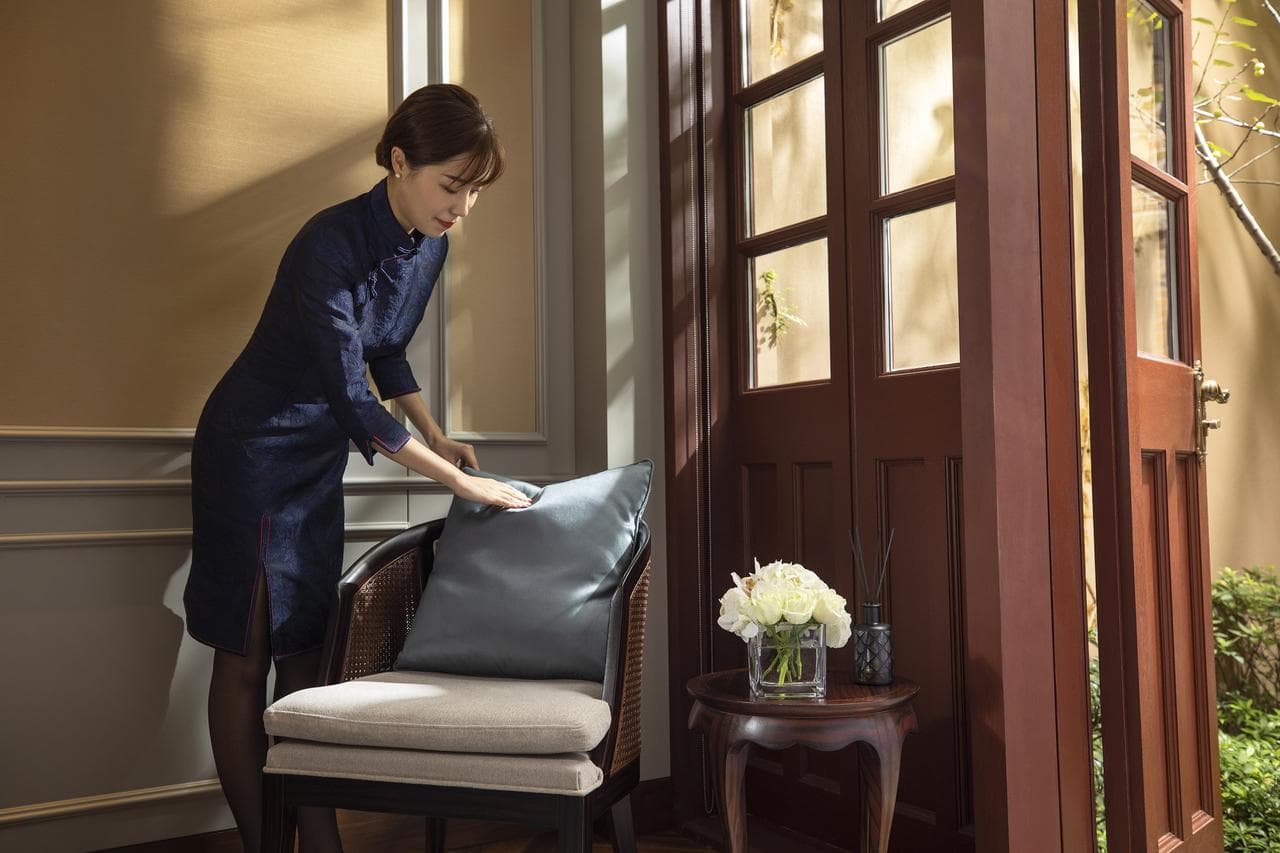
In a city defined by aggressive verticality, Capella Shanghai is a masterclass in staying grounded—and hidden. Tucked within the labyrinthine *longtangs* (lanes) of the heritage Jian Ye Li estate, this is Shanghai’s only all-villa urban resort, housed in meticulously restored 1930s Shikumen brick sanctuaries. The vibe is pure cinematic noir: hushed, symmetrical, and deeply private. Each villa is a multi-level retreat designed by the late Jaya Ibrahim, ascending from a private ivy-walled courtyard up to a secluded rooftop terrace. Inside, the experience is layered with dark woods and silk wallpapers, featuring details that matter: Diptyque amenities in the marble bathrooms, a dedicated entertainment den with a branded sound system, and soundproofing so effective the city’s roar is reduced to a rumor. Dining is a destination in itself at *le Comptoir de Pierre Gagnaire*, where the French maestro’s influence shines in the signature cocotte of frogs Poulette. Service is orchestrated by 'Capella Culturists' who don't just book tables but curate moments—like the morning ritual involving the historic *Shun Pao* newspaper. It’s not just a hotel; it’s a time capsule with 2025 Michelin Key status. **Verdict**: The definitive choice for travelers who prefer whisper-quiet heritage over glass-tower glitz.
“Request a 'Shikumen Garden Villa' for direct access to the 'Secret Garden'—a rare patch of green. Don't miss the 'Morning Reading Ritual' in the library, where you can get a vintage-style portrait taken.”
Insider TipAvg. Nightly Rate
618USD
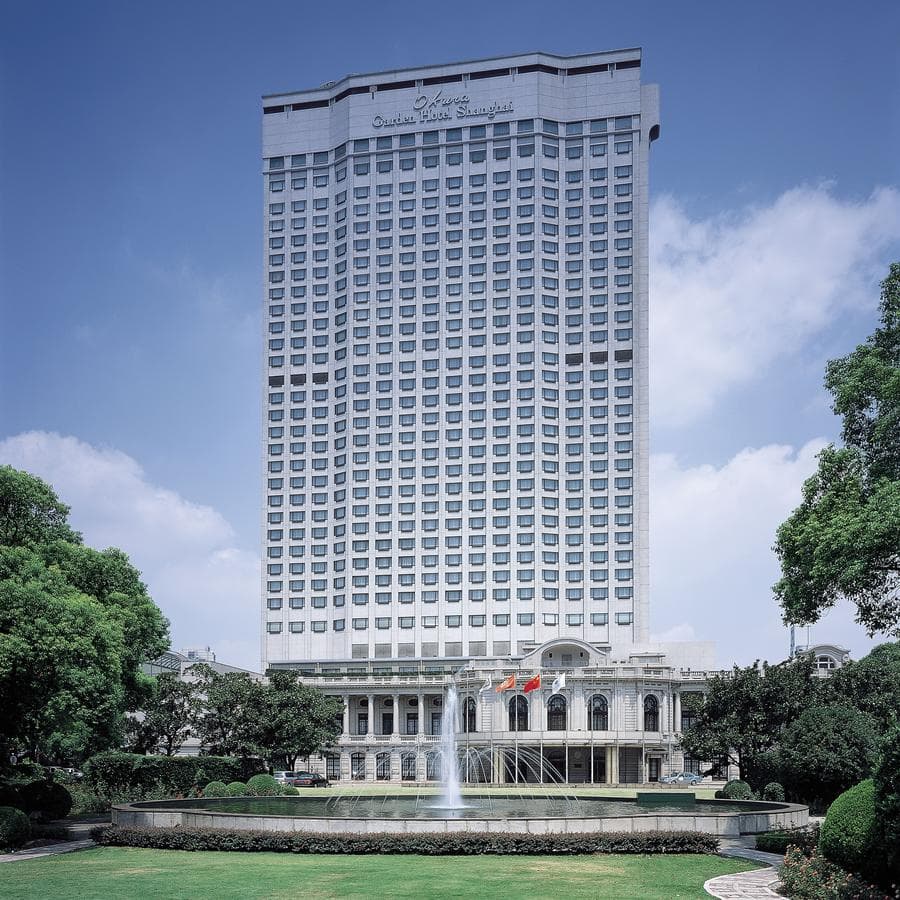
In a city relentlessly racing toward the future, the Okura Garden Hotel stands as a defiant, elegant guardian of the past. Anchored by the 1926 *Cercle Sportif Français* (French Club), this property doesn’t just mimic history; it occupies it. The lobby is a masterclass in Jazz Age preservation, where Art Deco stained glass and the famed 'Dragon' marble staircase transport you instantly to a slower, more sophisticated Shanghai. Unlike the glossy, high-tech glass boxes nearby, the Okura trades in quiet, 'Old Money' confidence. The guest rooms in the tower are admittedly a touch retro—expect beige tones and classic button consoles rather than iPads—but they are maintained with surgical Japanese precision. The *Omotenashi* service is the real luxury here; staff anticipate needs before they arise, a rarity that compensates for the aging central climate control. The hotel’s crown jewel is its 30,000-square-meter private garden, a manicured green lung that feels impossible in this dense district. For dinner, skip the concierge recommendations and head straight to *Sazanka*. The chefs here perform a culinary ballet over the teppanyaki grill, serving premium Wagyu and a garlic rice that has a cult following among Shanghai’s expats. It is not the flashiest stay in the city, but it is undoubtedly the most dignified.
“Request a room on the 'Garden Side' (high floor, even numbers) in the Executive Tower. You’ll wake up to a rare view of the 30,000 sqm lawn and the red-tiled Shikumen roofs of the French Concession.”
Insider TipAvg. Nightly Rate
92USD
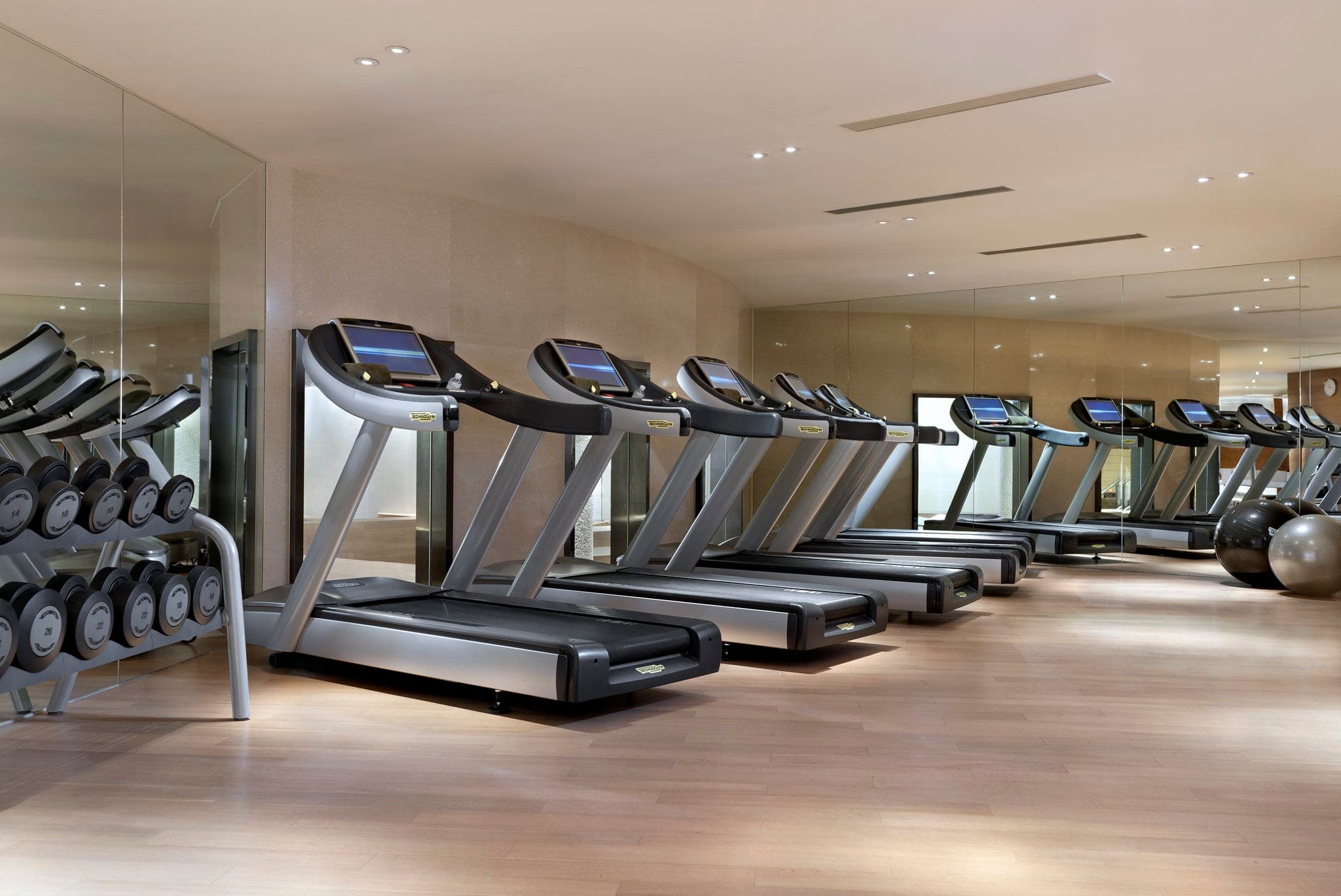
If Xintiandi is the open-air living room of Shanghai’s glitterati, The Langham is the grand dame holding court at the entrance. Standing in stark, mirrored contrast to the low-slung, grey-brick Shikumen lanes of the 1920s French Concession, this curved glass monolith doesn't try to blend in—it dominates. Upon entry, the signature scent of ginger flower hits you immediately, a sharp, sensory palate cleanser before you navigate the high-voltage lobby. While the rooms are beginning to show the subtle patina of a decade-plus of high-occupancy popularity (don't expect the clinical minimalism of the city’s newest builds), the dark wood interiors and plush 400-thread count linens feel reassuringly expensive. The service here is forensic in its attention to detail, a necessary polish that compensates for any aging hardware. The true pilgrimage, however, is vertical. T’ang Court, retaining its Michelin Star status for 2025, remains a cathedral of Cantonese gastronomy. The signature Baked Stuffed Crab Shell—golden, fragrant, and packed with sweet meat—is non-negotiable. Afterward, descend to the Chuan Spa, where treatments bypass standard Swedish techniques for TCM-rooted therapies in a moody, subterranean setting that feels miles away from the pedestrian chaos outside. It is sophisticated, central, and unapologetically cinematic.
“Skip the standard street view; request a 'Grand Room' on a high floor specifically facing the Shikumen lanes of Xintiandi to watch the district's terracotta roofs glow at sunrise.”
Insider TipAvg. Nightly Rate
240USD
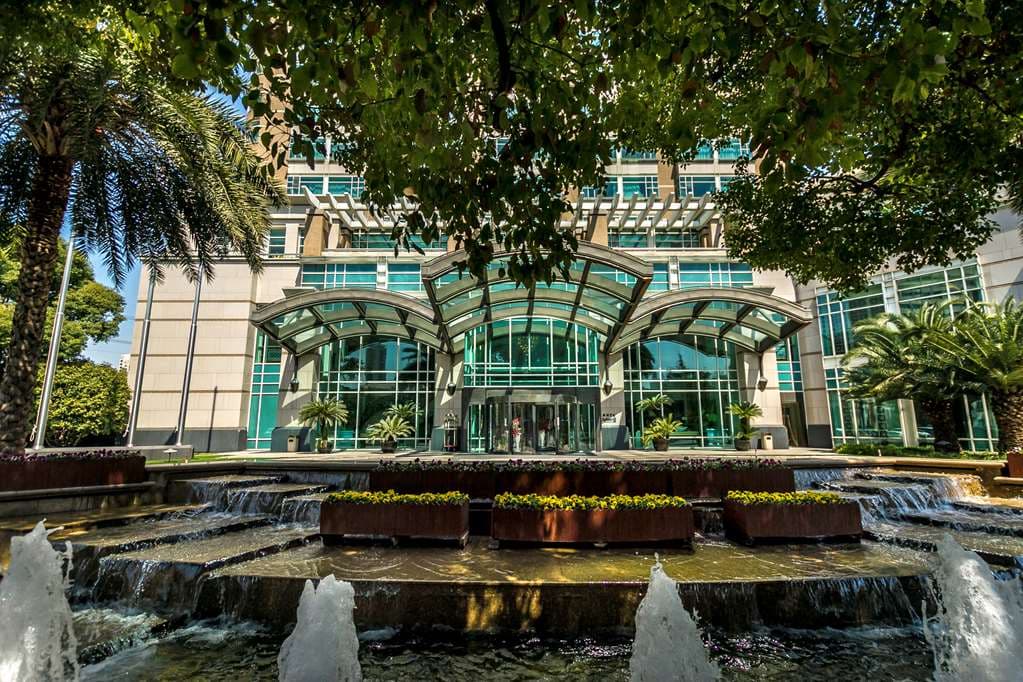
Shanghai usually screams; this place whispers. Occupying a staggering 17-acre estate on Xingguo Road—historically the haunt of consuls and power brokers—the Radisson Collection operates less like a hotel and more like a walled diplomatic compound. The draw here isn't the lobby's marble, but the sheer, audacious volume of green space in the heart of the French Concession. While the main wing’s interiors lean into a "classic" aesthetic (read: heavy walnut and beige that feels distinctly late-90s), the trade-off is substantial. You are here for the space, not the trends. The rooms are expansive, equipped with Molton Brown amenities and soundproofing that actually works—unless you open the windows to hear the birds. The Clark Hatch Health Club adds a delightfully retro touch to your workout, but the indoor salt-water pool is serious business. Dining is headlined by 'Li Palace', where the Cantonese dim sum is treated with reverence by locals. Skip the club sandwich at the brasserie; order the seasonal seafood here instead. It is not the trendiest spot in town—you won’t find influencers draping themselves over the furniture—and that is precisely the point. It is dignified, private, and incredibly rare.
“Book a table at Li Palace in one of the private rooms (freshly renovated in mid-2024) for the ultimate power lunch experience.”
Insider TipAvg. Nightly Rate
90USD
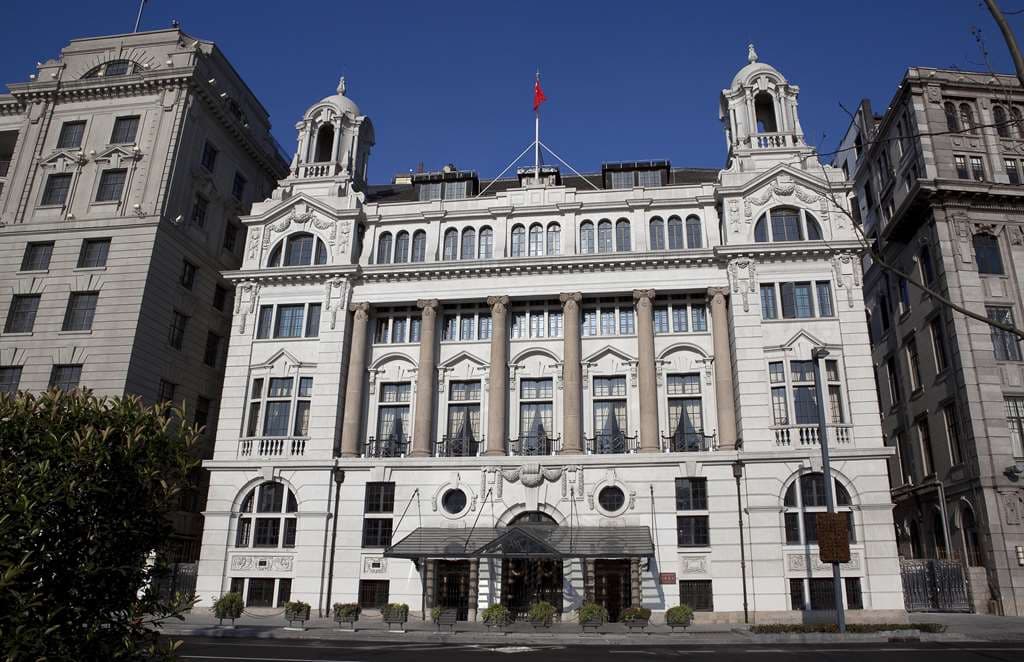
If the glass monoliths of Pudong are Shanghai’s ambitious future, the Waldorf Astoria is its soulful, decadent past. Housed in the former Shanghai Club (circa 1911), this property doesn’t just mimic history; it owns it. The moment you step onto the marble floors, the roar of the Bund fades into a Gatsby-esque hush. The duality here is stark: choose the Heritage Building for high ceilings, clawfoot tubs, and a sense of colonial drama, or the modern Tower for floor-to-ceiling views of the Lujiazui skyline. In my Tower suite, the automated Toto toilet and Aesop amenities (a chic departure from the usual hotel standards) balanced the classic mahogany furnishings. Breakfast at the Grand Brasserie is a non-negotiable ritual—skip the queue by arriving early for the Sunday Champagne Brunch, a sprawling feast that rivals any in Paris. But the real heartbeat is the Long Bar. Pull up a stool at the legendary 34-meter mahogany counter—once the longest in the Far East—and order a Shanghai Buck. It’s spicy, stiff, and tastes exactly like the 1920s. While doorman service can be hit-or-miss, the concierge team (ask for Jude) performs miracles, securing impossible reservations with a smile. It’s not just a hotel; it’s a time machine with 400-thread count sheets.
“Book a 'Heritage Suite' to get the authentic 1920s experience with a freestanding bathtub; request a high-floor Tower room if a direct line of sight to the Pearl Tower is your priority.”
Insider TipAvg. Nightly Rate
305USD
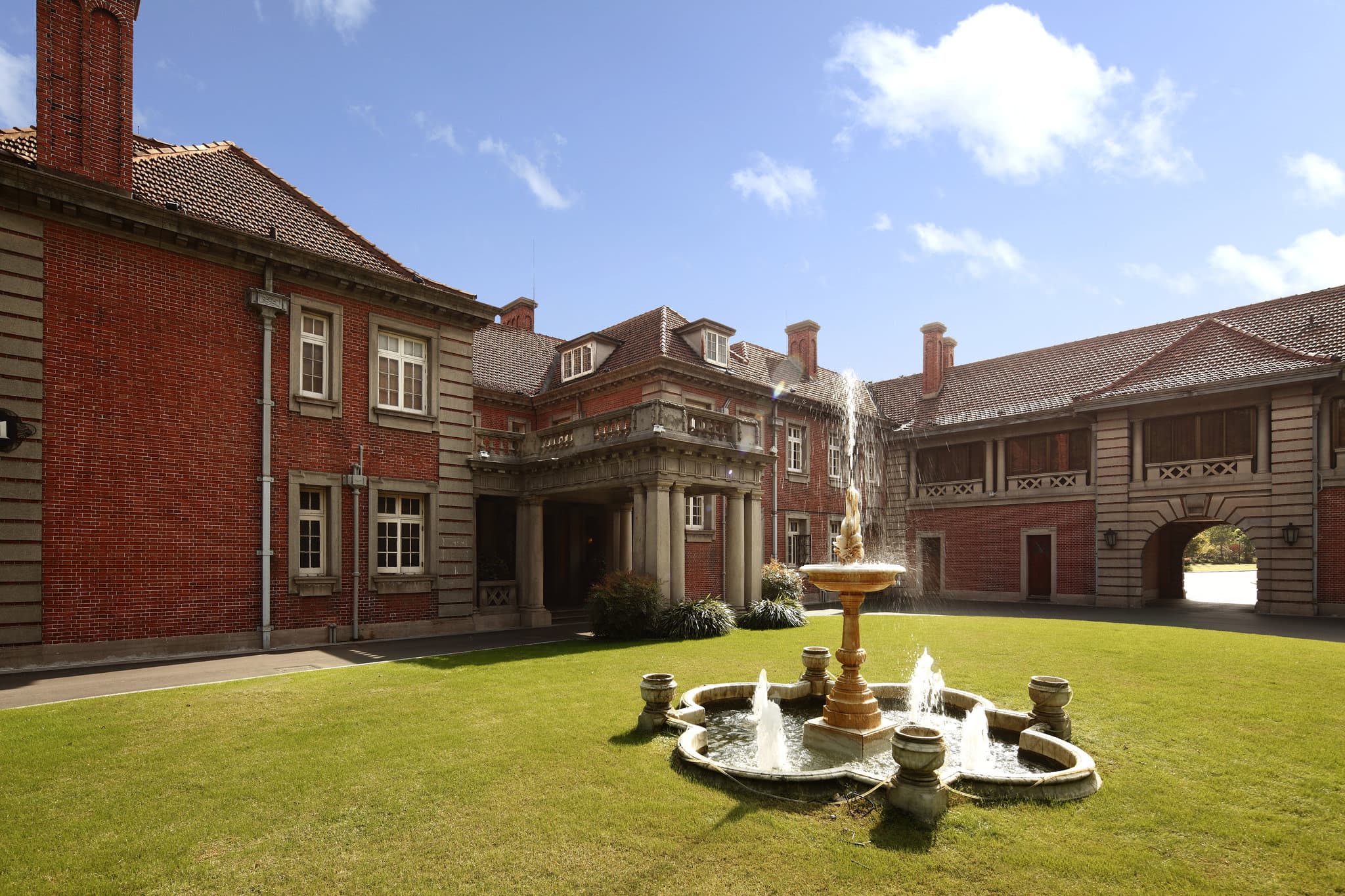
If walls could talk, the red-brick facade of the 1917 Morris Estate would whisper state secrets. Hidden behind guarded gates in the French Concession, this isn't just a hotel; it is a 100-acre time capsule. While the new skyscrapers of Lujiazui scream for attention, the Ruijin sits back with the confidence of old wealth. You are checking into the 'State Guest House of Shanghai,' a moniker earned by hosting everyone from Chairman Mao to Nixon. The property is a sprawling, lawn-filled anomaly in a dense city. Check-in can feel procedural, but the payoff is the silence—a rare commodity in Shanghai. I recommend bypassing the main building for the Art Deco charm of Building 3 (the Residence). The interiors here struggle slightly to match the exterior's grandeur—think standard corporate luxury rather than bespoke heritage—but the **Byredo Blanche** toiletries and plush **400-thread count linens** soften the blow. For breakfast, ignore the western buffet and head straight for **Xin Yuan Lou**. Order the **Aniang Yellow Croaker Noodles**—a savory, milky broth that locals queue hours for elsewhere, served here with white-glove precision. It’s not the flashiest hotel in town, but for a morning jog through mist-covered camphors before a meeting, it is unbeaten. Verdict? The ultimate power move for the traveler who values privacy over panache.
“Request a room in **Building 3 (The Club Residence)**. It’s detached from the main hub, has only seven rooms per floor, and features private balconies overlooking the camphor trees.”
Insider TipAvg. Nightly Rate
152USD
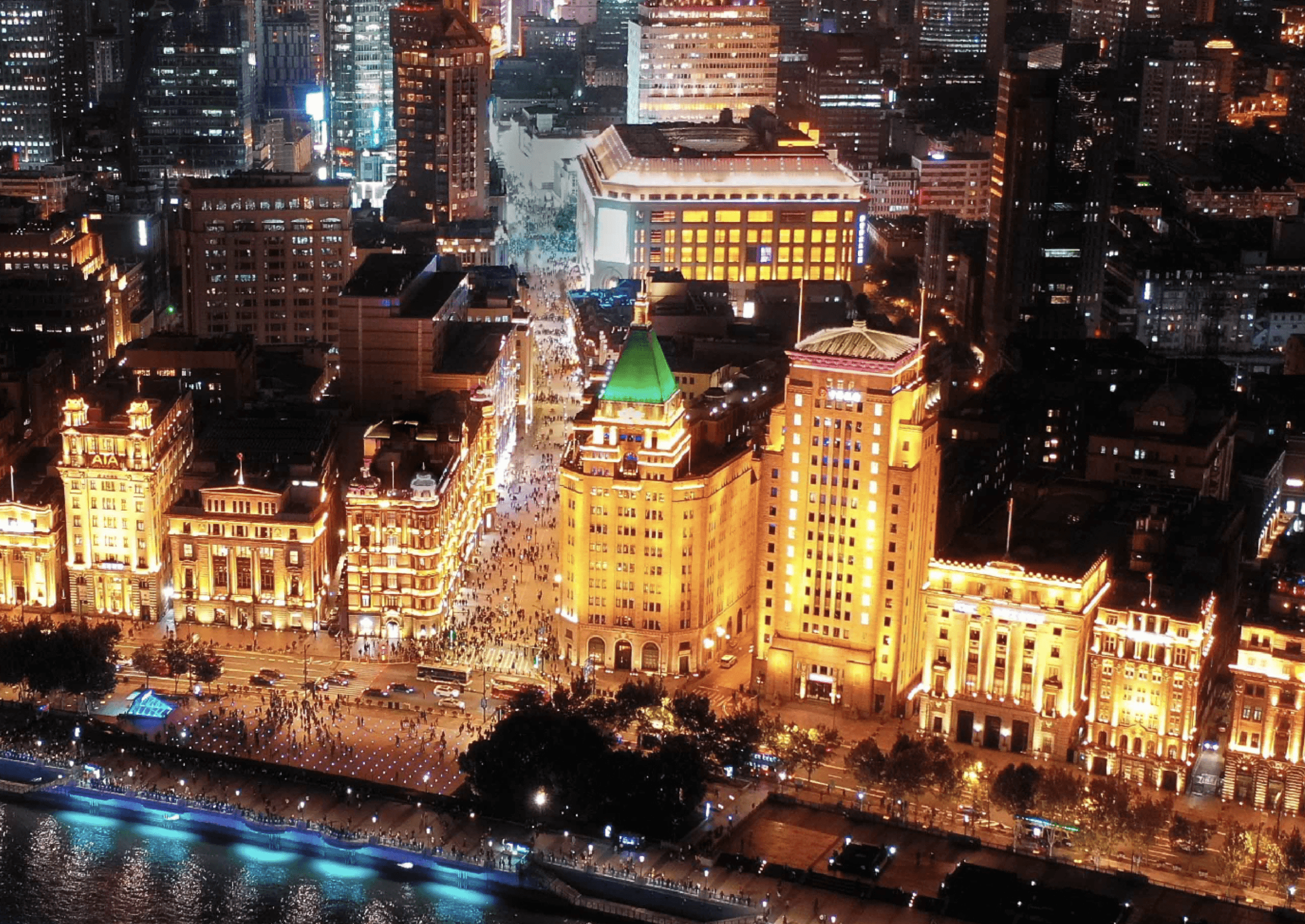
If the ghost of Sir Victor Sassoon still walks the Bund, he undoubtedly sleeps here. The Fairmont Peace Hotel isn't merely a place to stay; it is Shanghai’s definitive Art Deco time capsule. While the modern skyscrapers of Lujiazui across the river scream for attention, this copper-domed matriarch commands respect with a whisper. Stepping into the lobby, you are immediately enveloped by the signature scent of the era—a mix of polished marble, money, and the visual shock of that yellow Lalique glass corridor. The rooms resist the generic beige of their Pudong competitors. Instead, you get a distinct sense of place: heavy velvet drapes, substantial molding, and a glorious lack of minimalism. Yes, the air conditioning can be as temperamental as a 1920s diva, and the courtyard rooms are arguably gloomy, but these are small prices for sleeping inside a history book. Dining is non-negotiable. Skip the street food for one night and commit to the 'Dragon Phoenix' restaurant for their Peking Duck—served with a pomp that rivals a coronation. Yet, the hotel’s soul resides in The Jazz Bar. Watching the Old Jazz Band (average age: 80+) work through standards while you nurse a ‘Conte Verde’ cocktail is not a cliché; it is a rite of passage. It is imperfect, cinematic, and utterly essential before the property reportedly transitions to the Raffles brand in 2027.
“Request a room ending in '02' for the best angle of the Pearl Tower, or book the 'Nine Nations' Indian Suite for the wildest 1930s fantasy.”
Insider TipAvg. Nightly Rate
255USD