No. 01
6161 Yuanjiang Road. Shanghai 31 China 201111Shanghai433 verified reviews
9
.6
Bitvoya Edit
Layering imagery, place, and detail before the page opens.
Shanghai is a city of dualities, where futuristic skylines cast shadows over centuries-old lanes. For the discerning traveler, the true soul of the city lies hidden within its Shikumen (stone gate) neighborhoods. In the leafy avenues of the French Concession and the historic depths of Xuhui, a new wave of hospitality has emerged. Properties like the Capella Shanghai, Jian Ye Li have meticulously restored these architectural gems, transforming brick-and-mortar history into private urban sanctuaries. Whether it is the zen-like calm of The PuLi Hotel and Spa in Jing’an or the relocated Ming Dynasty camphor trees of Amanyangyun on the outskirts, these retreats offer silence amidst the roar of the metropolis, blending 1930s glamour with contemporary elegance.
Choosing a Shikumen sanctuary in Shanghai is about more than just accommodation; it is an immersion into the Haipai culture—the unique East-meets-West aesthetic that defines the city. Unlike standard glass skyscrapers, hotels like Capella Shanghai and the heritage villas of InterContinental Shanghai Ruijin offer a tactile connection to history. These properties provide seclusion within the city's most vibrant districts, allowing guests to step out into bustling lanes and retreat instantly into high-walled courtyards. It is the perfect choice for travelers seeking authenticity without compromising on world-class luxury.
Expect a blend of 1930s Shanghai glamor and modern minimalist design. Rooms in Shikumen hotels often feature multi-story layouts, private courtyards, and narrow staircases characteristic of the architecture. Service is typically highly personalized, reflecting the intimacy of the setting. Dining is often a highlight, with venues like le Comptoir de Pierre Gagnaire at Capella offering Michelin-starred experiences within the complex.
Capella Shanghai, Jian Ye Li is widely considered the premier Shikumen experience, being the only all-villa urban resort housed within a preserved Shikumen heritage zone.
Yes, hotels like The Middle House and Amanyangyun blend historic architecture with cutting-edge technology, floor heating, and luxury spas.
The Xuhui District (former French Concession) is the best area, offering walkable access to historic lanes, cafes, and Shikumen architecture.
Explore our complete curated list of luxury accommodations, from boutique hideaways to grand dames.
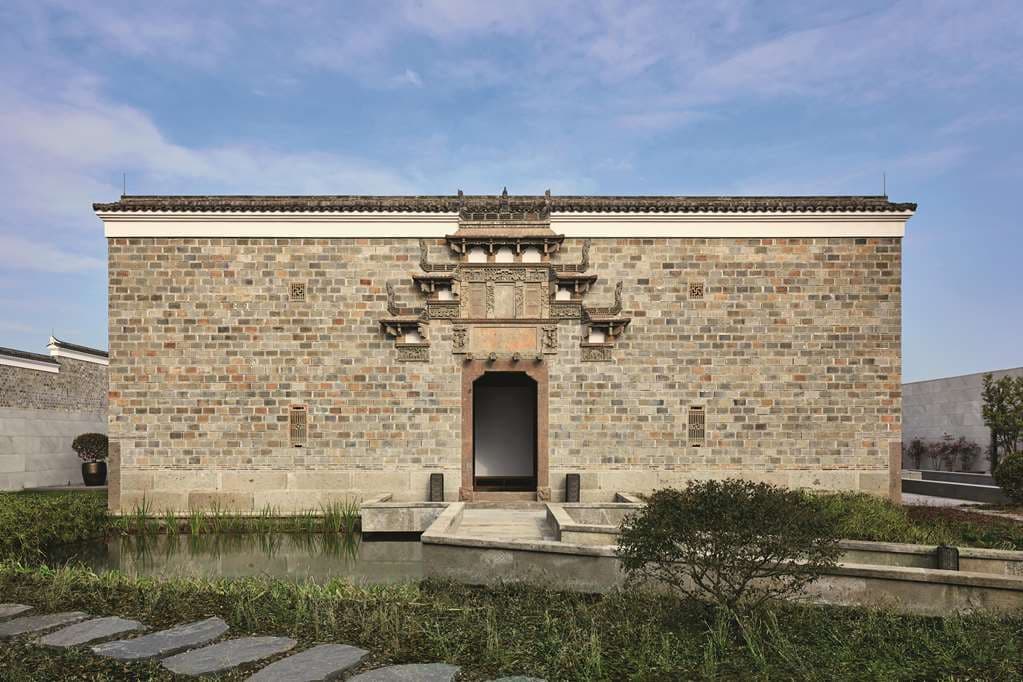
Explore All Shanghai HotelsIf the Bund is Shanghai’s neon-lit future, Amanyangyun is its rescued soul. The backstory alone justifies the trek to Minhang: entrepreneur Ma Dadong physically dismantled 50 Ming and Qing dynasty villas and uprooted 10,000 camphor trees in Jiangxi to save them from a reservoir project, reassembling them here stone by stone. The result is not a hotel, but a curatorial miracle. The late Kerry Hill’s design vernacular—clean lines, light-filtering lattice, and absolute symmetry—frames the ancient wood without fetishizing it. In the Ming Courtyard Suites, the silence is heavy and expensive. Expect heated stone floors, severe but stunning granite bathtubs, and the scent of camphor that permeates the 400-thread count linens. Dining at Lazhu is non-negotiable; the Jiangxi cuisine offers a localized chili kick that most luxury hotel kitchens are too timid to attempt (order the double-boiled soup). The subterranean spa, the largest in the Aman portfolio, houses a Russian Banya that puts lesser saunas to shame. It is inconvenient for sightseeing, but that is the point. You don't come here to see Shanghai; you come to escape it.
“Skip the standard massage and book the Russian Banya House for a private 'venik' leaf beating session—it’s the most authentic detox on the property.”
Insider TipAvg. Nightly Rate
987USD
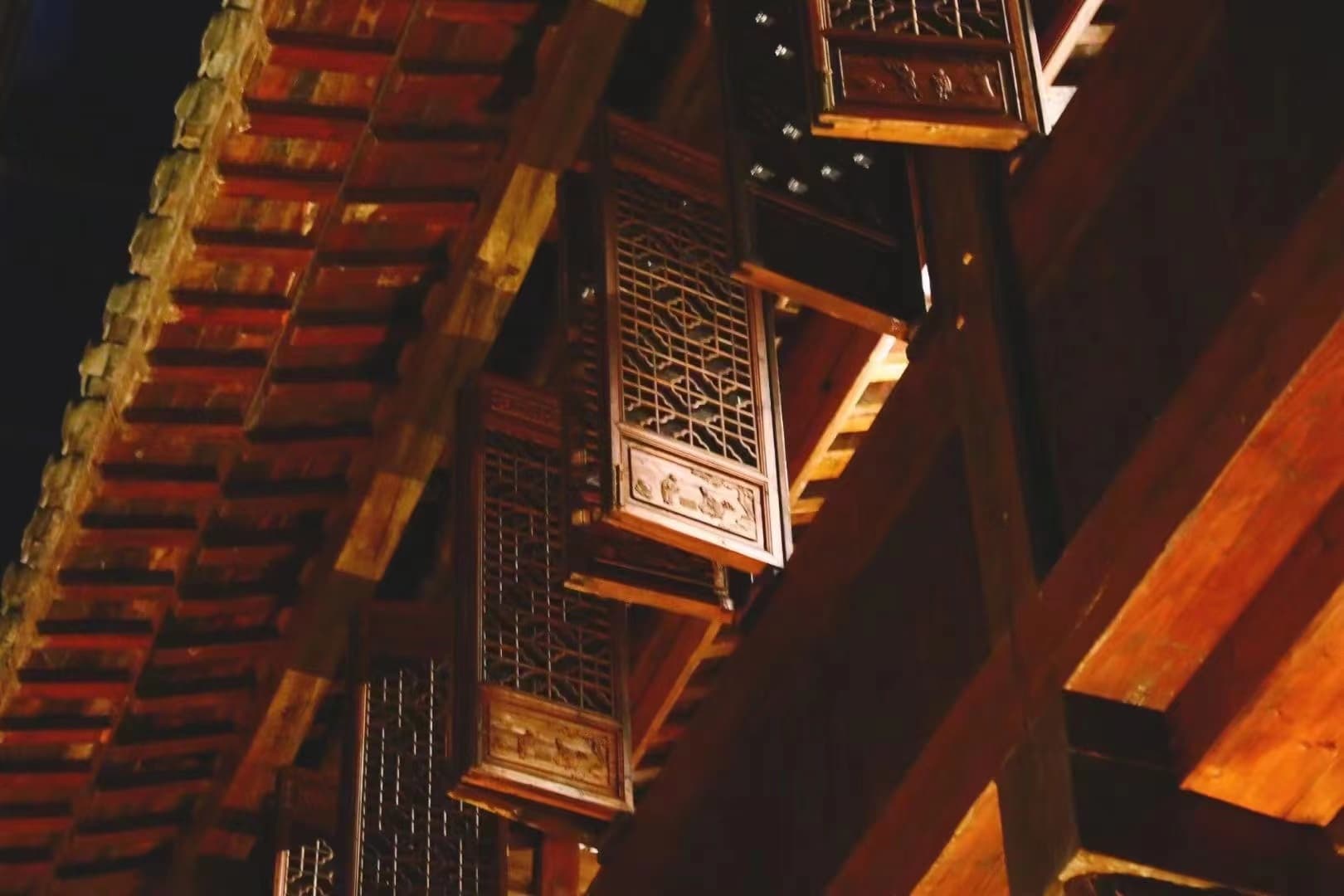
Forget the Bund’s glass towers. Ahn Luh Zhujiajiao is where you go when Shanghai’s frenetic energy becomes a migraine. Located a digestible drive from the city center, this property isn't just a hotel; it’s a defiant act of preservation. The arrival experience is unmatched: you check in under the soaring eaves of the *Wu Feng Lou*, a 600-year-old Ming Dynasty courthouse painstakingly transported from Anhui and reassembled here, stone by stone. It is imposing, dark, and utterly cinematic—think *Raise the Red Lantern* without the family feuds. The 35 villas operate as private fiefdoms rather than mere rooms. Expect heated floors (an absolute necessity during Jiangnan’s damp, bone-chilling winters), high-beamed ceilings, and private courtyards that practically demand you sit still with a pot of tea. The design eschews the generic beige of international chains for stark lines and heavy timber. While the hard product is flawless, the amenities lean towards the contemplative; there is no fitness center here. Instead of a treadmill run, you’re encouraged to wander the ancient Qing Dynasty opera stage or book a session with the Thai-certified therapists at the spa. Dining at the *Ahn Luh Dining Room* offers a hyper-local lens. The Steamed White Water Fish—sourced directly from the nearby waterways—is delicate enough to make you forgive the occasionally erratic breakfast service. It’s moody, expensive, and lacks the robotic efficiency of a business hotel, which is precisely the point. You come here to disappear.
“Skip the main pool for swimming and book a Pool Villa if you want actual laps. Also, request a tour of the 'Old Qing Dynasty Opera Stage' at sunset for the best lighting.”
Insider TipAvg. Nightly Rate
300USD
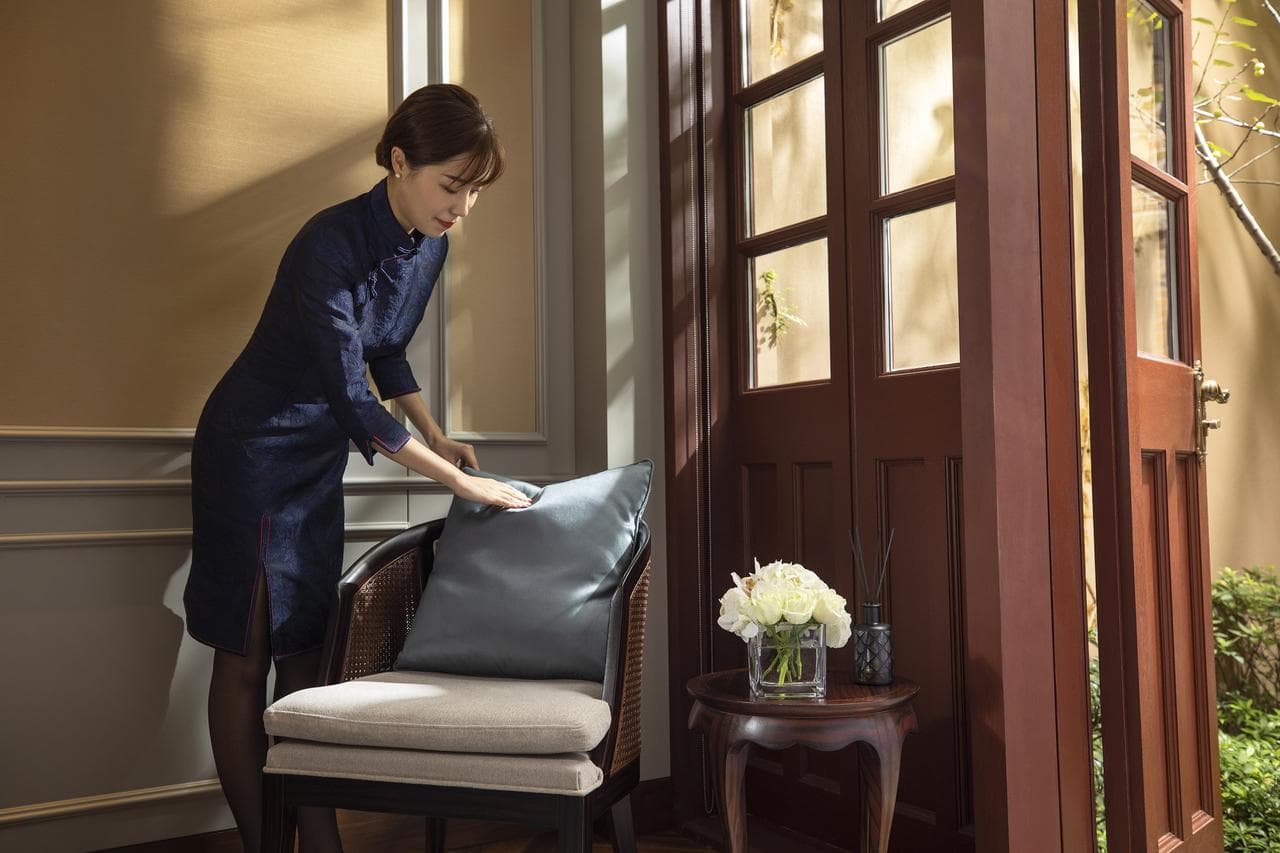
Forget the Bund’s glass giants. The ultimate Shanghai flex is silence, specifically the hushed, brick-walled lanes of Jian Ye Li. Capella isn't merely a hotel; it is a fully restored 1930s shikumen estate where you don’t just check in—you inherit a townhouse. The experience is hyper-residential and cinematic. You enter through a private stone gate into a courtyard that feels ripped from a Wong Kar-wai set. Inside, life is vertical: a parlor on the ground, an entertainment den above, a bedroom wrapped in Jaya Ibrahim’s dark woods and celadon silks on the second, and a rooftop terrace that demands a stiff drink. The stairs are steep—authentic to the era but unforgiving—yet the trade-off is total seclusion. Service is led by ‘Capella Culturists’ who operate less like concierges and more like fixers, manifesting lens cloths for your glasses or impossible reservations. Dining is formidable; at Le Comptoir de Pierre Gagnaire, the cocotte of frogs Poulette justifies the flight alone. While the Auriga Spa’s floatation tanks offer deep relaxation, the property’s true luxury is its stubborn refusal to look outward, offering an introspective, brick-cocooned escape in the city center.
“The villas are vertical and the stairs are steep—request a 'Shikumen Villa' in the central lanes (away from Jianguo Road) for absolute silence, and let the staff haul your luggage.”
Insider TipAvg. Nightly Rate
618USD
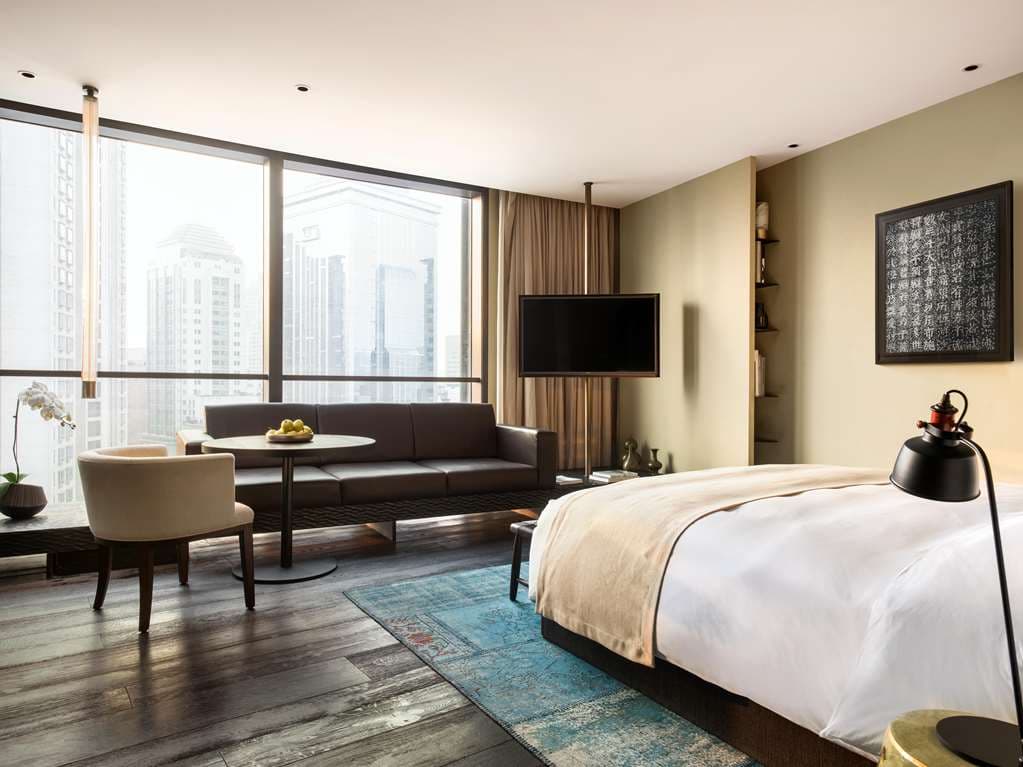
Forget the colonial pastiche that plagues the Bund; The Middle House is a masterclass in modern, moody seduction. Rising from the historic Dazhongli site, this Piero Lissoni-designed sanctuary feels less like a hotel and more like the private residence of a broodingly chic architect. You enter past a staggering emerald-green bamboo ceramic wall, beneath a six-meter Venetian chandelier that anchors the lobby like installation art—a bold rejection of beige neutrality. In the rooms, charcoal floors and sheer glass bathrooms demand a certain level of intimacy (or exhibitionism) from your travel companion, softened only by the generous, complimentary 'Maxi-bar' stocked with craft beers and pressed juices. While Café Gray Deluxe offers solid international plates, the real culinary theater happens at Sui Tang Li. The Marbled Xiao Long Bao are mandatory—exquisite, soup-filled jewels that justify the impossible reservation. Downstairs, the subterranean Mi Xun Spa features a 33-meter indoor pool lit with such cinematic shadow that doing laps feels like a scene from a noir film. It is, without doubt, the most sophisticated place to drown your jet lag in Shanghai.
“The glass bathrooms in the 'Studio 60' rooms offer zero secrets. If traveling with a platonic friend or colleague, book a Suite or Residence for actual privacy. Also, secure your table at Sui Tang Li at least two weeks out.”
Insider TipAvg. Nightly Rate
288USD
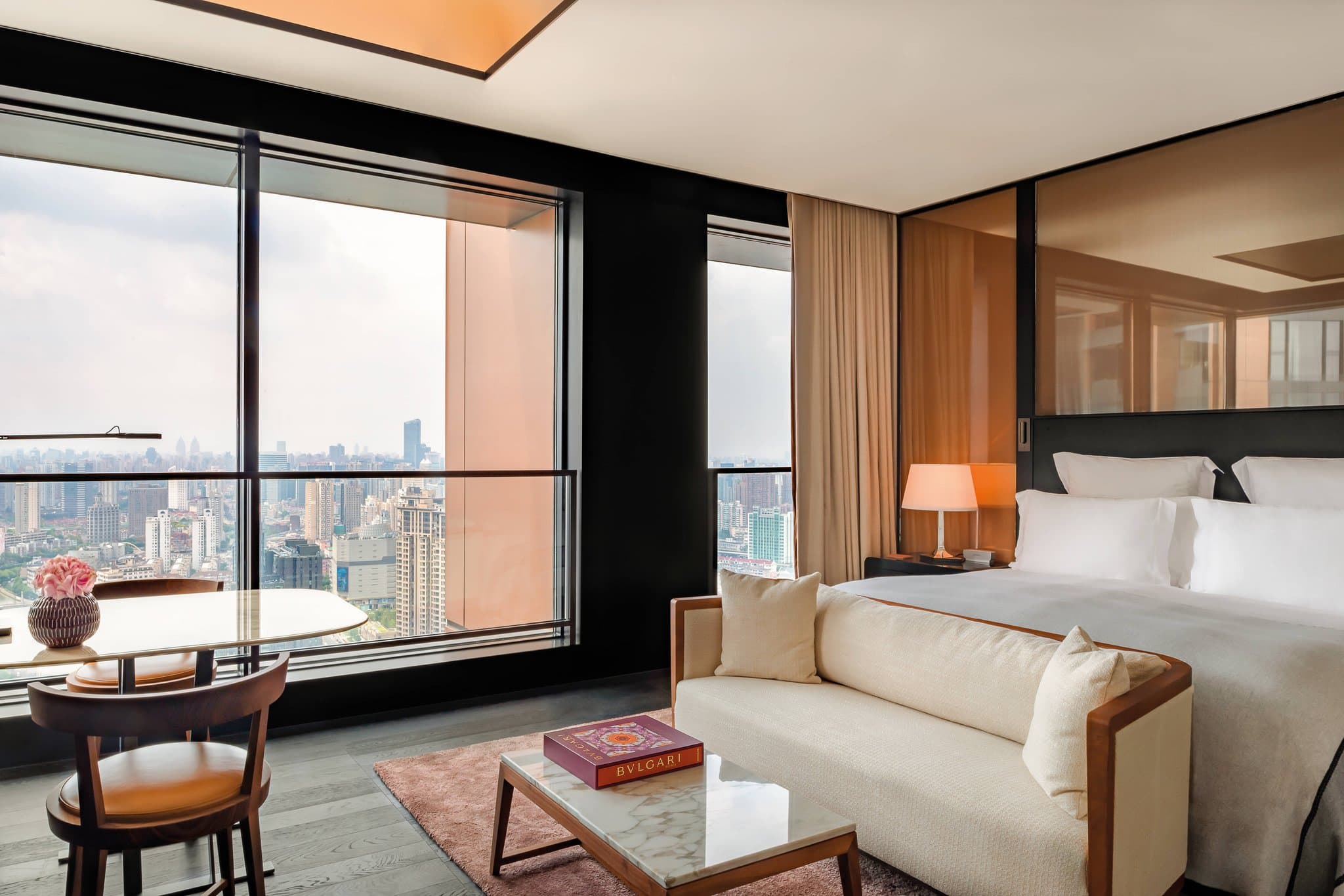
Forget the frenetic neon energy of the Bund; entering the Bulgari is an exercise in Italian composure. While the 48-story tower screams modernity, the soul of this property anchors itself in the restored 1916 Shanghai Chamber of Commerce, a brick-and-mortar nod to the city’s trade history that validates its 'Shikumen Sanctuary' status. Antonio Citterio’s interiors are unapologetically moody—black granite, bronze detailing, and dark leather dominate the corridors, demanding a certain sartorial sharpness from guests. The 82 rooms are less about sleeping and more about viewing; floor-to-ceiling windows frame the Pudong skyline like a cinematic backdrop, while the furniture is a masterclass in Italian restraint by Maxalto. Dining is a serious, award-laden affair. You are torn between the architectural precision of Niko Romito’s spaghetti with lobster at the one-Michelin-starred *Il Ristorante* and the rose soy sauce chicken at the two-Michelin-starred *Bao Li Xuan*, located in the heritage building. Downstairs, the spa rejects minimalism for opulence, centered around a 25-meter pool clad in jade-green mosaics that recall Roman baths rather than hotel laps. It is expensive, exclusive, and barely acknowledges the Marriott ecosystem, but for those seeking 'La Dolce Vita' with a Shanghainese accent, there is no substitute.
“Skip the main lobby bar for a nightcap; head to the Whisky Bar in the restored Chamber of Commerce building for a darker, more speakeasy vibe.”
Insider TipAvg. Nightly Rate
716USD
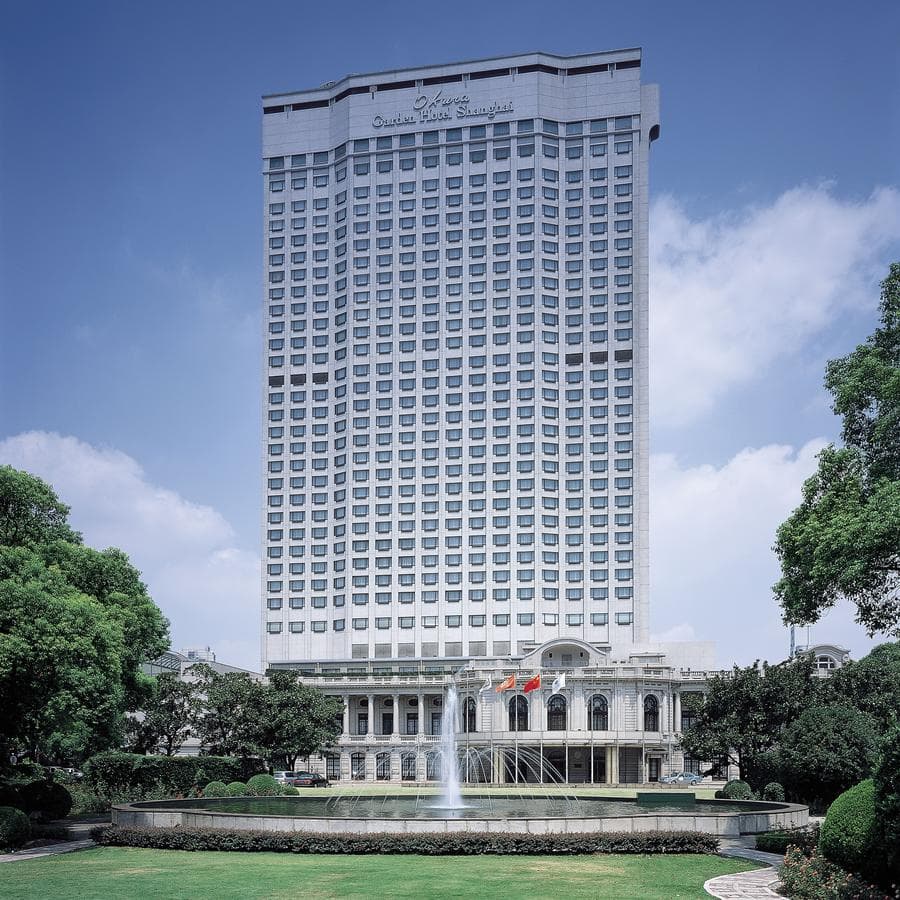
In a metropolis that cannibalizes its past to feed a neon future, the Okura Garden Hotel stands as a defiant, white-gloved survivor. Anchored in the 1926 Cercle Sportif Français (French Club), this property doesn't rely on faux-heritage aesthetics; it possesses the actual bones of the French Concession’s former social epicenter. The lobby—a Baroque cavern of Italian marble and Art Deco stained glass—demands you slow your pace the moment you enter from the humidity of Maoming Road. You don't book here for iPad-controlled drapes or minimalist concrete walls. You book here for the 30,000-square-meter private garden—a manicured green lung that feels illicitly expansive in such a dense district. While the rooms in the modern tower offer reliable comforts like Toto Washlets and air purifiers, they prioritize function over Instagrammability. The real luxury is the service: a rigorous application of Japanese Omotenashi where doormen remember your face and housekeeping is invisible. Dining is equally serious. Sazanka serves Teppanyaki where the garlic rice is a cult favorite, while Yamazato delivers Kaiseki that rivals Kyoto’s best. It’s a rare juxtaposition: eating premium Wagyu in a building that once hosted colonial waltzes, all while the futuristic IAPM mall looms just blocks away. It’s not trendy, and that is precisely the point.
“Skip the street-facing rooms. Explicitly request a 'Garden View' room on a high floor to watch the morning Tai Chi practitioners—and the hotel's famous resident cats—patrol the massive lawn.”
Insider TipAvg. Nightly Rate
92USD
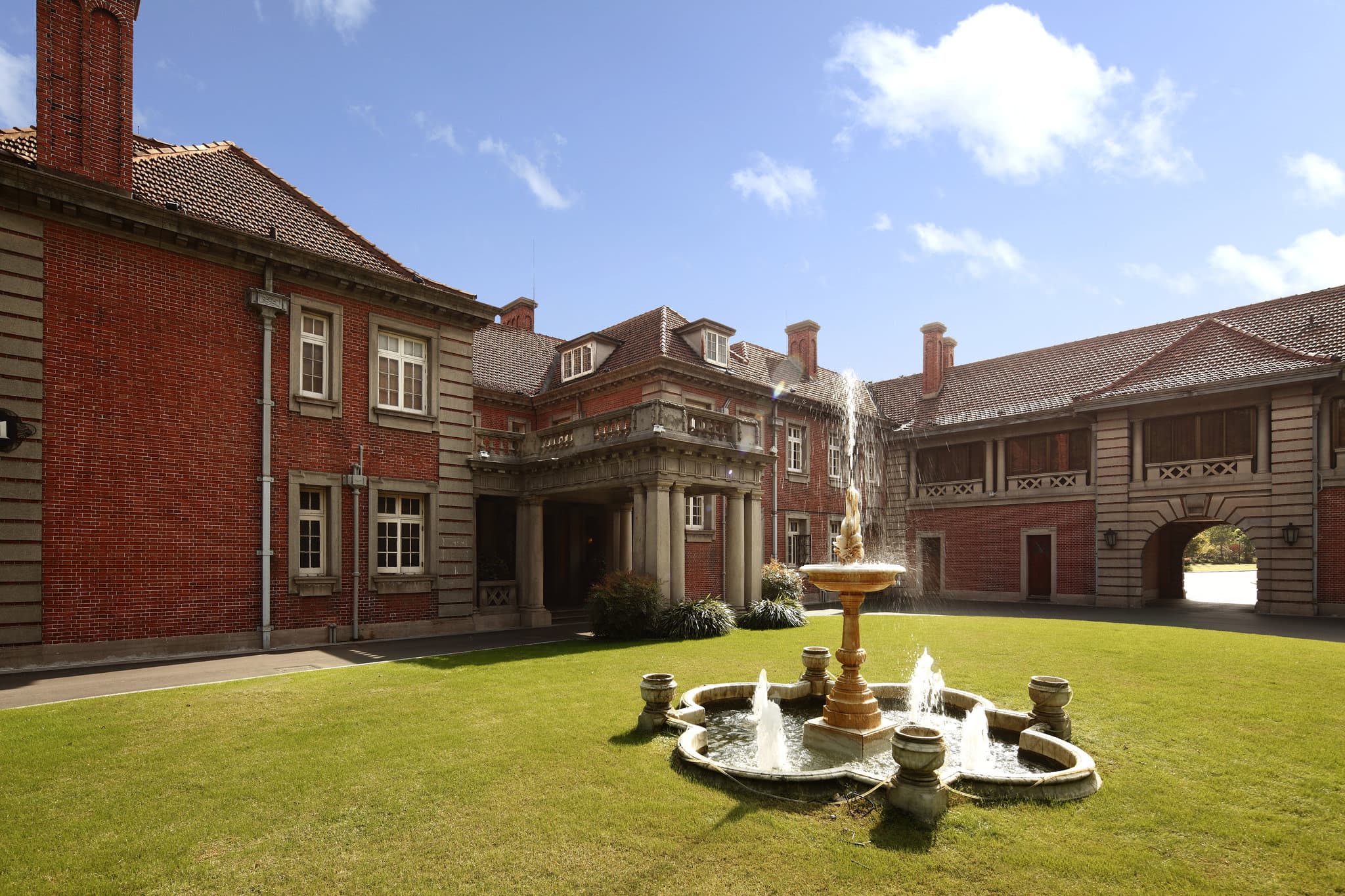
In a city obsessed with vertical ambition, the InterContinental Shanghai Ruijin makes a compelling case for the horizontal. Occupying the 100-acre former Morris Estate, this is less a hotel and more a walled aristocratic compound in the French Concession. You don’t check in here for the skyline views; you come for the silence of the camphor trees and the red-brick heritage of the 1917 villas. While the interiors of the newer annexes can lean towards safe, restrained contemporary design—a stark contrast to the Victorian arches of the Marble Lobby—the experience remains deeply atmospheric. The rooms are equipped with the expected technicities (Technogym access, Byredo Blanche amenities), but the real draw is the morning walk through the estate’s manicured lawns, a rarity in Shanghai’s density. Dining at Xin Yuan Lou is non-negotiable; order the signature Aniang Yellow Croaker Noodles, a dish that captures the city’s soulful palate better than any fusion attempt. Service is polished, if occasionally bureaucratic, but the staff’s pride in the property’s lineage is palpable. **Verdict**: A historic sanctuary for those who prefer the whisper of Old Shanghai to the shout of the Bund.
“Request a room in the heritage Building 1 for high ceilings and original 1920s detailing; the newer wings are comfortable but lack the architectural drama.”
Insider TipAvg. Nightly Rate
152USD
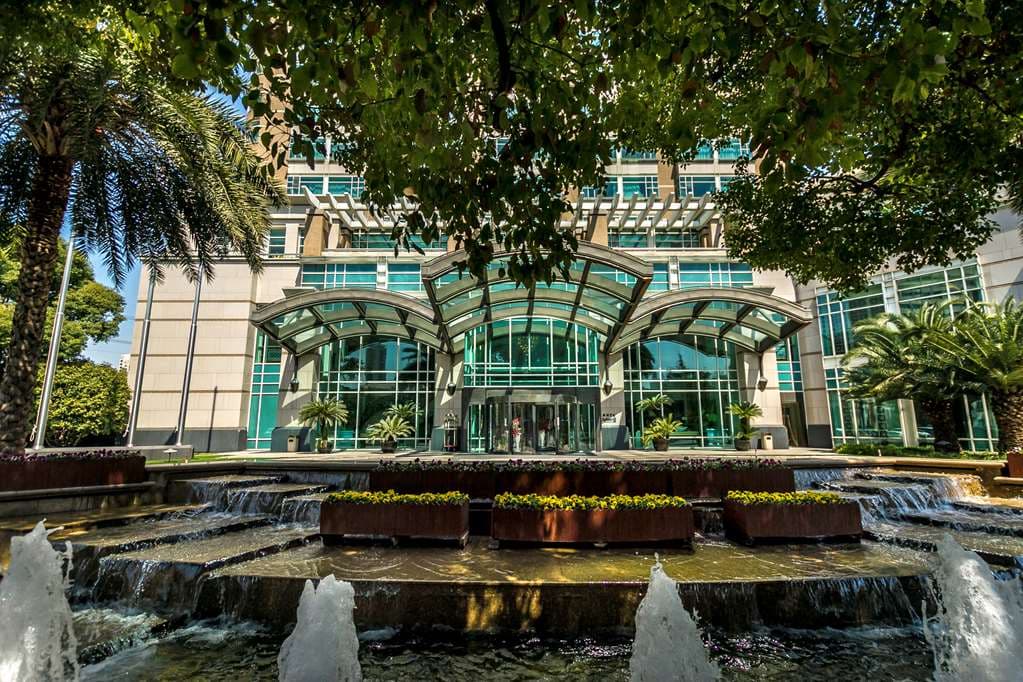
Shanghai does not usually do silence; it deals in jackhammers and jazz bars. Yet, at the Radisson Collection Hotel, Xing Guo, the volume drops to zero. This isn't merely a hotel; it is a 17-acre diplomatic compound in the heart of the former French Concession. You aren't just checking in; you are defecting to a quieter era. The property anchors itself around the 'Little White Palace'—a 1930s neoclassical villa that makes the main tower feel like a modern afterthought, albeit a comfortable one. The rooms are vast, equipped with Dyson Supersonic dryers and Molton Brown toiletries, signaling that while the architecture is vintage, the amenities are strictly current. The aesthetic is 'State Guest House' chic—polished marble, heavy drapes, and the kind of hush money usually cannot buy. For sustenance, ignore the western menu and commit to Li Palace. The Cantonese dim sum and seasonal seafood are served with a side of garden views that feel illicitly expansive for this density-obsessed city. Wellness is handled by a Clark Hatch Health Club—a name that screams serious fitness—and a salt-water pool that feels medicinal in the best way. It lacks the riotous color of the Bund’s newer boutiques, but for those who prefer their luxury served with historical gravitas, this estate remains a formidable address.
“Book a room with 'Garden Views' explicitly to face the historic villas. For a nightcap, the Madam Li Lounge on the 12th floor offers a rare, unobstructed sightline over the consular district's tree canopy.”
Insider TipAvg. Nightly Rate
90USD
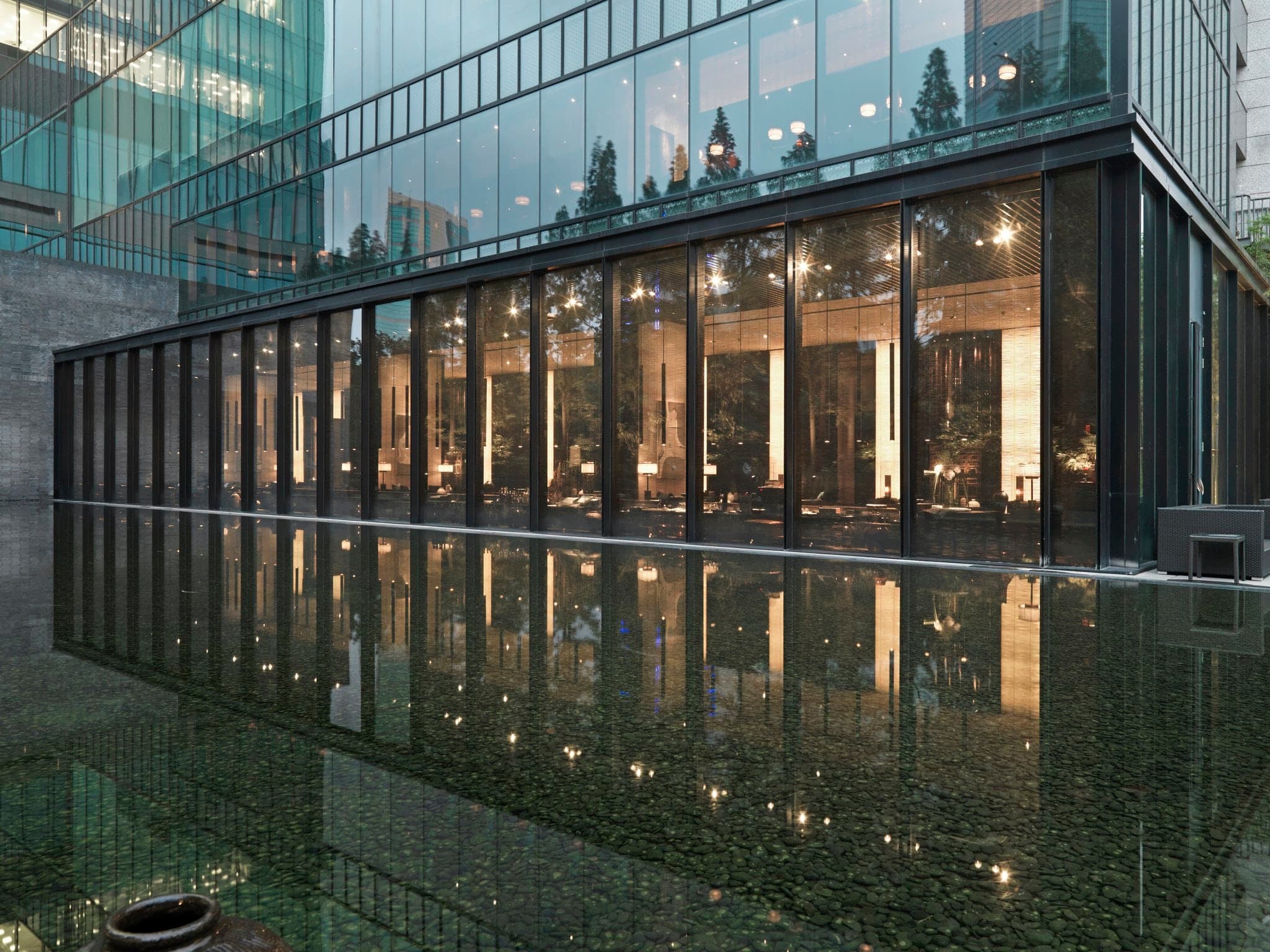
If Shanghai is a frenetic showgirl, The PuLi is the monk in the front row who refuses to clap. Since 2009, this self-proclaimed 'urban resort' has remained the city’s definitive sanctuary of soot-colored slate and silence, a stark 'Shikumen' spirit manifested in modern minimalism. Stepping into the lobby, the city's roar vanishes, replaced by the hushed reverence of the 32-meter solid teak Long Bar—a catwalk for the cognoscenti. While the hardware is showing its age (a full renovation is slated for completion in 2026, so pardon the occasional faded USB port), the software remains impeccable. The Grand Studio rooms feature sliding silk screens that partition the open-plan bath—a layout that demands intimacy. Amenities are top-tier: Valmont spa treatments and 400-thread count linens. Dinner at PHÉNIX is non-negotiable; the Michelin-starred roast pigeon with foie gras remains one of the city's most decadent plates. It’s not the newest tech-palace in Jing'an, but it holds the one thing money can't buy: an unshakable sense of self.
“The hotel was just awarded a Michelin Key (2025) and ranked #1 in Shanghai by CNT Readers (2024). For the best 'Zen' effect, request a Park View room on the 20th floor or higher to clear the tree line.”
Insider TipAvg. Nightly Rate
240USD
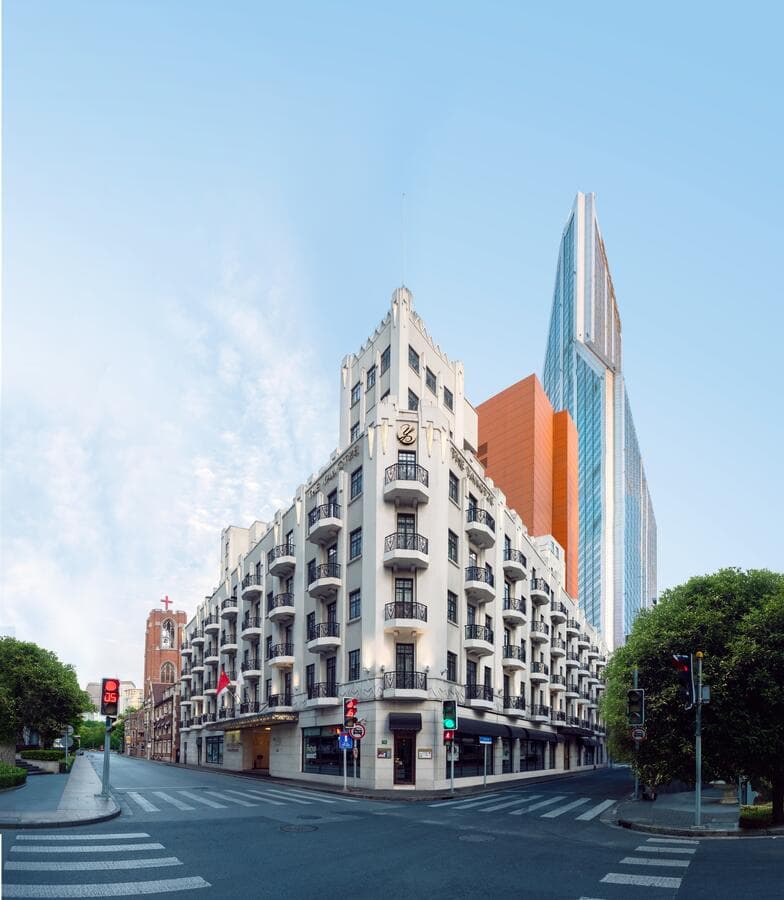
Forget the soulless glass obelisks of Lujiazui; the Yangtze Boutique is where you go to touch the hem of 1930s Shanghai. Designed by Li Pan in 1934, this isn't a 'retro-inspired' reproduction—it is the genuine article, standing stoic amidst the chaos of People's Square. The lobby alone is a cinematic masterpiece, dominated by a dizzying spiral staircase and a stained-glass skylight that filters the grey Shanghai light into kaleidoscopic gold. It was here that the legendary anthem 'Rose, Rose I Love You' debuted, and that sultry, cinematic nostalgia still clings to the velvet drapes. Upstairs, the rooms are a triumph of soundproofing. Despite the metro exit being 50 meters away, the double-glazing renders the city silent, leaving you with Art Deco geometric carpets and dark wood furnishings that feel broodingly romantic. Dining at the '1933 Rose Chinese Restaurant' is non-negotiable; order the signature Cantonese rose-infused beef and admire the preserved brickwork. There is no pool—a fact that mercifully filters out the noisy family crowds—leaving the space entirely for history buffs and romantics chasing the ghost of the Paris of the East.
“Book the 'Nihong' or 'Rose' Suite specifically for the private balconies. They offer the only vantage point where you can frame the original 1930s ironwork against the modern skyline.”
Insider TipAvg. Nightly Rate
100USD
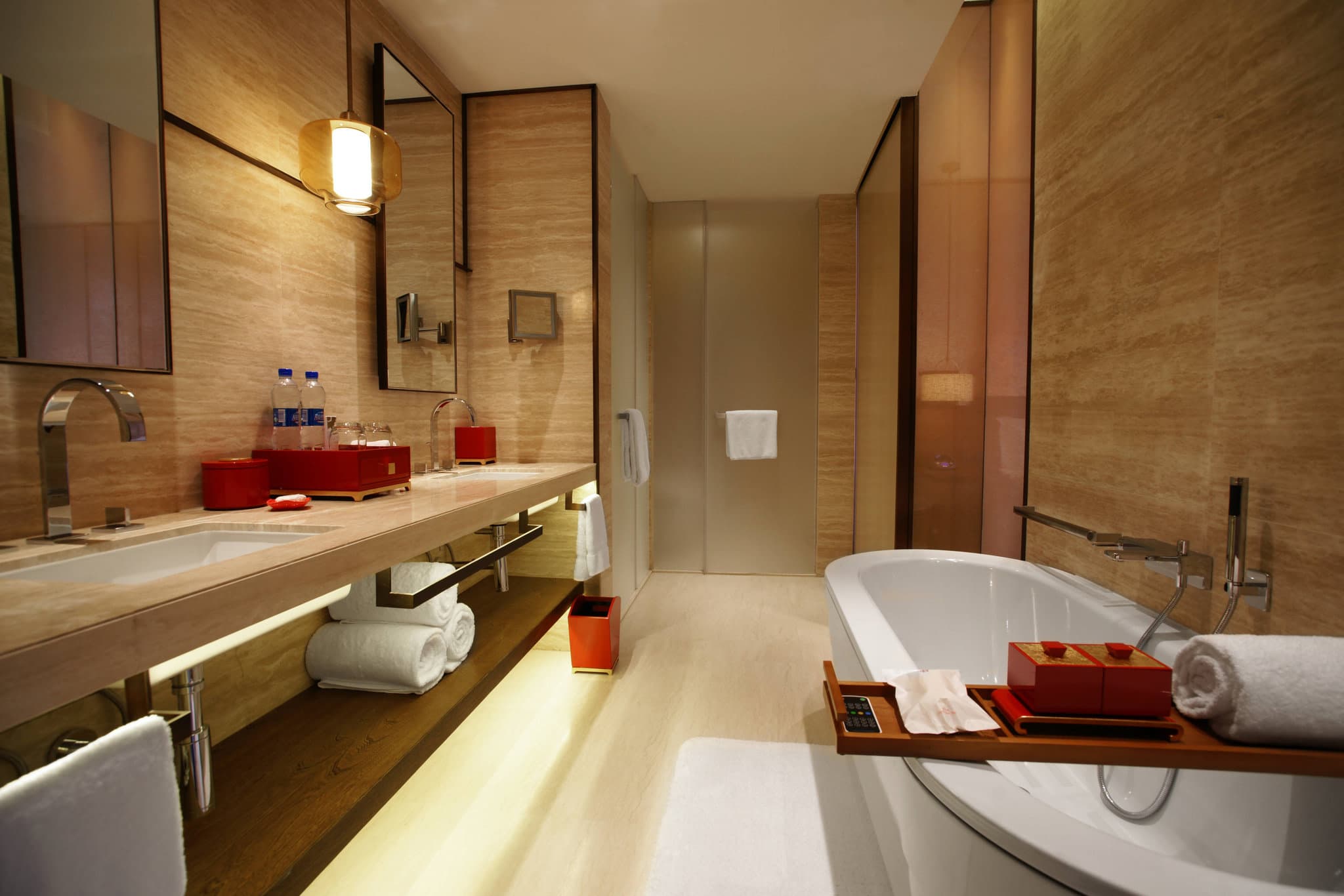
Forget the glass-and-steel vertiginousness of Lujiazui; the soul of Shanghai resides in the plane-tree-lined avenues of the former French Concession. Here, the HUALUXE Shanghai Twelve (formerly a Luxury Collection property) stands as a low-rise anomaly designed by Swiss architect Mario Botta. It is a fortress of Italian terracotta tiles that hides a Zen-like elliptical courtyard—a modern, geometric riff on the neighborhood’s traditional Shikumen housing. The interiors have transitioned from Starwood’s western gloss to IHG’s Hualuxe brand of distinct Chinese hospitality. This means the lobby scent is now a subtle Longjing tea rather than generic citrus. The base rooms are shockingly vast for this zip code, starting at 46sqm, though eagle-eyed preservationists might spot that the hardware—light switches and carpets—is showing a touch of patina. It’s a small trade-off for the sheer silence of the courtyard-facing suites. Dining is serious business here. ‘Cai Feng Lou’ serves a braised abalone and sea cucumber that rivals any bund-side table, while the tea ceremony at ‘LUXE Tea’ offers a necessary pause after walking the nearby Dongping Road. The pièce de résistance remains the basement pool: a cave-like sanctuary illuminated by skylights that has fortunately just reopened after January maintenance. It is an imperfect, yet deeply atmospheric heritage stay.
“Skip the street-view rooms; the magic here is acoustic. Request a 'Premium Courtyard View' on the 3rd floor to wake up to the sight of the internal garden's greenery, not the Hengshan traffic.”
Insider TipAvg. Nightly Rate
128USD
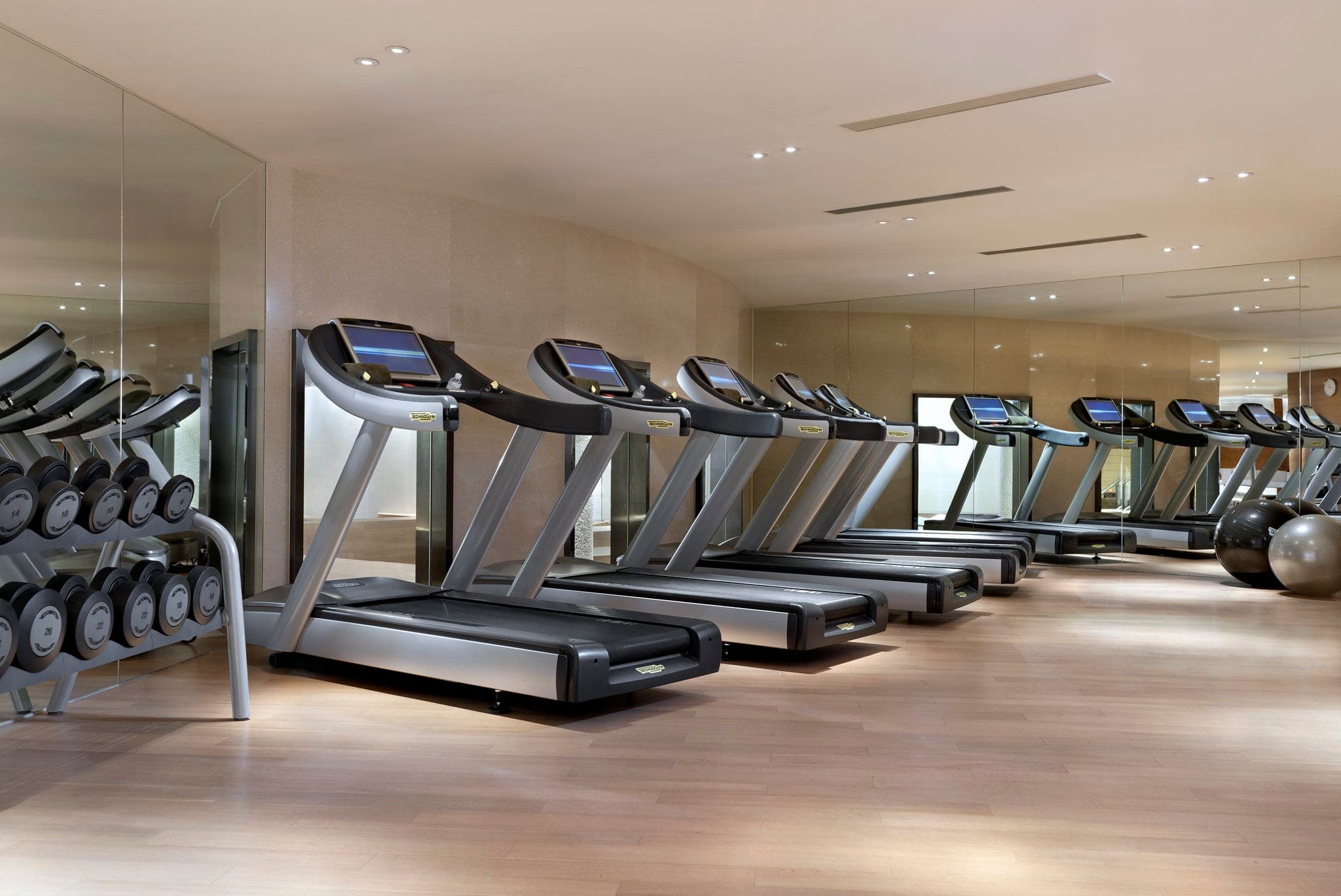
If the grey-brick shikumen lanes of Xintiandi represent Shanghai’s 1920s soul, The Langham is its curvaceous, limestone-clad 21st-century bodyguard. Standing at the district’s gateway, marked unmistakably by a bubblegum-pink London taxi permanently parked out front, this property doesn't just sit near the action—it curates it. The vibe here is less 'quiet retreat' and more 'see-and-be-seen,' with a lobby scent of ginger flower that hits you before the doorman does. While the interiors lean into a dark, slightly moody aesthetic that has aged into a classic 'Shanghai Noir' feel rather than feeling dated, the hardware remains competitive. Rooms feature dark wood veneers and floor-to-ceiling windows that offer a jarring, cinematic contrast: looking down from your deep soaking tub onto the tiled rooftops of the communist-era meeting site across the street. The recent switch to Diptyque amenities adds a necessary layer of olfactory luxury. The real power move here is dinner at T’ang Court. Retaining its Michelin Star in the 2025 guide, the kitchen’s execution of the Baked Stuffed Crab Shell remains a non-negotiable rite of passage for visiting gourmands—rich, flaky, and devoid of the grease that plagues lesser Cantonese houses. For recovery, the Chuan Spa avoids generic wellness tropes, doubling down on Traditional Chinese Medicine; the 'Five Elements' massage is legitimate therapy, not just oil-rubbing. It’s a hotel that knows exactly what it is: the high-fashion, high-energy anchor of the French Concession.
“Book a 'Junior Suite' ending in '15' for the best dual-aspect views of the Xintiandi pedestrian lanes and the distant Pudong skyline.”
Insider TipAvg. Nightly Rate
240USD