No. 01
380 Weihai Road. Shanghai China 200041Shanghai510 verified reviews
9
.2
Bitvoya Edit
Layering imagery, place, and detail before the page opens.
Shanghai is a metropolis of dizzying speed, but within its soaring skyline lies a secret world of profound tranquility. For the discerning traveler, the concept of 'Urban Zen' is not just a trend but a necessity. From the camphor forests of Minhang housing the historic Amanyangyun to the shikumen-lined lanes of the French Concession hosting Capella Shanghai, the city offers sanctuaries that blend ancient Chinese wellness philosophies with hyper-modern luxury. Whether it is the sleep-centric technology at The Anandi or the minimalist sanctuary of The PuLi in the heart of Jing'an, these properties promise a recalibration of the senses amidst the bustle of the Bund and beyond.
Shanghai presents a unique dichotomy: it is one of the world's most futuristic cities, yet it is deeply rooted in ancient traditions of healing and balance. Choosing Shanghai for a wellness retreat means accessing the birthplace of traditional therapies combined with cutting-edge luxury hospitality. The concept of 'Urban Zen' here isn't just about a quiet room; it is an immersive experience. Hotels like The Sukhothai Shanghai and The Middle House curate environments using natural materials like bamboo and stone to counteract the concrete jungle. Furthermore, the integration of Traditional Chinese Medicine (TCM) into spa treatments—available at world-class spas like those in The Bulgari Hotel Shanghai—offers a level of therapeutic authenticity that is hard to replicate elsewhere.
Expect a fusion of art, history, and healing. At Amanyangyun, the experience includes cultural workshops in relocated Ming Dynasty houses. At The Anandi, expect a 'healing butler' and rooms designed specifically to regulate circadian rhythms. Dining is also a crucial component; Michelin-starred vegetarian menus and farm-to-table concepts are standard at these properties. The design philosophy often leans towards 'Grey Scale' luxury—understated, textured, and deeply calming, contrasting sharply with the neon lights of Nanjing Road.
Amanyangyun and The Anandi Hotel and Spa are the top choices for quiet retreats, as they are located away from the city center and focus specifically on holistic wellness and sleep quality.
Yes, many properties like The PuLi Hotel and Spa and The Bulgari Hotel Shanghai integrate TCM principles into their spa menus, offering treatments designed to balance the body's Qi.
Jing'an District is ideal. Hotels like The PuLi Hotel and Spa offer a resort-like sanctuary directly next to Jing'an Park, allowing you to stay central while enjoying profound peace.
Explore our complete curated list of luxury accommodations, from boutique hideaways to grand dames.
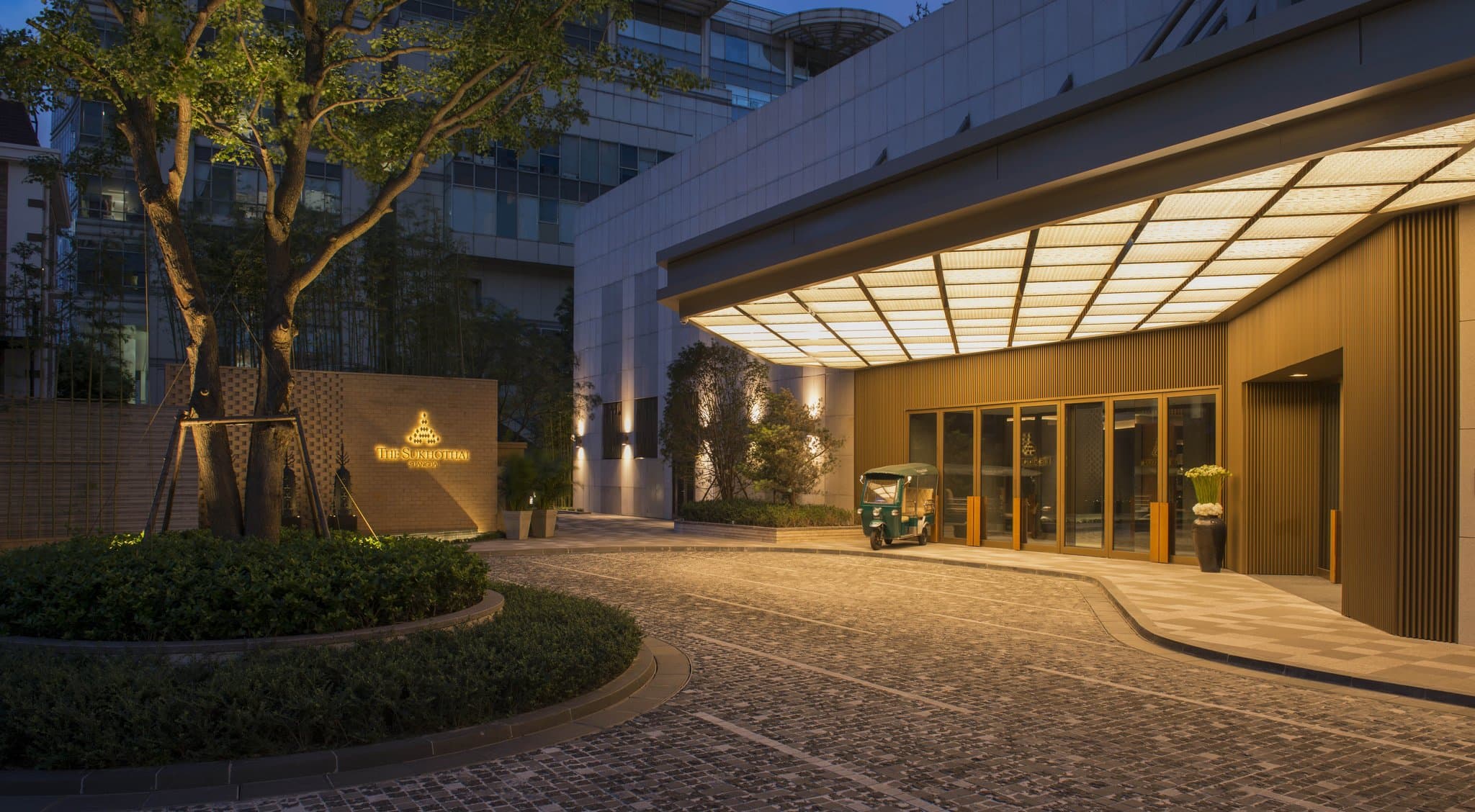
Explore All Shanghai HotelsIf the Bund is Shanghai’s colonial past, The Sukhothai is its sleek, silent future. Designed by the visionary duo Neri&Hu, this isn't just a hotel; it’s a study in 'industrial Zen.' Forget heavy brocades and gold leaf. Here, the aesthetic is defined by gray terrazzo, floating staircases, and diatom-silica clay walls—a brilliant functional detail that actively purifies the room's air and regulates humidity. It feels less like a hotel and more like a high-design monastery for the secular aesthete. The rooms are shockingly spacious for Shanghai, stripped of visual noise but layered with tactile comforts. You’ll find yourself running a hand over the matte brass fixtures before heading down to The Retreat. This subterranean wellness bunker features a 25-meter heated pool tiled in jade-green mosaic that glows like a bioluminescent lagoon. It is, frankly, cinematic. Dining avoids the usual hotel buffet fatigue. La Scala serves a confident 'Impepata di Cozze' (peppered mussels) that transports you straight to Campania, while Urban Café executes a Pad Thai with the requisite wok 'hei' you’d expect from the brand’s Bangkok roots. Service can occasionally stutter with language nuances, but the warmth is genuine. For those exhausted by the city's neon frenetics, this is the ultimate reset button.
“Skip the standard nightcap and order the 'Gemstone Box' at The ZUK Bar—it’s a tableside cocktail theater that’s actually worth the hype.”
Insider TipAvg. Nightly Rate
230USD
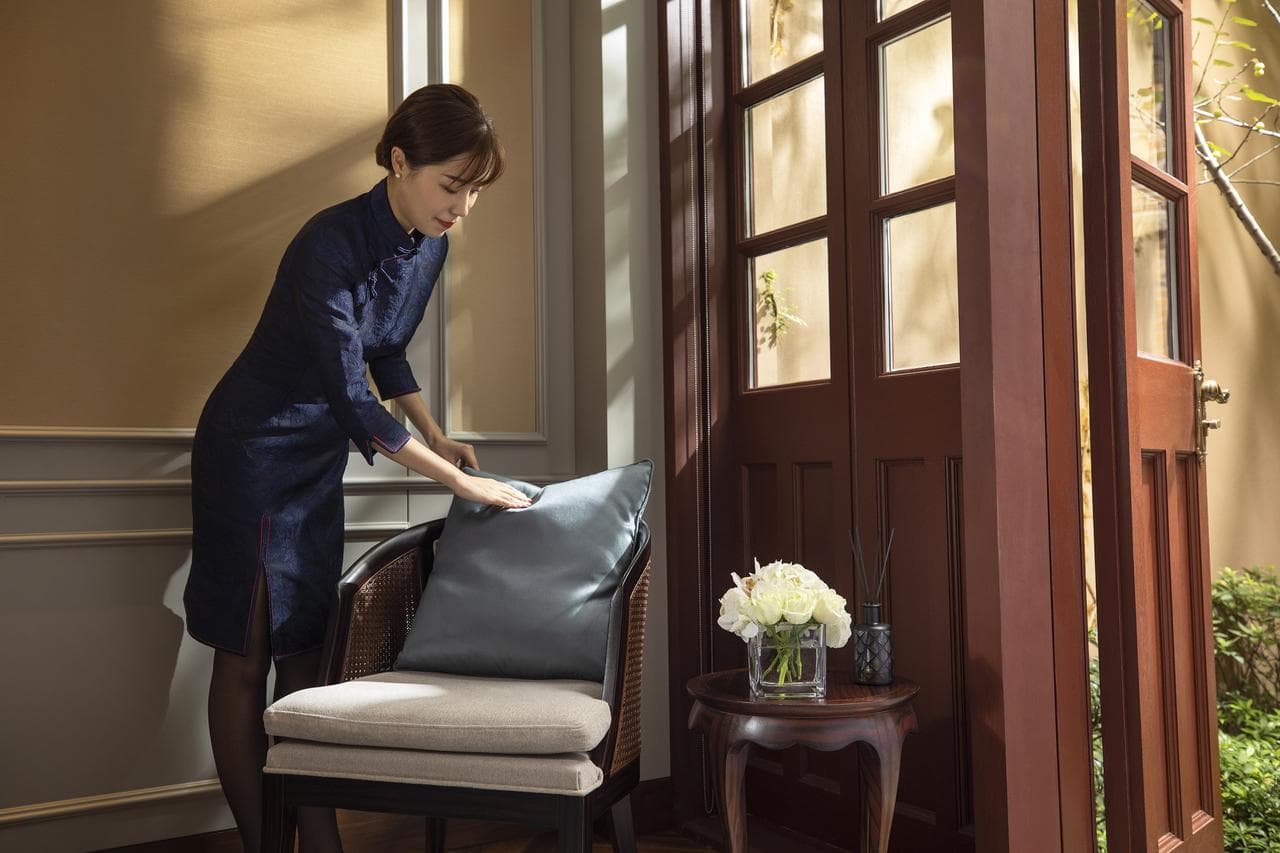
In a city defined by vertical ambition, Capella Shanghai, Jian Ye Li flips the script—or rather, preserves the original manuscript. This isn’t a hotel; it is the last remaining cluster of shikumen townhouses in the French Concession, a 1930s architectural hybrid of Western brick and Eastern courtyard that feels impossibly hushed. Check-in is less a transaction and more an induction into a secret society of silence. You don’t get a room; you get a vertical villa. The experience is an ascent: enter through your private stone-framed courtyard, climb past the media room (perfect for brooding with a whiskey), up to the bedroom with its dark wood paneling and 400-thread count linens, and finally to a sun-drenched rooftop terrace that offers introspective views of red clay tiles rather than the glittering Bund. The design is cinematic noir meets residential calm. Amenities are uncompromised—Frederic Malle toiletries scent the marble bathrooms, and the soundproofing is so profound you'll forget you're in a megalopolis. Dining is equally serious; *le Comptoir de Pierre Gagnaire* delivers Michelin-starred precision, where the cocotte of frogs Poulette is a non-negotiable order. Service is intuitive, led by 'Capella Culturists' who anticipate needs before they form. While the steep staircases challenge the knees, the trade-off is a level of privacy unmatched in Shanghai. It is a fortress of urban zen.
“Skip the standard massage; book the 'New Moon' treatment at Auriga Spa, which aligns with the lunar cycle for deep sleep recovery.”
Insider TipAvg. Nightly Rate
618USD
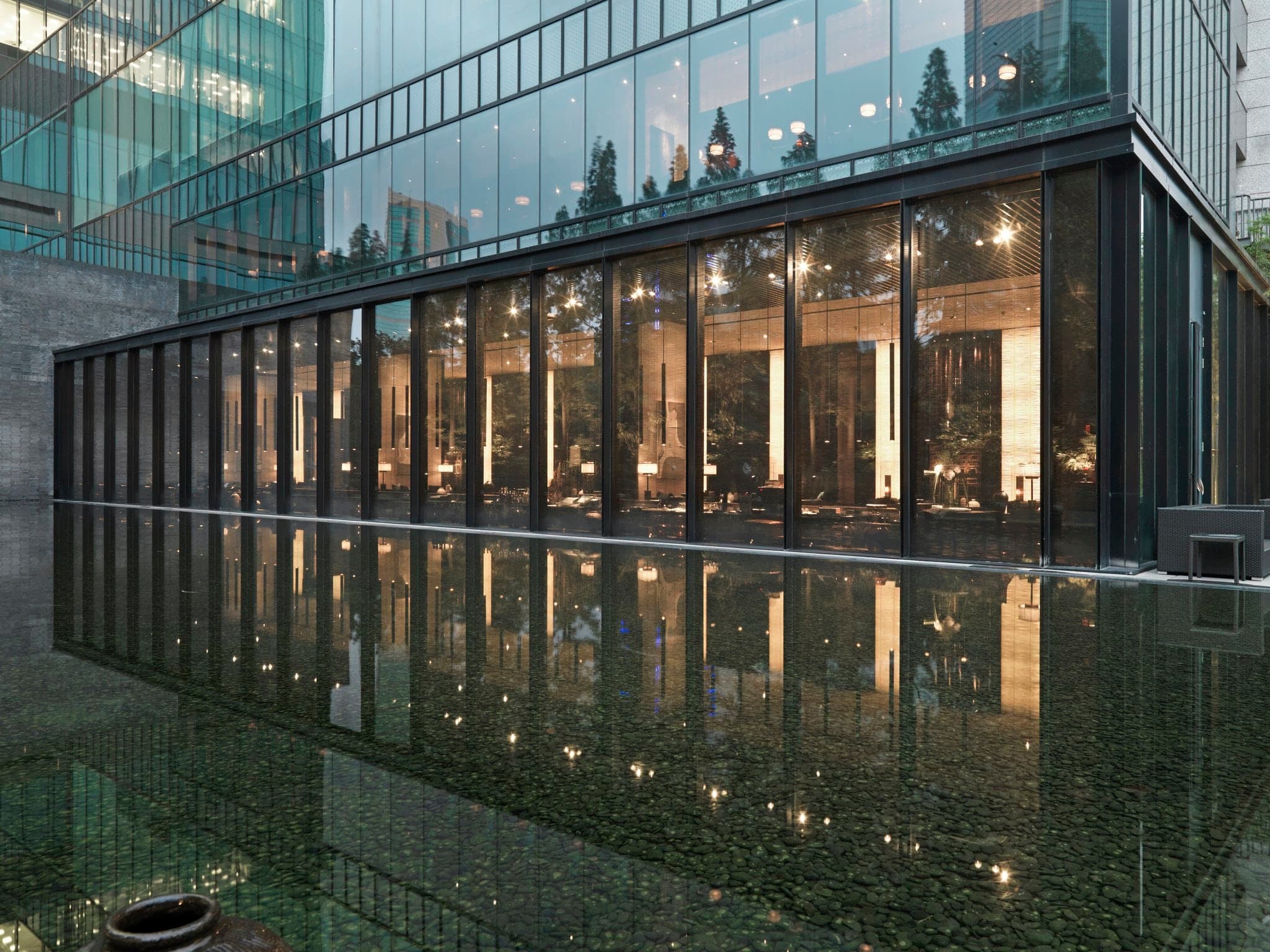
In a city that often equates luxury with gilded excess, The PuLi Hotel and Spa remains a defiant study in whispers. Stepping off the frenetic Jing’an streets and onto the lobby’s polished slate floors feels less like a check-in and more like a decompression. The design—a dark, moody interplay of bamboo screens and ancient wood—doesn't just block out the noise; it seems to absorb it entirely. While the in-room technology is showing its age (a known quirk of its 2009 vintage), the analog luxuries remain untouched. The open-plan studios, separated by silk screens, offer a voyeuristic intimacy that feels incredibly chic. But the real draw is the wellness credential. The UR SPA, wielding potent Valmont and Swissline formulations, is a serious sanctuary, not just a hotel add-on. After a treatment, the 25-meter infinity pool, with its stone lanterns and direct gaze into the canopy of Jing’an Park, offers the rarest commodity in Shanghai: silence. Dinner at the one-Michelin-starred PHÉNIX is non-negotiable; the Roast Pigeon with foie gras is rich, gamey, and technically flawless. Cap the night at the 32-meter teak Long Bar with a Sichuan Spice Cocktail—a drink that, like the hotel, delivers a sophisticated kick.
“Book a 'Grand Studio' overlooking Jing’an Park. The view of the morning tai chi practitioners through the floor-to-ceiling windows is the ultimate urban meditation.”
Insider TipAvg. Nightly Rate
240USD
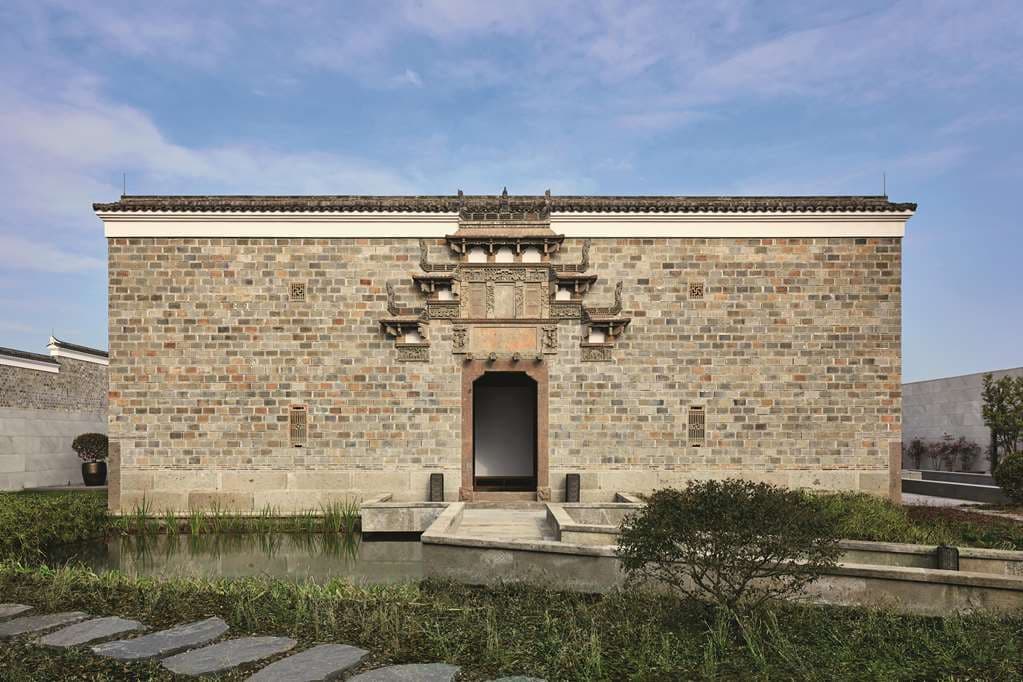
This isn't just a hotel; it’s a conservation miracle. To save them from a reservoir project in Jiangxi, 10,000 ancient camphor trees and 50 historic Ming and Qing dynasty villas were dismantled, transported 700 kilometers, and painstakingly rebuilt stone-by-stone in Shanghai’s suburbs. The result? Amanyangyun. The late Kerry Hill’s architectural genius shines here, juxtaposing brutalist concrete corridors with the golden warmth of recovered Nanmu wood lattice. It is an aesthetic triumph, though one that demands patience—you are 27km from The Bund, and the occasional roar of a plane from Hongqiao reminds you this is still a metropolis. But the trade-off is absolute stillness in the courtyards. The wellness offering is the property's beating heart. The 2,840sqm Aman Spa is a labyrinth of calm, featuring a legitimate Russian Banya that puts standard hotel saunas to shame. Dining avoids the bland 'international' trap. At Lazhu, the Jiangxi heritage sings in the Double-boiled Clay Pot Soup, while Arva serves a Red Prawn Carpaccio that rivals Milan. Service is telepathic, though the outdoor pool’s lack of heating is a puzzling oversight for a winter visit. Come here not to see Shanghai, but to escape it.
“Skip the standard massage and book the private Russian Banya house for a contrast therapy session. Afterward, walk to the 'Emperor Tree'—the oldest camphor in the forest—to make a wish, a local tradition.”
Insider TipAvg. Nightly Rate
987USD
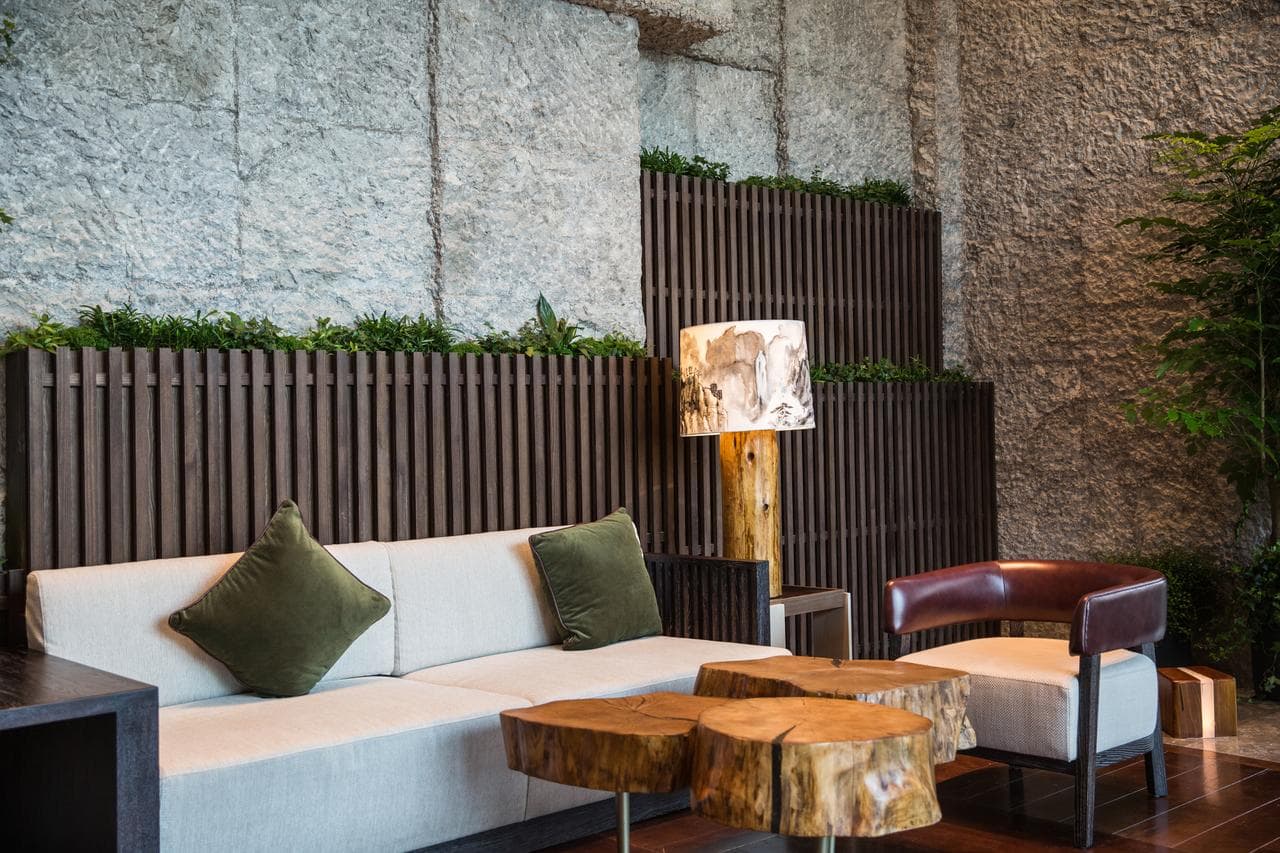
In a city that runs on high-voltage ambition, The Anandi dares to unplug. This isn't your standard luxury layover; it’s a clinically precise intervention for the sleep-deprived. Situated near the Linkong SOHO—an architectural marvel, yes, but far from the Bund’s selfie spots—the property functions less like a hotel and more like a high-design sanatorium for the burnout elite. The aesthetic is 'future-zen': green textured stone walls and vast, echoey hallways that demand hushed tones. The rooms are the main event. Forget standard thread counts; here, the obsession is 'negative ion' bedding and amenities by Healing Touch and Natura Bissé. The technology is invisible but felt—from the geodetic mattresses designed to align your spine to the soundproofing that hermetically seals you from Shanghai’s roar. Dining follows the same detox-retox philosophy. At Yuan, the boiled young lobster is a masterclass in restraint, while Takeyoshi serves eel sets that justify the trek from the city center. The 5,000 sqm wellness center is not an afterthought; it’s the engine room. Floatation tanks and Himalayan salt rooms replace the usual treadmill-and-TV gym routine. The 'Starry Sky' rooftop pool offers a rare glimpse of sky, though the indoor heated pool is where the serious laps happen. While the location in Changning is a logistical headache for sightseeing, the trade-off is the 'Olive Tree Garden' where peacocks roam—a surreal touch of whimsy in an industrial zone. It’s sophisticated, slightly clinical, and deeply restorative.
“Skip the main lobby check-in if possible; request a room on the river side to watch the Suzhou Creek barges in silence. The 'Deep Sleep' tea served by the butler is not a gimmick—drink it 30 minutes before bed.”
Insider TipAvg. Nightly Rate
156USD
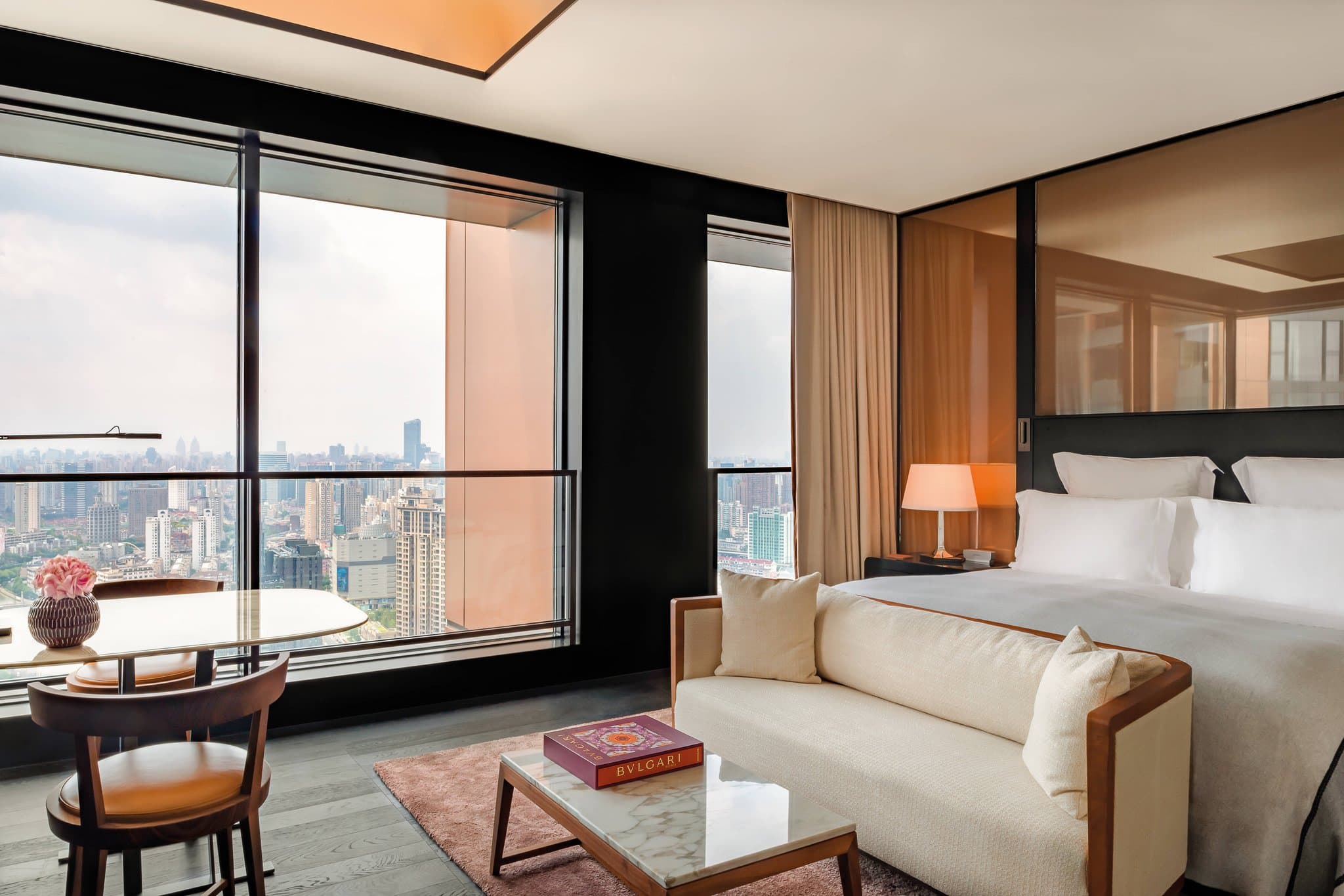
If Shanghai is a city of neon chaos, the Bulgari Hotel is its counter-argument: a fortress of Milanese restraint perched on the banks of Suhe Creek. While other luxury towers scream for attention, this Antonio Citterio-designed sanctuary whispers in dark marble and bronze. The arrival experience—through the restored 1916 Chamber of Commerce and up to the 48th-floor reception—sets a tone of residential intimacy rather than hotel theatricality. The rooms are lessons in Italian brooding chic, furnished with pieces from Maxalto and B&B Italia that feel more curated than catalogued. The bathrooms are the real showstoppers, clad in green onyx and stocked with full-size Bvlgari amenities that scent the air with green tea and bergamot. A witty design flaw? The closets are moodily lit to the point of obscurity—pack a flashlight if you want to distinguish your navy blues from your blacks. Dining is formidable. Il Ristorante - Niko Romito serves a Spaghetti with Lobster so simple it feels radical, while the two-Michelin-starred Bao Li Xuan elevates Cantonese classics like Rose Soy Sauce Chicken to high art. But the true luxury here is the 2,000-square-meter spa. Floating in the jade-green mosaic pool, surrounded by Vicenza stone columns, you forget the bund is just a mile away. It’s a slice of 'La Dolce Vita' that feels miles from the madness.
“Skip the standard city view; request a 'Premium Bund View' room to ensure the Oriental Pearl Tower isn't playing hide-and-seek in the corner of your window.”
Insider TipAvg. Nightly Rate
716USD
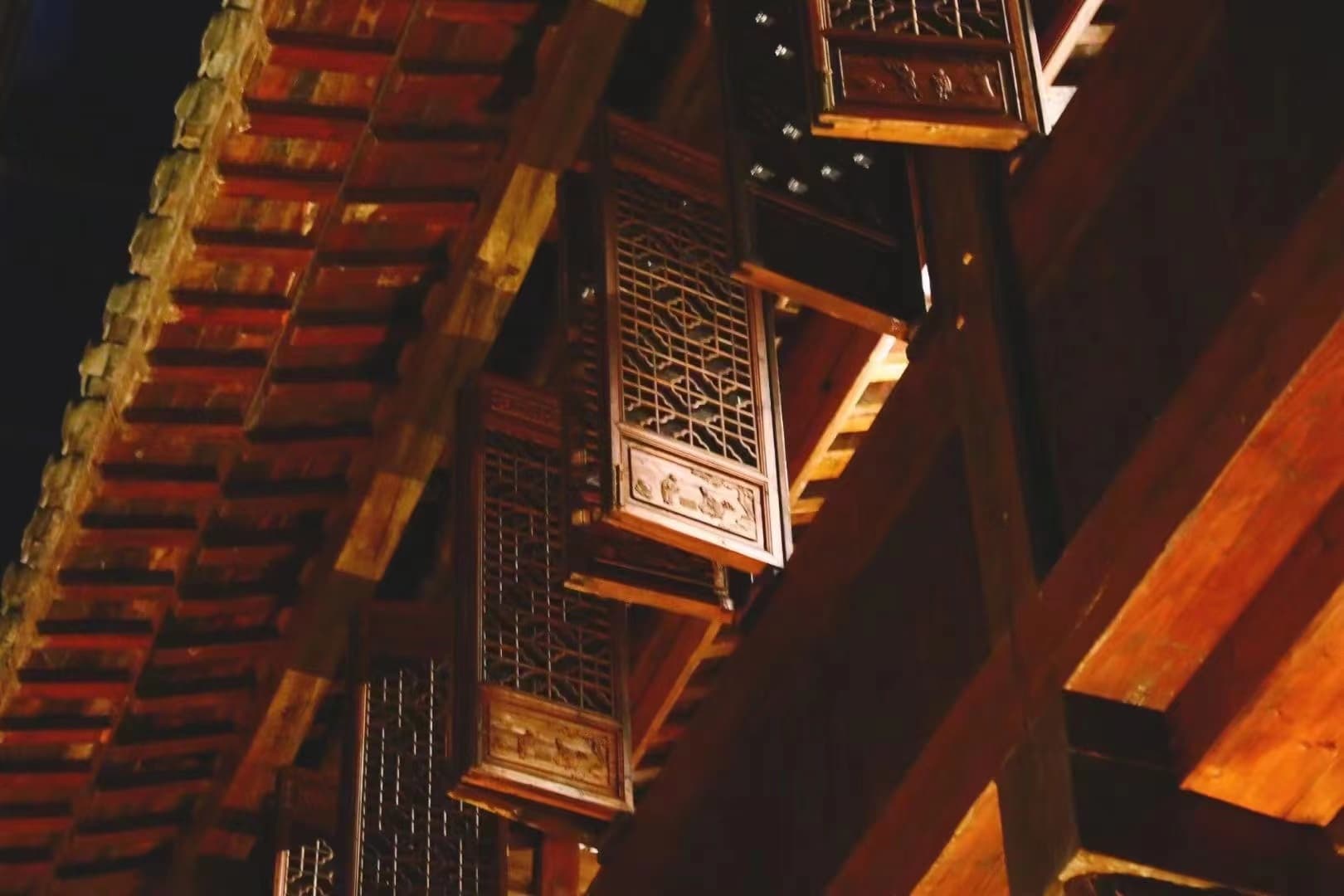
Forget the neon aggression of the Bund. The ultimate flex in modern Shanghai isn't height; it's history. Ahn Luh Zhujiajiao doesn't just promise an escape; it physically transports you 600 years into the past. The arrival experience is genuinely cinematic—you don't check in at a desk, you enter through the 'Wu Feng Lou' (Five Phoenix Court), a restored Ming Dynasty courthouse moved brick-by-brick from Anhui. It’s a masterclass in architectural provenance that makes standard five-star lobbies look indistinguishable. The 35 villas are exercises in monastic chic—think high ceilings, austere lines, and private courtyards that demand you put your phone away. There is no fitness center here, a deliberate omission that forces you to swap the treadmill for Tai Chi or a wander through the nearby ancient water town. The heated indoor pool, however, is a subterranean sanctuary of dark stone and silence. Dining at the Ahn Luh Dining Room focuses on hyper-local Jiangnan flavors; the Signature Steamed White Water Fish is a lesson in delicate precision, far superior to the average hotel breakfast which can feel like an afterthought. Service operates on 'ancient time'—occasionally slow, but always well-meaning. It’s a steep price tag for serenity, but for a weekend of uncompromising atmosphere, it’s unrivaled.
“Skip the main pool for a dip if you book a Courtyard Pool Villa. For drinks, the 'Chinese-Style Tapas Bar' serves excellent local cold cuts—ask for the window seat facing the Old Qing Dynasty Opera Stage at dusk.”
Insider TipAvg. Nightly Rate
300USD
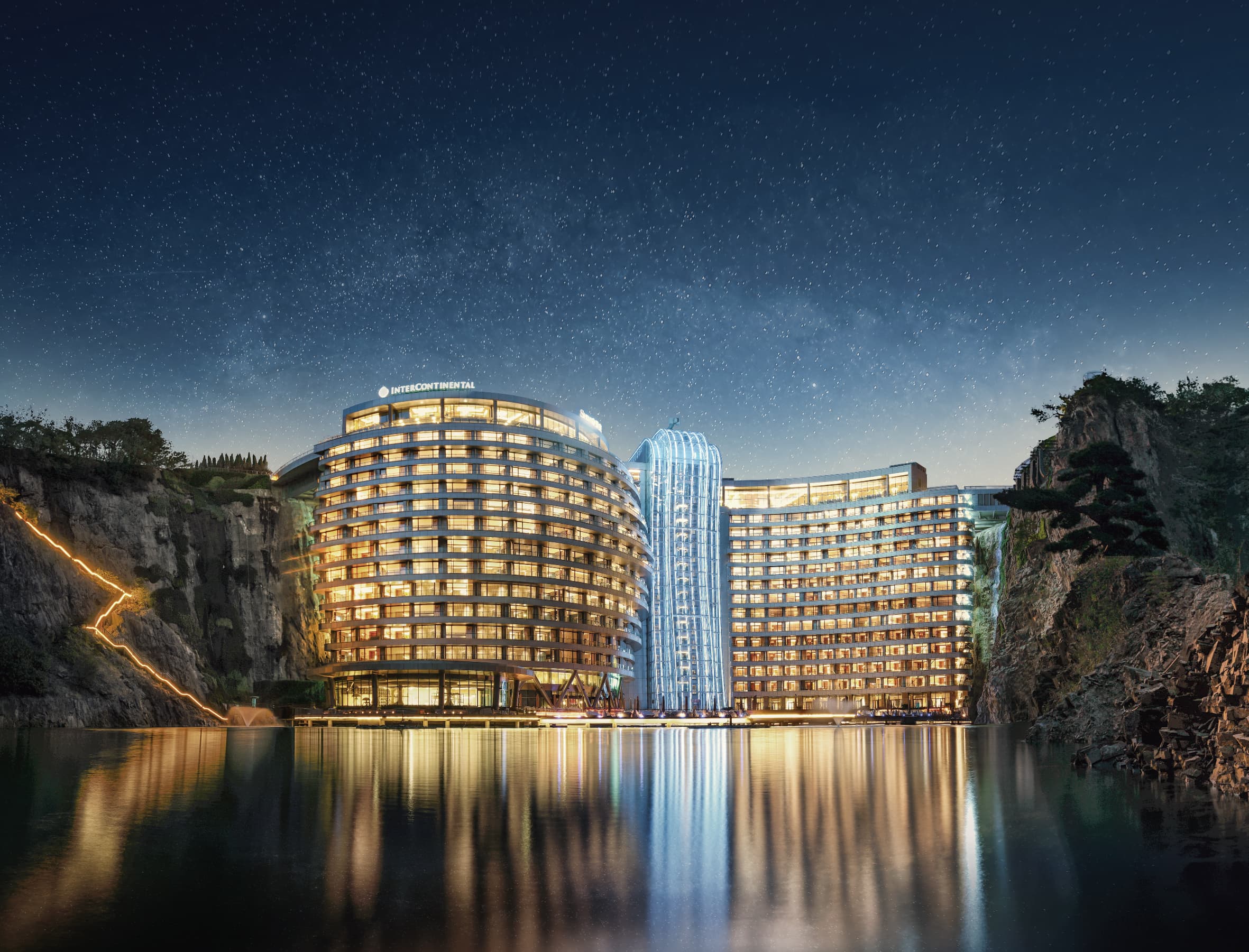
Forget the skyline; the real drama in Shanghai is eighty-eight meters underground. The InterContinental Shanghai Wonderland is an architectural defiant, a 'groundscraper' clinging to the cliffs of an abandoned quarry in Songjiang. It is less a hotel and more a Bond villain lair reimagined by a wellness guru. The aesthetic is industrial steampunk meets geological grandeur—expect raw rock faces juxtaposed with a glass 'waterfall' atrium that spills natural light into the abyss. Rooms are split between the terrestrial and the aquatic. While the underwater suites with their aquarium walls offer the inevitable Instagram flex, the wiser choice lies in the 'Turquoise' cliffside rooms, which feature Dyson dryers, Byredo amenities, and balconies that open directly onto the quarry’s mist. Dining is theatrical: 'Mr. Fisher' serves smoked Boston lobster against a backdrop of circling sharks, while 'Cai Feng Lou' delivers a more grounded, exemplary braised pork belly in a setting of avian elegance. The service, while polished, occasionally struggles to match the sheer scale of the engineering—expect a trek to the lobby and the occasional whiff of subterranean dampness on the lower levels. Yet, as you sip a stone-iced whisky at 'The Quarry Bar', watching drones dance over the water, the audacity of the place wins you over. It is imperfect, humid, and utterly singular.
“Skip the underwater suites if you are sensitive to humidity. Instead, book a Turquoise-themed room on the 14th floor for the best vantage point of the nightly laser and drone show without the lobby crowds.”
Insider TipAvg. Nightly Rate
191USD
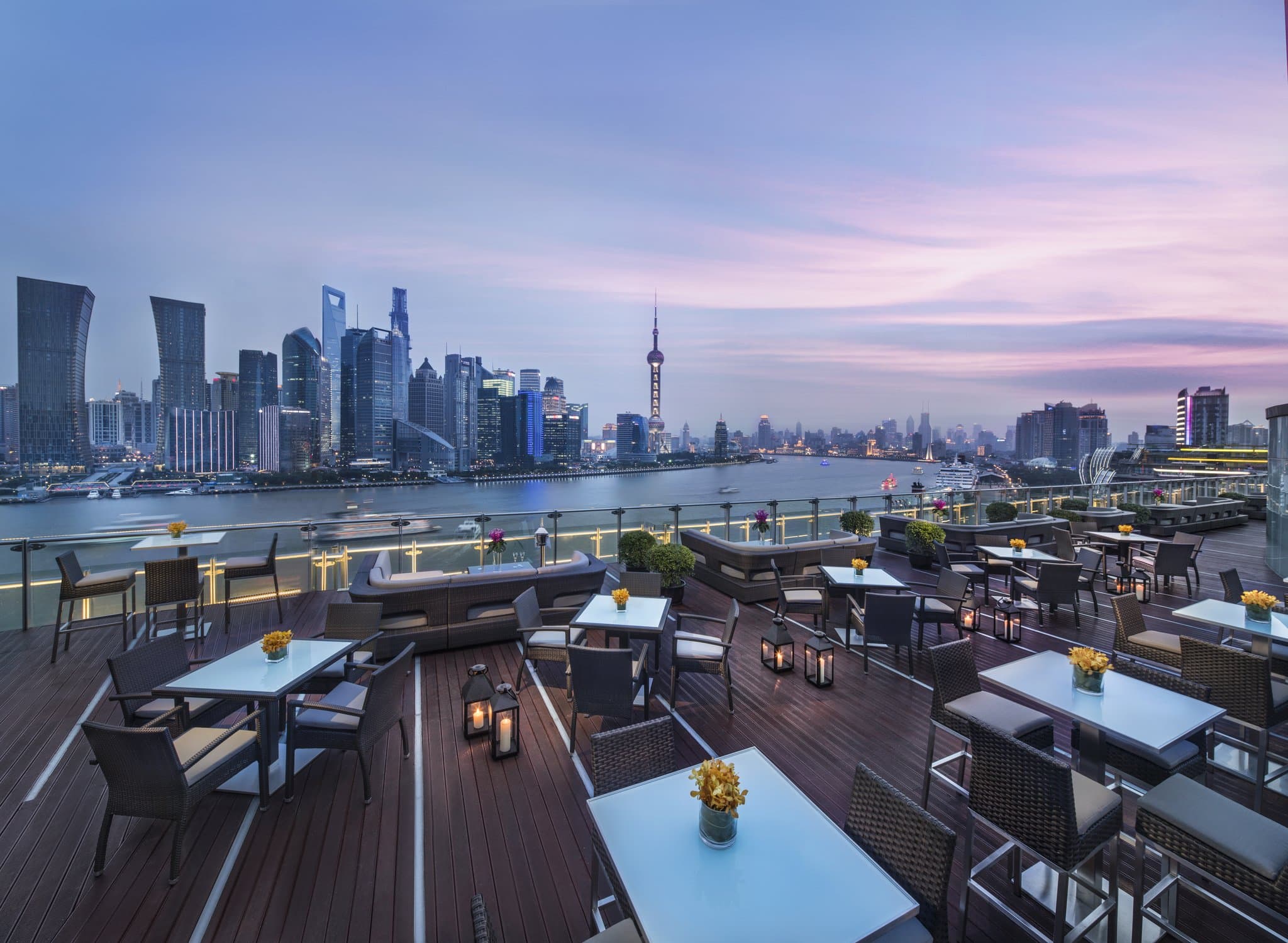
In a city that famously never sleeps, the Banyan Tree Shanghai On The Bund offers that rarest of commodities: stillness. Perched on the North Bund, comfortably removed from the frenetic energy of the historic promenade, this property trades tourist footfall for panoramic solitude. The hardware, dating back to 2012, bears a charming patina, but the sheer scale of the entry-level rooms—starting at a palatial 60 square meters—remains unrivaled. The true masterpiece here is the 'Bund Retreat' category. Forget standard amenities; these sanctuaries feature in-room dipping pools positioned against floor-to-ceiling windows, turning your evening soak into a cinematic experience with the Oriental Pearl Tower as your companion. Wellness here is rigorous, not performative. The Banyan Tree Spa eschews high-tech fads for proprietary natural therapies delivered in 11 treatment rooms that feel worlds away from the urban sprawl. Dining is equally view-centric. While 'TALES' on the rooftop serves river-themed cocktails that rival the skyline, the real culinary flexing happens at 'Ming Yuan,' where the Double Boiled Fish Head Soup offers a Cantonese masterclass in depth and flavor. It’s not the newest player in town, but for those seeking a Zen urban escape with unblocked views of Lujiazui, it remains the heavyweight champion.
“Skip the taxi traffic. The hotel is adjacent to a public ferry terminal that whisks you across to Lujiazui for just 2 RMB—the most scenic commute in the city.”
Insider TipAvg. Nightly Rate
245USD
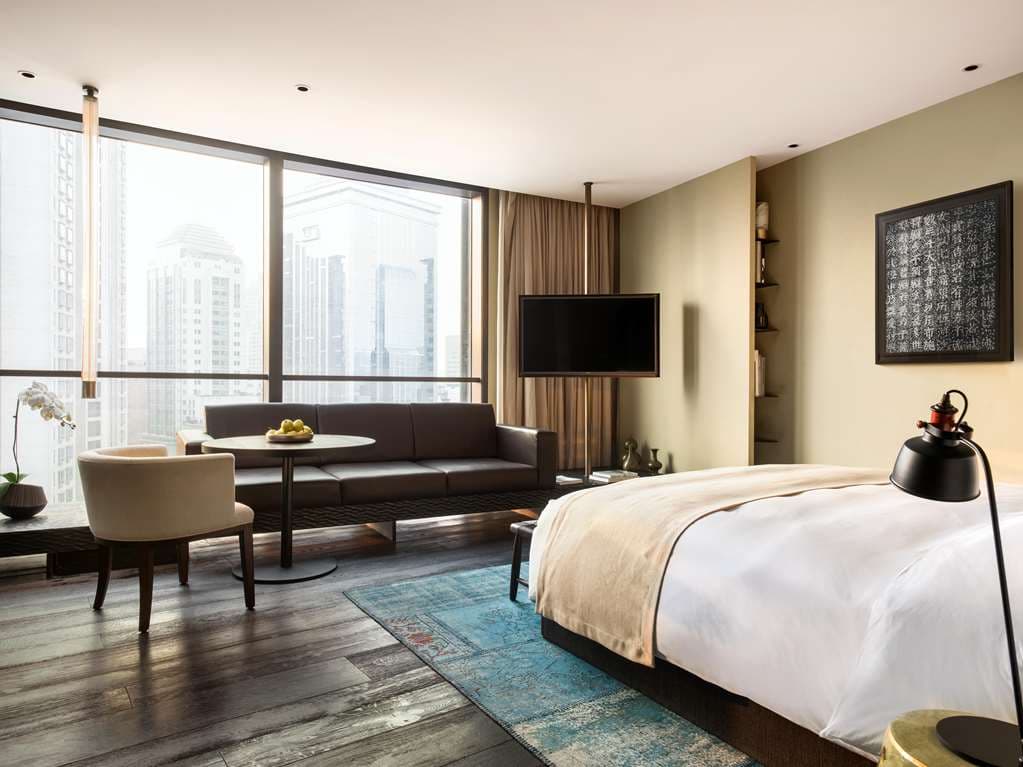
Forget the frantic energy of the Bund; the real flex in Shanghai is silence. Designed by Italian minimalist Piero Lissoni, The Middle House operates less like a hotel and more like a moody, protective cocoon in the heart of Jing’an. The arrival experience sets the tone: a forest of emerald-green bamboo ceramic tiles and a towering Venetian glass chandelier that immediately drops your heart rate. Inside the rooms (go for a Studio 90 if you can swing it), the vibe is sexy and substantial. Think dark wood floors, native union tech, and a complimentary 'Maxi-bar' stocked with craft beer and coconut water—not just token peanuts. The bathrooms are vast, glass-enclosed sanctuaries with Bamford amenities and deep soaking tubs that demand a 30-minute lockout from reality. Dining is a serious affair. While Café Gray Deluxe offers excellent terrace views and European fare, the real power move is snagging a table at Sui Tang Li. The marbled Xiao Long Bao is non-negotiable. Wellness here isn't an afterthought; the 33-meter indoor pool and Mi Xun Spa (utilizing LVMH’s Cha Ling tea-based products) feel subterranean and secret. It’s polished, confident, and delightfully discreet.
“Book a table at Sui Tang Li at least two weeks out—specifically for the Black Pearl Quail Egg Siomai. If you're fighting jet lag, the HYPOXI equipment in the 24-hour gym is a game changer for circulation.”
Insider TipAvg. Nightly Rate
288USD