No. 01
9009 Shennan Road. Shenzhen China 518053Shenzhen139 verified reviews
8
.6
Bitvoya Edit
Layering imagery, place, and detail before the page opens.
In the heart of China's Silicon Valley, the pace of life is electrifying, yet the demand for serenity has given rise to a new era of hospitality: the urban wellness oasis. Shenzhen is no longer just a business hub; it is a destination where high-tech meets high-touch relaxation. From the panoramic bay views in Shekou to the manicured tranquility of Overseas Chinese Town (OCT) and the gleaming skyscrapers of Futian CBD, the city's top properties have mastered the art of metropolitan detox. Whether it is the zen-inspired architecture of Hui Hotel or the sky-high spas of the Mandarin Oriental, these sanctuaries offer a profound escape from the urban frenzy.
Shenzhen redefines the concept of a getaway by blending hyper-modernity with intentional wellness. Unlike remote retreats, these urban wellness oases allow travelers to enjoy world-class luxury without leaving the conveniences of the city. The carefully curated selection, including properties like the Four Seasons Hotel Shenzhen and Raffles Shenzhen, utilizes state-of-the-art air purification, Traditional Chinese Medicine (TCM) inspired spa treatments, and soundproof engineering to create bubbles of silence amidst the bustle. It is the perfect destination for the 'bleisure' traveler seeking a mental reset.
Expect a fusion of technology and tradition. At the Mandarin Oriental, Shenzhen, wellness programs are personalized using digital diagnostics. Meanwhile, properties like the InterContinental feature lush, tropical gardens that simulate a beach vacation. Culinary wellness is also paramount; hotels serve Cantonese herbal soups and organic farm-to-table menus designed to detoxify the body. Whether lounging by the infinity pool at Raffles or enjoying a tea ceremony at The Langham, Shenzhen's hospitality promises a complete metropolitan detox.
The Mandarin Oriental, Shenzhen and Raffles Shenzhen are widely considered to have the best spas. The Mandarin Oriental offers high-altitude treatments combining modern technology with TCM, while Raffles provides a serene sanctuary with exclusive wellness programs.
Yes, Mission Hills Resort Shenzhen is an excellent choice for families. It offers extensive leisure facilities, including golf, eco-trails, and kid-friendly zones, alongside its world-class spa facilities.
Shekou and Overseas Chinese Town (OCT) are best for quiet luxury. Hotels like Hilton Shenzhen Shekou Nanhai and the InterContinental Shenzhen (OCT) offer resort-style environments with gardens and water views, removed from the intense pace of the CBD.
Explore our complete curated list of luxury accommodations, from boutique hideaways to grand dames.
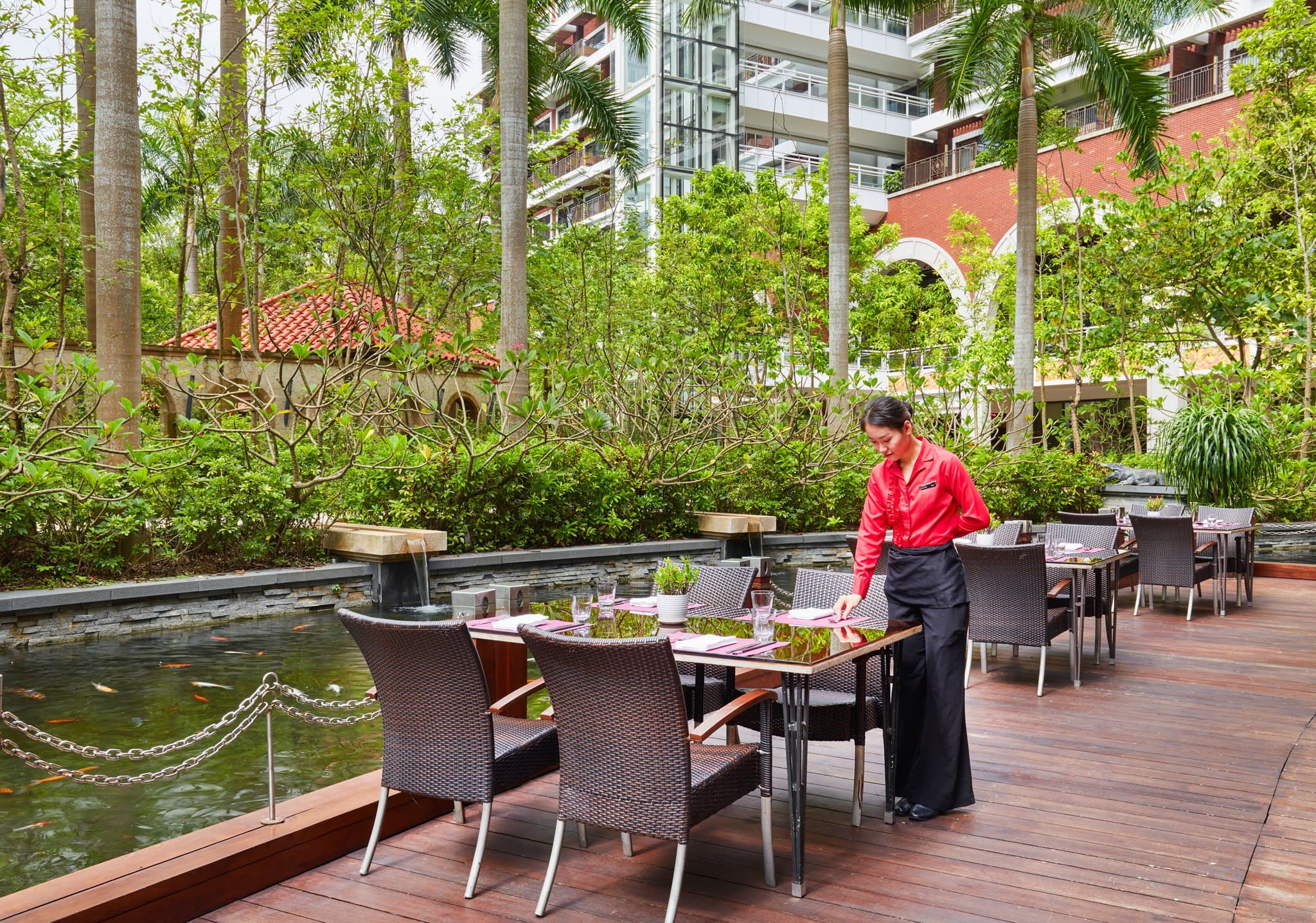
Explore All Shenzhen HotelsIf Salvador Dalí designed a business hotel, it might look like the InterContinental Shenzhen. It is an unapologetically theatrical escape where the 'Metropolitan Detox' isn't about minimalism—it’s about maximalist displacement. You are not in Guangdong; you are on a fantastical Costa Brava. The centerpiece is the 2,000-square-meter Caribbean-style pool, complete with a real sand beach and a full-scale replica of the Santa Maria ship that serves as a poolside bar. It’s camp, it’s grand, and it works. Inside, the property wears its 2006 vintage with dignity. While some corners of the guest rooms whisper of a bygone era (think heavy mahogany and substantial drapery rather than USB-C ports), the comfort is absolute. The culinary program punches high: skip the standard eggs at 'Mercado' and go straight for the 5J Iberico Ham and Spanish Paella, a nod to the property's theme that actually lands. For a nightcap, 'Lounge 1982' offers a brooding, leather-scented atmosphere with a stellar single malt collection, housed in architecture mimicking a bullring. **Verdict**: A tactile, sandy oasis that trades generic modernism for distinct character. Perfect for families needing a beach day without the flight.
“Request a pool-facing room on a higher floor. The city view is standard, but the view of the 'galleon' lit up at night completes the resort illusion.”
Insider TipAvg. Nightly Rate
132USD
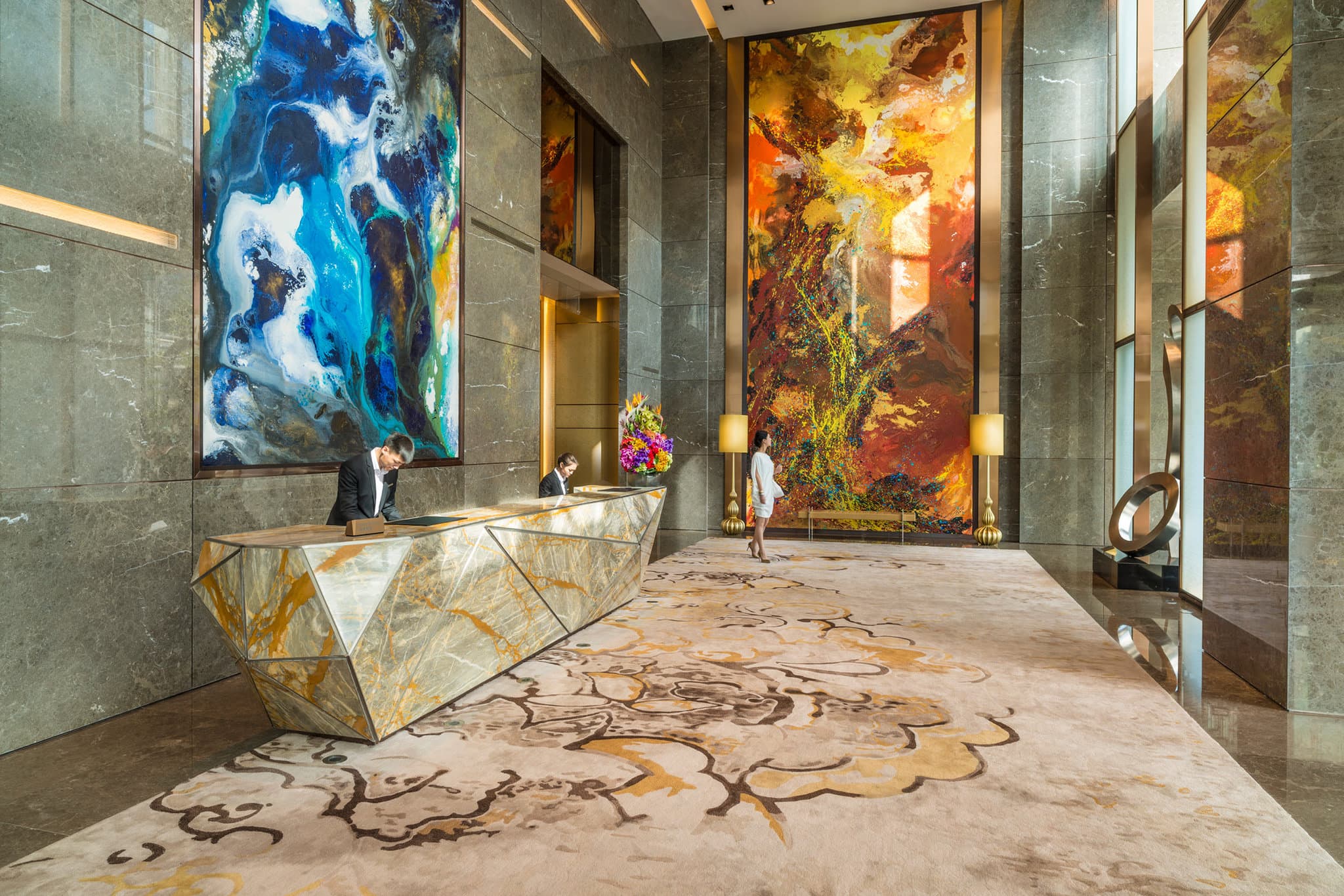
Shenzhen’s Futian district vibrates with a relentless digital pulse, yet the Four Seasons executes a rare architectural sleight of hand: total acoustic isolation. Standing directly opposite the sensory overload of Coco Park, the property functions not as a dormitory for tourists, but as a hermetically sealed decompression chamber for the C-suite. The design eschews corporate beige for high-contrast marble and contemporary art, most visibly in the indoor pool where colossal stone pillars frame the water like a modern temple. Dining here is a contact sport for the palate; Zhuo Yue Xuan holds a Black Pearl Diamond, where the honey-glazed black pork achieves a glass-like caramelization that demands attention. For recovery, the spa bypasses vague aromatherapy for clinical precision, utilizing Swiss Perfection and Gemology products that actually deliver results. The rooms, fortified by heavy soundproofing and the brand’s signature sleep-inducing mattresses, turn the chaos of the Ping An Finance Center into a silent, cinematic backdrop. This is where the city’s engine room comes to cool down.
“Skip the lobby bar for sunset; instead, secure a terrace table at Yi Lounge. It’s the only spot in the CBD where you can watch the light show without hearing the traffic.”
Insider TipAvg. Nightly Rate
172USD
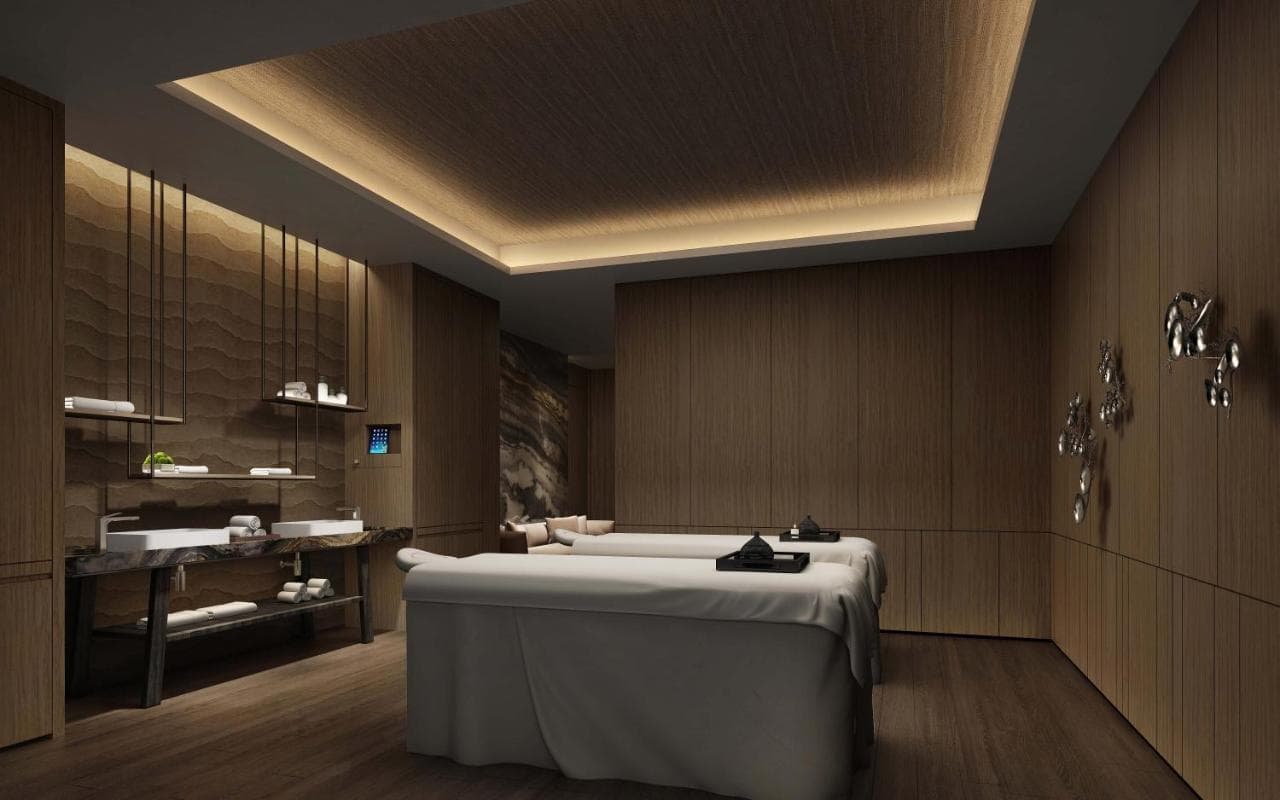
If Blade Runner had a retreat for burnt-out executives, it would look like this. Occupying the upper stratospheres (floors 67 to 79) of the UpperHills tower, the Mandarin Oriental, Shenzhen doesn't just look down on the city; it curates the view. The 56-square-meter entry-level rooms—some of the largest in the metropolis—feel less like hotel quarters and more like residential observation decks. Heavy sliding wood doors create actual sound isolation, a rarity in modern glass boxes, while the bathrooms are stocked with the requisite Dyson Supersonics and Diptyque amenities. The wellness facilities are the real draw here. The indoor lap pool, sitting under a 30-meter cathedral ceiling on the 68th floor, offers a swim that feels borderline ecclesiastical. For dinner, skip the generic international buffet. 'The Bay by Chef Fei' serves a Poached Threadfin with Pickles that justifies the reservation alone, while 'OPUS 388' handles French technique with surgical precision—try the Blue Lobster. It’s a precise, high-gloss operation where the chaos of Futian feels a world away.
“Ask for a West-facing room to watch the sunset over Lotus Hill Park. Afterward, head to MO Bar for a 'Movable Type' cocktail, a witty nod to the area’s history as a printing hub.”
Insider TipAvg. Nightly Rate
487USD
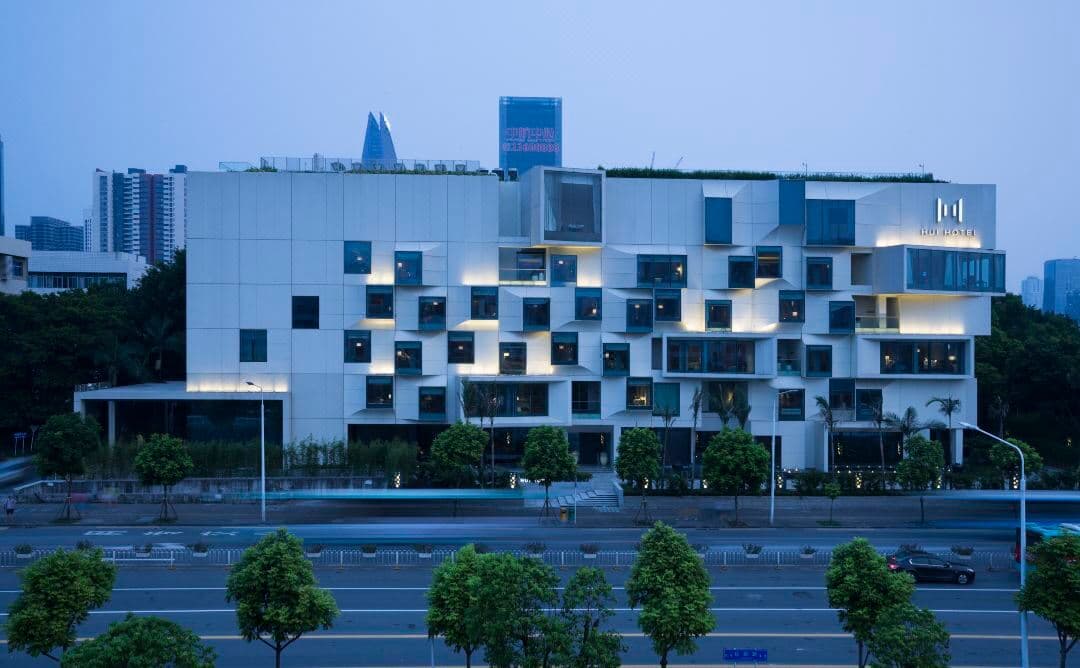
In a city defined by the frenetic speed of Huaqiangbei’s circuit-board bazaars, Hui Hotel operates on a drastically lower frequency. This isn't a standard glass monolith; it is a brooding, brutalist exercise in 'New Oriental' minimalism. You enter through a lobby that feels less like a hotel and more like an art installation, defined by stark shadows and whimsical suspended birdcages that immediately drop your pulse. The rooms reject the standard beige neutrality of business travel for moody, low-lit drama. While the mirror TVs are a triumph of aesthetics over optics—glare makes them unwatchable during the day—the visual payout is undeniable. Service here is the real amenity; staff members like Paul and Joey possess a clairvoyance that anticipates needs before you verbalize them, a rarity in independent properties. Dining is surprisingly robust. Skip the room service club sandwich and head to Yue Se for Cantonese Dim Sum that holds its own against local stalwarts. Curiously, the HUI Western Restaurant serves genuine Lady M Mille Crepes—twenty paper-thin layers of pastry cream that offer a sugar rush smoother than the hotel’s spotty Wi-Fi. It’s a design-forward sanctuary that demands you unplug, partly because the USB ports might be broken, but mostly because the architecture insists upon it.
“Request a room on the upper floors facing Central Park to trade the neon glow of the electronics district for tree-lined serenity. Also, the indoor pool requires a cap—bring your own to avoid the surcharge.”
Insider TipAvg. Nightly Rate
155USD
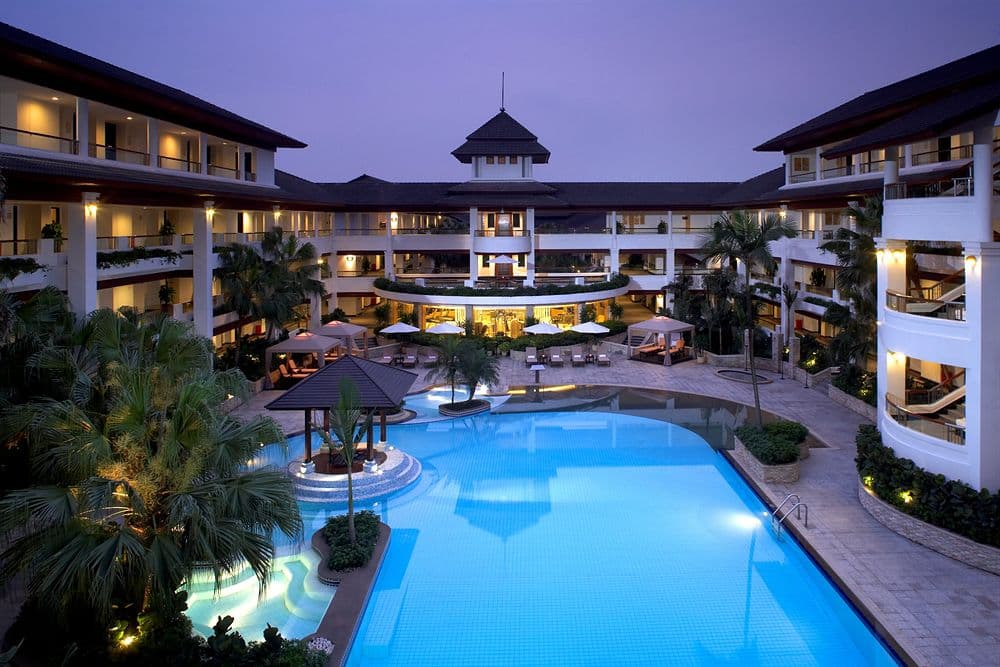
Forget the notion that Mission Hills is merely a corporate playground for executives negotiating over the World Cup Course. While the twelve championship layouts—carved by legends like Jack Nicklaus—are the headline act, the real draw for the burnt-out urbanite lies indoors at the Spring Hill Spa. Here, the focus shifts from handicaps to hydrophile luxury. The facility operates with clinical precision, utilizing Thalgo marine products that smell faintly of the Atlantic and Oxyjet facials that forcefully hydrate tired skin. It is a necessary reset button. Dining here supports the restorative narrative if you order correctly. Skip the international buffet sprawl and head straight to Imperial Court. The kitchen’s mastery of double-boiled soups offers a Cantonese lesson in medicinal gastronomy—complex, clear broths that feel restorative rather than heavy. Rooms are spacious, leaning towards a stately, somewhat traditional aesthetic rather than stark modernism, but the silence at night, far removed from the Futian bustle, is absolute. Service is shockingly proactive; staff anticipate needs before you articulate them. It is a monolithic operation, yes, but one that allows you to vanish completely into its manicured acreage.
“For a true dietary reset, pre-order the double-boiled soup at Imperial Court; it sells out by 8 PM.”
Insider TipAvg. Nightly Rate
82USD
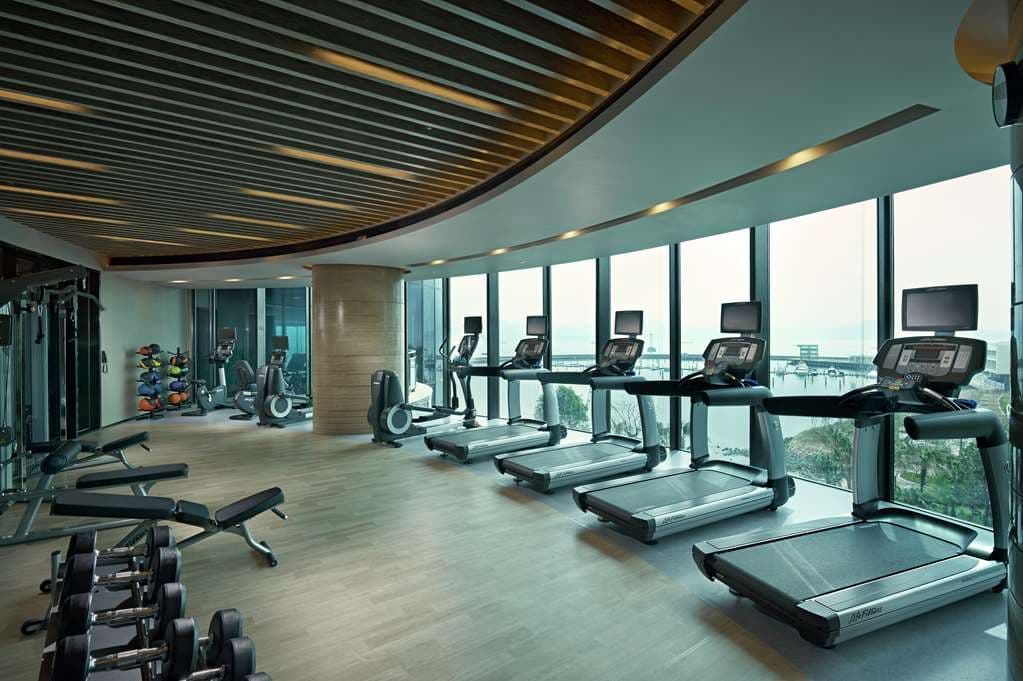
In a metropolis defined by silicon velocity and relentless verticality, the Hilton Shenzhen Shekou Nanhai executes a rare maneuver: it hits the brakes. Positioned on the edge of the Pearl River Estuary, this isn't merely a business hotel; it’s a sprawling, maritime counter-argument to the glass canyons of Futian. The property feels less like a corporate lodging and more like a yacht club that drifted ashore, anchored by the sail-shaped Wanghai Wing and the colonial-chic Nanhai Wing. While the rooms in the main tower command authority with industrial-port vistas, the real detox happens in the renovated Nanhai Wing. Here, the experience shifts to wide balconies and sea breezes that actually smell of salt, not smog. Mornings should begin with laps in the outdoor infinity pool—remarkably uncrowded before 9 AM—followed by Cantonese precision at Sui Xuan. Skip the western breakfast; the shrimp dumplings and Peking Duck here are locally revered for a reason. By sunset, the only place to be is Eden Garden on the 16th floor. With a single malt in hand and a 270-degree view of the Shenzhen Bay Bridge, the frenetic energy of the tech hub feels a world away. It is sophisticated, surprisingly serene, and entirely distinct from the city behind it.
“Avoid check-in confusion: Book a 'Nanhai Wing' Premium Room for the resort-style balcony and garden access. The 'Main Wing' is strictly corporate.”
Insider TipAvg. Nightly Rate
123USD
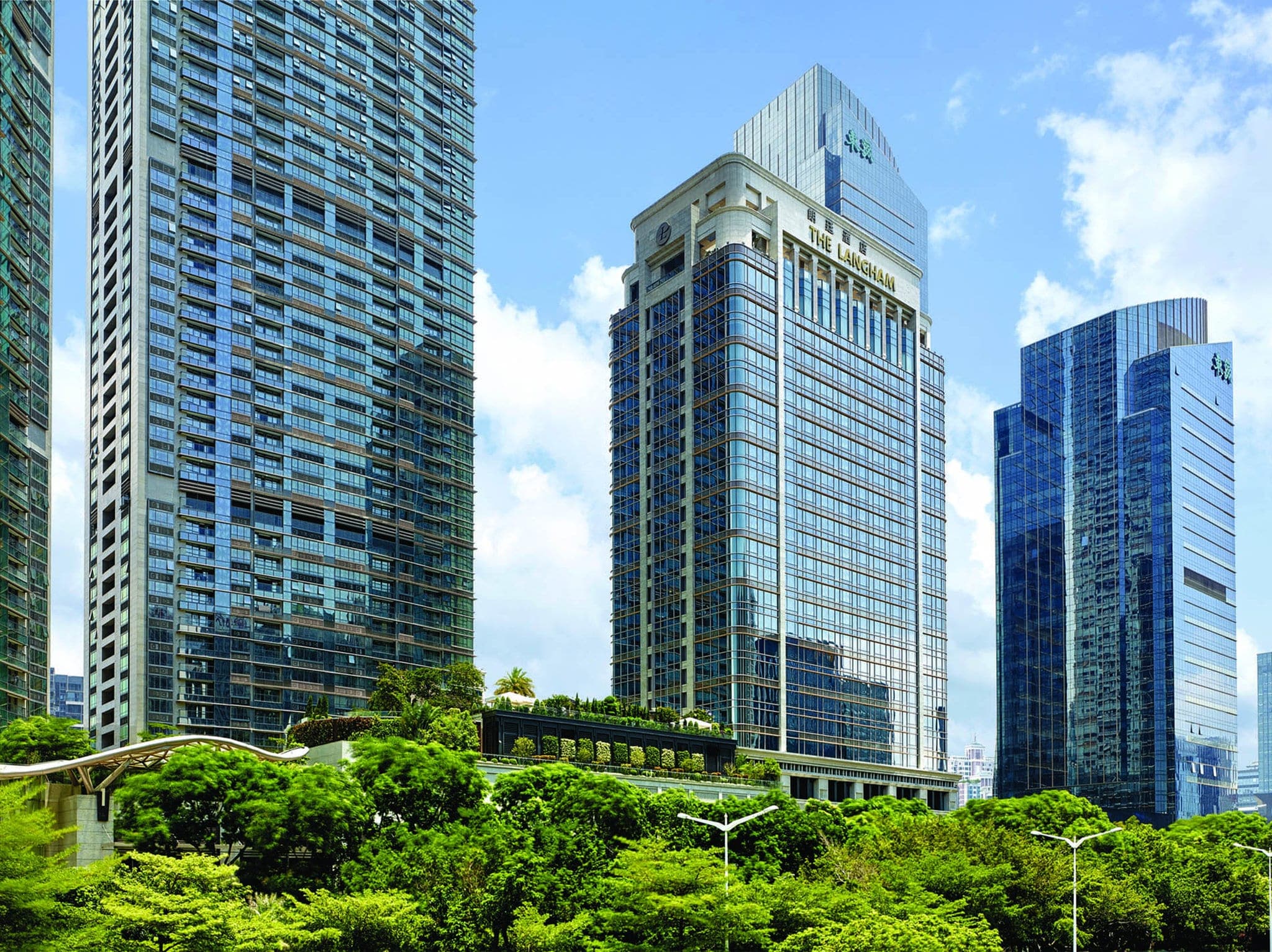
Shenzhen operates at a velocity that induces vertigo—a relentless grid of glass, steel, and humidity. The Langham is the antidote. It refuses to mimic the futuristic skyline of Futian; instead, it stubbornly, delightfully insists it is 1865 London. The lobby is a sensory recalibration: the signature scent of pink roses replaces city smog, and the visual language is one of heavy velvets, intricate moldings, and chandeliers that could rival planetary systems. The centerpiece of this recovery operation is the Chuan Spa. Unlike the generic wellness floors found in neighboring skyscrapers, this facility adheres strictly to Traditional Chinese Medicine (TCM). The experience begins not with a robe, but with a questionnaire to diagnose your balance of the Wu Xing (Five Elements). The resulting treatment—utilizing proprietary elemental oils and herbal steams—is a sophisticated, grounded approach to healing that feels medicinal rather than merely cosmetic. Culinary offerings are equally serious. T'ang Court remains the heavyweight champion here. You are ordering the baked stuffed crab shell; it is non-negotiable, a rich, golden-crusted masterclass in Cantonese precision. For a darker, moodier nightcap, Duke’s serves dry-aged cuts and heavy reds in a space that feels like a private member's club. While some interiors whisper of the hotel's 2012 opening, the service—from the bespoke Wedgwood afternoon tea to the turn-down amenities—remains razor-sharp. It is a place that understands that true luxury is, above all, the ability to slow down.
“Book the 'Chuan Harmony' massage, but arrive 45 minutes early to use the herbal steam rooms and the snail shower, which cycles through different water pressures and temperatures.”
Insider TipAvg. Nightly Rate
131USD
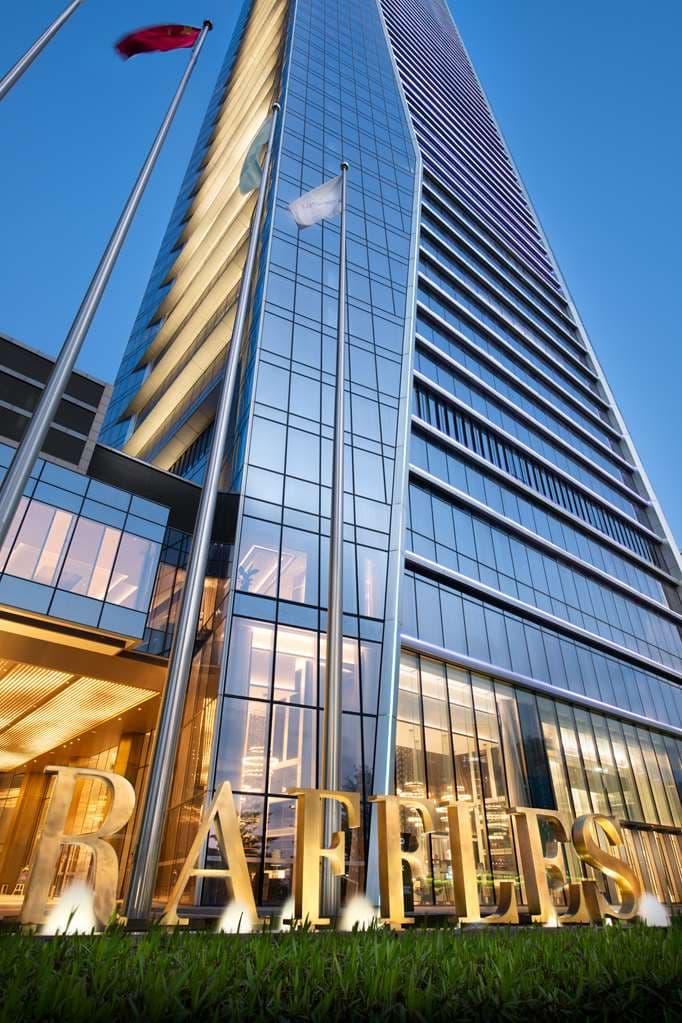
Shenzhen buzzes at a frequency that can rattle teeth, but Raffles Shenzhen, perched in the One Shenzhen Bay tower, operates on a different wavelength entirely. It’s not just the soundproofing in the 60-square-meter entry-level rooms—the largest in the city—it’s the sheer vertical distance from the Nanshan grind. The vibe here is 'Modern Chinese Residence': serene, airy, and dripping with understated wealth rather than gaudy gold. Skip the street food for a night and ascend to Yun Jing. The Hakka-style stuffed bamboo shoots with 5J ham are a revelation, a dish that justifies the elevator ride alone. Post-dinner, the Long Bar on Level 71 awaits. Order the signature Shenzhen Sling (lychee-forward, naturally) and watch the lights of Hong Kong flicker across the bay. If the tech fatigue is terminal, the Biologique Recherche spa treatments or a lap in the mesmerizing indoor vitality pool offer a clinical, effective reset. It’s a fortress of solitude with Ferragamo amenities and a butler who likely knows what you need before you do.
“Book a 'Shenzhen Bay View' room on a high floor to watch the bridge light up at night, or snag a window seat at Long Bar specifically for the sunset hour.”
Insider TipAvg. Nightly Rate
347USD