No. 01
69 HUAN TAIHU LAKE AVENUE, WUZHONG DISTRICT, WUX, SUZHOU, CHINA, 215100Suzhou711 verified reviews
9
.4
Bitvoya Edit
Layering imagery, place, and detail before the page opens.
Suzhou, often hailed as the Venice of the East, is a city where ancient waterways weave through a tapestry of modernity and tradition. In our curated collection, 'The Art of Silence,' we explore properties that masterfully blend the region's UNESCO-listed garden heritage with contemporary minimalism. From the bustling luxury of the Suzhou Industrial Park (SIP) where the Ritz-Carlton stands, to the historic tranquility of the Gusu District housing the Kimpton Bamboo Grove, these hotels redefine relaxation. Whether it is the wellness-focused SANGHA Retreat by Yangcheng Lake or the architectural marvel of the Four Seasons, each destination invites travelers to pause and reflect in spaces designed by masters like I.M. Pei's spiritual successors.
Suzhou is more than just a tourist destination; it is a living museum of landscape architecture and philosophical retreat. The city's intrinsic connection to the concept of 'literati gardens' makes it the global capital for Zen and design-focused hospitality. Unlike the frenetic energy of Shanghai, Suzhou offers a curated slowness. Hotels here, such as The Hanyu Garden Reserve and Tsingpu Suzhou Retreat, do not merely provide a room; they offer an immersion into the 'Jiangnan' lifestyle—characterized by whitewashed walls, black tiled roofs, and carefully framed views of nature. The integration of local stone, water features, and minimalist interiors allows guests to experience the 'Art of Silence'—a luxury that disconnects you from digital noise and reconnects you with aesthetic purity.
Expect a seamless transition between indoors and outdoors. Design hotels in Suzhou prioritize spatial poetry—using light and shadow to create calmness. Amenities often go beyond the standard; anticipate in-room tea ceremonies with locally sourced Biluochun tea, deep soaking tubs with garden views, and architecture that pays homage to I.M. Pei. Service is understated and intuitive, reflecting the local culture of hospitality. Whether it is the meditation domes at SANGHA or the private courtyards at Banyan Tree Shishan, the experience is designed to be a sanctuary for the soul.
SANGHA Retreat by OCTAVE Institute is the premier choice for wellness, offering comprehensive holistic health programs, meditation domes, and spa treatments on the shores of Yangcheng Lake.
Yes, Tsingpu Suzhou Retreat and The Hanyu Garden Reserve are located in the Gusu District, offering close proximity to the UNESCO-listed gardens while maintaining a secluded, Zen atmosphere.
The Ritz-Carlton, Suzhou and Four Seasons Hotel Suzhou in the SIP district are top choices, featuring striking contemporary architecture that incorporates traditional Suzhou elements and panoramic lake views.
Explore our complete curated list of luxury accommodations, from boutique hideaways to grand dames.
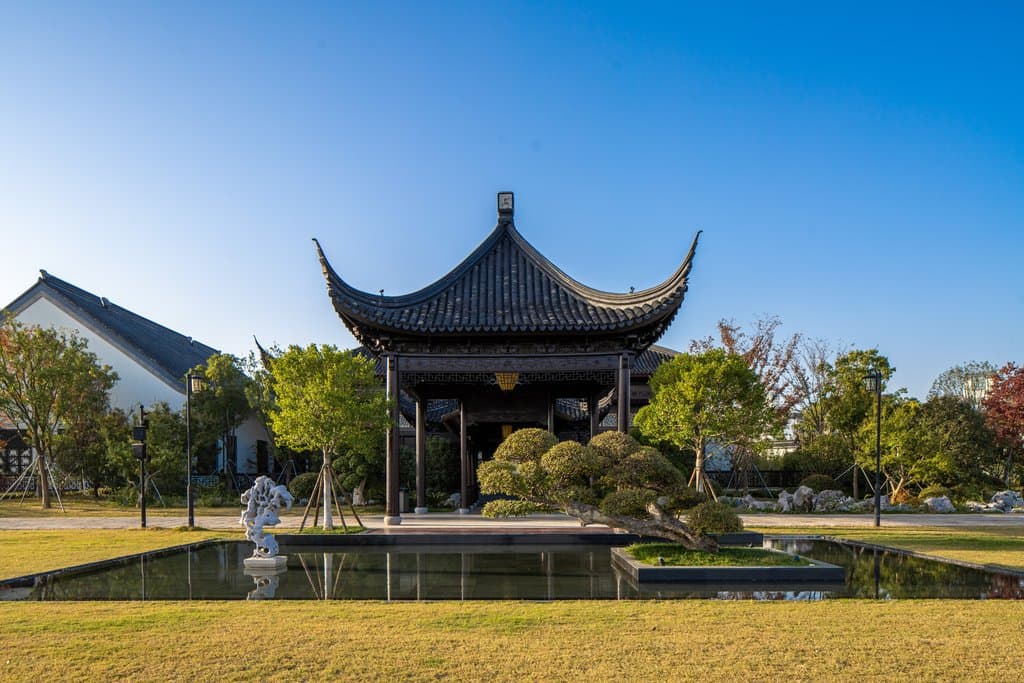
Explore All Suzhou HotelsIf the lobby feels more like a curator’s private gallery than a hotel entrance, that is entirely by design. At The Hanyu Garden Reserve, silence is the primary amenity. Located on the edge of Lake Taihu, this SLH property operates less like a resort and more like a scholar’s garden residence. The design is an exercise in restraint—low-slung, gray-tiled roofs and whitewashed walls that frame, rather than compete with, the manicured bonsai and water courtyards. Inside, the commitment to 'quiet luxury' is absolute. Entry-level suites are a staggering 88 square meters, equipped with Technogym kits and Ferragamo bath products, but the real luxury is the private courtyard attached to nearly every ground-floor villa. It offers a hermetic seal against the outside world. Dining at ZhenZe is a hyper-local affair; do not leave without ordering the 'Taihu Three Whites'—a delicate trio of whitefish, white shrimp, and silverfish that tastes of the lake itself. While the location is removed from Suzhou’s urban core, that is precisely the point. This is a place to wear linen, practice calligraphy, and do absolutely nothing.
“Skip the main pool in the afternoon and instead book a private calligraphy or tea ceremony course at the Hanmingxuan Tea House; it’s often empty and incredibly atmospheric.”
Insider TipAvg. Nightly Rate
275USD
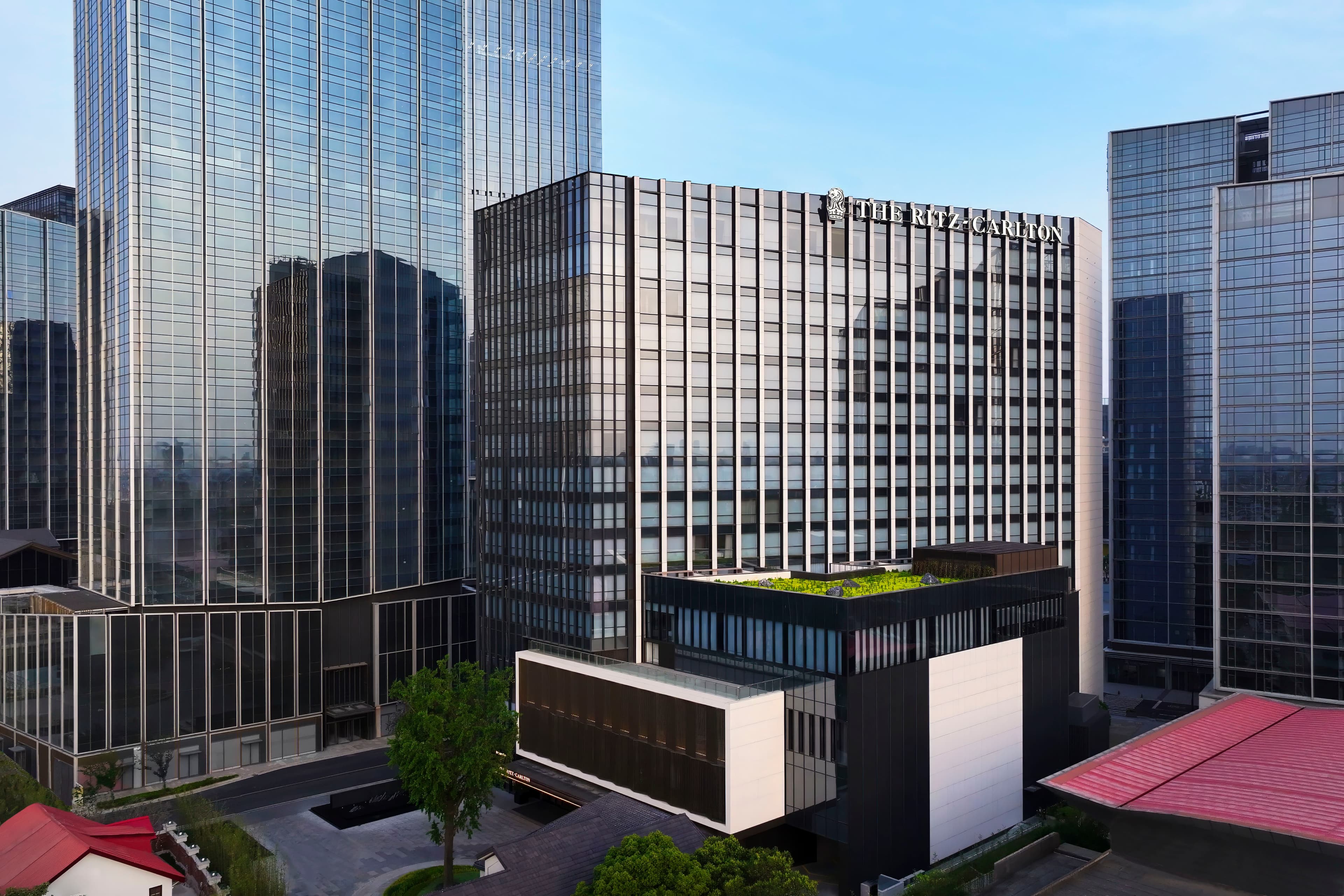
If I.M. Pei’s Suzhou Museum had a residential annex, this would be it. Forget the gilded excess typical of global chains; The Ritz-Carlton, Suzhou, which opened in March 2025, exercises radical restraint. Architects KPF have effectively modernized the Jiangnan scholar’s mansion, replacing dusty timber with crisp geometric lines, folding-fan screens, and a monochromatic palette that frames the Gusu District like a living ink wash painting. The rooms are studies in quietude—expect silk-paneled walls, Dyson hair dryers, and deep soaking tubs positioned against floor-to-ceiling glass. The silence here is heavy and expensive. Downstairs, 'Biao Xia' demands attention not for dragon motifs, but for a Huaiyang menu that cuts to the chase; the crispy roasted duck is technically flawless, shattering like glass upon contact. Service is telepathic rather than hovering, a rare feat in a property this new. It’s not just a place to sleep; it’s a masterclass in architectural editing.
“Skip the standard city views. Request a room on the 25th floor or higher facing the 'Lingering Garden' side for the best interplay of morning light through the lattice screens.”
Insider TipAvg. Nightly Rate
191USD

Forget the frenetic tourist trail of the Humble Administrator’s Garden; the truest current expression of Suzhou’s scholar-official aesthetic anchors the foot of Lion Mountain. Banyan Tree Shishan, designed by GOA, eschews the lazy pastiche of curved eaves for a rigorous, horizontal geometry that frames the peaks like a Song Dynasty scroll. It is a study in monastic chic—gray slate, wood-grain aluminum, and water courtyards so still they appear solid. The rooms function less as hotel accommodation and more as private sanitariums for the overworked. The headline act is the private hot spring pool in every unit—a 24-hour thermal indulgence that makes leaving the room physically difficult. Inside, the interiors are HBA-sleek, though the heating caps at a mild 21.5°C, requiring a robe-heavy strategy in winter. Dining at 'Bai Yun' offers a requisite nod to local heritage with a competent, sweet-sour Squirrel-shaped mandarin fish, though the real draw is the Lobby Lounge’s Biluochun tea service, best taken while watching the fog roll off the mountain. Service is hyper-attentive—almost startlingly so—with staff anticipating needs before you articulate them. It’s imperfect, with occasional maintenance niggles on the outdoor furniture, but for pure, unadulterated silence, it has no peer in the district.
“Skip the ground-floor 'Garden' rooms if you value modesty. Book a 'Mountain View' suite on a higher floor to soak in your hot spring without providing a free show for guests walking the courtyard paths.”
Insider TipAvg. Nightly Rate
176USD
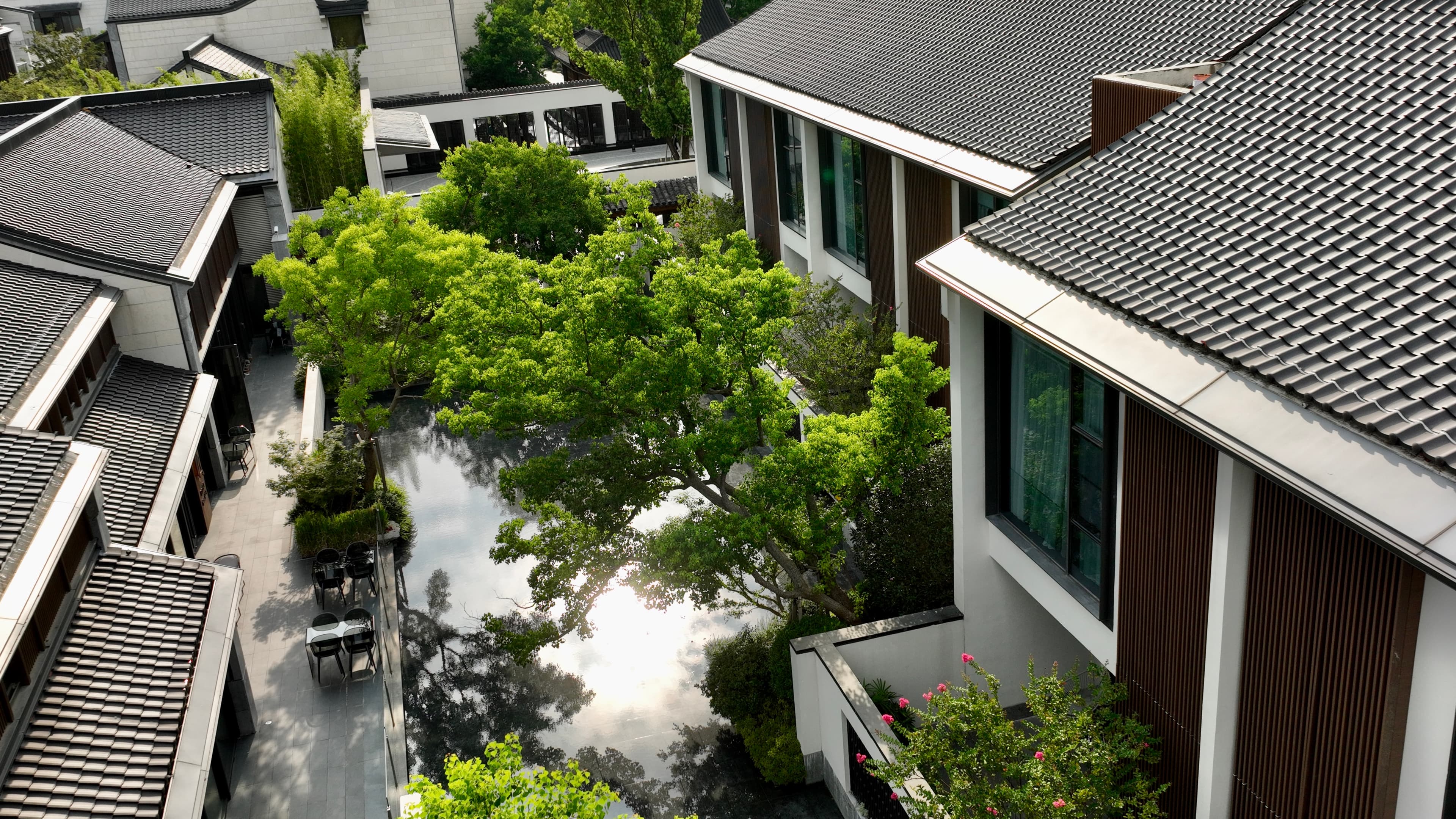
Forget the willow-pattern clichés. The Kimpton Bamboo Grove, a stark vision by SCDA Architects, doesn’t just update the Suzhou garden aesthetic; it strips it to the bone. Replaced are the dusty brocades of the site’s former life, superseded by a palette of whitewashed masonry and dark grey tiles that feels less ‘Ming Dynasty’ and more ‘Kubrick in Jiangnan.’ The guest rooms are exercises in high-contrast restraint, where sliding screens dissolve the boundary between the climate-controlled interiors—equipped with Dyson dryers and Atelier Bloem amenities—and the private courtyards. It’s quiet here, a silence thickened by 400-thread count linens and effective soundproofing, a rarity in the Gusu District. Dining requires a pivot from the meditative to the sensory. At The Grove, the braised baby hairy crab with soybean is a sticky, savory messy affair that demands attention, while Bar 168—a glass box floating on the water—serves whiskey flights that rival any Shanghai speakeasy. Service has the occasional wobble typical of a complex property, but when you’re sipping a Negroni watching the reflection of a white spiral staircase on black water, you won’t check your watch. It’s a bold, photogenic shock to the system in a city famous for looking backward.
“Book a 'Premium Room with Outdoor Living Area' on the ground floor for your own private zen rock garden. Visit Bar 168 at sunset when the glass structure reflects perfectly on the dark pool.”
Insider TipAvg. Nightly Rate
138USD

While the masses jostle for selfie space at the Humble Administrator’s Garden, a different kind of history whispers behind the unassuming walls of Mudu Ancient Town. Tsingpu Suzhou Retreat isn’t just a hotel; it’s a masterclass in architectural editing. Housed in the former residence of Shen Zhou, a legendary Ming dynasty painter, this eight-room sanctuary has been reimagined by designer Liang Jian Guo, who stripped away the kitsch to reveal a 'New Chinese' aesthetic that feels more like a lived-in gallery than a resort. The silence here is heavy and expensive. You won't find a pool or a sprawling fitness complex; instead, the luxury lies in the subtraction. The rooms are exercises in restraint, featuring polished concrete, warm wood tones, and Appelles amenities that smell of rosemary and leather. Because of the historic wooden structure, sound insulation is imperfect—you might hear the creak of heritage beams or a distant rain shower—but it adds to the wabi-sabi allure rather than detracting from it. Dining is an intimate affair at The Dining Room, where the kitchen delivers a flawless 'Su Bang Cai' experience. The signature Squirrel-Shaped Mandarin Fish is architectural in its own right—crisp, sweet-sour, and impossibly precise. Service is invisible until you need it, operating with the intuition of a private butler. For the design pilgrim seeking the 'light and shadow' drama reminiscent of I.M. Pei, this is the only address in Suzhou that matters.
“Ask for a room facing the Central Water Courtyard. At 4 PM, the late afternoon sun hits the reflection pool, creating a photo opportunity that requires zero filters.”
Insider TipAvg. Nightly Rate
300USD

Forget the willow-draped canals for a moment. Niccolo Suzhou demands you look up—specifically, to the 115th floor of the IFS Tower in the Suzhou Industrial Park. This isn't the lantern-lit nostalgia of the Old Town; it is a razor-sharp, vertical expression of silence. Upon rocketing to the Sky Lobby, the cacophony of the ground dissolves into a palette of polished marble, chrome, and hushed grays. The aesthetic is strictly 'fashion-inspired'—thinkTom Ford austerity meets gallery whitespace. In the guestrooms, the 'minimalist' tag isn't an excuse for scarcity but a deliberate framing of the skyline. The beds face floor-to-ceiling glass, turning the Jinji Lake far below into living wallpaper. The silence here is heavy and expensive. For dinner, Niccolo Kitchen avoids the trap of generic hotel fare; the M4 Wagyu Striploin is executed with steakhouse precision, and the breakfast service abandons the chaotic buffet sprawl for curated à la carte options that arrive hot. It is a harsh contrast to the garden properties, but that is the point. This is Zen for the jet-setter who prefers clouds to courtyards.
“Skip the standard sunset viewing. Head to Bar 115 after 9 PM for the 'Art of Mixology' cocktails; the city lights from this altitude look like a circuit board, and the crowd thins out for better privacy.”
Insider TipAvg. Nightly Rate
300USD

In a region famous for its intricate canals and bustling gardens, Garrya Yangcheng Lake—the Banyan Group’s minimalist outpost opened in late 2024—offers a stark, refreshing counterpoint: absolute visual silence. The architecture is a study in Ming Dynasty restraint rebooted for the modern ascetic; low-slung structures dissolve into the gray-blue haze of the lake, framed by clean lines that refuse to compete with the water. The vibe here is monastic chic meets high-tech recharge. Days are best spent drifting between the 12 therapeutic outdoor onsen pools and the signature 8lements Spa, where the treatment rooms utilize local botanical ingredients that smell like damp earth and rain. Dining at ‘Refresh All-day Dining’ (Yue Qing) offers a surprising kick of heat with farm-to-table Hunan (Xiang) fusion—the Seasonal Hairy Crab is non-negotiable during autumn. A word to the wise: the isolation is real. While the ‘Retreat Lobby Lounge’ pours excellent custom-blended Chinese teas, the breakfast spread has drawn criticism for lacking variety, and late-night food delivery is virtually nonexistent. But if you’ve come to escape the noise, the lack of distractions is exactly the amenity you’re paying for.
“Book a treatment at the 8lements Spa immediately upon arrival, and skip the taxis—utilize the hotel's cycling amenities to tour the lake perimeter at 'blue hour' for the best photos.”
Insider TipAvg. Nightly Rate
71USD
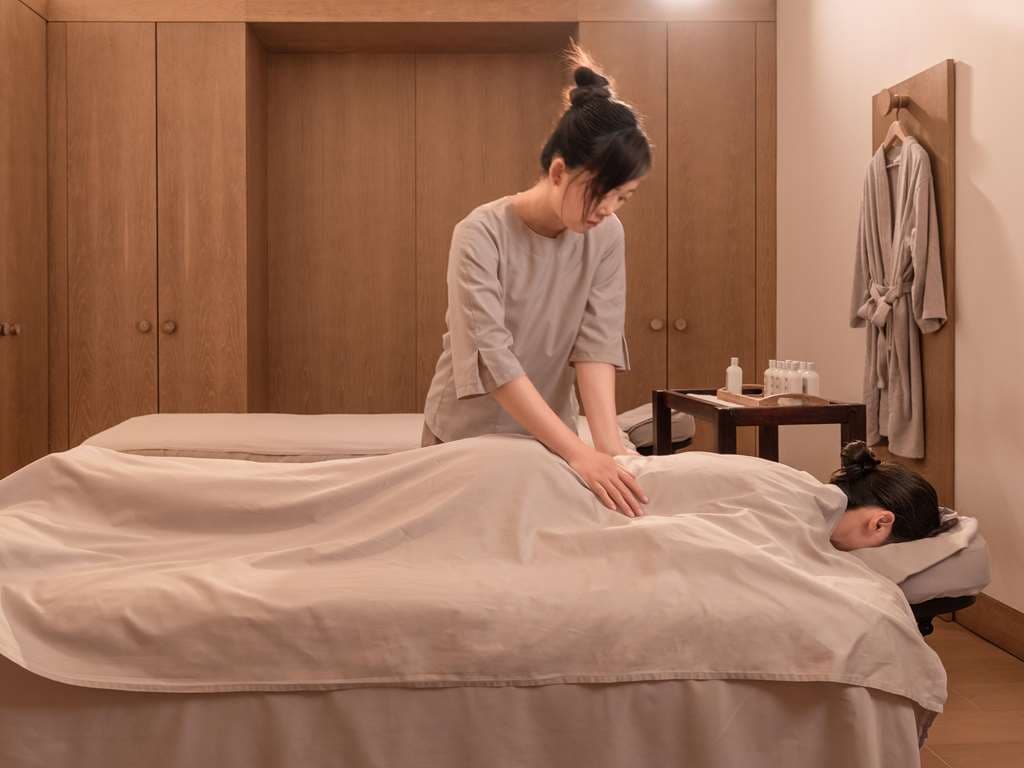
Forget the 'Venice of the East' clichés; SANGHA Retreat by OCTAVE Institute is less a hotel and more a brutalist cathedral dedicated to the Quantified Self. Designed by Tsao & McKown, this $1,000-a-night sanctuary on Yangcheng Lake rejects the typical 'tropical oasis' playbook for something far more clinical and profound. The architecture is a stark, meditative dialogue of textured concrete and reclaimed wood, centering on 'The Sanctuary,' a glowing white cube that feels almost extraterrestrial. The real engine here is the AT ONE Healing Spa, a staggering 6,000 sqm subterranean labyrinth that makes standard hotel spas look like closets. You don't just get a massage; you undergo a 'MaxPulse' test to map your nervous system’s stress levels before descending into a 12-step hydrothermal circuit that includes Watsu therapy and a Himalayan salt cave. It is rigorous, scientific, and occasionally exhausting. Dining at 'THOUGHT FOR FOOD' is equally disciplined. While the slow-cooked beef ribs with kombu broth dumplings are a savory concession to hedonism, the menu largely adheres to solar-term dietary principles. The service can feel rigidly scheduled—expect to be chased if you miss your frequency therapy—but that’s the price of admission for this level of biological reset. This isn't a vacation; it's a system reboot.
“Book the 'Time Wave' frequency therapy session immediately upon arrival—slots for this quantum resonance treatment vanish faster than the morning fog on Yangcheng Lake.”
Insider TipAvg. Nightly Rate
1000USD
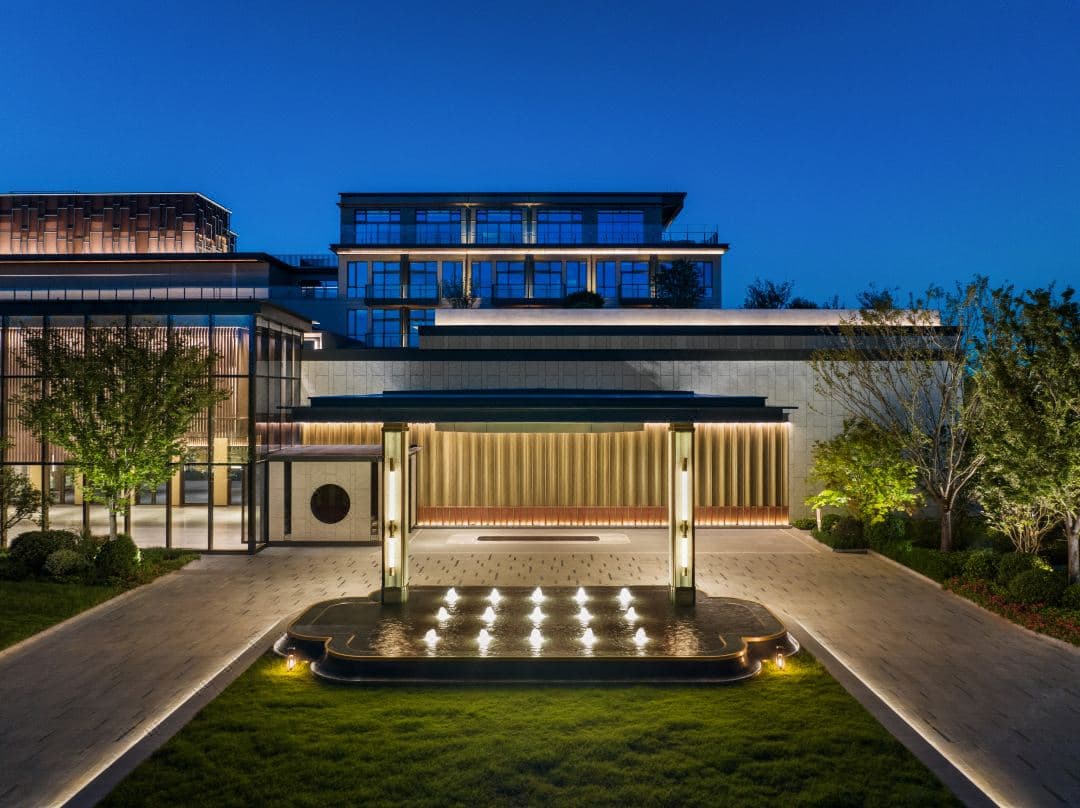
While the tourist hordes jostle on the bridges of Shantang Street, the real flex in Suzhou is silence. Occupying a private 22-acre island on Jinji Lake, the Four Seasons Suzhou doesn’t just reference the city’s UNESCO-listed gardens; it reimagines them with a sharper, modern lens. Architects from Avalon Collective have stripped away the Ming Dynasty kitsch, replacing it with charcoal-grey rooflines, expansive glass corridors, and a "one step, one view" layout that frames the landscaping like living art. Inside, the vibe is less 'hotel' and more 'diplomat’s private estate.' The rooms are studies in restraint—think pale woods, silk embroidery, and floor-to-ceiling windows that pull the lake right to your bedside. Bathrooms are veritable spas, stocked with Frédéric Malle amenities and deep soaking tubs. Culinary headliner Jin Jing Ge has already snagged a nod from the Michelin Guide; the braised pork belly with fermented red rice here is a sticky, savory revelation that demands a reservation. Service is still finding its rhythm post-opening, but the staff’s eagerness to please—especially at the sprawling infinity pool—is palpable. This is the new tranquil axis of Jiangsu.
“Book a Garden Terrace Room on the ground floor for direct access to the manicured lawns. For the best photo op, skip the lobby and head to the infinity pool at dusk when the Gate of the Orient skyscraper reflects perfectly on the water.”
Insider TipAvg. Nightly Rate
280USD
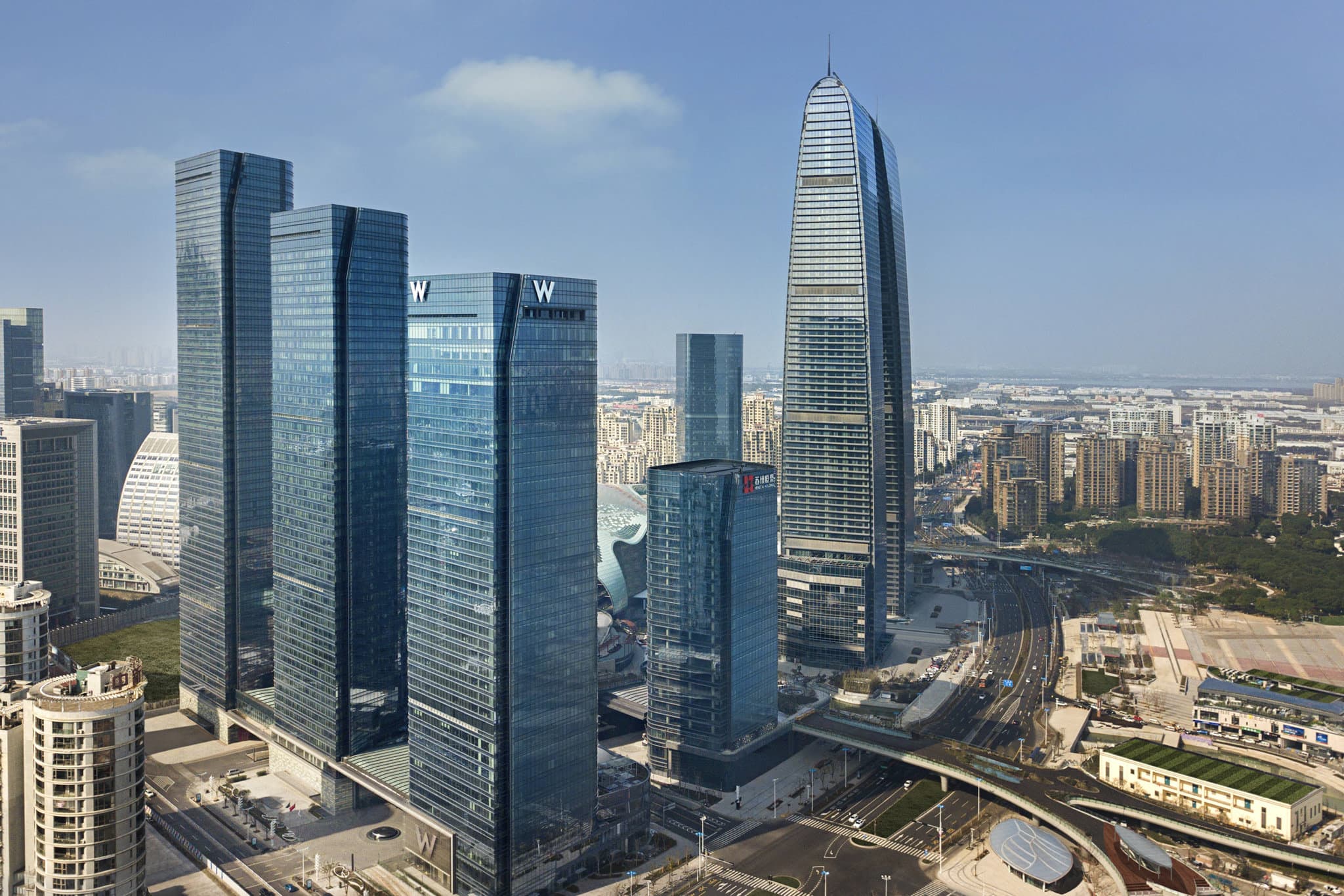
If old Suzhou is a watercolor painting, W Suzhou is a neon-soaked hologram. Rejecting the beige safety of traditional luxury, this property—a crown jewel of the 'New Design Vanguard'—literally elevates the garden city concept. The lobby’s 'Crystal Cloud' chandelier doesn't just hang; it floats, setting the stage for a narrative of defying gravity. Inside the rooms, the design team has swapped subtlety for swagger: 'Moon' lights cast a lunar glow over Pipa pillows, creating a boudoir vibe that feels more like a sci-fi film set than a hotel room. While the inconsistent service at night suggests the human software is still loading, the hardware is impeccable. Dining at 'Su Yan' offers a grounding moment with their Pyramid Braised Soy Pork, a sticky, savory masterpiece that proves the kitchen respects tradition even if the decor disrupts it. It’s loud, it’s glitzy, and it’s unapologetically future-forward.
“Skip the crowded lobby bar for sunset; book a table at SOL37 on the 37th floor for a 'Suzhou Mule' and unblocked views of the Oriental Gate (The Big Pants).”
Insider TipAvg. Nightly Rate
143USD
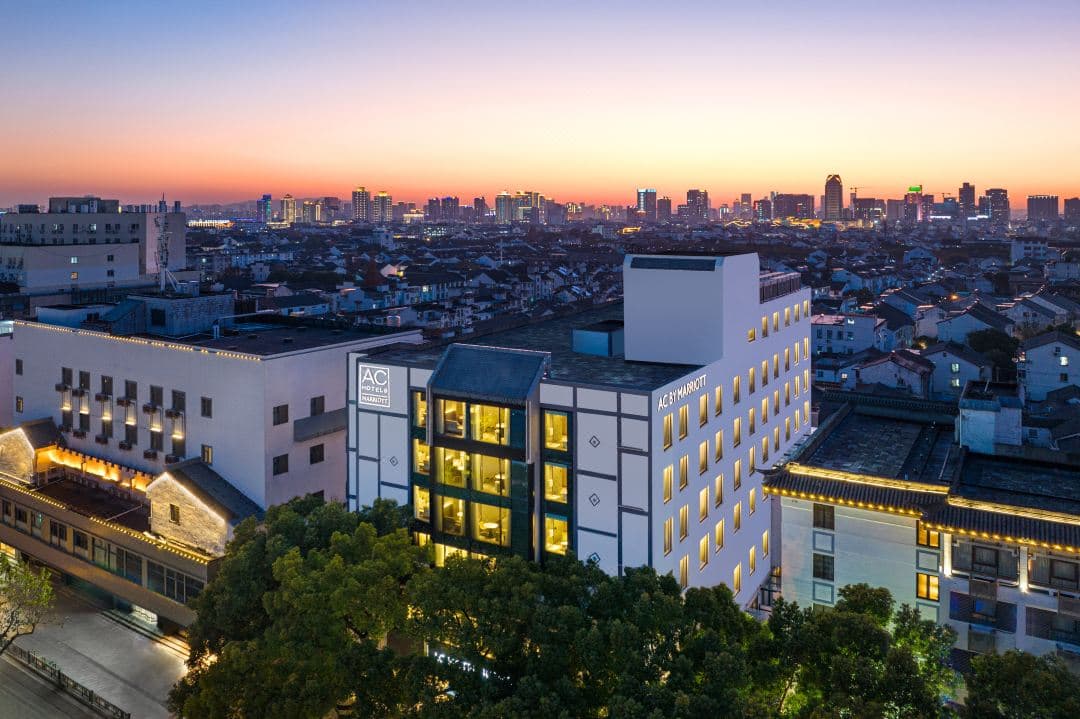
Suzhou is often paralyzed by its own prettiness—a landscape of weeping willows and ancient canals that demands reverence. The AC Hotel Suzhou China, however, refuses to play the nostalgia game. Located in the historic Gusu District, this property engages in a stoic architectural dialogue with its spiritual neighbor, I.M. Pei’s Suzhou Museum. The façade is a strict exercise in greyscale, mimicking Pei's geometric abstraction of traditional Jiangnan architecture. It serves as a visual palate cleanser after the sensory overload of Guanqian Street, located just a stroll away. Inside, the vibe shifts from gallery-like tranquility by day to a sophisticated social hub by night. The rooms are a study in efficiency; at a compact 28 square meters, they prioritize structure over decoration. You won’t find sprawling layouts, but you will find curated details: Korres amenities, crisp linens, and an absence of clutter that feels intentional rather than budget-constrained. The "Garden Rooms" are the insider’s choice, trading skyline views for private outdoor courtyards—a rarity in this density. The culinary program at AC Kitchen offers a curious but successful collision of worlds. Breakfast might involve a bowl of local Suzhou-style noodles, while dinner pivots to the brand’s Spanish heritage with plates of tapas. The AC Lounge doubles down on this European minimalism with its signature Gin & Tonic—served cold, precise, and strong. It isn’t flawless. The soundproofing is merely average, admitting the hum of the city, and the WiFi stability has drawn valid critique. Yet, for the design-conscious traveler who finds "luxury" in precision rather than plushness, this is the city's sharpest new base camp.
“Book a ground-floor Garden Room (e.g., Room 108) for a private courtyard, or request the 'Hape Silk Road' family room if traveling with kids.”
Insider TipAvg. Nightly Rate
74USD