No. 01

SuzhouSuzhou1337 verified reviews
9
.4
Bitvoya Edit
Layering imagery, place, and detail before the page opens.
Suzhou, often hailed as the 'Venice of the East,' is a city where water and architecture dance in harmony. For the discerning traveler, staying in Suzhou is not merely about lodging; it is an immersion into the refined aesthetics of the Song Dynasty. Our curated collection focuses on properties that seamlessly blend ancient garden design with contemporary luxury. Located primarily in the historic Gusu District, the scenic Huqiu District near Shishan Mountain, and the shimmering edges of Jinji Lake, these sanctuaries offer a retreat from the bustle. Whether it's the scholarly elegance of the Tsingpu Suzhou Retreat or the expansive waterscapes of the Four Seasons Hotel Suzhou, each property serves as a gateway to a bygone era of poetic living.
Suzhou is more than a destination; it is a living museum of Chinese landscape design. The properties listed, such as The Hanyu Garden Reserve Suzhou and Kimpton Bamboo Grove Suzhou, are not simply hotels built near gardens—they are gardens themselves. By choosing these sanctuaries, travelers immerse themselves in the Song Dynasty's architectural philosophy, which emphasizes harmony between humanity and nature. The intricate lattice windows, koi-filled ponds, and meticulously placed rockeries transport guests to an era where leisure was an art form. Staying here offers an exclusive opportunity to live within a UNESCO-caliber environment while enjoying world-class amenities.
To truly capture the essence of old Suzhou, location is paramount.
Guests booking these garden-style sanctuaries can expect a holistic cultural experience. Beyond the visual beauty of white-washed walls and grey tiles, expect immersive activities. Many of these hotels, such as the Tongli Lakeview Hotel, offer traditional tea ceremonies, calligraphy classes, and private boat tours. Culinary experiences often feature Su-style cuisine, known for its sweetness and delicate presentation, served in pavilions overlooking mist-covered waters. Expect impeccable service that mirrors the gentle, polite nature of Suzhou culture, ensuring your stay is as restorative as it is culturally enriching.
Spring (April-May) and Autumn (September-October) are ideal. Spring offers blooming flowers in the gardens, while Autumn provides pleasant temperatures and the scent of osmanthus.
Yes, properties like Tongli Lakeview Hotel and Four Seasons Hotel Suzhou offer extensive grounds and family-friendly amenities, including kids' clubs and safe outdoor spaces.
Suzhou is very accessible, located approximately 30 minutes by high-speed train or about 1.5 hours by car from Shanghai.
Explore our complete curated list of luxury accommodations, from boutique hideaways to grand dames.
Explore All Suzhou HotelsForget the clichéd garden hotels; Banyan Tree Suzhou Shishan is an architectural conversation with history. Positioned at the foot of Lion Mountain, the resort eschews gaudy opulence for the austere elegance of a Song Dynasty scroll—think grey-tiled roofs rippling in rhythm with the 'Shishan Yingyue' water courtyard. The design by GOA is a masterclass in framing, where lattice screens turn every view of the mountain into a curated vignette. Inside, the experience is obsessively focused on hydro-therapy. Every room features a private, 24-hour hot spring pool, a rare luxury that almost makes up for the curious climate control cap (heating maxes out at 21.5°C, so bring a cashmere wrap). The ground-floor courtyards, while visually stunning, suffer from low walls that might invite unparalleled views from passing buggies—exhibitionists will be thrilled; others should draw the blinds. Dining at 'Bai Yun' is non-negotiable. The kitchen executes a textbook Squirrel-shaped Mandarin Fish, balancing sweet and tart with surgical precision. Wash it down with locally sourced Biluochun tea in the Lobby Lounge, where the 'Old Money' silence is only broken by the pouring of water. It’s a sanctuary, yes, but one that demands you embrace its specific, quiet rhythm.
“For maximum seclusion, avoid the ground-floor Garden Rooms. Request a 'Mountain View' suite on a higher level to ensure your hot spring soak remains strictly private.”
Insider TipAvg. Nightly Rate
176USD
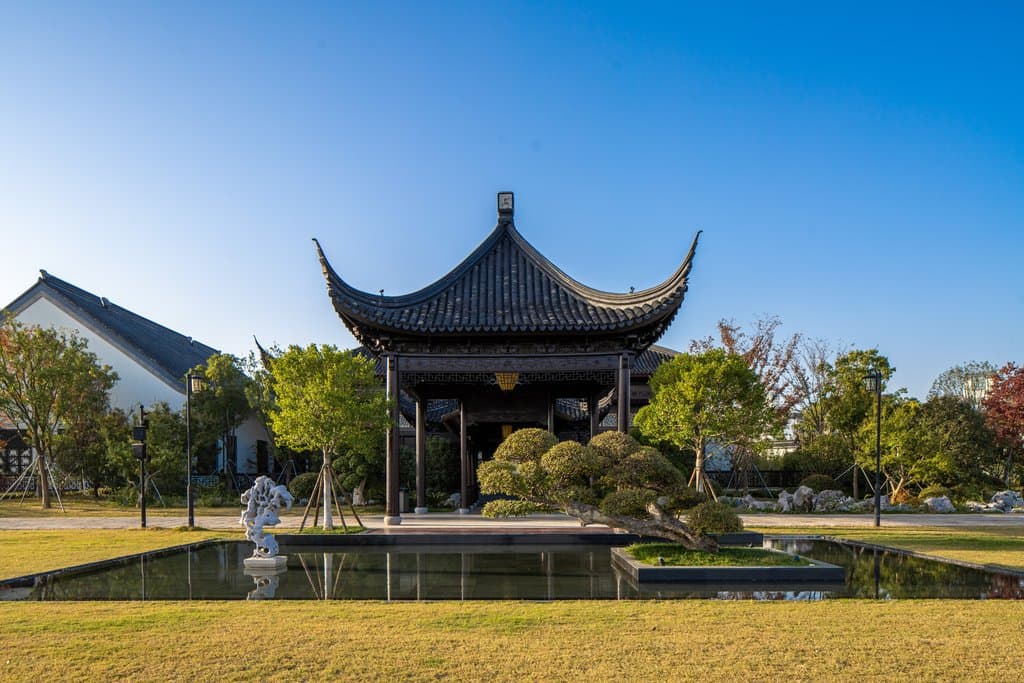
Forget the crowded tourist traps of downtown Suzhou. Hanyu Garden Reserve isn’t just near a classical garden; it is one—a sprawling, 30-key estate on the edge of Lake Taihu that functions more like a private scholar’s retreat than a hotel. The architecture is a rigorous exercise in Song Dynasty aesthetics: low-slung eaves, gray tiles, and a labyrinth of corridors framing living water and rockeries. Inside, the commitment to silence is absolute. Even the entry-level suites clock in at a massive 88 square meters, featuring private courtyards that make excellent use of the property's seclusion. Interiors are dressed in muted earth tones, accented by Ferragamo amenities and high-tech comforts like Technogym equipment that feels almost jarringly modern against the antique backdrop. Dining at ZhenZe is non-negotiable; order the 'Taihu Three Whites' (whitefish, white shrimp, silverfish)—a hyper-seasonal aquatic trinity sourced directly from the lake outside. While the location is removed from the city center’s buzz, that’s the point. It’s a place to practice calligraphy, not hail taxis. **Verdict**: A brooding, beautiful masterpiece for those who prefer their luxury slow, silent, and steeped in history.
“Skip the main breakfast rush. Ask the concierge to arrange a private morning tea ceremony at Hanmingxuan Tea House; the light hitting the central pagoda at 9 AM is photographic gold.”
Insider TipAvg. Nightly Rate
275USD

Forget the raging bull logo for a moment. This property is a delightful cognitive dissonance. You arrive at Jinji Lake expecting carbon fiber and exhaust fumes, but you step into a scholar’s retreat that feels plucked from the Northern Song era. The jagged silhouette of limestone rockeries and circular moon gates frame the central courtyard—the 'Book Garden'—where the silence is heavy and intentional. It is less about 0-to-60 acceleration and more about the slow drift of koi in the ponds. The interiors lean into a darker, moody Italian glamour that surprisingly complements the mist-covered Suzhou aesthetic. While the property opened in 2012—and yes, some corners carry the faint, sweet musk of vintage velvet rather than the crispness of a new build—the atmosphere is undeniably cinematic. The indoor pool is the showstopper here, not for its size, but for the floor paved with crushed seashells and a ceiling mimicking a starry night, creating a midnight swim sensation even at noon. Dining requires a hard pivot from Italian expectations. Bypass the western staples for 'Su Mian Fang', where the Hairy Crab Roe Noodles are an umami-dense ritual essential to the region. For dinner, 'Le Lac' serves a Pan-fried Pigeon with Foie Gras that justifies the calorie count. Service is led by butlers who anticipate needs with a stealth that borders on telepathy. It’s a strange marriage of brands and cultures, but against all odds, it works.
“Request a ground-floor Garden Suite. You lose the lake view, but you gain a private terrace that opens directly into the rockeries, offering total seclusion from the Suzhou Center crowds.”
Insider TipAvg. Nightly Rate
102USD
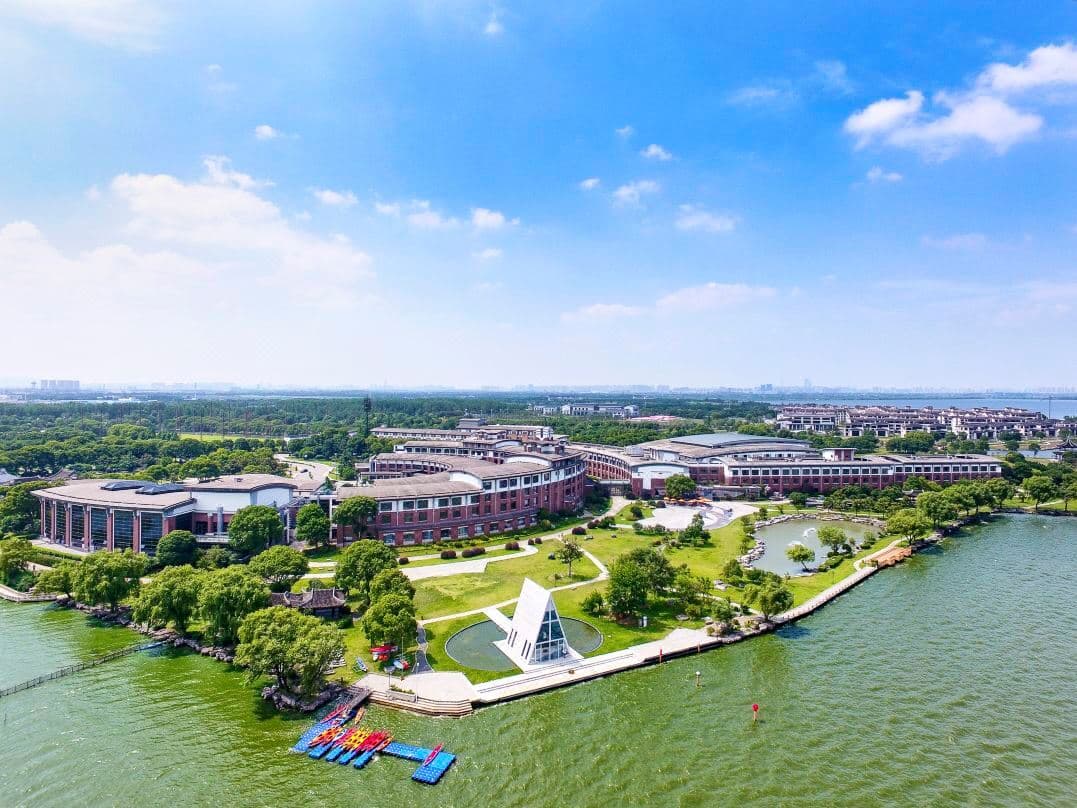
Forget the sterilized minimalism of modern chains; checking into the Tongli Lakeview is like inheriting a wealthy scholar’s estate, specifically one obsessed with the Song Dynasty. The real draw isn’t the lobby—though grand—but the colossal 100,000-square-meter 'Ruby Garden' (Yi Jing Xuan). It’s an architectural labyrinth of rockeries and pavilions that makes the nearby UNESCO-protected Tongli Ancient Town feel almost redundant. You don't need to leave the premises to walk through history. Inside, the rooms are sprawling. While the hardware leans into 'classic' territory—expect heavy wood accents and carpets that have seen a few seasons rather than slick bluetooth integrations—the tangible sense of heritage compensates. Ask for a lake-facing suite; the morning mist over Tongli Lake is superior to any 4K screensaver. Dining is a serious affair here. Bypass the international spread at Ziga Zaga Café and commit to the 'Ruby Garden' restaurant for Sautéed River Shrimp that actually taste like the river, or the theatrical Flaming Ice Cream at Irodoriya. Service is where the hotel flexes its old-school muscles; Manager Zhao Ying leads a team that anticipates your tea preference before you do. **Verdict**: The closest you’ll get to living in a Chinese period drama, just with better plumbing.
“Request a room in the newly renovated wing to avoid the 'vintage' aesthetic of the older carpets, and book the Ayurveda treatment at Lizi Club Spa—a rare find in Suzhou.”
Insider TipAvg. Nightly Rate
71USD

To arrive at Tsingpu Suzhou Retreat is to perform a vanishing act. You leave your vehicle at the chaotic perimeter of Mudu Ancient Town and proceed on foot, navigating winding alleys until the clamor of tourists dissolves into the silence of the former Liyin Garden. With only eight rooms, this isn't a hotel; it’s a restoration of a Qing Dynasty scholar’s dignity. The architecture—a precise exercise in 'New Chinese' Zen—relies on reclaimed brick and wood to frame rain-drenched courtyards, creating an atmosphere so quiet you can hear the settling of the timber structures. Inside, the asceticism is purely visual. The creature comforts are uncompromising, featuring Appelles bath amenities and linens substantial enough to drown in. Dining is the centerpiece here: the all-inclusive model eschews buffet mediocrity for impeccable Su Bang Cai. The signature Squirrel-Shaped Mandarin Fish is a sticky, sweet-and-sour masterclass in local texture. Be warned: the historic wooden construction means soundproofing is virtually nonexistent, but the trade-off is waking up in a living museum rather than a hermetically sealed box. Service is invisible until needed, facilitating immersive Kunqu Opera sessions that feel less like a performance and more like a private recital.
“Ask for a room facing the Central Water Courtyard to watch the rain ripples (a visual meditation), and utilize the staff’s access to unlock hidden sections of Mudu that day-trippers never see.”
Insider TipAvg. Nightly Rate
300USD
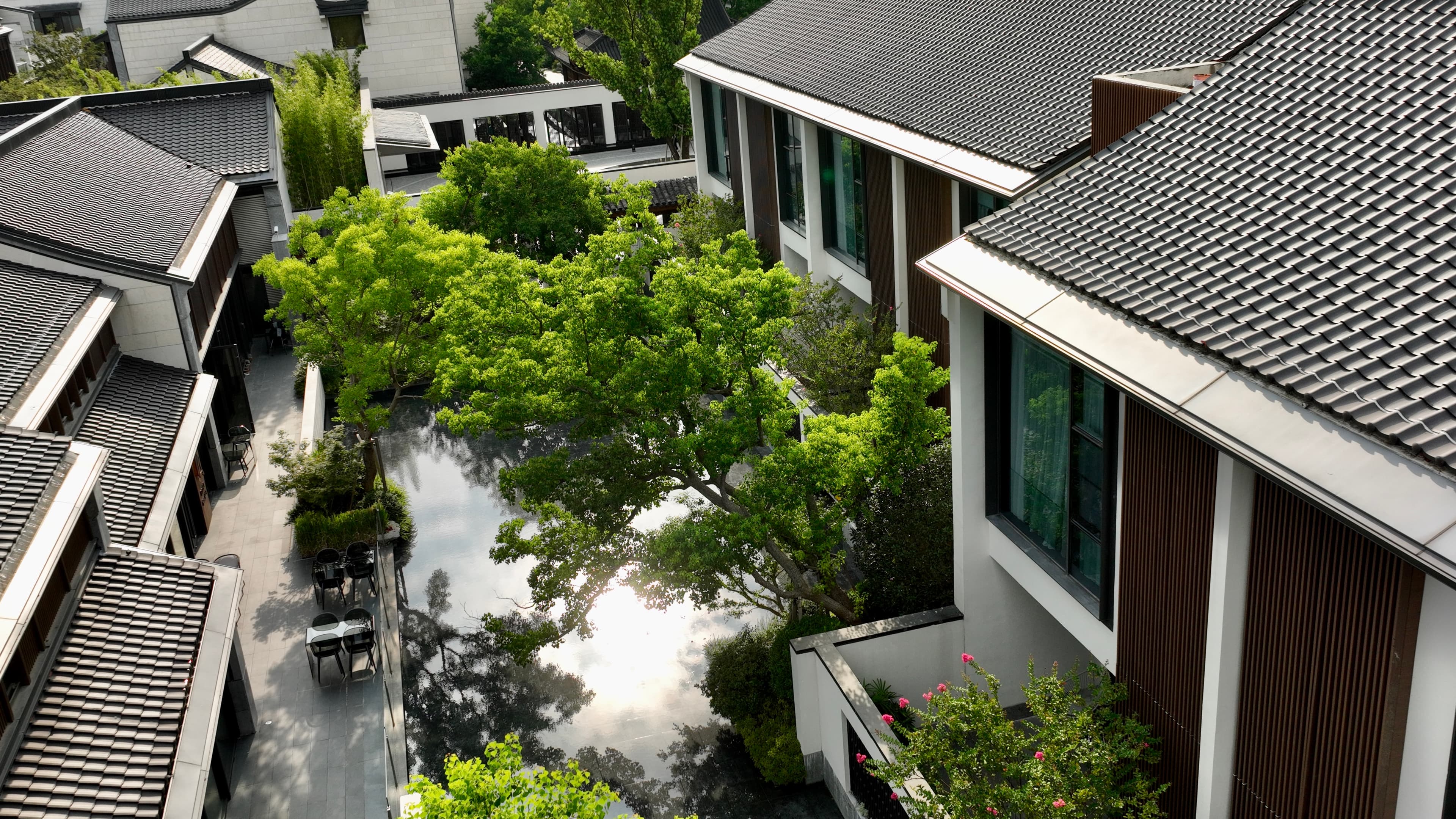
If the traditional Suzhou garden is a dusty, intricate oil painting, the Kimpton Bamboo Grove is a sharp, black-and-white charcoal sketch. Rising from the footprint of the city’s diplomatic ‘Bamboo Grove Hotel,’ this SCDA-designed property strips back the ornamentation of Gusu District without losing its soul. The architecture is a masterclass in restraint—whitewashed masonry and dark gray tiling reflecting stoically in interconnected waterways that rival the adjacent Master of the Nets Garden. Inside, the lobby’s sculptural spiral staircase acts as a portal, transitioning you from the humidity of the old town to cool, air-conditioned minimalism. The guest rooms are sanctuaries of quiet luxury, featuring private courtyards (in ground-floor Garden rooms), Dyson hair dryers, and the brand’s signature Atelier Bloem amenities, which smell faintly of kadota fig and tulip. Dining is serious business here: ‘The Grove’ delivers a braised baby hairy crab that warrants a flight alone, while ‘Bar 168’ offers a whiskey list as deep as the canal it floats above. Service has ditched the white gloves for intuitive, sneaker-clad efficiency. It’s the coolest history lesson in Jiangnan.
“Book a 'Garden King' room on the ground floor for your own private, walled terrace—perfect for morning espresso before the tour groups hit the nearby gardens.”
Insider TipAvg. Nightly Rate
138USD
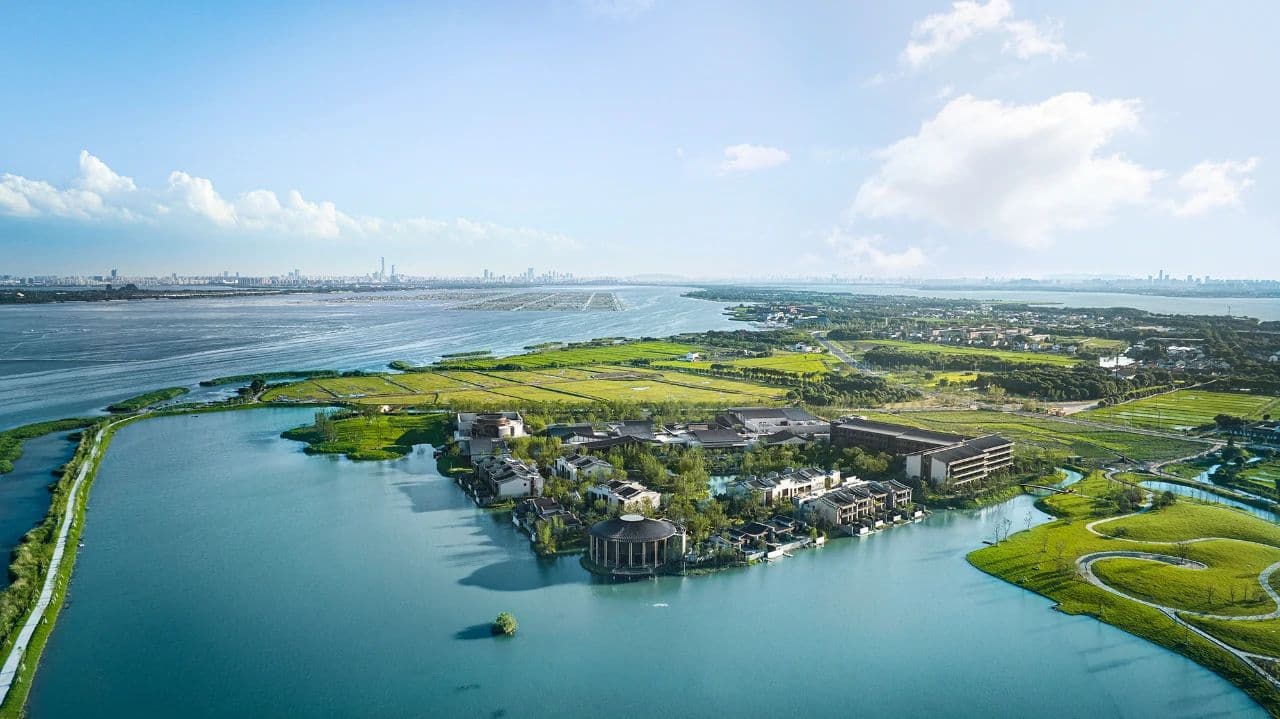
Forget the crowded canals of downtown Suzhou; this is a living Shen Zhou painting. Recently crowned a 2025 French Design Award winner, Banyan Tree Yangcheng Lake eschews gaudy opulence for the quiet precision of the Song era—think imperial kiln bricks, violin-bow door handles, and moon gates framing the mist. The 70 rooms are sanctuaries of silence, each boasting a private balcony onsen that actually stays hot. Inside, 400-thread count linens and Dyson dryers prevent the 'ancient' vibe from feeling dated. Dinner at Bai Yun is non-negotiable during crab season; the steamed Yangcheng Lake hairy crab is sweet, rich, and worth the messy fingers, though the fusion attempts at Ming Yue can feel ambitious. A note to the seeker of silence: the indoor pool loses its zen when crowded, so time your dip carefully. It is an imperfect but breathtaking return to literati seclusion.
“Skip the main pool during mid-afternoon. Instead, book the 'Rainmist' treatment at the spa around 2 PM, or retreat to your private balcony onsen—the water temperature control is flawless.”
Insider TipAvg. Nightly Rate
207USD

While the world flocks to I.M. Pei’s Suzhou Museum, a quieter revolution in aesthetics is happening just west of the canal. Angsana Suzhou Shishan isn’t just a hotel; it’s a masterclass in 'Jie Jing' (borrowed scenery), anchoring its visual identity to the ancient, craggy peak of Lion Mountain. Forget the neon sprawl of the SIP; here, the vibe is strictly Song Dynasty scholar-recluse—if that scholar had access to Technogym equipment and underfloor heating (a godsend during Jiangsu's damp winters). The hardware is impeccable, from the floor-to-ceiling glass in the indoor pool that frames the mountain like a scroll painting, to the spacious bathrooms stocked with premium amenities. However, the real flex here is the culinary direction. Skipping the predictable Cantonese fare, the 'Market Place' restaurant leans into the Banyan Group’s roots with a Malaysian Beef Rendang that genuinely rivals anything in Kuala Lumpur. Service is where the property shines most brightly; staff like Monica don’t just process check-ins—they curate the stay with an intuition that feels refreshingly unscripted. Verdict: A sophisticated, garden-style retreat that successfully trades urban chaos for curated silence.
“For true seclusion, skip the ground-floor Courtyard Rooms (where passersby might glimpse your morning routine) and request a 3rd-floor Mountain View Room for unobstructed vistas of Lion Hill.”
Insider TipAvg. Nightly Rate
145USD
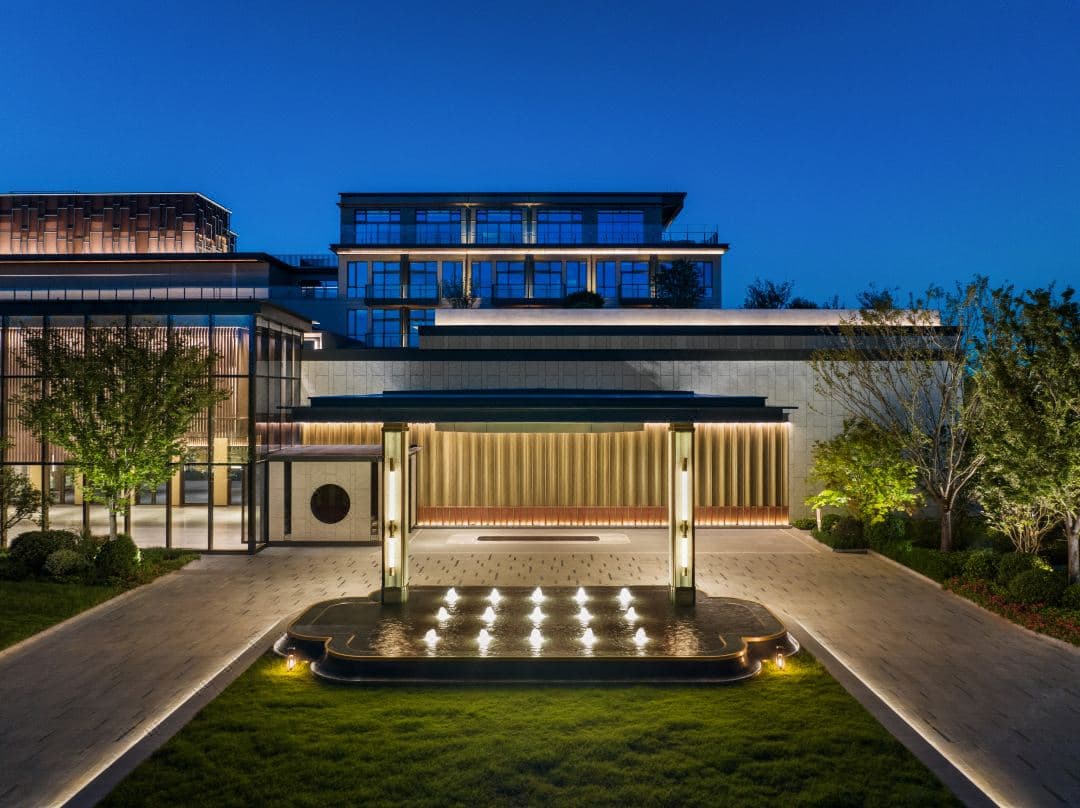
Crossing the bridge onto the private nine-hectare island that houses the Four Seasons Suzhou feels less like a hotel arrival and more like entering a cinematic set of a Song Dynasty drama—albeit one with Frédéric Malle amenities and Technogym equipment. The Avalon Collective-led design rigorously adheres to the 'one step, one view' principle of classical Suzhou gardens, forcing you to slow down as you navigate glass-enclosed walkways that frame misty lake vistas and manicured rockery. The rooms are studies in restraint, swapping predictable opulence for a calm, neutral palette that lets the floor-to-ceiling views of Jinji Lake do the heavy lifting. While the Kids For All Seasons club is surprisingly comprehensive (making this a stealth family favorite), the real draw is the culinary ambition. At Jin Jing Ge, Chef Charles Zhang’s Braised Pork Belly with Fermented Red Rice is a sticky, savory masterpiece that justifies the Michelin selection. Service can still feel like it's finding its footing—a common trait in Suzhou’s rapidly expanding luxury sector—but the staff’s eagerness is palpable. It’s a sophisticated, if occasionally echoing, sanctuary that successfully trades urban clamor for the meditative silence of a scholar’s garden.
“Book a table on the terrace of the Lobby Lounge for sunset; the view of the Gate of the Orient reflecting off the infinity pool is the property’s best vantage point.”
Insider TipAvg. Nightly Rate
280USD
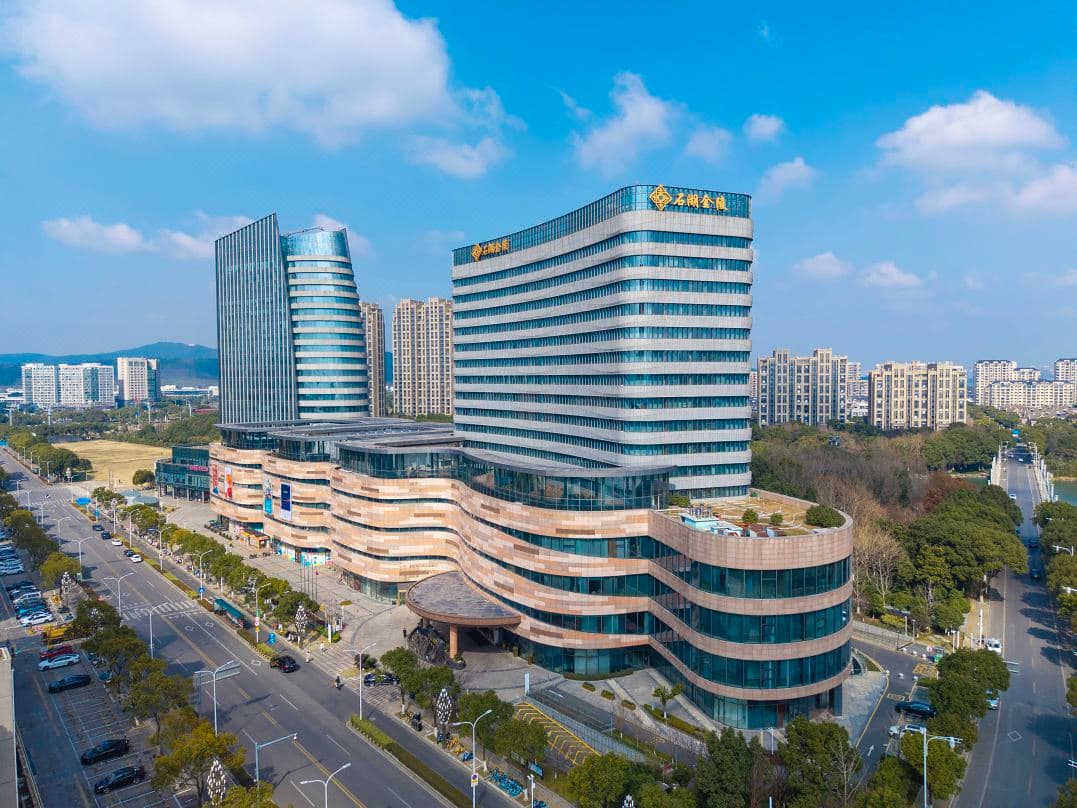
While the rest of Suzhou races toward the future, the Shihu Lake Jinling Garden Hotel deliberately hits pause, channeling the elegant restraint of the Song Dynasty. This isn't just a place to sleep; it is a study in *yuanlin*—the classical garden—where architecture frames nature rather than conquering it. The lobby sets a high bar, literally and figuratively, with grand vertical lines that draw the eye up before settling on the daily Pingtan performances that soundtrack your arrival. Rooms here are exercises in framing. Ask for a Lake View Room, where the window acts as a lens for Xiaoshi Lake, effectively borrowing the scenery (*jie jing*) into your living space. The interiors shun loud luxury for muted earth tones and dark woods, though the heating can struggle against the damp Jiangnan winter—pack a cashmere sweater. Dining is the headline act: Su Shi Jin serves Huaiyang cuisine with surgical precision. Order the Freshwater Lake Delicacies; the river shrimp are shelled by hand and arrive glistening like pearls. Service is typical of the Jinling brand—formal, invisible until needed, and exacting. It’s a trek from the Humble Administrator’s Garden, but for a silence broken only by the pluck of a pipa, it’s worth the mileage. **Verdict:** A architectural triumph for those who prefer their luxury whispered, not shouted.
“Skip the crowded breakfast buffet at peak hours. Instead, take a 100-meter morning walk to the Xiaoshi Lake edge for a private sunrise viewing of the misty water—it's pure ink-wash painting.”
Insider TipAvg. Nightly Rate
43USD