No. 01

205 Hayarkon St.independence. Tel Aviv IsraelTel Aviv2846 verified reviews
8
.2
Bitvoya Edit
Layering imagery, place, and detail before the page opens.
Tel Aviv is a living museum of architecture, celebrated globally for its UNESCO-listed 'White City'—a collection of over 4,000 Bauhaus style buildings. This curated collection invites you to experience the city's design evolution, from the meticulous restoration of 1920s Eclectic icons to the sharp lines of International Style modernism. We journey through the chic avenues of Rothschild Boulevard, where The Norman Tel Aviv and Elkonin Tel Aviv Hotel stand as testaments to preservation. Further south, in the ancient port of Jaffa, history meets modern luxury at The Jaffa and The Setai. These properties are not just hotels; they are the custodians of Tel Aviv's vibrant history and its stylish revival.
Tel Aviv holds a unique position in the world of design as the host of the largest concentration of Bauhaus buildings globally. This architectural density, known as the 'White City,' offers travelers a chance to stay inside living history. Choosing a hotel from our Bauhaus Revival collection ensures you are not merely observing the facade of the city but inhabiting its artistic soul. Properties like The Norman and The Drisco have undergone painstaking restorations to preserve their frescoes, stairwells, and structural integrity while integrating ultra-modern luxury. It is a destination where the 1930s avant-garde meets the 21st-century high life, offering an aesthetic experience unmatched anywhere else in the Middle East.
Guests staying at these architectural landmarks can expect a service level that matches the grandeur of the surroundings. Expect high ceilings, restored original tile flooring, and windows designed to capture the Mediterranean breeze. Culinary excellence is a staple, with rooftop bars at The Hilton Tel Aviv offering panoramic sea views and courtyard dining at The Drisco reflecting the local heritage. Whether it is the infinity pool overlooking the Mediterranean or a spa housed in an ancient cellar, these hotels offer a profound sense of place that honors Tel Aviv's past while celebrating its cosmopolitan present.
Bauhaus hotels in Tel Aviv are characterized by functionality, asymmetry, minimal ornamentation, and the famous 'International Style' white facades. Hotels like The Norman blend these features with modern luxury.
The Jaffa, a Luxury Collection Hotel, and The Setai Tel Aviv are top choices in Jaffa, offering a blend of Ottoman architecture and modern design within the ancient port area.
Yes, despite their historic status, properties like The Drisco and Elkonin offer state-of-the-art amenities, including rooftop pools, spas, and fine dining restaurants.
Explore our complete curated list of luxury accommodations, from boutique hideaways to grand dames.
Explore All Tel Aviv HotelsIf the 1930s Bauhaus buildings are Tel Aviv’s polite, low-rise ancestors, the Hilton is their brash, muscular grandson. Rising from Independence Park like a jagged cliff of white concrete, this 1965 Yaakov Rechter masterpiece is a UNESCO-acclaimed titan of Israeli Brutalism. It doesn’t just sit on the Mediterranean; it dominates it. The vibe here is unapologetic 'Power Tel Aviv.' The lobby buzzes with an energetic mix of tech moguls, diamond dealers, and diplomats. While the service can occasionally lean into 'Sabra' brusqueness (expect efficiency, not fawning), the infrastructure is undeniably five-star. The rooms, featuring Rechter’s ingenious saw-tooth balcony design, ensure that every single guest gets a private slice of the Mediterranean sunset without seeing their neighbor—a masterclass in privacy. Dining is a serious affair. Skip the room service and head to Darya for Silk Road-inspired lamb marrow on barbarian bread, or hit the legendary breakfast buffet at Cafe Med, where the Shakshuka station is practically a religious site. The semi-Olympic saltwater pool remains the city's best place to swim laps while people-watching. It’s expensive, busy, and sometimes the elevators take an eternity, but for sheer presence and location, the Hilton is still the King of the Hill.
“The elevators can be notoriously slow, especially during Shabbat. Book a room in the 'Vista' wing (floors 13-17) for exclusive access to the high-speed Vista elevators and the 17th-floor lounge.”
Insider TipAvg. Nightly Rate
521USD
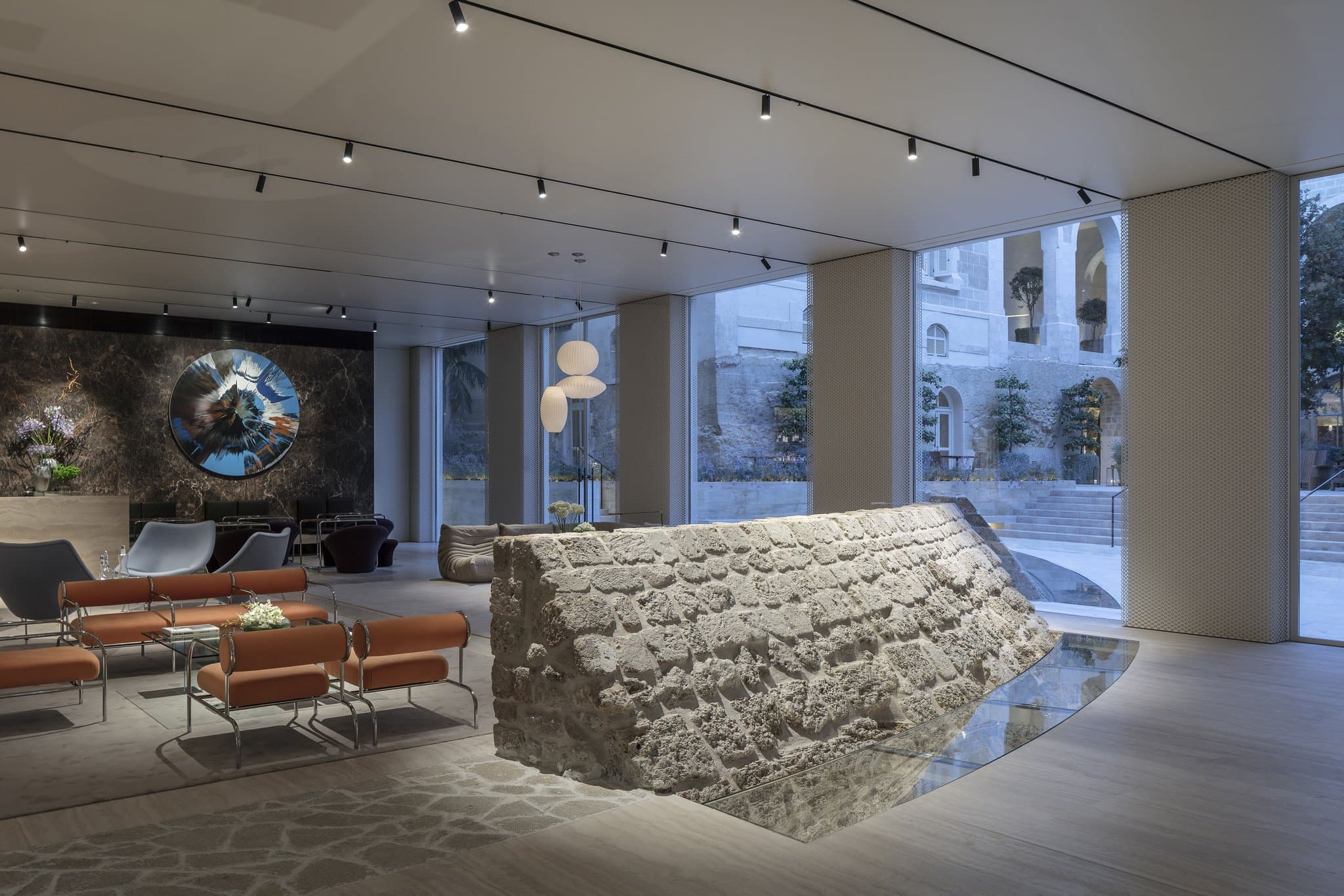
Tel Aviv’s 'White City' label usually evokes crumbling Bauhaus, but John Pawson’s intervention at The Jaffa is a different species of white: severe, monastic, and blindingly expensive. Housed within a 19th-century French Hospital, the property is a tense, beautiful standoff between Crusader-era stonework and uncompromising British minimalism. In the lobby, a Damien Hirst spin painting mocks the historic solemnity—a perfect metaphor for the hotel's high-low ethos. Rooms in the new wing are an exercise in restraint—think pale oak, cool travertine, and custom furniture that demands you declutter your life. The bathrooms, stocked with L.RAPHAEL amenities, feel like personal sanctuaries. Downstairs, the energy spikes. Golda’s Delicatessen serves lox bagels that rival the Lower East Side, while 'The Chapel' transforms a restored prayer hall into a stained-glass liquor cabinet for the city’s glitterati. It isn’t flawless. The valet service often moves at a glacial pace, and the exorbitant nightly rates demand a service precision that the staff sometimes misses. Yet, lounging by the courtyard pool, framed by historic colonnades and scented by citrus, the chaos of Jaffa feels a world away. It is the city's most sophisticated fortress, provided you have patience with the parking.
“Book a room in the Historic Wing for high ceilings, but request a Sea View to avoid the noise from the pool's all-day social scene.”
Insider TipAvg. Nightly Rate
543USD

If walls could talk, the Elkonin’s would speak of Albert Einstein and David Ben-Gurion, who once walked these halls. Tel Aviv’s very first hotel (est. 1913) has shaken off decades of neglect, reemerging in Neve Tzedek as a masterful dialogue between Ottoman-era grandeur and a sleek, glass-clad modern tower by Bar Orian Architects. Inside, the vibe is strictly French-Mediterranean refinement. Rooms designed by Iconique Studio shun the typical Bauhaus minimalism for a warmer, textured luxury—think custom millwork, plush 400-thread count linens, and the city’s only Clarins amenities. Dining here is a kosher revelation. ‘Rova Alef,’ helmed by Chef Evyatar Malka, serves a dairy and fish menu that feels indulgent rather than restrictive; the 'Red on Red' tuna sashimi is a masterclass in texture. While the rooftop infinity pool offers quintessential White City views, it is undeniably compact—better for a quick dip than laps. Service can occasionally lag on busy weekends, but the subterranean Clarins Spa (with its authentic hammam) provides a polished sanctuary that few local boutiques can match. **Verdict**: A sophisticated heritage stay for those who prefer history and hamams over the beachfront fray.
“Request a room in the original 1913 heritage wing for higher ceilings and restored arched windows; the modern tower rooms offer better sea views but feel more standard.”
Insider TipAvg. Nightly Rate
169USD

In a city celebrating the curvature of Bauhaus concrete, The Setai Tel Aviv offers a stark, stony counterpoint. This isn’t the White City; this is the Crusaders' Jaffa, housed in a 12th-century fortress turned Ottoman prison (the Kishle). The preservation work here is surgical—original limestone walls and vaulted ceilings are the main event, stripping back centuries of plaster to reveal the structural honesty that Bauhaus purists ironically crave. The hardware is impeccable. Rooms feature Ara Design handmade king beds and deep soaking tubs that feel almost monastic until you spot the 55-inch IPTV and Nespresso machine. The crowning glory is the rooftop infinity pool, a glass-walled rectangle that severs the skyline from the Mediterranean with aggressive precision. Dining at Jaya delivers a competent Israeli breakfast—the Shakshuka is suitably spicy—though dinner at the Kishle Bar leans heavily on atmosphere over culinary invention. The glitch in this historic matrix is the service. It drags. Coffee refills at breakfast can feel like a parole hearing, and response times from the concierge often lag behind the luxury price tag. Come for the sheer architectural drama and the "Locally-designed" beach bag; stay for the silence of the stone, but bring patience for the staff.
“Book a 'Premium Room' on the 3rd floor for the original high-vaulted ceilings; the lower floors can feel a bit like the prison it used to be. Also, the rooftop pool is adults-centric—go at sunset.”
Insider TipAvg. Nightly Rate
365USD
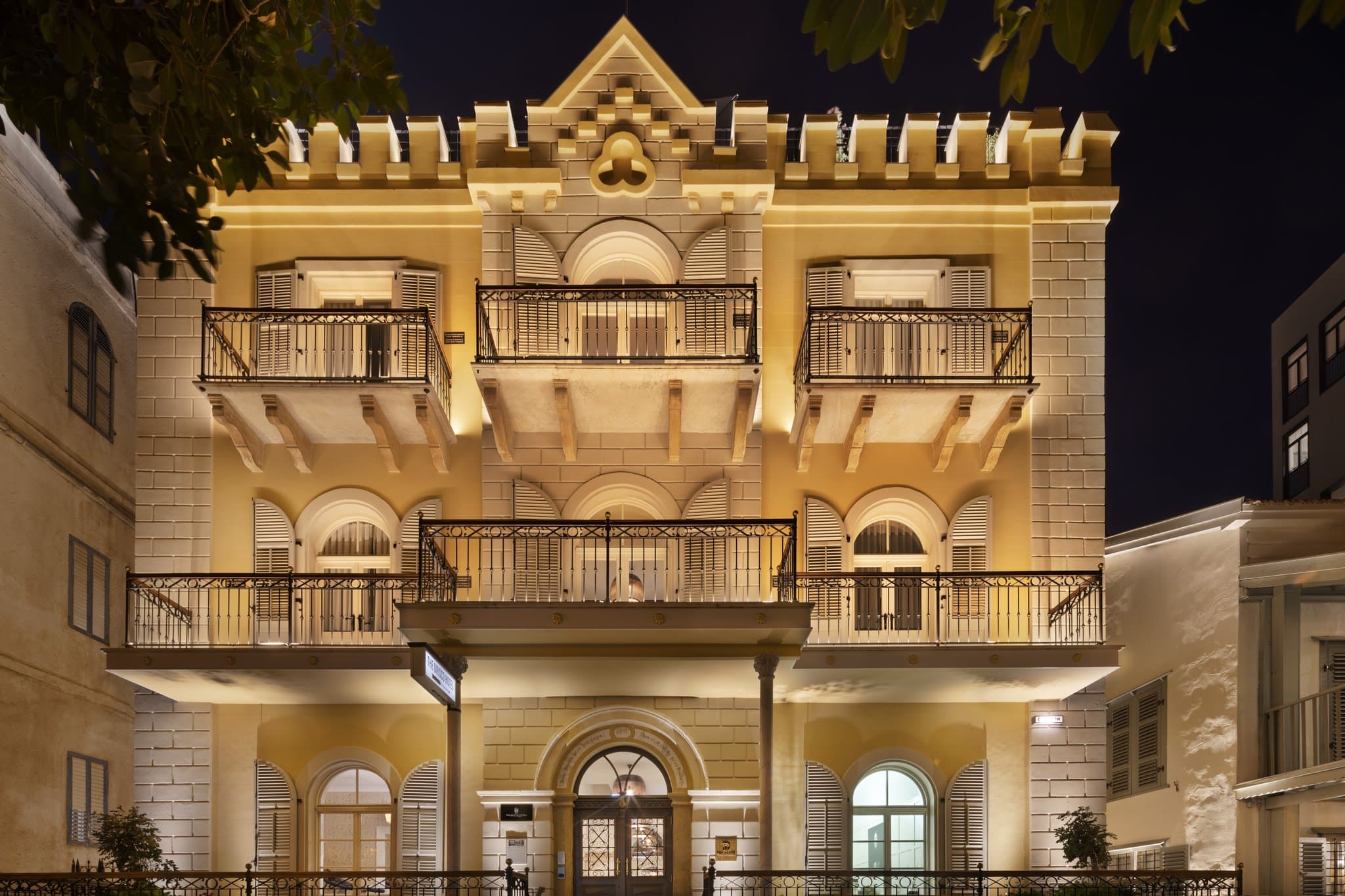
In a city relentlessly marketed for its white Bauhaus curves, The Drisco is a rebellious, 19th-century plot twist. While the rest of Tel Aviv worships minimalism, this Relais & Châteaux gem in the American Colony indulges in the maximalist history of the Ottoman era. Restored from a derelict wreck (once the Jerusalem Hotel, abandoned for decades), the property feels less like a hotel and more like a time capsule unlocked by the Drisco brothers. The design narrative here is one of meticulous resurrection. Original 1925 murals, uncovered from layers of cheap paint, line the dining room, while the Villa Drisco wing features wooden balconies that feel plucked from a Mark Twain novel (he was, in fact, a guest). Rooms are swathed in Egyptian cotton and fitted with Nespresso machines, though the entry-level Classic Rooms are undeniably cozy—read: tight—at 20 sqm. Culinary hedonism anchors the stay. George & John, helmed by the acclaimed kitchen team, isn't just a hotel eatery; it’s a pilgrimage site. The octopus carpaccio with fluffy challah is a textural masterclass, best enjoyed before retreating to the rooftop terrace for a sunset cocktail. Service is almost clairvoyant, a rarity in the Levantine hospitality scene. **Verdict**: The ultimate anti-Bauhaus sanctuary for history fetishists who prefer marble to concrete and don't mind trading a swimming pool for world-class dining.
“Skip the 'Classic Room' if you're traveling with checked luggage; upgrade to a 'Premium Room with Balcony' in the Villa wing for the historic wooden verandas and sea breezes.”
Insider TipAvg. Nightly Rate
294USD
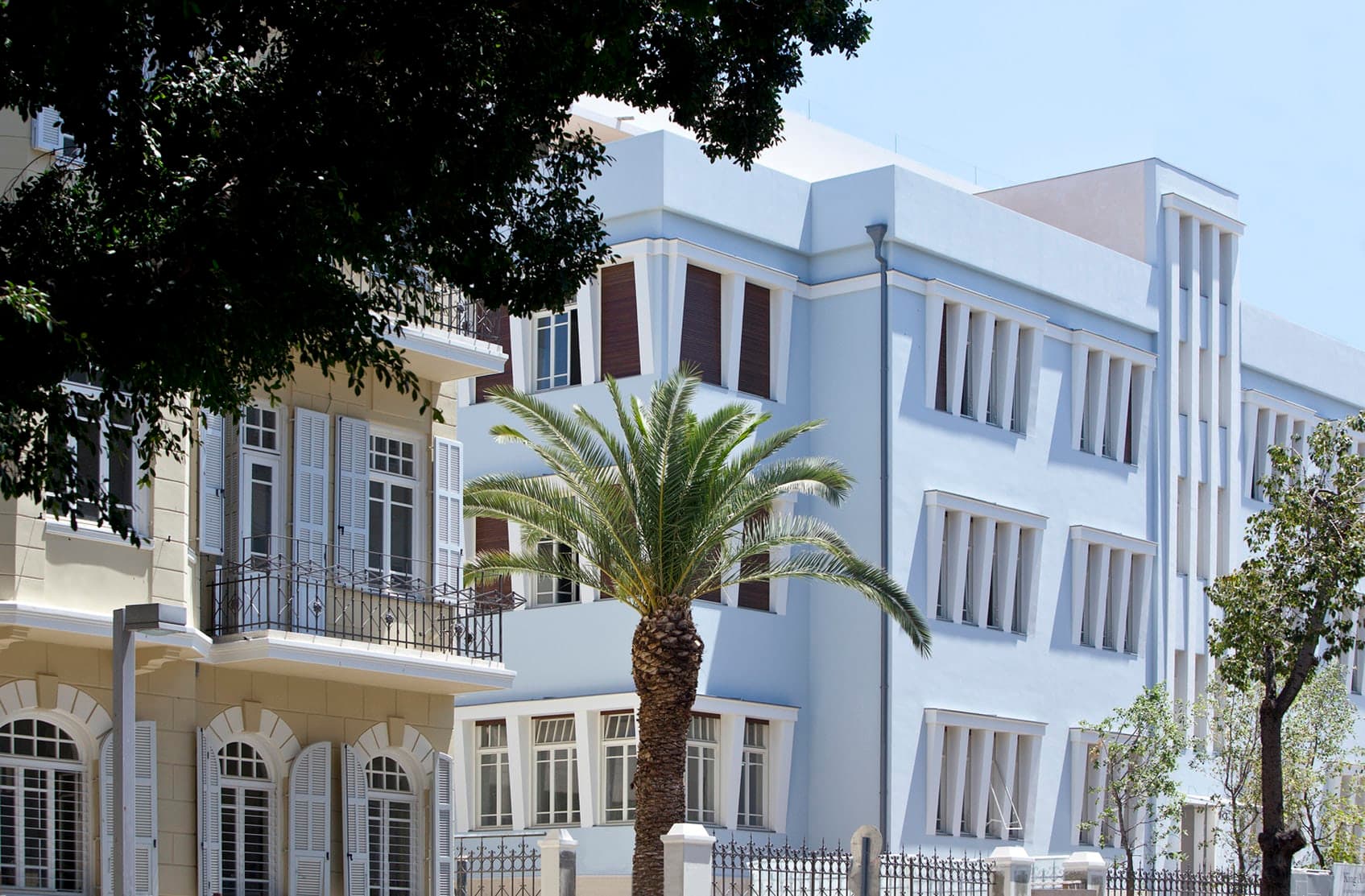
In a metropolis defined by its UNESCO-listed Bauhaus architecture, The Norman doesn’t just participate in the conversation; it dictates it. Anchored at King Albert Square, this isn't merely a hotel but a masterclass in restoration, bridging two distinct 1920s structures—one Eclectic, one Modernist—via a fragrant citrus garden that feels less like a lobby corridor and more like a wealthy architect’s private estate. While entry-level rooms are admittedly compact (hovering around 27 sqm), the design rigor is absolute—think high ceilings, hand-painted tile floors, and 400-thread count linens that forgive the square footage. The real theater, however, happens elsewhere. The rooftop infinity pool is the city’s most coveted visual anchor, offering a rare, serene vantage point over the frantic energy of Rothschild Boulevard. Culinary accolades are well-earned: ‘Alena’ delivers Galilean precision, but the Japanese tapas at ‘Dinings’—specifically the Tar-tar chips and Bao Burger—are the true power move. Service is startlingly intuitive for Tel Aviv, with a staff that anticipates needs rather than reacting to them. It is undeniably expensive, but for design purists, The Norman is the only game in town.
“The rooftop pool loungers are a battlefield in peak season. Skip the midday rush and head up for a sunset dip after 6 PM, then segue directly to The Library Bar for a Vesper Martini.”
Insider TipAvg. Nightly Rate
720USD