No. 01

TunisTunis1059 verified reviews
9
.6
Bitvoya Edit
Layering imagery, place, and detail before the page opens.
Tunis is a city of captivating contrasts, where the ancient and the modern coexist in harmony. At its heart lies the Medina, a UNESCO World Heritage site, labyrinthine and mystical. Here, behind unassuming studded wooden doors, lie the 'Dars'—traditional palaces centered around serene, tiled courtyards that offer a cool respite from the North African sun. This collection invites you to explore these architectural gems. While exploring neighborhoods from the historic Medina to the coastal luxury of Gammarth and the ancient ruins of Carthage, our curated selection of hotels offers the perfect sanctuary. Whether you seek the opulence of the Four Seasons or the business elegance of the Sheraton, experience the secrets of Tunis.
Tunis is not just a destination; it is a sensory journey through time. The concept of the 'Dar' represents the introverted beauty of Tunisian architecture—plain on the outside, but spectacularly ornate on the inside. Staying in Tunis allows travelers to unlock these secret courtyards, characterized by intricate Zellige tilework, fragrant jasmine, and marble fountains. While the traditional Dars are located within the pedestrian-only alleys of the Medina, the surrounding luxury hotels provide world-class amenities and easy access to these cultural treasures.
To fully experience the duality of Tunis, choosing the right location is key:
Expect a blend of French colonial elegance and Arab-Andalusian charm. When visiting the hidden Dars of the Old City, many of which are now museums, tearooms, or cultural centers, you will encounter the warm hospitality Tunisia is famous for. Back at your hotel, expect modern luxury infused with local touches—thalassotherapy treatments utilizing local marine ingredients, cuisine that fuses Mediterranean flavors with spicy Harissa, and interiors that pay homage to the geometric patterns of the Old City.
A 'Dar' is a traditional Tunisian house found in the Medina (Old City). It typically features a modest exterior but opens up into a beautiful, ornate central courtyard decorated with tiles and fountains.
Yes, many historic Dars in the Medina have been converted into museums, restaurants, or cafes (like Dar Ben Gacem or Dar El Jeld), allowing visitors from hotels like The Residence or Four Seasons to explore them easily.
El Mouradi Hotel Africa Tunis and Laico Tunis are located in the city center, just a short walk from the entrance to the Medina and its hidden Dars.
Explore our complete curated list of luxury accommodations, from boutique hideaways to grand dames.
Explore All Tunis HotelsAt first glance, the Laico Tunis is a shimmering monolith of corporate ambition—a glass tower that screams deadlines rather than heritage. But bypass the lobby’s bustling suits and head straight for 'Dar Zmen'. This venue, literally the ‘House of Time,’ is a calculated, brilliant disruption to the hotel's modern narrative. Here, the sterile internationalism fades into the scent of slow-cooked lamb and spices. It’s not a pastiche; it’s a culinary archive where traditional couscous and tajines are served with a reverence usually reserved for fine art. Upstairs, the rooms are vast—a luxury in a city where space is often compromised for history. While the service can occasionally lag behind the hotel’s 5-star aspirations, the 'Cinq Mondes' spa is a non-negotiable remedy, offering a hammam experience that feels wonderfully ancient in such a modern shell. End your night at Level 13. The octopus carpaccio is sharp and fresh, and the view of Tunis offers a glittering perspective on a city that manages to be both chaotic and serene.
“Book a table at Dar Zmen specifically for the Friday themed dinner; it’s when the kitchen really flexes its traditional muscles.”
Insider TipAvg. Nightly Rate
149USD

While the "Hidden Dars" feature celebrates the introspective architecture of the Medina, the Regency Tunis offers its extroverted, seaside counterpoint. Located in Gammarth, this independent Grande Dame trades the Medina’s enclosed courtyards for a sprawling "Winter Gardens" jungle atrium and a wooden causeway stretching directly onto a private beach. Let’s be direct: the interiors are a time capsule of early-2000s French grandeur, sporting a patina that some might call "dated" and others "vintage aristocratic." But where the hardware shows its age, the software—specifically the dining—remains razor-sharp. The 'Halfaouine' restaurant is the thematic bridge to the Old City, serving a Kabkabou fish stew so authentic it transports you straight to the bustling square it’s named after. Unexpectedly, the hotel also houses the 'White Elephant,' a serious contender for North Africa’s most competent Thai kitchen; the Bussakron appetizer set is non-negotiable. Service here does the heavy lifting to bridge the gap between the 5-star rating and the physical reality, with staff members like Hadil and Amira frequently cited as the property’s saving graces. The Angelite Spa, stocking Thalion products, offers a reliable hammam reprieve. It’s a choice for travelers who prioritize culinary depth and beach access over cutting-edge design.
“Skip the standard room service. Book a table at White Elephant for dinner and order the Tom Yum—it rivals anything in Bangkok.”
Insider TipAvg. Nightly Rate
72USD
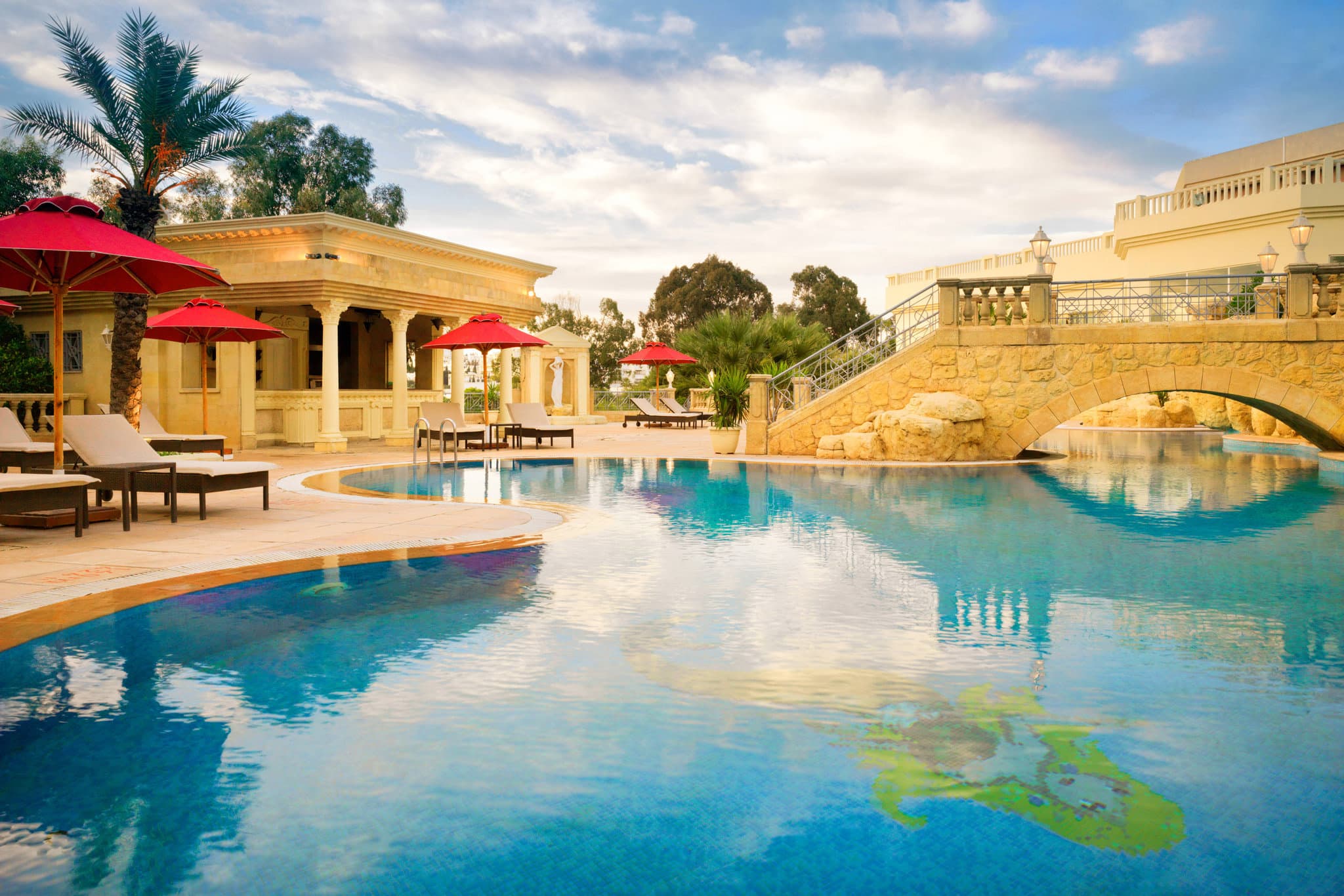
While the allure of a Medina riad is undeniable, there is a specific, cinematic pleasure in observing Tunis from the diplomatic heights of the Sheraton. Built in 1965, the hotel’s concave white façade and dual lobby spiral staircases evoke a Sean Connery-era spy thriller rather than a cookie-cutter corporate stay. It is the city’s social anchor, a place where deals are struck over mint tea. The true cultural flex here is **Walima**. While hotel restaurants are often an afterthought, Walima is a guardian of Tunisian culinary heritage. The *Lablabi* (garlic and cumin chickpea soup) is prepared with a tableside ritual that rivals any French guéridon service, and the Lamb Chorba carries the depth of a home kitchen. Rooms on the standard floors can feel like time capsules, so the move is strictly the **5th-floor Club Level**. Here, the renovated interiors align with the Sheraton Signature Sleep Experience beds, but the real amenity is the private balcony. Watching the sunset turn the white city to gold from this vantage point renders the distance from the city center irrelevant. Service is led by Mouna in Guest Relations, a name whispered among frequent travelers as the ultimate fixer for any request.
“Skip the standard rooms. Book a 'Club Room' on the 5th floor for access to the private lounge and the renovated balconies with the best city views.”
Insider TipAvg. Nightly Rate
141USD

El Mouradi Hotel Africa isn’t here to seduce you with contemporary minimalism or artisanal basketry; it stands as a monolith of function on Tunis’s most theatrical boulevard. This is a retro-corporate fortress, a vertical anchor in a city of horizontal chaos. While the interiors frankly admit to their 2003 vintage—think heavy drapery and furniture that has hosted two decades of diplomats—the trade-off is undeniable strategic supremacy. You are here for the geography, not the thread count. The rooms are soundproofed capsules of silence, offering a stark counterpoint to the frenetic energy of the street below. Request a high floor to turn the Clock Tower (Place du 14 Janvier) into your personal nightlight. Dining is strictly old-school: ‘Le Kilimanjaro’ serves Tunisian stews with zero pretension, but the real insider move is claiming a table at ‘La Brasserie’ on the terrace. Here, over a wood-fired pizza, you watch the capital’s elite and exhaust-choked taxis perform their daily ballet. It lacks a spa, a gym, and modern polish, but as a launchpad for the Medina’s hidden dars, it is unbeatable.
“Skip the lower levels. Demand a room on the 15th floor or higher facing Avenue Habib Bourguiba for a view that makes the dated carpet irrelevant.”
Insider TipAvg. Nightly Rate
52USD

It requires a certain architectural confidence to build a Medina mansion twenty minutes from the actual Old City, but The Residence Tunis pulls off this sleight of hand with regal indifference. Located in Gammarth, this property operates less like a beach resort and more like a masterclass in Arab-Andalusian theatrics. The lobby, a cavern of arches and ivory stone, sets a tone that is less 'check-in' and more 'royal audience.' While the rooms—dressed in muted creams and mahogany—betray a slight vintage patina compared to Tunis’s newer glass towers, they offer a comfort that feels established rather than engineered. The real draw, however, lies in the 3,500 sqm Thalasso Spa, a colossal homage to ancient Roman baths where the indoor seawater pool sits beneath a dome so majestic it demands backstroke. Dining here is a serious pursuit. 'El Dar' is the property’s beating heart, meticulously recreating the intimacy of a downtown private mansion. The signature 'doigt de poulpe' (octopus salad) is sharp, tender, and devoid of pretension. For a pivot to the East, 'Li Bai' serves a Wok-Fried Beef Tenderloin that makes the distance from Beijing irrelevant. Service is the final ace—intuitive, swift, and warm enough to make you forget the taxi ride to Sidi Bou Said. **Verdict**: A grand dame that trades modern flash for timeless, thalasso-soaked gravity.
“Skip the standard hotel bar; request a table in the El Dar courtyard just before sunset. The lighting against the tilework creates the property's most cinematic moment.”
Insider TipAvg. Nightly Rate
252USD
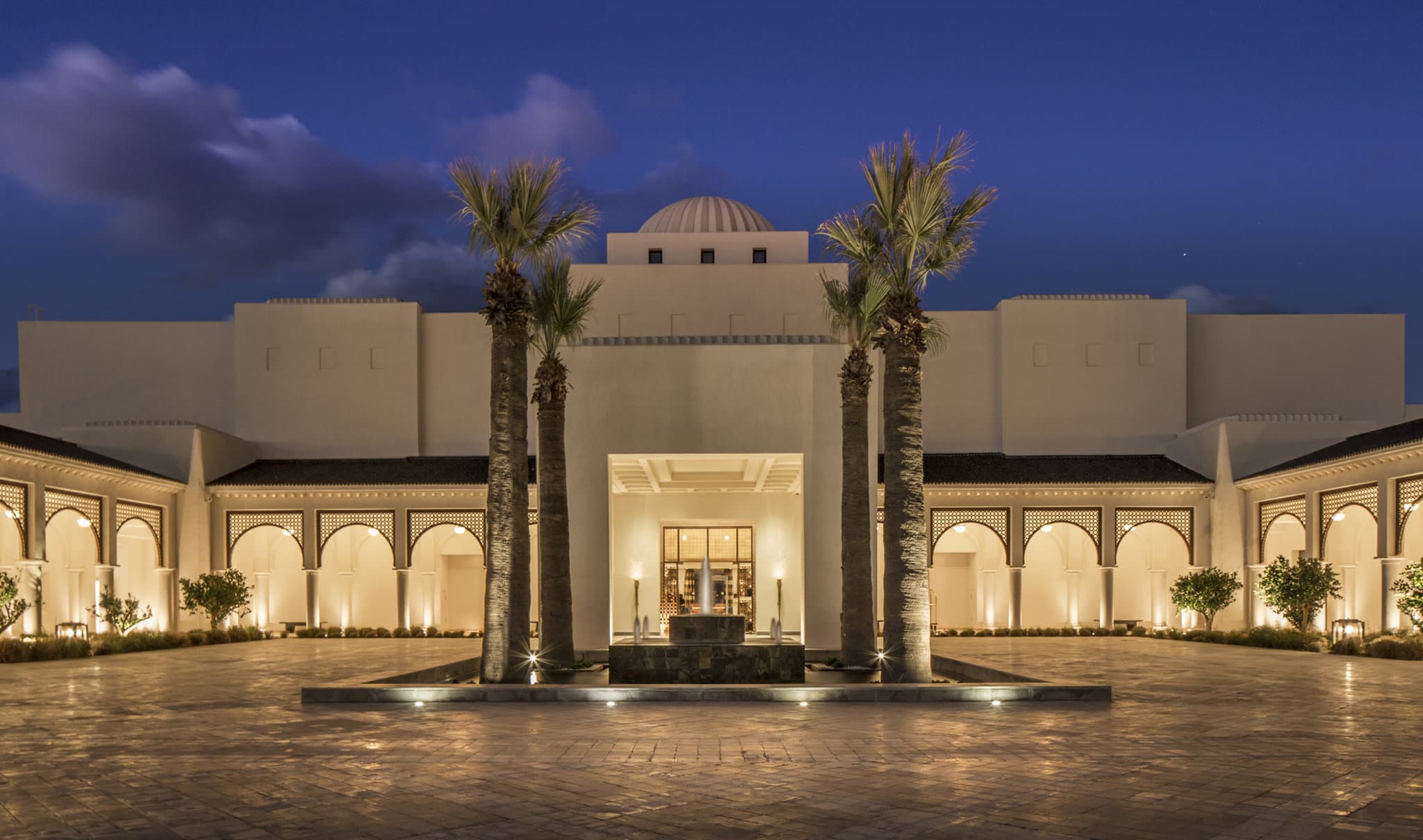
While the historic Medina turns inward, protecting its secrets behind heavy doors, Four Seasons Tunis projects its opulence outward toward the Mediterranean. This isn't just a beach resort; it is a brutalist-meets-Arabesque architectural statement where tiered white walkways cascade like a futuristic amphitheater. The lobby sets the tone immediately—not with generic floral arrangements, but with Yahya’s imposing gold conical sculpture, a sharp nod to local craftsmanship. The rooms master the art of tactile luxury. Heated marble floors redeem the stone’s coolness during chilly coastal mornings, and the L'Occitane amenities offer a familiar, herbal grounding. It’s in the dining, however, that the hotel flexes its cosmopolitan muscles. Skip the standard club sandwich; the Langoustine ravioli at The CREEK (the hotel’s ‘Bistronomy’ concept) is a technical marvel, while the Octopus Frik Soup at Azur delivers the genuine, spicy kick of the capital’s streets, served on significantly finer porcelain. Service operates on ‘Riviera time’—warm and personalized, but occasionally leisurely enough to test a New Yorker’s patience, especially at breakfast. Security at the gate is surprisingly porous for the region, creating a relaxed, if slightly unnerving, open-door vibe. Yet, once you are scrubbed raw in the Guerlain Spa’s hammam, the outside world feels entirely theoretical.
“Book a ‘Premier Sea-View Room’ on the upper floors of the main building; the lower garden rooms sacrifice privacy for proximity to the pool.”
Insider TipAvg. Nightly Rate
300USD

It is a sprawling seaside fortress in Gammarth, a beast of a building that feels a world away from the intimate, hushed dars of the Medina. Yet, slip past the cavernous, echoing lobby and you locate the *Dar El Hana* restaurant. Here, the resort attempts a convincing dialogue with history. It is a pocket of intricate *zellige* tilework and scalloped arches that mimics the secret courtyards of the Old City, serving French-Italian plates under a ceiling that demands you look up. The experience is a strange, fascinating dissonance: seeking the 'secret garden' aesthetic within a facility that screams mass tourism. Let’s be clear—this Grande Dame is showing her age. The 37-square-meter rooms are vast but weary, possessing a faded patina that some might call 'tired' rather than 'historic.' The towel policies at the aquapark are militant, and the recurring hum of maintenance issues suggests a property coasting on its location. However, the *Maure Café* offers a genuine redeemable moment. Sinking into a low bench with a mint tea and a hookah, surrounded by traditional ceramics, you can almost ignore the thrum of the water slides outside. It isn't the quiet perfection of a boutique Riad, but for travelers demanding direct beach access *and* a taste of the Moorish aesthetic, it is a functional, if slightly faded, compromise.
“Bypass the fees for the indoor pool entirely. Instead, time your visit to the 'Maure Café' for sunset; it is the only spot where the chaotic resort energy fades into authentic Tunisian chill.”
Insider TipAvg. Nightly Rate
50USD

If the Medina’s sensory overload is a rich, chaotic espresso, the Mövenpick Hotel Gammarth is the necessary glass of water served alongside it. Perched on the glistening curve of the Bay of Gammarth, this property eschews the high-rise sterility often found on the coast for a low-slung, whitewashed aesthetic that mirrors the indigo-studded charm of nearby Sidi Bou Said. It is a visual exhale. The vibe here steers towards ‘sun-drenched serenity,’ though the service can occasionally drift into a dreamlike state—patience is your best accessory at the front desk. However, frustrations dissolve quickly in the **Presidential Suite**, freshly crowned ‘Tunisia’s Leading Hotel Suite 2025’ by the World Travel Awards. For a more grounded luxury, the Beachfront Executive rooms offer terraces that practically kiss the sand. Culinary pursuits should bypass the international buffet’s slow coffee queues in favor of **Abou Nawas**, where the Tunisian cuisine borders on Michelin-worthy; the *Octopus Kamounia* is a revelation of spice and texture. Afterwards, retreat to the **Kallisti Spa** for a scrub using fragrant *Cinq Mondes* products. It’s not a secret Dar, but it’s the modern sanctuary you didn’t know you needed.
“Skip the standard sea view; request a ground-floor Executive Room. You get a private terrace that opens directly onto the manicured lawns leading to the beach—perfect for a private sunrise.”
Insider TipAvg. Nightly Rate
179USD