No. 01
2650 VIRGINIA AVENUE NW WASHINGTON DC 20037 Washington612 verified reviews
8
.0
Bitvoya Edit
Layering imagery, place, and detail before the page opens.
Washington, D.C. is a city where power and history are etched into stone, but its most intriguing stories are often found within walls that have changed their purpose. This collection, 'Vaults & Post Offices,' celebrates the adaptive reuse of the capital's most storied structures. We journey from the bustling Penn Quarter, where the magnificent Old Post Office has been reborn as the Waldorf Astoria, to the cobblestone charm of Georgetown, where a former incinerator now houses the Ritz-Carlton. These are not merely hotels; they are architectural metamorphoses where bank vaults turn into bars at Riggs and government tariff bureaus become vibrant retreats at the Kimpton Hotel Monaco. Experience the capital's legacy through a lens of luxury and preservation.
Staying in Washington D.C. is an immersion into American history, but choosing a property from our 'Vaults & Post Offices' collection elevates that experience to a narrative journey. Adaptive reuse architecture in D.C. allows guests to sleep in spaces that once managed the nation's wealth, mail, and trade. Unlike standard luxury towers, these hotels—like the Riggs Washington DC (formerly the Riggs National Bank) or the Waldorf Astoria (the Old Post Office)—offer soaring ceilings, intricate crown moldings, and solid marble foundations that modern construction rarely replicates. It is a choice for travelers who value character, storytelling, and the romance of the Gilded Age blended with contemporary comfort.
When booking these architectural gems, expect a blend of monumental grandeur and quirky details. The lobbies are often massive, reflecting their public service origins. At properties like The Jefferson or Sofitel Washington DC Lafayette Square, expect Beaux-Arts elegance combined with French flair. However, be aware that historic preservation sometimes means unique room layouts; no two rooms may be exactly alike. Amenities often play on the history—think vault bars, mail-chute detailing, or speakeasy-style lounges that nod to the building's past lives.
The Waldorf Astoria Washington DC is housed in the historic Old Post Office building on Pennsylvania Avenue, retaining its iconic clock tower and grand atrium.
Riggs Washington DC is located in the former Riggs National Bank building. It features a bar located inside the original bank vault and preserves the Romanesque Revival architecture.
Yes, these properties are among the most luxurious in the city, offering 5-star amenities like The Ritz-Carlton Georgetown and The Jefferson, blending historic charm with modern high-end service.
Explore our complete curated list of luxury accommodations, from boutique hideaways to grand dames.
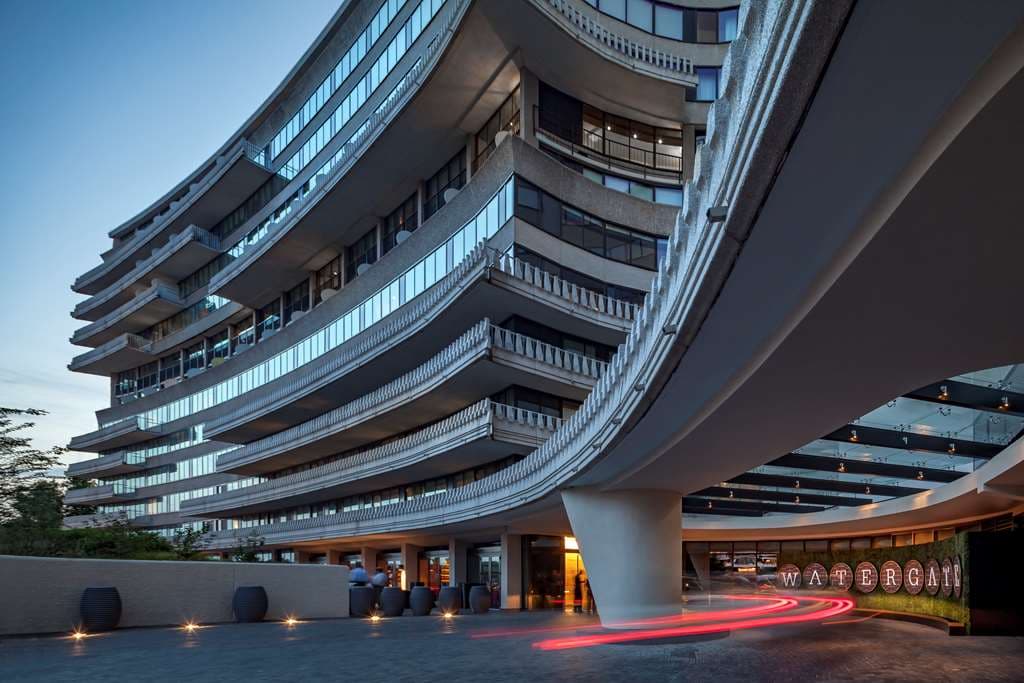
Explore All Washington HotelsIt is impossible to step into The Watergate Hotel without scanning for the ghosts of the Nixon administration, yet what you find is the spirit of Luigi Moretti finally getting his due. This isn’t just a crime scene; it’s a masterclass in revitalized brutalism. The hotel’s $200 million renovation has polished Moretti’s controversial concrete curves into a retro-modern playground that feels more like a Bond villain’s lair than a D.C. institution. The lobby, reimagined by Ron Arad, is a showstopper—dominated by a wavy brass reception desk and the hypnotic, illuminated bottle wall of The Next Whisky Bar. Upstairs, the guest rooms lean hard into the mid-century aesthetic with grey and chrome palettes, though the real luxury lies in the bathrooms, clad in floor-to-ceiling Zebrano marble and stocked with La Bottega amenities. Dining is a mixed affair. Kingbird offers a competent Wagyu Burger, but the real draw is the atmosphere—political glamour served with a side of eavesdropping. The rooftop, Top of the Gate, commands the city’s best sunset views over the Potomac, best enjoyed with a Sunset Spritz in hand. However, for a property claiming five stars, the service can feel surprisingly porous; expect occasional lags that wouldn't fly at the Ritz. Ultimately, you stay here for the narrative and the architecture, not the white-glove perfection.
“Skip the standard rooms and request a 'River View' specifically with a balcony; the architectural curvature creates massive outdoor spaces perfect for morning coffee.”
Insider TipAvg. Nightly Rate
183USD
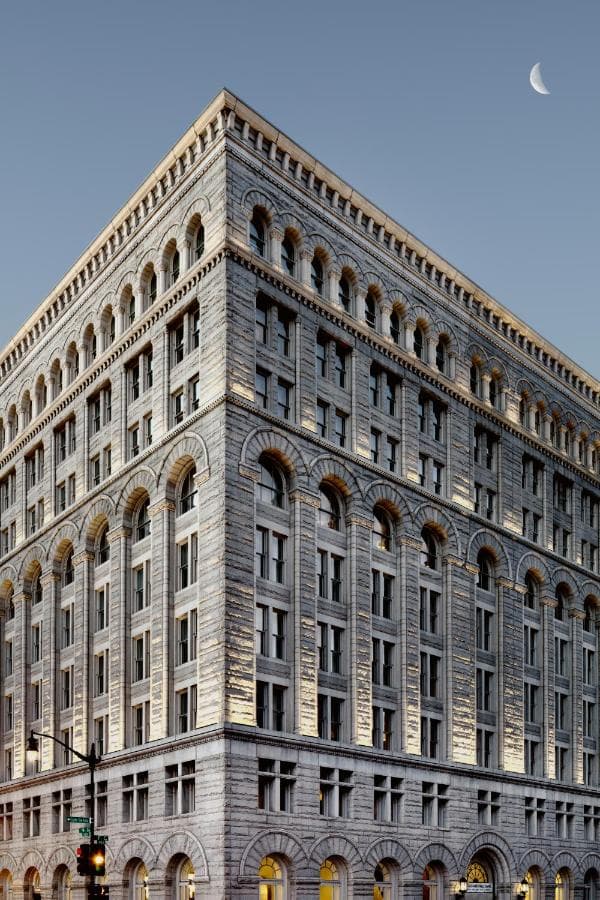
Washington D.C. hotels often suffer from 'beige beltway' syndrome, but the Riggs—housed in the 1891 Romanesque Revival 'Bank of Presidents'—is a liquidity injection of style. Recently awarded a **Michelin One Key**, this property trades lobby lobbyists for a vibe that’s part Wes Anderson, part Wall Street power broker. The lobby, dominated by towering Corinthian columns, sets a high theatrical bar. Upstairs, the rooms avoid the sterile 'Senator’s suite' aesthetic for something moodier and more residential. Yes, the lighting is aggressively dim—you might need your phone to find your socks—but the **D.S. & Durga** amenities, oak floorboards, and heavy velvet curtains offer a tactile luxury that feels earned. The property's prime asset is **Silver Lyan**. Tucked inside the original 50-ton steel vault, this isn't just a gimmick; it was named Food & Wine’s Best Hotel Bar in the U.S. Order the *Silver Service Martini* or the high-brow Jello shots; it’s the only time you’ll feel cool drinking in a bank. While it lacks a pool and spa, the Riggs offers a currency most D.C. hotels lack: genuine character.
“Skip the standard King; request a **Corner Studio** for dual-aspect views of Penn Quarter. Also, **Silver Lyan** reservations open 30 days out—book precisely then, or you’ll be locked out of the vault.”
Insider TipAvg. Nightly Rate
269USD
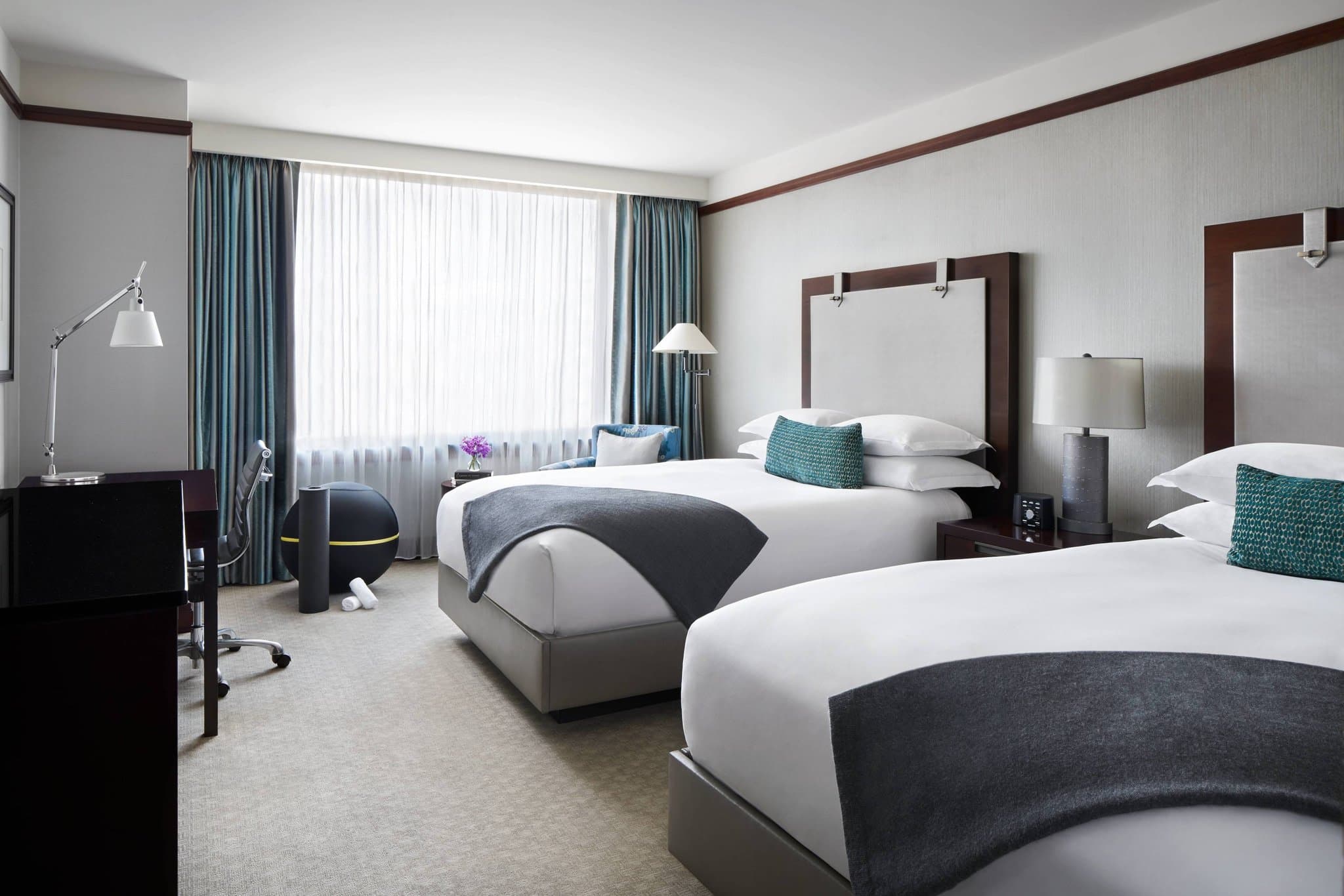
Forget the chandelier-laden lobbies you associate with the brand; The Ritz-Carlton Georgetown creates its own drama. Housed in a 1932 industrial incinerator, the property trades marble for exposed red brick and a 130-foot smokestack that anchors the skyline. It’s an architectural pivot—from trash to treasure—that feels decidedly more 'downtown' than 'DC'. The 86 rooms are quiet, hushed by the thick masonry, though the interiors are admittedly showing their age. While the 400-thread count Frette linens and Asprey purple-water amenities remain flawless, the beige-on-beige palette feels due for a refresh. However, what it lacks in modern edge, it makes up for in intimate service. The staff deliver the legendary 'Ladies and Gentlemen' ethos with a warmth often lost in larger properties. Dining is the highlight: Degrees Bistro serves ricotta pancakes that are rightfully local legends, while The Living Room offers a nightly ritual of butler-passed s'mores by the wood-burning fireplace—a nostalgic nod to the building's fiery past. With no pool on-site, the boutique spa (featuring ESPA products) is your only aquatic escape, but the intimate scale makes the entire hotel feel like a private club.
“Ask for the 'Chimney Stack Room' to sleep inside the base of the historic smokestack—it’s the hotel’s most unique architectural footprint.”
Insider TipAvg. Nightly Rate
596USD
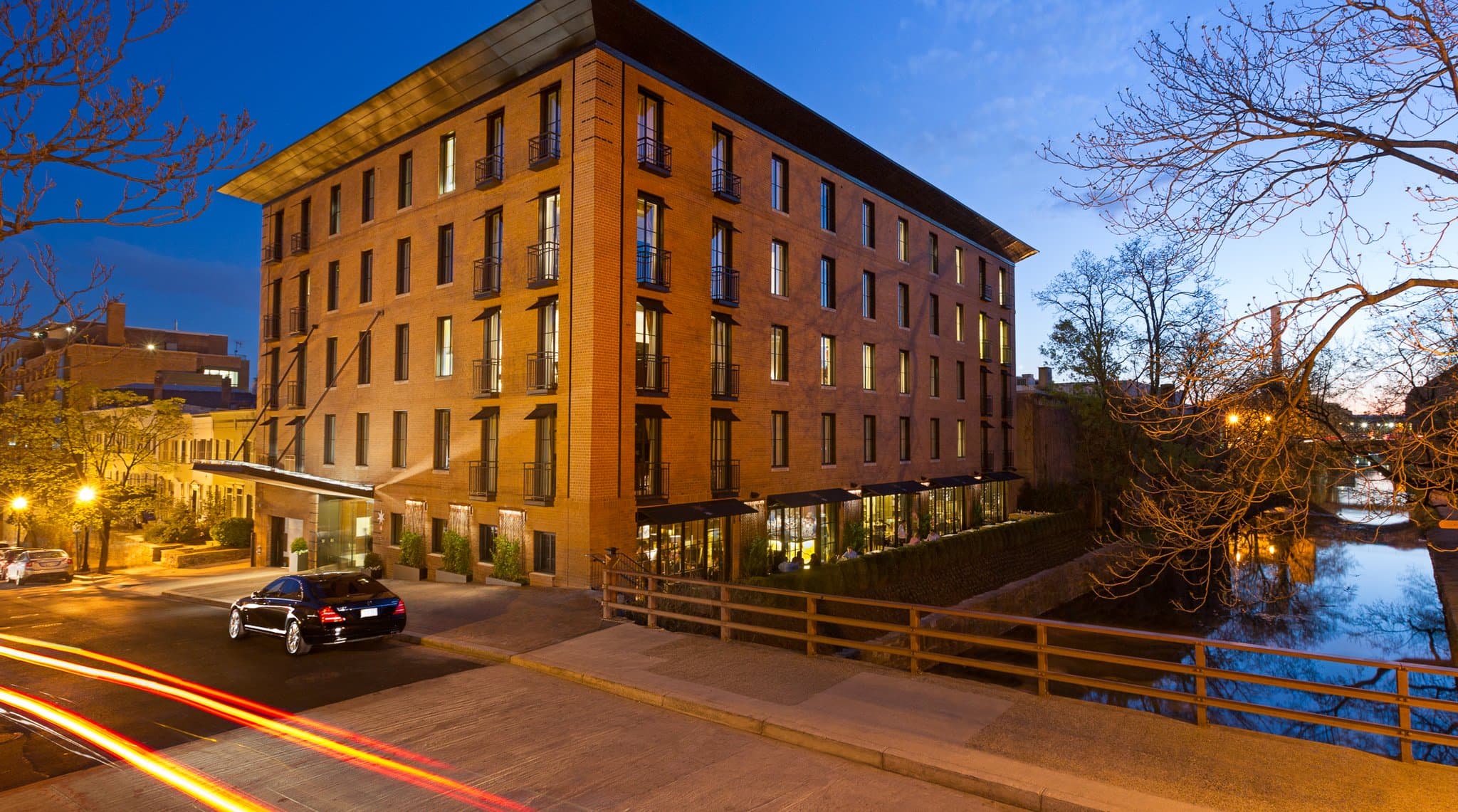
While downtown D.C. trades in marble pillars and Beaux-Arts bombast, the Rosewood Washington, D.C. plays a subtler hand in Georgetown. Housed in a converted red-brick office building along the C&O Canal, this property feels less like a hotel and more like the private residence of a diplomat with impeccable taste. The transformation is a masterclass in adaptive reuse: the industrial ‘bones’ of the structure now frame a lobby grounded by parquet flooring sourced from a French châtea and accented with Hermès leather drawer pulls—details that whisper rather than shout. Upstairs, the 55 rooms and suites reject the beige beltway standard for bold gem tones and floor-to-ceiling windows that pull the canal’s weeping willows inside. The real flex, however, is the privacy. Service here is telepathic, appearing only when summoned via the in-room app. Dining is headlined by Wolfgang Puck’s CUT, where the 35-day dry-aged Tomahawk is less a meal and more a ceremony, but the crown jewel is the rooftop. Here, an intimate infinity pool and the CUT Above bar offer a sightline to the Washington Monument that feels illicitly exclusive. It’s pricey, and the ‘industrial’ layout means some quirks in room shapes, but for those holding the recently awarded Two Michelin Keys, perfection is the baseline.
“Skip the standard suites and book one of the six Townhouses. They offer private street entrances and a residential address, perfect for avoiding the lobby paparazzi entirely.”
Insider TipAvg. Nightly Rate
543USD
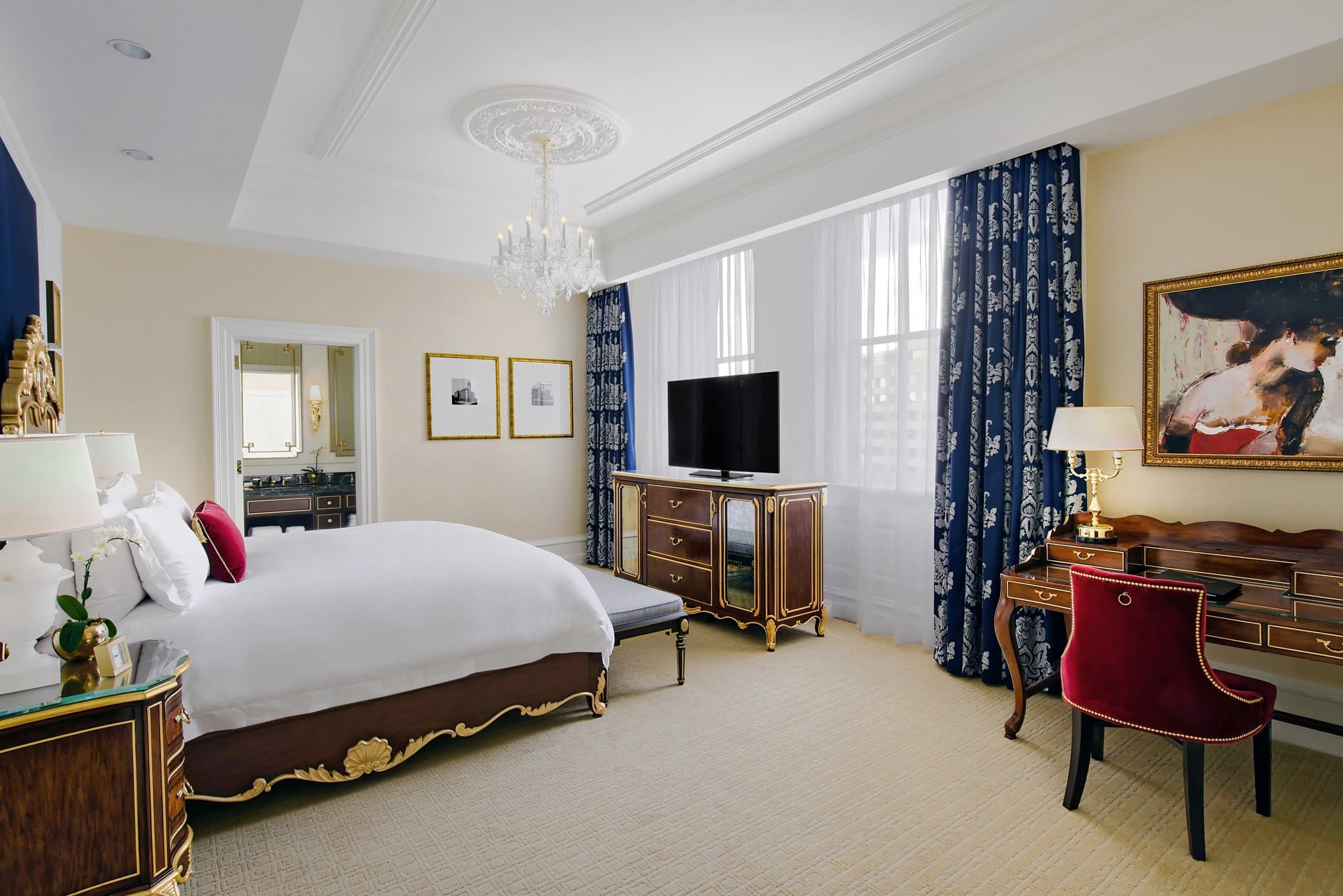
Standing in the cortile of the Waldorf Astoria Washington DC, one doesn’t so much check in as arrive. The sheer verticality of the 1899 Old Post Office’s nine-story Romanesque Revival atrium is a rebuke to the city’s height limits—a cathedral of commerce where the whispers of power echo off original ironwork. While the building’s previous tenant leaned into gold-leaf excess, the Waldorf has tempered the mood to a sophisticated, slate-grey hush. Upstairs, the guest rooms are bunkers of silence, protected by feet-thick masonry. The beds are firm, dressed in crisp linens that feel substantial, not just expensive. Bathrooms are cavernous, though the rationing of the Aesop amenities—a single set for both tub and shower—is a curious quirk in a hotel charging these rates. Downstairs, the culinary axis is formidable. At The Bazaar, José Andrés serves a 'Philly Cheesesteak' that is less a sandwich and more a theological argument for Wagyu and airbread. Meanwhile, Sushi Nakazawa delivers an omakase so precise it feels like surgery. Service can be a beat slow—a common D.C. ailment—but when the valet remembers your name before you’ve exited the cab, you forgive the lag. This isn't just a hotel; it's the capital's new living room.
“Request a Grand Corner Room for a direct line of sight to the Washington Monument from your bed—a view that makes the price tag digestible.”
Insider TipAvg. Nightly Rate
525USD
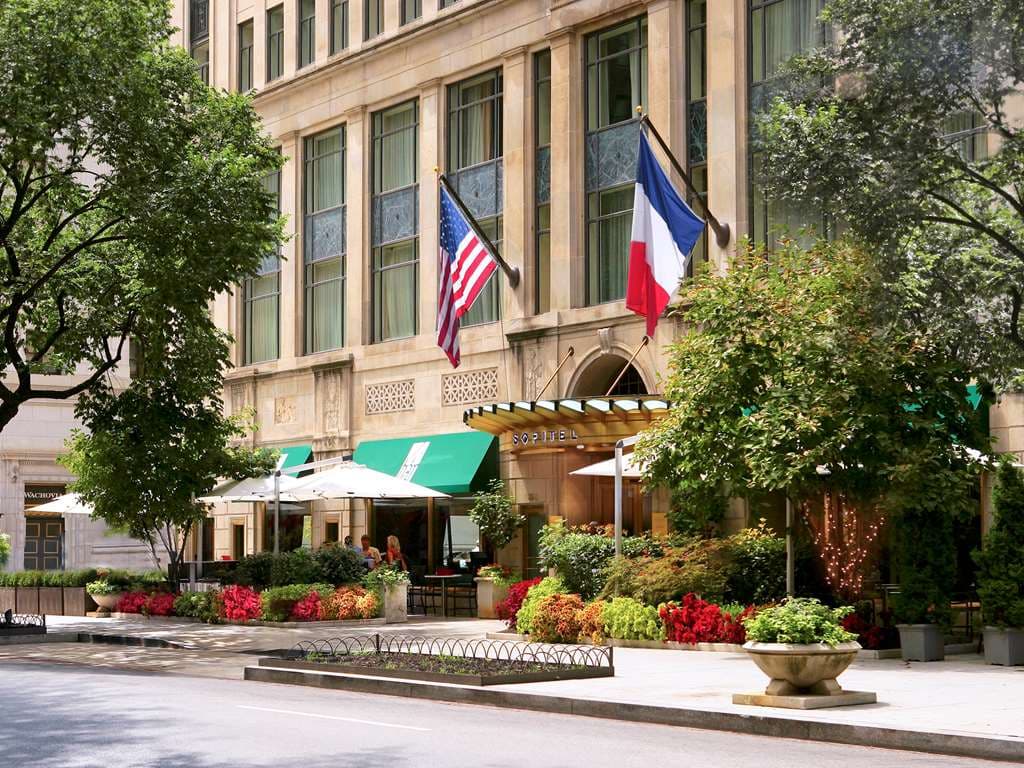
If the walls of the historic Shoreham Building could talk, they’d likely switch from the dry whispers of 1929 finance to the clink of champagne flutes. Occupying a prime corner of Lafayette Square, the Sofitel is a masterclass in architectural repurposing, swapping banking vaults for the velvet banquettes of a lobby that feels more Rive Gauche than K Street. Check-in sets the tone: diplomatic efficiency softened by genuine French welcomes (bonjour, indeed). The rooms are startlingly generous for a city that usually trades space for proximity to power. Starting at 34 square meters, they feature the brand’s signature MyBed—a cloud-like construction that makes 6 a.m. briefings unforgivable—and bathrooms stocked with Balmain amenities that you will absolutely want to steal. Dining at Opaline Bar & Brasserie is the hotel’s social anchor. Amidst saffron chairs and mirrored columns, the kitchen delivers a Ratatouille that respects its Provençal roots, though the Opaline Burger is the surreptitious favorite among the lunch-hour lobbyists. While the public spaces are showing faint laugh lines of age, and the 'Urban Experience Fee' remains a bureaucratic annoyance, the Sofitel remains a sleek, cosmopolitan alternative to the capital's stuffier grand dames.
“Ask for a room ending in '06' on higher floors for the best sightlines of Lafayette Park and a sliver of the White House.”
Insider TipAvg. Nightly Rate
250USD
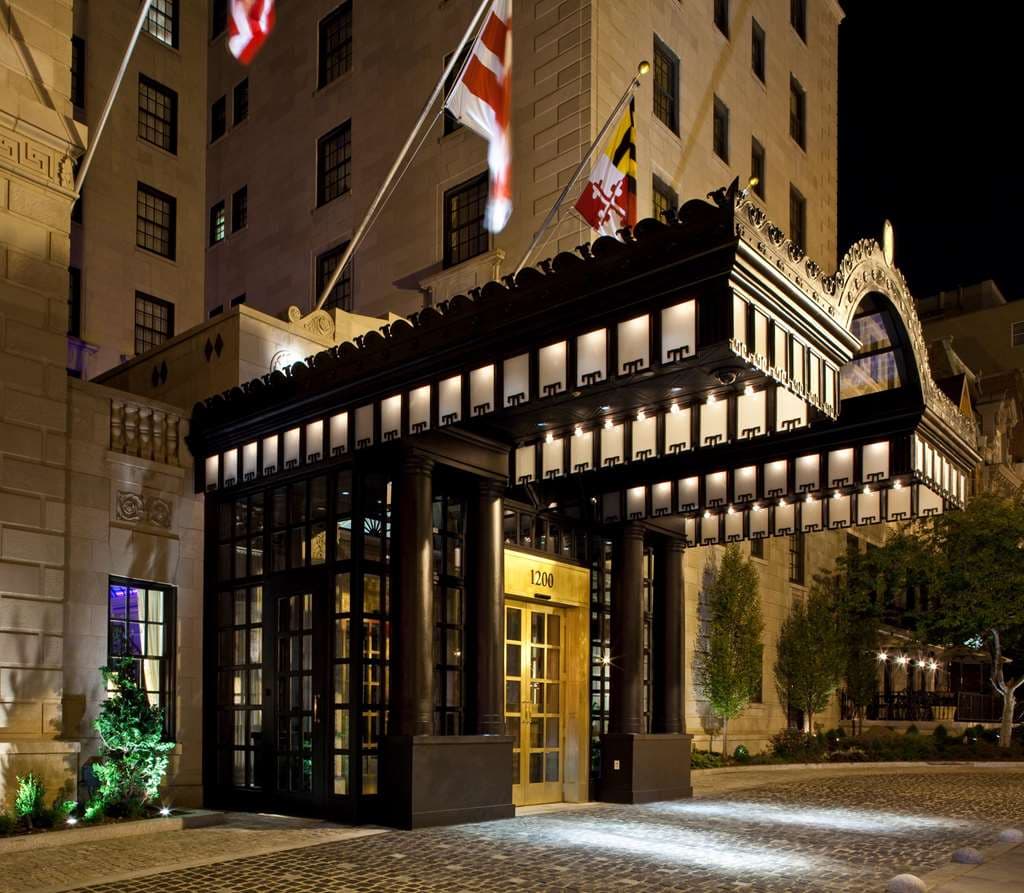
If Washington’s architectural metamorphoses usually involve the cold echoes of former banks or post offices, The Jefferson offers a warmer, more domestic origin story. Erected in 1923 as a Beaux-Arts apartment house for the social elite, this property hasn’t lost that 'private residence' frisson—you feel less like a transient guest and more like a trusted confidant. The lobby’s design pivots around the stunning 1923 stained-glass skylight in The Greenhouse, a venue where the 'Duo From The Sea' (lobster and caviar) justifies the steep check. Upstairs, the experience is unabashedly intimate. While entry-level rooms famously trade views for brick walls (a known quirk of the historic footprint), the interiors are a masterclass in discreet intellectualism, featuring 400-thread count linens and Monticello-inspired details. Service is where the hotel earns its recent Two Michelin Keys (2024); the staff deploy 'Red Flyer' wagons for toddlers with the same professional gravity as they pour a signature Quillivardier cocktail in the amber-lit Quill bar. It’s not for the 'see-and-be-seen' crowd, but for those who prefer their luxury with a side of privacy and a 24-hour Peloton session.
“Skip the standard view request and ask for a room near the 'Book Room' for easy access to the hotel’s curated library and fireplace.”
Insider TipAvg. Nightly Rate
425USD
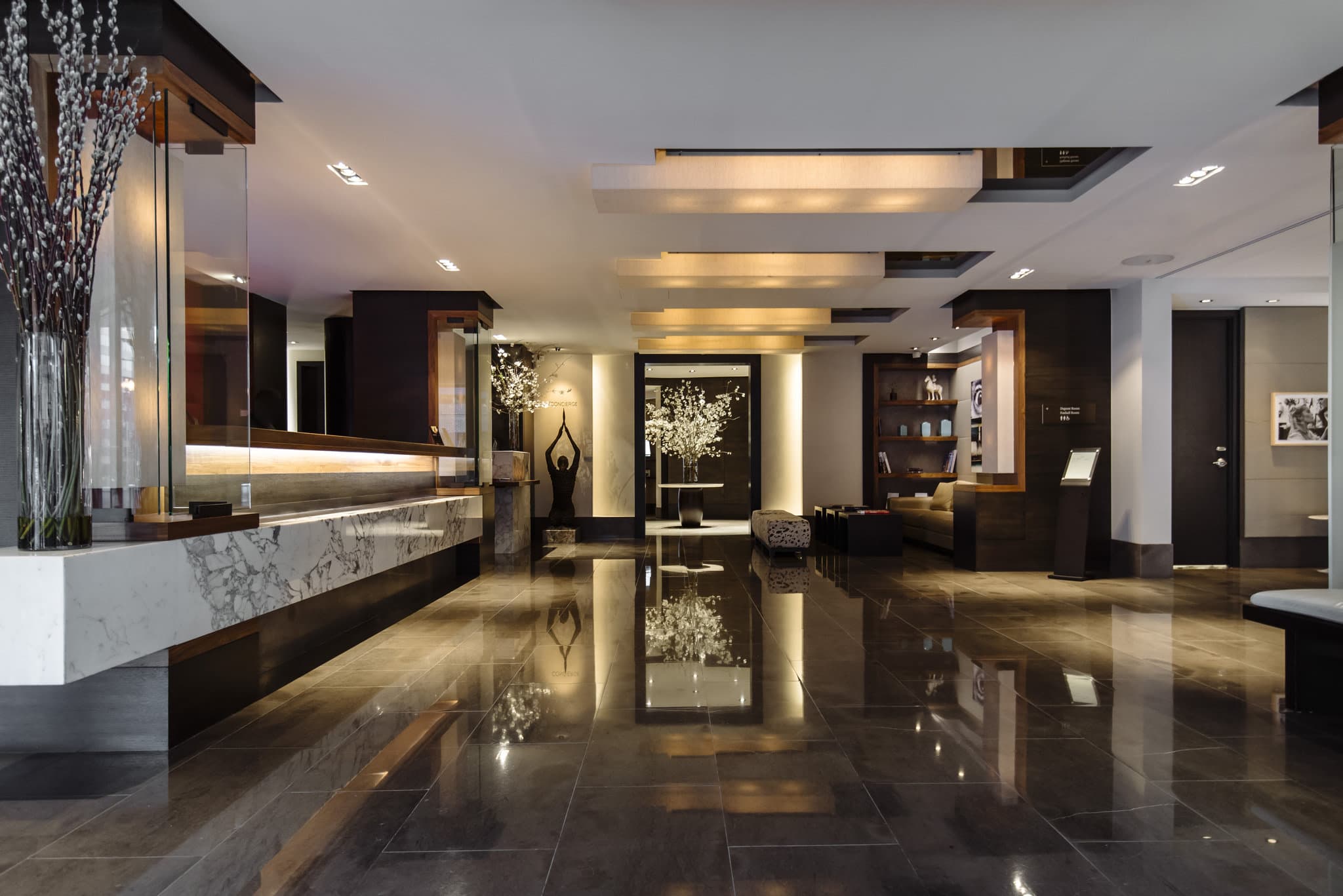
It takes a specific kind of vision to look at a utilitarian 1940s apartment block and see the potential for a ‘Mad Men’ style fever dream. Yet, that is precisely the alchemy achieved at The Dupont Circle. While the limestone façade remains stoic, the interiors—particularly the Martin Brudnizki-designed public spaces—vibrate with a seductively cosmopolitan energy. The lobby and dining areas are a study in maximalism: mid-century geometric floors, brass accents, and rich jewel tones that banish any institutional memory. Upstairs, the residential roots serve the guest well; rooms are uncommonly spacious for D.C. Expect heated marble floors, crisp Frette linens, and Malin+Goetz amenities that signal serious intent. A word of warning to the modest: some bathrooms feature glass walls that offer more transparency than a congressional hearing. Downstairs, The Pembroke is the main event. Skip the steak and order the Dover Sole Meunière, filleted tableside with theatrical flair. Afterward, retreat to Doyle, the bar where a giant bronze flamingo punch bowl holds court, and the Smash Burger is the best nightcap in town. It is sophisticated, slightly loud, and entirely unapologetic.
“Request Table No. 7 at The Pembroke for the best panoramic views of the circle, or book a Level Nine suite for private elevator access and terraces.”
Insider TipAvg. Nightly Rate
200USD
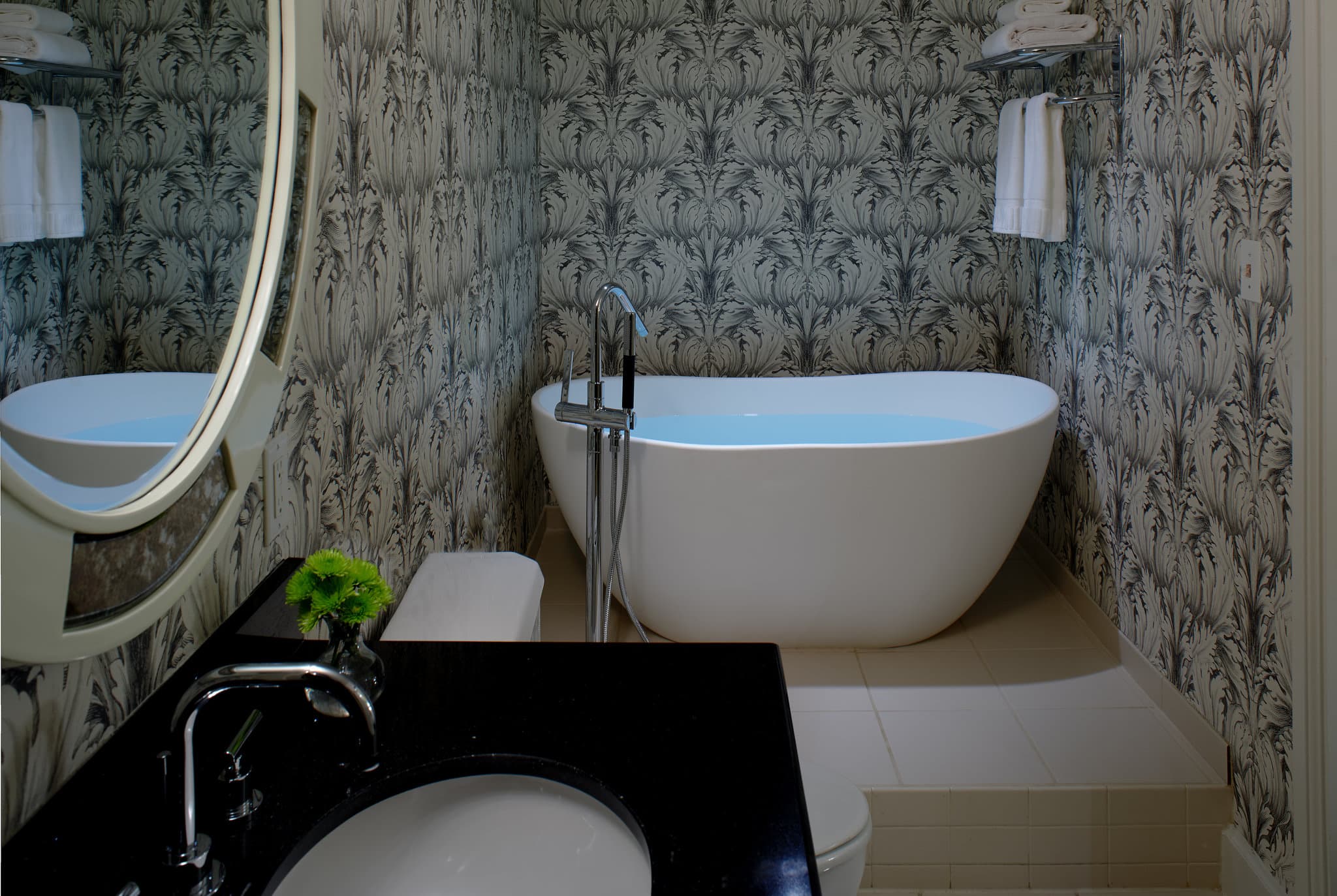
If the 1839 General Post Office decided to loosen its tie and pour a stiff drink, it would look exactly like the Kimpton Hotel Monaco. Occupying a Robert Mills-designed National Historic Landmark in Penn Quarter, this property rejects the beige neutrality typical of D.C. hotels for something far louder. The entrance is a collision of eras: original Greek Revival columns and soaring marble corridors give way to a lobby that feels less like a waiting area and more like a film-noir living room. Upstairs, the guest rooms are an exercise in eclectic maximalism. You aren’t sleeping in a box; you’re under 20-foot vaulted ceilings, staring down a five-foot lion’s head medallion mounted above the bed. The Frette linens are crisp, and the Atelier Bloem amenities add a necessary botanical edge, though the absence of an in-room coffee maker (unless requested) is a baffling omission for a city that runs on caffeine. Downstairs, 'Dirty Habit' anchors the experience. This isn't a stiff hotel restaurant; it’s a dark, moody venue centered around a courtyard equipped with fire pits that feels illicit in the best way. Between the hosted evening wine hour and the pet-friendly-without-fees policy, the Monaco prioritizes personality over polish. It’s not for the traveler seeking quiet anonymity; it’s for the one who wants to sleep inside a piece of living, breathing, and slightly rebellious history.
“Request an interior courtyard-facing room on the 3rd floor or higher. The street-facing rooms have views, but the single-pane historic windows let in the noise of 7th Street's sirens.”
Insider TipAvg. Nightly Rate
141USD
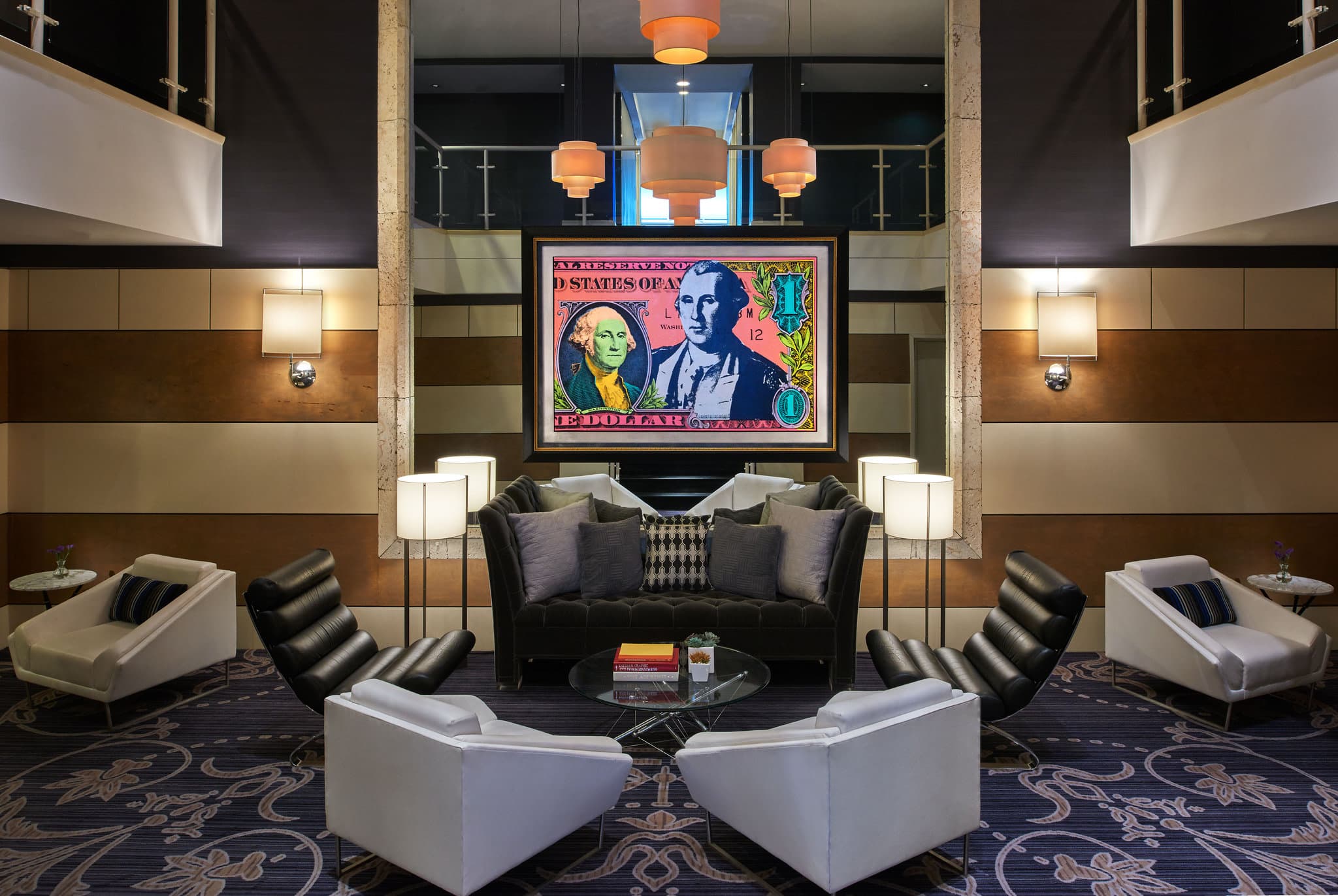
Forget the stuffy, mahogany-laden lobbies of old D.C.; the Kimpton George is where the cool kids (and the cooler Congresspeople) actually stay. Housed in a converted office building mere steps from Union Station, this hotel masters the art of the "un-hotel." The vibe is less "monument" and more "modern art gallery," anchored by Steve Kaufman’s subversive $1 bill mural in the lobby. Rooms are a clever study in functionality meets wit—think Frette linens you’ll want to steal, animal-print robes that demand a selfie, and a handwritten script accent wall (yes, that’s the Declaration of Independence) that adds just enough gravitas. Dining is not an afterthought here. Bistro Bis is a legitimate power spot; order the Onion Soup Les Halles and the Steak Frites, and keep your ears open—the booth next to you is likely drafting legislation. While the lack of a pool is a miss, the nightly wine hour (5–6 PM) and the Peloton-equipped gym soften the blow. It’s sophisticated without taking itself too seriously—a rare commodity in this town. **Verdict**: The perfect base for the traveler who wants to be close to the action but refuses to be boring.
“Ask for an odd-numbered room on a high floor for the best chance of a Capitol dome view, making that guest amenity fee feel slightly more justifiable.”
Insider TipAvg. Nightly Rate
142USD