No. 01
No 10 12 Longhushan Road Zengc. Xiamen Fujian ChinaXiamen394 verified reviews
9
.8
Bitvoya Edit
Layering imagery, place, and detail before the page opens.
Xiamen, a coastal jewel in Fujian province, is not just a seaside destination; it is the spiritual home of Gongfu tea culture. For the discerning traveler, the city offers a unique blend of urban sophistication and ancient tranquility. Our curated collection focuses on properties that embody this 'Tea-Steeped Zen,' primarily located along the scenic Huandao Road and the vibrant Siming District. From the sanctuary-like atmosphere of Lohkah Hotel & Spa to the soaring heights of Conrad Xiamen overlooking Gulangyu Island, these retreats offer bespoke tea ceremonies and minimalist aesthetics. Whether you seek the lush gardens of Seaview Resort or the modern elegance of Joyze Hotel, prepare to steep yourself in pure relaxation.
Xiamen is distinct among Chinese coastal cities for its deep-rooted connection to Oolong and Tieguanyin tea culture. Unlike typical beach destinations, luxury here is defined by the slow, deliberate art of the tea ceremony (Gongfu Cha). Hotels like Lohkah Hotel & Spa and Lohkah Isle have architecturally integrated this philosophy, offering spaces that prioritize silence, natural materials, and water features. The high-end hospitality sector in Xiamen, exemplified by the Waldorf Astoria Xiamen and Marco Polo Xiamen, seamlessly blends this heritage with modern opulence, creating a 'Zen Retreat' atmosphere even within the city center.
Expect more than just a room. These tea-steeped retreats offer curated experiences. At Lohkah Hotel & Spa, guests are often greeted with a welcome tea ritual sourcing leaves from local Fujian mountains. Interior designs heavily feature wood, stone, and subdued lighting to foster a meditative state. Spas in hotels like the Waldorf Astoria incorporate tea polyphenols into treatments. Whether it's the personalized butler service at Lohkah Isle or the sea-facing tea lounges at Seaview Resort, the focus is on 'Jing' (stillness) and restoring balance to the mind and body.
Huandao Road is the best area for quiet luxury. Resorts like Seaview Resort Xiamen and Lohkah Hotel & Spa are located here, offering expansive gardens and beach access away from the busy city center.
Yes, properties like Lohkah Hotel & Spa and Waldorf Astoria Xiamen specialize in Fujian tea culture, offering in-room Gongfu tea sets and dedicated tea lounges with tea masters.
Absolutely. Conrad Xiamen offers a 'sky-high' sanctuary. Its rooms feature minimalist luxury and panoramic sea views that provide a sense of detachment and peace above the urban bustle.
Explore our complete curated list of luxury accommodations, from boutique hideaways to grand dames.
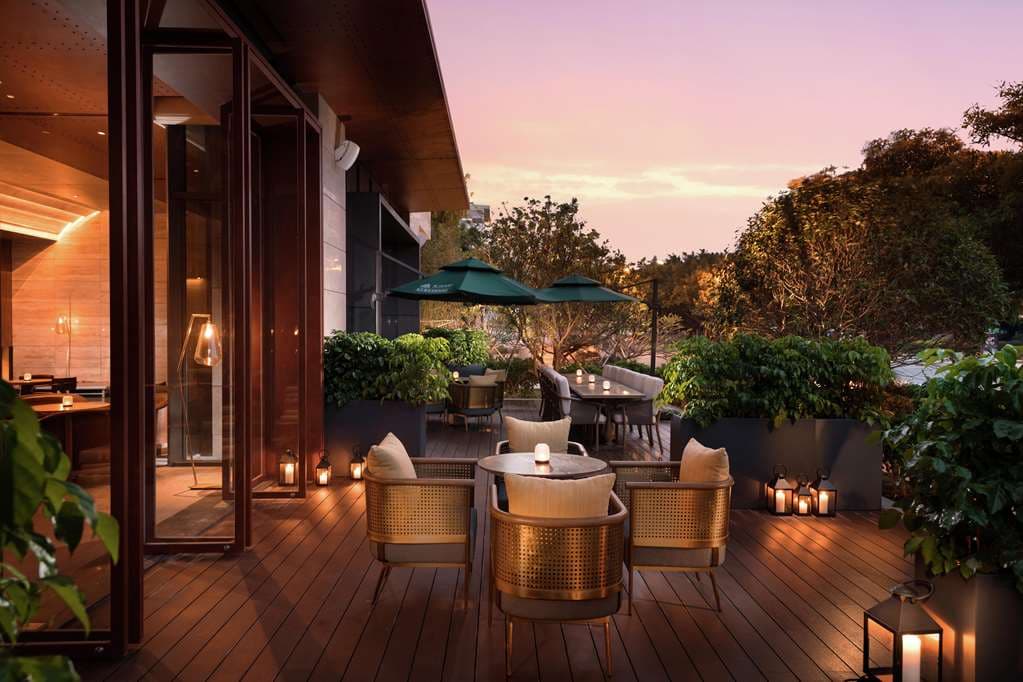
Explore All Xiamen HotelsForget the corporate sterility of the central business district. Joyze Hotel is a geometric anomaly in Zengcuo'an, a former fishing village now overrun with street food tourists. The arrival is a disorienting trip through winding alleys, but once inside, the chaos dissolves. Designed by Cheng Chung Design, the lobby feels less like a contemporary hotel and more like a gallery installation, anchored by a "floating" reception desk and a chandelier that practically demands a dedicated Instagram post. The rooms are a study in Minnan minimalism—think exposed stone accents meeting Japanese smart toilets and deep soaking tubs. A fair warning for friends traveling together: the open-plan bathrooms prioritize aesthetics over modesty. It’s the hardware that lands the rating here: Technogym equipment for the disciplined, and for the hedonists, the "Five Elements" spa which utilizes a proper sauna-steam circuit. Dinner at TASTE is surprisingly sharp for a hotel venue; the a la minute oysters and shellfish are shucked with surgical precision. It’s polished, precise, and thankfully, removed from the fray.
“Skip the crowded public sands and head straight to the rooftop infinity pool at sunset. The elevation gives you a rare, quiet vantage point over the village rooftops without the noise.”
Insider TipAvg. Nightly Rate
92USD
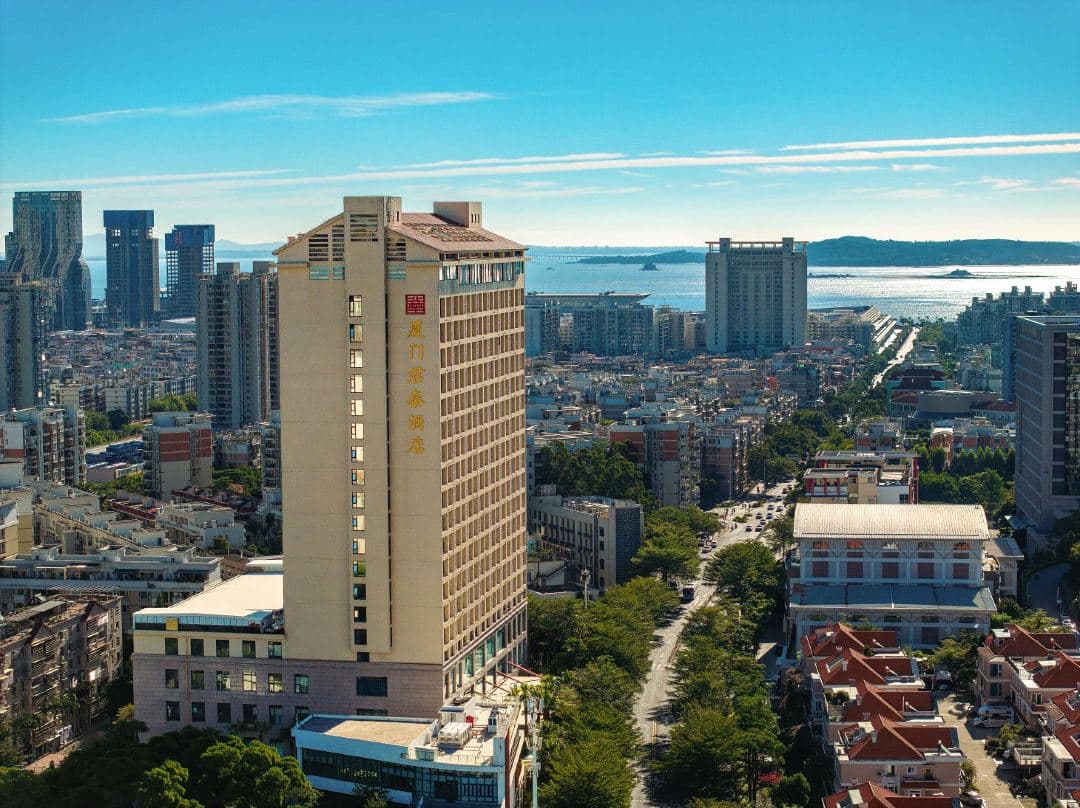
While the international chains clutter the immediate radius of the Exhibition Center, Juntai Hotel Xiamen sits a tactical 1.7 kilometers away—just far enough to trade frenetic trade-show energy for legitimate calm. The aesthetic here is 'International Simple Luxury,' a descriptor that actually holds up: the lobby eschews gold-leafed excess for clean lines and warm wood tones that nod to the region's tea heritage. The base rooms are shockingly generous at 45 square meters, with floor-to-ceiling glass that frames the nearby mountains rather than just staring into another skyscraper. Skip the western amenities you don’t need (there is no pool, a bold omission that keeps the noise down) and focus on the dining. The 'Crape Myrtle (Ziwei) Tea Restaurant' is the property's beating heart. Here, the handmade dim sum isn't an afterthought; it’s a ritual, best paired with a dark Fujian oolong. Service requires patience—English proficiency is thin—but the staff navigate the space with a quiet efficiency that feels appropriate. It’s a sharp, value-driven pivot from the standard business hotel script.
“Book a 'Mountain View' room on a high floor to watch the morning mist roll over the peaks while sipping your in-room tea.”
Insider TipAvg. Nightly Rate
55USD
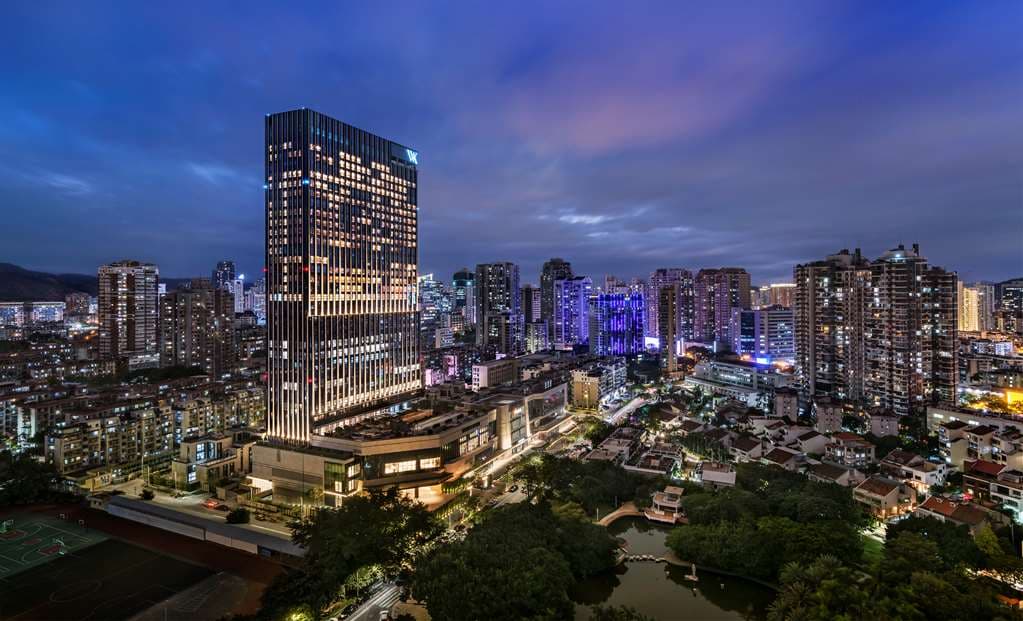
While Shanghai preens and Beijing powers on, Xiamen has quietly cemented its status as China’s sophisticate of the south. Anchoring this shift is the Waldorf Astoria, a property that feels less like a hotel and more like the private manor of a tea baron with impeccable taste. Design firm AB Concept has shunned the usual beige neutrality for a moody, substantive collision of Nanyang heritage and Art Deco geometry; think grand spiral staircases flanked by feather-patterned metal screens and sun-drenched conservatories that shift into speakeasy gloom by night. The rooms are studies in expensive silence. Whether you choose the tea-toned 'dark' palette or the aqua-centric 'light' scheme, you’re met with Simmons beds that swallow you whole, Aesop amenities, and Dyson dryers that signal you’ve paid for the top tier. But the real headline is downstairs: HOKKLO, the hotel’s Hokkien restaurant, just snagged a Michelin star in the 2025 guide. Skip the western staples and order the Signature Braised Duck with ginger—it’s a masterclass in local terroir. Service is refreshingly old-school; concierges here don’t just book tables, they curate entire tea ceremonies.
“Book a treatment in one of the five spa suites with private terraces, then head to 1387 Bar for a dram of rare single malt—it’s the moodiest spot in the city after 9 PM.”
Insider TipAvg. Nightly Rate
215USD

To call Seaview Resort a 'hotel' is a drastic understatement; it is a botanical fiefdom on Xiamen’s Ring Road, sprawling over a million square meters of sub-tropical lushness. While the uninitiated might get distracted by the sheer volume of families flocking to its 18 swimming pools (yes, eighteen), the true tea aficionado knows to head straight for the 'Fragrance Tea Palace' (Xiang Cha Gong). Here, amidst the clamor of a premier family destination, you find a surprising pocket of Minnan serenity. The resort plays a double game: by day, it’s a high-decibel playground where the splash parks reign supreme; by night, or within the sanctuary of the Villa Area, it shifts into a dignified retreat. The rooms in the main building can feel a touch 2005-corporate, so opt for the garden villas where the vibe is less 'convention center' and more 'imperial summer home.' Dining is the real anchor here—skip the western steakhouse and commit to the Fragrance Tea Palace’s signature Volcano Highland Barley Stewed with Fish Maw, a dish that acts as a rich, gelatinous counterpoint to the endless rounds of Kung Fu tea. Service is efficient, if occasionally overwhelmed by the occupancy, but the Angsana Spa remains a reliable escape hatch. It’s not an ascetic monastery, but for a tea retreat that allows you to bring the kids, it’s unrivaled.
“Bypass the main building entirely. Book a room in the 'Water Garden' area for silence, and walk the private 700m Tingtao Valley boardwalk at 6 AM—it's the only time the resort feels truly Zen.”
Insider TipAvg. Nightly Rate
119USD

Forget the chaotic day-tripper crowds of Gulangyu; Lohkah Isle is a fortress of solitude. Hidden within a restored Nanyang-style heritage villa, this property doesn't just suggest slow living—it enforces it. The arrival is a masterclass in logistics, with private butlers handling the complex ferry transfer so you step onto the car-free island unburdened. Inside, the design is a study in restraint. There are no flashing screens, only hushed corridors and textures of raw stone and linen. The heart of the experience is the 'Sangyu Tea House'. Here, the Aged Pu'er isn't just a beverage; it's a ritual, best enjoyed while gazing at the property's ancient banyan trees. Dining at 'Rongshe Private Kitchen' is equally meditative. The signature First-water seaweed fried rice delivers a hit of coastal umami so precise it feels like a revelation, while the Stewed beef brisket offers rich, unpretentious comfort. With no pool or gym to distract you, the only mandate is to exist. It is a rare, tea-steeped reset button for the weary soul.
“Skip the crowded street snacks and head straight to the 4th-Floor Garden Terrace at sunset. The view of the 'Hot Air Balloon' installation against the Xiamen skyline is unmatched.”
Insider TipAvg. Nightly Rate
414USD
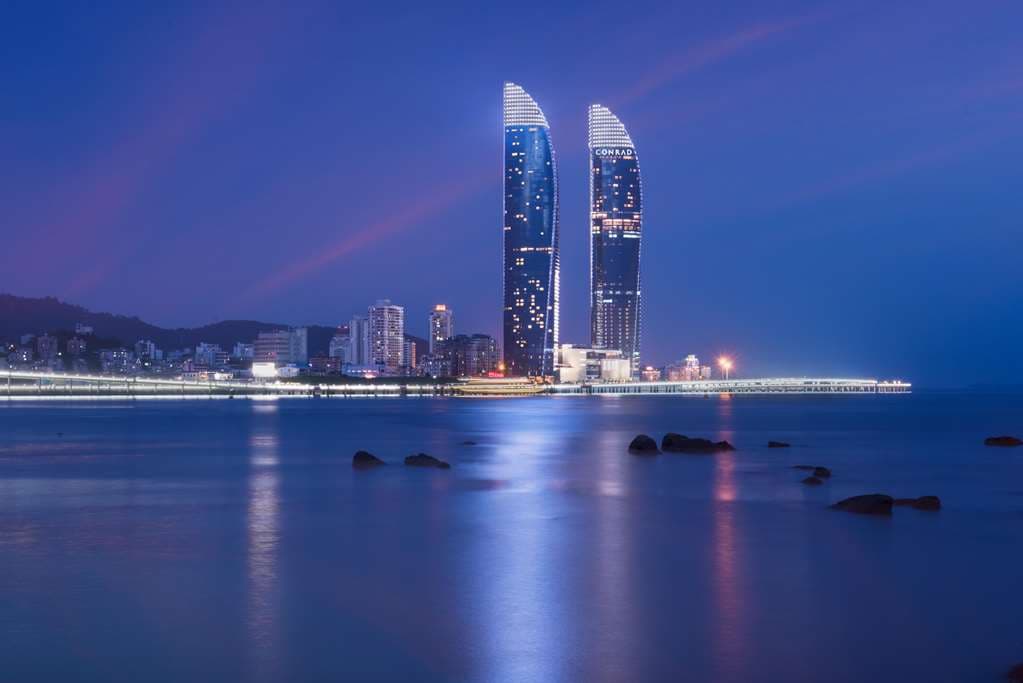
Xiamen is a city of sea-level charms, but the Conrad demands you look up. Anchoring the sail-shaped Shimao Twin Towers, this property offers a jarring, brilliant juxtaposition: at 6:00 a.m., you can walk ten minutes to Nanputuo Temple for the morning chants; by 7:00 a.m., you are floating in a heated pool on the 37th floor, watching the mist roll off Gulangyu Island. The hardware, opened in 2016, is aging gracefully, but the service has sharpened, earning a fresh **Forbes 4-Star Award for 2025**. The rooms are designed as high-altitude hermitages—pale woods and massive floor-to-ceiling windows that turn the Taiwan Strait into a living mural. While the lobby lounge ‘Plush’ draws the high-tea crowd, the real culinary flex is at **Coast Bar & Grill** on the 54th floor; skip the steak and order the Seafood Tower to match the maritime view. For local soul, **Lucheng** serves a deep-fried starchy taro in aged vinegar that redefines comfort food. Traffic at the towers' base can be gridlocked, but once the elevator doors close, you are in a private, cloud-level kingdom.
“Book a West-facing room to catch the sunset over Gulangyu Island, and request the corner table at Coast Bar 24 hours in advance.”
Insider TipAvg. Nightly Rate
175USD
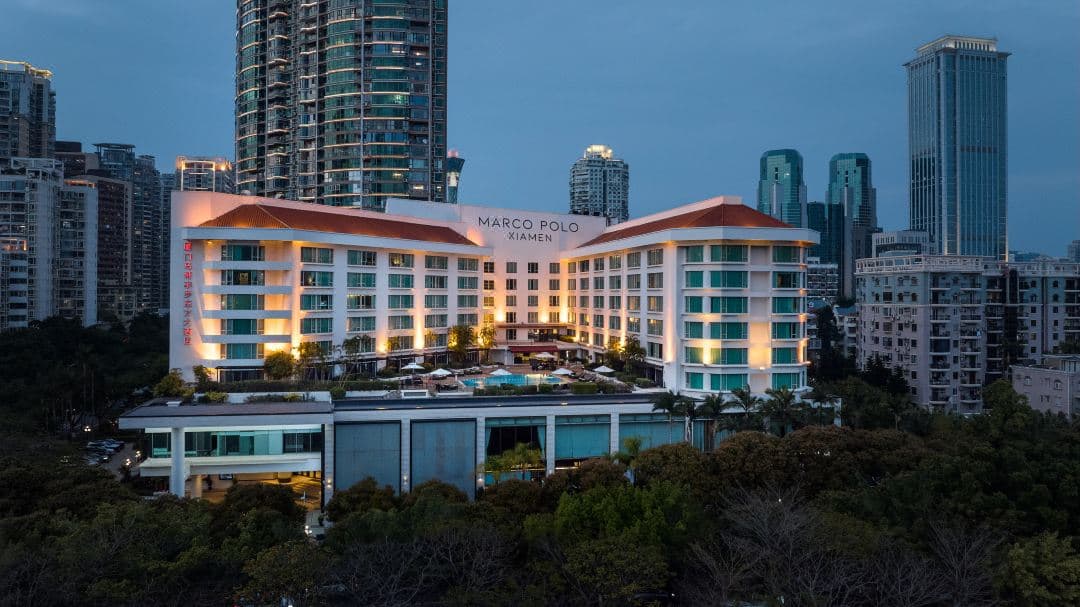
While the day-trippers swarm the ferry terminals for Gulangyu, the true Xiamen insiders retreat to the Marco Polo. Situated on the edge of Yundang Lake, this property is an institution—a grand dame that wears its classic 90s architecture with the poise of a well-aged Pu'er. The eight-story atrium lobby feels less like a transit zone and more like a cathedral to quiet commerce, stripping away the city’s humidity the moment you step inside. Rooms here eschew trendy minimalism for heavy drapes, deep soaking tubs, and uninterrupted views of the lake’s white egret conservation zone. The culinary credentials remain sharp: Lotus Court recently landed on the 'Must Eat 100' list, where the Braised Abalone is the power-lunch order of choice. However, the tea theme hits its stride in the Lobby Lounge with the signature Earl Grey Napoleon Cake—shattering pastry layers infused with distinct bergamot notes. Service is refreshingly analog and precise, recently earning the 'Best Quality Service' accolade at the 2024 Stars Awards. It may not have the newest hardware in Fujian, but it possesses a settled, confident soul that modern builds can't replicate.
“Skip the morning rush; book a window seat at the Lobby Lounge at 3 PM specifically for the Earl Grey Napoleon, which pairs perfectly with the lake view as the light softens.”
Insider TipAvg. Nightly Rate
46USD
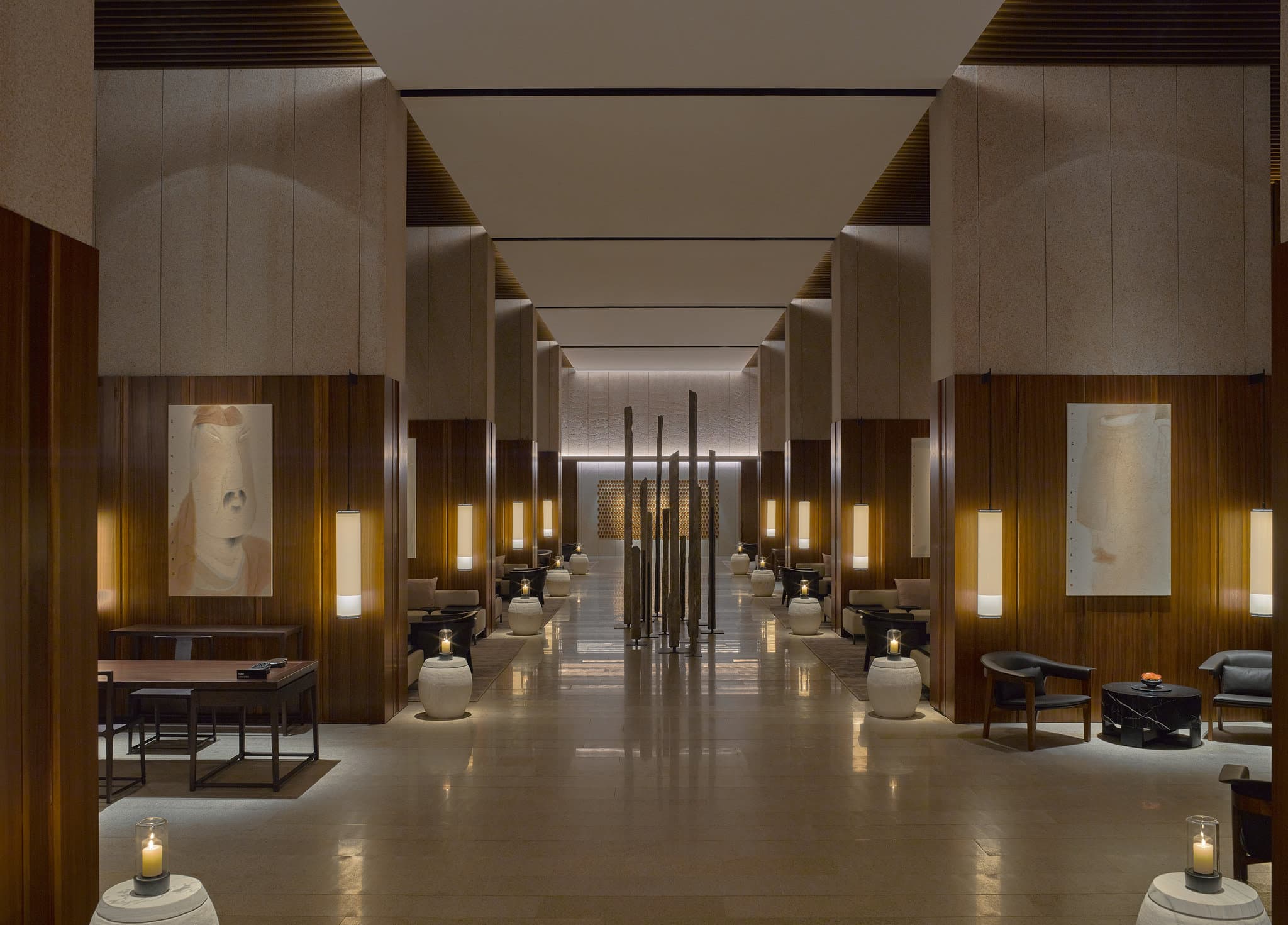
Fresh off a win in our 2024 Readers’ Choice Awards, Lohkah Hotel & Spa continues to make a compelling argument for Wuyuan Bay’s manicured shores over the colonial clamor of Gulangyu. This isn’t merely accommodation; it is a study in spatial therapy orchestrated by the Layan Design Group. The arrival sequence alone—a procession through symmetrical colonnades leading to a sculptural white spiral staircase—acts as a visual palate cleanser, wiping away the chaotic humidity of the city. Inside, the commitment to ‘Lohkah’ (Sanskrit for a spiritual realm) is absolute. The entry-level studios are shockingly vast at 65 square meters, outfitted with minimalist timber screens and a complimentary minibar that invites indulgence rather than asceticism. Dining is where the silence breaks. At XIA, recently crowned a 2025 Michelin Selected restaurant, the kitchen ignores the bland safety of hotel Cantonese. Order the Mapo Boston Lobster for a hit of Sichuan peppercorn heat, or the signature Chilled Peanut Soup—a velvety, algae-bedded nod to Fujian tradition. While the 56-meter infinity pool is the visual anchor from May to October, the real draw for the design-obsessed is the stillness. Service can suffer from a language barrier and the Wi-Fi occasionally drags, but perhaps that’s the point. You are here to disconnect, steep in the local tea culture at the Long Bar, and worship at the altar of negative space.
“Book a west-facing table at XIA specifically for sunset; the views over Wuyuan Bay turn the marina into a golden-hour spectacle.”
Insider TipAvg. Nightly Rate
234USD