No. 01
319 DONG XIN STREET XIAN CN 710004Xian151 verified reviews
9
.6
Bitvoya Edit
Layering imagery, place, and detail before the page opens.
Xian is not merely a destination; it is a timeline preserved in stone and spirit. Our curated collection, "Sleeping in the Shadow of the Ming Dynasty," invites you to reside where emperors once walked. Centered around the imposing Ming City Wall, one of the oldest and best-preserved fortifications in the world, these properties offer a front-row seat to history.
From the lush grounds of the Renmin Square in the Xincheng District, housing the iconic Sofitel Legend, to the vibrant Qujiang New District where The Westin sits adjacent to the Big Wild Goose Pagoda, location is paramount. Whether you choose the artistic grandeur of the HUALUXE or the Spanish elegance of Gran Meliá, you are never far from the Bell Tower's chime or the silent watch of the Ming ramparts.
Xian stands as the definitive starting point of the Silk Road and the cradle of Chinese civilization. While the Terracotta Warriors often steal the headlines, the city's heart beats within its Ming Dynasty City Wall. Choosing accommodation in this collection ensures an immersive experience where heritage meets hyper-luxury. Hotels like the Sofitel Legend People's Grand Hotel Xian are not just places to sleep; they are historical landmarks, offering a unique blend of French hospitality and Sino-Russian architecture right in the city center. Staying "in the shadow" of the dynasty means waking up to views of pagodas that have stood for millennia and walking the same paths as ancient guards.
The collection focuses on two primary prestigious zones. First is the Xincheng District, particularly around Renmin Square. Here, you find a cluster of luxury including the Sofitel Xian on Renmin Square and the Sheraton Xi'an North City Hotel. This area is perfect for those who want to be within walking distance of the Bell Tower and the City Wall's main gates. It captures the bustle of modern Xian while retaining the solemnity of its imperial past.
The second key area is the Qujiang New District (Yanta), a cultural zone designed to reflect the glory of the Tang Dynasty but heavily influenced by the surviving Ming architecture. The Westin Xi'an and Gran Meliá Xian are located here. This neighborhood is home to the Big Wild Goose Pagoda and offers a resort-like atmosphere with wide boulevards, making it ideal for travelers seeking tranquility amidst history.
Expect a seamless fusion of the ancient and the avant-garde. The properties selected, such as the HUALUXE Xi'an Tanghua and Tianyu Gloria Grand Hotel Xi'an, prioritize cultural aesthetics. Interiors often feature motifs from the Ming and Tang eras, yet provide state-of-the-art amenities. At the Westin, you can even explore a dedicated museum within the hotel basement. Whether it's the view of the lit-up City Wall at night from the Sheraton Xi'an Hotel or the traditional tea ceremonies offered in the lobby, every detail is curated to enhance the feeling of living within a living museum.
The Sheraton Xi'an Hotel and hotels near the South Gate, like the Tianyu Gloria Grand Hotel, offer spectacular direct views of the Ming Dynasty City Wall.
It depends on your preference. Qujiang (Westin, Gran Meliá) offers a resort-like, walkable area near the Big Wild Goose Pagoda, while Xincheng (Sofitel Legend) is central and closer to the Bell Tower.
The hotels are in the city center. The Terracotta Warriors are about a 45-60 minute drive away, but all listed hotels offer concierge services to arrange private transfers.
Explore our complete curated list of luxury accommodations, from boutique hideaways to grand dames.
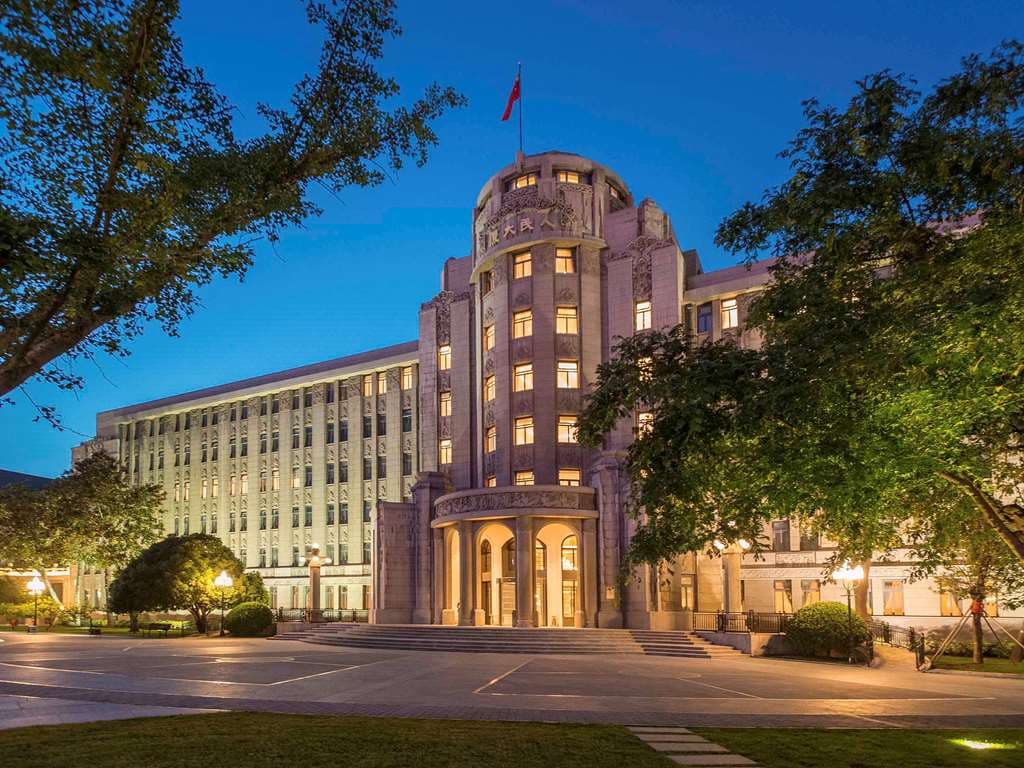
Explore All Xian HotelsIt is rare to check into a hotel that functions so effectively as a political time capsule. Commissioned in 1953 as a State Guesthouse to impress visiting dignitaries, the Sofitel Legend People’s Grand Hotel sits with heavy, confident authority within the Ming Dynasty city walls. The architecture is a fascinating convergence of Sino-Russian scale and French Art Deco detailing—look for the subtle fleur-de-lis motifs by architect Hong Qing integrated into the lobby’s molding. With only 71 keys, the property feels less like a hotel and more like a diplomatic residence. The rooms are cavernous, featuring high ceilings that dwarf standard luxury accommodations, outfitted with 600-thread-count linens, silk kimonos, and full-sized Hermès amenities (Eau d'Orange Verte). The 24-hour Majordome (butler) service is exacting—expect your shoes shined and tea steeped before you’ve fully articulated the request. Dining leans into the heritage: the 1953 Lobby Lounge serves a disciplined Afternoon Tea, but the real draw is the Louis XIII Bar, one of the few places in China pouring the rare Louis XIII Fortress Cognac. While the indoor pool’s temperature can be brisk in winter, the surrounding 40,000-square-meter garden offers a private horticultural walk unavailable anywhere else in the city center. This is not merely a place to sleep; it is a lesson in mid-century grandeur.
“Request a Grand Premium Room on a high floor facing the garden axis for the most symmetrical, uninterrupted views of the 1950s facade and ancient trees.”
Insider TipAvg. Nightly Rate
151USD
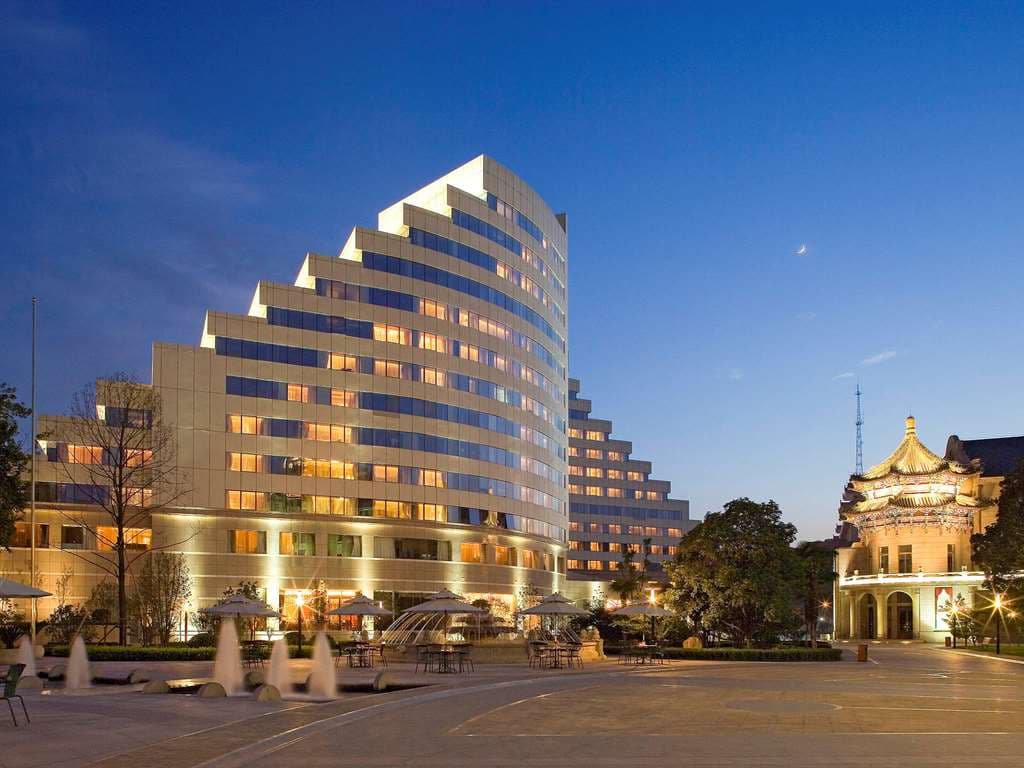
While the polished veneer of modern luxury hotels often feels interchangeable, the Sofitel Xian on Renmin Square offers something rarer: a genuine sense of place. Situated within the sprawling, manicured grounds of the Renmin Square complex—effectively a state guesthouse compound—this property operates at a different cadence from the frenetic city outside. The architecture nods to a Sino-French heritage, a quiet grandeur that feels more diplomatic enclave than tourist hub. The interiors, launched in 2005, trade cutting-edge tech for classic solidity. You won’t find voice-activated curtains here, but you will find heavy, sound-dampening doors and generous floorplans that newer builds often sacrifice. A noted caveat: Xi’an’s climate is aggressively arid, and the room air-conditioning can exacerbate this; smart guests request a humidifier before unpacking their bags. Dining is the property’s ace. Le Chinois (乐轩华) demands a reservation, not for its decor, but for the Chang'an Fennel Gourd Chicken—a broth so clarified and fragrant it justifies the stay alone. Breakfast is equally serious, offering a high-wire act between proper French pastries and local Shaanxi staples. While the Technogym-equipped fitness center and heated indoor pool satisfy the morning routine, the real draw is the heritage. You are sleeping in the shadow of the Ming Dynasty, wrapped in the service standards of a bygone era. It is classic, slightly aging, but undeniably dignified.
“The air in Xi'an is notoriously dry. Call housekeeping immediately upon arrival to request a humidifier and extra bottles of water—they are accustomed to this request and respond quickly.”
Insider TipAvg. Nightly Rate
53USD
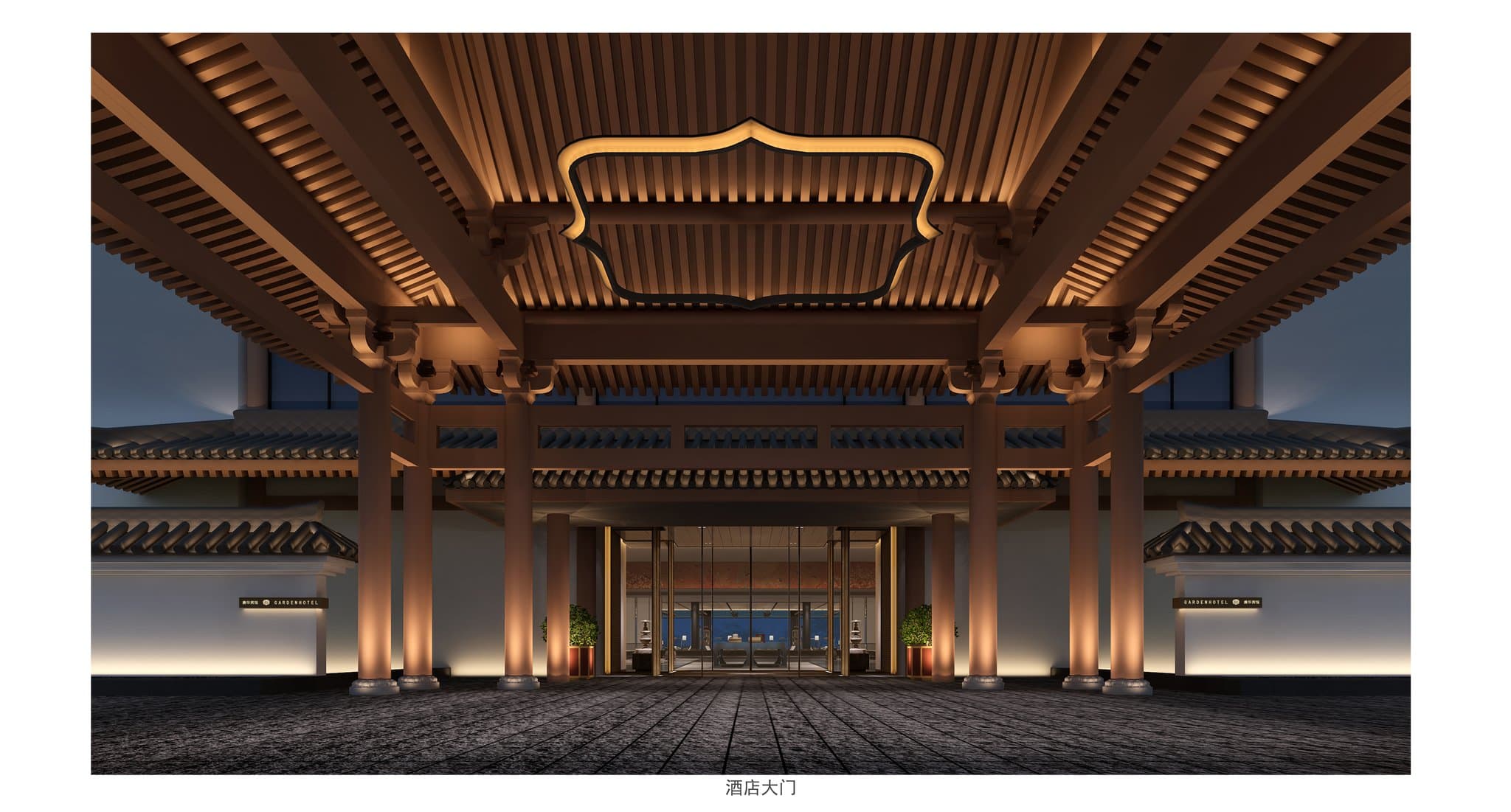
While Xi'an is often defined by its imposing Ming Dynasty ramparts, HUALUXE Xi'an Tanghua rewinds the clock further to the golden age of the Tang. This isn't your typical glass-and-steel high-rise; it’s a low-slung, garden-style retreat where wooden corridors frame views of the Big Wild Goose Pagoda and resident peacocks strut through the courtyards with imperial confidence. The rooms are a study in modern Chinese restraint—expect light woods, tea sets, and Essentiel Elements bath amenities—though winter travelers should note the central heating is enthusiastic, sometimes bordering on tropical. The real draw, however, is the culinary clout. The hotel’s Cantonese flagship, Cai Feng Lou, has retained its Black Pearl One Diamond status through 2025; the stewed fresh abalones with boneless pork feet are non-negotiable. For something more casual, Xianyan serves proper Biangbiang noodles that rival the street stalls. Service leans into the brand's 'Chinese hospitality' ethos, centered around an elaborate tea culture at LUXE Tea, though English proficiency can vary. It is a sophisticated, sensory immersion into Chang'an, just steps from the tourist trail but worlds away in atmosphere.
“Skip the standard garden stroll and ask the front desk for a bag of bird feed; the peacocks in the central courtyard are tame enough to be hand-fed.”
Insider TipAvg. Nightly Rate
95USD
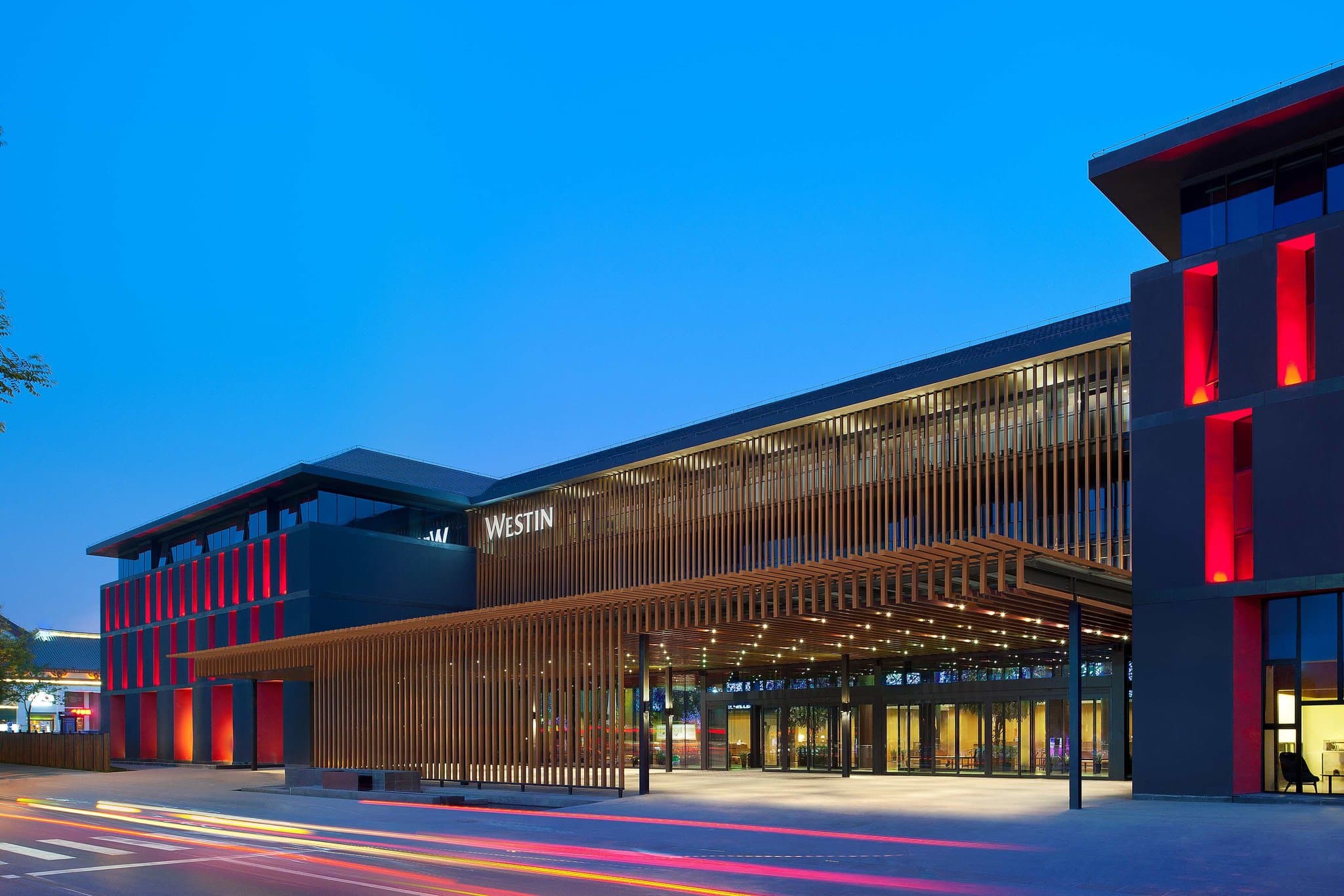
Xi’an’s Qujiang district is a neon-lit spectacle of history commodified, but The Westin Xi’an stands as a brooding, brilliant counterpoint. Directly facing the Big Wild Goose Pagoda, this Neri&Hu-designed fortress is a masterclass in architectural reverence, using dark grey stone and ‘floating’ red windows to reinterpret Ming Dynasty vernacular for the modern traveler. It doesn't just borrow culture; it houses it—the property sits atop the Xi’an Qujiang Museum of Fine Arts, allowing guests to drift from a Heavenly Bed to a collection of 2,000 historical artifacts without stepping outside. Inside, the atmosphere is hushed and gallery-like. The signature sunken courtyards pull natural light deep into the building’s core, creating a serene shadow-play that feels worlds away from the Grand Tang Mall’s crowds. Rooms are a study in reliable luxury, equipped with White Tea amenities and 400-thread count linens, though the real flex is the Pagoda View Room, which frames the 7th-century structure like a living portrait. Dining is equally grounded in the locale. ‘Five Zen5es’ serves a fiery, authentic take on Shaanxi cuisine—don’t leave without trying the hand-pulled Xi’an noodles—while ‘Mai’ offers a sleek teppanyaki alternative. The only cracks in the armor? The wellness facilities are beginning to show their age, and the centralized HVAC can run zealously warm in winter. Yet, for a stay that balances 5-star polish with profound cultural immersion, this remains the city’s most intellectual address. **Verdict**: A design-forward cultural fortress that offers silence and sophistication in the heart of Xi’an’s most chaotic tourist hub.
“Book a 'Pagoda View Room' on a high floor for the best vantage point of the Big Wild Goose Pagoda’s night lights. If you visit in winter, pack light sleepwear—the heating is notoriously efficient.”
Insider TipAvg. Nightly Rate
103USD
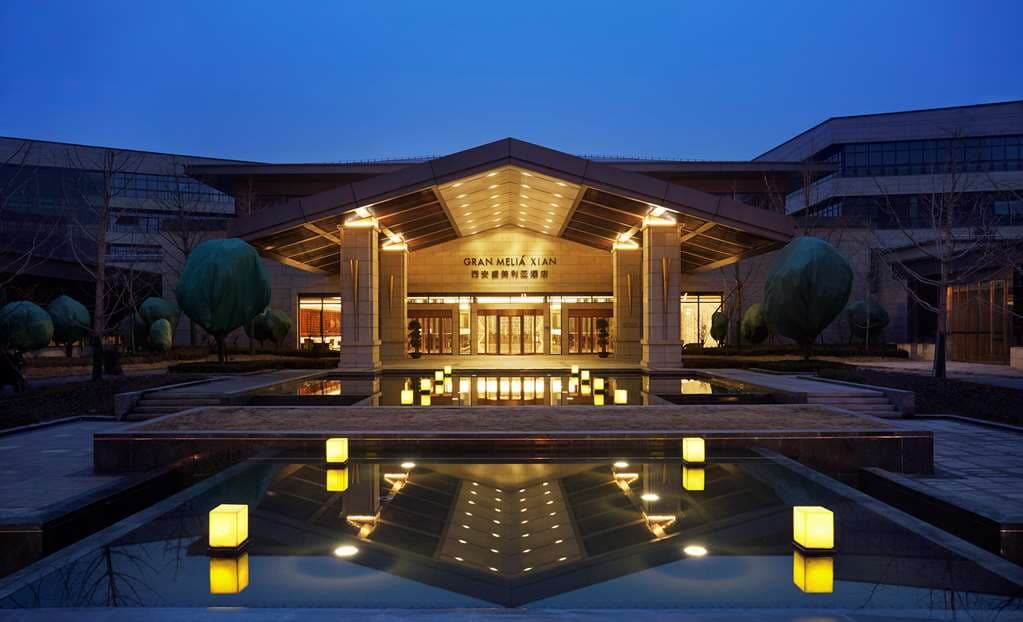
In a city where history usually implies dust and excavation, Gran Meliá Xian offers a polished, cinematic counter-narrative. Situated in the Qujiang New District, the property mirrors the dramatic, sweeping eaves of the neighboring Tang Paradise, effectively turning the hotel into a piece of installation art. The interiors are vast—cathedral-like atriums that trade intimacy for awe—but the scale is expertly managed by the brand’s signature RedLevel service. This is the hotel's ace card: a butler-serviced sanctuary offering private check-in and lounge access, acting as a necessary buffer from the lobby’s occasional commotion. The culinary program is a deliberate collision of worlds. At Duo, the kitchen slices authentic 36-month Jamón Ibérico and serves seafood paella, a brash Spanish stake in the ground of the ancient capital. Meanwhile, Yuet Fu honors the local terroir with a glass crispy pigeon that demands to be eaten by hand. The rooms themselves are exercises in restraint, featuring dark woods and garden-facing balconies that utilize the Qujiang Pool views to soften the architectural grandeur. Amenities like the Technogym-equipped fitness center and the Pevonia Botanica products in the YHI Spa signal a commitment to international standards. While the thirty-minute transfer to the Bell Tower is a logistical reality, the trade-off is the silence of the inner courtyards and an indoor pool that feels more like a Roman bath than a standard hotel amenity. It is a sophisticated retreat that doesn't just mimic the Ming Dynasty's shadow, but comfortably inhabits it.
“Secure a RedLevel Premium Room on the 5th floor; the garden balconies here offer a private box seat for the Tang Paradise light show, sparing you the crowds.”
Insider TipAvg. Nightly Rate
84USD
While Xi’an’s skyline is now punctured by glass-and-steel upstarts, the Sheraton Xi’an—opened in 1991—remains a defiant fortress of '90s grandeur. Located near Kaiyuanmen (the Tang Dynasty’s Silk Road gate), this property trades trendy minimalism for heavy brass, polished marble, and a lobby that feels like a diplomat’s receiving room. It is not the newest address in town, and the bathrooms frankly show their age, but what it lacks in USB-C ports, it makes up for in military-grade hospitality. The real currency here is the service. Long-serving staff like Mr. Sun at the concierge desk operate with a precision that younger, flashier hotels struggle to replicate. The amenities are surprisingly robust for an older build: a Technogym-equipped fitness center and a Shine Spa stocked with Germaine de Capuccini products. Dining is a serious pursuit; bypass the international buffet for the *Tang Restaurant*, where the Xi’an Roasted Duck offers a leaner, crisper skin than its Peking cousin. For a nightcap, the *Marco Polo Lounge* serves French pastries and coffee in a setting that recalls a more deliberate era of business travel. It is a hotel for those who value consistency and heritage over Instagram aesthetics.
“Request a room on the upper floors facing the rear garden to minimize noise from the West 2nd Ring Road.”
Insider TipAvg. Nightly Rate
56USD
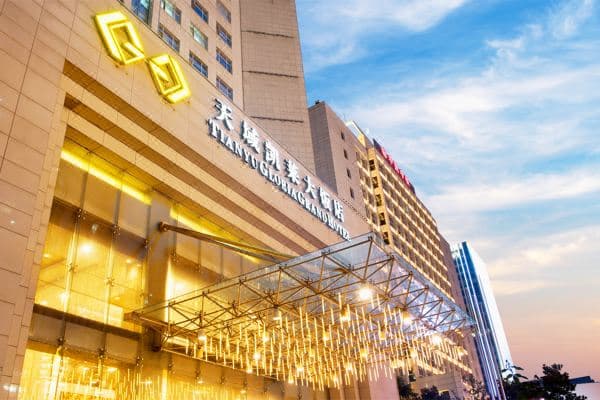
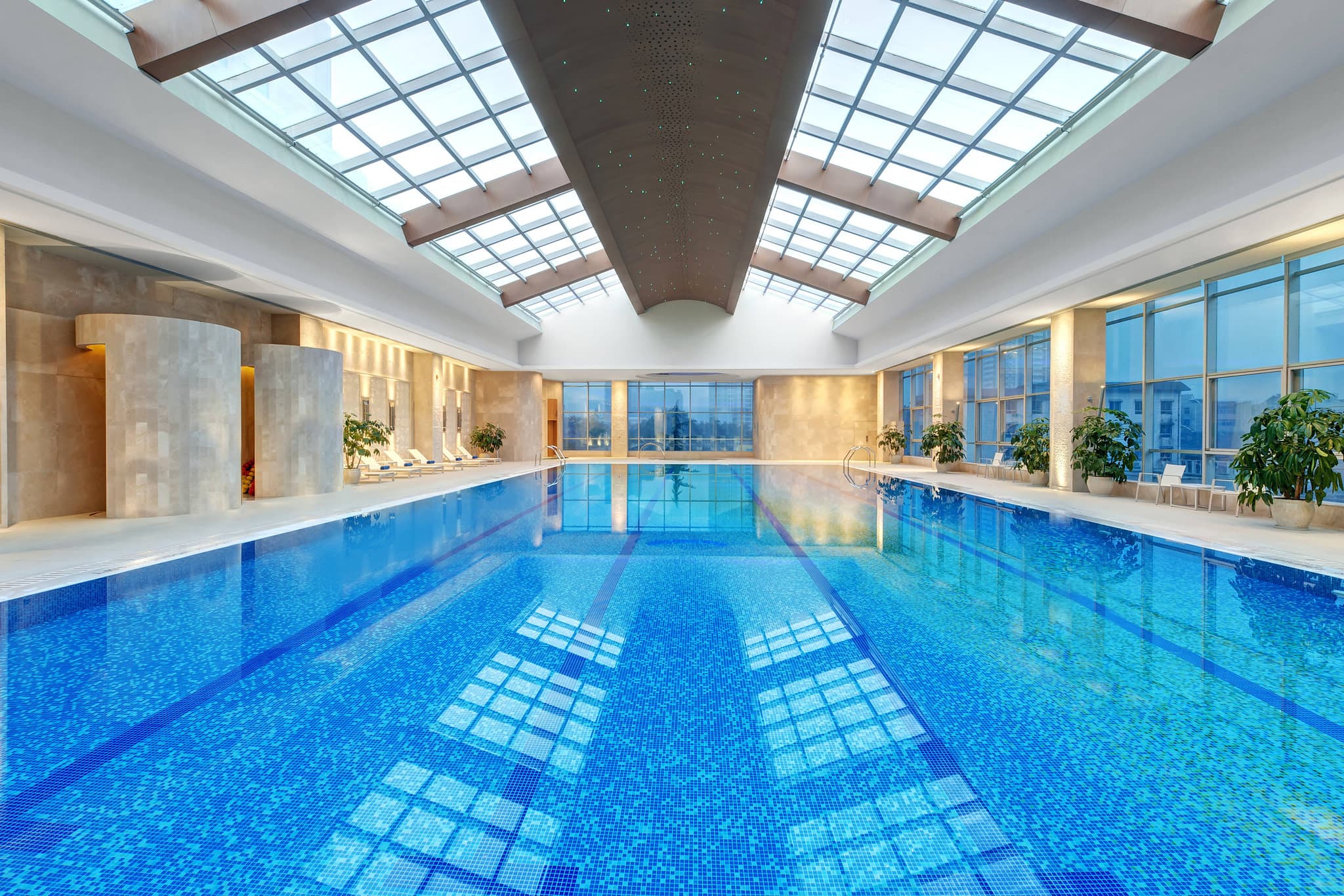
In a city defined by its fortifications, the Tianyu Gloria Grand plays the role of the loyal sentry. Situated just south of the Heping Gate (Hepingmen), this property offers a vantage point that few modern glass towers can rival, effectively placing you in the architectural shadow of the Ming Dynasty. The aesthetic here is unapologetically 'early-millennium grand'—think acres of polished marble, heavy drapery, and chandeliers that mean business. It is a vibe that feels efficiently nostalgic, reminiscent of an era when five-star meant gold trim and white-gloved elevator attendants. While the room hardware—specifically the fixed shower heads and shorter faucets—betrays the building’s vintage, the service retains a proactive polish that many newer boutique entrants lack. Mornings at the Atrium Café are a non-negotiable ritual, not for the western pastries, but for the *Liangpi*. These 'cold skin' noodles, a Shaanxi staple, are served here with a vinegar-laced punch that serves as the ultimate wake-up call. For dinner, the Sampan Chinese Restaurant attempts a Cantonese-Shaanxi crossover, but the real draw is the location. You are merely steps from the ramparts. After a dusty day cycling the Ancient City Wall, the heated indoor pool, with its distinctively photogenic blue tiling, offers a retro-cool respite. It may not be the newest player in town, but for those who prioritize geography and authentic breakfasts over rainfall showers, it remains a strategic stronghold.
“Skip the standard rooms and book a North-facing Executive Room to secure that direct line of sight to the City Wall. Also, grab a glass of the signature Sour Plum Juice in the lobby—it’s a smoky, tart local cure-all for traveler’s fatigue.”
Insider TipAvg. Nightly Rate
47USD
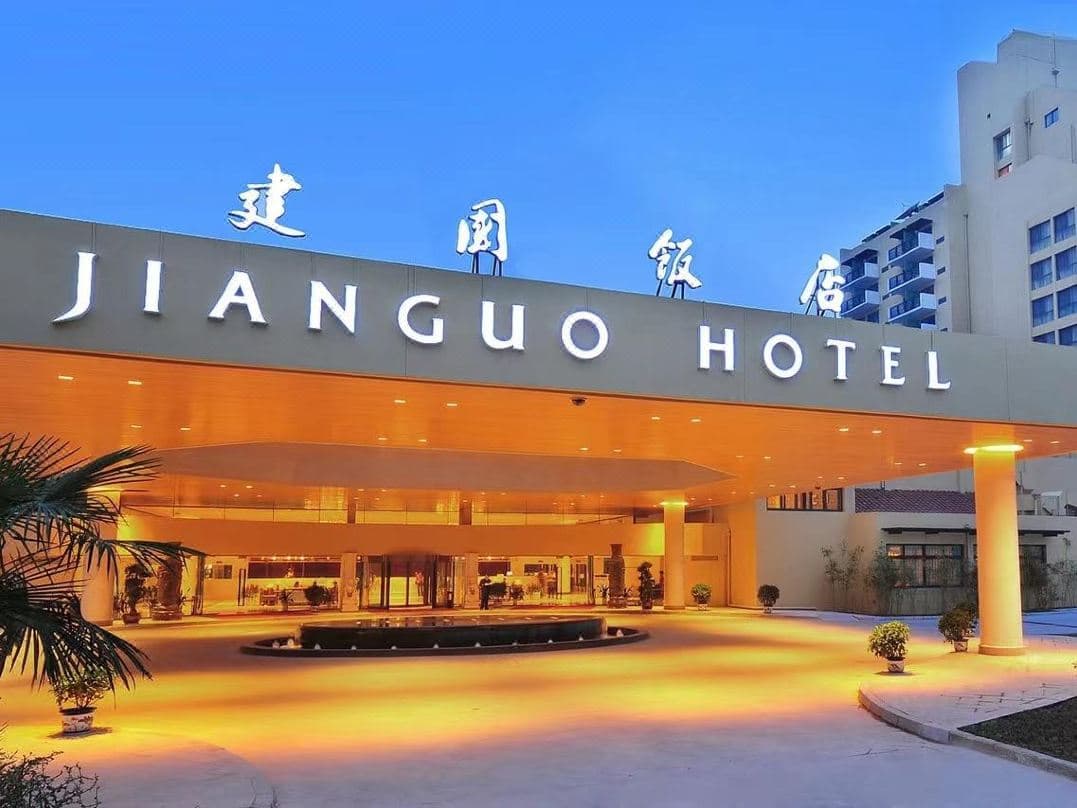
While Xi'an’s skyline races skyward in a blur of glass and steel, the Jianguo Hotel remains steadfastly horizontal—a sprawling, confident Grand Dame from 1989 that feels less like a hotel and more like a diplomatic sanctuary. This is the era of the 'State Guest House' aesthetic: massive, manicured, and obsessed with tranquility. The centerpiece is not a lobby chandelier, but a central courtyard laced with white stone bridges and a lotus pond that actually freezes in winter—a meditative view best enjoyed from the private balconies attached to the lake-view rooms (a rarity in the city center). The interiors trade modern minimalism for Reform Era opulence. Yes, the televisions are small and the decor leans towards a mahogany-heavy nostalgia, but the service is aggressively personalized—the kind where staff remember your tea preference. Dining is a serious affair here; 'Justine’s' offers a time-capsule Western grill experience, while the 'Four Seasons' restaurant serves a Prince Duck so tender it practically dissolves. It isn’t cutting-edge cool, and that’s the point. It’s a preserved slice of the Golden Age of hospitality, where silence and space are the ultimate amenities.
“Skip the standard rooms and explicitly request a 'Garden View' room with a balcony on the 3rd or 4th floor. You’ll wake up to the sound of bird calls from the lotus pond rather than the roar of the Second Ring Road.”
Insider TipAvg. Nightly Rate
41USD
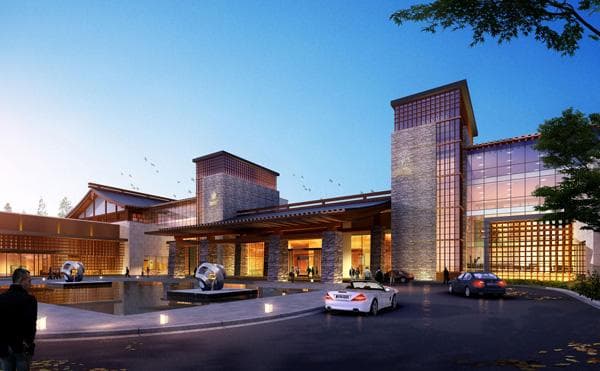
History hangs heavy over Lishan Mountain. Just five minutes down the road at Huaqing Palace, the course of Chinese history pivoted in 1936 when Chiang Kai-shek was captured in his pajamas. Today, the Angsana Xi’an Lintong offers a far more sedate retreat, channeling the Tang Dynasty’s obsession with thermal bathing into a sprawling, steam-wreathed sanctuary. The architecture is an unapologetic homage to imperial court life—sweeping eaves, vermilion pillars, and vast courtyards that feel less like a hotel and more like a film set for *The Legend of Yang Guifei*. Inside, the drama softens. Entry-level rooms are a palatial 60 square meters, outfitted with expansive balconies that stare right into the mists of Lishan. The aesthetic steers clear of kitsch, favoring dark woods and lantern-style lighting. But you are here for the water. The complex boasts 25 outdoor hot spring pools, each varying in mineral content and temperature. For the uninhibited, the 'Wu Liao Chi' (nude pool) offers the most authentic soak. Post-steam, head to Mandarin Palace, where the chefs elevate Shaanxi staples—think delicate gourd chicken and refined biangbiang noodles—far beyond their street-food origins. Service is eager, occasionally stumbling, but always well-meaning. It’s a 45-minute trek from the city center, but for a dip in the same water veins that soothed emperors and fugitives alike, the drive is negligible.
“Skip the main pool during peak hours. Instead, book a private 'Hot Spring Cabana' for two hours in the late evening when the lanterns are lit and the steam rises against the mountain backdrop.”
Insider TipAvg. Nightly Rate
90USD
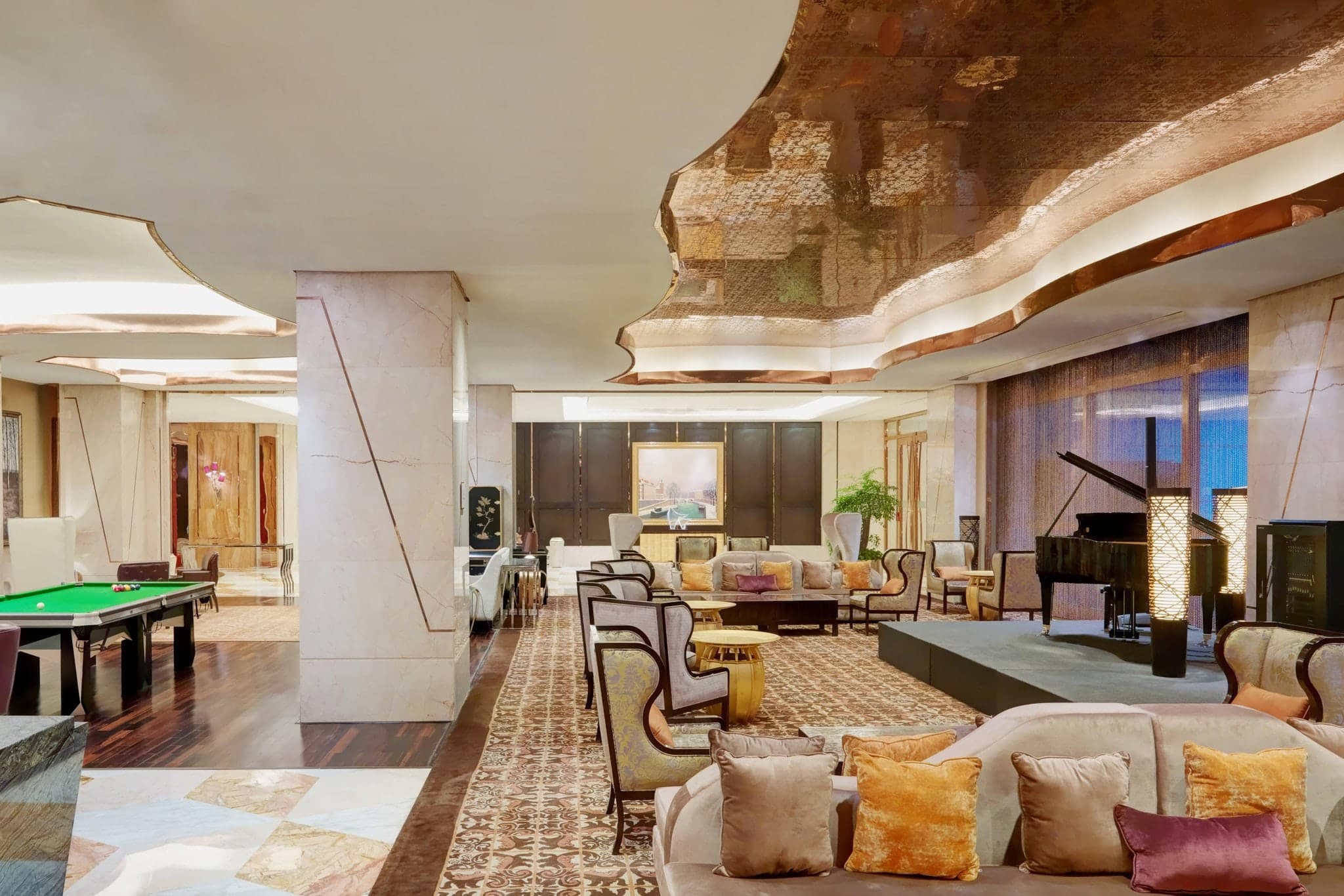
If you are in Xi’an merely to photograph terracotta warriors, stay inside the Bell Tower circle. But if you are here to trace the ghost outlines of the Tang Empire, the Sheraton Xi’an North City is your command post. Positioned directly above Exit B of Longshouyuan Metro, this property bridges the Ming fortifications and the colossal Daming Palace National Heritage Park, a mere 500-meter march away. The interiors are unapologetically corporate—a preserved specimen of dark woods and beige carpets that feels decidedly 2010. However, in a market of shrinking footprints, the 40-to-50-square-meter standard rooms feel palatial, easily swallowing heavy luggage. A word of warning: the air conditioning in lower-tier rooms can be temperamental, a known quirk of the building's vintage. Dining at 'Yue' offers a safe harbor of Cantonese dim sum, but the 'Feast Signature Restaurant' is where the action lies, particularly for the fresh seafood on ice and local hand-pulled noodles. For a true local kick, the Wei Jia Liang Pi shop is just 200 meters out the door. Post-exploration, the heated indoor pool and the salt stone sauna at Shine Spa—stocked with Germaine de Capuccini amenities—provide a necessary reset. It lacks the cutting-edge design of newer rivals, but for the history enthusiast who values square footage and strategic geography, it is a tactical victory.
“Request a North-facing room on a high floor (20+) for a direct line of sight into the Daming Palace grounds; at sunset, the sheer scale of the ancient capital becomes visible.”
Insider TipAvg. Nightly Rate
55USD