No. 01
BarcelonaBarcelona1337 verified reviews
9
.4
Bitvoya Edit
Layering imagery, place, and detail before the page opens.
Barcelona is not merely a city to be viewed, but a canvas to be inhabited. For the discerning traveler, the distinction between visiting a museum and staying in one blurs within the walls of the city's finest hotels. This curated collection, 'Living within Art,' invites you to reside within the architectural triumphs of Catalonia. From the aristocratic grandeur of El Palace Barcelona to the UNESCO-recognized beauty of Hotel Casa Fuster in the elegant Eixample district, these properties are monuments to history. Venture into the labyrinthine Gothic Quarter, where medieval palaces like Hotel Neri and Mercer Hotel offer a serene dialogue between ancient stone and contemporary luxury. Here, every corridor tells a story of art, aristocracy, and Catalan soul.
Barcelona stands alone in Europe as a city where architectural movements define the skyline. Choosing to stay in a property like Hotel Casa Fuster or Monument Hotel Barcelona is not simply booking a room; it is securing a key to the Catalan Modernisme movement. Architects like Lluís Domènech i Montaner and Enric Sagnier transformed residences into works of art, characterized by ornate ironwork, floral stained glass, and undulating stone. Alternatively, the city's ancient heart offers converted palaces such as Mercer Hotel Barcelona, where Roman walls form part of your suite's interior. This fusion of heritage and high-end hospitality ensures an immersive cultural experience that extends far beyond sightseeing hours.
Our collection focuses primarily on two prestigious neighborhoods:
While the facades date back centuries, the interiors of these hotels offer uncompromising modern luxury. Expect rooftop terraces with plunge pools overlooking the Cathedral or Sagrada Família, a staple of hotels like El Palace Barcelona. Interiors often feature high ceilings, original mosaics, and grand staircases preserved from their aristocratic origins. Service in these establishments is impeccable, often including personalized concierge services to unlock exclusive city experiences. Whether it's the literary history of the Cotton House or the jewelry-inspired design of Hotel Bagués, each property offers a unique narrative theme that enriches your stay in Barcelona.
Hotel Casa Fuster is a top choice, designed by famous architect Lluís Domènech i Montaner and designated a UNESCO World Heritage site.
Yes, Hotel Neri and Mercer Hotel Barcelona are both housed in restored medieval palaces, incorporating ancient Roman walls and Gothic arches.
El Palace Barcelona and Hotel Bagués offer stunning rooftop terraces with pools and panoramic views of the city skyline.
Explore our complete curated list of luxury accommodations, from boutique hideaways to grand dames.
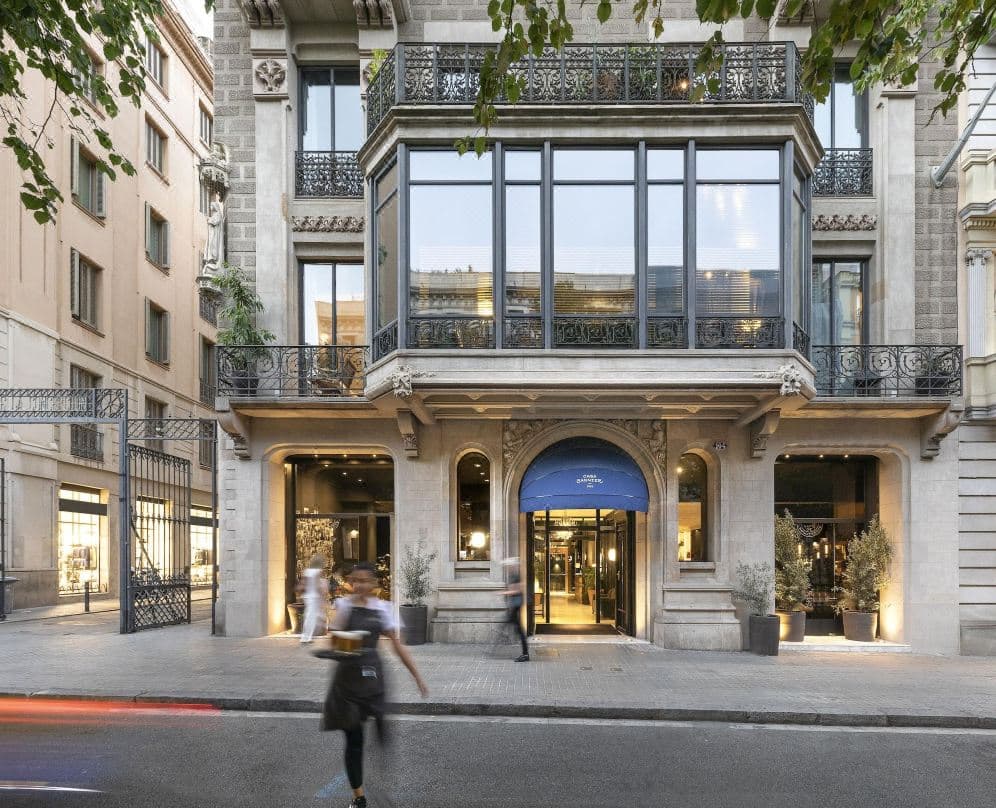
Explore All Barcelona HotelsIn a city often monopolized by Gaudí’s psychedelic curves, Enric Sagnier was the prolific pragmatist who actually built Barcelona. Checking into his former family residence and studio on the Rambla de Catalunya feels less like a transaction and more like inheriting a stylish great-uncle’s estate. The restoration respects the building’s confident Plateresque bones without devolving into a museum piece; the vibe is strictly residential, anchored by a fire-lit salon where the staff—Judit and Alberto are particularly sharp—remember your espresso preference before you do. Upstairs, the aesthetic is sober and masculine, favoring texture over color. Smart travelers know to book the Superior Deluxe Terrace; while the first-floor rooms can suffer from the rumble of the Eixample, the rooftop options offer silence and outdoor showers—a rare luxury in the city center. Bathrooms are stocked with Natura Bissé products, a nod to local excellence. Dinner at Cafè de l'Arquitecte is non-negotiable. Skip the tourist traps nearby for the restaurant’s handmade pappardelle with seasonal mushrooms, a dish that manages to be both rustic and precise. While the gym is admittedly an afterthought and the air conditioning has a stubborn floor of 19°C, these quirks only reinforce the feeling that you are a guest in a historic home rather than a standardized hospitality unit. It is an intimate, imperfect, and deeply authentic slice of Catalan life.
“Request a room on the 4th floor or higher to escape the street noise. The Superior Deluxe Terrace specifically features an outdoor shower perfect for summer mornings.”
Insider TipAvg. Nightly Rate
250USD
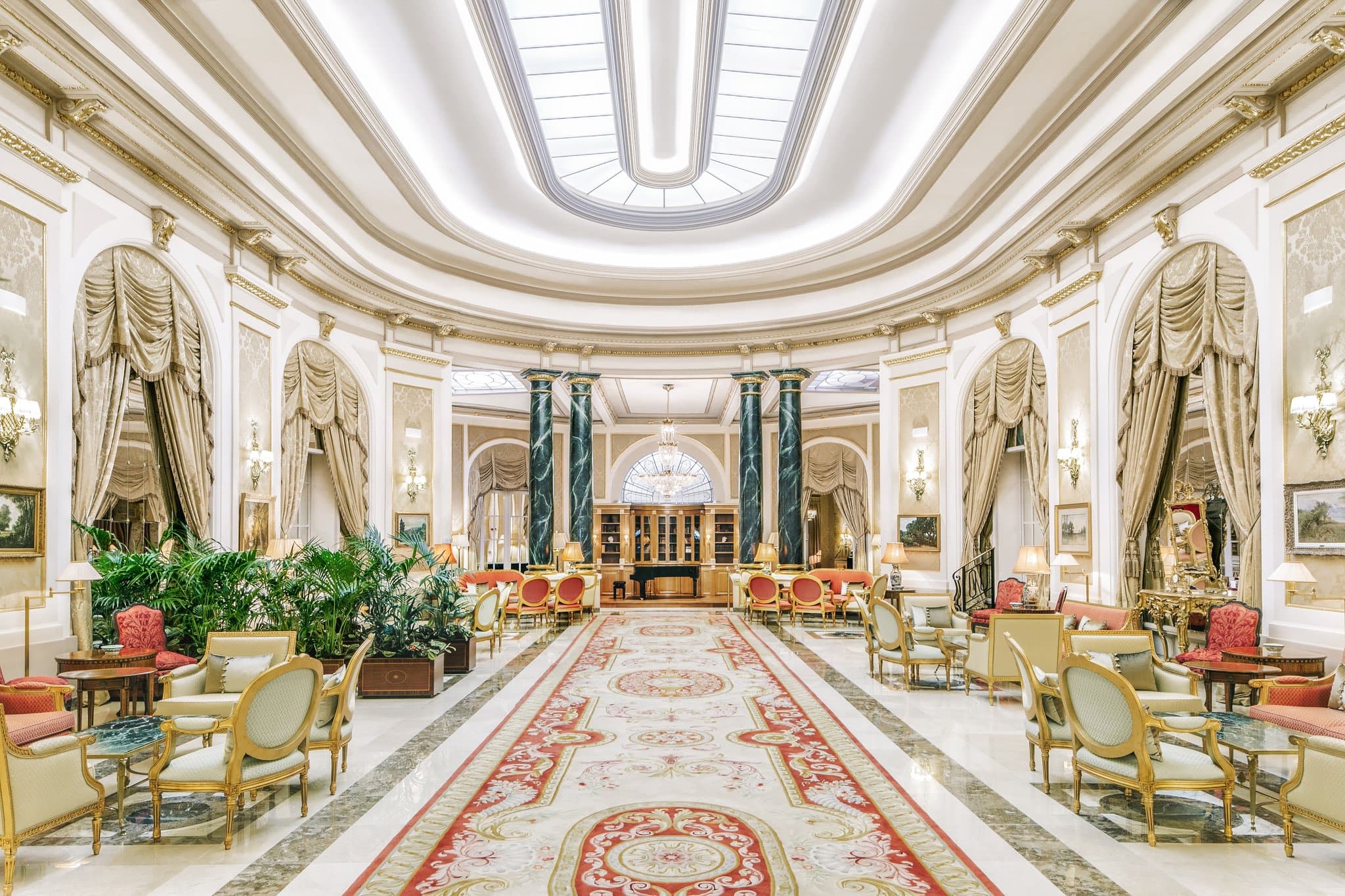
Walking into the Great Hall feels less like checking into a hotel and more like crashing a 1920s high-society wedding, minus the stiff collars. Formerly the Ritz, El Palace refuses to succumb to the beige minimalism sweeping Barcelona’s hotel scene. Instead, it doubles down on unapologetic opulence: marble columns, crystal chandeliers serious enough to cause injury, and velvet drapery that absorbs the city’s chaos. Upstairs, the rooms are sanctuaries of silence. While the tech is sharp—fast Wi-Fi and intuitive lighting—the real draw is the stubborn refusal to modernize the good stuff. The Roman mosaic sunken baths in the Art Suites are practically swimming pools, demanding a soak with a glass of Cava. Dining, however, is where the hotel sheds its history for something sharper. At Amar, Chef Rafa Zafra (of elBulli fame) serves a carpaccio of small prawns that is terrifyingly delicate, abriny slap to the senses. Skip the tourist traps on Las Ramblas; the rooftop garden here, with its vine-covered pergola and pool, offers the city’s best vantage point of the Sagrada Família without the crowds. It’s grand, yes, but never stuffy.
“Book the 'Rooftop Garden' for sunset, but ask specifically for a table near the Sagrada Família pergola—it’s the only spot with an unobstructed view of Gaudí’s spires.”
Insider TipAvg. Nightly Rate
325USD
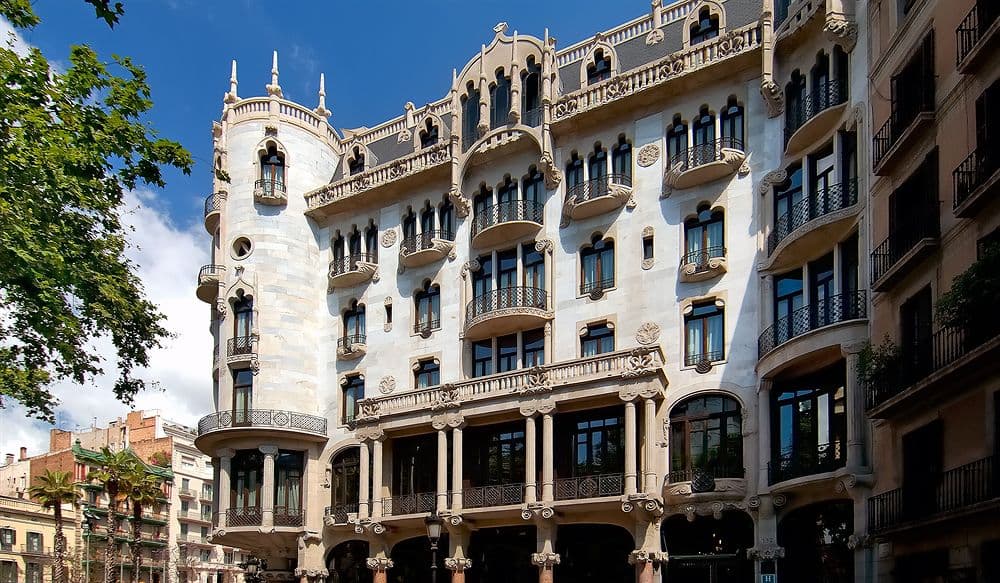
If Gaudi is the wild child of Catalan Modernism, Lluís Domènech i Montaner is the sophisticated elder statesman, and Casa Fuster is his marble-clad mic drop. Standing imperiously at the head of Passeig de Gràcia, this UNESCO-listed monument demands you straighten your posture upon entry. It is less a hotel and more a habitable piece of art—a fact that excuses the occasional creak in the floorboards or the fiercely traditional (read: slightly tired) velvet furnishings in the standard rooms. Check-in feels cinematic, but the real drama happens downstairs at Café Vienés. It’s not just a lobby bar; it’s a moody, gold-columned jazz haunt where Woody Allen famously played clarinet. Upstairs, the rooms are quiet sanctuaries, though the bathrooms—equipped with high-walled hydro-massage tubs—require a bit of gymnastics to enter. The trade-off? Michelin-starred dining at Aleia, where Chef Rafa de Bedoya’s Palamós red prawns justify the flight alone. Skip the 'pool'—it’s essentially a decorative rooftop plunge—and instead order a martini on the Blue View terrace while staring down the entire grid of Barcelona.
“Request a 'Superior Room' facing the inner courtyard. You sacrifice the street view, but you gain absolute silence and often a private balcony.”
Insider TipAvg. Nightly Rate
201USD
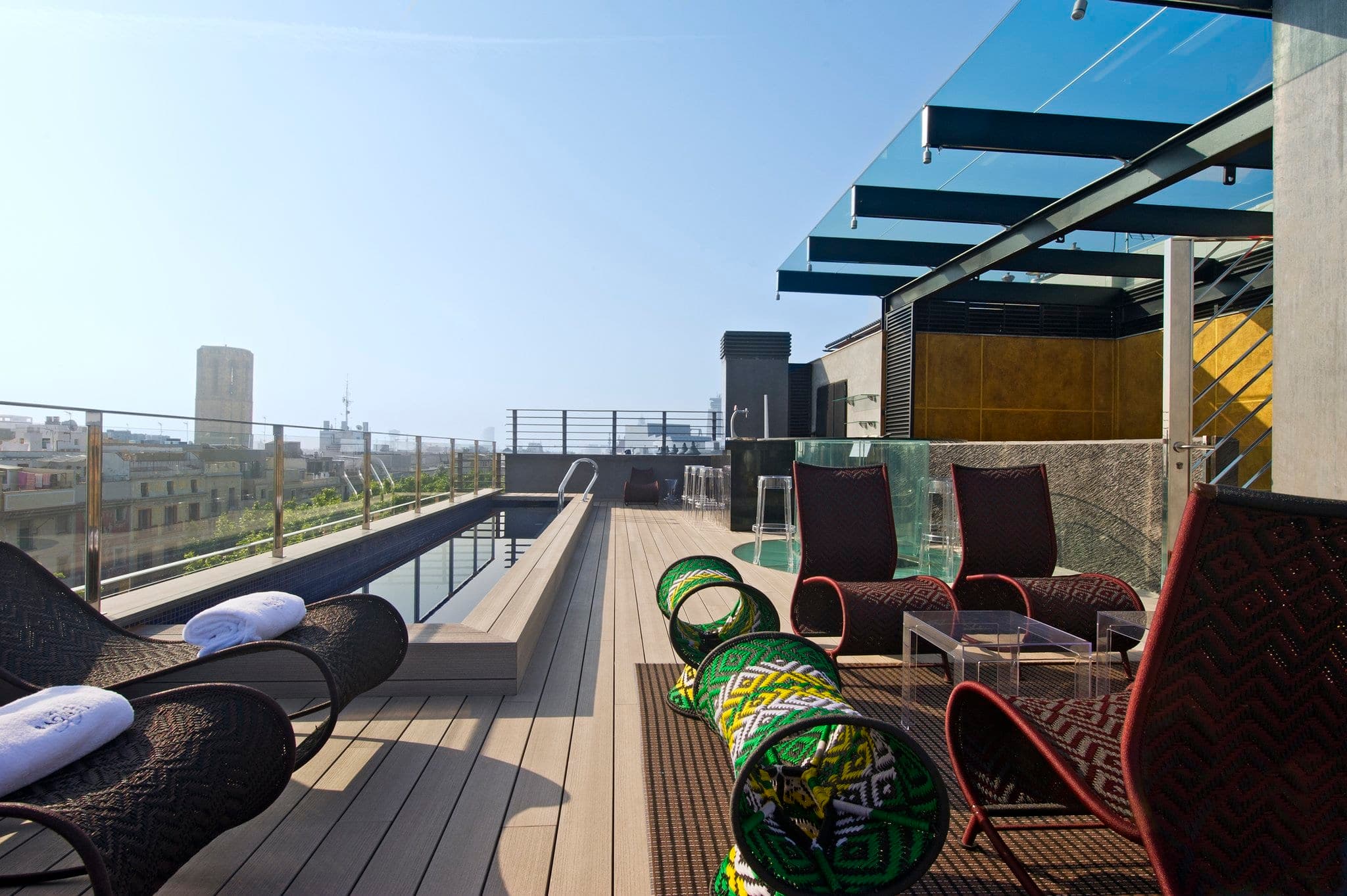
It sits on the busiest street in Barcelona, yet Hotel Bagués feels like a secret society. Housed in the 1850s El Regulador palace, this isn't your typical sun-drenched Spanish stay; it’s a moody, seductive 'jewel box' in the most literal sense. The interiors are a masterclass in dark luxury—think Madagascar ebony partitions, gold leaf accents, and floors paved with rimini marble. It’s anti-minimalist and unapologetically opulent, a fitting tribute to its heritage as the former workshop of Masriera jewelers. In the rooms, the drama continues. While the street-facing balconies offer front-row seats to the La Rambla theater, the soundproofing is forensic. Inside, you’re surrounded by genuine Art Nouveau jewelry pieces displayed in illuminated vitrines—sleeping inside a museum has never been this chic. For dining, skip the tourist paella traps outside and descend to El Regulador Bistrot. The lobster carpaccio and red tuna tartare duo is the standout here, served in a space that balances the building's historic weight with modern bistro flair. The rooftop is the final reveal. It’s intimate—the pool is strictly for plunging, not laps—but the 360-degree views of the Gothic Quarter spires make it the city's best perch for a sunset gin tonic. **Verdict:** A dark, sophisticated sanctuary for the traveler who wants the location without the noise.
“Skip the hotel breakfast (approx. €50) and walk 150 meters to the Boqueria Market for world-class jamón and fruit at a fraction of the price.”
Insider TipAvg. Nightly Rate
200USD
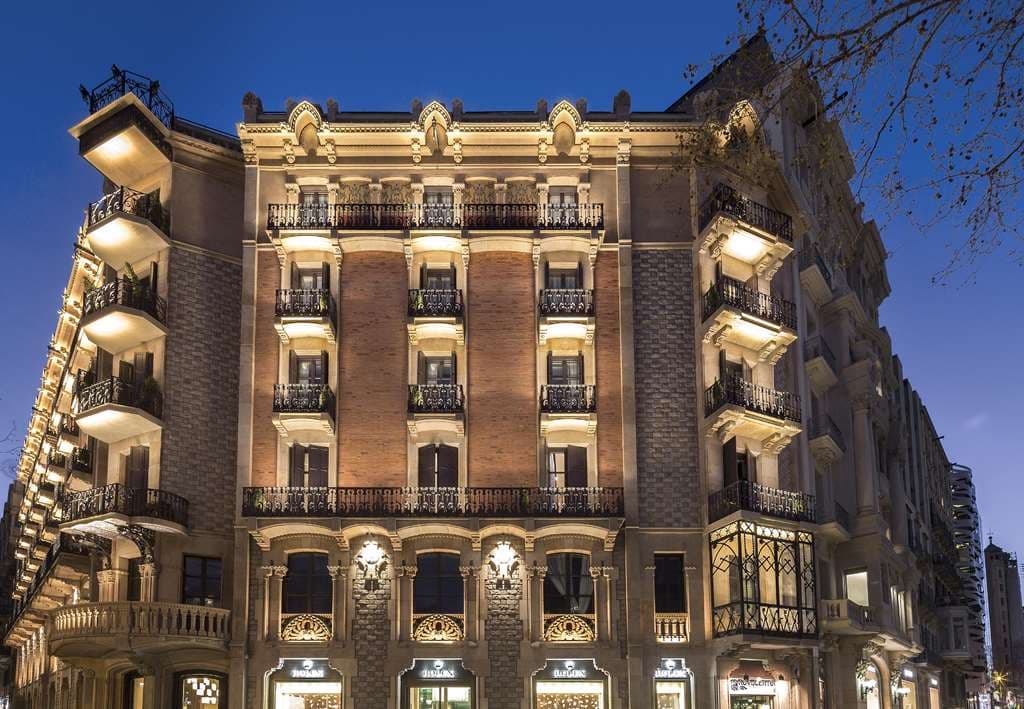
Standing shoulder-to-shoulder with Gaudí’s Casa Batlló on the famous 'Block of Discord,' the Monument Hotel occupies the neo-Gothic Casa Enric Batlló, yet its interiors are defiantly contemporary. The pre-modernist façade gives way to a sophisticated industrial core where exposed brick walls and iron beams frame a restored grand marble staircase. It is a rigorous dialogue between a 19th-century skeleton and 21st-century 'silent luxury.' In the 84 rooms, the aesthetic is masculine and textural: natural oak flooring, velvet armchairs, and raw brickwork. The attention to detail is clinical—Loewe TVs, Jacob Jensen telephones, and Coco-Mat pillow menus ensure functionality matches form. Bathrooms are sanctuaries featuring Victoria & Albert free-standing tubs and Jo Malone amenities (escalating to Diptyque in the suites). However, the hotel’s true pulse beats in its kitchens. Under the baton of Martín Berasategui, the property holds four Michelin stars. Lasarte (three stars) is the headliner, where the millefeuille of smoked eel, foie gras, and green apple is mandatory. For a brighter affair, Oria (one star) serves modern Mediterranean under an inverted pyramid skylight. While the rooftop pool is merely a dipping spot, the direct view of the adjacent La Pedrera compensates for the lack of laps. Verdict: A design-forward gastronomic fortress that prioritizes culinary excellence and architectural integrity over resort-style sprawl.
“Book a Junior Suite for a balcony overlooking Paseo de Gracia, and utilize the MyMo concierge to secure a table at Lasarte weeks in advance—walk-ins are virtually impossible.”
Insider TipAvg. Nightly Rate
350USD
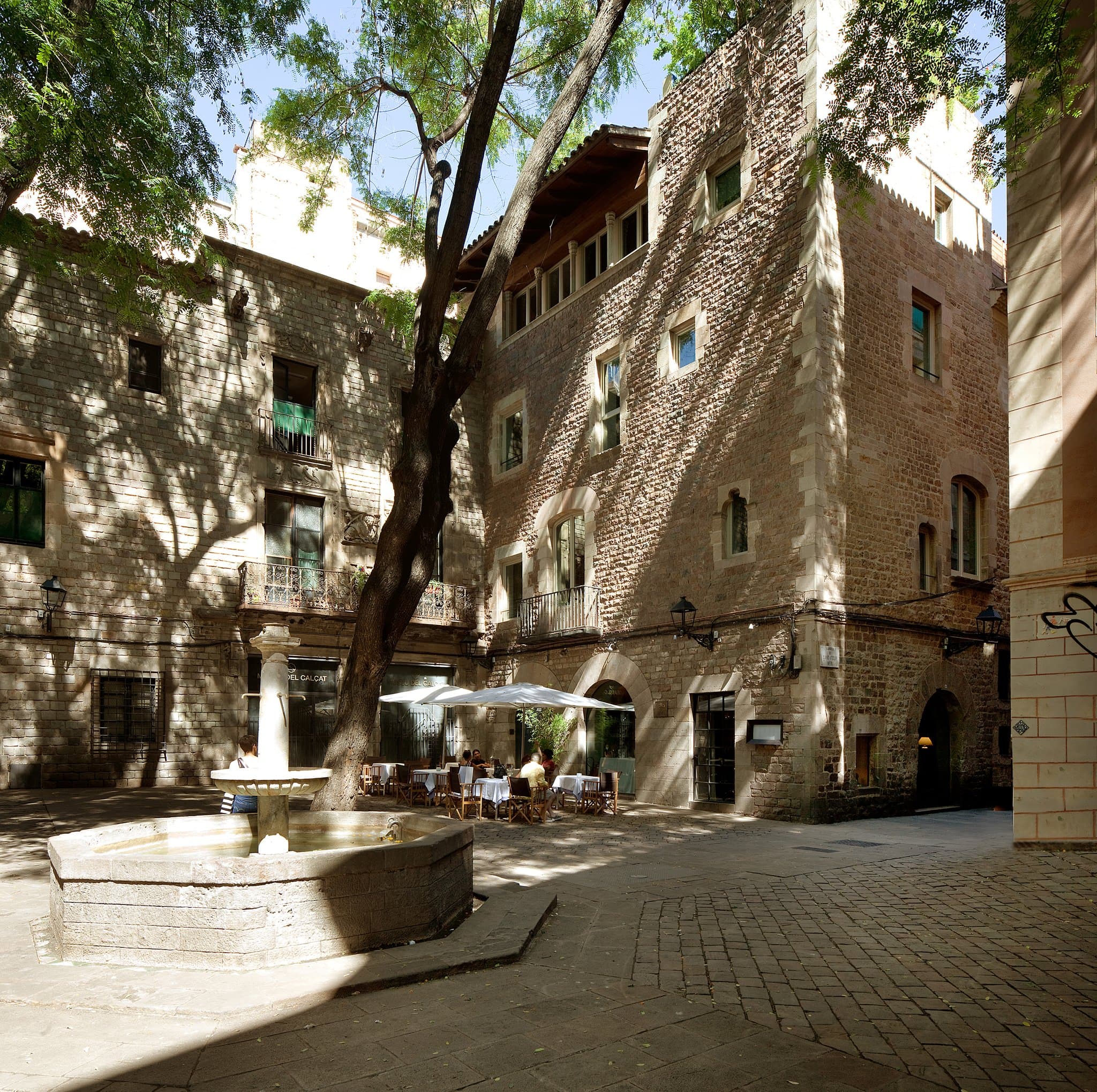
If silence is the ultimate luxury in Barcelona, Hotel Neri is its wealthiest patron. Tucked away in Plaça de Sant Felip Neri—a tragic, cinematic square scarred by Civil War shrapnel and shaded by tipuana trees—this 22-room Relais & Châteaux property feels less like a hotel and more like a hushed secret. The architecture is a formidable marriage of two aristocratic houses, one medieval and one 18th-century, where 12th-century stone arches now frame contemporary crushed velvet sofas and oversized quartzite bathrooms stocked with Molton Brown amenities. The rooms are moody and tactile, featuring original wood coffering and handmade colored rugs, though the lighting can be notoriously dim—romantic for some, frustrating for those applying makeup without the requested extra mirrors. Downstairs, 'a Restaurant' (helmed by Chef Alain Guiard) serves a standout Oxtail Tatin that demands attention, but the real star is the unheated saltwater plunge pool on the 'Roba Estesa' rooftop. Here, sipping a craft cocktail while gazing at the cathedral dome offers a rare, suspended tranquility above the tourist fray. Service is hyper-personalized; expect staff like Mr. Toma to know your espresso order before you do. **Verdict**: A sophisticated, stony sanctuary for those who prefer their history whispering rather than shouting.
“For maximum privacy, skip the standard rooms and book the 'Casa Neri' apartment next door—it has a private entrance and a kitchenette, perfect for escaping the buskers in the square below.”
Insider TipAvg. Nightly Rate
340USD
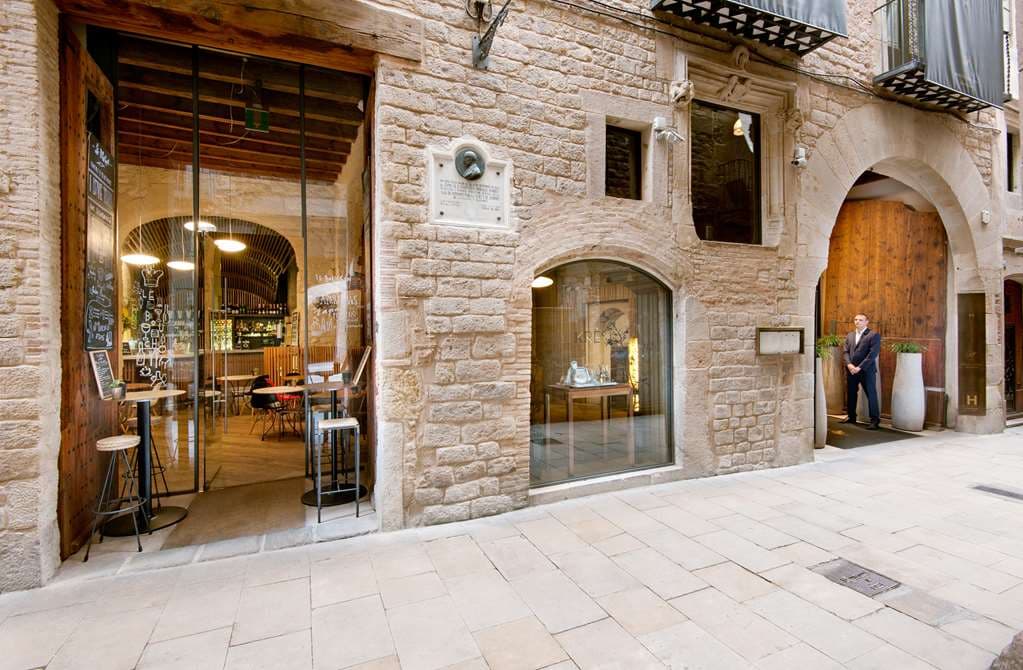
To find the Mercer is to get lost—happily—in the labyrinth of the Barri Gòtic, where Google Maps surrenders to medieval alleyways. This isn't just a hotel; it is a masterclass in architectural alchemy by Pritzker Prize-winner Rafael Moneo. He hasn't just preserved the history here; he has made it habitable. You are literally sleeping inside the city’s ancient defensive fortifications, with 1st-century Roman walls and 12th-century arches cutting boldly through the guest rooms and corridors. The 28 rooms are studies in restraint, allowing the ancient masonry to dominate. While some lower-floor rooms surrender natural light to the narrow streets, the trade-off is a monastic, zen-like silence rarely found in this chaotic district. The furniture is sleek, modern, and unobtrusive—think unpretentious luxury that knows its place against two thousand years of stone. Dining here is equally serious. The Mercer Restaurant, recently awarded a Michelin Key, serves a braised venison with white chocolate that defies logic but rewards the palate. For a more casual affair, the street-side gastrobar, Le Bouchon, offers the signature 'Gothic Quarter Bomb'—a spicy meatball that demands a glass of local red. The rooftop plunge pool is unheated and small, yes, but floating beneath the dome of the Santa Maria del Mar offers a perspective on Barcelona that no ticketed tour can provide. Verdict: A habitable museum for the design purist.
“Book a room facing the Patio de los Naranjos. You get the scent of orange blossoms in the morning and avoid the echoing noise of the Gothic Quarter alleys.”
Insider TipAvg. Nightly Rate
388USD
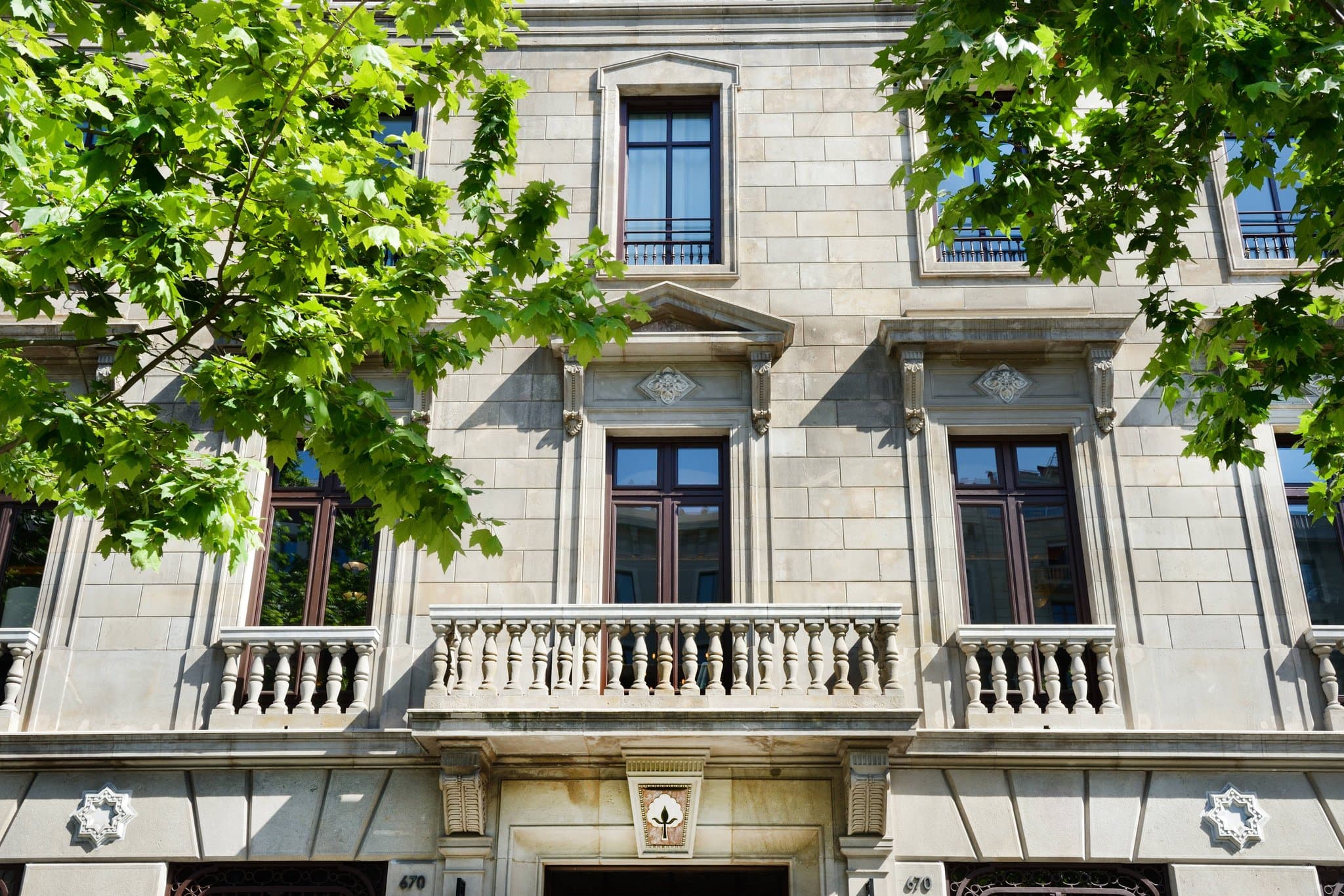
Forget the gaudy excess of the Gothic Quarter; the Cotton House Hotel offers a masterclass in 19th-century industrial chic. Housed in the former headquarters of the Cotton Textile Foundation, this isn’t just a place to sleep—it’s a tactile history lesson curated by designer Lázaro Rosa-Violán. The moment you enter the vestibule, the scent of history (and perhaps a subtle cotton flower fragrance) hits you, flanked by an imposing marble staircase and the famous 1957 suspended spiral staircase that floats like a ribbon of metal. The rooms are an exercise in monochromatic restraint, fitting for a guild dedicated to fabric. We’re talking 300-thread-count Egyptian cotton linens (naturally) and toweling so plush it feels illicit. Bathrooms are stocked with Ortigia amenities, a fragrant nod to Mediterranean citrus. While the entry-level 'Panama' rooms are snug, the design is so sharp you hardly notice. Dining at Batuar is non-negotiable; order the Duck Carpaccio and secure a table on the leafy terrace, a rare Eixample lung. It’s sophisticated, undeniably Catalan, and managed by the 'Gossypium' concierge team who treat your itinerary with the precision of a master tailor.
“Skip the crowded rooftop plunge pool for swimming; instead, book a 'Textile Concept' treatment at the Mayan Spa, then ask the Gossypium concierge to unlock the hidden library for a late-night drink.”
Insider TipAvg. Nightly Rate
320USD