No. 01

BeijingBeijing86 verified reviews
9
.8
Bitvoya Edit
Layering imagery, place, and detail before the page opens.
Beijing’s true soul lies in its Hutongs, the labyrinthine alleyways that weave through the heart of the capital. For the discerning traveler, staying in a restored Siheyuan (courtyard house) offers an unparalleled connection to Imperial history without sacrificing modern comforts. Our curated collection focuses on properties that masterfully blend heritage architecture with ultra-luxury service. From the bustling alleys near Qianmen to the serene waters of Houhai and the regal aura near the Summer Palace, these residences like the Mandarin Oriental Qianmen and Cours Et Pavillons offer privacy, exclusivity, and a taste of old-world aristocracy.
Choosing a courtyard residence in Beijing is not merely about booking a room; it is about inhabiting a piece of living history. Unlike standard glass skyscrapers, these ultra-luxe properties, such as the Waldorf Astoria Beijing (Hutong Studios) and The PuXuan Hotel and Spa, offer a tactile connection to the city's past. Guests can experience the tranquility of a private courtyard, a luxury once reserved for high-ranking officials and royalty. The juxtaposition of ancient tile roofs with cutting-edge amenities like heated floors, butler service, and Michelin-starred dining creates a travel experience that is culturally immersive yet uncompromisingly comfortable.
When booking an ultra-luxe courtyard hotel in Beijing, expect a high degree of privacy. Most Siheyuan hotels have few rooms, ensuring personalized attention. Architectural details are paramount; expect hand-carved wooden screens, intricate stone masonry, and curated art pieces. Dining is often an intimate affair, with many properties offering private chefs or set menus featuring Imperial cuisine. While the exterior exudes antiquity, the interiors of hotels like Xitan Hotel Beijing are equipped with state-of-the-art technology, air purification systems, and lavish spa facilities, ensuring your stay is as rejuvenating as it is culturally enriching.
A Siheyuan hotel is a traditional courtyard residence converted into a luxury property. Unlike high-rise hotels, these offer a ground-level, private experience with historic architecture, often located within the culturally rich Hutong neighborhoods.
Yes, many properties like the Mandarin Oriental Qianmen and Yanbai Villa offer spacious suites and private courtyards that provide ample space and privacy for families, though the atmosphere is generally quieter and more serene than large resorts.
The Qianmen area (for Mandarin Oriental) and Dongcheng District (near the Forbidden City for Cours Et Pavillons) are top choices. They offer immediate access to major historical sites while providing the secluded luxury of Hutong living.
Explore our complete curated list of luxury accommodations, from boutique hideaways to grand dames.
Explore All Beijing HotelsForget the crowded battlements of Badaling. Just twelve kilometers away, the Tsingpu Badaling Retreat offers a sophisticated counter-narrative to the typical Great Wall excursion. Anchored within the Ruiyun Winery, this 15-room estate repurposes local stone and timber into a structure that feels less like a hotel and more like an intellectual’s country manor. The design is stark and elemental, prioritizing silence and space over gilded ornamentation. The guest experience here is curated, not passive. You aren’t just checking in; you’re enrolling in a cultural curriculum that ranges from painting Tu’er Ye (Rabbit God) figurines to wet-plate photography workshops. Inside the rooms, the aesthetic is monastic chic—think high ceilings and private courtyards that frame the Beibalou Peak rather than television screens. Dining at Suishi Restaurant challenges the rustic setting with sharp, modern fusion. The signature M5 Australian Beef Belly is technically precise, while the Wasabi Cheese Shrimp Balls offer a biting contrast to the estate’s own Chateau de Nubes vintages. With no pool or sprawling spa, the focus remains strictly on the vines and the view. It is a place for red wine and contemplation, serviced by intuitive butlers who know when to pour and when to vanish.
“Request a room facing the vineyard for uninterrupted views of the harvest. Also, skip the generic souvenir shops; the on-site underground wine cellar offers tastings of the estate’s best vintages which aren't widely available elsewhere.”
Insider TipAvg. Nightly Rate
460USD

You do not stay at the Grand Hotel Beijing for the Wi-Fi speed or cutting-edge minimalist design. You stay because, frankly, no other property lets you practically lean against the Imperial City walls while brushing your teeth. There is a palpable sense of time travel here; the lobby doesn't just nod to history, it immerses you in a Qing Dynasty fever dream, complete with a noon water show at the atrium’s Zodiac Fountain that feels delightfully out of step with the 21st century. While the interiors tread the fine line between "classic" and "needs a refresh"—expect heavy brocades and furniture that feels museum-adjacent—the trade-off is undeniable grandeur. The indoor pool, heated to a precise 26°C, features a "magnificent desert gold" design that rivals the opulence of the Summer Palace. Bathrooms are stocked with premium herbal amenities by Baicaoji—a nice local touch over the usual imported bottles. Dinner at Zi Jin offers seasonal delicacies, but the real draw is the Red Wall Café, where the view of the crimson ramparts makes the homemade creamy Douzhier ice cream taste significantly less polarizing. The plumbing might grumble like an old emperor, and the staff’s English is sporadic, but when you are standing on the rooftop terrace watching the sunset gild the Forbidden City’s 9,999 rooms, modern complaints evaporate. It is imperfect, undoubtedly, but it is also irreplaceable.
“Skip the lobby bar for sunset; head immediately to the rooftop terrace 30 minutes before dusk. It’s the only place in the city where you look *down* into the Forbidden City.”
Insider TipAvg. Nightly Rate
170USD
While the 'courtyard' label usually pulls one toward the claustrophobic charm of downtown Beijing’s hutongs, Tsingpu Badaling Retreat demands a detour to the Huailai Valley. Here, the courtyard concept expands into a 40-hectare vineyard that feels suspiciously like Tuscany dropped into Northern China. The architecture is a masterclass in texture: recycled grey brick and rough-hewn stone walls that frame the Beibalou Peak rather than shut it out. With only 15 rooms, the silence is heavy and expensive. The interiors reject typical imperial reds for muted earth tones and oak barrels, referencing the on-site Chateau de Nubes winery. You aren’t just sleeping here; you’re hiding. Service is handled by private butlers who ghost in and out, arranging everything from vineyard walks to Tu'er Ye (Rabbit God) painting workshops. Dining at Suishi Restaurant is a definitive high point, dodging the 'hotel food' curse with a fusion menu that actually works. The M5 Australian Beef Belly is rich enough to combat the valley chill, while the Wasabi Cheese Shrimp Balls provide a sharp kick. It lacks a pool—a deliberate omission to force you into the cultural workshops—but after a glass of the estate’s own Cabernet, you won’t miss the laps.
“Book a ground-floor room with a private terrace facing the vineyard for the best sunset views over the vines.”
Insider TipAvg. Nightly Rate
460USD
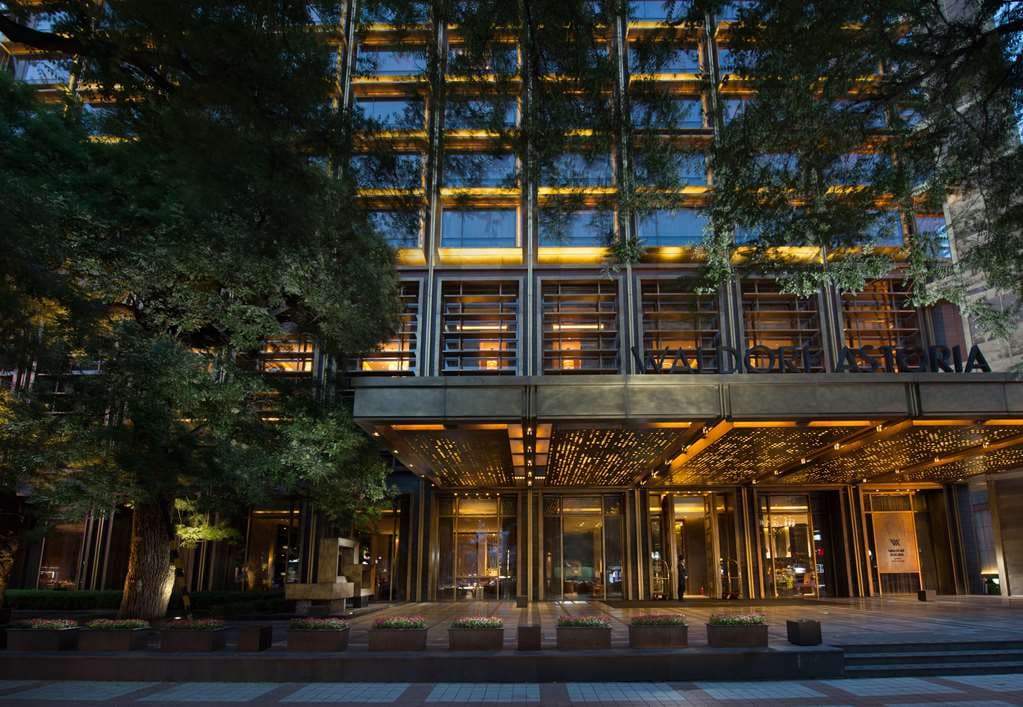
It is a bold architectural paradox: a gleaming, bronze-latticed tower standing guard over a set of low-slung, grey-brick courtyards. While the main tower of the Waldorf Astoria Beijing offers impeccable Yabu Pushelberg polish, the true flex here is booking a Hutong Villa. These standalone residences are not merely rooms; they are a masterclass in Ming Dynasty resurrection, complete with two stories of subterranean luxury and private courtyards that—despite the looming high-rises—feel worlds apart from the clamor of Wangfujing. Inside, the experience is less 'hotel stay' and more 'aristocratic residency.' The 'silent' butler service is unnervingly good; tea appears before you realize you’re thirsty. Dining is equally serious. Skip the western fare and descend into Zijin Mansion for the braised pork belly ribs—a dish so tender it practically dissolves upon eye contact. If the city’s grit gets to you, the spa’s Valmont treatments and the heated indoor pool provide a clinical, serene reset. It’s not a sprawling resort, but for the traveler who demands the soul of Old Beijing with the plumbing of 2025, this is the only address that matters.
“Book the 'Hutong Studio' for the courtyard experience at a lower price point, but demand a villa away from the street side for maximum silence.”
Insider TipAvg. Nightly Rate
235USD
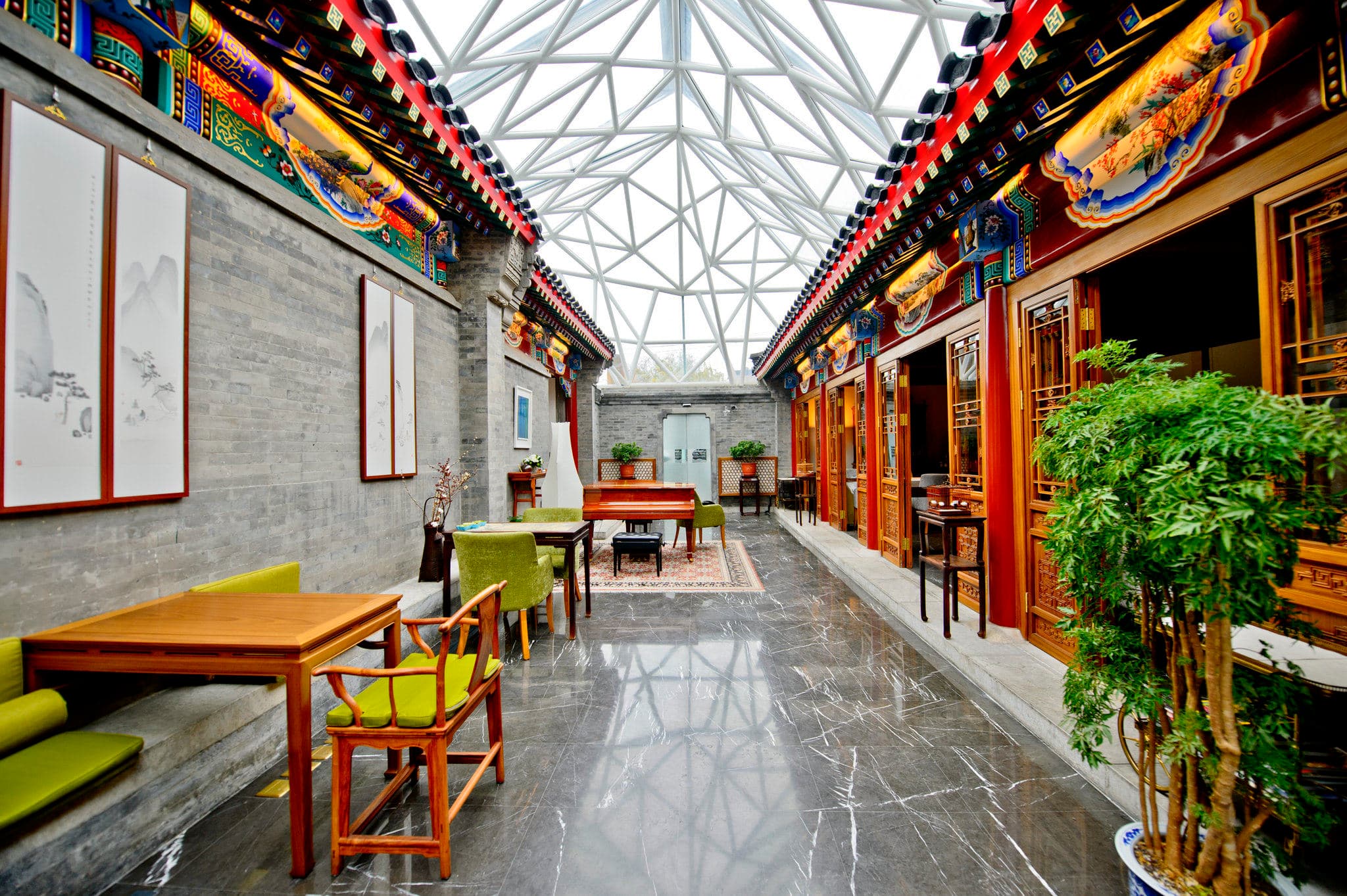
Forget the marble-clad lobbies of Chaoyang. The ultimate Beijing flex isn't a skyline view; it is absolute silence, specifically the kind found behind the unassuming grey doors of Cours Et Pavillons. Located in the dusty, authentic tangle of the Weijia Hutong, this seven-room restored Siheyuan is less a hotel and more a private museum where you are the only exhibit. The contrast is jarring in the best way. You step from the raw, unpolished hum of the alleyways into a glass-roofed atrium where dust motes dance in shafts of light hitting centuries-old grey tiles. There is no front desk queue—just a dedicated butler (ask for Frank) who whisks you to a suite defined by carved wooden Moon Gates and 400-thread count silence. While the architecture screams Ming Dynasty, the amenities are firmly modern. We’re talking heated floors and spa tubs deep enough to lose yourself in. Dining is a surprising pivot to the Seine: the on-site French restaurant delivers a foie gras with red wine sauce that rivals the setting’s grandeur. There is no pool, no gym, and your taxi *will* struggle with the narrow alley. But if you’re here to run on a treadmill, you’ve missed the point. You are here to live like a modern Mandarin.
“Book the 'North Courtyard Deluxe Room'. It features a massive private spa tub and offers the most authentic architectural layout of the original residence.”
Insider TipAvg. Nightly Rate
300USD
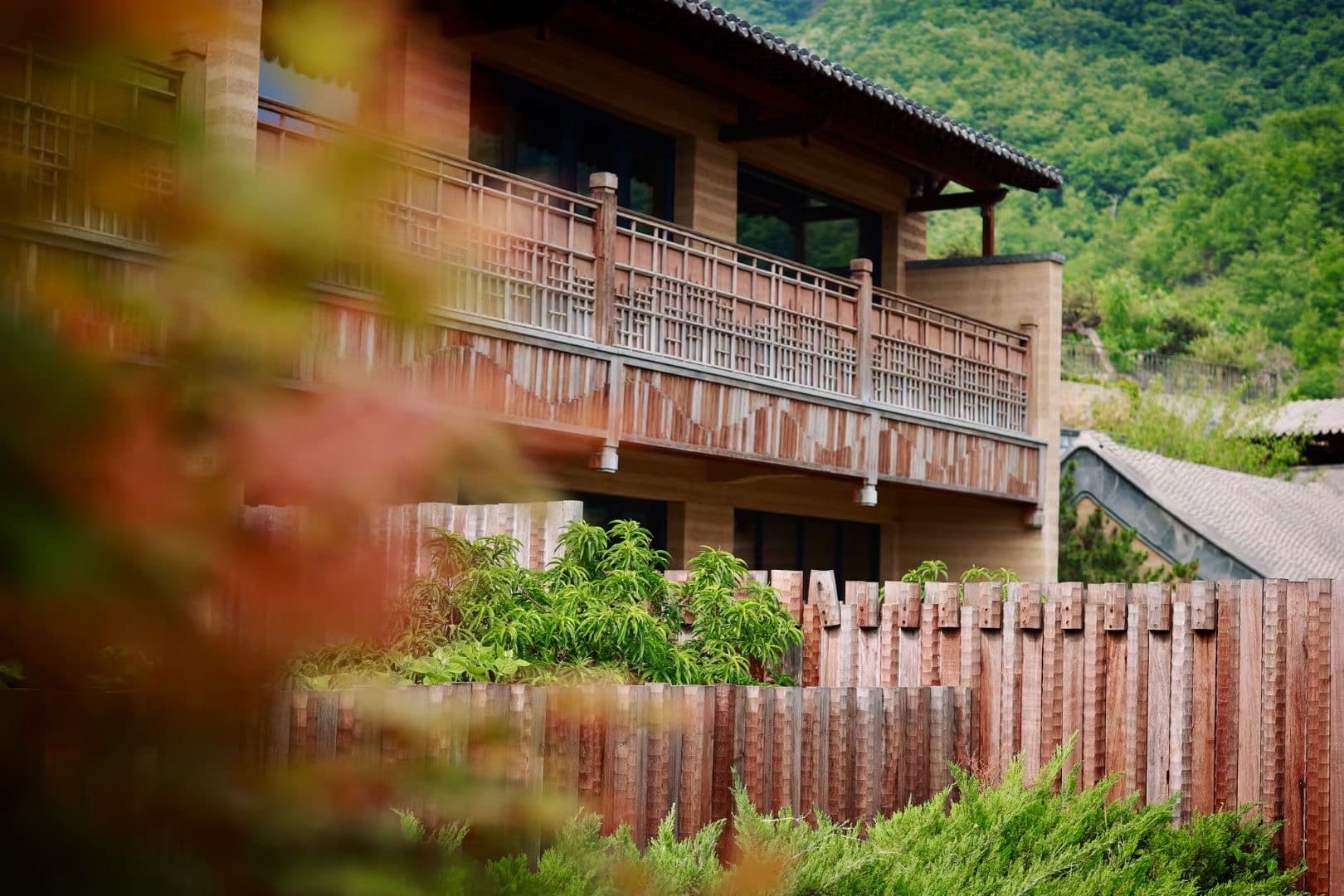
While the name promises 'Beijing', Xitan is a sanctuary removed from the capital's clamor—a one-hour pilgrimage west to the misty Mentougou mountains. Built upon the footprint of a historic village near the 1,700-year-old Tanzhe Temple, this property isn't just a hotel; it's a reconstructed Ming Dynasty dreamscape. The arrival experience is cinematic: a mesmerizing 'fish scale' stone waterfall in the lobby courtyard that immediately lowers your heart rate. The 38 rooms are arranged in traditional courtyard layouts, offering hermetic privacy with heated floors and diffuser-ready Le Labo amenities. But the real pilgrimage here is culinary. The on-site restaurant, The House of Rong, is an outpost of the legendary Xin Rong Ji empire; do not leave without ordering the signature Braised Yellow Croaker—it is life-changing. Between the Japanese Lapidem spa treatments and the adults-only policy (strictly 12+), Xitan offers a silence so profound it feels like a luxury in itself. A dedicated retreat for those who have already 'done' the Forbidden City.
“Request a 'Courtyard Suite' for the most authentic private residence feel, and book your table at The House of Rong at the same time as your room—it fills up with city locals.”
Insider TipAvg. Nightly Rate
771USD

Finding this property is the first test of your resolve; taxis surrender at the narrow entrance of Yangfang Hutong, leaving you to navigate the final stretch on foot. But the arrival is a cinematic payoff. Designed by the Singapore-based Ministry of Design, Blossom House (formerly VUE) is an architectural provocateur in a neighborhood of traditionalists. The campus of 1950s buildings has been aggressively reimagined: charcoal greys and gold lattice screens slash through the historic grey brickwork, and giant wireframe pink rabbits—the property's surreal mascots—perch on rooftops like playful guardians. Inside, the reverence for the past is replaced by a moody, club-like sophistication. Rooms are dark and tactile, equipped with Dyson dryers, complimentary minibars stocked with local sodas, and Appelles apothecary amenities. The Pink Rabbit restaurant serves a competent Spanish seafood rice and a show-stopping roasted suckling pig, though the real draw is the Moon Bar’s rooftop terrace, offering uninterrupted views of the frozen (or rippling) Houhai Lake. A word of caution: the polished black marble floors in the wet areas are treacherous when damp—step carefully. This isn’t a quiet retreat for meditation; it’s a design-led social hub for those who want Beijing’s history served with a shot of adrenaline.
“Skip the crowded main entrance. Ask the concierge for the key card to the private rear gate—it dumps you directly onto the Houhai lakeside path, bypassing the tourist crush.”
Insider TipAvg. Nightly Rate
118USD
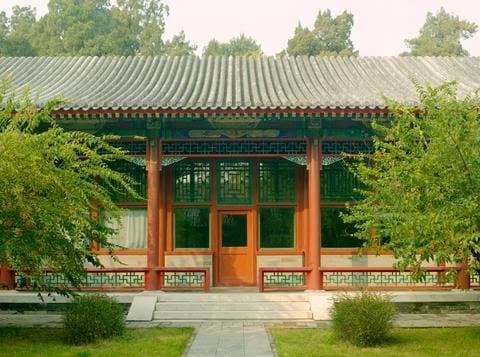
The crimson 'Secret Gate' adjacent to the Summer Palace’s East entrance still opens for guests, but the plaque outside has changed. Following the December 2025 departure of Aman, the property has been rechristened the Beijing Yihe Hotel. Fortunately, the imperial DNA remains stubborn. These century-old pavilions—once waiting quarters for those seeking an audience with Empress Dowager Cixi—retain their haunting, cinematic gravity. The floors are still paved with 'Golden Bricks' (Jin clay tiles fired for months to ring like metal), and the bamboo blinds still filter the Beijing sun into geometric noir shadows. The transition feels seamless in service, though the hardware is showing its age; you won’t find Toto Neorests here, and the heating systems hum with a vintage analog temper. Yet, the trade-off is unparalleled access. Descending into the underground spa—a white, double-helix cathedral—feels like entering a bond villain’s lair, while the 25-meter pool remains one of the city’s most serene. At The Chinese Restaurant, the signature Peking Duck is still carved with surgical precision, the skin shattering like glass. The brand may have left, but the spirit of the Qing Dynasty refuses to vacate.
“Book a 'Courtyard Suite' for the most authentic layout, and use the private gate at 7:00 AM to beat the tourist hordes to the Summer Palace grounds.”
Insider TipAvg. Nightly Rate
714USD
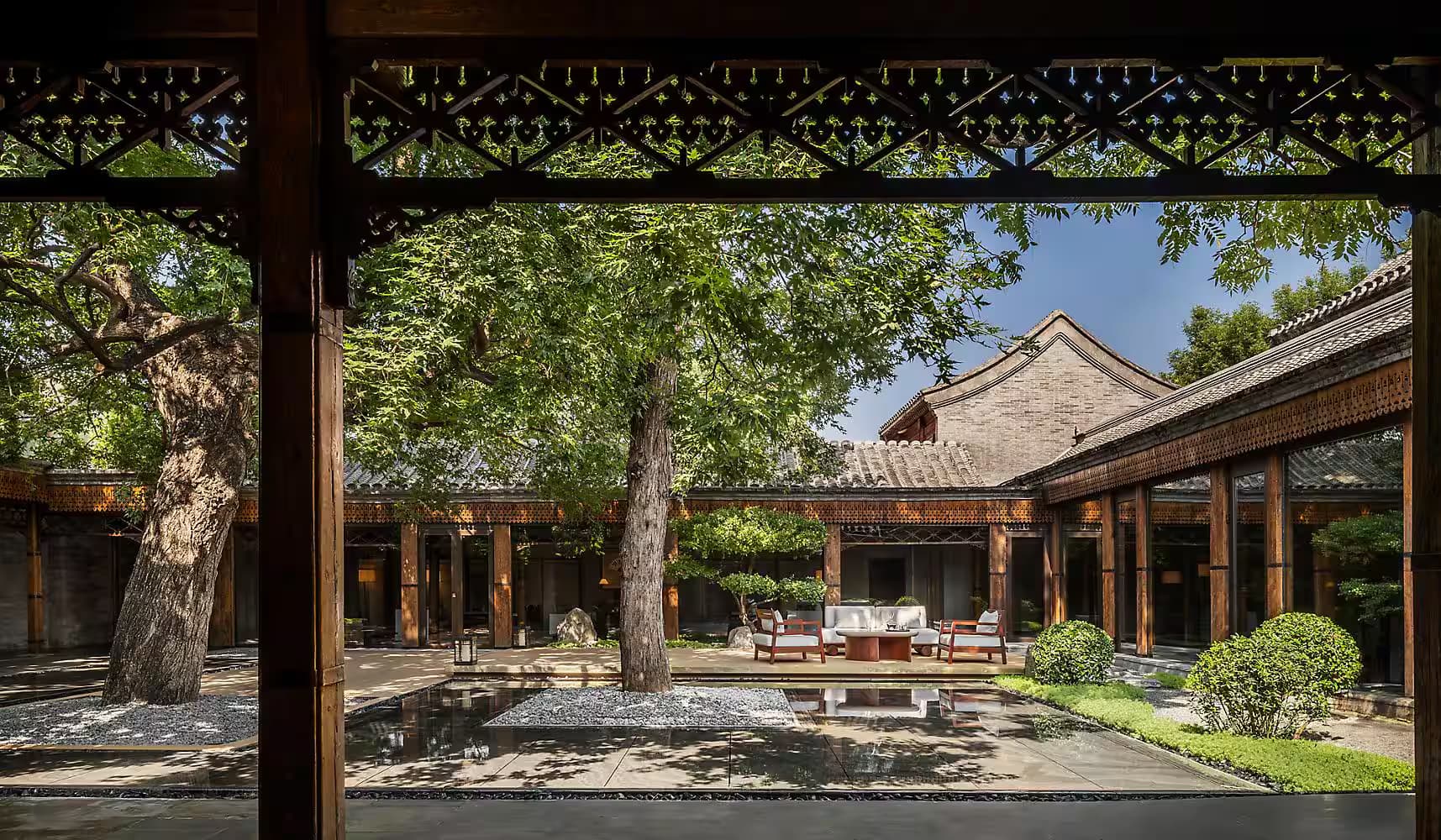
Forget the hermetically sealed glass boxes of the CBD. The Mandarin Oriental Qianmen is a radical dispersal of 42 courtyard houses ('siheyuan') threaded directly into the grey-brick capillaries of the Qianmen East district. This isn't just a hotel; it's a neighborhood acquisition. You don't take an elevator to your room; you take a buggy ride through public alleyways, dodging elderly neighbors playing mahjong and drying laundry. The restoration is museum-grade—think charcoal-grey roof tiles and elmwood beams—but the interiors by CCD are unapologetically 21st-century, featuring heated floors, Dyson hair dryers, and Bose sound systems that fill your private open-air courtyard. Dining is equally decentralized. 'Yan Garden', helmed by Chef Fei, serves roasted meats that rival the capital's best, while the Italian bistro 'VICINI' offers Fiorentina steaks with a view of mismatched tiled rooftops. The standout is 'TIAO', a cocktail bar where the 'Folklore' menu mixes spirits with local storytelling. Service is led by butlers who master the complex logistics of buggy transfers with military precision. The verdict? It’s not for those who hate the outdoors (you will walk in the rain), but for cultural immersion, it is unrivaled.
“Request a 'Grand Residential Courtyard' for the most authentic layout. Also, book the sunset hour at TIAO bar immediately upon arrival; the terrace seats vanish fast.”
Insider TipAvg. Nightly Rate
683USD
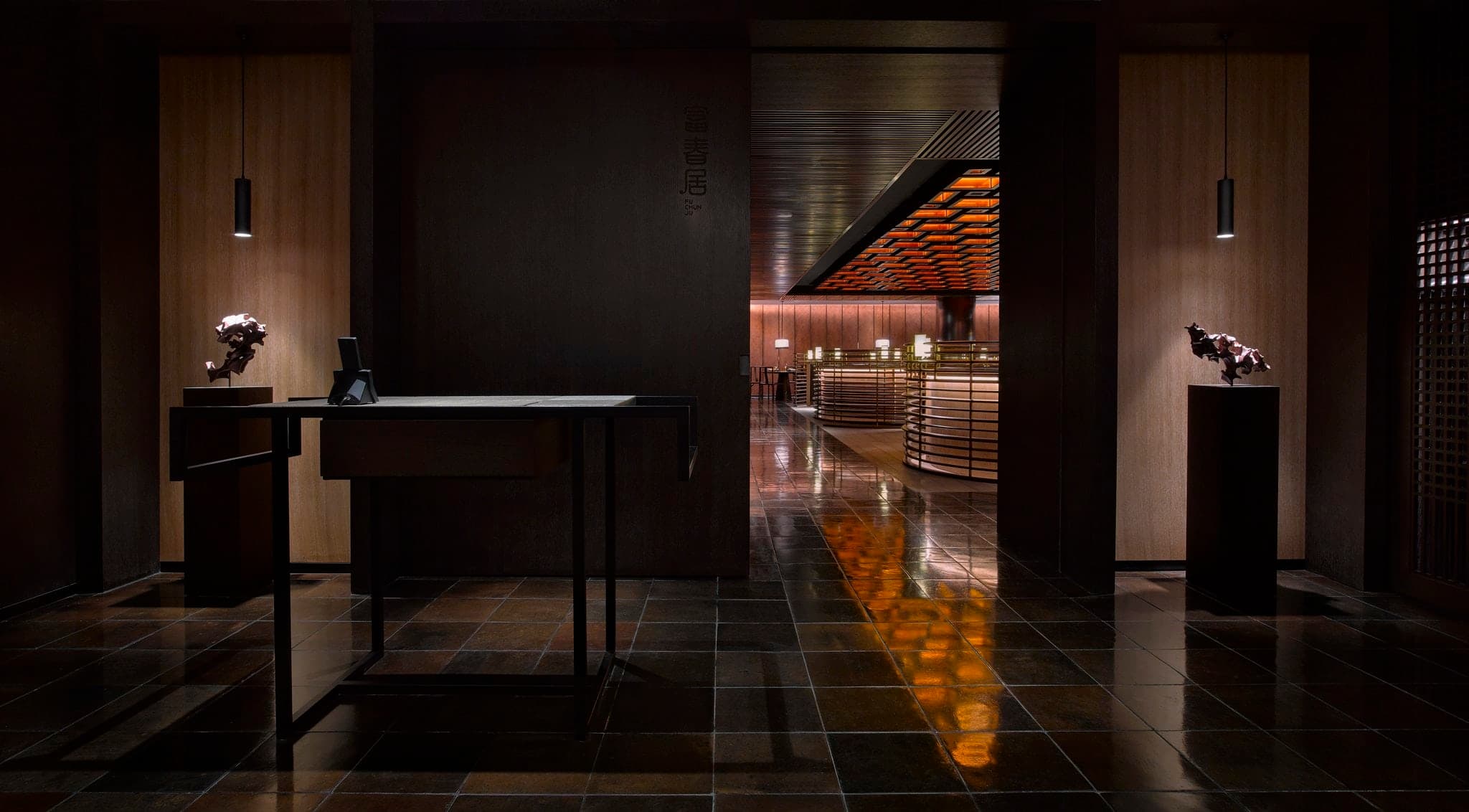
While the surrounding Wangfujing district hums with commercial frenetics, The PuXuan acts as a calibrated architectural silencer. Designed by Ole Scheeren, this isn't another faux-courtyard nostalgia trip; it’s a confident, floating stack of glass bricks that mimics the scale of the adjacent hutongs without mimicking their dust. The 'interconnecting cuboids' create a pixelated frame around the Forbidden City, offering views that feel stolen rather than given. Inside, the lobby eschews the typical grand chandelier for a darker, museum-grade hush, fitting for a property perched atop the Guardian Art Center. Rooms are exercises in masculine restraint—think handcrafted furniture by Shang Xia and 400-thread count linens—but the real flex is the in-room safe, custom-sized to store auction-grade paintings. Dining is equally serious: Fu Chun Ju serves a tea-smoked pigeon egg that demands attention, while Rive Gauche delivers Wagyu beef tartare with a Yunnan twist. The service 'Hostmanship' model kills the rigid 3 PM check-in; here, you arrive and leave on your own terms. It is the ideal headquarters for the art collector who prefers their history served with high-speed Wi-Fi and Guerlain facials.
“Book a 'Grand Studio' on the west side for the best 'pixelated' views of the Forbidden City sunset. Also, ask for the 24-hour flexible check-in/out benefit if staying in a suite.”
Insider TipAvg. Nightly Rate
307USD
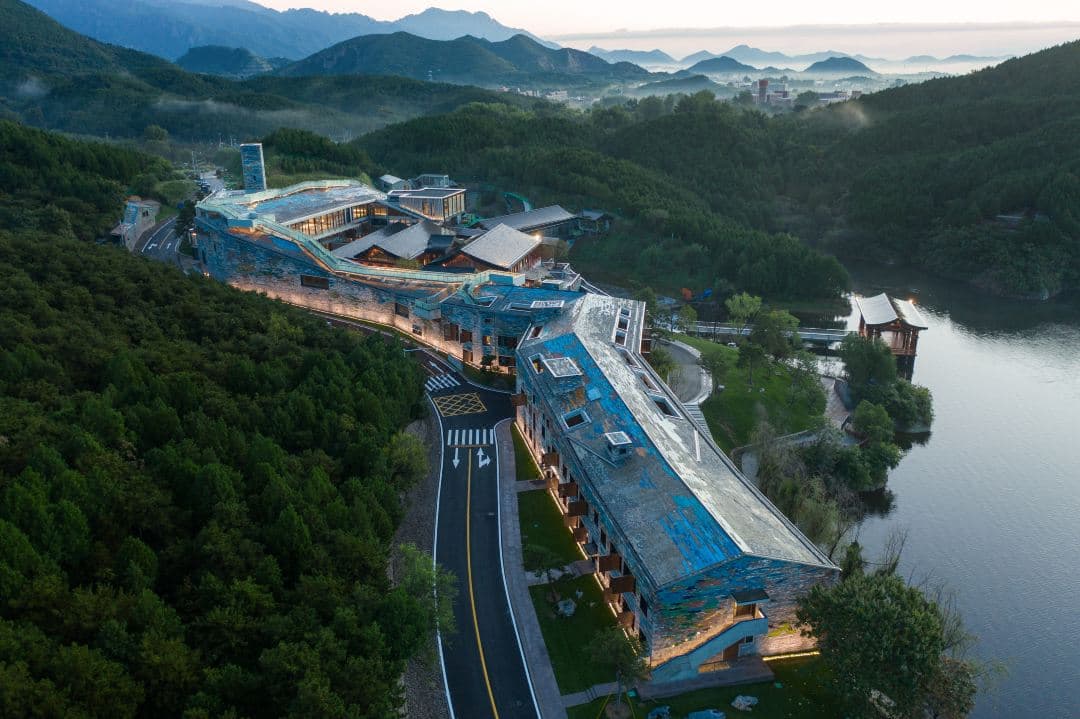
It’s rare that a hotel’s provenance is as compelling as its pillow menu, but Yanbai Villa is a distinct exception. Designed by Pritzker Prize laureate Wang Shu—renowned for his refusal to demolish history—this adults-only sanctuary is less a hotel and more a habitable artifact. The structure itself mimics the undulating topography of Wang Ximeng’s 12th-century masterpiece *A Panorama of Rivers and Mountains*, utilizing Shu’s signature *wapan* technique where recycled Ming-era bricks and tiles form a textured, breathing skin around the property. Inside, the Wimberly Interiors-designed spaces replace standard hotel glitz with scholarly quietude. The arrival hall’s interlocking timber ceiling recalls Forbidden City engineering, while the lobby’s mosaic wall pixelates ancient landscape colors. In the guest rooms (strictly for those over 12), you won't find generic luxury; expect brushed timber, floor-to-ceiling glass framing Yanqi Lake, and bespoke furniture that feels pulled from a curator’s private collection. Dining is equally serious: the Fountain View restaurant serves a flawless M9 Wagyu, but the real draw is the Yanbai Chinese Restaurant, where the Chaoshan-style claypot seafood porridge is rich enough to justify the drive from Beijing. Service is telepathic, led by butlers who wait by your car before you’ve even cut the engine.
“Book the 'Ming Yan' suite for the massive balcony; it offers the exact vantage point of the lake that the architect intended for sunset contemplation.”
Insider TipAvg. Nightly Rate
430USD