No. 01
BeijingBeijing85 verified reviews
9
.8
Bitvoya Edit
Layering imagery, place, and detail before the page opens.
Beijing is a city where ancient majesty meets modern ambition, and nowhere is this more apparent than in the prestigious Dongcheng District. For the discerning traveler, staying in a hotel that offers a visual connection to the Forbidden City is the ultimate luxury. Our curated collection, 'Imperial Outlooks', focuses primarily on the upscale Wangfujing neighborhood, a hub of high-end retail and historical significance. Whether you are gazing out from the artistic terraces of The PuXuan or the legendary suites of the Grand Hotel Beijing, these properties provide a serene vantage point over the golden rooftops of the Palace Museum. Immerse yourself in the heart of the capital, where centuries of imperial history unfold right outside your window.
Choosing a hotel with a view of the Forbidden City transforms a standard trip to Beijing into an immersive historical journey. The Forbidden City, the world's largest palace complex, is the heart of Beijing. Staying in properties like the Mandarin Oriental Wangfujing or the Regent Beijing allows guests to witness the changing light over the golden roofs—from the misty morning sunrise to the dramatic illuminations at night. These hotels offer more than just accommodation; they provide a visual narrative of China's imperial past contrasted with its dynamic present. It is an experience of quiet luxury, separated from the bustling crowds below, offering a private audience with history.
The primary neighborhood for these imperial views is Wangfujing, located in the Dongcheng District. This area is celebrated as Beijing's premier shopping street, pedestrian-friendly and lined with luxury malls and traditional snack streets. Hotels here, such as the Hilton Beijing Wangfujing and The Peninsula Beijing, place you within walking distance of the Palace Museum's gates.
Guests booking these curated hotels can expect world-class amenities designed to complement the spectacular views. Properties like The PuXuan Hotel and Spa are renowned for their design-centric approach and holistic wellness facilities.
The Mandarin Oriental Wangfujing and The PuXuan Hotel and Spa are widely considered to offer the best direct, unobstructed views of the Forbidden City's rooftops, especially from their terrace bars and select suites.
Yes, most hotels in our 'Imperial Outlooks' collection, particularly those in the Wangfujing area like The Peninsula Beijing and Hilton Beijing Wangfujing, are within a 15-20 minute walk to the Forbidden City.
Absolutely. Wangfujing is one of the best areas for tourists in Beijing due to its central location, pedestrian-friendly shopping streets, proximity to major historical sites, and excellent subway connectivity.
Explore our complete curated list of luxury accommodations, from boutique hideaways to grand dames.
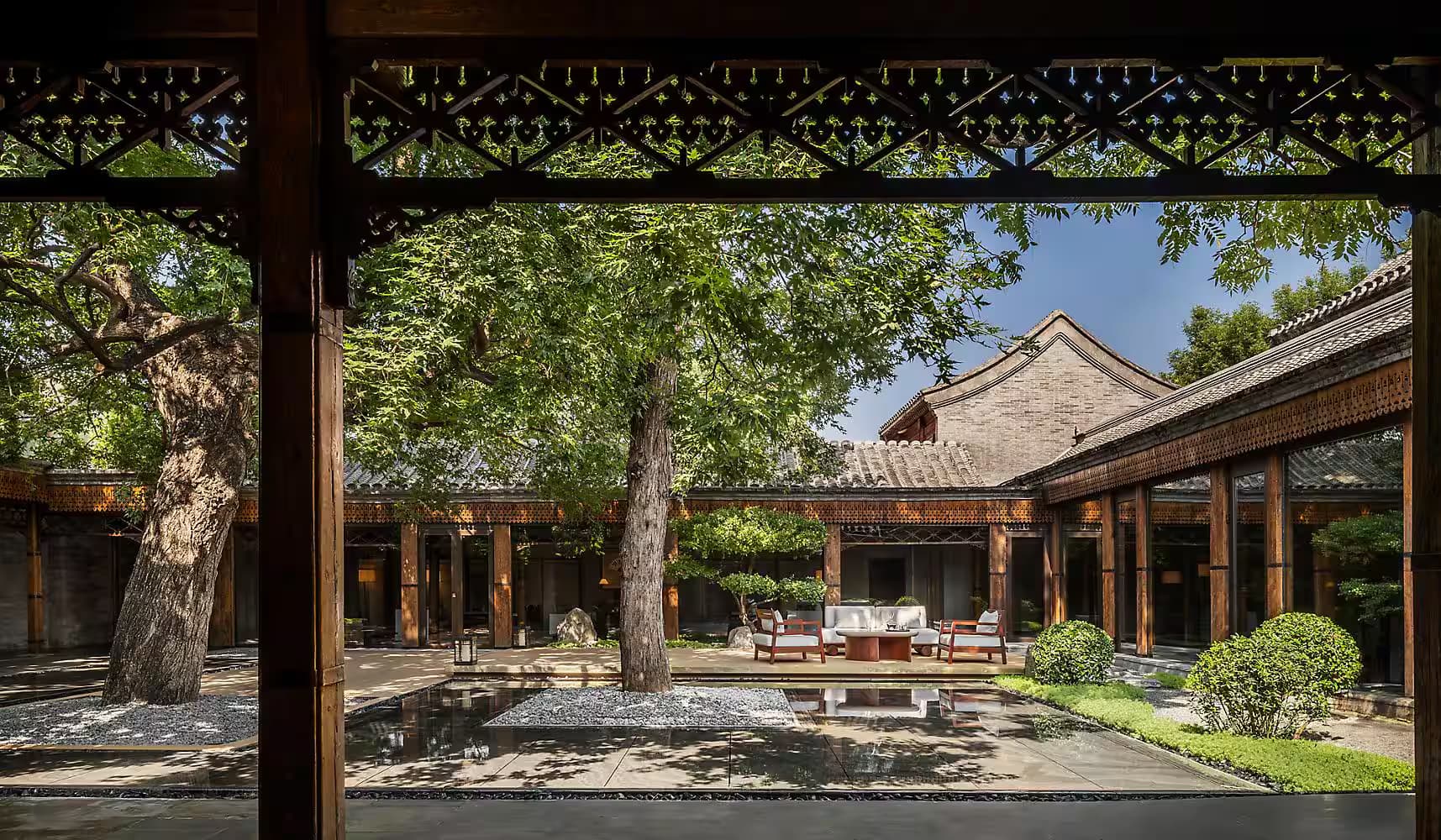
Explore All Beijing HotelsIf the Forbidden City is about looking at history, Mandarin Oriental Qianmen is about sleeping inside it. Opened in late 2024 and already crowned #14 in The World's 50 Best Hotels 2025, this isn't a hotel in the traditional sense. It is a dispersed collection of 42 siheyuan (courtyard houses) stitched into the fabrick of the historic hutongs just south of Tiananmen. There are no gilded revolving doors here; instead, you navigate public alleyways—dodging the occasional neighbor on an e-scooter—to reach your private gate. The suites are masterclasses in restoration, featuring exposed Ming-dynasty timber beams paired with heated stone floors and contemporary Italian furniture. While the absence of a swimming pool is noted, the spa’s Biologique Recherche treatments and 'healing space' offer a more cerebral form of relaxation. Dining is equally serious: Yan Garden by Chef Fei serves Cantonese roast meats that rival the capital’s best, while Tiao Bar’s patio offers a sunset view over tiled rooftops that feels utterly cinematic. Service is hyper-personalized; butlers manage the complex logistics of buggy transfers with military precision. It is uneven, raw, and utterly magnificent.
“Book a 'Grand Courtyard' for the most authentic layout. In spring/autumn, skip the buggy and ask for one of the hotel's leather-saddled bicycles to explore the alleys at dawn.”
Insider TipAvg. Nightly Rate
683USD
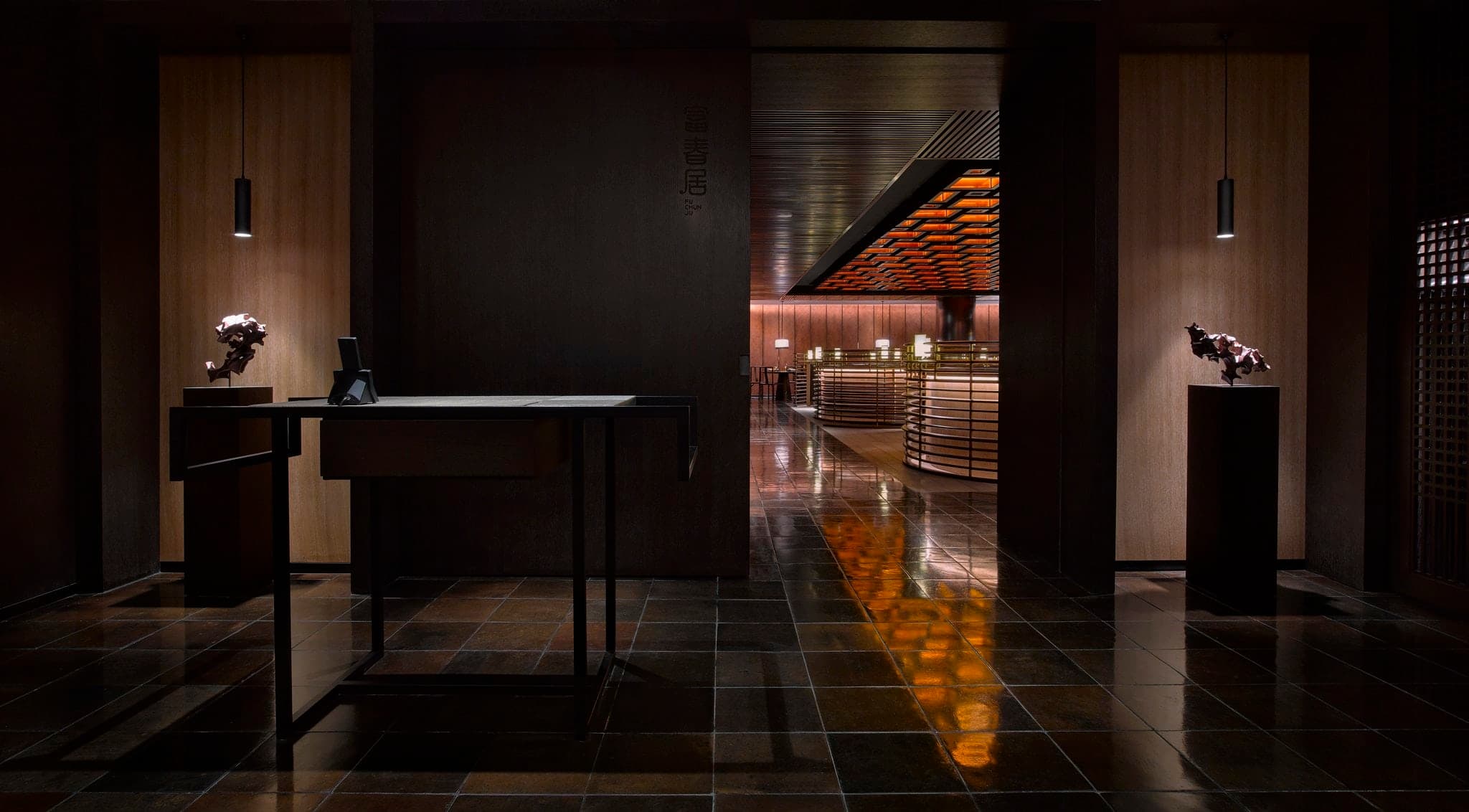
While the neighboring Wangfujing district hums with commercial chaos, The PuXuan stands as a defiant cube of calm. Designed by Ole Scheeren, this isn't another pseudo-imperial palace dripping in red and gold; it is a museum-grade sanctuary of gray basalt and pixelated glass that frames the Forbidden City with surgical precision. The aesthetic here is unapologetically cerebral. In the Grand Studios, the window bays don't just offer a view; they function as inhabitable portrait frames where you can recline on 400-thread count linens while gazing at the Jingshan Park pagoda. The absence of a pool is a bold omission, clearly calculating that guests here prefer the subterranean silence of mainland China’s first Guerlain Spa over splashing around. Culinary execution is equally sharp. At Fu Chun Ju, the tea-smoked pigeon eggs and crispy skin roast pigeon are technical marvels, while Rive Gauche offers a spirited French counterpoint with Wagyu tartare. Service, dubbed 'Hostmanship,' kills the rigid check-in time; the 24-hour flexible stay policy for suites is the ultimate luxury for the jet-lagged. It’s a property that doesn’t just look at history—it stares it down with modern poise.
“Book a Grand Studio specifically for the glass-box window daybed—it's the best reading nook in Beijing. Also, utilize the 24-hour flexible check-in/out if you're flying long-haul.”
Insider TipAvg. Nightly Rate
307USD
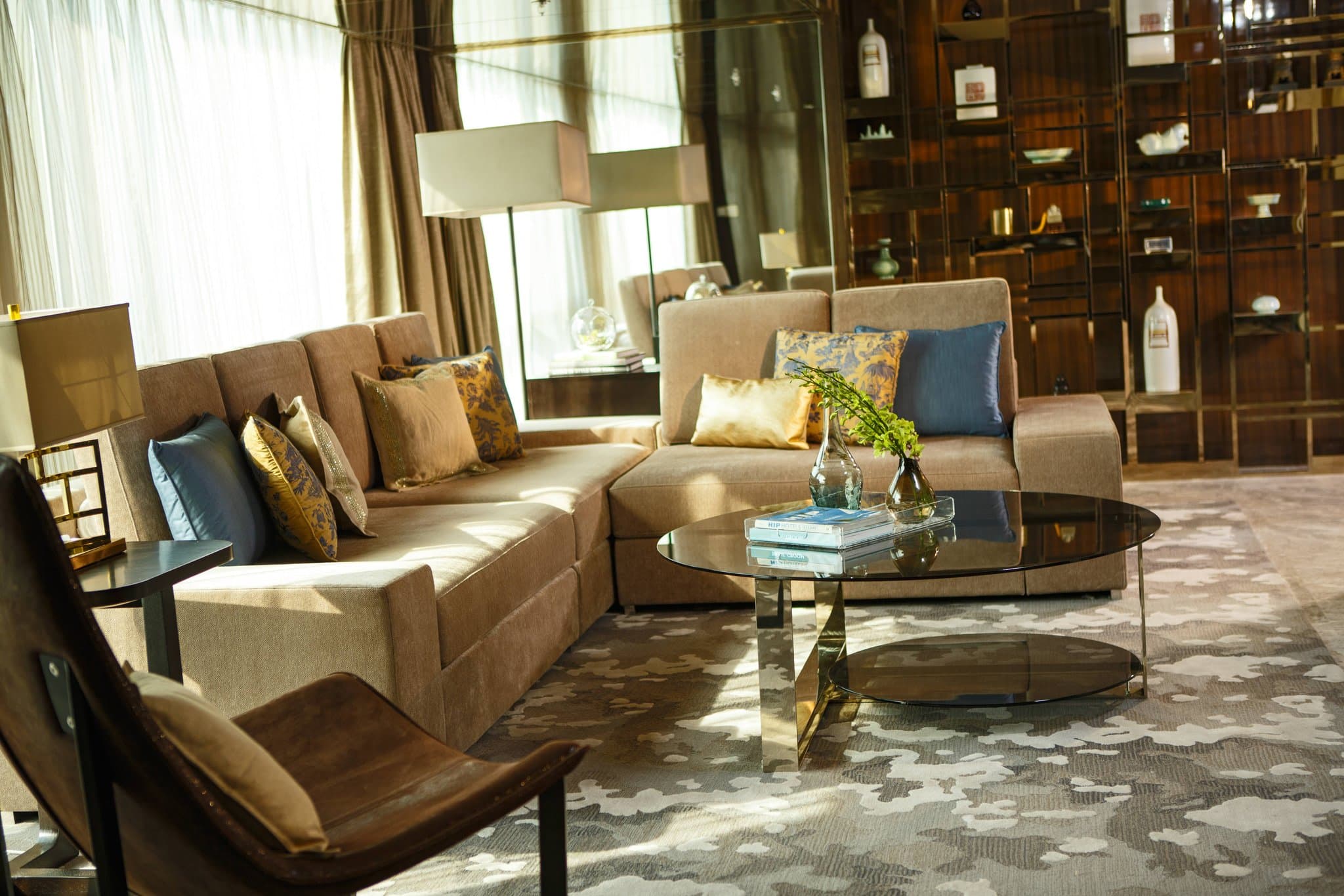
Forget the chaotic scramble of Wangfujing Street below; the Renaissance Beijing Wangfujing operates on a different frequency. Anchoring the northern end of the capital’s busiest pedestrian artery, this property trades the typical Marriott corporate beige for a darker, dramatic aesthetic—think illuminated 'Pixiu' statues guarding the elevators and shifting LED geometric panels. The draw here is singular: the western sightlines. While the entry-level rooms offer standard city views, the savvy traveler books the West-facing Club Rooms. From here, the golden glazed roof tiles of the Forbidden City glitter in the distance, a stark, imperial contrast to the Technogym-equipped fitness center and the distinctively French Kocoon Spa in the basement. Dining is a serious affair at Wan Li, where the Cantonese menu is headlined by a Peking Roast Duck that rivals the dedicated specialist shops nearby—crisp, lacquer-skinned, and carved table-side. Cap the night at R Bar; the cocktails are potent, but the floor-to-ceiling backdrop of Beijing’s glittering grid is the real intoxicant. It is a sharp, polished operation that delivers exactly what it promises: access and architecture.
“Demand a West-facing room on the 15th floor or higher. The Forbidden City view is only visible from these specific angles; lower floors stare directly into office blocks.”
Insider TipAvg. Nightly Rate
112USD
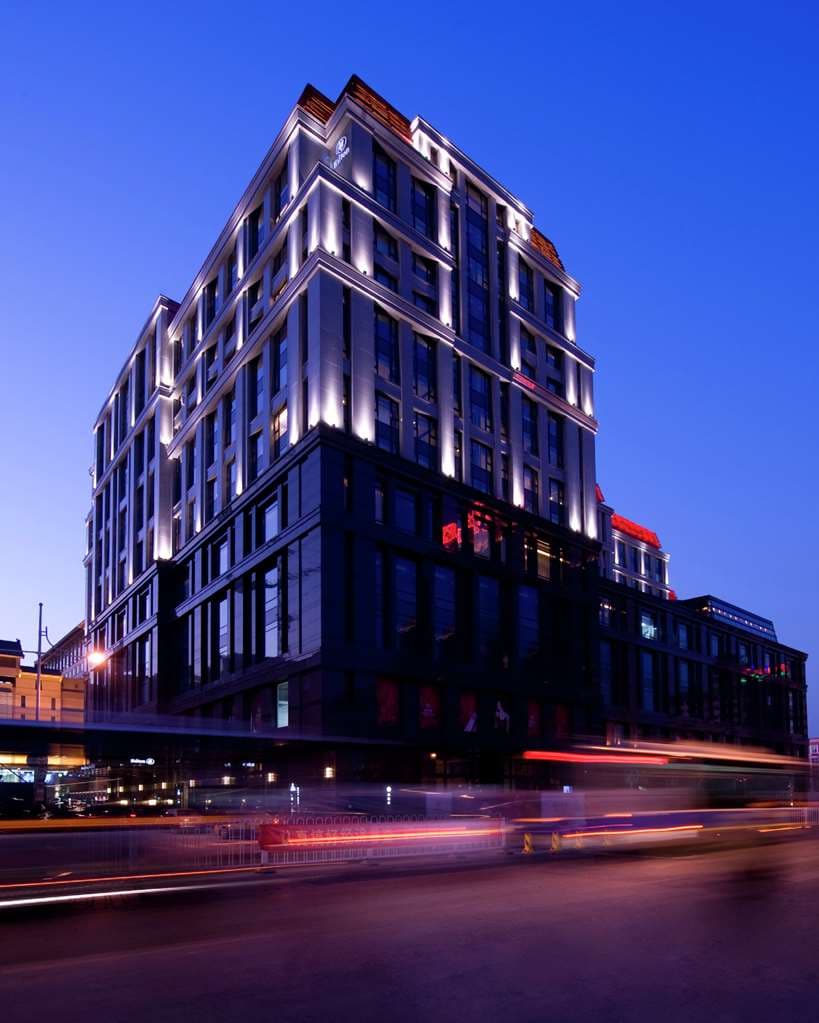
While the neighboring Mandarin Oriental chases the new-money aesthetic, the Hilton Beijing Wangfujing rests comfortably on its laurels, offering a commodity increasingly rare in the capital: sheer, unadulterated space. At 50 square meters, the entry-level rooms are less 'hotel rooms' and more private apartments, defying the cramped norms of the city center. The design language is undeniably mature—expect heavy woods and moody lighting rather than minimalist greige—but it feels intentional, like a stage set. This theatricality peaks at Chynna, where a colossal coin sculpture of a General’s uniform stands sentry before you indulge in their Peking Duck, which locals argue rivals Siji Minfu’s. The hardware shows its age—the HVAC can be overzealous in winter—but the service architecture is bulletproof. The concierge team performs minor miracles with Forbidden City tickets, and the glass-encased rooftop pool remains one of the city’s most atmospheric swim spots. It’s not the newest player in town, but it’s arguably the most reliable.
“Skip the main lobby chaos. Book an Executive floor room to access the 16th-floor lounge for breakfast; the made-to-order eggs come with a side of quiet, smog-free skyline views.”
Insider TipAvg. Nightly Rate
133USD
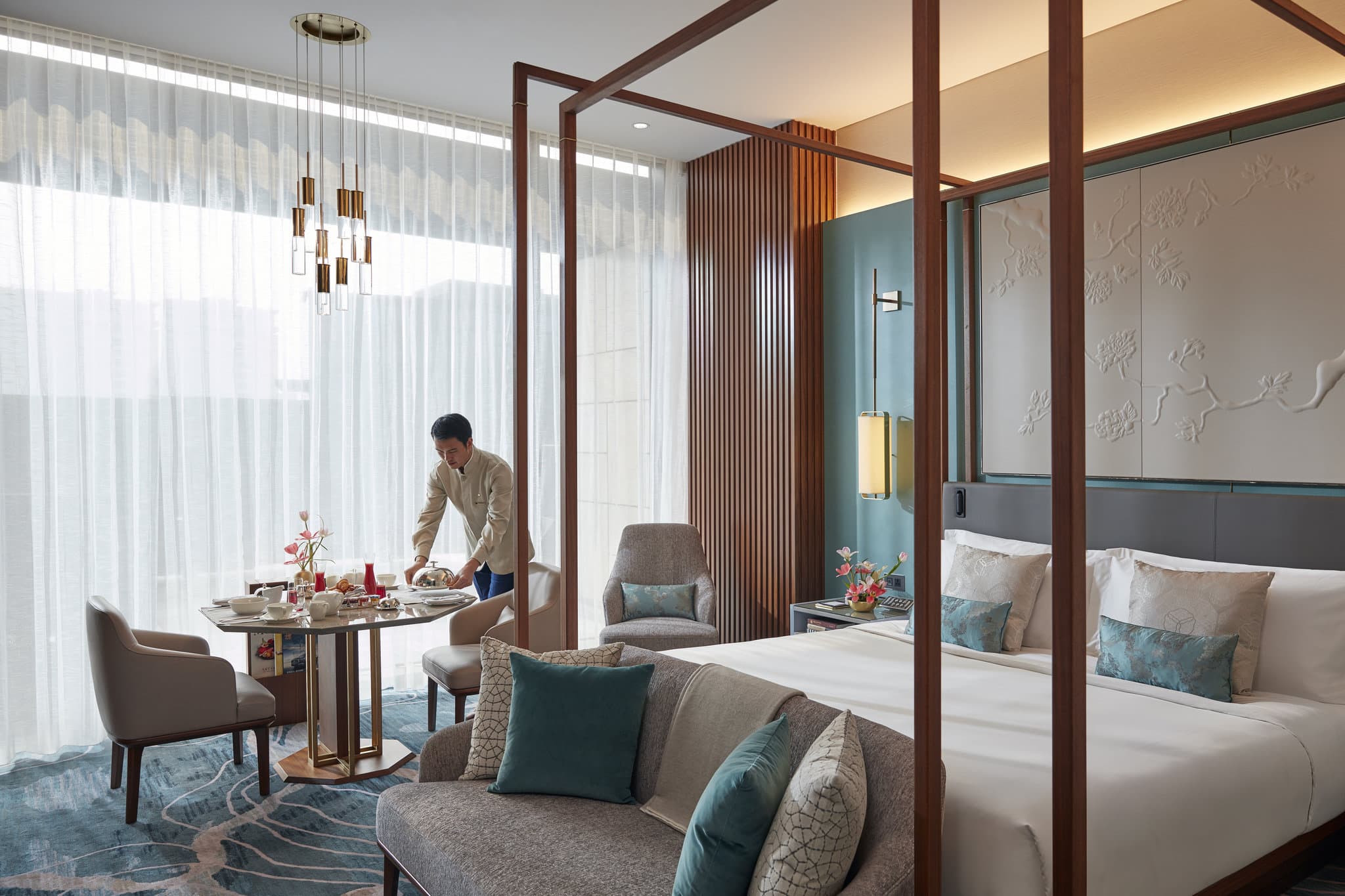
Forget the grand street-level arrival; at the Mandarin Oriental Wangfujing, the drama begins on the fifth floor. Here, beneath a swirling Frank Gehry fish lamp, the chaos of the capital dissolves into the quiet hum of an ultra-private residence. With only 73 rooms, this doesn't feel like a hotel—it feels like the pied-à-terre of a very wealthy friend. The entry-level quarters are a staggering 55 square meters, outfitted with Dyson dryers, Bose speakers, and Diptyque amenities that signal serious luxury. But the real ace card is the MO Bar. Securing a terrace table at sunset isn't just a recommendation; it's a requirement. As you sip a signature cocktail, the dying light hits the golden glazed tiles of the Forbidden City next door—a cinematic vista that no other property in Beijing can replicate. Dinner at the Mandarin Grill + Bar offers excellent charcoal-seared steaks, but the Cantonese breakfast at Café Zi—with its delicate dim sum—is the unsung hero. The price point is steep, but for that view? Absolutely worth it.
“Book a 'Mandarin Room' for the floor-to-ceiling windows, but ensure you're on the terrace of MO Bar by 5:30 PM for the sunset shot.”
Insider TipAvg. Nightly Rate
778USD
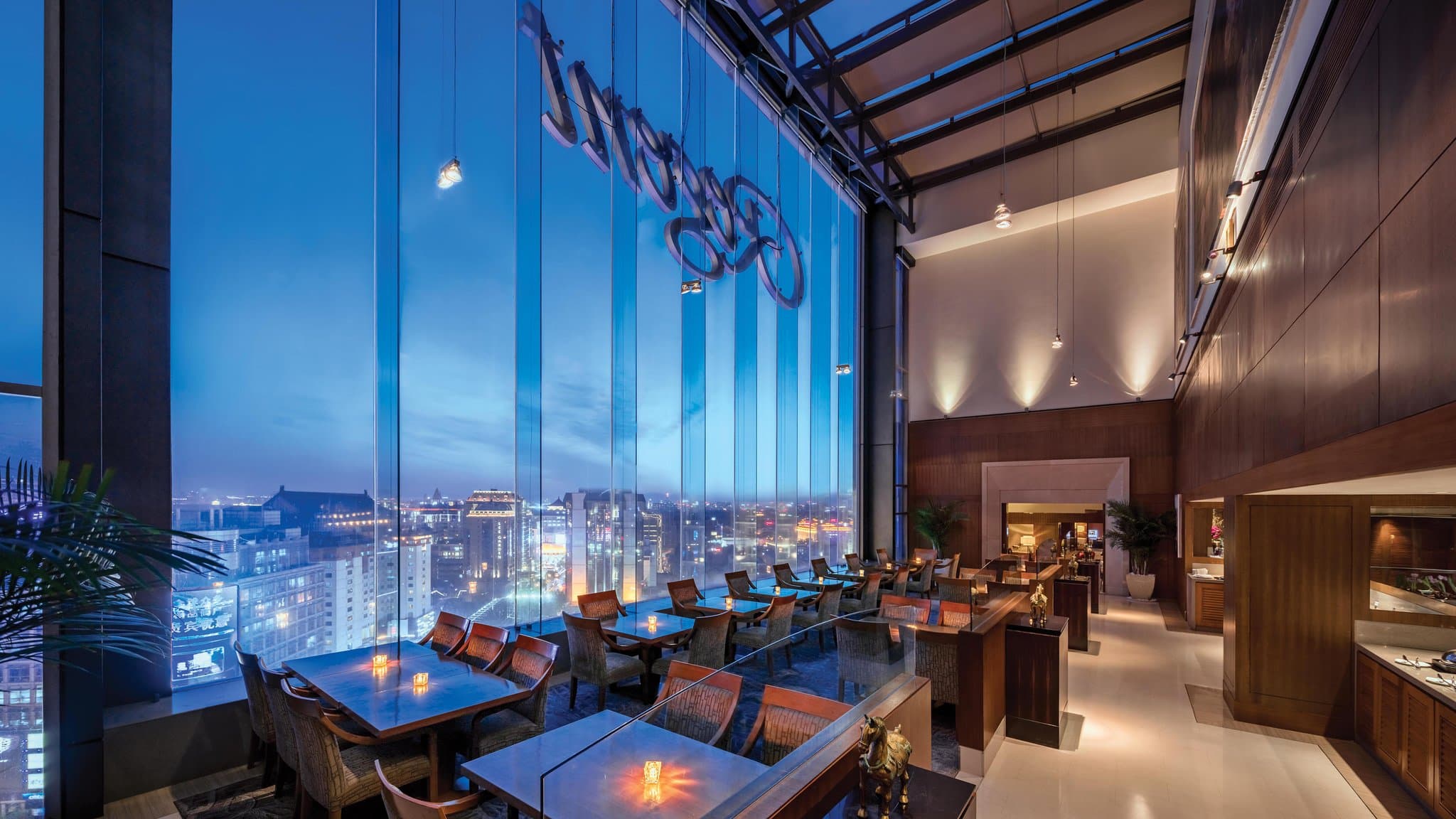
The Forbidden City is usually viewed from behind the crush of tourists at the Meridian Gate. At the Regent Beijing, it is your breakfast companion. This property understands that its greatest asset is the floor-to-ceiling glass in its west-facing rooms, offering a widescreen, CinemaScope panorama of the imperial palace’s golden rooftops that no amount of modern interior design can replicate. Inside, the vibe is unapologetically established. While the room hardware—televisions and bedside controls—leans towards the classic rather than the cutting-edge, the sheer square footage and the marble-clad bathrooms with deep soaking tubs offer a comfort that newer, tighter hotels often miss. Dining here is a serious affair. Lei Garden, the on-site Michelin-starred Cantonese institution, serves a Crispy Roasted Pork Belly that is arguably Beijing’s finest textural achievement. For those seeking Western comfort, Morton’s The Steakhouse remains a power-dining staple. It is a hotel that trades not on trendiness, but on access, scale, and a view that has defined power in China for six centuries. Verdict: The definitive choice for the traveler who prefers their history served with a side of Michelin-starred pork and absolute silence.
“Request a West-facing Premier Room on the 18th floor or higher; at sunset, the light hitting the Forbidden City’s yellow glazed tiles is unmatched.”
Insider TipAvg. Nightly Rate
128USD

If location is the ultimate luxury, the Grand Hotel Beijing sits on the throne. Nestled—forgive me, *commanding* a position—directly adjacent to the Forbidden City’s crimson walls, this independent property trades modern glitz for serious historical clout. It is not the Rosewood; do not expect a lobby full of influencers. Instead, you enter a world of Ming-style grandeur, museum-quality antiques, and a hush that feels appropriately imperial. The rooms are a time capsule of 1990s opulence, swathed in gold and velvet. While the plumbing might occasionally whisper of its vintage (the showers are more 'classic' than 'rainforest'), the experience of waking up to a direct sightline of the golden imperial roofs is forgiving. Amenities are a curious mix of the standard and the local—Technogym equipment in the fitness center and Baicaoji (Herborist) products in the spa, grounding you firmly in China. Dining here is an exercise in atmosphere. The Red Wall Café serves a signature Homemade Creamy Douzhier Ice Cream that is as polarizing as it is authentic, while Zi Jin offers competent North-South fusion. But the real reason to book is the rooftop terrace at sunset. Sipping a cocktail while the Forbidden City glows amber offers a view that no other hotel in the capital can legally replicate. Service is earnest and kind, though English proficiency varies—consider it a chance to practice your tones.
“Request a west-facing room on a high floor for the unobstructed 'Emperor’s View' of the Forbidden City roofs. The lower floors just stare at the wall.”
Insider TipAvg. Nightly Rate
170USD
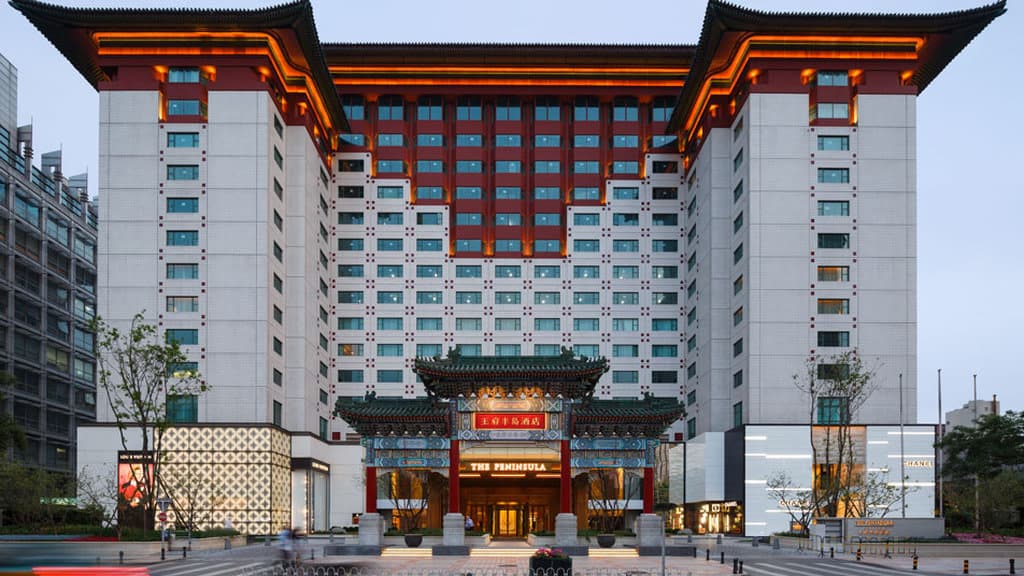
While other Beijing stalwarts trade on fading imperial glory, The Peninsula has aggressively reinvented itself as the capital’s premier all-suite residence. Following a gut-renovation that ruthlessly combined 525 rooms into 230 massive sanctuaries, the entry-level experience here starts at a staggering 60 square meters—a spatial luxury virtually unheard of in Wangfujing. The design is a confident rejection of beige neutrality; think bronze-detailed mahogany, abstract ink paintings referencing the sun and moon, and a lobby dominated by a white marble staircase that demands a dramatic entrance. Technological integration is seamless rather than gimmicky. Tablets in 11 languages control everything from the blackout drapes to the mood lighting, though the Valet Box—a discreet hatch for laundry and shoe shines—remains the ultimate analog flex of privacy. Dining is equally sharp; ‘Jing’ delivers contemporary French with a Michelin-worthy Pâté Croûte, while the cavernous ‘Huang Ting’ mimics a noble courtyard for Peking Duck service. Service is military-grade yet human; the white-glove staff anticipate needs before you articulate them. It’s not just a hotel; it’s a masterclass in modern imperial living.
“Maximize 'Peninsula Time': unlike most competitors, this property allows check-in as early as 6 AM and check-out as late as 10 PM at no extra cost, subject to availability—perfect for red-eye flights.”
Insider TipAvg. Nightly Rate
315USD
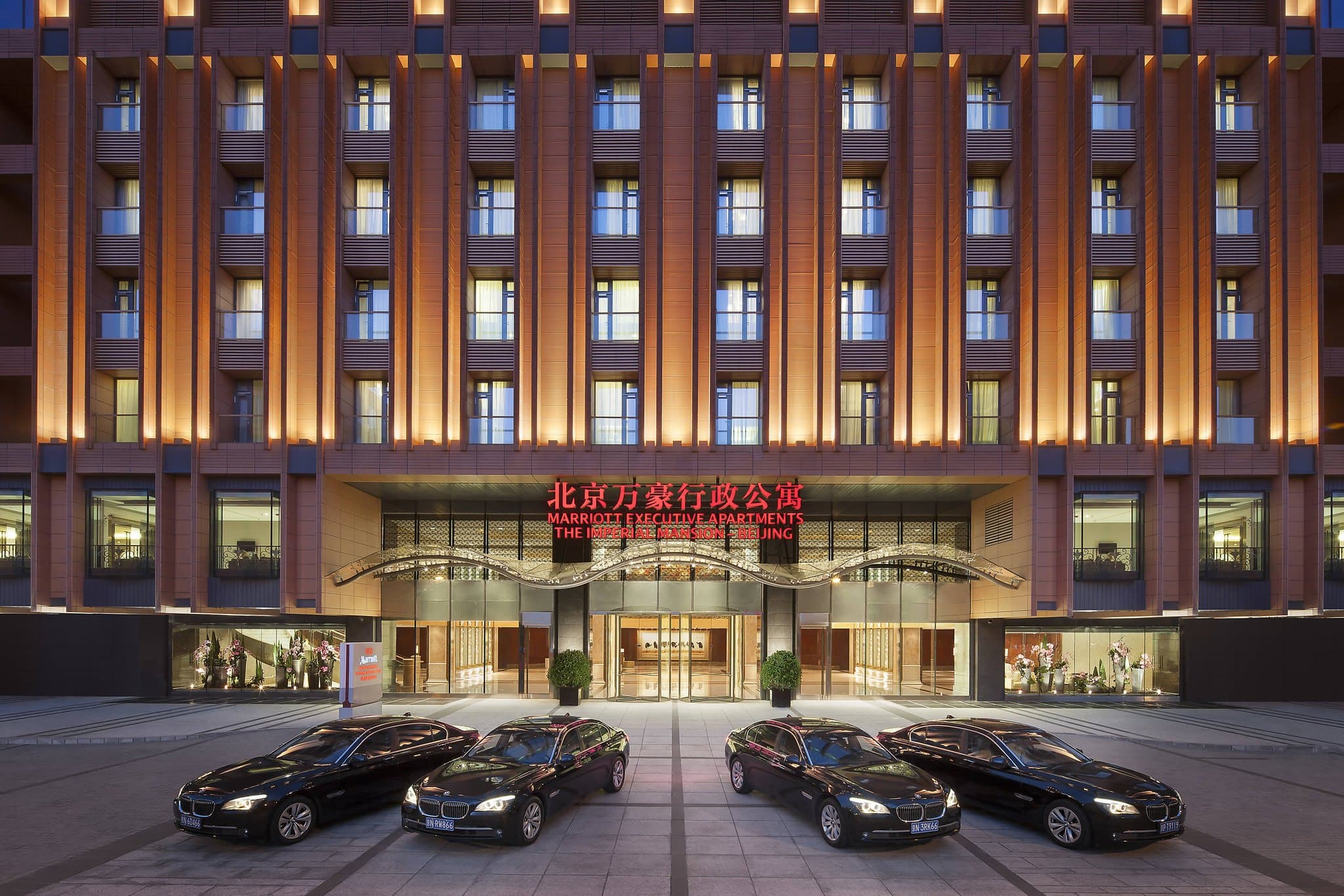
While the rest of Beijing jostles for position at the Forbidden City’s gates, residents at The Imperial Mansion watch the sunrise over the golden roofs from the treadmill. This isn't a typical hotel; it’s a residence in the truest sense, sitting atop the high-end retail fortress of Oriental Plaza. The contrast is jarring—step off the frantic pulse of Wangfujing Street and into a lobby that feels like a diplomat’s private library. The apartments are massive by Beijing standards, starting at 64 square meters. Yes, the decor leans into a 2012-era conservatism—expect heavy mahogany desks and marble floors rather than minimalist concrete—but the utility is unmatched. We’re talking full kitchens with Siemens appliances and in-unit washers that make a week-long business trip actually livable. The aesthetic is 'Old Money Beijing' rather than 'New TikTok Trendy.' Dining at The Residence Lounge is competent, but the real power move is skipping the hotel buffet. You are 600 meters from Siji Minfu, the city’s premier roast duck institution. Use the concierge to skip the three-hour queue, then retreat to your soundproofed sanctuary. It’s not the flashiest stay in the capital, but it’s the most dignified.
“Request a West-facing apartment on a high floor. You’ll get a direct line of sight to the Forbidden City’s Meridian Gate—a view usually reserved for drone pilots.”
Insider TipAvg. Nightly Rate
157USD
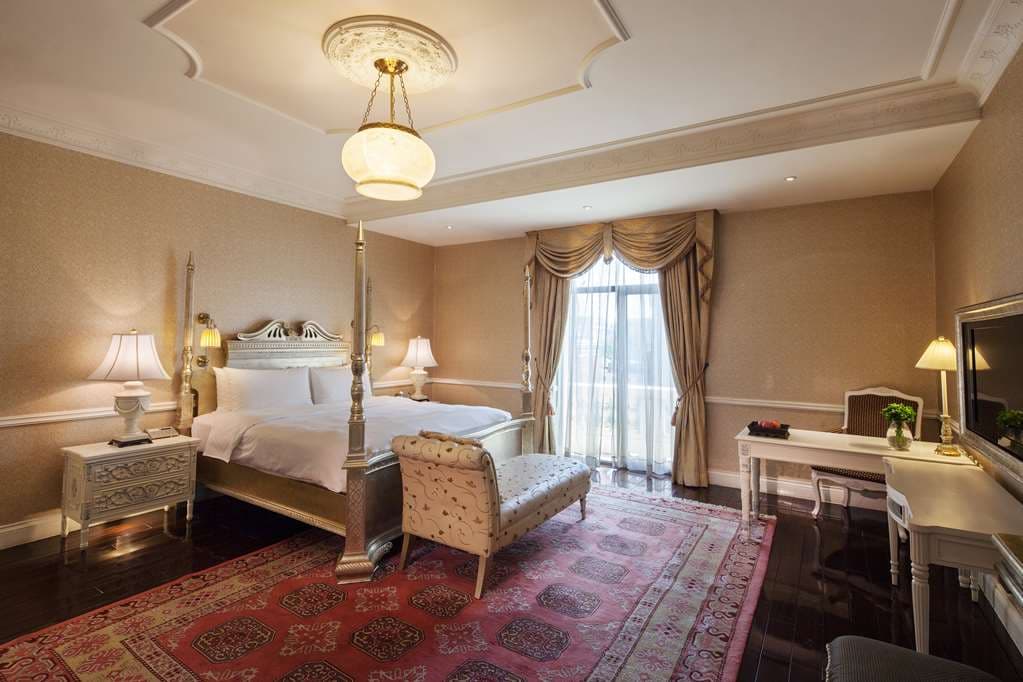
If location is the ultimate currency in Beijing, Beijing Hotel Nuo is the richest player in town. Anchored on Chang'an Avenue since 1917, this French-Renaissance block—formerly Block B of the legendary Beijing Hotel—operates less like a hotel and more like a cinematic set from the Republic of China era. The lobby’s grand marble staircase and the 1920s sprung-wood dance floor in the Writers Bar evoke a Gatsby-esque political romance that modern glass towers simply cannot replicate. Base rooms are shockingly generous, starting at 46 square meters, with soaring ceilings that make competitors feel claustrophobic. However, history has a price: the tech is archaic. You will hunt for bedside outlets, and the bathrooms, while clad in marble, lack the smart-toilet wizardry of the Mandarin Oriental nearby. Dining is a nostalgia trip; order the signature Champagne Mojito at the Writers Bar under the heritage domes. Service is formal and well-meaning, though occasionally stiff. It is not a hotel for the digital nomad, but for the history fetishist who prefers waking up to a direct line of sight to the Forbidden City, it is unrivaled.
“Request a 'Heritage Room' facing Chang'an Avenue on a high floor. You get a direct eyeline of the daily flag-raising ceremony crowds without the noise.”
Insider TipAvg. Nightly Rate
120USD
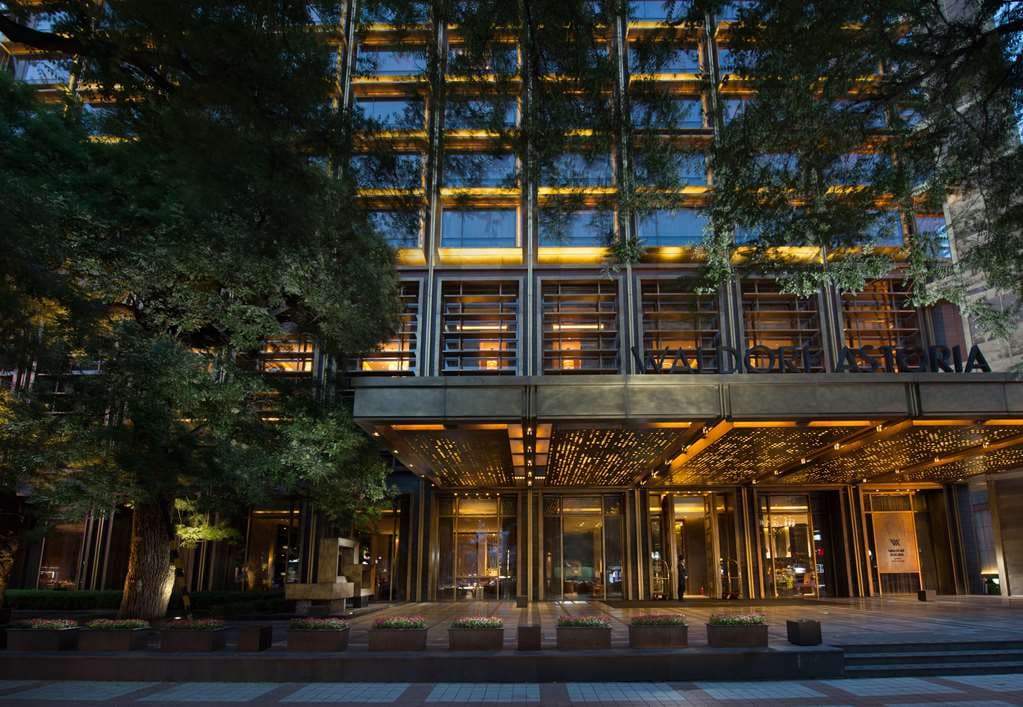
Forget the dusty tropes of imperial nostalgia; the Waldorf Astoria Beijing is history polished to a high, oxidising sheen. Dominating a corner of Wangfujing, its façade—a suit of armour composed of 4,000 bronze tiles—feels less like a hotel and more like a fortress of modern taste. Inside, designers Yabu Pushelberg have stripped away the expected red-lantern kitsch, replacing it with a moody, masculine stage of dark lacquer and silk-lined walls where Beijing’s power brokers hold court. The rooms are exercises in high-spec restraint, featuring intuitive tablets that control everything from the sheer drapes to the 400-thread-count linens. But the real flex here is the service. The 'silent' butlers don’t just unpack; they seem to anticipate your craving for Zijin Mansion’s legendary braised pork belly before you’ve even checked in. While the Hutong Courtyard villas offer a ground-level fantasy, they lack the vertical privacy of the main tower. Ultimately, this is the sharpest edge of luxury in the capital—a place that doesn’t just look at the Forbidden City, but boldly rivals its grandeur.
“Skip the courtyard villas if you crave views. Request a West-facing Premier Room on the 10th floor to catch the sunset glinting off the Forbidden City’s golden eaves.”
Insider TipAvg. Nightly Rate
235USD