No. 01

BeijingBeijing3184 verified reviews
9
.6
Bitvoya Edit
Layering imagery, place, and detail before the page opens.
Beijing's soul resides in its hutongs, the ancient alleyways weaving through the city's heart. For the discerning traveler, staying in a restored siheyuan (courtyard house) offers an intimate glimpse into Imperial history blended with modern opulence. Unlike the soaring glass towers of the CBD, these hidden sanctuaries provide a quiet dignity that is uniquely Beijing.
From the bustling lanes near Houhai to the historic serenity of the Qianmen district near the Forbidden City, these properties redefine luxury. Experience the architectural marvel of Cours Et Pavillons, or the exquisite elegance of the Mandarin Oriental Qianmen. These hotels are not just places to sleep; they are gateways to the past, offering private gardens, heated floors, and a level of personalized service that honors the traditions of the Middle Kingdom.
Choosing to stay in a hidden Siheyuan transforms a standard visit to Beijing into a cultural immersion. Unlike standard 5-star chains, these luxury courtyard hotels offer a direct link to the Ming and Qing Dynasties. Properties like The PuXuan Hotel and Spa and Xitan Hotel Beijing preserve the architectural integrity of the grey-brick alleys while infusing interiors with contemporary art and cutting-edge technology. It is the ultimate juxtaposition: ancient tranquility outside, ultra-modern comfort inside.
To truly experience the Hutong lifestyle, location is everything. Our curated list focuses on the most prestigious preservation districts:
Expect a shift in pace. These hotels, such as the secluded Yanbai Villa or the exquisite Cours Et Pavillons, prioritize privacy and personalized butler service. The room counts are low, ensuring exclusivity.
A Siheyuan hotel is a restored traditional courtyard residence found in Beijing's Hutongs. Unlike high-rise regular hotels, these properties feature single-story layouts surrounding a private open-air courtyard, offering cultural immersion, privacy, and historical architecture blended with modern luxury.
Yes, many luxury courtyard hotels like the Mandarin Oriental Qianmen offer enclosed, private environments that are safe for families. However, some boutique properties like Cours Et Pavillons prioritize a quiet, adult-centric atmosphere, so it is best to check specific policies regarding young children.
Autumn (September to October) is the ideal time, offering crisp air and golden foliage in the courtyards. Spring is also pleasant. Winter offers a cozy, snow-covered charm with heated floors, while summer can be humid but lush with greenery.
Explore our complete curated list of luxury accommodations, from boutique hideaways to grand dames.
Explore All Beijing HotelsForget the clichéd red lanterns and faux-imperial nostalgia. Blossom House·HouHai (formerly VUE) is Shichahai reimagined by Singapore’s Ministry of Design, and the result is a visual jolt to the system. The contrast is immediate: massive, neon-pink wireframe rabbits perch irreverently atop charcoal-grey roof ridges, signaling that this is no ordinary courtyard stay. Inside, the vibe shifts from playful to moody. The suites are low-lit sanctuaries of slate and gold lattice, balancing the historic building's bones with stark modernism. Bathrooms are the highlight, featuring deep soaking tubs and premium Appelles amenities—perfect for defrosting after a winter walk. Dining at 'The Pink Rabbit' offers surprising legitimacy; the Spanish Seafood Rice is a rich, saffron-scented comfort that rivals the local dumplings. While the narrow alleyway location makes taxi drop-offs tricky (prepare to drag your Rimowa a few hundred meters), the payoff is absolute silence in the center of Beijing’s wildest nightlife district. This is heritage with a pulse.
“Skip the crowded main entrance when heading out. Ask the concierge for the key card to the private back gate—it dumps you directly onto the Houhai lakeside greenway, bypassing the tourist crush entirely.”
Insider TipAvg. Nightly Rate
118USD
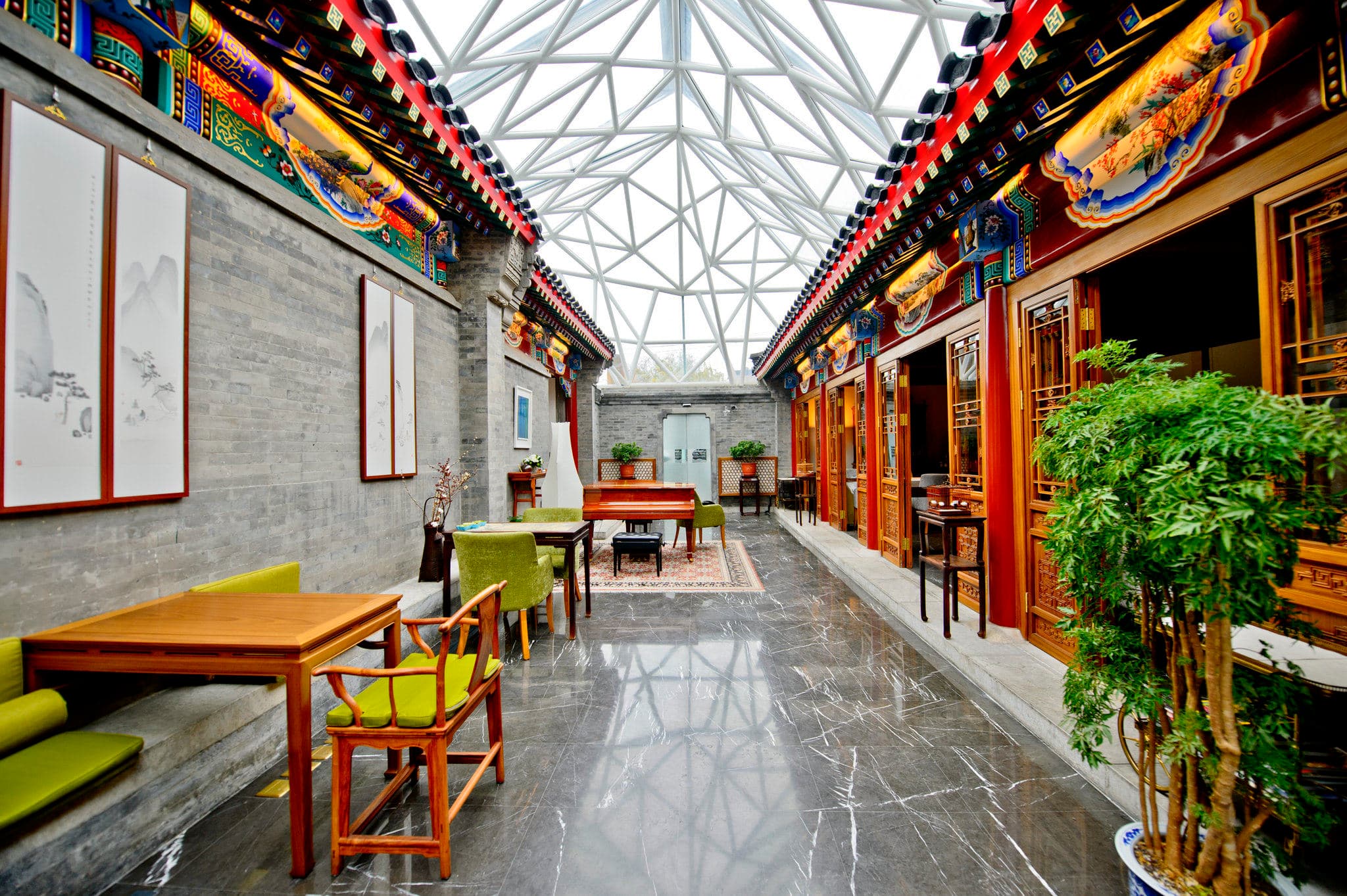
The arrival sequence at Cours Et Pavillons is a masterclass in contrast. One moment, you are dodging e-scooters in the narrow, grey-bricked Weijia Hutong; the next, heavy wooden doors swing open to reveal a silence so profound it feels curated. This seven-room sanctuary isn't just a hotel; it’s a living museum of Ming and Qing dynasty aesthetics, shielded from the Beijing smog by a dramatic glass atrium roof inspired by the British Museum. Inside, the restoration is forensic in its detail—carved wooden Moon Gates frame the suites, while modern necessities are discreetly integrated. You’ll sleep on British Royal-approved Hypnos mattresses and breathe easy thanks to a medical-grade American Brown air filtration system—a non-negotiable luxury in this city. Dining here is an event. The on-site French restaurant serves a confident Foie gras with red wine sauce and bamboo-smoked squab that rivals the city’s Michelin-starred heavyweights. With no pool or gym to distract, and a strict no-crib policy ensuring adult-only serenity, the vibe is unapologetically intimate. It is a place to read, to linger over breakfast, and to vanish from the world.
“Book the North Courtyard Deluxe Room. At a staggering 185 square meters, it offers a private terrace and a spa tub large enough to forget the missing swimming pool.”
Insider TipAvg. Nightly Rate
300USD
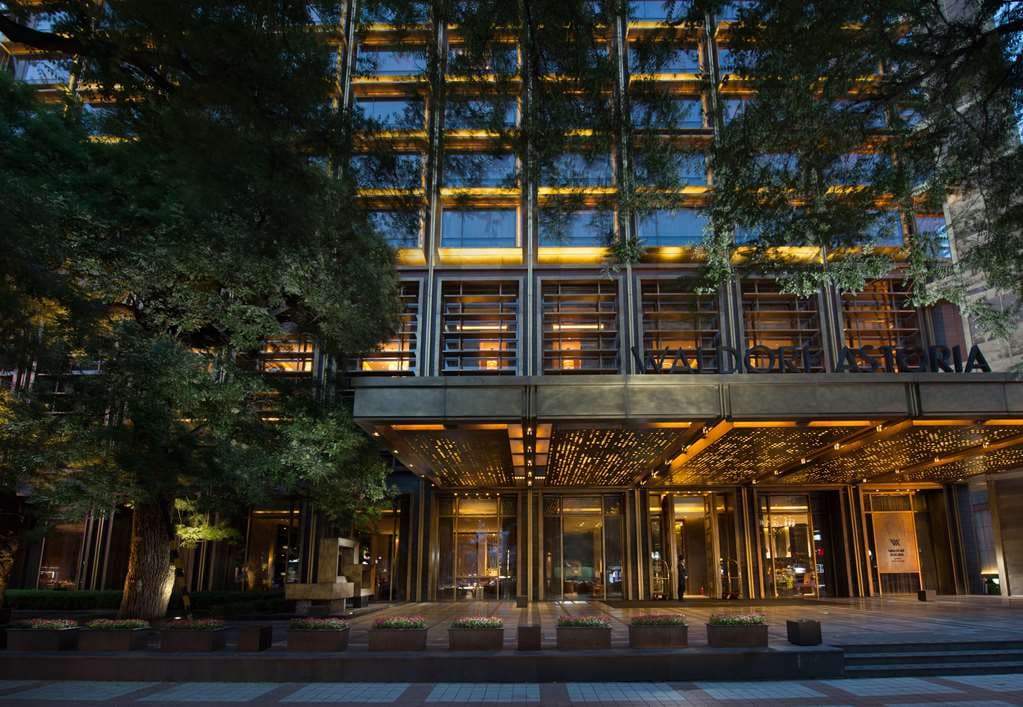
Forget the Forbidden City crowds; the real dynastic drama lies behind the Waldorf Astoria’s oxidizing bronze façade. While the main tower resembles a futuristic strongbox, the property’s crown jewel is the Hutong Villa complex—a separate, low-slung reconstruction based on Ming Dynasty archives. These aren't just themed rooms; they are architectural time capsules equipped with heated floors and Valmont amenities. The 'silent' butler service is unnervingly good; shoes vanish and reappear polished without a knock, a level of invisibility that feels appropriately imperial. Dining requires a reservation at Zijin Mansion, where the Michelin-starred Cantonese fare justifies the hype. The signature braised pork belly ribs are a gelatinous religious experience, paired best with their deep cellar of wines. For a lighter touch, Peacock Alley serves the brand’s legendary Red Velvet Cake, though here it feels less 'Jazz Age New York' and more 'Contemporary Beijing Art Collector.' It isn’t entirely hermetic—the courtyard privacy is slightly compromised by neighboring high-rises, a grounding reminder that you are in a living, breathing metropolis. But for a stay that feels rooted rather than dropped in, this is Beijing’s most sophisticated address.
“Book a 'Hutong Studio' for the courtyard aesthetic without the Villa price tag, but request a unit facing the inner garden for maximum quiet.”
Insider TipAvg. Nightly Rate
235USD
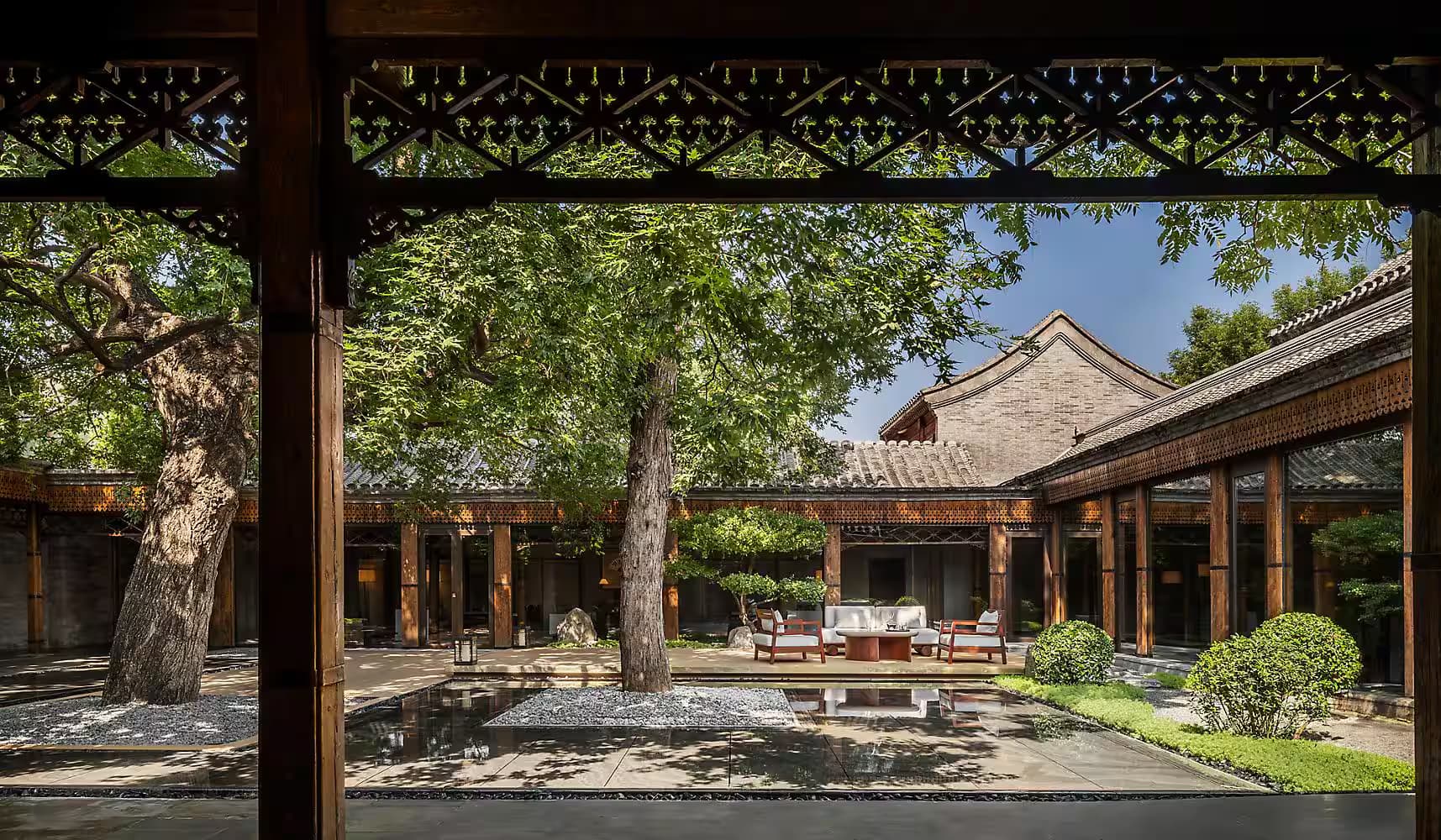
Forget the gleaming glass towers of the CBD; the real power move in Beijing is checking into a 600-year-old neighborhood where the neighbors are local families, not fellow tourists. Mandarin Oriental Qianmen doesn’t just occupy the historic Qianmen East district; it weaves itself into the grey-brick fabric of the hutongs. There are no corridors here—just open-air alleyways where your butler navigates a narrow buggy past playing children and drying laundry to deliver you to your private *siheyuan*. Inside, the 42 courtyards are a masterclass in 'invisible design.' The restoration is museum-grade—think preserved timber beams and intricate carvings—but the comforts are unapologetically modern. We’re talking underfloor heating that defies Beijing’s winters, Bose sound systems, and Dyson hair dryers hidden behind sleek joinery. Dining is equally serious: *Yan Garden* brings Chef Fei’s Michelin-standard Cantonese roast goose to the capital, while *VICINI* serves a Fiorentina steak so authentic you’ll forget you’re in China. But the real magic is the TIAO bar at sunset, sipping a 'Hidden Tea House' cocktail while gazing over tiled rooftops. It is immersive, intimate, and arguably the most culturally significant stay in the city.
“Request the 'Grand Residential Courtyard' for the ultimate privacy. Also, skip the taxi for short trips; the hotel offers bespoke leather-seated bicycles perfect for exploring the nearby Dashilan alleys.”
Insider TipAvg. Nightly Rate
683USD
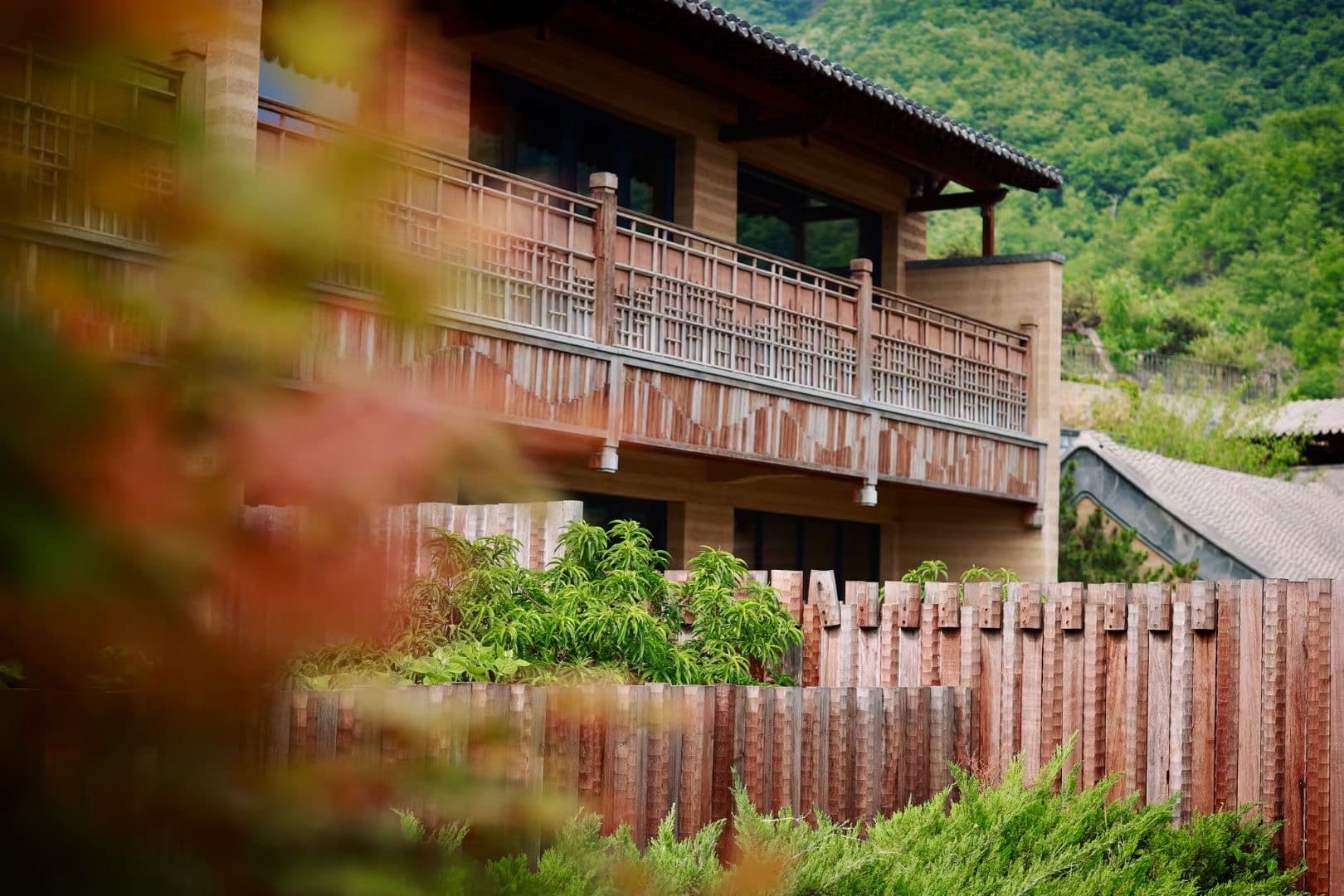
If the Forbidden City is the Emperor’s office, Xitan is his retreat. Located an hour west of the capital in Mentougou, this Relais & Châteaux property doesn’t just mimic history; it occupies it. Built on the footprint of a Ming Dynasty village, the architecture is a masterclass in heavy stone masonry and restored woodwork, earning it a coveted One Michelin Key in 2024. The arrival experience is defined by the mesmerizing 'Fish Scale' waterfall in the courtyard—a visual palate cleanser that scrubs away the Beijing ring-road traffic. Inside, the 38 rooms are strictly adults-only (12+), ensuring the silence is structural, not just suggested. My 'Yong Cui' suite featured underfloor heating that battled the northern chill and a bathroom stocked with Japanese Lapidem amenities—a rare, thoughtful import. Dining is the headliner. The House of Rong (Rong Fu Yan) isn’t merely a hotel restaurant; it’s a pilgrimage site for New Taizhou cuisine. The signature Braised Yellow Croaker is gelatinous, rich, and worth the drive alone. Between the TechnoGym sessions and the heated outdoor infinity pool reflecting Tiger Mountain, Xitan feels less like a hotel and more like a private compound for those who have transcended the need to be seen.
“Book the 'Lan Cui' Mountain View Suite with a balcony. It offers the best vantage point of the 'Fish Scale' waterfall without the foot traffic noise of the main courtyard.”
Insider TipAvg. Nightly Rate
771USD
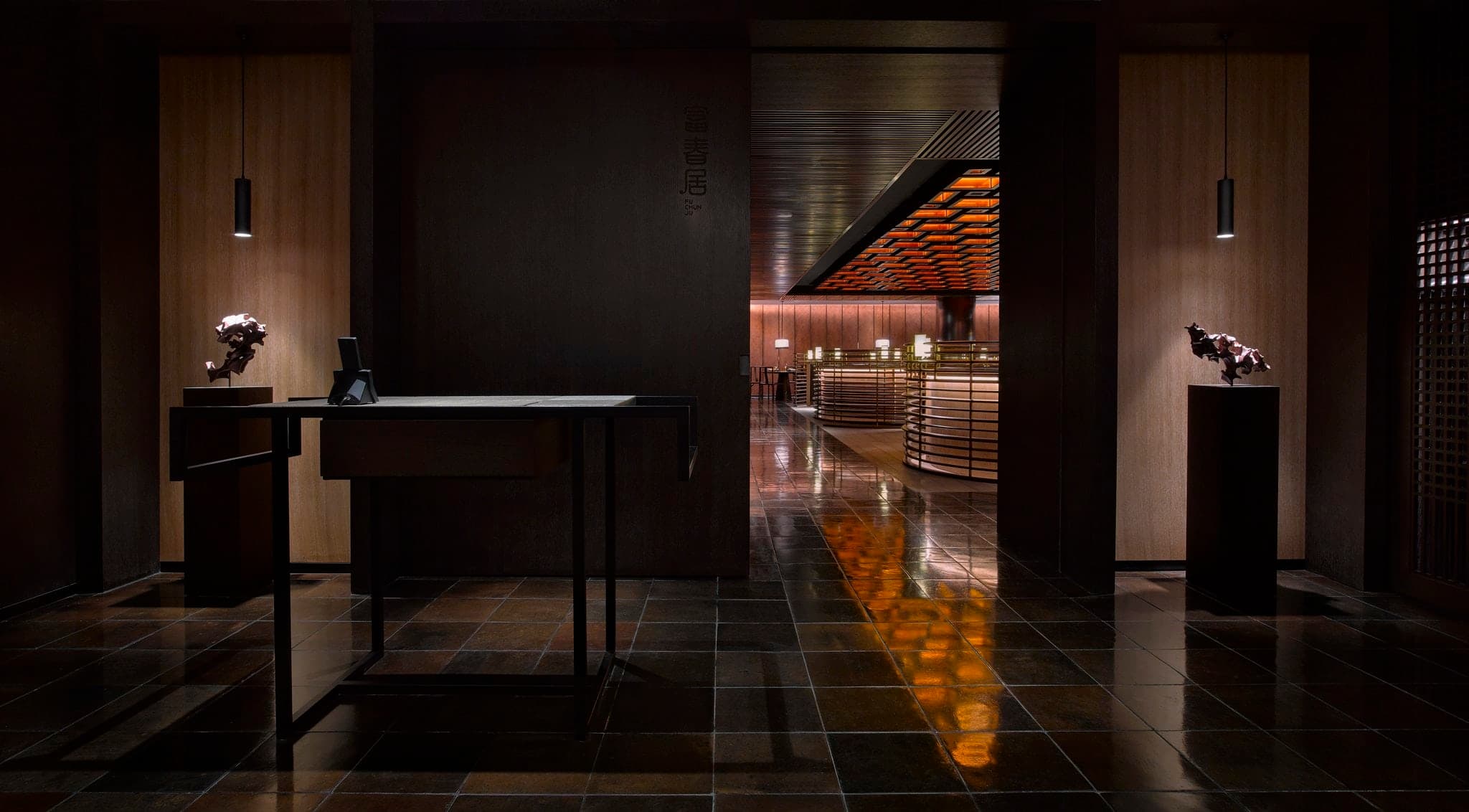
While the surrounding hutongs whisper history in gray brick, The PuXuan Hotel and Spa shouts modernity from a glass box. Designed by Ole Scheeren, this architectural monolith hovering above Wangfujing doesn’t try to mimic the ancient alleyways; it curates them. The structure’s pixelated basalt-style facade functions like a camera shutter, with the Grand Studio’s window bays acting as personal observatories for the Forbidden City’s golden roofs. Inside, the lobby abandons the clichéd red-and-gold motif for a moodier, amber-glass sanctuary. The rooms are exercises in restraint—think handcrafted furniture, sliding partitions, and Guerlain amenities that scent the air with French sophistication. Dining is a serious affair here: Fu Chun Ju recently retained its Michelin star (try the tea-smoked pigeon eggs), while Rive Gauche serves a Wagyu Beef Tartare that rivals Paris. Service, dubbed 'Hostmanship,' kills the check-in queue entirely—suite guests enjoy a rolling 24-hour stay. It is less a hotel and more a habitable gallery where Beijing is the masterpiece on display.
“Book a Grand Studio on the 8th floor for the most unobstructed sightline of Jingshan Park at sunset.”
Insider TipAvg. Nightly Rate
307USD
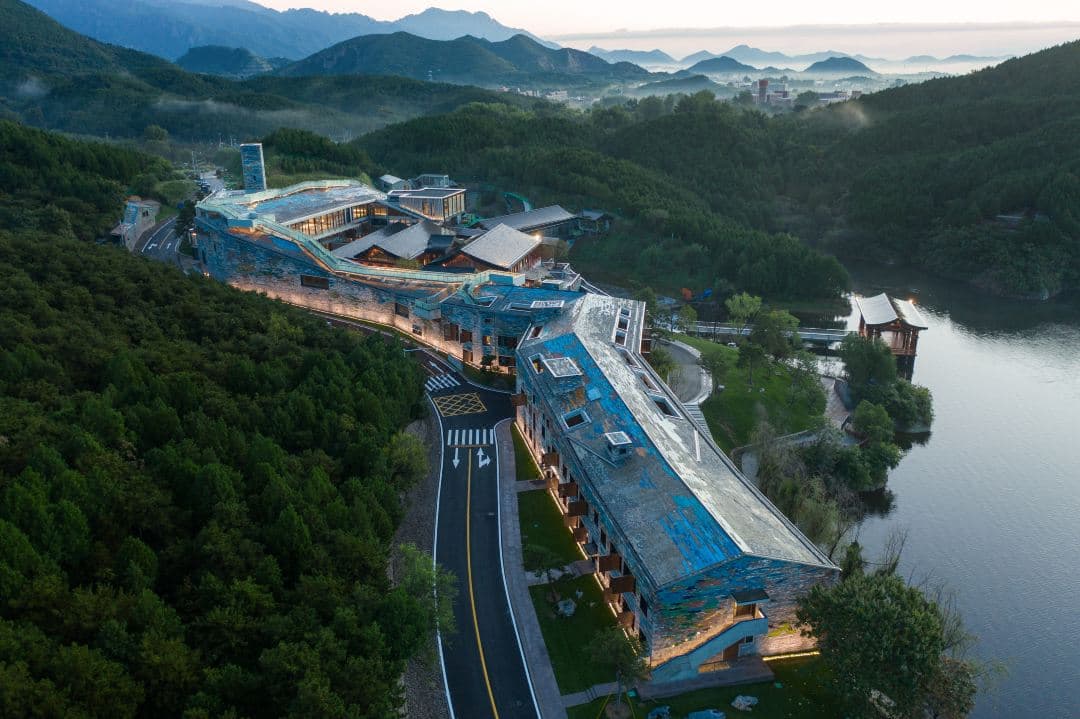
Forget the Forbidden City’s chaotic queues. Yanbai Villa is a masterclass in quietude, designed by Pritzker Prize-winner Wang Shu. It acts less like a hotel and more like a living painting—specifically Wang Ximeng’s 'A Thousand Li of Rivers and Mountains'. The architecture commands attention immediately: the lobby’s mosaic of recycled 'wapan' tiles sets a scholarly, serious tone that generic five-star marble lobbies lack. The strict 12+ policy ensures the museum-grade gardens remain contemplative, undisturbed by splashing children. Inside the 'Mingyanju' suites, the view of Yanqi Lake is framed by floor-to-ceiling timber like a scroll. The interiors favor substance over flash, with Technogym equipment and TCM-inspired bath amenities that smell of ginger and pine rather than standard floral perfumes. Dining requires a reservation at 'Yanbai Chinese Restaurant', where the Chaoshan-style Claypot Seafood Porridge is rich enough to be medicinal. For a western interlude, 'Fountain View' serves a flawless M9 Wagyu, but you’re here for the Chinese soul. **Verdict**: A serious architectural pilgrimage for the culturally astute who prefer structure to sprawl.
“Book the 'Mingyanju' suite for the expansive balcony—it offers the only vantage point where the zig-zag 'wapan' rooflines perfectly align with the lake horizon.”
Insider TipAvg. Nightly Rate
430USD
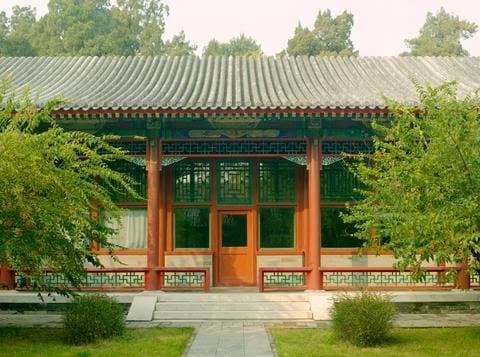
It takes hubris to drop the Aman halo, but the Beijing Yihe—occupying the century-old waiting pavilions of Empress Dowager Cixi—rests on laurels older than any hospitality group. Since the December 2025 de-branding, the 'Amanjunkies' have fled, leaving behind a property that feels more authentically Beijing: slightly rougher around the edges, but infinitely more atmospheric. The secret 'Red Door' access to the Summer Palace remains the ultimate velvet rope, allowing you to wander the grounds in mist-shrouded silence before the tour buses arrive. Inside, the Golden Nanmu wood columns and Jin clay tiles haven't aged, even if the hardware has—you won't find smart toilets here, a quirky omission for a hotel commanding these rates. The underground spa remains a brutalist-chic surprise; the white double-helix staircase demands an Instagram sacrifice, while the 25-meter lap pool feels like a Bond villain’s lair. Dining at 'The Chinese Restaurant' is non-negotiable; order the Beggar’s Chicken, cracked open tableside with theatrical mallet strikes. It’s a gamble on heritage over hardware, but when the sun sets over the courtyards, the imperial silence is absolute.
“Book a Courtyard Suite in the 300 block for maximum distance from the public areas, and request the private cinema for a screening of 'The Last Emperor'—it hits different when you're sleeping next door to the set.”
Insider TipAvg. Nightly Rate
714USD