No. 01

No 14 Yaotouzha Village Guilin ChinaGuilin1164 verified reviews
9
.8
Bitvoya Edit
Layering imagery, place, and detail before the page opens.
Nestled amongst the mythical karst peaks of Guilin and the adrenaline-fueled crags of Yangshuo, a new breed of hospitality has emerged: the eco-luxe basecamp. For climbers and modern explorers, the days of roughing it are over. Properties like the architecturally stunning Yangshuo Sugar House and the serene Banyan Tree Yangshuo offer the perfect juxtaposition of rugged adventure and refined sustainability. Whether you are scaling the Moon Hill or cycling through the Ten-Mile Gallery, these retreats in the Yulong River district provide restorative luxury. We have curated a list of properties that prioritize environmental harmony without sacrificing comfort, serving as the ultimate launchpads for your vertical adventures in China's most iconic landscape.
Guilin, and specifically the county of Yangshuo, is globally renowned as a mecca for rock climbing. The unique karst topography offers thousands of routes ranging from beginner slabs to world-class overhangs. However, the modern adventurer seeks more than just a crag; they seek recovery and harmony with nature. Choosing an eco-luxe basecamp here means supporting sustainable tourism in a fragile ecosystem while enjoying premium recovery amenities. Hotels like Yangshuo Misty Wonderland and Kayumanis Yangshuo integrate deeply into the landscape, offering organic dining, traditional architecture, and spa treatments specifically designed to soothe muscles after a day on the limestone.
When selecting a basecamp, location is key to balancing access and seclusion:
Expect a seamless blend of local culture and high-end living. These properties are not just hotels; they are gateways to the region. You can expect gear storage facilities, expert concierge services that can book certified climbing guides, and farm-to-table cuisine sourcing ingredients from local villages. The architecture often repurposes historical buildings—like the old sugar mill at Alila—or uses local bamboo and stone to minimize carbon footprints.
The best seasons for climbing are autumn (September to November) and spring (March to May) when the weather is mild and dry. Summer can be hot and humid, while winter can be chilly and damp.
Yes, most luxury properties in Yangshuo, including Yangshuo Sugar House and Banyan Tree, can arrange private, beginner-friendly climbing sessions with certified guides suitable for all skill levels.
Most properties in Yangshuo are approximately 60 to 90 minutes by car from Guilin Liangjiang International Airport (KWL). Hotels typically offer private transfer services.
Explore our complete curated list of luxury accommodations, from boutique hideaways to grand dames.
Explore All Guilin HotelsWhile Yangshuo’s backpacker circuit thrives on kinetic energy, Jora—a member of Small Luxury Hotels of the World—offers a masterclass in stillness. Located just far enough from the neon thump of West Street to feel like a secret, this property channels the vibe of a contemporary scholar’s retreat rather than a typical resort. The lobby sets the tone immediately: a soaring library wall bathed in warm light, smelling faintly of seasonal osmanthus, where the check-in feels less like a transaction and more like an induction into a private club. The rooms are an exercise in restraint, favoring clean lines and local timber over gaudy ornamentation. Opt for a suite with a private terrace; soaking in an outdoor tub while watching the mist uncurl from the limestone peaks is the ultimate post-climb recovery. Dining at Shishan Restaurant surprises with its execution—the Smoked Duck and Wagyu Steak are standouts, bridging the gap between local Guilin heat and international finesse. While the 'Nine Bar' offers competent martinis, the real draw is the Kong Tea Room. Here, the tea ceremony isn't a tourist gimmick but a genuine meditative pause. Service is hyper-attentive yet invisible, courtesy of personal butlers who anticipate needs before they arise. It is the definitive basecamp for the traveler who wants to conquer the crags by day and decompress in high-thread-count silence by night.
“Skip the standard rooms and book the 'Premier Panorama Suite' on the 5th floor for the best unobstructed views of the Li River and Karst peaks from your bathtub.”
Insider TipAvg. Nightly Rate
208USD

While the backpacker hordes descend upon West Street, the Banyan Tree Yangshuo operates on a different frequency entirely—one of hushed reverence and stiff gin and tonics. Located in Fuli Ancient Town, this 2014-era resort feels less like a hotel and more like the private estate of a retired diplomat. The architecture is a moody dialogue of grey slate and timber, echoing the limestone peaks that loom, theatrically, over every balcony. Inside, the hardware shows a charming patina—yes, the WiFi struggles to punch through the thick walls, but you’re here to disconnect, aren't you? The suites are vast, featuring stone tubs big enough for two and amenities that smell of lemongrass and wealth. Dining at Bai Yun is non-negotiable; order the Beer Fish, a local obsession executed here without the usual grease. The service is where the property flexes its pedigree—anticipatory, silent, and flawlessly polite. It’s not the newest kid on the block, but in a region prone to flashy kitsch, its restraint is its greatest luxury.
“Skip the public tourist rafts. Book the hotel’s private bamboo raft at sunset from their own pier—it comes with tea service and zero megaphone-wielding guides.”
Insider TipAvg. Nightly Rate
250USD

Forget the neon-lit chaos of West Street. The real drama in Yangshuo happens at altitude, and Misty Wonderland (Huashan Yunshe) claims the front row. Perched precariously near the summit of Xianggong Mountain, this property is less a hotel and more a high-design observation deck. The architecture is unapologetically Zen-minimalist, using the limestone peaks as its primary decor. The pièce de résistance is the 'Sky Mirror'—a reflective water platform that turns the sunrise into a symmetry of fire and mist, perfect for the included travel photography session. Inside, the experience pivots from rugged to refined. There is no elevator—a logistical quirk of its cliffside perch—but the climb is mitigated by butlers (ask for the indefatigable Xiao Li) who handle logistics with military precision. Rooms are sanctuaries of silence, equipped with tea ceremony sets rather than loud distractions. Dining here is hyper-local; the kitchen’s signature Beer Fish and Bamboo Tube Chicken are the exact comfort food required after a 4 a.m. ascent to the nearby viewing platform. It is a basecamp, yes, but one where the 'tent' comes with high-thread-count linens and a dedicated concierge.
“The hotel is just 400 meters from the Xianggong Mountain viewpoint. Skip the public crowds; ask your butler to arrange a private dawn entry before the tour buses arrive from Guilin.”
Insider TipAvg. Nightly Rate
259USD
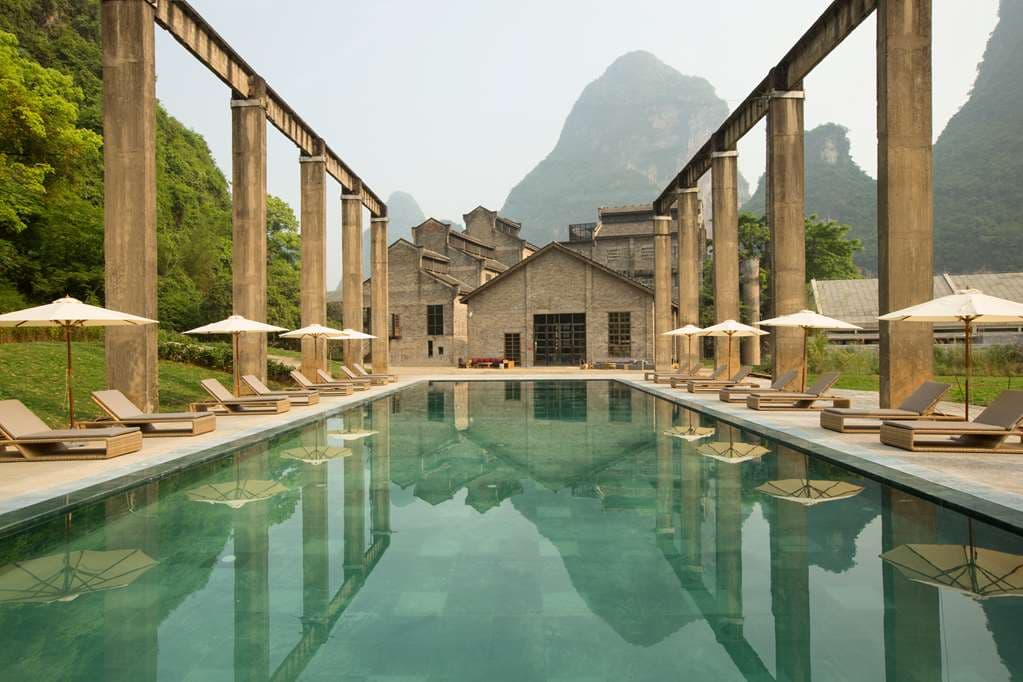
If the definition of luxury is 'place', then Yangshuo Sugar House owns the dictionary. Reborn in mid-2024 as the flagship of the new heritage-brand AURUA, this isn’t just a hotel; it is a masterclass in industrial reclamation. Vector Architects transformed this 1960s sugar mill into a cathedral of concrete that somehow softens the jagged limestone teeth of the surrounding karst mountains. The arrival experience is cinematic—literally. You walk through a corridor of hollow masonry blocks that filter light like a kaleidoscope, a stark contrast to the humidity of Guangxi. The rooms in the new wing are minimalist sanctuaries, featuring local timber and polished concrete, but the real drama is in the public spaces. The pool, set atop the original sugarcane loading dock, frames the Li River through rusting industrial trusses—a view so arresting it makes the laps secondary. Dining here leans into the terroir. The Sugar House Restaurant, housed in the former refining room, serves a Farm-to-Table menu where the 'Stir-fried Li River Shrimp' is non-negotiable. Post-dinner, retreat to the 1969 Bar. Located in the old pressing room, it now distills its own rum; the 'Sugar House Old Fashioned' is smoky, complex, and dangerous. While the service can sometimes drift into 'island time' relaxation, the sheer atmospheric weight of the property—especially the subterranean spa in a converted molasses tank—makes forgiveness easy. A definitive basecamp for the design-obsessed climber.
“Skip the crowded county pier. The hotel has a private dock at the back entrance where you can board a bamboo raft for a quieter, more photogenic drift down the Li River.”
Insider TipAvg. Nightly Rate
272USD
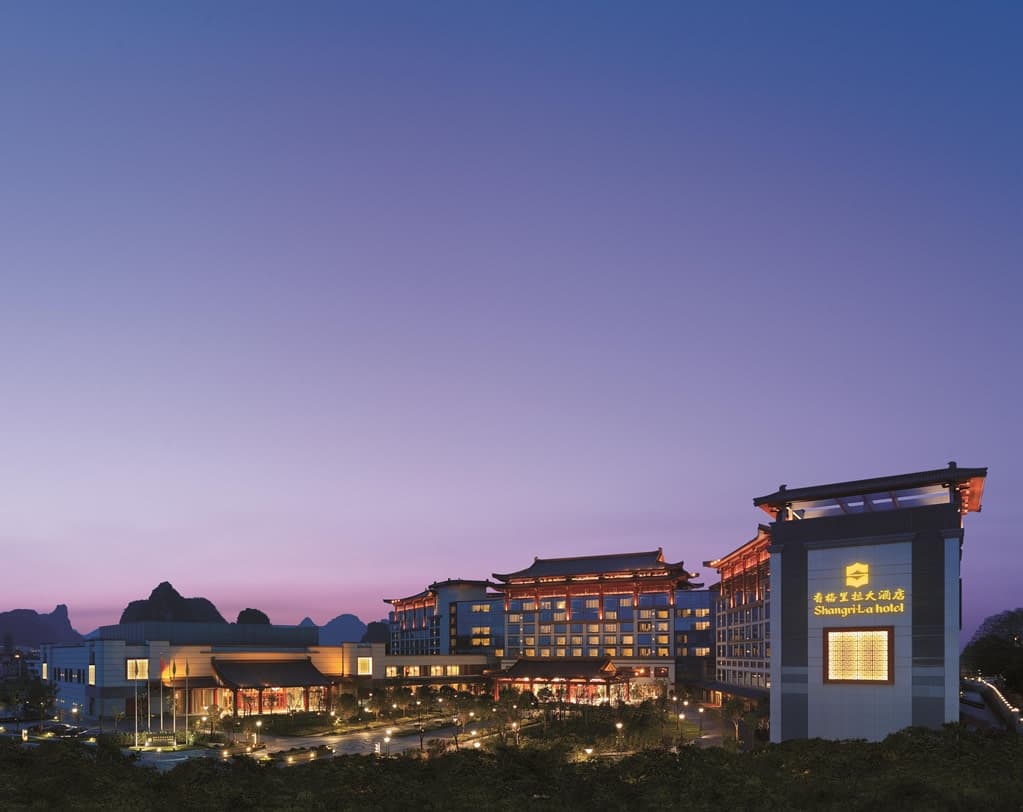
While the backpacker circuit buzzes further downstream, the Shangri-La Guilin serves as the region’s sophisticated command center. This isn't a boutique hideaway; it’s a grand, dependable fortress of hospitality that masters the art of the 'soft landing' for families bound for the mountains. The aesthetic is unapologetically imperial—think soaring red lacquer columns and gold filigree rather than trendy beige minimalism—but the upkeep is immaculate. The critical move here is booking a River View Room; the alternative city views are forgettable, but the river-facing balconies offer a front-row seat to the Li River’s limestone drama, framed perfectly by the hotel’s manicured willows. Logistically, it is unmatched. While you coordinate climbing guides, the 'Mini Zoo' and bumper boats keep the junior expedition members occupied. For pre-climb fueling, bypass the 'Li Café' buffet and commit to 'Shang Palace', where the Guilin Rice Noodles and Roast Pork are executed with high-end precision. It is the perfect, polished gateway before you go off-grid.
“Book a table at Shang Palace for dinner and specifically request the 'Guilin Rice Noodles'—they elevate the street-food staple to fine dining standards. Also, the 11,000 sqm garden is best walked at dusk when the pagodas light up.”
Insider TipAvg. Nightly Rate
78USD

If Yangshuo’s West Street is a sensory assault of neon strobe lights and backpacker crowds, Kayumanis is the calculated antidote. Located in a nondescript village twenty minutes from the main climbing crags, this property refuses to play the volume game. It is not a hotel; it is a collection of 30 walled compounds that redefine 'personal space' in a region often defined by density. Even the entry-level villas clock in at a staggering 450 square meters, a footprint that dwarfs the typical five-star offering. The architecture demands you engage with the climate. Sleeping quarters and living areas are often separated by open-air walkways, forcing you to step into the humid Guilin air to get a glass of water. The centerpiece of every villa is the private pool—unheated and chemical-light. While the initial plunge might be a shock, it provides a miraculous reset after a sweaty afternoon navigating the Yulong River cycling paths. Service here is 'invisible but present,' conducted largely via WeChat with a 24-hour butler who materializes only when summoned. Dining at Nine Restaurant leans heavily into the local playbook; the signature Yangshuo Beer Fish is non-negotiable, cooked with a depth of flavor that puts the tourist traps to shame, while the Balinese Smoked Duck serves as a fragrant nod to the brand’s Indonesian lineage. The Wi-Fi can be temperamental due to the surrounding karst interference, but frankly, if you are here to doom-scroll, you are missing the point. It is an expensive isolation, but for explorers needing to decompress without an audience, it is the only game in town.
“Request a villa away from the reception block for absolute silence; the 'unheated' pools are best enjoyed between May and October.”
Insider TipAvg. Nightly Rate
508USD
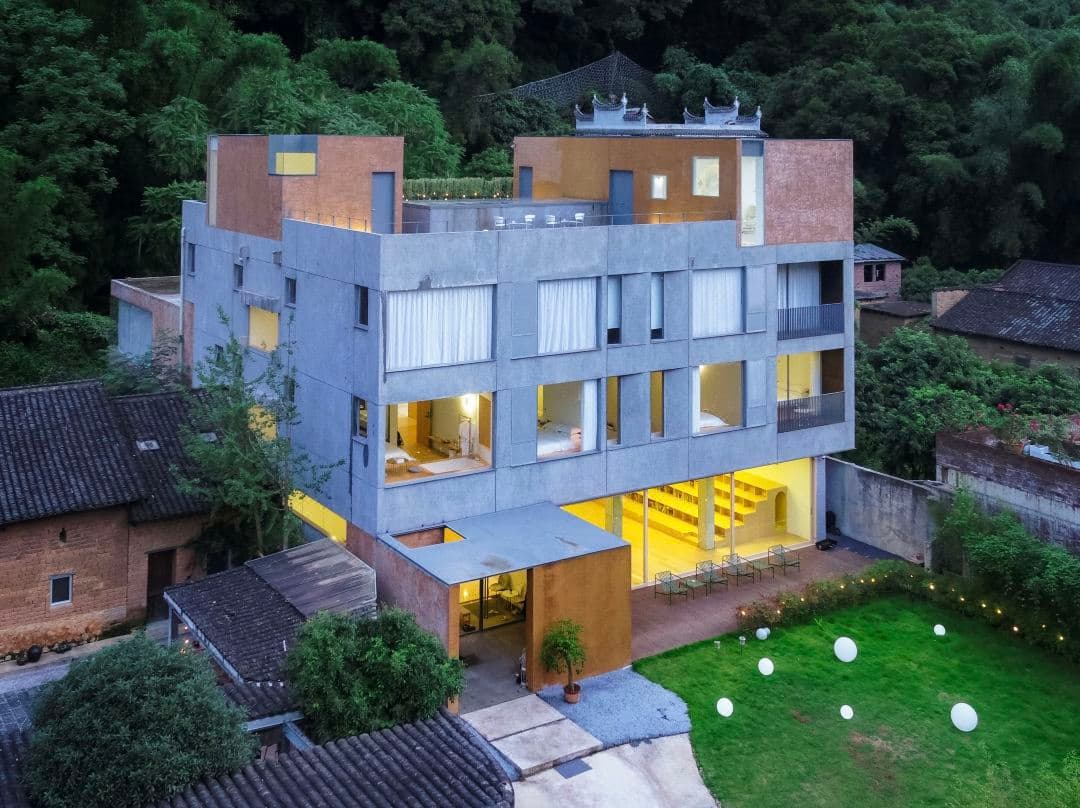
Forget the beige neutrality of standard family resorts. Geemu Resort Yangshuo is what happens when high-concept architecture meets unadulterated whimsy. Designed by the Faber Society, this 'Kindergarten for Grown-ups' riffs on a building-block aesthetic where raw concrete geometry frames the surreal limestone mountains outside. The centerpiece? A three-story silver slide spiraling through the atrium—a sculptural marvel that begs you to abandon the elevator. Inside, the vibe is strictly anti-corporate. You won’t find a concierge behind a marble desk; instead, the service feels like a curated rental home run by your coolest friends. Rooms are exercises in warm minimalism, devoid of clutter but stocked with essentials like Lush bath bombs for post-hike soaks (crucial, given the lack of a swimming pool). Dining is surprisingly serious here: the 'Starry Sky Set Dinner' and their signature charcoal grilled steak outperform local tourist traps. While the strict 'no crib' policy is a quirk to note, the sheer joy of the LEGO walls and floor curling makes this the ultimate basecamp for design-conscious families.
“Book the 'Panorama Suite' on the 3rd floor for the best private soaking tub experience—it offers uninterrupted views of the karst peaks without the rooftop crowds.”
Insider TipAvg. Nightly Rate
77USD
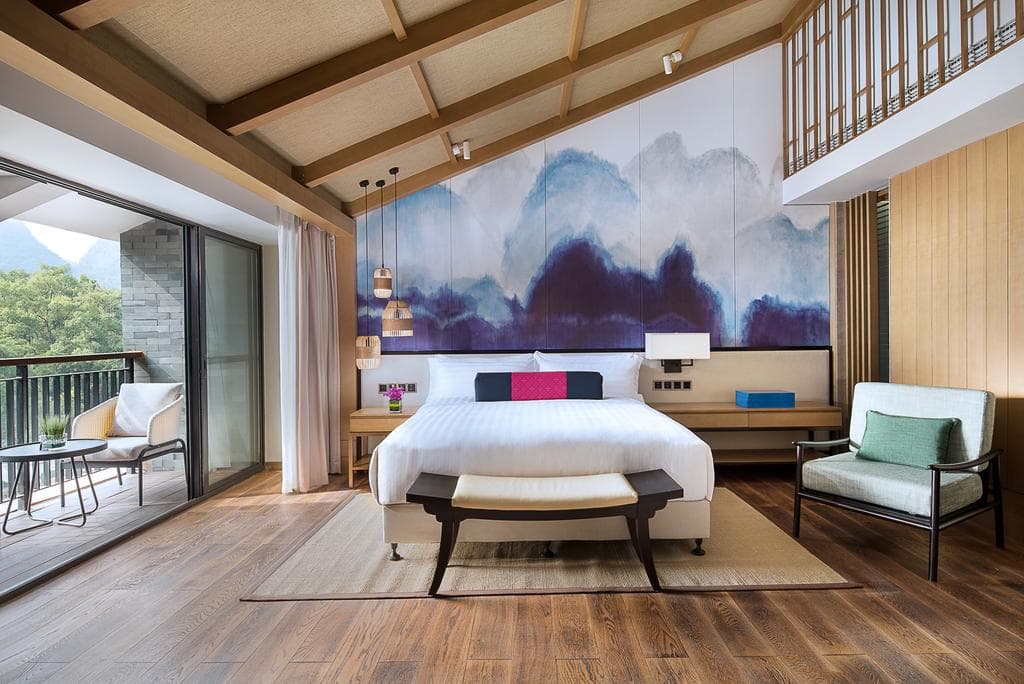
Yangshuo is a sensory collision of neon lights and limestone giants, and Amari Yangshuo Guilin is the only place that lets you straddle that divide with any measure of grace. Located squarely inside the Yitian West Street complex, this isn't a retreat for those seeking monastic silence; it is a strategic basecamp for the modern explorer who wants to climb Karst peaks by day and dissect them over cocktails by night. The aesthetic here is strictly 'Urban Resort'—think less bamboo-thatch rustic and more polished concrete cool. The rooms are designed with a razor-sharp focus on recovery. After a day cycling the Yulong River, the high-pressure rainfall showers and premium linens are non-negotiable luxuries. But the real draw is the Breeze Spa. Skip the generic massages; the 'Mood-based' treatments using oils like 'Dreamy' or 'Serene' are legitimate recovery tools for sore quadriceps, not just marketing fluff. Dining is equally tactical. The Amaya Food Gallery mimics the chaotic charm of Asian street markets but with strict hygiene standards—a godsend when you crave authentic Phad Thai or Hainanese Chicken Rice without the gastro-roulette of the street stalls below. While the noise from West Street's clubs can occasionally bleed through the double-glazing, the trade-off is unparalleled access. You are in the VIP box for Guilin’s nightlife, with a clean, sophisticated escape hatch always within reach.
“Request a room on the upper terraces facing the 'Love Bridge'. You get the dramatic Karst peak views without the direct sonic blast from the West Street bars below.”
Insider TipAvg. Nightly Rate
80USD