No. 01

GuilinGuilin33 verified reviews
9
.6
Bitvoya Edit
Layering imagery, place, and detail before the page opens.
In the heart of Guangxi, the dramatic limestone karsts of Guilin and Yangshuo offer more than just a visual spectacle; they provide a profound backdrop for mental and physical restoration. This curated collection explores the intersection of luxury and mindfulness, featuring properties that prioritize silence, space, and spirit. From the banks of the serene Yulong River in Yangshuo to the sophisticated riverside retreats in Guilin City Center, these ashrams of modern wellness redefine the travel experience. Expect architecture that bows to nature, such as the repurposed industrial chic of Yangshuo Sugar House or the traditional elegance of Banyan Tree, all designed to facilitate a state of 'Limestone Zen'.
Guilin's landscape is legendary, often cited in Chinese literature as 'the best scenery under heaven.' For the wellness traveler, this unique topography acts as a natural noise-canceling barrier against the modern world. The properties selected for 'Limestone Zen', such as the Kayumanis Yangshuo Private Villa & Spa and the Song Hotel Guilin, leverage this isolation. They offer a retreat where the misty peaks promote introspection and the flowing Li River encourages emotional release. This is not just a vacation; it is an immersion into a living landscape painting where yoga decks overlook karst peaks and spas utilize local botanicals.
Visitors should expect a holistic approach to hospitality. Beyond standard amenities, these 'ashrams' offer tailored experiences such as sunrise Tai Chi sessions, calligraphy classes, and tea ceremonies using locally grown leaves. The architecture often features floor-to-ceiling windows to ensure the connection with the karst mountains is never broken. Whether it's the cloud-touching views at Yangshuo Misty Wonderland or the heritage vibes of the Sugar House, the focus is always on harmonizing the internal spirit with the external grandeur of nature.
The ideal time is from April to October. Spring brings misty 'ink painting' views, while autumn offers clear, crisp weather perfect for outdoor yoga and meditation.
Yes, properties like Banyan Tree Yangshuo and Yangshuo Sugar House typically provide private luxury transfer services from Guilin Liangjiang International Airport (KWL), which takes about 60-90 minutes.
Absolutely. Activities like Tai Chi, calligraphy, and bamboo rafting are designed for all levels, focusing on relaxation and cultural immersion rather than athletic performance.
Explore our complete curated list of luxury accommodations, from boutique hideaways to grand dames.
Explore All Guilin HotelsWhile the masses jostle for bamboo rafts on the Yulong River below, Yangshuo Misty Wonderland (Huashan Yunshe) claims the high ground—quite literally. Perched precariously near the summit of Xianggong Mountain, this property trades convenient town access for an ethereal, birds-eye perspective of the limestone ranges that define Guilin. It is less a hotel and more a viewing platform with beds. The design is pure minimalist restraint, intended to frame, not compete with, the UNESCO-grade geology outside. The pièce de résistance is the 'Sky Mirror,' a decorative reflective pond that creates a seamless optical illusion of walking on clouds—ideal for the complimentary travel photography session included in your stay. Do not pack your Speedos expecting laps; the water features here are strictly for the eyes. Dining is an intimate affair at the Huashan Yunshe Chinese Restaurant, where the Bamboo Tube Chicken and local signature Beer Fish are prepared with rustic precision. Service is hyper-personalized, with private butlers managing the logistics of this remote, elevator-free hillside retreat. For those willing to brave the winding ascent, the reward is absolute silence and a sunrise that feels private.
“Skip the crowded public viewing deck at Xianggong Mountain; the hotel’s private terrace offers the same iconic 'sea of clouds' sunrise view without the elbow-to-elbow tourists.”
Insider TipAvg. Nightly Rate
259USD

It is a curious architectural dialogue: a stark, white-walled village echoing 11th-century Song aesthetics, sited just moments from the frenetic energy of Sunac Water Park. Song Hotel Guilin manages this juxtaposition with aplomb, functioning less like a resort and more like a curated hermitage. The entry-level experience here is hardly standard—keys unlock sprawling 191sqm villas where private courtyards and reflection pools frame the jagged Karst peaks like a living ink-wash painting. Inside, the asceticism is purely visual; the comforts are uncompromisingly modern. Expect Technogym-equipped fitness spaces and bathrooms stocked with L'Occitane amenities. While the remote location demands a commitment (you are 45 minutes from the city center), the on-site Song Pin Chinese Restaurant rewards the journey with a credible Li River Beer Fish and texturally perfect Guilin Rice Noodles. Service can occasionally lag behind the hardware's brilliance, but for those seeking a poetic, camera-ready silence—with a side of theme park access for the kids—this is Guilin’s most intriguing contradiction.
“Request a Lakeside Villa for the 'reflection shot'—the water mirrors the Karst mountains perfectly at dawn. Avoid the rainy season if you want to use the private outdoor pool.”
Insider TipAvg. Nightly Rate
143USD

If traditional Chinese landscape paintings—shanshui—had a hospitality equivalent, this is it. Anchored on a bend of the Li River, a gracious distance from the neon thump of West Street (a blessedly inconvenient 40-minute drive), Banyan Tree Yangshuo operates less like a hotel and more like a mindfulness compound. The architecture is deliberate Hui-style minimalism: grey tiles and whitewashed walls that defer entirely to the green-tufted limestone pinnacles looming above. The interiors are aging gracefully, though tech-addicts might scoff at the fluctuating WiFi. But you’re here to disconnect. The villas are expansive, but the real draw is the spa—Banyan Tree’s global ace card. Skip the standard massage; the 'Rainmist' hydrotherapy treatment uses steam and proprietary ginger-lemongrass oils to dismantle jetlag with surgical precision. Dining at Bai Yun offers a polished, if pricey, take on Guangxi staples; the signature Beer Fish—carp braised in local liquer and tomatoes—is non-negotiable. Service strikes that rare balance of intuitive but invisible, evident when staff quietly arrange a private bamboo raft from the hotel’s own pier, allowing you to drift the Li River minus the megaphone-wielding tour groups. It’s not the newest hardware in Guilin, but the silence here is luxury enough.
“Book a 'Karst Discovery Suite' on the second floor for unobstructed mountain views; ground floor units can feel hemmed in by the lush (and bug-loving) vegetation.”
Insider TipAvg. Nightly Rate
250USD
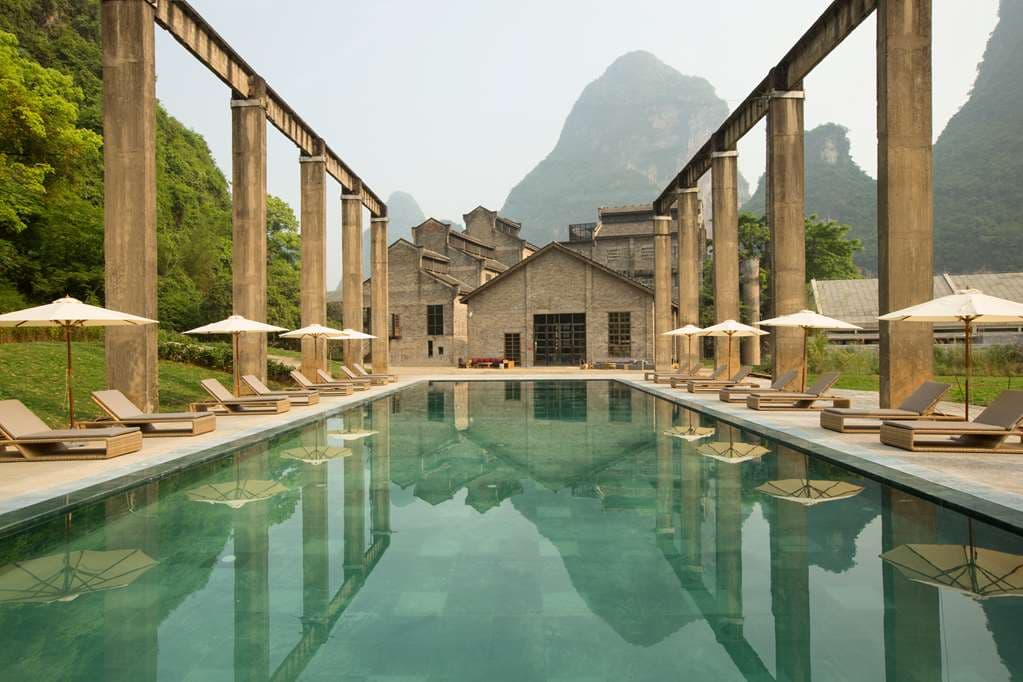
Forget the delicate pagodas usually associated with Guilin; Yangshuo Sugar House is a monolithic statement of concrete and history that has rightfully earned a **One Michelin Key** (2024). Designed by Vector Architects, this 1960s mill-turned-resort doesn't shy away from its industrial bones—it celebrates them. The architecture acts as a framing device; perforated masonry screens filter the sunlight, casting shifting geometric shadows that dance against the savage beauty of the surrounding Karst peaks. Interiors by Ju Bin soften the brutalist edge with warm woods and local bamboo, but the real drama is outdoors. The swimming pool, repurposing the original sugarcane loading dock, offers a swim-up perspective of the Li River that feels cinematic. Dining is equally atmospheric; the **Sugar House Restaurant** serves a definitive Beer Fish, but the night belongs to the **1969 Bar**. Located in the former pressing room, it pairs house-distilled rum cocktails with industrial trusses and moody lighting by Klaasen. For the ultimate disconnect, descend into the **AURUA Spa**, housed within the subterranean molasses storage tank—a sensory deprivation experience that feels lightyears away from the tourist trail.
“Skip the crowded public rock climbing spots; the hotel has its own private natural rock face for climbing. Book a late afternoon session for golden-hour views without the spectators.”
Insider TipAvg. Nightly Rate
272USD

If West Street is Yangshuo’s neon-lit ego, Jora is its silent, scholarly id. Positioned 1.6km from the tourist fray, this independent property channels the vibe of a 'Scholar’s Retreat' rather than a typical resort. The architecture is a study in framing; floor-to-ceiling glass turns the surrounding Karst peaks into living murals, while the interior is dominated by a symmetrical library wall housing 500 books—a stark, intellectual centerpiece. The 'Kong Tea Room' anchors the experience. Here, silence is the primary amenity, broken only by the ritual pour of local tea. Dining at ShiShan Restaurant offers a capable East-meets-West menu; the Smoked Duck is the standout, offering a savory counterpoint to the hotel's ethereal atmosphere, even if the Wagyu generally plays second fiddle to the local poultry. Service is executed by private butlers who anticipate needs with eerie precision, contrasting with the whimsical presence of resident rabbits and parrots in the courtyard. It is sophisticated, severe in its beauty, and deeply quiet.
“Skip the main dining room for breakfast; order a set to the 'Kong Tea Room' terrace to watch the mist lift off the Karst peaks in absolute solitude.”
Insider TipAvg. Nightly Rate
208USD

Forget the chaotic backpacker energy of West Street; Kayumanis operates on a frequency of deep, resonant silence. This isn’t a hotel where you bump into neighbors in the hallway—mostly because there are no hallways, only winding bamboo-lined paths leading to thirty walled compounds. Even the 'entry-level' accommodation clocks in at a staggering 450 square meters, granting you a personal fiefdom complete with a private pool that mirrors the limestone peaks above rather than just serving as a glorified footbath. Inside, the aesthetic avoids the tired 'East meets West' cliché, opting for structural minimalism that allows the Guilin scenery to dominate through floor-to-ceiling glass. Service is telepathic rather than hovering; your 24-hour butler appears exactly when a craving for Balinese Smoked Duck strikes but remains invisible when you’re undergoing a three-hour ritual at the Kayumanis Spa. Speaking of which, the treatment rooms aren't windowless boxes but airy sanctuaries with private Jacuzzis—essential, as the villa pools are unheated. Dinner at Nine Restaurant is mandatory; while the Yangshuo Beer Fish is local canon, the kitchen executes it with a finesse that street stalls miss. It’s expensive, yes, but silence this profound is a rare commodity in modern China.
“The villa pools are refreshing but unheated. For a warm soak with a view, book a late-afternoon spa treatment to utilize the private treatment room Jacuzzis as the sun sets over the karst mountains.”
Insider TipAvg. Nightly Rate
508USD
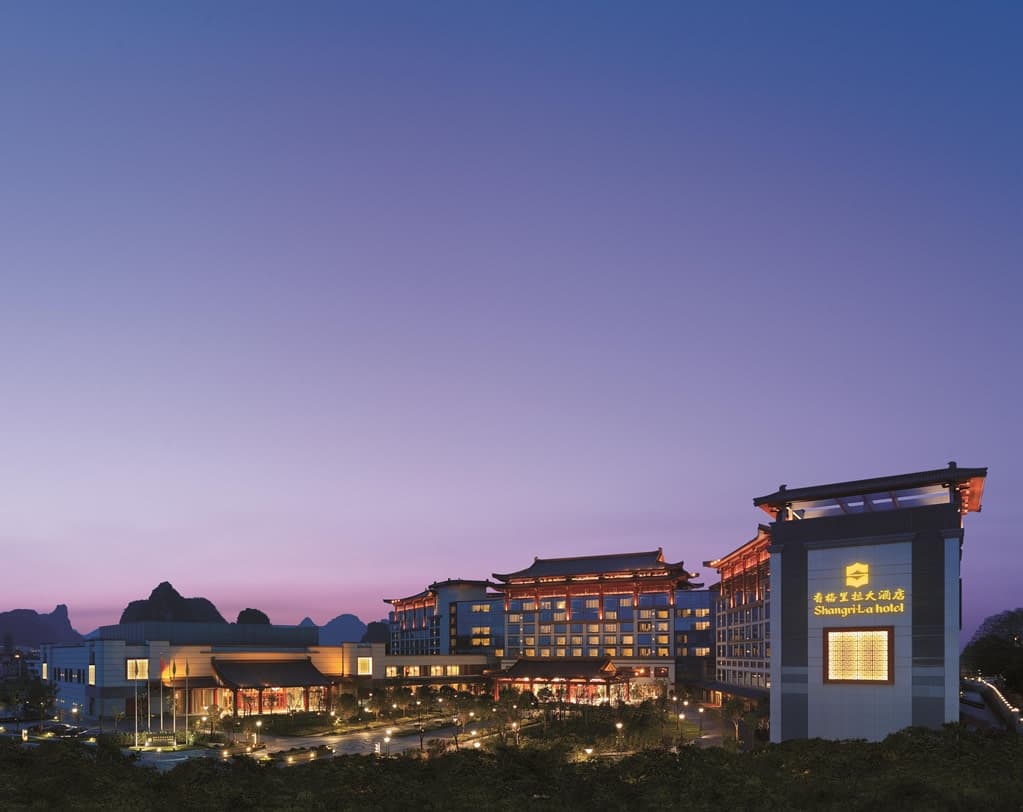
If the Song Dynasty had a loyalty program, they’d be redeeming points here. While the backpacker hordes swarm Yangshuo, the Shangri-La Guilin sits in regal isolation on the banks of the Li River, treating the limestone karst peaks less like scenery and more like proprietary artwork. The architecture is unapologetically 2010—expect soaring golden pillars and enough marble to pave a small republic—but it works. It frames the landscape with a cinematic grandeur that newer, minimalist boutiques can’t replicate. The real magic, however, is the silence. Anchored by Chi, The Spa, the wellness philosophy here leans heavily into Traditional Chinese Medicine; skip the Swedish massage and ask for the botanical treatments using local osmanthus. Rooms are vast, with plush carpets and windows designed to capture the misty river dawn, though you’ll want to ensure you book a River View to avoid staring at residential blocks. Dining is a serious affair: Li Café’s breakfast buffet is a logistical marvel (the made-to-order Guilin Rice Noodles are non-negotiable), while Shang Palace delivers roast pork that ruins you for lesser barbecue. It’s a sprawling resort—yes, there’s a Mini Zoo for the kids—but the sheer scale of the 11,000 sqm gardens means you can always find a secluded pavilion to channel your inner poet.
“Book a Horizon Club River View room for access to the private lounge on the 7th floor—the sunset cocktails over the Karst mountains are the best show in town, minus the crowds.”
Insider TipAvg. Nightly Rate
78USD
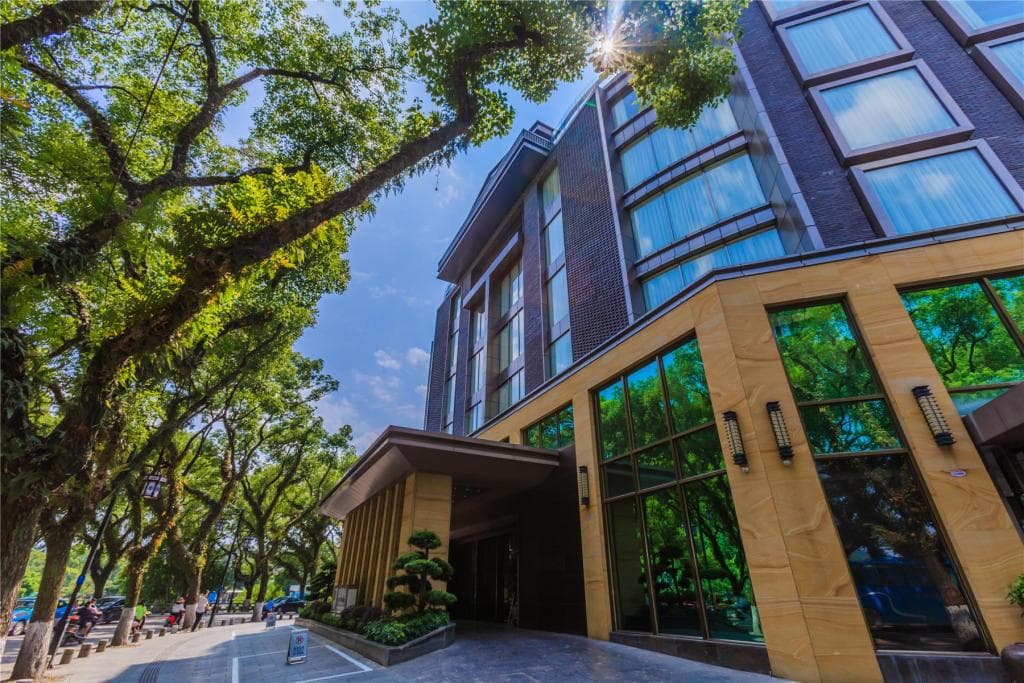
Forget the frenetic energy of West Street; the Jolie Vue is an exercise in limestone-framed stillness. Perched directly opposite the iconic Elephant Trunk Hill, this independent boutique property eschews the sprawling resort algorithm for something far more intimate and texturally rich. The design language is decidedly 'New Chinese'—think dark walnut lattices, mood lighting, and a hushed reverence for the river outside. Check-in feels less like a transaction and more like an induction into a slow-living society. While the property lacks a pool—a deliberate omission that preserves the zen atmosphere—it compensates with '5th Tea Time,' a dedicated tea space where the ritual of brewing local leaves eclipses the need for a swim. The rooms are generous (starting at 30sqm) and feature river-facing daybeds that practically demand you spend hours watching the bamboo rafts drift by. Dining at the Elysee Bistro offers a competent International spread, but you’re here for the signature Beer Fish, a local Guilin staple executed with surprising finesse. Service is intuitive, not hovering, typified by the complimentary afternoon tea that arrives just as the light hits the karst peaks perfectly. It’s not a splashy palace; it’s a sophisticated viewing box for one of China’s most painted landscapes.
“Book the 'River View Suite' specifically for the window-side bathtub and daybed. Head to the 7th-floor terrace at 5:30 PM; you’ll get the Elephant Trunk Hill sunset shot without fighting the park crowds below.”
Insider TipAvg. Nightly Rate
69USD