No. 01
No 57 Changsheng Road. Hangzhou China 310006Hangzhou170 verified reviews
9
.4
Bitvoya Edit
Layering imagery, place, and detail before the page opens.
Hangzhou is a city where time-honored heritage dances with futuristic ambition, creating a skyline that is as diverse as it is breathtaking. In our curated collection, 'Architectural Marvels and Art-Filled Suites,' we explore properties that redefine the concept of a stay. From the shikumen-style brickwork of Chaptel Hangzhou near the historic West Lake to the glowing golden sphere of the InterContinental in the bustling Qianjiang New City, these hotels are destinations in themselves. Visitors will find tranquility in the wetlands surrounding Banyan Tree Hangzhou and ultra-modern luxury at Conrad Hangzhou. Whether you seek the artistic intimacy of Vallie Hotel or the riverside grandeur of Qiushui Villa, this guide unveils the most visually stunning accommodations in Zhejiang’s capital.
Hangzhou serves as a living museum where the Song Dynasty's elegance meets 21st-century innovation. Choosing a hotel here isn't just about booking a room; it's about inhabiting a piece of art. The city's architectural landscape is defined by bold contrasts: the serene, traditional pagodas of West Lake versus the avant-garde structures of the Central Business District. Staying in properties like the Conrad Hangzhou Tonglu offers a retreat into nature with design that mimics the surrounding mountains, while urban icons like the InterContinental place you inside a literal golden sun.
Guests can expect interiors that rival galleries. The suites in our curated list often feature bespoke furniture, local silk tapestries, and contemporary Chinese art installations. Beyond the visuals, the experience is tactile—from the hand-laid bricks of heritage renovations to the sleek marble of modern skyscrapers. Expect floor-to-ceiling windows offering panoramic views of the Qiantang River or private courtyards that capture the zen of old Hangzhou.
The InterContinental Hangzhou is renowned for its unique golden sphere shape, representing the sun, while the Conrad Hangzhou features fluid, curvy lines inspired by the Qiantang River tidal bore.
Yes, Chaptel Hangzhou offers a luxury stay in restored Shikumen-style villas from the 1930s, located just steps away from West Lake.
Banyan Tree Hangzhou in the Xixi National Wetland Park and Conrad Hangzhou Tonglu offer stunning designs that integrate seamlessly with their natural surroundings.
Explore our complete curated list of luxury accommodations, from boutique hideaways to grand dames.
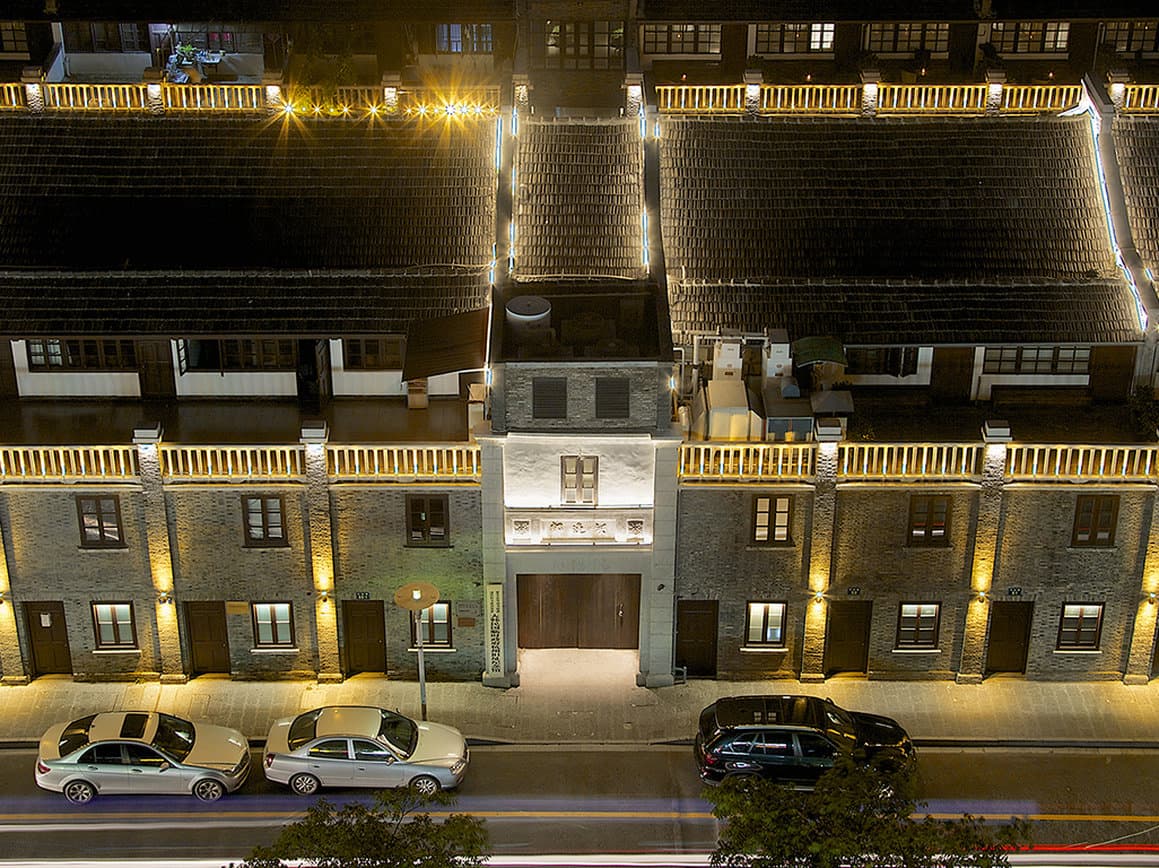
Explore All Hangzhou HotelsJust steps from the kinetic energy of the Hangzhou Kerry Centre, Chaptel Hangzhou offers a disorienting, delightful slip in time. This isn’t a hotel in the traditional sense; it’s a restored Shikumen (stone gate) neighborhood turned private manor. The property eschews the cavernous lobbies of its competitors for intimate, lantern-lit mews that feel pulled directly from a Wong Kar-wai set. The all-suite accommodations are heavy on heritage—think dark wood antiques and Art Deco geometry—but lightened by modern necessities like Molton Brown amenities and plush Select Comfort beds. While the lack of a pool might deter the fitness-obsessed, the trade-off is unparalleled privacy. Dining at Le Lotus offers a competent French menu where the pan-fried foie gras outshines the breakfast service. The staff’s English can be sporadic, but the personalized butler service compensates with genuine warmth. It is a moody, atmospheric sanctuary for those who prefer history over high-tech.
“Ask for a second-floor suite with a balcony facing the internal courtyard; it’s the quietest spot to enjoy a morning espresso while overlooking the slate rooftops.”
Insider TipAvg. Nightly Rate
270USD
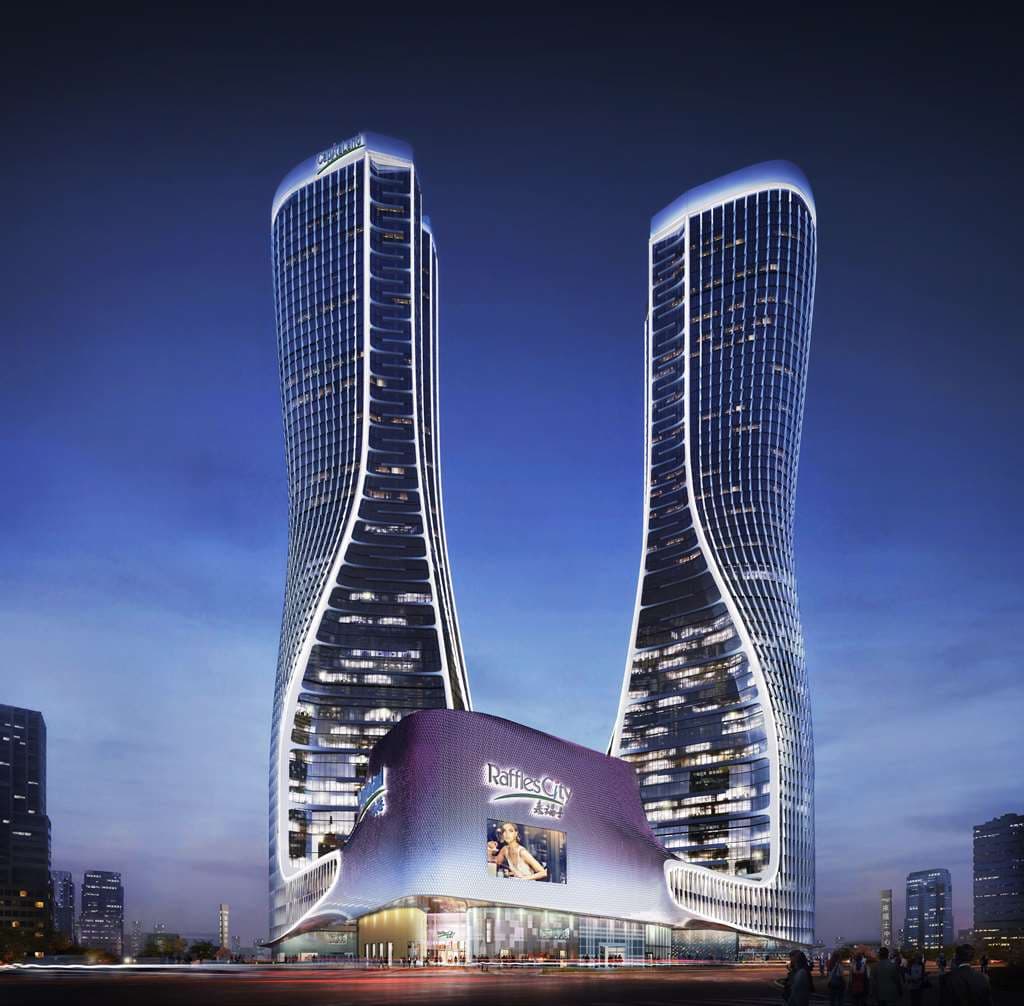
Hangzhou is often defined by the static beauty of West Lake, but the Conrad defines its kinetic future. Housed within the twisting towers of Raffles City by UNStudio, this isn't a hotel you simply walk into; you ascend. The 27th-floor lobby greets you not with a front desk, but with a sculptural spiral staircase that feels more Guggenheim than hospitality. It’s a masterclass in motion—everything curves, from the corian counters to the corridors. The rooms, starting at a generous 50 square meters, frame the Qiantang River through floor-to-ceiling glass that creates a widescreen cinema effect. The hardware is impeccable—Dyson dryers and Valmont spa amenities—though the lighting controls can be an IQ test, lacking a singular master switch. Dining is the true headliner: Li'An, perched on the 50th floor, recently retained its Black Pearl One Diamond status. Order the Mapo Tofu with Boston Lobster; it’s a numbing, decadent rebuttal to standard banquet fare. While concierge service can occasionally lag behind the architecture's velocity, the hard product is undeniable.
“The indoor pool is strictly for serious laps, not lounging—and swim caps are mandatory. Bring your own to avoid the inflated charge at the desk.”
Insider TipAvg. Nightly Rate
127USD
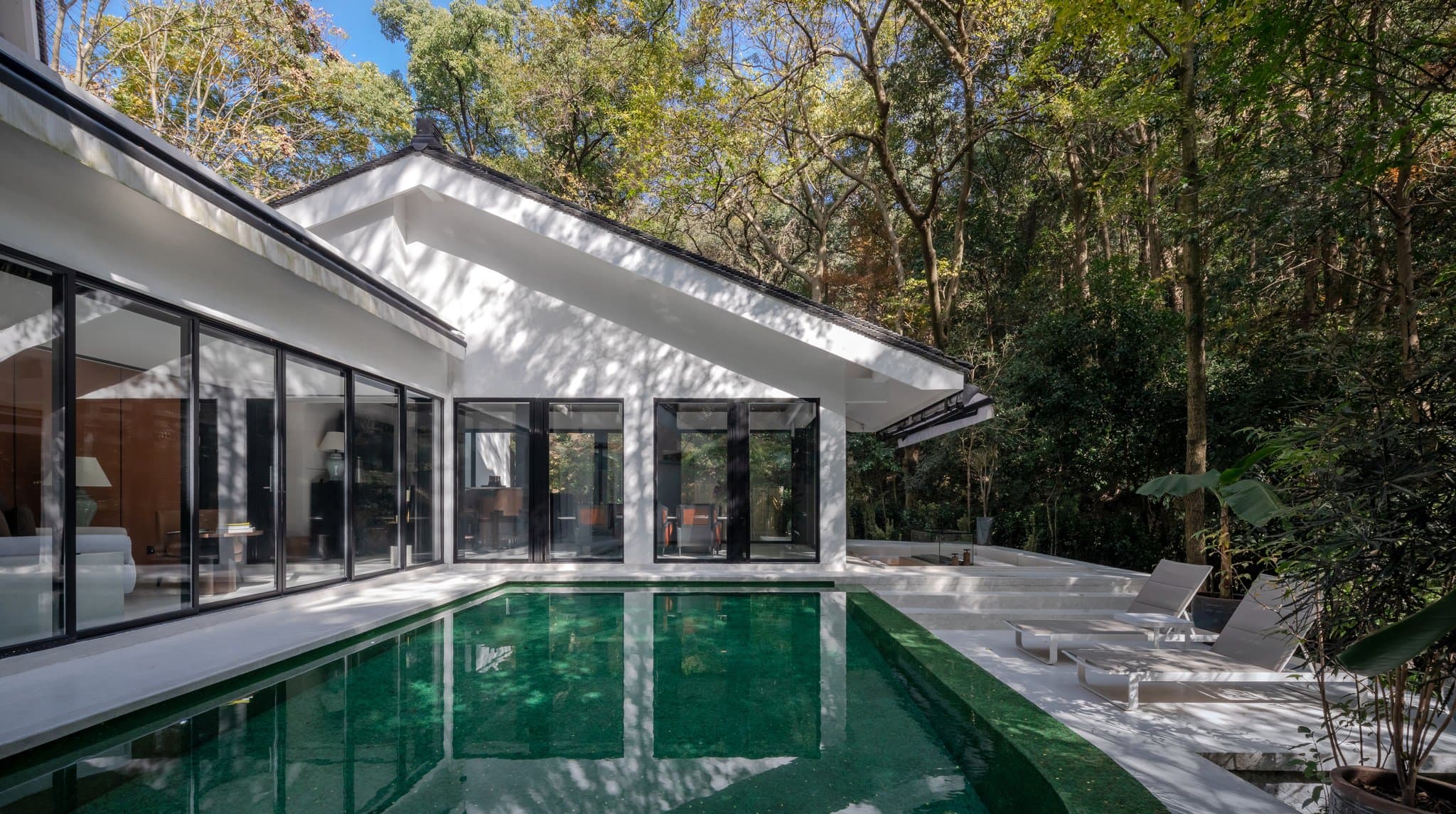
Tucked away in the dense greenery near the Qiantang River, Vallie Hotel isn't just another boutique stay—it is a study in silence. Occupying a cluster of former tea farmers' homes just steps from the historic Six Harmonies Pagoda, this eight-room retreat rejects the loud opulence typical of Chinese luxury for something far more precise: a curated minimalism that frames the forest like a living canvas. The architecture is the star here, using stark lines and expansive glass to turn the surrounding ancient trees into part of the interior decor. Inside, the experience is obsessively tactile. You won't find generic amenities; instead, expect Dyson hair dryers, 400-thread count linens, and the pièce de résistance: private bathing pools fed directly by the legendary Hupao Spring (Tiger Running Spring). Soaking in this mineral-rich water while watching the mist roll off Yuelun Mountain is the kind of sensory reset that justifies the room rate. Dining happens at Shijiu Gastro Lounge (L’éclat 19), where the kitchen executes a daring French-Hangzhou fusion. The Fennel Caviar Tart is a must-order, ideally paired with a bottle from their surprisingly deep cellar. Service is handled by 24-hour personal butlers who master the art of being present only when needed. While the base rooms (40sqm) might feel compact to those used to sprawling suites, the trade-off is absolute privacy. For design aficionados and solitude seekers, Vallie offers a rare commodity in modern China: a pause button.
“Ask your butler to arrange a private hike up Yuelun Mountain early in the morning; the private path offers a crowd-free view of the Qiantang River before the day-trippers arrive.”
Insider TipAvg. Nightly Rate
554USD
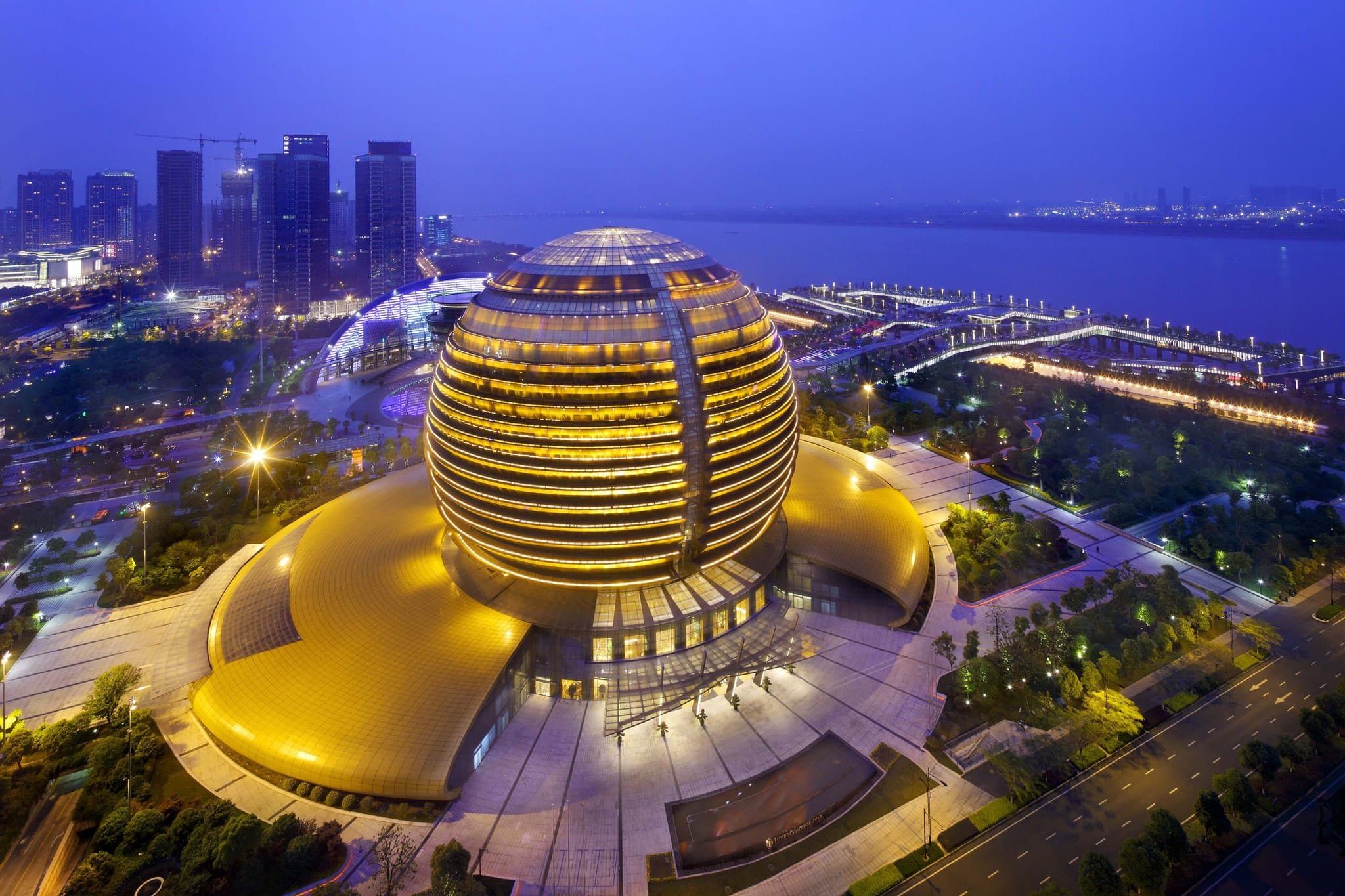
It’s impossible to ignore the 'Golden Egg.' Dominating the Qianjiang CBD, the InterContinental Hangzhou is a brave architectural statement—a shimmering 18-story sphere that rivals the nearby moon-shaped Grand Theater. Inside, the audacity continues; the 85-meter cathedral-like atrium is a dizzying hollow core that demands you look up. While the hardware betrays its 2010 vintage—don't expect the whisper-quiet climate control of a 2024 opening—the experience remains grand. The circular floor plans create uniquely curved rooms where floor-to-ceiling windows frame the Qiantang River. Opt for a river-view suite to watch the city’s nightly light show from your bathtub, accompanied by large-format Byredo Bal d'Afrique amenities. Dining is an eccentric mix: 'Wochinger' serves surprisingly authentic pork knuckle and brewed beer, a rarity in Zhejiang, but the real culinary anchor is 'Sun & Moon.' Here, the Hangzhou-style Crispy Pigeon and Fried Ham with Sweet Beans offer a sophisticated taste of the region. It’s a landmark stay—imperfect, yes, but undeniably iconic.
“Book a 'Premium River View' room on the 16th floor or higher to see the Qianjiang New City Light Show directly from your bed without the crowds at the City Balcony.”
Insider TipAvg. Nightly Rate
115USD
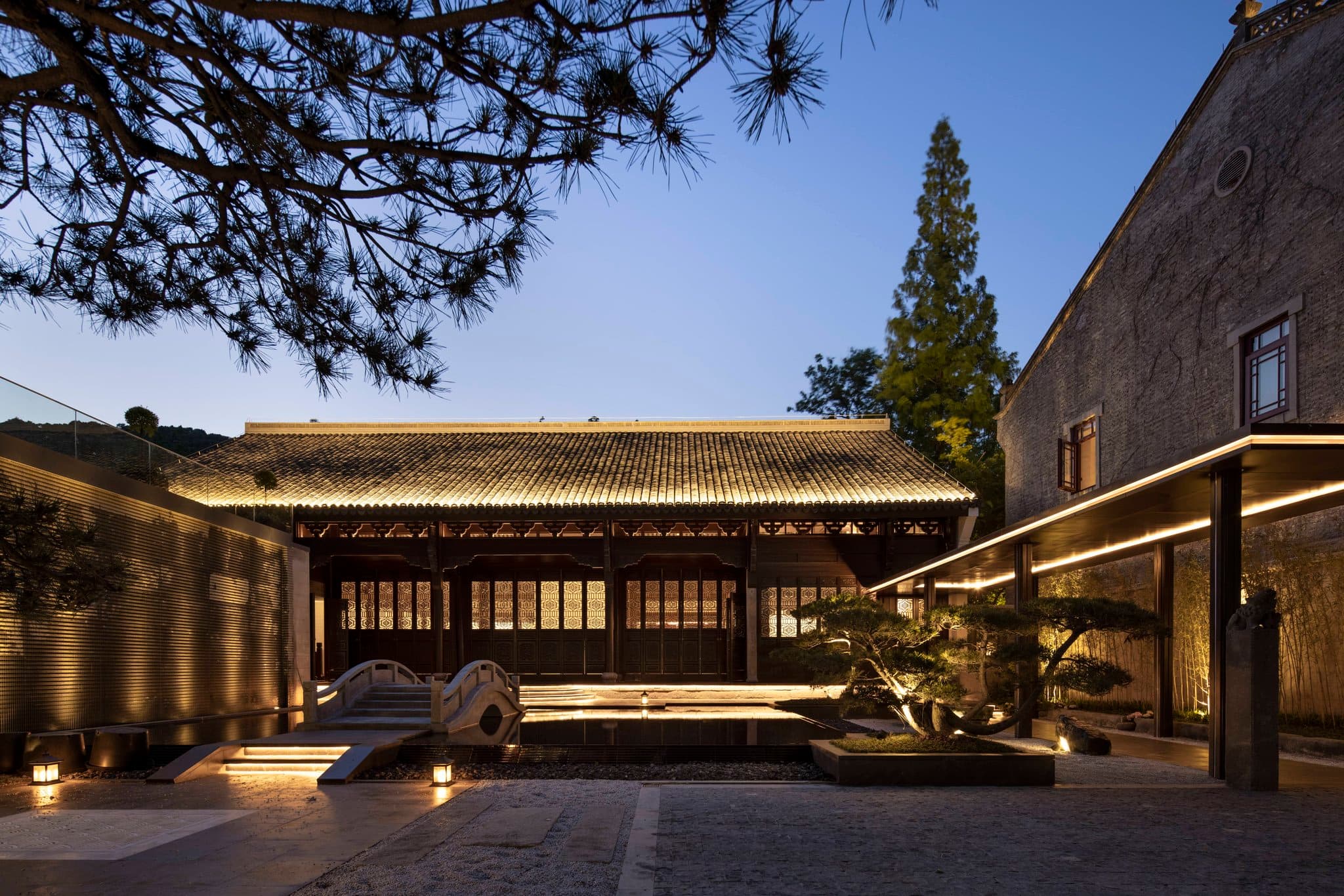
Qiushui Villa isn’t just a hotel; it is a meticulous resurrection of the Republic of China era. Anchored on Beishan Road, this 10-suite sanctuary was originally built by newspaper mogul Shi Liangcai in the 1930s. Today, as a member of Small Luxury Hotels of the World, it operates less like a hotel and more like a private, livable museum. The design is uncompromisingly heritage-focused: think handpicked antique rosewood furniture, intricate stone carvings, and soaring ceilings, all managed via modern iPad room controls. The dining is equally ambitious. 'In Villa' serves a defiant take on local cuisine—order the fried crab with stinky tofu for a pungent, authentic kick—while the French restaurant 'Guyun' offers a white-tablecloth Western high tea that rivals any in Shanghai. The semi-open infinity pool with its retractable glass roof is an architectural feat, allowing year-round swimming with direct sightlines to the Broken Bridge. While the breakfast delivery from a neighboring kitchen can be inconsistent in temperature, the anticipatory butler service largely smooths over such operational hiccups. It is an atmospheric, silent retreat for those who prefer history over hype.
“Book the 'Shuang Qing Tai' Suite for the best private balcony views of the Broken Bridge, and swim at 7 AM to catch the lake mist before the tourists arrive.”
Insider TipAvg. Nightly Rate
1450USD
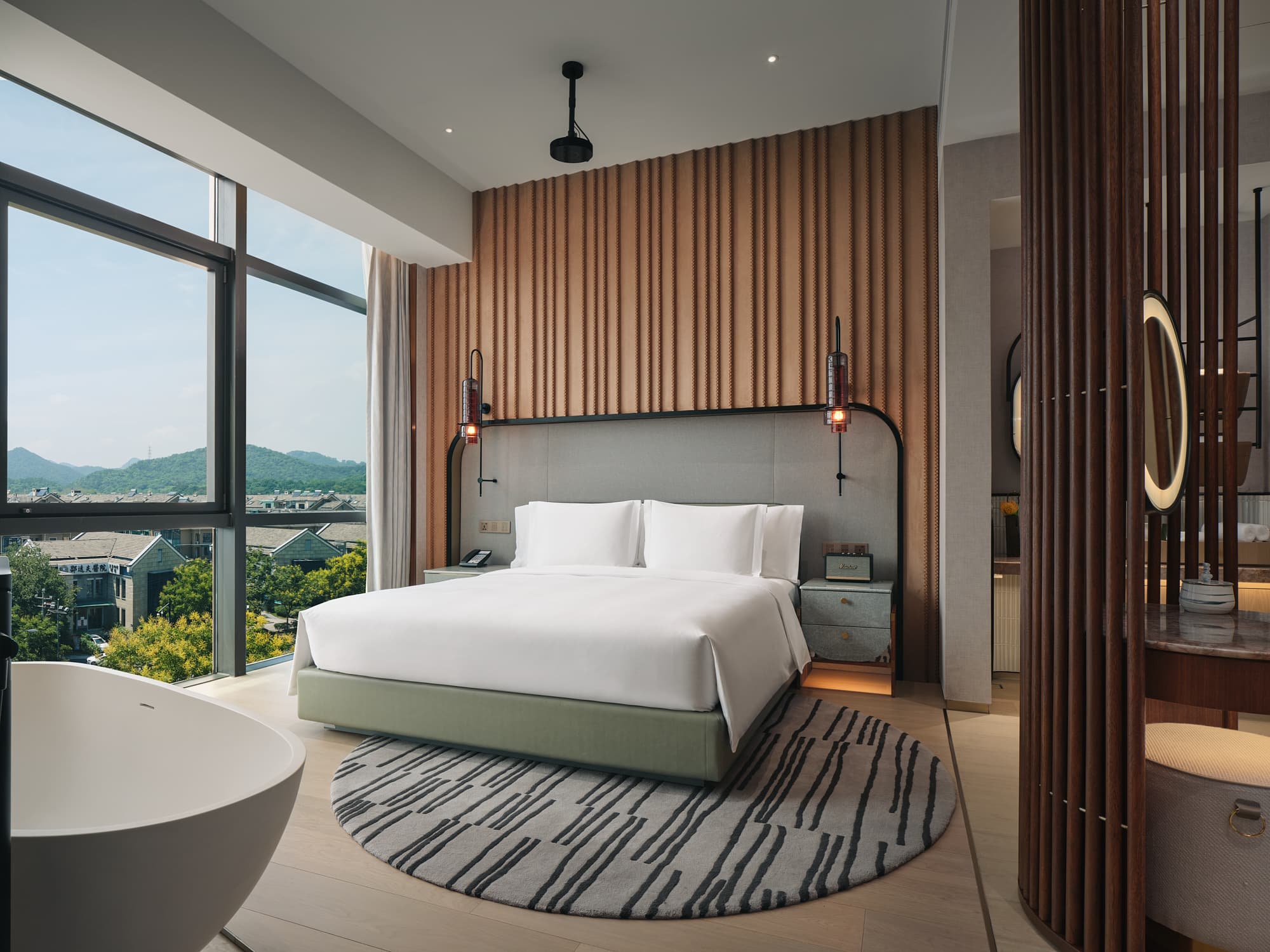
Forget the crowded lakeside boardwalks; the real pulse of Hangzhou’s imperial history beats here, just 120 meters from Shuichengqiao Metro. Hotel Indigo Hangzhou Uptown doesn’t just reference the past; it remixes it. The lobby entrance, dubbed the 'Golden Avenue,' pulls you into a dramatic tunnel that feels less like a hotel arrival and more like a cinematic tracking shot. Inside, the architecture mimics the graceful curvature of a 'Meiping' vase, while movable type printing blocks on the walls act as a tactile nod to the region's scholarly pedigree—without feeling like a dusty museum exhibit. In the rooms, the 'Four Arts' of the Song Dynasty (tea, painting, incense, flowers) aren't just brochure fluff; they are integrated into the guest experience with dedicated tea sets and aromatherapy stones that ground the space. Dining at ING Restaurant is mandatory. Order the 'Ten Small Bowls' (Qianchao steamed dishes)—a precise, flavor-packed history lesson served in ceramic vessels. At night, the vibe pivots from zen retreat to a stylized version of an ancient night market. Cap the evening at ING Bar with a Yellow Rice Wine Tea Cocktail, a drink that manages to be both earthy and sophisticated. Note that the indoor pool takes a maintenance break Monday through Wednesday, so time your laps accordingly.
“Request a room on a high floor facing away from the main entrance. Reviews suggest lower-level rooms (like 308) can catch street noise that interrupts the scholarly calm.”
Insider TipAvg. Nightly Rate
109USD
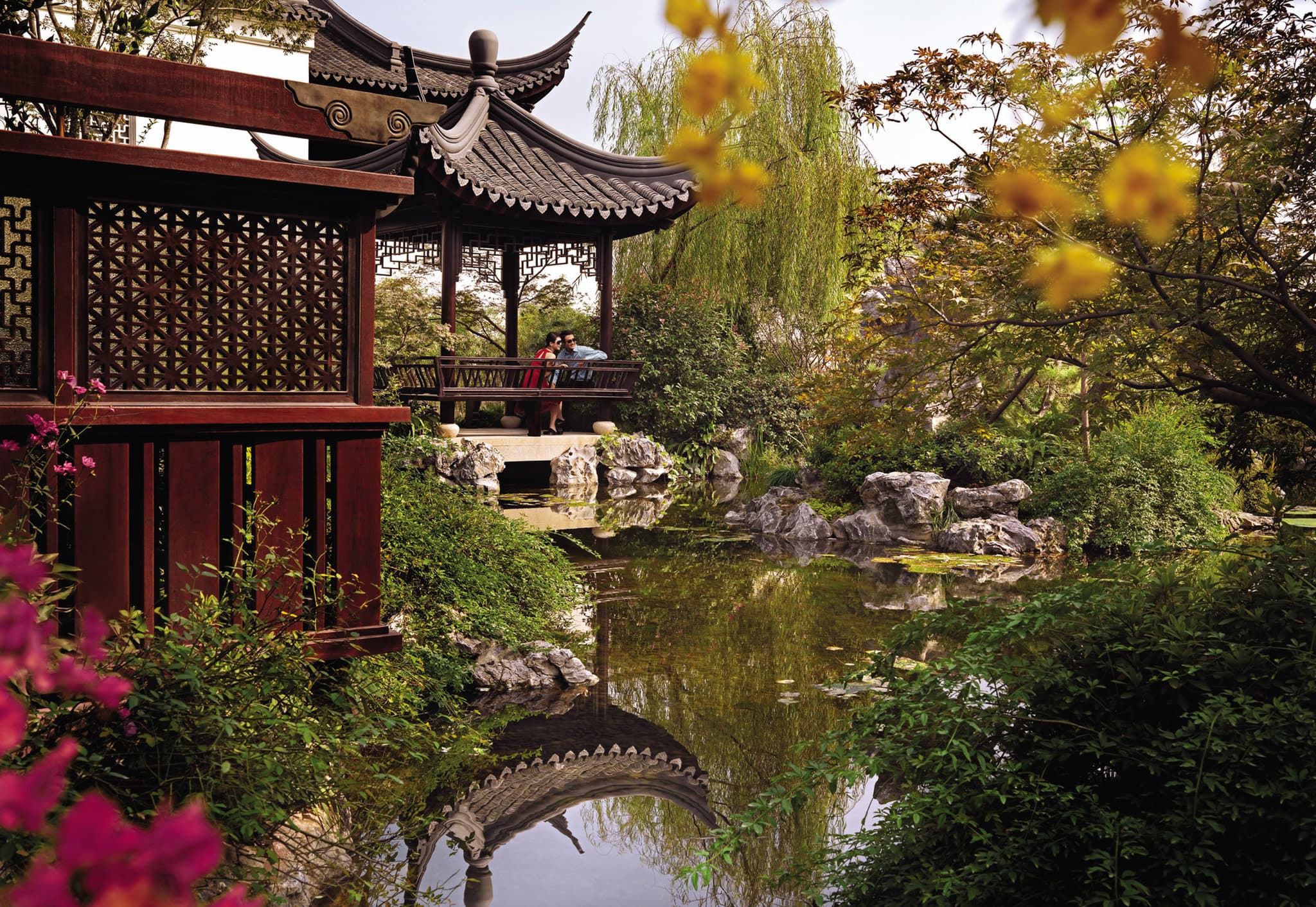
If the West Lake is Hangzhou’s chaotic living room, this property is its hushed, velvet-roped VIP lounge. While tourists jostle on the Su Causeway, the Four Seasons offers a masterclass in Jiangnan garden architecture that feels less like a hotel and more like a Qing Dynasty estate that just happens to have high-speed Wi-Fi. The design is a moody labyrinth of covered wooden corridors, mossy lagoons, and curved eaves that frame the misty landscape like a traditional ink wash painting. Inside, the rooms are sanctuaries of silence, clad in silk and dark wood, with terraces that open onto private willow-draped ponds. The real draw, however, is the culinary pilgrimage to Jin Sha. As the region’s only Black Pearl 3-Diamond restaurant, it demands a reservation weeks in advance. The Shanghainese Braised Pork with Abalone is not merely dinner; it is a rich, gelatinous event. Service is telepathic rather than attentive, materializing only when you need a refill of Longjing tea. It is unapologetically expensive, but in a city of millions, solitary silence is the ultimate luxury.
“Jin Sha is often fully booked by locals. Secure your dinner reservation at the same time you book your room. Also, request a ground-floor Lagoon Suite for direct garden access.”
Insider TipAvg. Nightly Rate
535USD
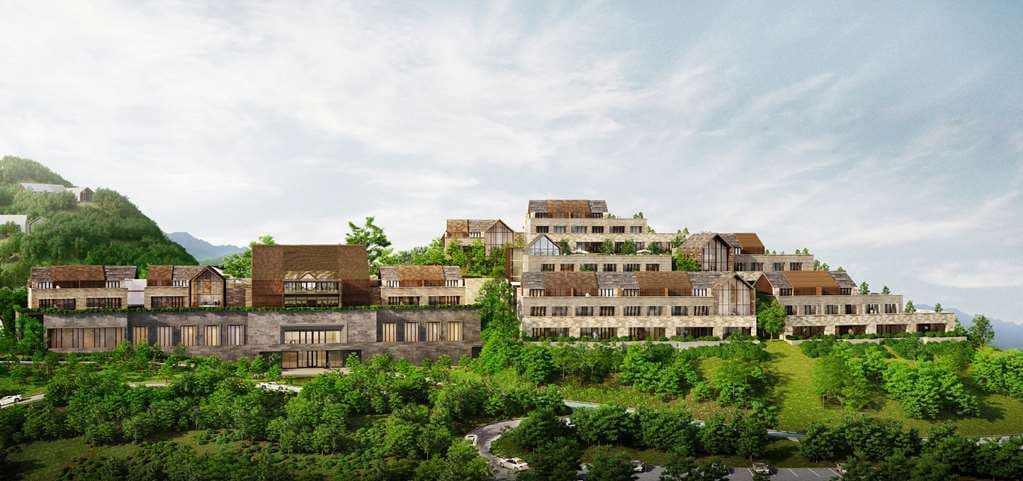
While the masses descend on West Lake, the smart money drives ninety minutes southwest to this architectural anomaly. The Conrad Hangzhou Tonglu isn’t a traditional pagoda-style resort; it’s a modernist statement of glass and concrete that frames Tianxi Lake with surgical precision. The lobby, softened by indoor osmanthus trees, sets a mood of deliberate restraint. Rooms are vast—starting at 73 square meters—anchored by massive private balconies and deep-soaking tubs that demand a bottle of wine. Dining requires a strategy: skip the inconsistent breakfast buffet and reserve a table at Le for dinner, where the seasonal river catch and bamboo shoots reflect the local terroir better than any international spread. While the hardware is impressive—including a sun-drenched Precor gym and a heated indoor pool—the service can feel like a work in progress. The concierge lacks the telepathic polish of the brand’s city counterparts, and you might spot the occasional scuff on the minimalist furniture. But when you are floating in the outdoor infinity pool, watching the mist roll off the Fuchun Mountains, these minor friction points dissolve.
“Book a treatment at the standalone spa building—specifically the hot stone massage—then claim a lounger at the outdoor infinity pool before 10 AM for uninterrupted mountain views.”
Insider TipAvg. Nightly Rate
220USD
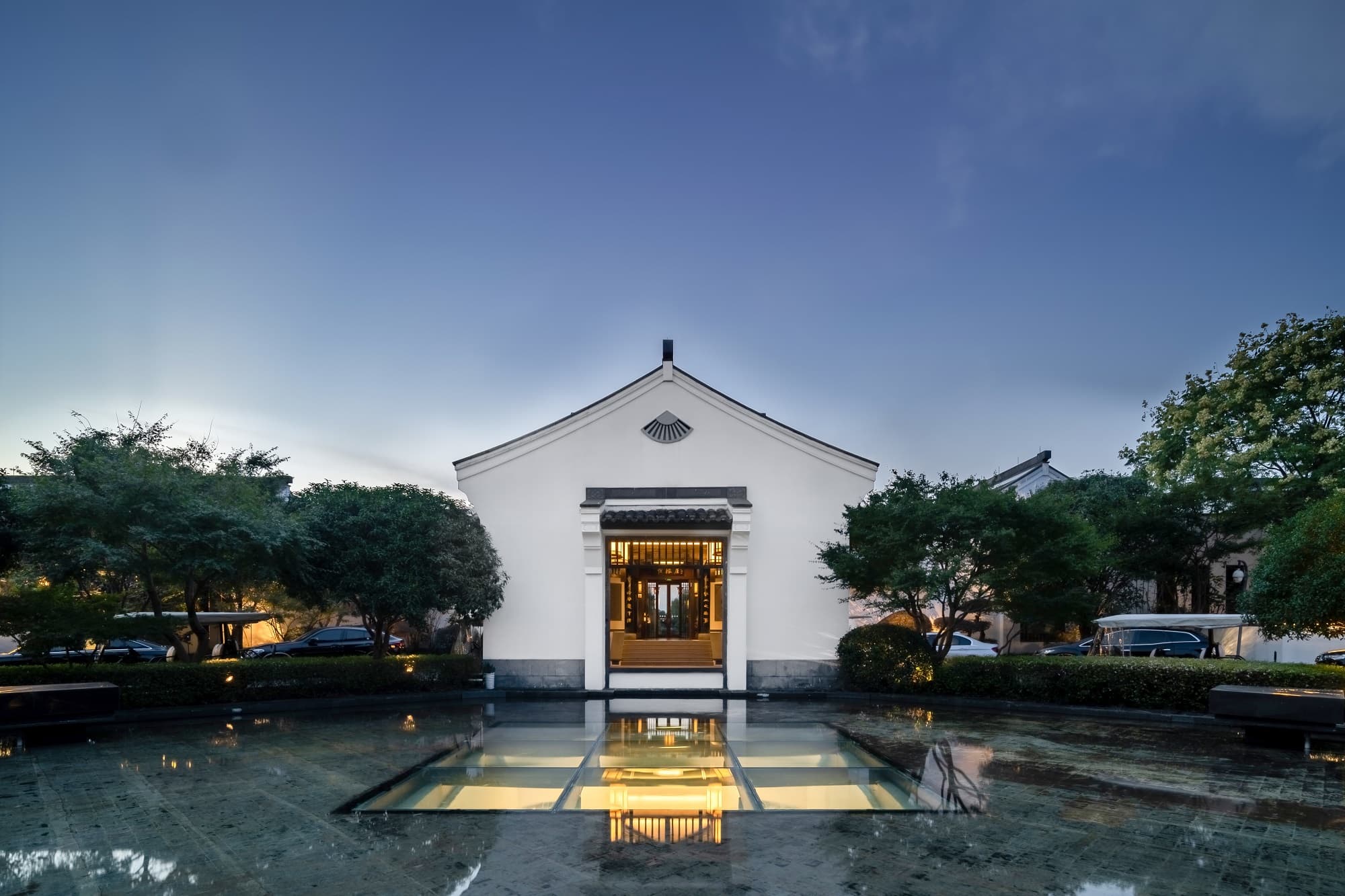
Forget the clamor of West Lake; the real poetry of Hangzhou is written here, in the hushed, mist-draped corridors of the Xixi National Wetland Park. Banyan Tree has pulled off a masterstroke of wetland architecture, constructing a village of ivory walls and grey-tiled roofs that feels less like a hotel and more like a scene from a Song Dynasty scroll come to life. The sense of scale in the 72 suites and villas is startling—entry-level Water Terrace Suites clock in at a massive 120 square meters, featuring high ceilings that could humble a cathedral. Inside, the aesthetic is strictly refined Jiangnan: dark lacquered wood, intricate silk brocades, and floor-to-ceiling windows that frame the canals like living art. Bathrooms are veritable sanctuaries equipped with deep soaking tubs and Banyan Tree’s own aromatherapy-heavy amenities (though spa junkies will note the Natura Bissé products in the treatment rooms). Dining at Bai Yun is non-negotiable; the Dongpo Pork is a sticky, melt-in-the-mouth revelation, and the Longjing Shrimp captures the terroir of the nearby tea plantations perfectly. While the 40-minute trek to the city center might deter the sight-seeing sprinter, the sheer romance of a sunset sculling boat ride here makes leaving feel like a mistake.
“Book a Water Terrace Suite for the best value-to-view ratio, but ask specifically for a unit away from the main walkway for absolute privacy. Don't skip the 'Jiu Xian' tea lounge for a pre-dinner flight of Hangzhou rice wines.”
Insider TipAvg. Nightly Rate
512USD
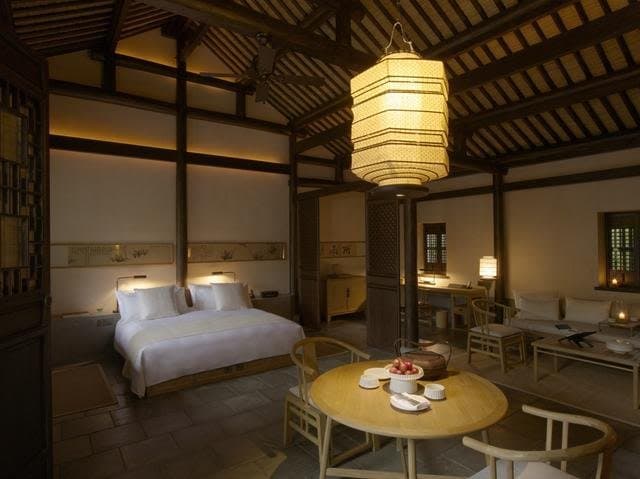
Forget the gilded lobbies of typical five-star establishments. Amanfayun is not a hotel; it is a resurrection. Located just beyond the tourist crush of West Lake, this property is a restored Tang Dynasty village where 47 stone-courtyard dwellings sit amidst tea plantations and bamboo groves. The design eschews modern artifice for a profound 'wabi-sabi' aesthetic—think unvarnished elm furniture, lattice screens, and traditional calligraphy that feels less like decor and more like a spiritual mandate. Inside the villas, the lighting is intentionally moody, a nod to the property’s monastic neighbors at Lingyin Temple, though the underfloor heating ensures your comfort is thoroughly modern. Bathrooms are vast sanctuaries featuring circular wooden soaking tubs that smell faintly of cedar and history. Dining is equally rooted in the locale; at Lan Xuan (Hangzhou House), the Double-boiled deboned chicken with termite mushrooms offers a savory clarity that rivals the mountain air. Service is almost invisible until you need it—the hallmark of the Aman brand. While the public Fayun Pathway can draw day-trippers, the private courtyards remain hermetically sealed worlds of calm. Verdict: A hauntingly beautiful escape that trades marble and chandeliers for moss and mindfulness. It is expensive, yes, but you are paying for the rarest luxury of all: silence.
“Book a session in the Bath House's circular wooden tubs early in the morning, then walk the private path to Lingyin Temple before the public crowds arrive.”
Insider TipAvg. Nightly Rate
716USD