No. 01
8 Westbrook Resort-hangzhou. HANGZHOU China 310030Hangzhou1091 verified reviews
9
.8
Bitvoya Edit
Layering imagery, place, and detail before the page opens.
Hangzhou is not merely a destination; it is a state of mind, where the misty waters of West Lake meet the spiritual resonance of ancient Buddhism. In this curated collection, we journey beyond the bustling city center to the serene enclaves surrounding the Lingyin Temple and the lush bamboo forests of the Xihu District. Here, luxury is defined by silence and heritage.
Properties like the legendary Amanfayun, a village restored from history, and the tranquil Fuchun Resort offer more than just accommodation; they offer a gateway to Zen. Whether nestled in the shadows of Tianmushan or resting on the banks of the Fuchun River, these retreats invite you to slow down, sip Longjing tea, and reconnect with your inner self amidst centuries-old architecture.
Hangzhou has long been the spiritual heart of the Jiangnan region, blending the ethereal beauty of West Lake with a deep-rooted Buddhist heritage. Choosing a Zen retreat here means immersing yourself in a living history where monks still chant at dawn in Lingyin Temple and tea farmers harvest Longjing leaves by hand. Hotels like Amanfayun and Tsingpu Hangzhou Retreat offer direct access to these cultural touchstones, providing a sanctuary that is physically luxurious yet spiritually grounding. The integration of high-end hospitality with ancient philosophy allows travelers to detox from the digital world and embrace a slower, more mindful rhythm.
Expect a minimalist aesthetic that emphasizes natural materials like wood, stone, and bamboo. Services are often tailored to wellness and culture; look forward to private tea ceremonies, calligraphy classes, and spa treatments using local herbs. Dining is an art form, with vegetarian menus often available to mirror the temple diet, alongside sophisticated interpretations of Hangzhou cuisine.
Amanfayun is situated directly adjacent to Lingyin Temple, accessible via a private pathway. Seven Villas Hangzhou and Pins De La Brume are also located within the immediate tranquil surroundings of the temple district.
Yes, properties like Fuchun Resort and Four Seasons Hangzhou offer curated Longjing tea ceremonies, often using tea leaves harvested from their own grounds or nearby plantations.
While the atmosphere is serene and romantic, suitable for couples, hotels like Hotel Indigo Hangzhou Tianmushan and Four Seasons offer family-friendly villas and activities that respect the quiet environment.
Explore our complete curated list of luxury accommodations, from boutique hideaways to grand dames.
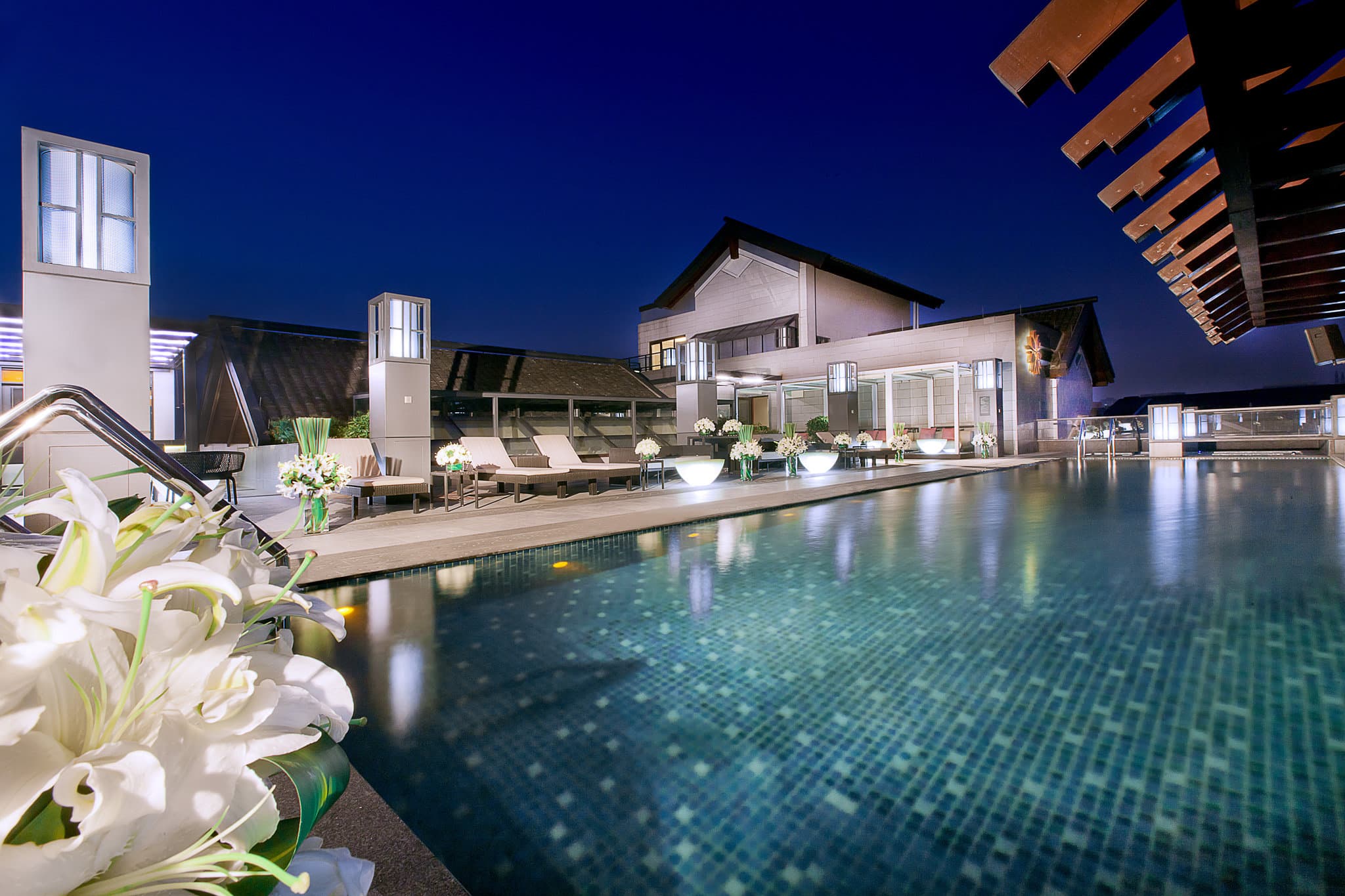
Explore All Hangzhou HotelsForget the frenetic energy of downtown Hangzhou; the real flex here is retreating to the misty, ink-wash landscape of Xixi National Wetland Park. Angsana Hangzhou operates as a masterclass in Jiangnan minimalism—think grey-tiled roofs and whitewashed walls reflecting off water so still it looks like glass. It avoids the trap of historical kitsch, instead offering a 'Matcha Lake' aesthetic that feels curated and cool. The rooms are textural sanctuaries, balancing dark wood latticework with contemporary openness; each features a private balcony that practically demands you sit with a cup of the Lunar Bar’s Premium Longjing Tea. While the absence of an onsite spa might raise an eyebrow, the workaround is superior: a quick buggy ride to the neighboring Banyan Tree to access their top-tier hydrotherapy facilities. Dining at Pavilion is a study in comfort—the Hainanese Chicken Rice is the unmissable signature here. It is a sophisticated, serene escape for the design-conscious traveler who values atmosphere over excess.
“Skip the seasonal rooftop pool; instead, request a buggy to the Banyan Tree next door to use their cinematic 25m indoor heated pool.”
Insider TipAvg. Nightly Rate
95USD
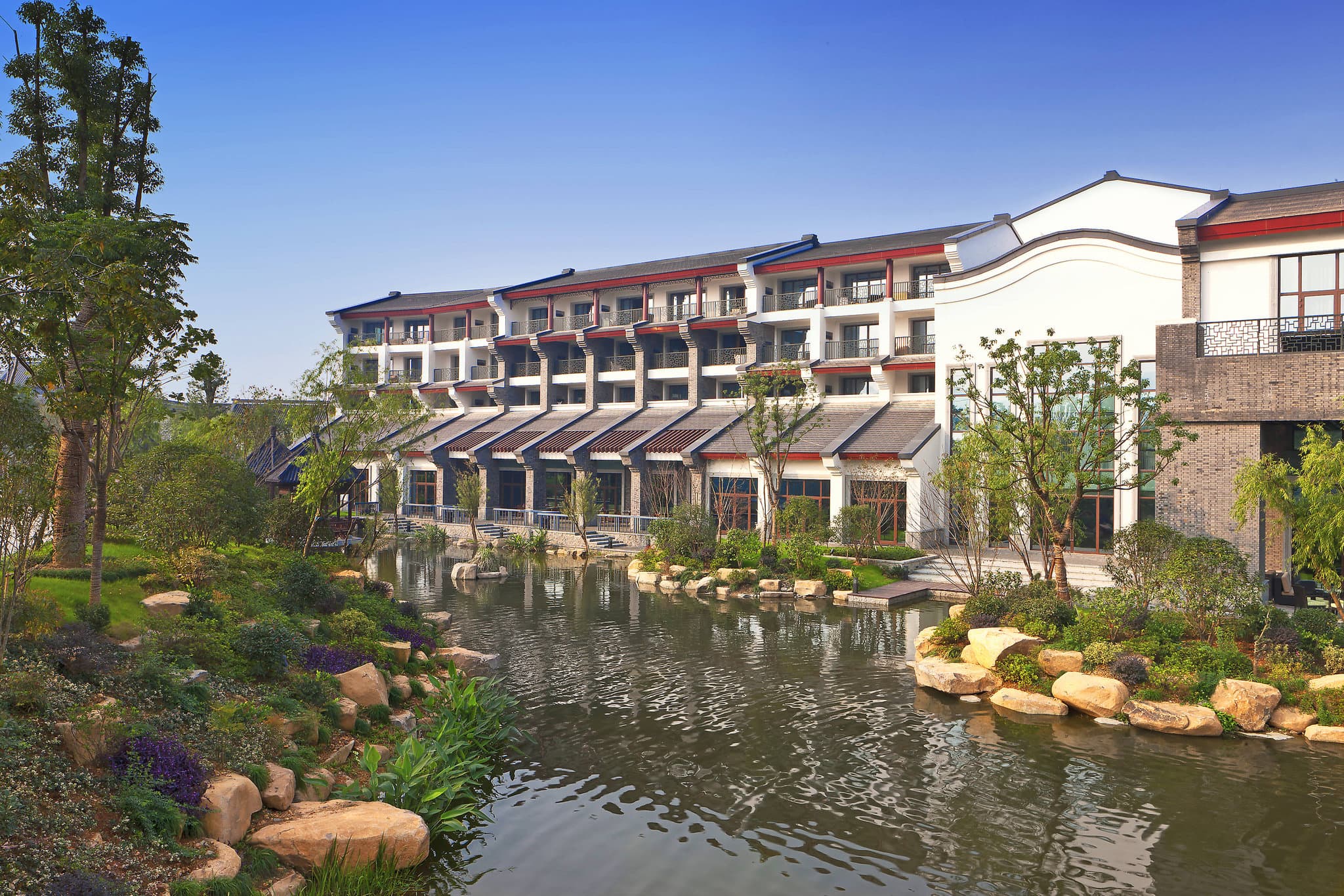
While the West Lake teems with selfie sticks, the Sheraton Grand Hangzhou Wetland Park Resort offers a masterclass in Jiangnan minimalism. This isn't your typical glass-tower Sheraton; it is a low-rise architectural homage to the region’s temple complexes, featuring sweeping dark wood eaves and lantern-lit courtyards that frame the wetland's misty waterways. The 2023 refurbishment has kept the interiors sharp—think spacious 45sqm rooms where private balconies and French windows do the heavy lifting, blurring the line between your duvet and the reeds outside. Dining at Yue is non-negotiable; the Sautéed Shrimp with Longjing Tea captures the terroir perfectly, though service can be leisurely—best to embrace the slow-living ethos. The indoor heated pool (a generous 25m) is a serious lap swimmer's haven, devoid of the usual splash-pad chaos. It’s not flawless—English proficiency at the front desk varies—but for a design-led retreat that feels miles from the urban sprawl, this is Hangzhou’s most atmospheric sanctuary.
“Request a ground-floor room in the East Wing for direct patio access to the wetland paths—perfect for a private morning tea before the park opens to the public.”
Insider TipAvg. Nightly Rate
108USD
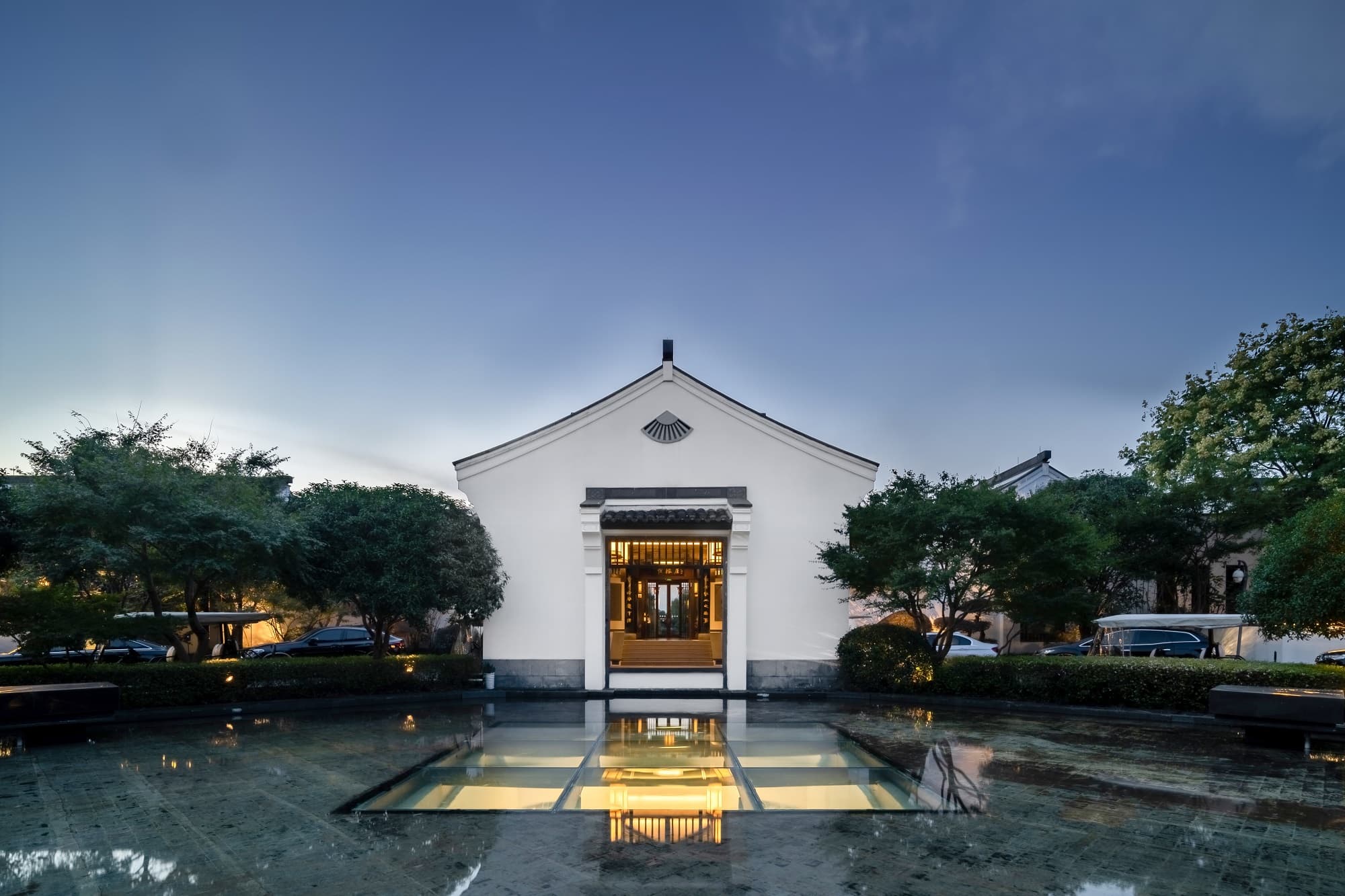
In a city where 'paradise' is the overused currency, Banyan Tree Hangzhou trades in a different commodity: silence. The architecture is a moody, monochromatic study in Jiangnan heritage—sweeping gray rooflines and whitewashed walls that feel less like a resort and more like a cinematic set piece for a high-budget period drama. It eschews the gold-plated excess of its competitors for a monastic austerity that is deeply, expensively calming. The entry-level 'Water Terrace' suites are frankly ridiculous in scale, starting at 120 square meters. They don’t just have bathrooms; they have bathing temples equipped with signature Banyan Tree Essentials that actually smell like a damp forest (in a good way). The service, led by standouts like Viola and Bruno, is telepathic rather than intrusive. Dining is a serious affair. At Bai Yun, the Dongpo Pork is a dark, gelatinous cube of history that ruins you for lesser versions, while the Longjing Shrimp offers a necessary, tea-infused crispness. The only caveat? It’s 40 minutes from West Lake. But when you’re sipping a local rice wine at Jiu Xian watching the mist roll off the wetlands, you realize the distance is the entire point.
“Book the 'Love Boat' dining experience at sunset—a sculling boat serves you dinner while navigating the private canals, far from the public park crowds.”
Insider TipAvg. Nightly Rate
512USD
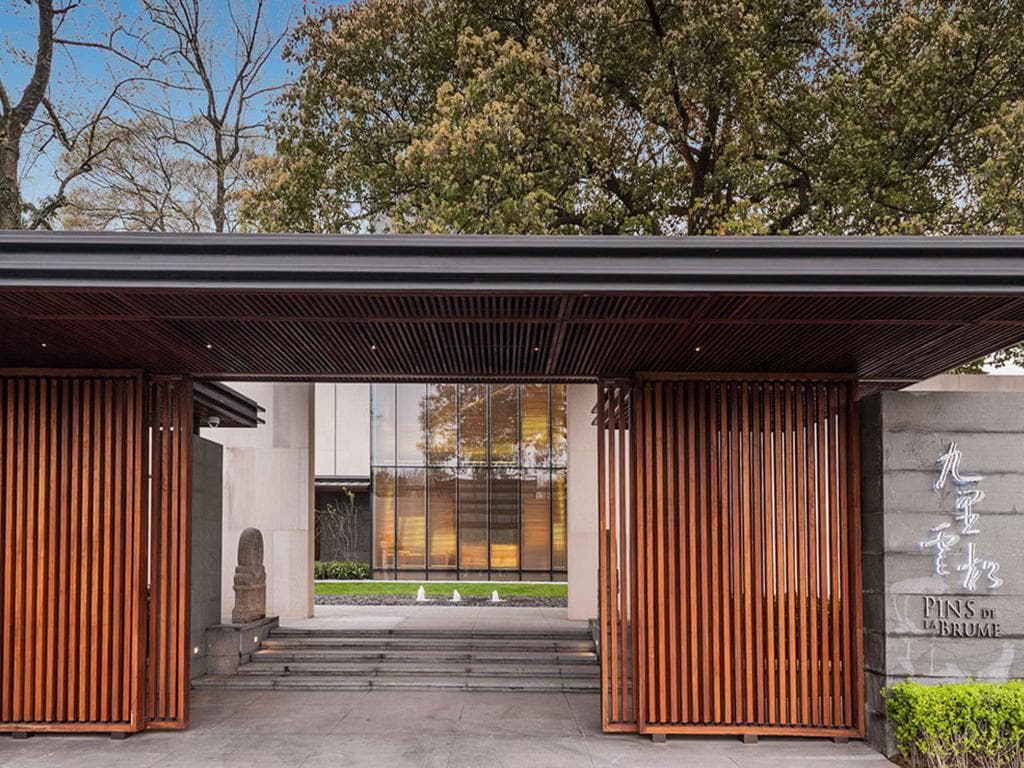
In a country where sensory overload is the norm, Pins De La Brume (Jiuli Yunsong) is an act of rebellion: it is aggressively quiet. Located a whisper away from the crowds of Lingyin Temple, this property isn't just a hotel; it’s a detox for your dopamine receptors. Designed by Liang Jinghua of PAL Design Group, the aesthetic is severe Zen—think white marble, raw timber, and glass corridors that frame the ancient pines like living artwork rather than mere scenery. The rooms feel less like accommodation and more like sanctuaries. Expect Le Labo amenities that smell of santal and smoke, and linens so crisp they feel architectural. The vibe is secluded, but the dining at Tianxiang (La Parfum) is a destination in itself. Their take on the divisive West Lake Vinegar Fish balances acidity and sweetness with a precision that borders on alchemy, far superior to the tourist traps by the water. The outdoor pool is undeniably photogenic, acting as a mirror for the towering trees, though often too chilly for a dip—treat it as a landscaping feature. Service is invisible until you need it, though be warned: the WiFi struggles to breach the thick walls. But honestly? You’re here to disconnect.
“Traffic control in the Lingyin scenic area is draconian on weekends. Register your license plate with the concierge 24 hours in advance, or you'll be walking up the mountain.”
Insider TipAvg. Nightly Rate
180USD
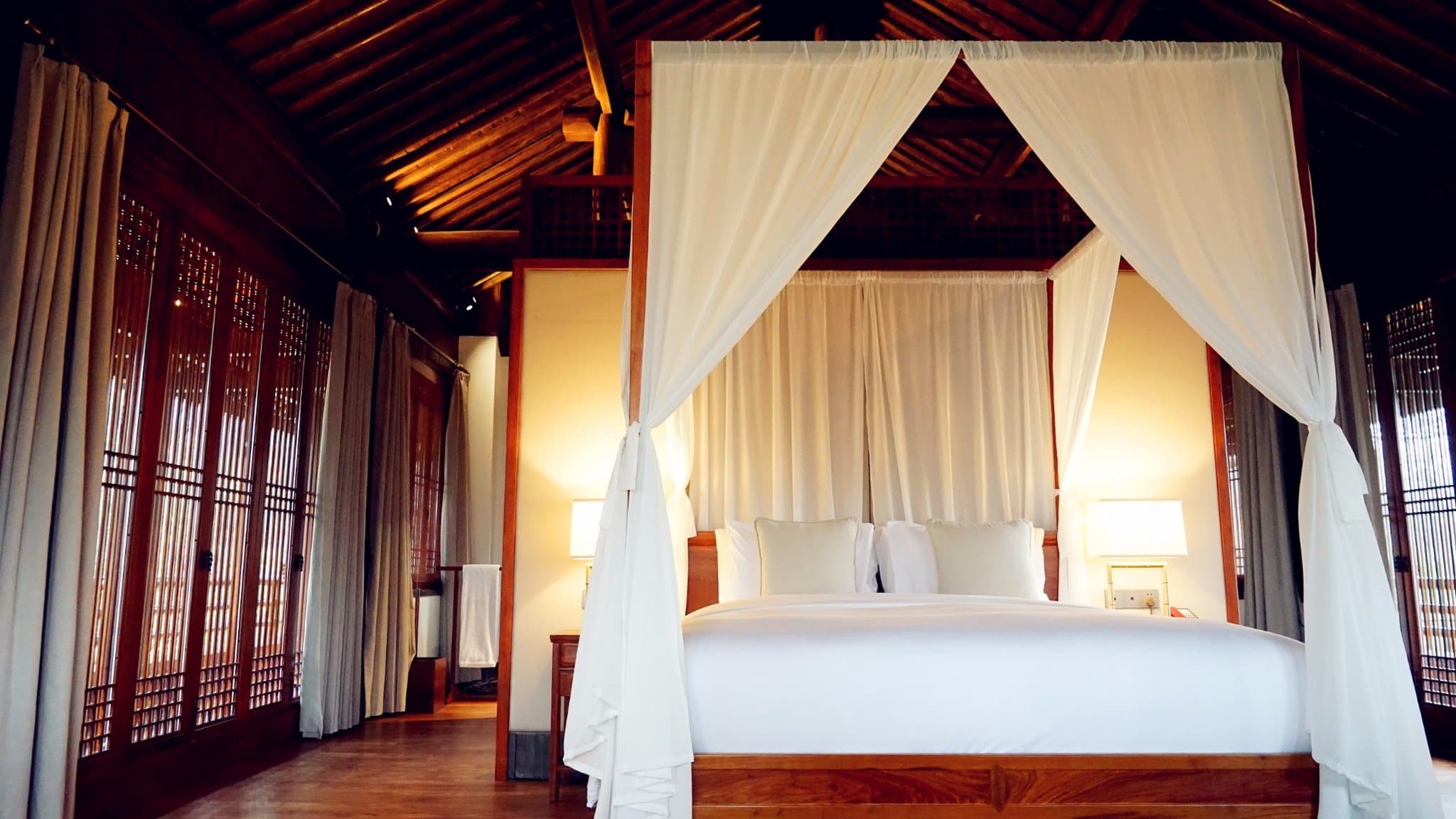
If the West Lake is Hangzhou’s beautiful but chaotic living room, Seven Villas is its silent, brooding study. Tucked into the bamboo-dense hills near the Lingyin Temple, this Relais & Châteaux property feels less like a hotel and more like the private estate of a reclusive scholar with excellent taste in wine. With only nine villas, the silence here is heavy and expensive. The architecture is a masterclass in Jiangnan minimalism—black tiles, white walls, and stone pathways that demand slow walking. Inside, the rooms are exercises in restraint, stocked with Aromatherapy Associates amenities and linens that feel dangerously thread-bare (in the high-thread-count, silken way). A word of warning: the 'connection with nature' includes floor-to-ceiling glass walls that, in some ground-floor suites, offer passersby a front-row seat to your morning routine. Draw the blinds. The real draw, however, is the dining. While other hotels offer gyms (this one doesn't), Seven Villas offers Jie Xiang Lou, a restaurant that justifies the flight alone. The Veggie Beggar’s Purse is a textural marvel, and the Golden Medallion Wagyu explains the consistent Black Pearl diamonds. Between meals, retreat to the Xiaoqing Spa for a TCM-inspired massage that smells of medicinal herbs rather than generic lavender. It is a place for the antisocial gourmand to disappear completely.
“Book the 'Le Jardin' Villa for the best balance of light and privacy. Also, the spa's steam rooms are private—ask your butler to pre-heat yours 20 minutes before your treatment.”
Insider TipAvg. Nightly Rate
625USD
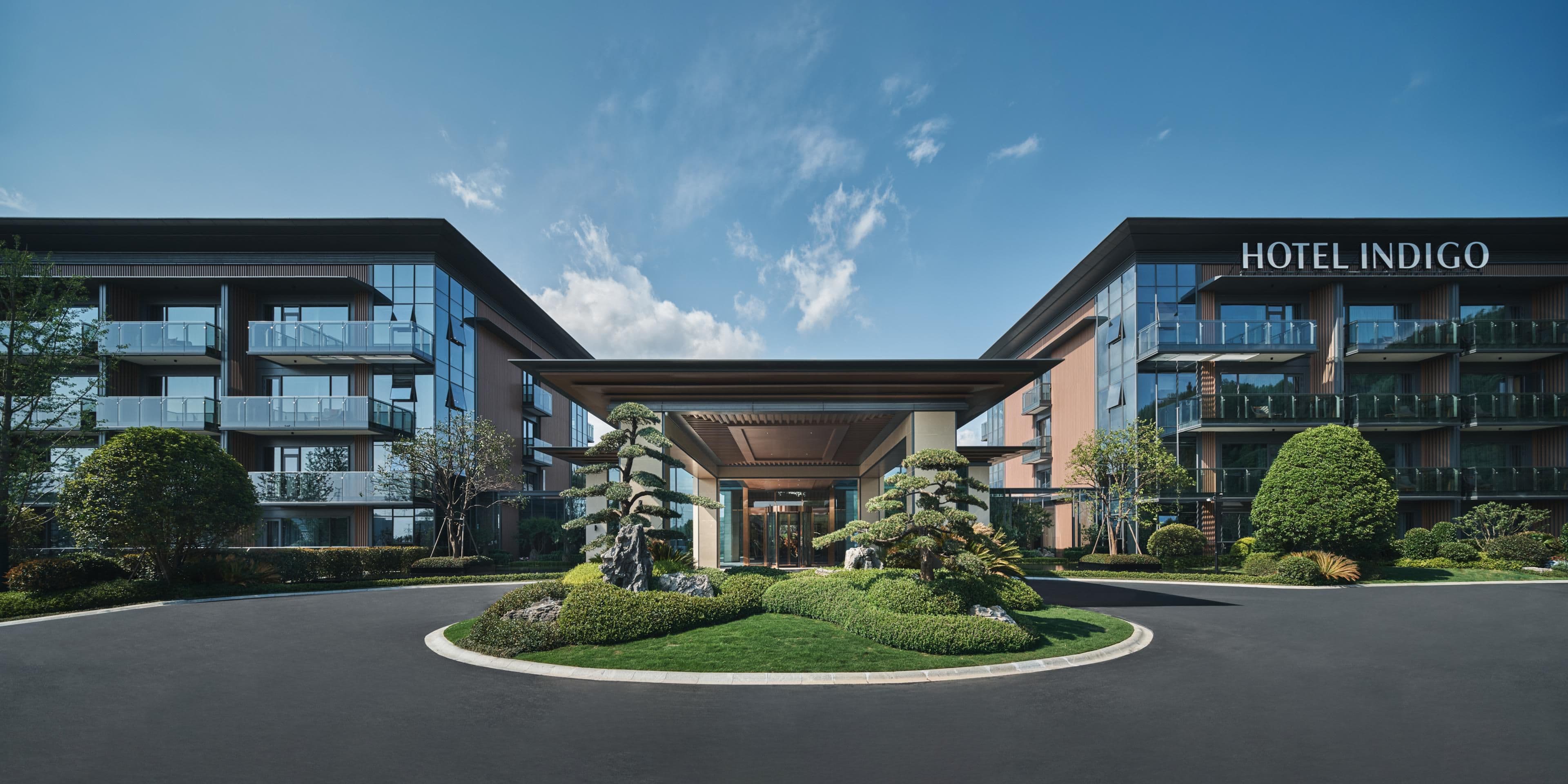
Forget the cliché of the "hidden sanctuary." Hotel Indigo Hangzhou Tianmushan doesn’t just sit near the nature reserve; it is aggressively architectural in its worship of it. Designed by HBA (Hirsch Bedner Associates), the property feels less like a hotel and more like a gallery curated by the forest itself. The lobby is dominated by a massive, golden ginkgo leaf installation—a sharp, metallic nod to the ancient trees outside that sets a moody, sophisticated tone immediately upon arrival. The rooms continue the narrative without the kitsch. Villa terraces are swallowed by bamboo, offering a level of privacy that borders on isolation. Inside, you won't find a generic branded spa. Instead, the hotel banks on its "Oxygen Bar" concept—marketing speak for the fact that the air quality here is practically medicinal, but effective nonetheless. The Technogym is open 24 hours, likely because there is absolutely nowhere else to go. You are captive here, but happily so. Dining is singular, centered on the 'Sen Neighborhood Restaurant.' Do not expect international dilution; the kitchen leans hard into local terroir. The signature Beef and Dried Bamboo Shoot Noodles are non-negotiable—earthy, texturally complex, and worth the high menu prices. A warning for winter travelers: the outdoor pool is seasonal, leaving you with the indoor heated option (26°C), which, while sleek, lacks the drama of swimming under the canopy. This is a retreat for the design-conscious hermit who prefers their silence with high thread counts.
“Book a Villa Terrace room for unblocked bamboo views, but bring snacks—the hotel is isolated and on-site dining prices are steep.”
Insider TipAvg. Nightly Rate
99USD
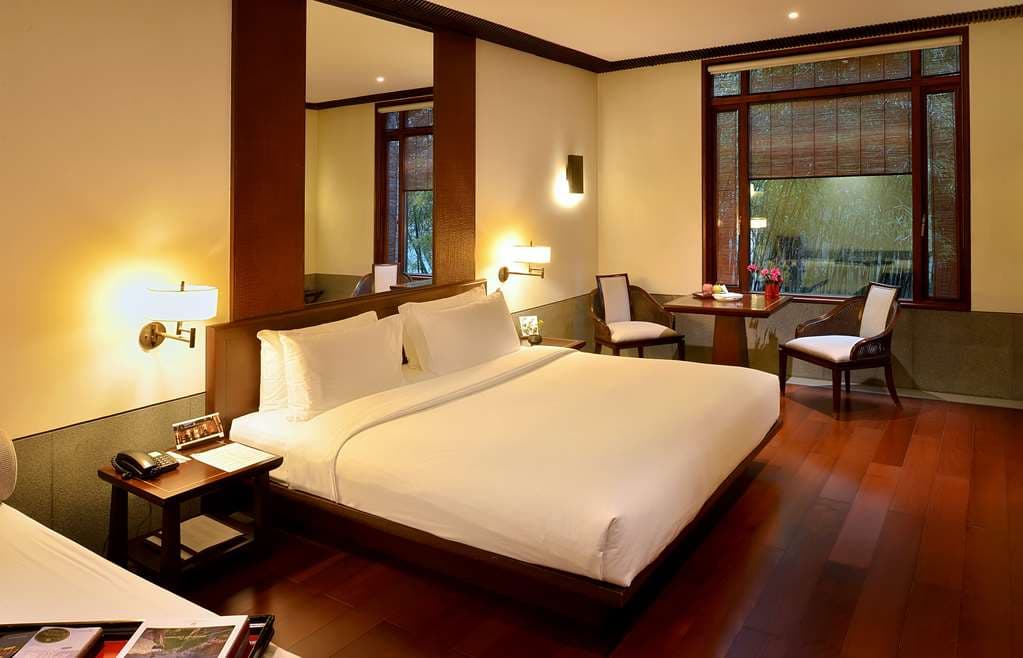
If refined silence had a price tag, it would be the nightly rate at Fuchun Resort. Designed by Jean-Michel Gathy to physically manifest the 14th-century ink-wash scroll 'Dwelling in the Fuchun Mountains', this property rejects the golden gaudiness of typical Chinese luxury for something far more cerebral. You arrive not to be seen, but to disappear into the monochrome architecture of grey brick, timber, and calm water. The rooms are studies in symmetry, framing the tea plantations like living artwork. While the hardware occasionally betrays its age—expect the odd creak alongside your Valmont amenities—the sheer atmospheric gravity compensates. The indoor pool is arguably the most photogenic in Zhejiang, a cathedral of black tile and lantern light that demands a silent breaststroke. Dining requires a pilgrimage to the Asian Corner for their Signature Flavor Durian Crab, a dish that challenges the palate as much as the resort challenges your stress levels. It is not cheap, and it is not strictly convenient, but for a weekend of scriptural copying and Himalayan Yoga, it has no equal.
“Skip the standard rooms; book a Lake View Suite on the second floor for unobstructed sightlines of the morning mist rolling off the tea terraces. Order the Mingqian Longjing tea at the Lake Lounge immediately upon arrival.”
Insider TipAvg. Nightly Rate
244USD
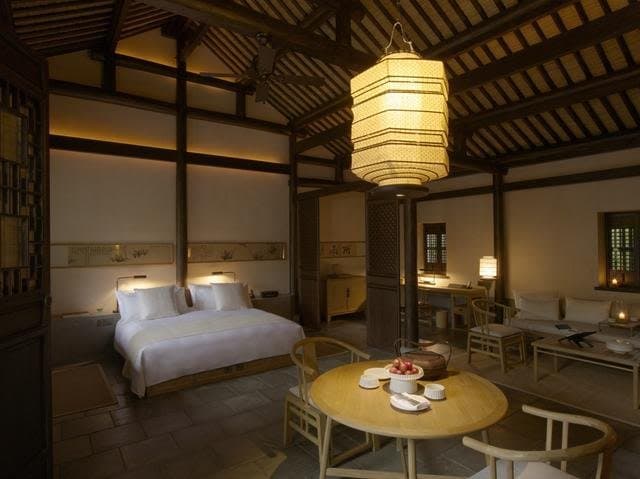
This isn’t a hotel; it’s a living museum where you sleep. Situated directly adjacent to the legendary Lingyin Temple, Amanfayun is a meticulous reconstruction of a tea-growing village that feels centuries removed from the high-rises of modern China. The arrival experience is less 'check-in' and more 'returning home to the Tang Dynasty,' albeit one upgraded with Dyson hair dryers and radiant underfloor heating—a non-negotiable luxury that keeps the damp chill of the charcoal-stone floors at bay. The 42 dwellings are dark by design—moody, monastic, and overwhelmingly atmospheric. Don't come here expecting floor-to-ceiling glass or sweeping skylines; do come for the calligraphy stations, the paper lanterns, and the heavy silence, broken only by the morning chants drifting from the temple next door. It is asceticism, but paired with Aman’s own herbal skincare amenities and 400-thread count linens. Dining is a serious affair. Skip the Western options and head straight to Lan Xuan (Hangzhou House). The signature double-boiled deboned chicken with termite mushrooms is rich enough to justify the room rate alone. A word of warning: the property’s 'open village' concept means the main Fayun Pathway is shared with public hikers during the day. The privacy can feel compromised until sunset. My advice? Retreat to the spa’s circular wooden soaking tubs or the 20-meter outdoor pool hidden in the bamboo groves until the day-trippers disperse. Verdict: The definitive spiritual reboot for those who prefer their zen served with five-star service and absolute silence.
“Avoid the standard Village Rooms if you crave privacy; the Village Suites offer enclosed courtyards. Crucially, use your guest privilege to enter Lingyin Temple at 7 AM through the side gate—you’ll beat the tour buses by hours.”
Insider TipAvg. Nightly Rate
716USD

If Hangzhou’s West Lake is the crowded main stage, the Fuyang district is the silent backstage where the real performance happens. Tsingpu Hangzhou Retreat occupies this quietude not as a hotel, but as an architectural study in rammed earth and restraint. The design doesn't try to outshout the bamboo forests; it frames them through meditation windows that turn 300-year-old Ginkgo trees into living art. The guest experience here is refreshingly ascetic yet deeply comfortable. You won't find a sprawling spa complex; instead, wellness is engineered into the very walls—thick, earthen, and sound-dampening. The staff, whose service is praised for its near-telepathic anticipation, can facilitate bamboo paper making or stone masonry, offering a tactile antidote to digital burnout. Dining at Tsingpu Kitchen is non-negotiable; the *Zhuangyuan Tofu* and *Beggar’s Chicken* are hyper-local masterpieces that define the Fuyang terroir. This is not a place to be seen; it is a place to disappear.
“Book a ground-floor courtyard room in autumn to wake up to a carpet of golden Ginkgo leaves right outside your sliding doors.”
Insider TipAvg. Nightly Rate
310USD
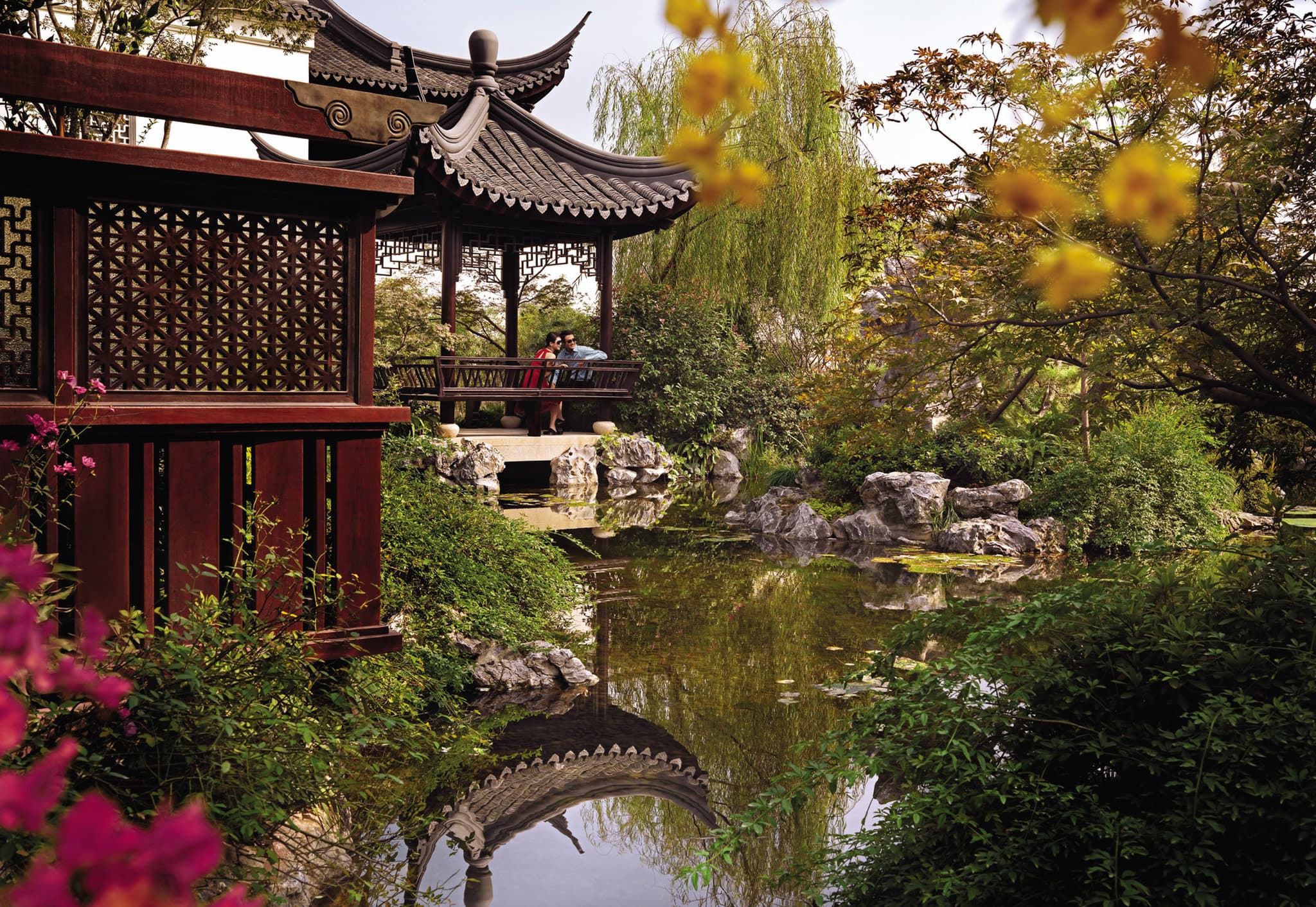
Forget the chaotic clamor of the public causeways; this property is the ultimate velvet rope. While the rest of Hangzhou battles for selfie space, guests here are sequestered in a faithful reconstruction of a Jiangnan nobleman’s estate. The architecture—a maze of gray-tiled pagodas, corridor bridges, and willow-draped lagoons—feels less like a hotel and more like a set from a Song Dynasty drama. With only 78 rooms, the intimacy is palpable. Interiors eschew generic beige for celadon silks, hand-painted floral embroidery, and screened windows that frame private bamboo groves. The technology is whisper-quiet, but the real draw is the deep soaking tub with a view. Dining is headlined by **Jin Sha**, the Black Pearl 3-Diamond heavyweight where the Shanghainese braised pork with abalone is compulsory eating. It’s rich, sticky, and dangerously good. Service is telepathic; staff materialize with umbrellas before the first drop of rain hits. **The Verdict**: It commands the highest rate in the province, but for the privilege of accessing West Lake from a private pier without rubbing shoulders with the masses, it is a bargain.
“Skip the lobby breakfast. Order the 'West Lake boat breakfast' to drift through the morning mist on a private cutter while sipping Longjing tea.”
Insider TipAvg. Nightly Rate
535USD
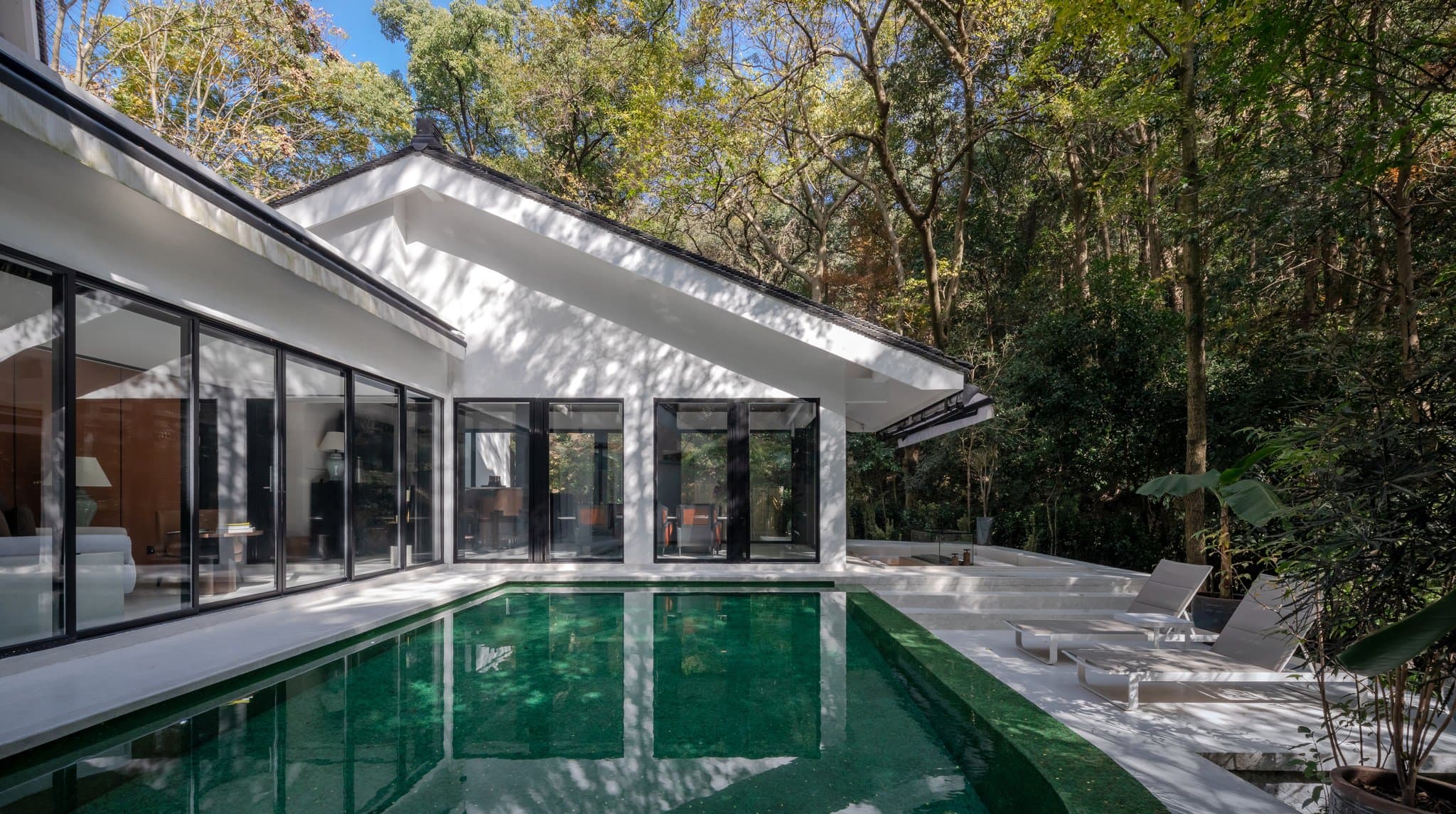
Forget the elbow-to-elbow shuffling along the West Lake promenade. In Hangzhou, the ultimate luxury isn’t visibility—it’s disappearing completely. Vallie Hotel, an eight-room sanctuary disguised as a cluster of traditional tea farmer dwellings near the Six Harmonies Pagoda, offers exactly that: a masterclass in high-end hermitage. The arrival sets the tone. There is no grand lobby, only a hushed drive through ancient camphor trees and bamboo groves. Inside your villa, the design restraint is admirable—exposed timber beams and stone floors create a gallery-like void, filled only by the sounds of the forest. Yet, the creature comforts are loud and specific. Expect Bang & Olufsen speakers for your personal soundtrack, Marvis toothpaste on the vanity, and generous Bulgari toiletries. The sheer silence is heavy, broken only by the gurgle of your private courtyard pool, which—crucially—is fed directly by the legendary Hupao (Tiger Run) Spring. This is the same mineral-rich water emperors used for their Longjing tea; here, you bathe in it. Dining at the Shijiu Gastro Lounge (L’éclat 19) is a moody affair. While the 'innovative French' label can sometimes feel like a buzzword, dishes like the Fennel Caviar Tart and Yellow Wine Scampi land with surprising precision, grounding the menu in local terroir. Breakfast, however, can be a leisurely (read: slow) event, so patience is required. Butlers are on standby 24/7, ready to arrange everything from in-room massages to hiking guides, though their true talent lies in invisibility. Verdict: A sophisticated, steam-filled hideout for those who find crowds allergic.
“Skip the public entrance to the Six Harmonies Pagoda. Ask your butler to guide you to the private hiking trail behind the hotel—it offers a crowd-free ascent up Yuelun Mountain with sweeping Qiantang River views.”
Insider TipAvg. Nightly Rate
554USD