No. 01
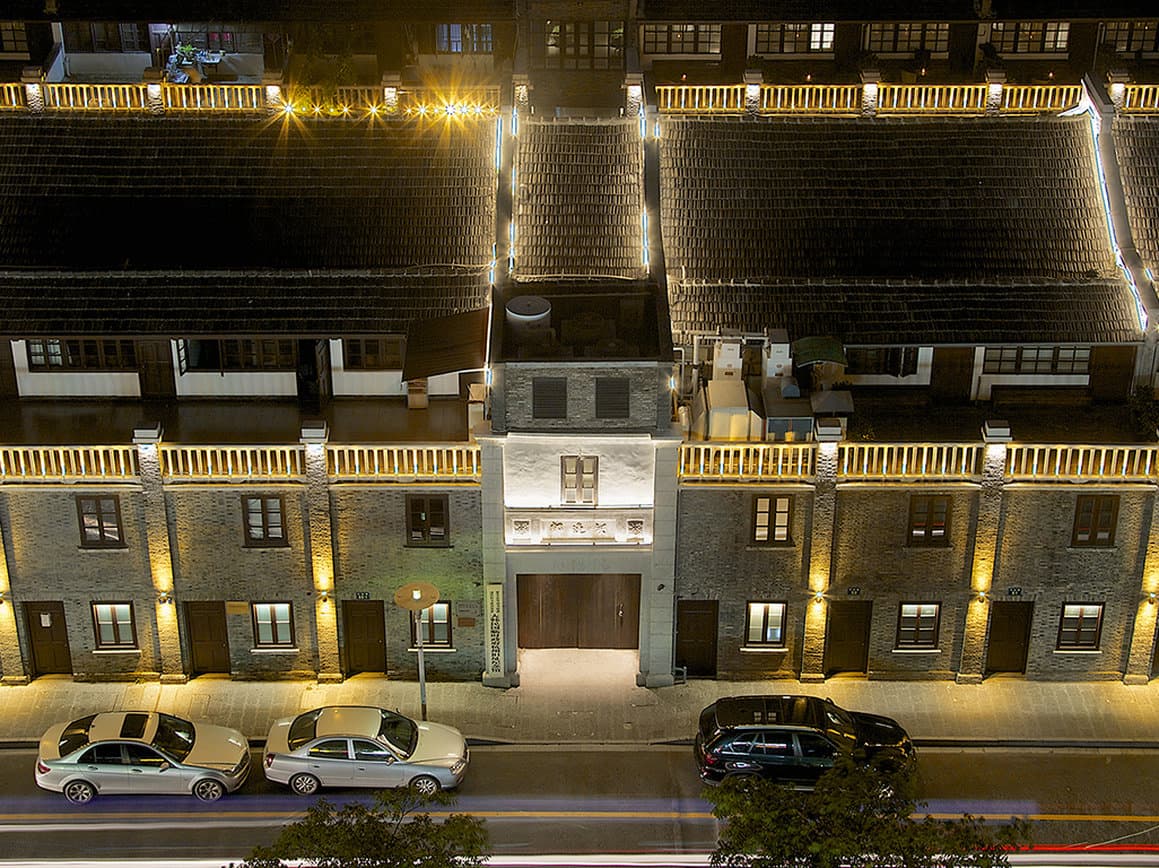
No 57 Changsheng Road. Hangzhou China 310006Hangzhou876 verified reviews
9
.0
Bitvoya Edit
Layering imagery, place, and detail before the page opens.
Hangzhou is a city where history whispers from every corner, particularly within its Restored Heritage Mansions. This collection invites you to step back into the 'Old World' elegance of the Republican era and the ancient tranquility of the Qing Dynasty. Centered around the iconic West Lake (Xihu), particularly along the historic Beishan Road, you will find architectural gems like Qiushui Villa and Chaptel Hangzhou. Further inland, the spiritual solace of the Lingyin Temple area hosts the village-turned-resort Amanfayun, while the Xixi National Wetland Park offers a water-village escape at Banyan Tree. These properties are not just hotels; they are living museums offering a gateway to Hangzhou's glorious past.
Hangzhou offers a unique juxtaposition of ancient serenity and modern luxury, making it one of the premier destinations in Asia for heritage tourism. Unlike standard luxury towers, the properties in our "The Old World" collection provide an immersive cultural experience. Staying at places like Qiushui Villa or Chaptel Hangzhou allows guests to physically inhabit the Republican era (1912-1949), characterized by a blend of Chinese tradition and Western Art Deco influences. These restored mansions preserve the intricate woodwork, stone courtyards, and architectural nuances of the past while integrating state-of-the-art amenities. Choosing these properties supports architectural preservation and offers a deeper, more intimate connection to the city's narrative.
Expect a stay defined by understated elegance and personalized service. Unlike large chain hotels, these restored mansions often feature fewer rooms, ensuring exclusivity. Interiors are typically adorned with period-correct antiques, silk tapestries, and local art. Culinary experiences often focus on authentic Hangzhou cuisine (Hangbang Cai) served in private dining rooms that once hosted historical figures. Prepare for a slower pace of life, where afternoons are spent sipping Longjing tea in a private courtyard, surrounded by the echoes of history.
Spring (March-May) and Autumn (September-November) are ideal. Spring offers the famous peach blossoms along West Lake, while Autumn provides cool weather and the scent of osmanthus flowers.
Yes, properties like Banyan Tree Hangzhou and Fuchun Resort offer spacious villas and family-friendly activities. However, places like Amanfayun focus more on tranquility and are better suited for couples or older children.
Qiushui Villa, Chaptel Hangzhou, and Hangzhou The New Hotel are located directly on or very near the shores of West Lake. Others like Amanfayun are a short drive away in the scenic hills.
Explore our complete curated list of luxury accommodations, from boutique hideaways to grand dames.
Explore All Hangzhou HotelsIdeally positioned a stone’s throw from the hyper-commercial Kerry Centre, Chaptel Hangzhou functions less like a hotel and more like a meticulously curated time capsule. Housed within a restored 1920s Shikumen complex, the property trades the generic glass-and-steel vernacular for grey brick lanes, stone-framed doorways, and lantern-lit courtyards that feel lifted straight from a Wong Kar-wai set. It is an atmospheric counterpoint to the city’s modernity. The all-suite accommodation is serious about privacy and pedigree. Interiors feature high ceilings, dark wood period furnishings, and the tactile luxury of 400-thread count linens. Bathrooms are sanctuaries in their own right, stocked with generous Molton Brown or Ortigia amenities. While the absence of a swimming pool or sprawling spa might deter the resort crowd, the trade-off is an intimate, butler-led experience typical of the Relais & Châteaux ethos. Dining leans into the heritage vibe. Le Lotus serves a competent Western menu—the Pan-fried Foie Gras is a standout—but the real atmospheric draw is the British-style afternoon tea at Xike Hall, best enjoyed on a lazy afternoon. For travelers seeking narrative over novelty, this is Hangzhou’s most sophisticated address.
“Request a second-floor suite with a balcony facing the inner courtyard; it offers the best vantage point for the lantern-lit alleys at dusk.”
Insider TipAvg. Nightly Rate
270USD
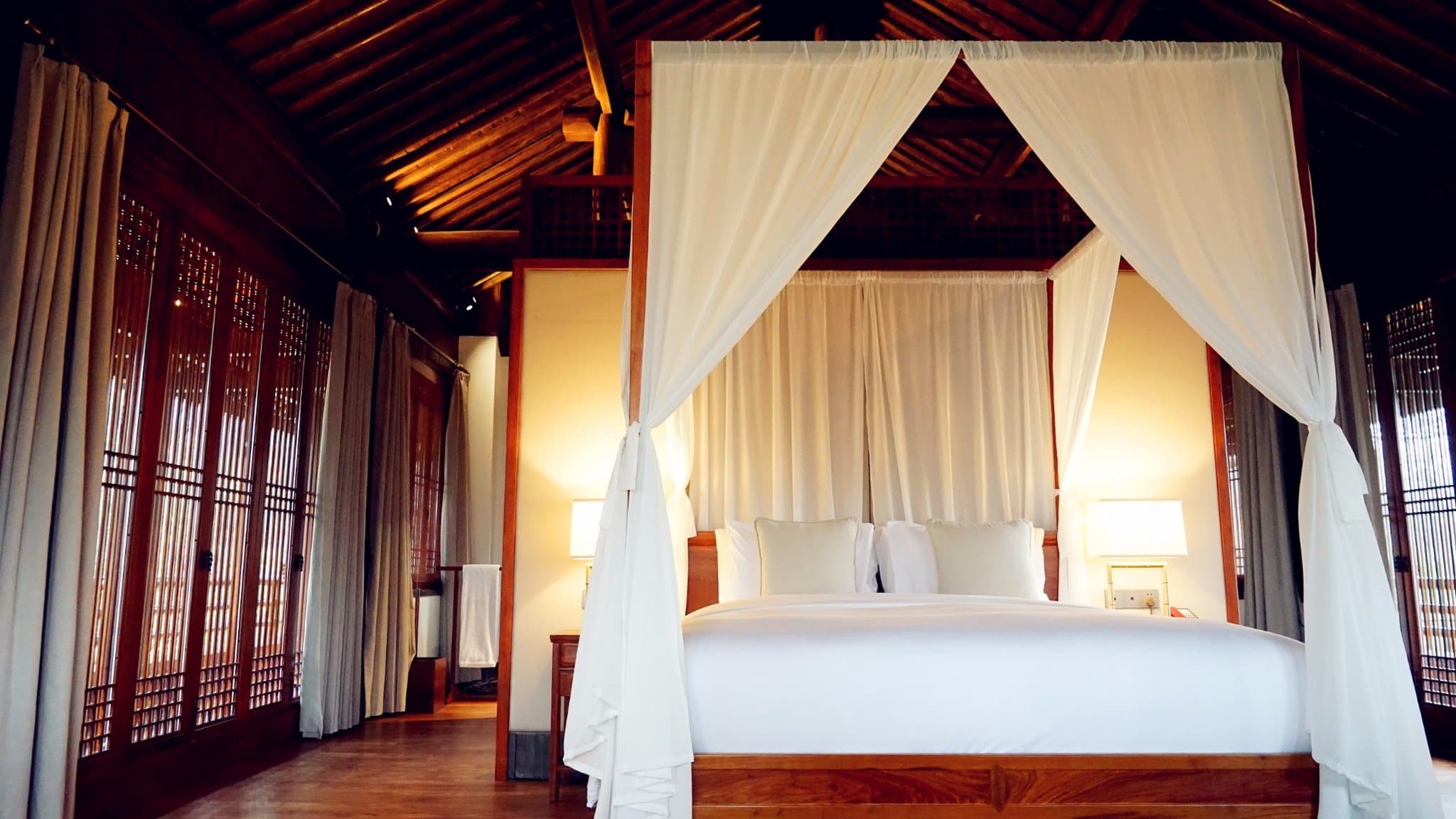
While the masses jostle for selfies on the Broken Bridge, the real flex in Hangzhou is invisibility. Hidden within the bamboo-choked hills of Maojiabu, Seven Villas serves as a high-design hermitage for the antisocial gourmand. The property feels less like a hotel and more like the private compound of a Song Dynasty scholar with a massive budget. Forty-eight expansive villas feature slate-grey brickwork, intricate wooden latticework, and private courtyards that encourage deep exhalations. Inside, the aesthetic is strictly Zen-luxe: think low-slung furniture, sheer drapes, and Aromatherapy Associates amenities in the spa-like bathrooms. But the silence is merely an appetizer. The main event is Jie Xiang Lou, the on-site culinary temple that has rightfully retained its Michelin star for 2025. Here, the 'Veggie Beggar's Purse' and golden medallion Wagyu justify the rigid reservation policies. Amenities are targeted: there is no pool to splash in, but the Xiaoqing Spa offers TCM-inspired rituals that obliterate jet lag. Service is hyper-personalized—butlers materialize only when needed. It’s not flawless; the glass-walled architecture in some ground-level rooms can turn your morning routine into public theater, so choose your room category wisely. A sophisticated retreat where gastronomy trumps gymnastics.
“The 'rigid' dining policy is no joke. Book your table at Jie Xiang Lou at the same time as your room; hotel guests do not get automatic priority walk-ins.”
Insider TipAvg. Nightly Rate
625USD
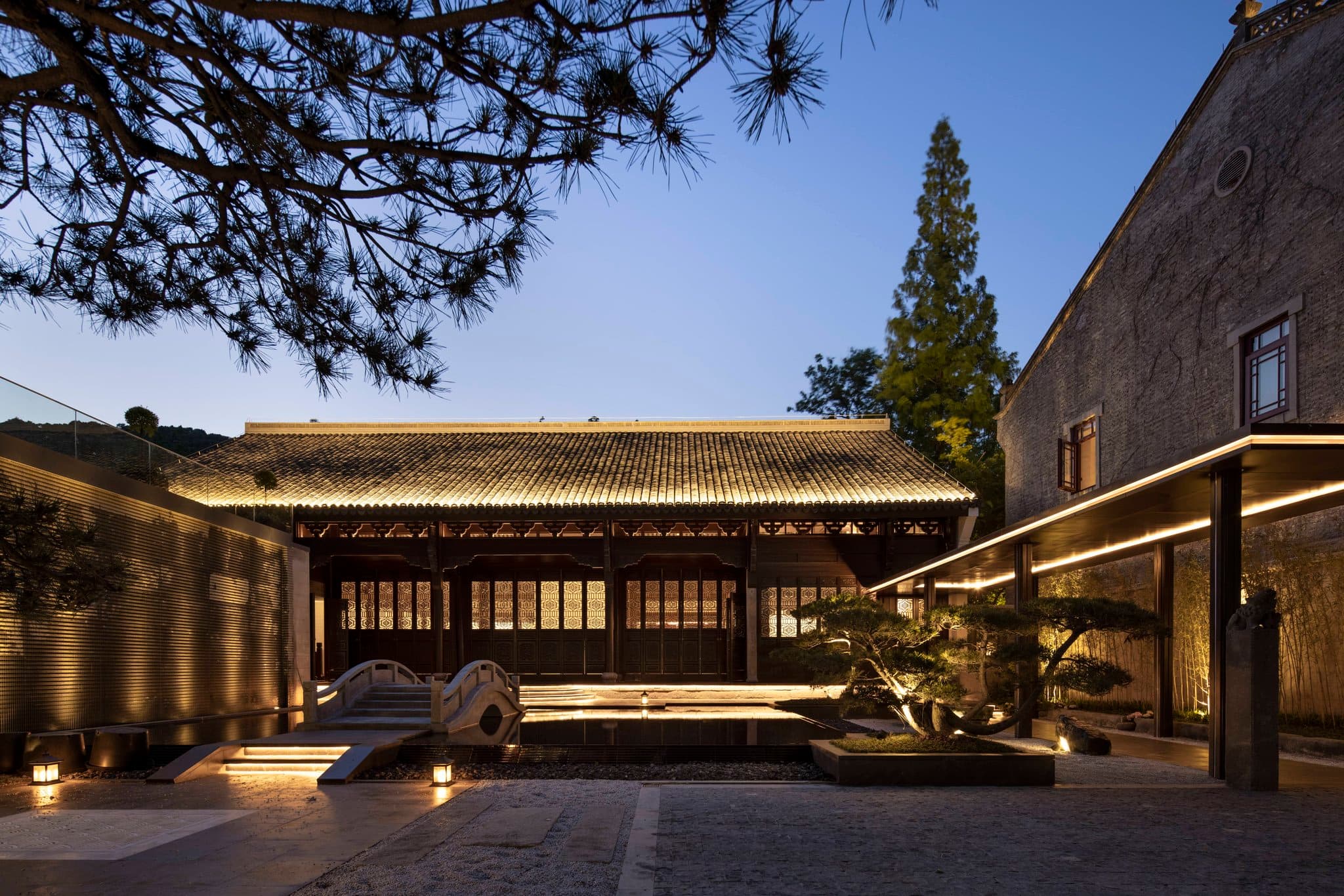
Directly on Beishan Road, behind a stone gate that acts more as a portal than an entrance, Qiushui Villa creates a stark buffer against the modern world. This isn't merely a hotel; it is a restored 1930s private residence operating with the hush of a diplomatic safe house. With only a handful of lofts, the intimacy is startling—you aren't checking in; you're moving in. The interiors reject beige neutrality for a 'Living Museum' aesthetic, heavy with dark woods, republican-era antiques, and an atmosphere that demands whiskey rather than white wine. The architectural showstopper is the semi-open infinity pool. Its retractable glass roof allows for year-round swimming while visually spilling directly into West Lake’s iconic Broken Bridge. Dining bifurcates between the global and the hyper-local: 'Guyun' delivers precise French tasting courses, but the real insider move is 'In Villa' (1913 Restaurant), where the kitchen boldly elevates Zhejiang staples—specifically the fried crab with stinky tofu—into high art. While the hum of traffic occasionally breaches the garden walls, it serves only as a distant reminder of the frantic pace you’ve successfully escaped.
“Book the pool for a swim during a light rain; the retractable roof stays closed, but the mist rising off West Lake creates a scene straight out of a watercolor painting.”
Insider TipAvg. Nightly Rate
1450USD
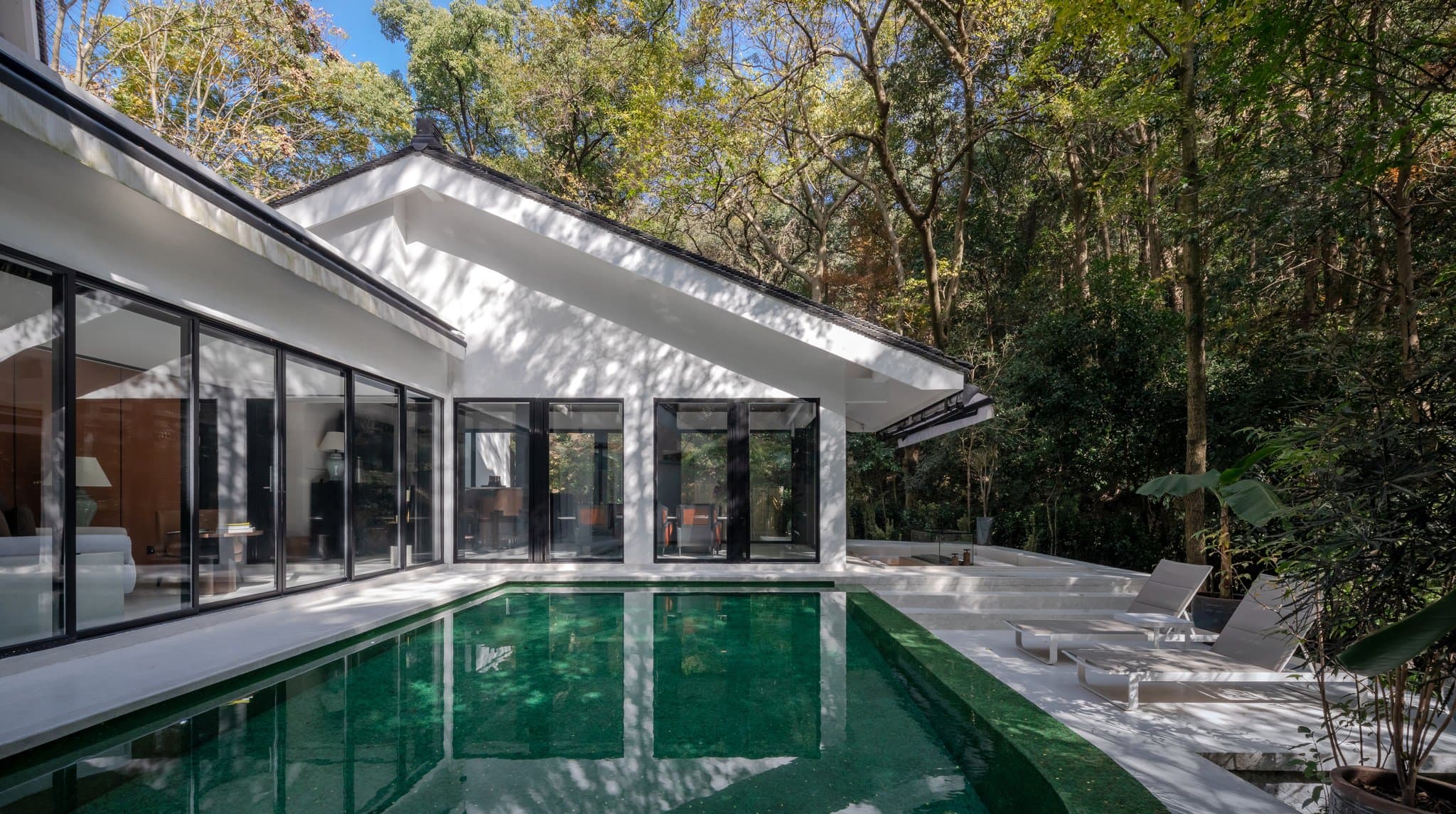
Forget the frenetic energy of West Lake’s main drag; the Vallie Hotel is a masterclass in high-end seclusion. Hidden away near the Six Harmonies Pagoda, this eight-room sanctuary occupies a cluster of restored tea farmers’ cottages that feel less like a hotel and more like a private estate. The design is a study in confident minimalism—exposed wooden beams, white linens, and a bold ‘digital detox’ philosophy (standard rooms notably lack TVs, encouraging you to tune into the forest frequency via B&O speakers instead). The real draw, however, is the water. Select rooms feature private plunge pools fed directly by the legendary Hupao Spring, allowing for a steaming, mineral-rich soak in total privacy. But the silence is paired with serious culinary noise: the on-site L’éclat 19, helmed by Chef Olivier Elzer, holds a Michelin star. Here, the French tasting menu gets a local twist—expect bread served with Moutai-infused butter and the signature Fennel Caviar Tart. With 24-hour butler service and Bulgari amenities, this is a sophisticated hideaway for those who prefer bird song to broadcast news.
“Embrace the 'No TV' rule in the base rooms for a true disconnect, but if you must binge-watch, book a Suite which features a projection wall. Don't leave without trying the yellow wine scampi at L’éclat 19.”
Insider TipAvg. Nightly Rate
554USD
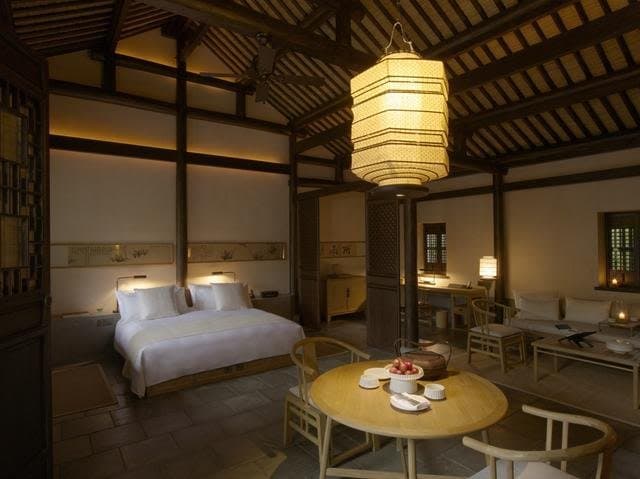
Forget the grand lobby entrance. At Amanfayun, you are checking into a living museum—a painstakingly restored village of 47 stone dwellings hidden in a valley of tea fields and bamboo, just steps from the Lingyin Temple. The vibe is less "hotel" and more "spiritual retreat for the ultra-wealthy." The aesthetic is aggressively low-lit and rustic; think clay-tiled roofs, intricate calligraphy at Fayun Place, and mossy stone pathways where saffron-robed monks from the neighboring monastery are as common as the guests. Inside your villa, the century-old structures are honored with open-beam ceilings and stark, beautiful wood furniture, but comfortably modernized with fierce underfloor heating—a non-negotiable for damp Hangzhou winters. The bathrooms are the highlight, featuring massive circular wooden soaking tubs that smell of cedar and steam. Dinner at Lan Xuan (Hangzhou House) is mandatory; the double-boiled deboned chicken with termite mushrooms is deeply savory and restorative. For a lighter touch, The Steam House offers impeccable bamboo mushroom soup. The catch? The main Fayun Pathway is public, meaning day-trippers can wander past your gate, though security is tight. Also, the intentional "mood lighting" borders on darkness. But if you seek silence broken only by temple bells and rustling bamboo, this is your sanctuary. **Verdict**: A moody, atmospheric triumph that trades crystal chandeliers for monk-like serenity.
“Request a villa further back from the main Fayun Pathway to avoid the daytime foot traffic of hikers and pilgrims visiting Lingyin Temple.”
Insider TipAvg. Nightly Rate
716USD
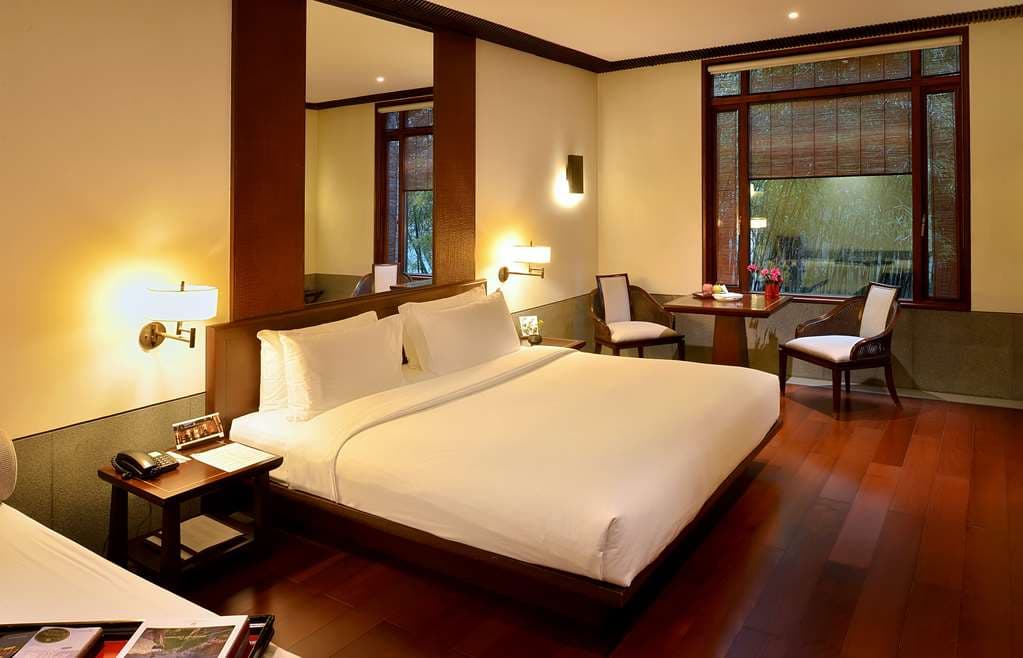
If Huang Gongwang’s 14th-century scroll *Dwelling in the Fuchun Mountains* could be inhabited, it would look like this. Designed by Jean-Michel Gathy, Fuchun Resort doesn’t just sit on the landscape; it haunts it with a monochromatic grace that modern luxury often forgets. The aesthetic is strictly calm—grey brick, black tile, and timber pillars reflected in still water. You won't find voice-activated curtains here. The hardware has aged, yes, but the patina feels intentional, a rejection of the frenetic pace of nearby Hangzhou. The suites are exercises in restraint, but the real draw is the wellness offering. The spa, one of the few in China partnering with Valmont, offers Himalayan Yoga that actually feels spiritual rather than performative. Dinner at Asian Corner is non-negotiable: order the Signature Flavor Durian Crab, a dish so rich it demands a long walk through the tea plantations afterward. It’s not for the traveler seeking high-tech gimmicks; it’s for the one seeking silence.
“Skip the standard rooms and book a Lake View Suite on the second floor of the main pavilion—the morning mist rolling off the water is the best show in town.”
Insider TipAvg. Nightly Rate
244USD
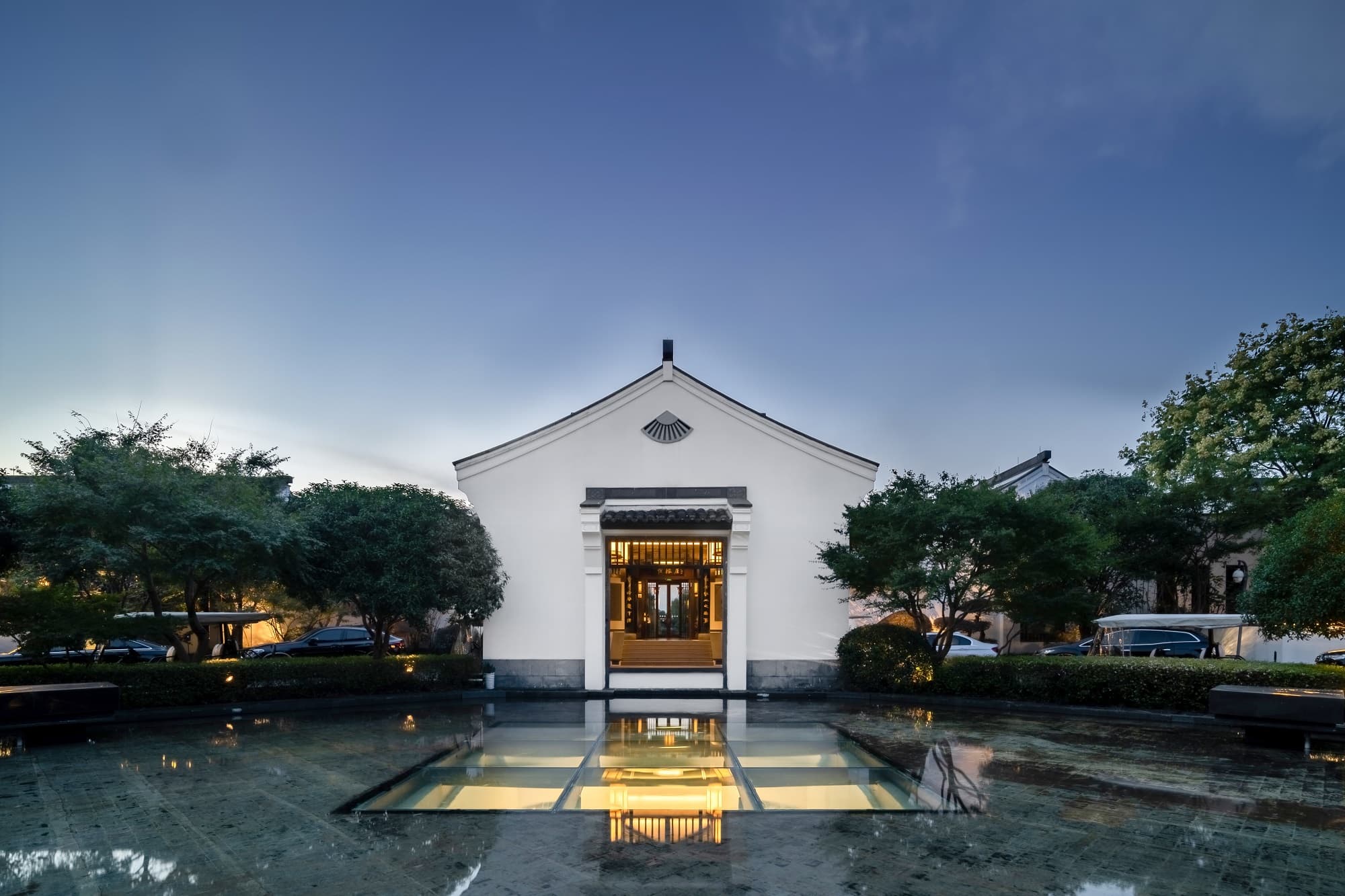
Banyan Tree Hangzhou operates less like a hotel and more like a high-budget period drama where you are the sole protagonist. While the West Lake teems with selfie-sticks and crowds, this property commits fully to the architectural poetry of the Xixi Wetlands, creating a moody, atmospheric enclosure of grey-tiled roofs and arched stone bridges. The design is not a vague nod to heritage; it is a meticulous reconstruction of a Jiangnan water village that feels centuries old yet smells of fresh lemongrass and expensive timber. The accommodations redefine 'spacious.' The entry-level Water Terrace Suites clock in at a staggering 120 square meters, offering not just room to move but a profound, almost monastic silence. High ceilings and intricate lattice screens frame views of the private canals, while the bathrooms—stocked with signature Banyan Tree Essentials and plush robes—feature tubs deep enough to swim in. Dining requires a visit to Bai Yun, where the signature Dongpo Pork is served with a glaze so perfect it mirrors the water outside. For a nightcap, Jiu Xian offers Hangzhou Rice Wine that cuts through the humidity. Service is where the brand flexes its muscle; staff members like Viola are frequently cited in guest logs for a level of intuition that borders on telepathic. It is far from the city center (40 minutes), and the auxiliary costs are steep, but you are paying for the rarest commodity in China: absolute, curated silence.
“Book a 'Water Terrace Suite' and request a unit near the spa for the quietest canal views; ask the concierge to arrange a private sculling boat tea service at sunset.”
Insider TipAvg. Nightly Rate
512USD
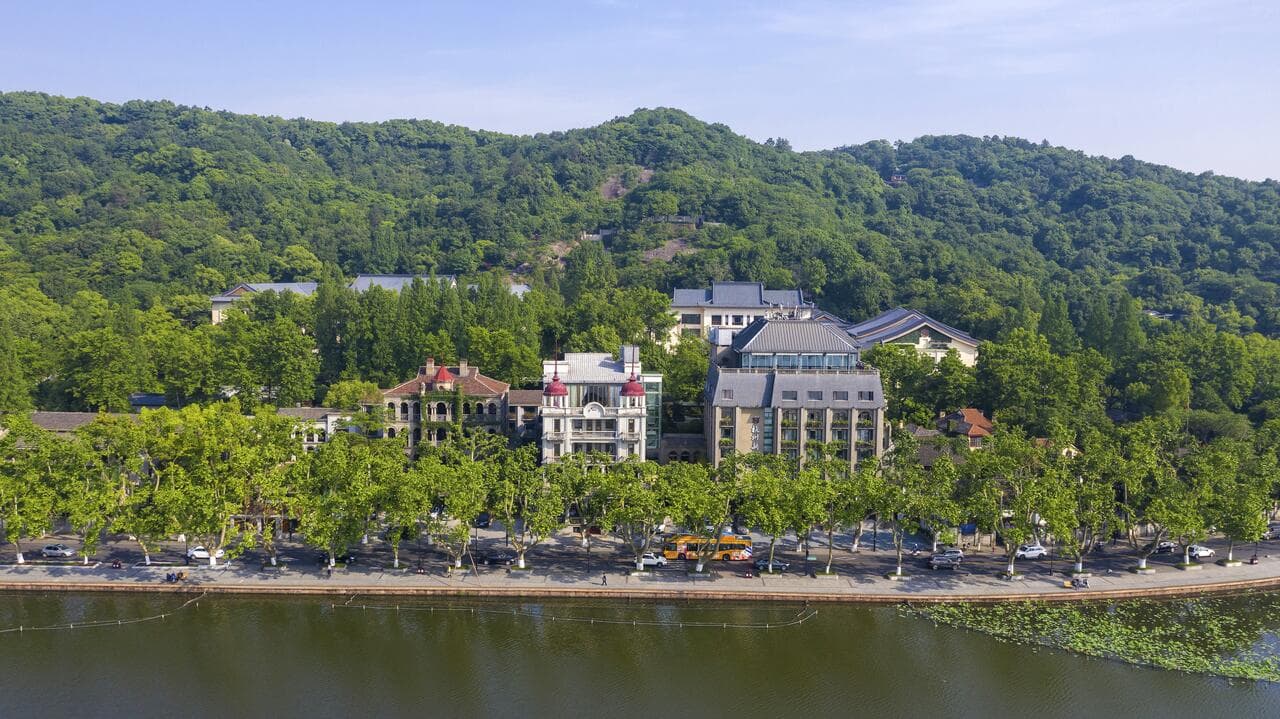
Forget the sanitized glass boxes of the CBD. The New Hotel (Xinxin Fandian) doesn't just face West Lake; it has stared it down since 1913. Entering the lobby feels less like checking in and more like walking onto the set of 'Lust, Caution.' The heavy wooden revolving doors shut out the Beishan Road traffic, replaced by the scent of beeswax and old paper. This is the only hotel in Hangzhou with a private dock, a relic of its days hosting the Republic of China’s intelligentsia. The rooms in the 'Hezhuang' wing are the ones to book—high ceilings, velvet armchairs, and vintage rotary phones that actually work. Be warned: historical authenticity extends to the mattresses, which are aggressively firm, and the air conditioning, which hums with a vintage rattle. Amenities are modern where it counts—Dyson dryers and high-pressure rain showers—but the vibe is resolutely analog. Dining at the 1913 Restaurant requires patience, but the Crab Meat Tofu is worth the wait. Skip the West Lake Vinegar Fish unless you have a distinct palate for sourness; order the Longjing Shrimp instead. Service is formal, proud, and efficient, lacking the obsequious hover of Western luxury chains. Verdict: A moody, atmospheric triumph. Come for the history, stay for the melancholic romance, but bring earplugs for the street noise.
“Book a 'Hezhuang' Lake View Room on the 3rd or 4th floor for the arched window frames. Also, breakfast is sometimes served in the adjacent 'West Lake Villa' (State Guesthouse center)—ask the concierge to arrange this, as the spread is superior.”
Insider TipAvg. Nightly Rate
93USD