No. 01
NO 1 BAPANLING ROAD HANGZHOU CN 310007Hangzhou18 verified reviews
9
.0
Bitvoya Edit
Layering imagery, place, and detail before the page opens.
Hangzhou is not just a city of scenic lakes; it is a living museum of architectural evolution. Step beyond the modern skyline and into the romantic allure of the Republic Era (1912–1949), where East meets West in stunning brick and stone. Our curated collection focuses on the meticulously restored mansions lining the historic Beishan Road and the secluded sanctuaries hidden within the Lingyin Temple scenic area. Hotels like Qiushui Villa and Chaptel Hangzhou offer more than just a stay; they offer a passage through time. Whether it's the Shikumen-style alleyways or lakeside villas once owned by newspaper tycoons, these heritage estates define the sophisticated soul of Hangzhou.
Hangzhou represents a unique chapter in Chinese architectural history. During the Republic Era, the city became a favored retreat for politicians, artists, and tycoons seeking solace from Shanghai's bustle. The result is a stunning concentration of heritage estates that blend traditional Jiangnan aesthetics with Western Art Deco and Neoclassical influences. Staying in properties like The New Hotel or Qiushui Villa places you directly inside this history. Unlike standard luxury chains, these mansions offer bespoke storytelling, high ceilings, antique furnishings, and private gardens that have witnessed a century of history.
Expect a fusion of nostalgia and modern comfort. These properties are classified as 'boutique' or 'ultra-luxury.' You will find butler services, tea ceremonies using local Longjing tea, and interiors adorned with velvet, brass, and dark wood. The culinary experience is often exceptional, with on-site restaurants serving refined Hangzhou cuisine (Hangbang Cai) in settings that feel like a movie set from the 1920s.
Hangzhou The New Hotel and Qiushui Villa are located directly on Beishan Road, offering the most unobstructed and panoramic views of West Lake.
Yes, properties like Chaptel Hangzhou and Qiushui Villa are protected heritage sites that have been meticulously restored to preserve their original 1920s-30s architecture while adding modern luxury.
While Amanfayun is a heritage property, its architecture reflects a traditional Chinese village dating back centuries, pre-dating the Republic era, but it is essential for heritage lovers.
Explore our complete curated list of luxury accommodations, from boutique hideaways to grand dames.
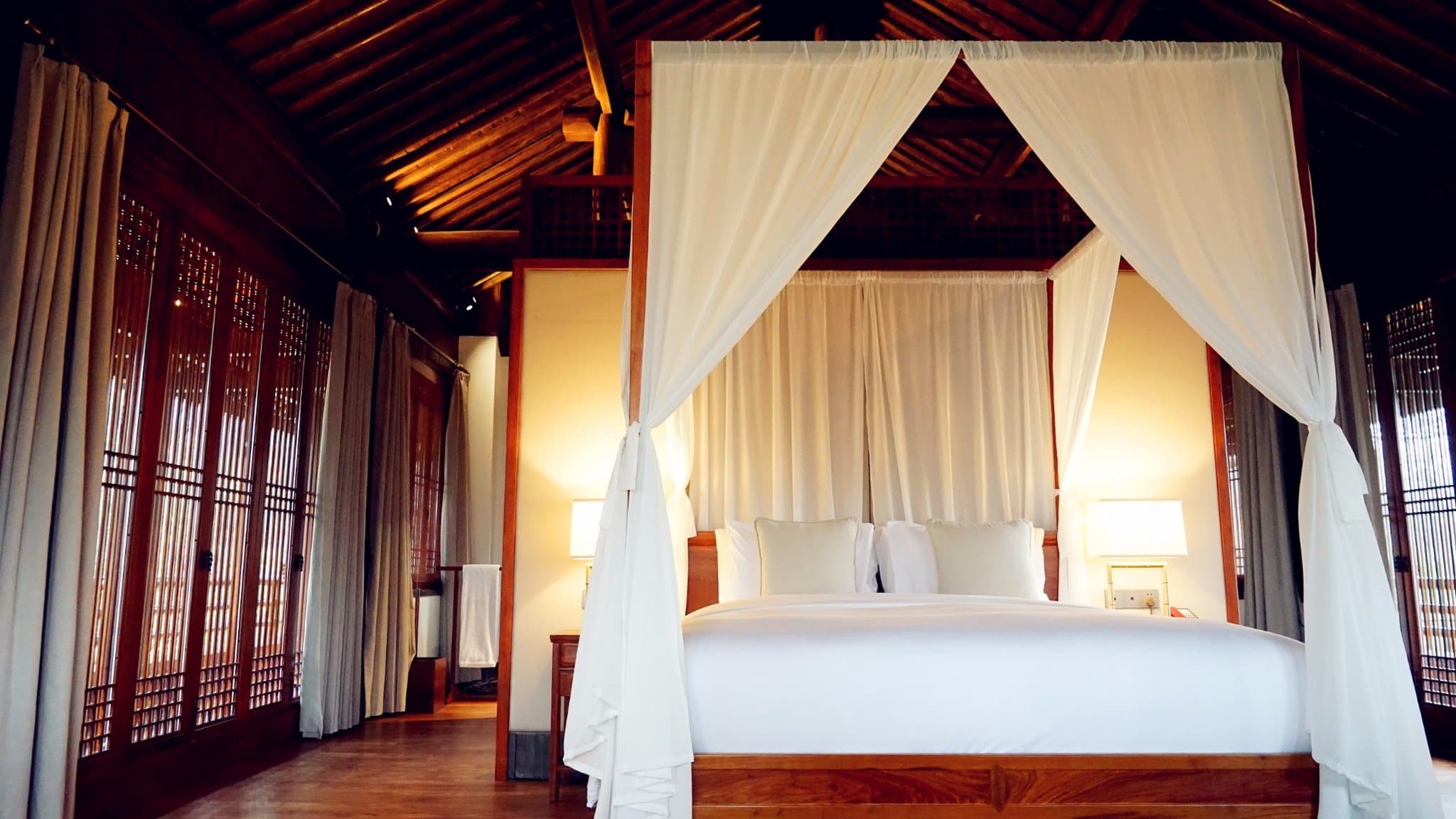
Explore All Hangzhou HotelsIf the Amanfayun is for the spiritualist, Seven Villas (Zixuan) is for the hedonist who prefers their zen served with a side of Wagyu. Ensconced behind the bamboo thickets of Bapanling Road, this Relais & Châteaux property comprises just seven heritage-style villas, making it less of a hotel and more of a private fiefdom. The architecture is a study in Republic-era restraint—black tiled roofs and white walls—but the interiors are unapologetically modern, featuring heated floors, Dyson dryers, and open-plan layouts. Be warned: the floor-to-ceiling glass walls, while architecturally striking, can turn your morning routine into public theater for passing staff; demand a villa set back from the pathways. The property’s raison d’être, however, is not sleep, but sustenance. It houses three heavy-hitters of the Hangzhou dining scene. Jie Xiang Lou, holding a Michelin star and Black Pearl diamonds, serves a 'Veggie Beggar’s Purse' so delicate it threatens to outshine the meat courses. Meanwhile, La Villa (San Yan Ge) delivers French fine dining where Chef Eric Yu recently snagged the 2025 Michelin Young Chef Award. There is no pool, no gym, and no kids' club. The only exercise here is lifting a fork, and for the target demographic, that is precisely the point.
“The 'Veggie Beggar’s Purse' at Jie Xiang Lou sells out daily. Have your butler reserve it (and your table) the moment your booking is confirmed, or you will go hungry.”
Insider TipAvg. Nightly Rate
625USD
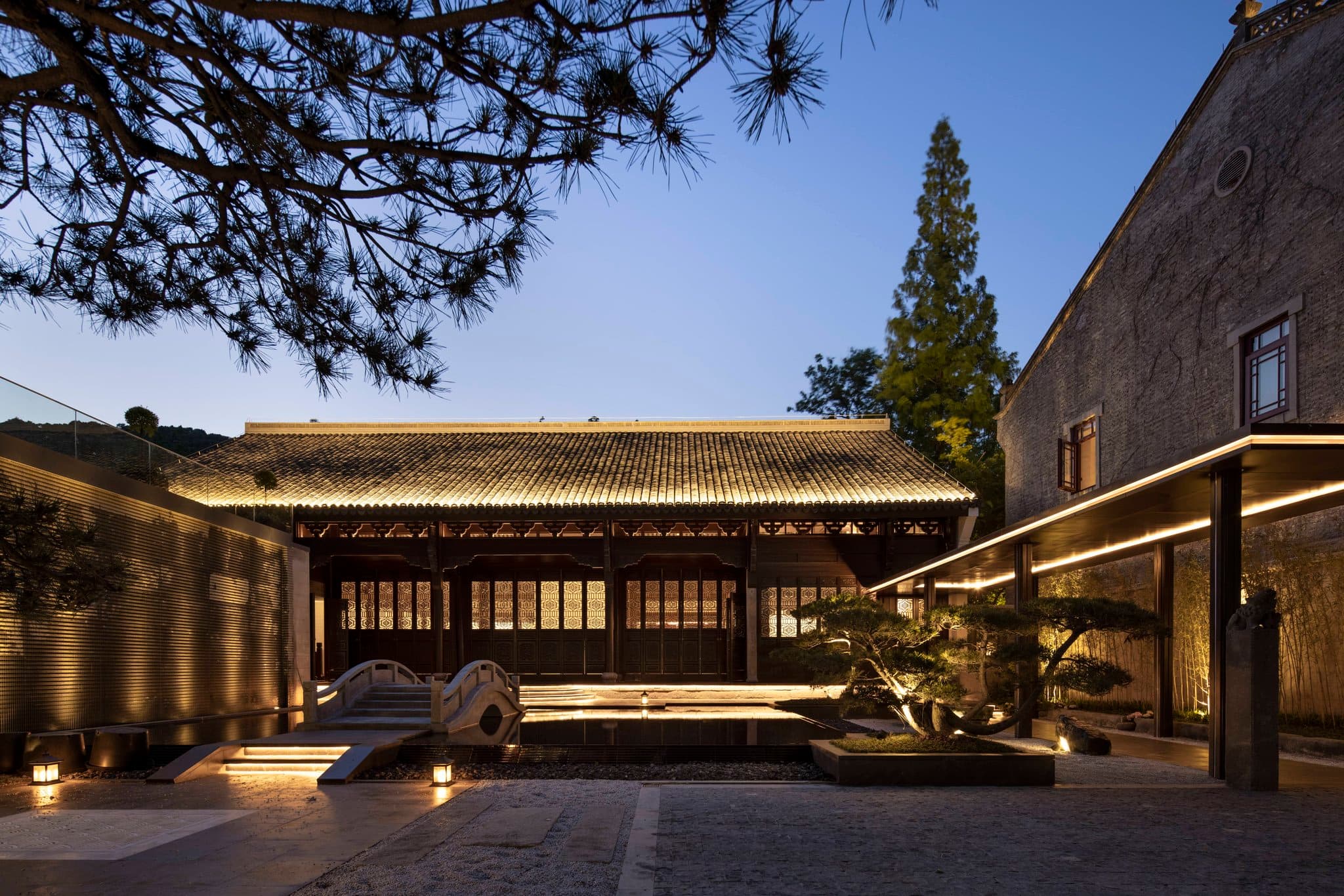
If walls could talk, the grey brick façades of Qiushui Villa would whisper the scandal and romance of 1930s high society. Originally commissioned by newspaper mogul Shi Liangcai for his zither-playing lover Shen Qiushui, this property isn't merely a hotel; it is a forensic restoration of a Republic-era love letter, perched precariously close to the water at the foot of Broken Bridge. Forget the sterile, expansive lobbies of global chains. Here, the arrival experience is clandestine, sweeping you past the Beishan Road selfie-seekers into a private, Jiangnan-style courtyard that feels centuries removed from the modern city. The interiors are a moody, cinematic collision of East and West—think heavy mahogany antiques and intricate plasterwork sitting alongside discreet modern necessities like Dyson hair dryers and Le Labo amenities. Dining is equally theatrical at the Michelin-selected 1913 Restaurant. The signature fried crab with stinky tofu is a pungent, umami-laden challenge that rewards the brave, while the Jinhua ham pastry offers a safer, flaky indulgence. A architectural marvel is the semi-open infinity pool; its retractable glass roof allows for climate-controlled laps while watching the humid Hangzhou mist roll off the lake. While the breakfast—delivered from the neighboring New Hotel—can suffer from temperature inconsistencies, enjoying it on a private terrace while the city sleeps is a fair trade. The butler service is borderline clairvoyant, smoothing over the occasional technical glitch with facial recognition gates. It is intimate, imperfect, and entirely singular.
“Book the 'Shen Qiushui' Suite for the original clawfoot tub and the only private balcony that frames the Broken Bridge without the obstruction of the roadside plane trees.”
Insider TipAvg. Nightly Rate
1450USD

Forget the frenetic energy of the public causeways; checking into the Liuying Hotel is akin to slipping through a wormhole into a slower, more dignified era. Once a private summer retreat and later a state guesthouse, this gated estate near the Qing Bo Gate offers what money usually can’t buy in Hangzhou: silence. The property is a sprawling, living ink-wash painting of Song Dynasty-style pavilions and ancient camphor trees that dip their branches directly into the West Lake. Inside, the vibe shifts from historic to hushed efficiency. While the architecture whispers of the Republic era with its intricate wood detailing, the amenities are strictly modern. The real draw, however, is the dining at "Wenying Hall," where the signature West Lake Vinegar Fish is served with a tart precision that honors its centuries-old recipe. Afterwards, bypass the standard hotel bar for the "Tingli Pavilion," a teahouse that demands you disconnect and sip pre-Qingming Longjing tea while watching the mist roll off the water. It is not just a hotel; it is a masterclass in the Hangzhou art of "Slow Life," offering a hermit-like exclusivity that international chains simply cannot replicate.
“Book a table at Wenying Hall for dinner and request a window seat; the private view of the illuminated Leifeng Pagoda is unrivaled.”
Insider TipAvg. Nightly Rate
120USD
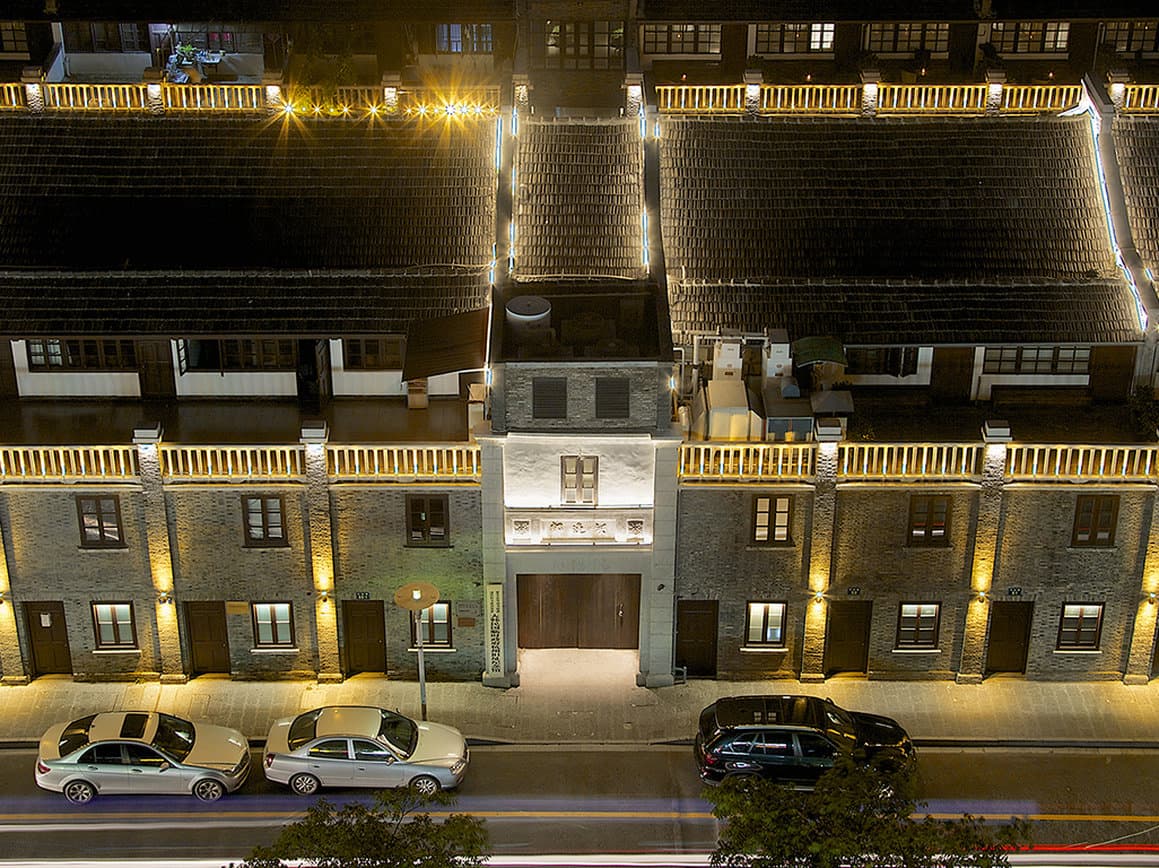
If Wong Kar-wai needed a backup location for 'In the Mood for Love', he would book the Chaptel. While the rest of Hangzhou races toward the future with glass monoliths, this masterfully restored Shikumen (stone gate) estate stubbornly, beautifully, looks backward. Located just steps from the frenetic energy of the Kerry Centre, crossing the threshold into the grey-brick courtyard feels like stepping into a vacuum of 1930s silence. There is no swimming pool here, a fact the staff conveys with almost aristocratic pride; this is a place for reading autographed hardcovers on a private balcony, not for splashing. The all-suite accommodations are less like hotel rooms and more like the private quarters of a Republic-era diplomat, complete with high ceilings, polished dark wood, and the distinct scent of Ortigia amenities. Dinner at Le Lotus is an unapologetically rich affair—pan-fried foie gras and grilled Wagyu beef served in a space that feels secretive and grand. The butler service is Relais & Châteaux standard: invisible until the precise moment you need a reservation or a stiff drink. It is a sophisticated, moody time capsule for those who prefer history over high-rise views.
“Request a second-floor suite in the inner courtyard (Villas 2 or 3) for the authentic wrought-iron balcony experience without the street noise.”
Insider TipAvg. Nightly Rate
270USD
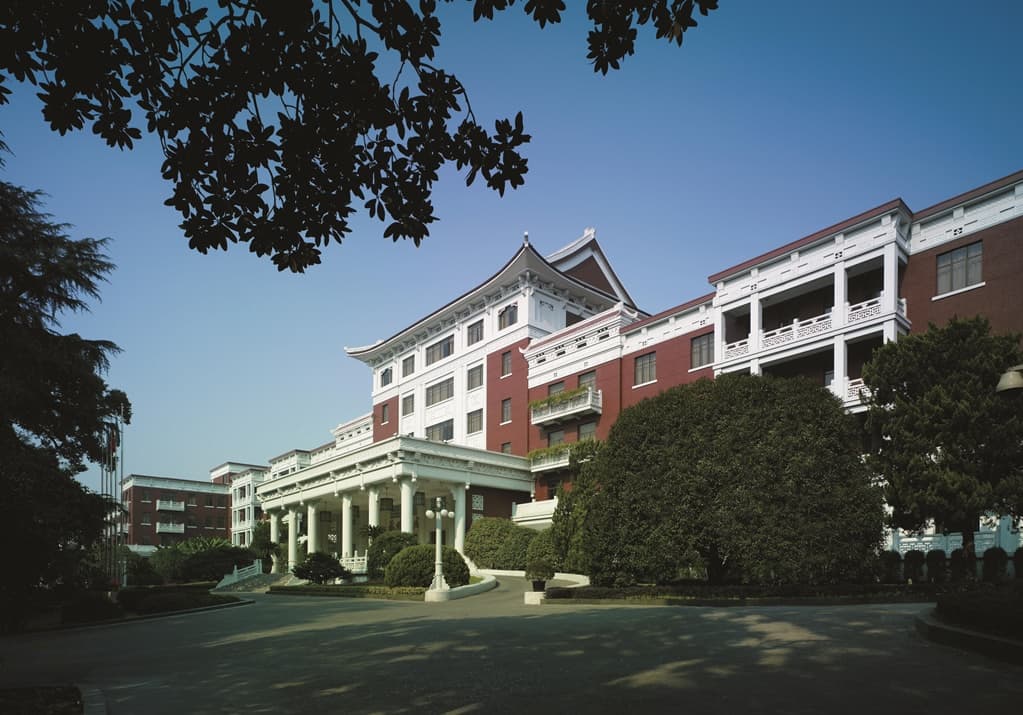
Forget the frenetic energy of the eastern shore; the northern bank of West Lake belongs to the old guard, and the Shangri-La Hangzhou commands this silence with aristocratic weight. Once the city’s premier state guesthouse, the property has fractured into two distinct realities: the faded West Wing and the newly inaugurated **Silk Lakehouse**. The latter is the reason to visit now. Occupying the estate’s prime acreage, the Silk Lakehouse sheds the dust of the 1980s for a boutique aesthetic that feels less like a hotel and more like the private residence of a Republican-era silk merchant. The interiors here favor restraint over gold-leaf excess, with 68 rooms framing 270-degree views of the mist-topped causeways. Dining is a serious affair: at *The Living Room*, Chef Alan Yu’s Mackerel Escabeche cuts through the richness of the setting, while *Golden Silk* serves a Swimming Crab dish that justifies the travel time alone. The facilities, however, steal the show—specifically the 'Grotto' pool, a cliff-style heated sanctuary that feels illicitly secluded. While the service remains impeccable across the grounds, the hardware gap is real. For the true heritage experience without the mothballs, the Silk Lakehouse is the only key you want.
“Do not leave your room assignment to chance. Explicitly book the 'Silk Lakehouse' or 'Horizon Club' wings to avoid the dated carpets of the West Wing. Visit the Grotto Pool before 9 AM for solitary access.”
Insider TipAvg. Nightly Rate
120USD
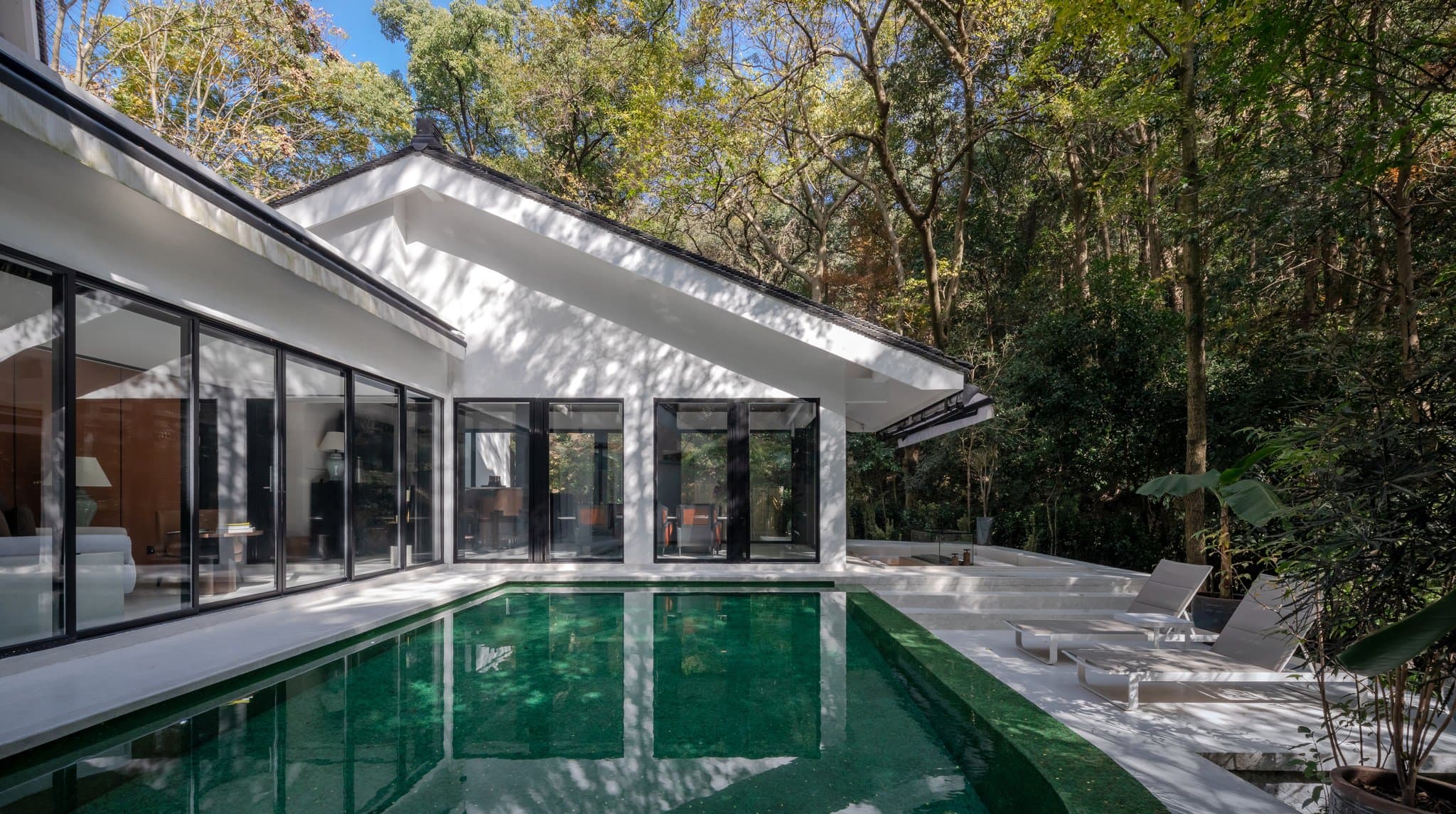
If the bustling West Lake feels too exposed, Vallie Hotel is your invisible sanctuary. Tucked away in the dense forests of Yuelun Mountain, just steps from the majestic Six Harmonies Pagoda, this eight-room retreat reimagines a cluster of former tea farmers’ cottages into a masterclass of rustic minimalism. The vibe is less ‘hotel’ and more ‘Republic-era private estate.’ Inside, the design strips back the noise: think exposed wooden beams, stark white linens, and floor-to-ceiling windows that frame the mossy, mist-covered woodlands like living paintings. The crowning luxury here is the water—select rooms feature private dipping pools fed directly by the legendary Hupao Spring (Tiger Running Spring), allowing for a steaming, mineral-rich soak in total seclusion. Dining is equally ambitious at Shijiu Gastro Lounge (L’éclat 19), where Michelin-starred Chef Olivier Elzer orchestrates a daring fusion of French technique and Hangzhou terroir—don't miss the yellow wine scampi. With 24-hour butler service that feels telepathic rather than intrusive, Vallie offers that rarest of modern commodities: absolute silence.
“Request a ground-floor courtyard room to get your own private Hupao Spring pool—it’s worth the upgrade for the steam-filled morning views alone.”
Insider TipAvg. Nightly Rate
554USD
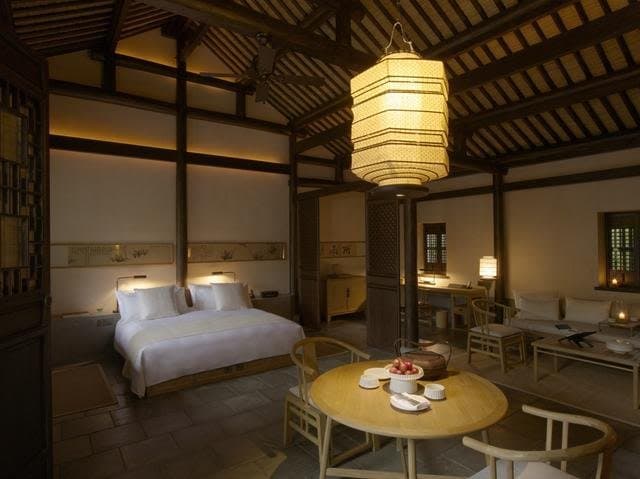
If you arrive at Amanfayun expecting a hotel, you may be confused; if you arrive expecting a gold-plated lobby, you will be disappointed. This is a restoration project with room service—a 19th-century village of 47 dwellings frozen in time, sandwiched between tea fields and the spiritual gravity of Lingyin Temple. The vibe is aggressively low-key: no signage, just the mist-covered Fayun Pathway. The 'rooms' are actually converted tea-pickers' cottages. They are dark by design—shunning harsh LEDs for moody lanterns and calligraphy art—but the creature comforts are fiercely modern. Think heated stone floors (essential for Hangzhou’s damp winters) and sound systems hidden in elmwood joinery. Bathrooms are the showstopper, featuring circular wooden soaking tubs that smell of ancient forests. Dining requires a map. Skip the western fare and commit to the Michelin-selected Lan Xuan (Hangzhou House), where the double-boiled deboned chicken with termite mushrooms is less a soup and more a clarified elixir. The only caveat? The main pathway is public during the day, meaning day-trippers might inadvertently cameo in your zen moment. But come evening, when the temple bells fade and the tourists disperse, the village belongs entirely to you, the monks, and the cicadas. It is wildly expensive, yes, but silence this profound usually is.
“Request a 'Village Villa' located higher up the hillside. These units are set back from the public Fayun Pathway, ensuring curious day-trippers don't accidentally peer into your private courtyard.”
Insider TipAvg. Nightly Rate
716USD
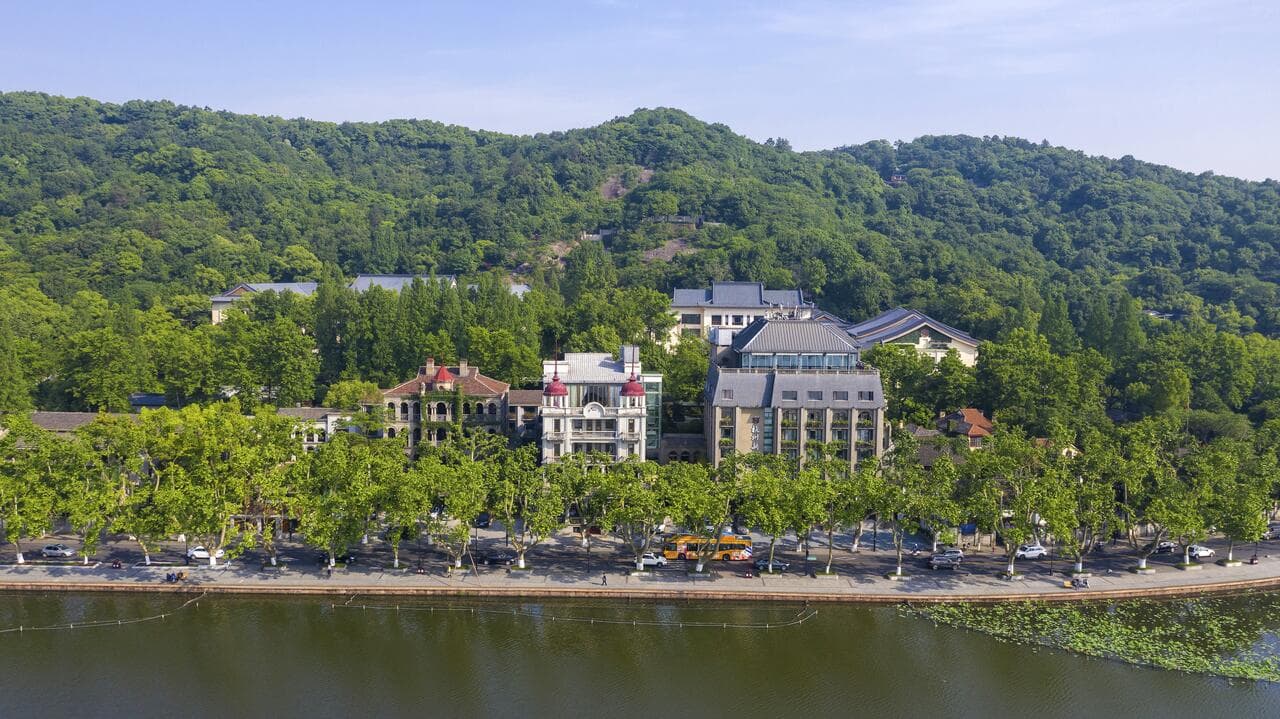
Checking into The New Hotel (Xin Xin Hotel) isn't just a stay; it’s a scene straight out of a Wong Kar-wai film. Standing on Beishan Road since 1913, this red-brick landmark commands the definitive view of the Broken Bridge, trading the sterile perfection of modern luxury for a moody, cinematic patina. The interiors are a masterclass in Republic-era preservation—creaking wooden spiral staircases, velvet armchairs, and Art Deco tiling that have hosted luminaries like Hu Shi and Lu Xun. Rooms here vary wildly. The heritage suites in the main building boast high ceilings and French windows framing the West Lake, though the distinct scent of history (a polite term for a faint, lingering mustiness) and firm mattresses serve as reminders that this is a centenarian dame, not a glass-box new build. Dining is the headline act. The 1913 Restaurant serves a textbook West Lake Vinegar Fish—a sweet-and-sour divider of opinions—amidst arched windows that feel impossibly romantic at dusk. Service is formal and proud, if occasionally leisurely. For history buffs willing to trade a swimming pool for a soul, this is Hangzhou’s most evocative address.
“Book a 'Lakeview Suite' in the East Building for the best vantage point of the Broken Bridge. Skip the crowded breakfast buffet and order the Republic-themed tea set at the Lobby Bar for a quieter start.”
Insider TipAvg. Nightly Rate
93USD