No. 01
85 3 Zhijiang Road Hangzhou ChinaHangzhou1408 verified reviews
9
.6
Bitvoya Edit
Layering imagery, place, and detail before the page opens.
Hangzhou is not merely a destination; it is a living painting where mist-shrouded peaks meet the reflective waters of West Lake. For the discerning traveler seeking solace, the area surrounding the ancient Lingyin Temple offers a profound sense of sanctuary. This curated collection highlights properties that masterfully blend luxury with the monastic tranquility of the region. From the historic Fayun Village, home to Amanfayun, to the lush wetlands embracing the Banyan Tree Hangzhou, these retreats define the art of hospitality. Here, amidst Longjing tea plantations and centuries-old Buddhist architecture, time slows down. Whether you choose the lakeside elegance of the Four Seasons or the secluded charm of Seven Villas, prepare for a journey that nourishes both the body and the spirit in Hangzhou's most prestigious neighborhoods.
Hangzhou has long been celebrated by poets and emperors as a paradise on earth. However, for the modern luxury traveler, the true allure lies in the region's ability to offer stillness amidst grandeur. The hotels near Lingyin Temple and the West Lake district are not just places to sleep; they are gateways to the region's spiritual and cultural heritage. Properties like Amanfayun and The Silk Lakehouse offer direct access to ancient Buddhist paths and tea ceremonies, allowing guests to immerse themselves in a lifestyle that prioritizes mindfulness and aesthetic perfection.
When selecting a retreat in this collection, location dictates the atmosphere of your stay:
The standard of hospitality in these Hangzhou sanctuaries is exceptionally high. Expect a fusion of traditional Chinese architecture—wooden beams, tiled roofs, and courtyards—paired with modern luxuries like heated floors and premium sound systems. Services often go beyond the standard concierge; anticipate tea butlers who can guide you through a tasting of local Longjing tea, private boat tours on the lake, and guided meditation sessions at nearby temples. Whether you are staying at the boutique Vallie Hotel or the grand Zhejiang Narada, the focus remains on 'Zen'—a curated peace that permeates every aspect of your stay.
Amanfayun is situated directly within Fayun Village, just steps from Lingyin Temple. Seven Villas Hangzhou is also located in the immediate vicinity, offering a secluded retreat deep within the forest near the temple grounds.
Spring (March to May) is ideal for witnessing the tea harvest and blooming gardens, though it can be busy. For a quieter, more contemplative Zen experience, late autumn (October-November) offers cool weather and stunning fall foliage.
Yes, properties like the Four Seasons Hotel Hangzhou at West Lake and Banyan Tree Hangzhou specialize in local culture, offering private Longjing (Dragon Well) tea ceremonies and tastings often hosted by expert tea masters.
Explore our complete curated list of luxury accommodations, from boutique hideaways to grand dames.
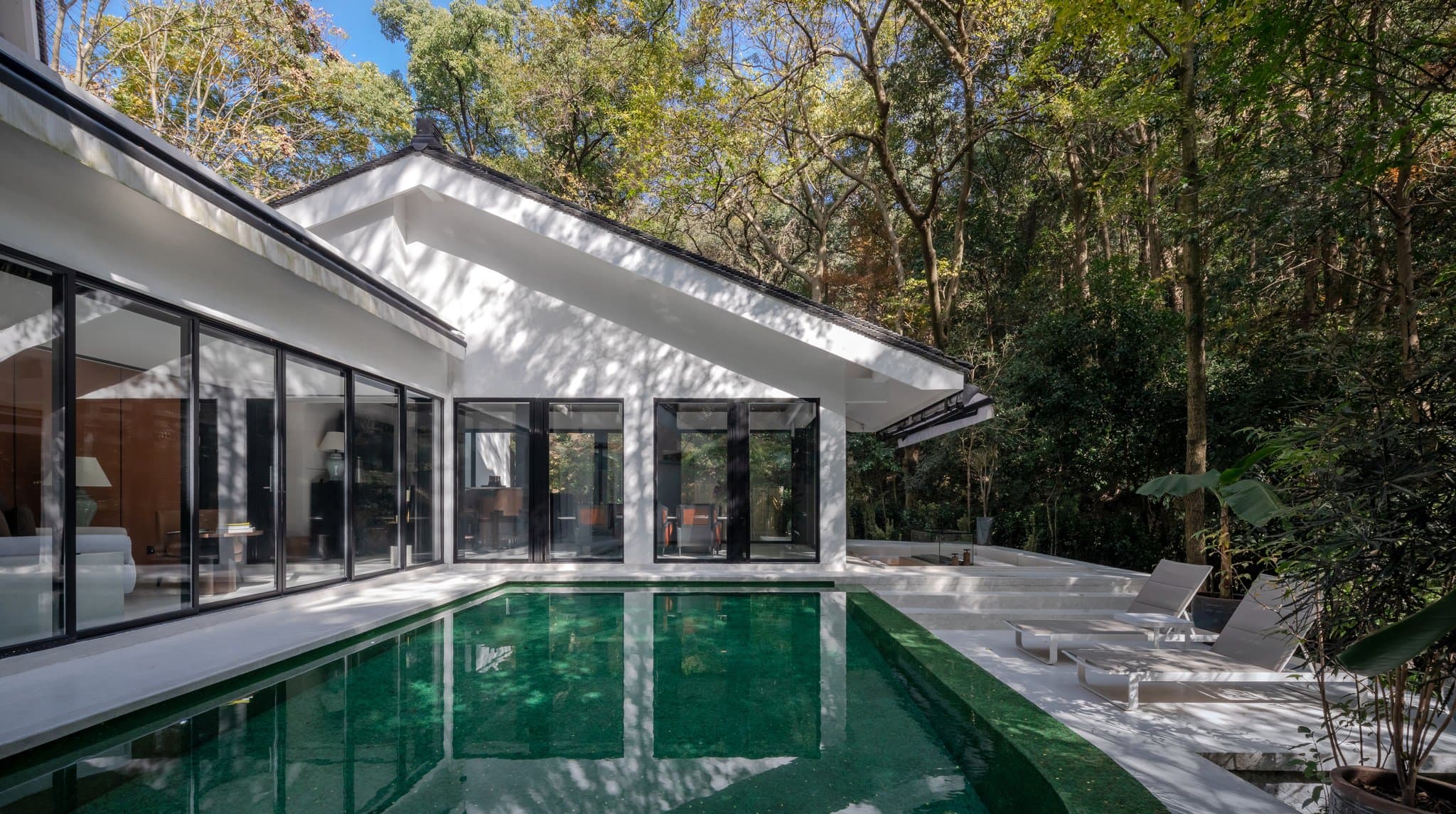
Explore All Hangzhou HotelsIf the definition of luxury is silence, Vallie Hotel Hangzhou is a roaring success. Tucked near the Six Harmonies Pagoda, this eight-room sanctuary channels the 'forest hermit' spirit without forcing you to rough it. There are no televisions here—a deliberate omission to turn your gaze toward the mossy courtyards and ancient trees. Instead, you get B&O speakers, Bulgari amenities, and private plunge pools fed directly by the legendary Hupao Spring. It’s a place where the water is celebrated as much as the wine. Speaking of wine, the on-site Shijiu Gastro Lounge (L’éclat 19) is a revelation. Collaborating with Michelin-starred talent, the kitchen sends out plates like the Fennel Caviar Tart and Yellow Wine Scampi that bridge French technique with Hangzhou’s delicate palate. While the dining is ambitious, the service is grounded; 24-hour butlers materialize before you know you need them, though some guests note the maintenance nuances of such a secluded property. For those seeking absolute privacy over polished corporate perfection, this is your forest address.
“Ask your butler for the private hiking map to the lesser-known trails behind the hotel—you’ll beat the crowds to the best Qiantang River views.”
Insider TipAvg. Nightly Rate
554USD
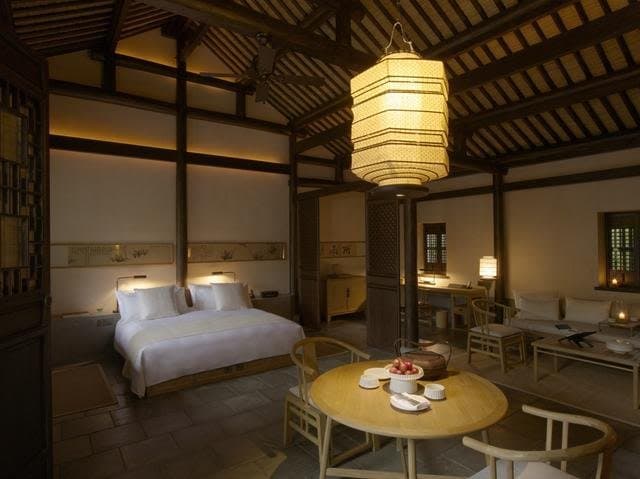
If you are expecting marble lobbies and gold leaf, you have taken a wrong turn. Amanfayun is not a hotel; it is a restoration project of a Tang Dynasty tea village that just happens to offer high-thread-count sheets. The arrival is disarming—no grand gates, just a porous border where the public path to Lingyin Temple bisects the property. This means you might sip your morning Longjing tea on the terrace while saffron-robed monks walk past on their daily commute, a level of immersion that feels almost voyeuristic. The 46 dwellings are exercises in expensive restraint: unvarnished elm, bamboo roofs, and brick floors that look unforgivingly cold but are delightfully heated from below—a necessary luxury during Hangzhou’s damp winters. Lighting is intentionally subterranean; seeing inside your suitcase requires patience, but it forces a hard circadian reset. Dining is serious business here. Skip the Western options and head to Lan Xuan (Hangzhou House) for the signature double-boiled deboned chicken with termite mushrooms, a broth so clarified it looks like water but tastes like history. It’s not flawless—the public foot traffic can feel intrusive at noon—but when the day-trippers vanish at dusk, the silence is heavy and utterly profound.
“Book a table at Lan Xuan for lunch, not dinner, to watch the bamboo forest interact with the sunlight. Also, bring a small flashlight; the rooms are genuinely dark.”
Insider TipAvg. Nightly Rate
716USD
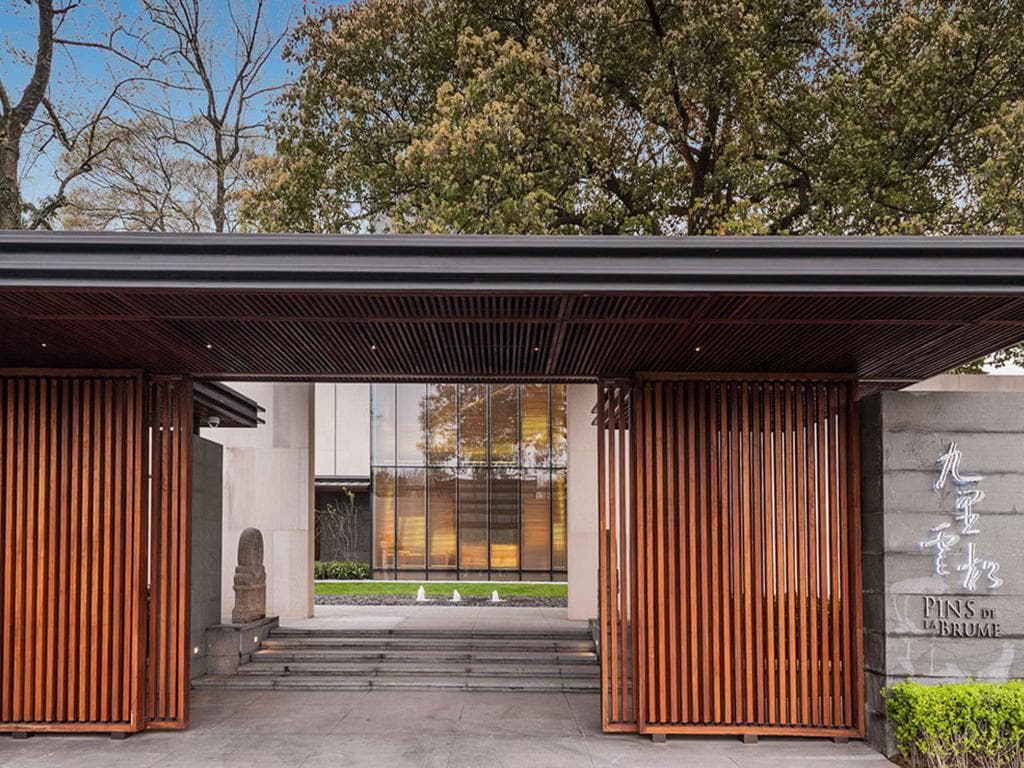
While the masses swarm Lingyin Temple just 800 meters away, Pins De La Brume (Jiuli Yunsong) offers a startling counterpoint: absolute, curated silence. Designed by Pal Design Group, this property isn't just a hotel; it’s a study in restraint. The architecture is a series of low-slung, glass-walled pavilions that float above water mirrors, reflecting the ancient pines that give the hotel its poetic name. Inside, the aesthetic is strictly Zen—think raw stone floors, blond wood lattices, and a palette of greys that cool the humid Hangzhou air. Rooms here are sanctuaries of texture rather than excess. You’ll find Le Labo amenities in the slate-lined bathrooms and Dyson hair dryers that whisper rather than roar. The real draw, however, is the Tianxiang (La Parfum) restaurant, where the West Lake Vinegar Fish is elevated from a tourist cliché to a delicate, sweet-sour masterpiece. Service can be famously detached—struggling with the WiFi login is a rite of passage here—but when you’re sipping a seasonal Longjing tea in the Lobby Lounge, watching the mist roll off the tea fields, you realize that being disconnected is the entire point. It’s imperfect, yes, but in a way that feels authentically wabi-sabi.
“The stunning outdoor pool is unheated and largely decorative (a 'water mirror'); for actual relaxation, book a spa suite with a private soaking tub.”
Insider TipAvg. Nightly Rate
180USD
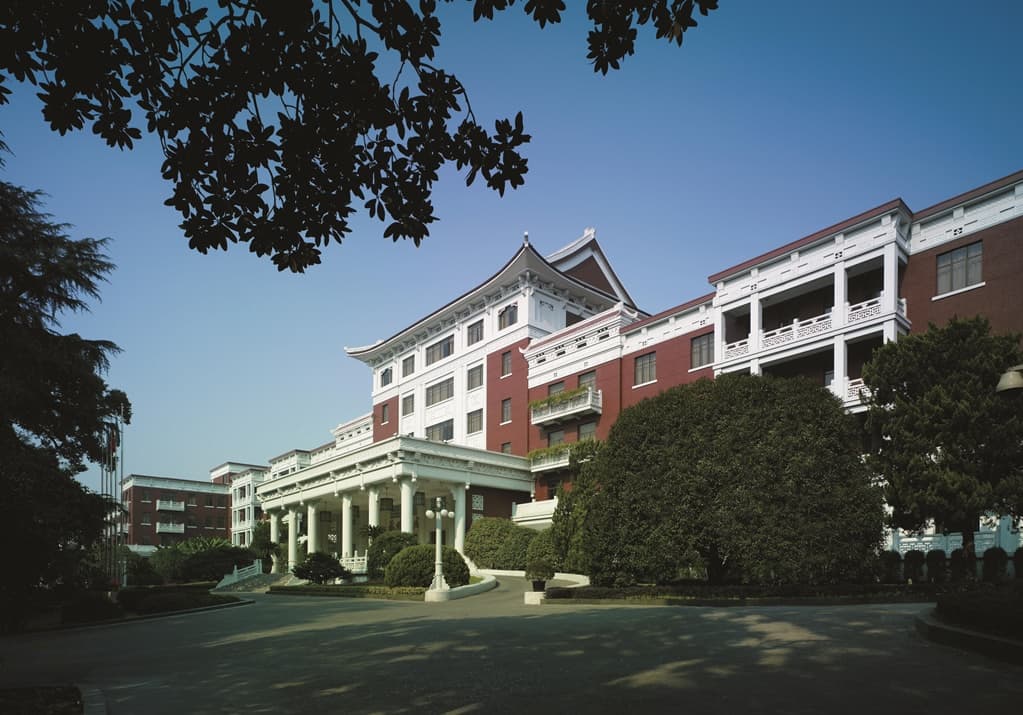
To arrive at the Shangri-La Hangzhou is to navigate the pilgrimage of Beishan Road, a bumper-to-bumper rite of passage that filters out the impatient. Once inside this former state-guest compound, the frenzy of the Su Causeway dissolves into 40 acres of camphors and quietude. Unlike the glass-box modernism of its Midtown sibling, this property trades slickness for provenance. The West Wing admittedly wears its history heavily—bathrooms here feel like time capsules from a pre-rainfall-shower era—but the trade-off is a botanist’s dream of private gardens that newer hotels simply cannot manufacture. The aesthetic is less 'international business' and more 'diplomatic retreat.' The indoor pool, a cliff-style grotto, feels delightfully Bond-villain adjacent, offering a moody counterpoint to the humidity. Dining is the anchor here: *Shang Palace* delivers Dongpo Pork with a lacquer-like finish that demands reverence, while *The Living Room* surprises with a Mackerel Escabeche that cuts through the rich local palate. It isn’t flawless—the hardware shows its age—but for those who prefer patina over polish, this is the definitive Old Hangzhou address.
“Bypass the main lobby rush and head straight to the Sky Garden rooftop at sunset. It’s the only vantage point on Beishan Road where you can drink a martini while looking *down* on the causeway tourists.”
Insider TipAvg. Nightly Rate
120USD
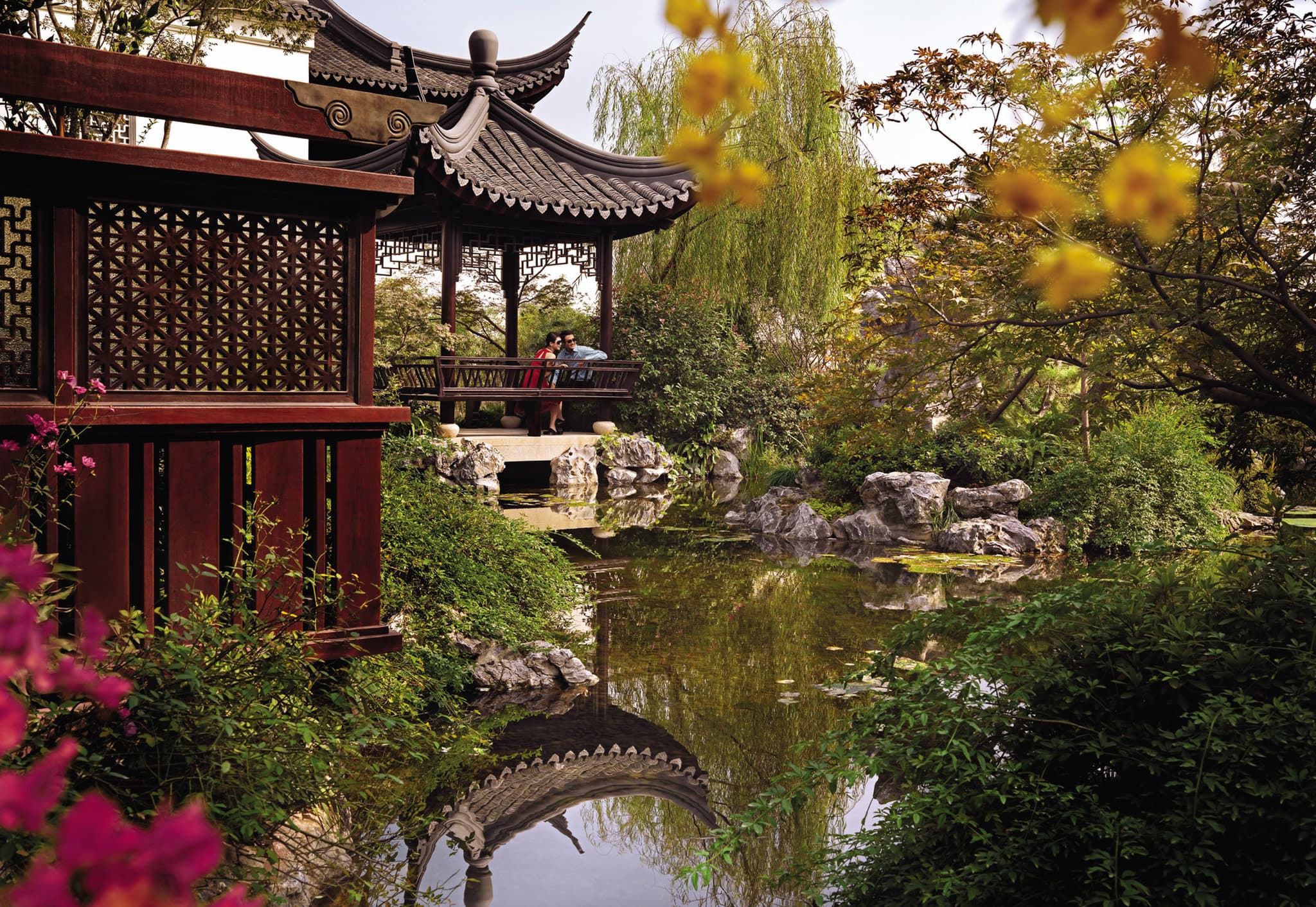
In a city where the West Lake causeway can feel like a rush hour commute, the Four Seasons offers something rarer than gold: absolute silence. This isn't just a hotel; it’s a Bill Bensley-landscaped Song Dynasty dreamscape of willow-draped lagoons and mossy stone bridges that makes the rest of Hangzhou feel miles away. The architecture is low-slung and respectful—curved eaves and timber columns framing misty water views—but the interiors deliver modern, high-gloss polish. Rooms are clad in silk-embroidered wall panels and feature terraces that actually open onto the gardens, allowing the scent of osmanthus to drift in. The real power move here is dining at Jin Sha, the hotel’s Michelin-starred fortress of flavor. Forget the hotel club sandwich; you are here for the Shanghainese Braised Pork with Abalone, a dish so glazing and tender it practically dissolves on contact. Service is telepathic—staff materialize exactly when you need a buggy or a reservation, then vanish into the bamboo. It is undeniably expensive, but for the ability to sip Longjing tea in a private pavilion while tourists swarm the public parks outside, the premium is justified.
“Book a 'Garden Terrace Room' on the ground floor; these open directly onto the lawns, giving you essentially a private backyard for your morning coffee.”
Insider TipAvg. Nightly Rate
535USD
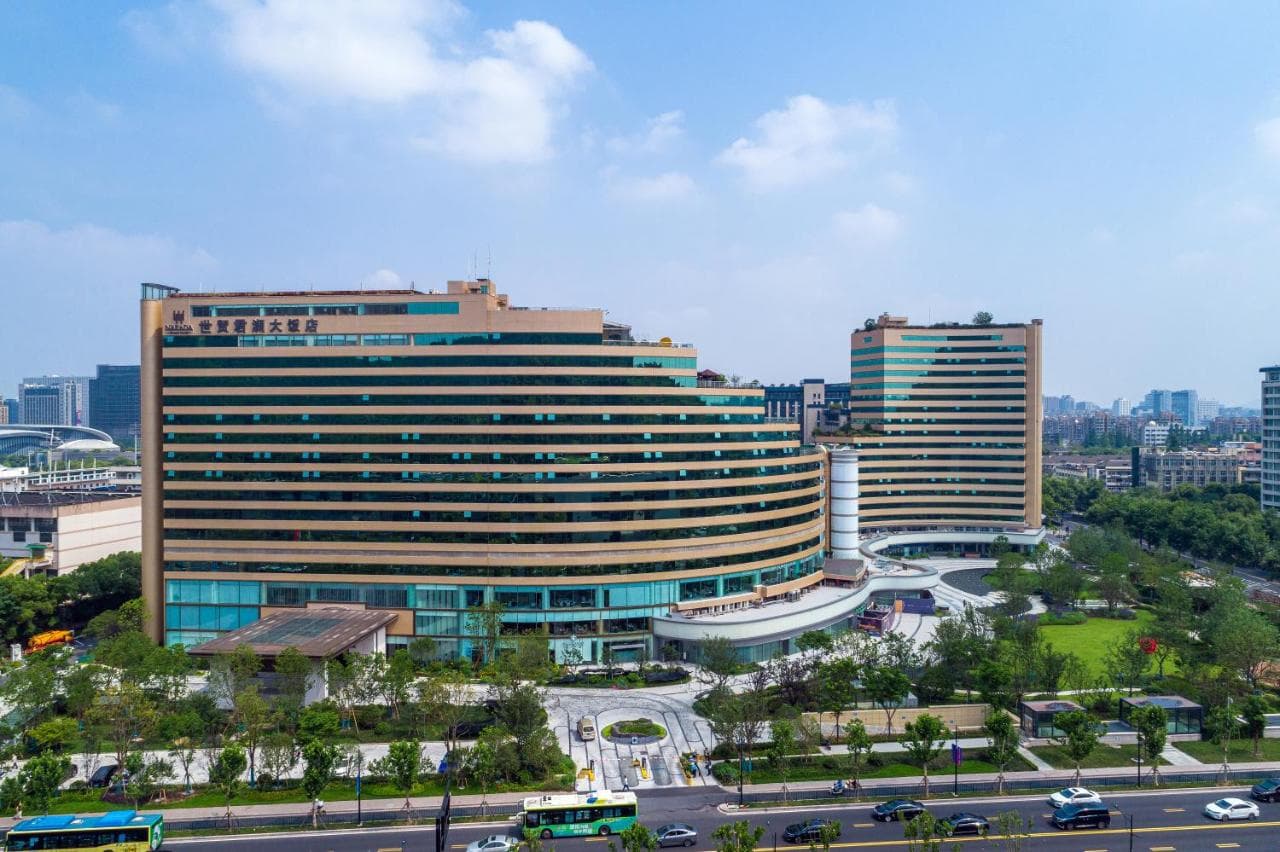
In a city obsessed with the new, the Zhejiang Narada Grand Hotel retains the confident posture of a grand dame who knows her angles. Perched on the literal slopes of Precious Stone Hill, this property doesn’t just offer views of Hangzhou’s geography; it feels grafted onto it. While the lobby’s marble might whisper of the late 90s rather than scream contemporary chic, there is a refreshing solidity here that modern glass boxes lack. The rooms are a study in restraint—expect crisp linens and firm mattresses rather than technological gimmicks—but the real draw is the silence, broken only by the rustle of the camphor trees. Dining is serious business: the Lotus Chinese Restaurant serves a 'Buddha Jumps Over The Wall' soup so rich it feels medicinal, a necessary indulgence after hiking the private path directly to the Yellow Dragon Cave. Service is swift, invisible, and utterly professional. It’s not the trendiest stay in Hangzhou, but it is undoubtedly one of the most composed.
“Skip the city-view rooms; ask specifically for a 'Hill-View' room on the 5th floor or higher. You’ll wake up staring directly into a wall of emerald forest that feels violently green.”
Insider TipAvg. Nightly Rate
85USD
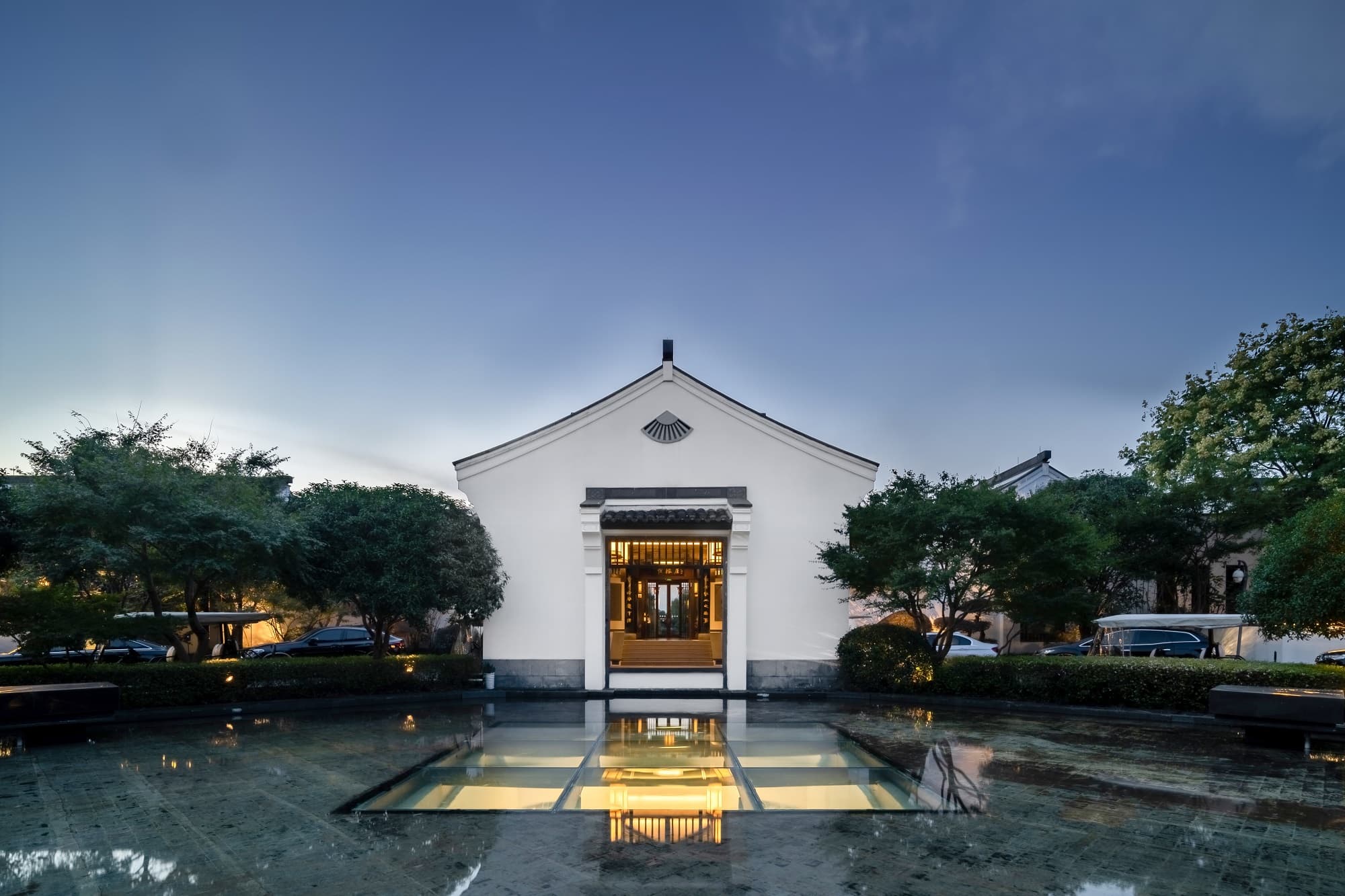
While the masses descend upon West Lake, the smart set heads twenty minutes west to the Xixi National Wetland Park, where Banyan Tree has conjured a Jiangnan water village so convincing it feels centuries old. This is not a hotel where you check in; it’s a living painting you inhabit. The architecture is a masterclass in atmospheric restraint—gray tiled roofs, high-ceilinged lobbies with lantern-lit grandeur, and canals that weave directly to your door. The entry-level 'Water Terrace' suites are a staggering 120 square meters, outfitted with vivid silk brocades and dark lacquered furniture that banish the generic beige of corporate luxury. Dining at Bai Yun is non-negotiable; the Dongpo Pork here rivals any heritage kitchen in the city. But the real magic is the stillness. After a day battling the crowds at Lingyin Temple, returning here feels like a spiritual exhale. Service is telepathic rather than intrusive—staff members like Viola and Bruno seem to anticipate the need for a buggy ride or a tea refill before you even ask. It’s a flawless, moody, and deeply romantic escape that trades West Lake’s convenience for Xixi’s soul.
“Skip the main breakfast rush. Instead, book the 'Love Boat' experience at sunset—a traditional sculling boat that serves Longjing tea and savory Hangzhou snacks as you drift through the private canals.”
Insider TipAvg. Nightly Rate
512USD