No. 01
60 Beishan Street Hangzhou ChinaHangzhou24 verified reviews
9
.8
Bitvoya Edit
Layering imagery, place, and detail before the page opens.
Hangzhou is a city defined by the fluidity of water and the permanence of stone. Beyond the legendary West Lake lies a labyrinth of waterways known as Xixi National Wetland Park, a place where architecture doesn't just sit on the land—it floats upon it. Our curated collection, 'Floating Worlds,' invites you to explore properties that masterfully blend Jiangnan's traditional vernacular with modern luxury. From the pavilion-style villas of Banyan Tree in the heart of the wetlands to the monastic serenity of Amanfayun near Lingyin Temple, these hotels are destinations unto themselves. Immerse yourself in the mist-covered landscapes of the Tea Plantations and the historic tranquility of Beishan Road, where the boundary between nature and habitation dissolves.
Hangzhou has long been the muse of poets and emperors, but its architectural renaissance in the Xixi National Wetland Park offers a new narrative. The 'Floating Worlds' collection highlights a unique convergence where design mimics the ecosystem. Unlike standard luxury hotels, properties like the Sheraton Grand Hangzhou Wetland Park Resort and the Angsana Hangzhou are built into the fabric of the wetlands, utilizing traditional gray tiling, white walls, and intricate water corridors that reflect the 'Jiangnan' aesthetic. Choosing this destination means opting for a sanctuary where the hustle of modern China fades into the sound of oars paddling through water and rain hitting pavilion roofs.
While Xixi is the heart of our floating theme, the architectural wonders extend to neighboring precincts.
Guests booking a stay in Hangzhou's architectural wonders should expect an experience centered on 'quiet luxury.' Arrivals are often conducted by traditional wooden boats rather than cars, setting the tone for a slower pace of life. Interiors feature high ceilings with exposed wooden beams, silk tapestries, and floor-to-ceiling windows that frame the shifting seasons. Culinary experiences are deeply rooted in the locality, with Longjing tea ceremonies and cuisine that utilizes fresh ingredients from the surrounding wetlands. Whether it is the historic grandeur of Qiushui Villa or the modern Zen of the wetlands, expect a profound connection to Chinese culture and nature.
Xixi National Wetland Park is best for traditional water-town architecture with a luxury twist (like Banyan Tree), while the Lingyin Temple area offers monastic, stone-and-wood designs like Amanfayun.
Both Banyan Tree Hangzhou in Xixi Wetland and Four Seasons Hotel Hangzhou at West Lake offer guests the option to arrive at the lobby or their rooms via traditional wooden boats.
Yes, Xixi National Wetland Park is approximately a 15-20 minute drive from West Lake, making it easy to combine a nature retreat with visits to the historic lake.
Explore our complete curated list of luxury accommodations, from boutique hideaways to grand dames.
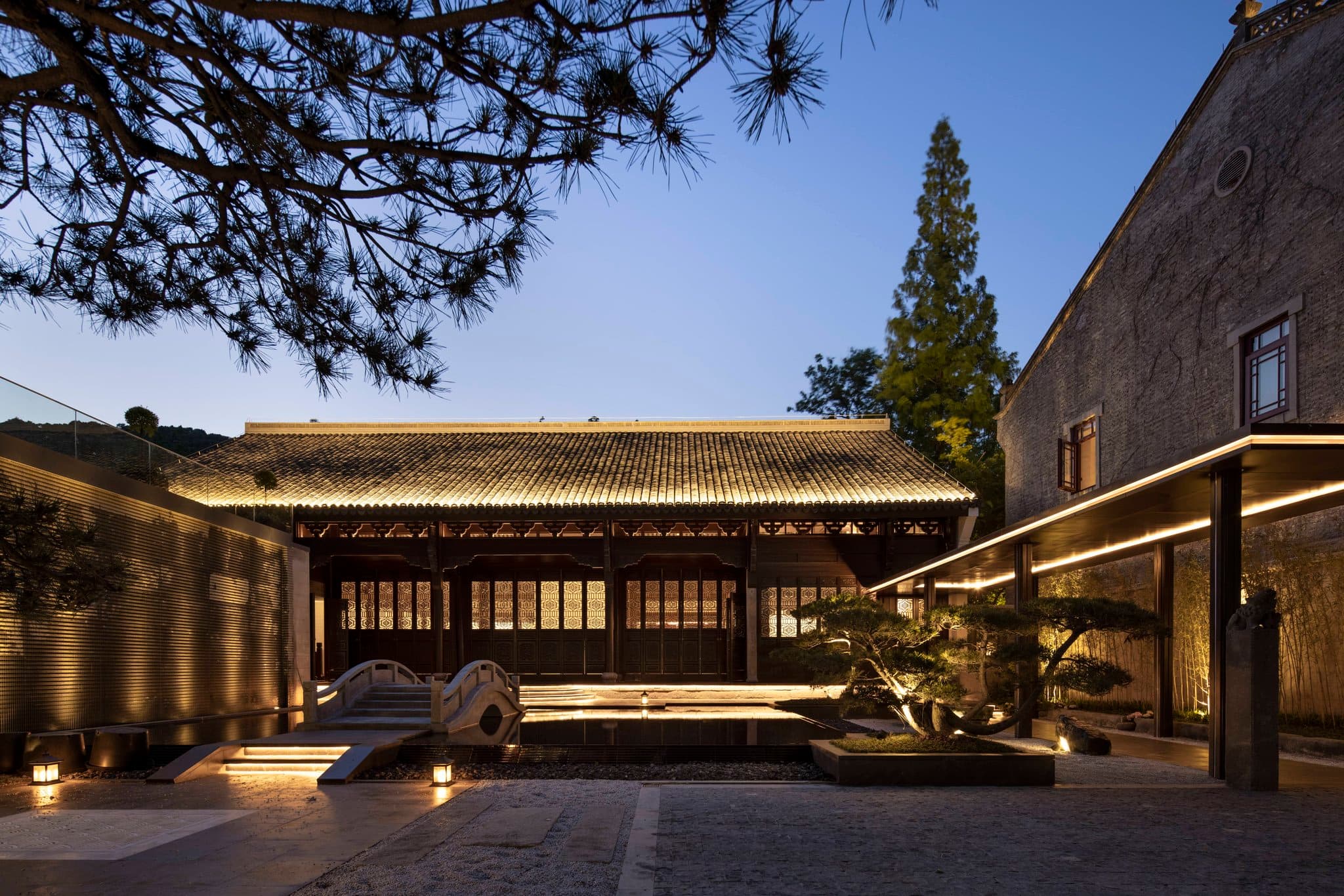
Explore All Hangzhou HotelsThis isn't just a hotel; it’s a time machine operated by Small Luxury Hotels of the World. Originally built in the 1930s by media tycoon Shi Liangcai for his wife, Shen Qiushui, the villa dominates the Beishan Road shoreline like a Republican-era film set. The design is a moody collision of Jiangnan garden serenity and French colonial grandeur. Check into the 'Wenqin Pavilion' suite, where the beige palette and panoramic balcony offer a front-row seat to the Broken Bridge. The restoration is forensic: antique furnishings feel curated, not staged, and the 400-thread count linens are impossibly crisp. The semi-open infinity pool, with its retractable glass roof, is the property's pièce de résistance—swimming here feels like floating directly on the West Lake, sans the tourists. Dining is bifurcated: 'Guyun' serves a competent French high tea, but the real star is the 'In Villa' restaurant. Order the fried crab with stinky tofu—a pungent, textural masterpiece. The service is hyper-personalized, though not without quirks; the facial recognition entry system can be temperamental, and breakfast is sometimes shuttled in from the neighboring Xinxin Hotel. Yet, these are minor glitches in an otherwise cinematic experience.
“Book the 'Evening Glow' room for the best sunset views, and ask the butler to arrange a private tea ceremony in the central courtyard during the quiet mid-afternoon hours.”
Insider TipAvg. Nightly Rate
1450USD
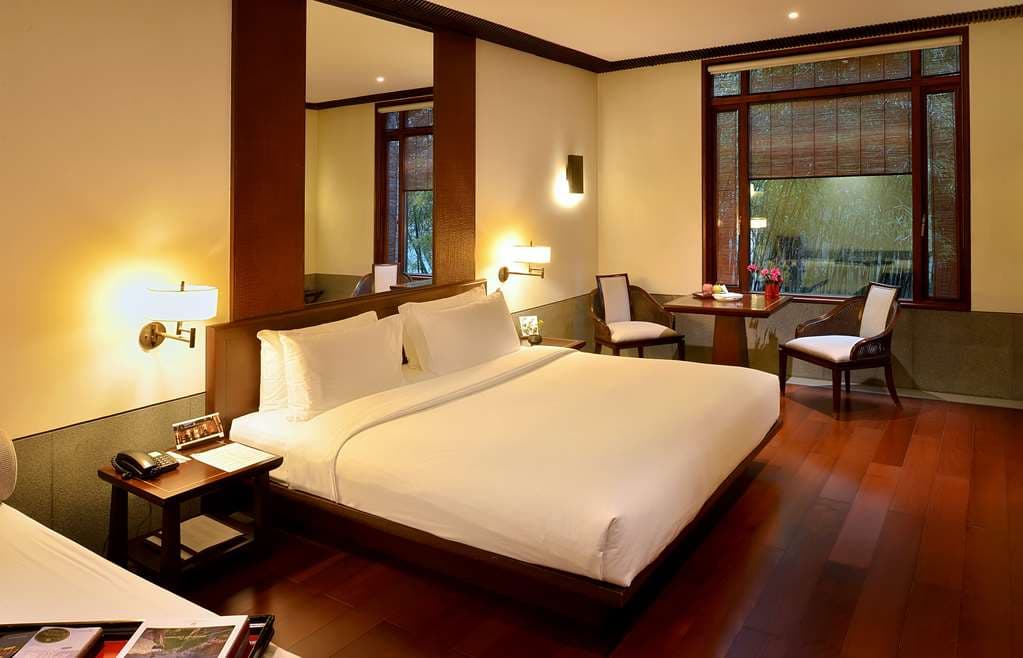
If you have ever wondered what it feels like to inhabit a 14th-century ink-wash painting, Fuchun Resort is the answer. Designed by the legendary Jean-Michel Gathy—the architect behind some of the world’s most iconic Amans—this property isn't just a hotel; it’s a masterclass in modern eco-design that has aged into a state of quiet, cinematic perfection. Located a mere hour from Hangzhou, it sits amidst the very tea plantations depicted in Huang Gongwang’s legendary scroll, 'Dwelling in the Fuchun Mountains'. The aesthetic here is strictly 'Zen-maximalist.' The palatial indoor pool, with its symmetrical timber columns and jet-black tiles, remains one of the most photogenic swim spots in Asia, reflecting lantern light like a dark mirror. While some hardware in the rooms shows the patina of its two-decade tenure, the design pedigree—think Jaya Ibrahim interiors with soaring ceilings and intricate lattice screens—outshines the need for blindingly new tech. Dining at Asian Corner (Da Chi Xiao Guan) is mandatory; order the Signature Flavor Durian Crab, a dish that defies skepticism with its creamy, pungent brilliance. The service, rated an exceptional 9.0 by guests, navigates the sprawling grounds with intuitive grace. This is a retreat for the purist, where the luxury lies not in gold taps, but in the silence of the tea fields.
“Skip the standard sunset viewing. Instead, book a session of Himalayan Yoga at the Valmont Spa; the studio overlooks the lake and offers a far more spiritual golden hour.”
Insider TipAvg. Nightly Rate
244USD
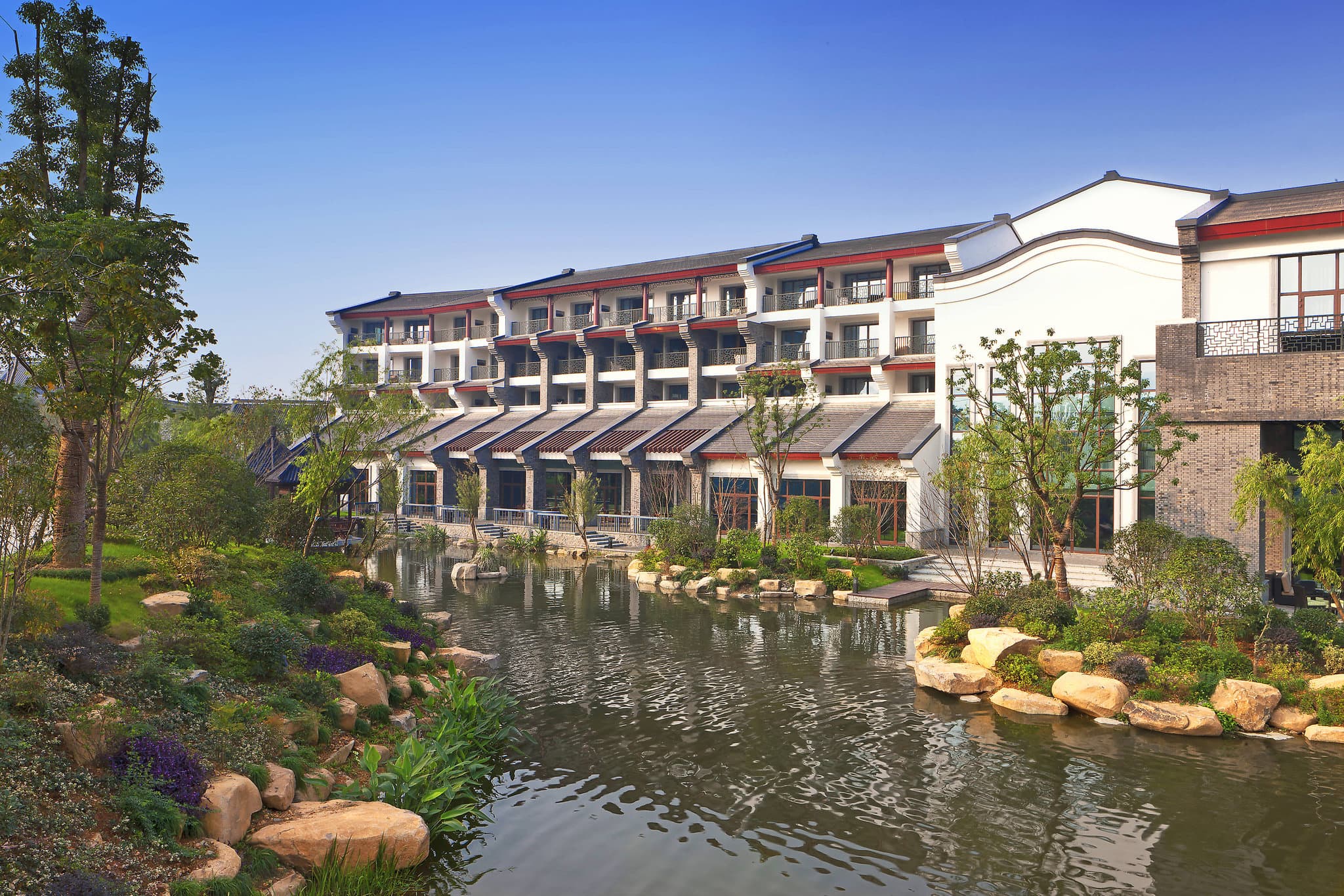
In a city defined by Alibaba’s glass towers and the frenetic energy of Binjiang, the Sheraton Grand Hangzhou Wetland Park Resort feels defiantly analog. This is not your standard corporate box; it is a sprawling, low-rise exercise in Jiangnan vernacular—think whitewashed walls and grey-tiled roofs that seem to dissolve into the surrounding reeds of the Xixi Wetland. The architecture demands you slow down, mostly because the corridors are labyrinthine, requiring a committed hike to find your 45-square-meter room. Once inside, the vibe is monastic chic. The private balconies overlook genuine marshland, not a parking lot, allowing the humidity and sound of crickets to filter in. However, the hardware betrays the hotel's vintage. The lack of smart toilets is a baffling omission for 2026 Hangzhou, and the English proficiency at the front desk can be patchy. Redemption arrives at Yue, the Chinese restaurant. Their sautéed river shrimp with Longjing tea leaves is texturally perfect—snappy, fragrant, and oily in the right way. Skip the chaotic breakfast buffet at Feast and opt for a morning swim in the indoor heated pool, which is surprisingly serene. This is a place to disconnect, provided you have the patience for service that operates strictly on 'wetland time.'
“Request a room in Block 5 or 6 facing the inner wetland waterways to avoid the noise of the main courtyard events; bring your own translator app.”
Insider TipAvg. Nightly Rate
108USD
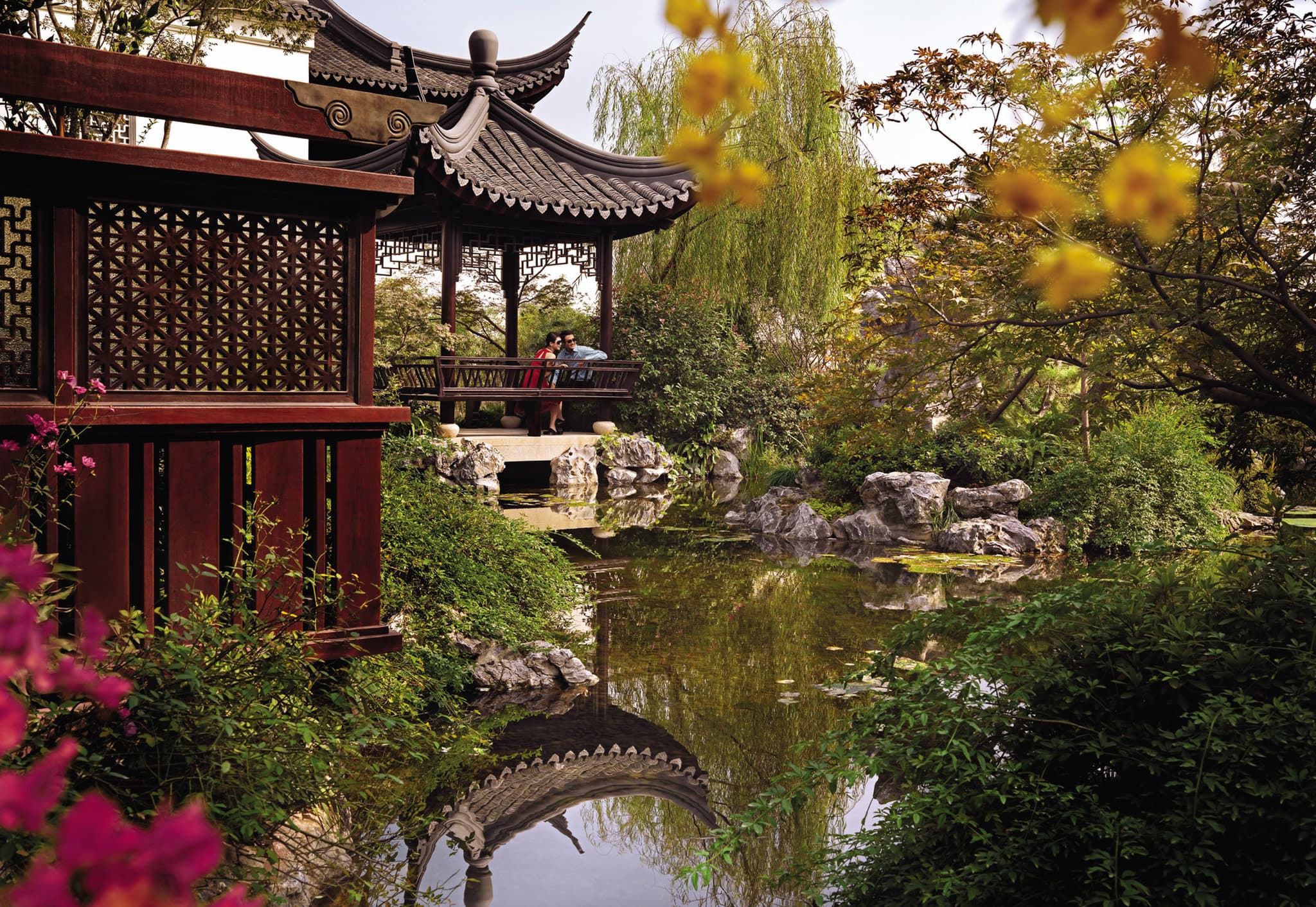
If Xixi Wetland is the wild, untamed soul of Hangzhou’s water culture, the Four Seasons West Lake is its manicured, aristocratic cousin. While the public causeways of the UNESCO site are a crush of tourists, this property operates as a hushed, mist-draped parallel universe. It is a masterclass in Jiangnan aesthetics—a sedate arrangement of tiled pagodas, winding corridors, and weeping willows that feels less like a hotel and more like a set from *Dream of the Red Chamber*. The guest pavilions are sequestered behind mossy stone walls, offering a level of privacy that borders on the hermetic. Inside, the commitment to tradition is absolute—silk-paneled walls and hand-painted chinoiserie—but the functionality is strictly 21st-century, with silent climate control and Technogym equipment for the restless. The real power move, however, is dining at Jin Sha. Having just secured its 2025 Black Pearl 3-Diamond status (and retaining its Michelin star), it remains the city’s culinary apex. The signature Shanghainese braised pork with abalone is not merely a dish; it is a gelatinous, savory religion. Yes, the nightly rate is eye-watering, and the breakfast spread is more curated than sprawling. But you aren’t paying for eggs; you are paying for the rarest commodity in modern China: absolute, uninterrupted silence.
“Book a ground-floor Premier Room for direct access to the gardens—you can step straight from your terrace onto the private lagoon pathways.”
Insider TipAvg. Nightly Rate
535USD
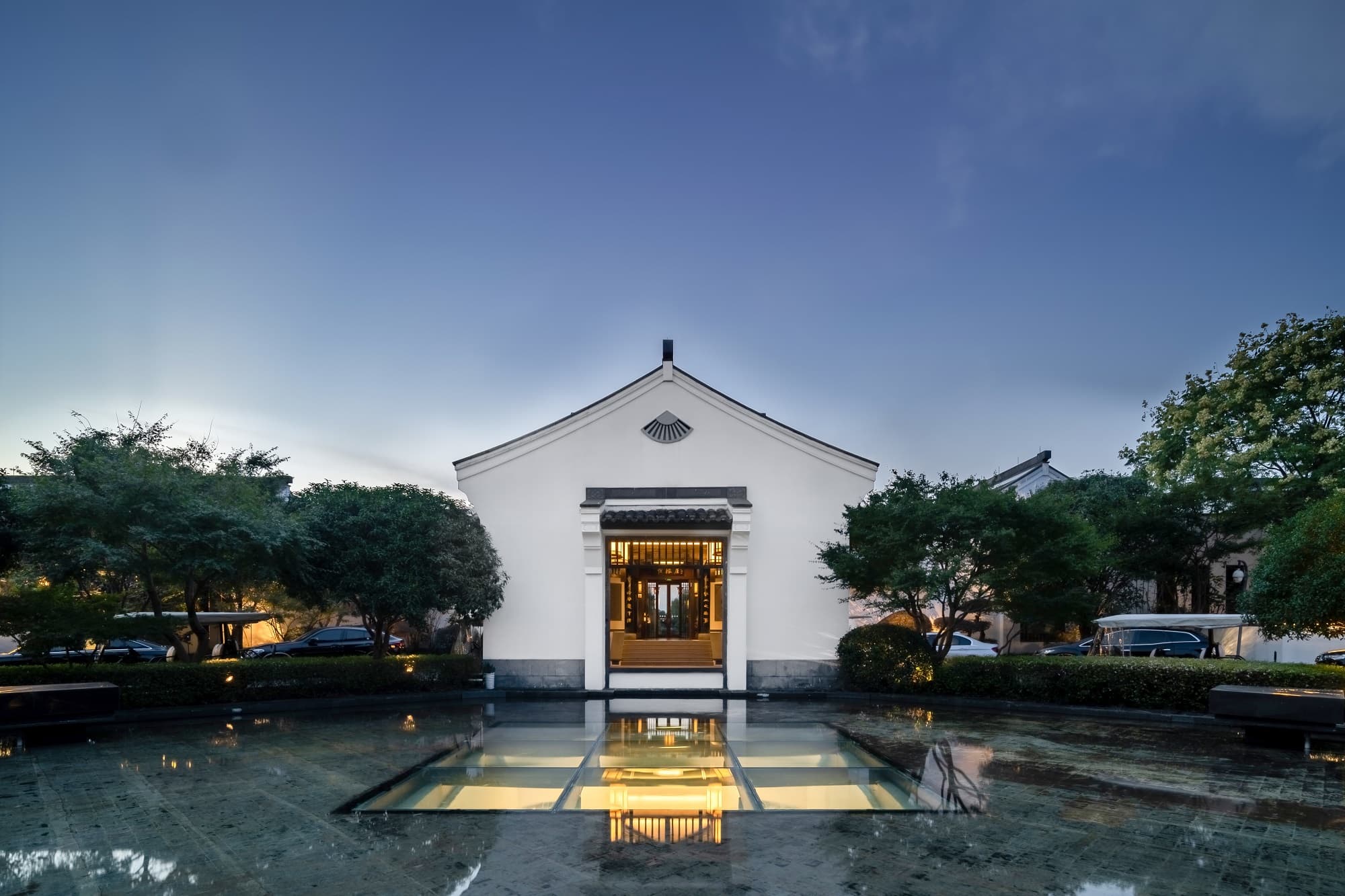
While the masses descend upon West Lake, the real connoisseurs head west—into the misty, cinematic labyrinth of the Xixi National Wetland Park. Here, the Banyan Tree Hangzhou doesn’t just sit on the water; it seems to rise from it, a brooding, beautiful collection of 72 ivory-walled villas topped with traditional gray-tiled sweeping eaves. It is less a hotel and more a curated feudal village, connected by stone arch bridges and silent canals where sculling boats drift through the fog. Inside, the drama continues. Entry-level suites are a staggering 120 square meters, dwarfing the competition. The aesthetic is fiercely Jiangnan—dark lacquered wood, high ceilings, and intricate silk brocades. Yes, a sharp eye might spot a scuff on the floorboards or a faded cushion—the property has been open since 2009—but the patina only adds to the 'Old China' romance. The bathrooms are cavernous temples to self-care, stocked with Natura Bissé amenities and Banyan Tree’s signature incense. For dinner, skip the international fare and hit Bai Yun for the Dongpo Pork; it’s unctuous, sticky, and arguably better than what you’ll find in town. Service is where the resort truly flexes, with staff like Viola and Bruno anticipating needs before you even realize you have them. It is moody, atmospheric, and utterly seductive.
“Book a 'Water Terrace Suite' for direct access to the canal—you can sometimes flag down a passing sculling boat right from your balcony for an impromptu ride.”
Insider TipAvg. Nightly Rate
512USD
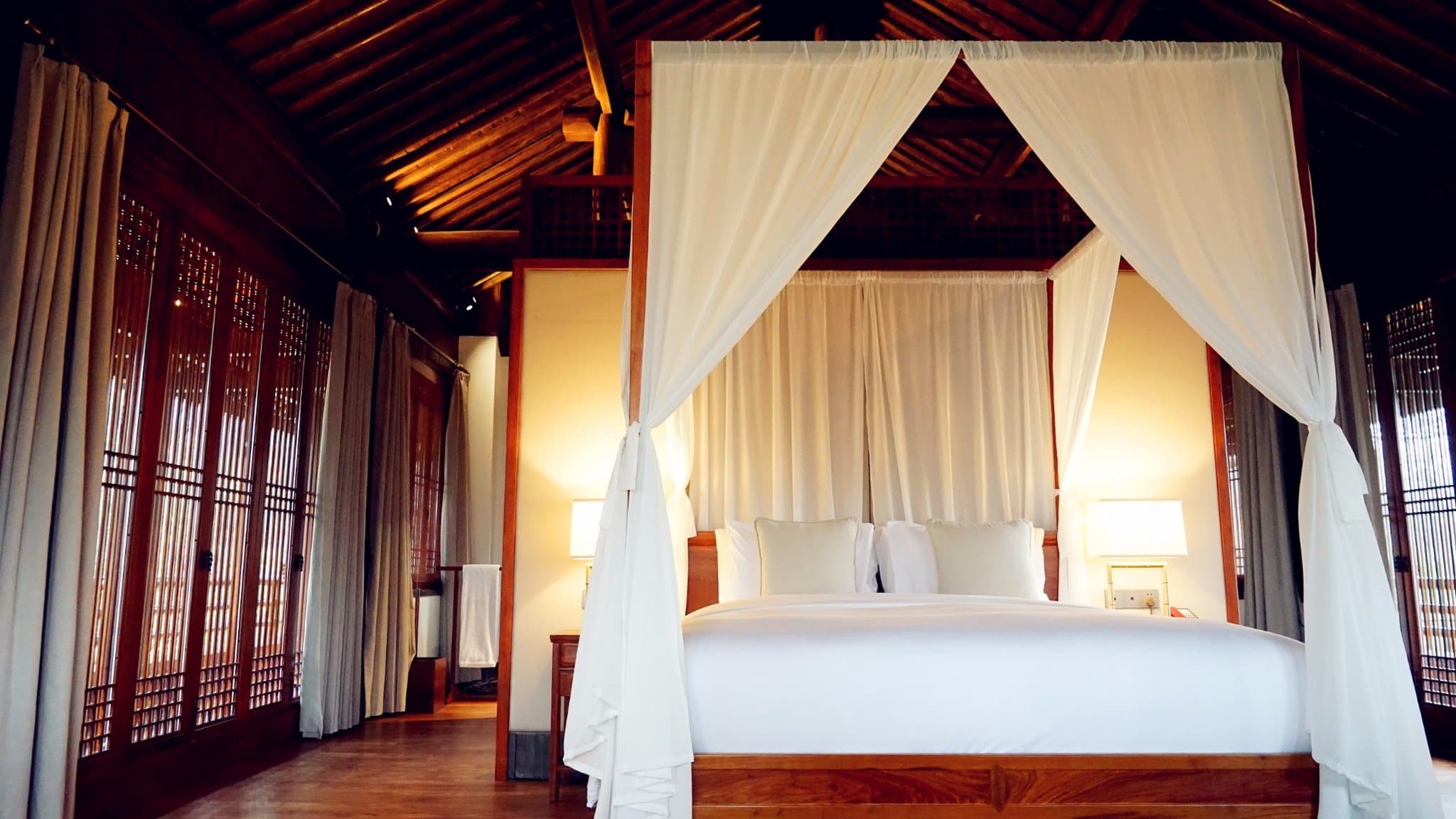
If the West Lake is Hangzhou’s crowded living room, Seven Villas is the locked study where the rarest volumes are kept. Sequestered in the bamboo-dense Maojiabu village, this Relais & Châteaux property feels less like a hotel and more like a wealthy scholar’s private compound. The architecture is a masterclass in Jiangnan restraint—whitewashed walls and sweeping eaves that don't scream for attention but command it. Inside, the commitment to silence is almost aggressive; with no communal pool to splash in, the agenda here is strictly horizontal relaxation and serious caloric intake. The 42 villas are exercises in meditative luxury, equipped with the requisite Dyson dryers and Bose systems, but the real amenity is the floor-to-ceiling glass framing private bamboo groves so dense they act as natural blackout curtains. However, the property’s true pulse beats in its kitchen. You are essentially sleeping at a restaurant with rooms. Jie Xiang Lou holds a Michelin star and legendary status; securing a table for the Golden Medallion Wagyu or the delicate Veggie Beggar’s Purse often requires more maneuvering than the room booking itself. The butler service is hyper-attentive, bordering on clairvoyant, though the rigid dining reservation policies for in-house guests can feel slightly draconian. It is a place for those who prefer pu-erh tea over pool bars and silence over social scenes.
“The 'Veggie Beggar's Purse' at Jie Xiang Lou sells out daily. Request it be reserved with your room booking, not upon arrival.”
Insider TipAvg. Nightly Rate
625USD
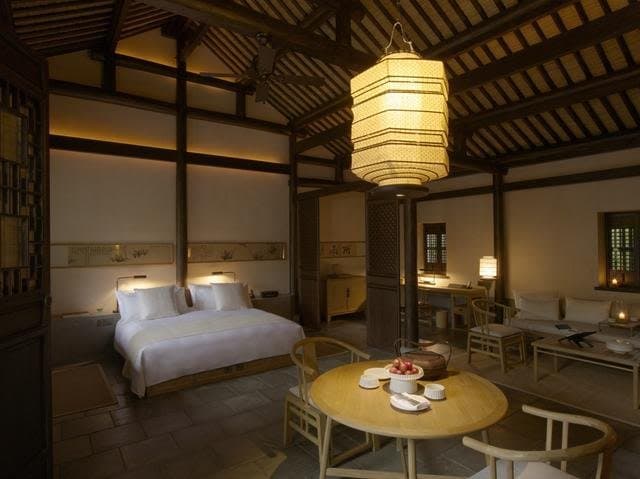
Forget everything you know about five-star excess. Amanfayun isn’t a hotel; it’s a living museum of silence. Located just steps from the Lingyin Temple, this restored tea village strips away the gilt and marble of typical luxury for something far more arresting: raw, unvarnished authenticity. The vibe is aggressively low-key—think moss-covered stone paths, flickering lanterns, and a soundscape dominated by cicadas and distant chanting rather than lobby muzak. Inside the Deluxe Village Suites, the aesthetic is monastic chic. You won’t find aggressive tech here, but you will find Dyson hair dryers hidden in drawers and, crucially, underfloor heating that turns the rustic stone floors into a warm embrace during Hangzhou’s damp winters. The 400-thread count linens feel almost shockingly decadent against the room's stark wooden beams and calligraphy scrolls. Dining is a serious affair. At Lan Xuan (Hangzhou House), the signature double-boiled deboned chicken with termite mushrooms is a masterclass in subtlety—earthy, rich, and clear. While the price point for dinner might make your eyes water, you’re paying for the privilege of eating inside a protected heritage site. The service is Aman’s signature ‘invisible hand’—there when you need a buggy, gone when you want to disappear. Is it dark? Yes. Are there bugs? Occasionally. But for a few nights of feeling like a Song Dynasty scholar, it is entirely unrivaled.
“Book a table at the Steam House for lunch rather than dinner to enjoy the bamboo grove views, and request a room away from the main Fayun Pathway if you want total privacy from daytime tourists.”
Insider TipAvg. Nightly Rate
716USD
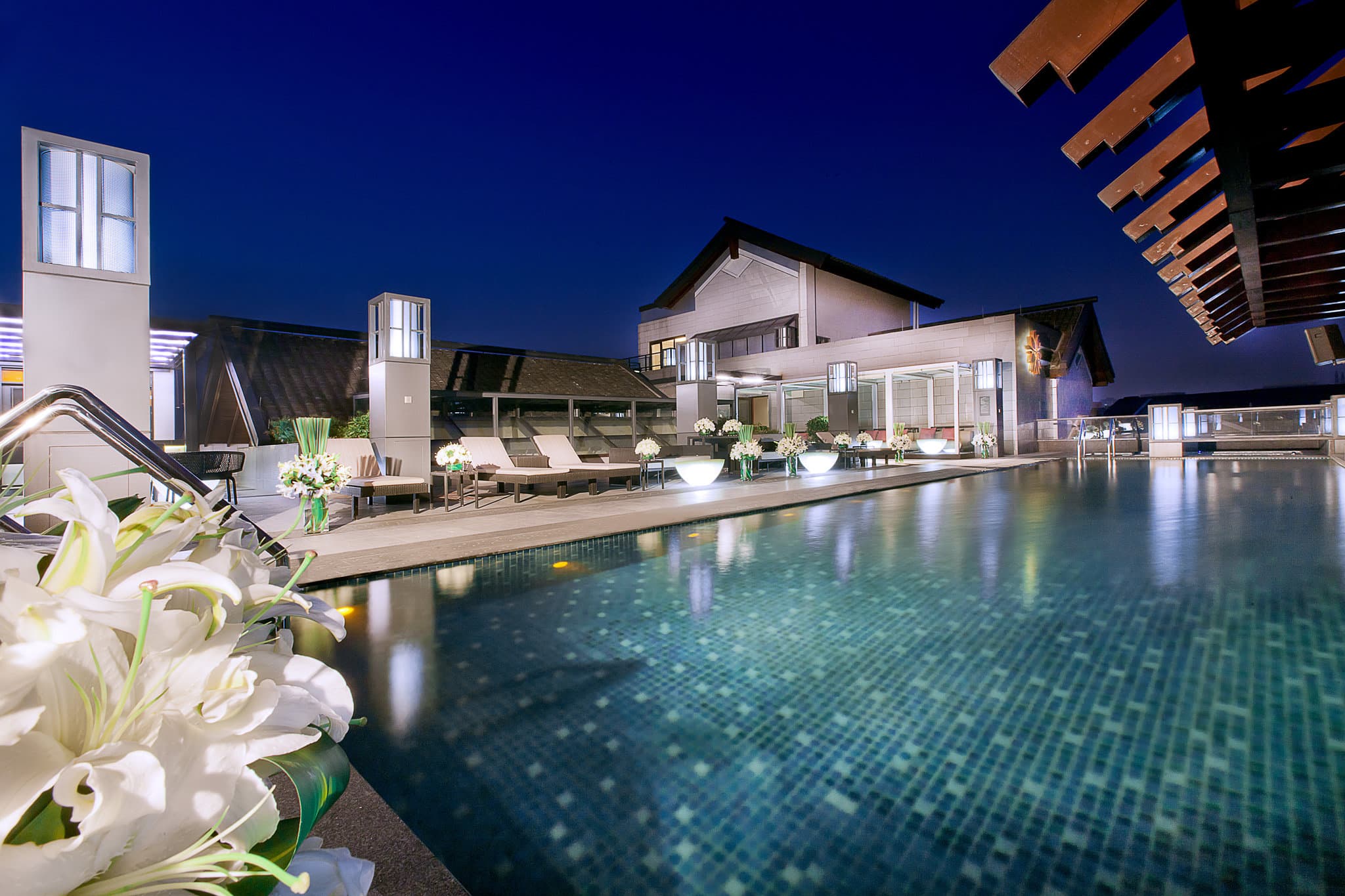
Arriving at Angsana Hangzhou feels less like a hotel check-in and more like drifting into a watercolor painting. Anchored within the Xixi National Wetland Park, this property trades the frenetic energy of downtown Hangzhou for the moody silence of gray-tiled Jiangnan roofs and reed-lined waterways. The architecture is a study in restraint—dark wood lattices and white walls that frame the surrounding marshland like living art. Inside, the rooms are spacious, if occasionally showing their age against the relentless wetland humidity. Ask for a Deluxe Room on the second floor to secure a private balcony where the morning mist rolls in thick and cinematic. Amenities are sharp—Technogym equipment for the disciplined and strong Wi-Fi for the digital nomad—though the lack of an onsite spa is a curious omission. Guests are instead whisked by buggy to the neighboring Banyan Tree for massages, a minor inconvenience that becomes a charming ritual. Dining at the Pavilion is the highlight, where the Hainanese Chicken Rice rivals any hawker stall in Singapore, and the Angsana Fried Rice offers a savory, carb-heavy comfort after a day of kayaking. While the rooftop pool is seasonal and postage-stamp small, the access to Banyan Tree’s indoor lap pool mitigates the loss. This is a place for solitude, not scenes—a moody, atmospheric retreat for those who prefer rain-slicked stones over polished marble lobbies.
“Request a second-floor room facing the waterways to avoid the ground-floor humidity and ensure your view is of the reeds, not the neighbors.”
Insider TipAvg. Nightly Rate
95USD
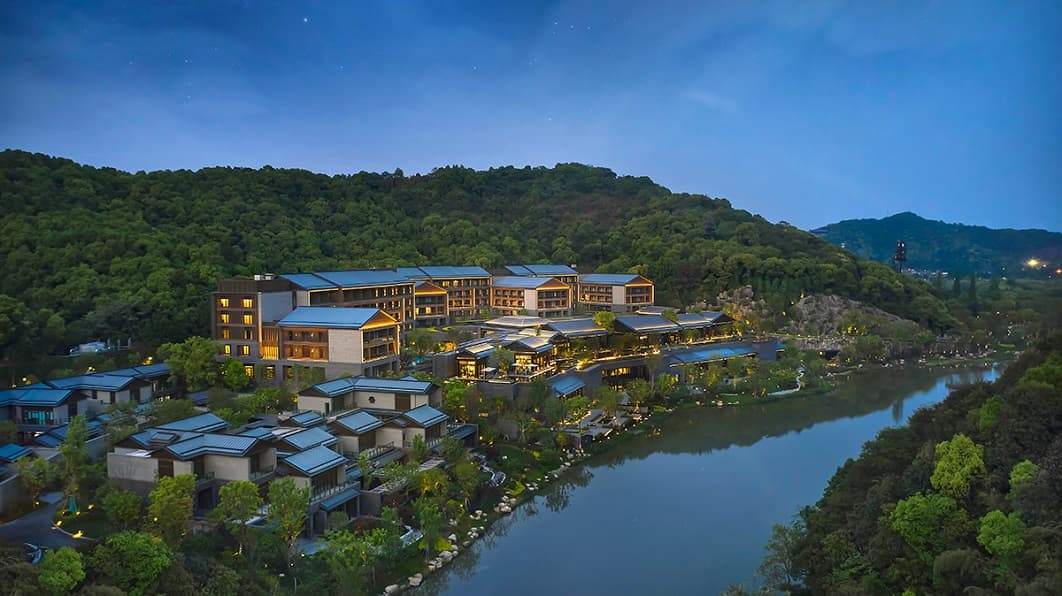
Forget the West Lake crush. The real Hangzhou—the one of misty ink paintings and silence—lives here, at Xiang Lake. Xianghu Xiaoyao Manor isn't just a hotel; it’s a sprawling architectural thesis by GOA that trades imperial pomp for modern Zen. The property is a geometric maze of zig-zagging walkways and slate-grey villas that vanish into the treeline, demanding you slow down (literally—the walk from the lobby to the villas is a hike, so summon the buggy). Inside, the rooms are exercises in restraint: blonde wood, floor-to-ceiling glass framing the lake, and the kind of automatic curtains that make you feel like a Bond villain. But the real draw is the dining. While the 'Ocean Family' offers competent kaiseki, the Michelin-selected 'Shuiyang' is the main event. Order the Qiandao Lake Fish Head—a massive, gelatinous, spicy masterpiece that demands a bib and total concentration. It’s a retreat that feels comfortably isolated, provided you’ve packed a sweater for the open-air corridors.
“Request a villa in the 8000 block for the best elevated lake views, but be warned: the WiFi signal dips in the corners. Download your movies before you soak in the Japanese-style deep tub.”
Insider TipAvg. Nightly Rate
173USD