No. 01
No 1 Baohai Road. BAO HUA ChinaJiuzhaigou968 verified reviews
9
.2
Bitvoya Edit
Layering imagery, place, and detail before the page opens.
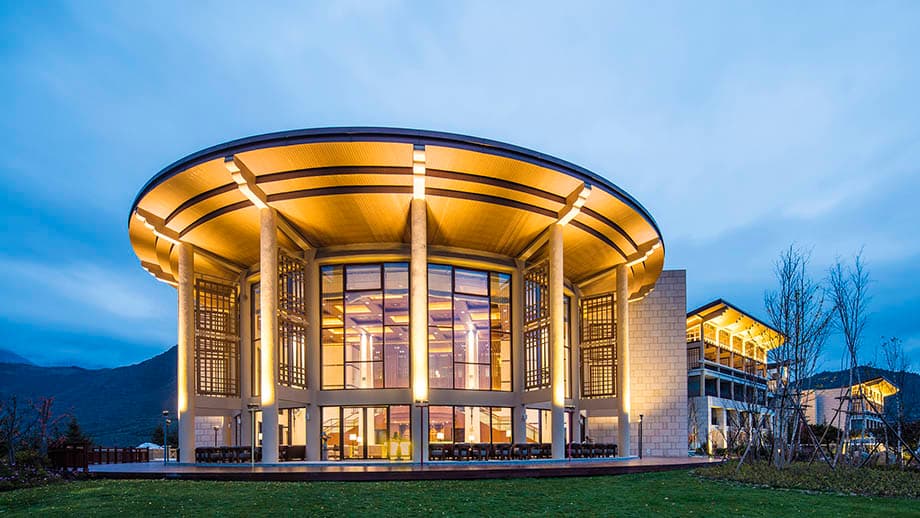
Nestled on the edge of the Tibetan Plateau, Jiuzhaigou is more than just a UNESCO World Heritage site known for its multi-colored lakes; it is a spiritual sanctuary. For the discerning traveler, the experience extends beyond the park into the architecture of their stay. In neighborhoods like Zhangzha Town and the upscale Luneng Beauty Town, luxury brands have reimagined traditional lodging. Properties like the Rissai Valley, a Ritz-Carlton Reserve, and the Hotel Indigo Jiuzhai weave local Qiang and Tibetan heritage into their design. Here, intricate wood carvings, vibrant prayer flags, and stone masonry meet world-class hospitality, offering a stay that is deeply rooted in the 'Himalayan Soul'.
Choosing a Tibetan-style lodge in Jiuzhaigou transforms a simple sightseeing trip into a cultural immersion. Unlike standard city hotels, properties like the Banyan Tree Jiuzhaigou and the Conrad Jiuzhaigou are designed to harmonize with the high-altitude environment. They offer distinct architectural features such as sloping roofs, vibrant interior palettes reflecting Tibetan Buddhism, and panoramic mountain views. Staying here means waking up to the smell of yak butter tea and the sound of distant temple bells, providing a seamless connection to the Himalayan spirit.
To truly experience the Himalayan soul, location is paramount. Zhangzha Town is the bustling heart near the park entrance, hosting the grand InterContinental Resort Jiuzhai Paradise, known for its massive glass atrium that brings the forest indoors. For a more secluded and upscale vibe, Luneng Beauty Town is home to newer luxury entrants like the Hilton Jiuzhaigou Resort and the ultra-exclusive Rissai Valley, a Ritz-Carlton Reserve. These areas offer proximity to the Jiuzhaigou National Park while maintaining the tranquility required for a restorative retreat.
Rissai Valley (a Ritz-Carlton Reserve) and Hotel Indigo Jiuzhai are top choices for authentic Tibetan architectural fusion, featuring traditional wood carvings and stone structures.
Yes, luxury properties like Hilton Jiuzhaigou, Conrad, and InterContinental are equipped with in-room oxygen supply systems or oxygen lounges to help guests acclimatize to the altitude.
Luneng Beauty Town is the premier area for new luxury Tibetan-style resorts, while Zhangzha Town offers convenient access to the park entrance with established 5-star hotels.
Explore our complete curated list of luxury accommodations, from boutique hideaways to grand dames.
Explore All Jiuzhaigou HotelsReaching Banyan Tree Jiuzhaigou requires commitment—a winding 2.5-hour ascent from the National Park entrance that filters out the casual tourist. This isn't a mere base camp; it is a high-altitude sanctuary where the architecture commands as much attention as the peaks. The design is muscular and organic, featuring dramatic stone masonry and angular rooflines that mimic the surrounding grey crags rather than distracting from them. Inside, the experience is defined by scale and silence. Even entry-level rooms clock in at a massive 65 square meters, dressed in dark woods and rich local textiles that feel necessary against the thin mountain air. Mornings here are theatrical: waking up to the 'sea of clouds' drifting below your private balcony is standard theater. Dining is best experienced at Gan Hai Zi, where the signature Yak Meat Hot Pot provides the caloric density needed for this elevation. While the 'Rainforest' hydrothermal spa complex is a triumph of hydrotherapy, be warned that the pool often undergoes maintenance—a recurring hiccup in such a remote outpost. Service is warm and eager, though the isolation can occasionally mean a slower pace. Ultimately, you book this property not for convenient park access, but to escape the park's crowds entirely.
“Request a 'Valley View' room on the highest possible floor (Level 5+) to ensure you wake up above the fog line, not in it.”
Insider TipAvg. Nightly Rate
132USD
Forget the typical sterile hotel lobby; entering the InterContinental Jiuzhai Paradise is like stepping into a high-altitude biodome. Anchored deep within the Minshan range, this architectural anomaly encases an entire Tibetan stone village under a colossal glass atrium, preserving a micro-climate of lush greenery against the harsh Himalayan chill. It is a surreal juxtaposition—local stone masonry meets steel-and-glass futurism. The rooms channel a rustic lodge aesthetic with heavy timber beams and stone-clad fireplaces, though travelers accustomed to Western plushness should note the beds offer the uncompromising firmness typical of the region. The trade-off? Sipping tea on your private balcony while staring down a literal forest. Dining is an event here; skip the international buffet and head straight to Shun Xing for the yak meat hot pot, a broth so rich it practically hums. While the hardware shows signs of its two-decade tenure, the Tianyu Spa remains the showstopper—a terraced cascade of 12 hot spring pools beneath the glass canopy that feels like bathing in a greenhouse at the end of the world. It’s not just a hotel; it’s a destination that demands you stay indoors.
“The hotel is a 25km trek from the National Park entrance. Book the hotel's shuttle early, or better yet, reserve a 'Tibetan Premium' room which often includes lounge access to soften the logistics.”
Insider TipAvg. Nightly Rate
75USD
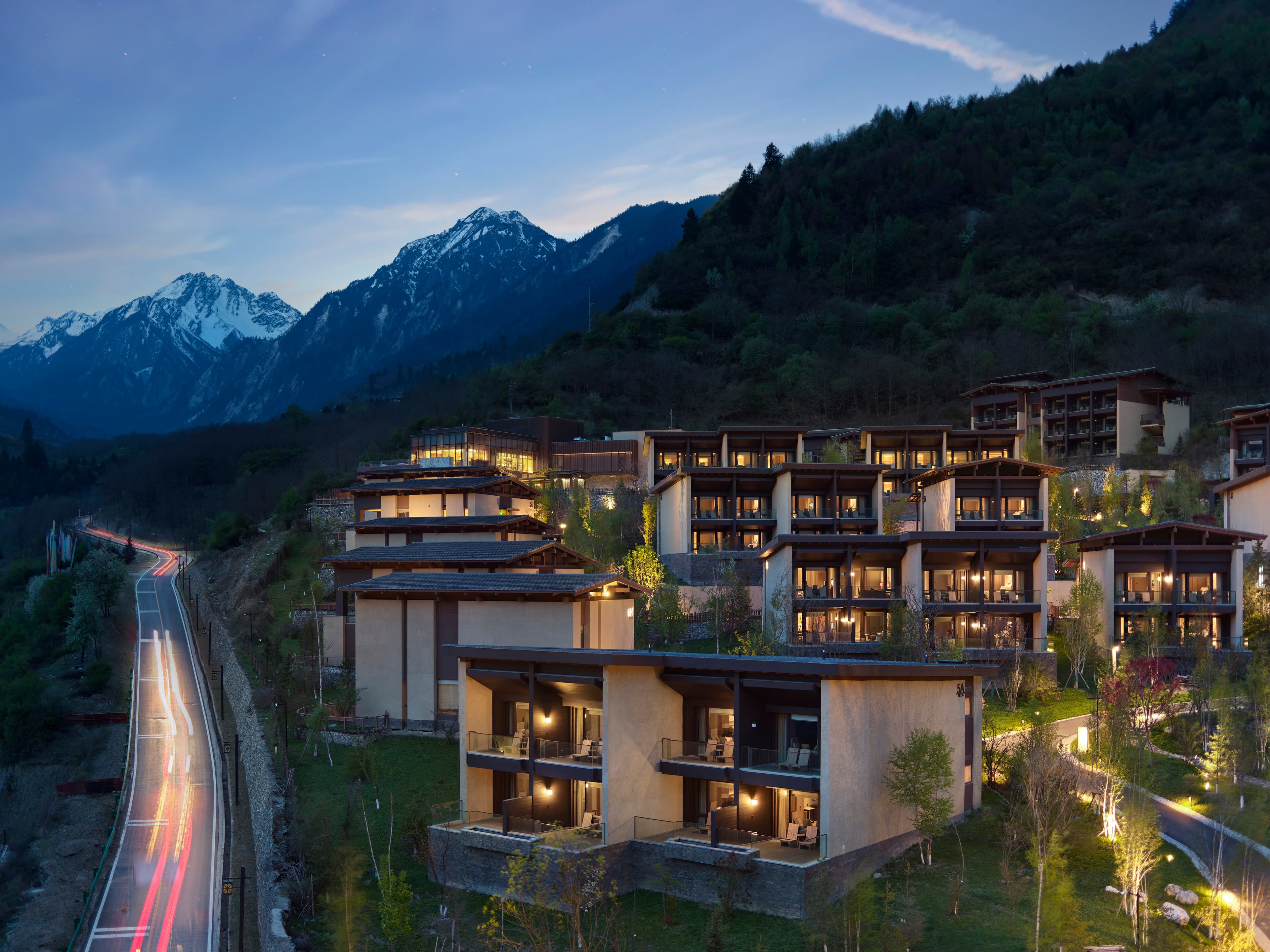
Forget the gilded excess of typical luxury chains; the Conrad Jiuzhaigou is a study in high-altitude restraint. Approaching the property in the Luneng scenic area, you aren’t greeting a monolith but a scattered collection of stone-and-timber villas that mimic an Amdo Tibetan village. The arrival ritual—a white *hada* scarf draped over your shoulders—signals a shift from tourist to guest. Inside, the design eschews cliché 'blends' for a sharp, modern dialogue with tradition: think rough-hewn beams framing Dyson-smooth sleekness. The villas are vast, with balconies that seem to hang precariously over the Min Mountains. Mornings here require the Tibetan Plateau Buffet at BAS.IN, where the yak butter tea is surprisingly palatable alongside Western staples. Dinner at M'EAT is the real draw; the grilled yak meat is smoky, tender, and best enjoyed on the terrace, firepits blazing against the chill. While the lack of an on-site pool is a quirk, the access to the neighbor’s facilities is seamless. Service is hyper-attentive—duty managers practically anticipate your need for extra Byredo amenities before you do. Verdict: A sophisticated basecamp for the stylish nomad.
“Request a villa in the upper tier (numbered 800s) for unobstructed valley views, though you'll be reliant on the buggy service for breakfast.”
Insider TipAvg. Nightly Rate
187USD
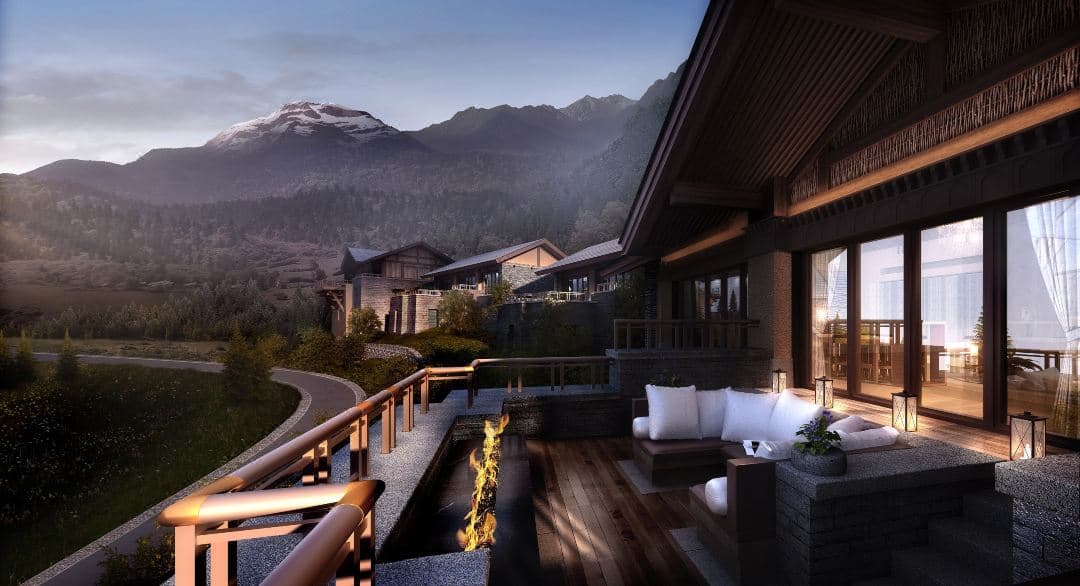
If you think you know the Ritz-Carlton Reserve playbook, Rissai Valley rewrites it in artisanal timber and schist stone. This isn’t just a base camp for Jiuzhaigou National Park; it is the destination. Designed by the late, legendary Jaya Ibrahim, the property feels less like a hotel and more like a high-altitude fortress of solitude, arranged in an 'endless Tibetan knot' that traps tranquility while keeping the tour buses at bay. The villas are masterclasses in restraint—think heated floors underfoot, walls that mimic the warmth of a yak-hair tent, and windows framing the Minshan range like living Thangkas. But the real magic lies in the 'Nieba' butler service. Forget stiff formalism; these local experts manage your entire existence via WeChat, from securing a table at Cai Lin Xuan for the Yak Steak on Himalayan Salt Block to arranging a private stargazing session. While the drive from the airport is a haul, the payoff is absolute silence, broken only by the sound of the stream and the clinking of Tibetan singing bowls in the spa.
“Skip the main breakfast rush. Ask your Nieba to set up the 'Basket Breakfast' on your private terrace—the morning mist over the ancient villages is better than any buffet spread.”
Insider TipAvg. Nightly Rate
1300USD
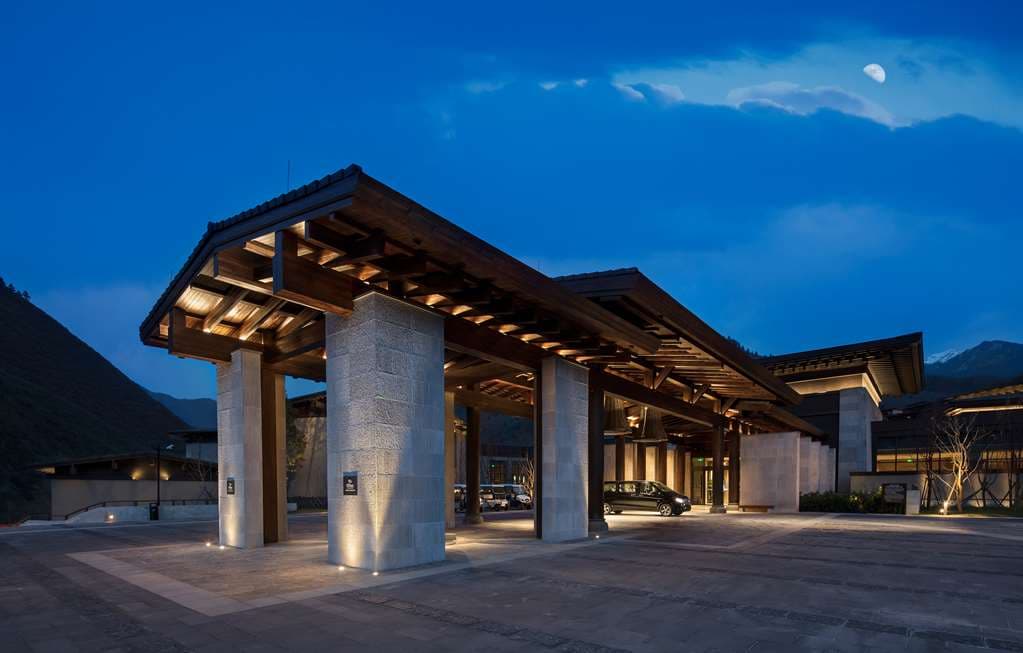
It is rare for a global hotel chain to successfully mimic the gravity of a fortress, yet the Hilton Jiuzhaigou does exactly that. Anchored in the Min Mountains, the property borrows the heavy stone bases and intricate wooden eaves of a traditional Tibetan Dzong, commanding respect rather than merely occupying space. The result is a structure that feels indigenous to the landscape, even if the lobby lounge—framing snow-capped peaks through floor-to-ceiling glass—screams modern luxury. The accommodations are equally substantial. Base rooms start at a cavernous 46 square meters, offering a sense of scale often lost in contemporary hospitality. A witty, if slightly jarring, touch is the availability of dinosaur-themed family suites, a playful nod that contrasts with the hotel's stoic exterior. Dining here requires a carnivorous curiosity; the Yak Beef Platter at SIMMER is rich and primal, best followed by the salty, acquired comfort of Tibetan Butter Tea at OPEN. However, the altitude comes with caveats. The hotel curiously lacks a shuttle to the National Park (a 12km trek requiring a taxi), and the central heating is notoriously aggressive, turning rooms into arid saunas that demand heavy moisturizer. There is no pool to cool off in, but the Tibetan foot massage at the spa offers a dry, kneading salvation for hikers' legs. It is a place of rugged comfort—imperfect, but undeniably soulful.
“Request a room on a high floor facing the 'ancient street' replica for moody, mist-covered photo ops at dawn. Avoid the ground floor to bypass lobby noise.”
Insider TipAvg. Nightly Rate
104USD
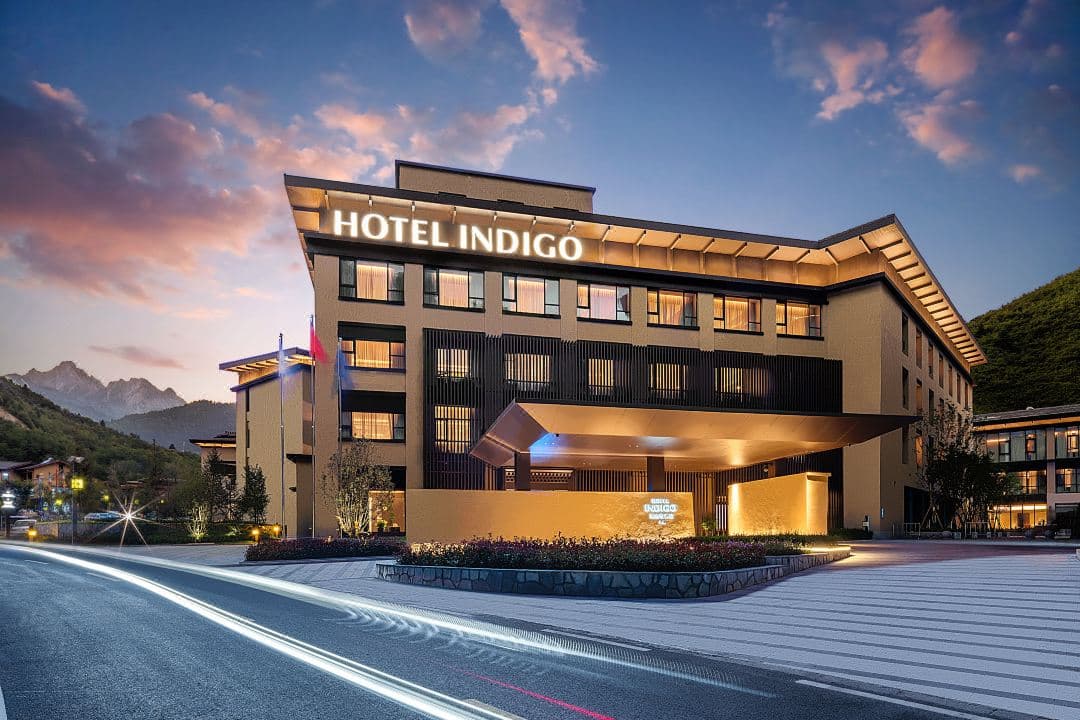
While the masses queue at the national park gate twelve kilometers away, Hotel Indigo Jiuzhai offers a sophisticated reprieve in the Luneng development. This isn’t a base camp; it’s a gallery of heritage. The lobby arrests you immediately—a massive central fireplace crowned by a ceiling design mimicking the spread wings of a mythological eagle, a motif that stalks you tastefully throughout the property. The 40-square-meter entry-level rooms feel substantial, trading kitsch for curated woodcuts and vibrant textiles that nod to the Qiang and Tibetan history without screaming it. Guests rave about the butler service—attentive without hovering—and the ‘Neighborhood Café’ (Youzang), where the signature Motuo Stone Pot Chicken provides a savory, slow-cooked antidote to a day of hiking. Though the lack of a pool is a missed opportunity for a property of this caliber, the evening bonfire parties and the sheer quiet of the location make it a superior choice for the culturally curious traveler who prefers storytelling to proximity.
“Request a room on the 5th floor for the best views of the surrounding peaks, as lower floors can feel enclosed.”
Insider TipAvg. Nightly Rate
81USD