No. 01
Zhangzha Town Jiuzhaigou Count Aba Tibetan and Qian ChinaJiuzhaigou33 verified reviews
8
.8
Bitvoya Edit
Layering imagery, place, and detail before the page opens.
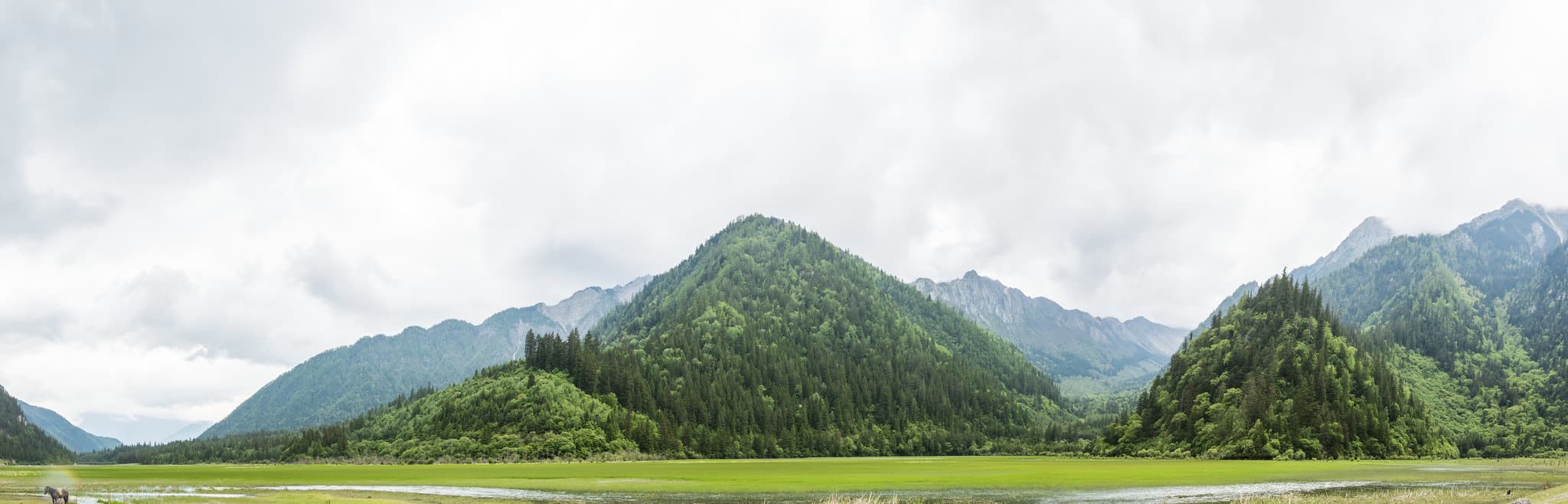
Jiuzhaigou Valley, a UNESCO World Heritage site, is a realm of fairy-tale landscapes. Maximizing your time amidst its turquoise lakes and multi-tiered waterfalls begins with choosing the right accommodation. Staying near the park entrance, particularly in the vibrant Zhangzha Town or the upscale Luneng Resort area, grants you the luxury of an early start before the crowds arrive. This curated selection focuses on properties that blend proximity with premium comfort, such as the exquisite Rissai Valley or the accessible Hilton Garden Inn. Whether you seek the ultra-luxury of a Ritz-Carlton Reserve or the trusted hospitality of Marriott, these stays ensure your journey into paradise begins the moment you step out the door.
Visiting Jiuzhaigou is a bucket-list experience, but the logistics of navigating this massive national park can be daunting. Choosing a hotel near the park entrance is the single best travel hack for this region. Properties like the Hilton Garden Inn Jiuzhaigou and the Grand Rezen Jiuzhaigou Resort offer the strategic advantage of minimal commute times. This means you can beat the tour buses to key attractions like Five Flower Lake or the Nuorilang Waterfall. Furthermore, luxury options like the InterContinental Resort Jiuzhai Paradise provide a sanctuary of relaxation with glass-domed atriums and hot springs, ensuring that your physical recovery after a day of hiking is as memorable as the views.
When selecting your base, two main areas dominate the luxury landscape:
Staying at these premier properties elevates the standard Jiuzhaigou trip. Expect amenities tailored to the high-altitude environment, such as oxygen enrichment systems in rooms at the Courtyard by Marriott Jiuzhaigou or heated floors. Culinary experiences are also a highlight, with hotels blending Sichuan spice with yak meat delicacies. Whether you are seeking the ultra-luxury of a Reserve property or the dependable comfort of Hilton and Marriott, staying near the entrance transforms a sightseeing trip into a seamless luxury vacation.
Hotels located in Zhangzha Town, such as the Hilton Garden Inn Jiuzhaigou and Grand Rezen Jiuzhaigou Resort, are among the closest options, often within a short driving or walking distance to the park ticket gates.
Rissai Valley, a Ritz-Carlton Reserve, is widely considered the most ultra-luxury property in the area, offering exclusive villas, Tibetan-inspired design, and personalized service in the Luneng area.
Yes, many premium hotels like the Courtyard by Marriott and Conrad Jiuzhaigou offer in-room oxygen supply systems or portable oxygen canisters to help guests acclimate to the high altitude.
Explore our complete curated list of luxury accommodations, from boutique hideaways to grand dames.
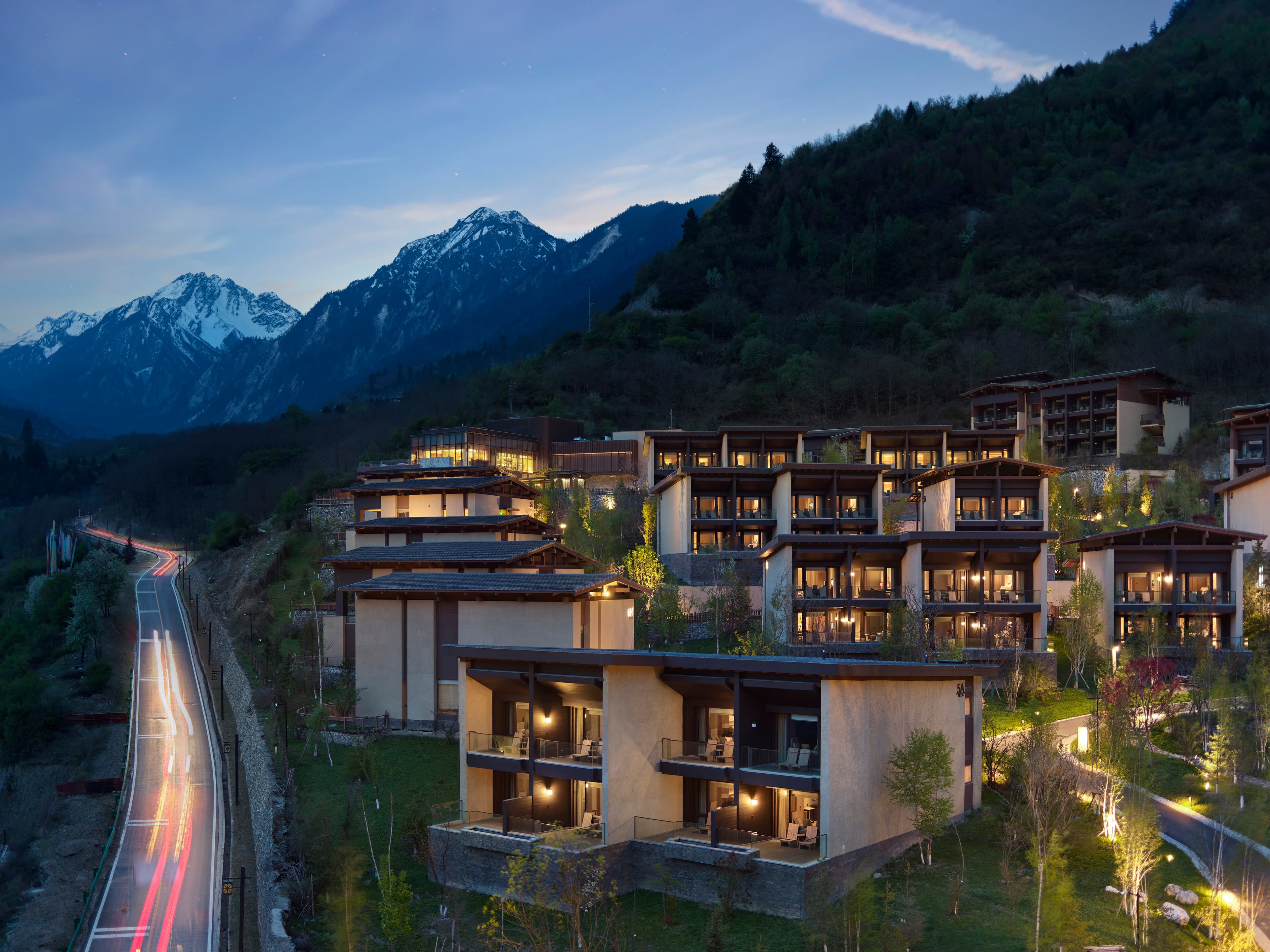
Explore All Jiuzhaigou HotelsForget the rustic, drafty homestays of yesteryear; the Conrad Jiuzhaigou, anchored in the glossy Luneng precinct, brings serious heat—literally, via heated floors—to the edge of the Tibetan Plateau. While the 12-kilometer drive to the National Park entrance builds anticipation, the property itself demands attention. Villas are scattered across the hillside like a modernist Tibetan village, meaning you’ll rely on the swift buggy service to reach your morning Tibetan Plateau breakfast at BAS.IN (do not skip the yak butter tea). Interiors eschew kitsch for slat-wood serenity and deep soaking tubs stocked with Byredo amenities—essential for defrosting after a day at the Long Lake. Dinner at M'EAT is non-negotiable; the open-fire grilled yak meat is the valley’s culinary peak, served on a terrace that feels miles from civilization. While the spa is currently under renovation, the silence of the private balconies offers its own form of healing. Service is eager, though the English proficiency varies—keep a translation app handy for complex concierge requests. It is a sophisticated, if slightly detached, basecamp for the modern explorer.
“Request a villa in the 'Upper Village' zone to be within walking distance of M'EAT and the terrace firepits; lower villas act as a wind tunnel and require a buggy for every meal.”
Insider TipAvg. Nightly Rate
187USD
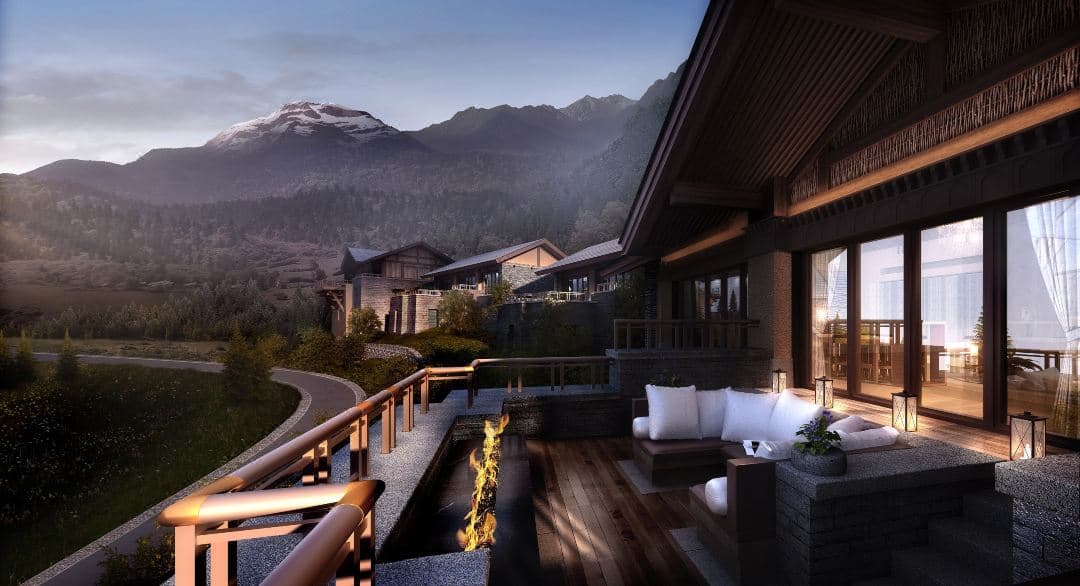
Forget the chaotic bus tours clogging the park entrance. Rissai Valley demands a different pace. Anchored in the quiet Luneng sector, this isn't merely accommodation; it is a masterclass in architectural restraint by the late Jaya Ibrahim and WATG. The structures mimic a traditional Tibetan village, devoid of gaudy signage and arranged in an 'endless knot' motif. Upon arrival, you aren't checked in; you are adopted by a 'Nieba'—a personal butler who orchestrates your existence via WeChat, from park logistics to pillow preferences. The villas avoid the usual beige hotel tropes, favoring timber and schist stone that frame the Minshan mountains through floor-to-ceiling glass. Dining here is serious business, recently earning the property China’s first-ever Three Michelin Keys. Skip the room service club sandwich and head to Bo Ri Village for the Family Style Tibetan Hot Pot, or watch chefs sear yak steak on Himalayan salt blocks at Cai Lin Xuan. It’s not flawless—staff English proficiency can be spotty, and the minibar policy is stingy after night one—but these are minor gripes. The Rissai Spa, with treatments utilizing local herbs and singing bowls, provides necessary decompression after hiking. This is the closest you’ll get to spiritual isolation while retaining 400-thread-count sheets.
“Ask your Nieba to book the Thangka painting session immediately upon arrival; the resident master is often fully booked days in advance.”
Insider TipAvg. Nightly Rate
1300USD
Forget the typical mountain lodge; the InterContinental Resort Jiuzhai Paradise is a destination in its own right—a surreal, glass-domed biosphere that feels like a Bond villain’s eco-lair in the best possible way. While the 25km drive to the Jiuzhaigou National Park gates requires some planning, the payoff is total immersion in a climate-controlled forest ecosystem that renders the outside weather irrelevant. The architecture is the main character here. Under the massive steel-and-glass atrium, you’ll find a fabricated village complete with stone walkways, black swans, and a distinct lack of wind chill. The rooms, featuring Tibetan stone fireplaces and balconies, lean into a rustic 2003 charm—expect heavy timber and localized textiles rather than minimalist chic. The hardware is showing its age (don't expect USB-C ports by the bed), but the vibe is undeniably cozy. Dining is an event: skip the western buffet and head straight to Shun Xing Restaurant for the signature Yak Meat Hot Pot, a savory necessity in this altitude. For unparalleled decompression, the Tianyu Spa is non-negotiable. Its 12 terraced pools, stacked like rice paddies under the glass dome, offer a hot spring experience without the freezing dash to the locker room. It’s not modern luxury; it’s nostalgic, grand-scale escapism.
“Request a room on a higher floor in the 'Tibetan Wing' facing the forest. The glass dome can trap noise from the lobby, so the outward-facing mountain view rooms offer superior silence and better morning mist views.”
Insider TipAvg. Nightly Rate
75USD
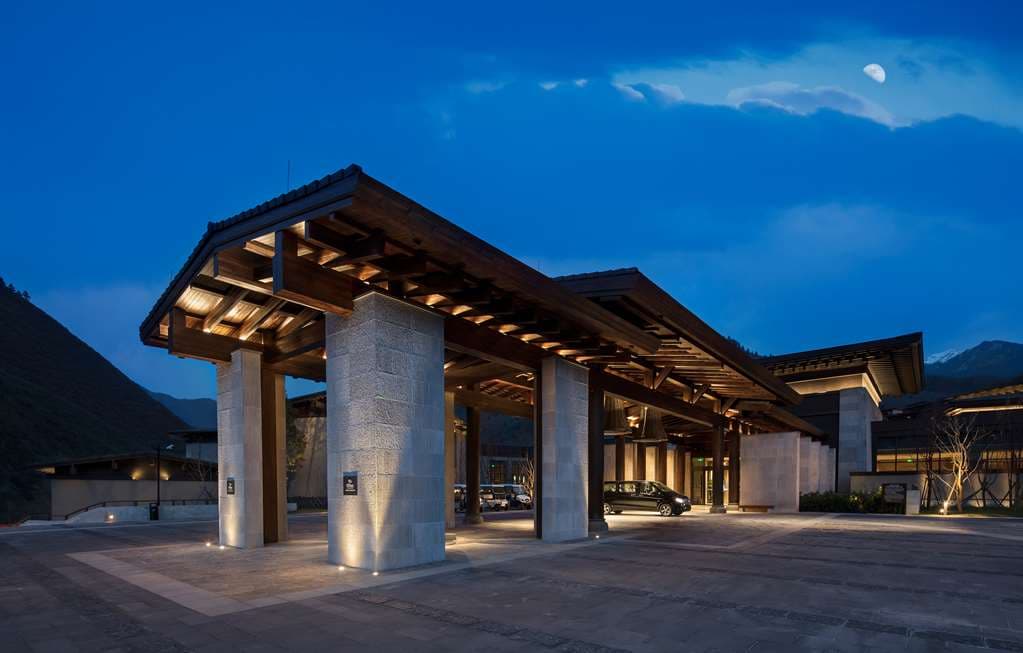
If you’re tackling the logistical beast that is Jiuzhaigou National Park, the Hilton Jiuzhaigou Resort isn't just a hotel; it’s a necessary strategic advantage. Located in the Luneng precinct—a purpose-built tourist village about 15 minutes from the park gate—this property trades the chaotic scrum of the valley floor for a polished, high-elevation sanctuary. The architecture commands attention with its heavy timber beams and sloping stone roofs, mimicking the region’s Tibetan vernacular without feeling like a theme park. Inside, the 46-square-meter base rooms are cavernous enough to scatter hiking gear without tripping. Ask for a high floor to clear the tree line; the views of the Min Mountains are sharp and imposing. Dining here is a requisite, not an afterthought, given the isolation. Skip the international buffet at OPEN and head straight to SIMMER for the Sichuan hot pot—the Yak Beef Platter is lean, gamey, and exactly what you need after 20,000 steps. While the lack of a pool is a surprising omission for a resort of this caliber, the Tibetan-themed spa compensates with foot massages designed specifically for hikers. It’s utilitarian luxury: reliable, heated to a fault, and impeccably serviced.
“The central heating is notoriously aggressive. Request a humidifier from the concierge immediately upon check-in to combat the dry high-altitude air.”
Insider TipAvg. Nightly Rate
104USD
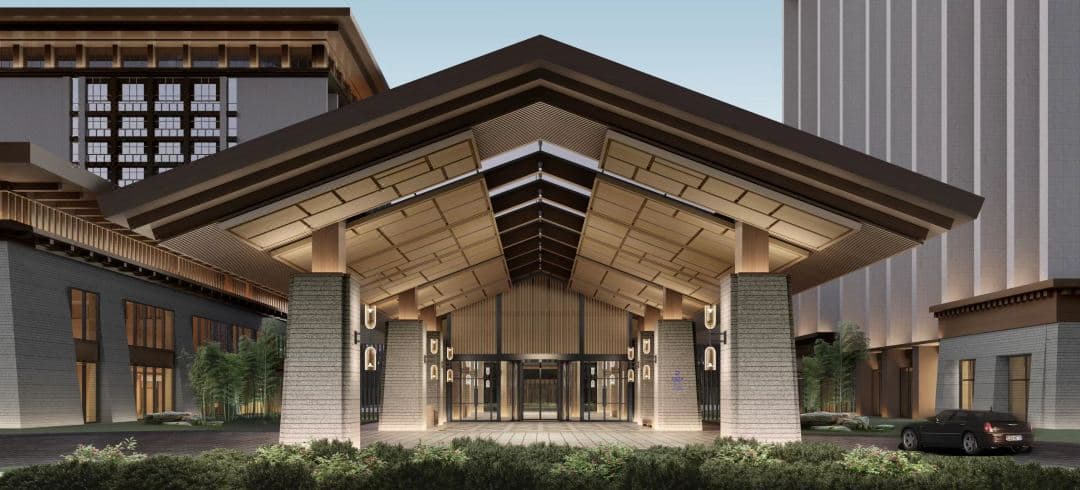
Ignore the map for a moment. Yes, the Delta Hotels by Marriott Jiuzhaigou is a 50-minute drive from the national park entrance. But in a region where ‘park-side’ often implies tired carpets and tour-group chaos, this property plays the long game. Located in Jiuzhaigou County (not the tourist village), it functions as a modern, high-spec sanctuary. The hardware is undeniably crisp—43-square-meter rooms smell of fresh timber, not damp wool, and the bathrooms feature soaking tubs essential for post-hike recovery. Dining here feels like a legitimate culinary investigation rather than a hotel obligation. The ‘Culture Pavilion’ serves a Yak Meat Hotpot that rivals local street vendors for heat and depth, without the questionable hygiene. Service is the real differentiator; Duty Manager Tylor runs the floor with a precision that saves itineraries, a rare find in the hinterlands. While the daily shuttle to the waterfalls requires an early alarm, the trade-off is returning to a space that feels managed, maintained, and mercifully quiet.
“The underground garage lacks a direct elevator to the lobby—drop your bags at the main entrance before parking to avoid hauling luggage up concrete stairs.”
Insider TipAvg. Nightly Rate
57USD
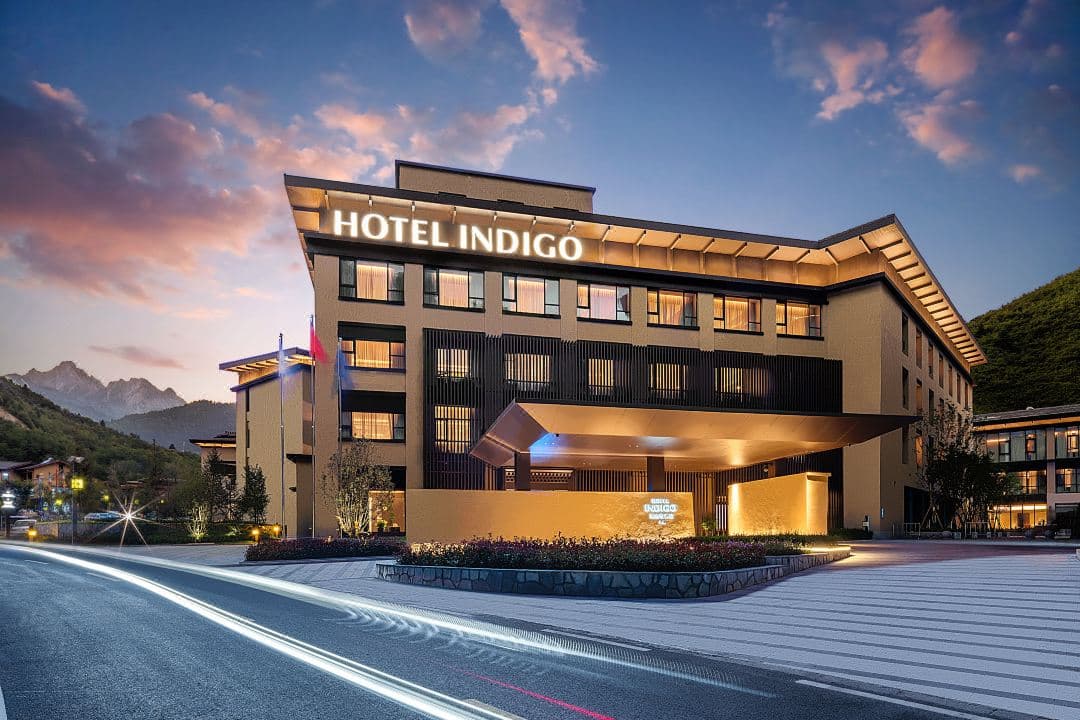
Forget the chaotic scrum of hostels clustering the national park gate; the smart money has migrated 15 minutes down the road to Luneng Town. Hotel Indigo Jiuzhai operates less like a standard lodge and more like a high-altitude curator of culture. The arrival experience is theatrically moody—the lobby isn't lit by a generic chandelier but dominated by a ceiling structure mimicking an eagle’s wing, flanked by a Book Pavilion where hanging woodcuts replace standard wallpaper. It creates an immediate sense of place without tripping into theme-park territory. Inside the spacious 40-square-meter entry-level rooms, the design team has smartly avoided beige neutrality in favor of vibrant Tibetan textiles and dark wood accents that feel warm, not kitschy. The 'Neighborhood Café' serves a Motuo Stone Pot Chicken that justifies the booking alone—a bubbling, savory antidote to the biting mountain air. While the 12-kilometer distance to the Jiuzhaigou entrance necessitates a shuttle, the trade-off is a profound, upscale quiet. Instead of tour bus engines, your soundtrack is the crackle of the courtyard bonfire. Here, the staff—often praised for butler-level intuition—orchestrate evening socials and costume photo sessions that feel surprisingly genuine. It’s a sophisticated base camp that respects the region’s heritage enough to modernize it without erasing its soul.
“Request a courtyard-facing room on a higher floor to watch the evening bonfire rituals from your balcony without the direct smoke.”
Insider TipAvg. Nightly Rate
81USD
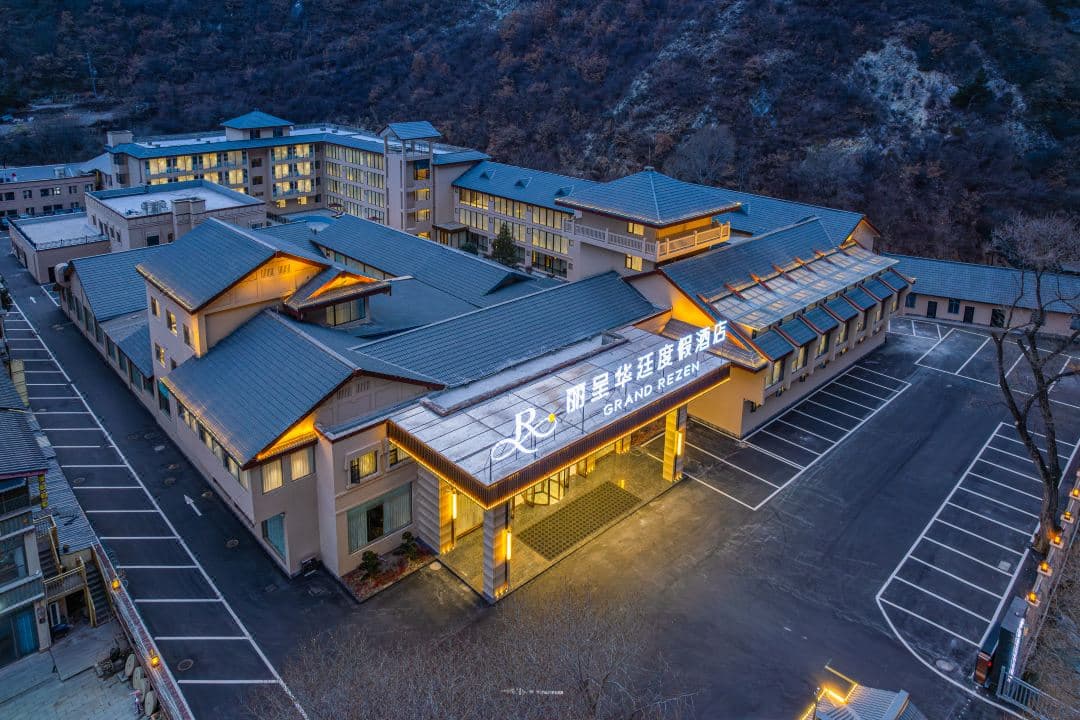
Forget the tired tropes of 'hidden gems' or 'sanctuaries'. The Grand Rezen Jiuzhaigou Resort plays a different game entirely: strategic superiority. Situated on the edge of Bianbian Street, it offers the kind of logistical advantage that seasoned travelers crave—proximity to the park entrance that allows you to beat the morning rush without the dawn patrol stress. The design eschews the predictable log-cabin pastiche for a sharper, Modern Chinese aesthetic; think high-ceilinged lobbies and polished stone tempered by warm, tactile Tibetan textiles. The rooms are a masterclass in climate defiance. In a valley where evening chills are sharp, the floor heating and electric blankets aren't just amenities; they are necessities that elevate the stay from 'bearable' to 'womb-like'. While the gym is functional, the real wellness draw is the heated indoor pool, clad in calming blue tiles that contrast beautifully with the rugged mountain backdrop. Culinary life here centers on Huatingxuan Restaurant, where the signature Yak Meat Soup Pot is less a meal and more a restorative ritual—broth so rich it feels medicinal. For a lighter interlude, the Time Corridor Cafe delivers afternoon tea with floor-to-ceiling views that frame the valley like a living canvas. While the service can sometimes struggle with English nuances compared to the international chains down the road, the personalized butler service bridges the gap, often surprising guests with in-room herbal foot baths—a distinct local luxury that no western spa menu can replicate. It’s a bustling basecamp, yes, but one that knows exactly how to spoil you after a day on the trails.
“Skip the standard taxi queue; ask your butler to arrange the herbal foot bath for 8:00 PM, and request a room on the 3rd floor or higher to distance yourself from the Bianbian Street evening buzz.”
Insider TipAvg. Nightly Rate
41USD
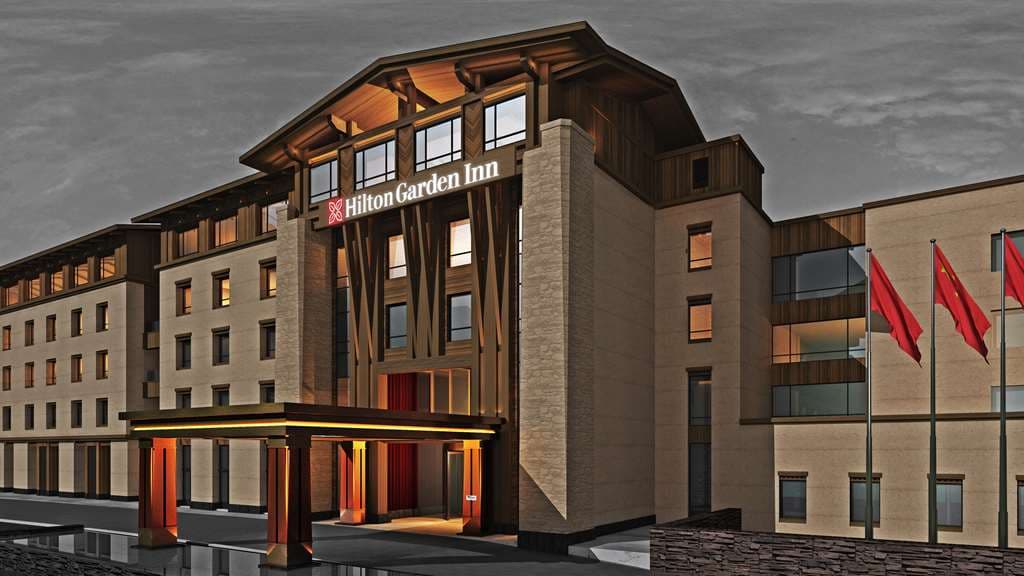
While rookies scramble for aging guesthouses at the park gate, the seasoned traveler knows the smartest move is a tactical retreat. Located 12 kilometers away in the Luneng development, the Hilton Garden Inn offers a rare commodity in this region: predictable, high-spec comfort. The aesthetic is 'Modern Tibetan Lodge'—think timber beams and high ceilings without the kitsch. It acts less like a hotel and more like a decompression chamber after a day jostling with crowds at Five Flower Lake. The real draw isn't just the reliable heating (essential in autumn); it's the whimsical sight of resident alpacas grazing on the resort lawns, a surreal amenity that delights families and exhausted hikers alike. Dining is surprisingly robust: The Garden Grille delivers a signature Sichuan Noodle dish with enough chili oil to jumpstart your circulation for a 6 AM start. While the absence of an on-site pool is notable, the service makes up for the hardware gaps. Staff members like Quinn are legendary for their proactive logistics, managing the difficult taxi hail for return trips with military precision. It is a sophisticated, quiet sanctuary that proves distance is actually a luxury.
“Skip the crowded breakfast rush; ask Quinn at the front desk to arrange a 'to-go' box the night before, then grab a local Butter Tea from the T&Co Lobby Lounge while you wait for your ride.”
Insider TipAvg. Nightly Rate
66USD
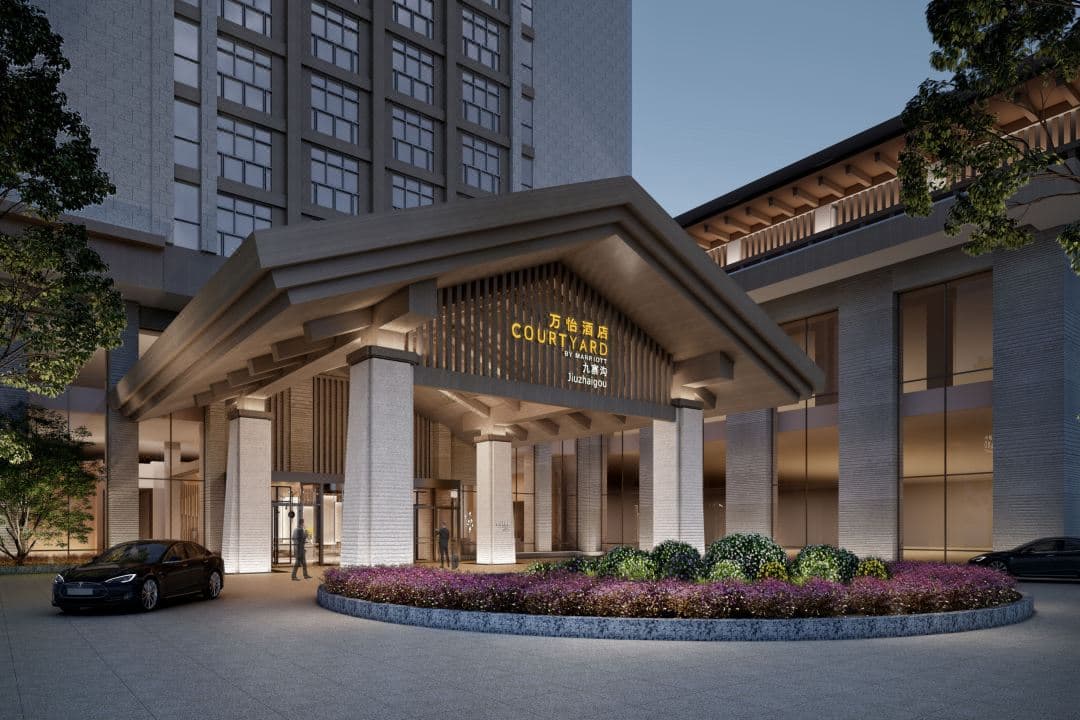
Forget the tired tourist traps clinging to the park gates. The real insider move in Jiuzhaigou is the strategic retreat to the county seat, where the Courtyard by Marriott has delivered a blast of reliable, high-spec modernity since its August 2023 debut. While the masses jostle in aging lodges, you are sinking into crisp, 400-thread count linens in a room that actually smells new. Design-wise, it is a study in wood-slatted serenity and high ceilings—a stark, chic contrast to the rugged Tibetan peaks outside. The all-day dining at 'Pavilion' goes beyond the standard hotel buffet; their Sichuan spicy specialties and evening BBQ grill are legit enough to keep you on-site after a marathon hike. Service here is the secret weapon—front desk stars like Tylor and Lindsay are rightfully praised for mapping out hidden local eats, turning a standard check-in into a concierge masterclass. The 45-kilometer drive to the park requires an earlier alarm, but the trade-off is a silent night’s sleep and a shower that delivers consistent heat and pressure.
“Request a 'Deluxe Panorama' room facing the Baishui River for misty morning views, and ask Tylor at the front desk to pin the best local yak hotpot spot on your map.”
Insider TipAvg. Nightly Rate
41USD