No. 01
2-204 2 Kiyomizu Kyoto City JapanKyoto599 verified reviews
9
.4
Bitvoya Edit
Layering imagery, place, and detail before the page opens.
Kyoto is a living museum where the whispers of the Heian period harmonize with the bold statements of contemporary architecture. In our curated collection, 'Architectural Marvels,' we explore properties that redefine the skyline while honoring the past. From the transformed elementary school that is now The Hotel Seiryu in the historic Higashiyama district to the Zen-minimalism of Aman Kyoto hidden in the forests of Arashiyama, these hotels are destinations in themselves. We invite you to experience the seamless integration of traditional machiya aesthetics at Sowaka and the striking modernism of The Thousand Kyoto near the station. This is where Japanese heritage finds its future.
Kyoto serves as the ultimate canvas for architects, challenging them to innovate within strict preservation codes. The result is a stunning portfolio of hotels where Pritzker Prize-winning designs sit comfortably beside UNESCO World Heritage sites. Choosing a stay from this collection means engaging with a dialogue between eras—where the sukiya-zukuri style of Banyan Tree Higashiyama Kyoto complements the sleek, theatrical entrance of The Thousand Kyoto. It is not just about luxury; it is about inhabiting art.
Expect a multi-sensory experience. Hotels like Sowaka revive the *machiya* townhouse concept with contemporary comforts, allowing you to walk on heated floors while looking out at moss gardens that have matured for decades. At Hyatt Regency Kyoto, expect Super Potato's legendary interior design that weaves old kimono fabrics into modern wall tapestries. These properties offer more than sleep; they offer an immersive lesson in Japanese aesthetics, from the manipulation of light (*shadow and light*) to the concept of *ma* (negative space).
The Thousand Kyoto is the top choice for modern architecture, featuring a striking minimalist design with a grand staircase and light-filled atrium located right next to Kyoto Station.
Yes, The Hotel Seiryu Kyoto Kiyomizu is a converted 1930s elementary school, and Sowaka creates a luxury ryokan experience from a restored 100-year-old machiya townhouse.
Aman Kyoto in Arashiyama is highly exclusive, designed by Kerry Hill to blend seamlessly into a secret garden forest, offering a secluded and Zen-inspired architectural masterpiece.
Explore our complete curated list of luxury accommodations, from boutique hideaways to grand dames.
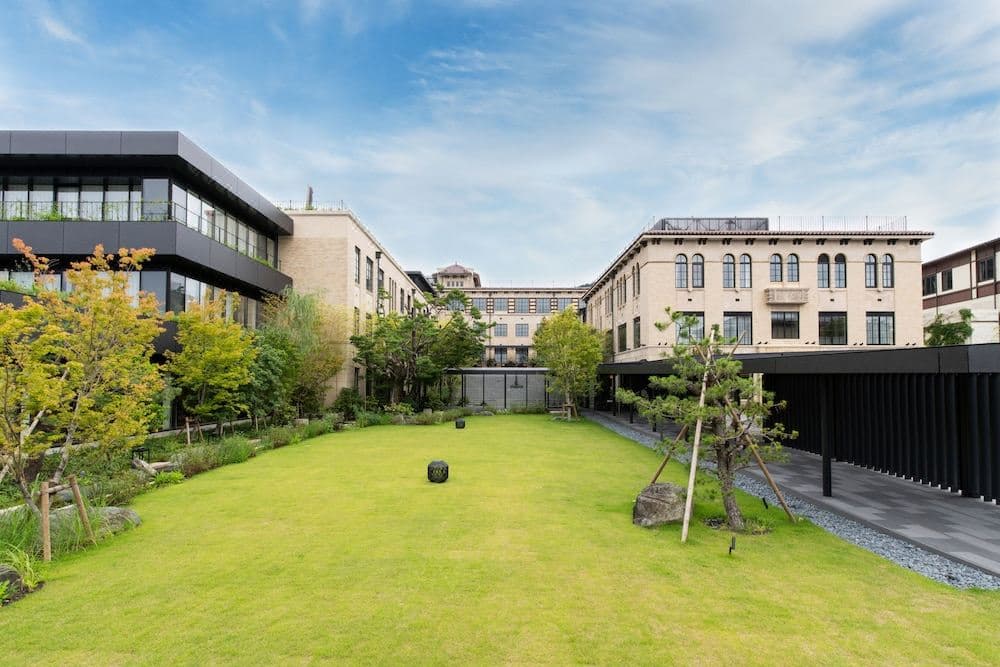
Explore All Kyoto HotelsForget everything you remember about elementary school. At The Hotel Seiryu Kyoto Kiyomizu, the only lesson is indulgence. Housed in the 1933 Kiyomizu Elementary School, this property—recently crowned with a Michelin Key in 2024—masterfully juxtaposes Imperial Crown Style architecture with glass-walled modernism. The "classrooms" are now minimalist sanctuaries featuring 400-thread count linens and expansive views of the Yasaka Pagoda, a stark, serene contrast to the tourist-clogged Higashiyama streets below. The Guest Lounge is the valedictorian here, pouring free-flow champagne and local sake that beats any cafeteria milk carton. Dining is equally studious: Benoit Kyoto (an Alain Ducasse outpost) serves a textbook Pâté en Croûte, while the rooftop bar, K36, offers the city’s best sunset vantage point alongside a signature K36 Gin & Tonic. While the lack of a pool is a demerit, the private open-air baths soak away the gripe. It’s a nostalgic, sophisticated masterclass in hospitality. Verdict: A+ for design.
“Book the 'Kiyomizu' private bath at dusk. It features an open-air tub with a direct sightline to the Yasaka Pagoda, minus the crowds. Also, don't miss the new Thursday evening Maiko performances in the lounge.”
Insider TipAvg. Nightly Rate
600USD
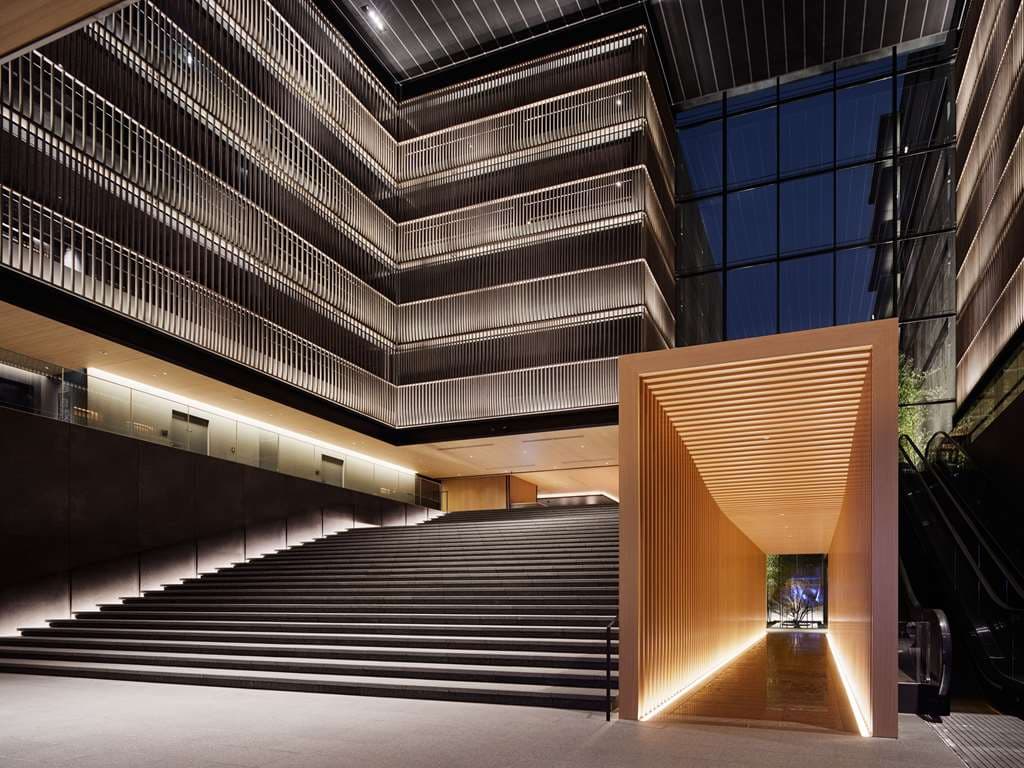
If Kyoto Station is a sensory assault of steel and shinkansen announcements, The Thousand Kyoto is its monastic antidote. Located a mere 120 seconds from the turnstiles, this structure eschews the expected gilded lobby for a soaring, light-chasing atrium that feels less like a hotel and more like a deconstructed temple. The architects call it 'Bio-Realism'—using wind and natural light as building materials—but you’ll just call it a relief. The rooms are shockingly generous for Japan, starting at 37 square meters of minimalist restraint: low-slung furniture, soundproofing that renders the bullet trains silent, and iPad controls that (mostly) behave. It’s not a ryokan, and with no pool, it’s not a resort. But the bedrock baths in the spa offering charcoal treatments make up for the lack of a swim. Dining is equally serious: SCALAE’s 'Plant Forward' menu turns local vegetables into architectural plating, while KIZAHASHI delivers dashi with historical depth. It’s the perfect, sharp-edged base for the design-conscious traveler who wants to beat the crowds to Fushimi Inari.
“Book a 'Premier' room on a high floor facing the station for a mesmerizing, silent view of the bullet trains gliding in—luxury trainspotting at its finest.”
Insider TipAvg. Nightly Rate
235USD
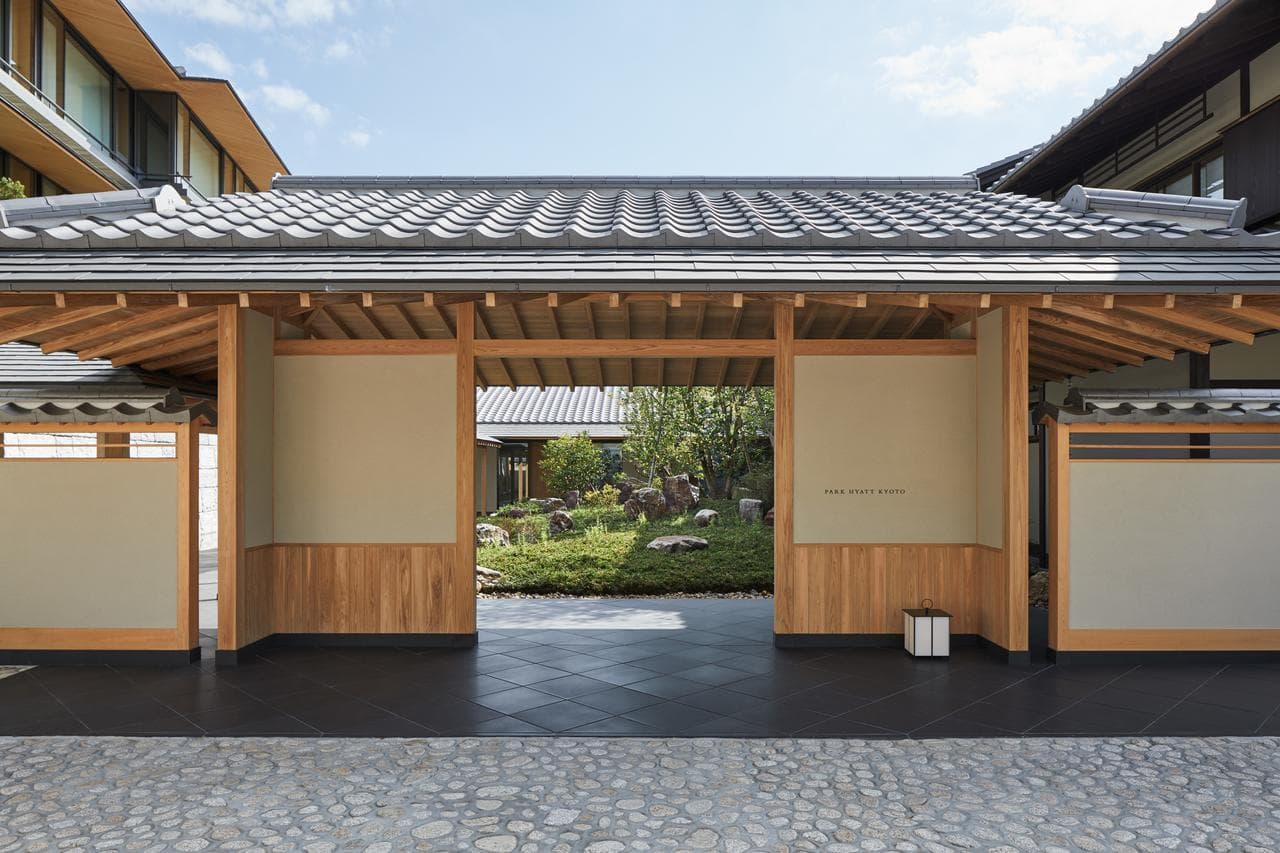
Kyoto does not shout; it whispers. The Park Hyatt Kyoto, a low-rise phantom engineered by Takenaka Corporation and Tony Chi, has mastered this art of silence. Perched at the crest of the sloping Ninenzaka, the hotel is an architectural sleight of hand—its tiled gabled roofs dissolving into the Higashiyama skyline so seamlessly you might miss it entirely. That is, until you step inside. The interiors are a study in tactile restraint: warm tamo wood paneling, grey basalt stone, and floor-to-ceiling glass framing the 1,400-year-old Yasaka Pagoda like a living painting. In the rooms, the details are exacting—Dyson Supersonic dryers, Le Labo amenities (specifically the Hinoki scent in some suites, or Aesop in others), and deep soaking tubs that demand a bottle of sake. Dining is equally theatrical. At Yasaka, the teppanyaki isn't just dinner; it’s performance art featuring Ohmi beef tenderloin that ruins you for all other steaks. For a nightcap, the Kohaku bar serves 'Ki No Bi' gin cocktails with a sunset view that justifies the steep room rate. The verdict? It’s a bank-breaking indulgence. But for a property that recently snagged a Michelin Key and a spot on the World’s 50 Best list (No. 27), it delivers a rare commodity: effortless, historic immersion.
“Skip the street-facing rooms if you value privacy; instead, book a 'Pagoda House' room on a higher floor for the iconic view of the Yasaka Pagoda without the noise of tourists below.”
Insider TipAvg. Nightly Rate
1500USD
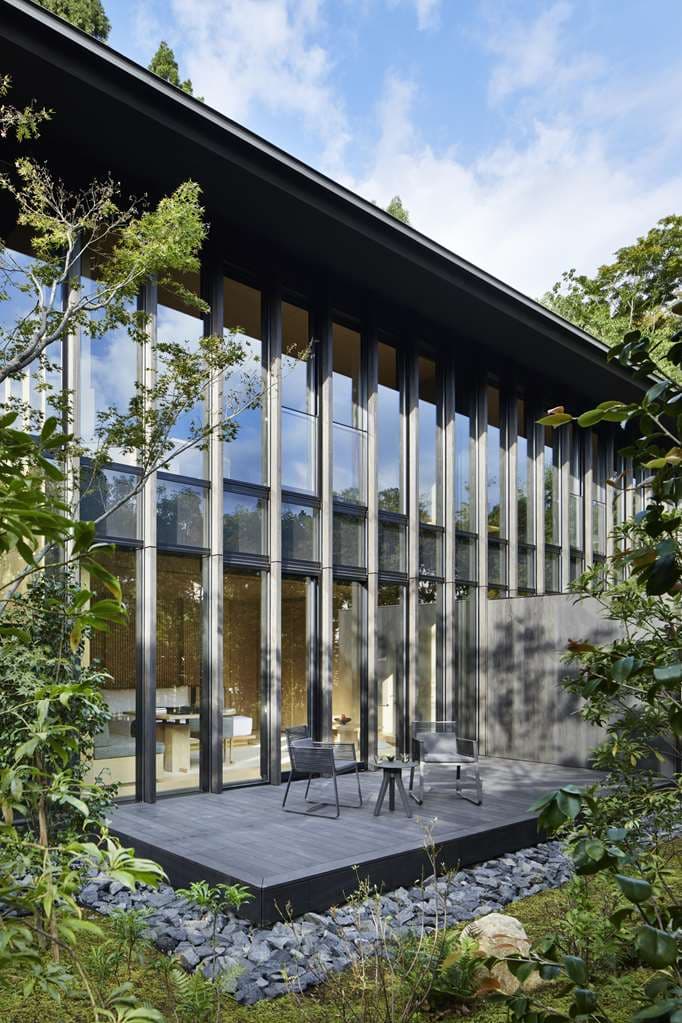
Forget the usual 'Zen' clichés; Aman Kyoto is a lesson in architectural rigor softened by 72 acres of untamed forest. Originally intended as a textile museum, the site sat dormant for decades until the late Kerry Hill placed his final, minimalist stamp on it. The result is a monastic scattering of black slate, zinc, and cedar pavilions that feel less like a hotel and more like a fortress of solitude. Inside the Susuki guest rooms, the aesthetic is uncompromisingly linear—floor-to-ceiling washi screens and tatami mats frame the garden like living art. The highlight is the square Hinoki cypress bathtub, deep enough to submerge in while watching the maples sway. There is no swimming pool—a deliberate omission that steers guests toward the mineral-rich, outdoor onsen, a rarity for Kyoto luxury properties. Dining at Taka-an (awarded Two Michelin Keys in 2024) is a serious affair of seasonal kaiseki, while The Living Pavilion offers a looser, Western-inflected menu featuring charcoal-grilled Kyoto Wagyu. It is exorbitantly expensive and geographically isolated, but for those seeking a masterclass in negative space and silence, it is without peer.
“Request a 'Garden Picnic' hamper for lunch instead of dining in the pavilion; staff will set up a secluded spot on the mossy grounds away from other guests.”
Insider TipAvg. Nightly Rate
2300USD
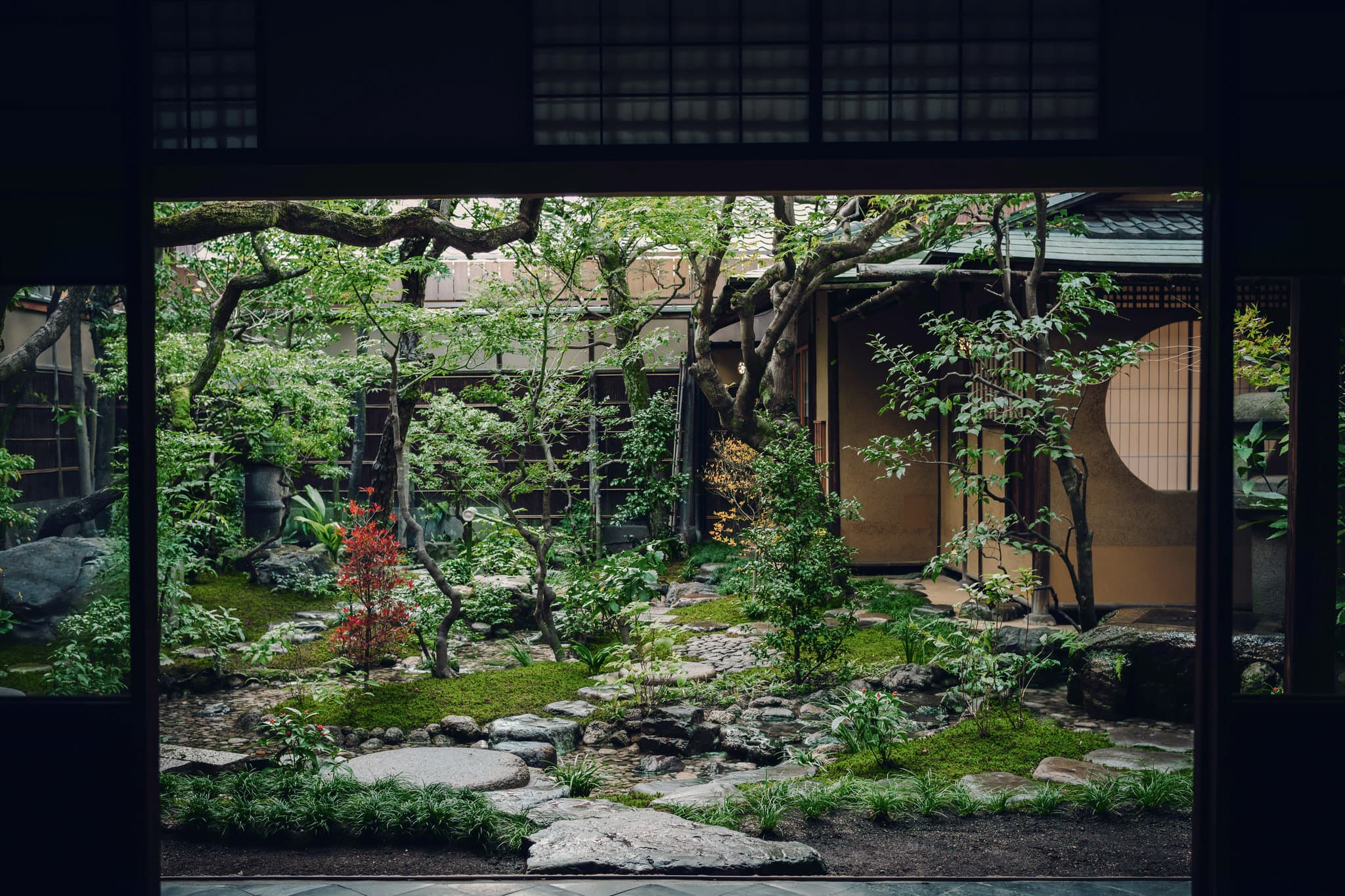
In a district often paralyzed by its own preservation, Sowaka offers a jolt of architectural dualism that earned it a coveted Michelin Key in 2024. Located a mere 350 meters from the Yasaka Shrine, the property is a study in contrasts. The entrance, a discreet stone threshold draped in a white noren, leads into a lovingly resurrected 1920s ryotei (high-end restaurant) where Taisho-era aesthetics rule—think dark lacquer, sliding fusuma, and the scent of aged wood. Yet, a turn down the corridor reveals the Annex: a minimalist spine of glass and cedar designed by architect Shigenori Uoya. It is a physical timeline, rejecting the cliché of 'blending' styles in favor of distinctly juxtaposing them. The accommodation experience is equally tactile. In the Main Building, creaking floorboards denote authenticity, while Annex suites offer hushed, hermetic luxury with Dyson hair dryers, Iwata Larkowl mattresses, and deep hinoki cypress tubs that draw water directly from the property’s own underground spring. Amenities by Kazurasei Shinise—a local purveyor of camellia oil—replace the usual generic bottles. Dining at Gion Loka is mandatory; the kitchen’s modern kaiseki approach shines in the signature Yuba chawanmushi and truffle-laced sashimi, served with a reverence that borders on religious. With a strict no-children policy in the main quarters, the silence here is heavy and expensive—exactly what you pay for in Gion.
“Book Room 109 to frame the seasonal foliage through its heart-shaped 'Inome' window—a feature often found in temples to ward off evil.”
Insider TipAvg. Nightly Rate
515USD
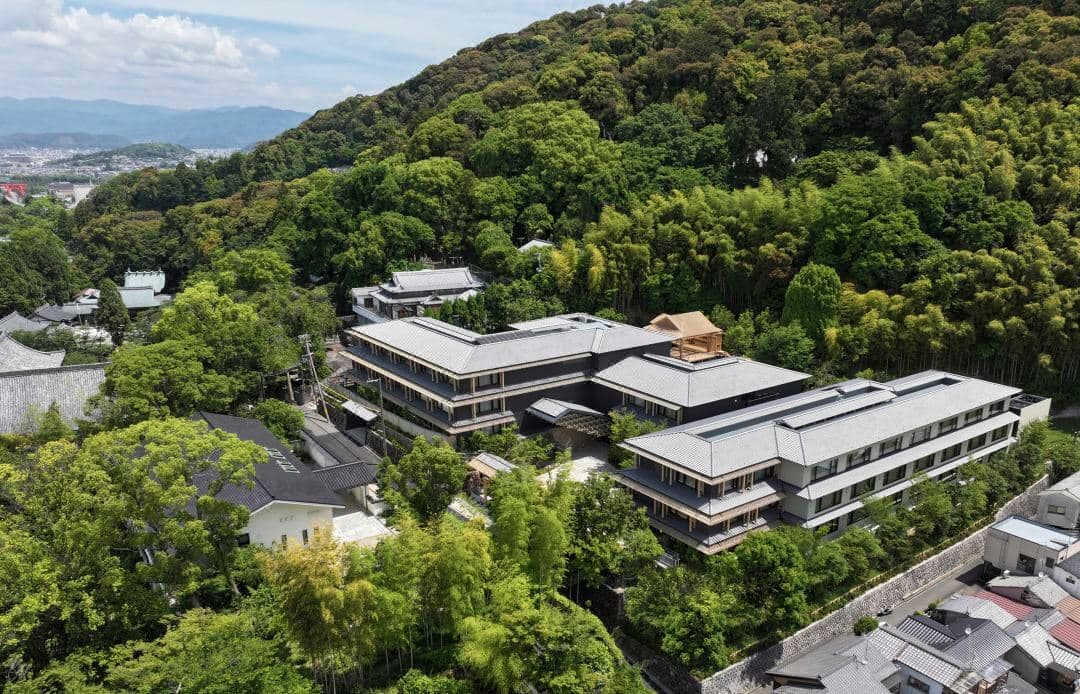
Forget the tourist crush of Sannenzaka just meters away; inside Banyan Tree Higashiyama, the silence is heavy, theatrical, and deliberate. Architect Kengo Kuma has anchored this property not with a lobby chandelier, but with a fully functional Noh stage—a spectral structure of interlocking cypress that dictates the hotel’s entire mood: 'Yugen' (mysterious depth). The 52 rooms, designed by Yukio Hashimoto, shun the predictable beige hotel palette for moody timber and gold leaf accents. The real headliner isn't the thread count, but the smell of the Hinoki wood bathtubs found in every room—and the fact that select suites draw actual natural hot spring water, a logistical coup in this protected district. Dinner at Ryōzen is a serious affair of seasonal Kaiseki, where the aged dashi broth carries a smokiness that lingers longer than the staff’s occasionally hesitant service (a forgivable symptom of its recent debut). While the lack of a pool might deter some, the gender-separated public onsen feels more authentic to the postcode. It is a monastic, albeit ultra-expensive, retreat for those who prefer their luxury whispered.
“Book the 'Onsen Retreat' category for a private natural hot spring bath on your balcony, or visit Bar Ryōzen for their flight of 30 local sakes—best enjoyed after the crowds at Kiyomizu-dera dissipate.”
Insider TipAvg. Nightly Rate
550USD
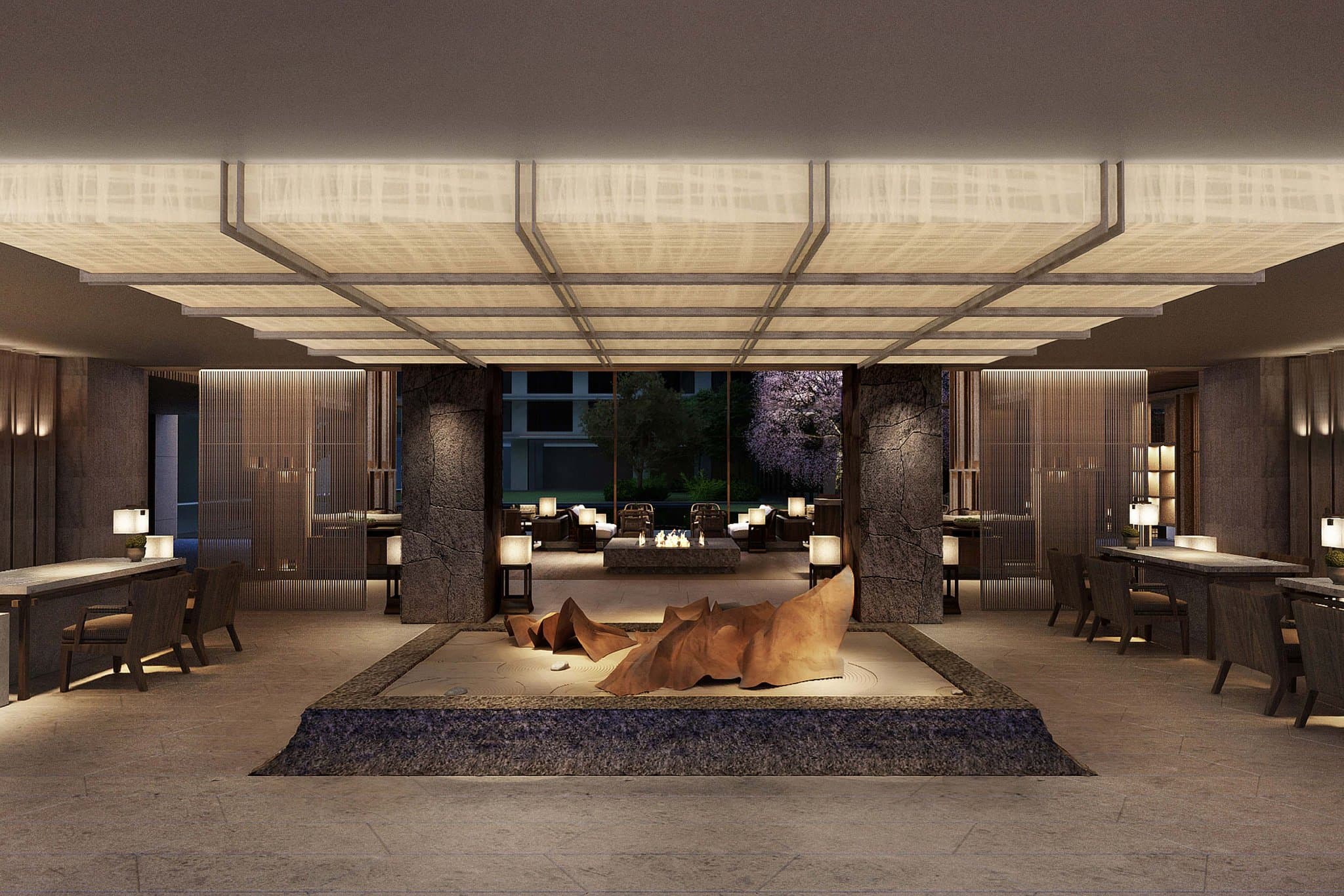
In a city fixated on the past, Hotel The Mitsui Kyoto doesn't just display history; it forces you to walk through it. Arrival means crossing the threshold of the restored 1703 Kajiimiya Gate, a brooding, timber-framed transition from the street to interior designer André Fu’s sleek interpretation of 'Teioku Ichinyo' (the unity of garden and house). The lobby feels less like a check-in desk and more like a widescreen lens framing the central courtyard, where a weeping cherry tree commands the view. Rooms forgo the predictable tatami clichés for a sharper, modern edge—think moss-green headboards, natural walnut finishes, and bathrooms stocked with locally crafted hinoki-scented amenities. The basement Thermal Spring Spa is the architectural heavy hitter here. Unlike the claustrophobic tubs of traditional ryokans, this is a cavernous, stone-clad subterranean pool fed by a 1,000-meter-deep spring, demanding a swimsuit and delivering a cinematic sense of scale. Dining offers a similar juxtaposition. While 'FORNI' turns out Roman-style pizza from an Okudosan clay oven, the signature 'TOKI' strips French cuisine down to its water-based essence with its 'fond' technique. Service is polished, though the younger staff occasionally lack the telepathic anticipation of the old-guard ryokans. At this price point, you are paying for the atmosphere—a rare, successful collision of the Imperial aristocracy and modern design.
“Book the 'Garden View' rooms specifically for the weeping cherry tree vista. Also, the Thermal Spring requires a swimsuit—pack one to avoid the loaner gear.”
Insider TipAvg. Nightly Rate
1005USD
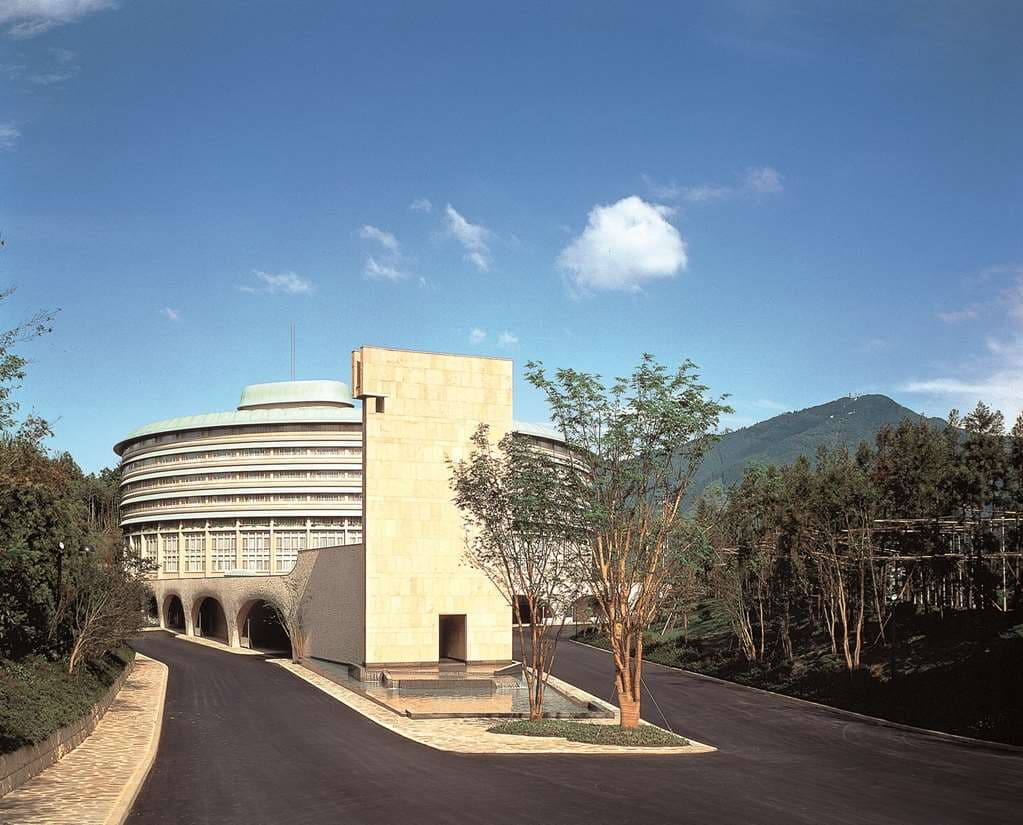
While the tourist hordes battle for selfie space in Gion, a different kind of drama unfolds in the northern Rakuhoku district. The Prince Kyoto Takaragaike isn't just a hotel; it is the final, sweeping statement of Togo Murano, the godfather of Japanese modernism. Built in 1986, the structure rejects the rigid grid of the city, opting instead for a fluid, oval doughnut shape that wraps protectively around a central Japanese garden. It is architectural theatre. Inside, the obsession with curvature borders on the fanatical. From the velvet-lined lobby seating to the spiraling staircases, hard angles are virtually non-existent. The rooms are anomalies for Kyoto—starting at a generous 36 square meters—and while the decor retains a heavy, late-Showa era patina (think analog controls and carpeted hushes), the sheer volume of space is a luxury. Dining is headlined by Main Dining ITO-ZAKURA, where the French technique is rigorous, serving charcoal-grilled Wagyu that justifies the trek uptown. Service is old-school: white gloves, deep bows, and an almost unnerving anticipation of your needs. Verdict: It feels less like a contemporary hotel and more like a well-preserved diplomatic retreat. If you demand proximity to nightlife, look elsewhere. If you want to sleep inside a piece of architectural history surrounded by silence, this is your sanctuary.
“Skip the standard garden view. Request a 'Park View' room on a high floor (6th or above) to see the mist rising off Takaragaike Pond and the wild deer grazing at dawn.”
Insider TipAvg. Nightly Rate
67USD
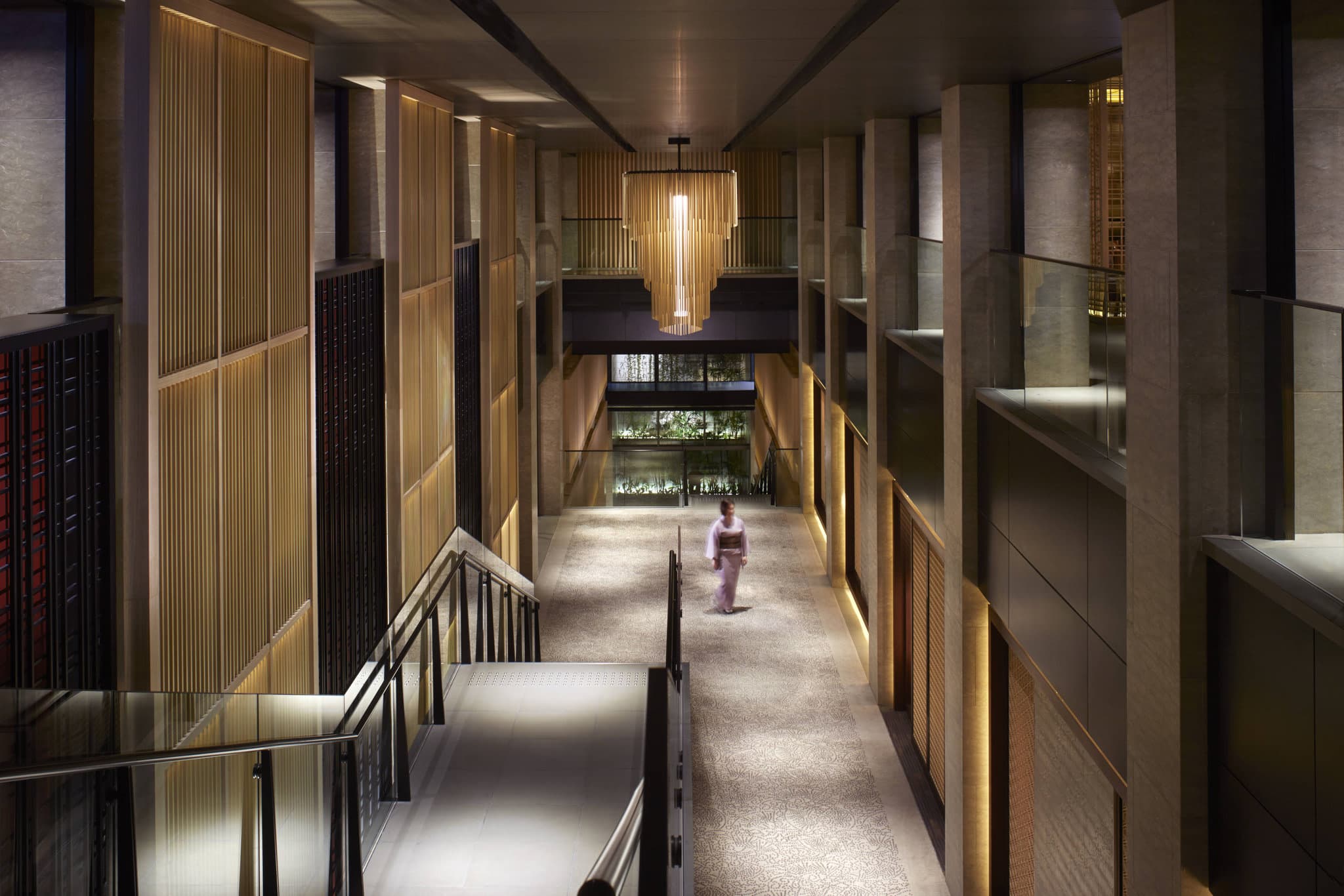
If the Kamogawa River is the soul of Kyoto, The Ritz-Carlton is its luxurious heartbeat. Designed by the visionaries at Nikken Sekkei and Peter Remedios, this property transcends the typical five-star definition, establishing itself as the definitive 'modern ryokan.' The arrival experience is a study in *Miyabi* (courtly elegance), transitioning into moody *Yugen* corridors lined with vertical lattice screens that filter light like traditional *washi* lanterns, creating a shadow-play that mimics the city’s ancient alleys. Inside the guest rooms, the design genius lies in the *engawa*—a sun-drenched window-side veranda that frames the Higashiyama mountains, perfect for sipping matcha. The hotel has wisely updated its bath amenities to **Diptyque’s Philosykos**, a sophisticated fig scent that complements the **600-thread count linens** and retro-chic **Tivoli Audio** radios. Dining is a destination in itself. At **Tempura Mizuki**, the Michelin-starred chefs elevate frying to an art form, using light safflower oil to crisp seasonal vegetables at a stately granite counter. For breakfast, the collaboration with **Pierre Hermé** is legendary; the rose-scented Ispahan croissant is non-negotiable. While the **20-meter indoor pool** lacks a jacuzzi and views, the **ESPA** treatments using local bamboo offer a tactile remedy. Despite aging technology controls, the service—from the curbside greeting to the **Technogym**-equipped fitness center—remains flawlessly intuitive.
“Prioritize a Grand Deluxe Kamogawa River View room. The lower-floor Courtyard rooms suffer from privacy issues where pedestrians can peer in—a rare design oversight in an otherwise flawless property.”
Insider TipAvg. Nightly Rate
871USD
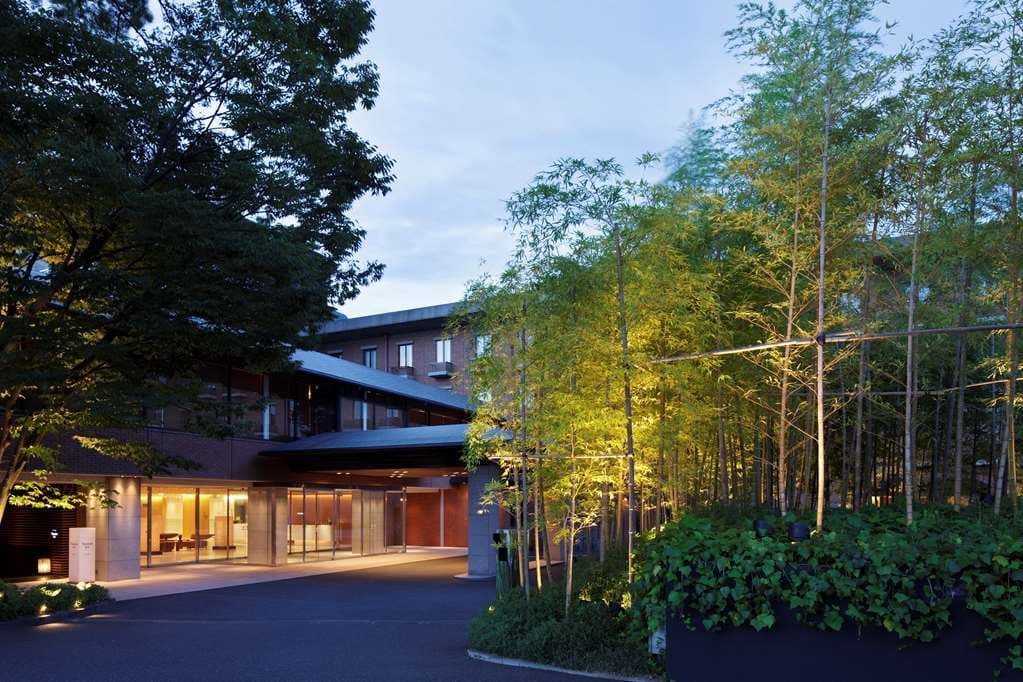
While the Park Hyatt Kyoto steals recent headlines with its astronomical rates, the Hyatt Regency Kyoto remains the thinking traveler’s sanctuary. Celebrating nearly two decades of operation, this property is the definitive showcase of Super Potato (Takashi Sugimoto) design. The lobby is a masterclass in spatial tension, where colossal wooden latticework meets walls inlaid with antique kimono fabrics preserved in acrylic—a literal suspension of history. Rooms here eschew the generic 'international beige' for low-slung furnishings and headboards featuring that signature kimono textile work, grounding you firmly in Higashiyama. Dining is a highlight, not an afterthought; at Touzan, the charcoal-grilled Wagyu tenderloin is a smoky revelation, best enjoyed with a view of the rock garden. While the location demands a taxi for downtown access (it’s a 1.5km trek to Kyoto Station), the trade-off is silence and proximity to the Sanjusangendo Temple next door. The service remains unmatched—concierges here pull reservation rabbits out of hats that other hotels can’t find. It is aging, yes, but like the vintage textiles in its walls, it does so with immense grace.
“Book a session at Riraku Spa for the 'fermented hinoki powder bath'—a dry, heated sawdust treatment that smells divine and cures jet lag faster than espresso.”
Insider TipAvg. Nightly Rate
208USD