No. 01
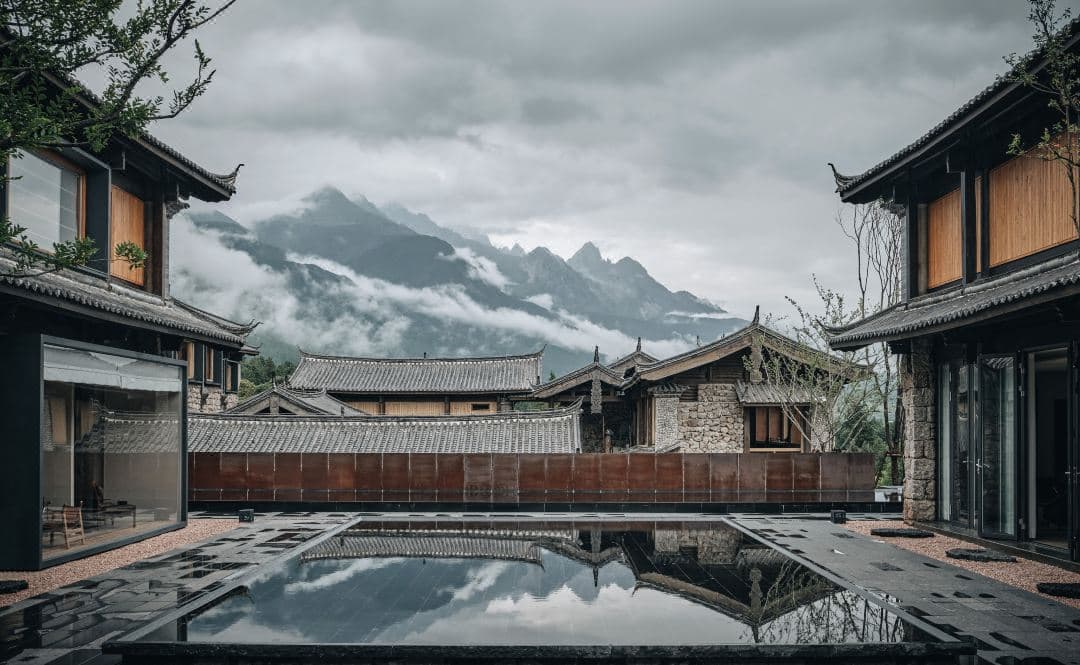
99 Yanjiao Village Lijiang City ChinaLijiang553 verified reviews
9
.8
Bitvoya Edit
Layering imagery, place, and detail before the page opens.
Lijiang is not merely a destination; it is a dialogue between the imposing Jade Dragon Snow Mountain and the intricate craftsmanship of the Naxi people. In this curated collection, we explore properties that have masterfully reinterpreted traditional 'Sanheyuan' courtyards and timber framing for the modern luxury traveler. From the bustling lanes of Dayan Ancient Town where Amandayan stands as a guardian of heritage, to the quiet artistic solitude of Baisha Village home to Tsingpu Baisha Retreat, these hotels are structural masterpieces. They offer a seamless blend of vernacular materials—grey bricks and local pine—with contemporary amenities, providing a gateway to Yunnan's soul.
Lijiang offers a rare architectural vernacular that has survived centuries. The 'Modern Naxi' style preserves the structural integrity of timber framing without nails and the iconic curved rooflines, while introducing floor-to-ceiling glass to frame the Jade Dragon Snow Mountain. Staying in properties like Hylla Vintage Hotel or Songtsam Linka isn't just about accommodation; it's an immersion into a living history where design facilitates a spiritual connection with nature.
Expect interiors that balance rustic charm with high-end sophistication. Naxi courtyards (Sanheyuan) foster a sense of community and privacy simultaneously. You will find intricate wood carvings, local Dongba paper art, and heated stone floors. Service in these luxury establishments, particularly at LUX* Tea Horse Road, often includes curated cultural experiences such as tea ceremonies and guided treks, ensuring your stay is culturally enriching.
Modern Naxi architecture retains traditional elements like timber framing, grey bricks, and curved rooflines but integrates modern luxury features such as floor-to-ceiling windows for mountain views, heated floors, and open-plan interiors, as seen in Amandayan and Hylla Vintage Hotel.
Jinmao Purelax Mountain Hotel Lijiang offers some of the most direct and unobstructed views as it is located right at the foot of the mountain. Tsingpu Baisha Retreat also offers spectacular framed views from a quieter vantage point.
It depends on your preference. Choose Dayan Ancient Town (e.g., Hotel Indigo, Amandayan) for proximity to restaurants, shopping, and nightlife. Choose Baisha Village (e.g., Tsingpu) for a quieter, more artistic atmosphere and authentic local culture.
Explore our complete curated list of luxury accommodations, from boutique hideaways to grand dames.
Explore All Lijiang HotelsIt takes a certain audacity to place a Finn Juhl Chieftain Chair in the shadow of the Jade Dragon Snow Mountain, but Hylla Vintage Hotel pulls off this cross-continental dialogue with aplomb. Recently inducted into the Leading Hotels of the World (March 2024), this property isn't just a hotel; it is a sprawling 'living room' for the mountain itself. The architecture—a rugged shell of locally sourced timber and stone—feels almost prehistoric, yet the interiors are a masterclass in mid-century curation. You aren't just looking at vintage furniture; you are sitting in it, sipping hand-drip Ethiopian coffee from Georo Coffee Bar while the reflection pool mirrors the glacier above. Rooms are tactile sanctuaries featuring 400-thread count linens and Le Labo amenities, though be warned: there is no air conditioning. The design relies on high-altitude natural cooling, a choice that feels principled rather than parsimonious. Dining at Yink offers a sophisticated riff on local staples; do not leave without trying the Copper Pot Rice with Ham and Porcini Mushrooms. It’s a place that demands you slow down—less about hotel facilities (there is no pool) and more about the texture of time.
“Skip the crowded Old Town for a drink; the 'Ice Cream Cone' tree in the courtyard is the best spot for a sunset whisky from The Lobby Bar.”
Insider TipAvg. Nightly Rate
671USD
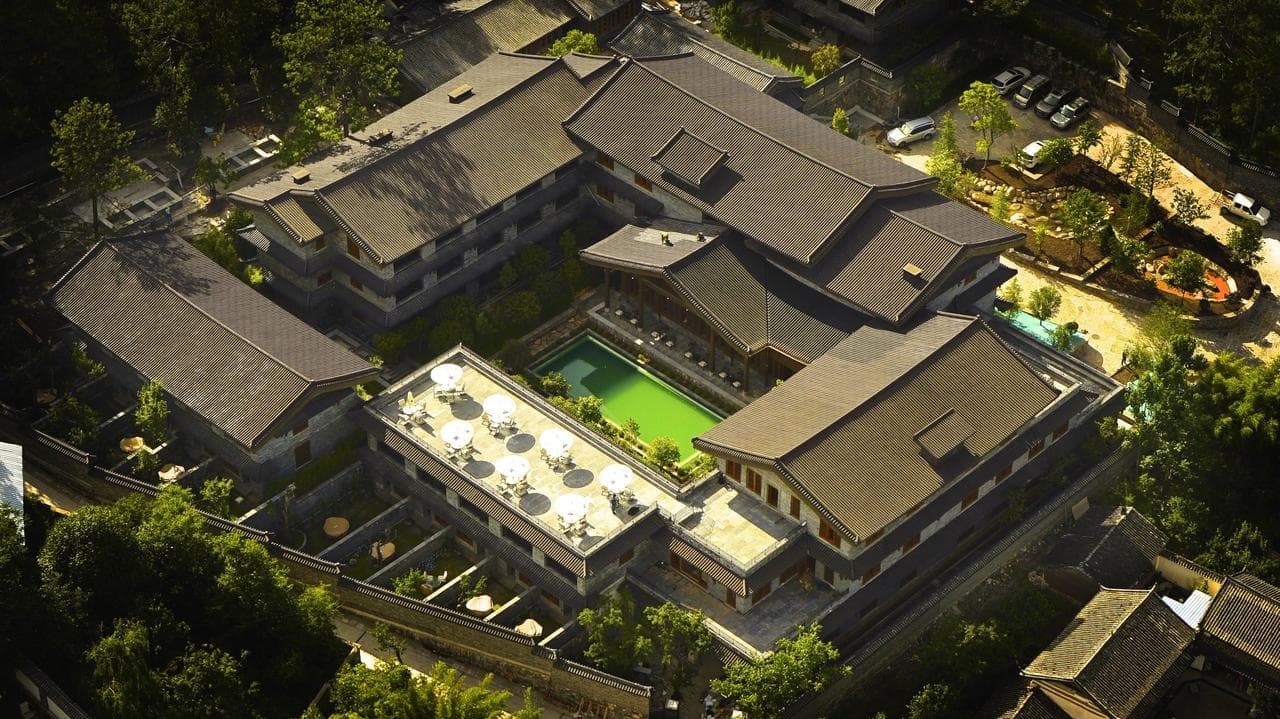
While Lijiang’s Old Town descends into a cacophony of djembe drums and disco lights, Songtsam Linka Lijiang offers a masterclass in silence. Located in the quiet Ciman Village, this property rejects the 'resort' label in favor of a monastic, timber-heavy aesthetic that feels less constructed and more curated. The architecture is a tactile triumph of Naxi joinery and stonemasonry—expect floorboards that creak with intention and substantial copper basins that ring like bells. The rooms are not merely sleeping quarters but viewing platforms for the Jade Dragon Snow Mountain, framed perfectly by heavy wooden eaves. It’s the absence of generic luxury that shines here; instead of plastic keycards, you get heavy brass keys. Dinner at the Songtsam Lijiang Restaurant is a non-negotiable affair featuring their Yak Meat Hot Pot—a broth so rich it feels medicinal. Service is eerily intuitive, culminating in the nightly 'Goodnight Milk' ritual, a warm, honey-sweetened sedative that renders the generic pillow chocolate obsolete. It is refined, remote, and remarkably grounded.
“Book a Deluxe Room on the second floor for the best angle of the snow mountain reflection in the outdoor heated pool.”
Insider TipAvg. Nightly Rate
263USD

If Lijiang’s Ancient Town is a cacophony of drum shops and selfie sticks, LUX* Tea Horse Road is the noise-canceling headphone you didn’t know you needed. Located in a quiet enclave near the South Gate, this property performs a sleek architectural alchemy: taking the heavy, shadow-laden timber of traditional Naxi courtyards and bleaching it into a Scandinavian-crisp sanctuary. The gloomy heritage aesthetic is banished here. Instead, you get the 'Cha Ma Dao' library—a cathedral of light and floor-to-ceiling bookshelves that begs for a slow afternoon with their signature Aged Pu’er Tea. The rooms are lessons in restraint, featuring pale woods, Naxi bricks, and private balconies that frame the swoop of the iconic 'flying eave' rooftops without forcing interaction with the street crowds. While the lack of a pool might deter some, the trade-off is superior coffee culture—Café LUX* pulls the best espresso in a tea-dominant province. Dining is equally focused; the Yunnan Wild Mushroom Hotpot offers an earthy, high-altitude depth that justifies the flight alone. Service is telepathic—the staff’s ability to haul luggage over uneven cobbles from the gate is a logistical ballet that sets the tone for a flawless, if quiet, stay. Verdict: The ultimate sophisticated basecamp.
“Request a second-floor room facing the inner courtyard to secure a private view of the curving rooftops while avoiding the noise of late-arriving guests at the main gate.”
Insider TipAvg. Nightly Rate
135USD
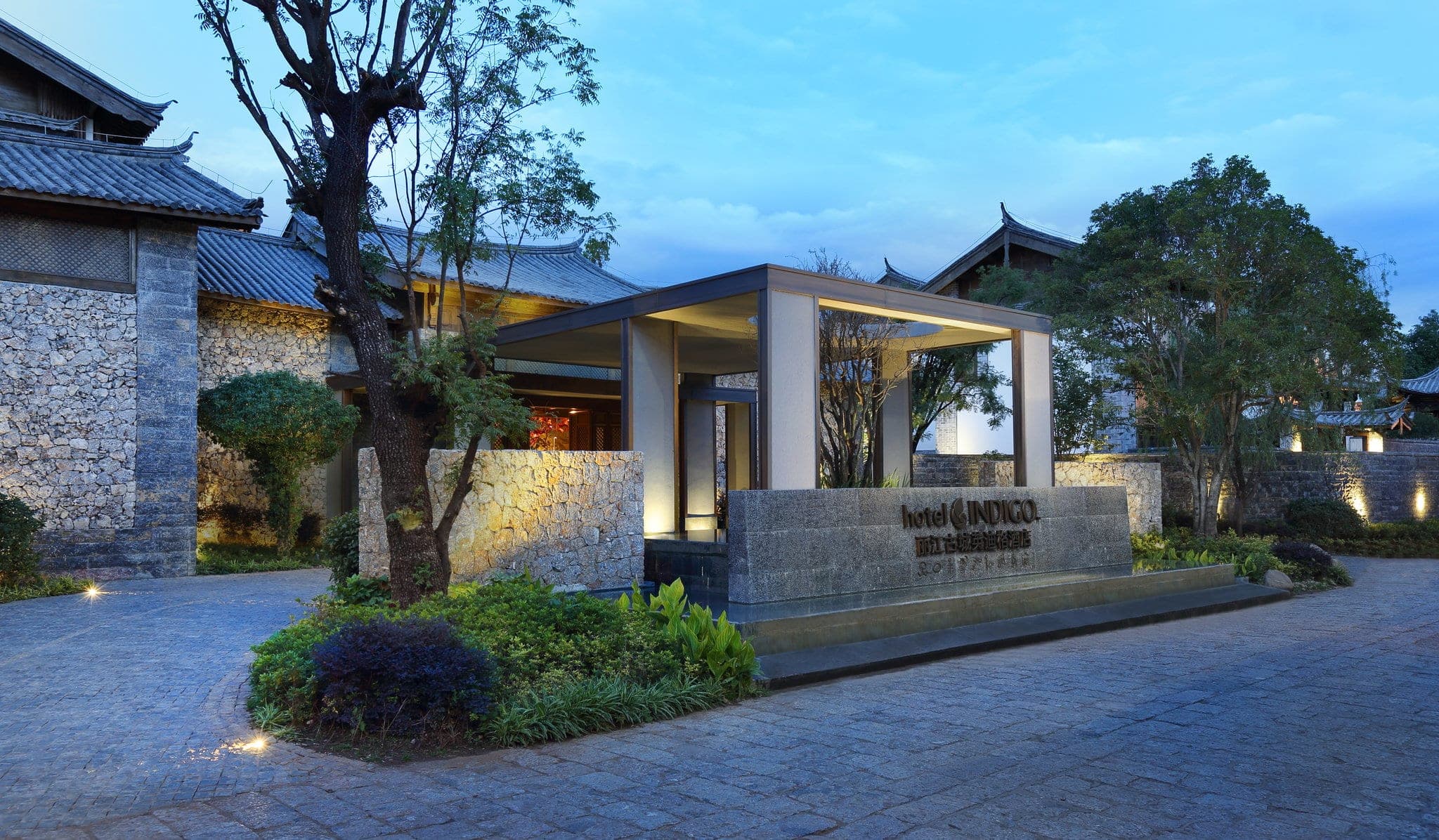
Forget the beige predictable luxury of the big-box neighbors; Hotel Indigo Lijiang Ancient Town is the cool kid crashing the Naxi party. While the exterior dutifully mimics the UNESCO-protected vernacular of grey tiles and curved eaves, the interior is a theatrical riot of Tea Horse Road storytelling reimagined for the hypebeast generation. The lobby greets you not with stiff florals but with oversized horse-saddle stools and a ceiling of hanging copper birdcages—the 'Me Space'—that feels more art installation than waiting area. Rooms are cavernous, trading dusty antiques for vibrant Snow Mountain murals and tech-forward comforts like Dyson hairdryers, Marshall speakers, and AMIRO makeup mirrors. It’s a caravan post for the digital nomad. Dining at 'Charm Restaurant' offers a solid yak meat hot pot, but the real draw is the 'Chat' bar for Pu'er tea cocktails. Service is hyper-personalized; shoutout to the butlers (ask for King or Patrick) who operate with the warmth of a family guesthouse but the efficiency of a Swiss watch. It’s the perfect antidote to Lijiang’s tourist kitsch.
“Book a courtyard suite for privacy, but steal the amenities of the massive InterContinental next door—Indigo guests get full access to their heated indoor pool and gym without the crowds.”
Insider TipAvg. Nightly Rate
127USD
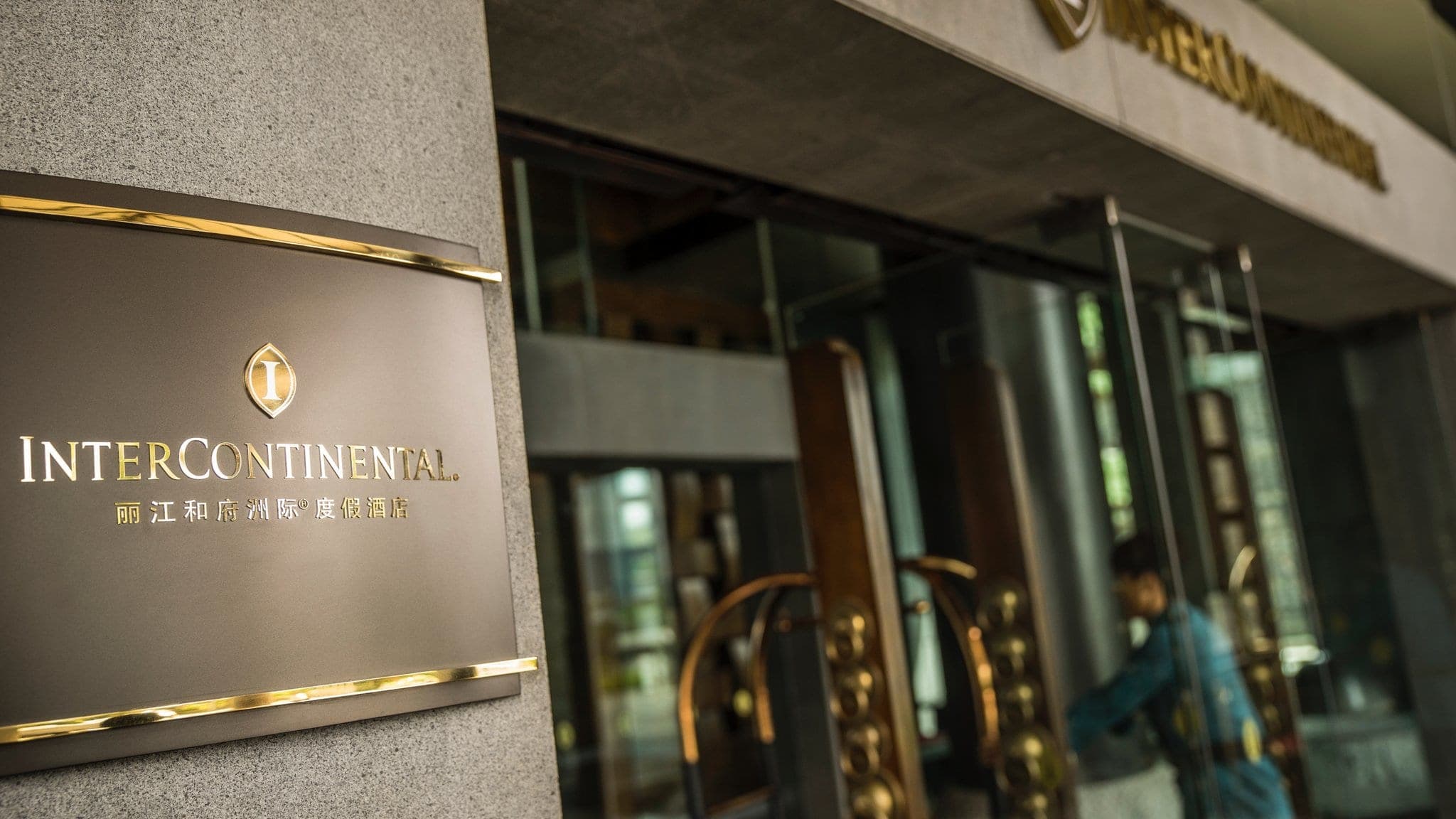
If Lijiang’s Old Town is a frenetic endurance sport of drum shops and selfie sticks, the InterContinental is the VIP locker room. The resort’s private southern gate acts as a decompression chamber; step through, and the cacophony dissolves into a sprawling, grey-brick homage to Naxi architecture. It feels less like a hotel and more like a curated 'hidden city'—vast, timber-framed, and obsessed with geometry. The lobby terrace frames the Jade Dragon Snow Mountain with such cinematic precision it almost looks like a matte painting. Rooms continue the vernacular grandness with intricate carpentry and lush courtyards, though the hardware betrays the hotel's age. The absence of heated smart toilets is a chilling oversight during a Yunnan winter—brace yourself for the cold seat. Service, too, wavers between five-star polish and bewildering inconsistency. Redemption, however, is served at breakfast in the '7 Colors Chinese Restaurant.' The spread is formidable, anchored by stations dispensing tart, rich yak milk yogurt and steaming bowls of Yunnan small-pot rice noodles. Despite the icy commodes and occasional service lapse, the sheer architectural gravity and that exclusive key-card access to the Old Town make this the only viable address for the claustrophobic luxury traveler.
“Skip the main entrance. Use your key card at the private South Gate for immediate, crowd-free access to the less chaotic fringes of the Old Town.”
Insider TipAvg. Nightly Rate
136USD

Forget the predictable lattice-work of Lijiang’s tourist traps. At Tsingpu Baisha Retreat, Japanese architect Yoshimasa Tsutsumi has sharpened the Naxi vernacular into a modernist weapon. Recently flagged in the 2025 Designs of the Year, this 19-room compound eschews kitsch for structural honesty—think randomly stacked Wuhua stone walls clashing beautifully with regimented timber rooflines. It is a tactile experience. Corridors glow through gradient Dongba paper screens, and rooms feature deep soaking tubs that demand a bottle of wine and a stare-down with the Jade Dragon Snow Mountain. There are no elevators—a minor cardio tax for such high-altitude aesthetics—and the vibe is aggressively meditative. Dining at 'The Restaurant' is hyper-local and unpretentious. The signature Wild Mushroom Hot Pot tastes like the forest floor in high definition, while the cured ribs and yak meat provide a savory counterpunch to the delicate Pu'er served in the Tea Room. Service is intuitive, guiding you to private paper-making workshops without the forced march of a group tour. Verdict: A brutalist-meets-bamboo triumph for the design pilgrim.
“Request a second-floor suite on the north side for the unblocked Jade Dragon Snow Mountain backdrop; ground floor courtyards offer privacy but lack the cinematic drama.”
Insider TipAvg. Nightly Rate
480USD
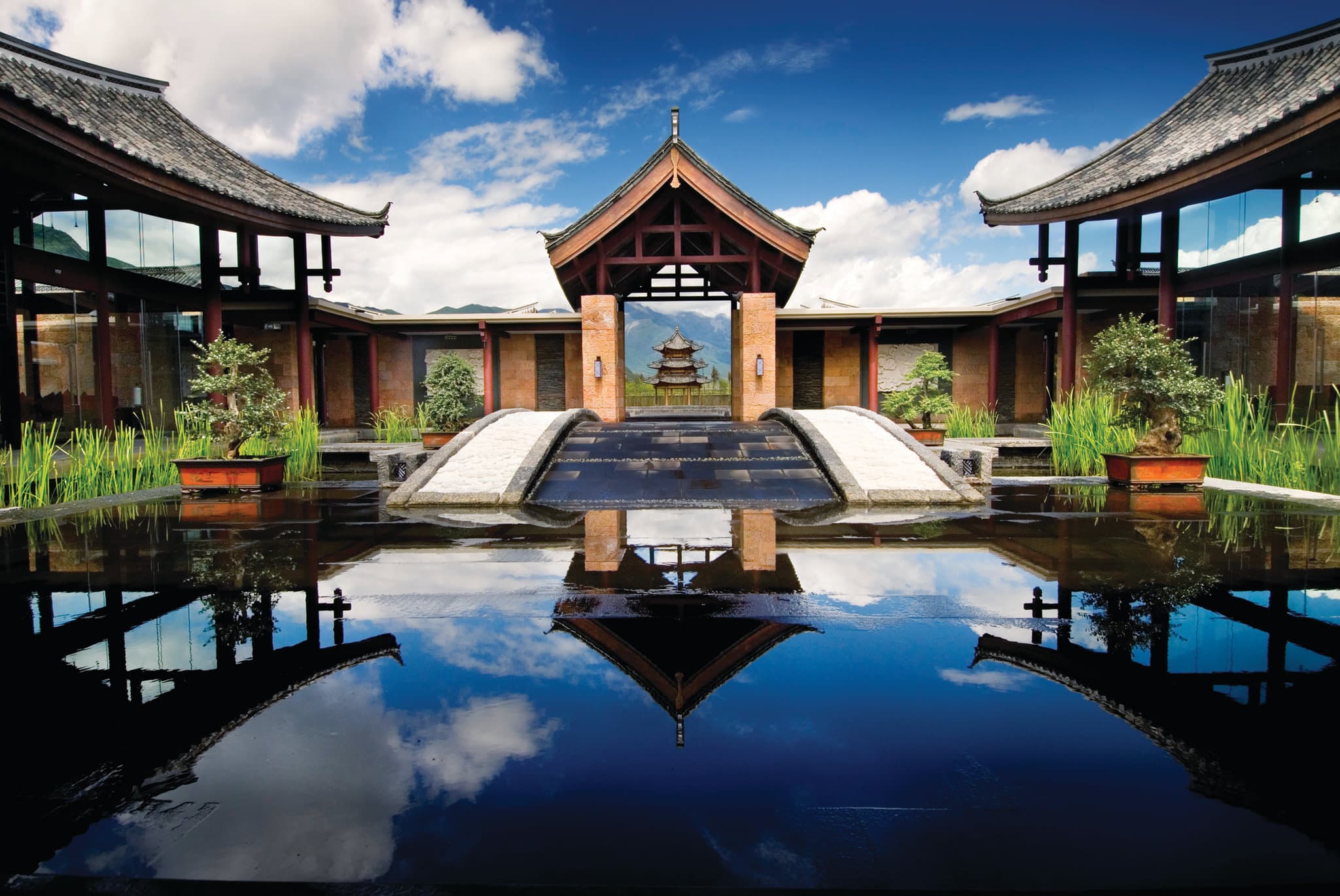
In the ephemeral world of Chinese luxury hospitality, where hotels often fade faster than a chemically accelerated patina, Banyan Tree Lijiang—opened in 2006—stands as a defiant, majestic classic. It didn't just adopt the Naxi architectural vernacular of pink stone, grey brick, and curved eaves; it practically codified the grammar for every resort that followed. Yes, the hardware bears the subtle, inevitable marks of two decades. You might find the lighting controls less intuitive than a Shenzhen smart-home, but there is a gravity here that newer, flashier properties lack. The Jet Pool Villas are the masterstroke, offering private, 38°C heated dips in the shadow of the Jade Dragon Snow Mountain. It is a view that commands silence. Dining at Bai Yun Restaurant remains a theatrical affair, particularly the traditional Yunnan Hot Pot, though the breakfast spread at Ming Yue can feel routine compared to the dramatic setting. The service, however, is timeless—the evening turndown involving a rose milk foot bath is a ritual that feels less like a hotel amenity and more like a blessing. It is no longer the newest kid on the block, but it remains the one with the most soul.
“Book the Jet Pool Villa specifically for the 'Golden Mountain' sunrise view; request a unit near the reflection pond for the classic architectural photo op minus the trek.”
Insider TipAvg. Nightly Rate
170USD
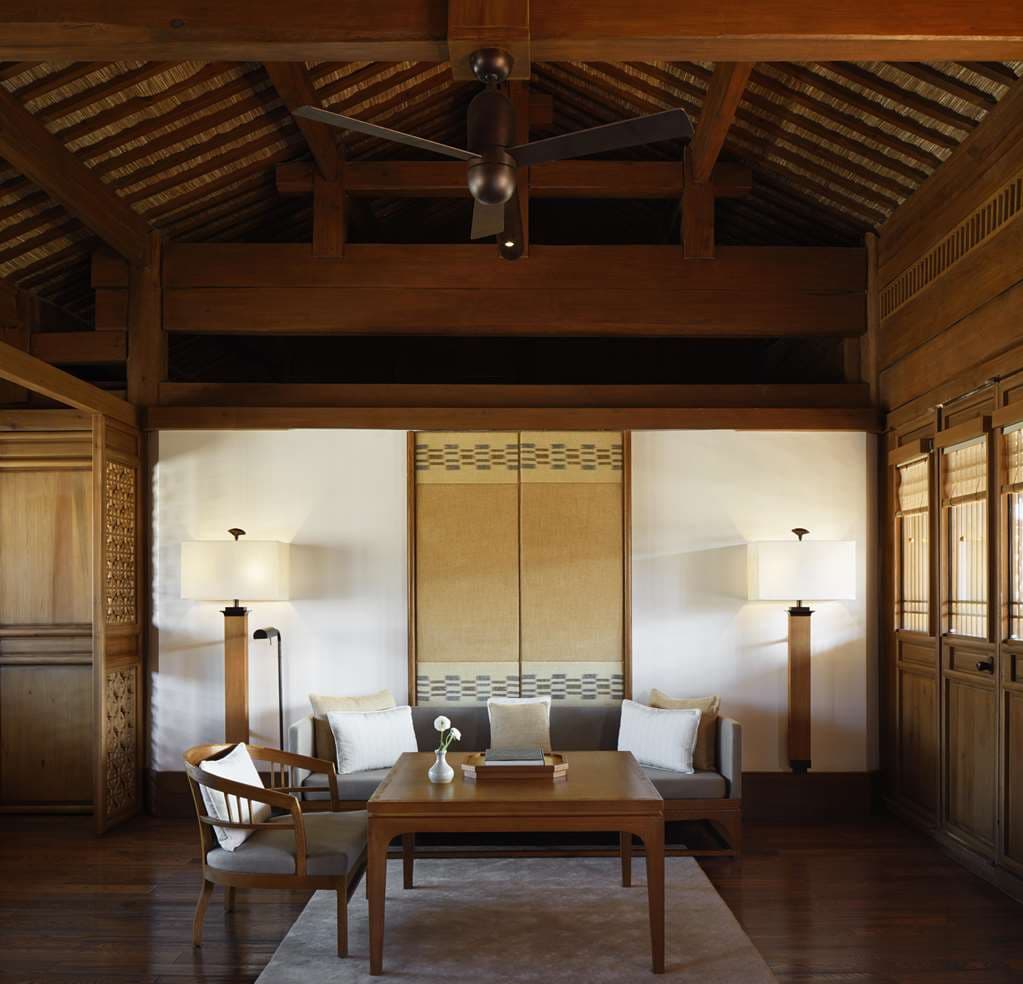
To call Amandayan a hotel is to misunderstand its gravity; it is a restoration of dignity above the chaotic din of Lijiang. Designed by the late, legendary Jaya Ibrahim, the property rejects the kitsch permeating the valleys below, opting instead for a rigorous vernacular of Yunnan pine, elm, and grey roof tiles. The 35 suites—arranged around courtyards in the style of a Naxi nobleman’s estate—feel less like hotel rooms and more like monastic sanctuaries, complete with Dongba calligraphy and locally embroidered textiles. Dining requires a pilgrimage to Man Yi Xuan, where the Yak beef hotpot possesses a savory depth that humbles the tourist traps of the Old Town. The 20-meter heated outdoor pool, a mirrored surface reflecting the Jade Dragon Snow Mountain, is the property's cinematic peak. However, perfection has cracks: the steep ascent from town is a lung-buster (beware the altitude), and breakfast service can occasionally drift from 'relaxed' into 'comatose.' Yet, when you are sipping an Amantini in the shadow of the protected Wenchang Palace, such trifles vanish. This is not merely a stay; it is a lesson in silence.
“Skip the main restaurant for sunset; instead, secure a terrace seat at The Tea House. Order the Yunnan red tea and watch the Old Town rooftops turn gold—without the crowds.”
Insider TipAvg. Nightly Rate
1006USD

Anchored at 3,100 meters, Jinmao Purelax doesn’t just face the Jade Dragon Snow Mountain; it engages in a staring contest with it. This isn't a mere hotel; it’s a high-altitude observatory for the soul, stripping away Lijiang’s tourist clutter for raw, Naxi-inspired geometry. The architecture is a masterclass in framing—sharp, grey-tiled rooflines cut against the sky, while the central 'Sky Mirror' reflection pool pulls the glaciated peaks down to earth. Inside, the vibe is monastic luxury. Rooms are sanctuaries against the thin air, equipped with floor heating and Dyson dryers, but the real showstopper is the private balcony Jacuzzi. Soaking there while watching the 'Sunshine on Golden Mountain' phenomenon—when the sunrise hits the snow peaks—is a spiritual reset. Dining at Snow Mountain Kitchen is a singular affair; the Yak Meat Hot Pot is non-negotiable, rich enough to combat the altitude. For a nightcap, The Lounge’s 'Starry Sky' cocktails mimic the absurdly clear galactic views outside. Service is proactive, with oxygen canisters appearing before you realize you're breathless. It’s isolated, yes, but that’s precisely the point.
“Request a room in the 3000 block for the most unobstructed 'Golden Mountain' sunrise views, and book the on-site observatory session—the high altitude makes the Milky Way look fake.”
Insider TipAvg. Nightly Rate
300USD