No. 01

Way 2827 Al Sarooj Muscat OmanMuscat228 verified reviews
9
.8
Bitvoya Edit
Layering imagery, place, and detail before the page opens.
Muscat is a city where the desert meets the sea, and ancient traditions seamlessly blend with contemporary luxury. Unlike the glittering skyscrapers of its neighbors, Oman’s capital preserves its soulful low-rise architecture and stark white facades against the dark Hajar Mountains. For the design-conscious traveler, the neighborhoods of Shatti Al Qurum and the secluded bays of Barr Al Jissah offer more than just accommodation; they provide a gateway to 'Arabian Nights'. Properties like The Chedi Muscat and Al Bustan Palace are not merely hotels but architectural landmarks that celebrate Omani craftsmanship, geometric artistry, and the timeless hospitality of the Bedouin culture.
Muscat stands apart in the Middle East for its strict adherence to traditional architectural codes. You won't find glass towers here; instead, the skyline is defined by domes, arabesques, and fort-like structures that pay homage to Oman's maritime history. Staying in Muscat means immersing yourself in a living museum where the scent of Frankincense fills the air. Hotels like the Mandarin Oriental, Muscat and the historic Sheraton Oman Hotel integrate local materials and intricate lattice works (mashrabiya), offering an authentic 'Arabian Nights' experience that feels both regal and grounded.
Expect a slower pace of life focused on quality and detail. Omani design relies heavily on symmetry, open-air courtyards, and water features that cool the air—seen perfectly at Al Husn Hotel Muscat. Culinary experiences often include dates and Omani coffee (qahwa) served in grand lobbies designed to mimic ancient palaces. Whether it's the minimalist chic of The Chedi or the opulence of Al Bustan, expect world-class service known as quintessential Omani hospitality.
Al Bustan Palace, a Ritz-Carlton Hotel, is widely considered the premier heritage hotel. Originally built to host the GCC Summit, it features an atrium taller than the Taj Mahal and authentic Islamic architecture.
The Chedi Muscat is famous for its Zen-meets-Arabian design by Jean-Michel Gathy, while Al Husn Hotel offers a traditional cliff-top fortress aesthetic with intricate Omani details.
Choose Shatti Al Qurum (e.g., Grand Hyatt) for city vibes, opera access, and social life. Choose Muscat Bay (e.g., Jumeirah) for seclusion, dramatic mountain-meets-sea views, and relaxation.
Explore our complete curated list of luxury accommodations, from boutique hideaways to grand dames.
Explore All Muscat HotelsMuscat has long been a sleeper hit, but the arrival of the Mandarin Oriental in Shatti Al Qurum turns up the volume. Designed by Xavier Cartron, the lobby is a masterclass in 'Arabian Nights' reimagined—think crystal chandeliers dripping light onto fountains and hand-carved Omani wooden doors that feel like portals to another era. The rooms retreat into a Zen-like calm, using local latticework to filter the blinding Omani sun. Dining is the property's flex. Essenza executes Italian classics with surgical precision—the A5 Wagyu filet is non-negotiable, though the Naples-style pizza challenges it for the spotlight. For a looser vibe, Sì Breeze delivers sizzling yakitori and ceviche with a side of salt air. Service has the eager, slightly frantic energy of a debutante, but the Biologique Recherche spa treatments are flawlessly mature. It’s a sophisticated social hub that finally gives the Royal Opera House a worthy neighbor.
“Book a table at Essenza for 7 PM, then take the 15-minute coastal stroll to the Royal Opera House for a performance—the ultimate Muscat evening.”
Insider TipAvg. Nightly Rate
400USD
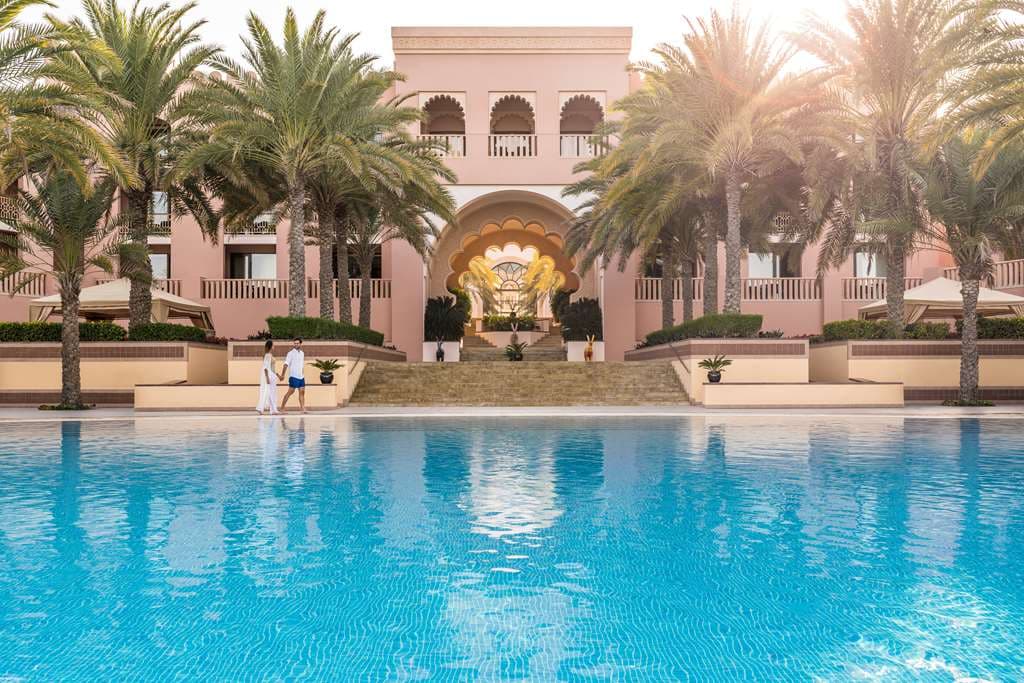
If the neighboring Barr Al Jissah resort is a riot of family energy, Al Husn is the silence that follows. Perched on a dramatic bluff, this adult-only enclave (strictly 16+) feels less like a hotel and more like a modern Omani fortress—or perhaps a reimagined Alhambra, with its Moorish arches and stark, sun-bleached courtyards. The design is intentional and imposing, framing the Gulf of Oman through heavy timber doors and geometric stonework. The interiors trade generic luxury for regional depth. You aren’t just sleeping in a room; you’re retreating into a space where 400-thread count linens meet dark wood lattice. But the real draw is the Luban Spa, where treatments use locally harvested Omani frankincense—a resin worth its weight in gold here. Dining is equally serious: ‘Aangan’ by Michelin-starred Rohit Ghai demands a reservation. Skip the safe options and order the Rogan Josh and Aloo Tikki; the spice layering is precise, not apologetic. Service is where Al Husn flexes its muscles. Poolside staff circulate not just with drinks, but with complimentary cool boxes and a sunglass-cleaning service that borders on obsessive. It’s an expensive taxi ride to the Mutrah Souq, but with a private beach cove and pre-dinner cocktails included nightly, you likely won’t leave the gates.
“Don't rush dinner. The complimentary 'aperitif hour' in the central courtyard aligns perfectly with sunset—grab a seat by the archway for the definitive golden-hour shot before heading to Sultanah.”
Insider TipAvg. Nightly Rate
234USD
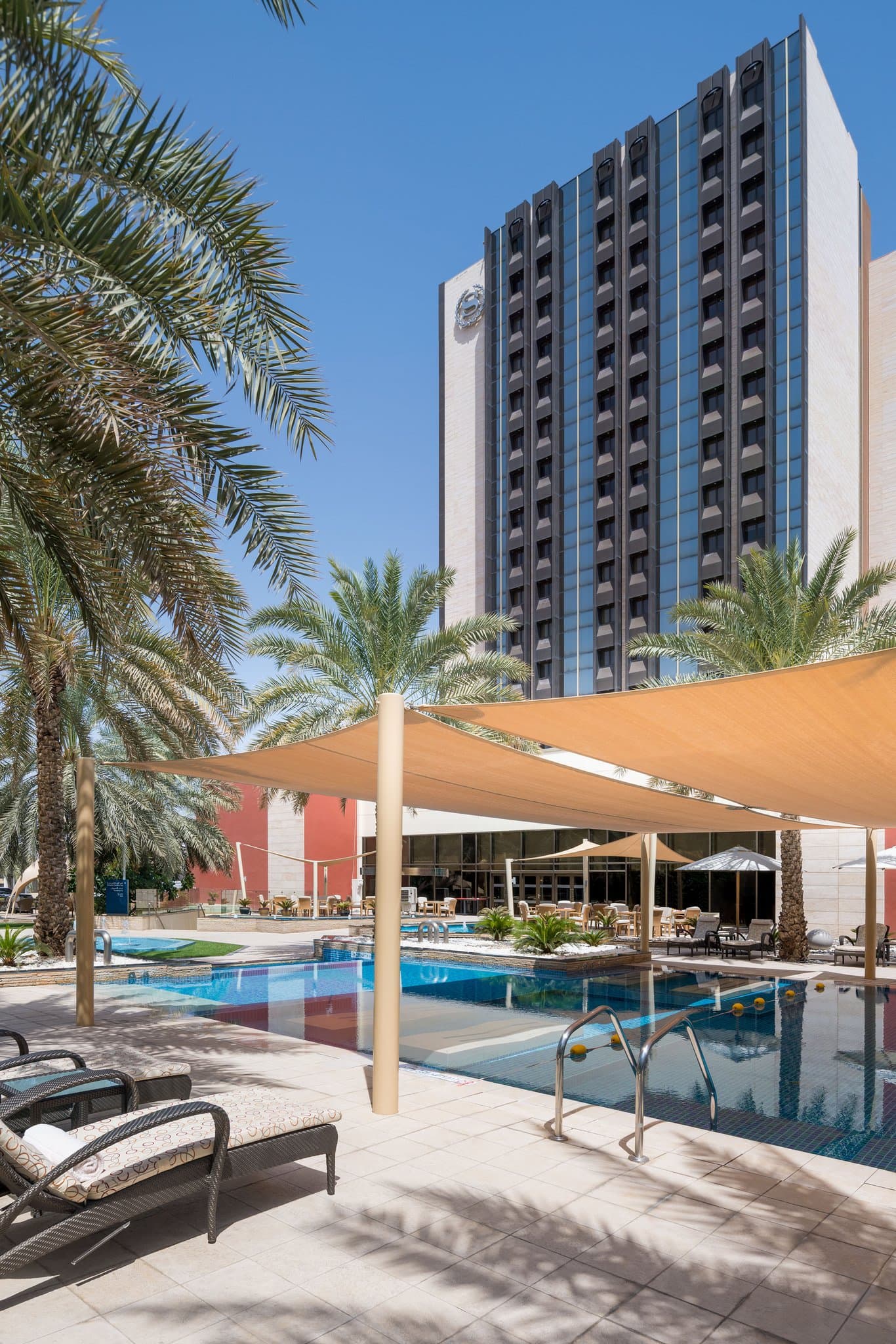
While the new money flocks to the beach resorts of Al Mouj, the Sheraton—fresh off its win as 'Oman's Leading Hotel 2025'—holds court as the city’s serious, heritage-laden power broker. The location is its secret weapon: you are minutes from the authentic pulse of the Muttrah Souq, making this the logical base for culture hunters refusing to be sequestered in a tourist bubble. Inside, the aesthetic is corporate-luxe, though softer touches abound in the 'Tea Library'. The rooms, anchored by signature Sheraton Sleep Experience beds, are immaculate, even if the hardware leans classic. Dining is the flex here: 'Asado' serves John Stone 21-day aged beef with theatrical flair. For swimmers, the indoor pool with resistance wave technology is a rare godsend during the scorching summer. It’s not the trendiest stay in Muscat, but with service this precise, it is arguably the most accomplished.
“Request a room on the higher floors facing the mountains for a dramatic sunrise view over Ruwi. Don't miss the 'resistance wave' feature in the indoor pool for a serious workout.”
Insider TipAvg. Nightly Rate
65USD
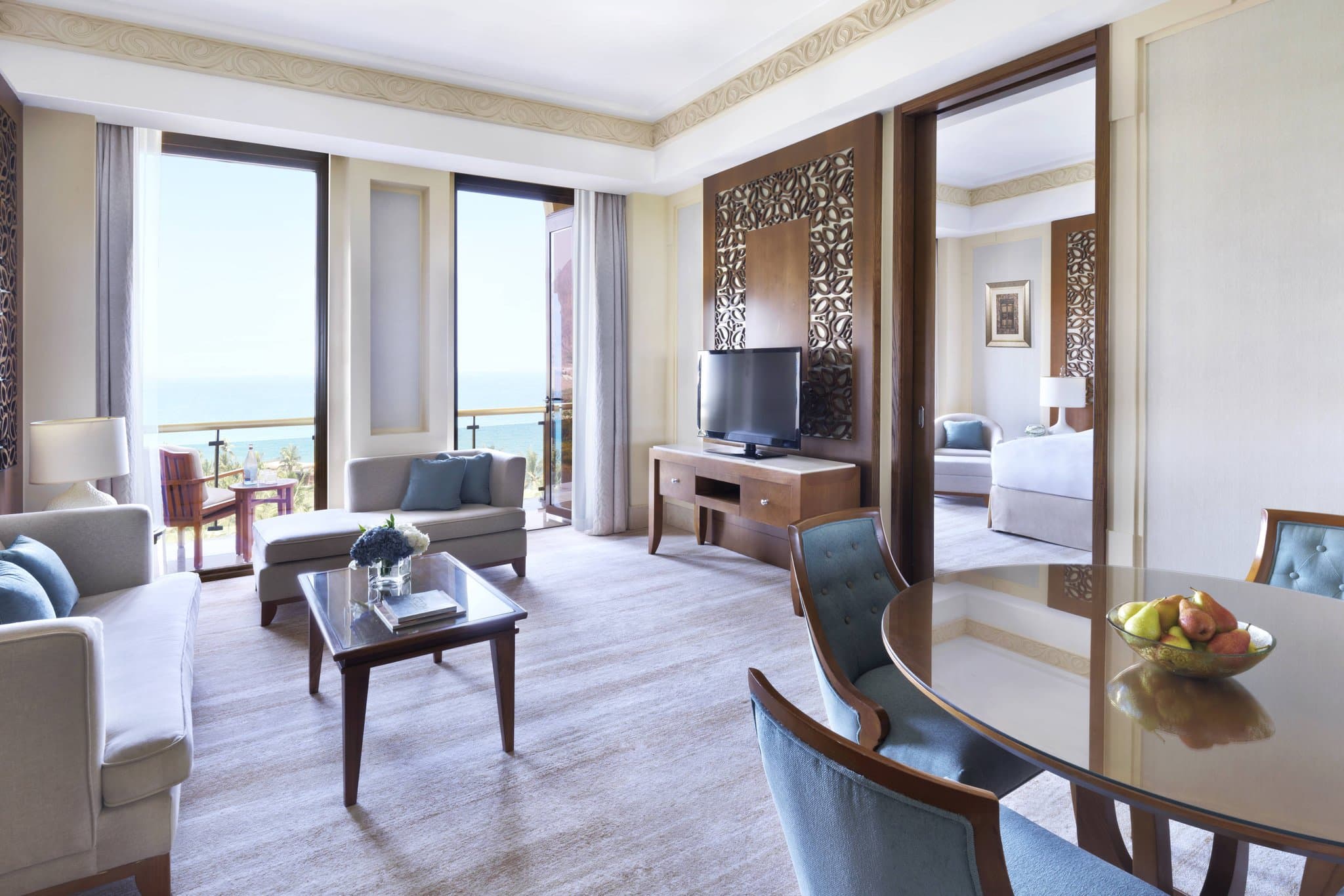
If first impressions were currency, Al Bustan Palace would bankroll the Sultanate. Originally commissioned for the 1985 GCC Summit, this property doesn’t just hint at royalty; it screams it from the 38-meter-high hexagonal atrium. Beneath the 5.5-tonne crystal chandelier, the air is thick with frankincense—a potent reminder that you are in the deep heart of Oman, not a sterile glass box. While the corridors echo with the hushed tones of visiting dignitaries, the vibe loosens significantly by the water. The 50-meter infinity pool slices towards the Sea of Oman with aggressive symmetry, flanked by four lagoons that make the ground-floor rooms the most coveted keys. Inside, the room aesthetic leans into '80s grandeur—think heavy drapes and dark woods—which might feel like a time capsule to design purists, but the execution remains immaculate. Dining is where the hotel flexes its muscles. Skip the all-day buffet and secure a table at China Mood for the wood-fired Peking Duck, a dish so technically precise it rivals anything in Hong Kong. Alternatively, The Pavilion serves whole Omani lobster right at the edge of the waves. It is grand, undeniably imposing, and remains the only place in Muscat where a swimsuit and a ballgown feel equally appropriate.
“Book a 'Lagoon Access' room on the ground floor to step directly from your terrace into the water. For absolute privacy, the Ladies-Only beach remains a unique, secluded enclave.”
Insider TipAvg. Nightly Rate
415USD
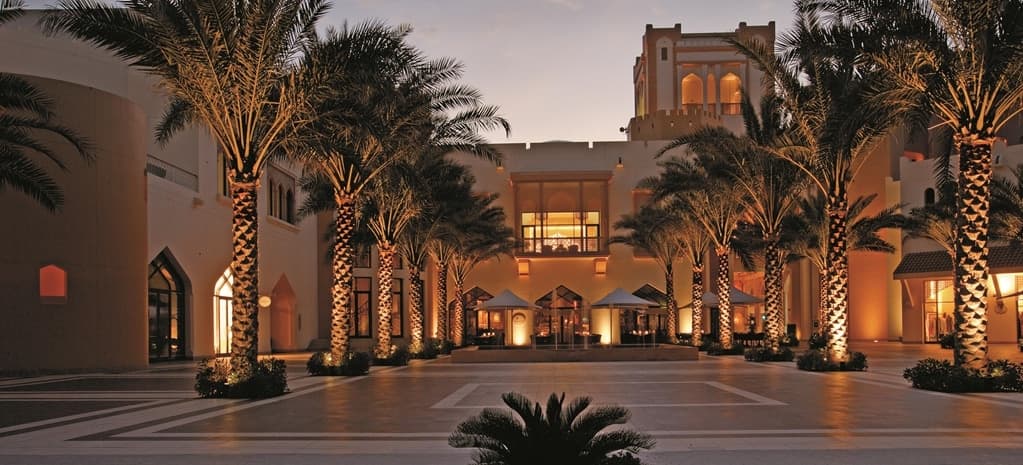
The signage above the sandstone arches has changed—Shangri-La has departed, and Hilton has arrived as of January—but the bones of this Omani seaside fortress remain spectacular. Designed to mimic a traditional village, the resort (now split between Hilton and DoubleTree brands) still dominates its secluded cove with wind towers and earth-toned masonry that feels organically extruded from the Hajar Mountains. The transition is palpable; while the 'CHI, The Spa' signage is being swapped out, the 500-meter lazy river remains the undisputed champion of family leisure in Muscat. The interiors, frankly, were due for this refresh. While the new management tackles the dated soft furnishings, the dining hardware is already firing. 'Bait Al Bahr' continues to serve the coast’s best Grilled Kingfish with frankincense butter—a dish so good it survives any corporate handover. Service is currently in a hyper-attentive honeymoon phase, with staff eager to prove the new flag means business. It’s a chaotic, beautiful moment to visit: you get the legacy architecture with the desperate-to-please energy of a grand opening.
“Book a ground-floor room in the Al Waha wing for direct 'swim-out' access to the lazy river—perfect for skipping the pool chair scramble.”
Insider TipAvg. Nightly Rate
237USD
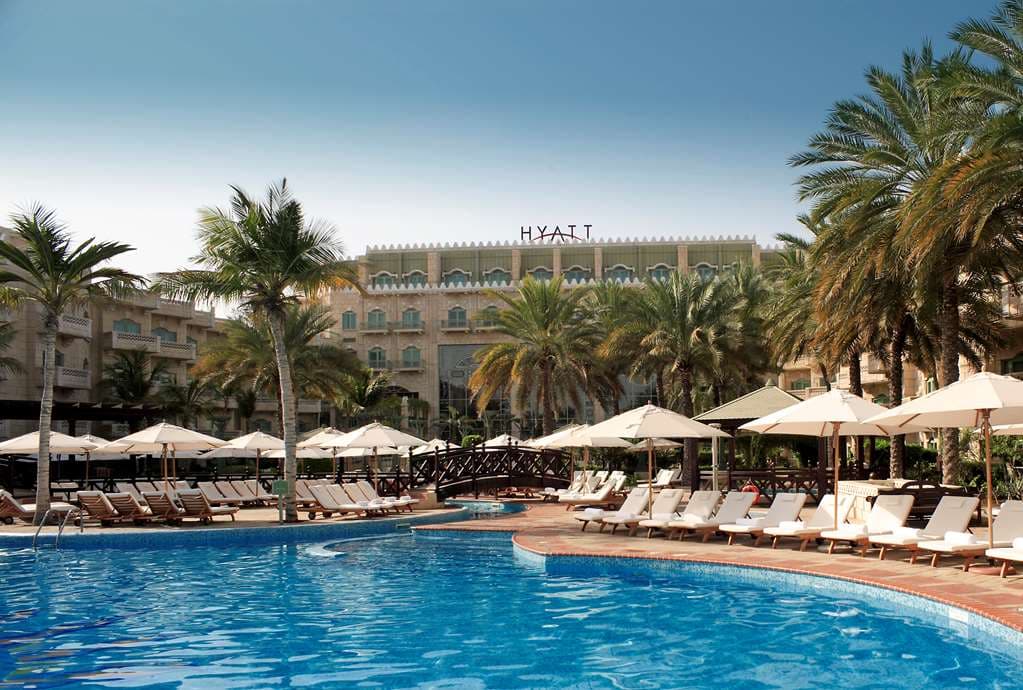
If the Sultanate of Oman commissioned a stage set for its own grandeur, it would look exactly like the Grand Hyatt Muscat. Located in the dignified silence of the Embassy District, this property rejects the beige minimalism sweeping the Middle East in favor of unapologetic, Yemeni-influenced maximalism. The arrival experience is less of a check-in and more of an event: a 14-meter atrium washes you in kaleidoscopic light from massive stained-glass panels, while a bronze falconer stands guard—a visual anchor that screams place-sense in a world of generic lobbies. The hotel is currently bridging two eras. A massive renovation project, slated for completion in 2026, means the room product is split. The 'vintage' rooms offer a nostalgic trip to 90s luxury—think limited power outlets but immense balconies and 400-thread count linens—while the refreshed wings bring the technology up to speed with the Balmain-stocked bathrooms. Dining here is an institution. 'Tuscany' is not just a hotel restaurant; it is where Muscat’s movers and shakers close deals over wood-fired Seafood Risotto. For a local deep-dive, 'Mokha Café' skips the international blandness for a proper Omani Shuwa, slow-cooked to melting tenderness. Outside, the Club Olympus facilities, including a lazy river and temperature-controlled lagoon, provide a lush, mature garden setting that feels established and serene. It is a property with quirks, certainly, but it possesses a soul that the glass towers simply cannot manufacture.
“Request a room in the newly renovated wing to avoid the 'vintage' outlet situation, and visit the Falconer statue at sunset when the stained glass hits peak kaleidoscope.”
Insider TipAvg. Nightly Rate
130USD
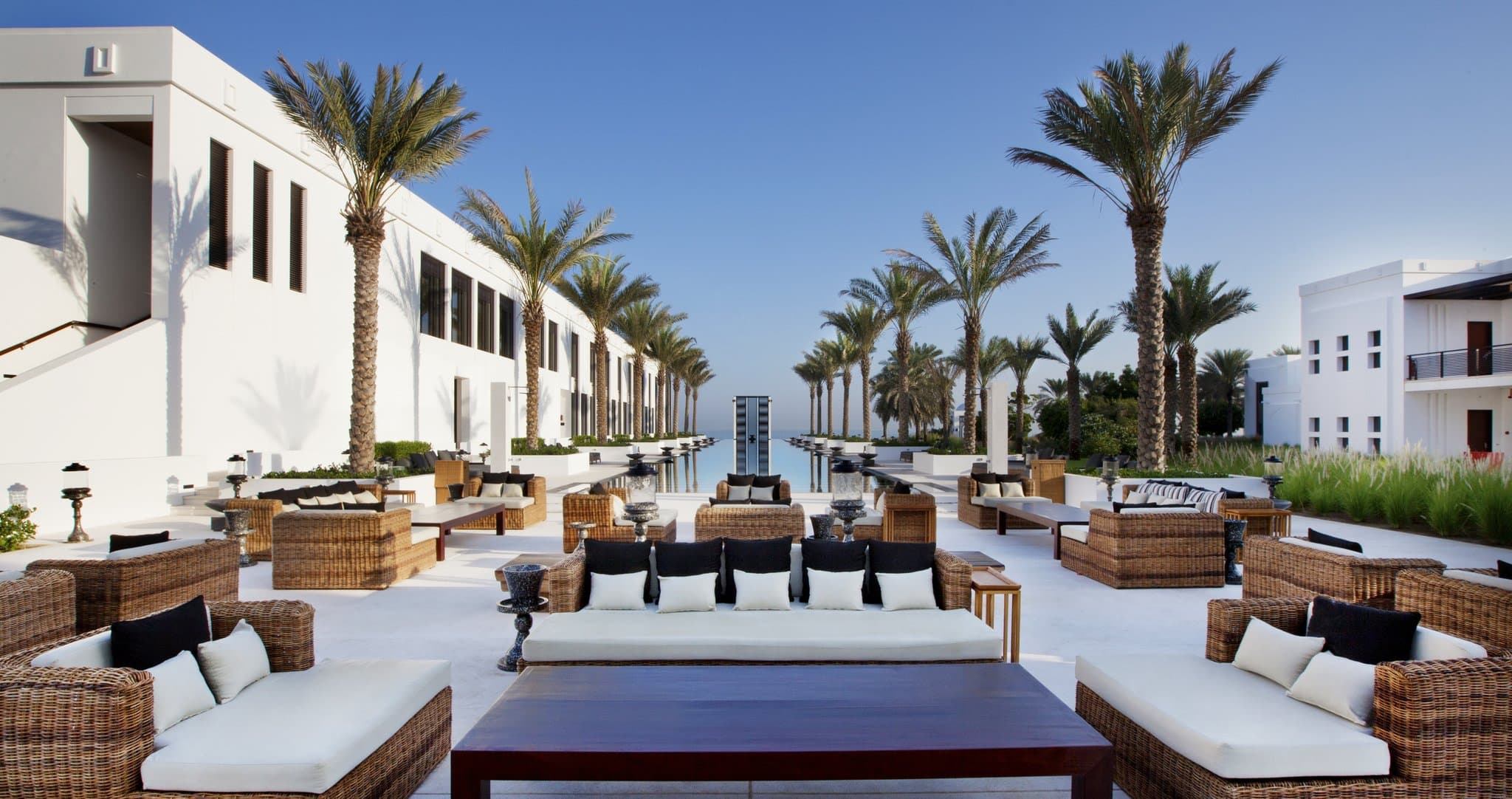
The arrival at The Chedi is calculated drama. You don't just enter a lobby; you pass into a soaring Bedouin-style tented structure where the outside world vanishes. Jean-Michel Gathy’s design is a study in rigorous symmetry—whitewashed archways framing perfectly linear water gardens, all set against the craggy Hajar Mountains. It is ‘Arabian Nights’ stripped of the kitsch, replaced instead with a stillness so profound it feels almost monastic. In the rooms, the vibe shifts from grand to intimate. While the entry-level Serai rooms are efficient, the smart money is on the Chedi Club Suites, where sunken terrazzo bathtubs, private terraces, and complimentary gin decanters justify the upgrade. The bathrooms are stocked with high-end botanicals from VOYA and ila, reinforcing the property's wellness ethos. Mornings here are legendary. ‘The Restaurant’—lit by crystal chandeliers—features open show kitchens serving a breakfast that ruins you for other buffets. For dinner, while The Beach Restaurant offers fine seafood dining by the waves, the Grilled Tiger Prawns at the main venue are the unsung heroes. The crowning glory, however, is the 103-meter Long Pool. Strictly adults-only, it is the glossy black runway of the property, lined with double daybeds and silent service. This is not a hotel for raucous family getaways; it is a temple of calm for those who prefer their heritage served with a side of silence.
“Book a Chedi Club Suite to access the exclusive Club Lounge for afternoon tea and cocktails. For the best swim, hit the 103m Long Pool before 10 AM to claim a central cabana.”
Insider TipAvg. Nightly Rate
233USD
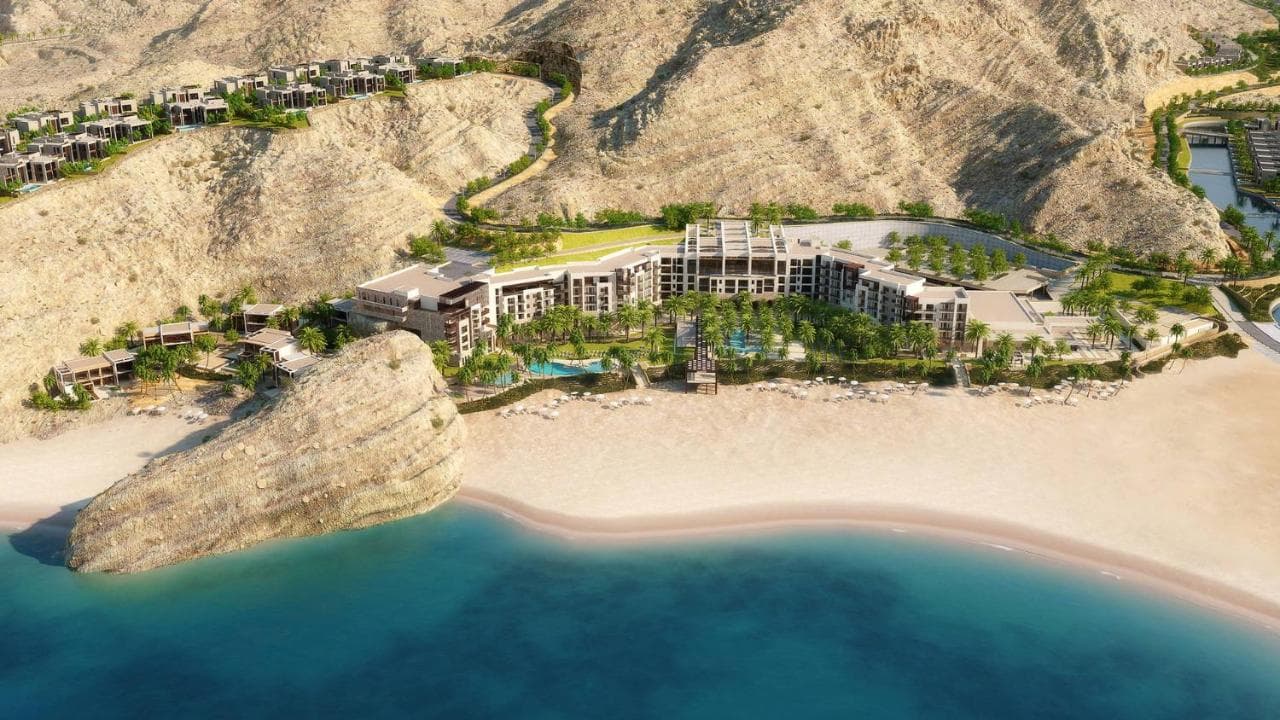
Muscat’s coastline is often defined by distance, but Jumeirah Muscat Bay insists on intimacy. Wedged into a limestone cove that feels geological rather than merely geographical, the architecture mimics the craggy Al Hajar terrain behind it. This is not a flat sprawl; it is a beige stone amphitheater focused entirely on the Gulf of Oman. Every room offers a direct confrontation with the ocean—no partial glimpses here—anchored by interiors that feature calming earth tones and the distinct, resinous scent of Amouage amenities, a nod to the Sultanate’s olfactory heritage. Dining requires a strategic ascent to Brezza, the rooftop Italian venue where the seafood sharing platters are as commanding as the sunset views. While Peridot delivers a competent international spread (the Umm Ali is non-negotiable), the real draw is the Talise Spa. Here, the menu skips generic wellness for potent Sodashi and 111SKIN treatments, housing a Hammam that feels like a legitimate sanctuary. Service is less 'staff' and more 'anticipatory hosts'—concierge members like Ahmad are frequently cited for pulling off logistical miracles. It is a property that balances the raw drama of its location with the polished silence of a true hideaway.
“For total silence, request a room in the East Wing to avoid the afternoon DJ sessions at the main pool. Also, skip the standard O-Taxi; the hotel requires 'Marhaba' taxis for pickups, so pre-book your transport to avoid delays.”
Insider TipAvg. Nightly Rate
220USD